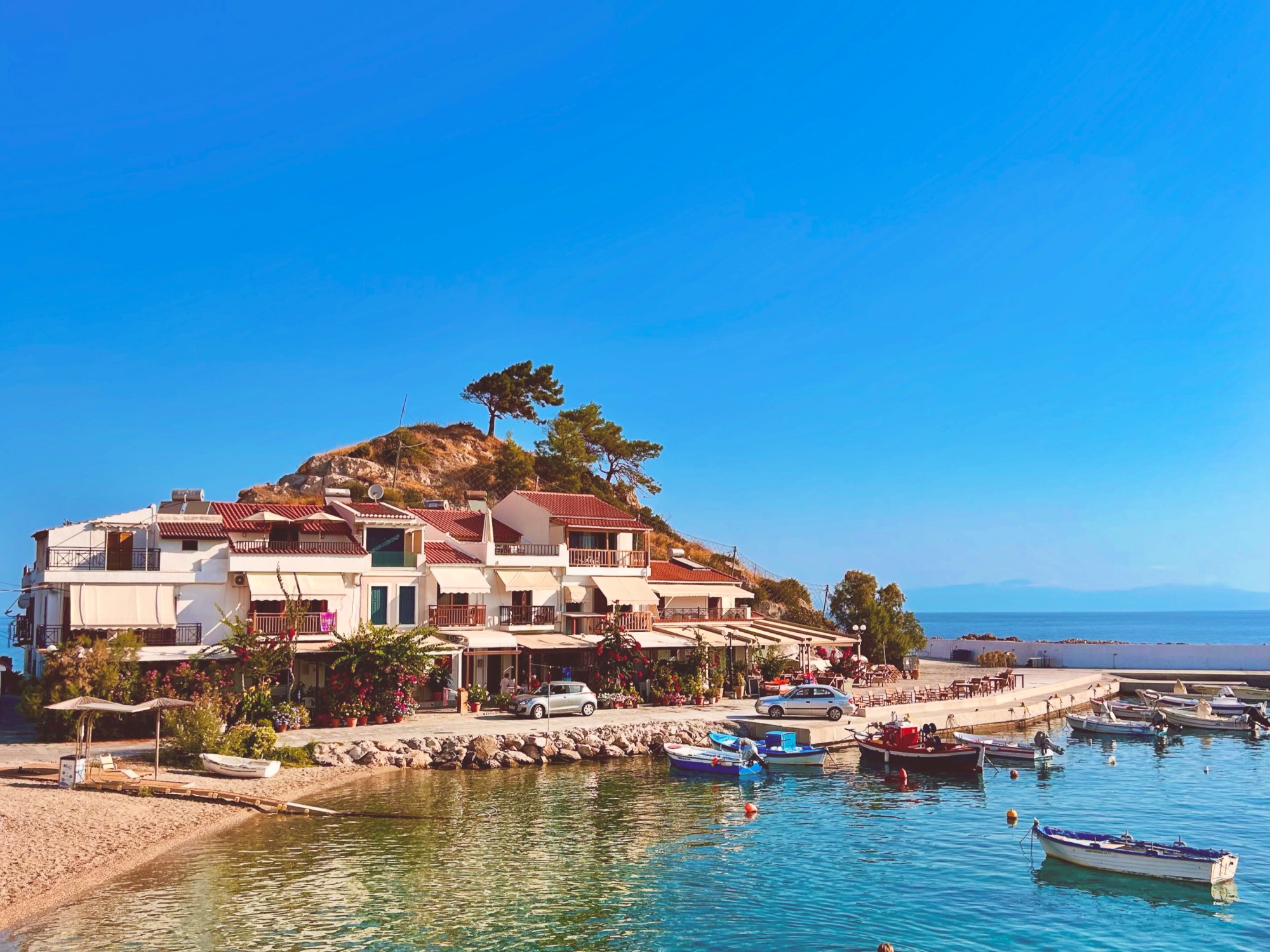
What a beautiful place! What a fantastic vacation!
September and Monday back at work are just about to hit me in the head – it’s Sunday afternoon and the anxiety of “I hope this email finds you well” is starting to creep in – but I’m still squeezing the last moments of summer and thinking about what an amazing time I’ve been having for the last three weeks, discovering the Greek island of Samos.
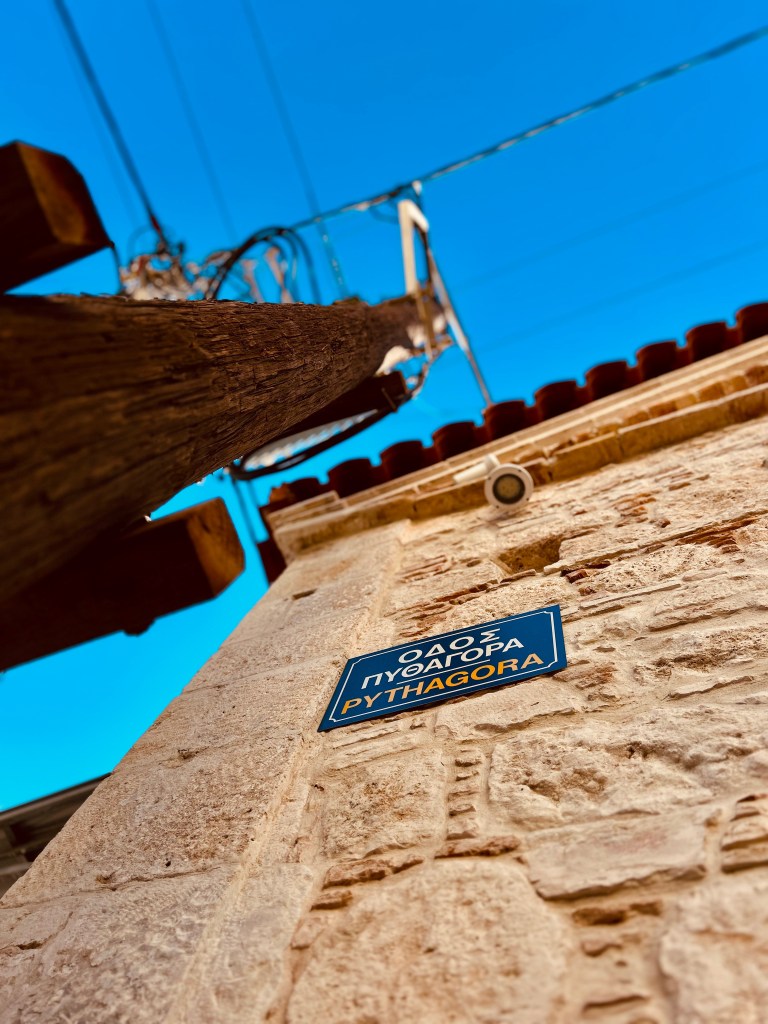
Samos is located in the eastern Aegean Sea, close to the coast of Turkey. It’s known for fertile land, it produces excellent wines, and it’s steeped in history, being the birthplace of the mathematician Pythagoras and the philosopher Epicurus. It combines rich cultural heritage with scenic beaches, charming villages, and a truly relaxing Mediterranean atmosphere. It’s a very popular destination for people from Scandinavia, The Netherlands and Turkey.
It was my first time here, but it definitely won’t be my last!
Getting there was an adventure in itself, as our plane hit a flock of birds just as we were taking off, full speed ahead on the runway. That was, by far, the scariest moment I’ve ever experienced on a flight, as the pilot had to pull the brakes abruptly and we slid off the runway. As the front wheel hit the ground again, I literally saw my whole life flash before my eyes, and we were all flung forward in the cabin. People, safety belts are there for a reason; I can’t tell you how happy I am that they were ON and that our pilot was so experienced and quick in his reaction and judgment. I can’t imagine what had happened if he’d had a shitty night or was in any way distracted by anything. Everyone was completely silent after we stopped, and after being on the side of the runway for a while, we had to go back to the gate for technical inspection of the plane. Finally, we had to get a new plane. One family chose to not get on the new flight, as the mother was already terrified of flying and that incident left her in an even worse condition. Many of us wondered afterwards if they’d get on another flight or if they lost their vacation entirely, what a pity that would have been! But I am still impressed by the fact that a new aircraft was just available for us to get on relatively quickly and everything was handled impeccably by the crew and operations staff.
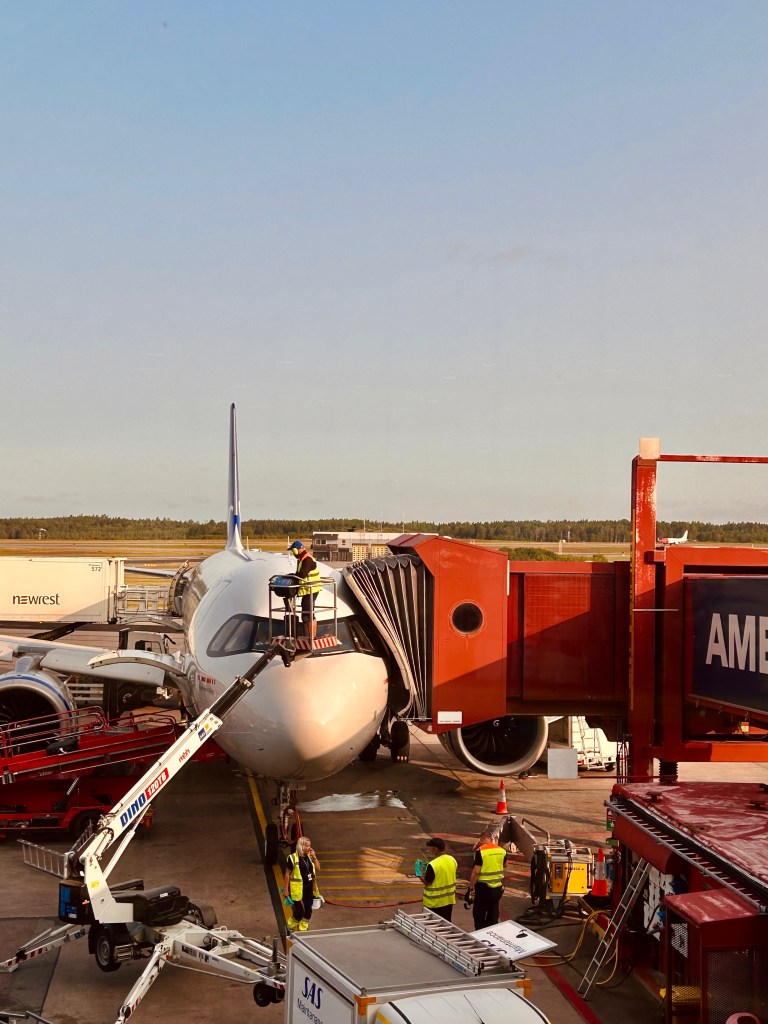
All in all, we were only about three hours late, so we arrived in Samos in early afternoon.
I love that feeling of traveling to a warmer country when the hot air hits you in the face as soon as you step out of the plane. As our schedule had been messed up, there wasn’t any other arrival at the same time, so the bags came out quickly and we were ready to get the transfer to our hotels.
Many times I organise my travels all by myself. I can, with a certain amount of hubris and zero shame, say that I’m pretty good at that, I find good deals and fabulous experiences. But I booked this particular vacation with Apollo, because it was a decent price for me and I’ve had pretty good travels with them before. I chose to stay in Pythagorio, I have this thing of trusting my gut when I look at places and hotels, and I go with the ones that click. There’s this feeling that says “This is the right one” and Pythagorio did that for me this time. And now I can tell with certainty that I was not wrong!
The Apollo staff guided us at the exit and since Pythagorio is so close to the airport, the transfer for myself and three others was a taxi. These three others, two ladies and one gentleman, were staying at the same hotel and during our time there we ended up having breakfast and chats and drinks together a few times, although they were significantly older than myself. That’s a great thing about this place, you will meet people of all ages, but it’s not a hysterical, busy party island, so it offers just the right amount of pleasant human interaction combined with quiet, solitude and proper relaxation. Traveling later in August also means that many people have already gone back to work, kids are returning to school and it’s mostly the elderly who travel.
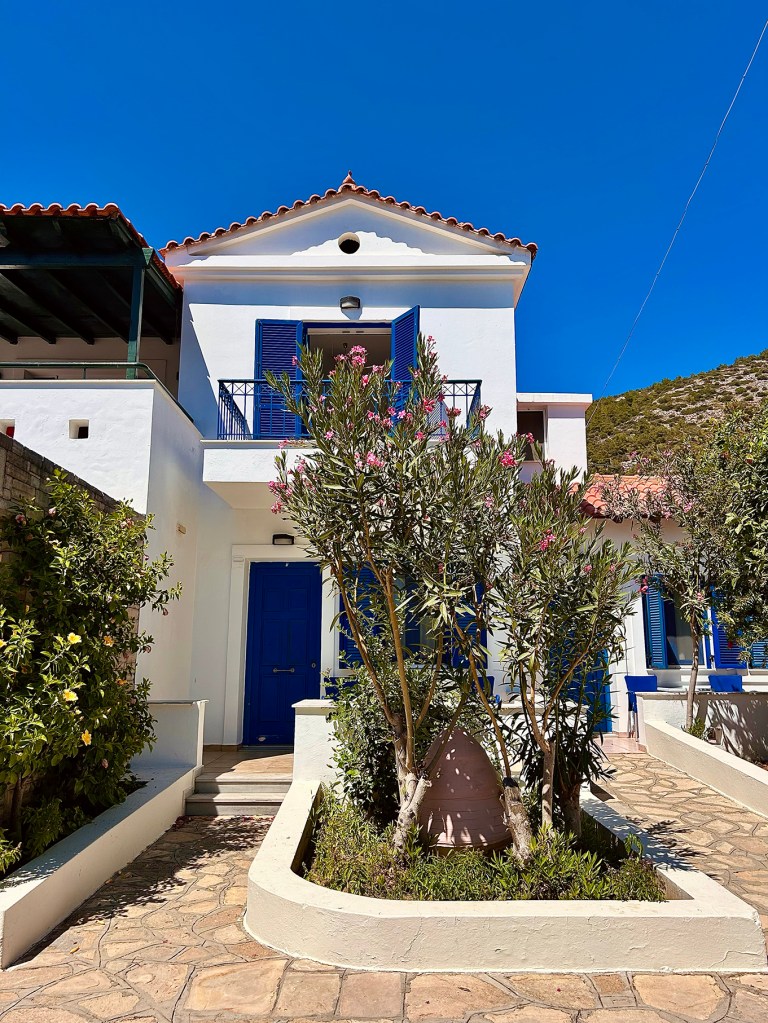
The hotel is called Evripili and it was absolutely perfect for my stay. I couldn’t have asked for a better location, as it’s about 100 metres from a very cozy pebble beach and just 50 metres from the seafront promenade. It is run by Martina, who I’d say is in her 70s, together with a younger lady who could be her daughter, daughter-in-law or another relative. They speak almost no English at all, so my Duolingo Greek really came in handy. Pretty soon I was translating for other hotel guests and having longer chats with the hosts. But the funny thing about Greeks, especially older people, is that as soon as they hear you say some words in their language, they get totally excited and start talking even faster. Even when you say that your Greek is really limited. Martina was no exception, she had a lot of things to tell me everyday, and after three weeks at her place, it was really like having a third grandma, who at the same time takes care of you and is all up in your business.
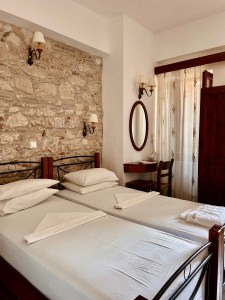

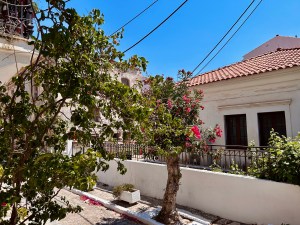
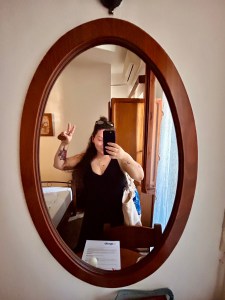
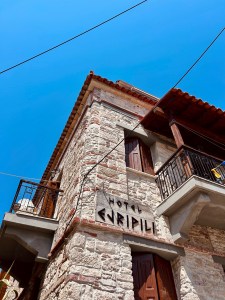
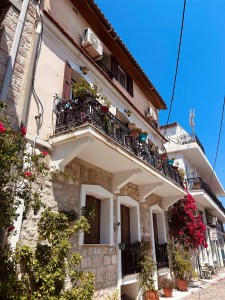
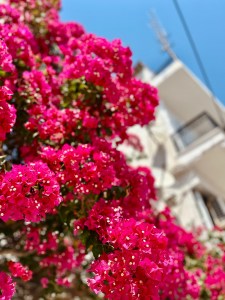
I got a room on the first floor, the one without a balcony, which was perfect for me. This is a simple hotel, with no frills, but it is spotlessly clean, the shower was great, wifi worked perfectly and the AC was included – nowadays in many hotels you have to pay extra for that. So for one person this was more than enough.
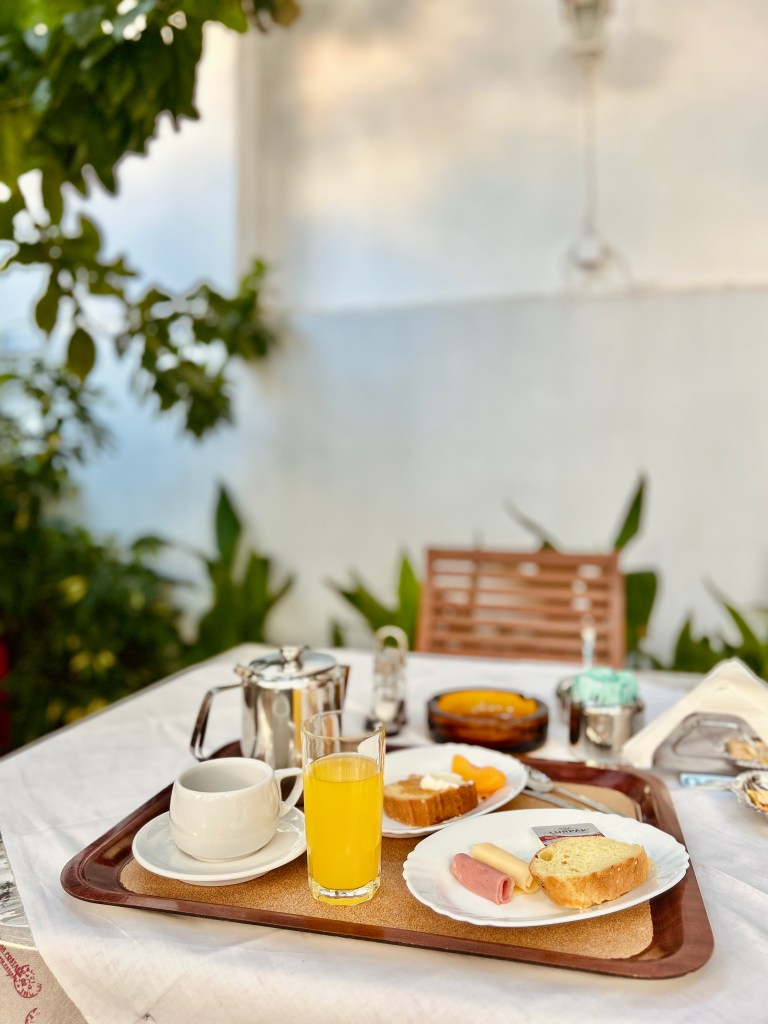
One of the main reasons I chose this place is that breakfast was included. Call me spoiled, but in recent years I’ve really come to love any sort of hotel breakfast, no matter how simple, because it’s literally the first thing in the day that helps me relax on vacation. I’ve experienced a lot of stress in my life and I’ve taken care of a hell lot of people except myself, so I’m really grateful that someone else gets that done for me sometimes. I don’t have to worry about what to make and then do the dishes. Someone else gets up earlier for my sake and I appreciate that a lot. It also saves some money, as eating every meal out can be pricey. Martina’s breakfast was just what I needed and it really got on my nerves some days that other guests would complain about it. It was a very simple one, with bread, butter, ham, cheese, yoghurt, honey, some canned peaches and a cake. She also boiled eggs and gave us orange juice, tea and coffee. People were dissatisfied with the hardness of the eggs, or were saying that there should be a more varied selection, or that the coffee powder was not to their liking. But no one ever stopped any of us from buying our own groceries and storing them in the fridges that every single room came equipped with. Like, if you want a cucumber, get yourself a cucumber and have your own breakfast…
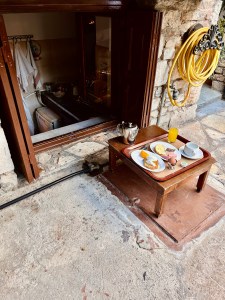
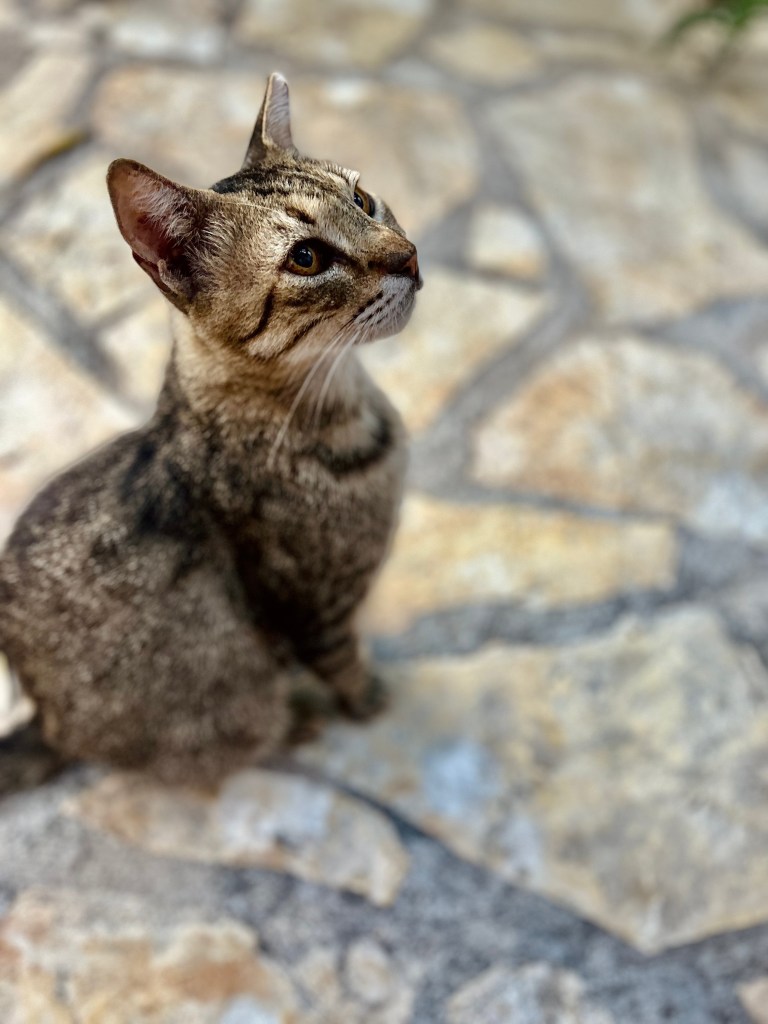
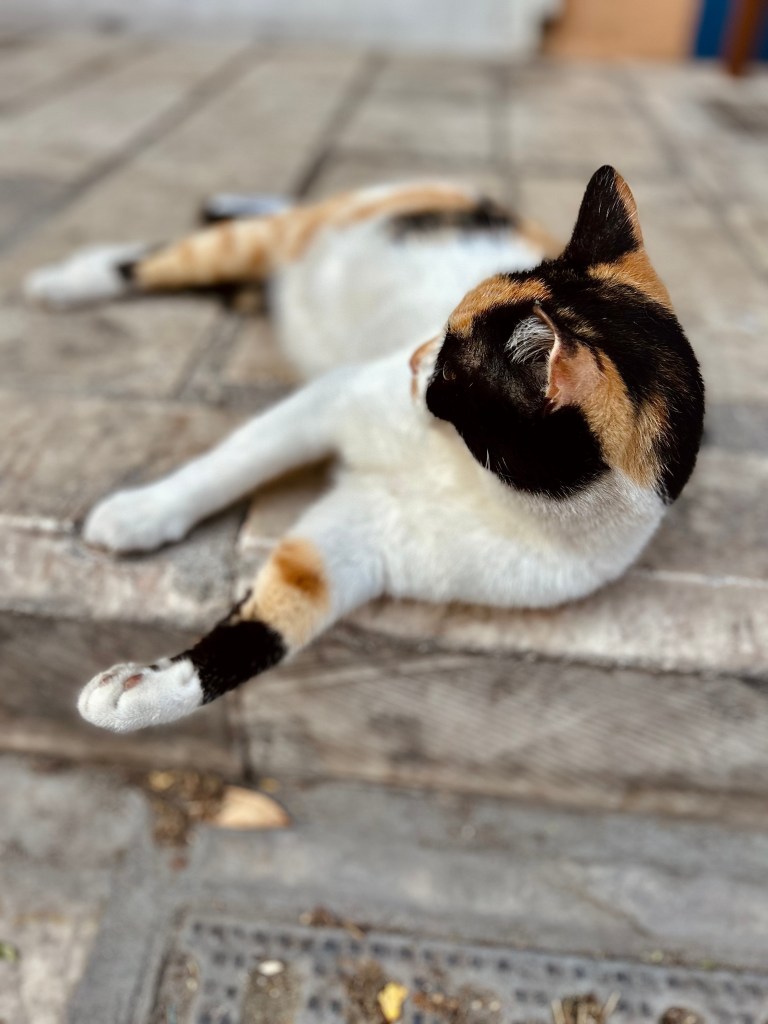
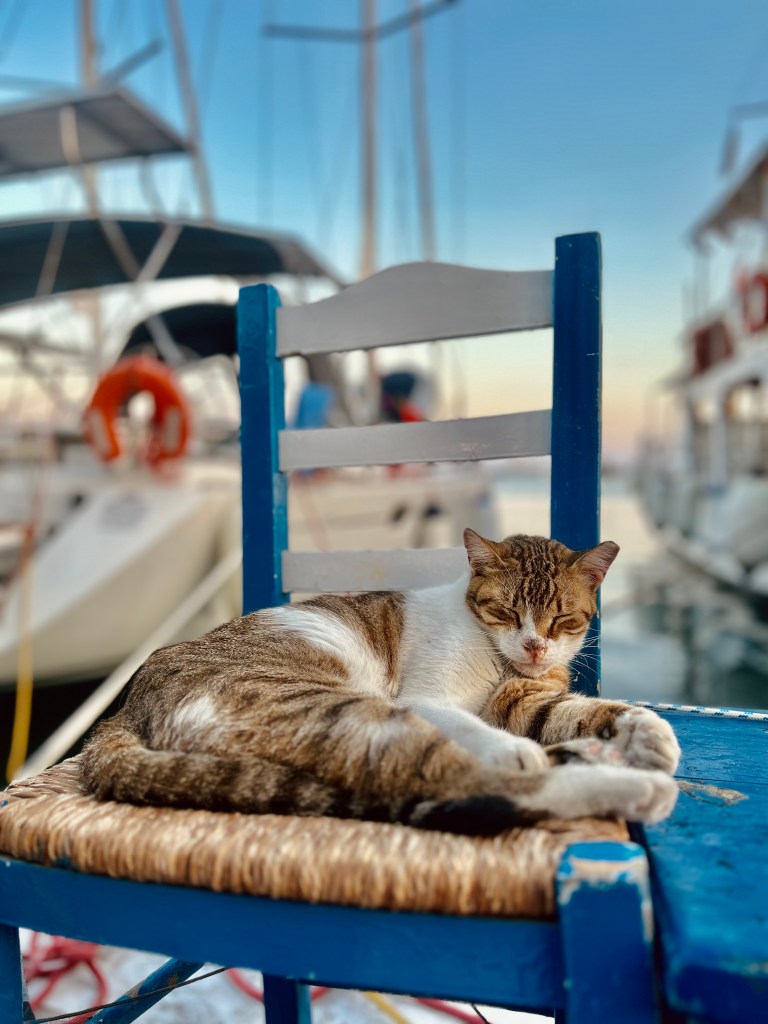
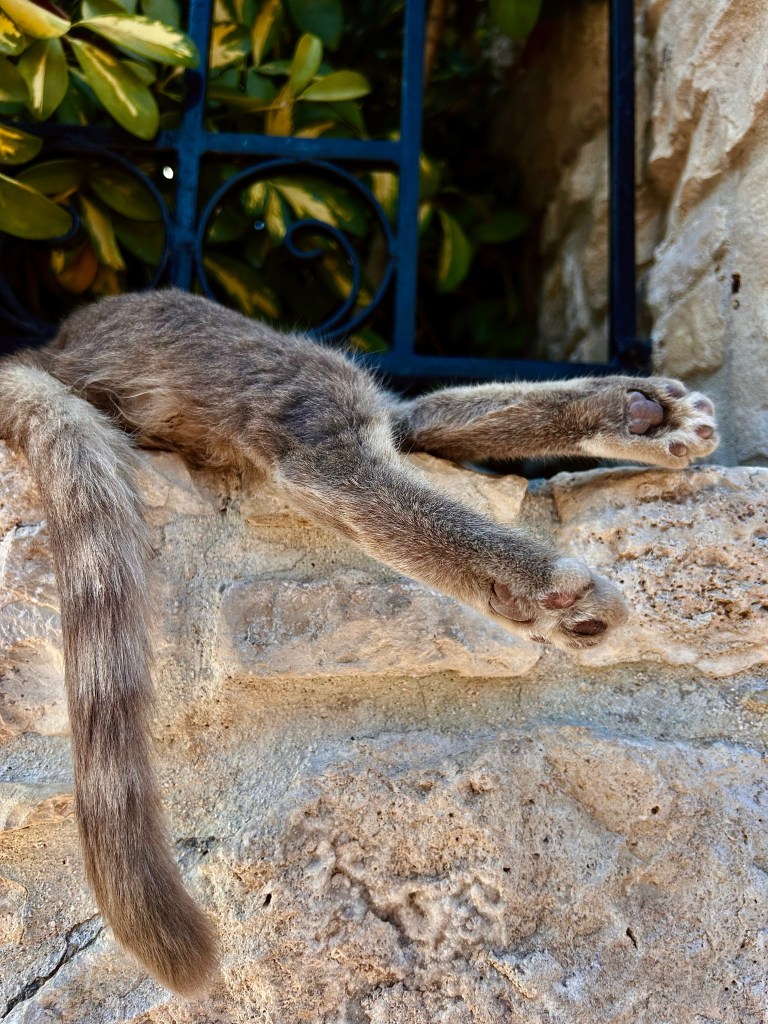
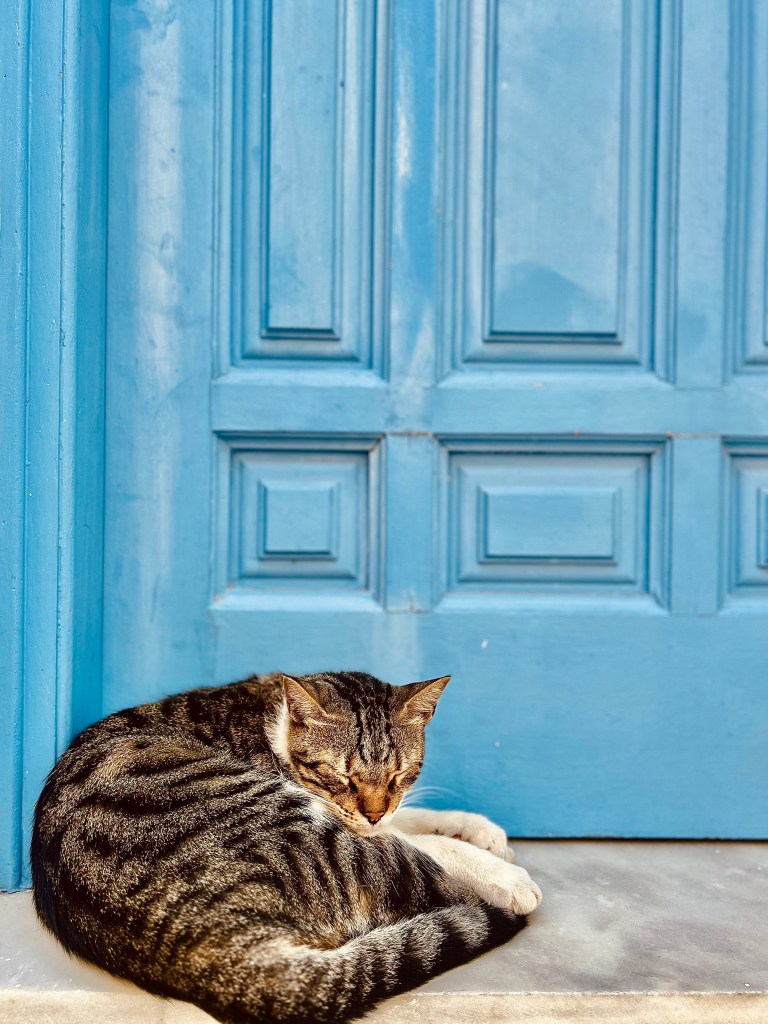
The original dining area of the hotel, together with the small kitchen, is downstairs. But ever since COVID, guests have their breakfast in the small garden. I mean, how lovely is that! So Martina prepares a tray for each guest and once you’ve added your items to it, she puts it on a small table through the kitchen window for you to pick up outside. When you’re done, you take it back to the small table and she takes care of it. Breakfast is served between 7:30 and 9:30 and you will have company from the kitties, they’re very punctual and know when breakfast is served.
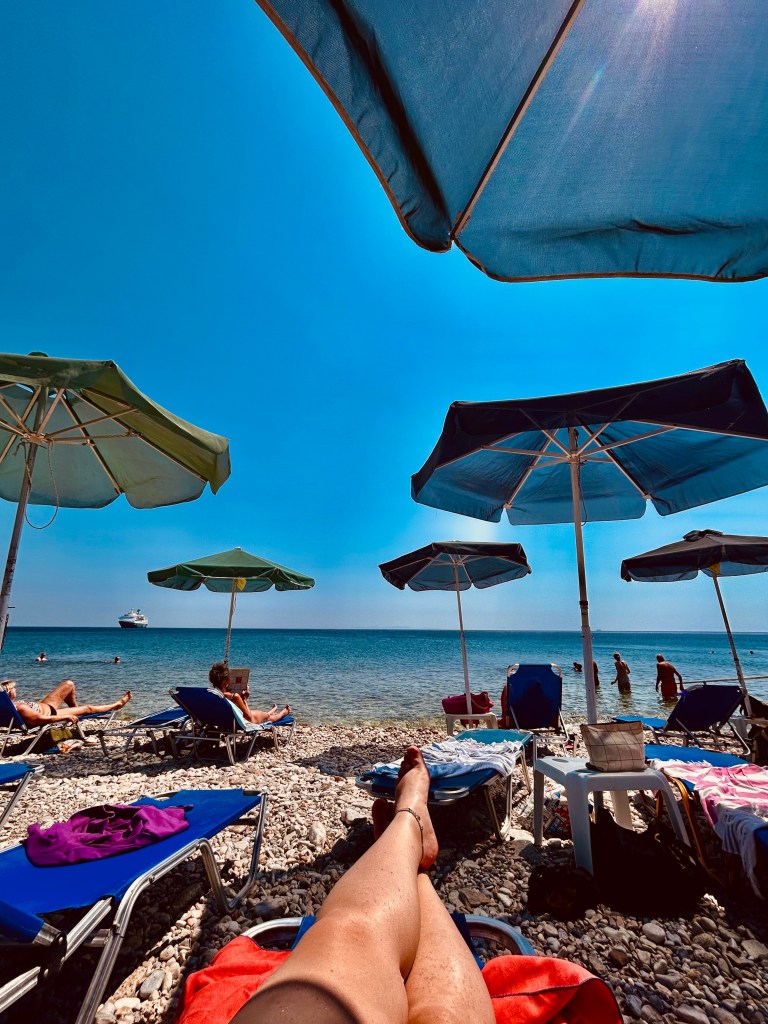
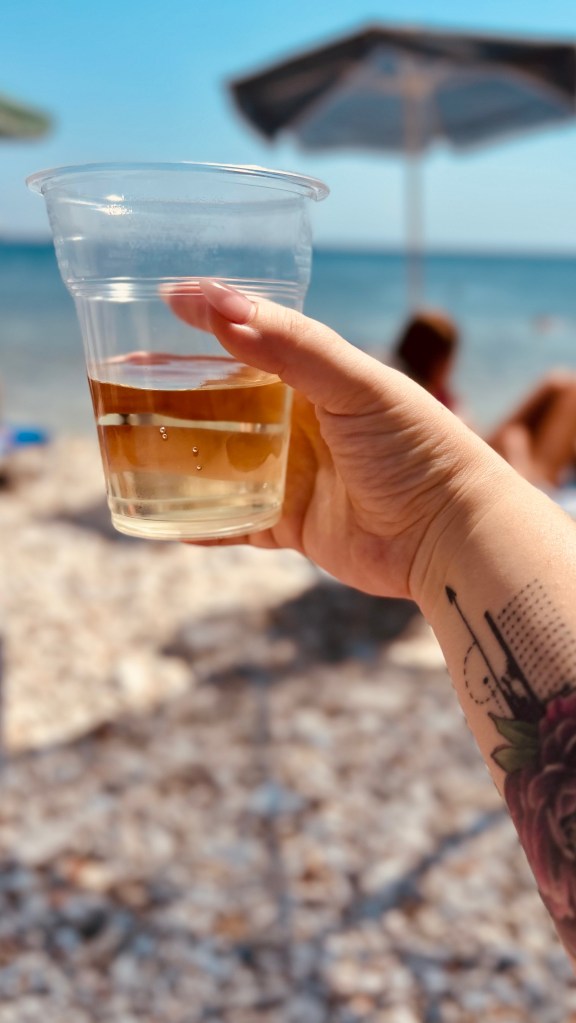
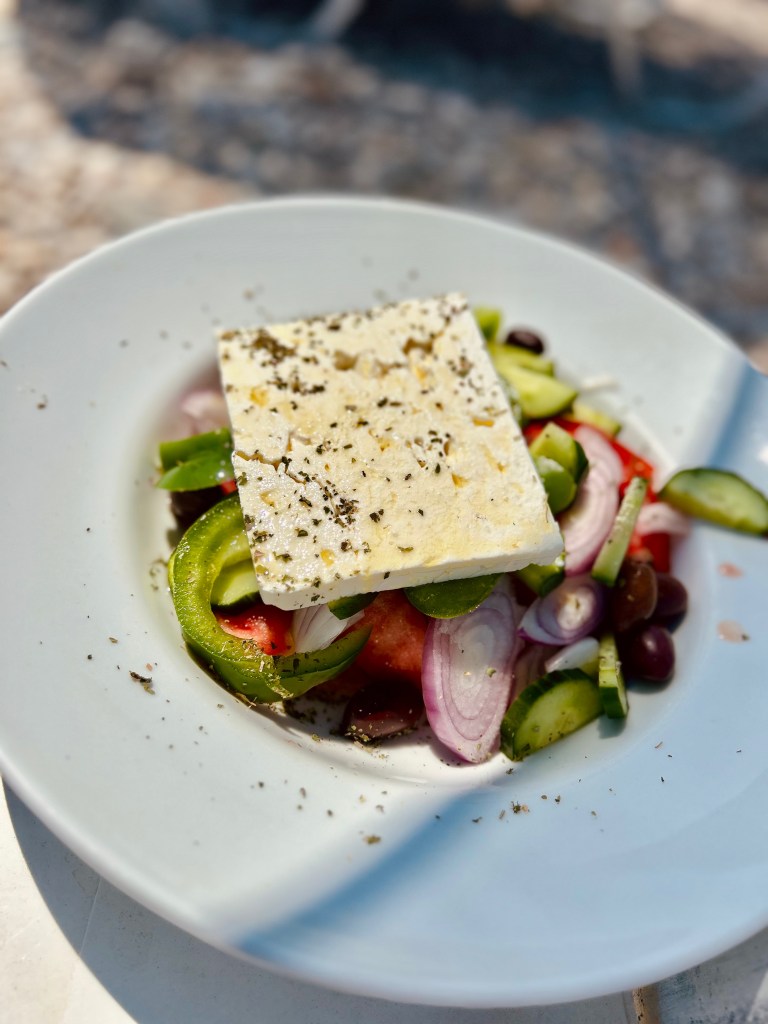
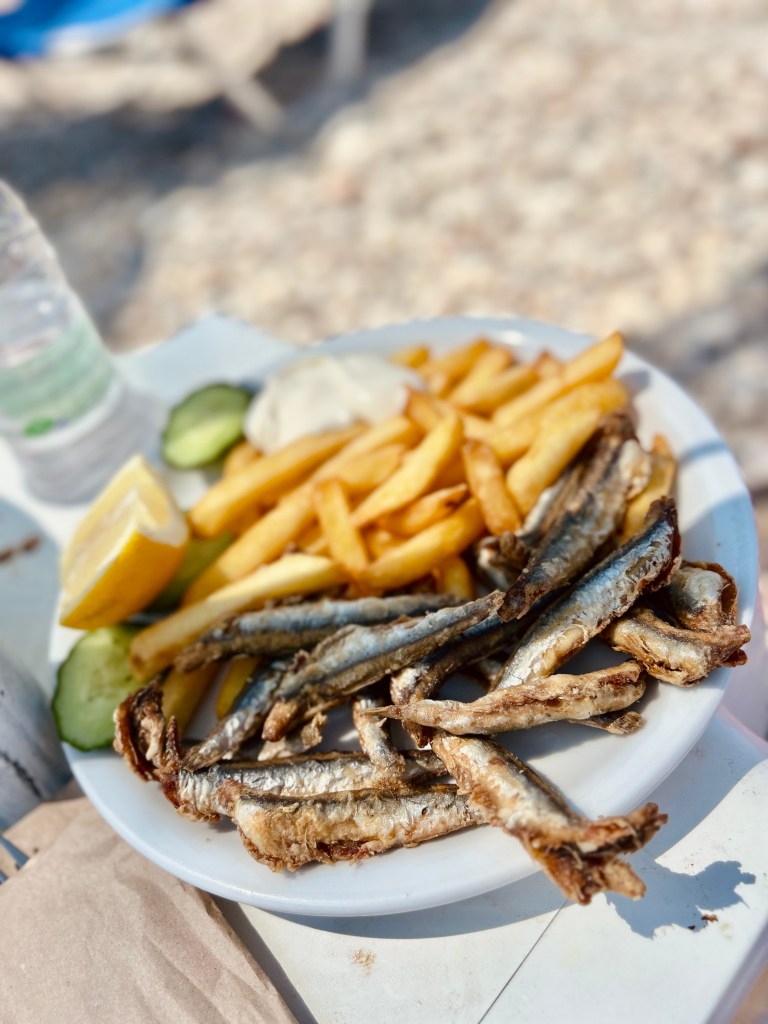
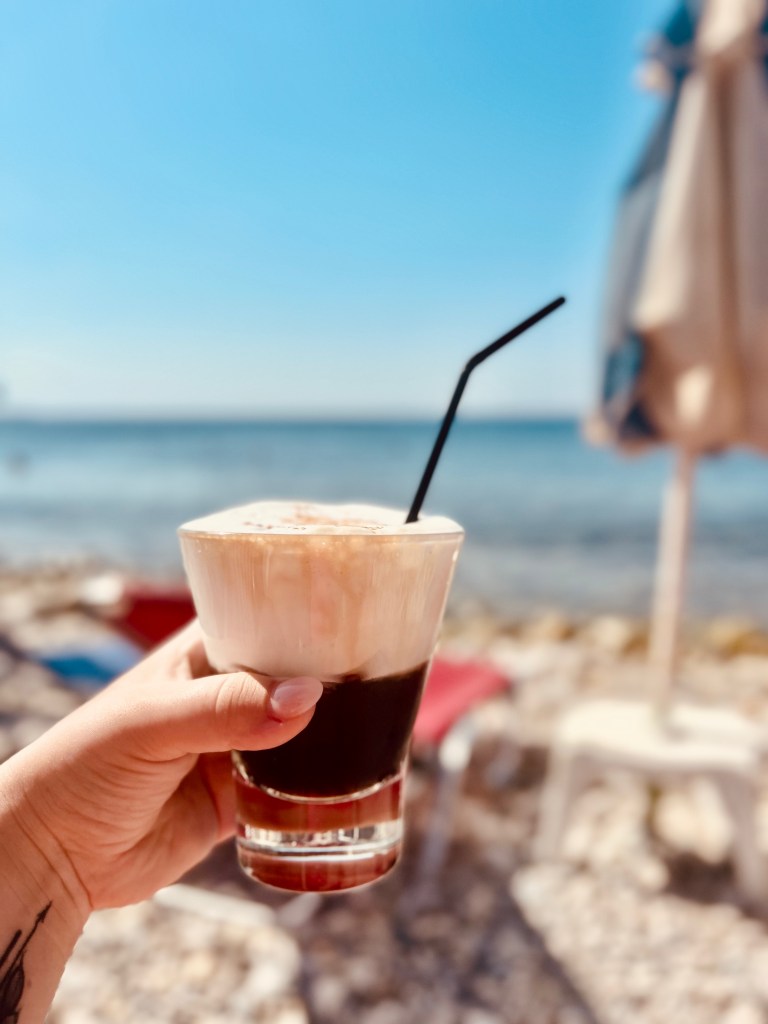
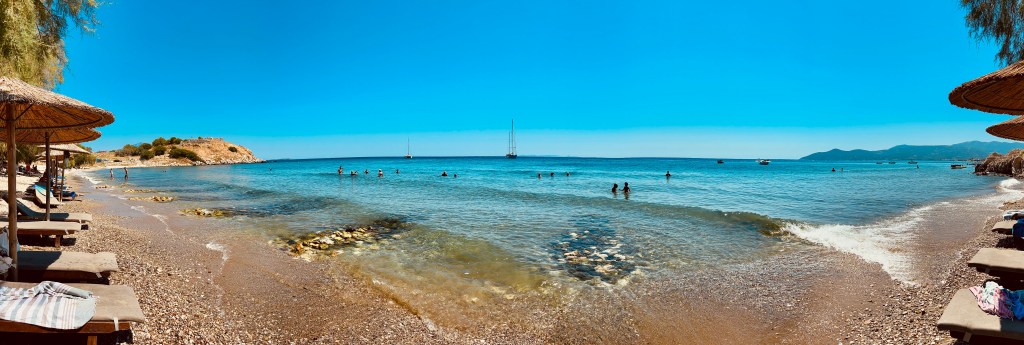
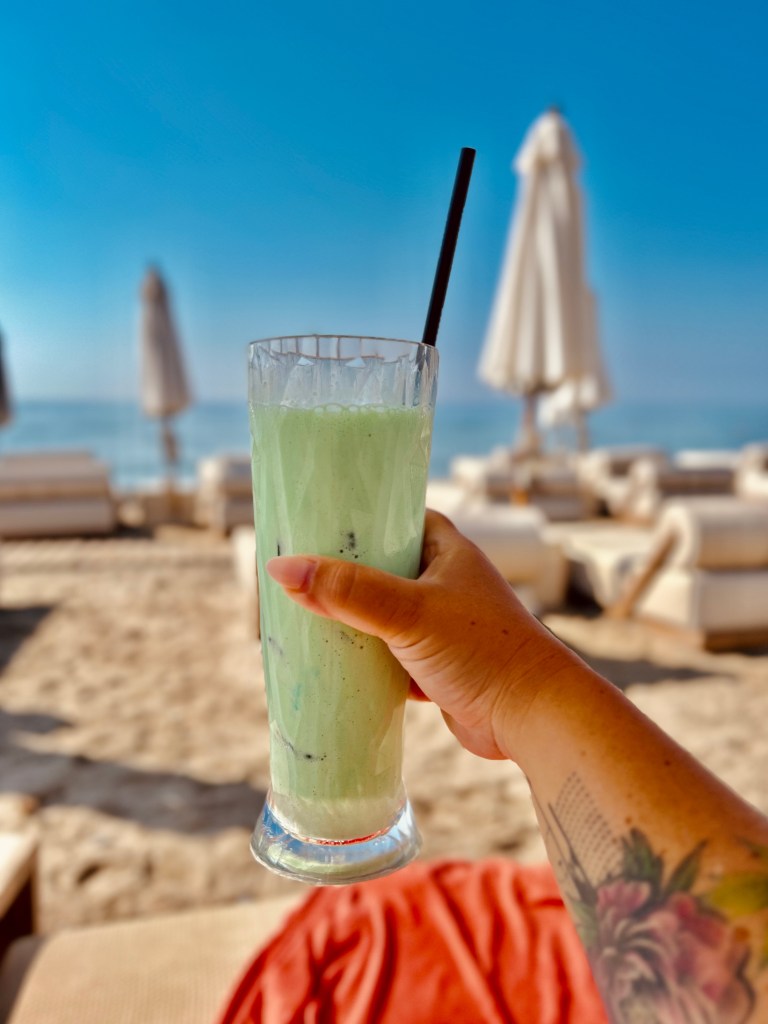
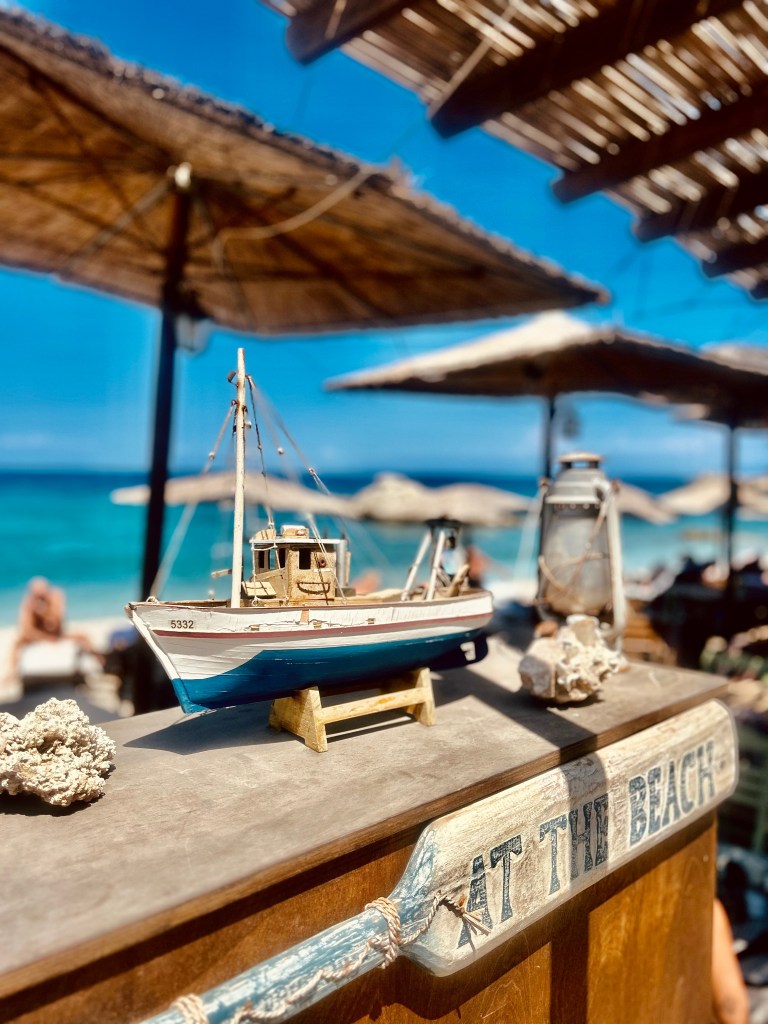
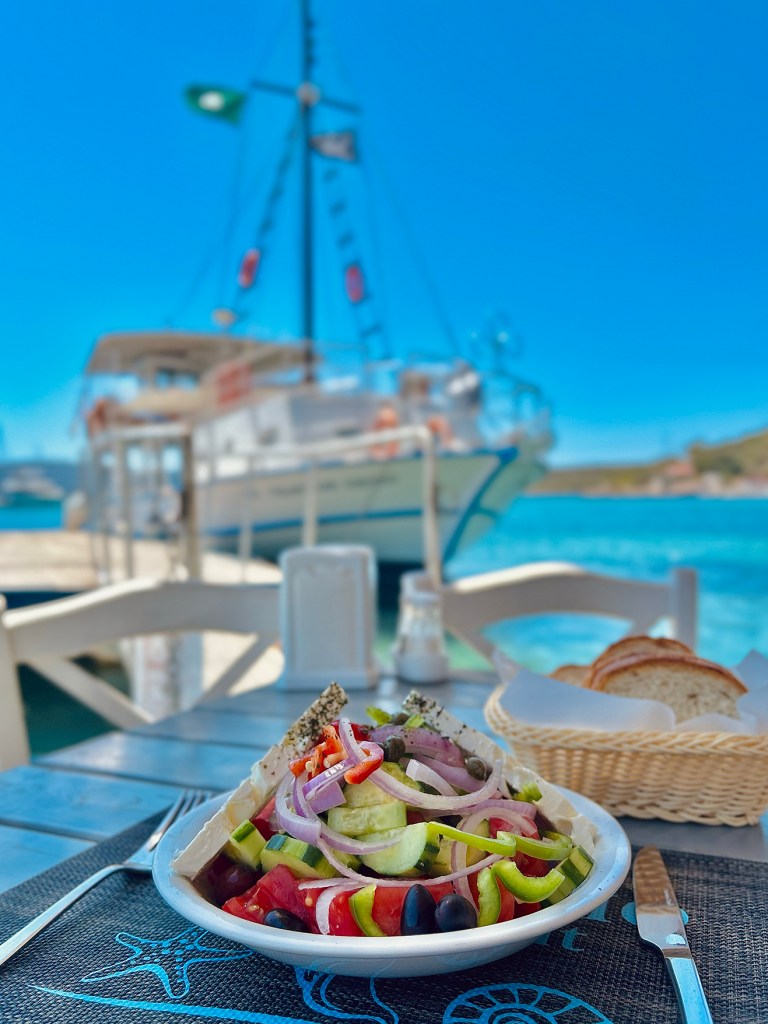
As soon as I got settled into my room, I went straight to the beach for a swim and lunch. The closest beach is literally a one-minute walk from the hotel. It’s a small one, with two tavernas – Tarsanas and Notos – who allow you to use their simple sun beds if you order something. The fancier sun beds at the other end of the beach belong to the Doryssa hotel up the street, but even those are available to everyone for a small fee and preferably a food or drink order. During my first visit, I stayed on the Tarsanas bit and had my first lunch – a Greek salad and fried anchovies. Most other days I stayed at Notos, having my morning ice coffee or a cold beer and delicious lunch.
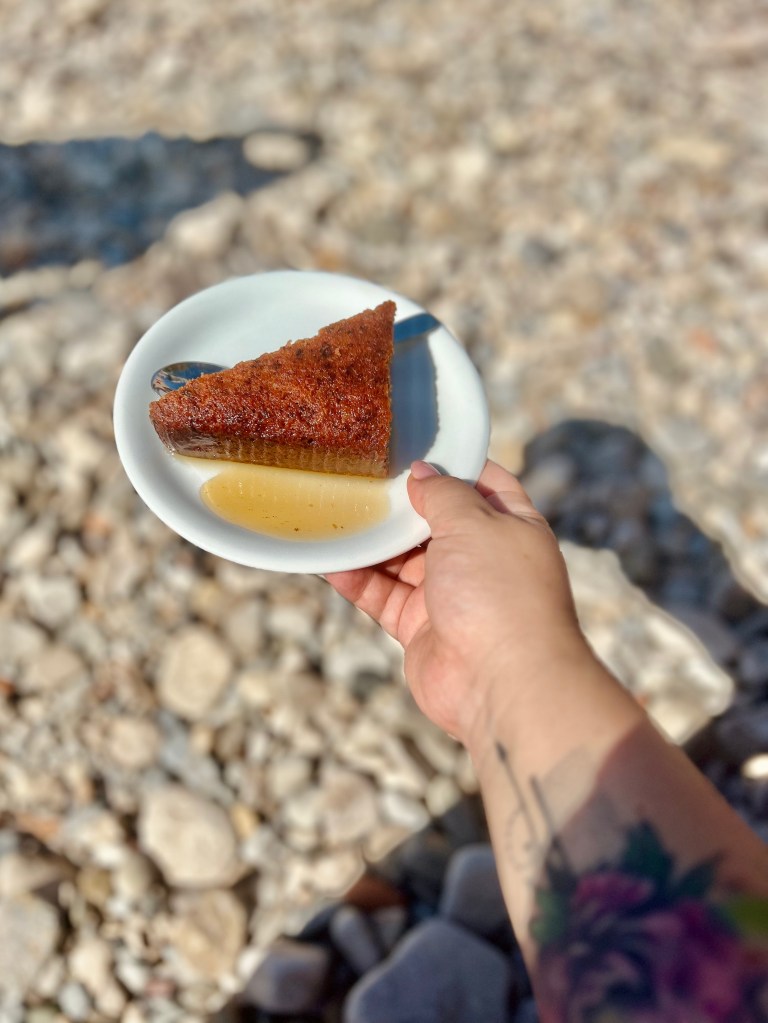
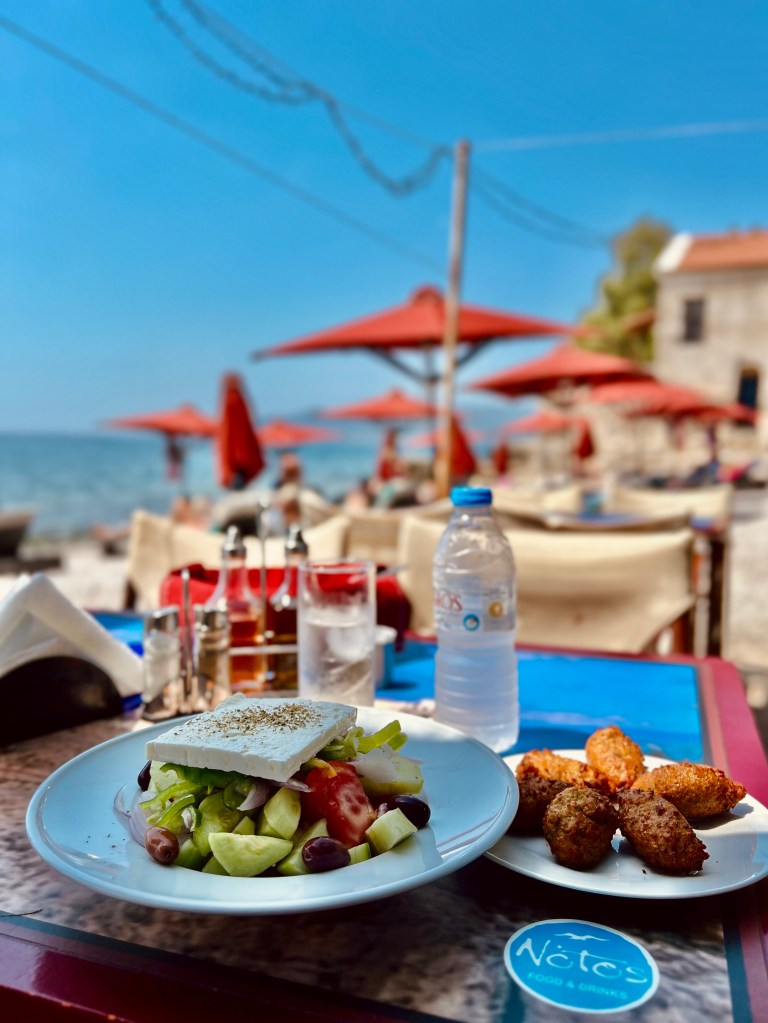
I thought about how to continue writing about the whole vacation after the first day in Pythagorio. If I was to talk about every single day, every single meal, every single shop, every single person I had any interaction with, this would be a series of novels with sequels, prequels, fan-fiction and then some. Imagine that, longer than it already is. So I’m going to describe the places in a more general manner, with details about my experience, rather than take you through a timeline from day one to day twenty-one. Hopefully, this could serve as inspiration for some of you to visit Samos and explore everything that this fantastic island has to offer.
Pythagorio
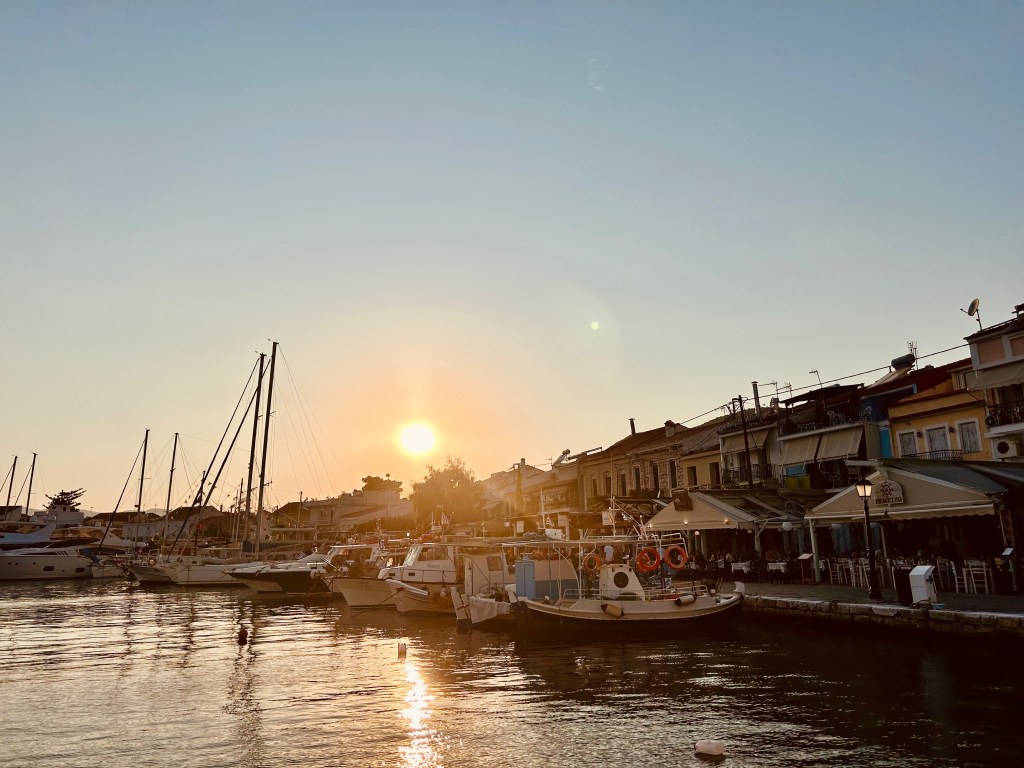
My home-base, Pythagorio, perfect for a quiet stay, great for exploring the rest of the island. Just enough restaurants, bars and shops for everything you might need on vacation, from groceries to boat supplies to water shoes to ceramics, soft satin dresses and jewellery. It’s located on the south-east side of the island and has a port for smaller vessels as well as one for ferries that take you to other islands and even Turkey.
When in Greece, it’s a real shame to not eat the local food. I’ve never really understood people who go on vacation only to eat the same things that they have at home, or to be very picky and look for specific foods that are not typical of the place. Naturally, a long stay can become pricey if one visits restaurant after restaurant, my point is not to aim for financial ruin, and of course one is allowed to have personal taste. What I mean is that Greece has such a fabulous cuisine and there is so much deliciousness to stuff your face with everywhere. For example, if you’re in a fishing village there will most probably be amazing seafood. If the land is good for agriculture, there will be great fruit and veg. If there’s a rich tradition of cooking, of producing wine, of living naturally off the land – which very often is the case around Greece – the experience will be so worth it.
I did not have one bad meal in Samos, and Pythagorio offered fantastic food.
I would divide the restaurants/tavernas and bars into three categories:
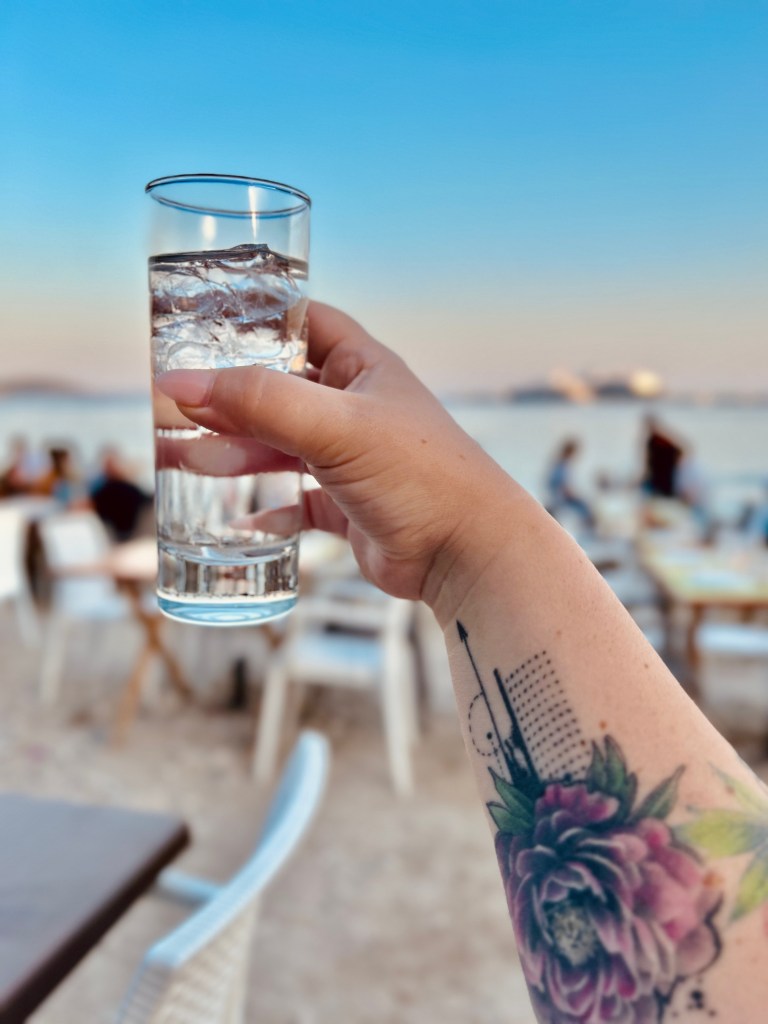
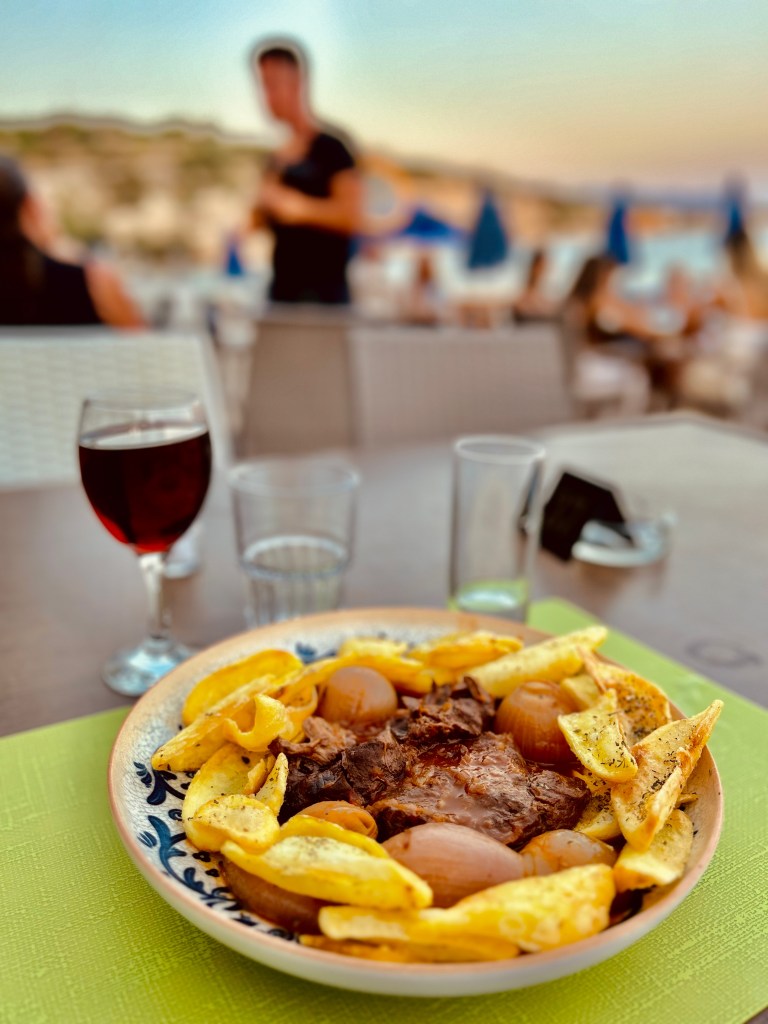
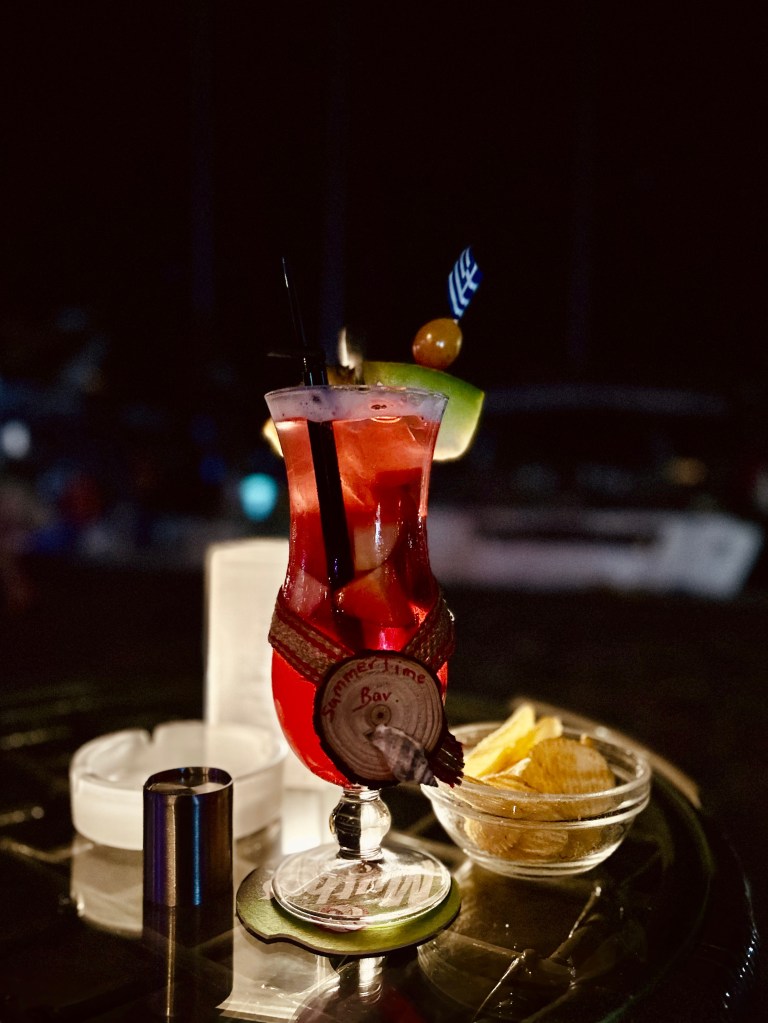
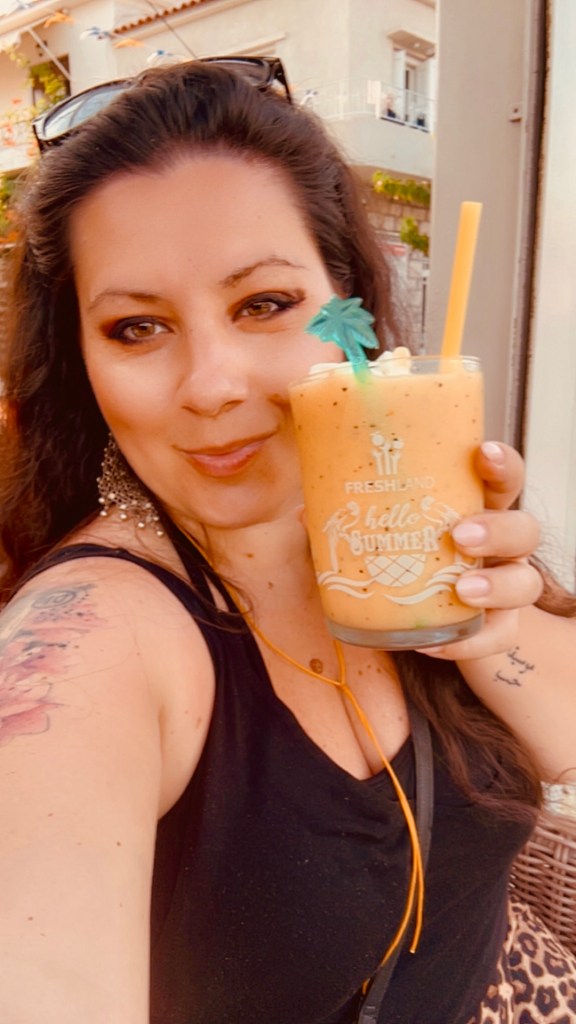
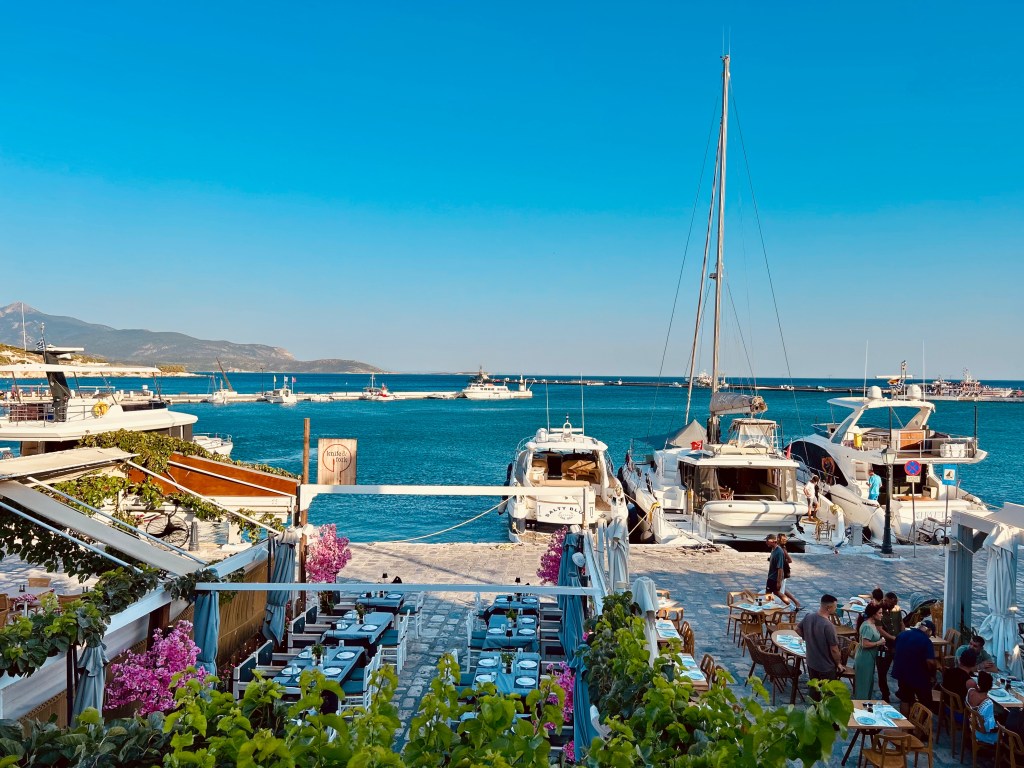
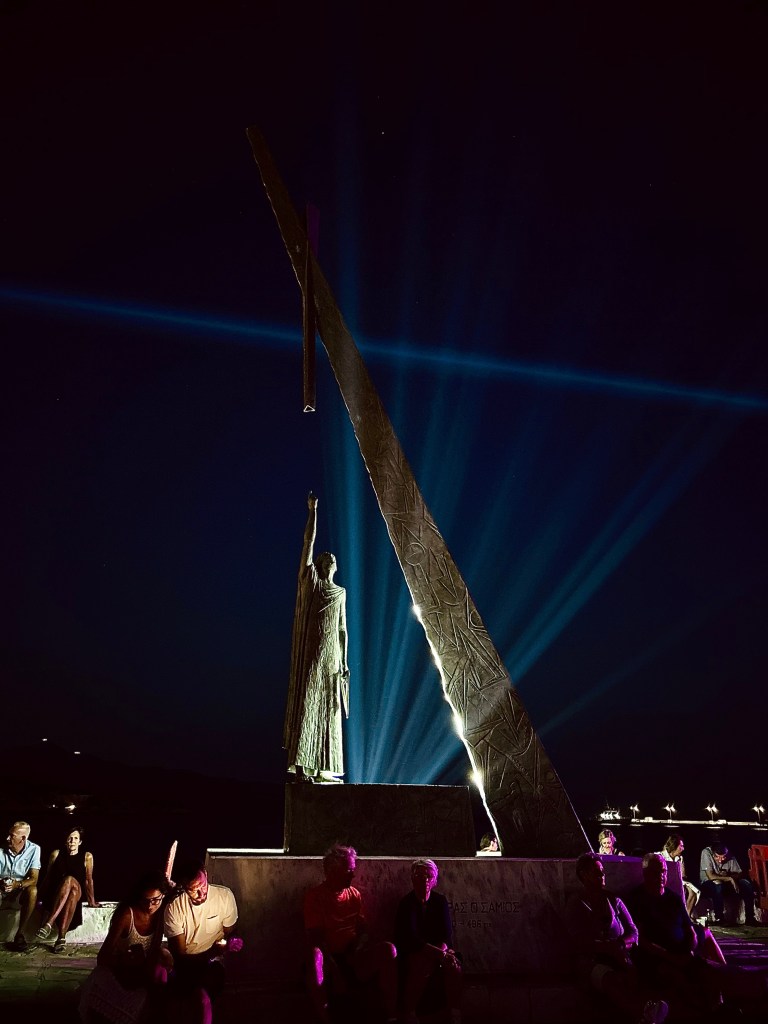
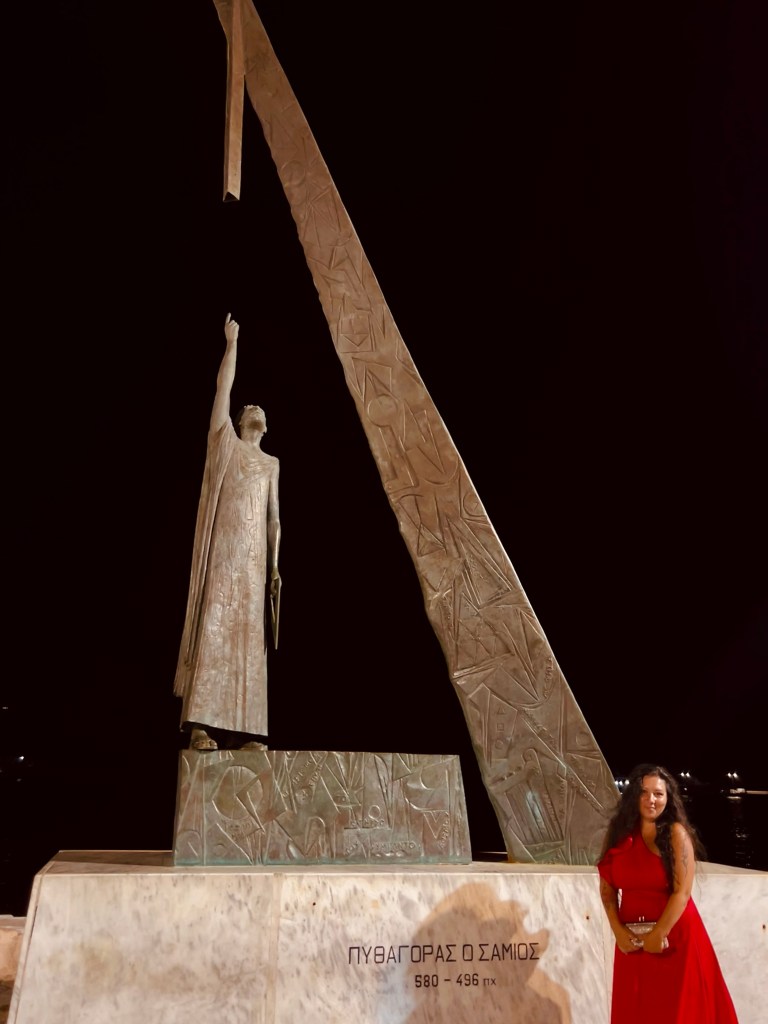
The ones on the seaside promenade, with beautiful views of the ports and Mediterranean, ranging from small meze plates to fine dining. The prices are similar in many of them and everyone’s got their favourites. The tavernas are generally cheaper and offer more generous portions. The restaurants closer to the pier and Pythagoras’ statue aim to be a bit fancier and there’s a chance you might get a much smaller dish at a higher price. But the food was delicious everywhere – again, I didn’t have anything that I didn’t like. This is my fifth year in a row going to Greece and I feel great when I’m there, gut-wise. You can really tell it’s fresh and healthy; it’s real food. I ended up having most of my meals at Ambrosia, Polykratis and Ariston, with some visits to Yamas, Agora, To Mouragio and Remataki. For drinks, I spent lots of time at the very friendly Gregory’s Bar, but I also had delicious cocktails and smoothies at Enplo, Corner Cafe, BlueBoat Bar, The Swanky Nomad, The Pearl Bar and SummerTime Bar.
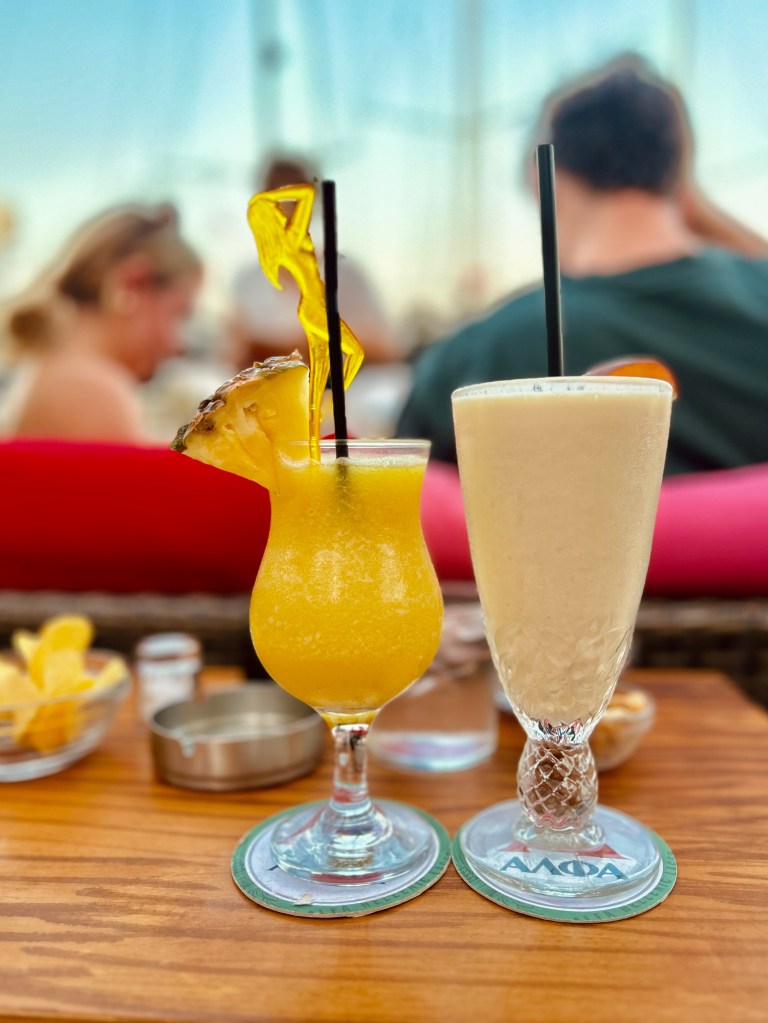
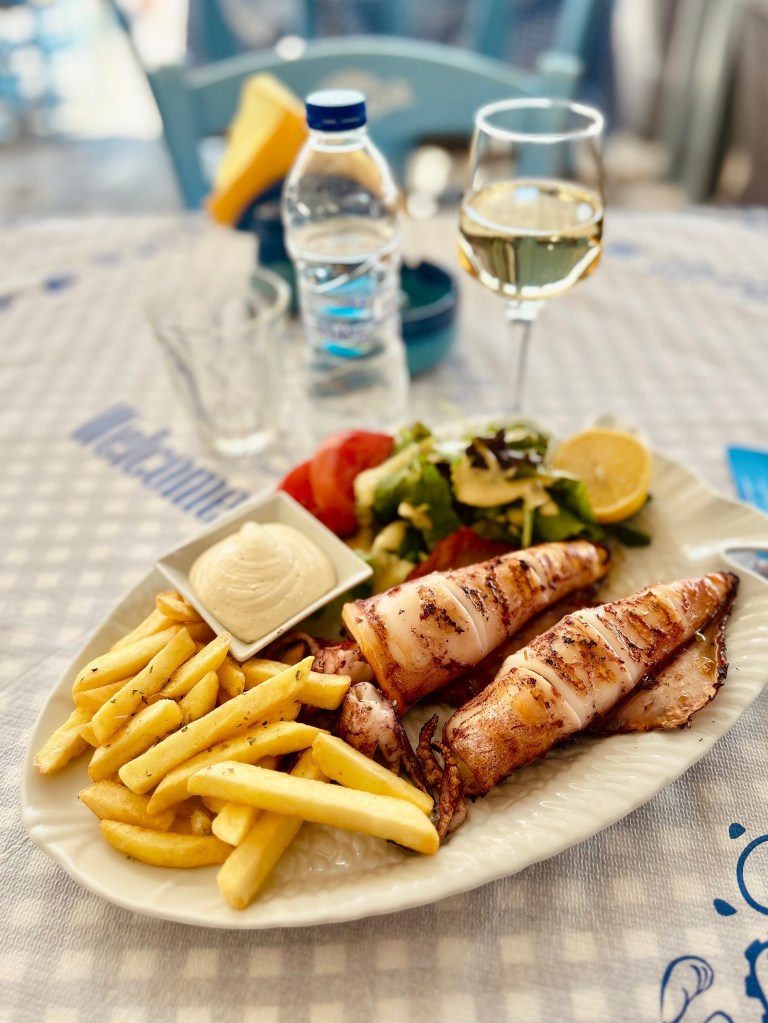
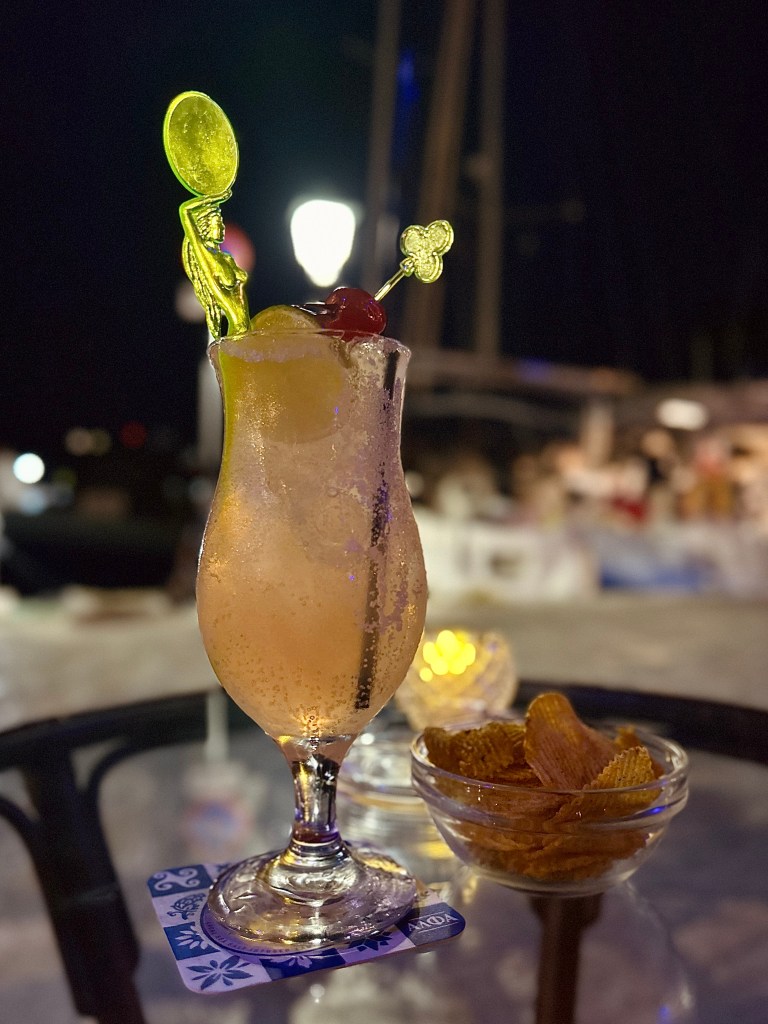
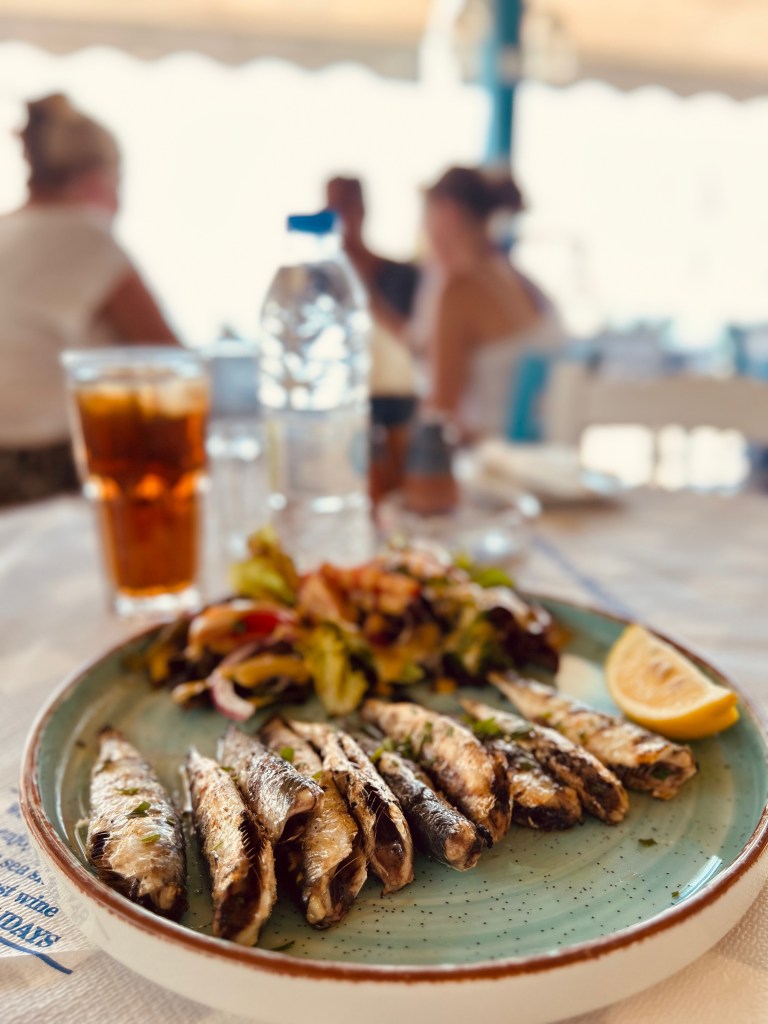
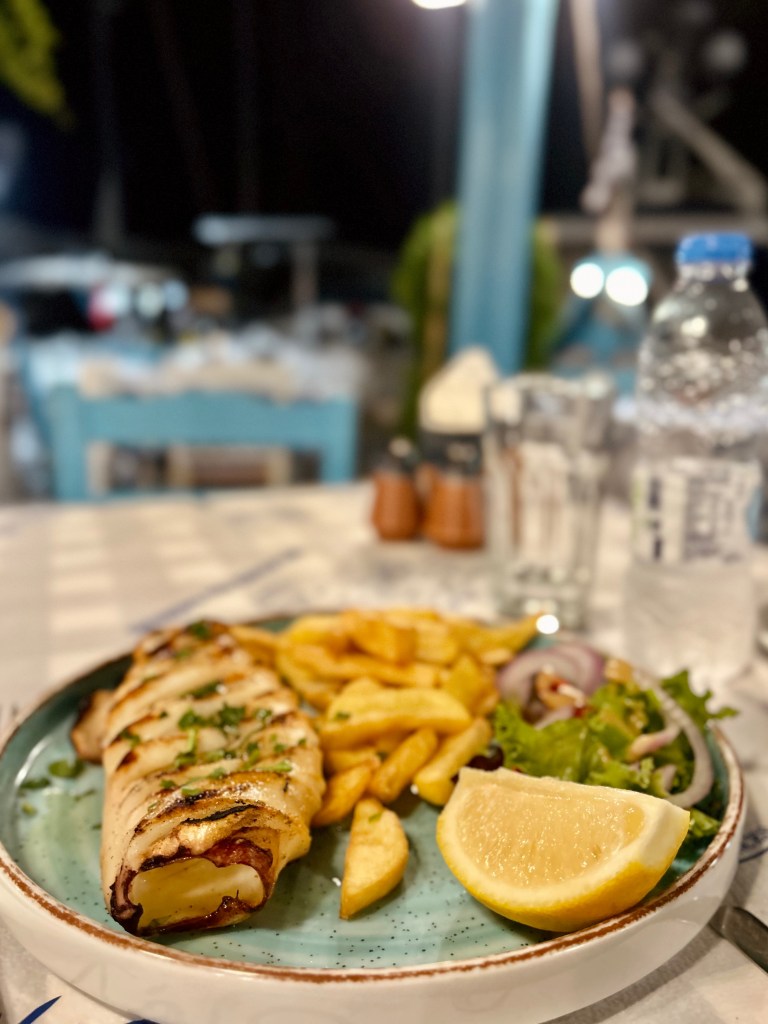
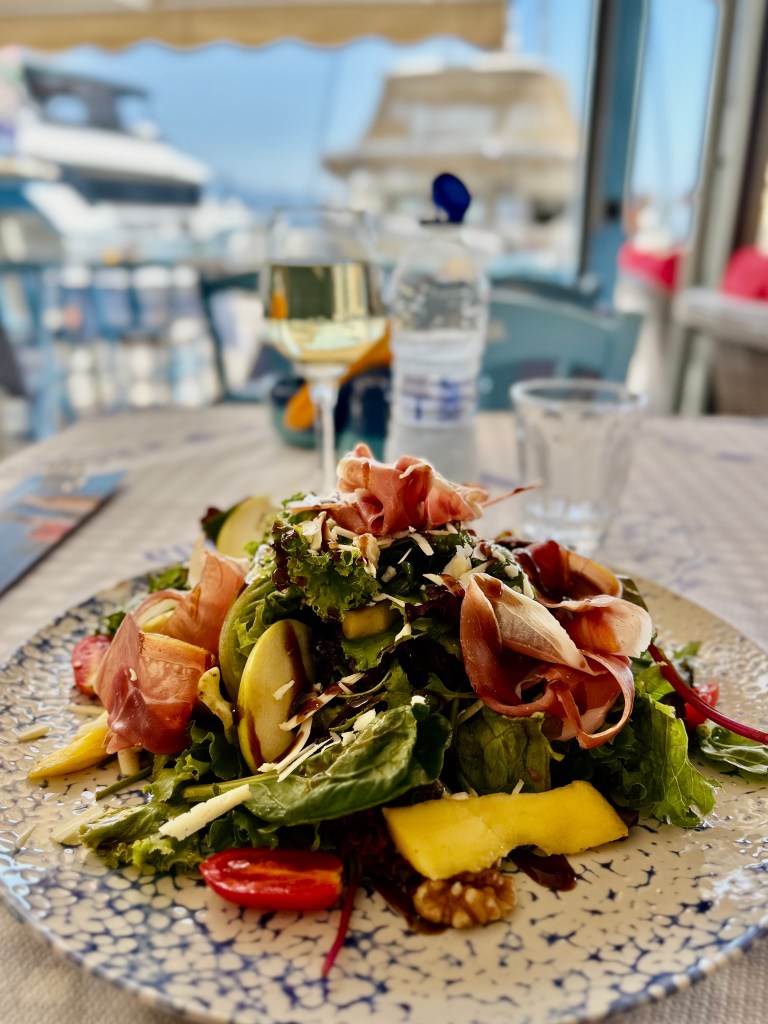
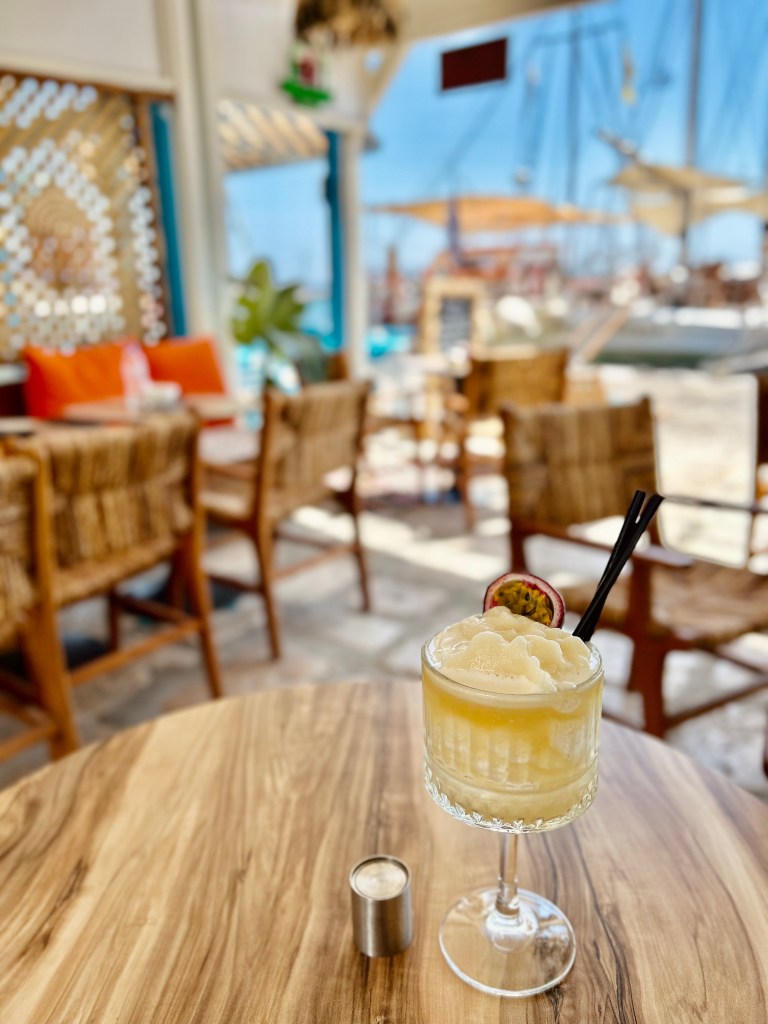
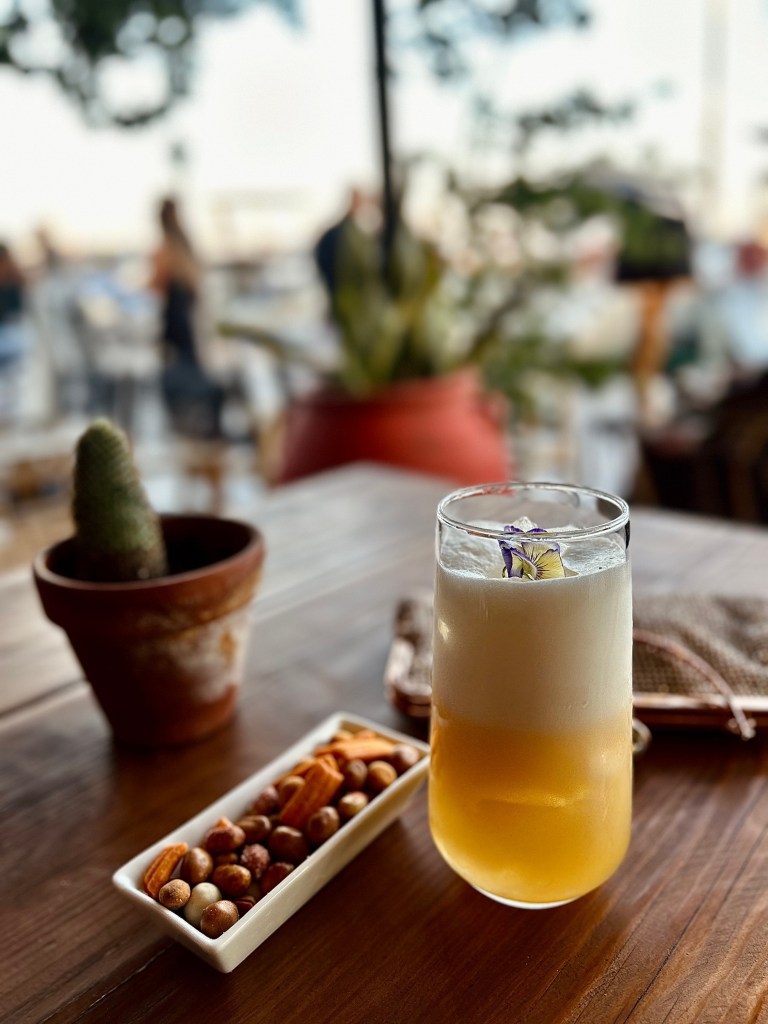
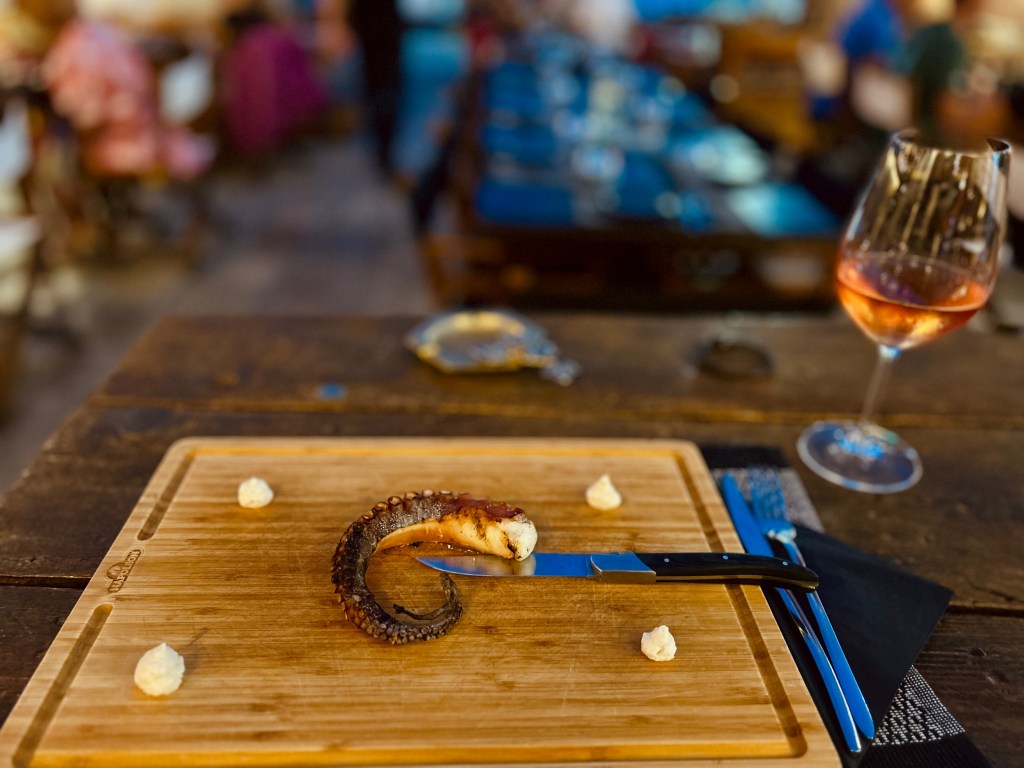
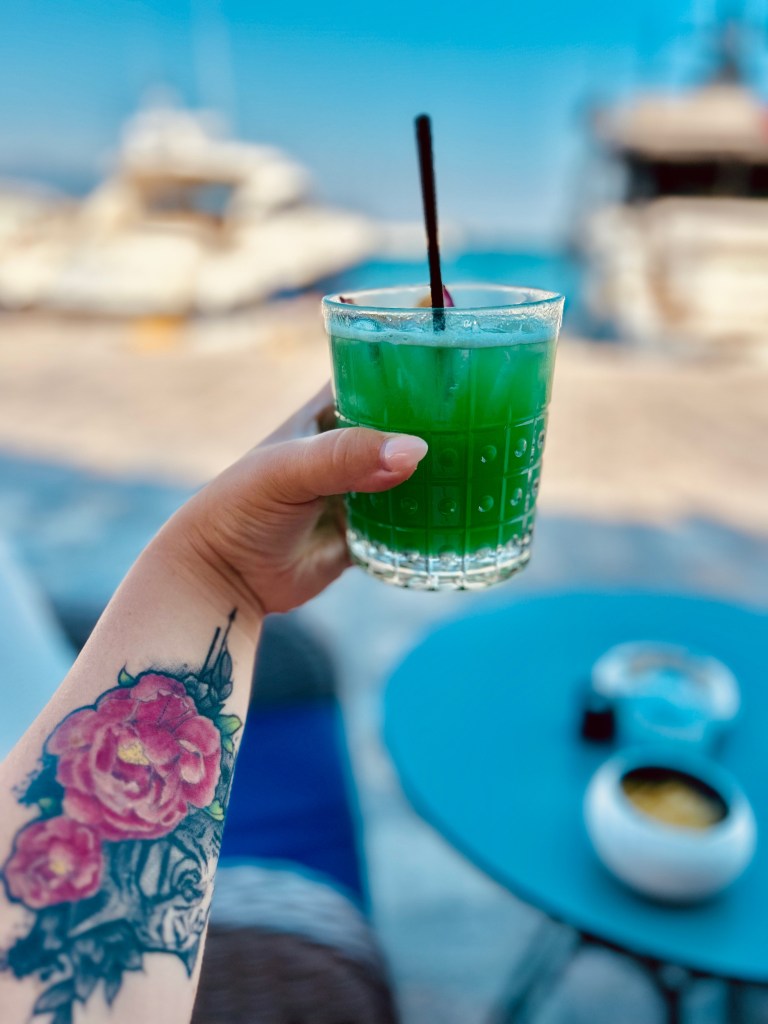
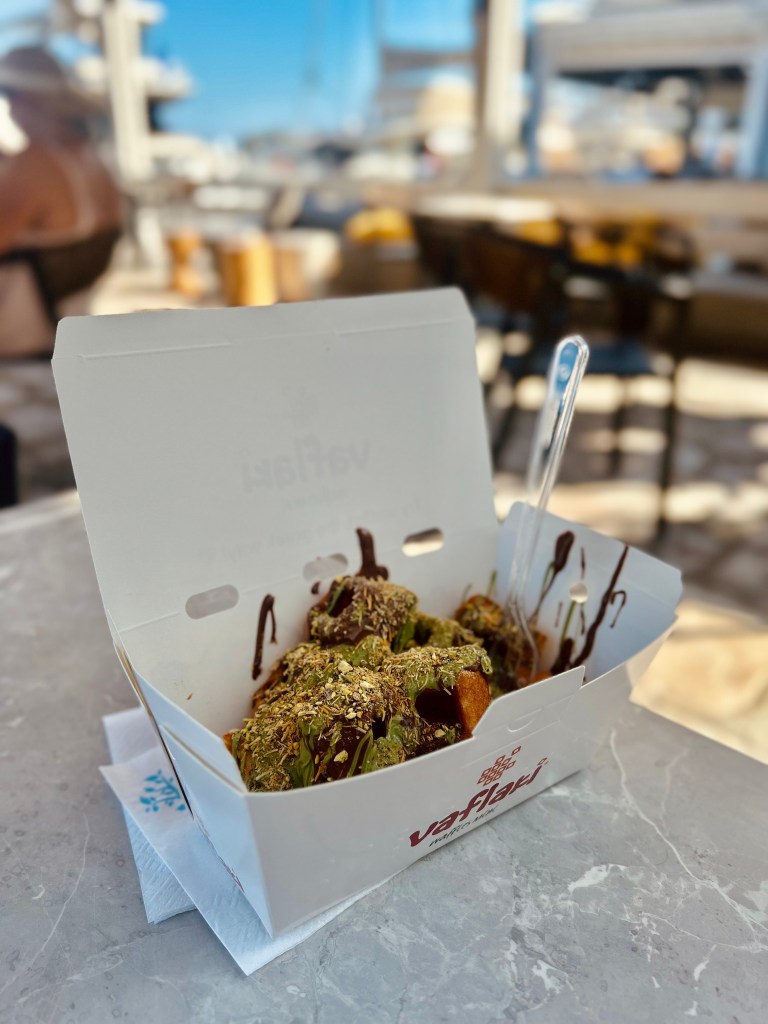
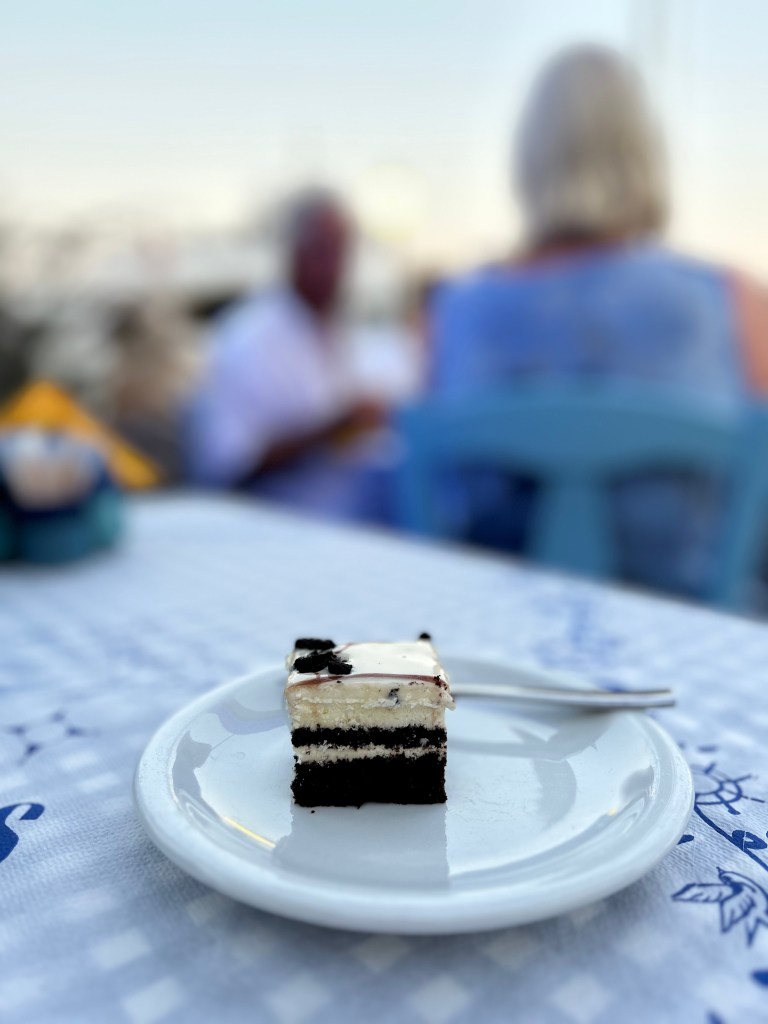
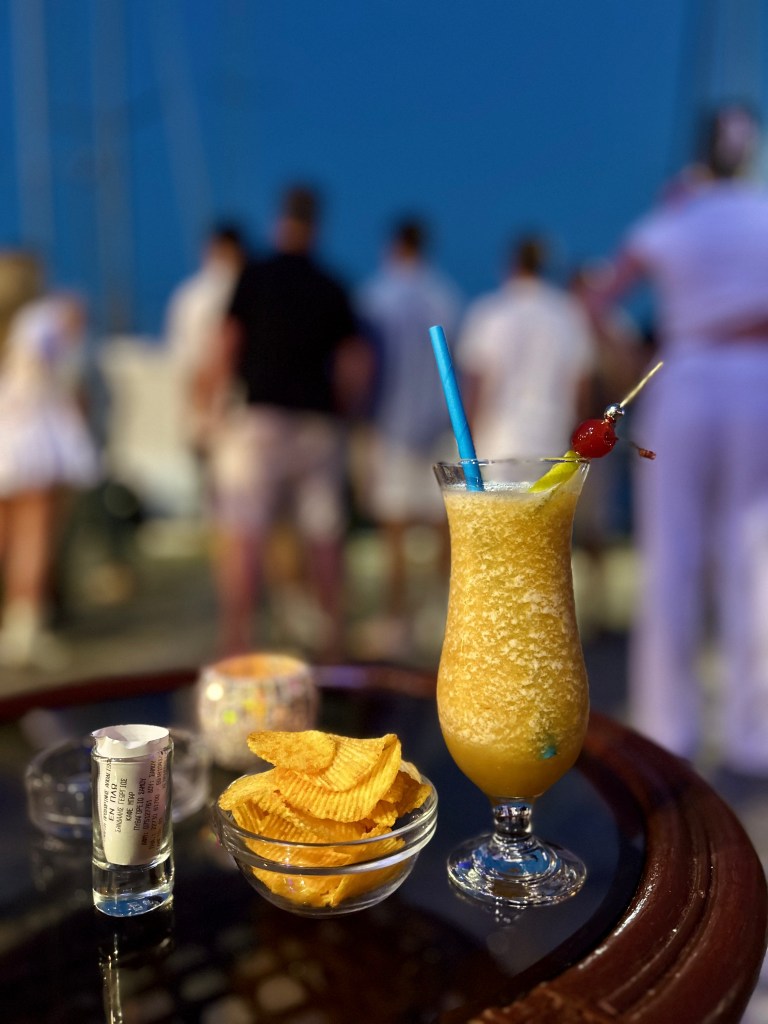
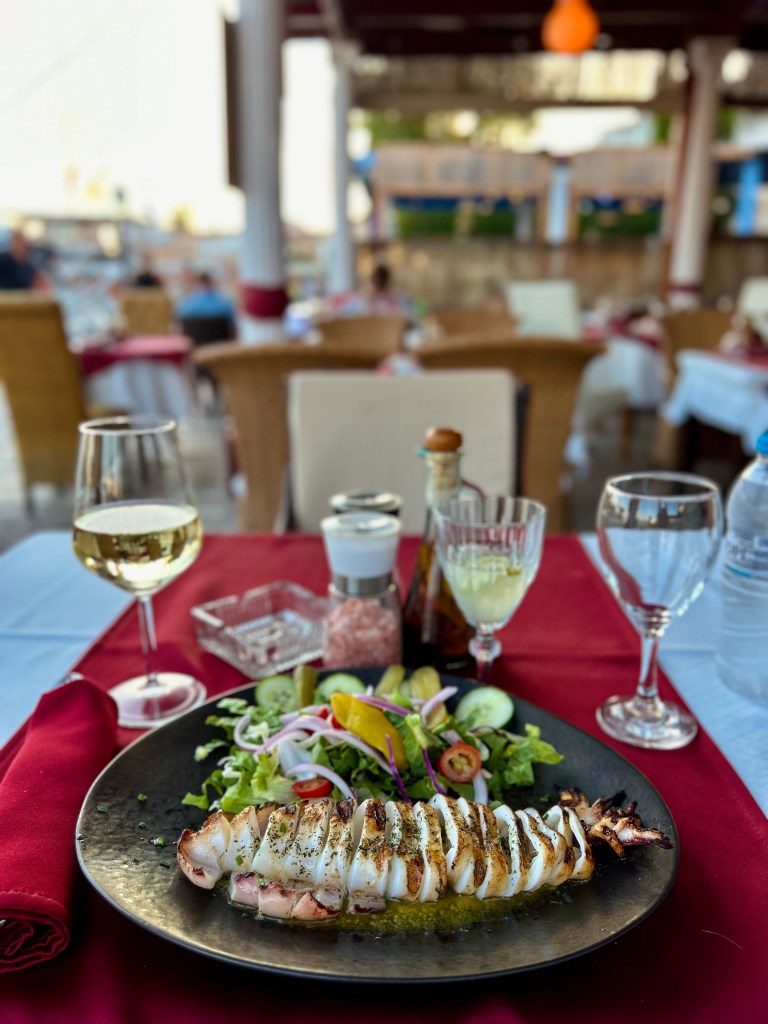
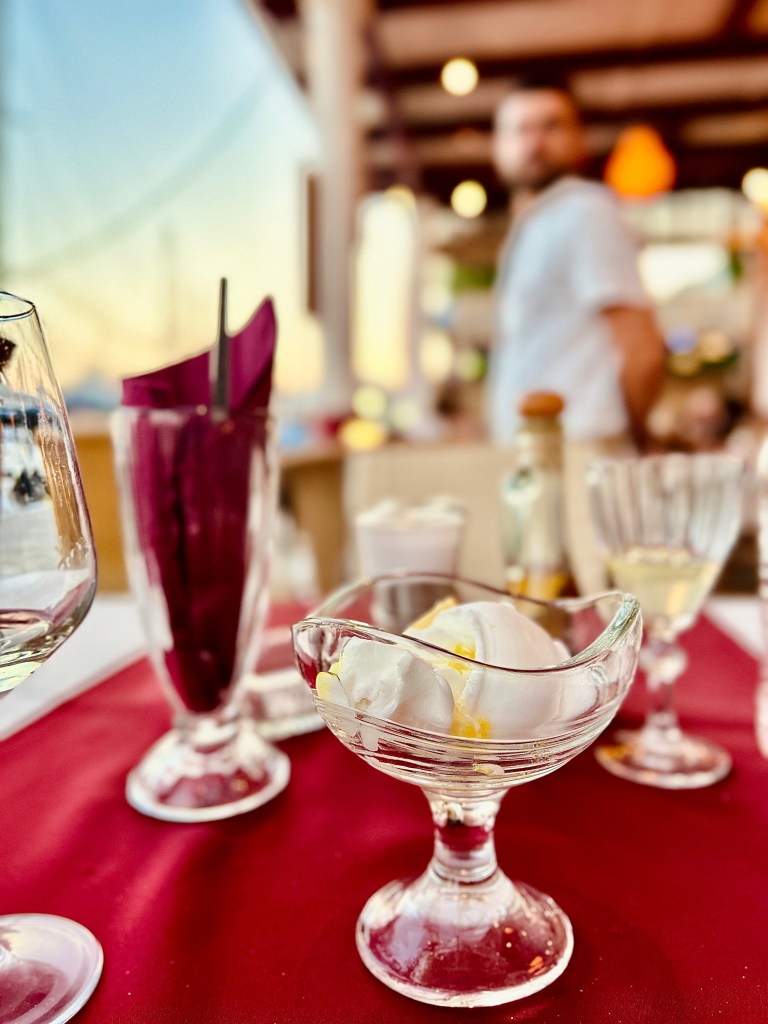
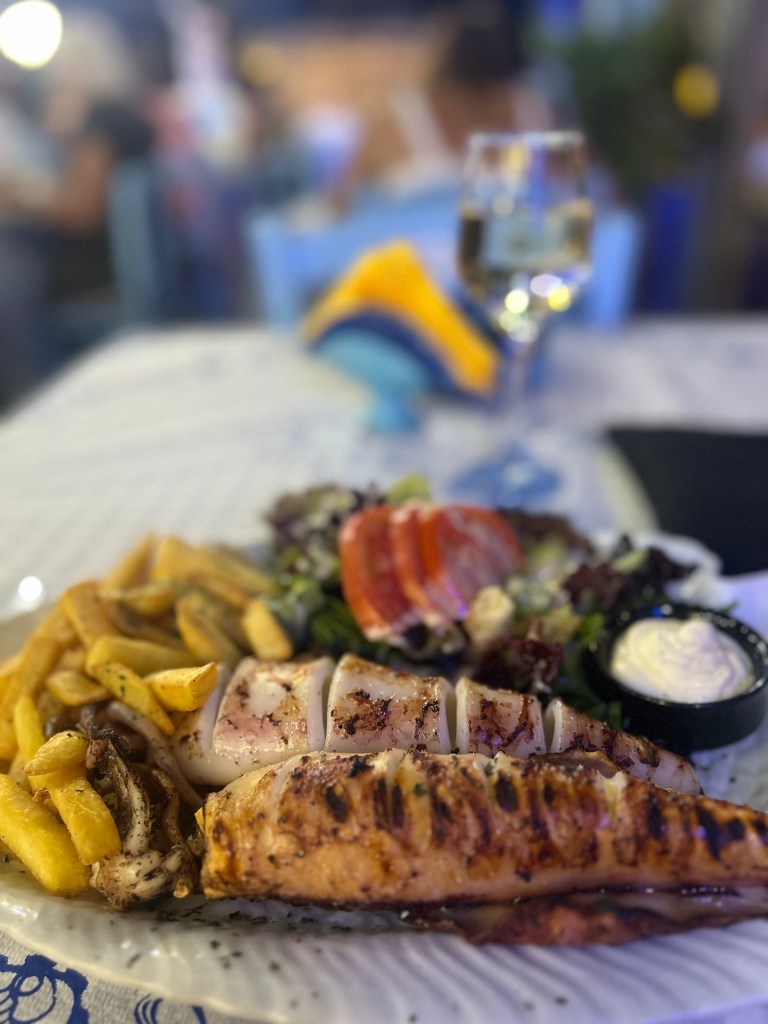
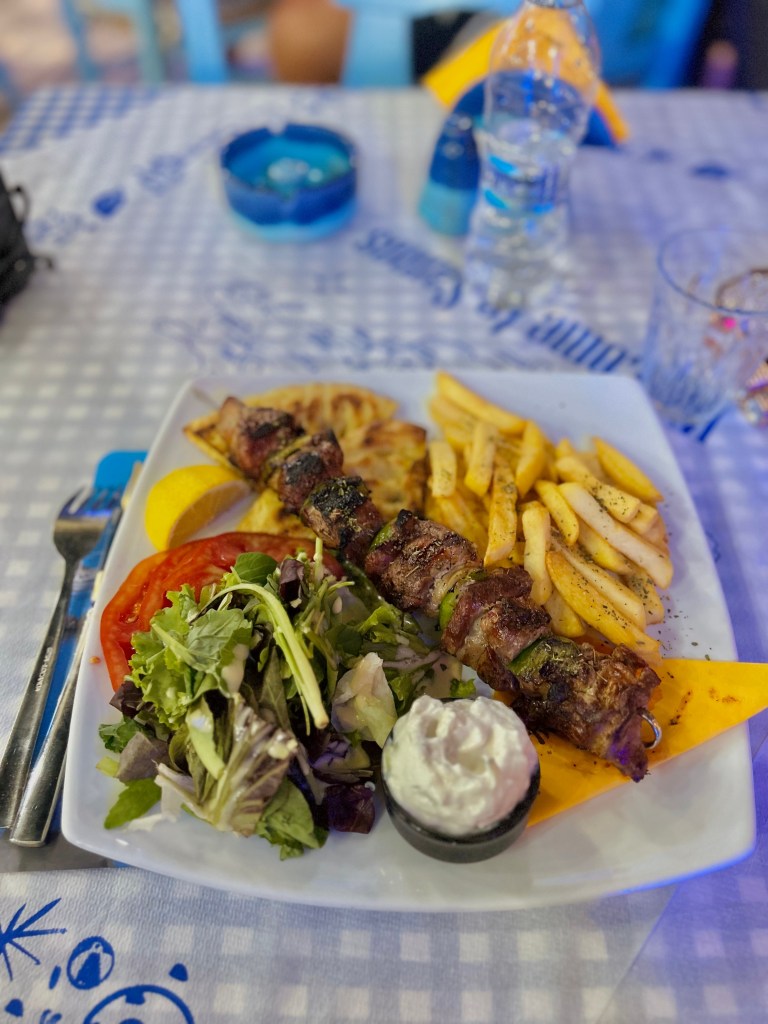
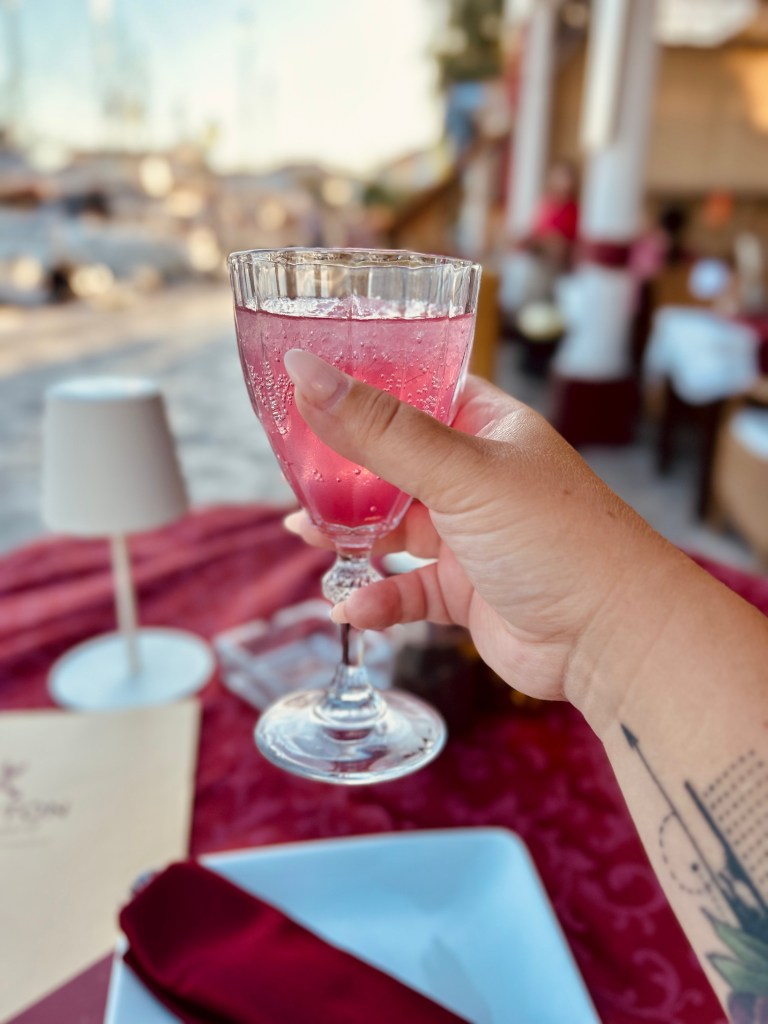
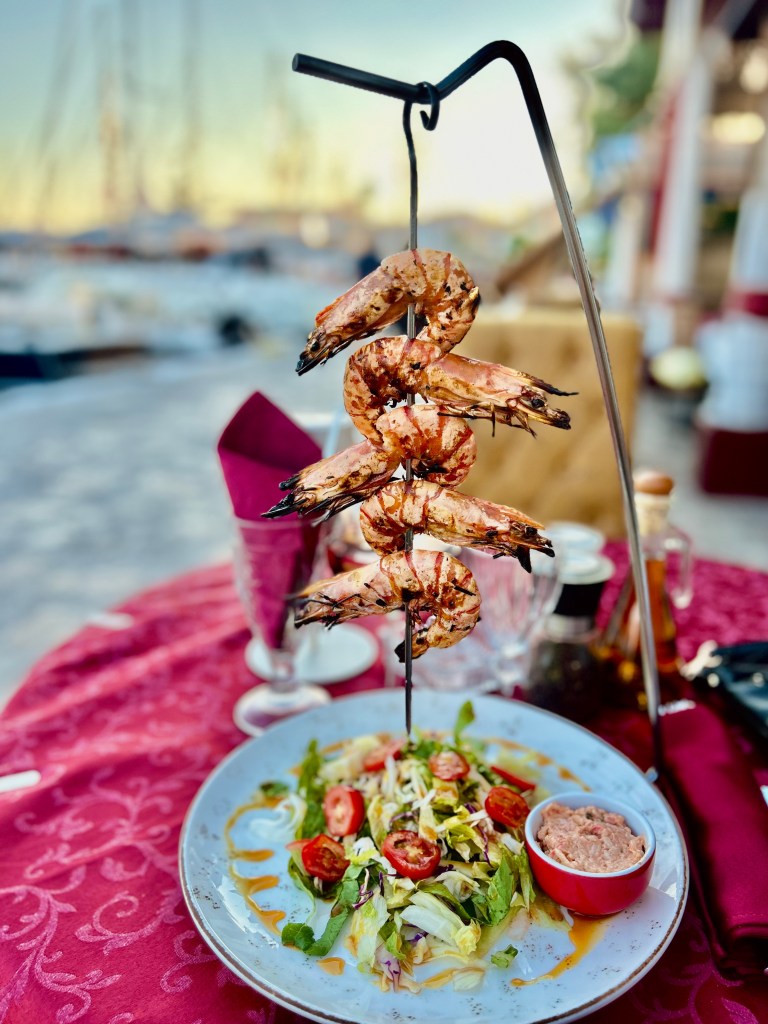
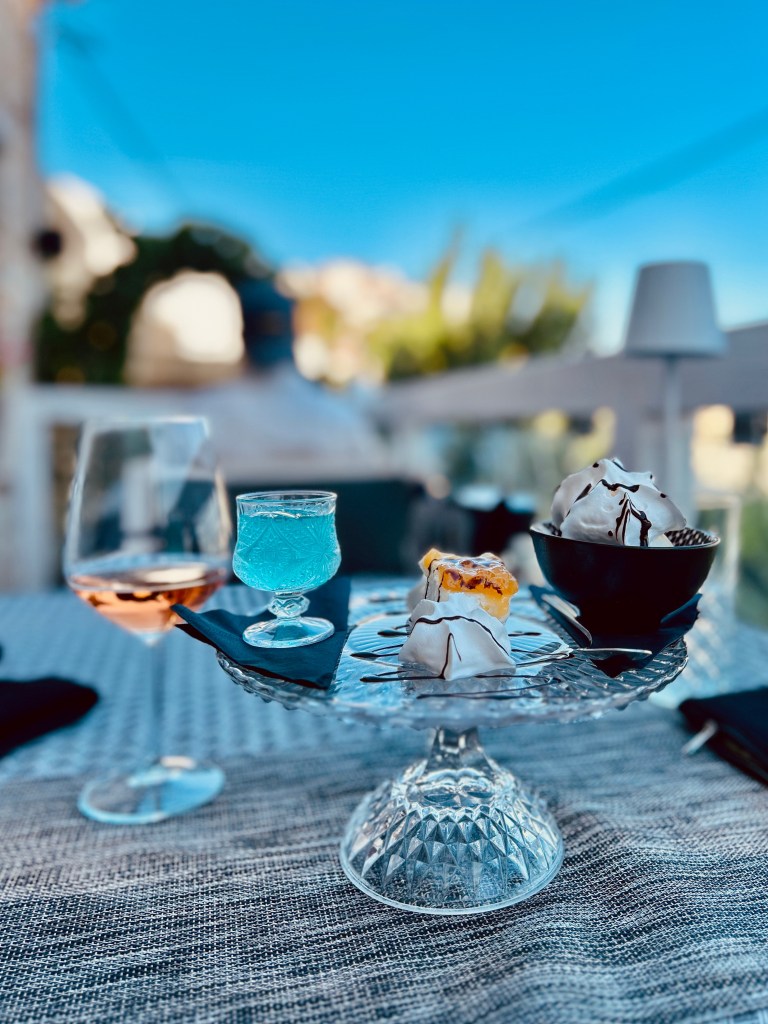
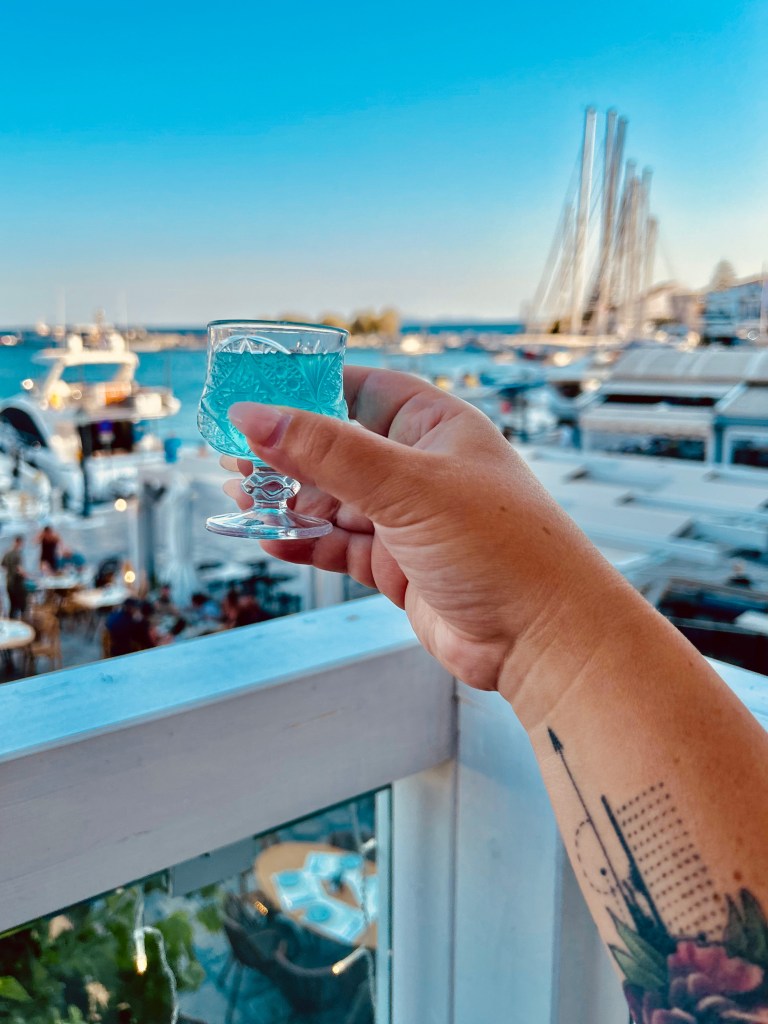
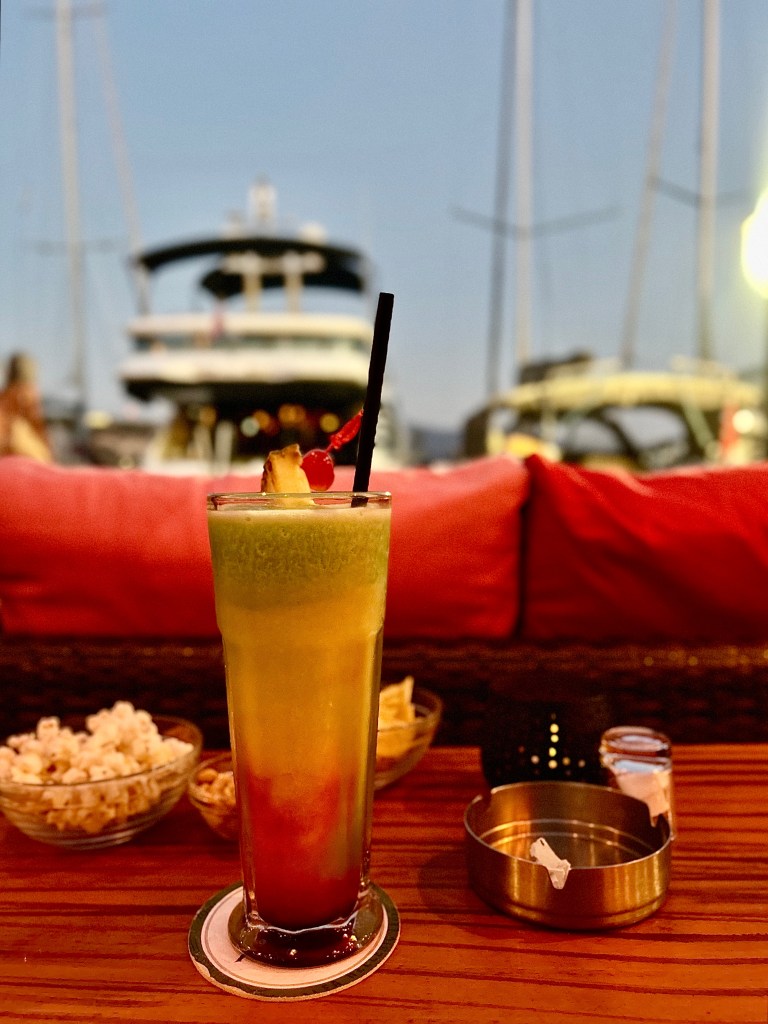
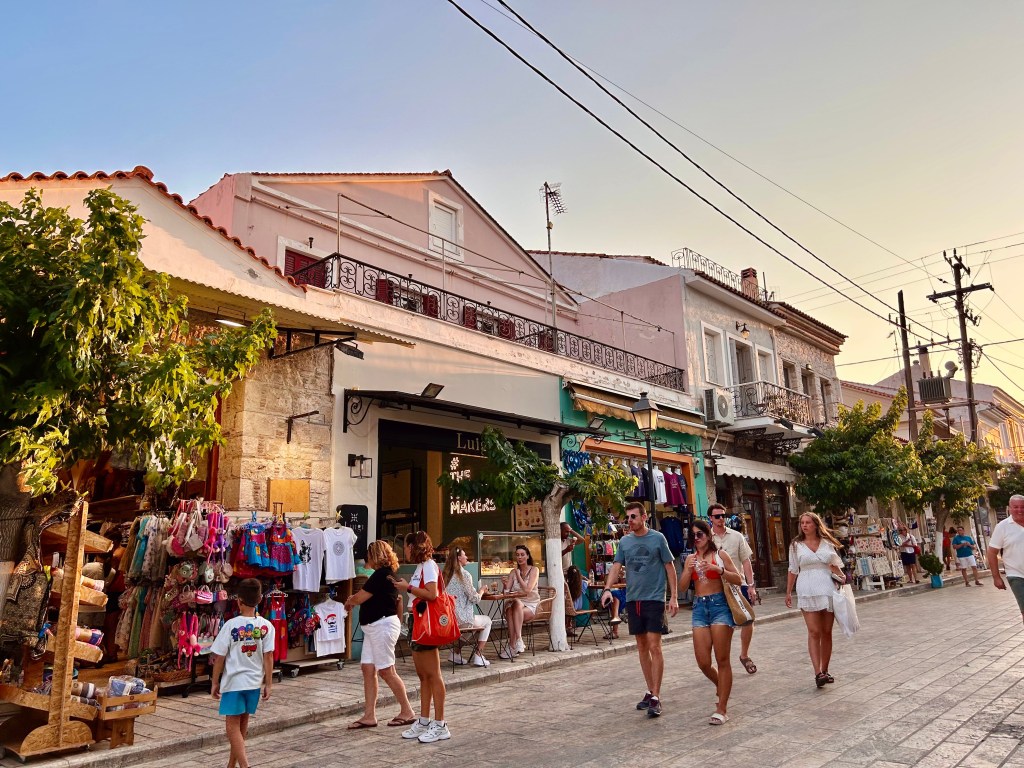
The ones in and around the town square, main pedestrian street and side alleys, where the dining experience offers the typical summer soundtrack of very loud cicadas, and where you can sit right on the streets for everything from coffee to gyros to waffles to grilled seafood. Pergamonto in the square was always booked, Daphne’s right opposite as well, and there were always people sitting at Garlic, Luigi, Antigoni’s Deli Concept, Robinson gyros, Creperie, Perri Orekseos, TropicAnna Health Bar etc. on the main street. The ones on “Flower Street” were also usually busy and people would often enjoy an ice-cream or refreshing drink right on the pavement.
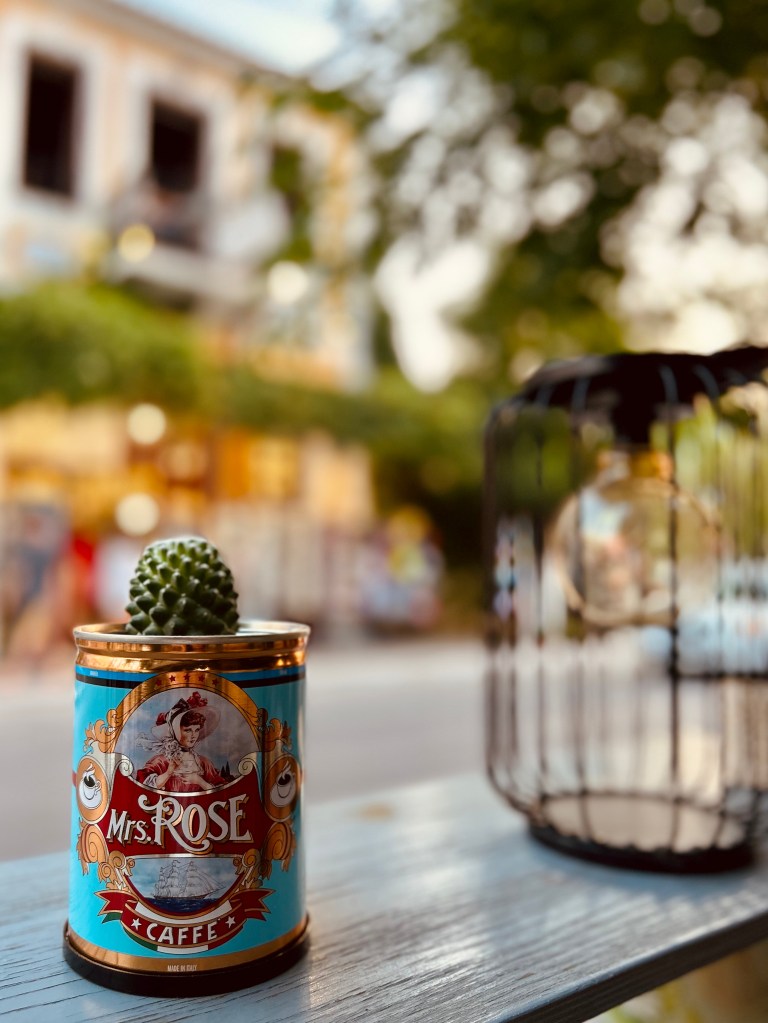
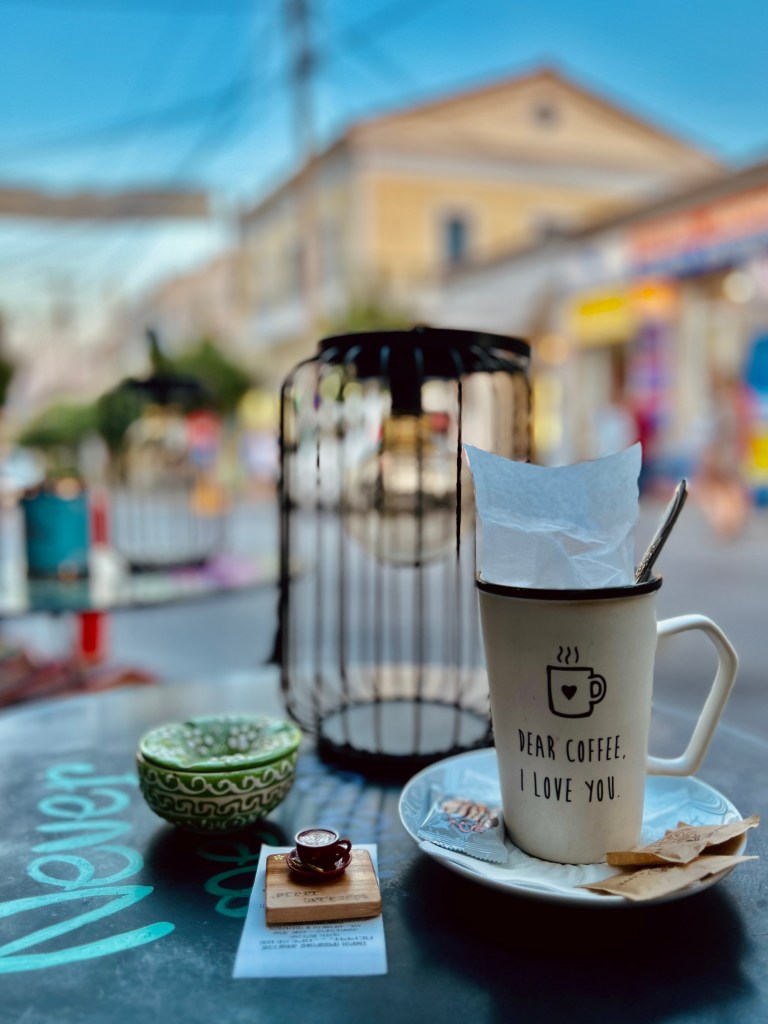
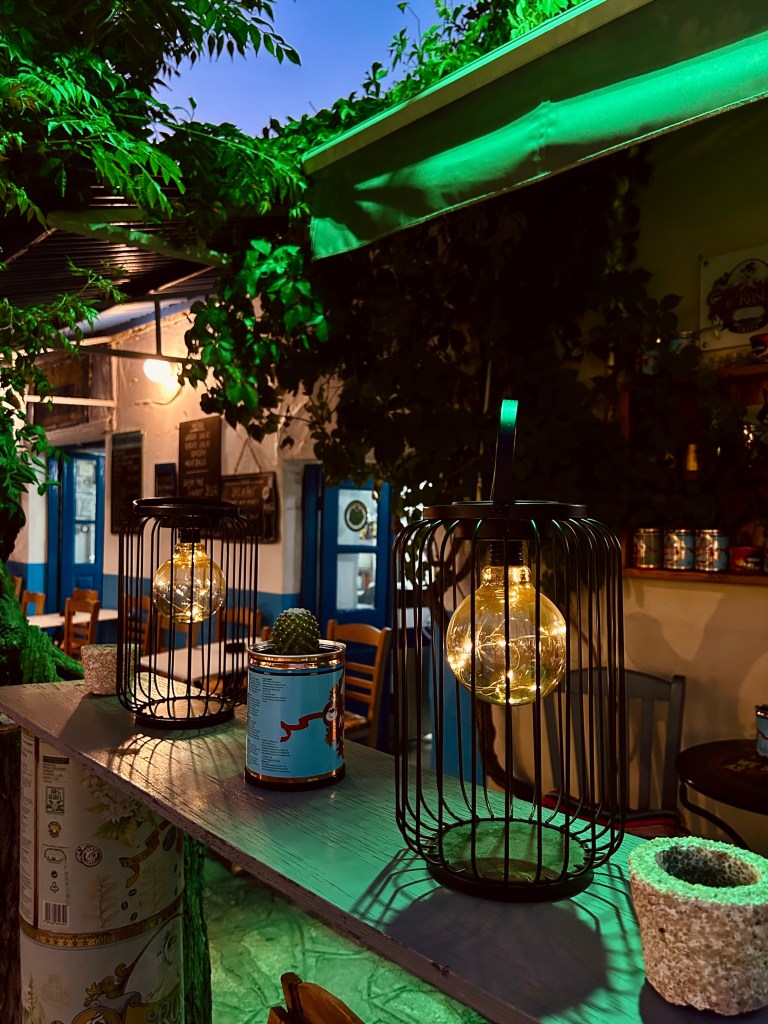
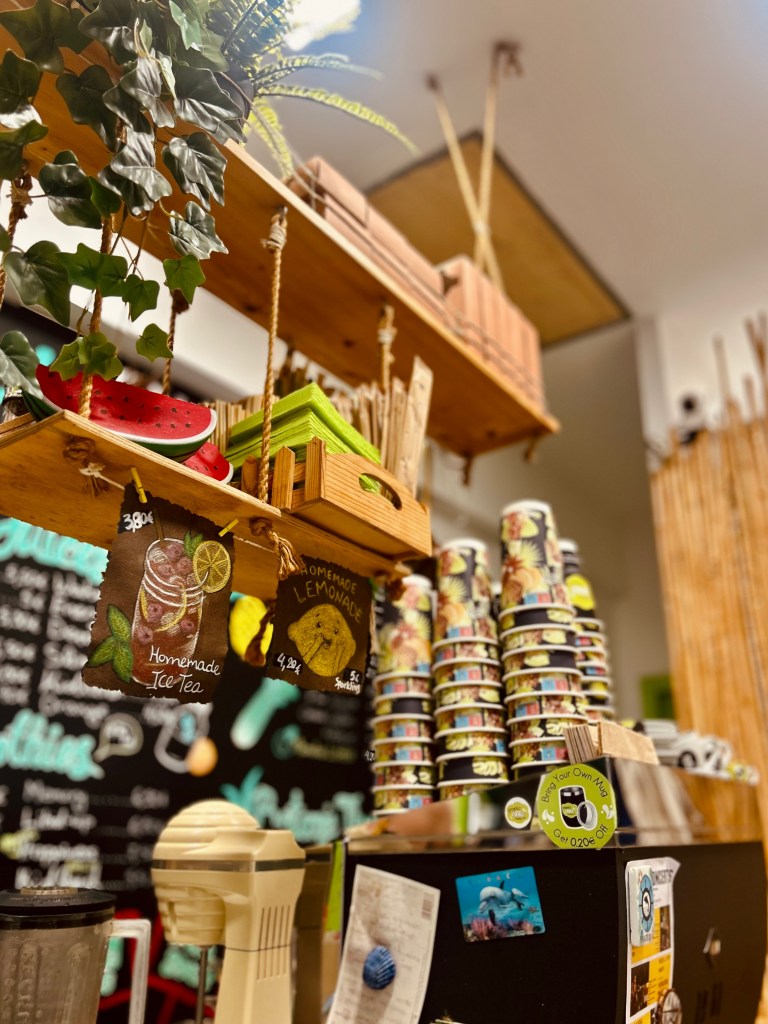
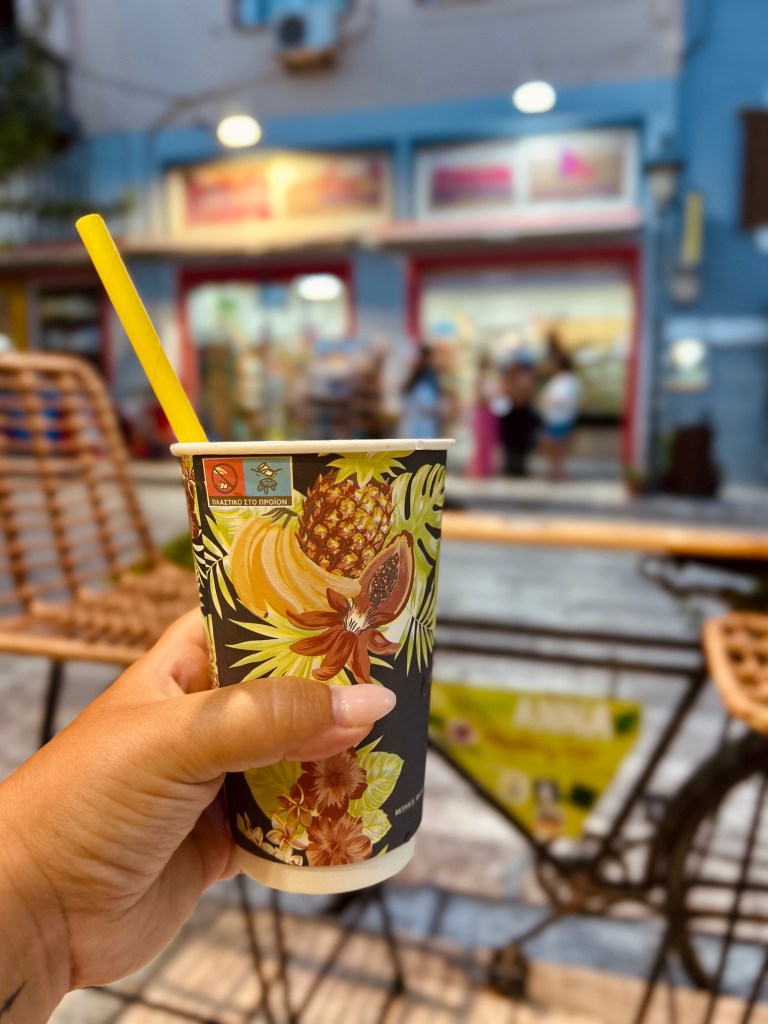
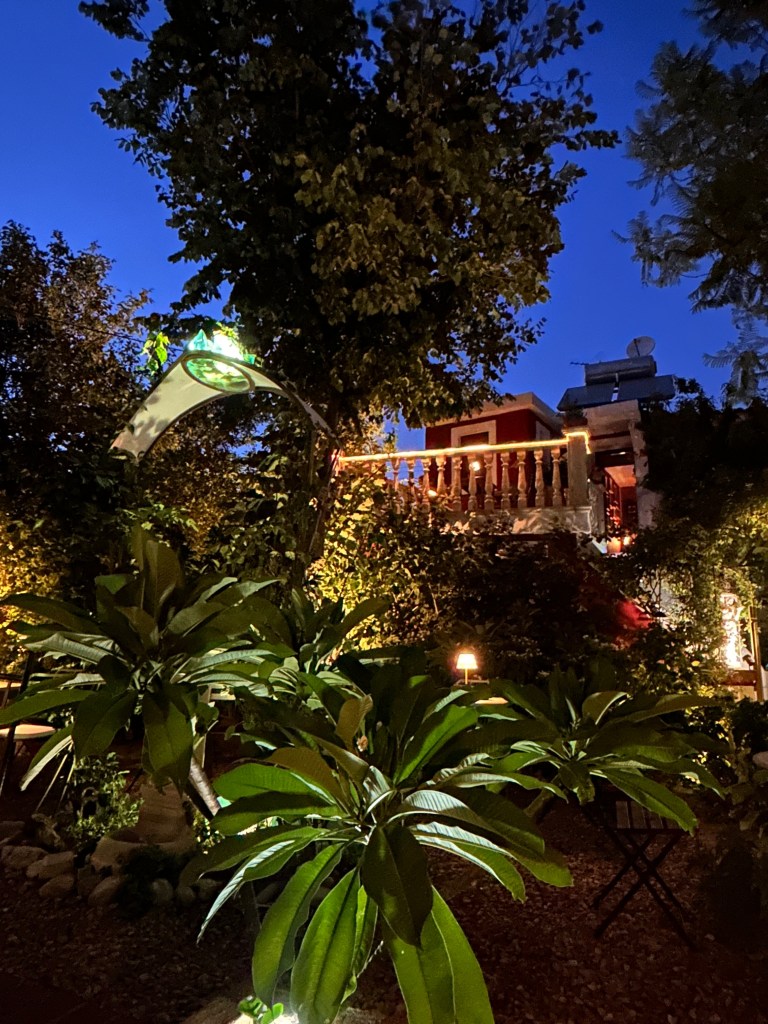
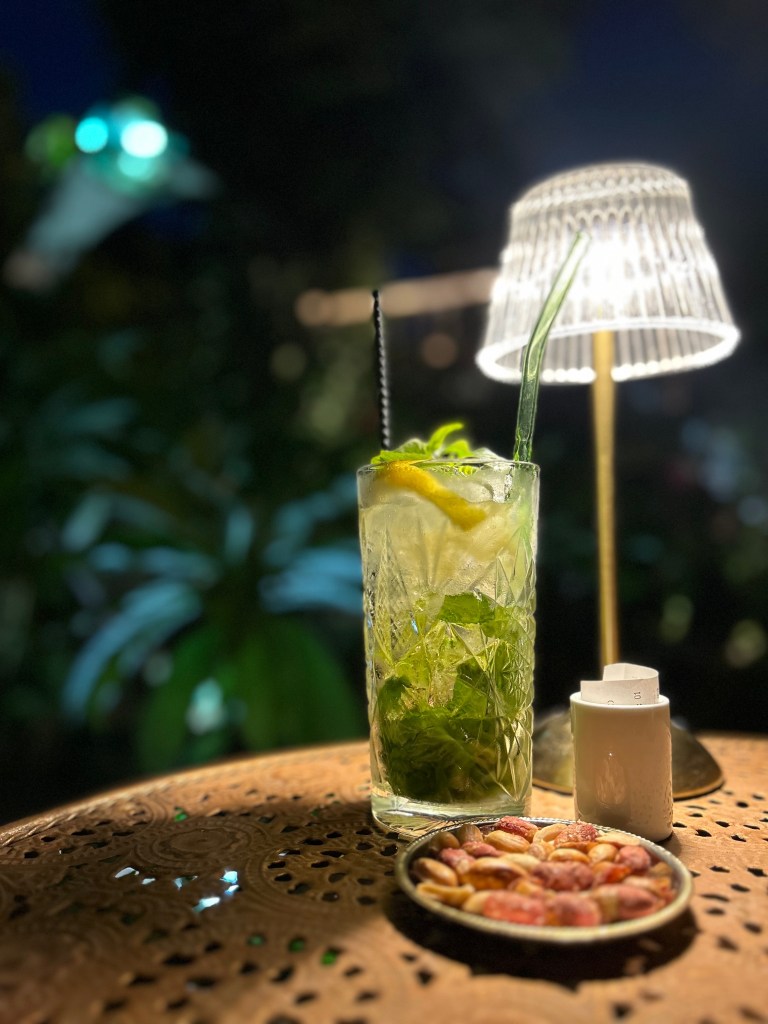
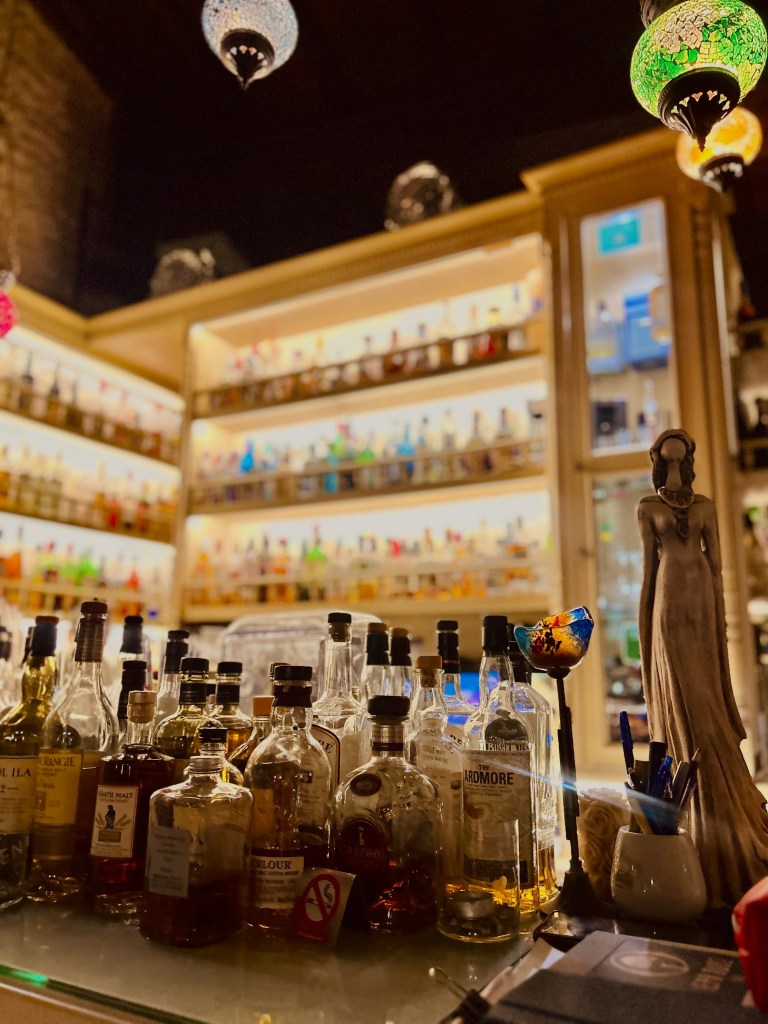
The “garden” ones, very popular especially with the locals. I tried Symposium, where the food was delicious and the portions absolutely HUGE. I had one salad, but it was a mountain of it and I could see what was brought out to other tables. Food coma. Irodion Garden is another popular one, Dyonisos is accessed from the main street and I had Aphrodite, Maritsa for seafood and Pepino’s Pizza closer to my hotel. My absolute best bar find with a garden was Iera Odos, right around the taxi rank, which was a beautifully renovated house with a fantastic tropical garden and great drinks, and which I had all to myself a few times. I also loved SamosBeer, right on my back street, for their own brewery and beer takeaway.

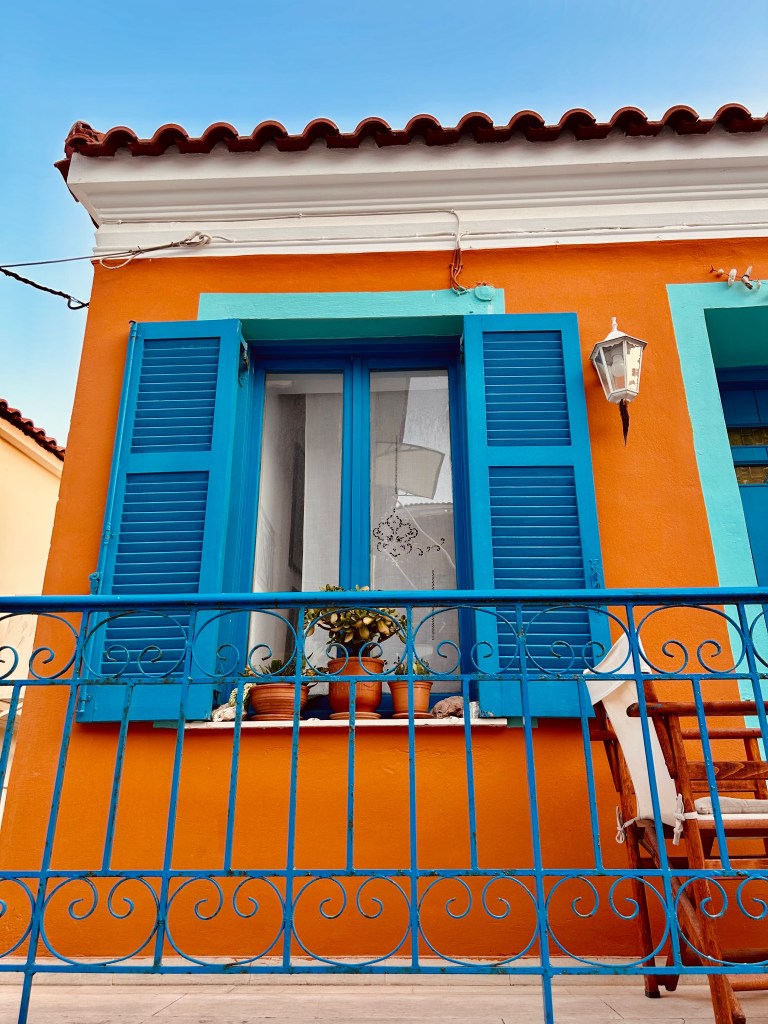
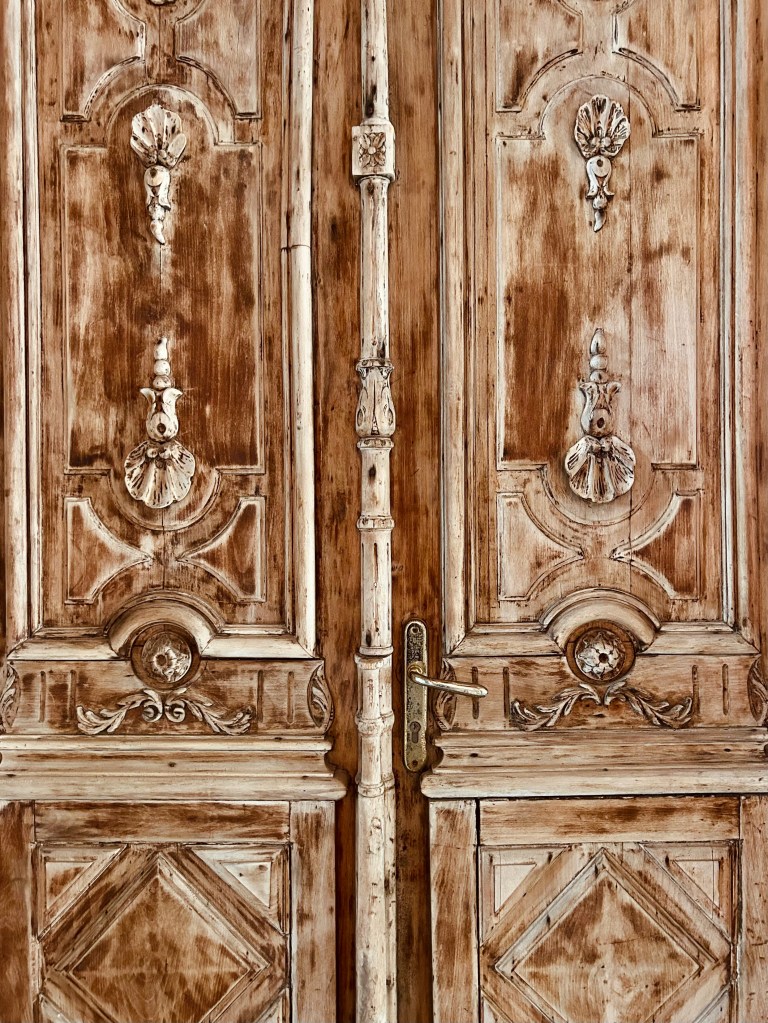
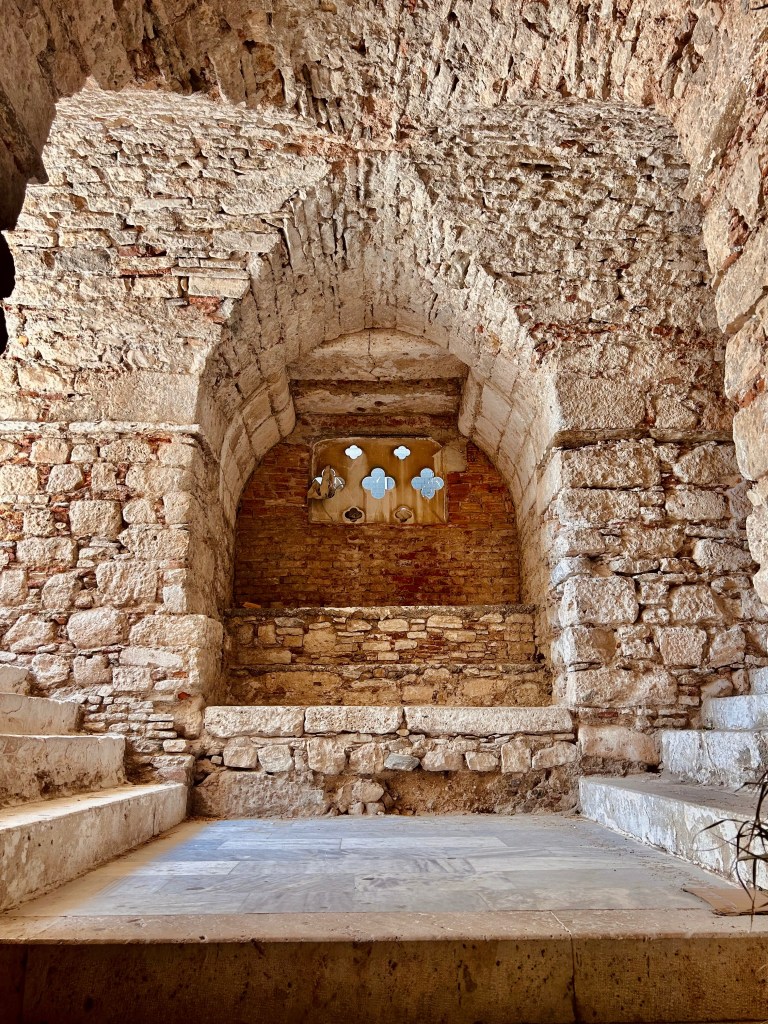
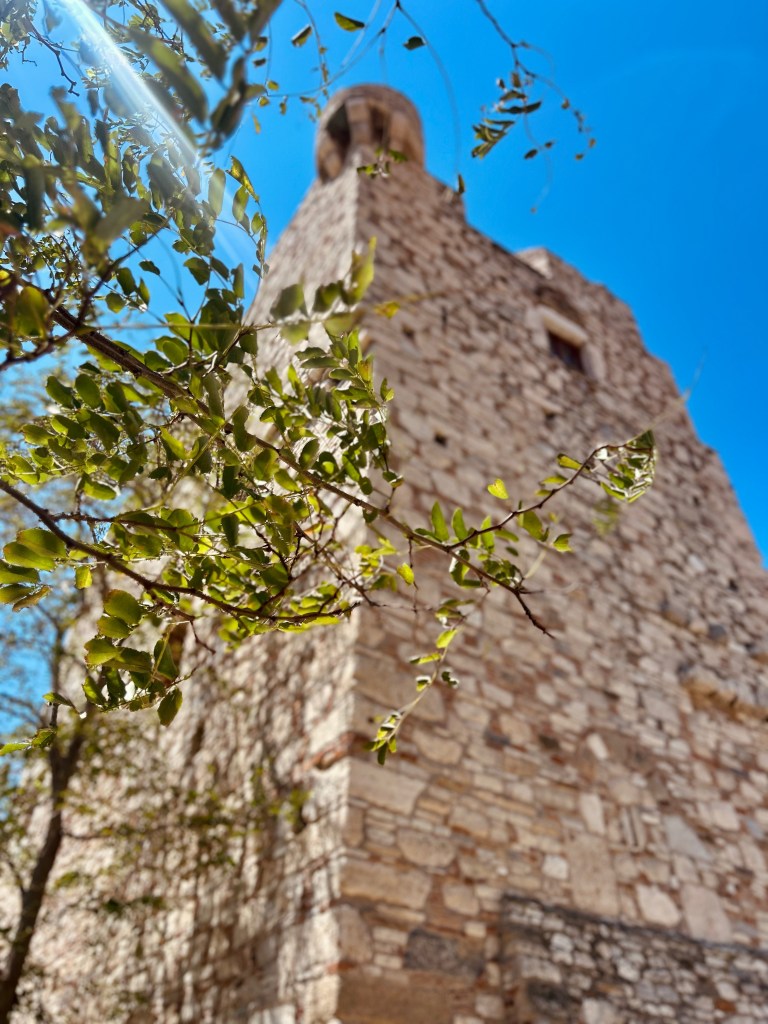
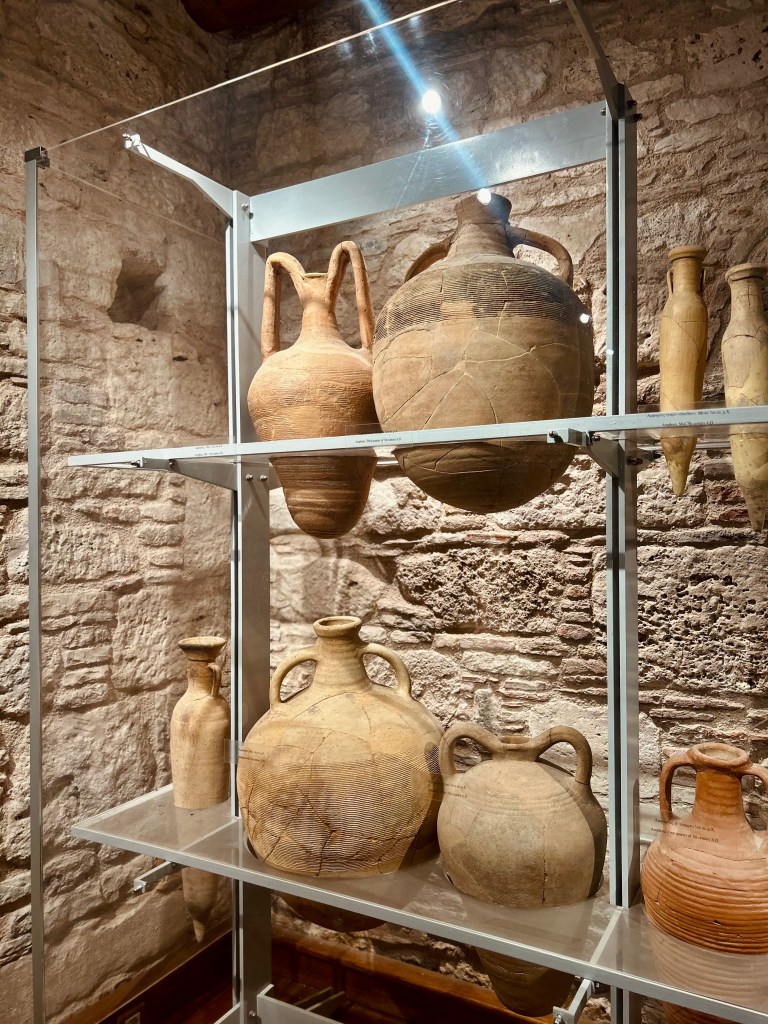
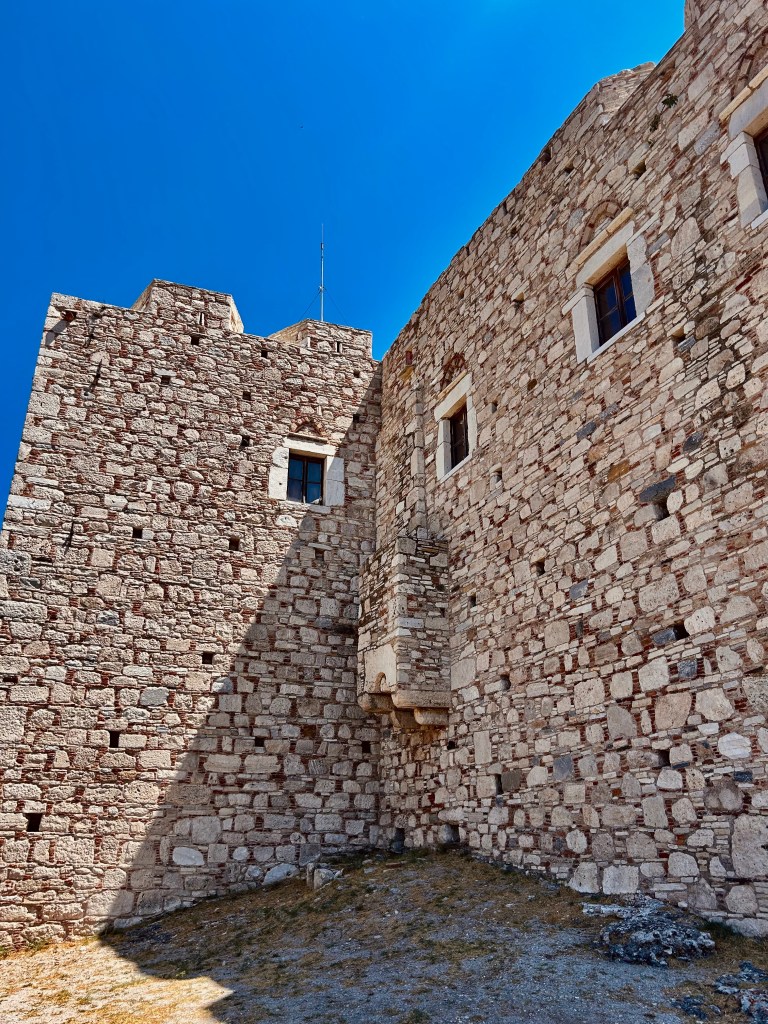
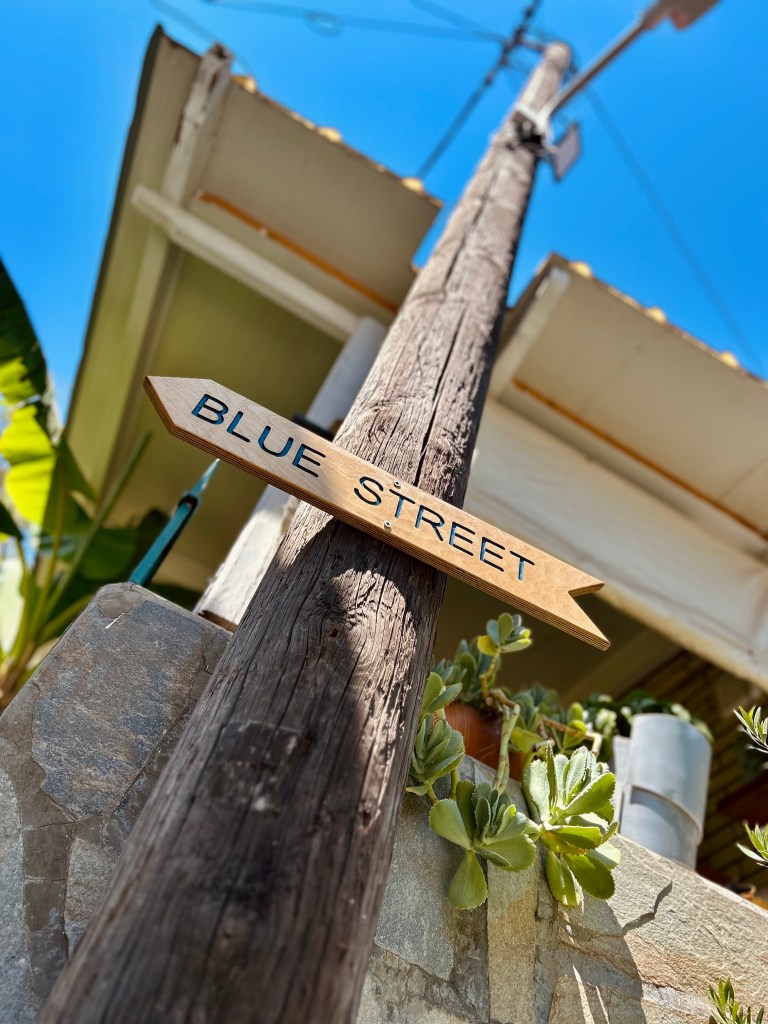
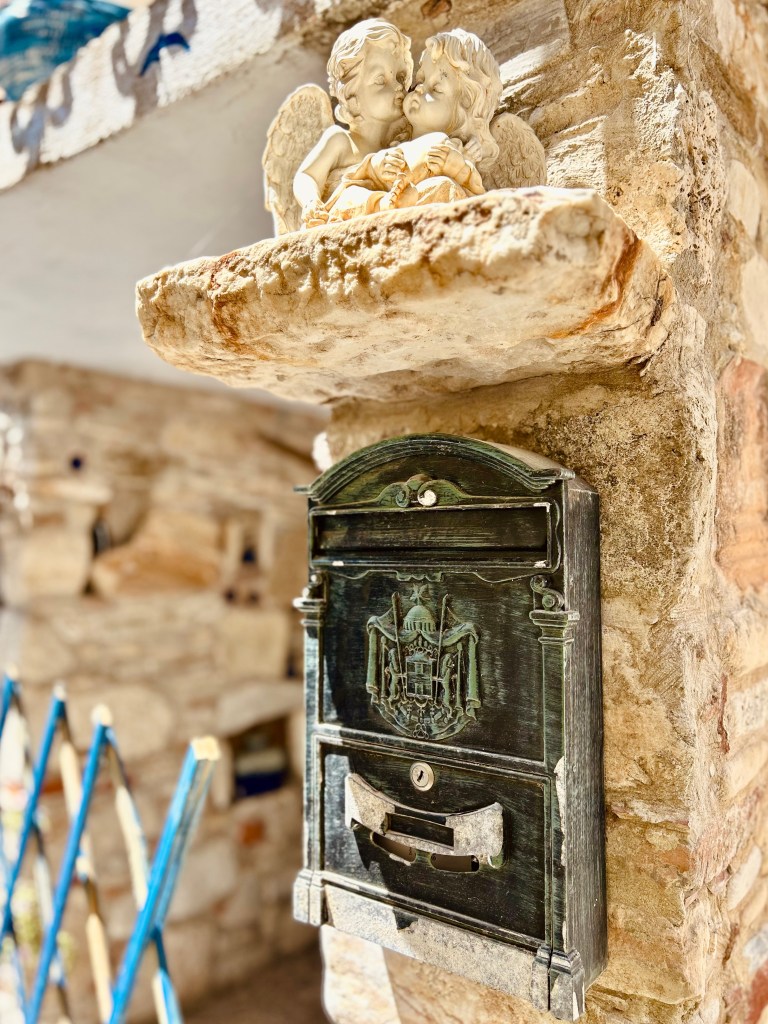
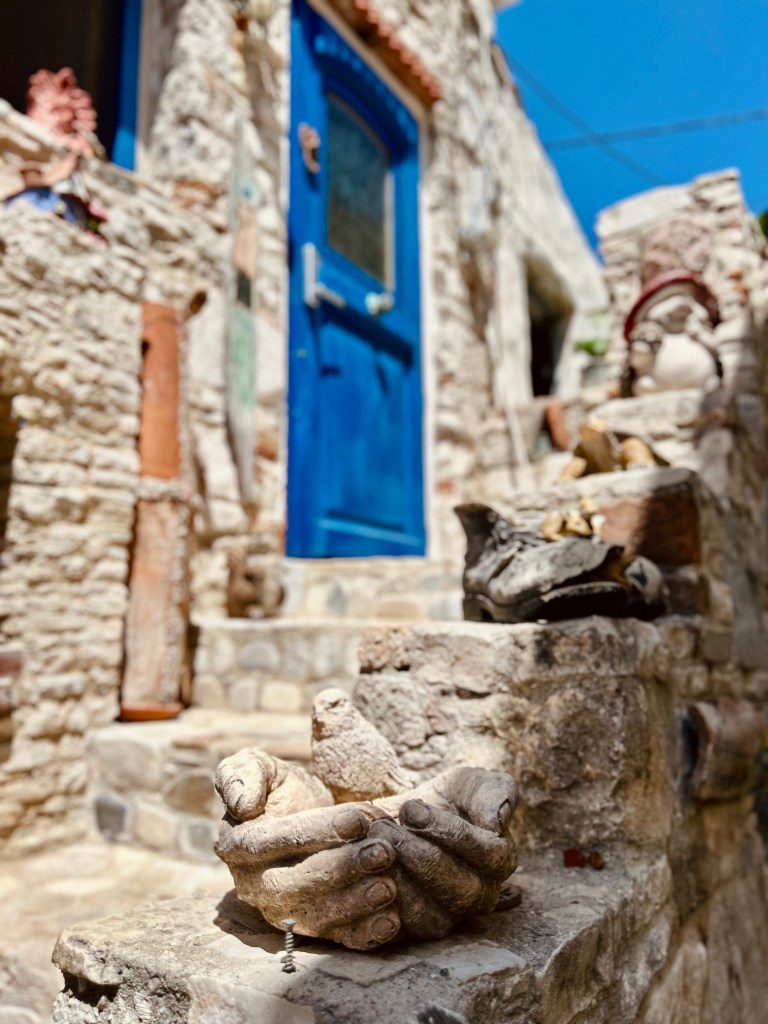
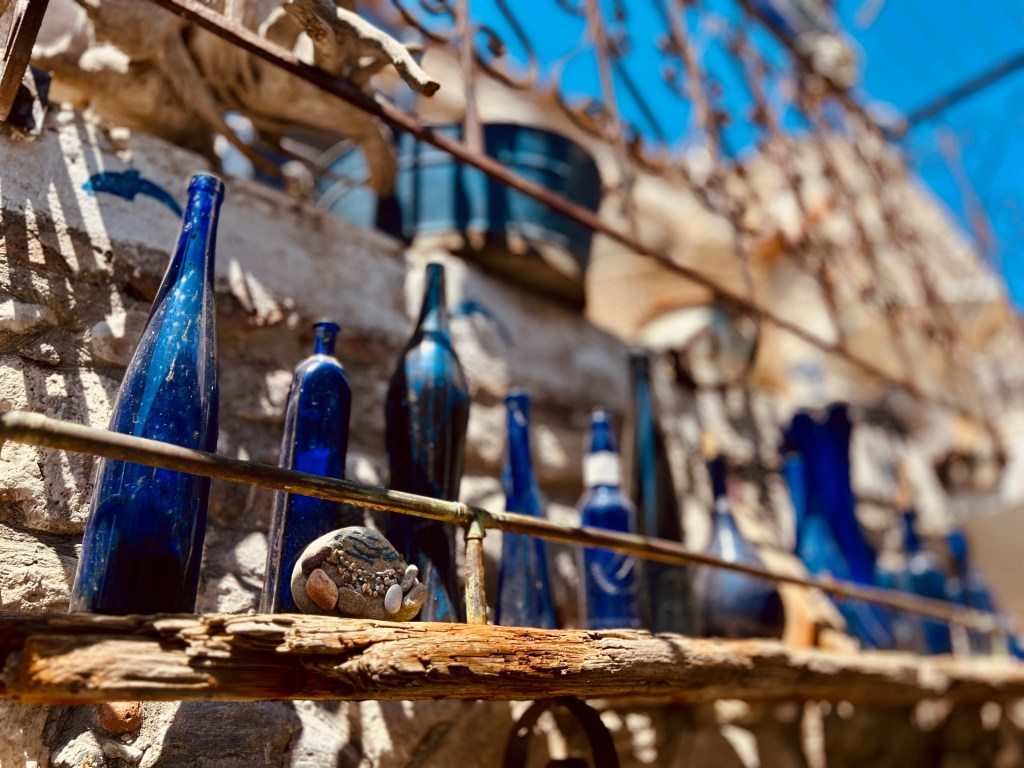
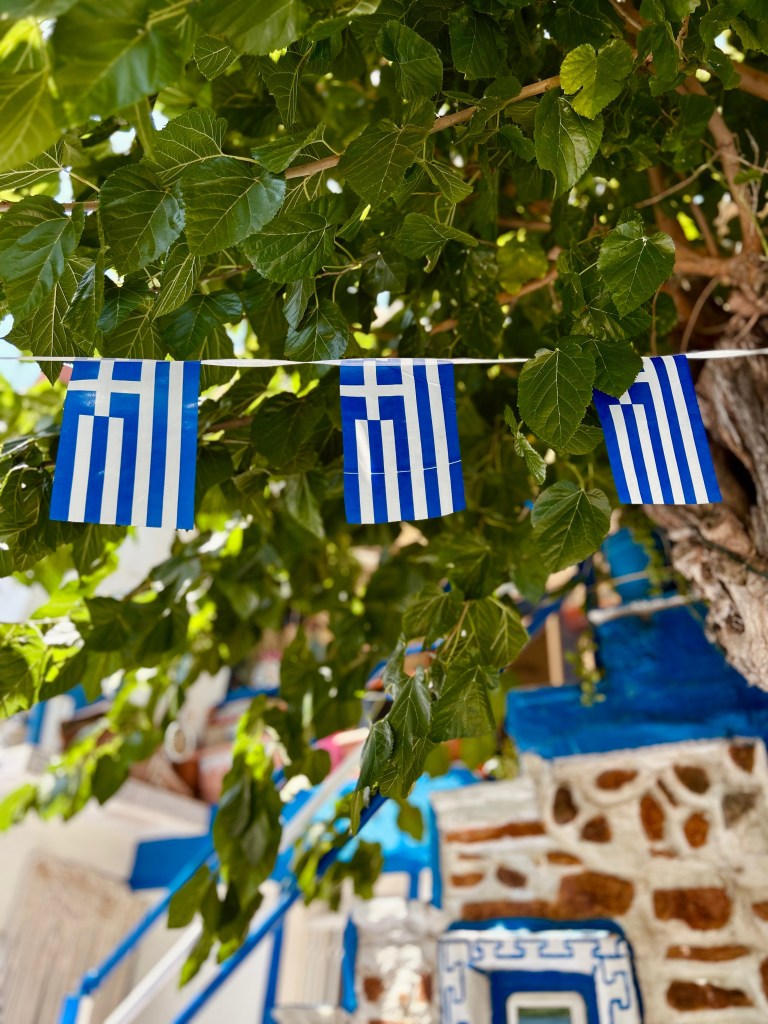
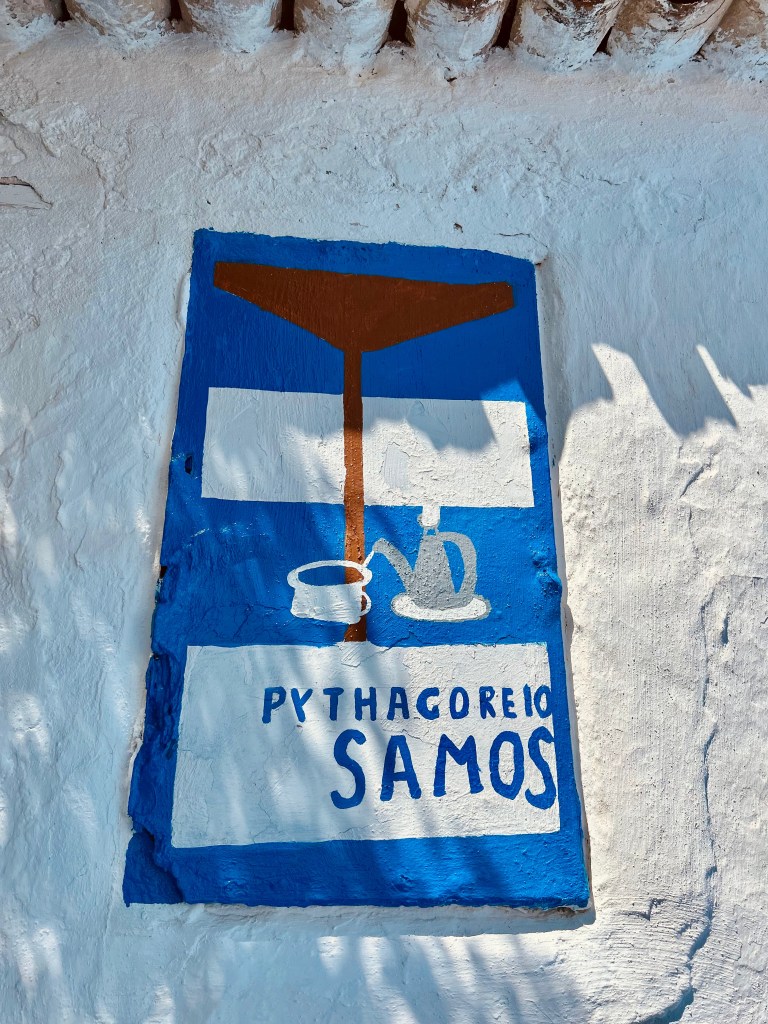
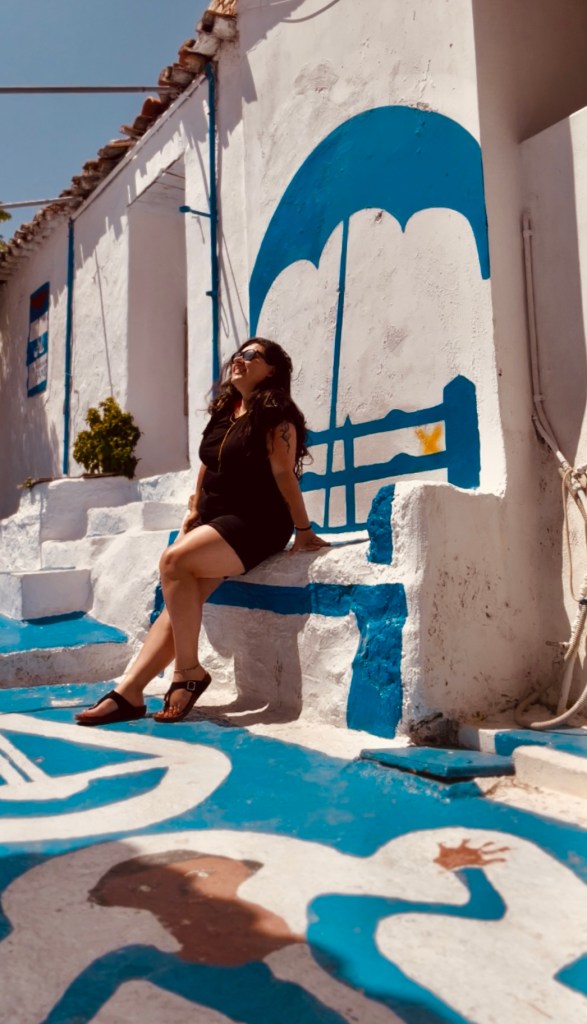
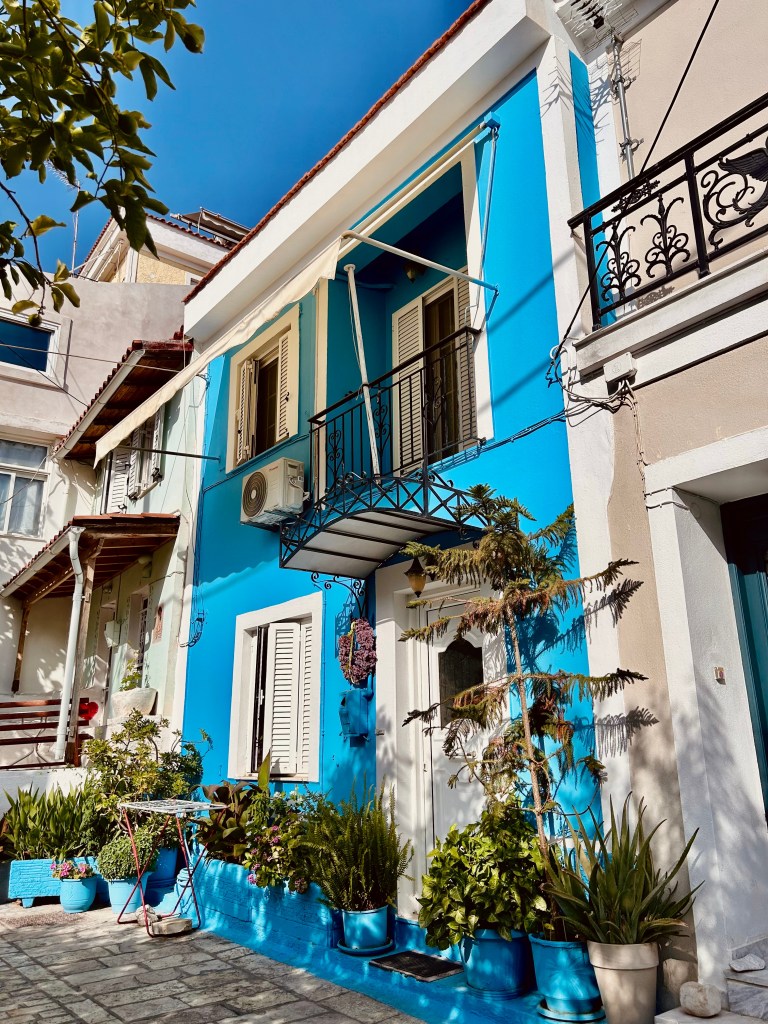
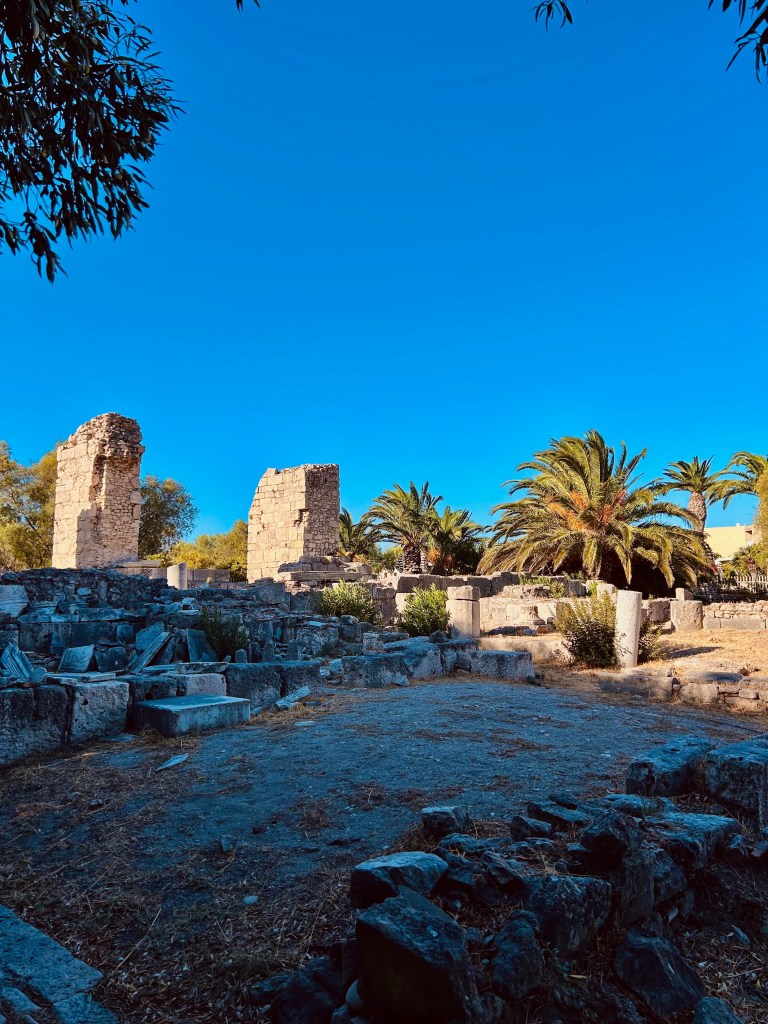
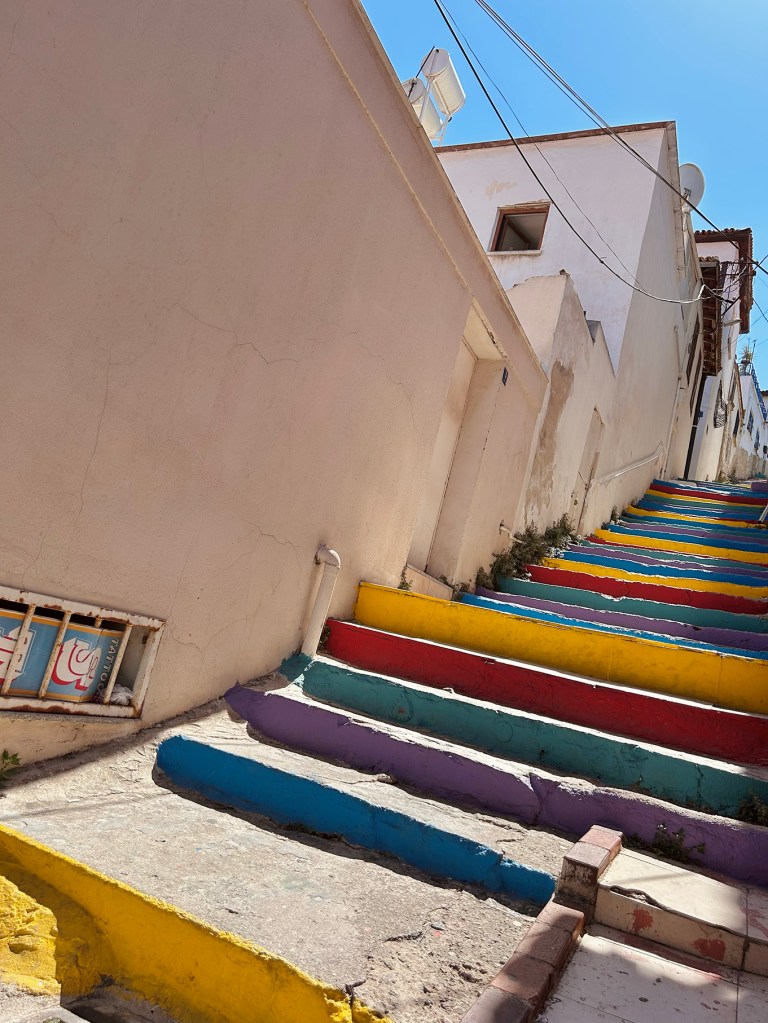
In Pythagorio, you can shop for souvenirs, clothes, food and there are a few supermarkets and greengrocers. There are doctors’ clinics and pharmacies, bakeries, an archaeological museum, an arts centre at the pier, lots of ancient ruins, a castle right next to the main church and a quirky Instagram-friendly attraction called “Blue Street”.
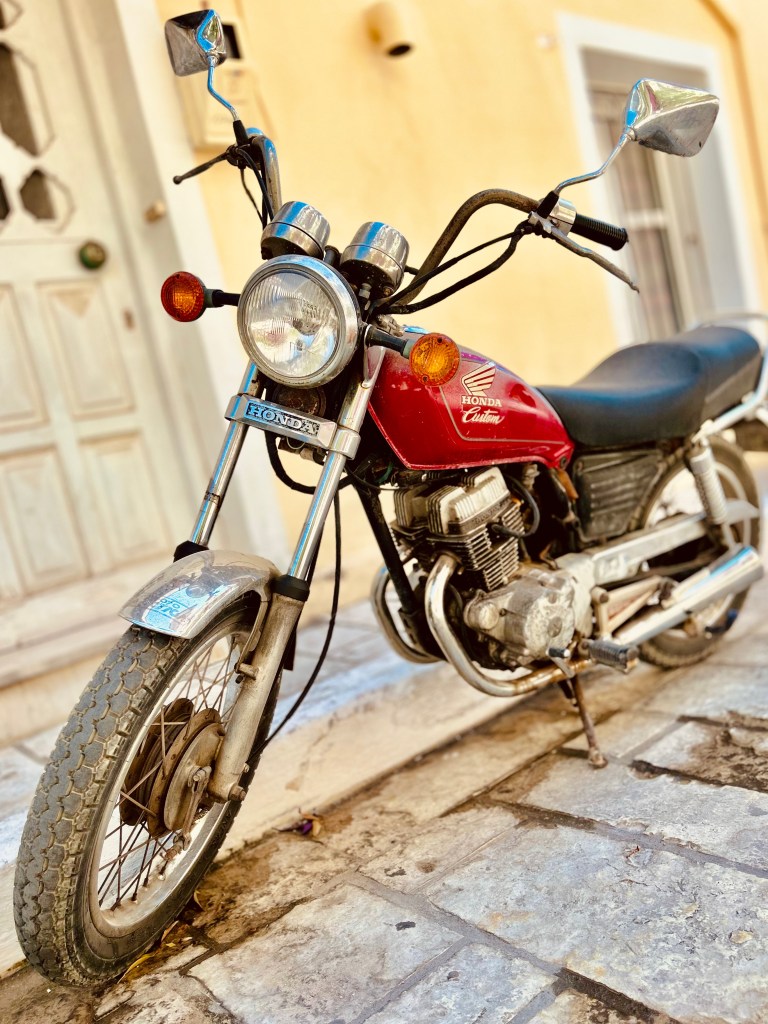
The town is very clean, tourism is organised with tourist offices for booking tours and activities, there are various companies for car, bike and motorcycle rentals. Public transportation – although limited and a bit difficult to figure out at first – runs there from Monday to Saturday connecting the town with the rest of the island and there is a taxi rank with fixed rates.
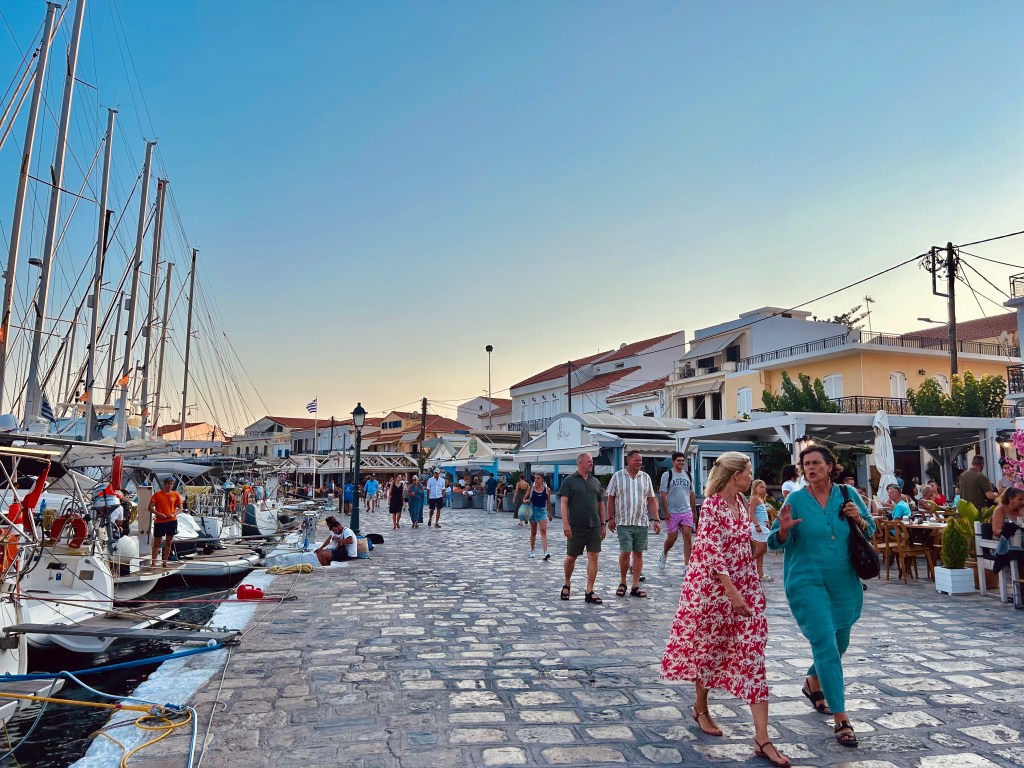
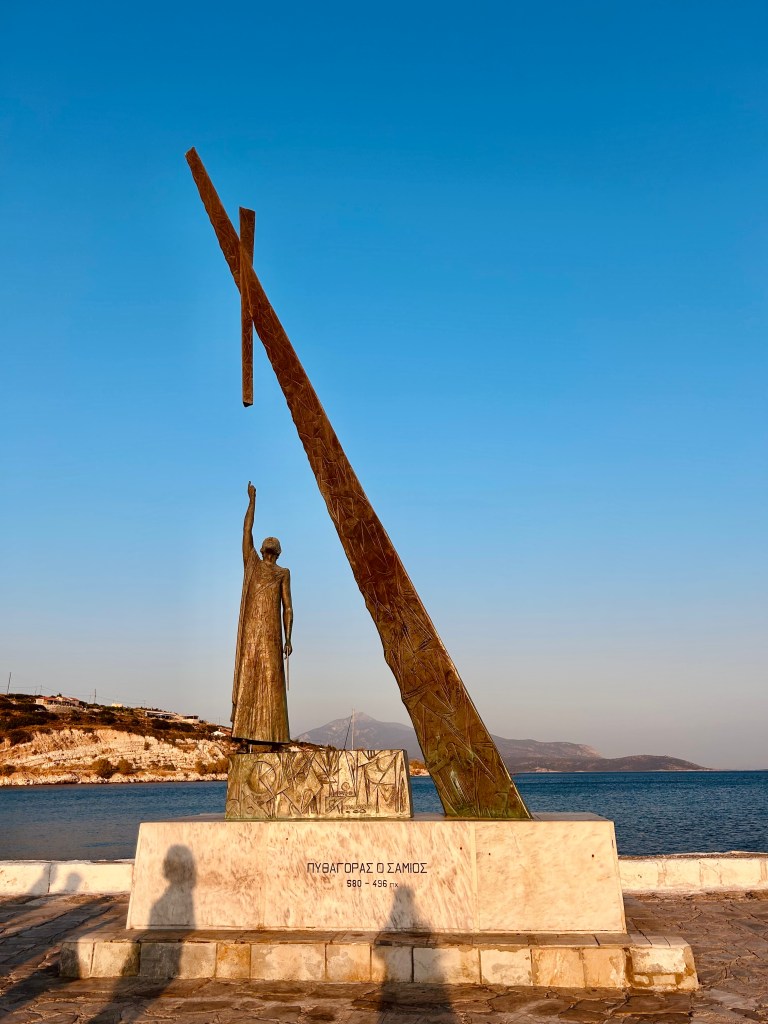
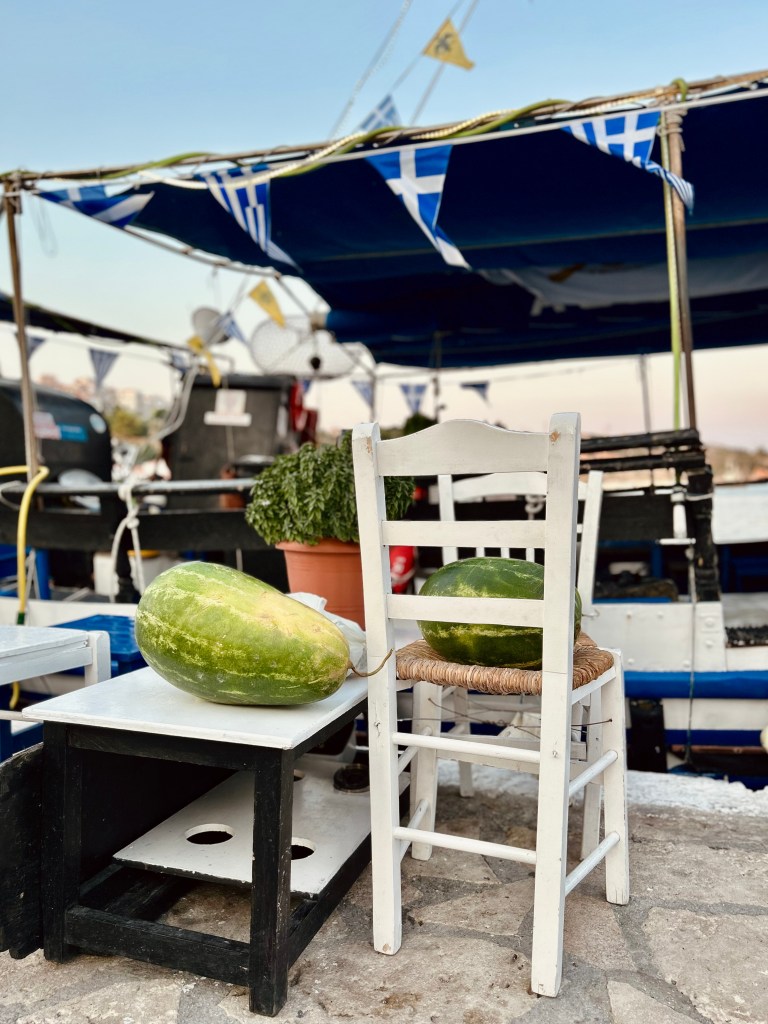
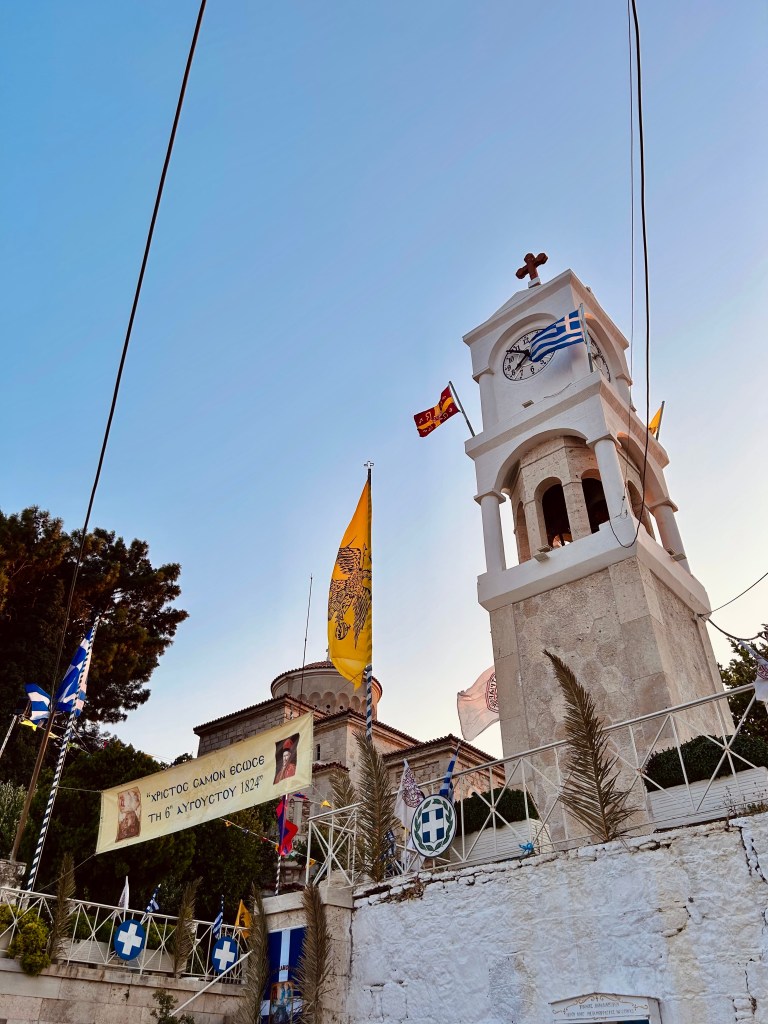
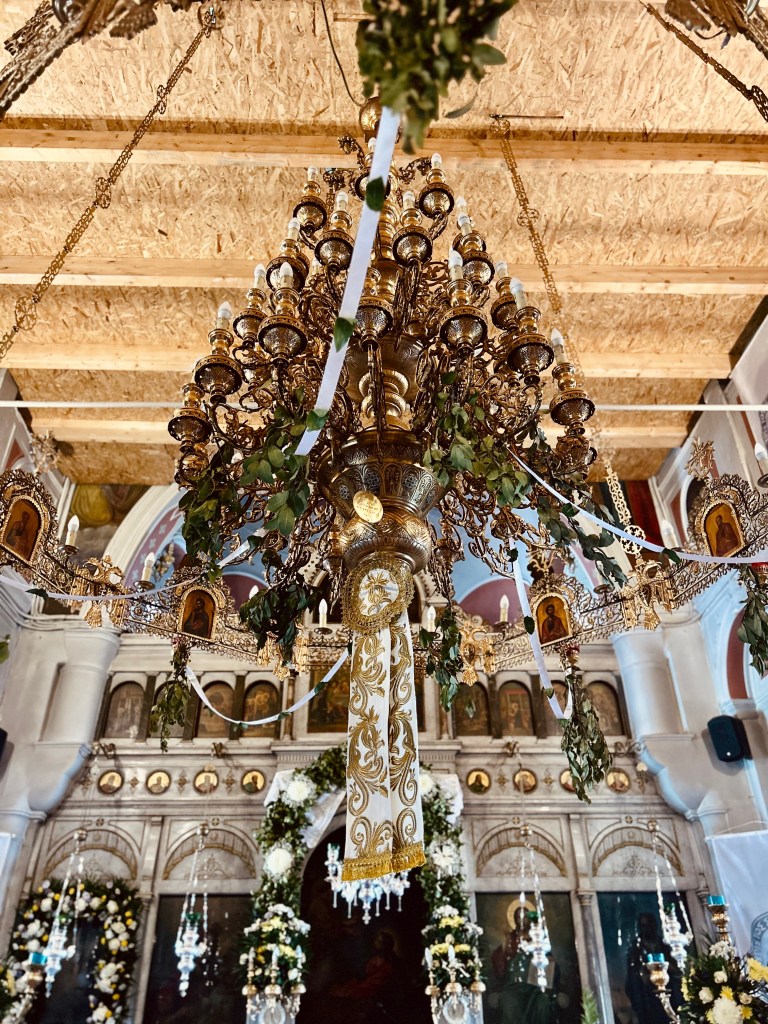
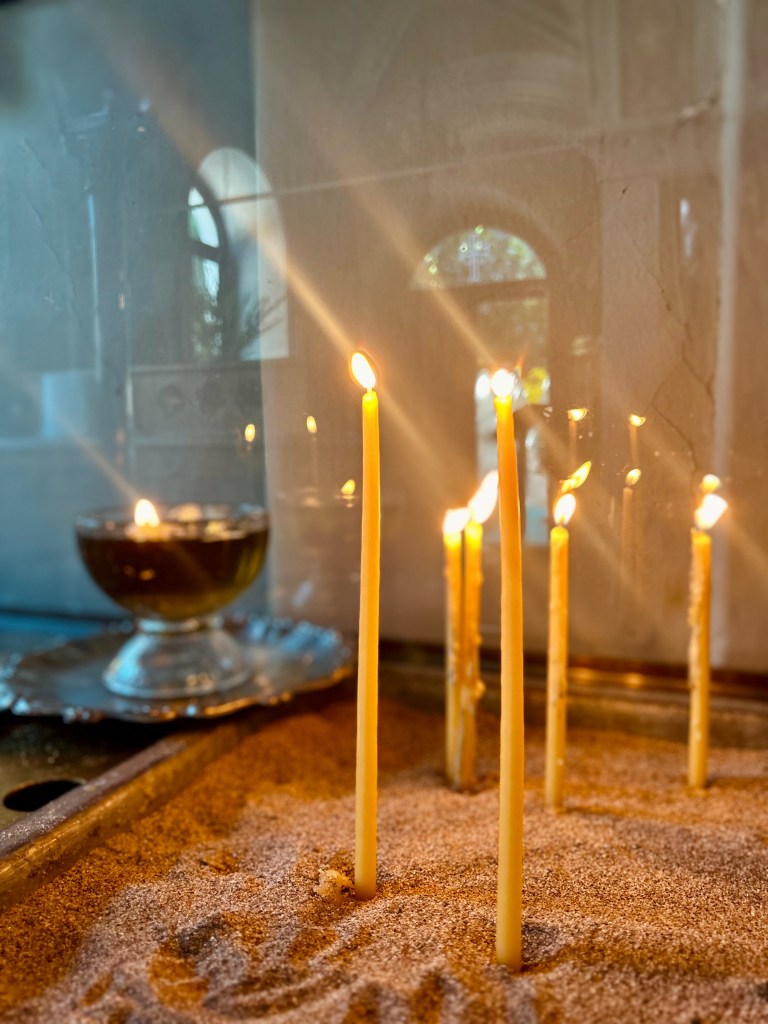
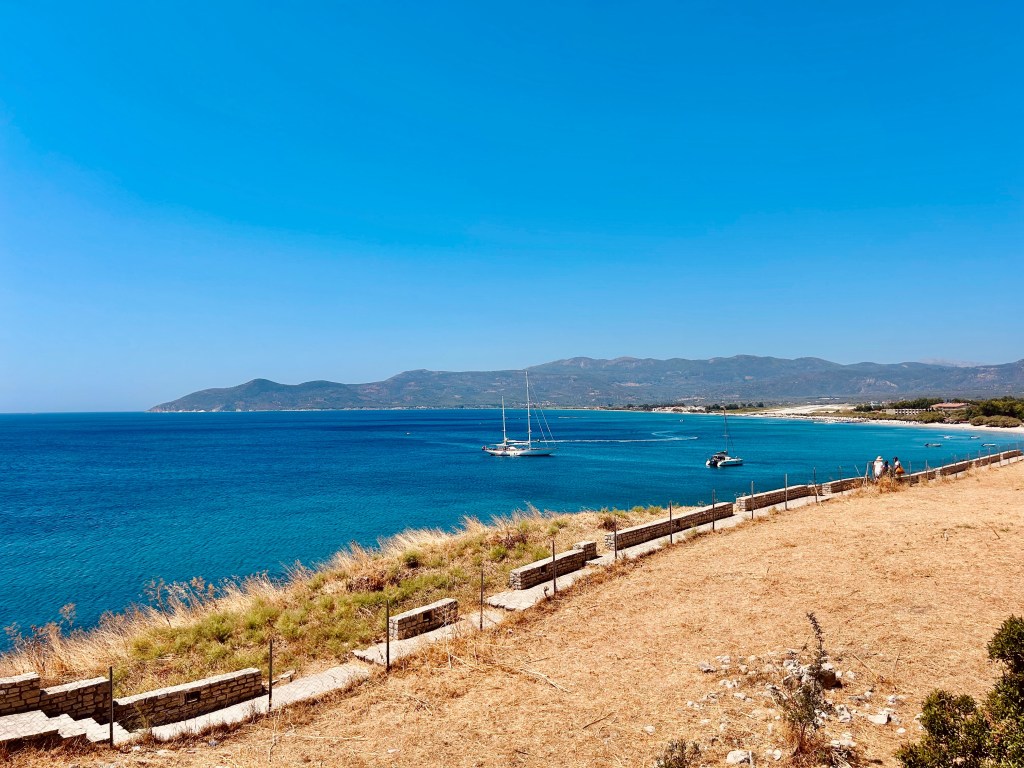
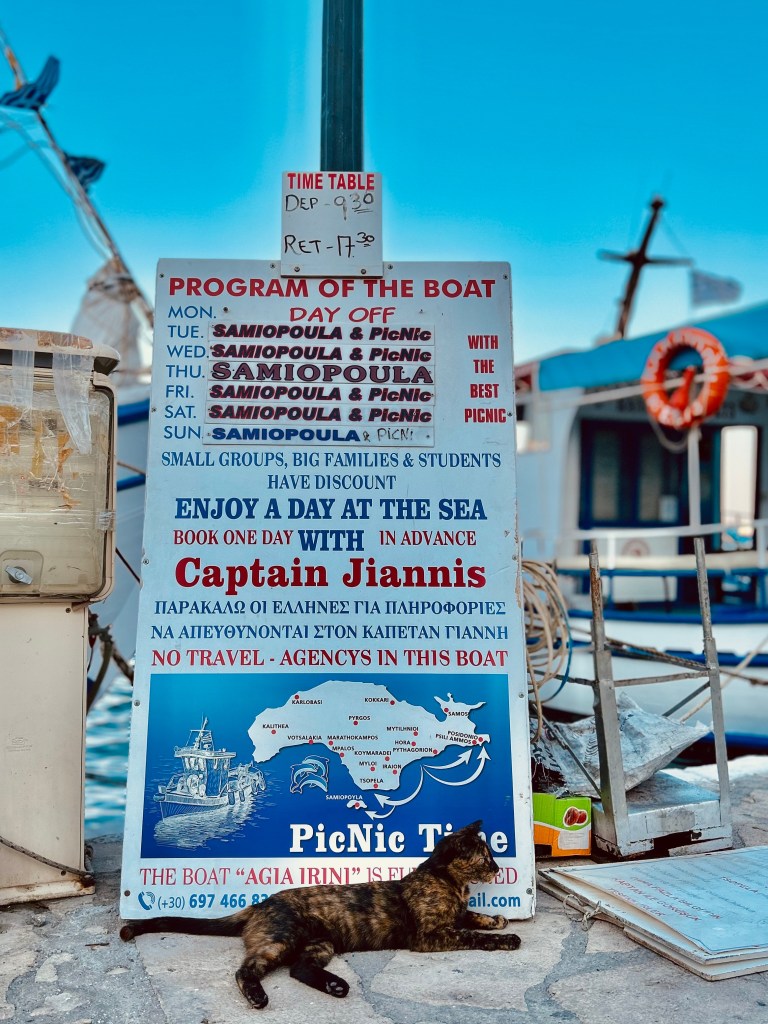
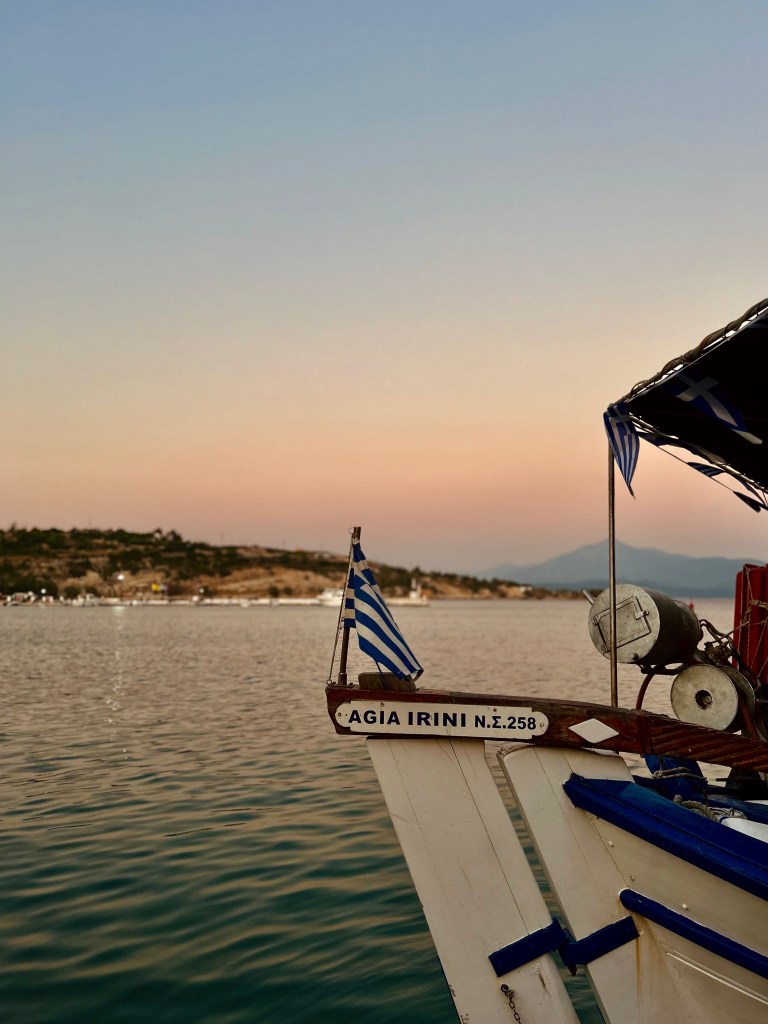
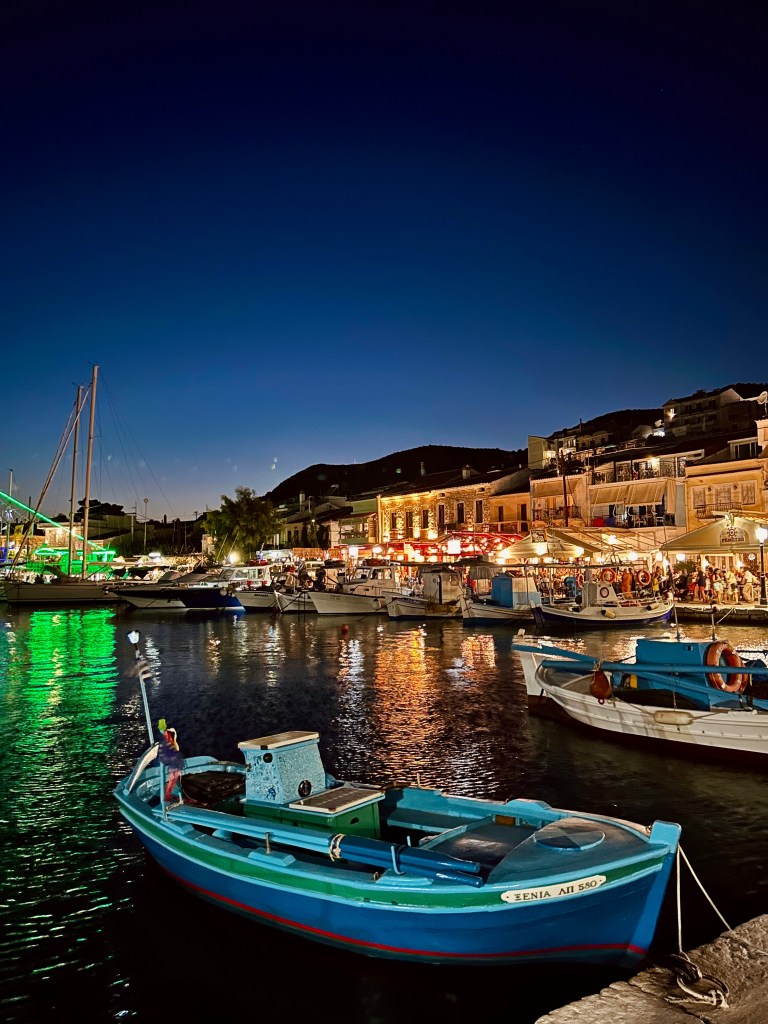
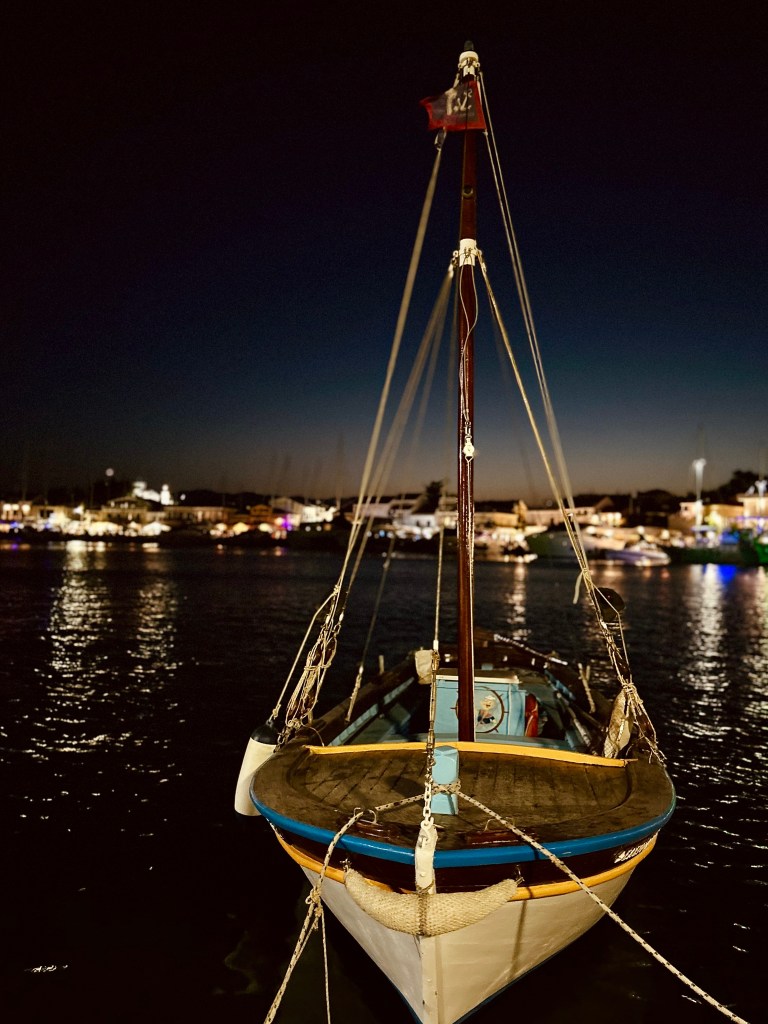
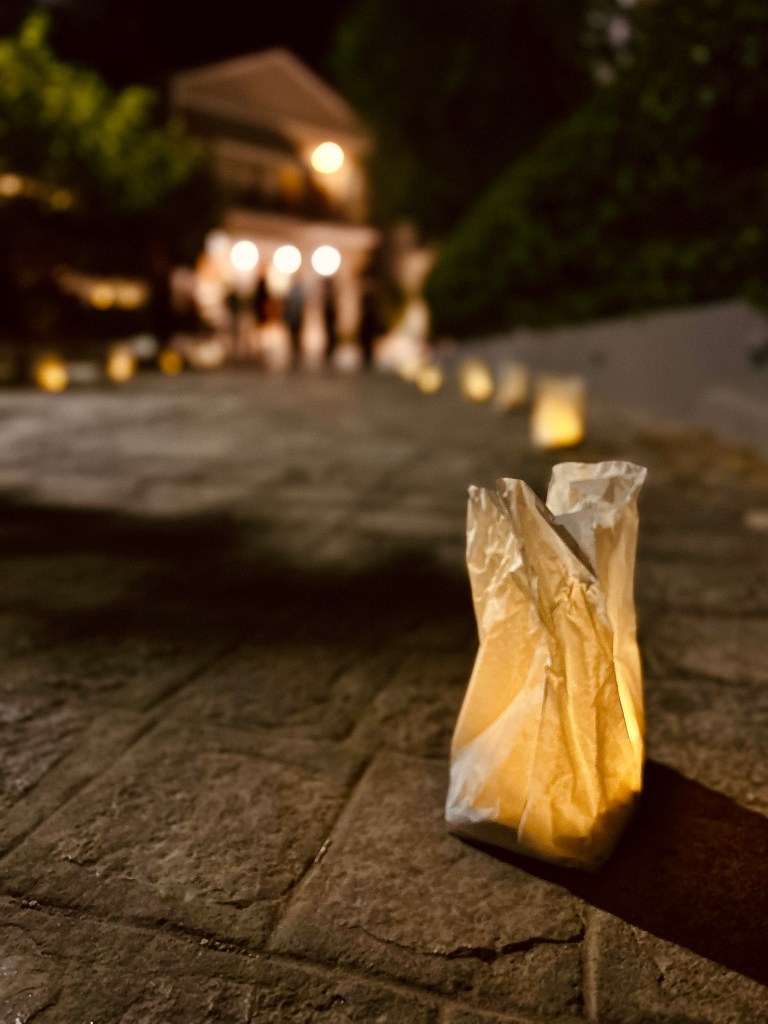
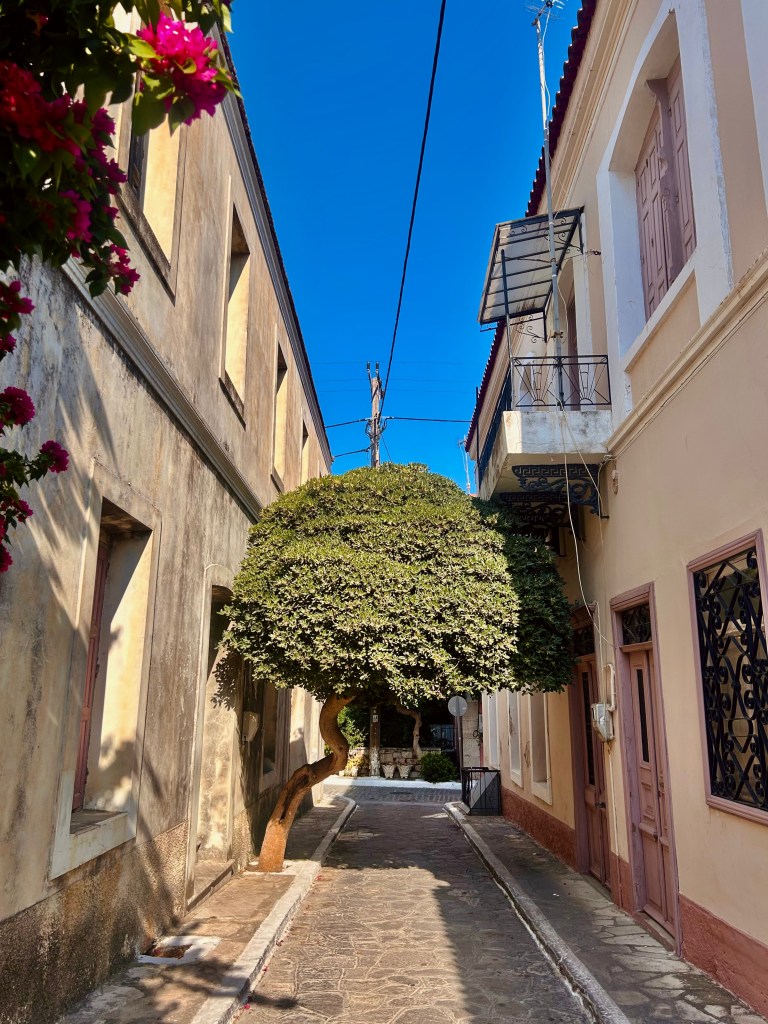
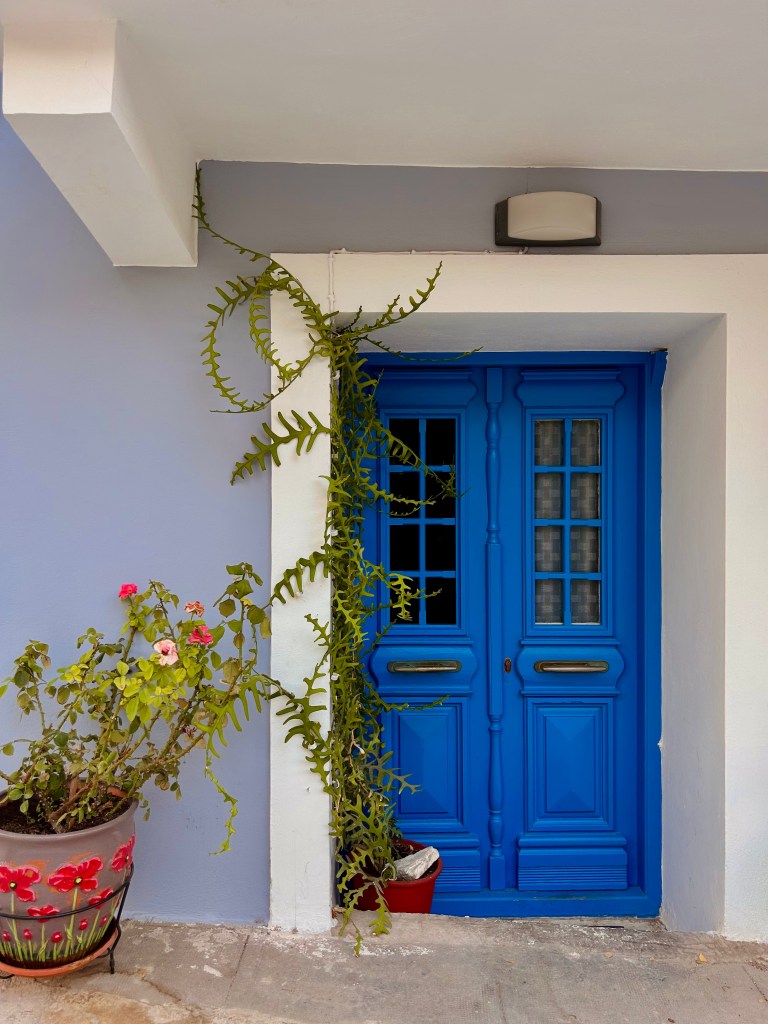
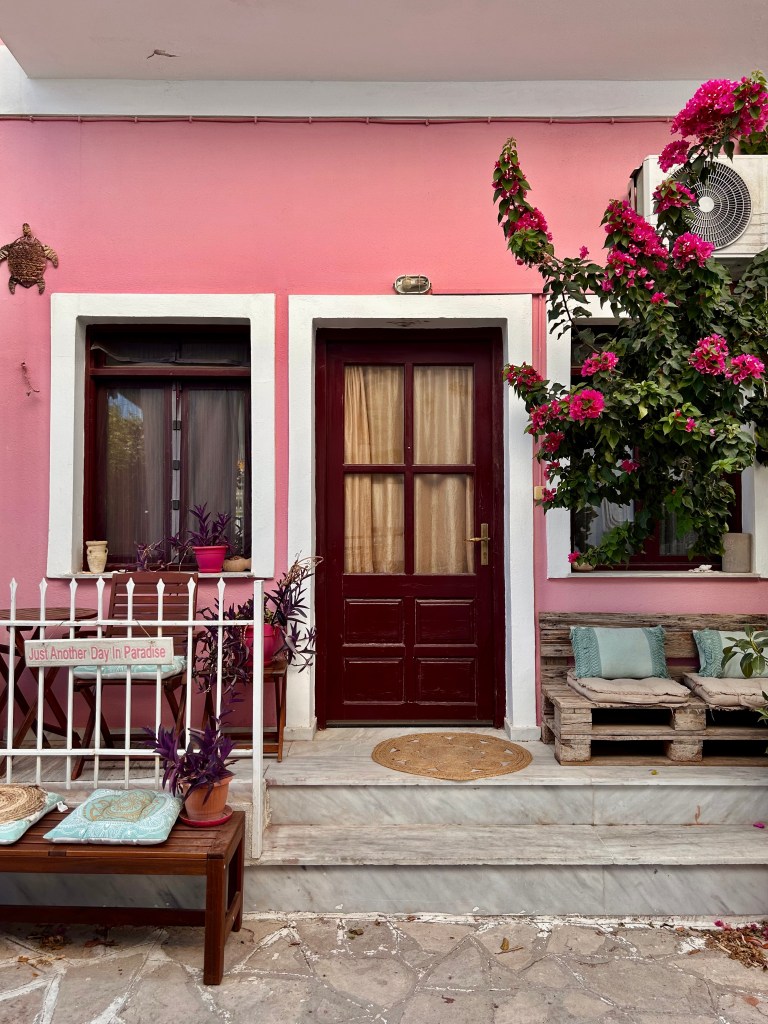
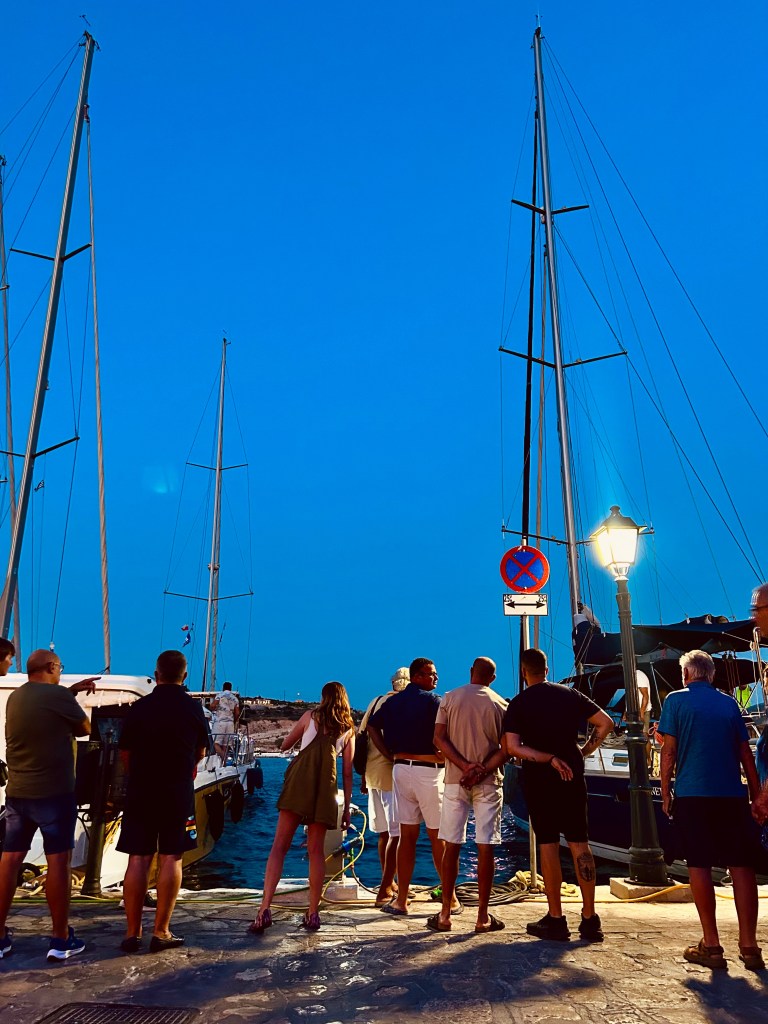
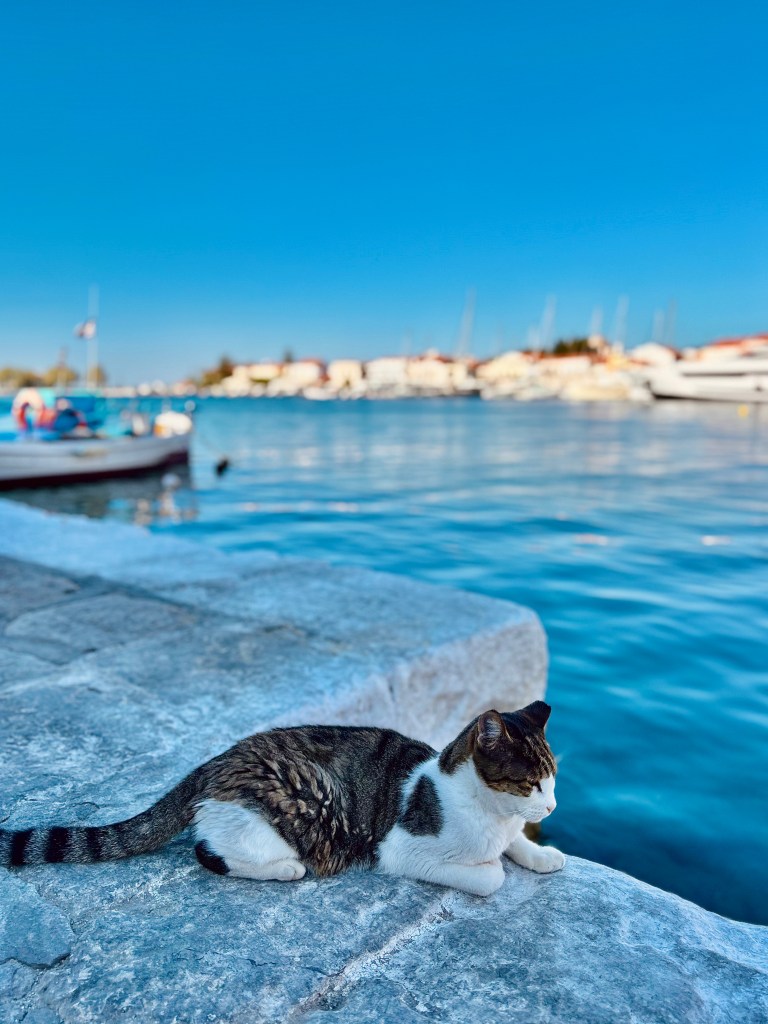
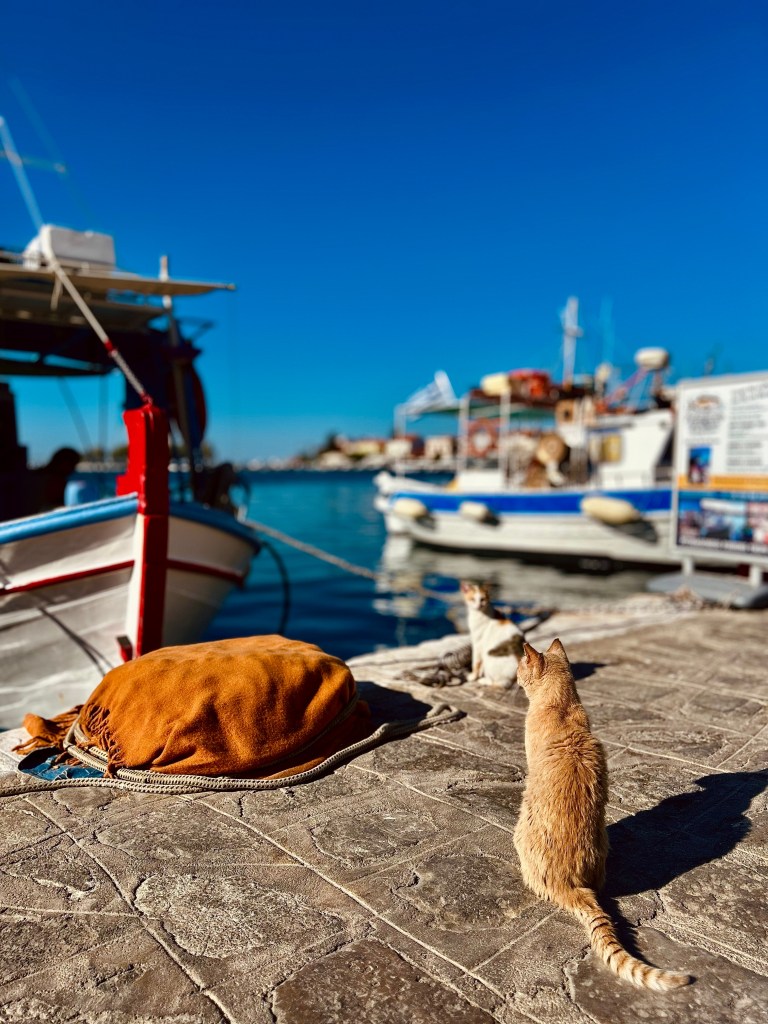
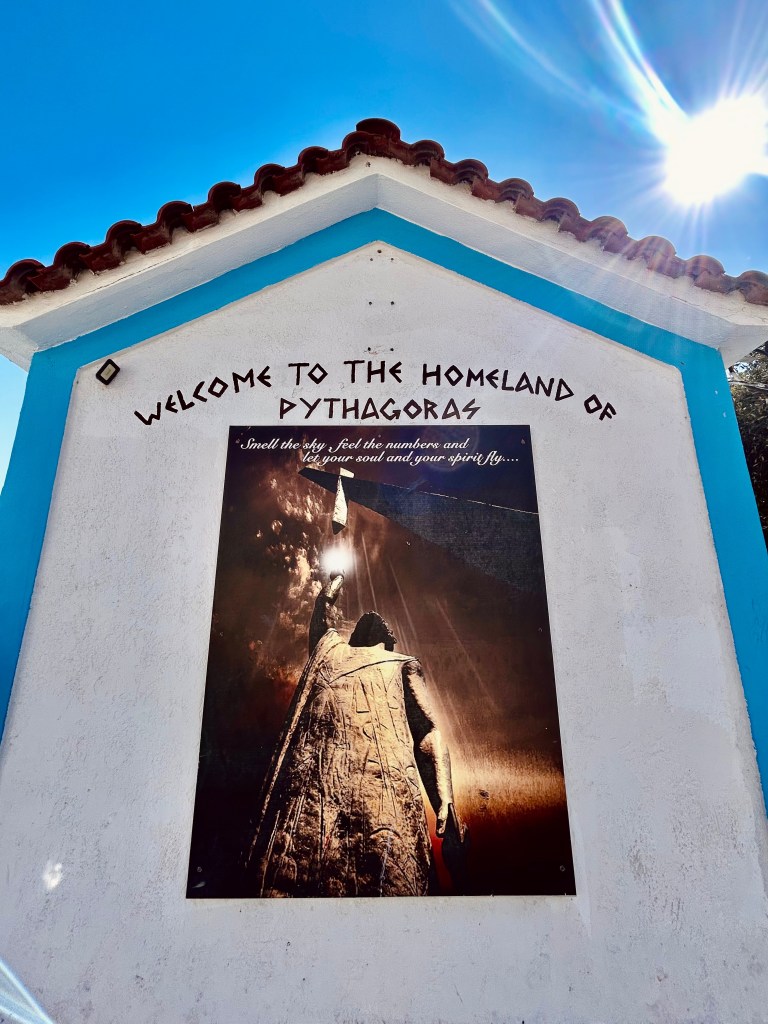
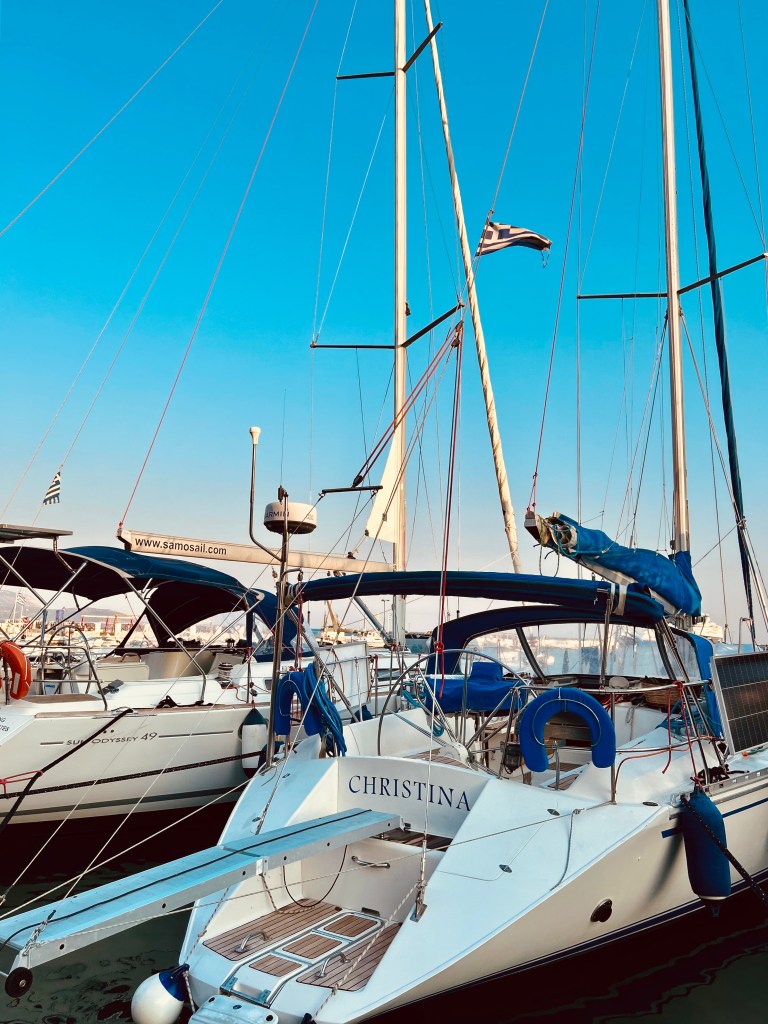
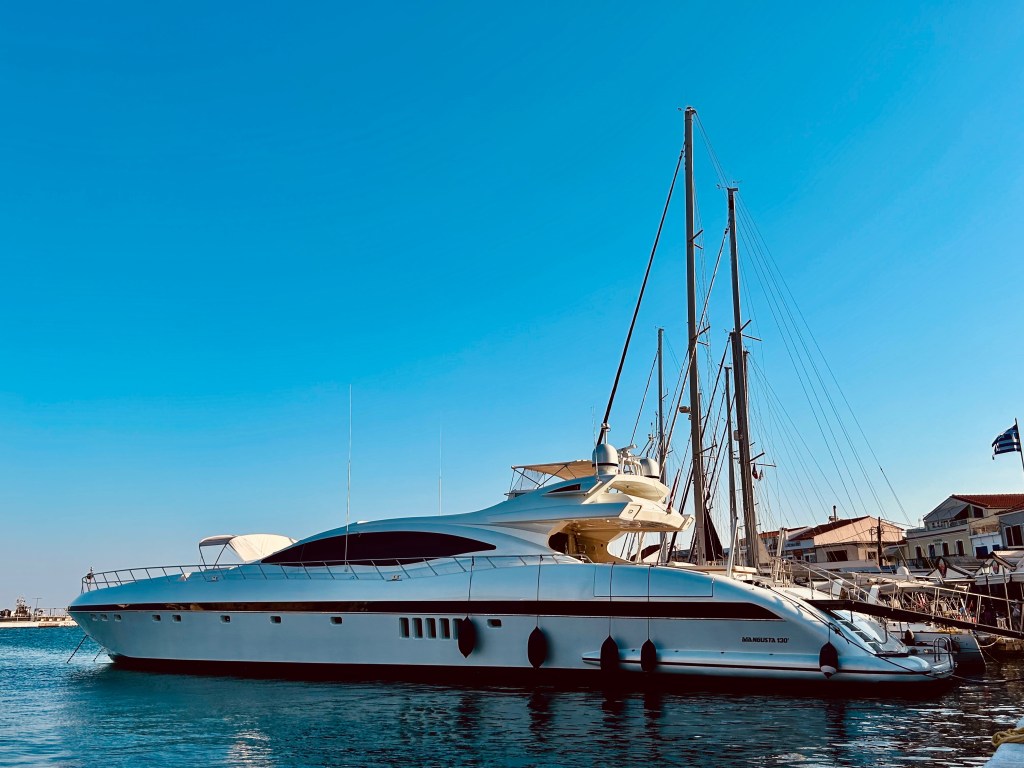
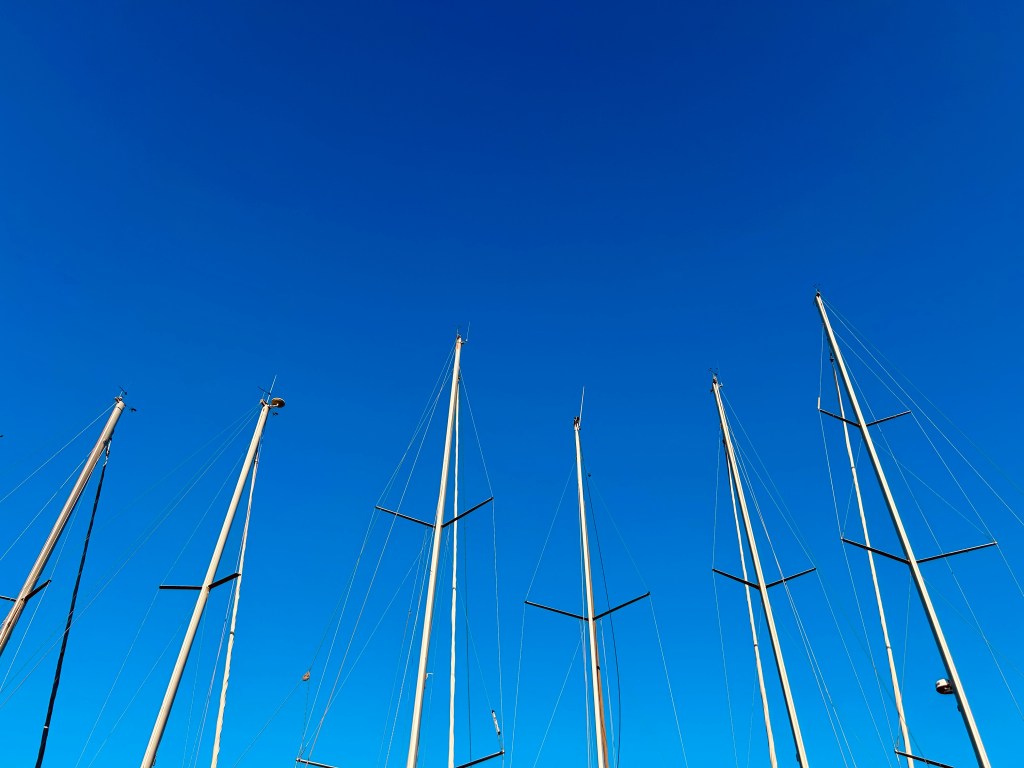
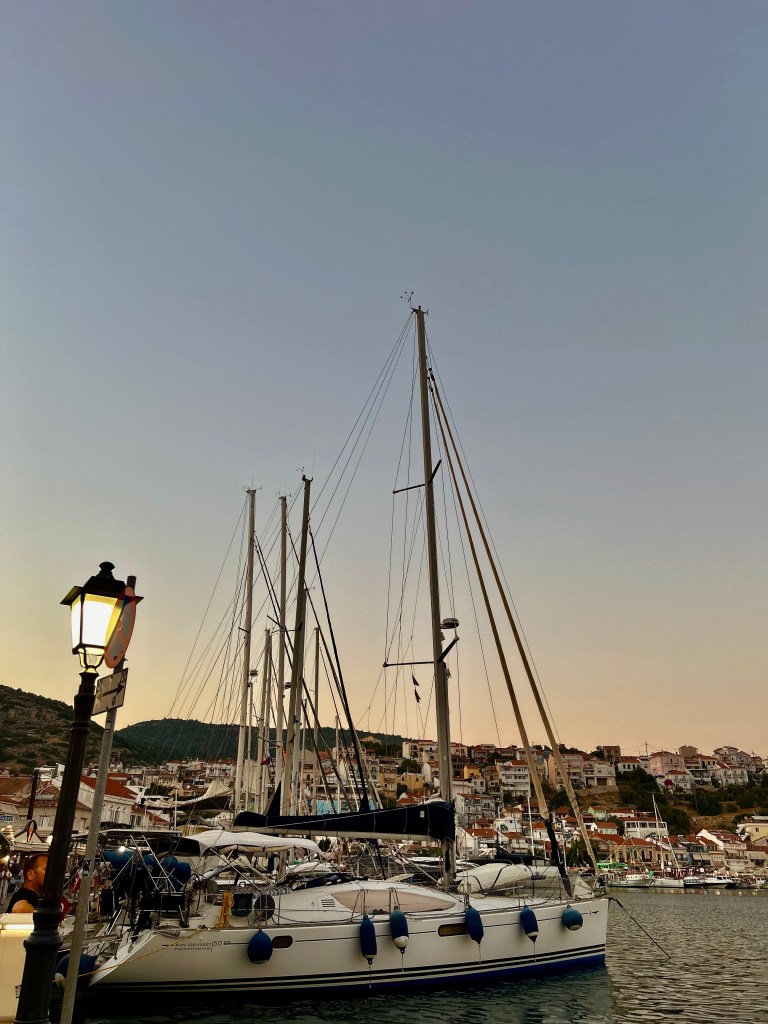
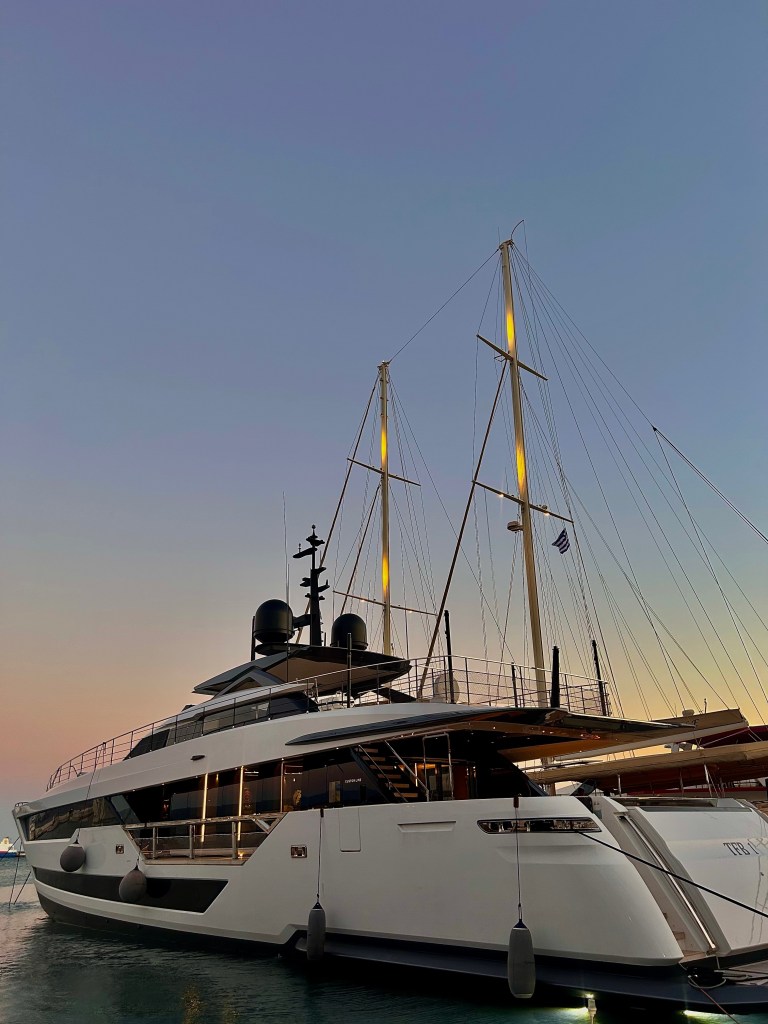
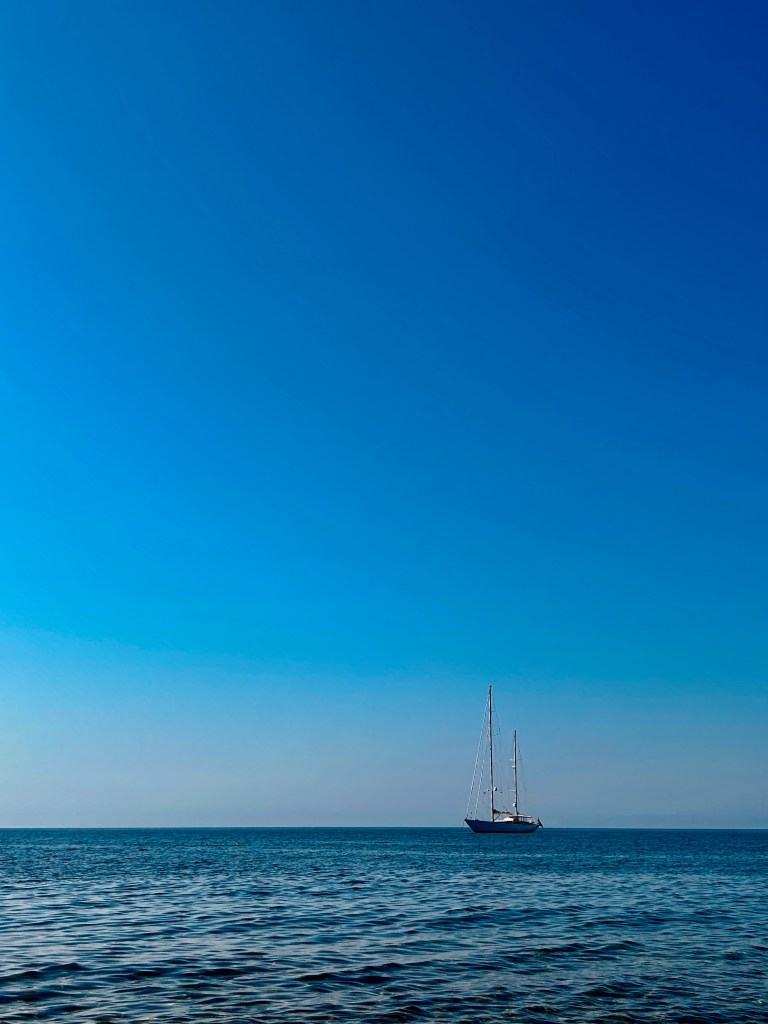
Lots of yachts anchor at the front and a couple of kilometres away along the coast there is a larger marina. In Pythagorio you get to experience everything from a wonky fisherman’s boat to a vessel larger than your own home. Smaller local boats offer daily tours to the southern island of Samiopoula or eastern island of Kasonisi, as well as fishing trips around the bay.
As I mentioned, Pythagorio is very close to the airport, which makes it easy to access and very convenient. Airplanes pass right over town every day and you get used to the noise, it’s part of the experience. Ah, there’s the 9 o’clock. And there goes the 11:50. Oh, that one had to make a turn because of the wind. Is that one going to Turkey?
The people are lovely and very service-minded. They speak English and in many establishments Turks and Greeks work together, as many people from Turkey spend the summer season in Greece to make a more decent living. The history of Greece and Turkey is a very complicated one. Sometimes there is animosity for a “good reason”, or rather there is an explanation to it, sometimes it’s an absurd conflict that lingers on when forgiveness, understanding, acceptance and common ground should be prioritised instead. But with the proximity of the island to mainland Turkey, and all centuries of common history, for better or worse, people live and work together in various ways. I found it to be relatively peaceful and effective there. And sometimes, the best way to come together is through food and music, which works great in Pythagorio and also gives us visitors a unique and interesting experience.
You will also meet people from the UK and Scandinavia who are either working in some of the establishments, or have bought a house there. I think the people who had travelled the farthest were from Australia, some had even sailed all the way. A few Italians, a few visitors from South America and some from the Balkans.
A lot of shops open early in the morning and stay open until around midnight. The bakeries are also early birds, but the harbour is pretty quiet at the start of the day. It’s a very calming thing to sit somewhere around the port and watch the sunrise. There are no annoying, hysterical seagulls and the only small mosquito bites I got were nothing compared to the ordeals I had back home during the summer.
A few locals sip their coffees slowly on the main street and if you get on the first bus to Samos Town, you’ll probably see the same faces every time, as there are a few commuters that take the same route every morning. People know each other, and if you stay longer you become a familiar face as well, everyone says hello and you can have very pleasant conversations with the locals. You’ll most probably find elderly gentlemen on blue and green taverna chairs before the town really wakes up, while the ladies usually have a chat with their neighbours in the evenings or go for an early swim. I think the sweetest part of my morning swim routine was discussing the temperature of the water with some local grandmas, and agreeing that it’s agreeable.
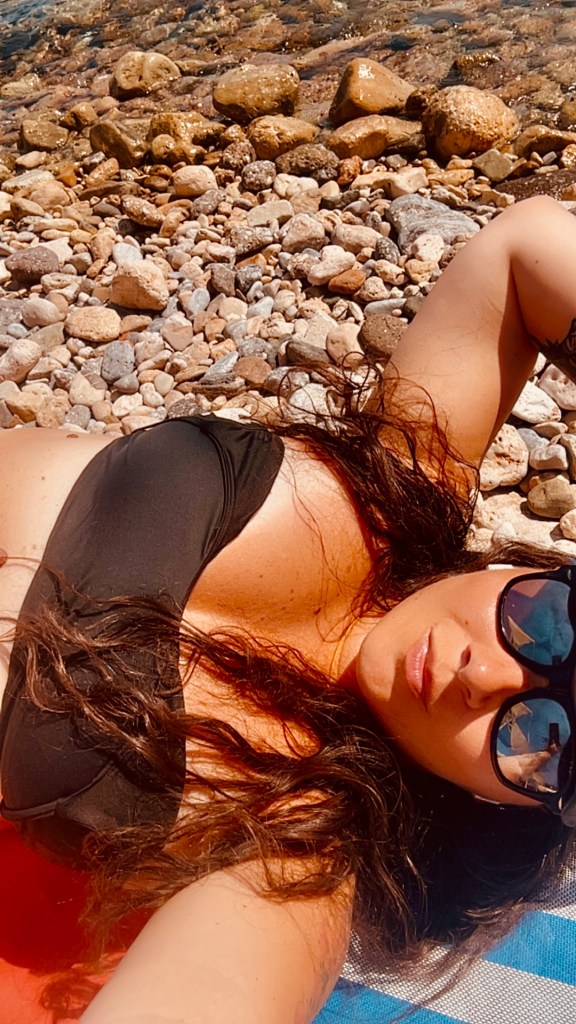
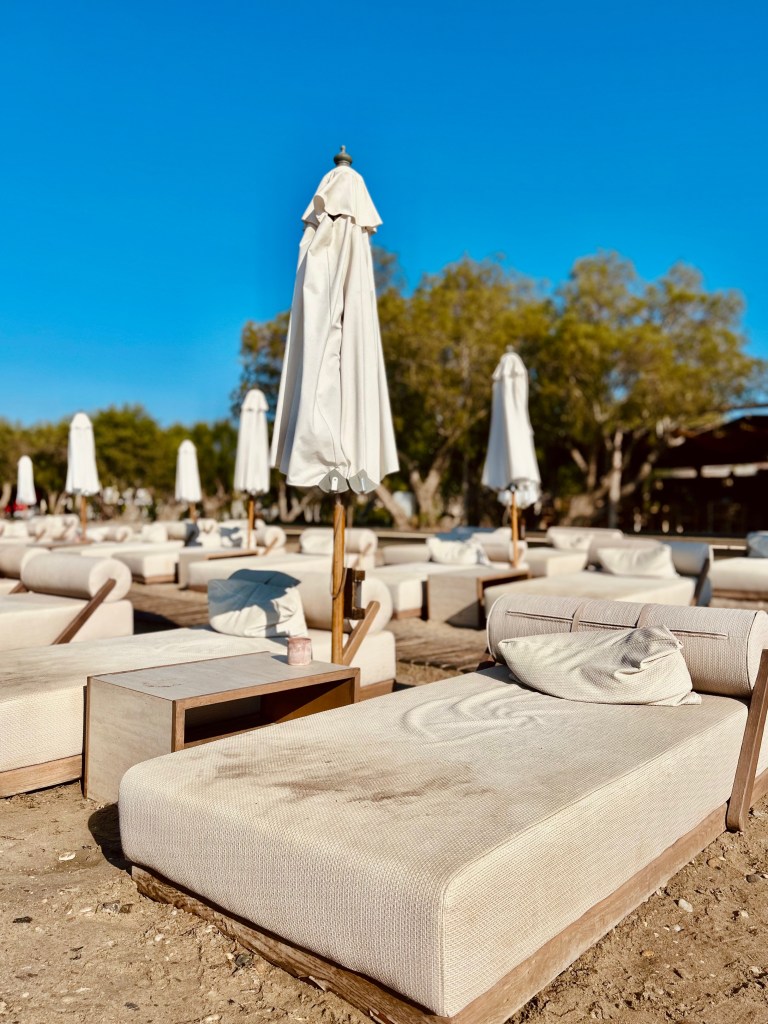
Pythagorio has three beaches: the smaller Paradise beach at the easternmost end, the pebbly beach of Tarsanas/Notos, and the long Potokaki to the west between the town and the airport. All three are great, although Potokaki is more expensive. Chairs there can cost around 20–30 euros, excluding food and drinks. I spent most of my days at Notos and treated myself to two lounge experiences at Asterías on Potokaki. I visited Paradise beach as well, but chose not to go there again as it was farther from my hotel, there were many more loud children there and the facilities were more limited. I focused a lot on relaxation during these three weeks, even if I did move around the island and stayed active in various ways. It really helped me wind down a lot. Swimming every day and spending a good amount of time in the sun were priorities. These things just make me happy and I treated myself to a proper dose. On the quiet beaches of Pythagorio and beyond, this was definitely mission accomplished.
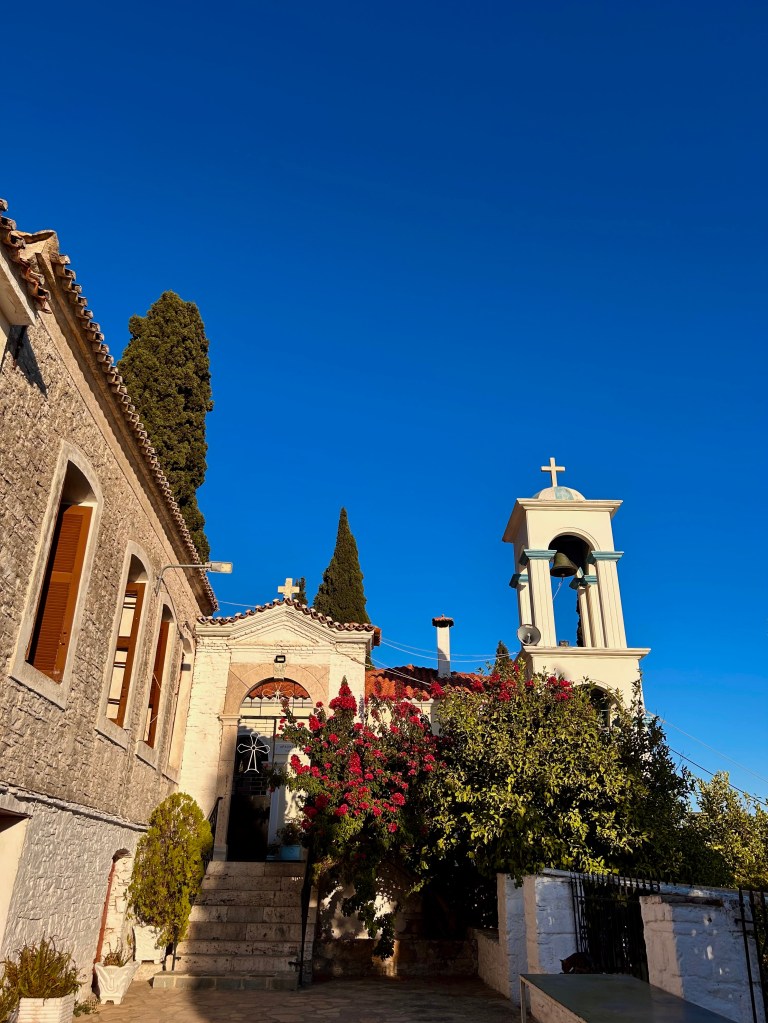
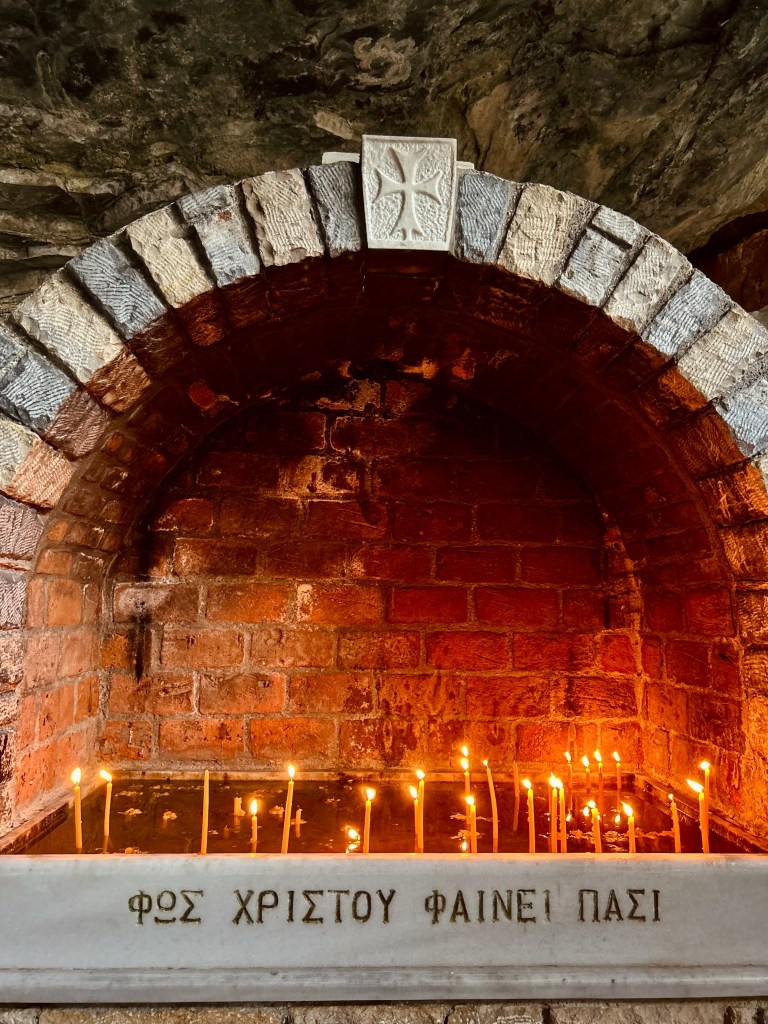
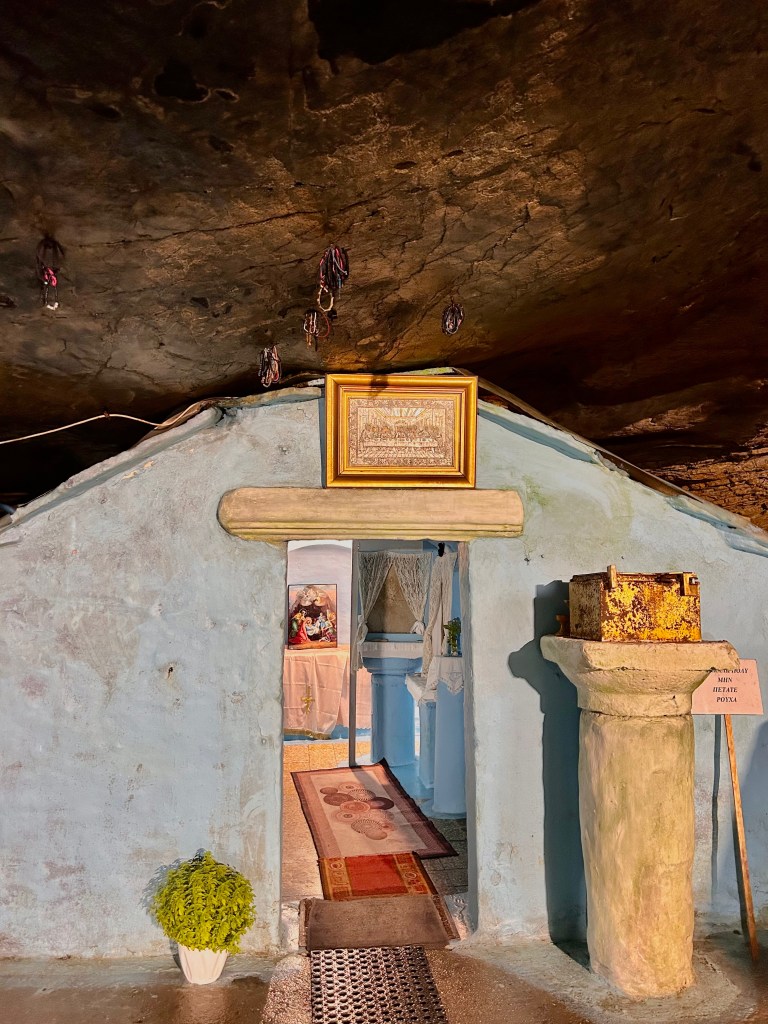
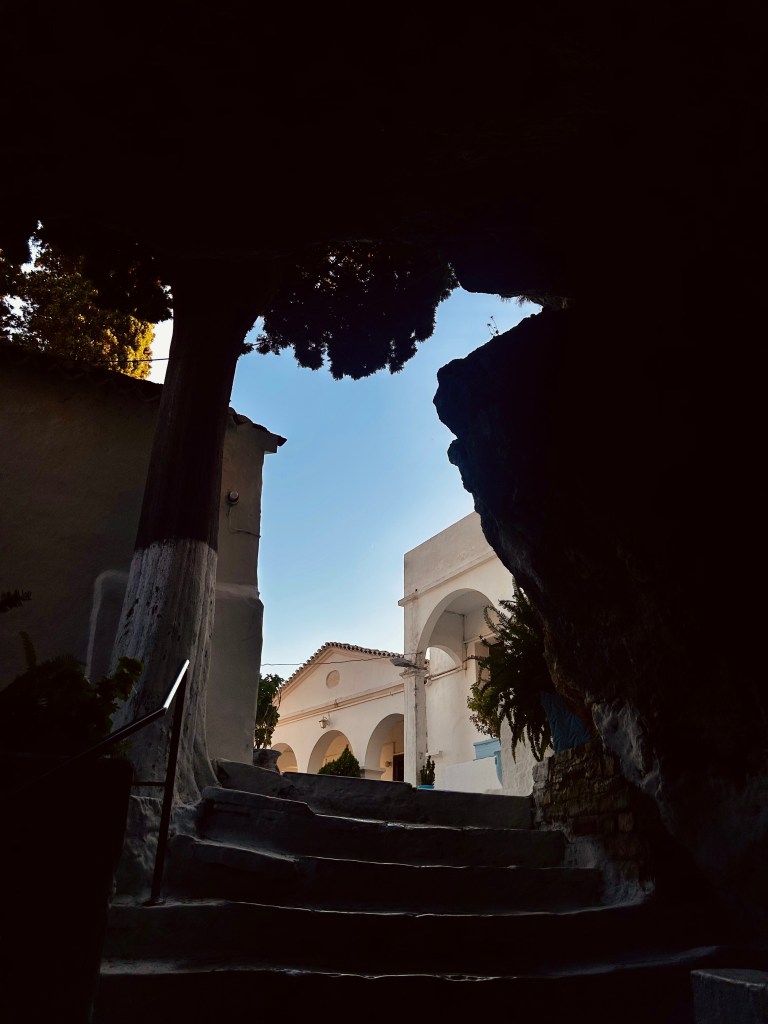
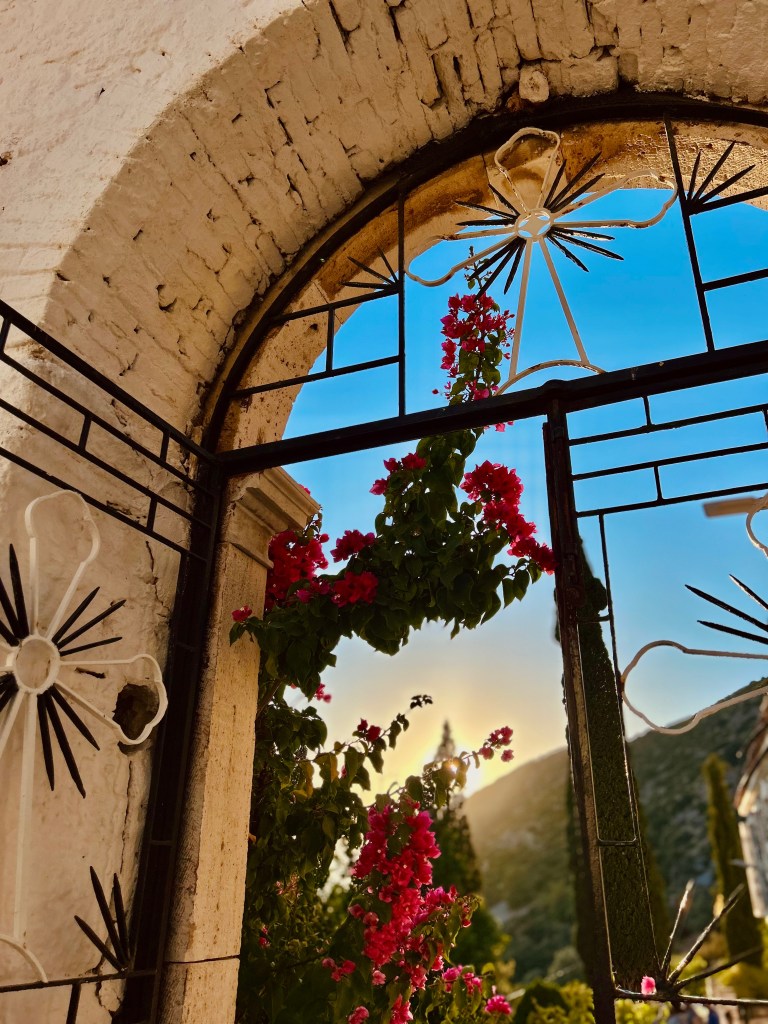
Speaking of staying active, walks in and around Pythagorio – with steps and hills that are no joke – were also part of the everyday schedule. The Monastery of Panagia Spiliani sits on a hill just above Pythagorio, and feels like both a sacred site and a hidden sanctuary. At its heart is a small whitewashed chapel built into a cave, where a revered icon of the Virgin Mary is kept. Stepping inside, you find yourself in a cool, dimly lit space with a hushed, almost mystical atmosphere. The cave’s natural rock walls form the backdrop for flickering candles and simple icons. Outside, the monastery’s courtyard opens to breathtaking views over Pythagorio, the harbour, and the Aegean Sea, especially magical at sunset. Many visitors come not only for the religious significance but also for the sense of peace and the stunning panorama that makes the uphill walk well worth the effort.
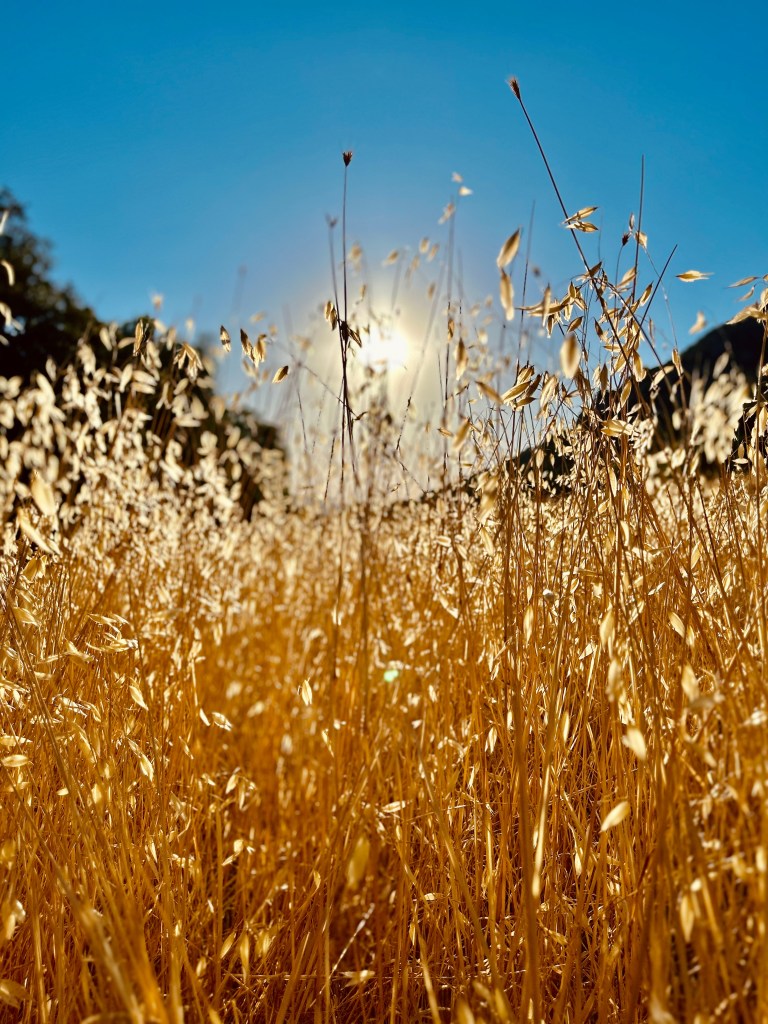
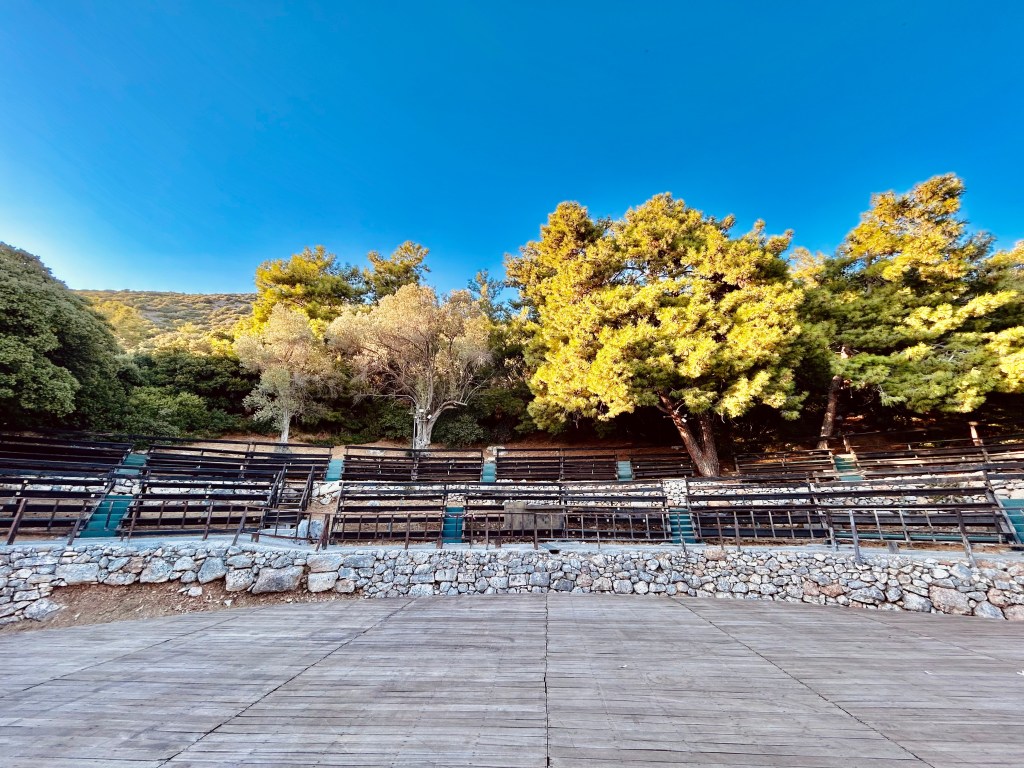

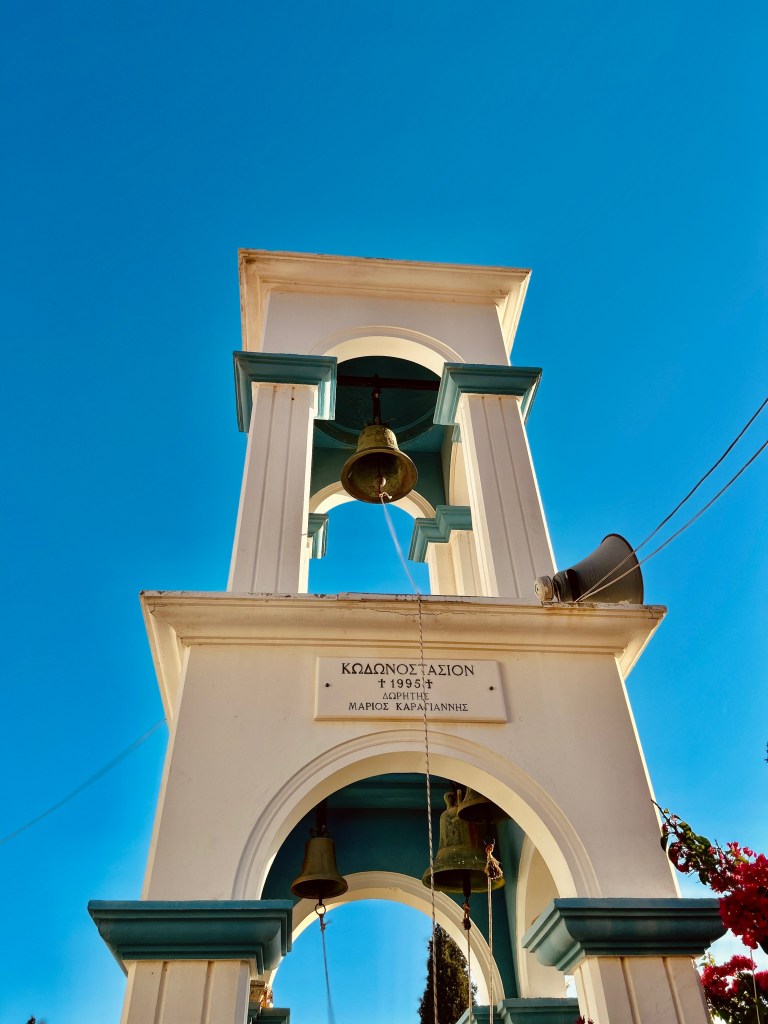
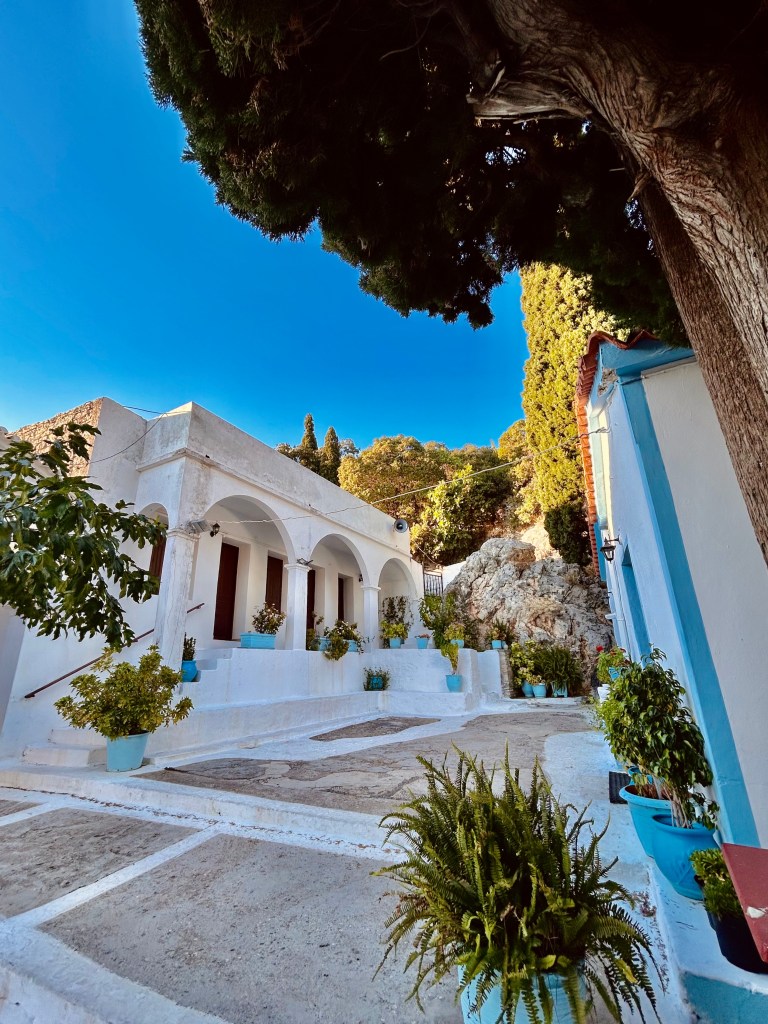
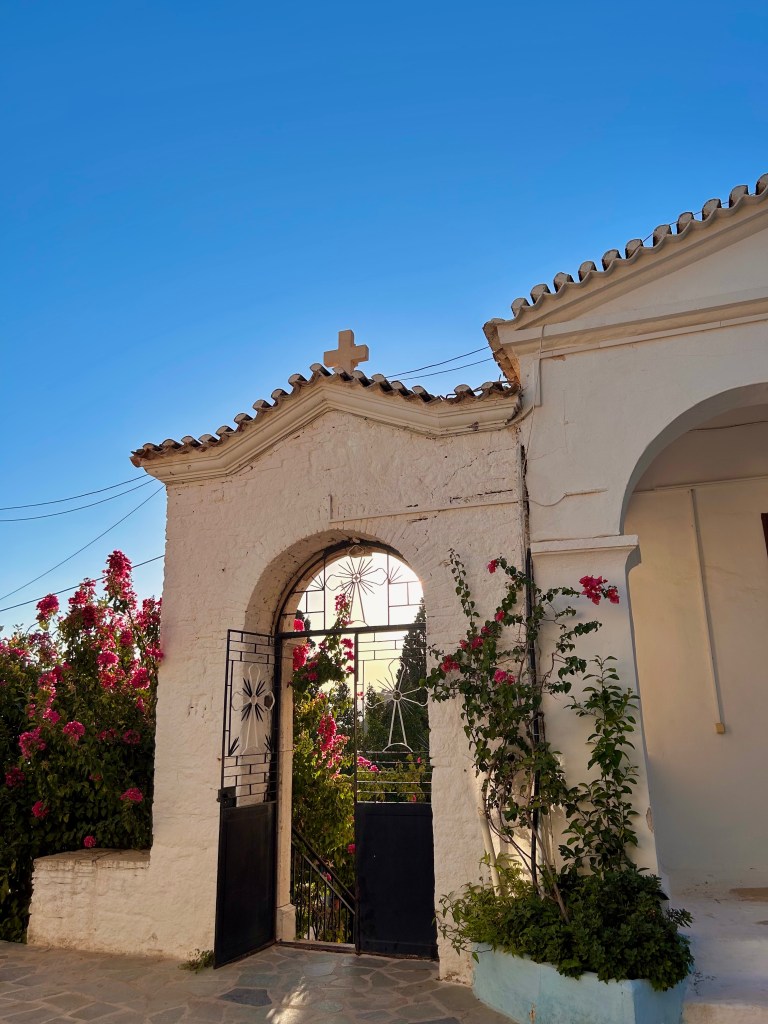
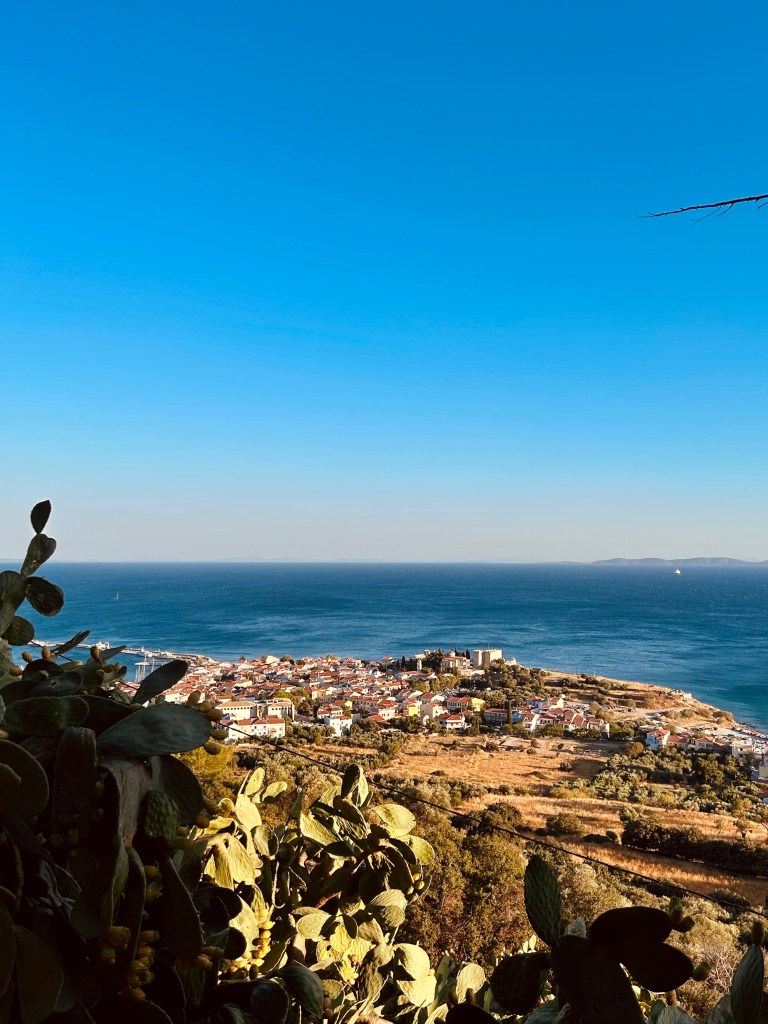

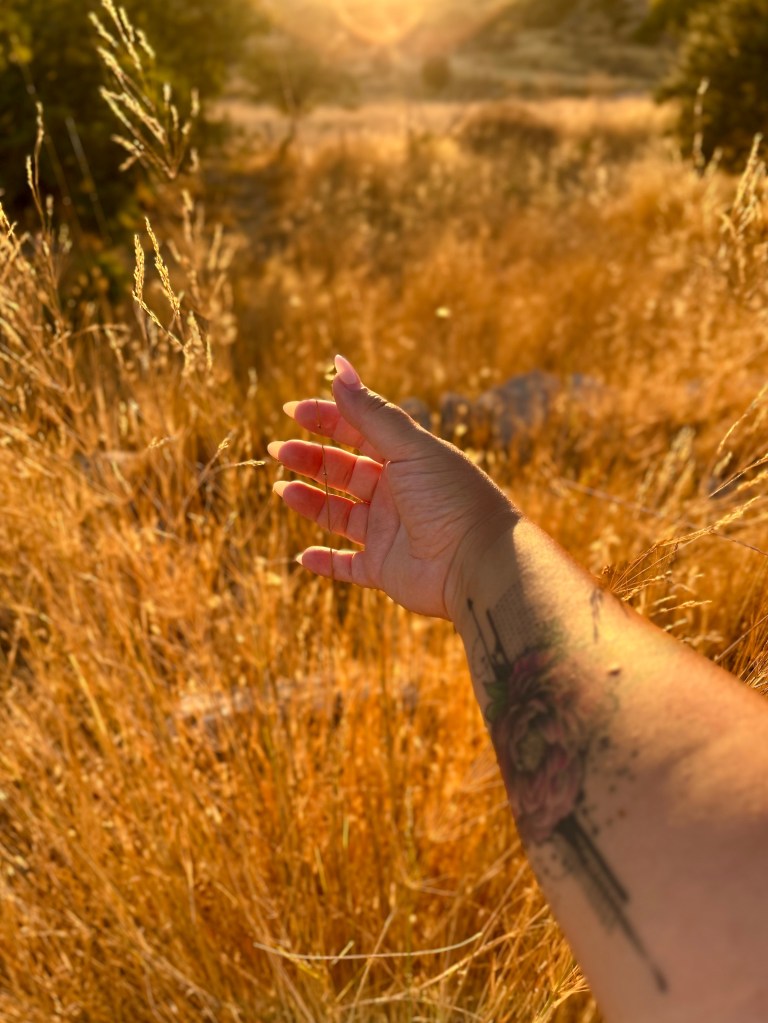
Other sites to visit right outside of Pythagorio are the ancient Temple of Hera (Heraion) and the impressive Eupalinian aqueduct, deemed an engineering marvel of antiquity. I chose not to visit this time, but rather to save a few things and experiences for my next visit, which of course I’m actually already planning. In my defence, if you look at the photos, can you blame me? Who wouldn’t want to visit again?
Vathy
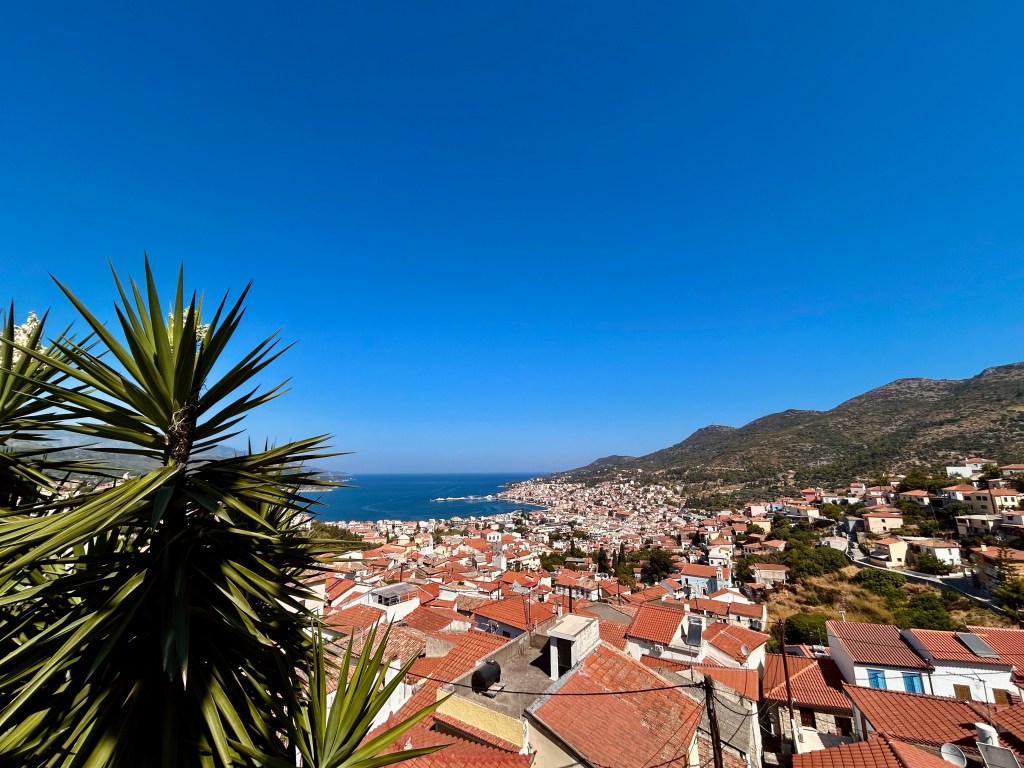
Samos Town, even called Vathy, is the capital of the island and the place where old-world charm and modern everyday island life blend. It is bigger and busier than Pythagorio, it has a colorful harbour, museums (including a wine museum), winding hillside streets, as well as a smaller town beach.
The crescent-shaped harbour is lined with neoclassical mansions and pastel-painted buildings. Fishing boats rock gently in the water in the morning, as hungry kittens wait for the fishermen to throw out a bit of breakfast from their catch, while cafés and tavernas spill out onto the promenade, perfect places for people-watching and sipping on your first (ice) coffee of the day.
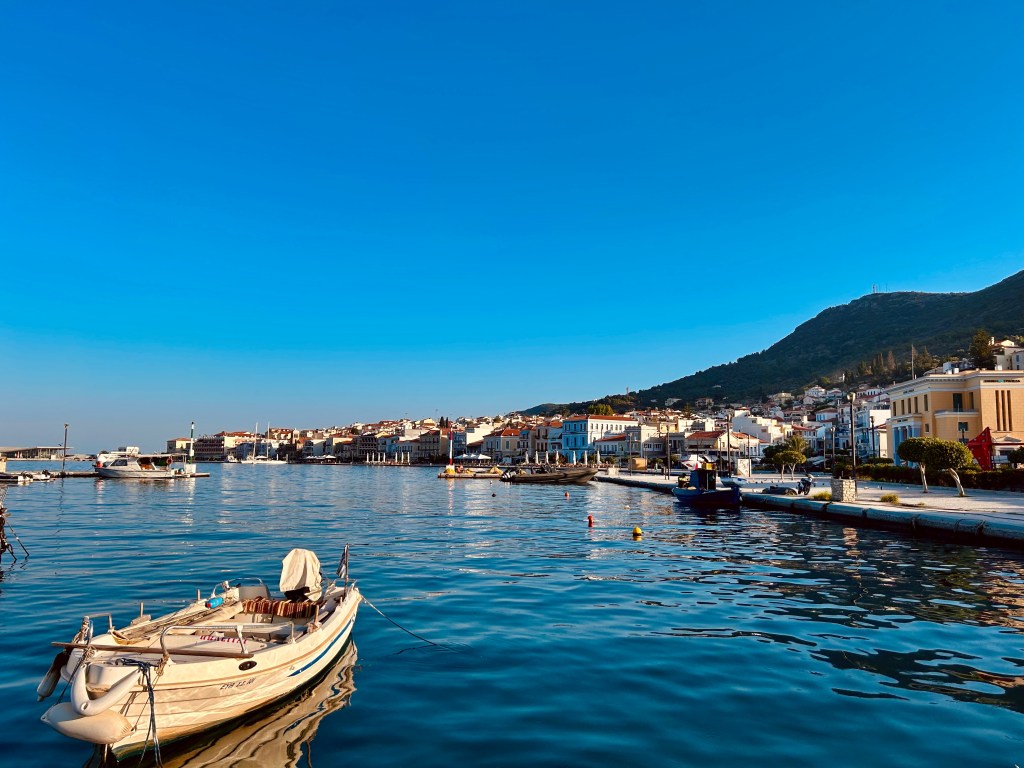
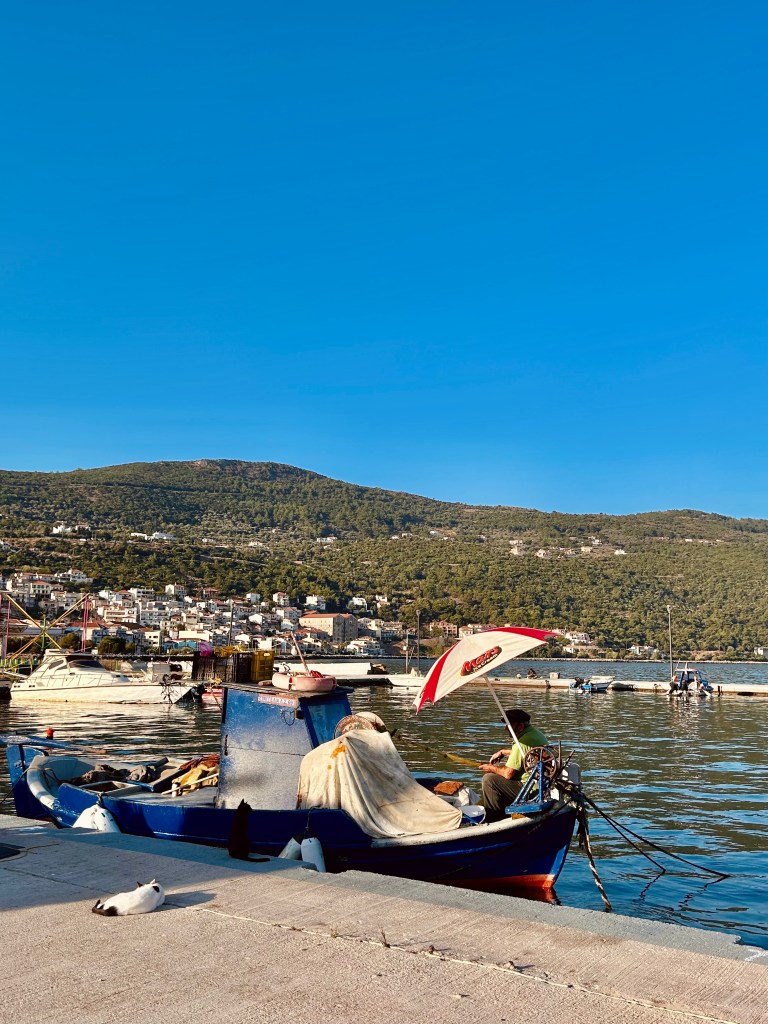
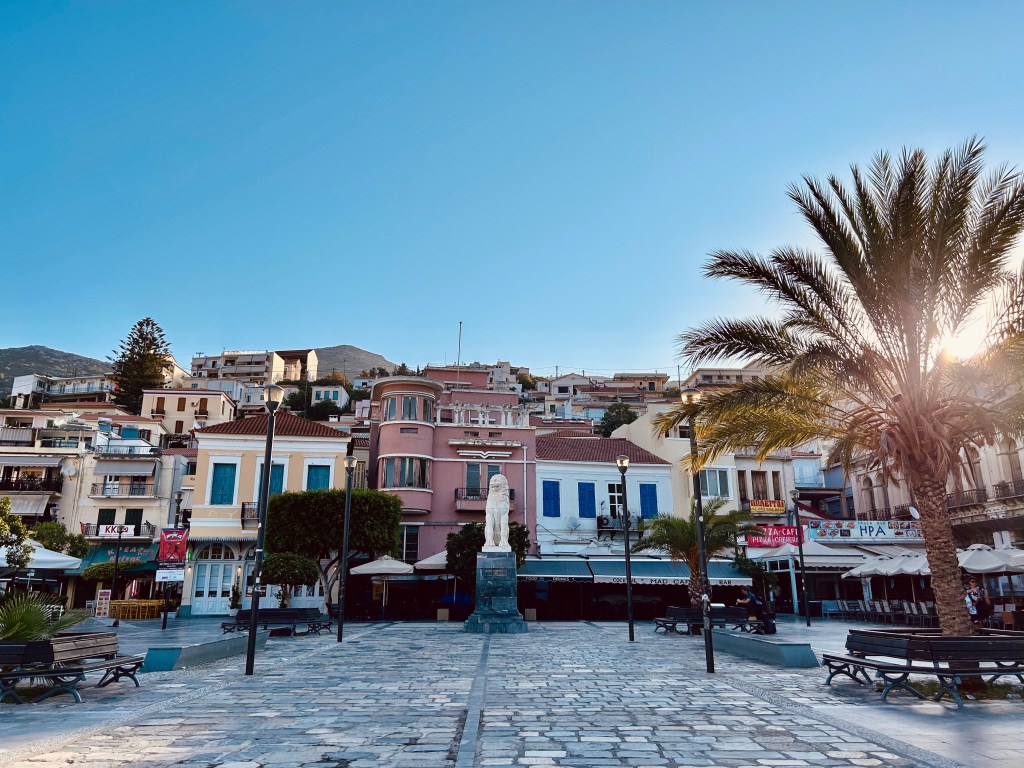
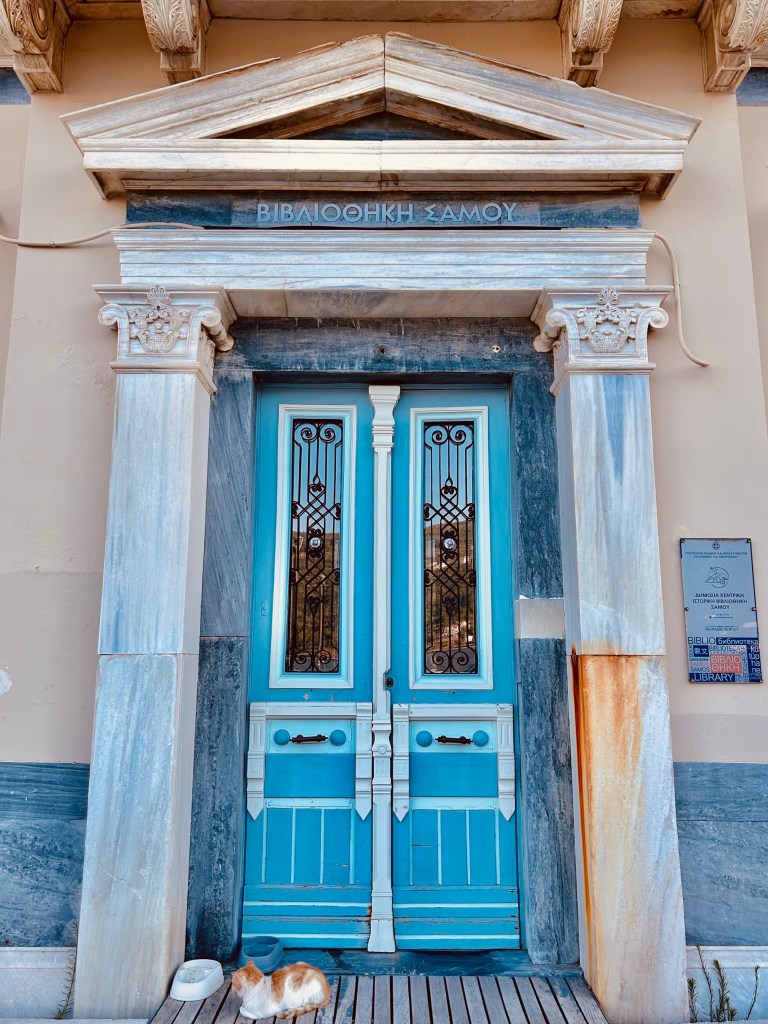
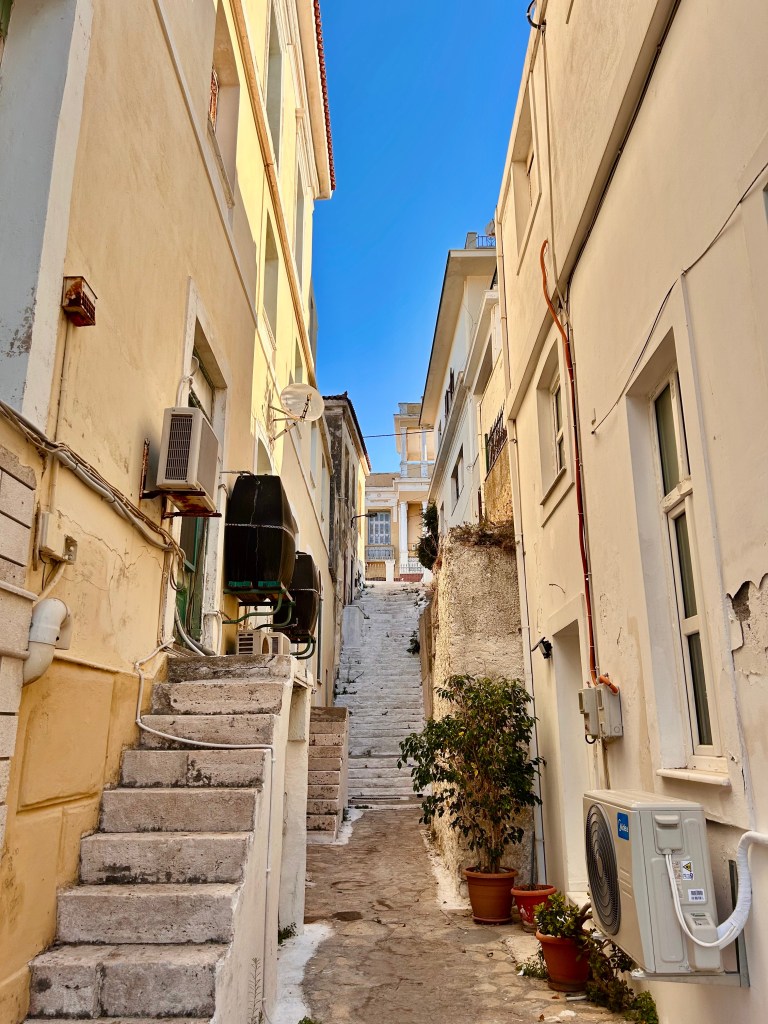
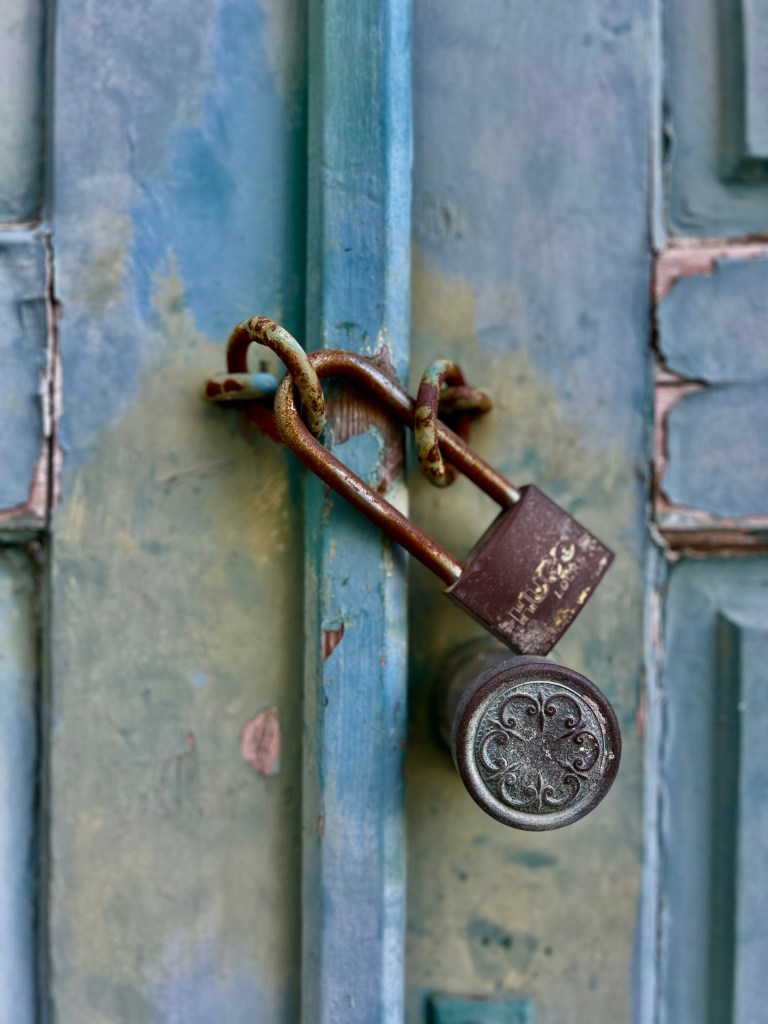
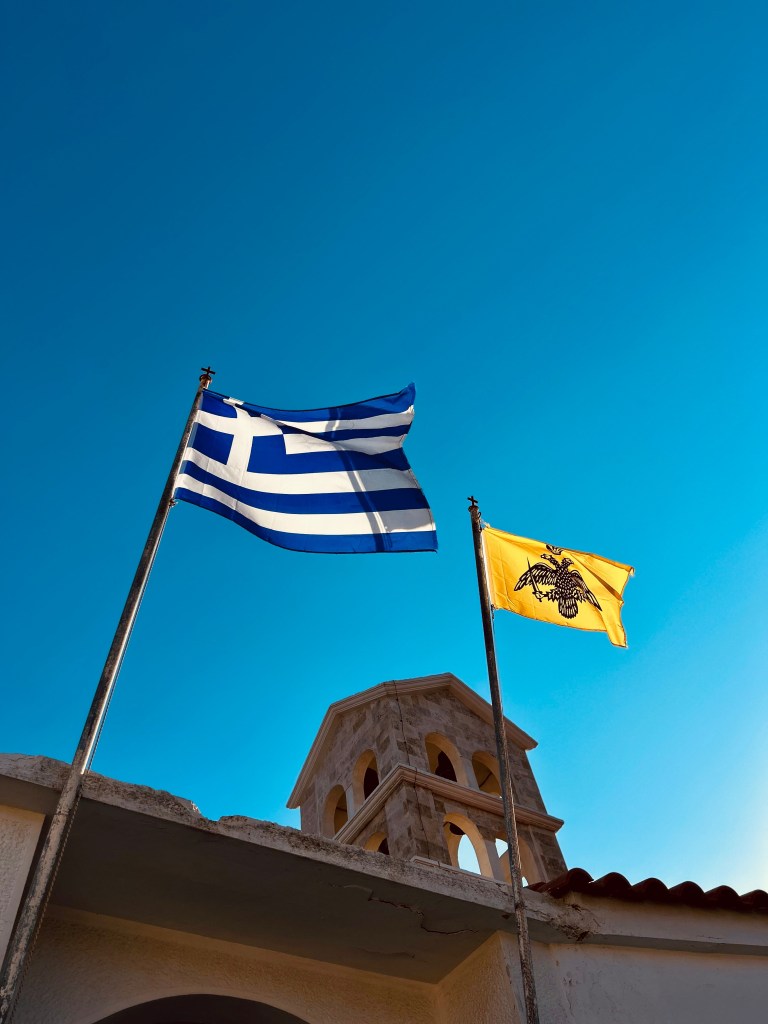

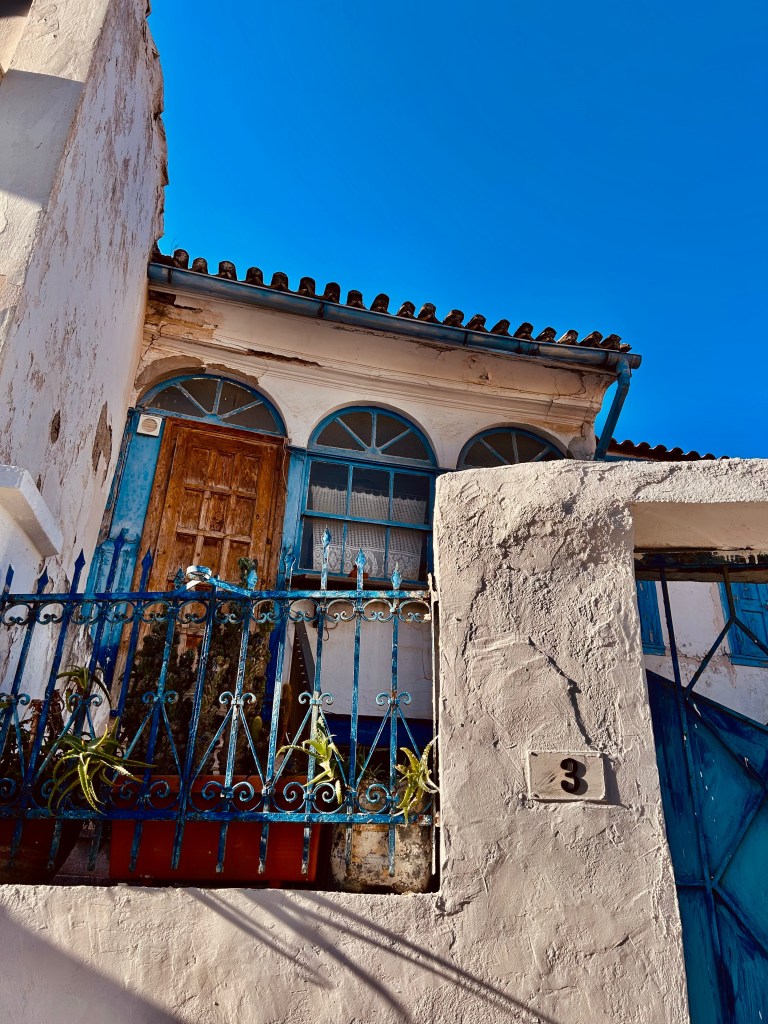
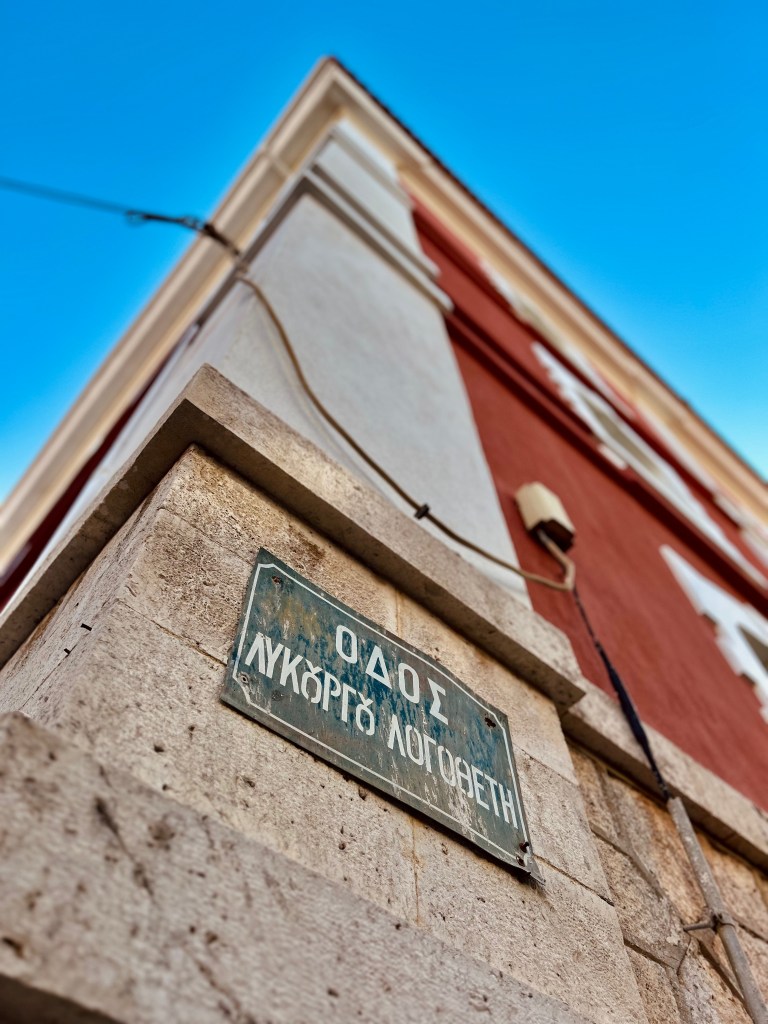

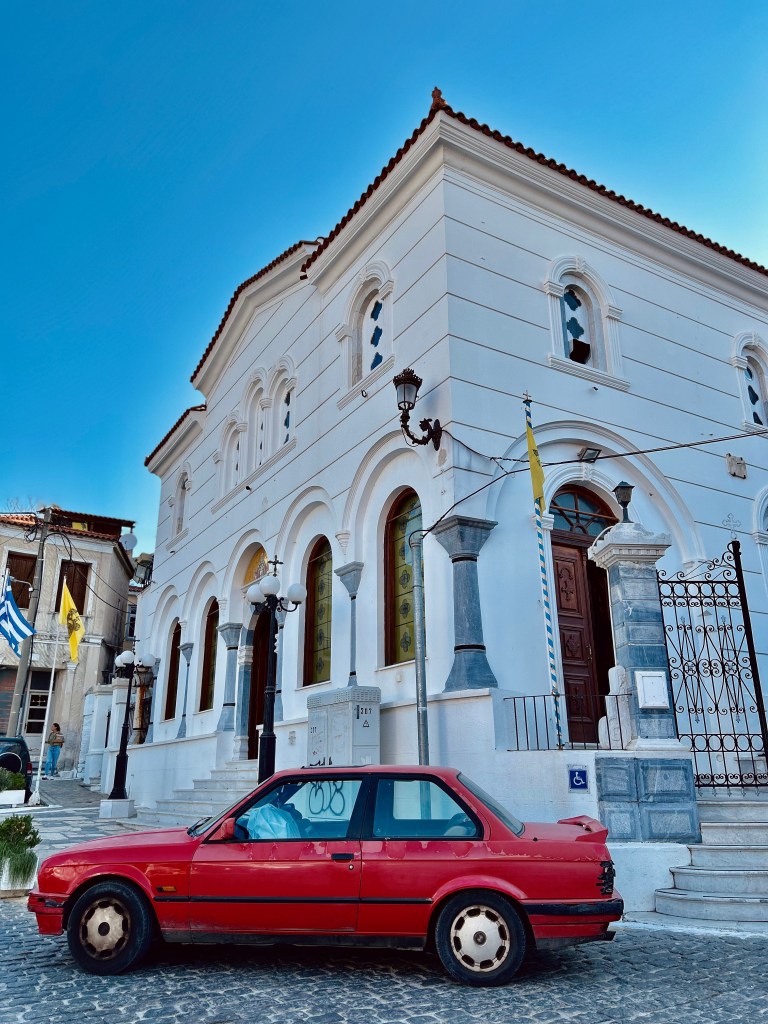
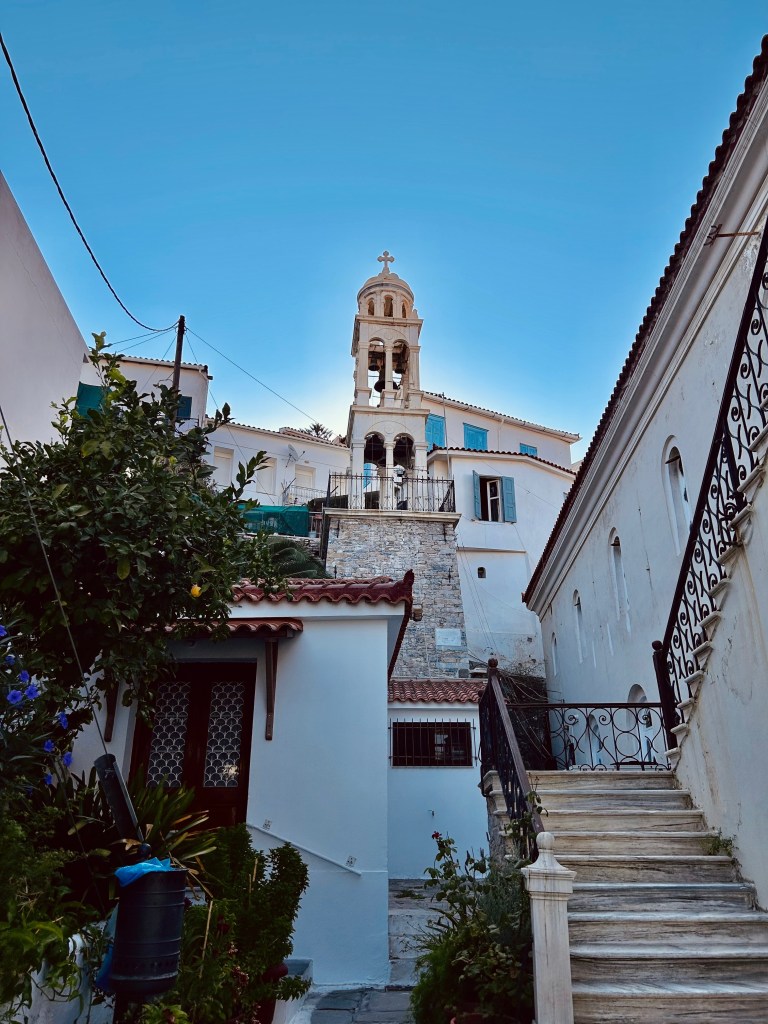
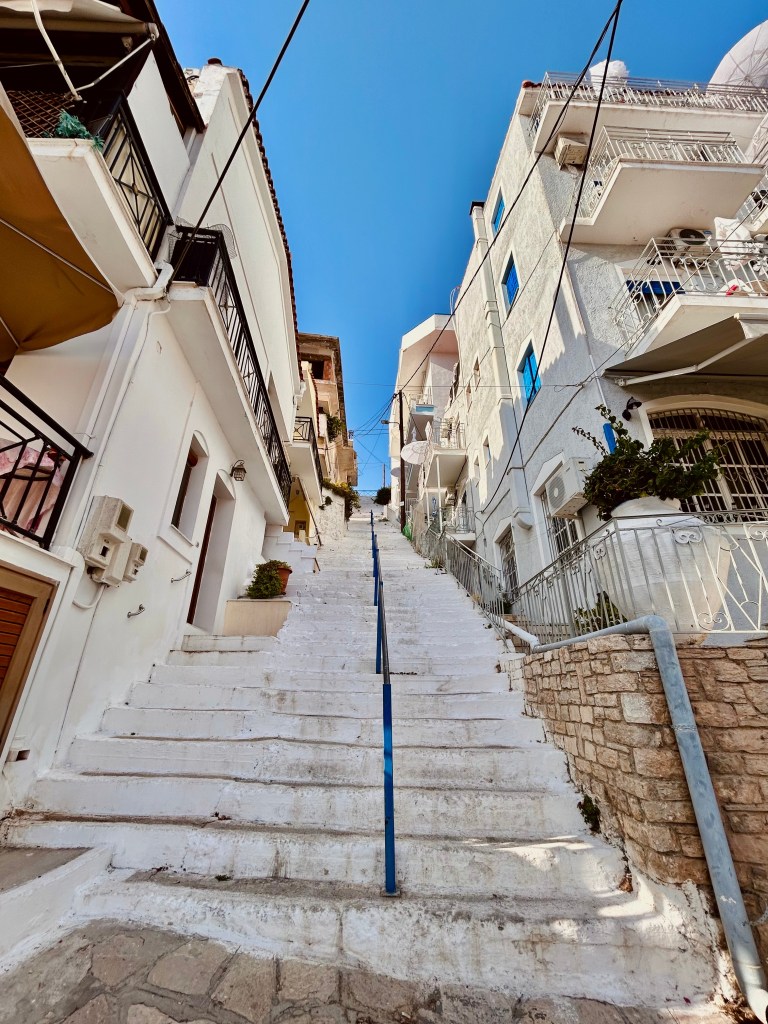
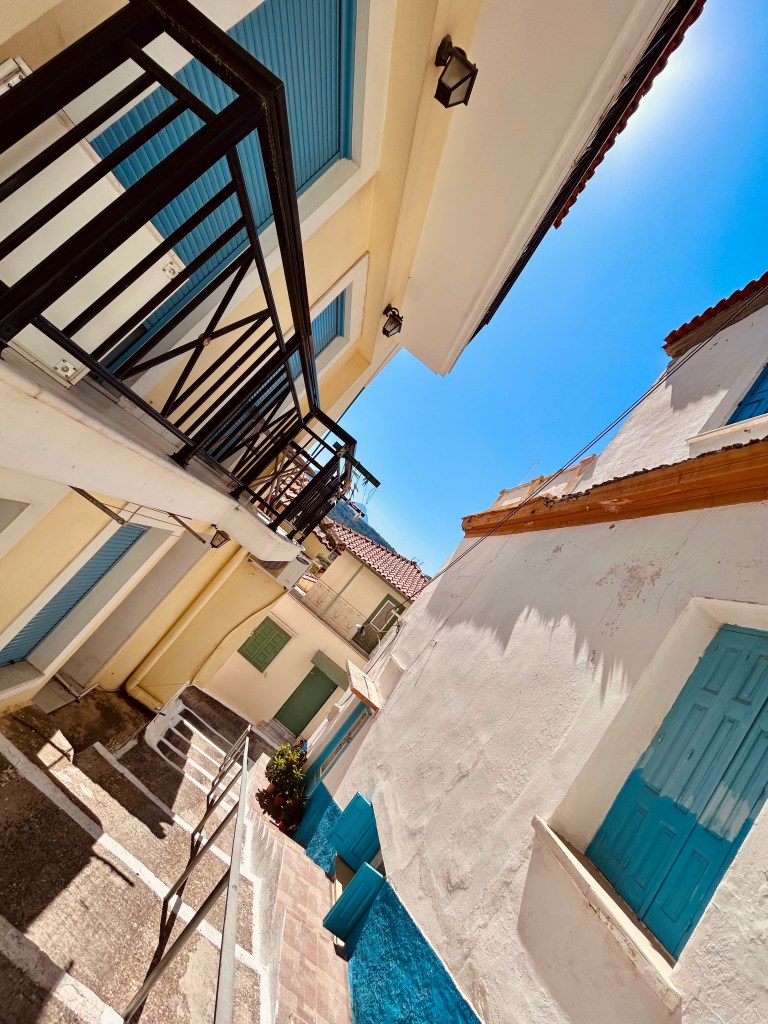
From the waterfront, the town stretches up the hillsides in a jumble of red-tiled roofs and winding streets, inviting you to wander further inland. The older village is a beautiful maze to explore, although relatively steep and definitely a sweaty challenge in the scorching August sun.
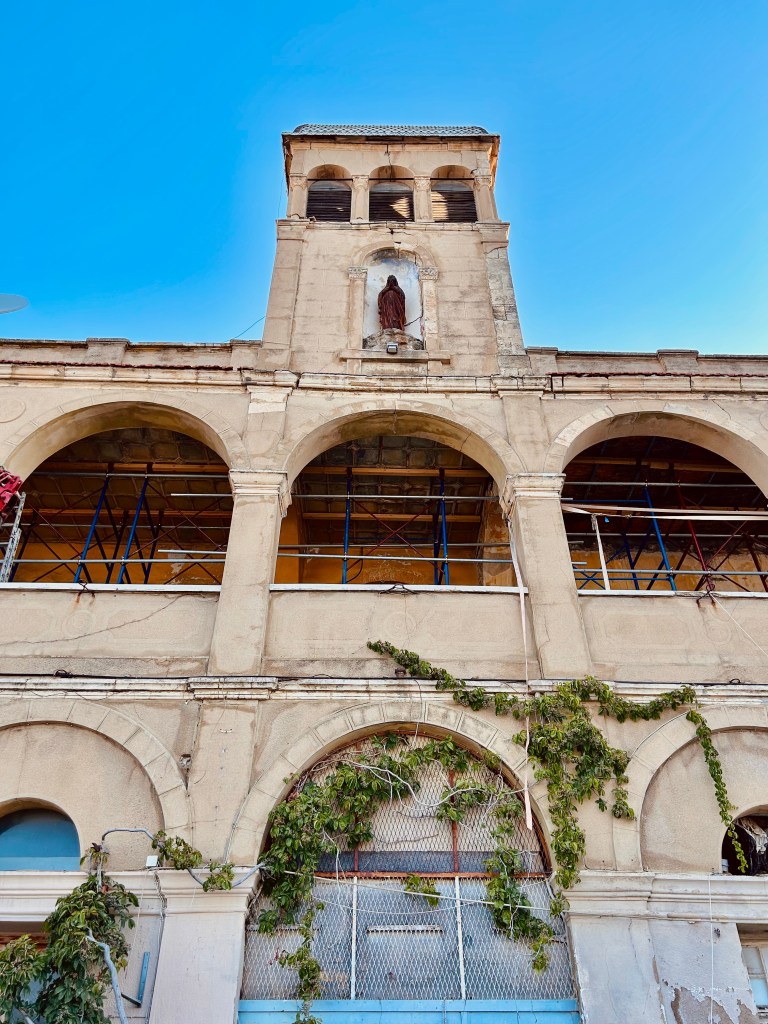
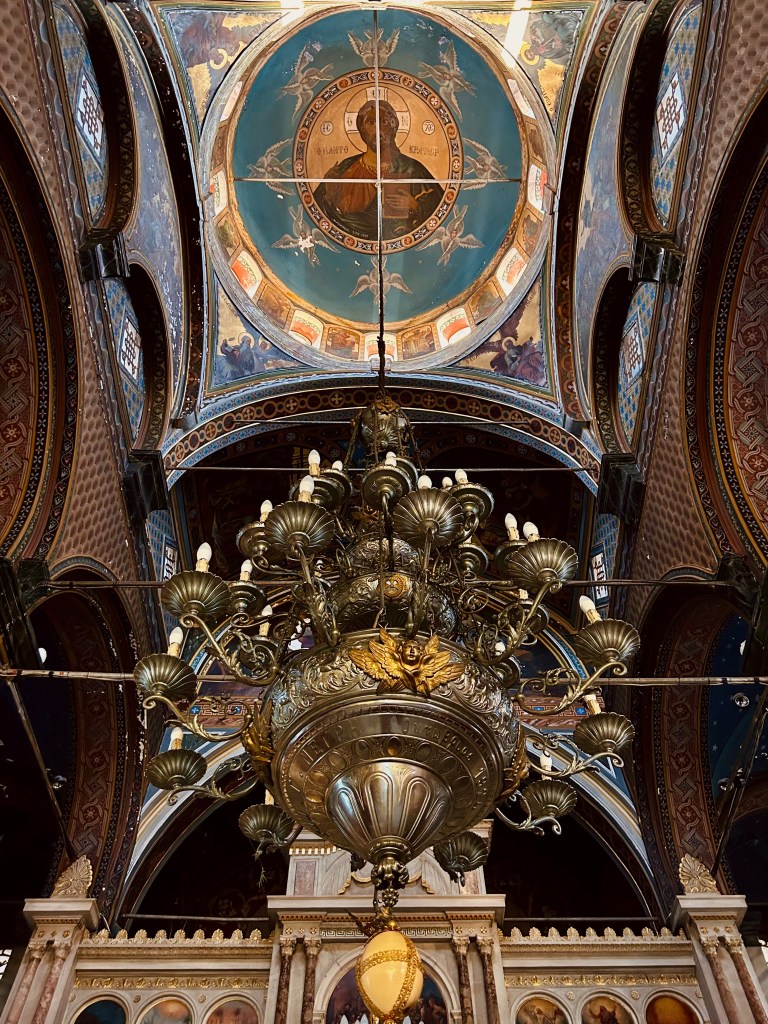
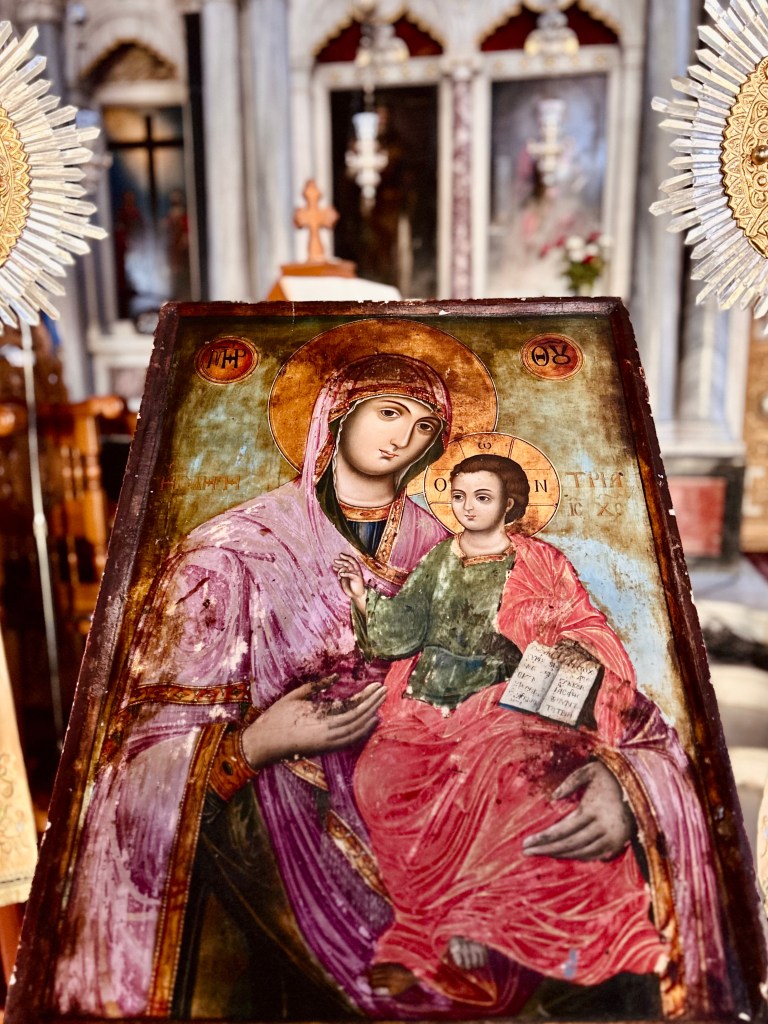
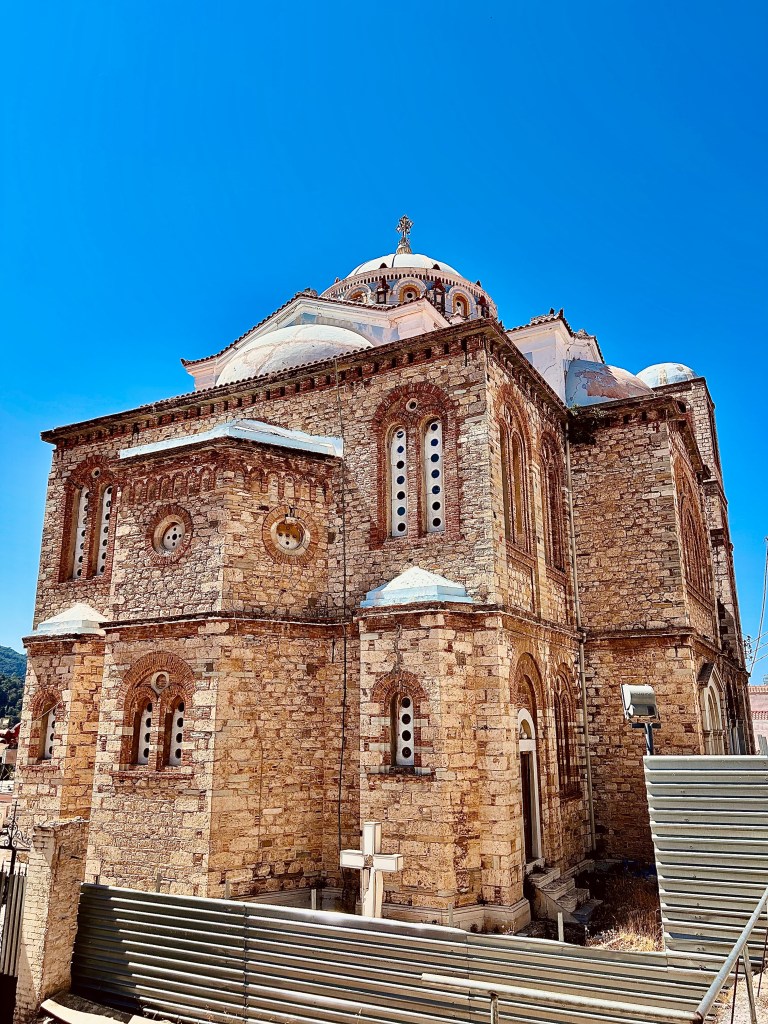
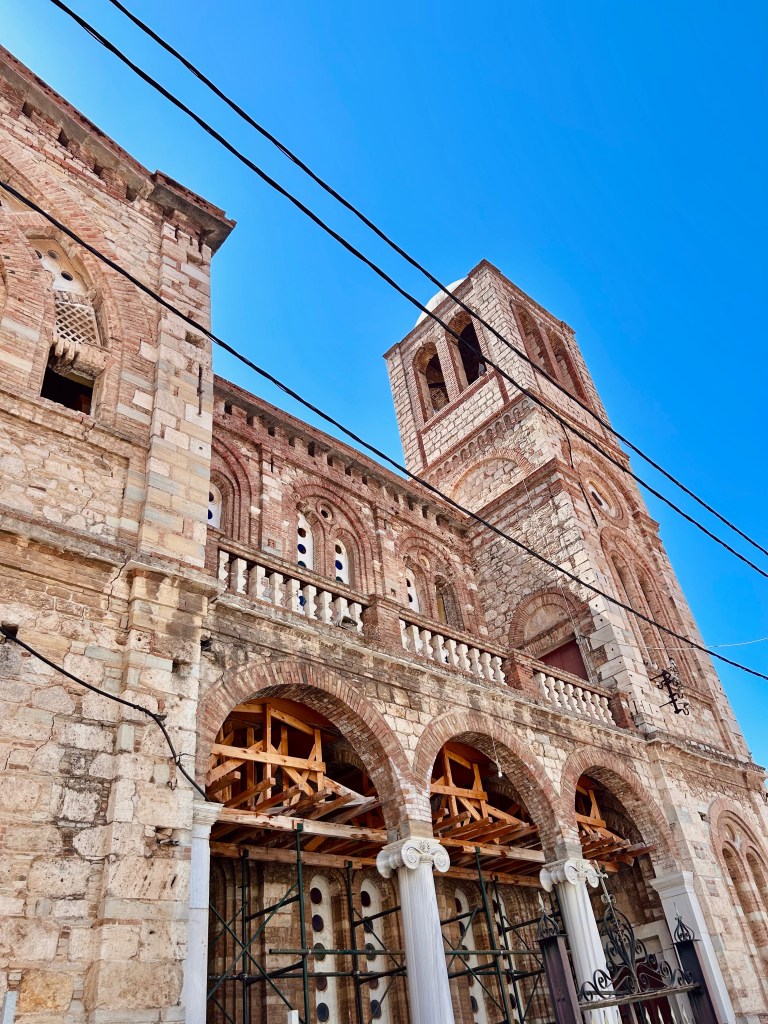
The bus from Pythagorio takes about 20 minutes to reach Vathy, there is one main bus station and from there I was off to explore on foot. I had my coffee in the main square, which is lined with cafés and restaurants around the statue of the lion and then I spent a few hours in the backstreets uphill, some very narrow and slippery, some shaded by lovely bougainvillea or vines, with views over the bay, or tiny churches with a bell tower rising above the rooftops. Old Vathy even sports a gorgeous Byzantine church, which I would have loved to photograph more up-close. But renovation work was being done so it wasn’t possible.
One of my favourite things to experience during my discovery walks is the locals’ reaction. Not a lot of foreigners were wandering the tiny streets of the old village, a lot of them usually stay closer to the promenade, they spend time on the beach or go shopping, so whenever I met someone who actually lived in a colourful house on an insignificant street uphill, I was really amused by the generally surprised look I got. Yes, Aunt Maria, I like to see everyday life too, and your little balcony offers me a glimpse into that.
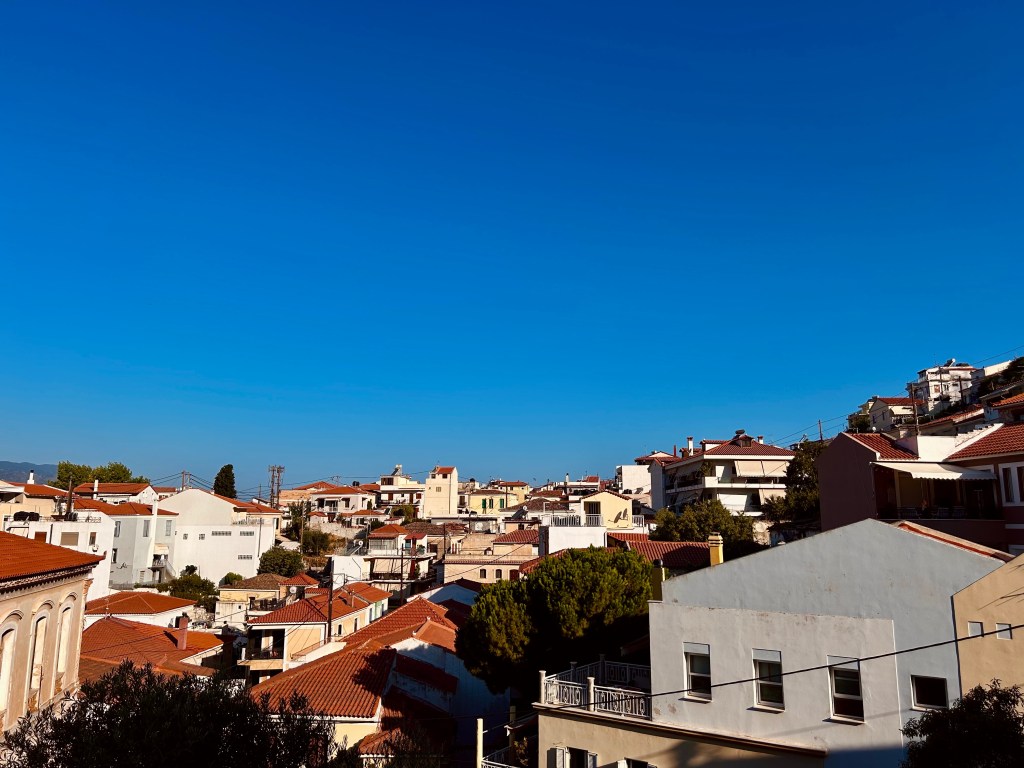
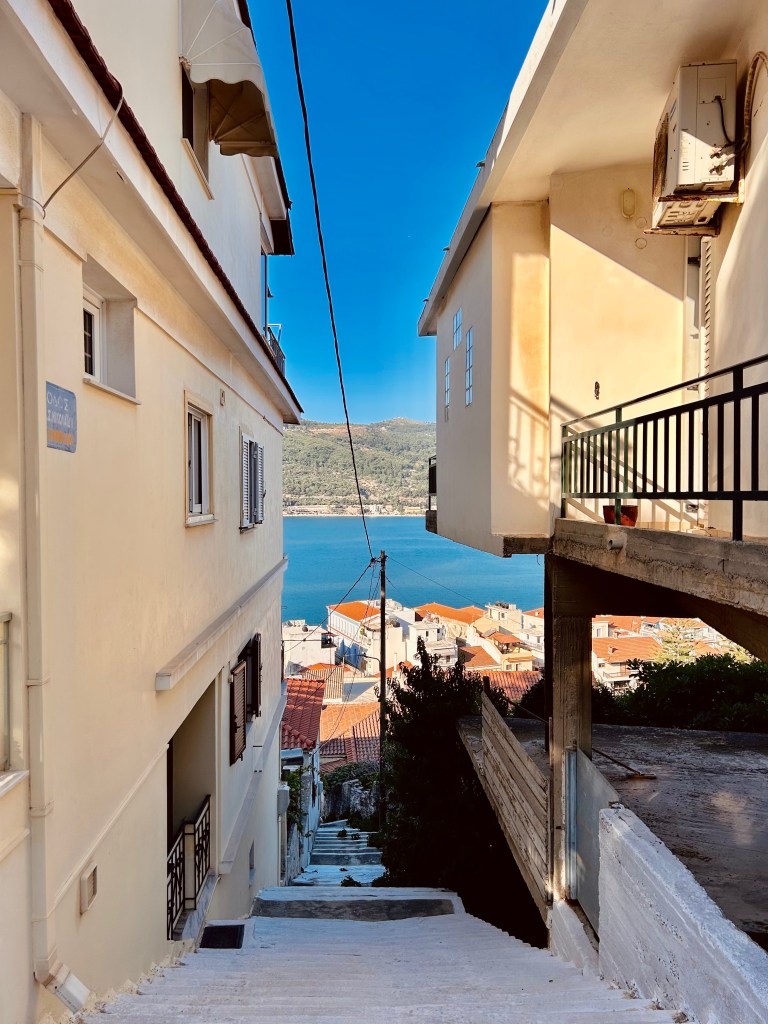
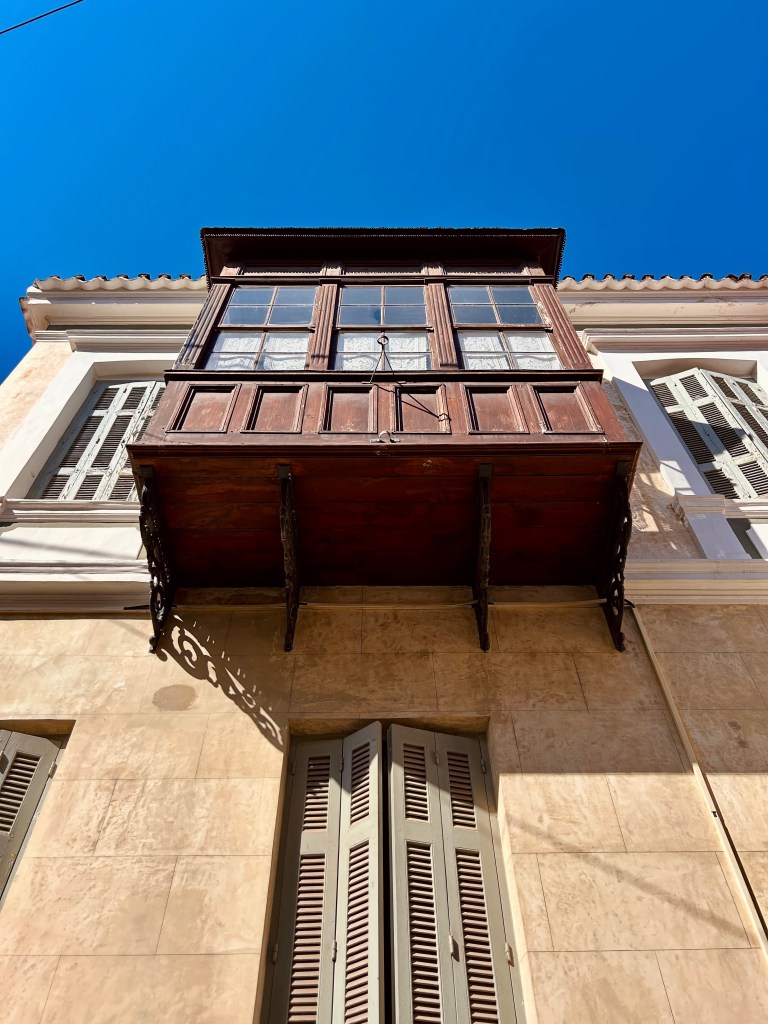
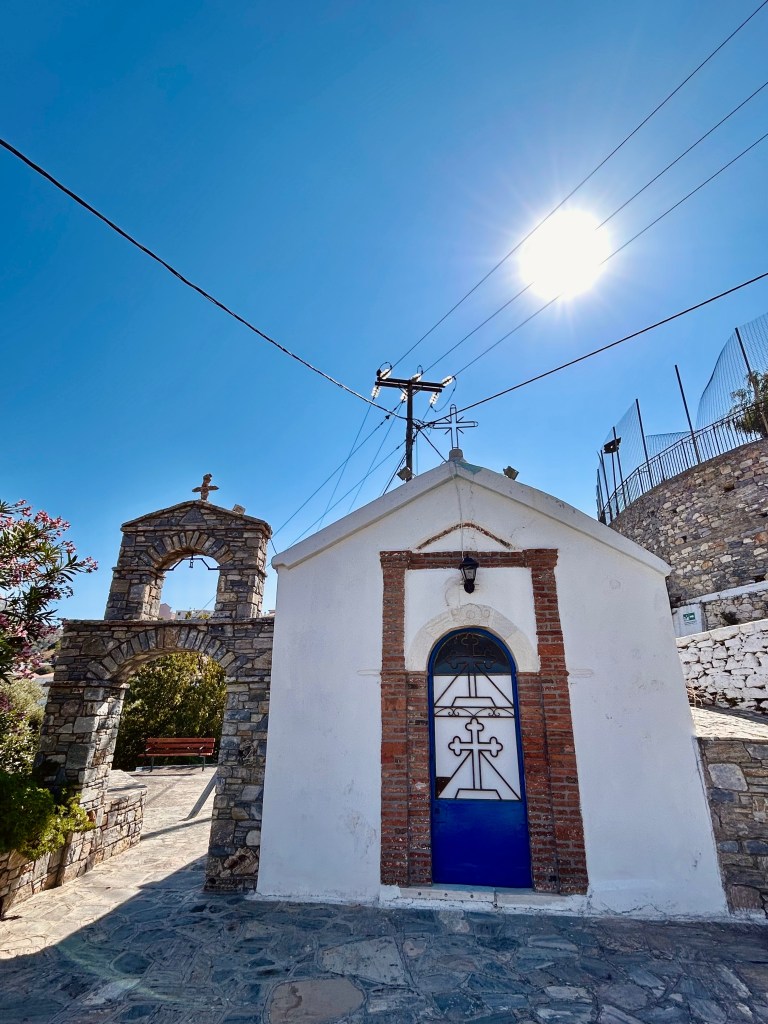
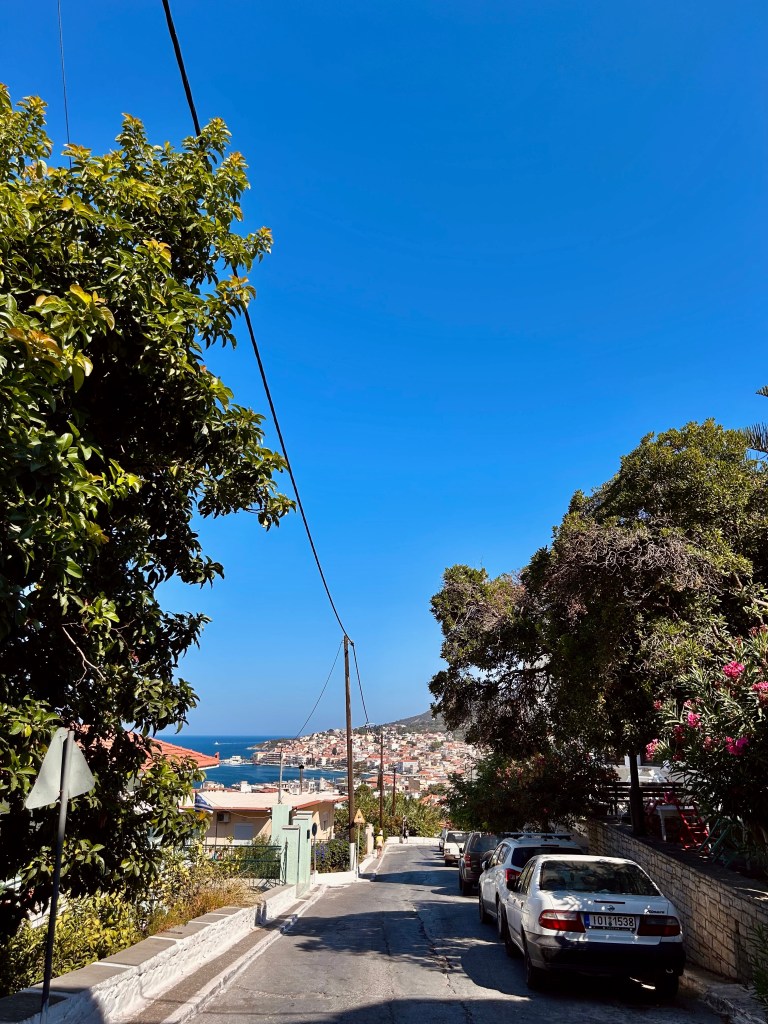
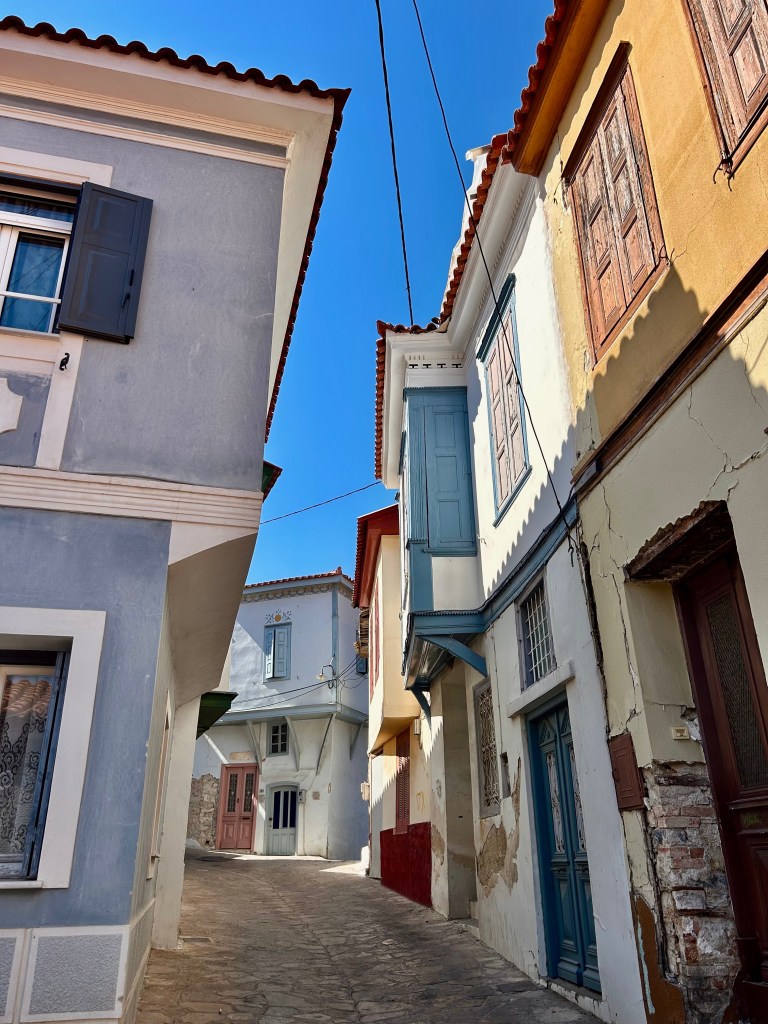
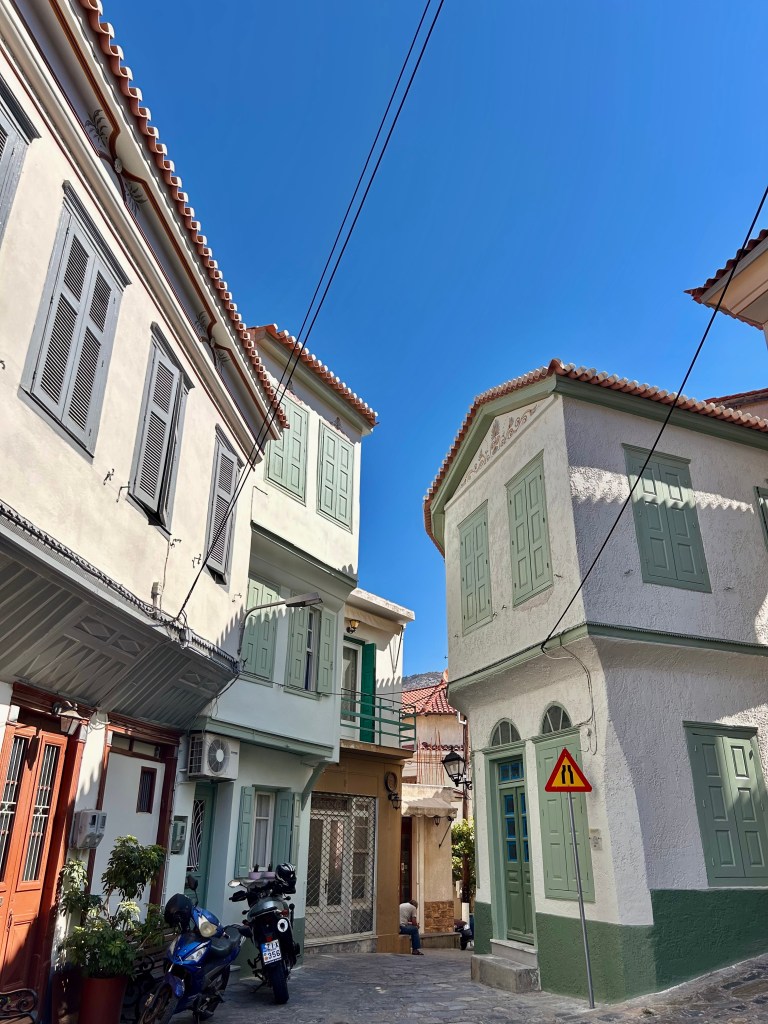
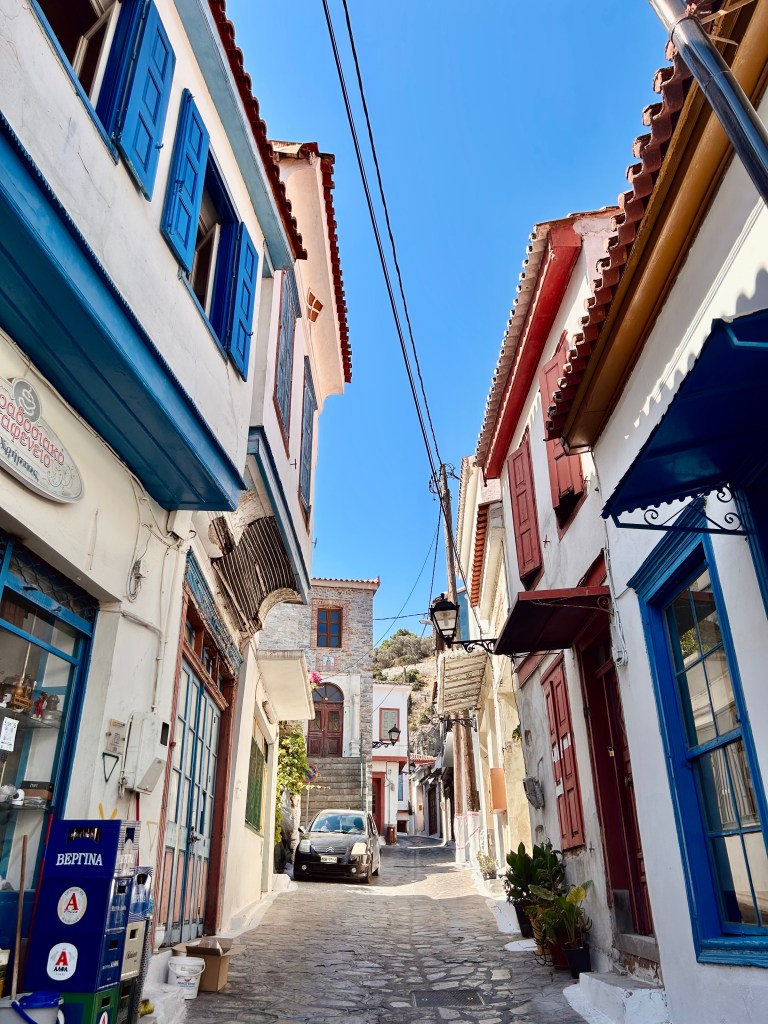
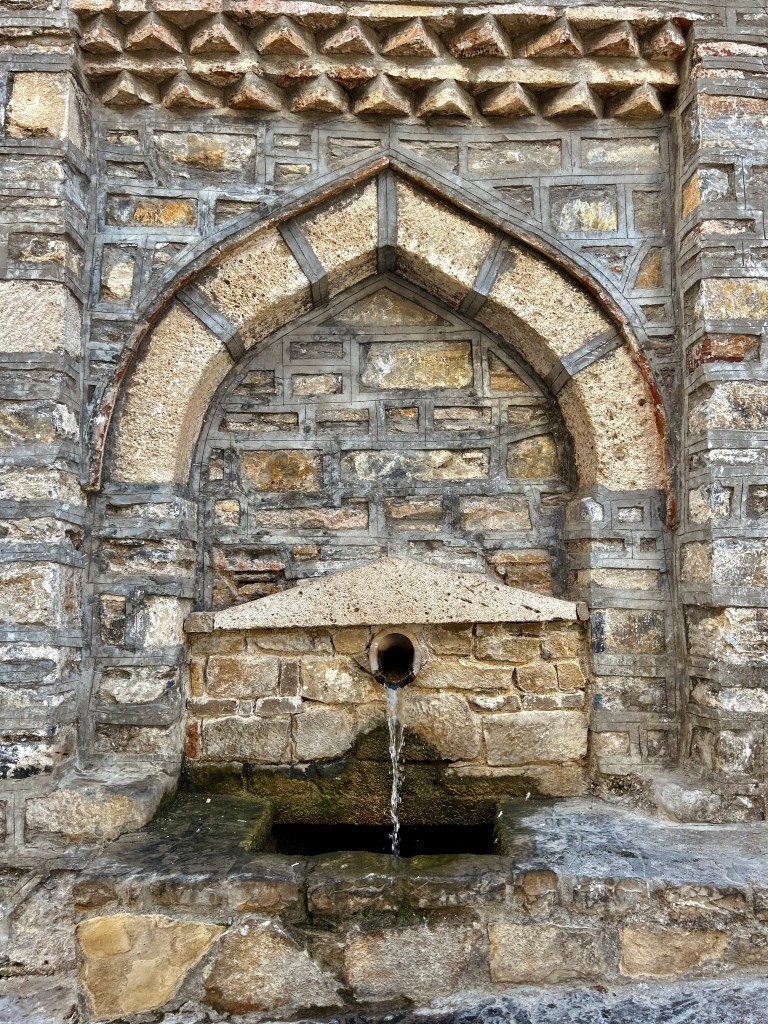
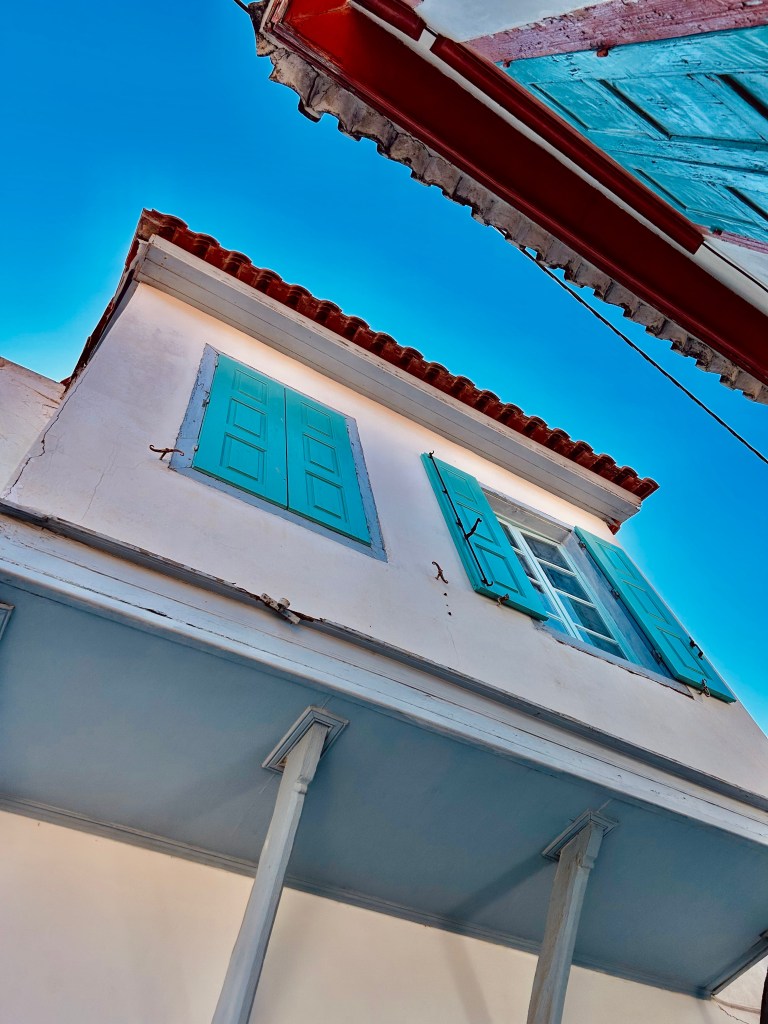
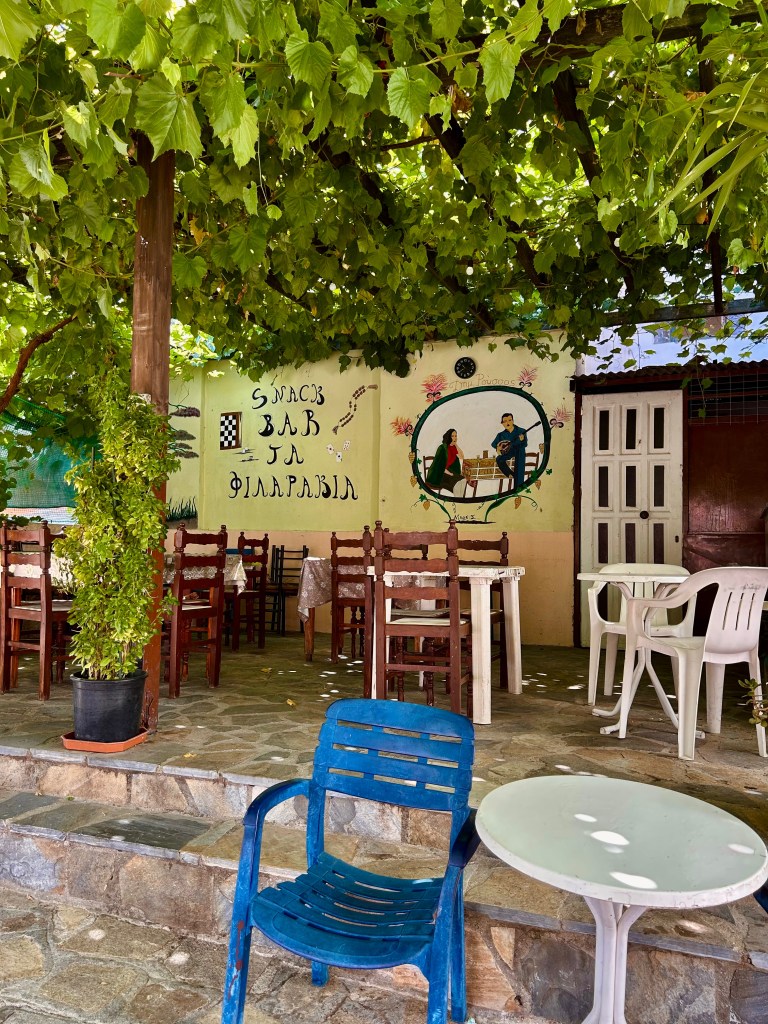
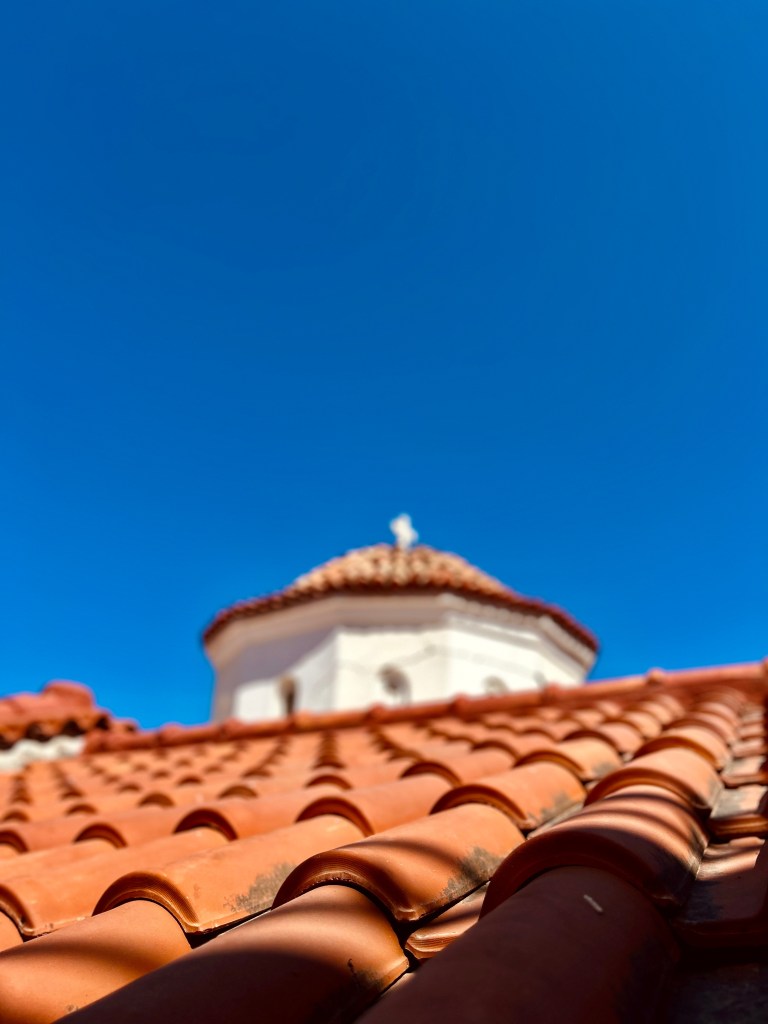
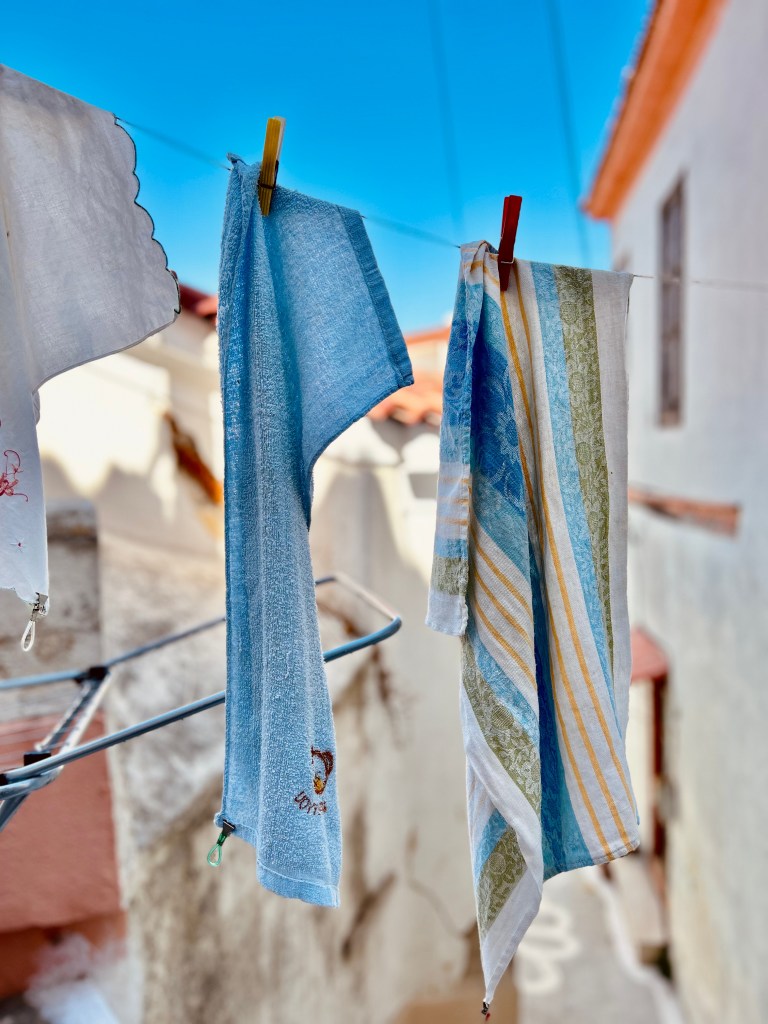
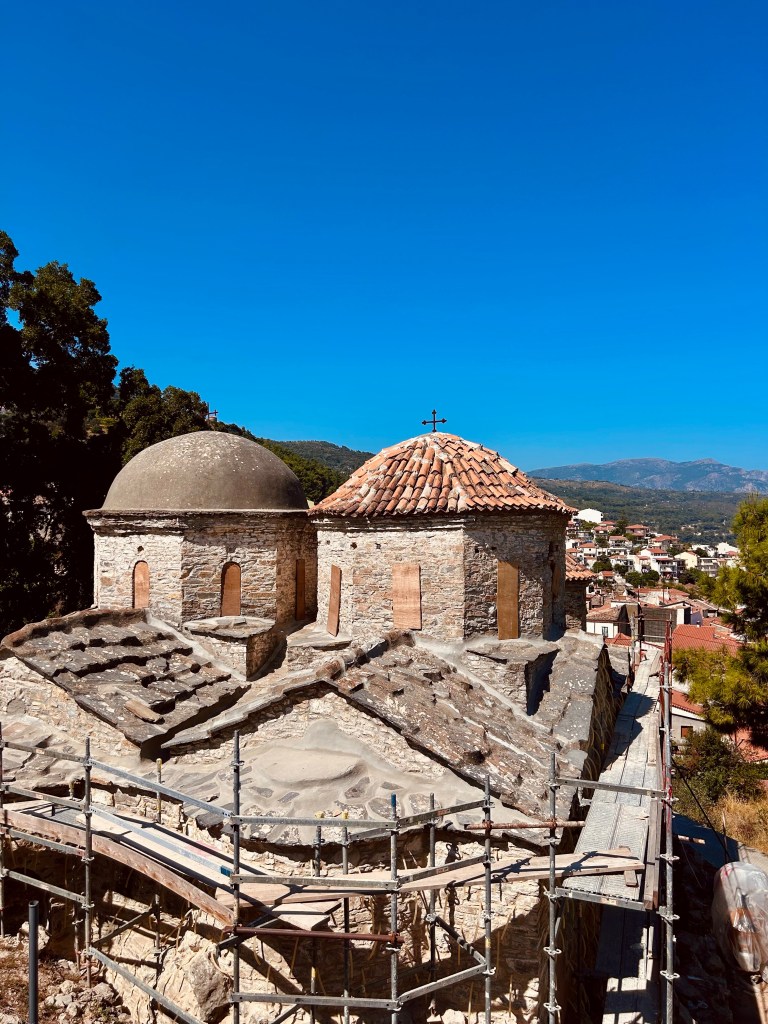
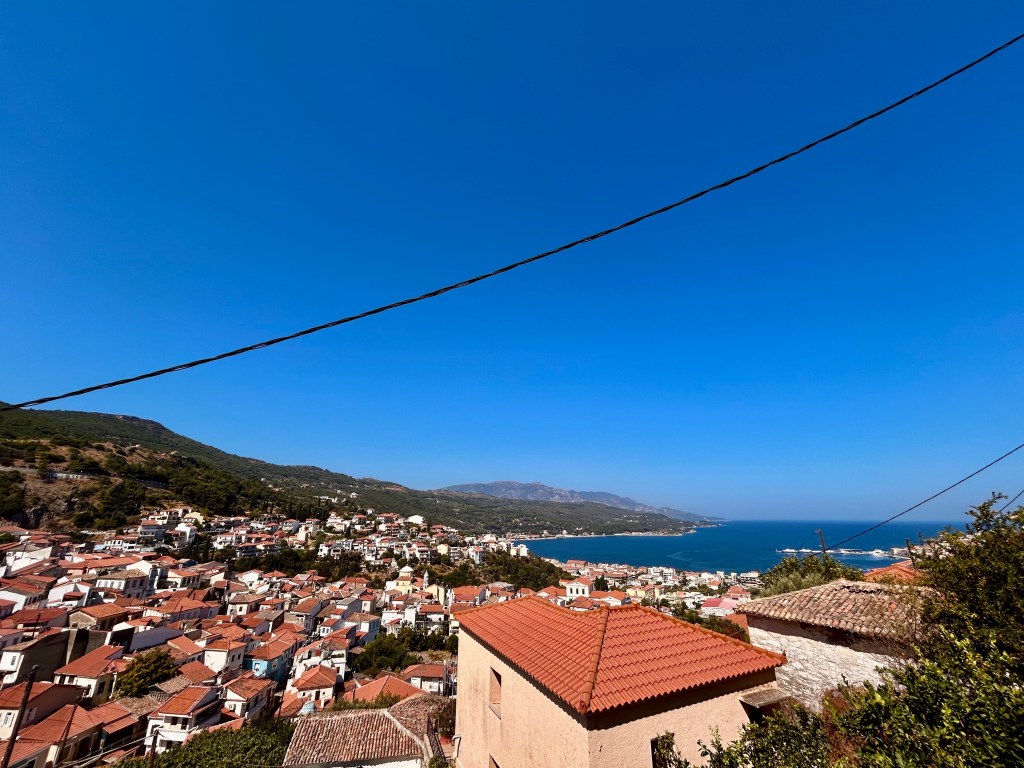
Vathy isn’t really polished in a touristy way. It feels more lived-in, even somewhat run-down. It’s not as picturesque as Pythagorio or Kokkari, but it does have its charm. And if one gets tired of the same shops or tavernas in smaller villages, it’s a good place to find something new. Hey, it even has a tattoo studio. Can you guess if I was at all tempted? If it hadn’t been for my three weeks of sunburn and daily swimming, I’d probably have gotten one.
As I only spent one day in Vathy I can’t really comment on lots of restaurants other than what I had for breakfast and lunch and I don’t know how the hotels are. But even here, the people were friendly, the food was tasty and it was a great place for photos.
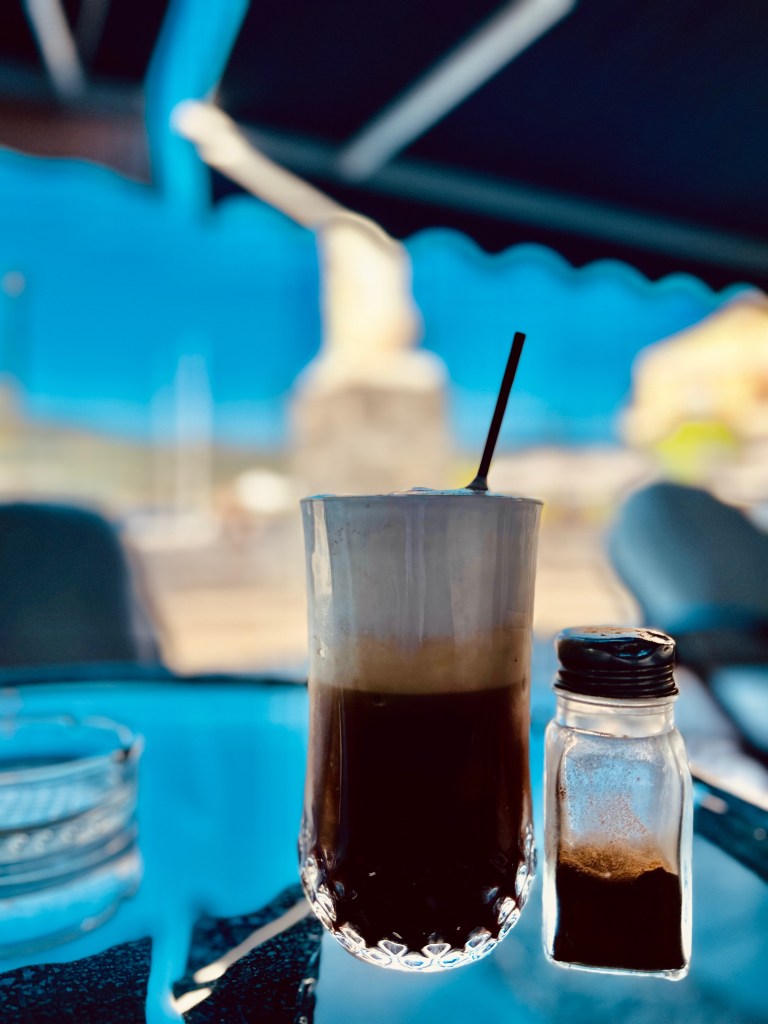
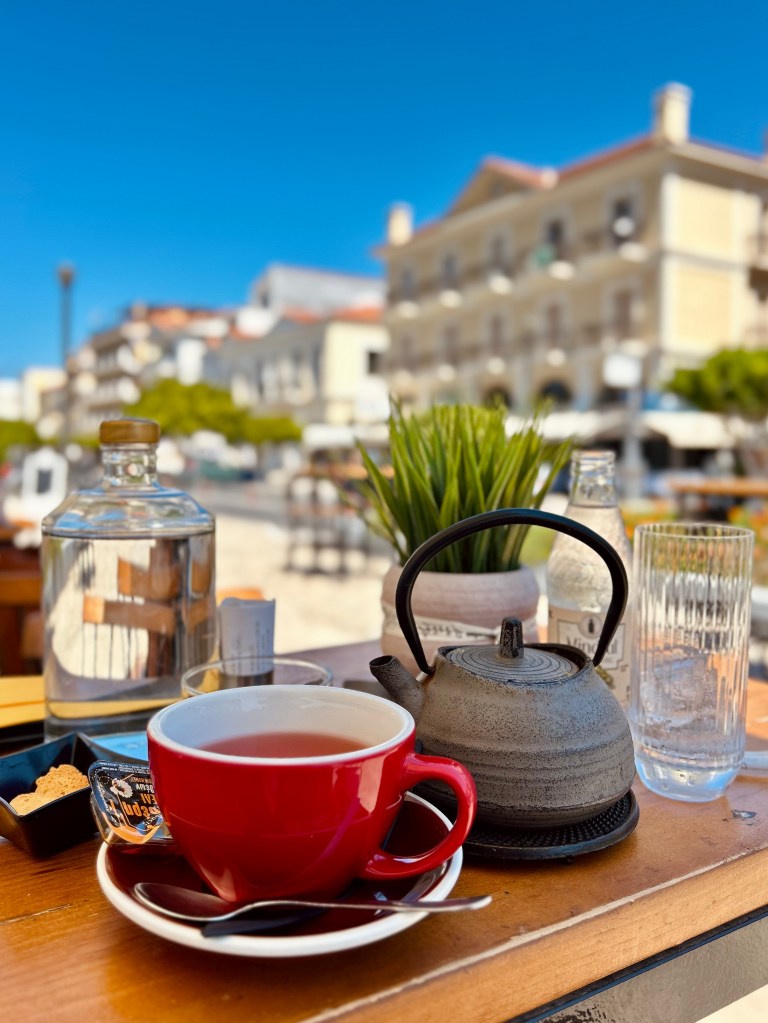
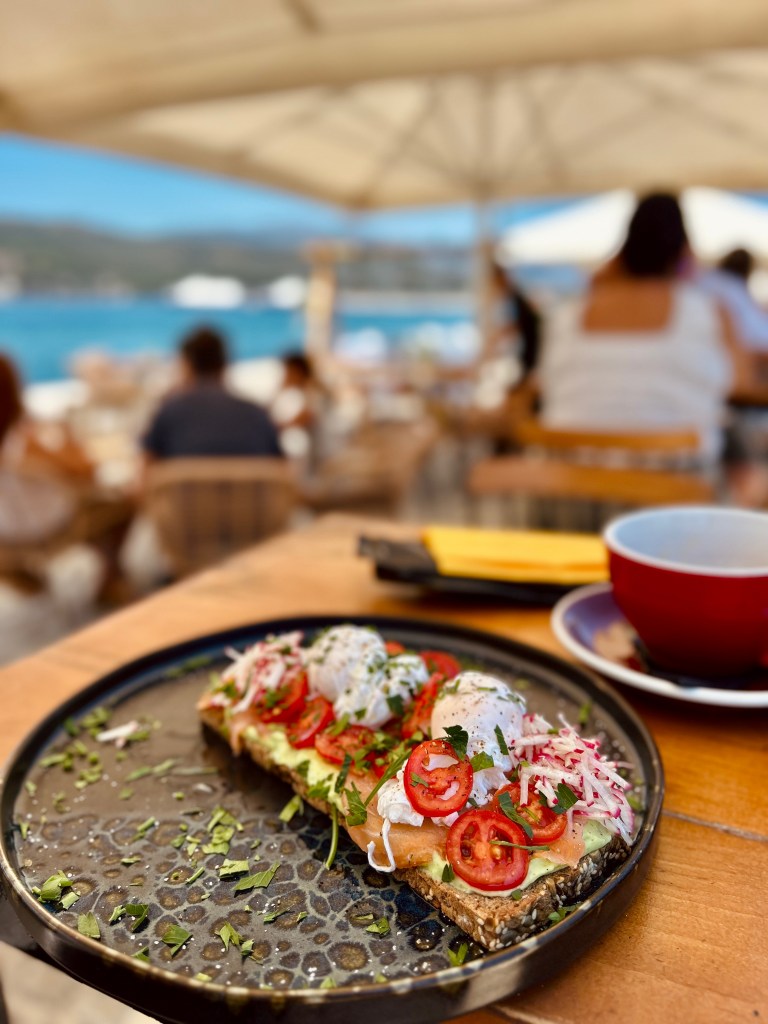
One place that you definitely will see a lot of while riding the bus around Samos is the Vathy bus station. It’s got three cafés where the drivers usually meet in the morning for coffee and a smoke, all the buses stop there, there is absolutely no shade apart from a few tables at the cafés and the crowd consists of confused tourists asking each other where each bus is going.
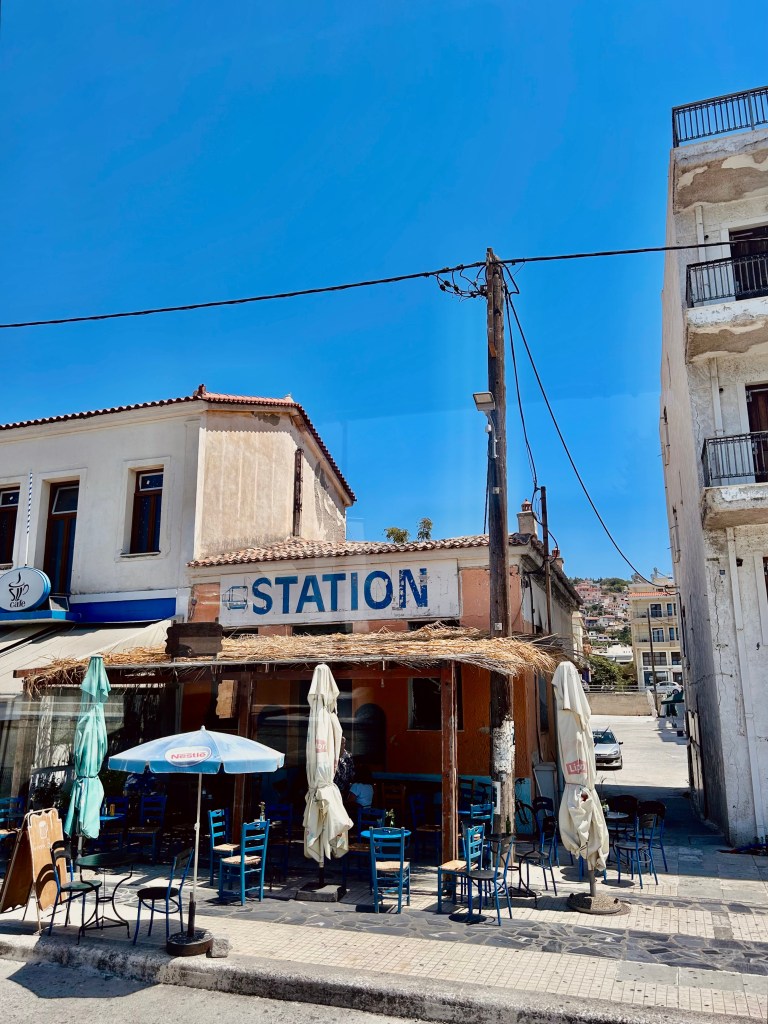
This is the main stop. Locals however often get off the bus a couple of blocks before this one. I will also write more about getting around the island later on.
Karlovasi
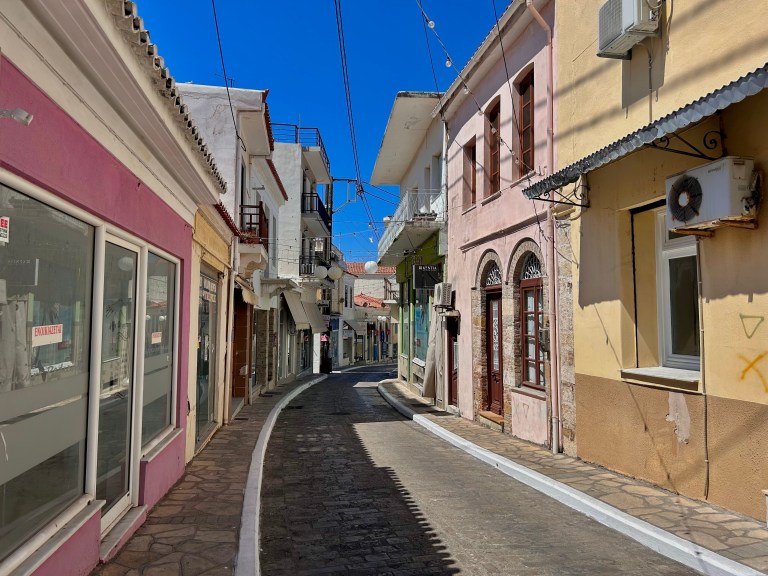
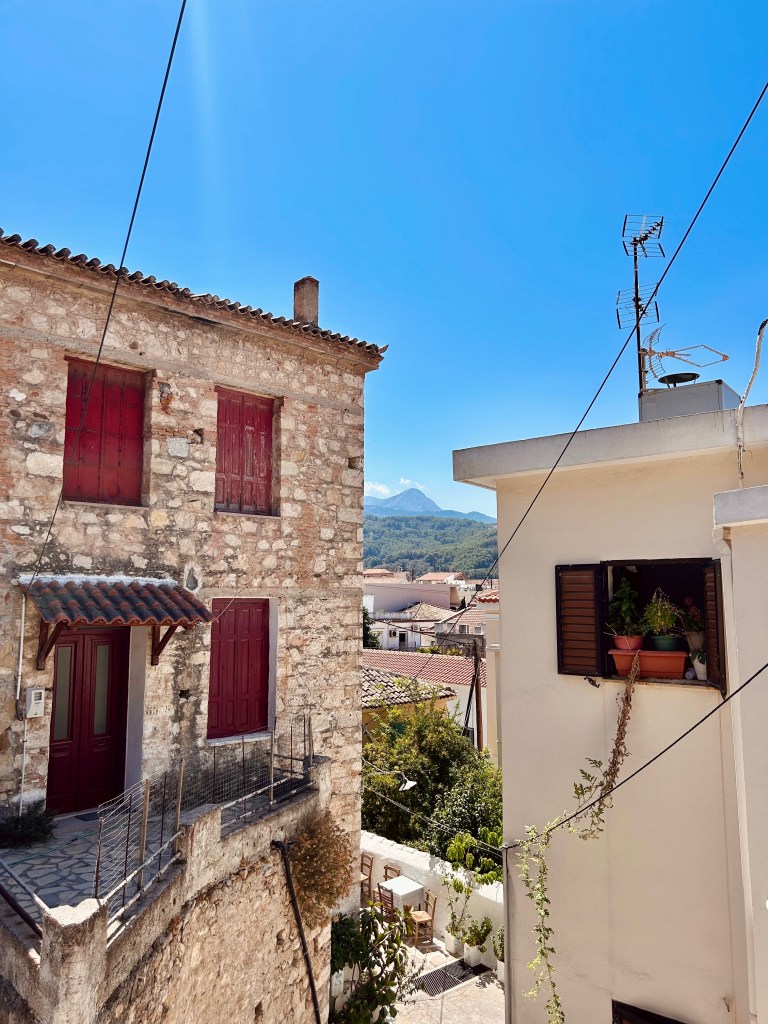
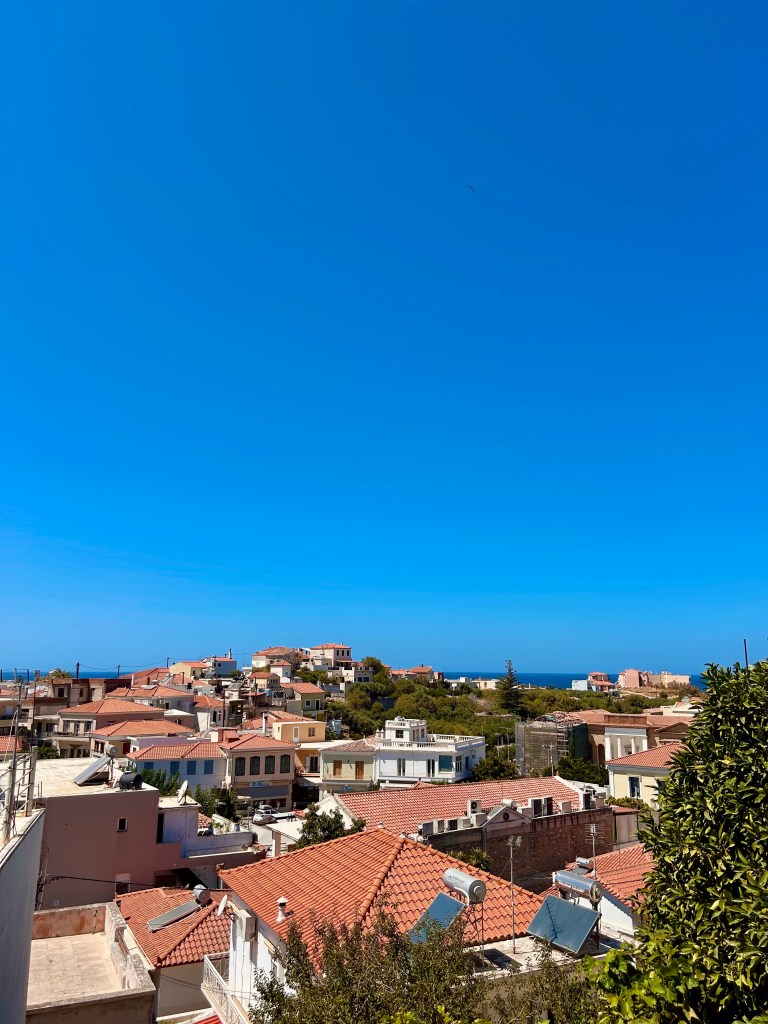
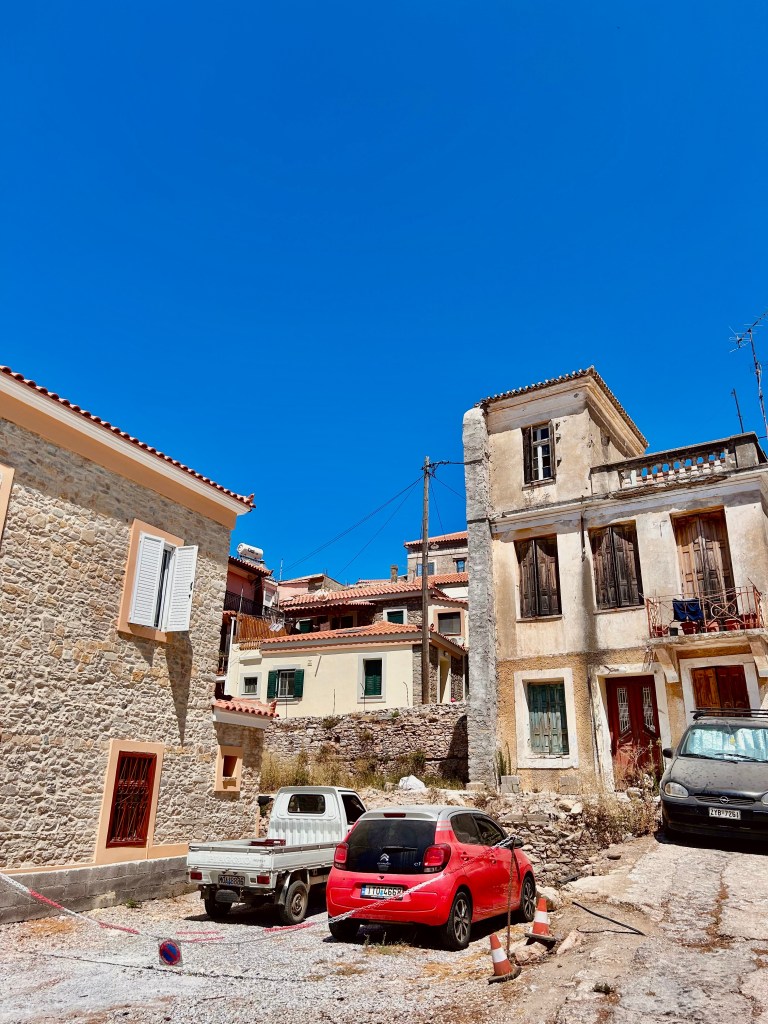
The second-largest town in Samos, Karlovasi may not always make it onto every traveler’s itinerary, although it’s a coastal town with hotels, beaches, cozy cafés and some great shops. It also has relatively easy access to some of the island’s most beautiful nature, and it’s a good destination for a day trip. It definitely doesn’t have the postcard charm of Kokkari, it’s a little rough around the edges with its industrial past, but it can offer some unexpected fashion bargains, delicious sweets and refreshments in a quaint town square with lovely views. It also has an older village in the hills.
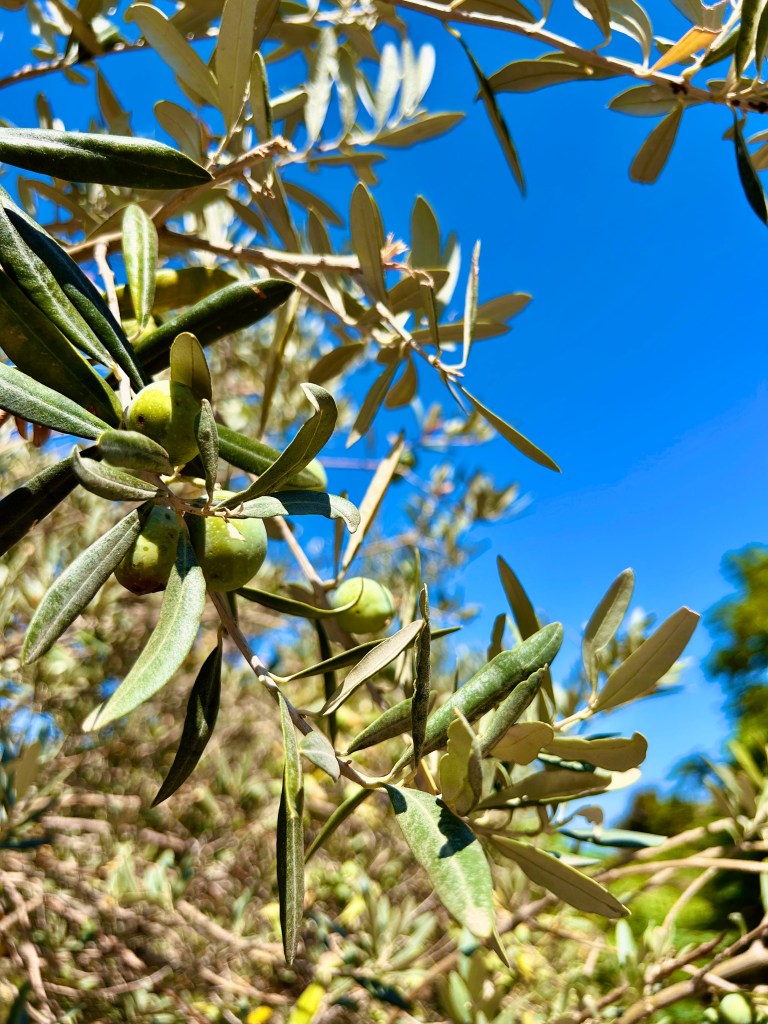
I got on the morning bus from Pythagorio to Vathy, where you switch to the one bound for Kokkari and Karlovasi. All in all, the trip takes about 1,5 to 2 hours, depending on traffic and how many people hop on the bus along the way. It winds through gorgeous countryside with vineyards, olive groves and mind-blowing glimpses of the Aegean.
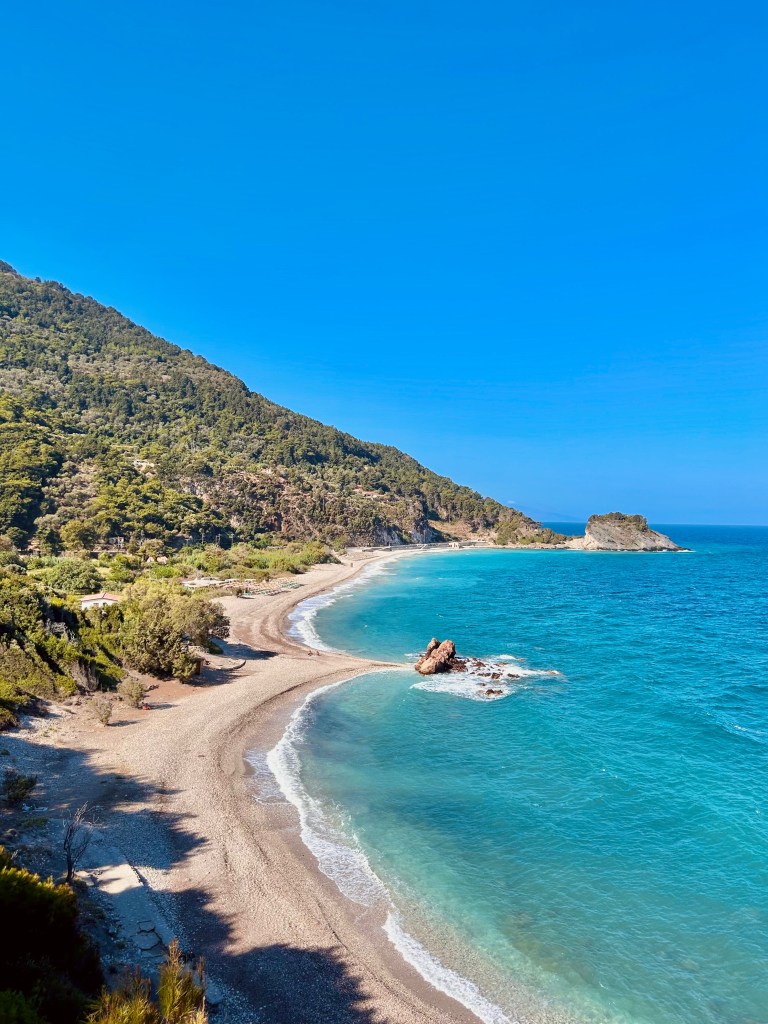
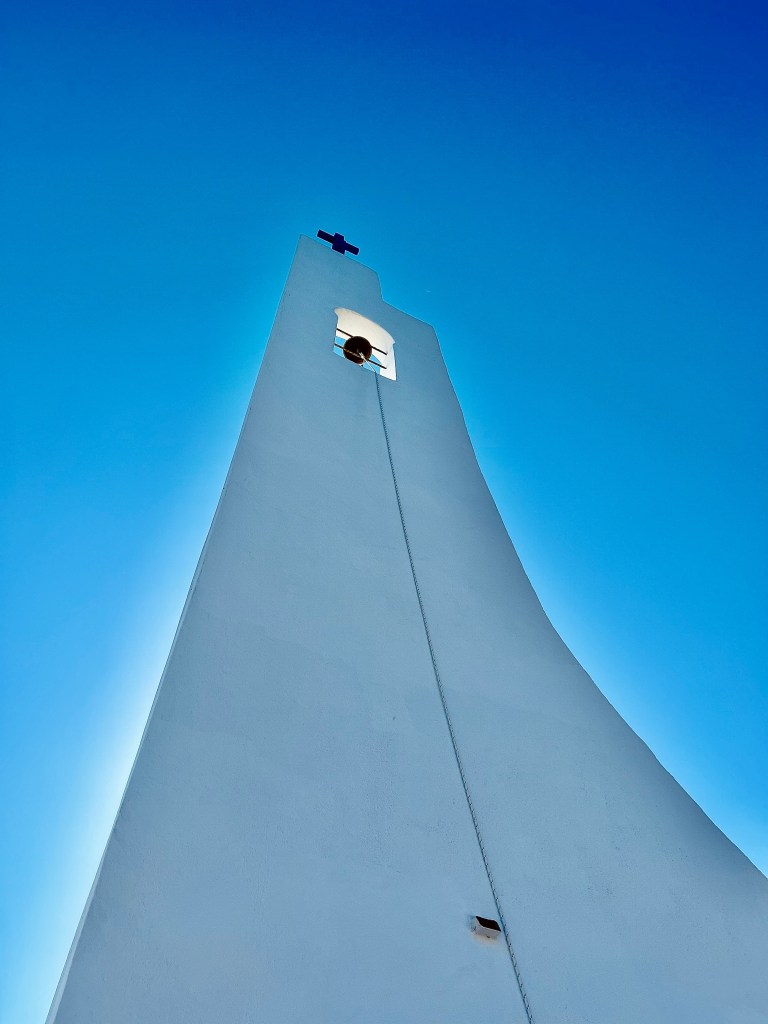
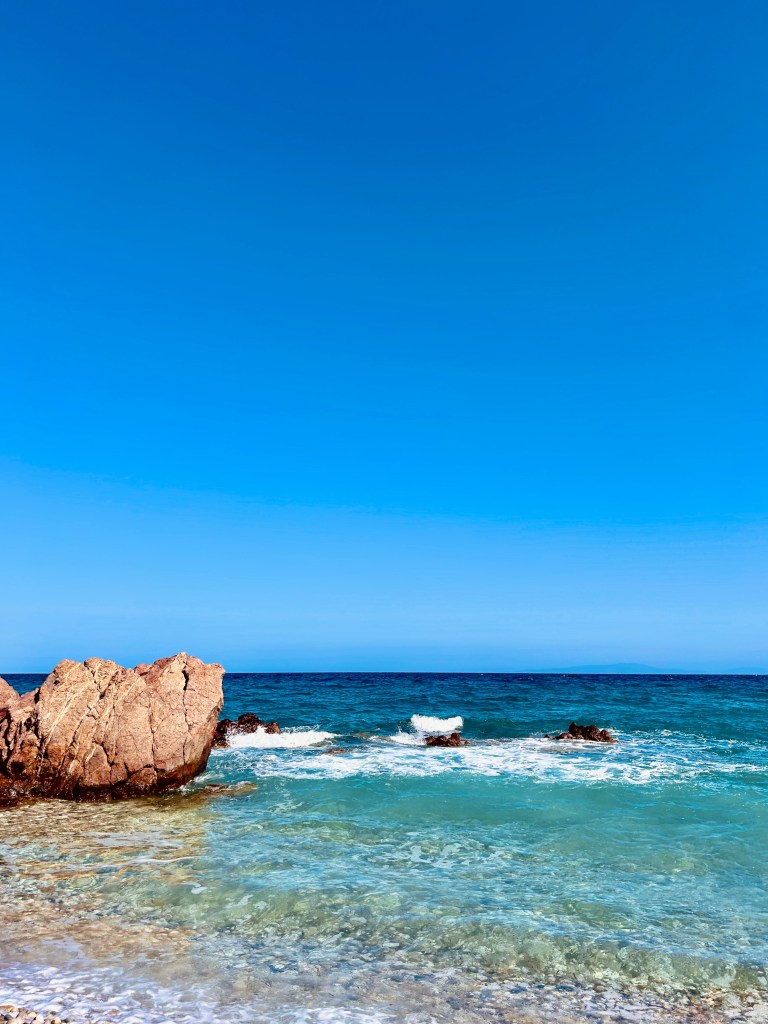
From the bus stop in Karlovasi, I caught the smaller shuttle to Potami Beach farther to the west, for just 1 euro. This particular beach is one of the most striking stretches of coast on Samos. It’s a long, wide beach of smooth pebbles, framed by green hills and open to the endless blue of the Aegean. The water here is crystal clear and refreshingly cool, perfect for swimming on a hot summer day, though it gets deep quite quickly and the waves can be intimidating. Along the shore there are a couple of relaxed beach bars and sun beds, but the beach still feels natural and unspoiled, with plenty of space to spread out. As it was windy, there were only a couple more people there in the morning, so I had the beach to myself for a while. Right above the bay sits a small church of modern architecture and the views from there are breathtaking.
I had brunch at one of the beach bars and did a bit of swimming and sunbathing.
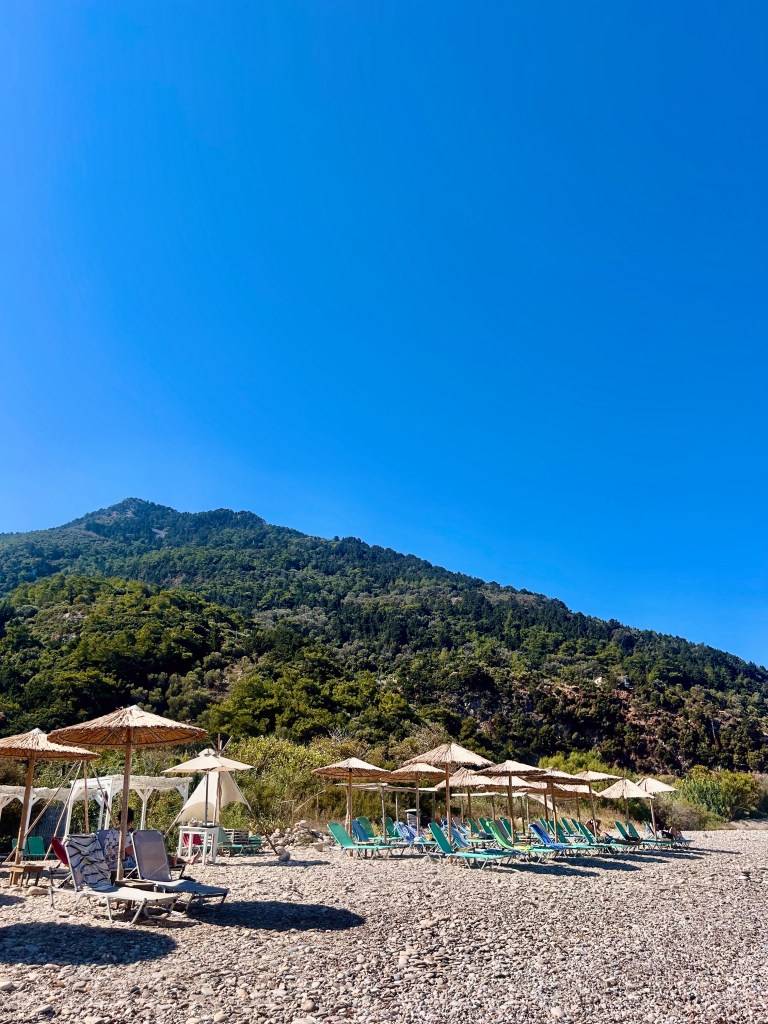
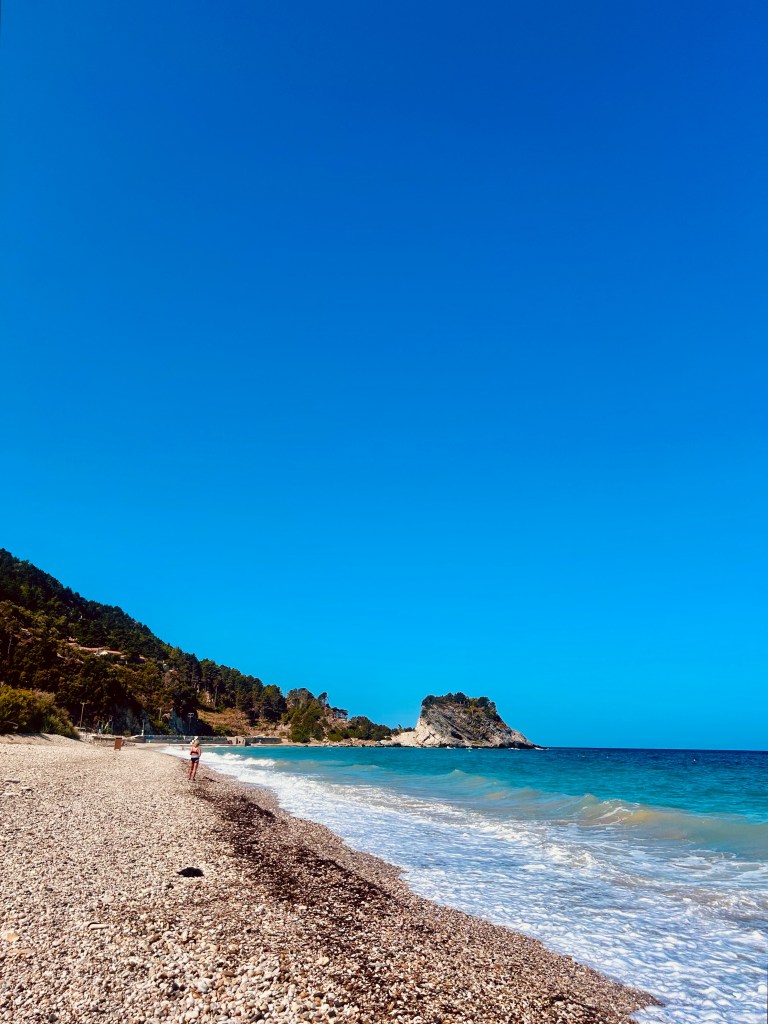
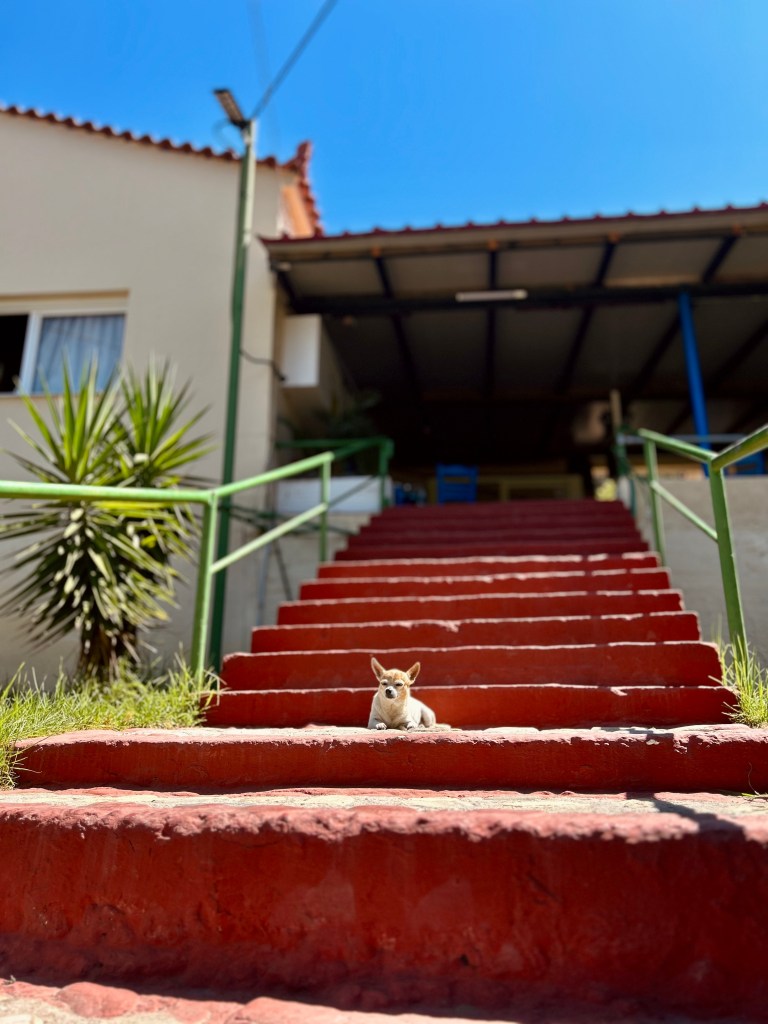
The driver of the shuttle told me he’d pick me up on the main road at 11:40 to go back into town. His shuttle however was nowhere to be found at that time, I was even early and I waited on the road for about 35 minutes until another bus with another driver showed up. Greek time, you will learn, is relative, but thankfully someone’s always going to show up somehow, and if you’re stranded you can always ask a local for help. Or a chill chihuahua basking in the warmth of the sun…
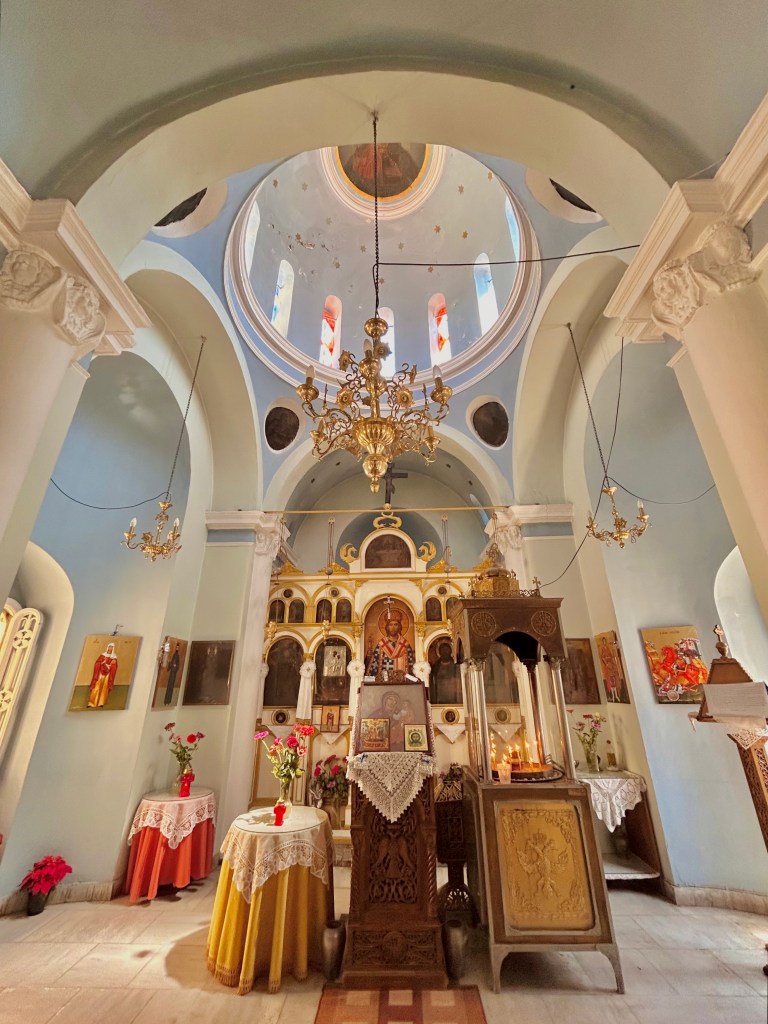
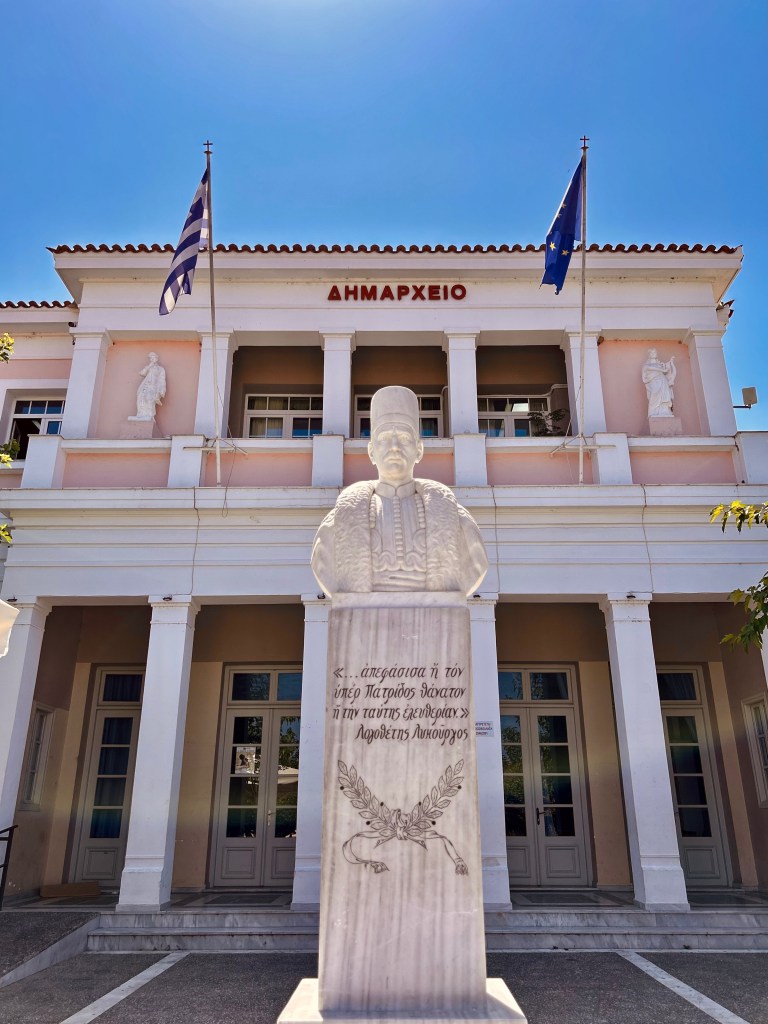
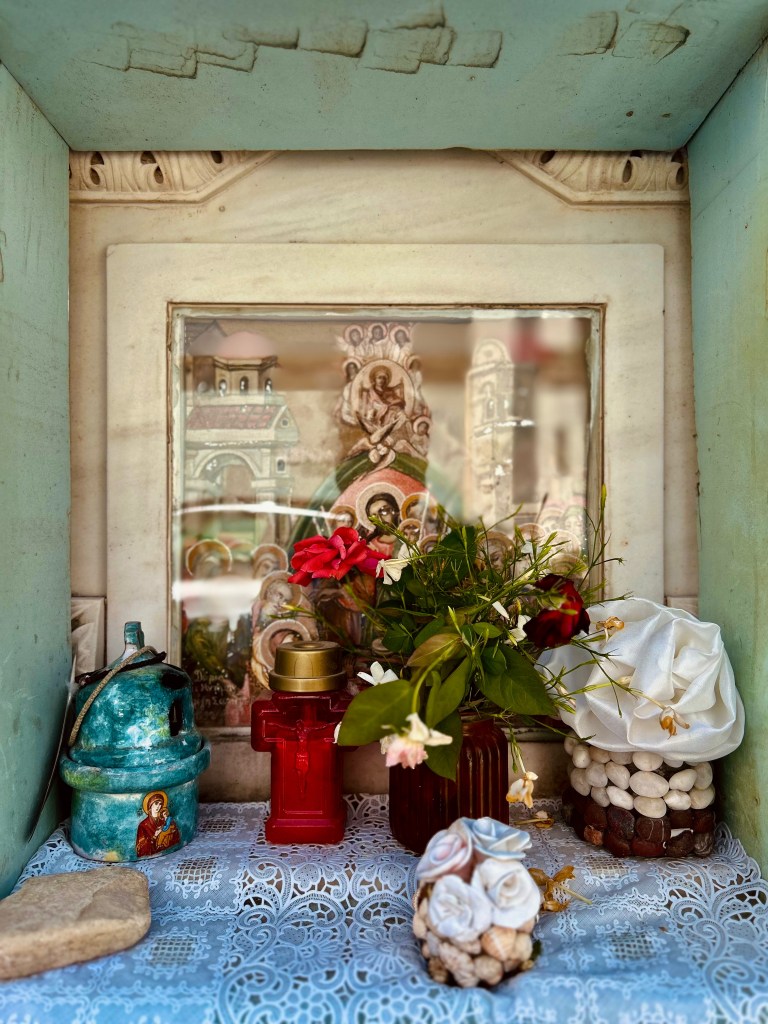
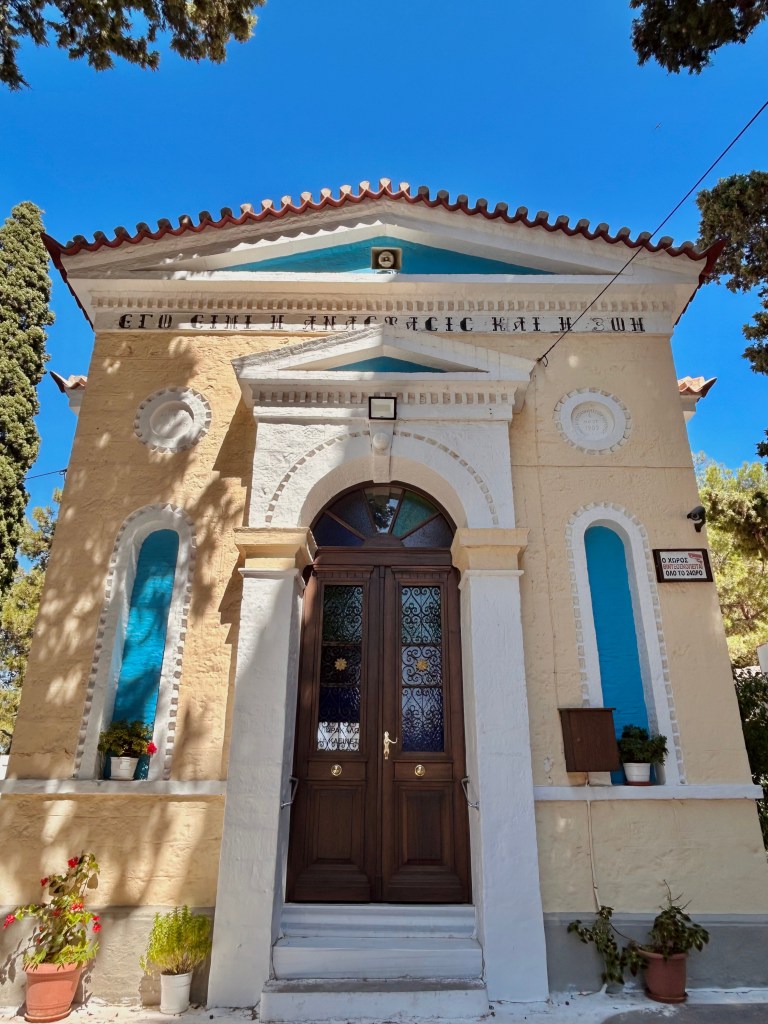
Back in Karlovasi, I decided to skip the harbour area and head on to the square and smaller streets. My first stop was a tiny church just around the corner from the bus stop and as soon as I stepped inside, I got very emotional. I don’t really know the exact reason, but I just started crying out of nowhere. I’m not a religious person, definitely not an avid believer, but I love visiting sacred places because of the art and architecture they showcase, as well as how they tell stories of humanity throughout the ages. I always light candles and remember those from my life who are not with us anymore, and somehow this little place touched something and created a big wave of emotions.
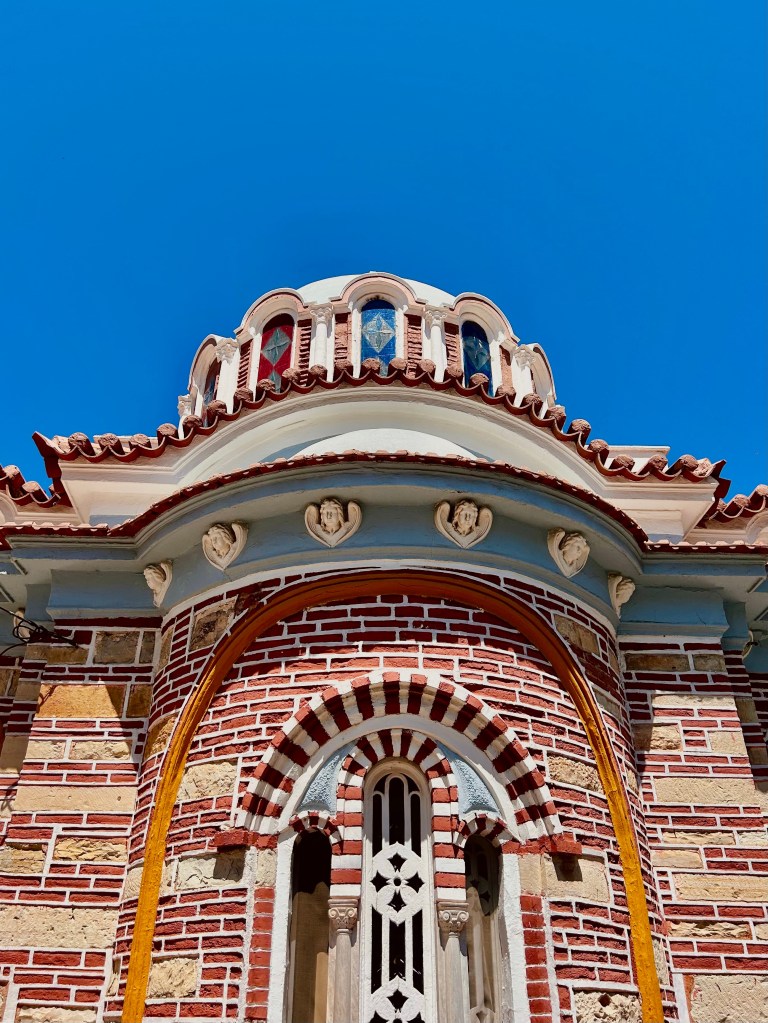
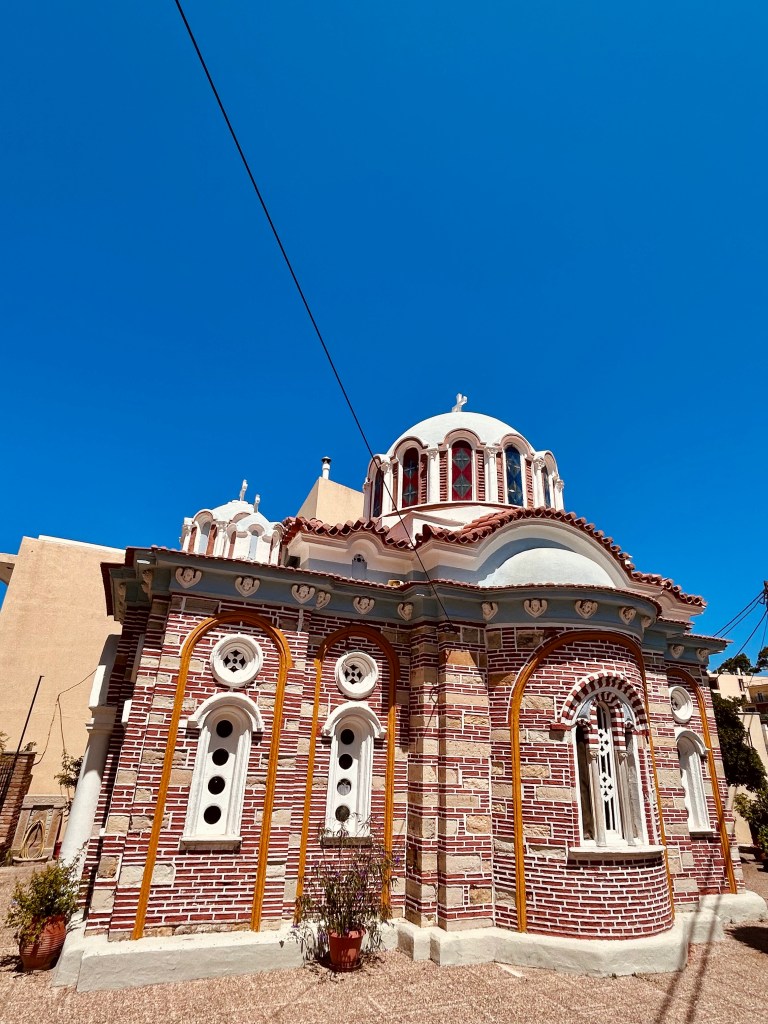
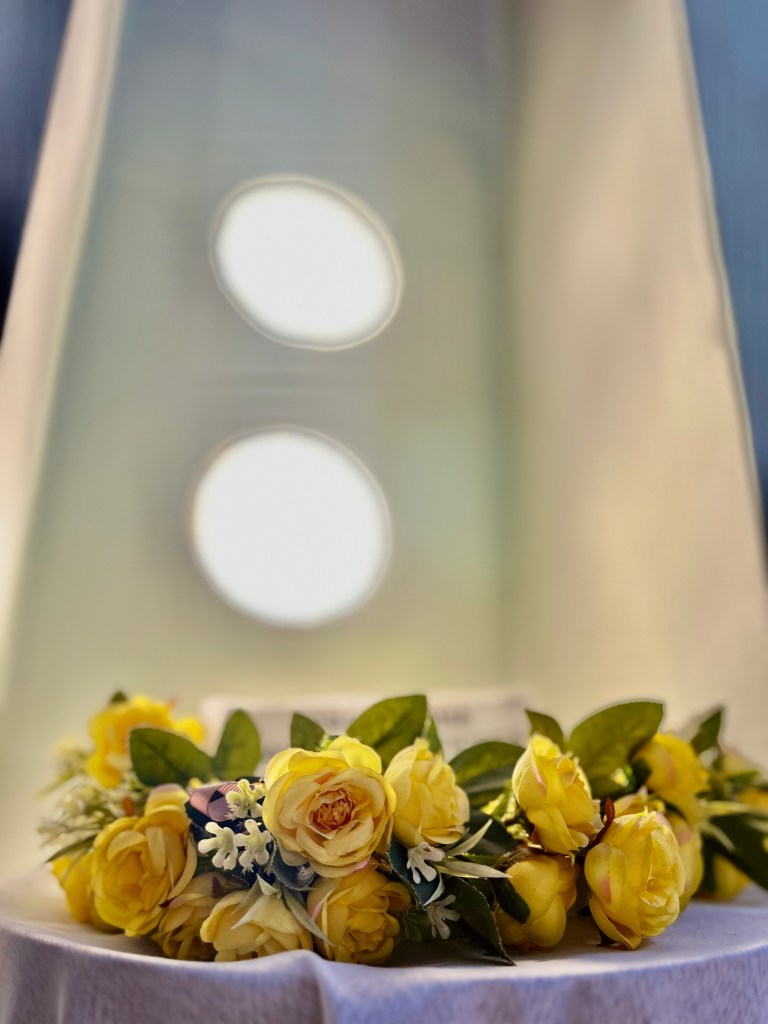
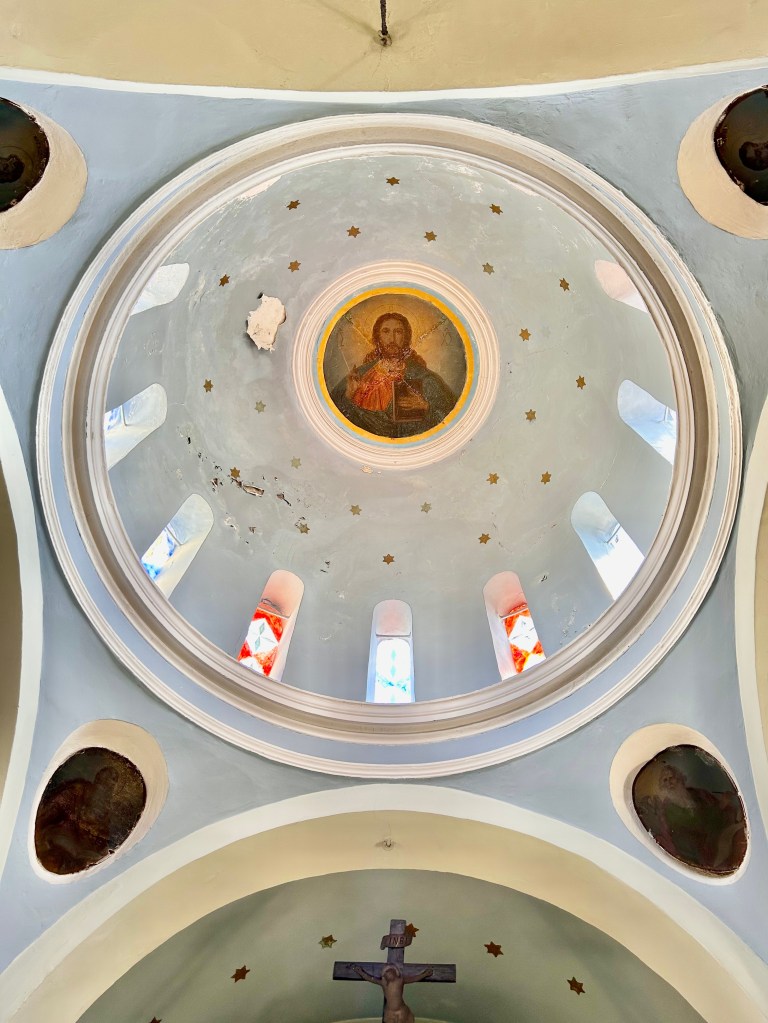
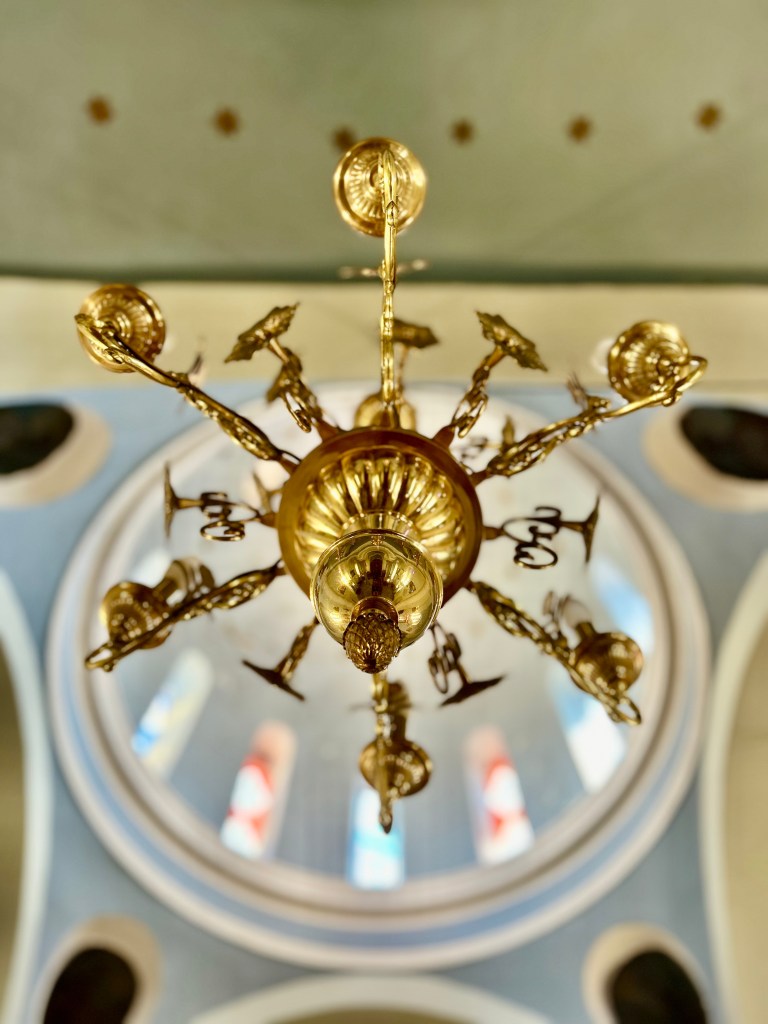
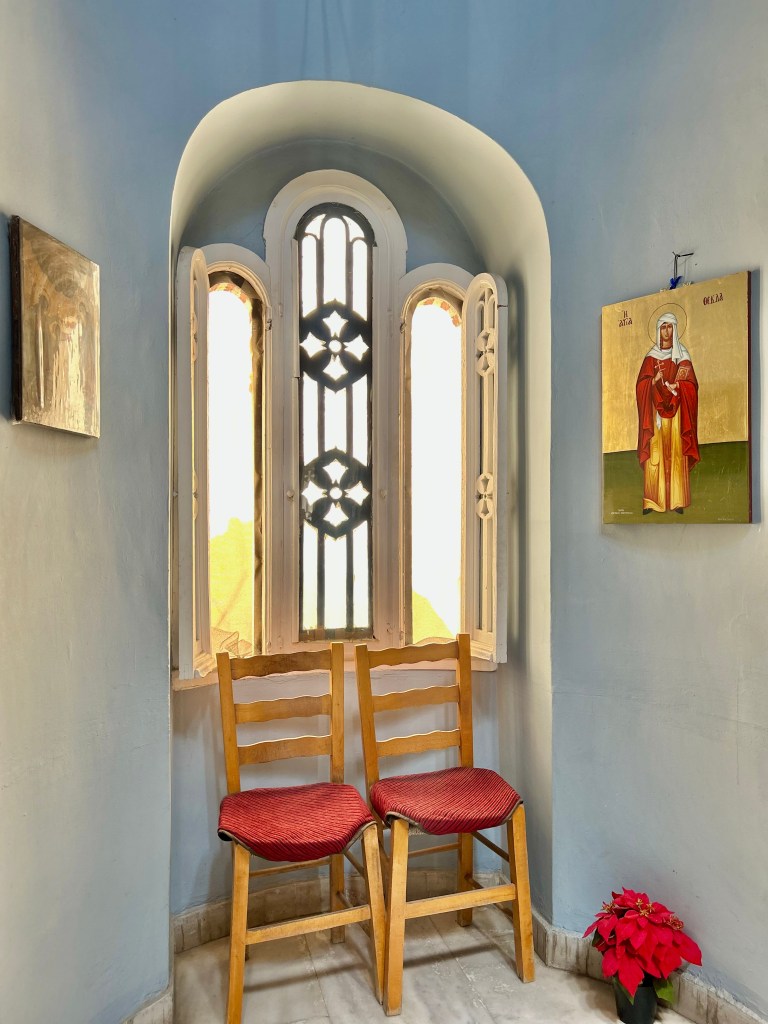
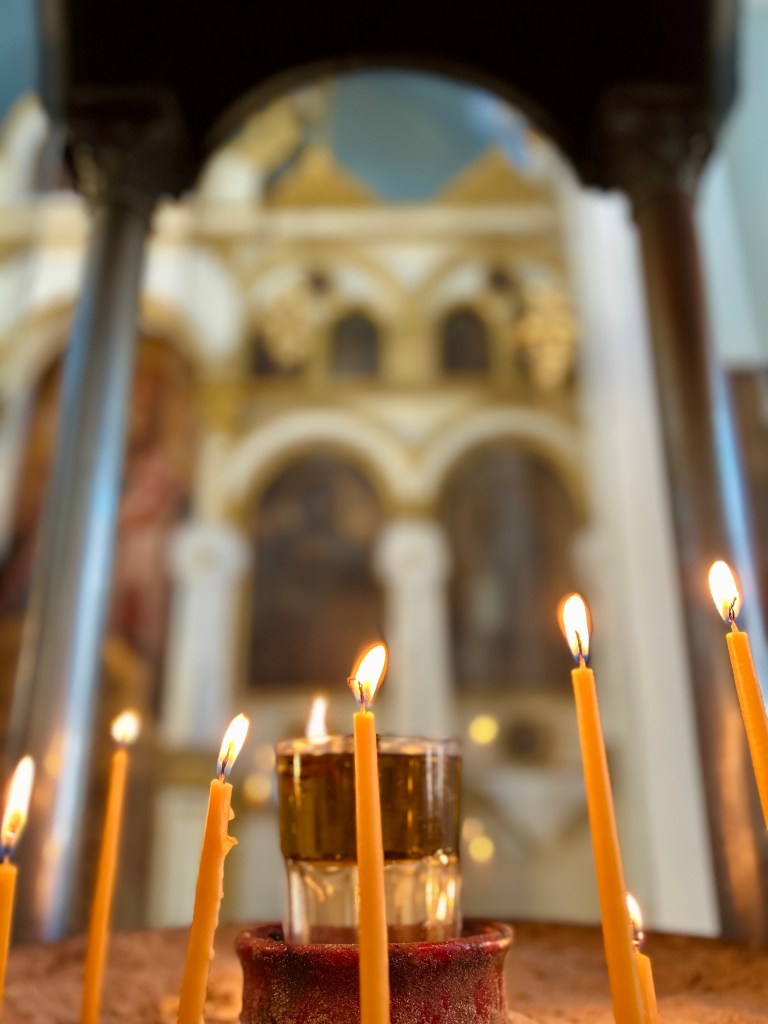
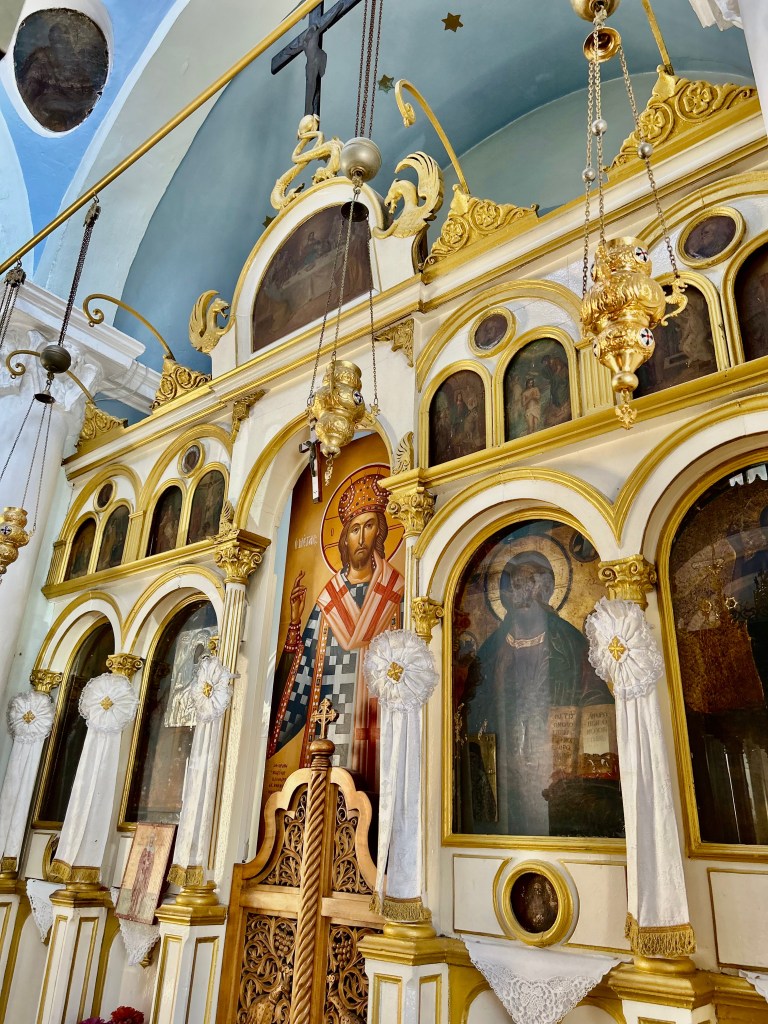
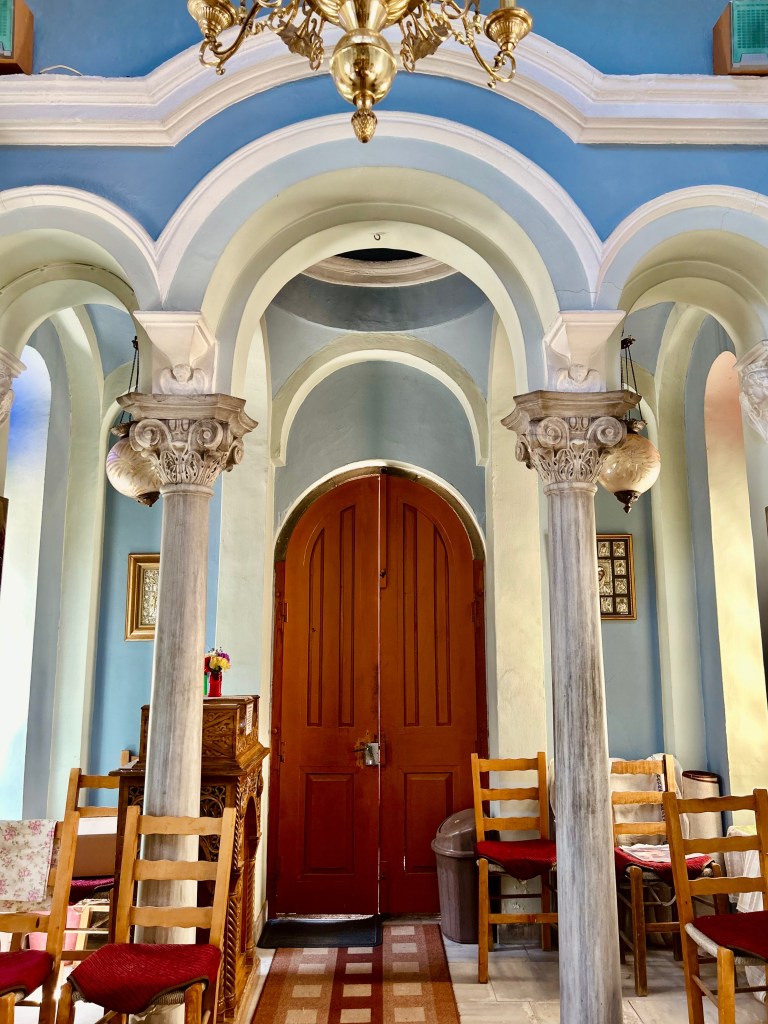
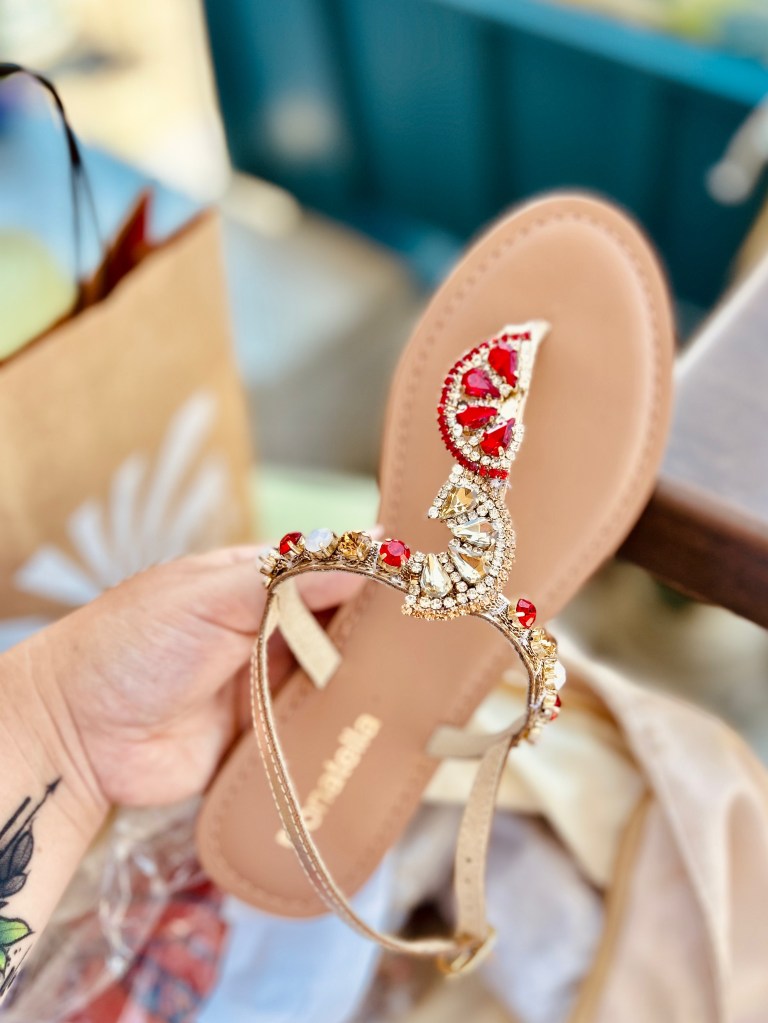
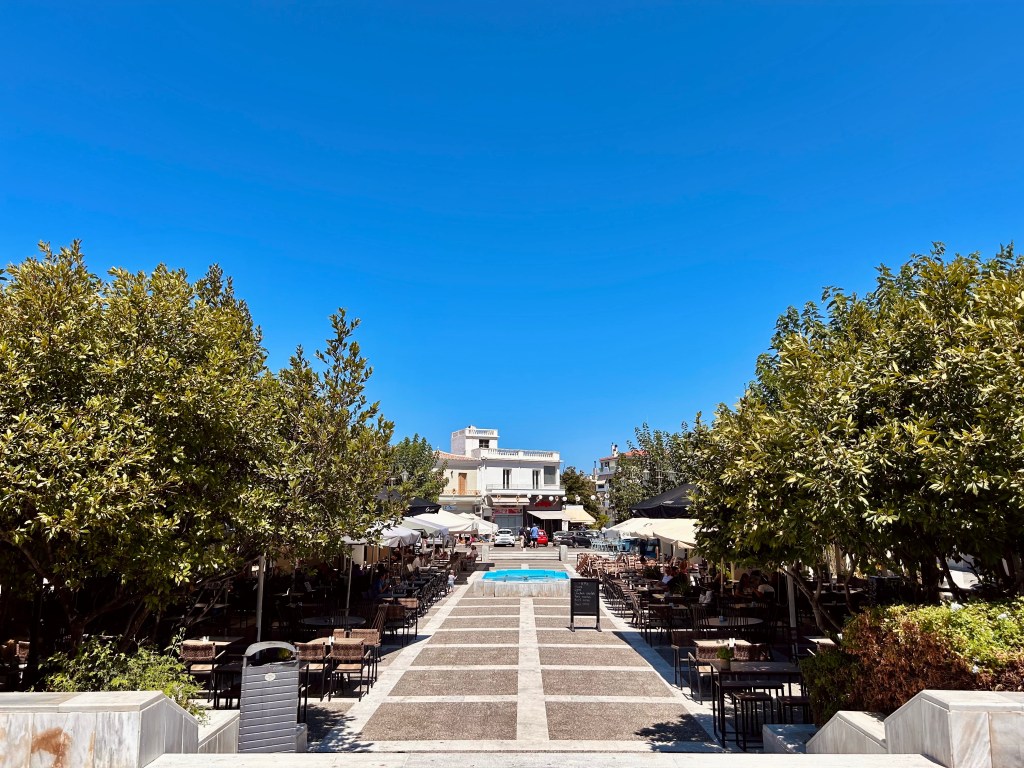
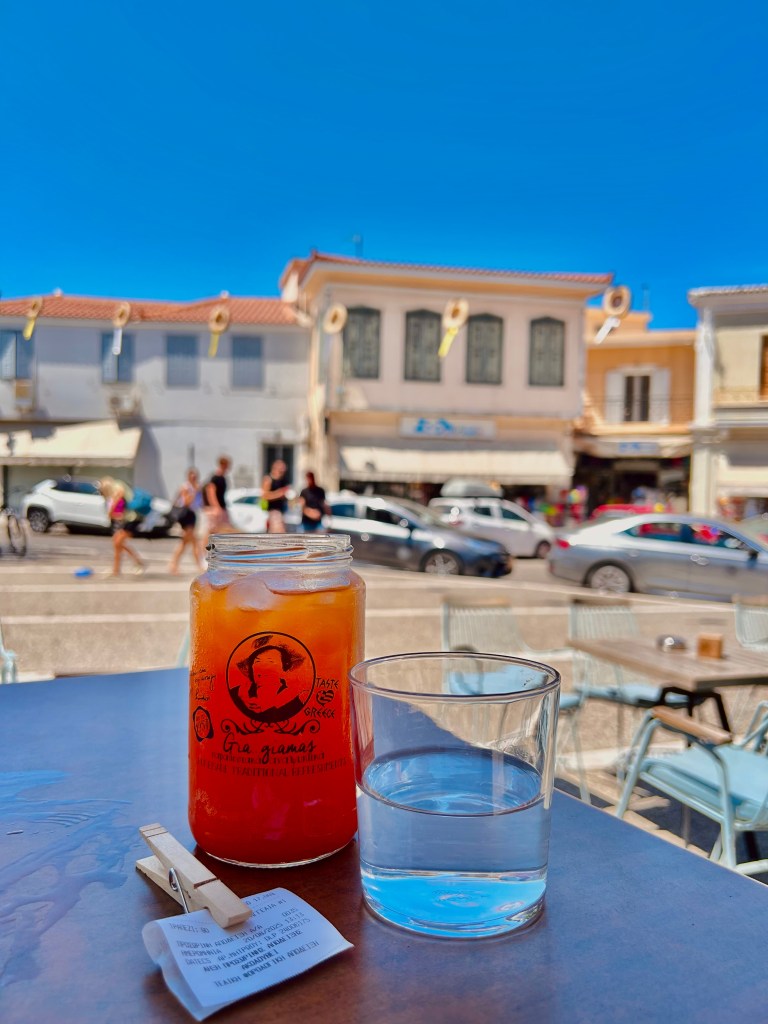
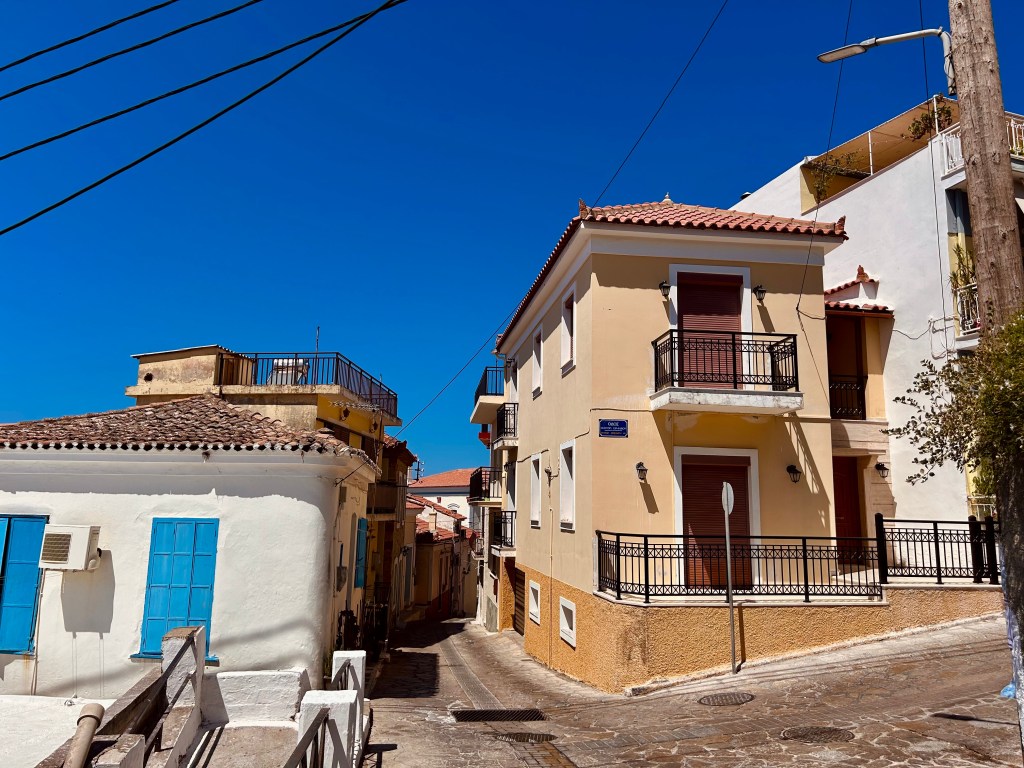
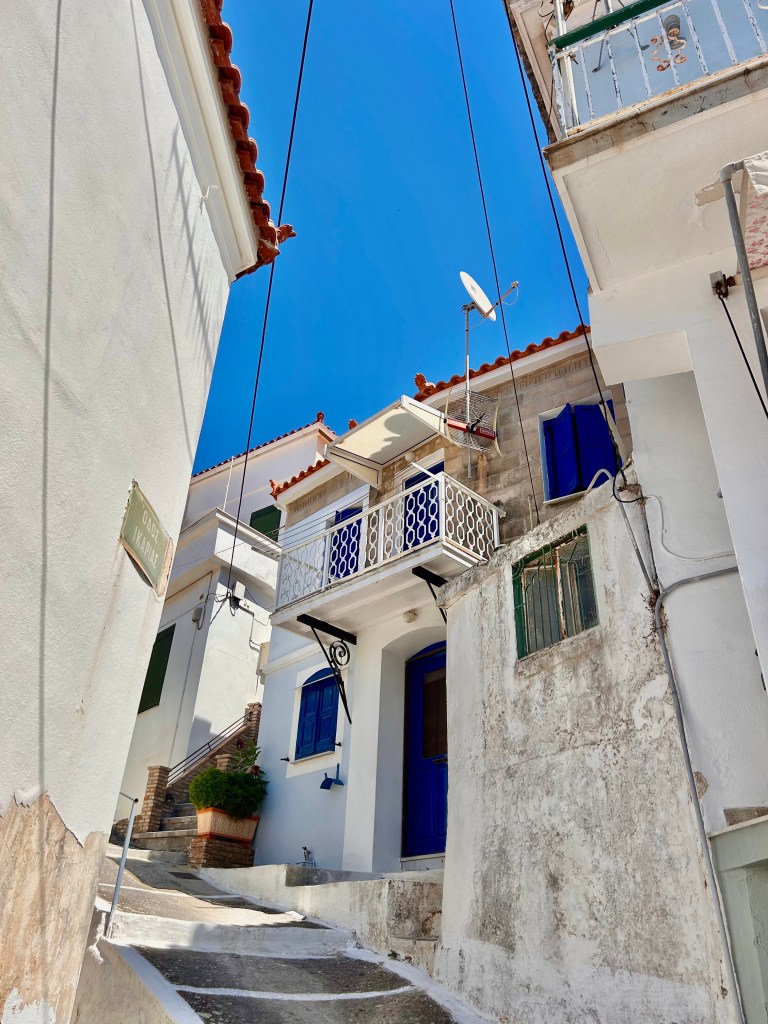
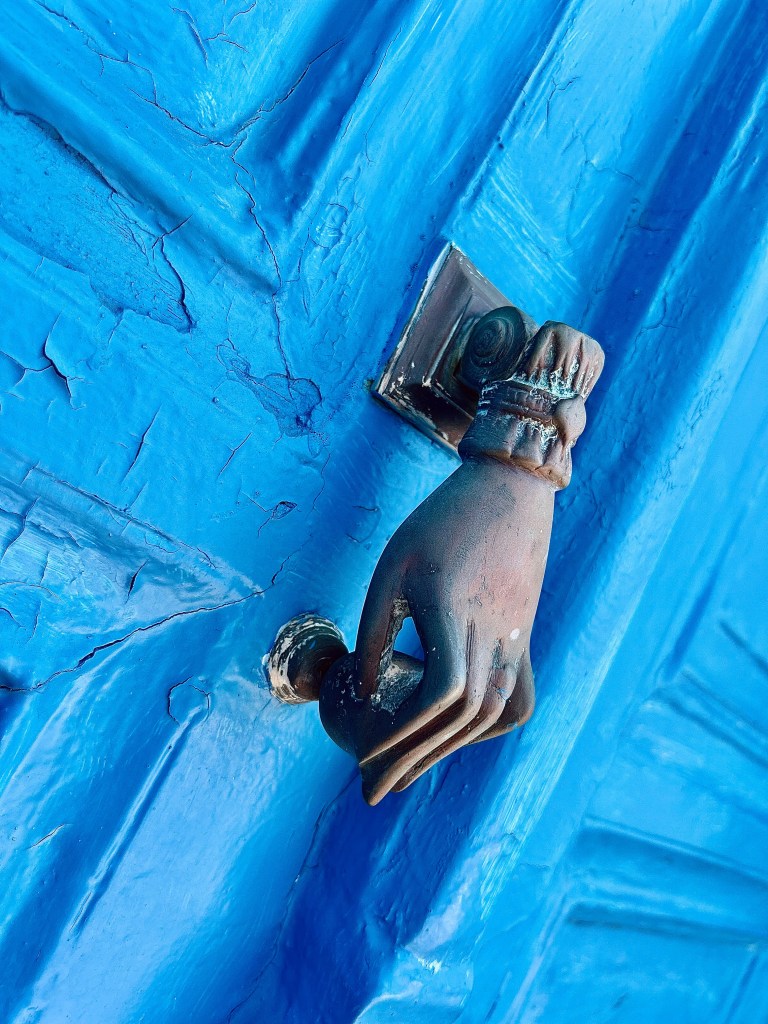
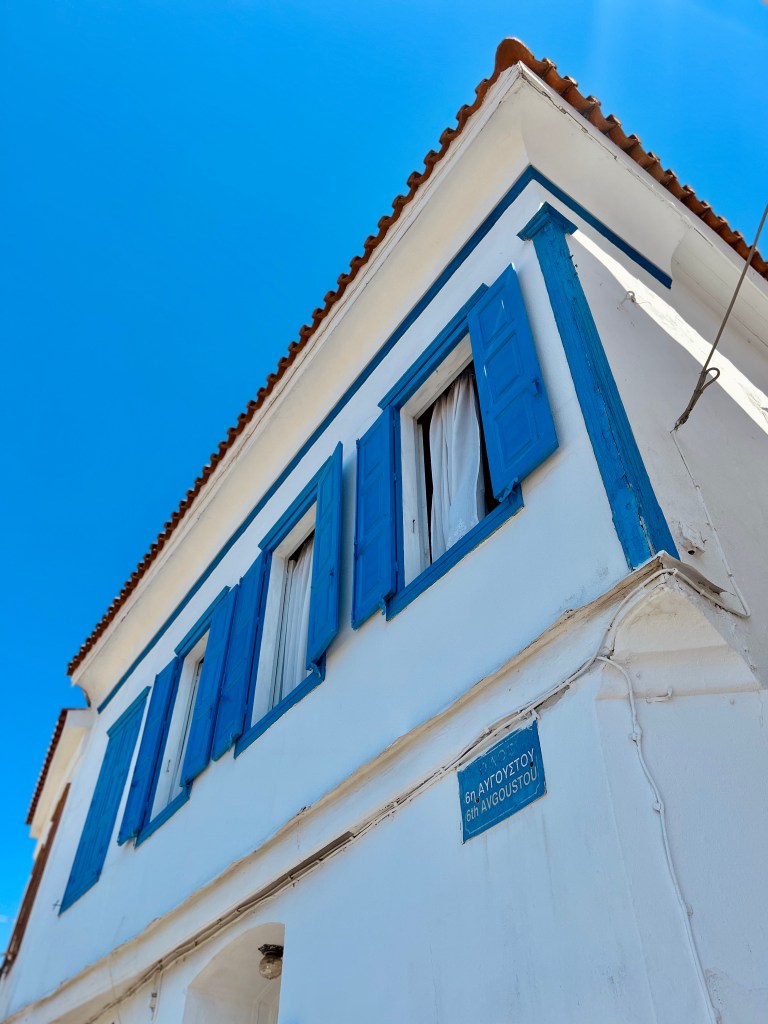
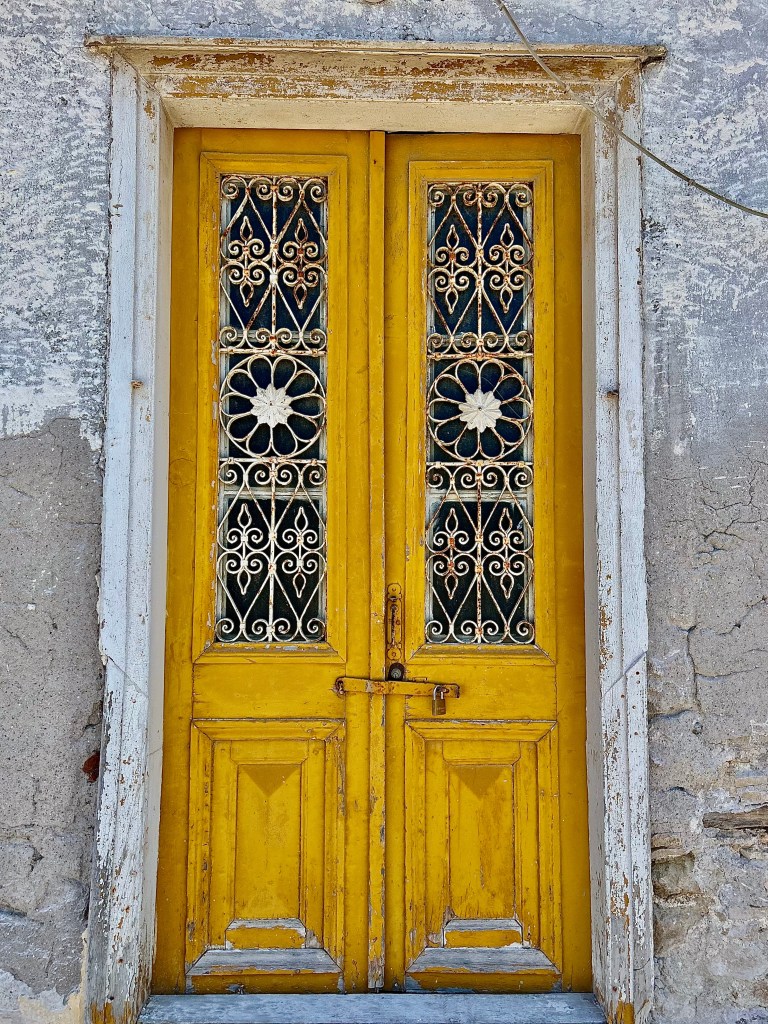
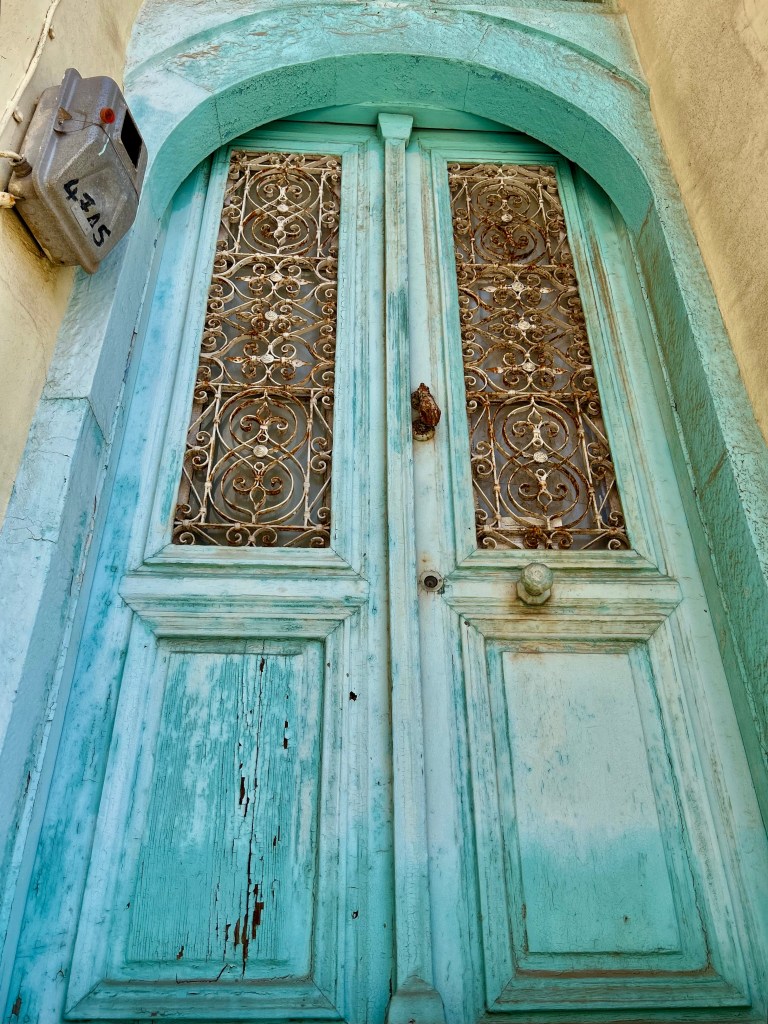
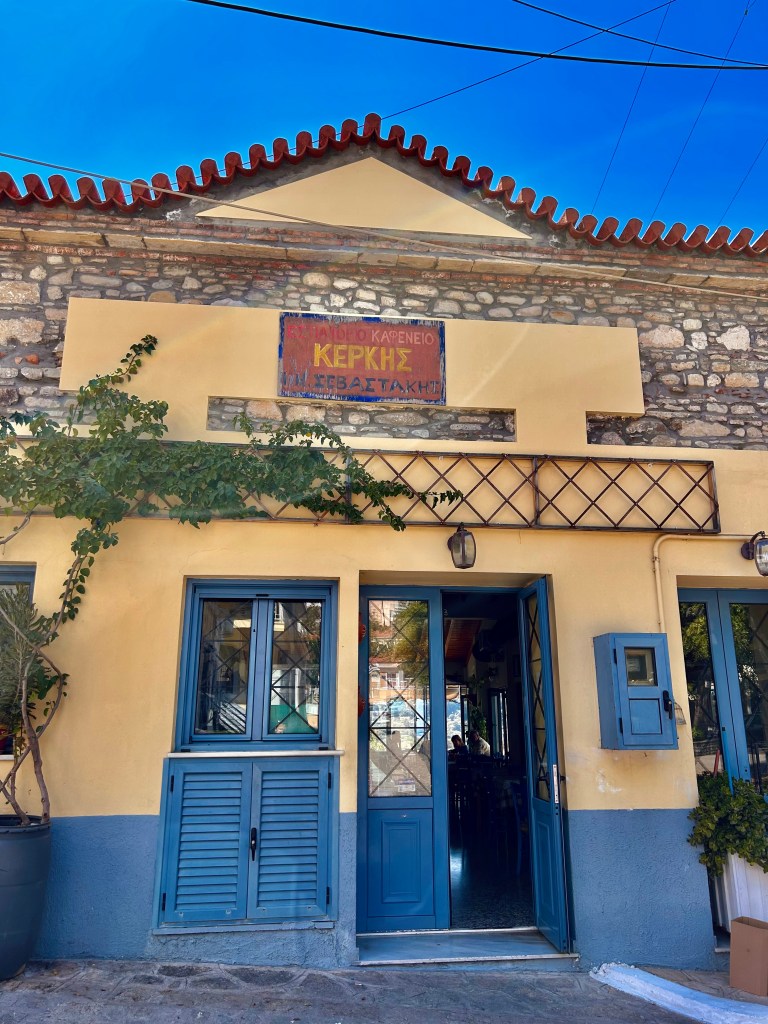
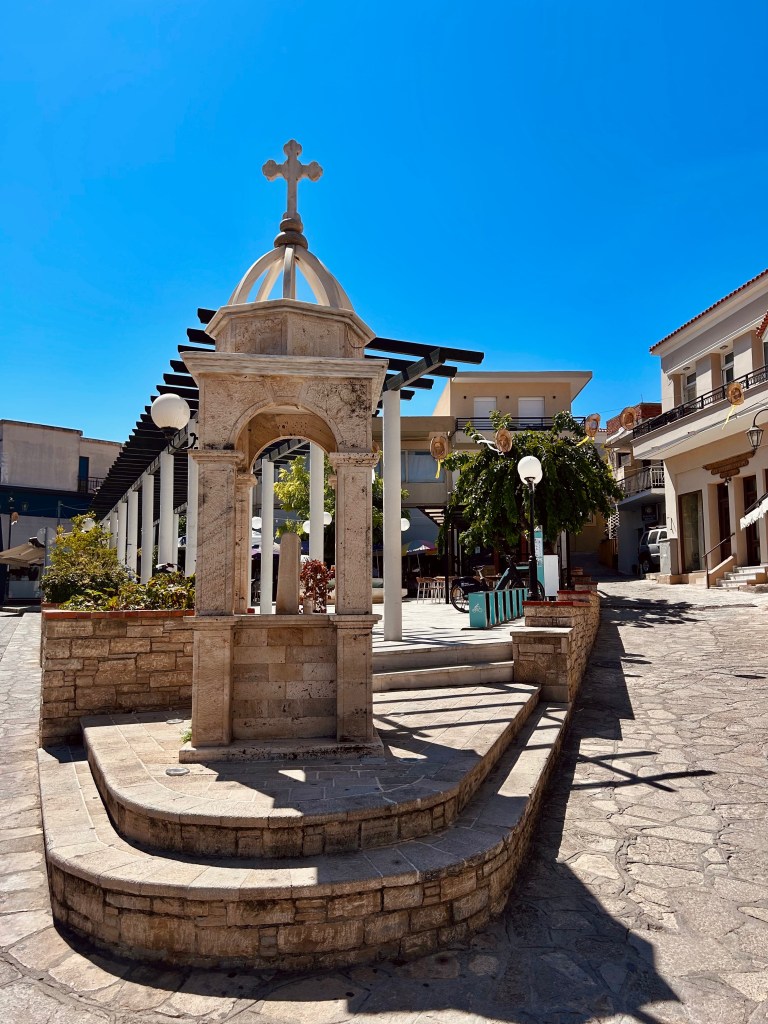
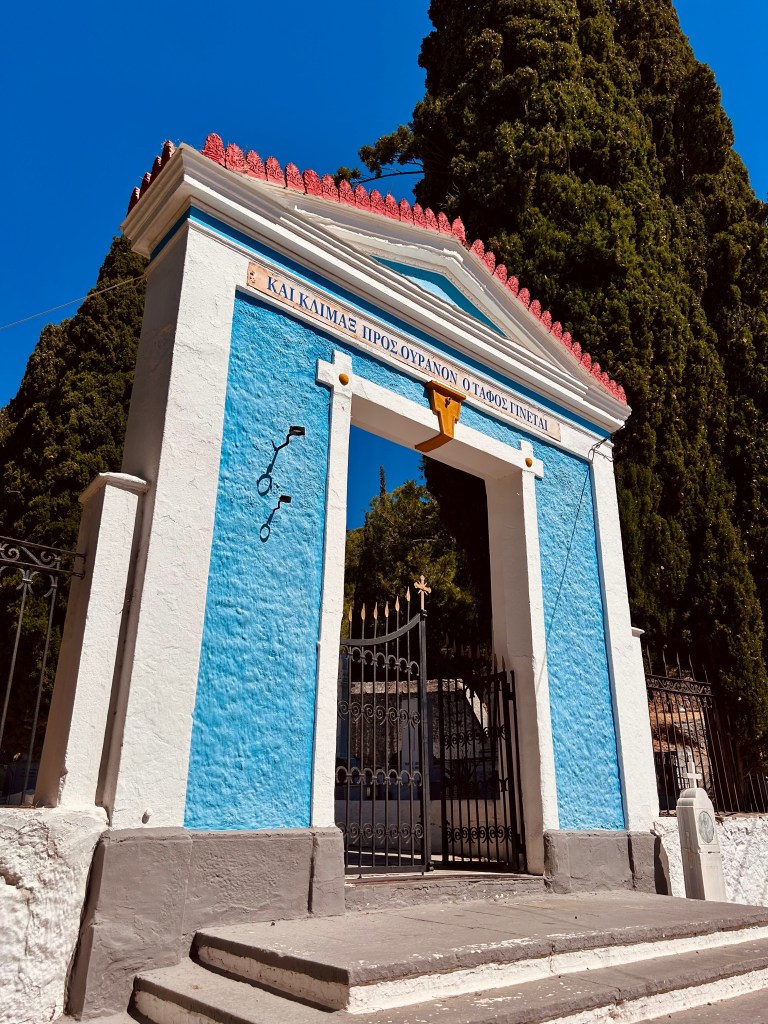
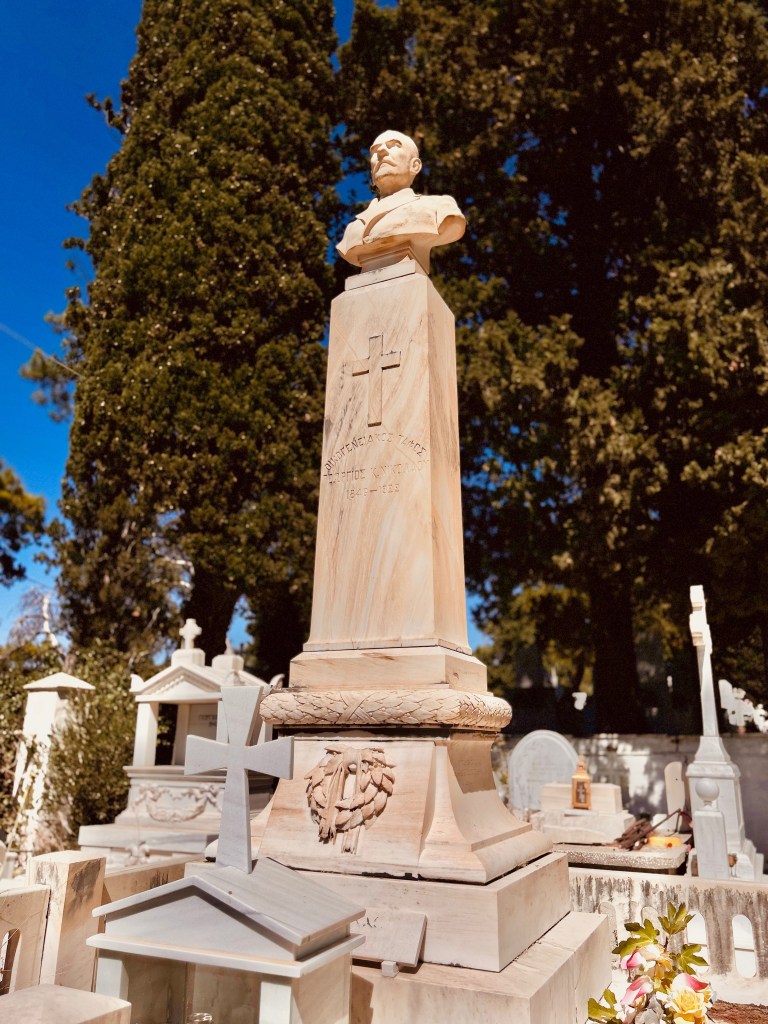
In Karlovasi, there are lovely small shops where you can find real bargains on clothes and shoes, and the road leading up to the town square has quite a few of those. It’s not a very busy or loud town, although it does have a university, a large market, and there is traffic – which in Greece is no joke – and it’s got its siesta between 14:00 and 17:30, so after a while it becomes even more quiet. You will find lovely churches, one particular old taverna that sits on a hill with views of Mount Kerkis and lots of pretty houses with colorful doors. The town square allows you to rest a while in the shade of a restaurant or café and from there you can watch everyday life or get some souvenirs at the shop across the street that has everything from garden hoses to pillows and toys. You never know, some days you need a tacky magnet, other days you need new pots for your Aloe Vera. On a rough day, you might even need a new toilet seat…
The last eastbound bus from Karlovasi leaves at 16:00, so I got on that one and eventually made my way back to Pythagorio. To be honest, I thought I wouldn’t give Karlovasi another visit in the future, but now I’m thinking that there might be more to it and I’m quite curious about spending a few more hours there next time.
Kokkari
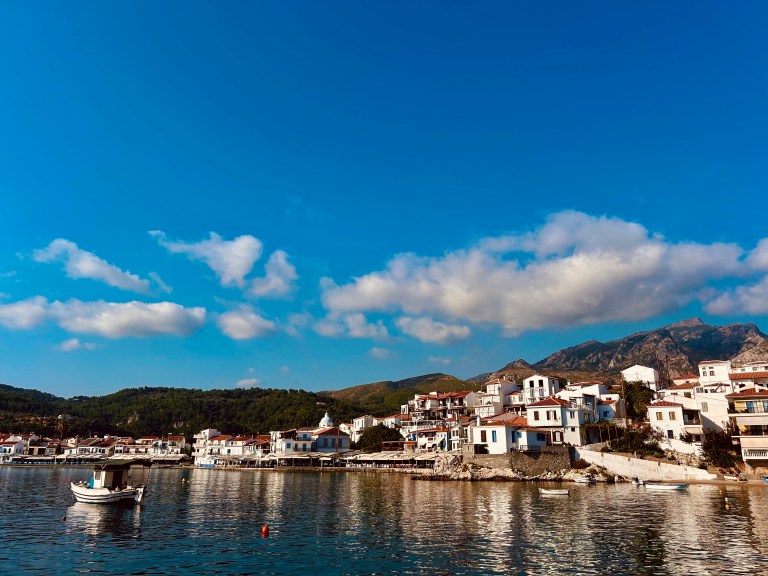
Situated on the north coast of Samos, Kokkari is the kind of village that makes you want to linger a little longer than planned. It’s very easy to reach from Pythagorio, with one simple bus change in Vathy.
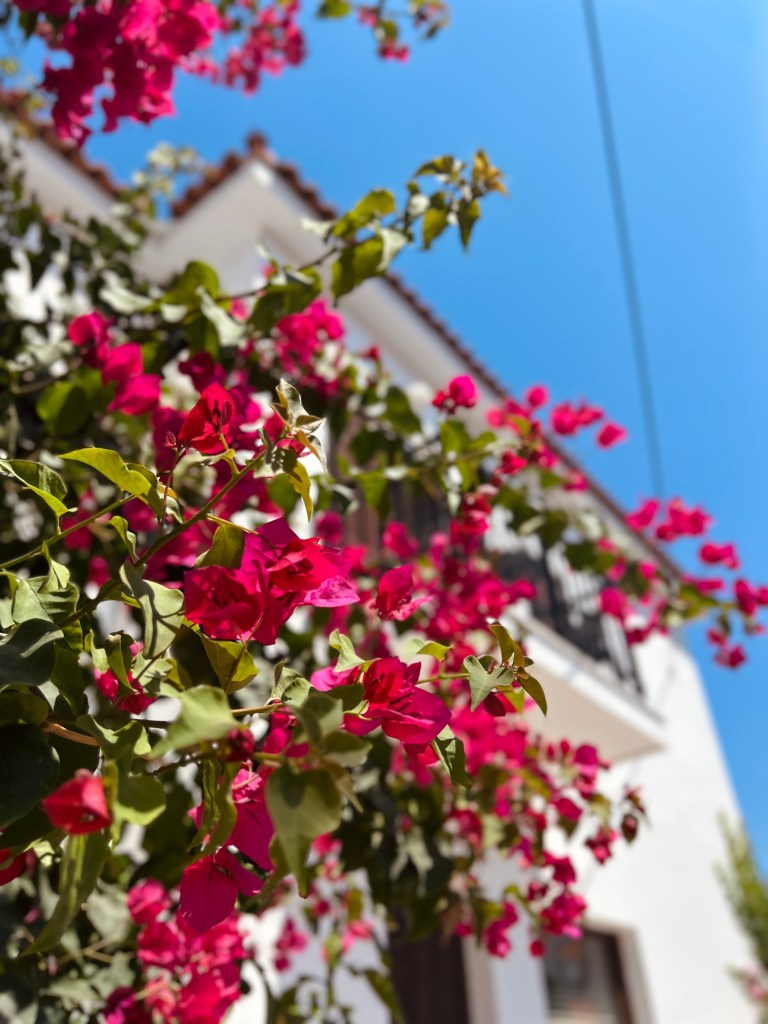
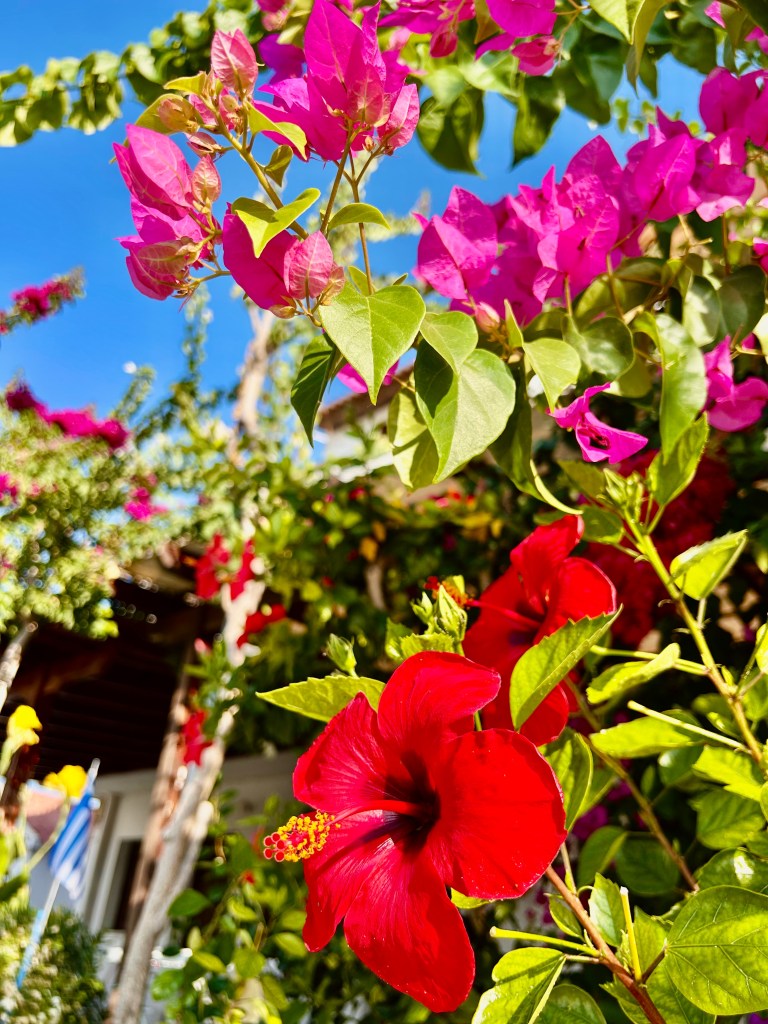
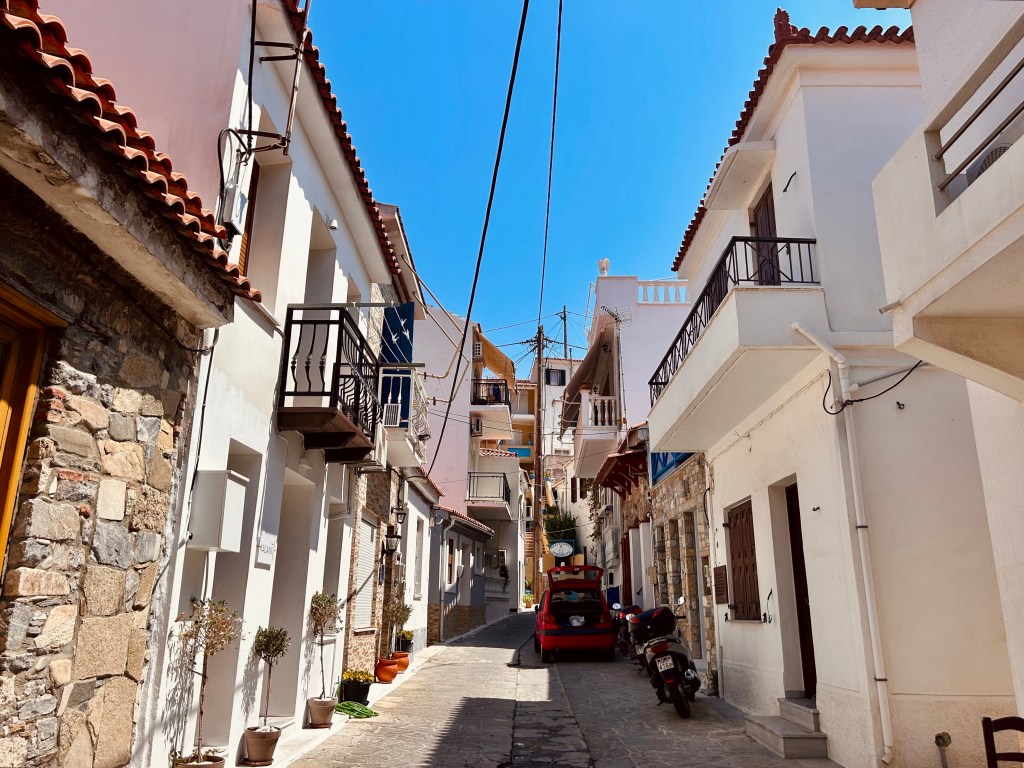
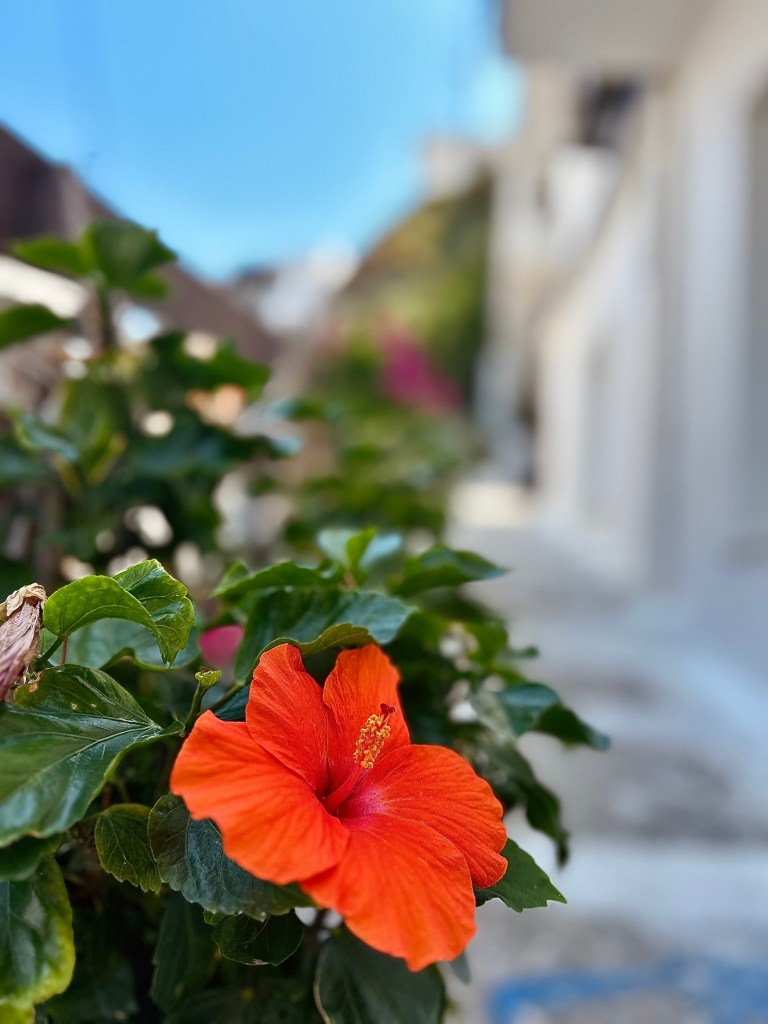
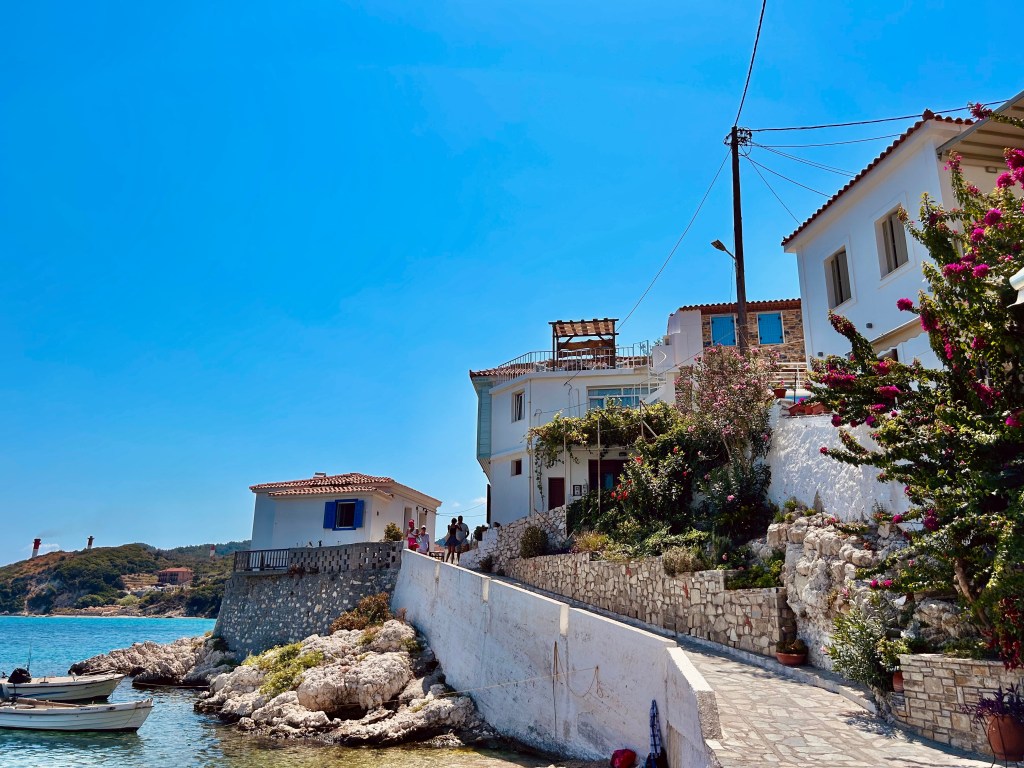
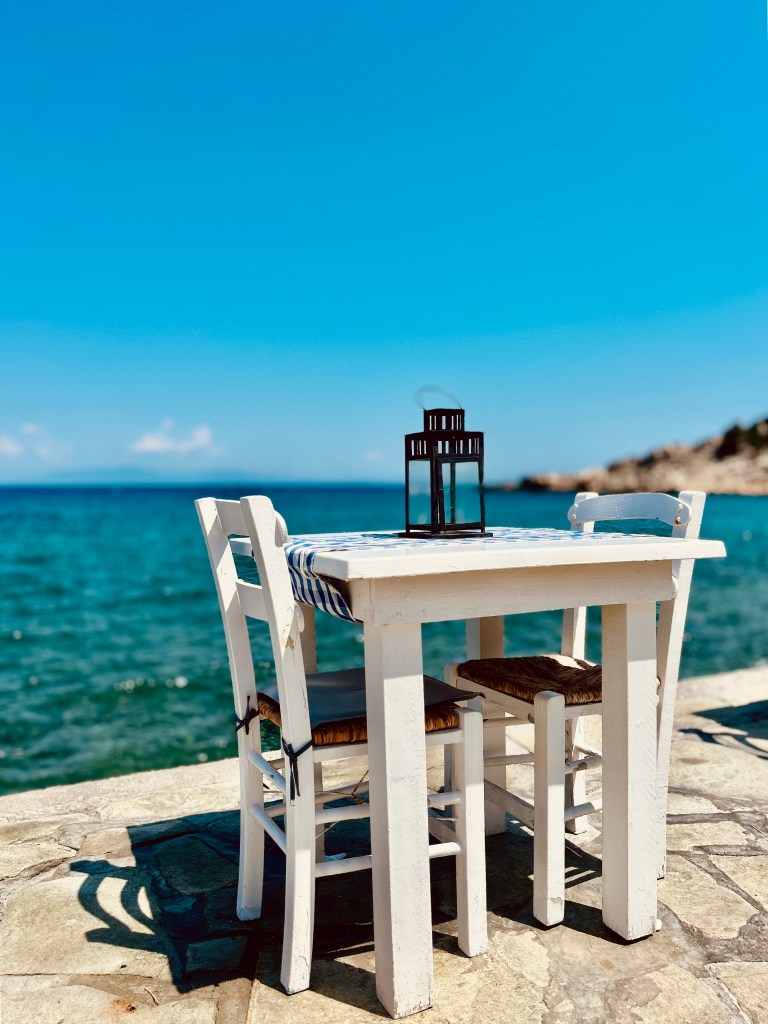
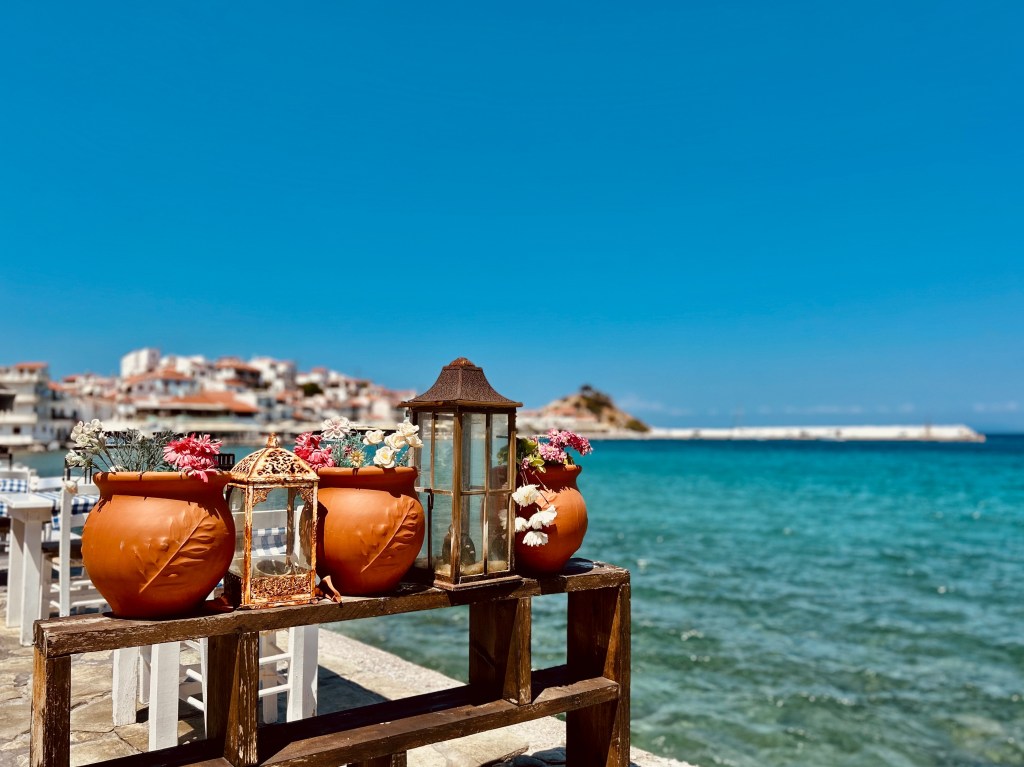
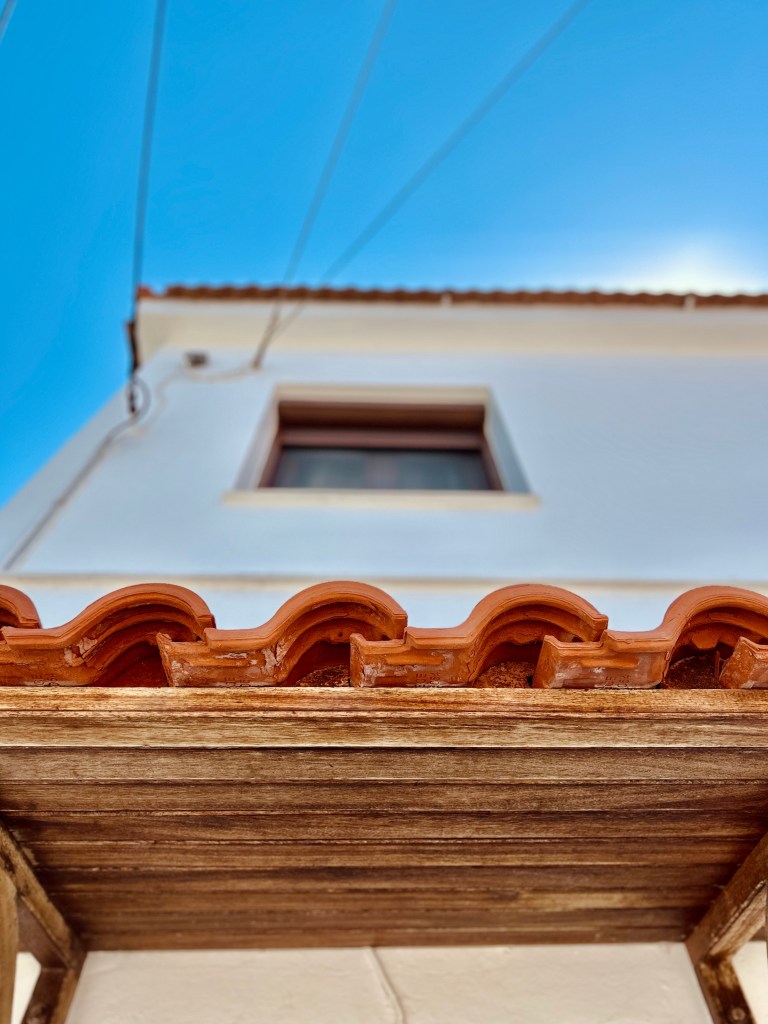
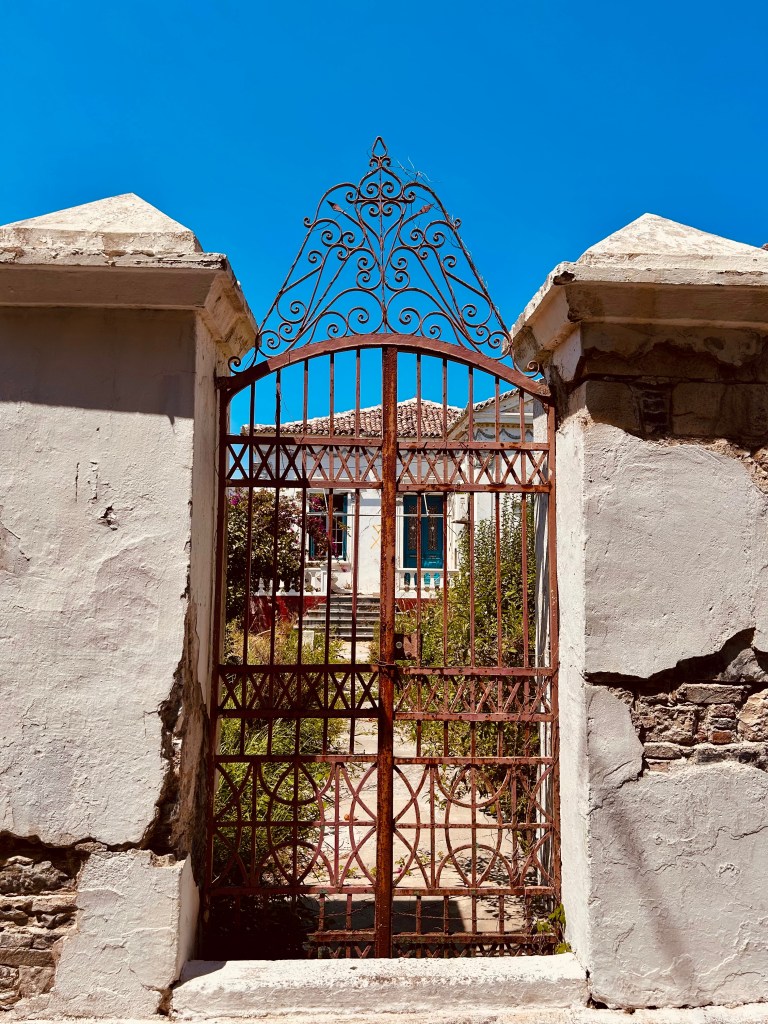
Once a traditional fishing settlement, it has grown into a lively yet charming resort, where narrow lanes lined with whitewashed houses, wooden balconies, and bursts of bougainvillea wind their way down to the sea. The harbour is the heart of the village, a crescent lined with tavernas and cafés where tables spill right to the water’s edge.
The beach on the north side of the village is gorgeous, a long stretch of pebbles, crystal-clear water, and a steady breeze that makes it perfect for windsurfing. There are hotels, restaurants and bars that offer live music nights along the whole stretch, and parallel to the seaside street you can find a few shops, some bakeries and even a beauty salon.
Kokkari is incredibly appealing and Instagram-friendly. Many people stop for photos right above the small beach, to photograph themselves against the backdrop of the islet of picturesque houses and flowers.
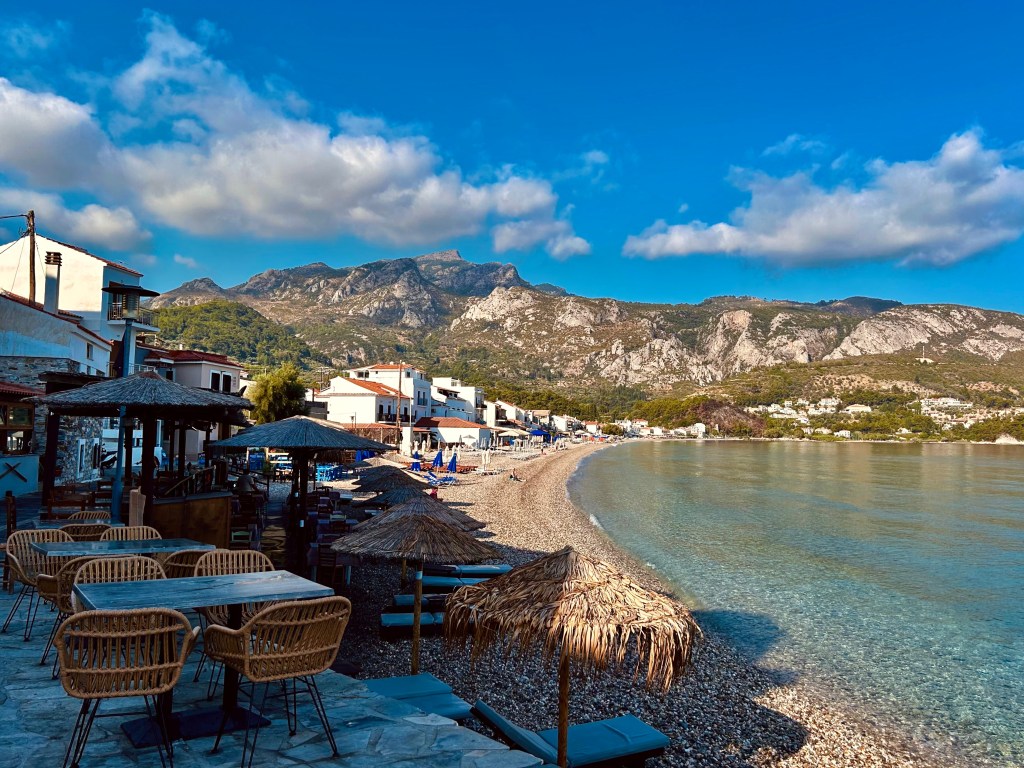
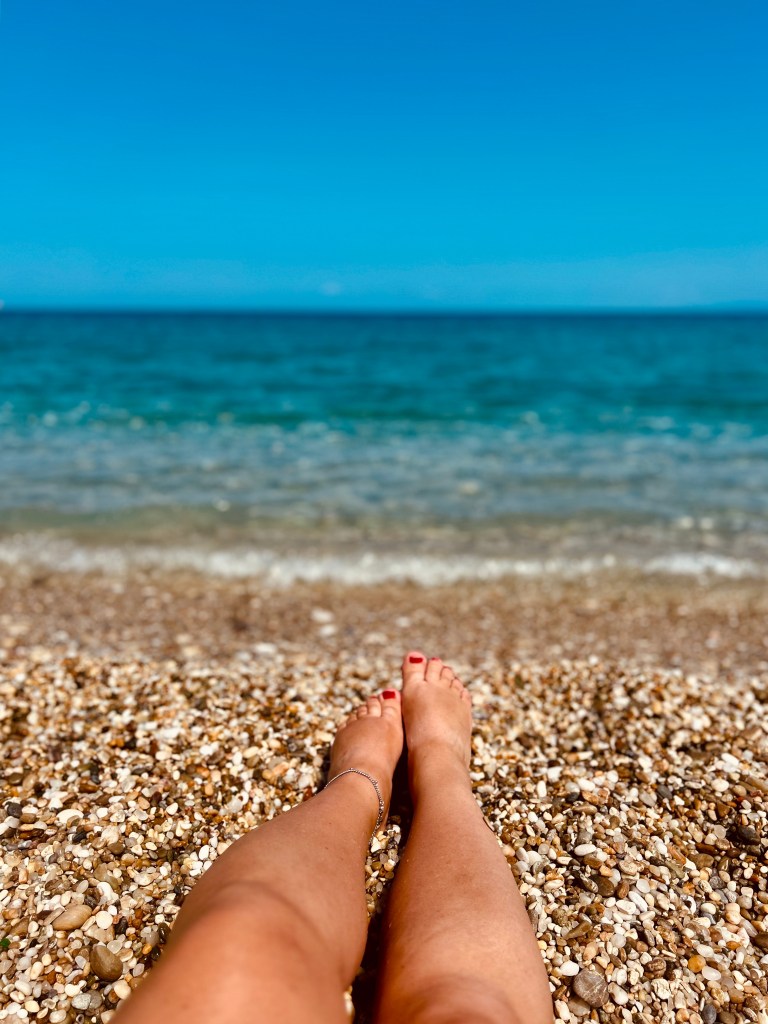

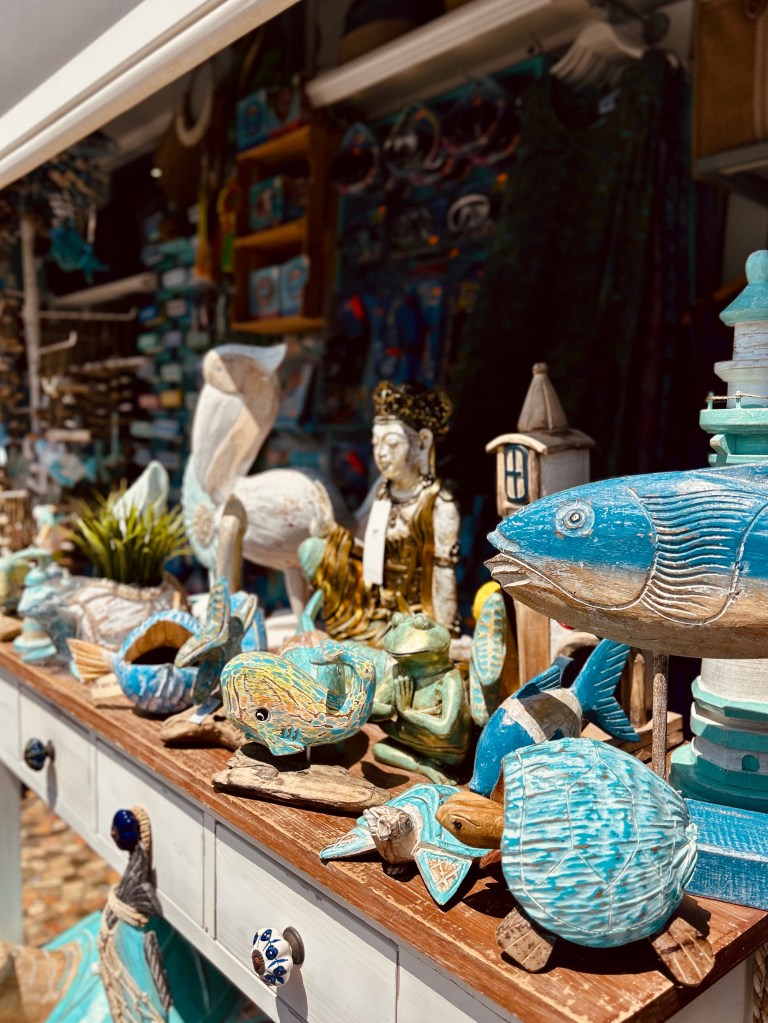
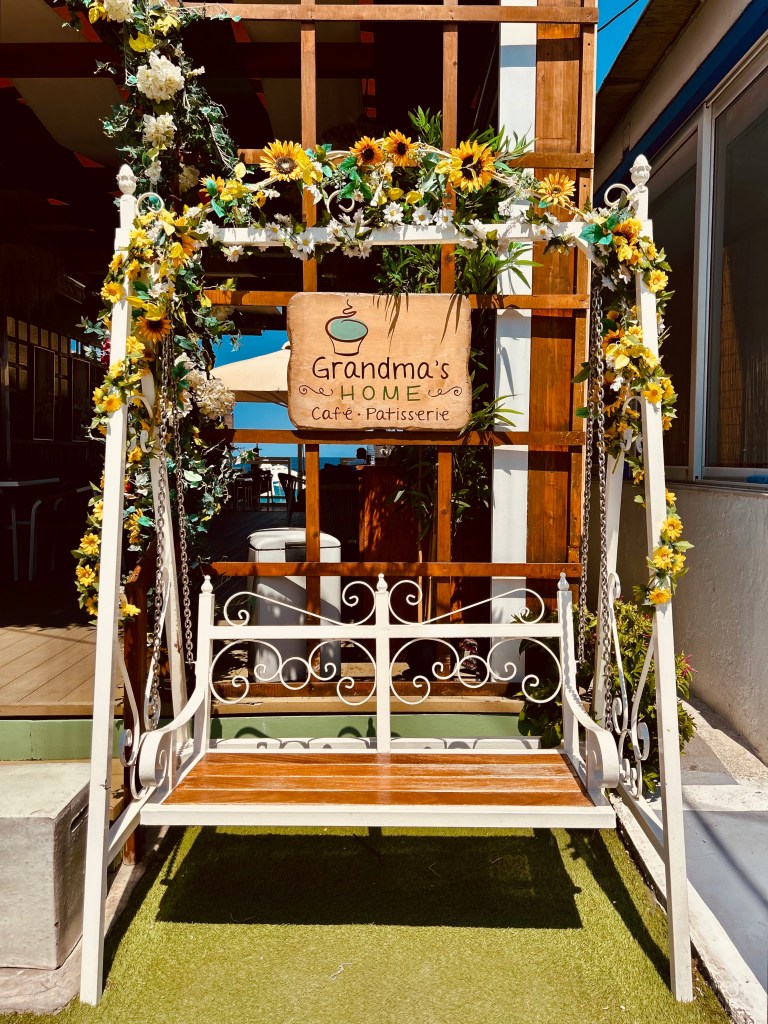
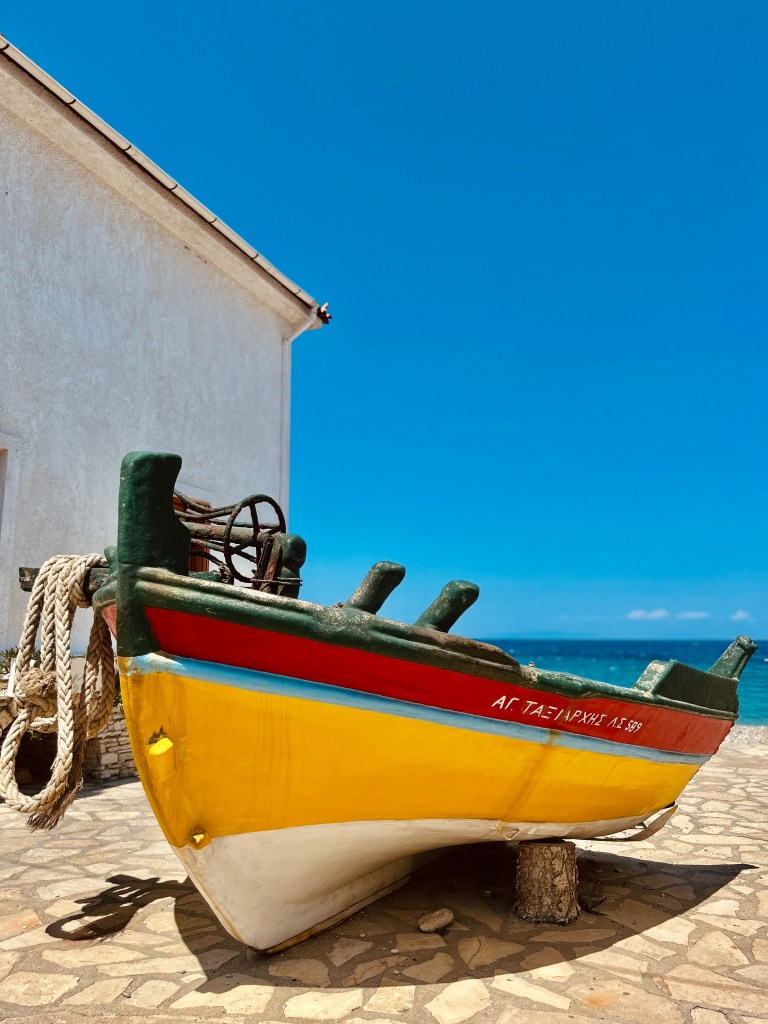
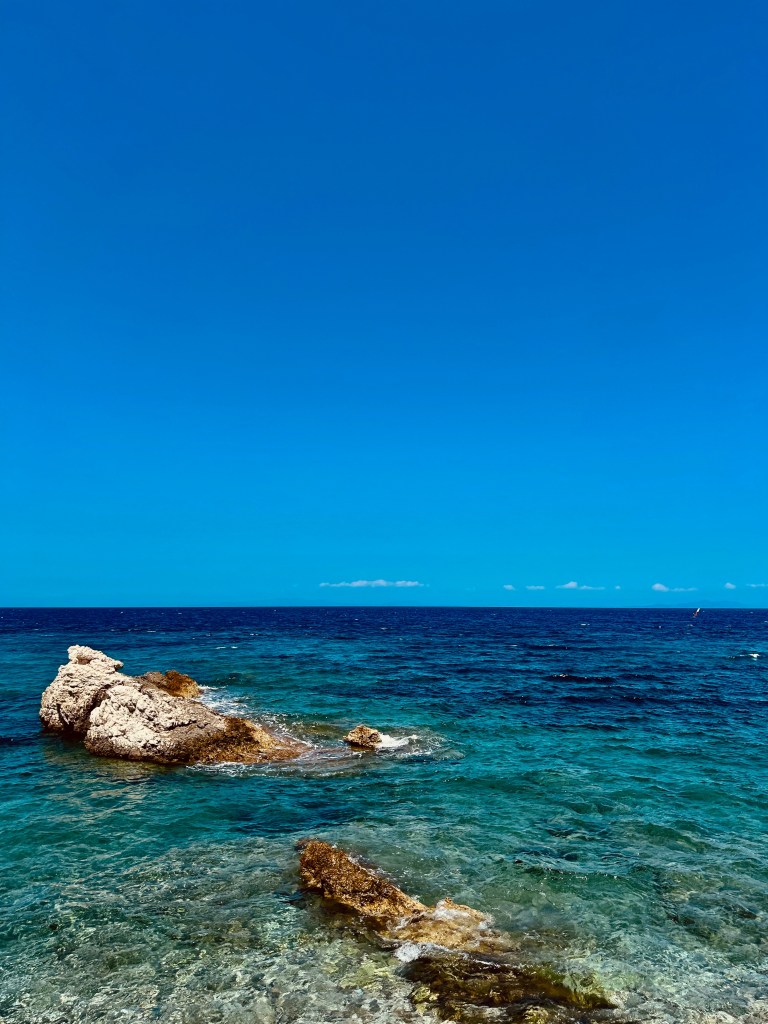
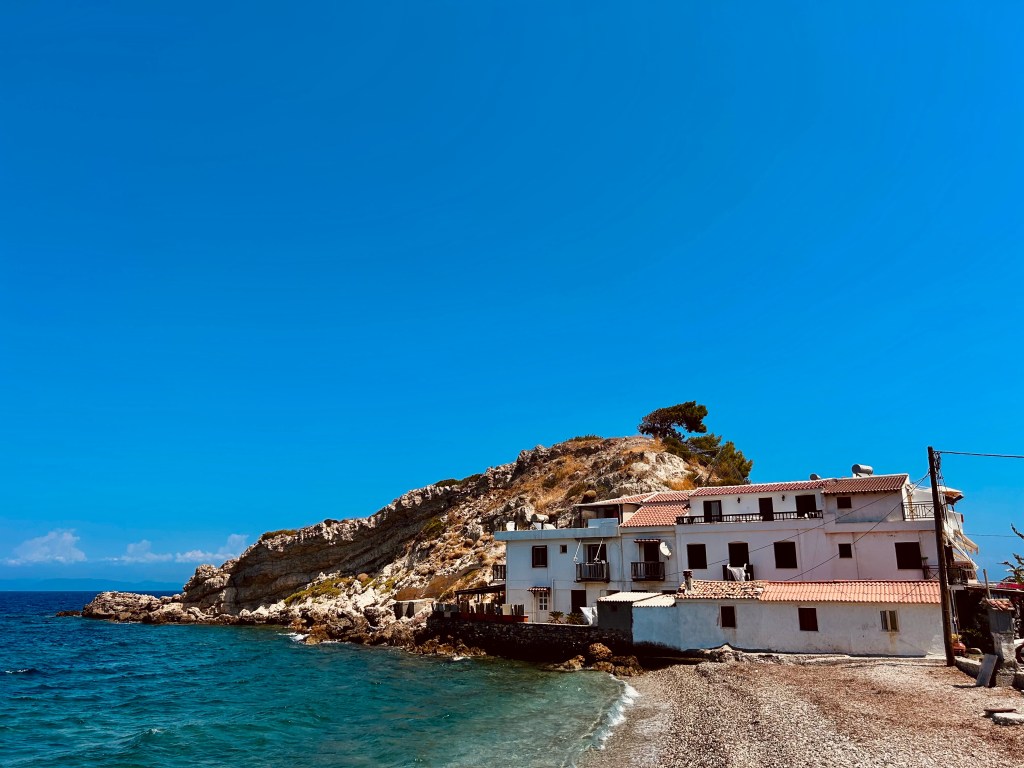

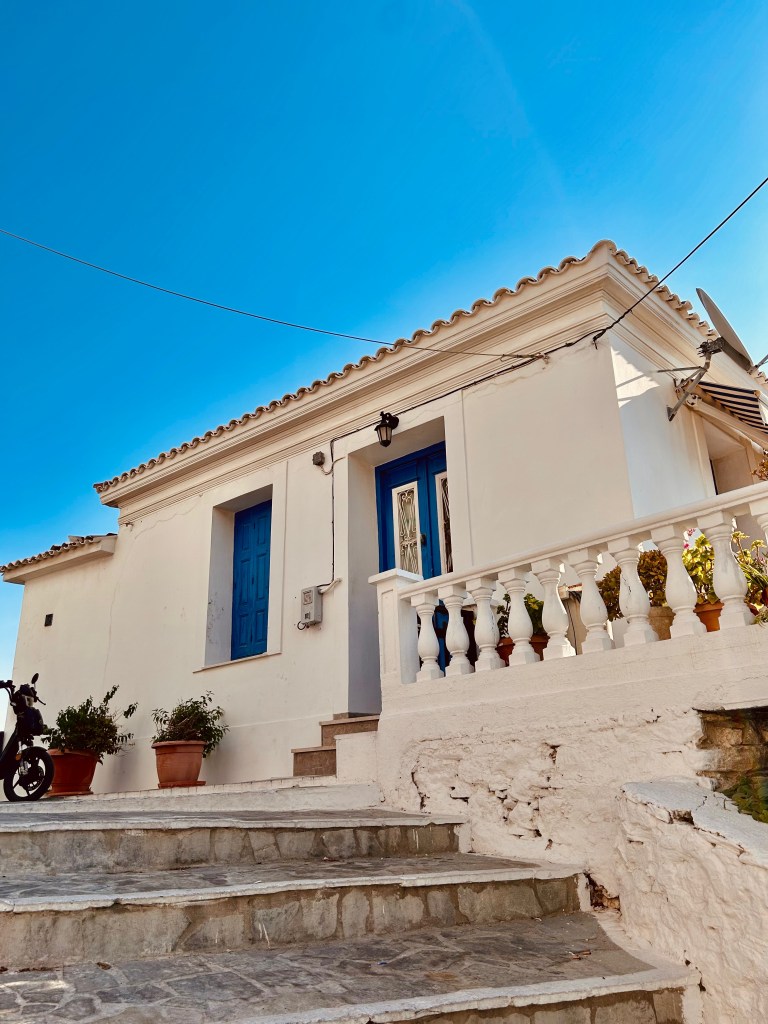
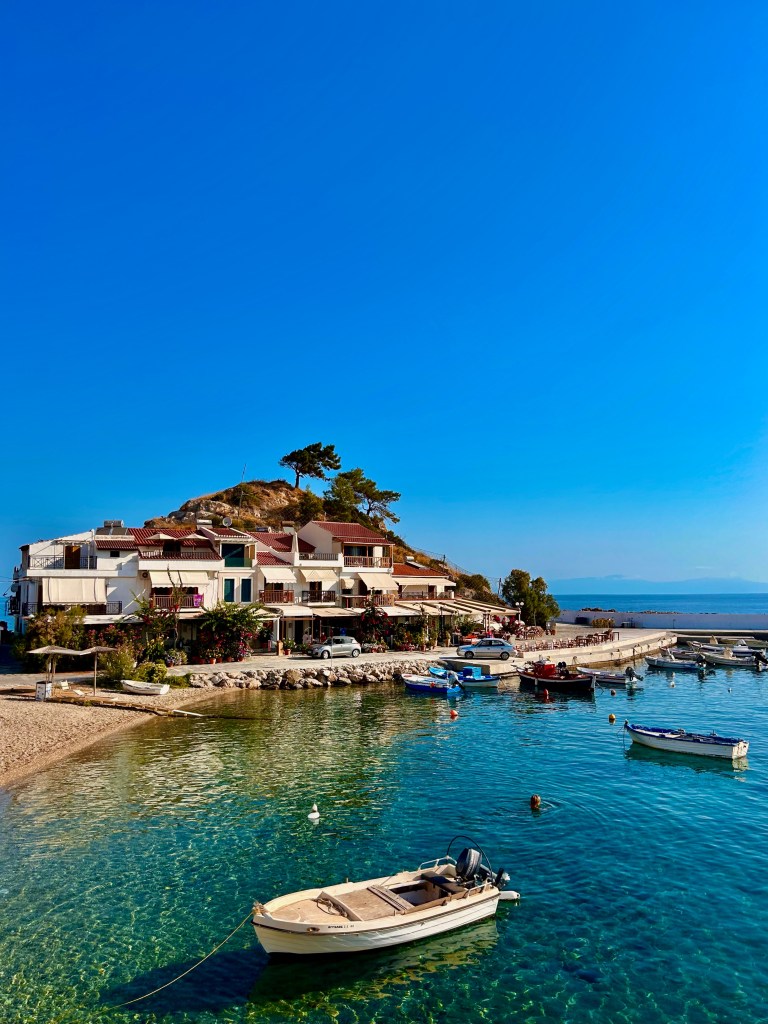
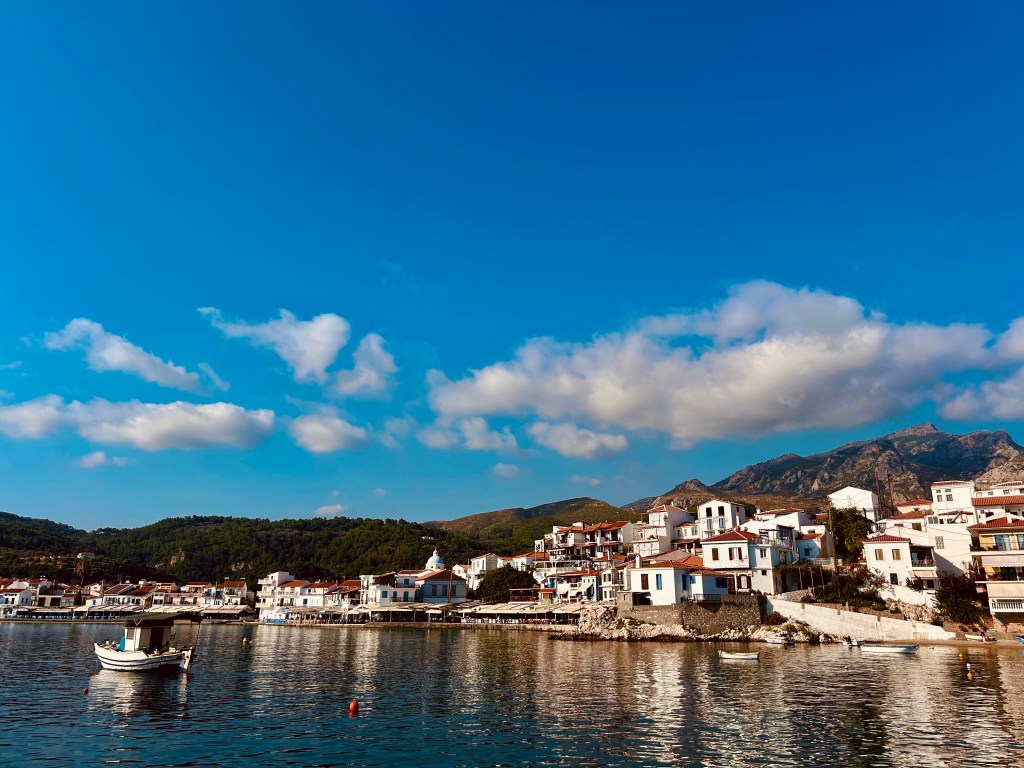
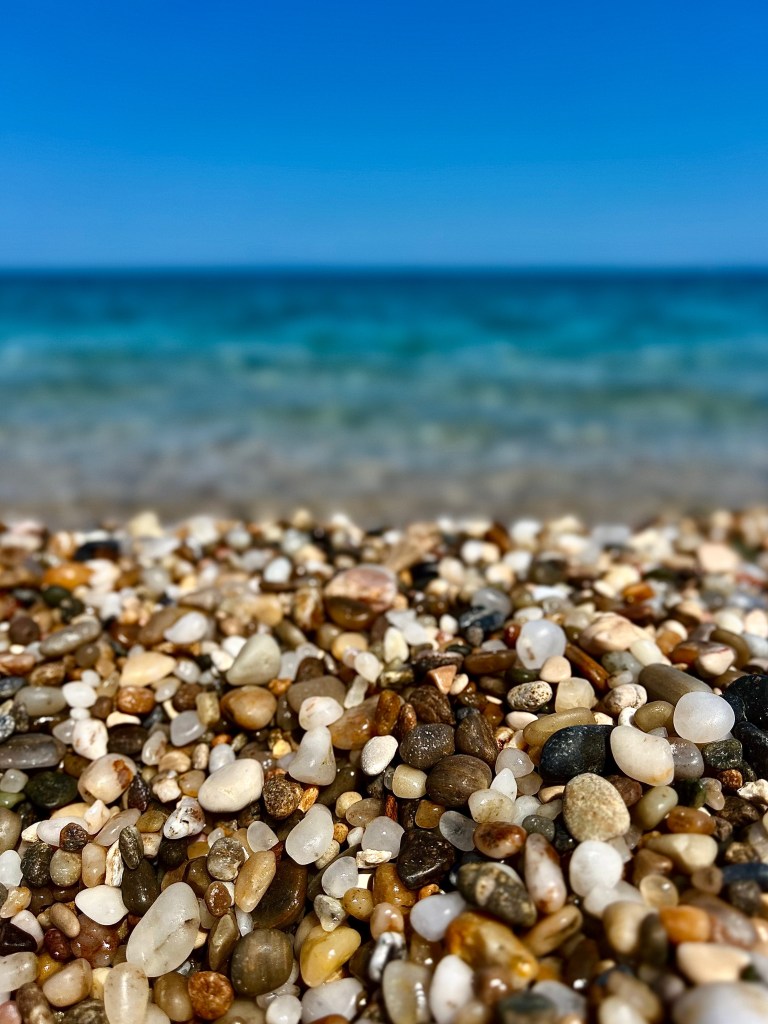
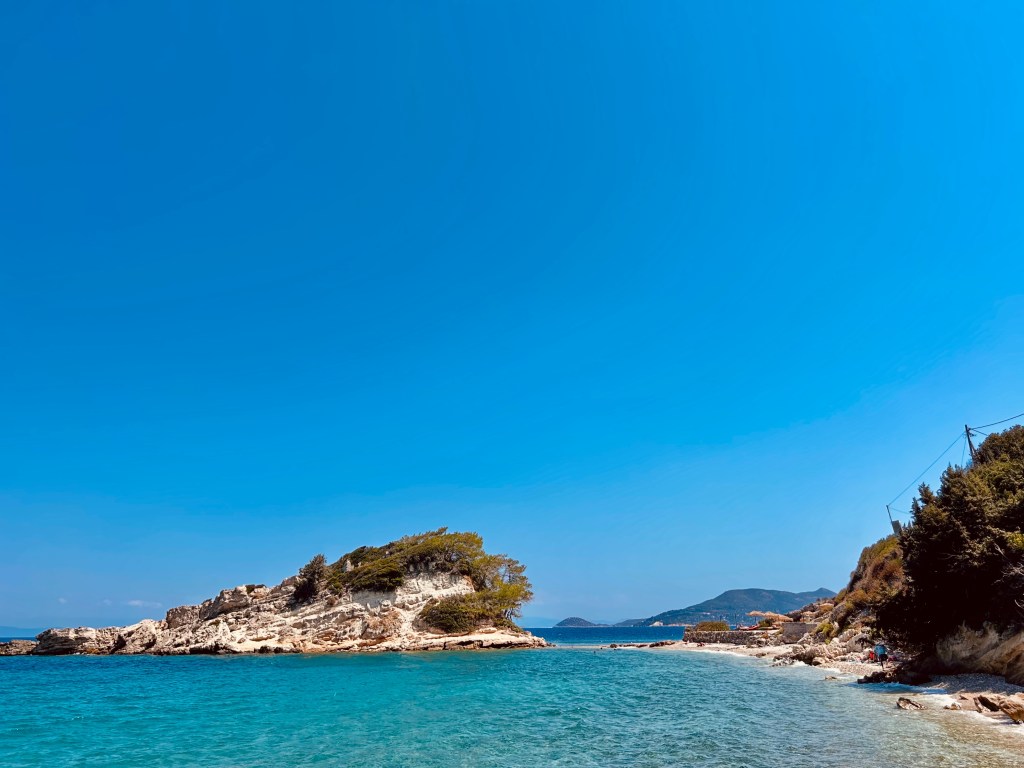
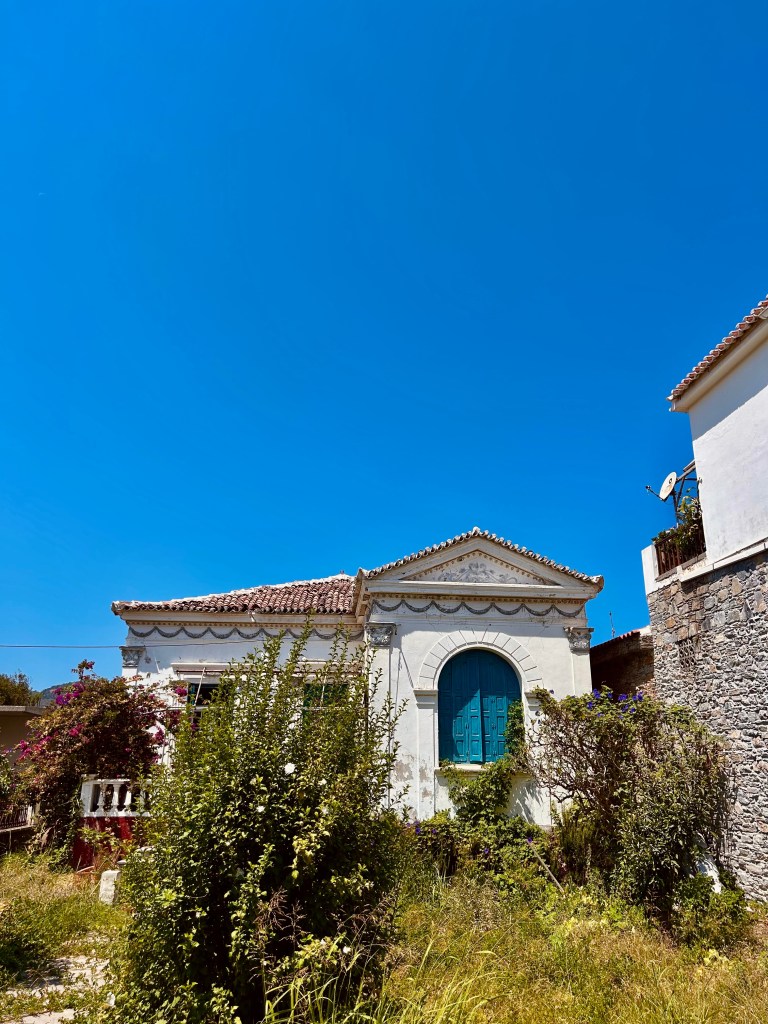
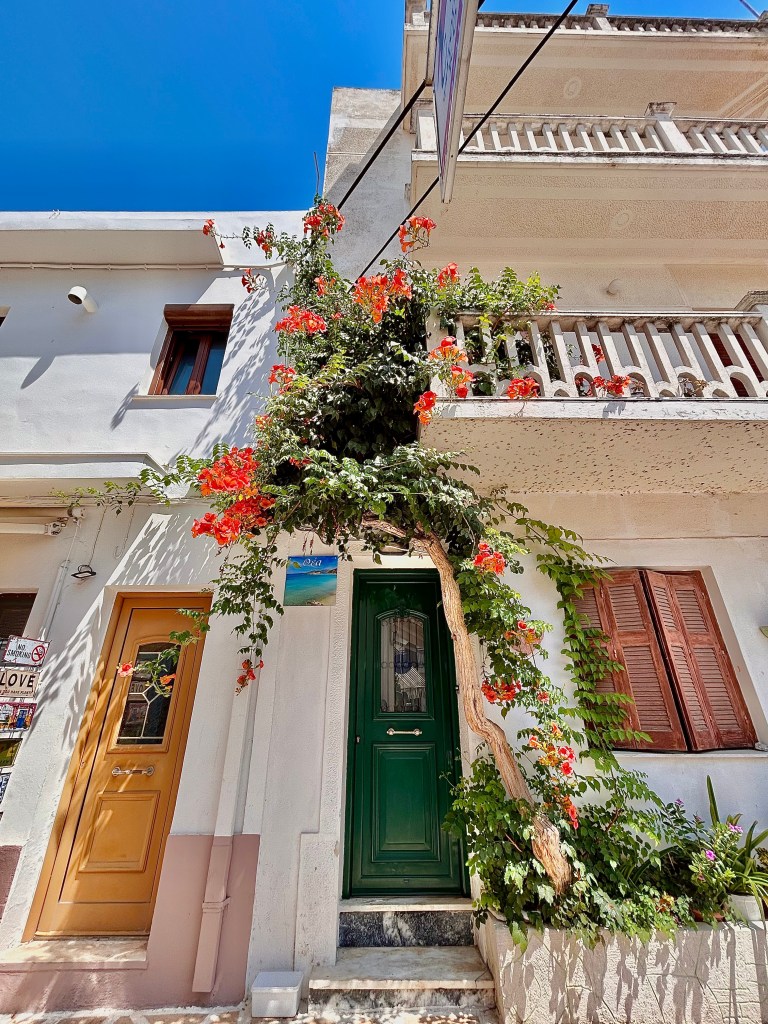
From Kokkari, you can either walk or go by bus to the nearby beaches of Lemonakia and Tsamadou. I took a walk to Lemonakia and was not disappointed. It’s an easy walk and it sports one of the very few pavements along any Greek country road. The main beach bar on Lemonakia offers great food and drinks, the beach is spotlessly clean and the water is stunningly beautiful and warm. And how can one not love a place that is literally called “Small Lemons”?
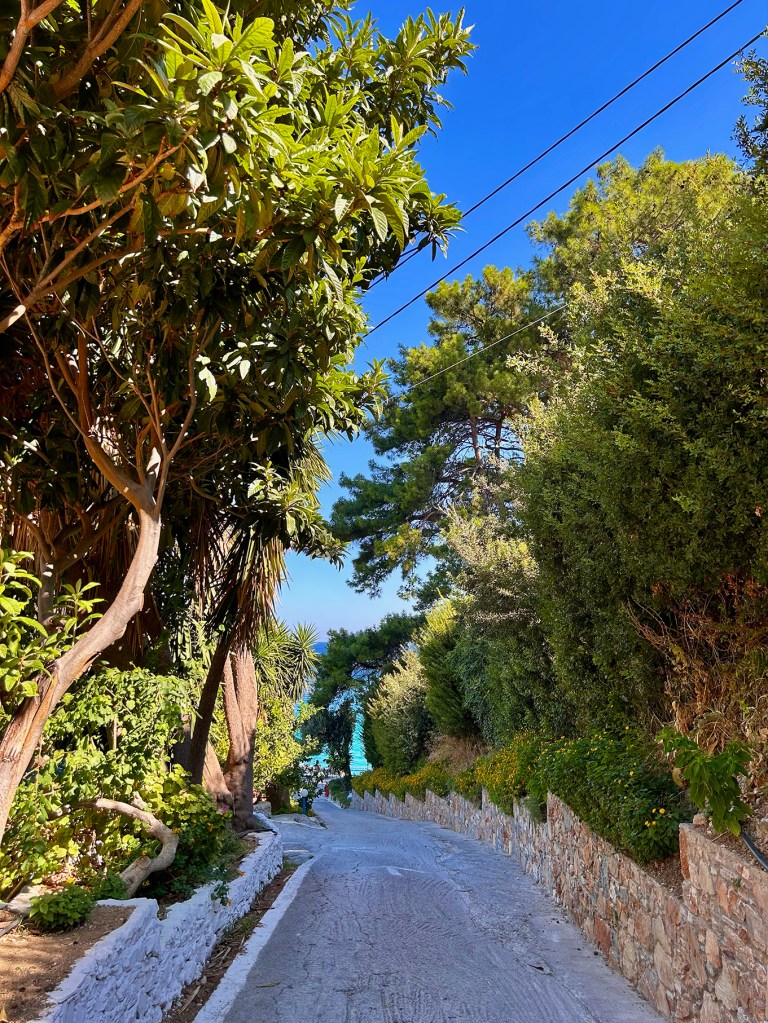
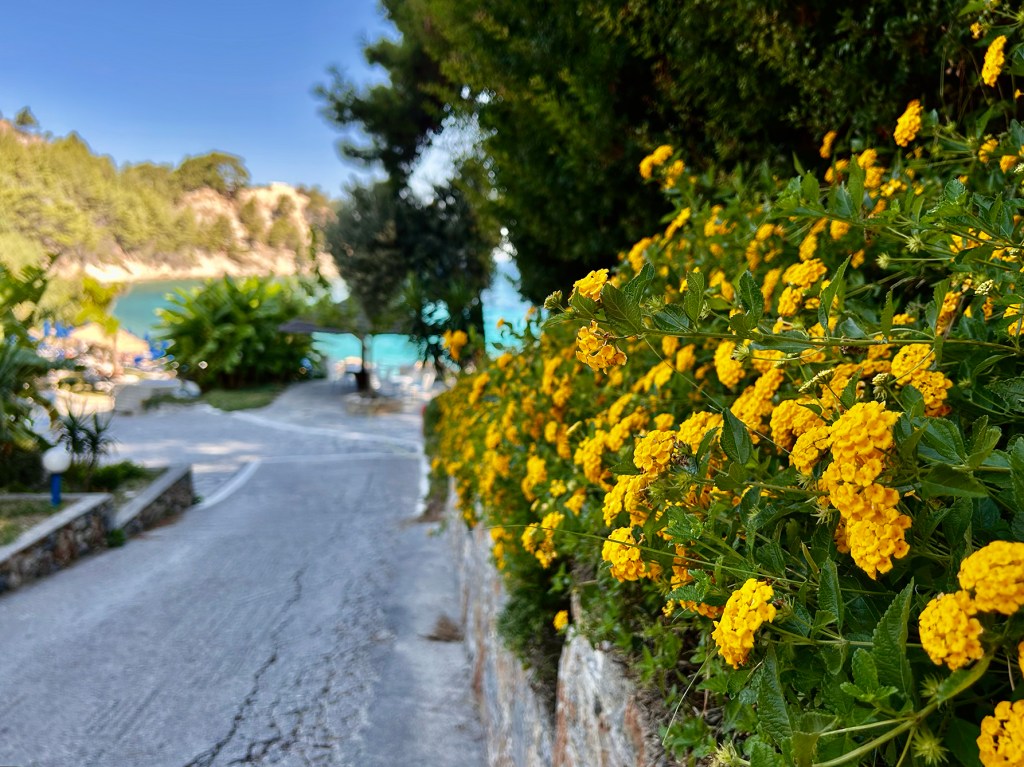

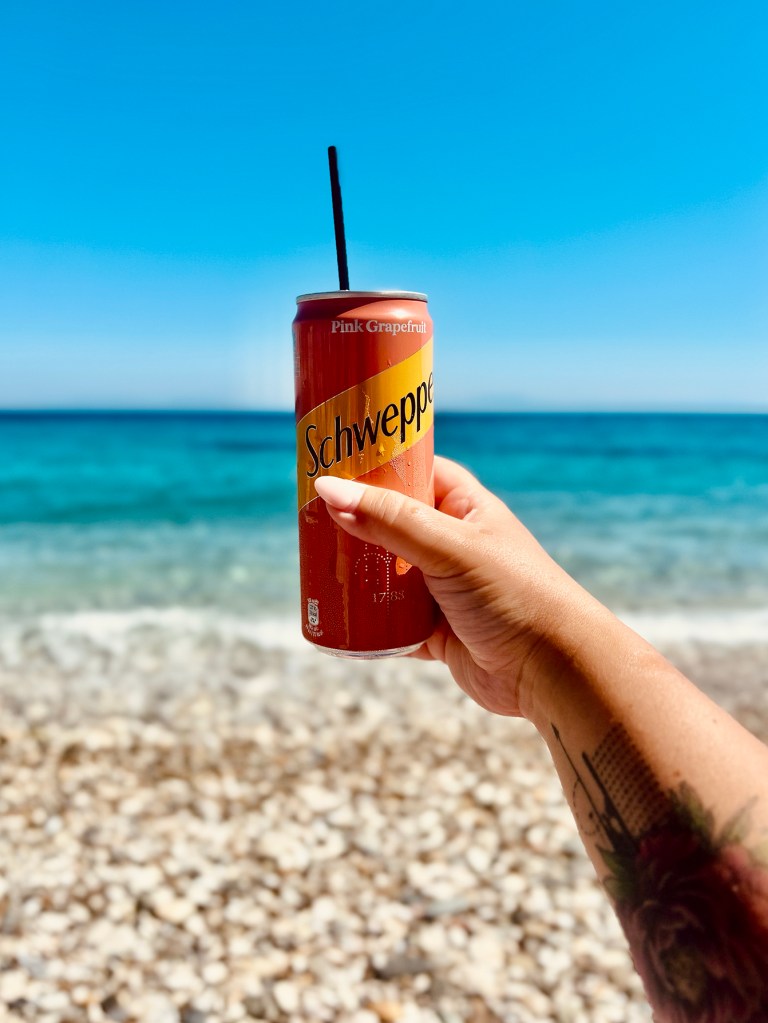
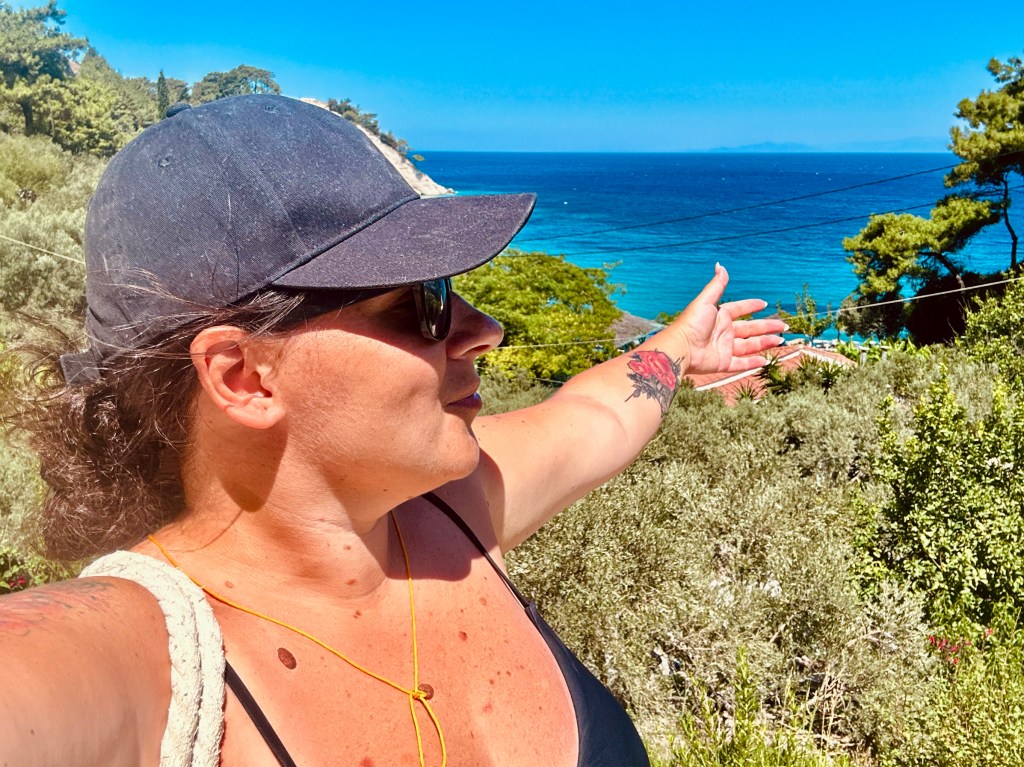
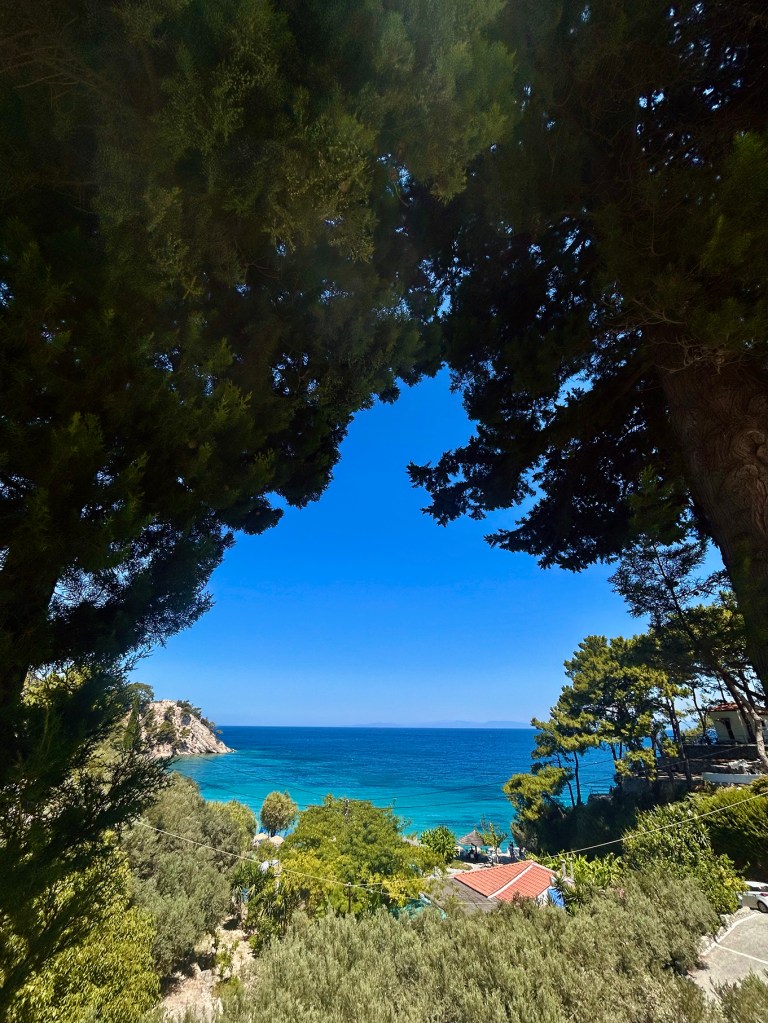
My favourite Kokkari beach however was the smaller one right by the harbour, where locals and tourists alike spent a day in the sun and very calm water. It offers handicap access, it’s great for snorkelling and one boy even picked up a small octopus with his bare hand.
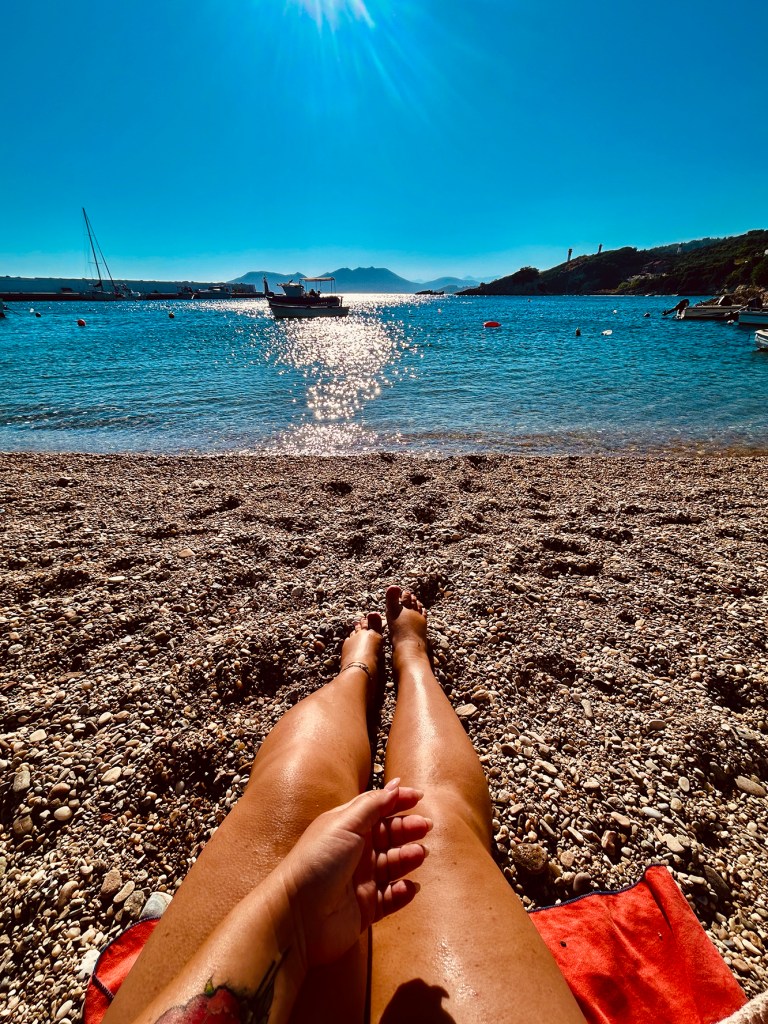
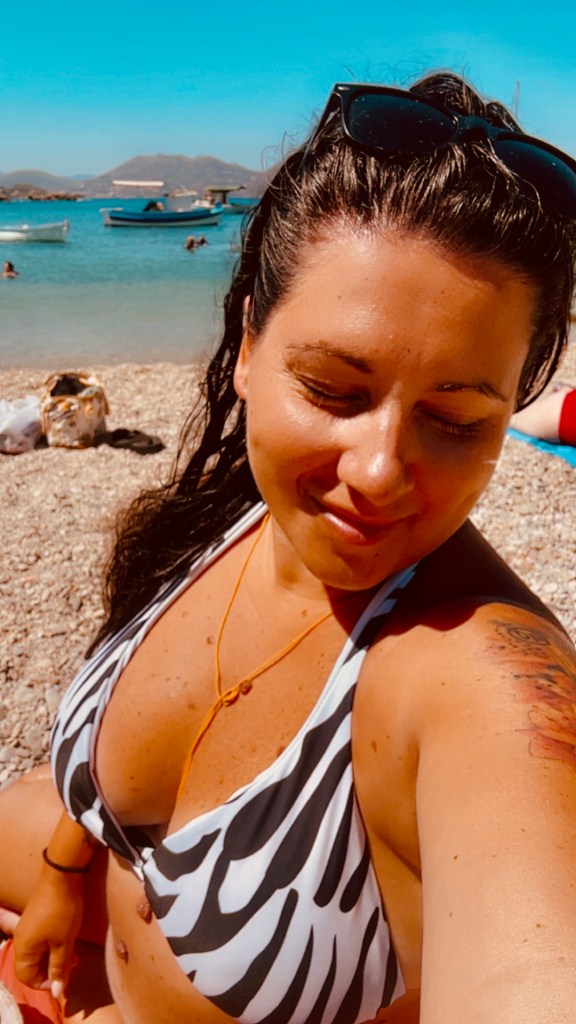
Kokkari has good food, delicious cocktails and very friendly people as well. It also has a shop with a particular brand of swimwear that has understood that there is more than just one type of body in the world. This was a great find for me, the prices were more than reasonable, the pieces were gorgeous and had a great fit. Not only that, but they dried quickly, which is so convenient.
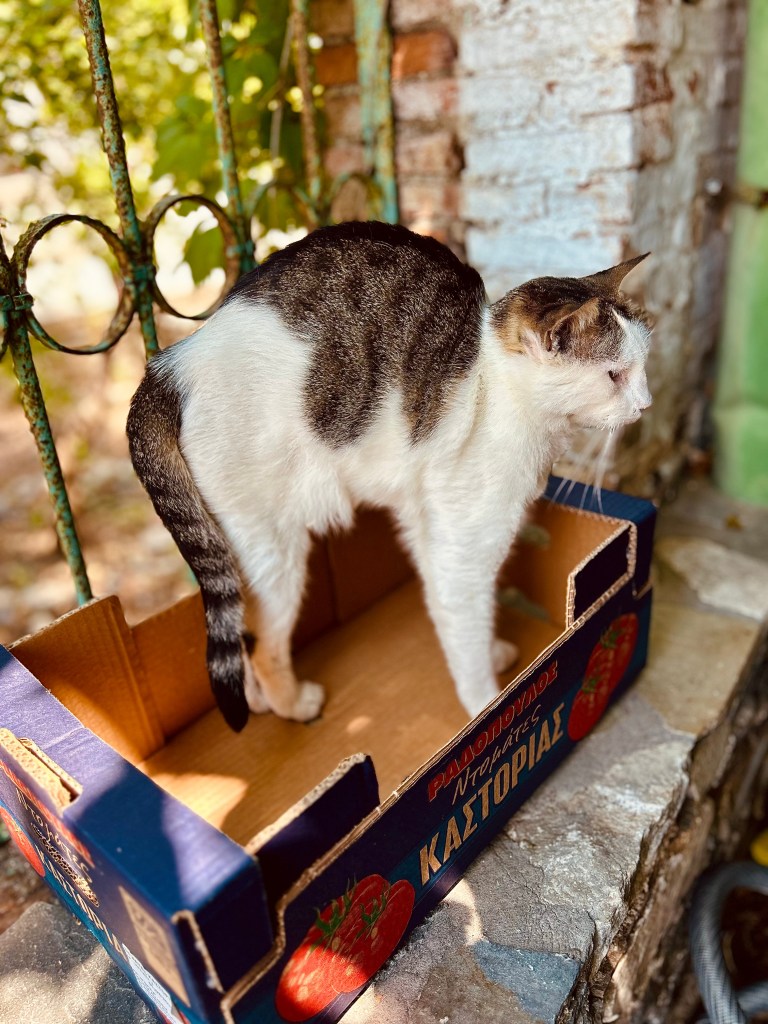
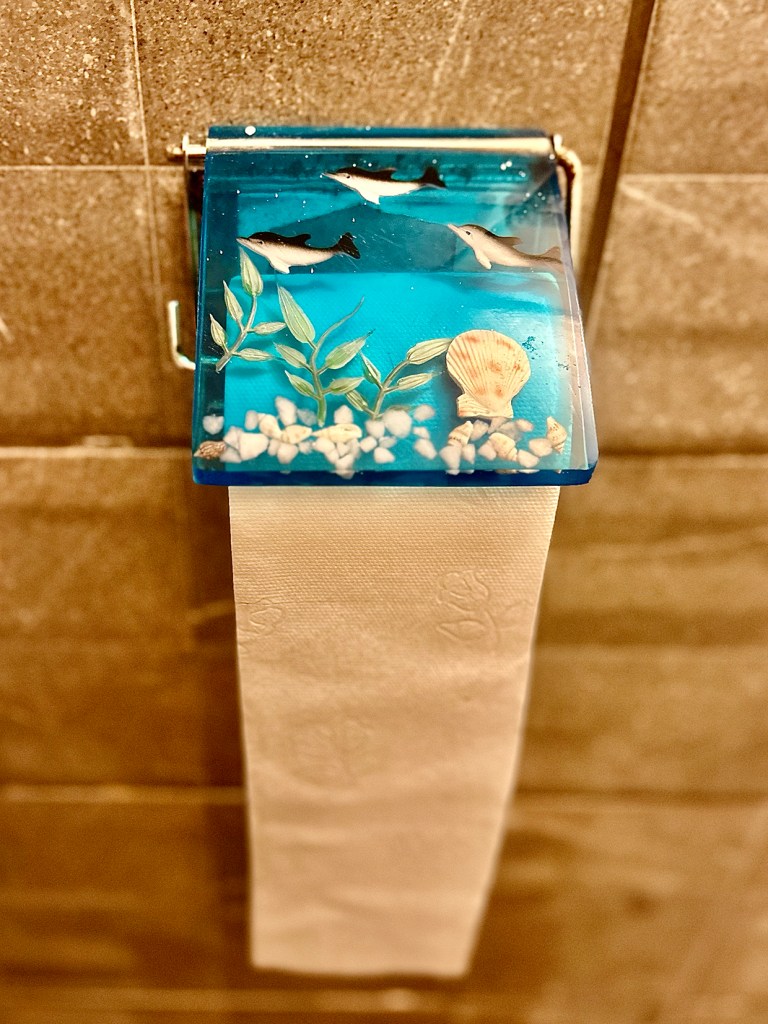
The tavernas are lovely, the village is full of colourful flowers and friendly cats, the coffee often comes with cinnamon and cocoa powder and the pace is slow and pleasant. And in some bathrooms, the toilet paper holder is a tacky yet charming epoxy creation with dolphins and seashells.
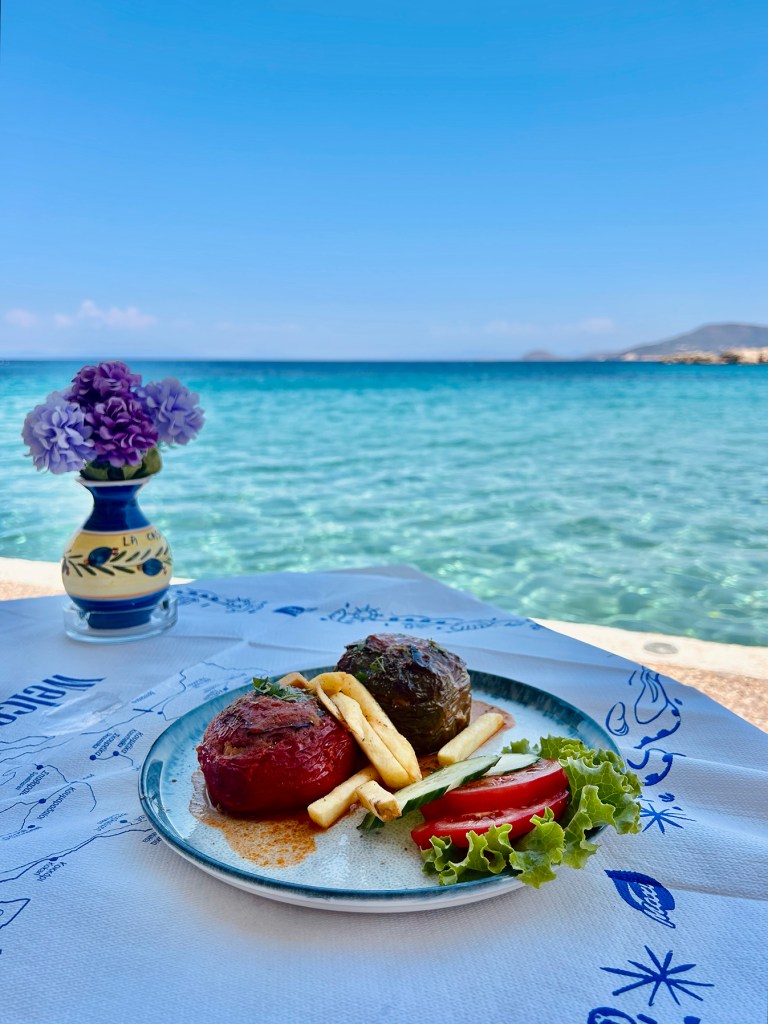
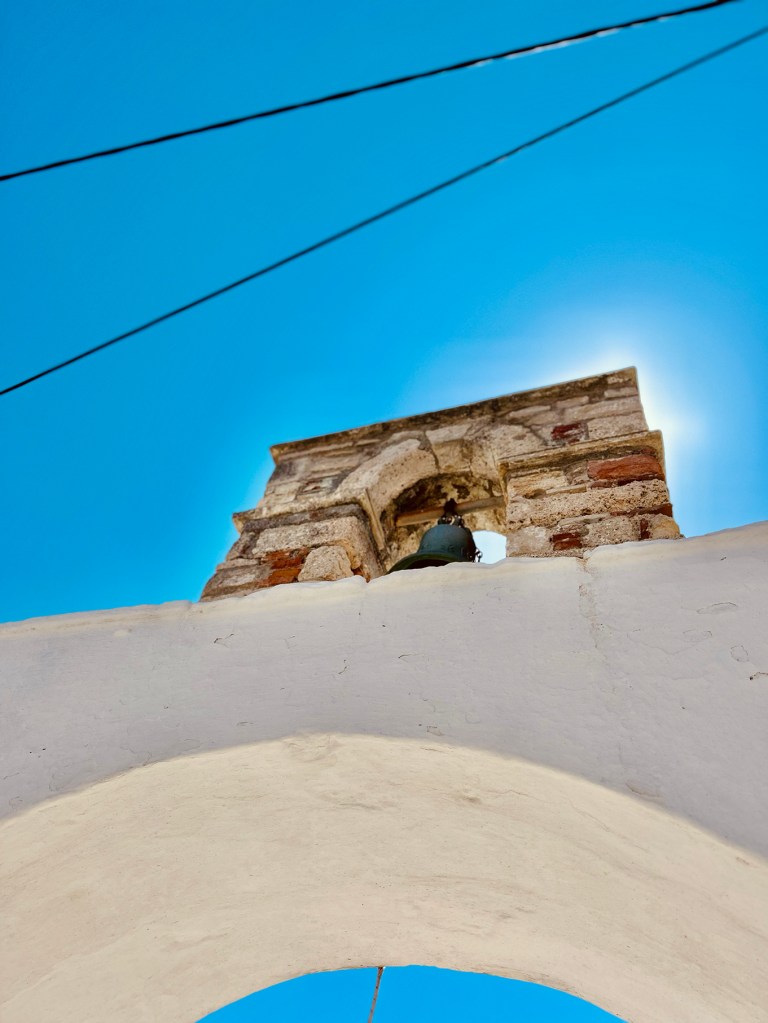
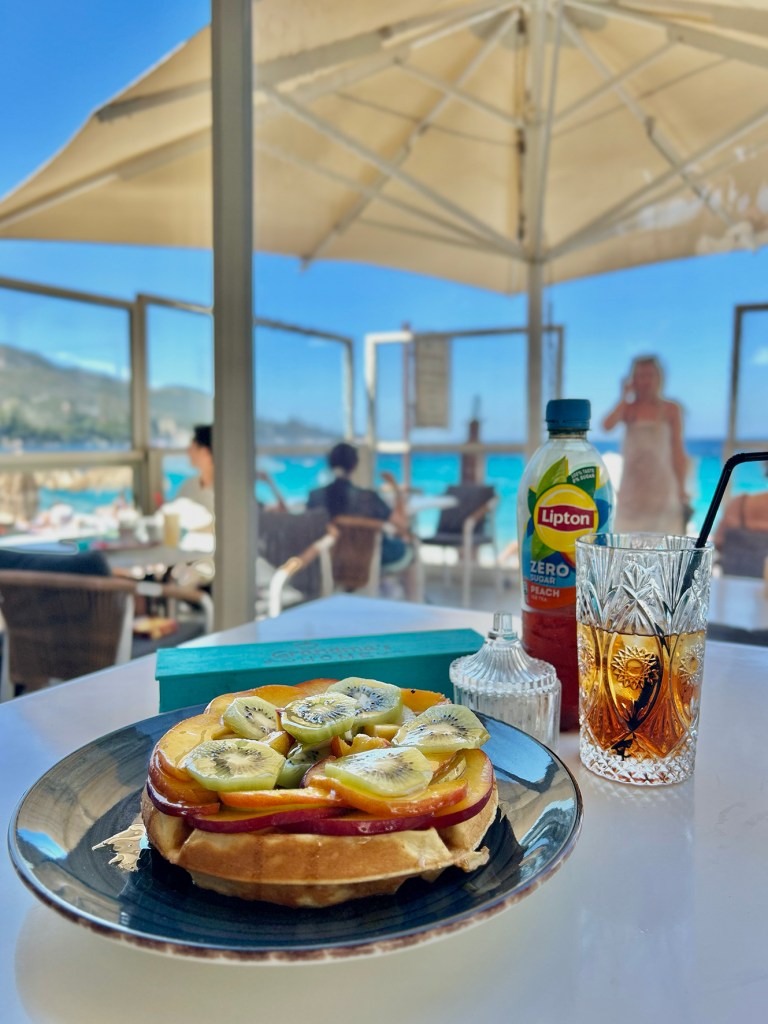
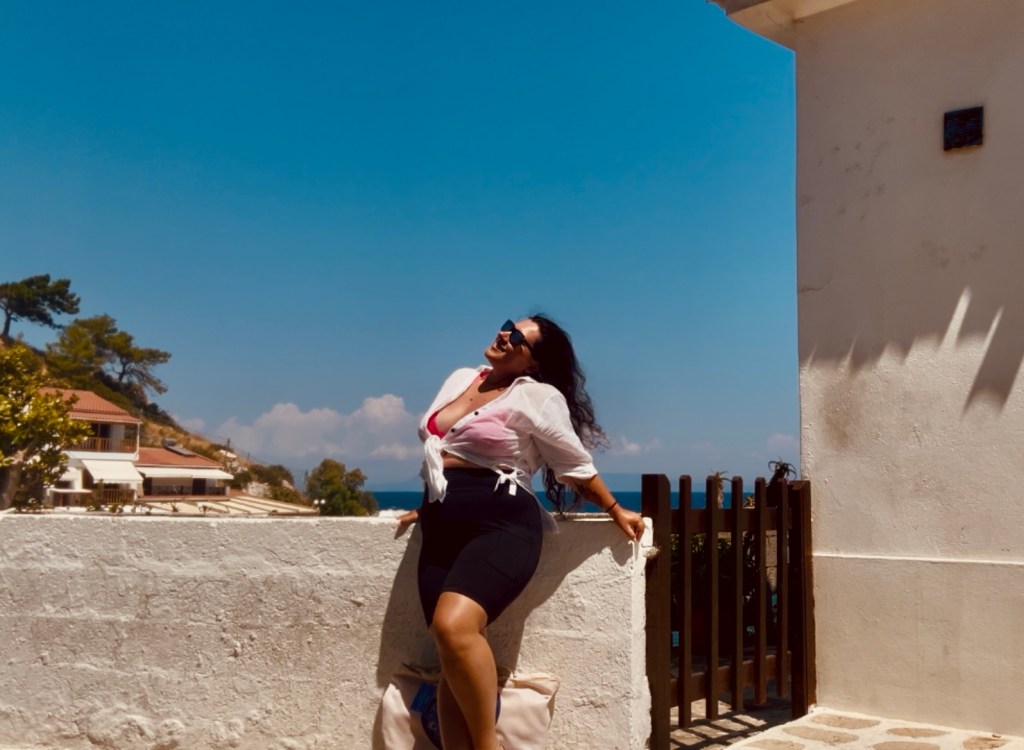
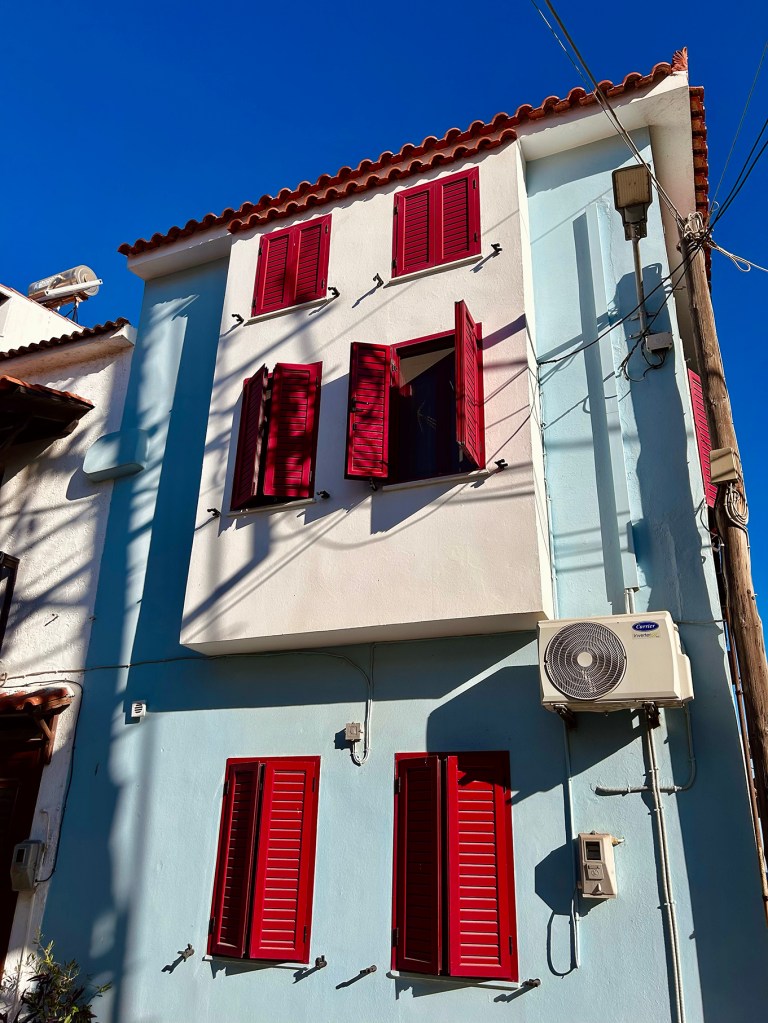
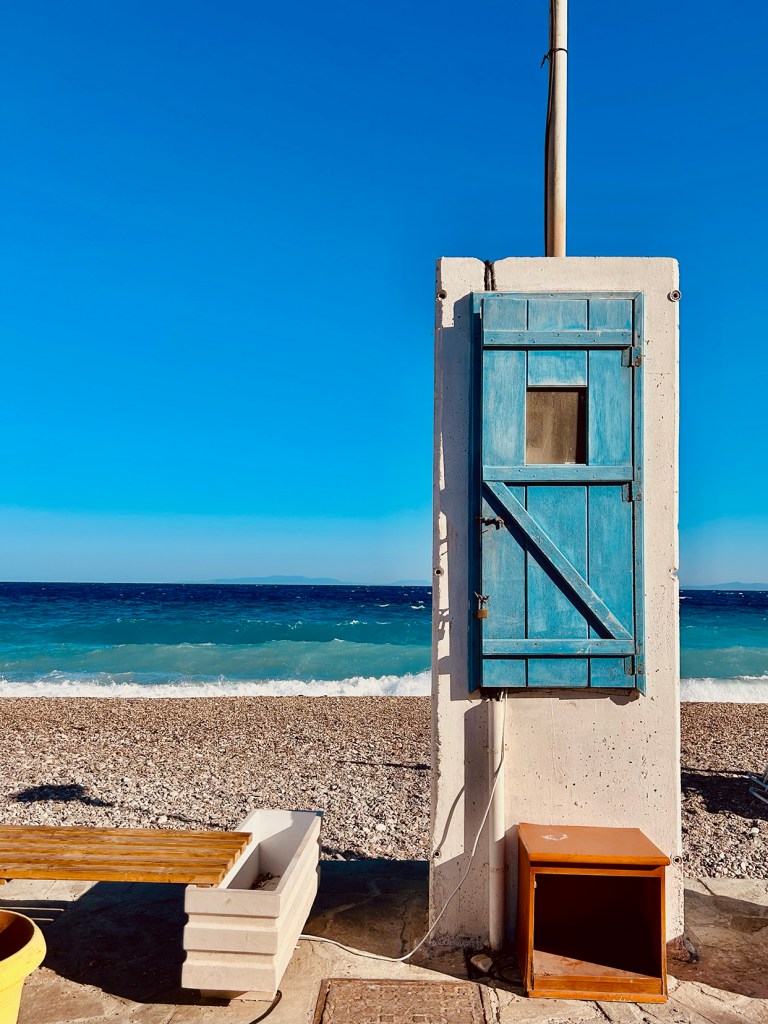
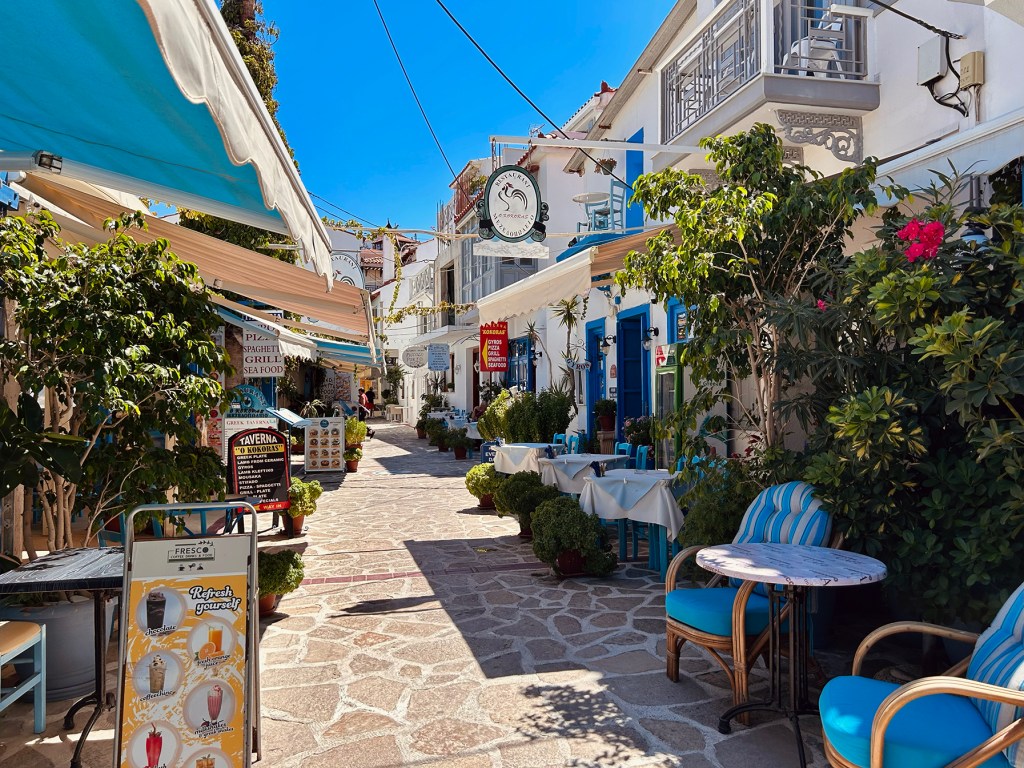
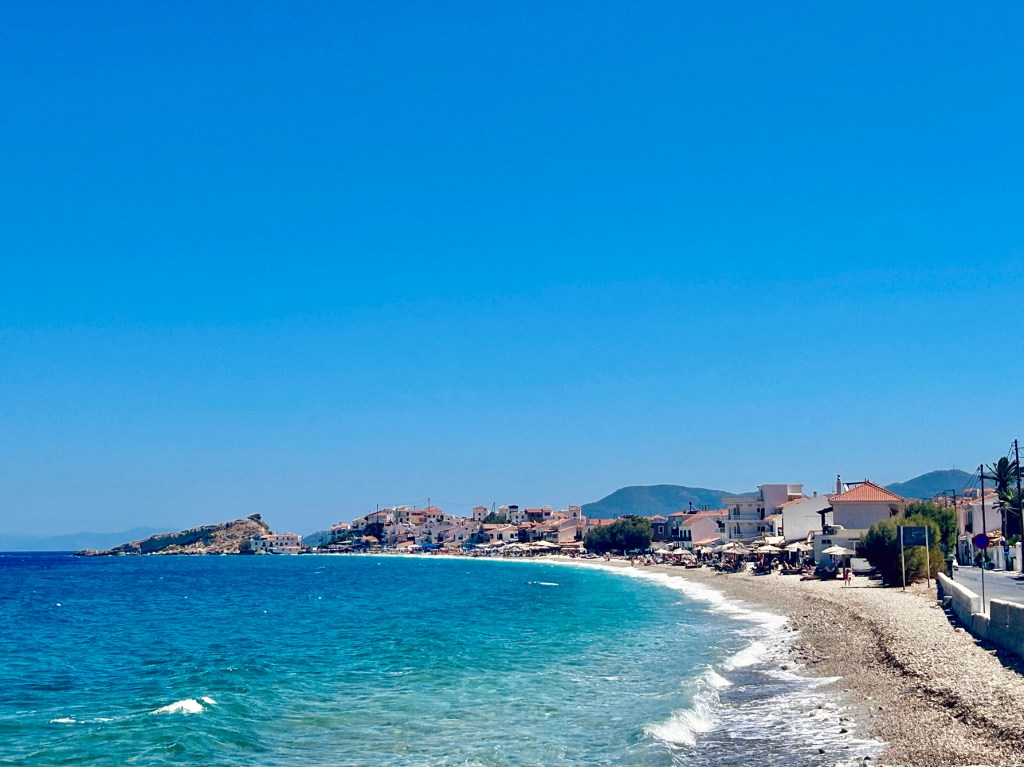
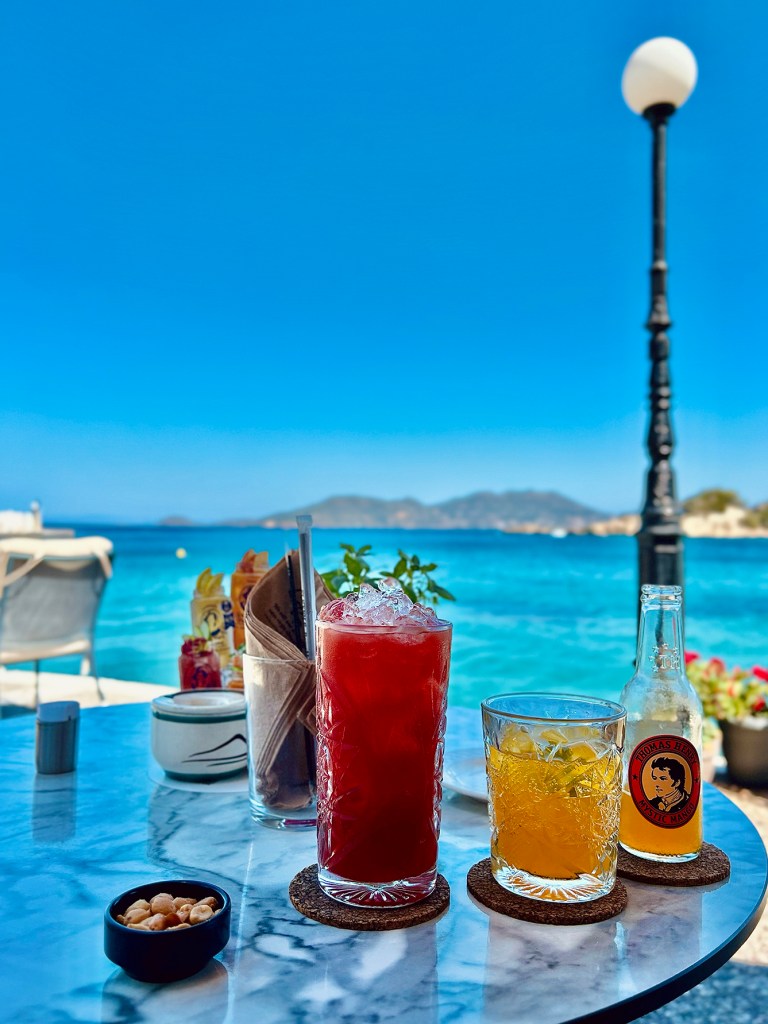
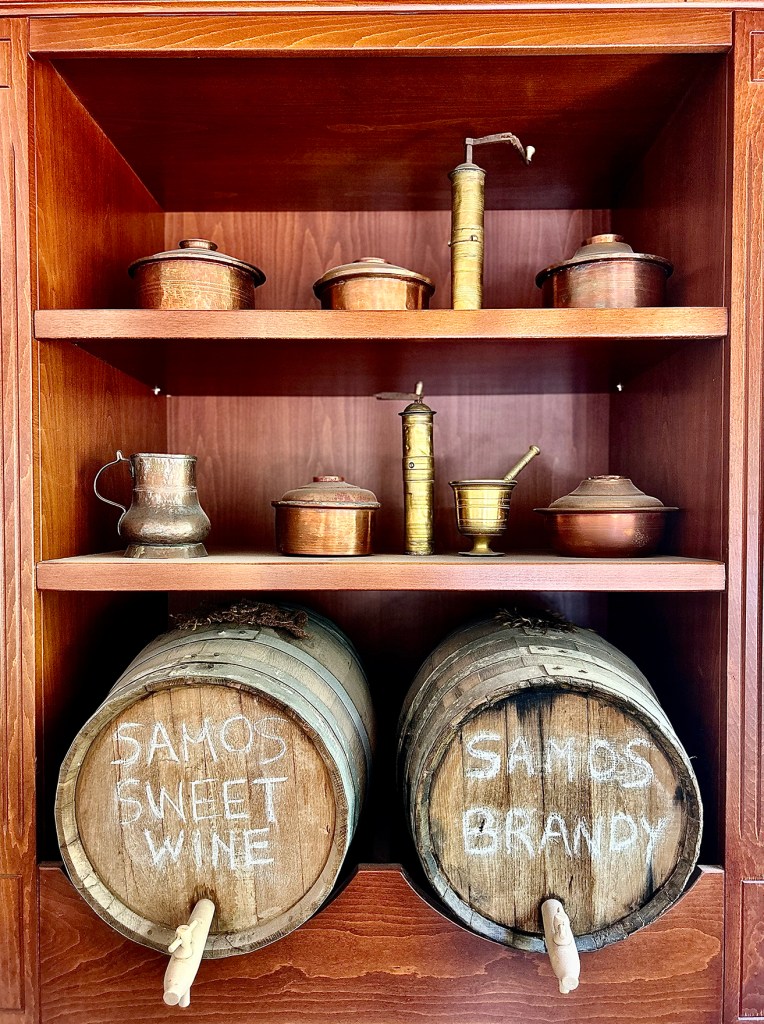
I ended up visting Kokkari more than once, because it isn’t about rushing through a checklist, it’s about slowing down and enjoying the rhythm of Greek island life. Swim, eat and drink, wander, repeat. By the time you leave, you’ll definitely understand why so many people fall in love with this little village.
How to move around the island
Samos is not the largest Greek island, but its landscape makes it challenging at times. There are hills, mountains, rocky beaches and shady forests that require proper walking shoes, a relatively good physical condition and the will and patience to explore. A lot of areas are walkable, while some work better by car or bus. Luckily, the infrastructure allows you to move around conveniently and the larger towns are a great base for traveling around the whole island. As I discovered, there are even bits of pavement along some country roads, which is very rare in Greece.
If you’ve got a driver’s license and want to go on your own, it’s easy to rent a car, a truck or various types of scooters and motorcycles. Even boats are available to rent. You will know the rentals from local cars, they’re usually white and as some new friends I made there told me, the prices were reasonable and the service friendly. It’s advisable to not get the tiniest Kia or Suzuki if you wish to explore terrain around the mountains. Pythagorio has free parking and generally I observed that it’s relatively easy to find parking spots. However, that can shift depending on when during the season you’re there, how many people show up with a larger ferry, or if there’s a holiday or festival. Also, many streets and roads are narrow and in some areas of the towns it’s one-way only, which can make it a bit trickier behind the wheel.
If you’re like me and want to save money on transportation, you use the local buses. All over Greece, the various regions each have their own KTEL bus companies and Samos is no exception. These are not like town buses around Europe, but rather large tourist buses, most probably older ones that have been purchased by the companies but are still in decent shape and can manage the roads. They also allow luggage on these rides, which you can store in the luggage compartments on the sides. They’ve got AC and eating on board is not allowed, so even if they’re a bit run down, they’re pretty clean.
The trouble with these is that their timetables are sometimes difficult to understand, there’s usually no detailed or in any way interactive map or proper information on how to travel, and services can be scarce, especially on the weekends. Some of the smaller shuttles are only seasonal and you have to find out which and how and when. KTEL Samos does have a website, but it’s not particularly helpful. I can’t tell you how much I wanted to get in touch with them and discuss improvements on the whole concept.
The buses run from Monday to Saturday, with more limited hours on Saturday, and you can usually travel from around 6:00–07:00 to 17:30, depending on where you’re headed. The timetable shows two main columns: the buses going TO Vathy from other towns and villages, and the buses going FROM Vathy to other towns and villages. So if you need to get to a place somewhere in between, you have to figure out an approximate time based on the hours specified in those columns, or ask the driver, or ask a local, or ask another confused tourist. You also have to figure out which particular line to use if you need to visit a specific insignificant stop, because the timetable doesn’t tell you that.
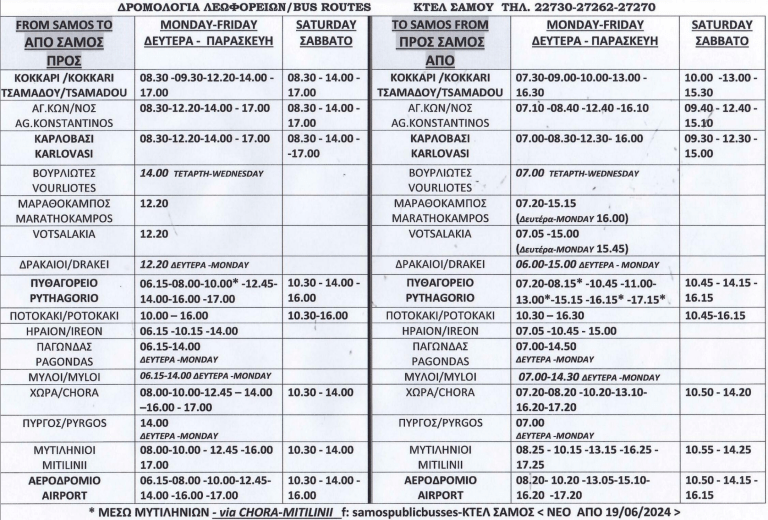
For me it was easy to hop on the 7:20 bus from Pythagorio to Vathy and then take the 8:30 from Vathy to Kokkari or Karlovasi. The smaller mountain villages would have been more of a challenge, with other switches and more relative hours. The bus stops have a sign and that’s about it. You’re usually standing in the middle of the road when you wait for the bus.
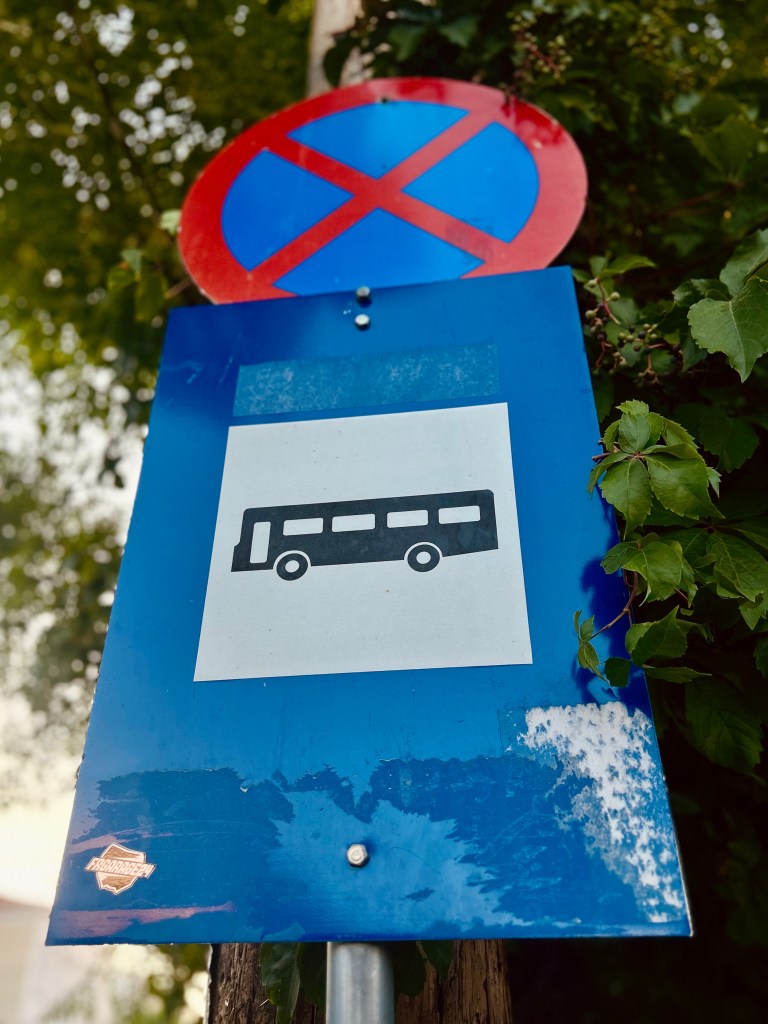
If you’re lucky, you might get a bus shelter with some posters for local festivals, and there are quite a few unofficial stops depending on where the locals need to get on or off. The buses are sometimes late, so during my first trips I was wondering whether I’d misinterpreted the timetable or missed my ride altogether. The good news is that they do communicate with each other and usually wait for all arrivals in Vathy. If you look carefully at the timetable, it’s made so that you can get a decent connection from Vathy.
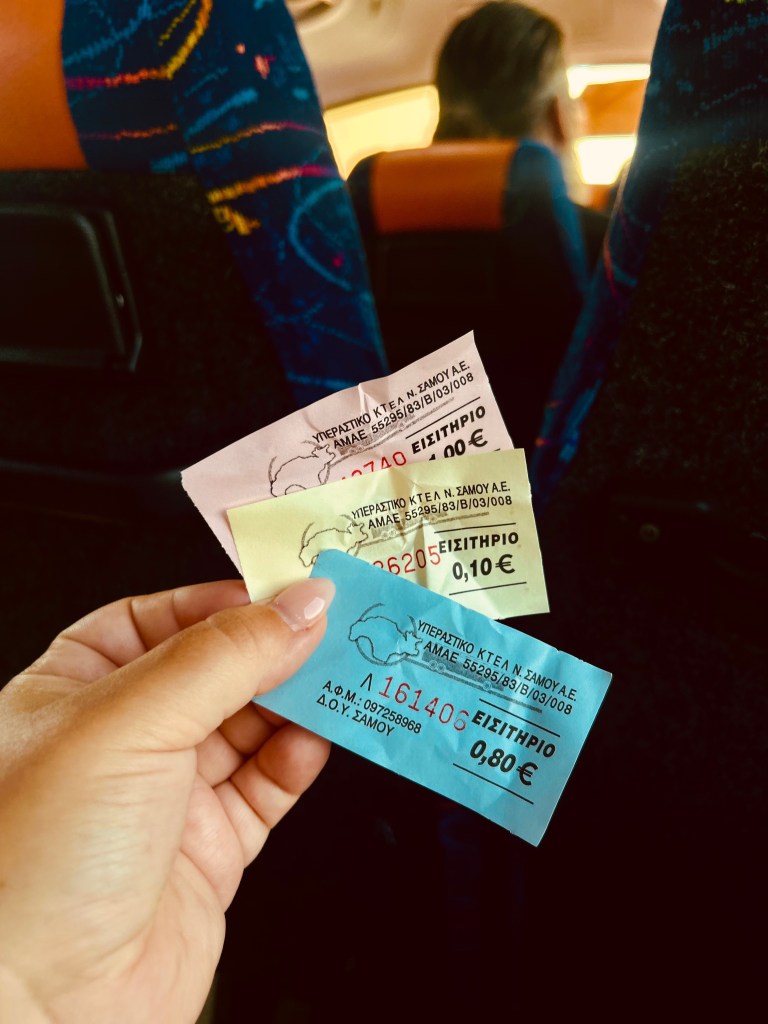
Tickets are purchased on the bus and payment is made in cash only. This part also adds to some delays, on the ones where the driver himself collects the money and hands out the tickets. The advantage really is that it’s cheaper than renting a car or going by taxi. One ticket from Pythagorio to Vathy will cost you 1,90 euros. The fees are based on distance, so from Vathy to Karlovasi – a longer trip – it’s 4,10 euros. If you show up with a bill of 50 euros for just one ticket, you will get the evil eye.
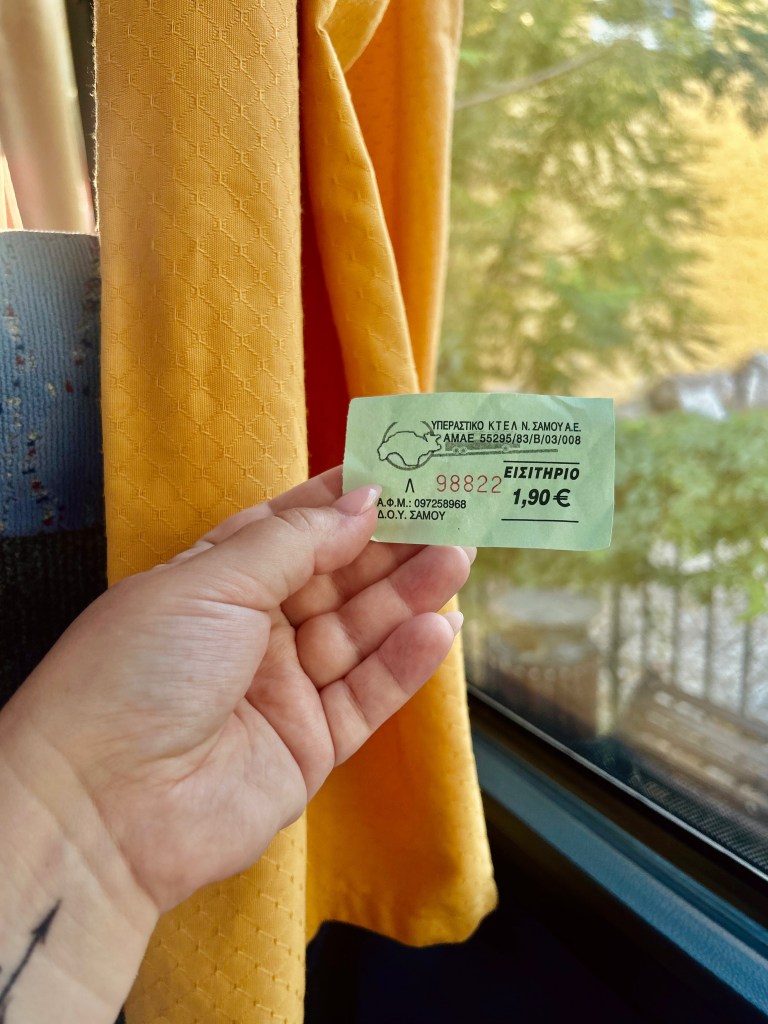
Some of the drivers are very friendly, others look at you as if you’re from another planet, and it’s more often than not that the ticket person is the wife or child or neighbour or friend of the driver. So it’s very much a local business. But after a few trips you get the hang of it and they warm up to you. You know you’ve been accepted when they make their little jokes and let you in on the fun as well. And most importantly, you know you’re getting on the right bus when you recognise the driver and the ticket lady, as most of them don’t always bother to put up the sign of where they’re going. Some did have a sign at the front, but they’d never adjust it for the trip back. You just know who the 5 o’clock is.
If you don’t want to head back to your village as early as 17:00, you can always get a taxi. As the roads are narrow and often pass through the mountains or along the coast, the journeys take more than one would expect, so it’s not the cheapest way to travel. But each town has its own taxi rank that you can easily find, rates are fixed and the service seems to be very reliable. In Pythagorio for example, I noticed that all taxis were silver cars, their license plates always started with the letters TAZ, the gentleman in charge of the booth is very efficient and friendly and the cars all line up in a very civilised manner on the right side of the main street. There was always action at the taxi rank, busy busy.
Day trips, activities and excursions
In Samos, there are lots of activities to choose from, depending on how much time and money you want to spend. There are things for people who prefer a slower pace as well as things for more active travellers. Two of the main agencies are called Regina Travel and Rhenia Tours and they offer similar experiences, especially since the boats, buses and guides are local and everybody knows everybody. I had booked my trip to Ephesus through Apollo, who in turn chose the services of Rhenia Tours. Another couple who was on the exact same tour with me had booked their tickets through Regina Travel.
Here’s what I did this time:
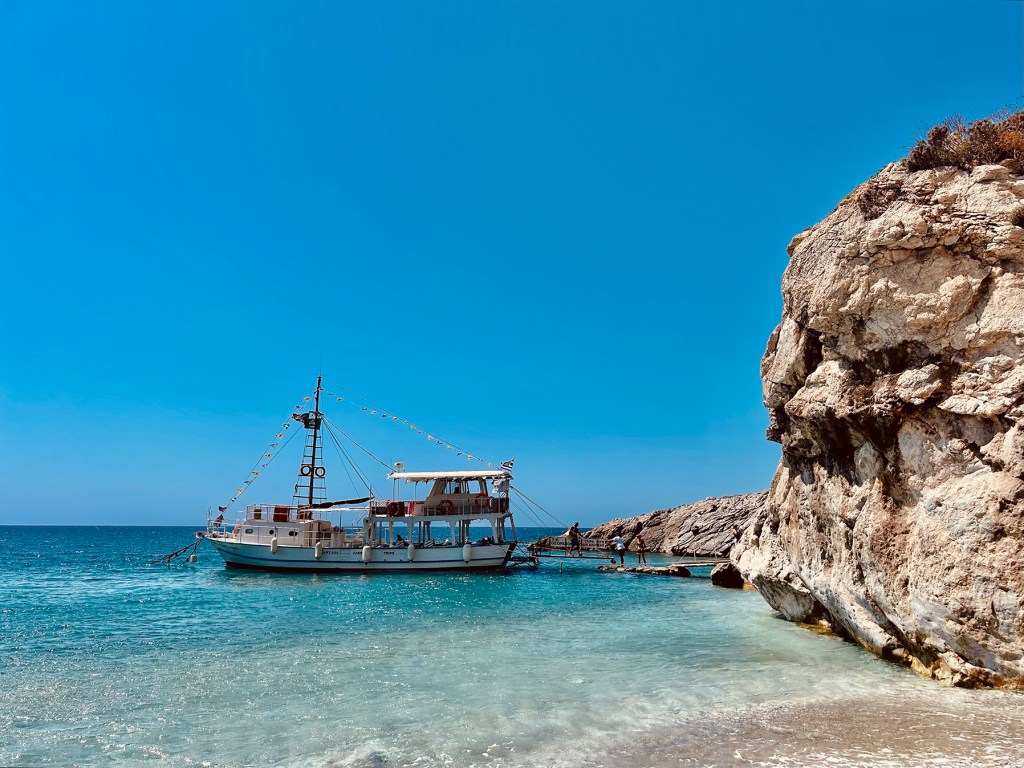
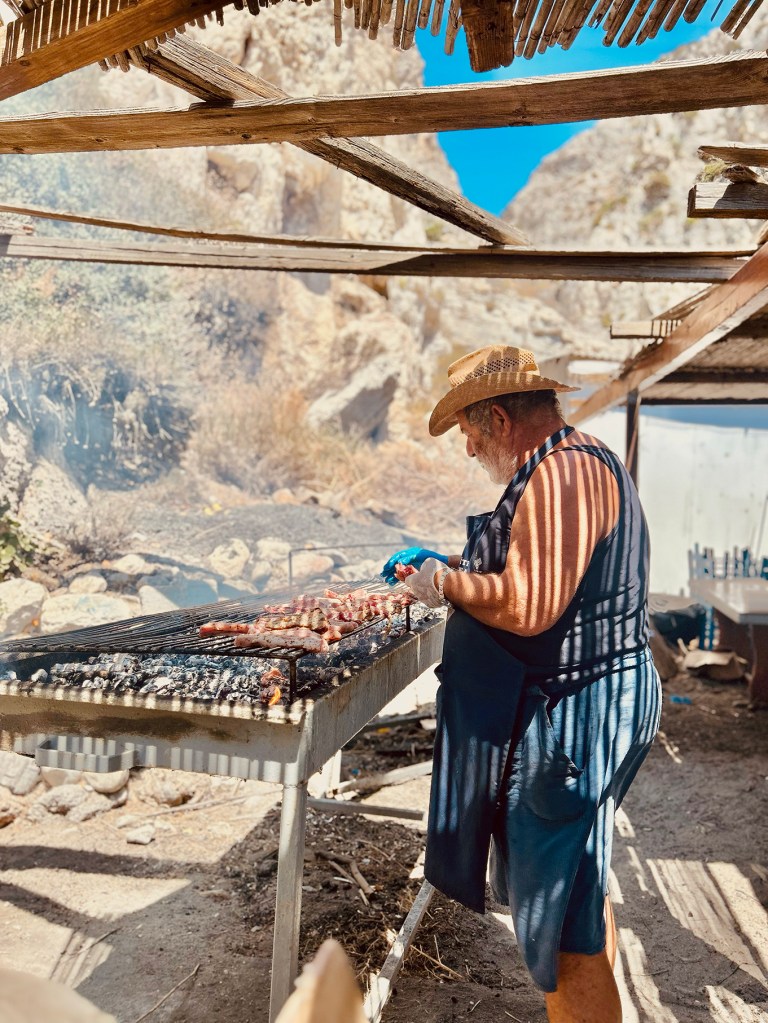
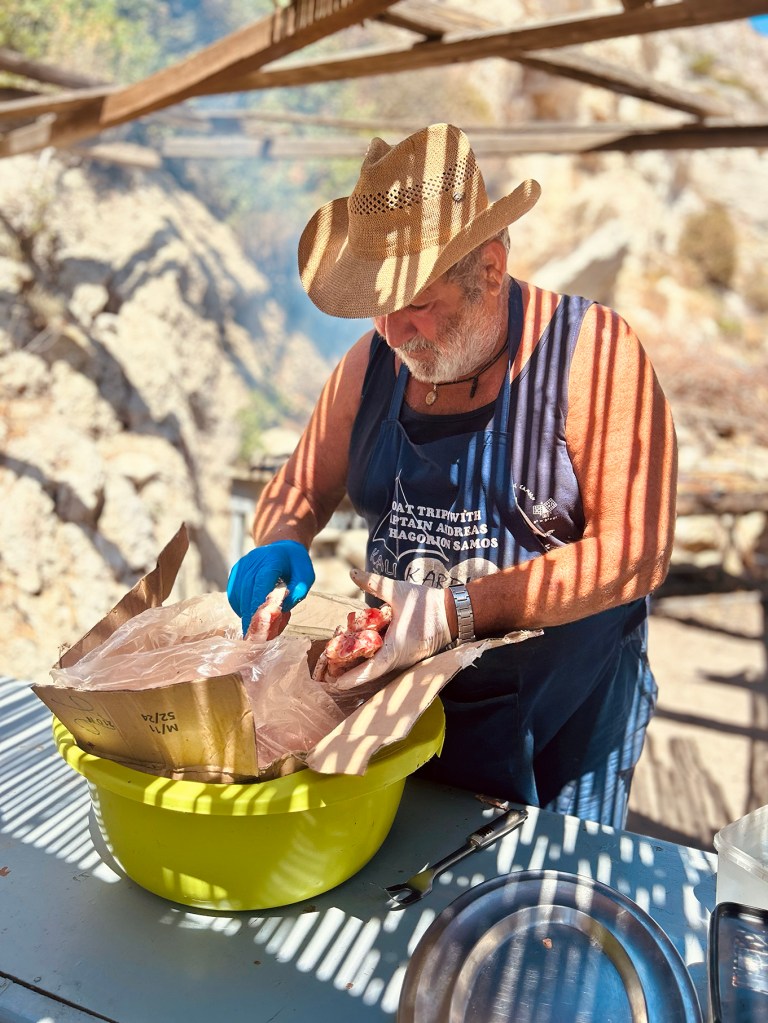
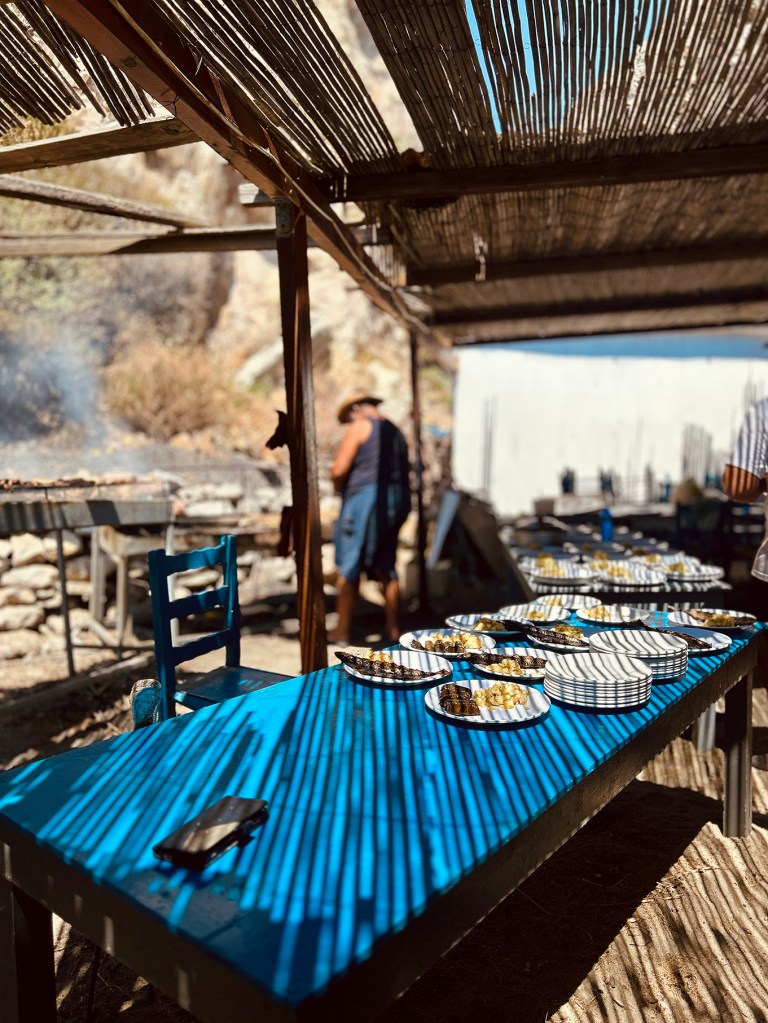
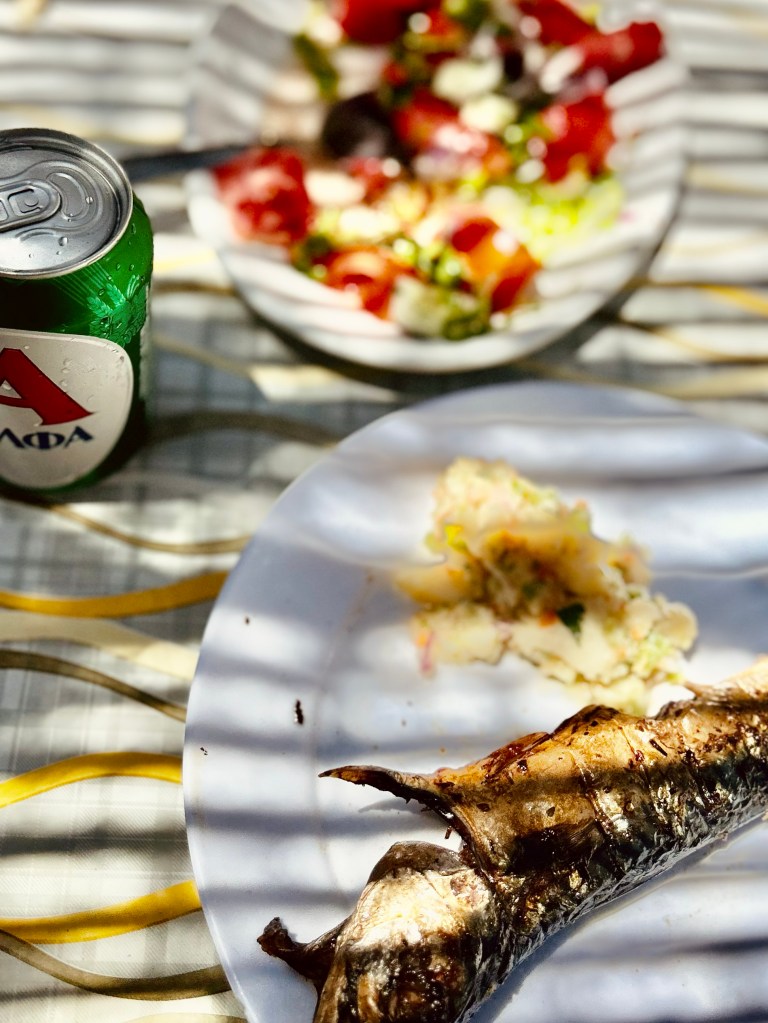
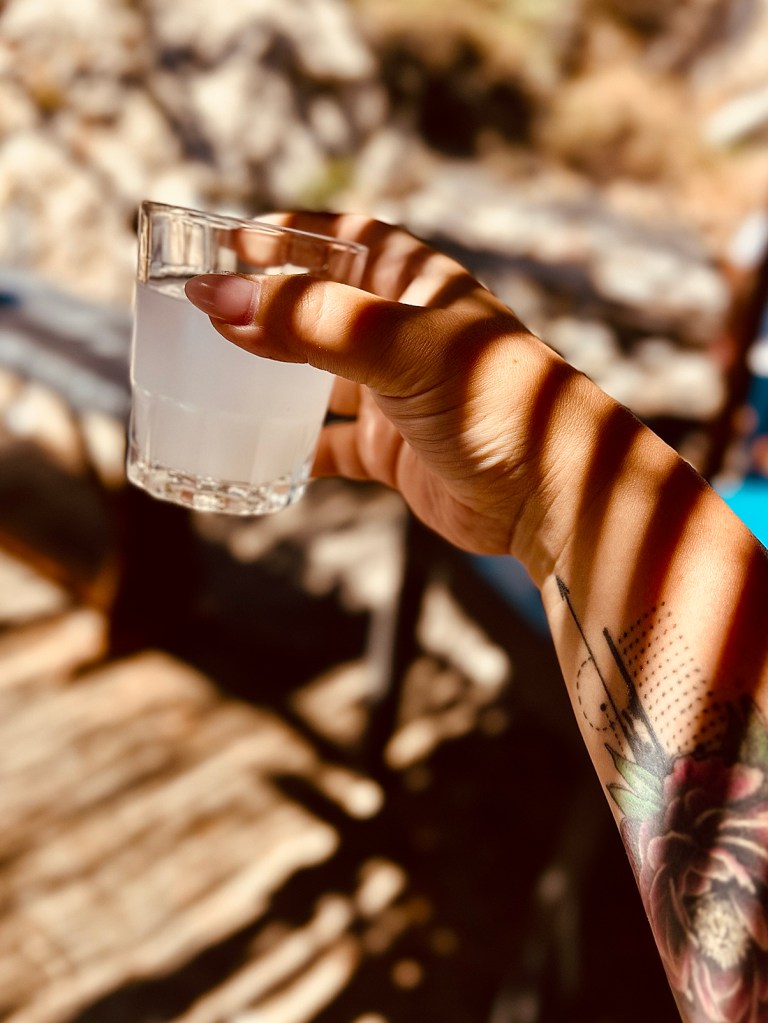
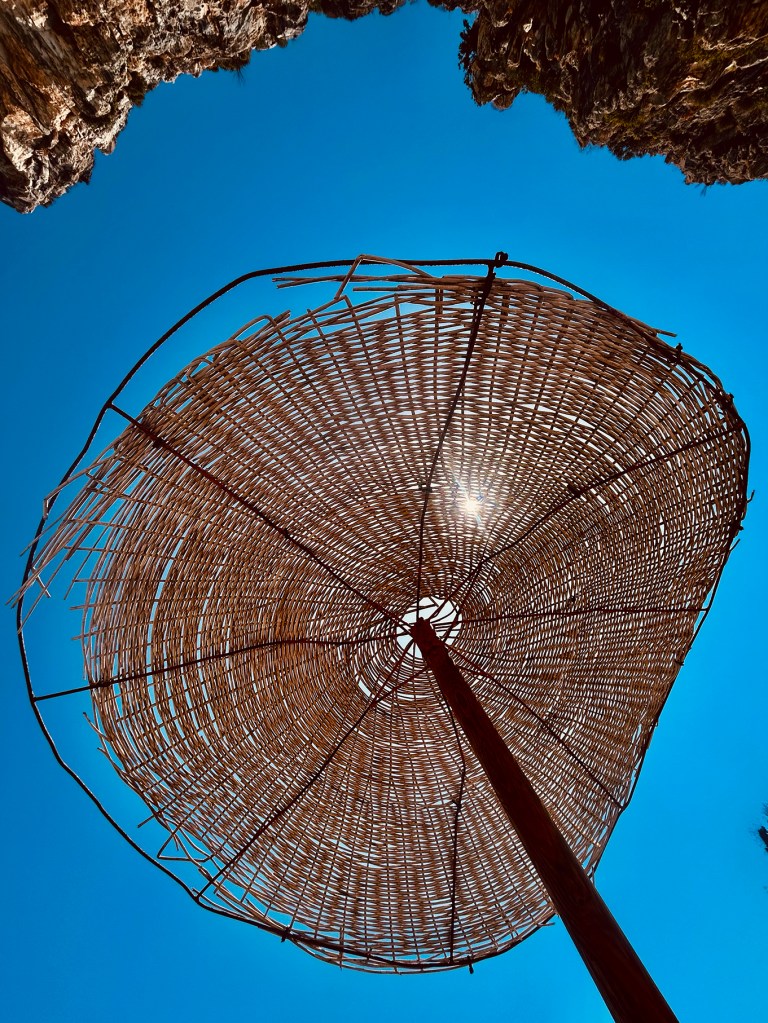
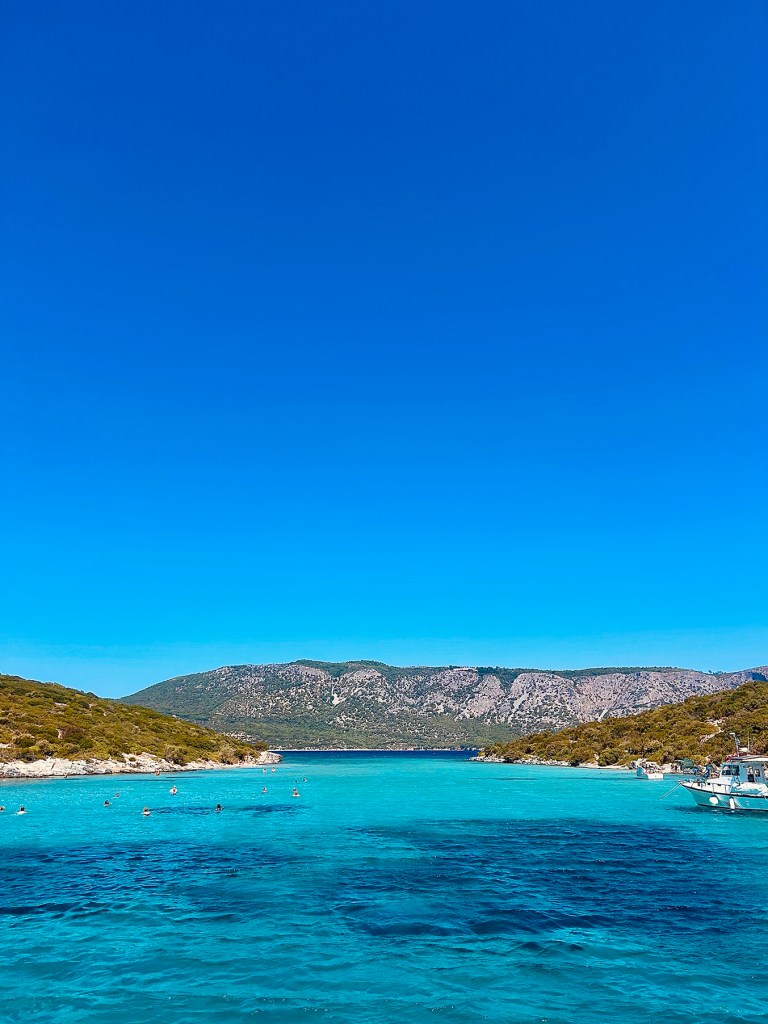
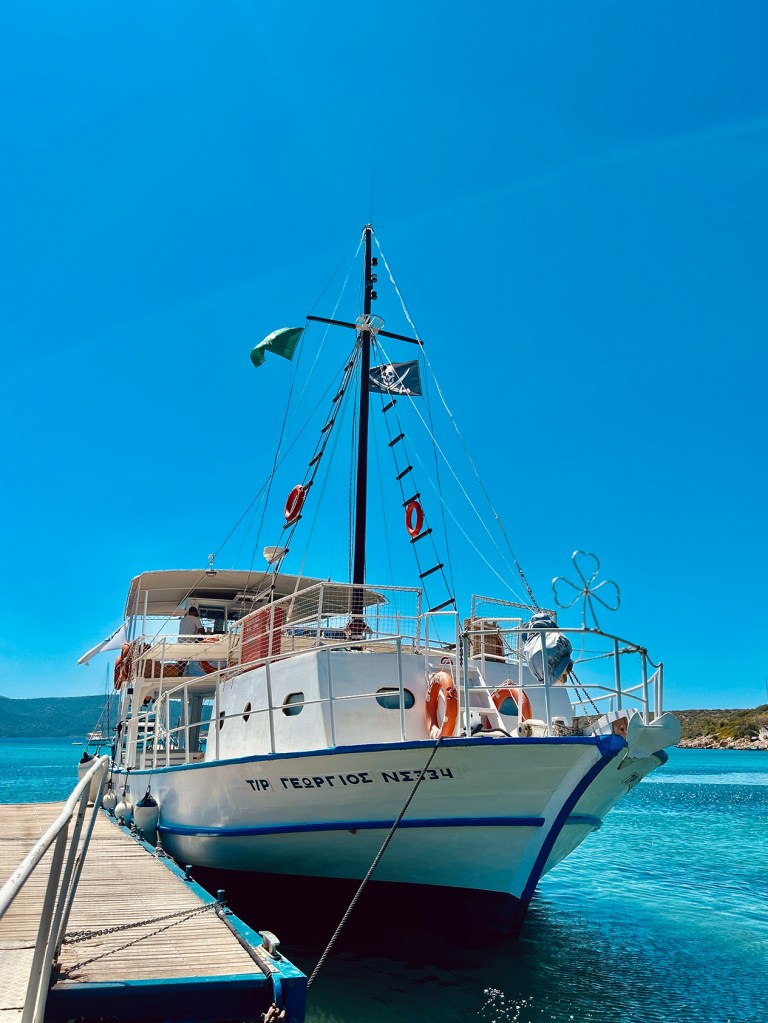
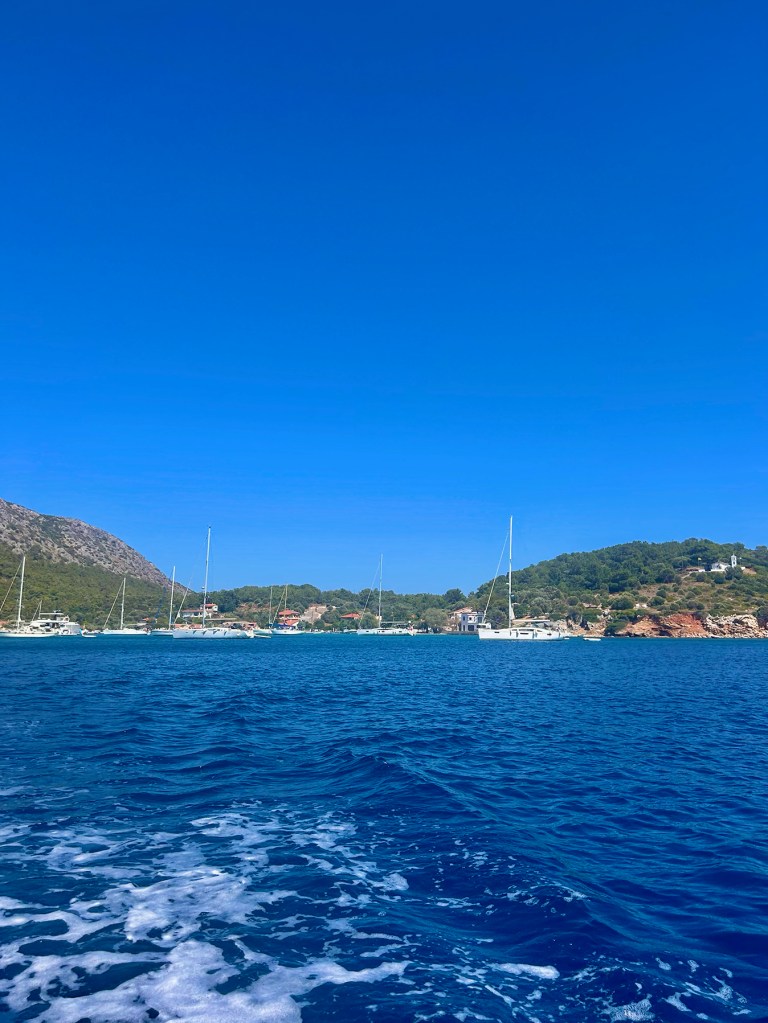
A day trip to the island of Samiopoula, with a BBQ lunch included, where you stop for a swim in the turquoise waters of the island, then head on to another beach where the captain prepares delicious food while you lounge in the sun or go for a swim.
There are two known captains who do this trip, Andreas and Jiannis, and their boats leave the port of Pythagorio sometime around 9 in the morning. The trip with Andreas can be booked directly next to the boat or through a travel agency, while Jiannis only seems to do direct booking.
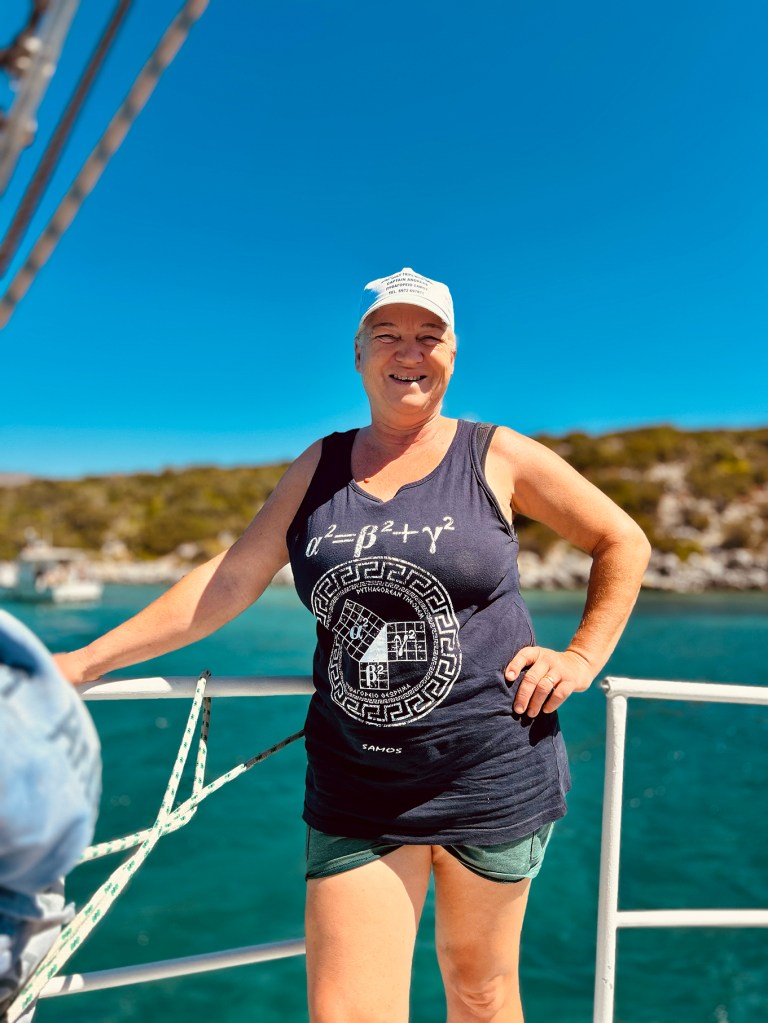
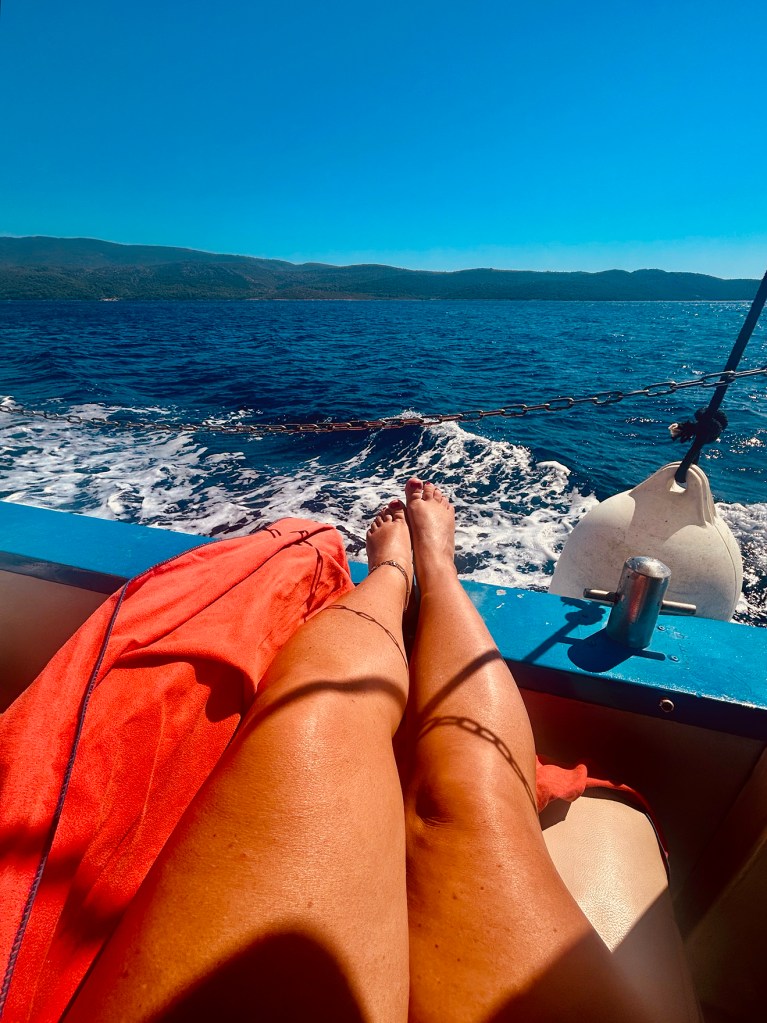
I did the trip with Captain Andreas and his wife Mira, who was a total powerhouse of a woman. It was great, lovely views, great swimming, fantastic food and a very convenient way to see more of the coastline.
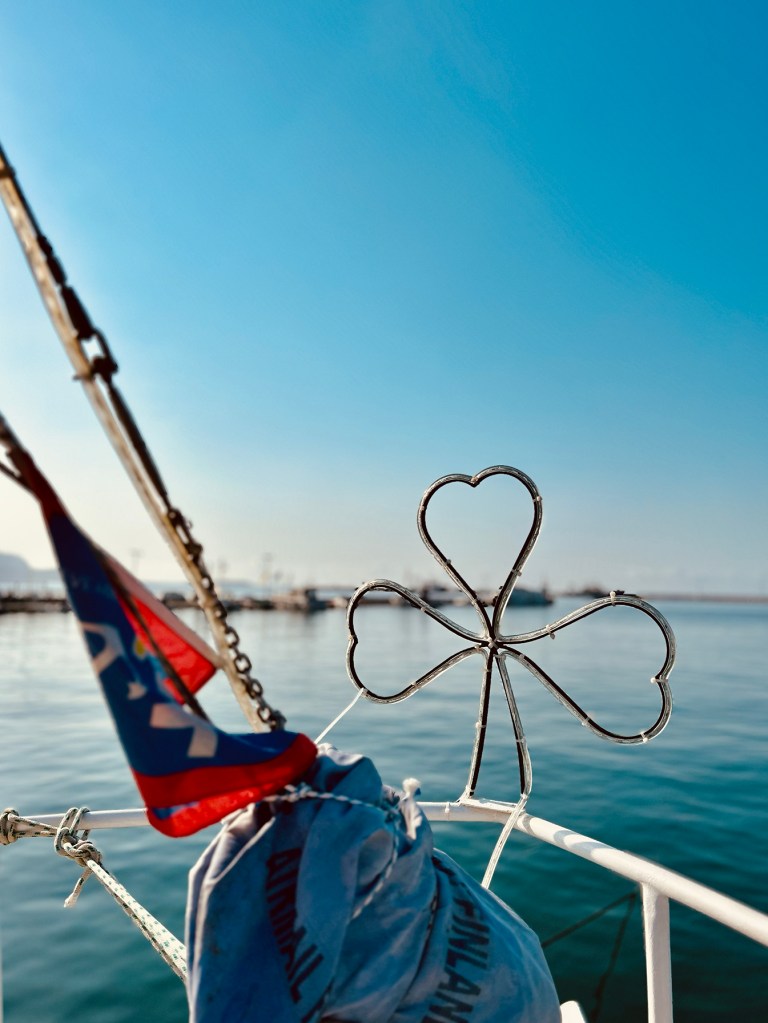
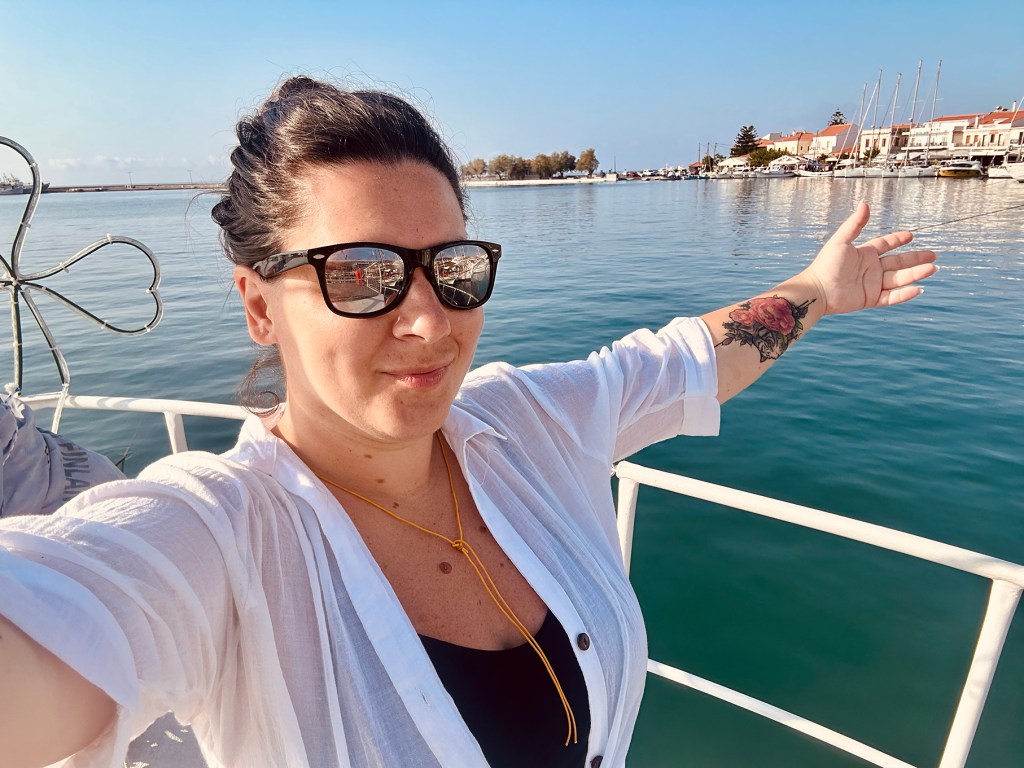
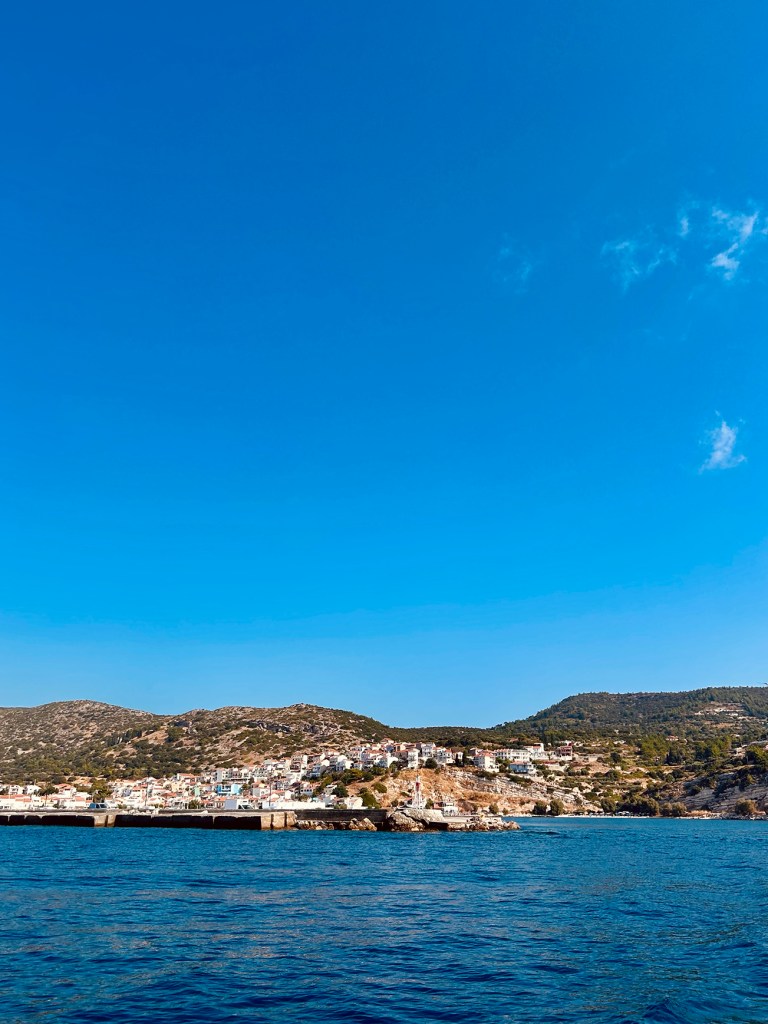

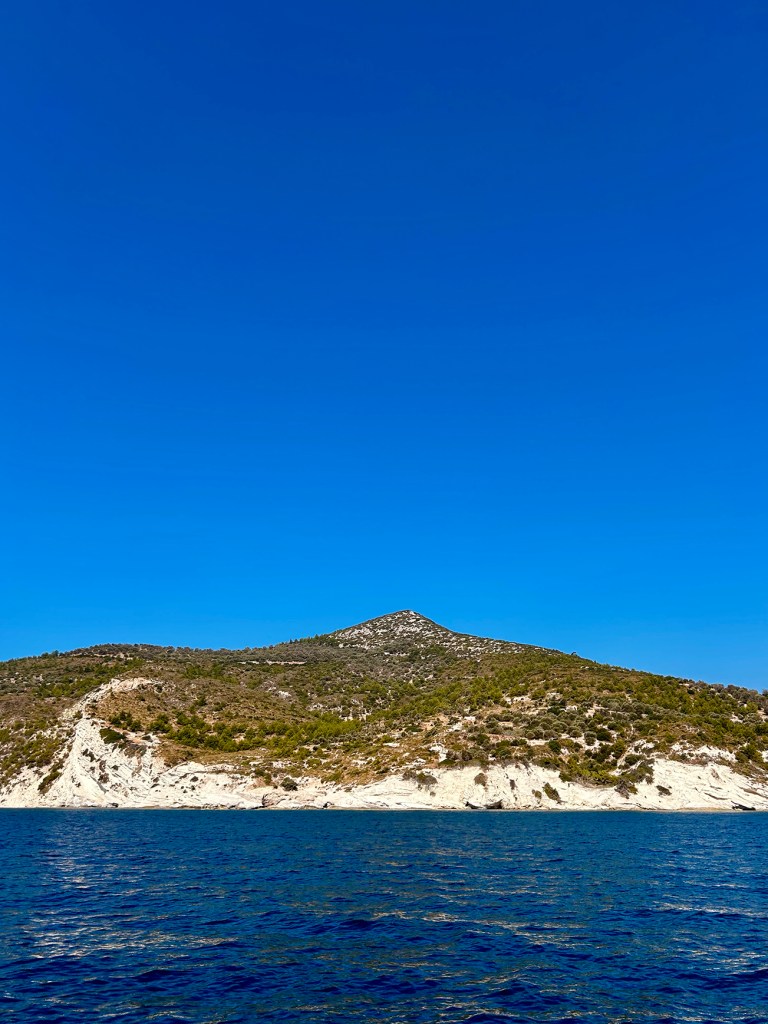
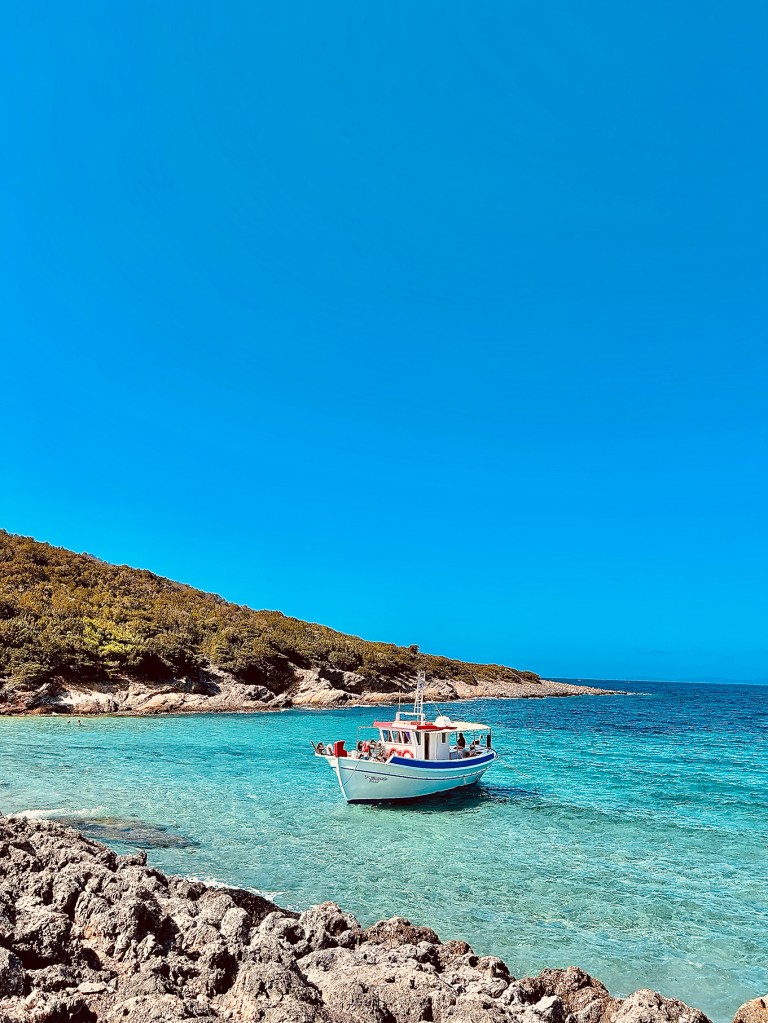

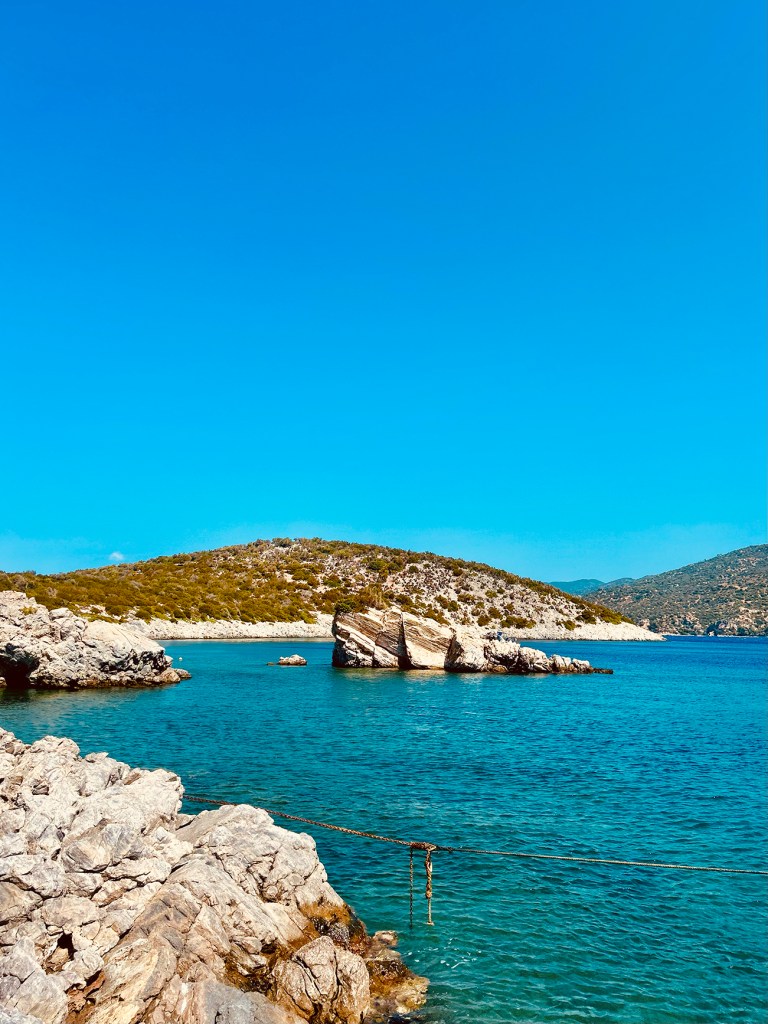
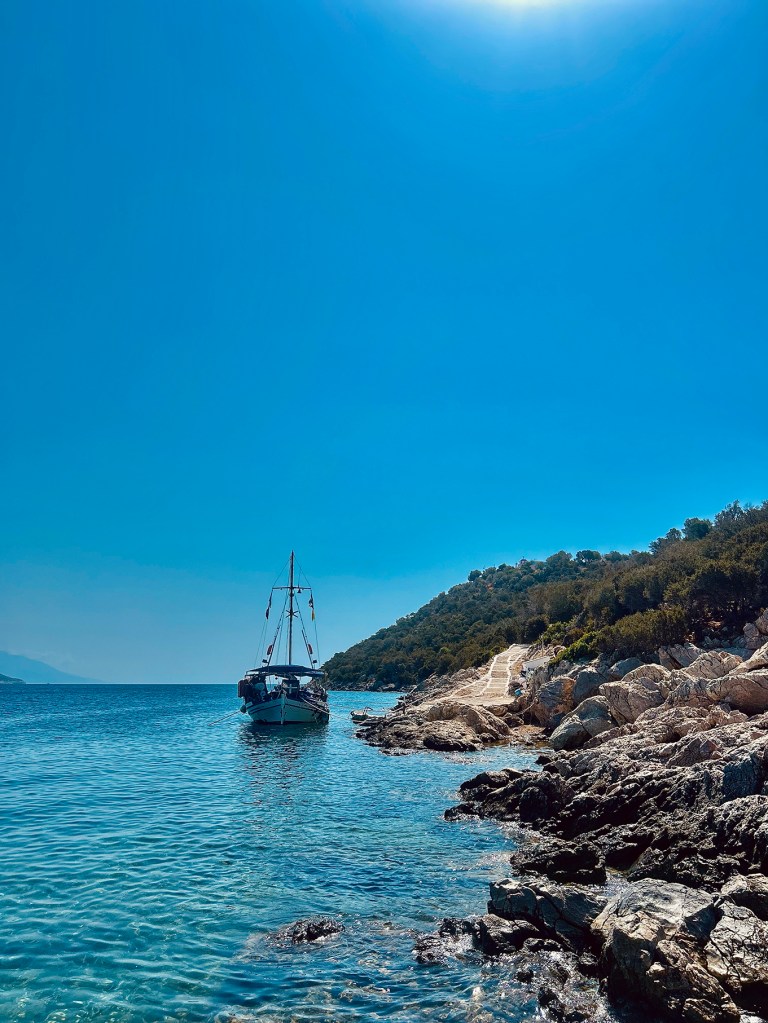
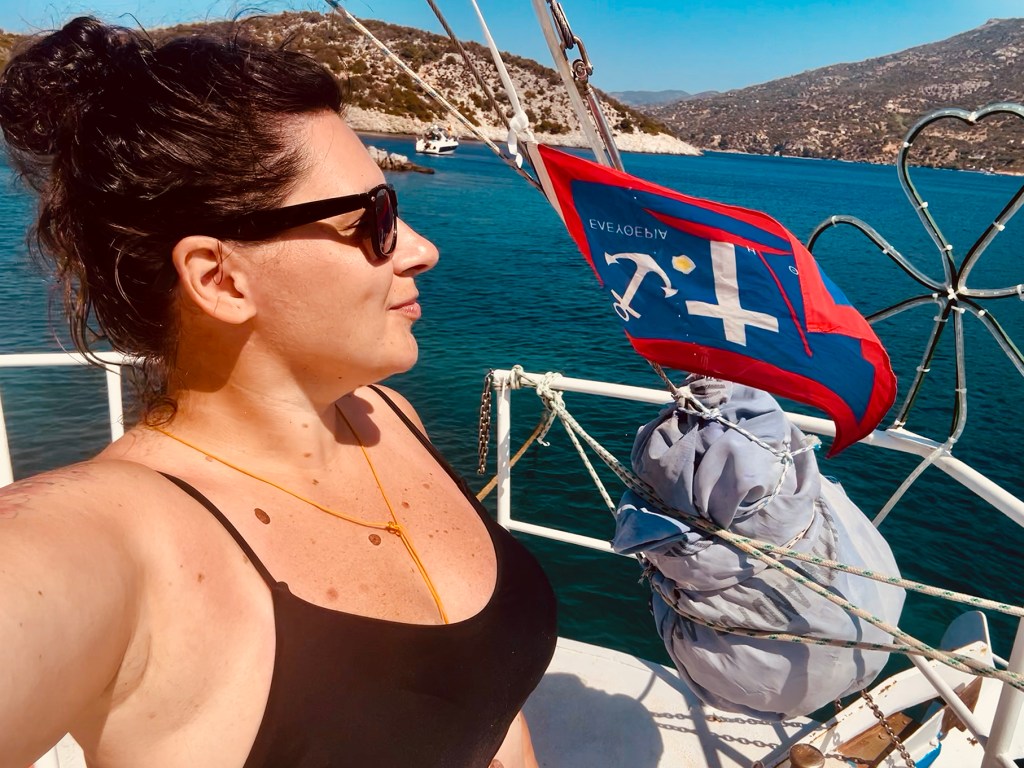
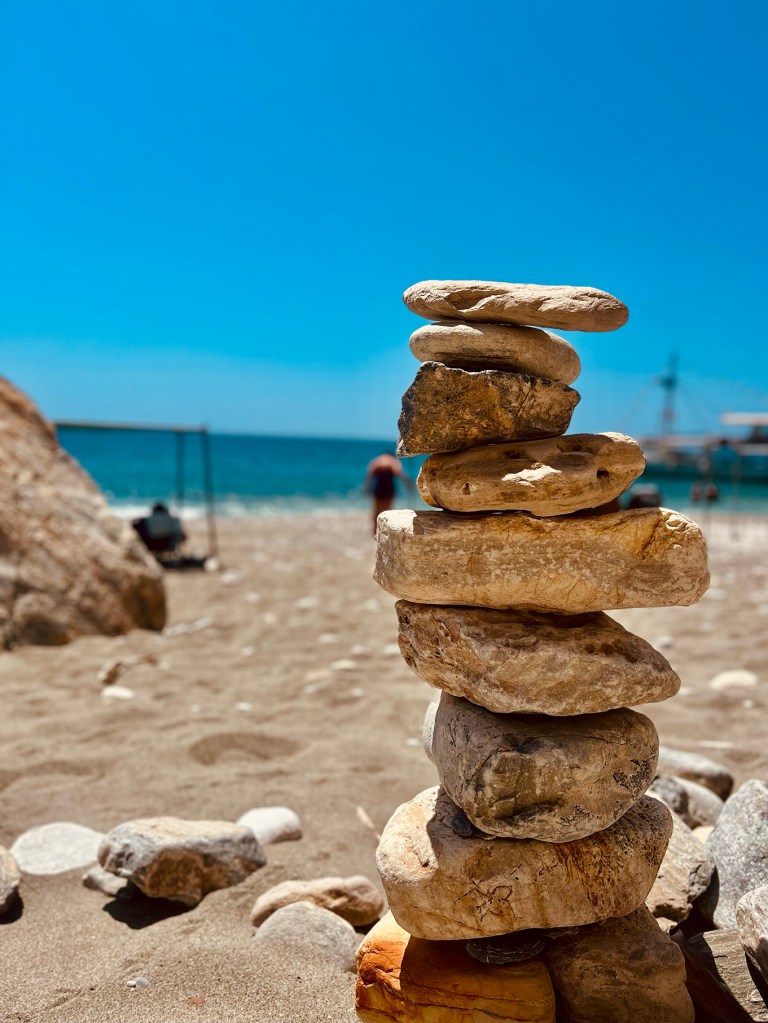
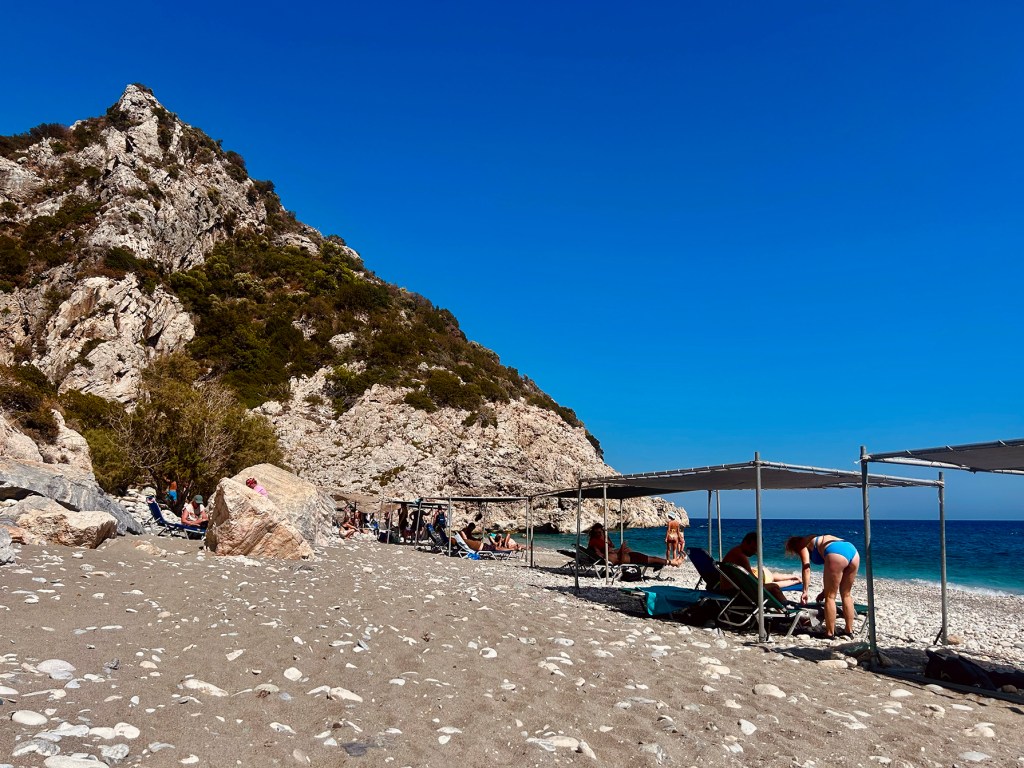
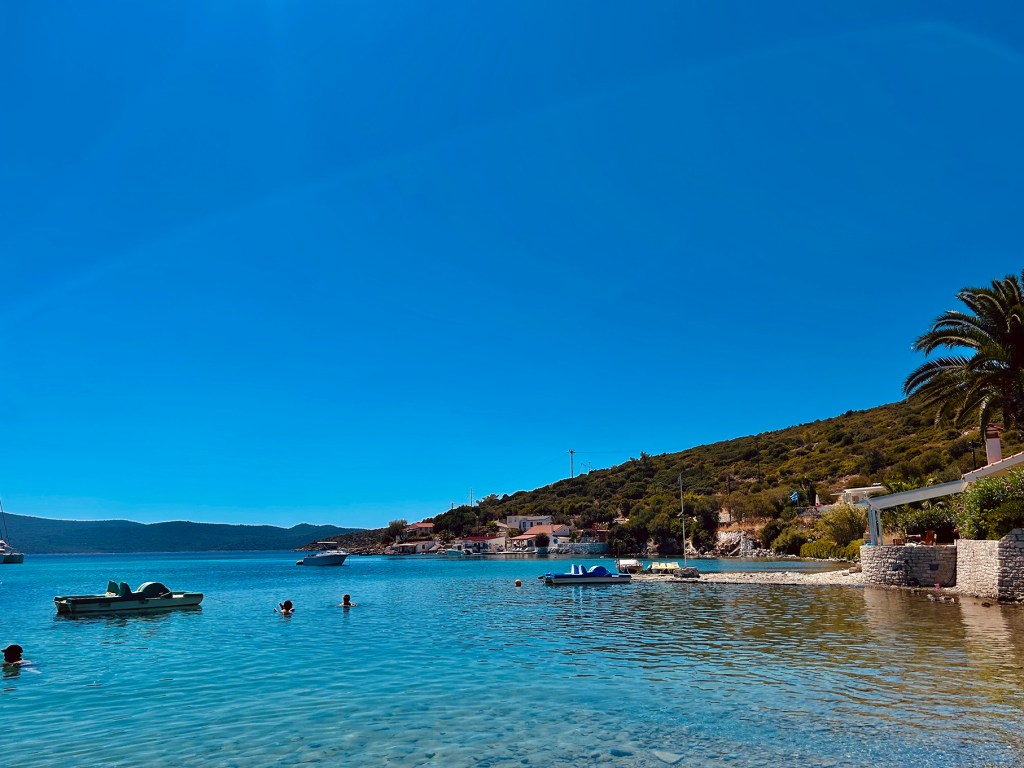
A day trip to the island of Kasonisi, where you can swim in the narrow and shallow strait between Samos and the small uninhabited island, then visit the small village of Poseidonio and have lunch at the taverna right on the beach. I did this with Andreas as well and had a great day out at sea.
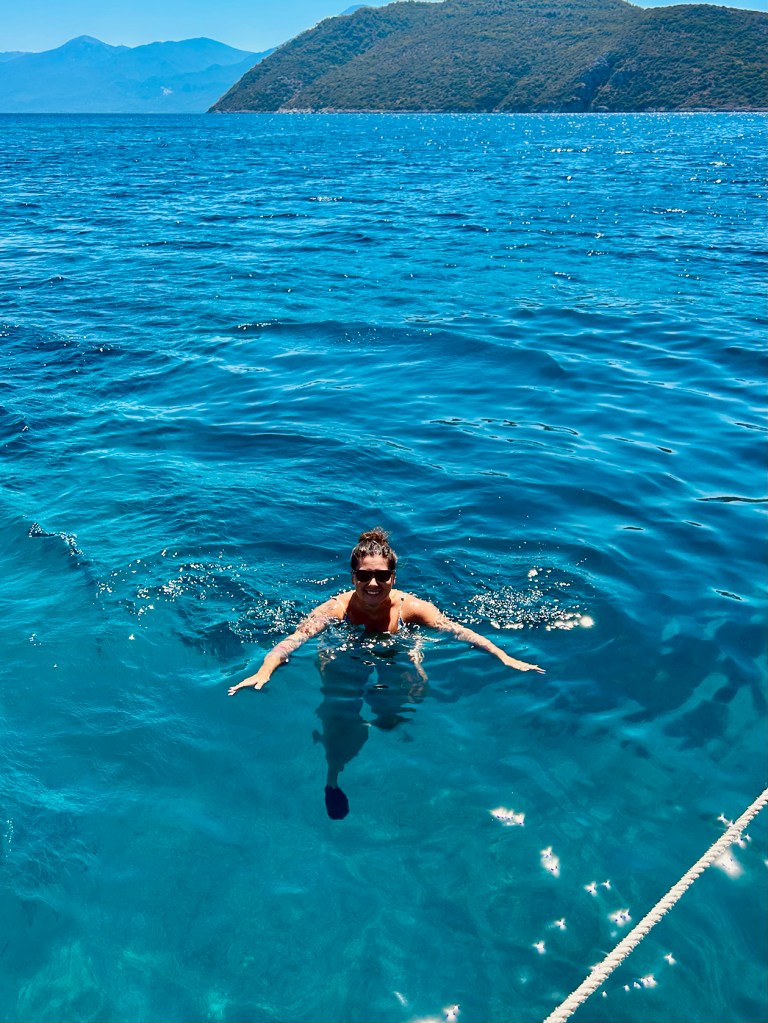
I’m a person who learned to swim relatively late in life, and the Mediterranean holds a very special place in my heart. My very first trip to the sea after becoming confident enough in my swimming was to Greece. That sense of freedom and fun that comes when you’re weightless in salty water is priceless to me. So whenever I get this opportunity, I enjoy it 1000% and I absolutely love it here where it’s clear, blue, turquoise, sparkly, salty and refreshing.
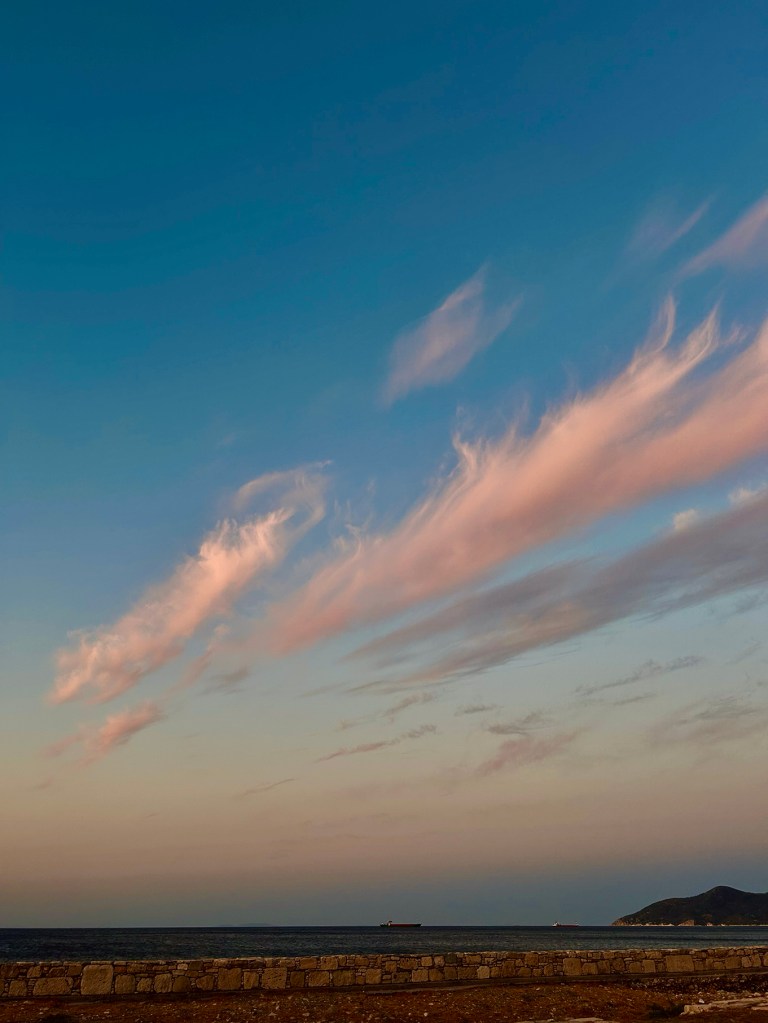
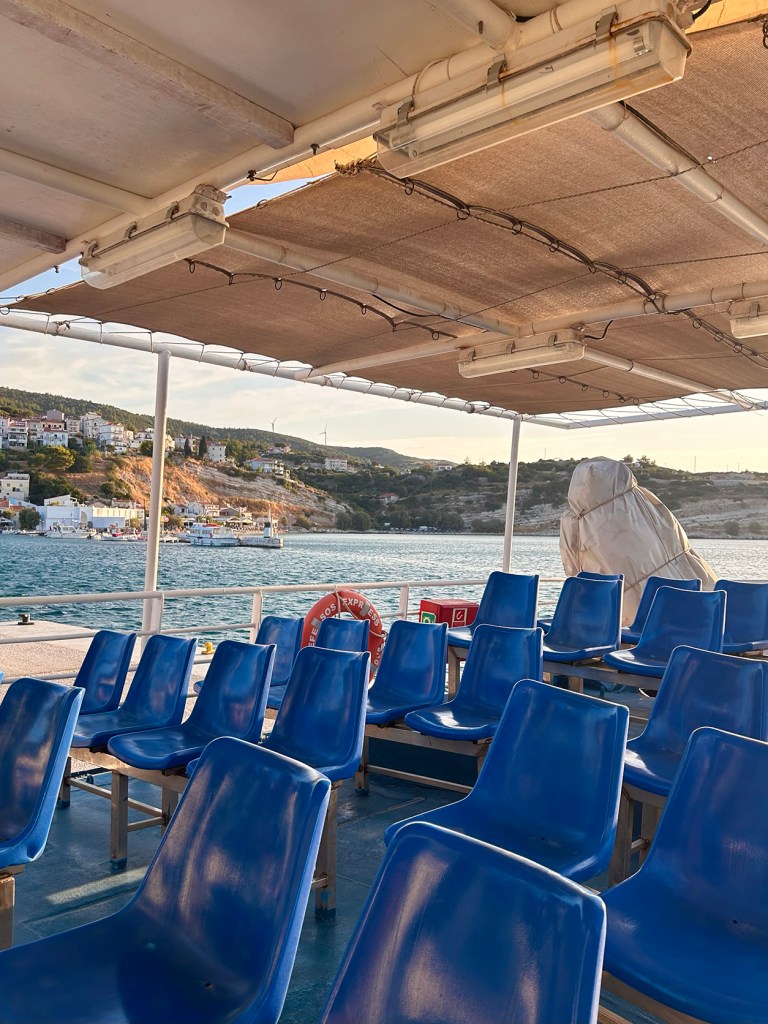
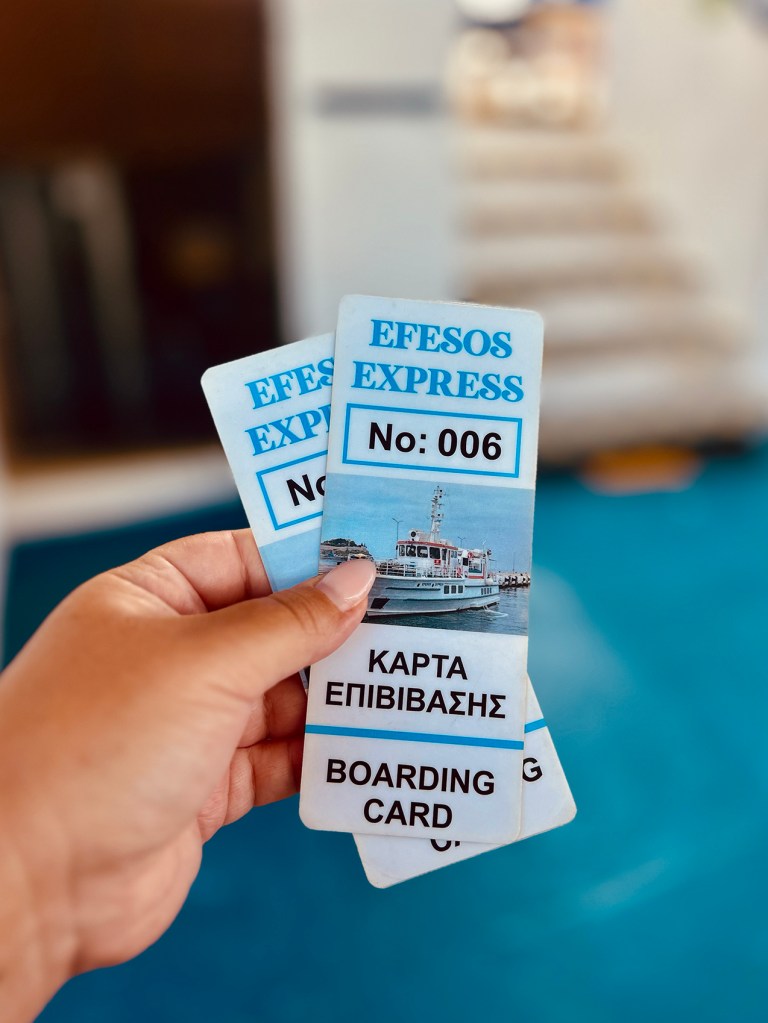
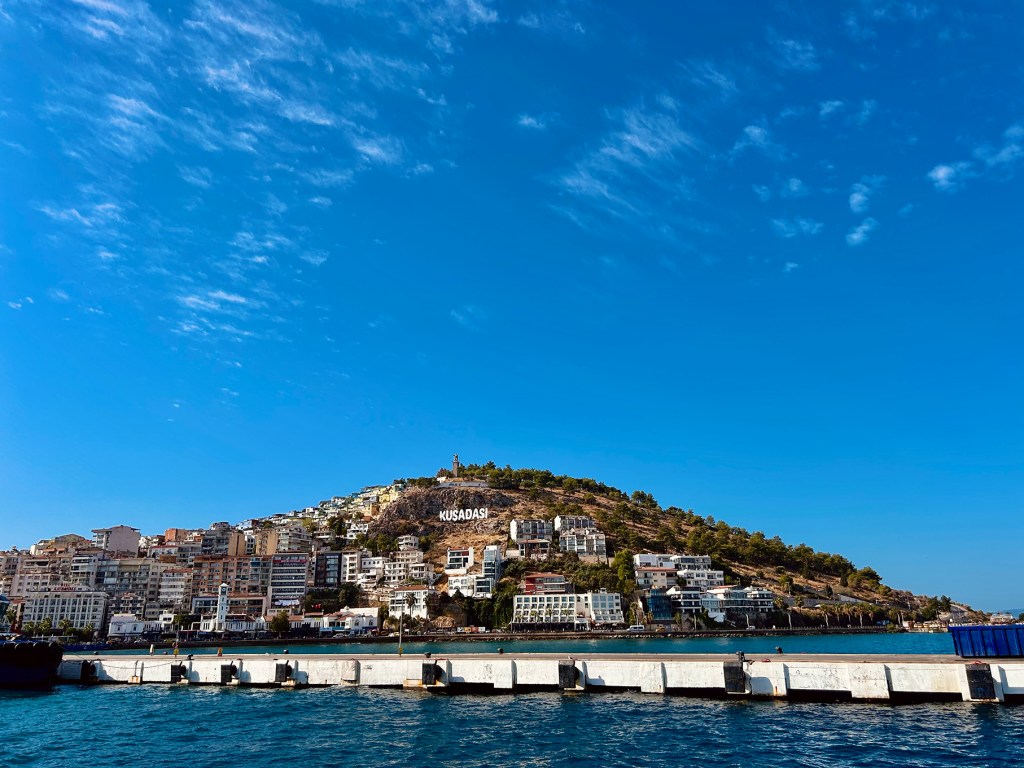
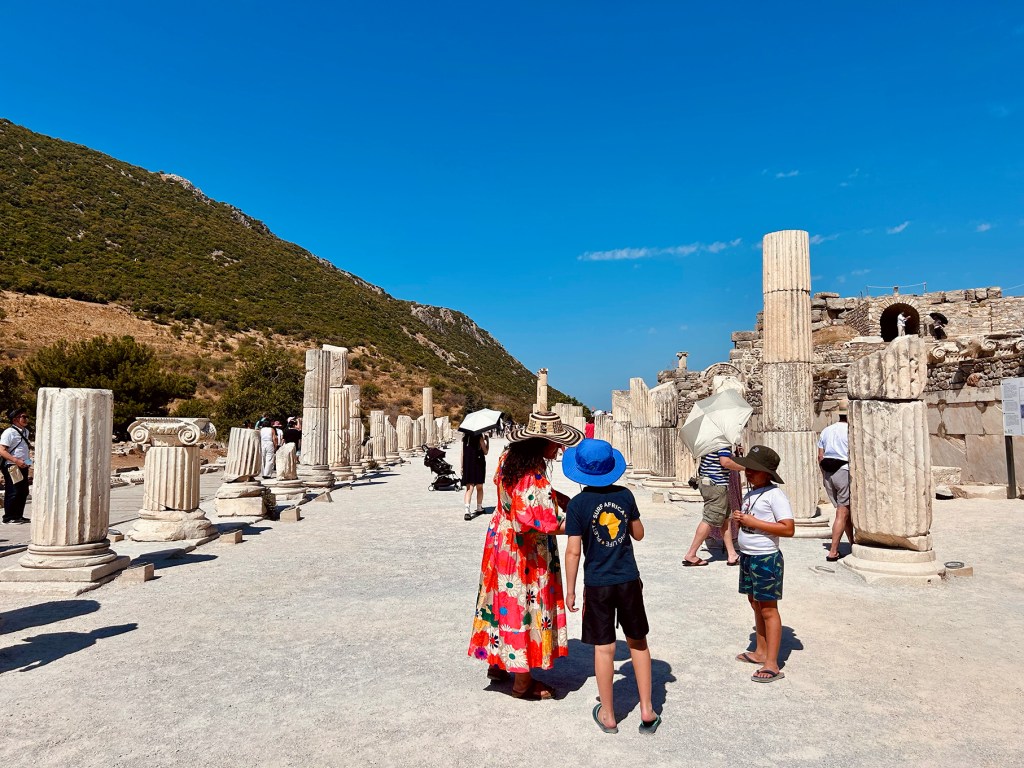
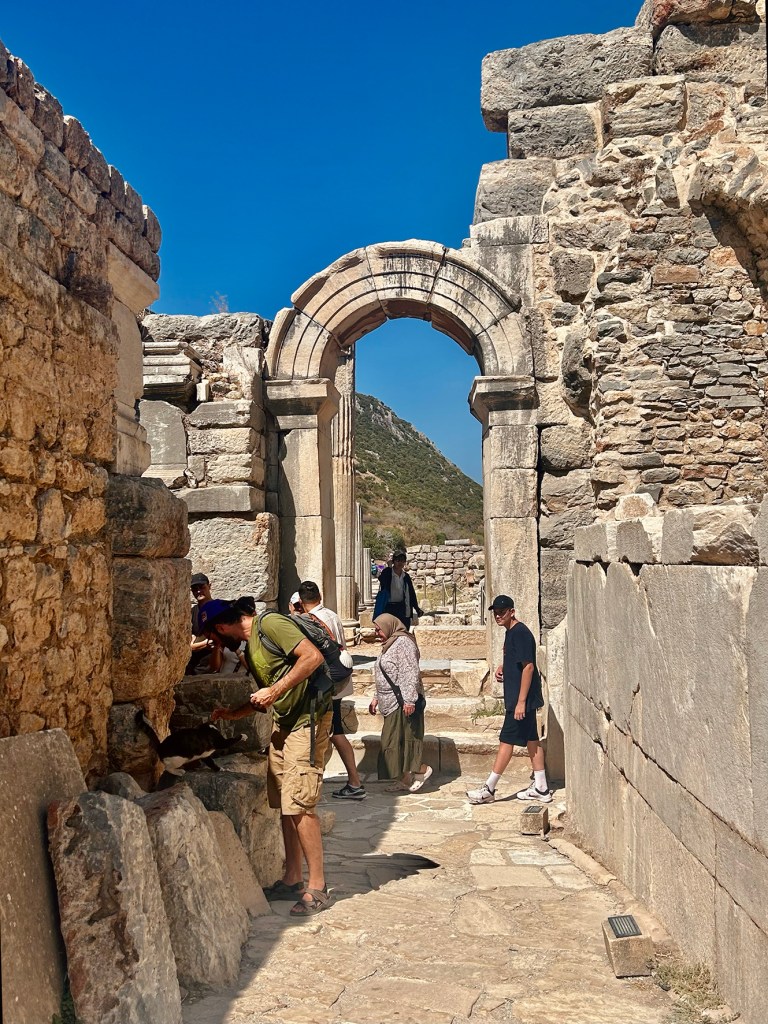
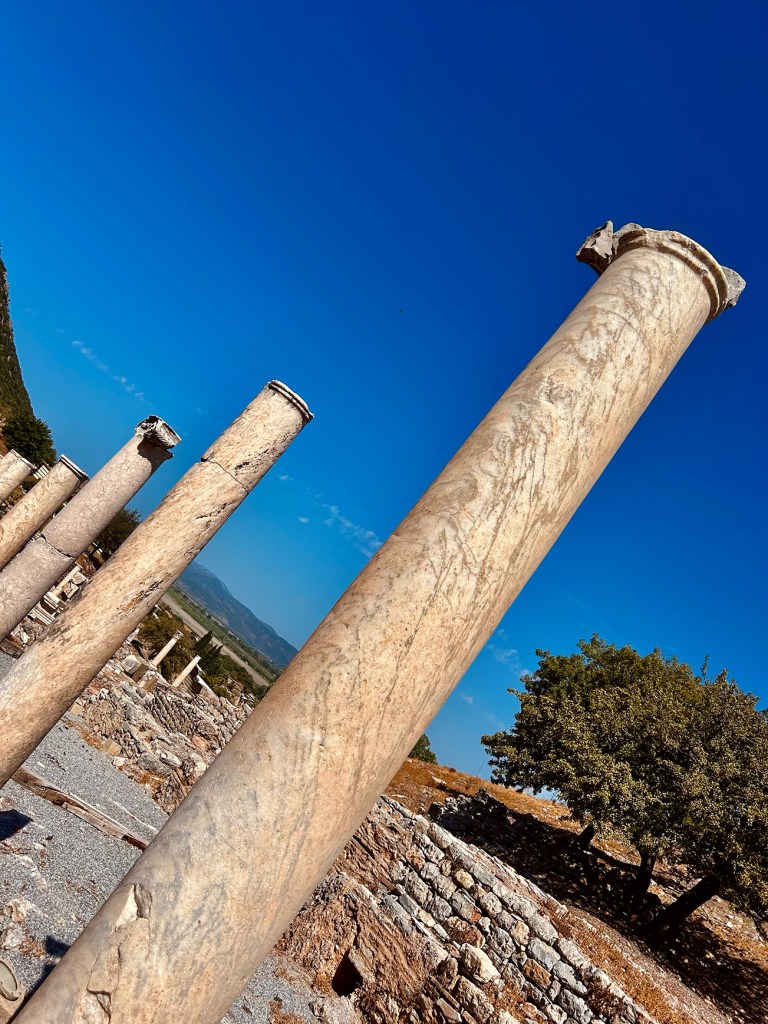
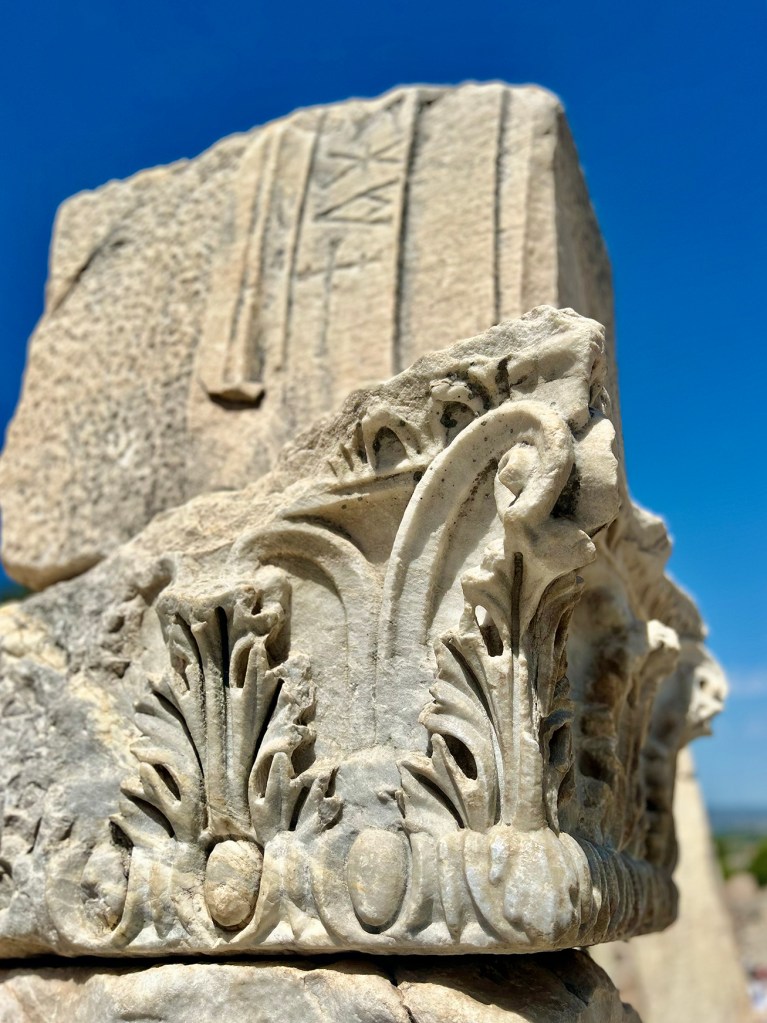
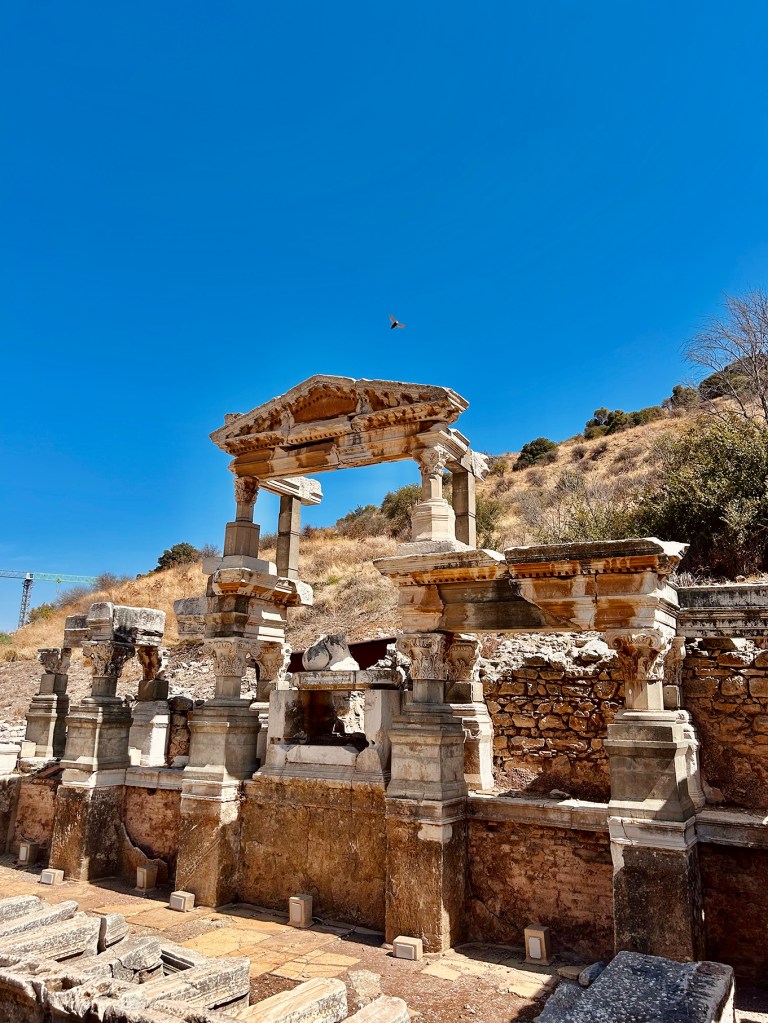
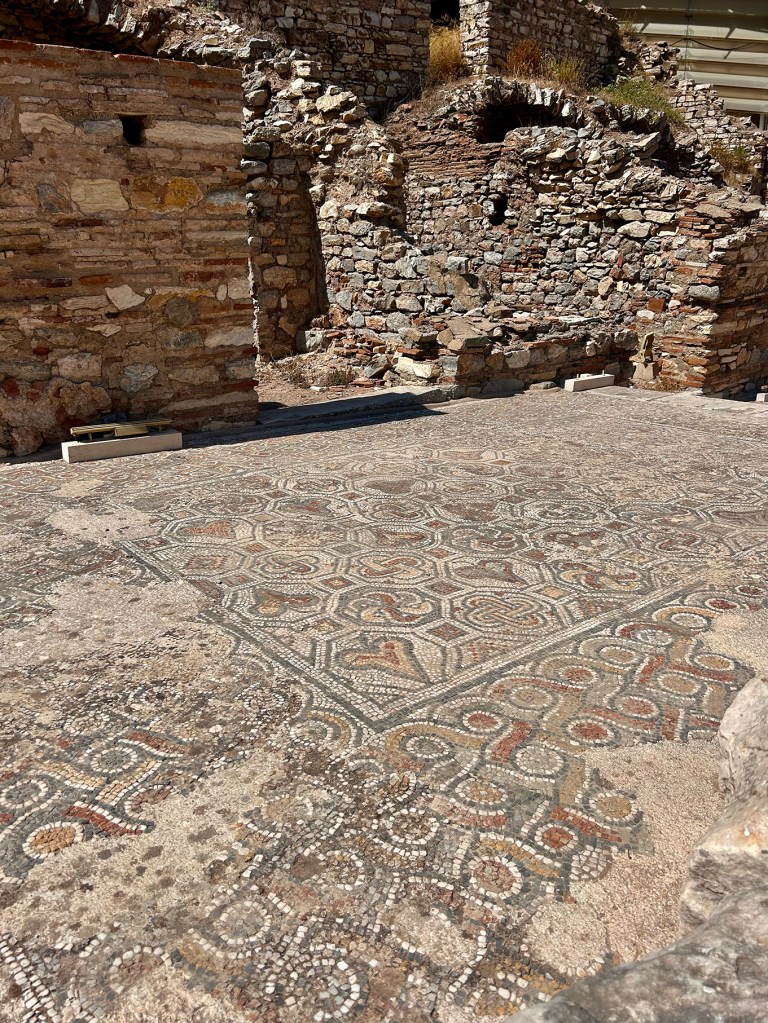
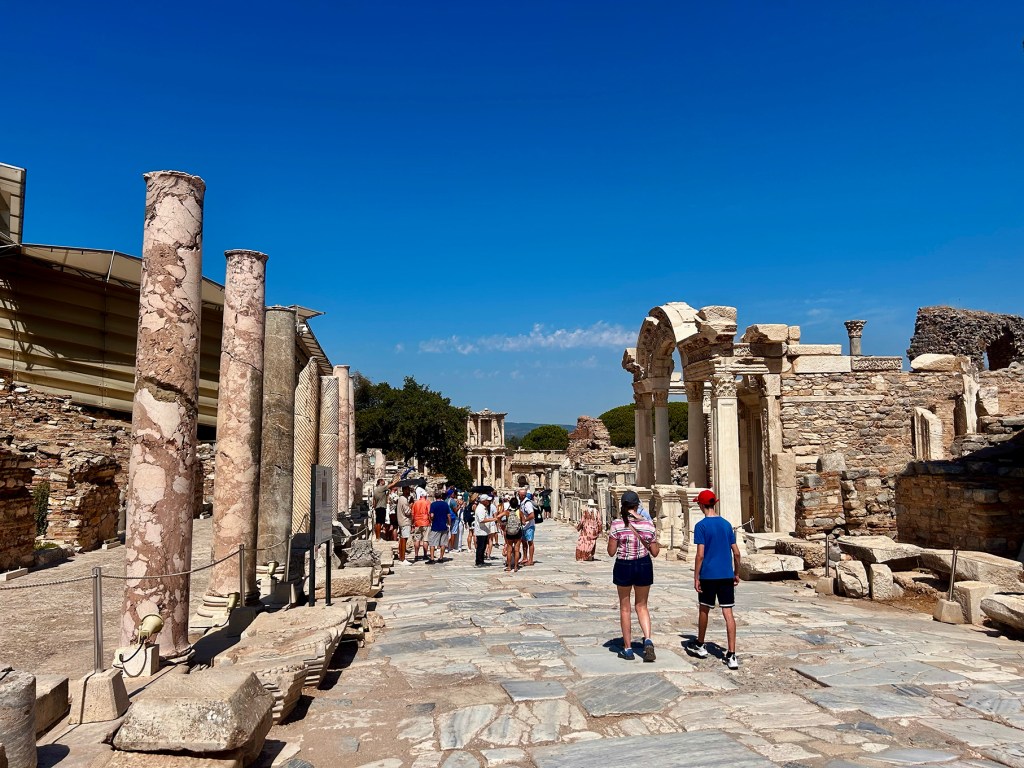
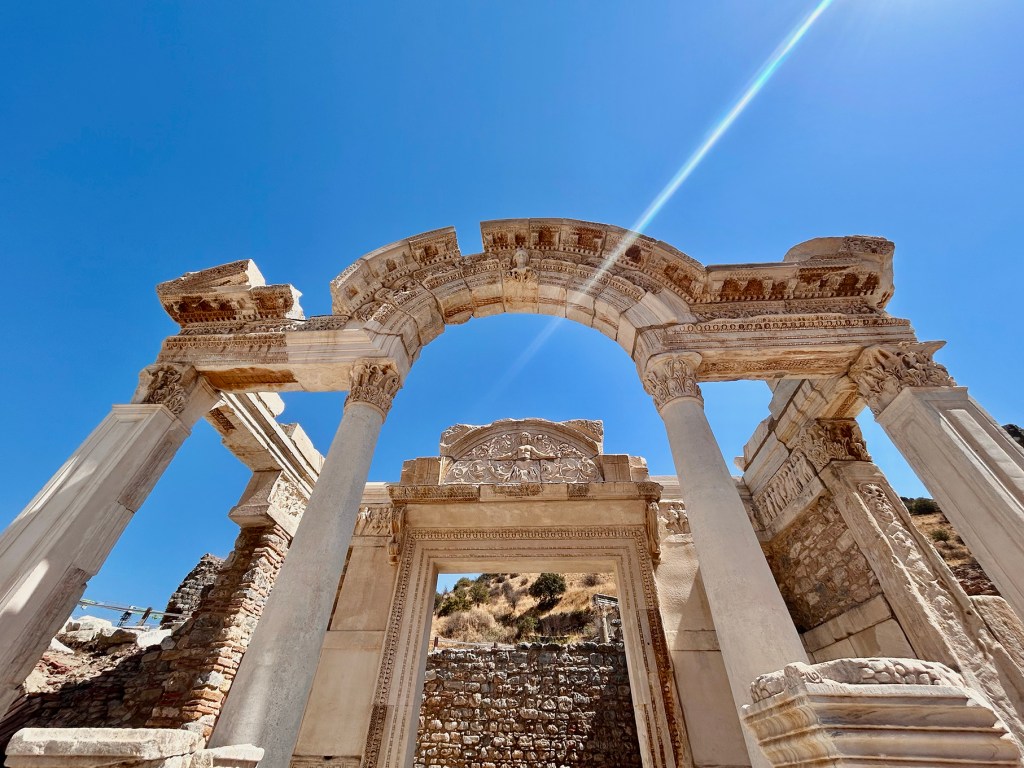
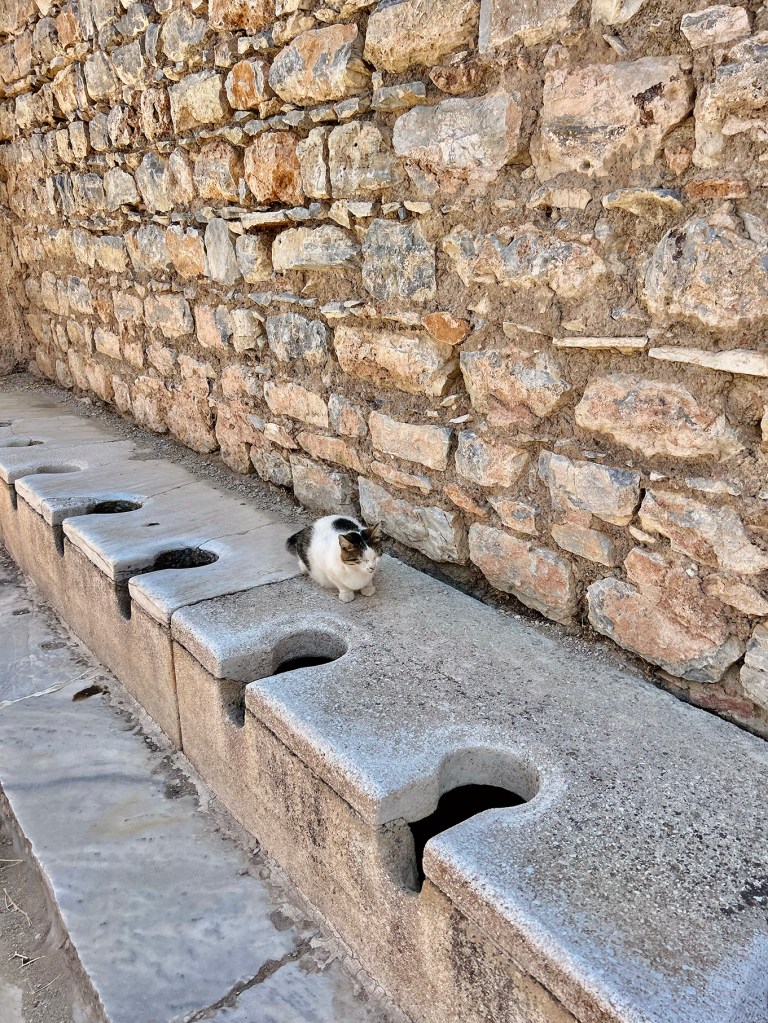
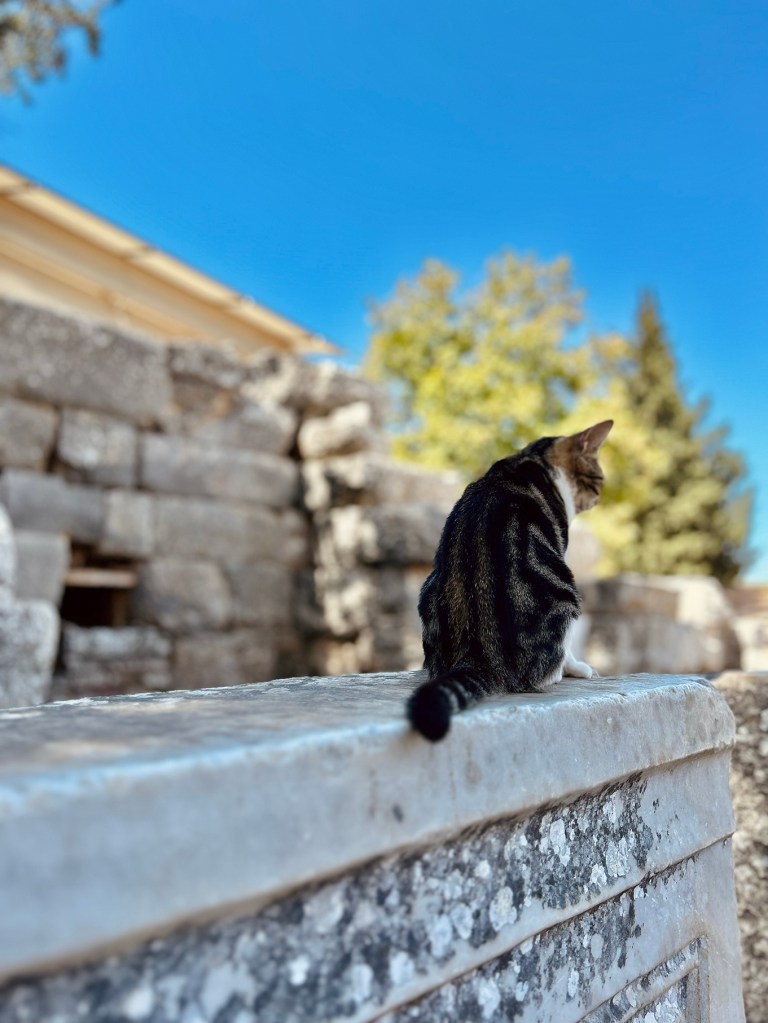
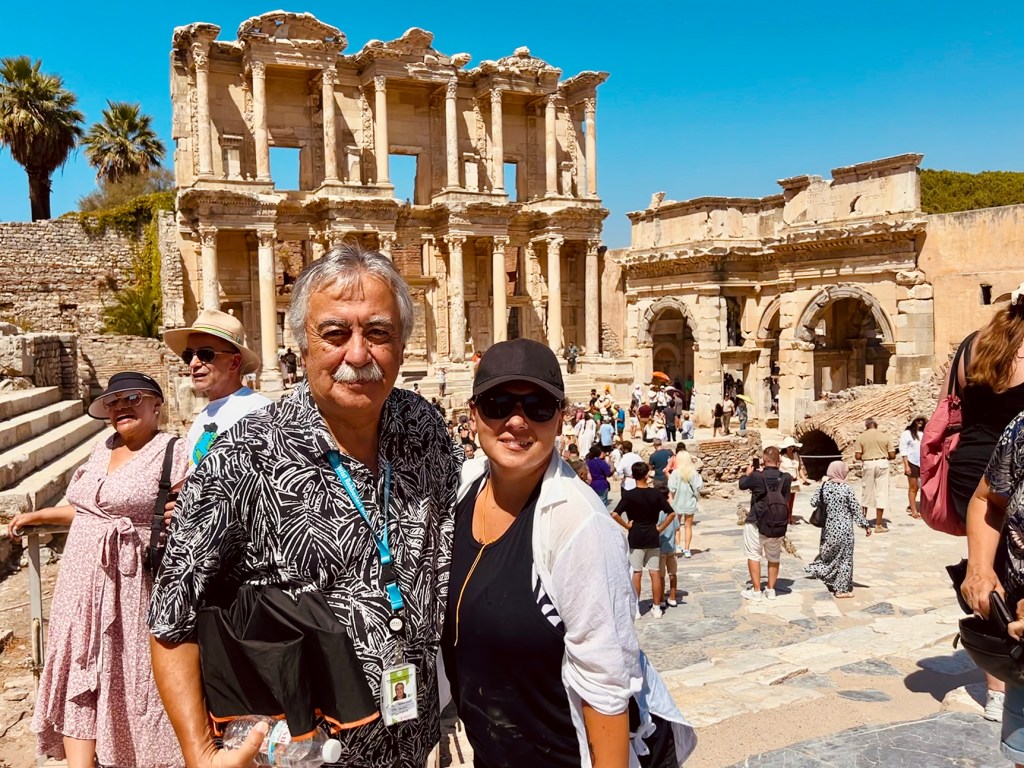
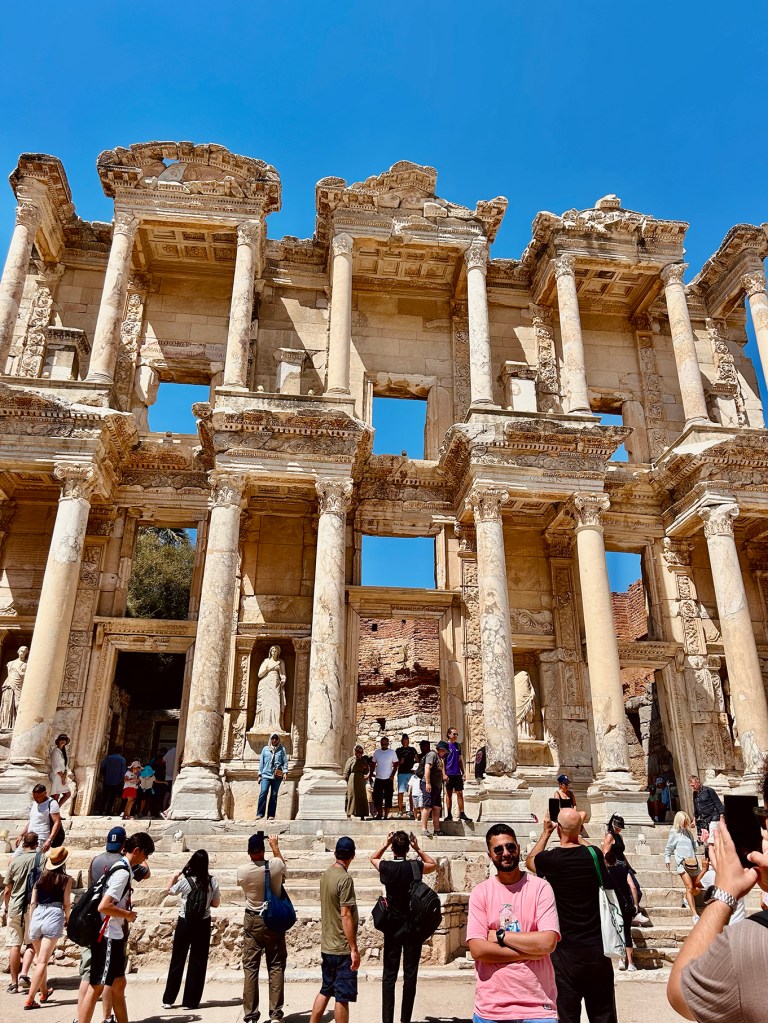
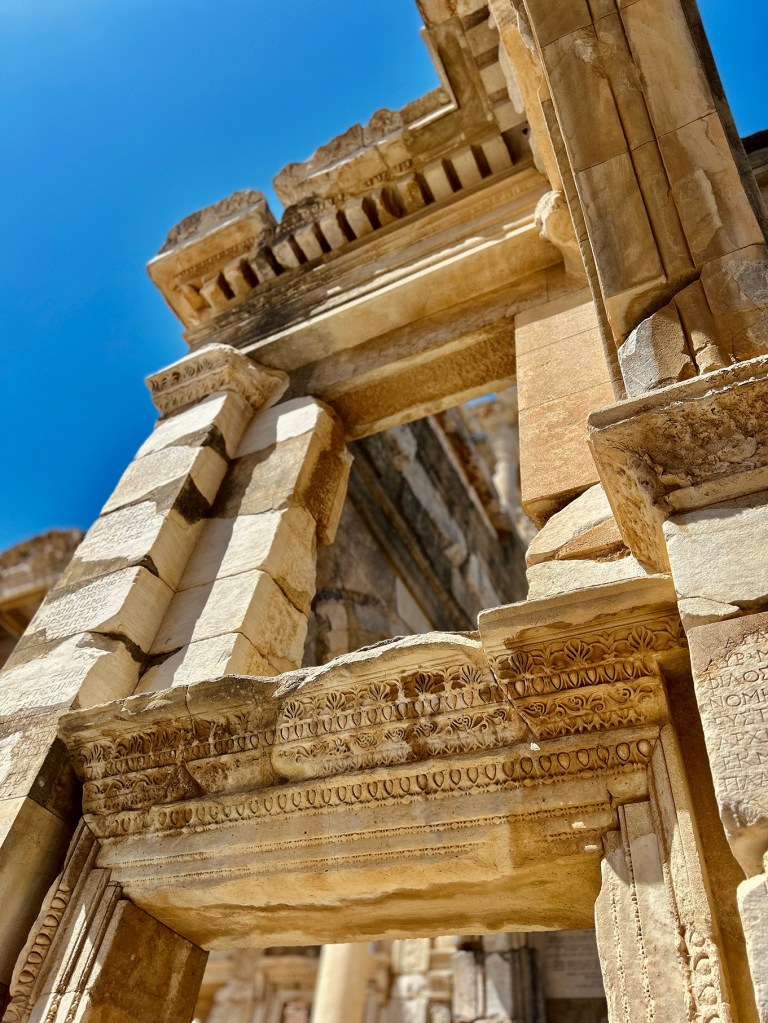
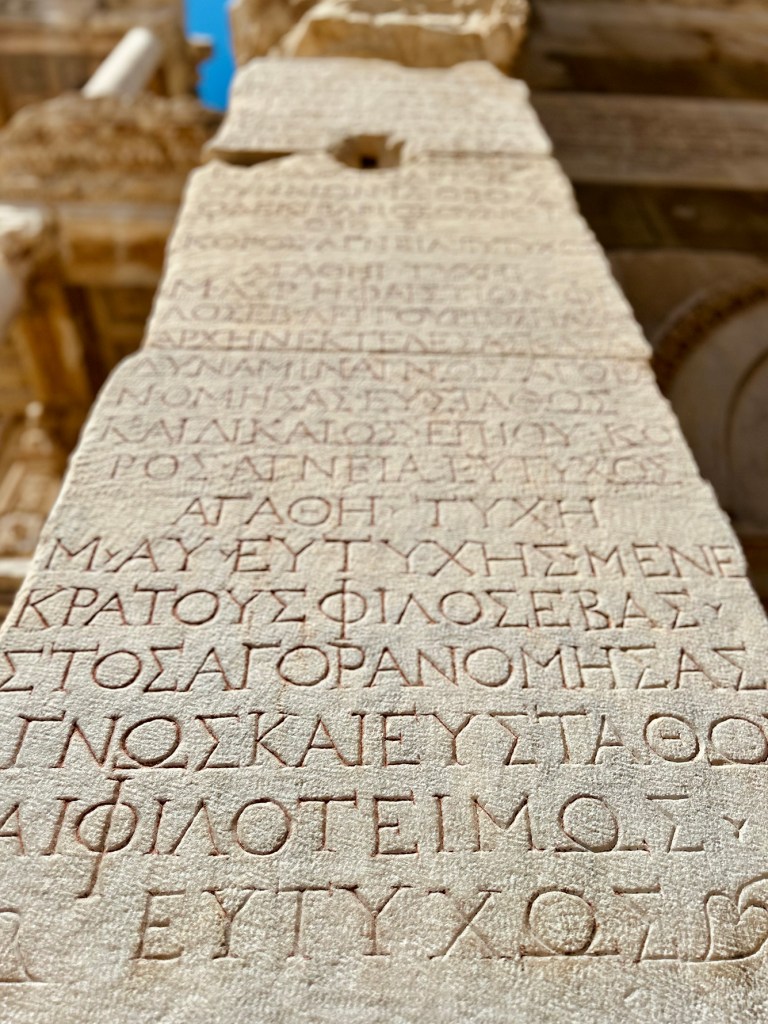
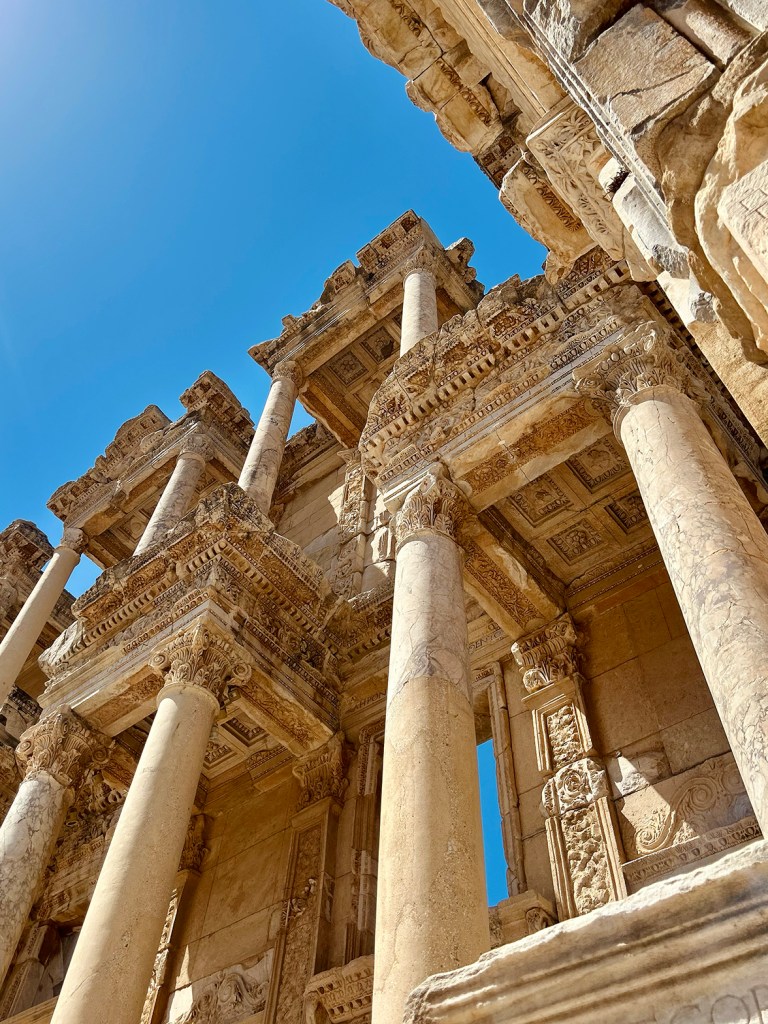
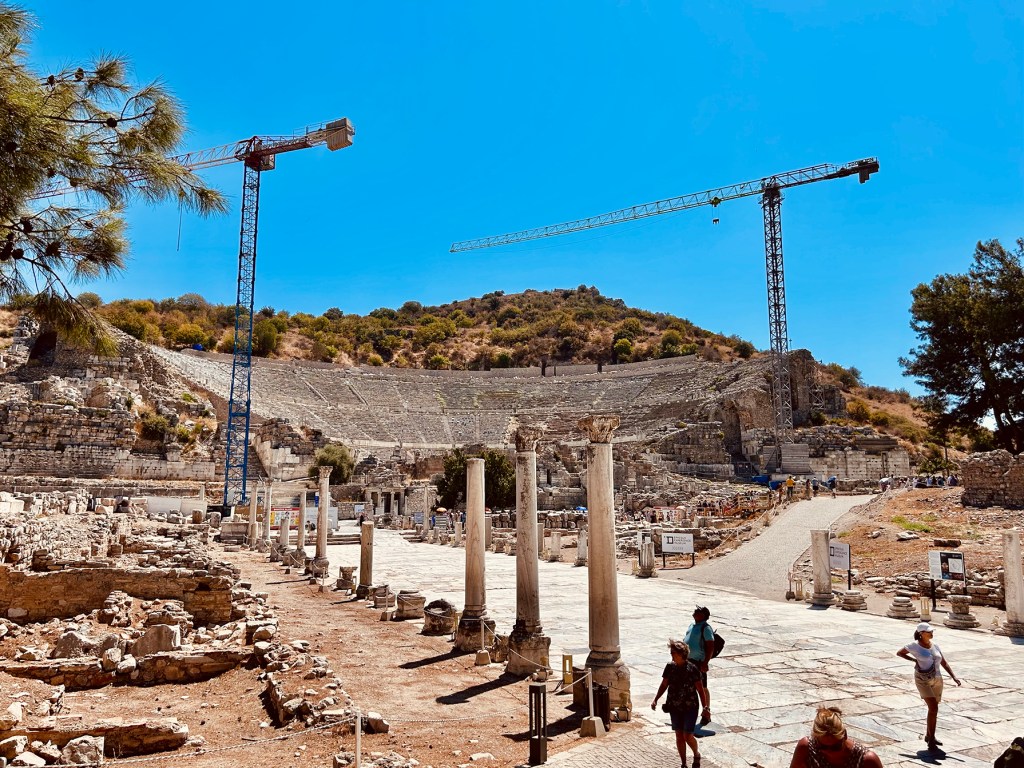
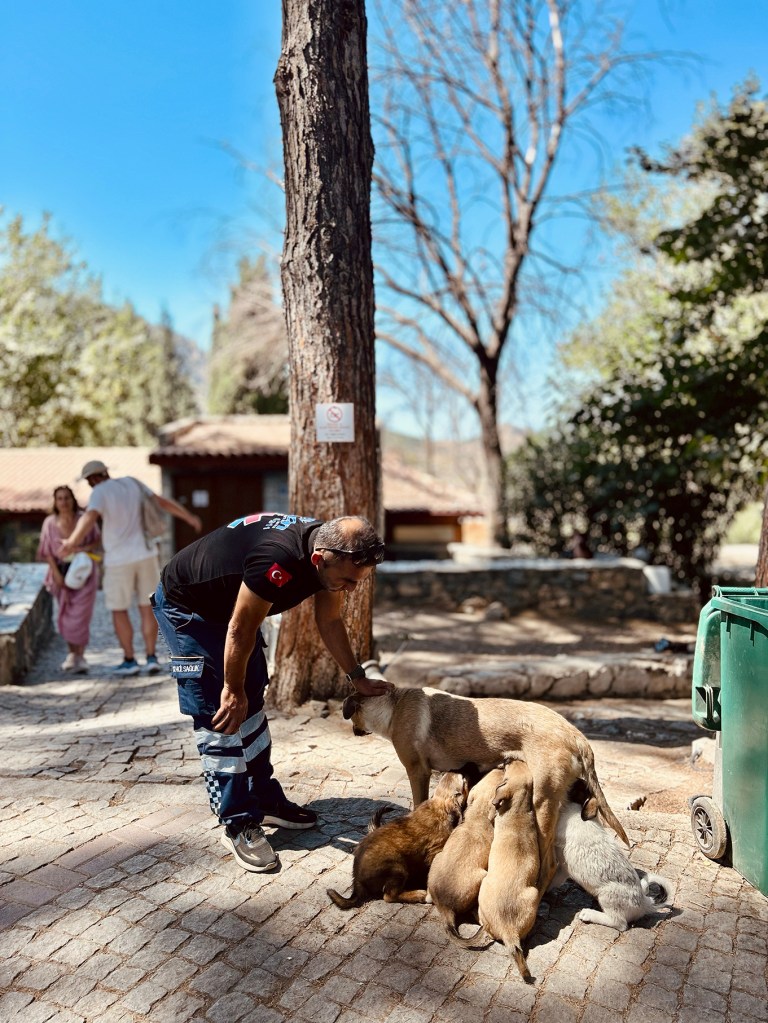
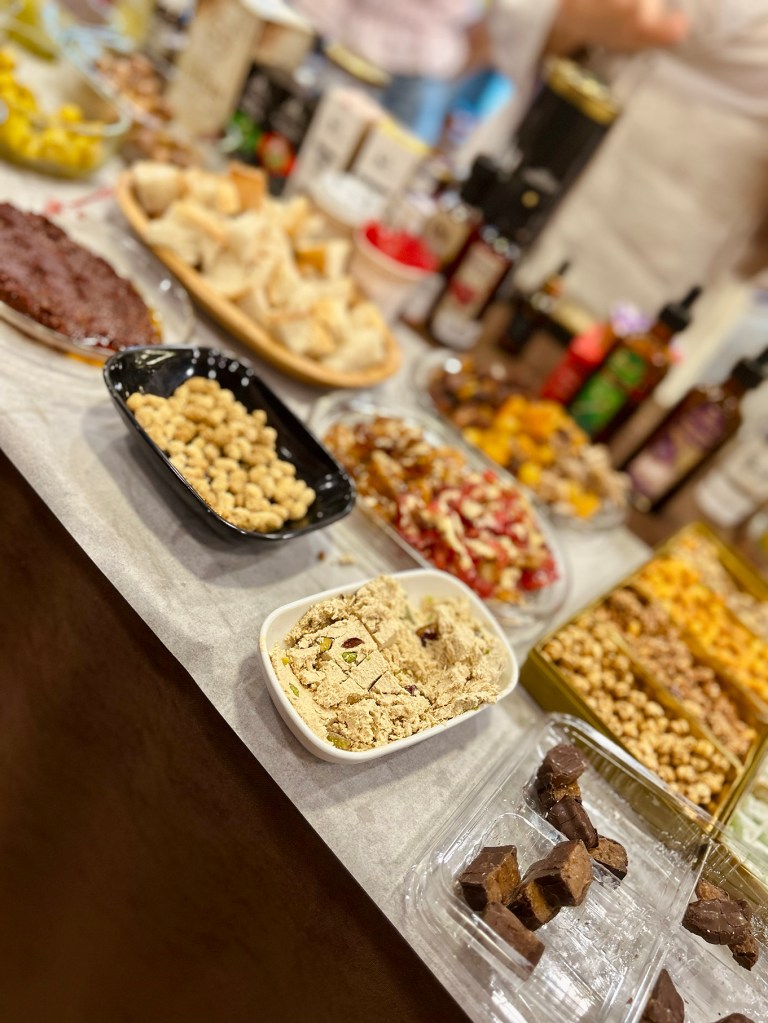
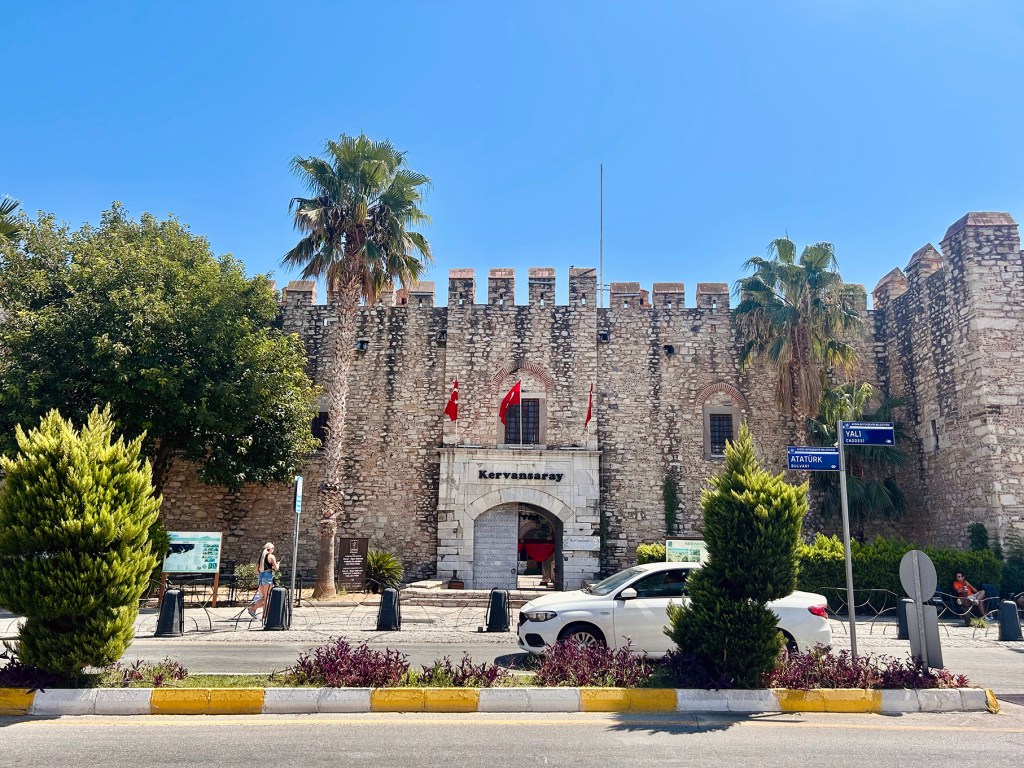
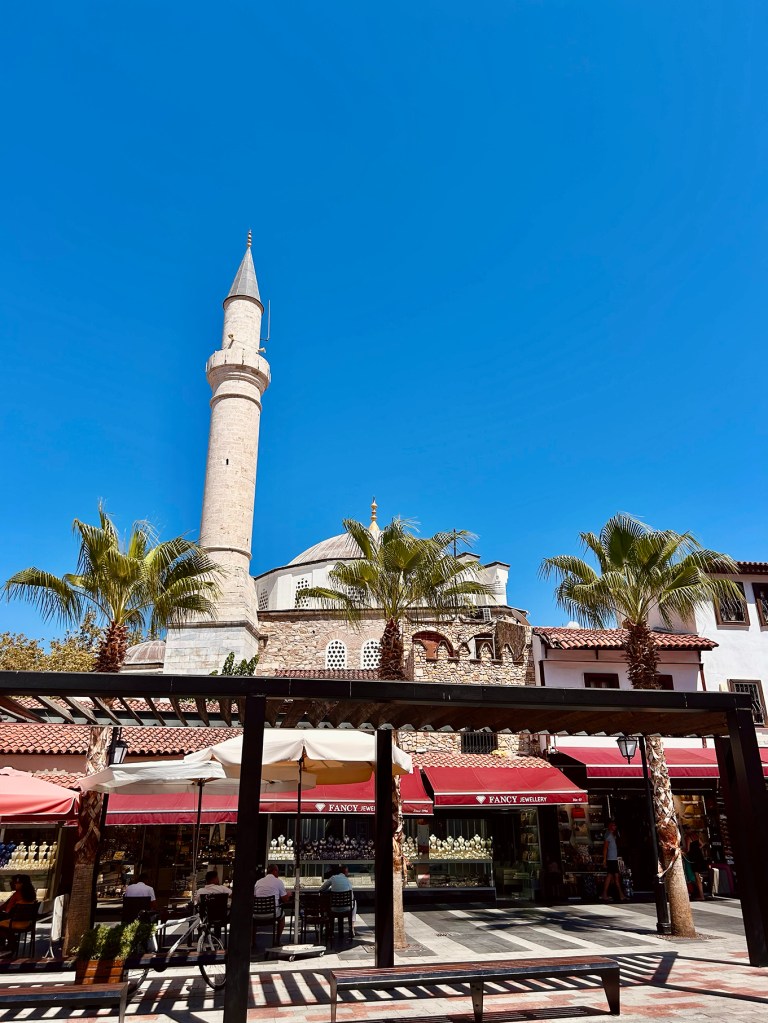
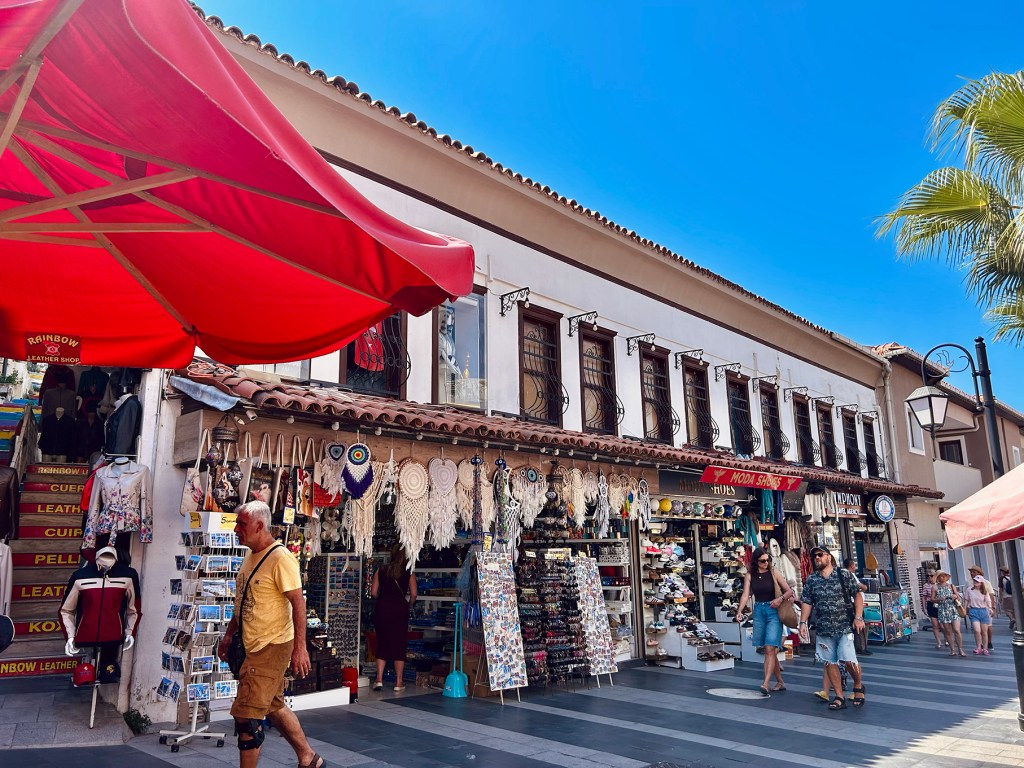
A day trip to Turkey, for a visit to the ancient site of Ephesus, a short stop at the Temple of Artemis and a few hours in the city of Kuşadası. This was an amazing experience, although a very long and busy day, with a rough sea and straining heat in Turkey. The boat leaves from the ferry port and arrives in Turkey after about 1,5–2 hours. Kuşadası is huge, chaotic and sweaty – such a contrast to the quiet of Samos. From the port, we got on the bus that took us to Ephesus, together with a wonderful, friendly and knowledgeable guide, Ihsan. Ephesus is stunning, some of its ruins leave you speechless, and because the streets were so slippery some of us even had to walk barefoot. That was a great experience as the marble was comfortably cool and soft. Although it was incredibly busy at the time, with rather rude tourists from around the world – also a big contrast to the sleepy villages of Samos – we got a very good tour with Ihsan, who took us through millennia of ancient history with humour and great storytelling skills. It’s already a large archaeological site, yet according to Ihsan only one sixth of it has been uncovered.
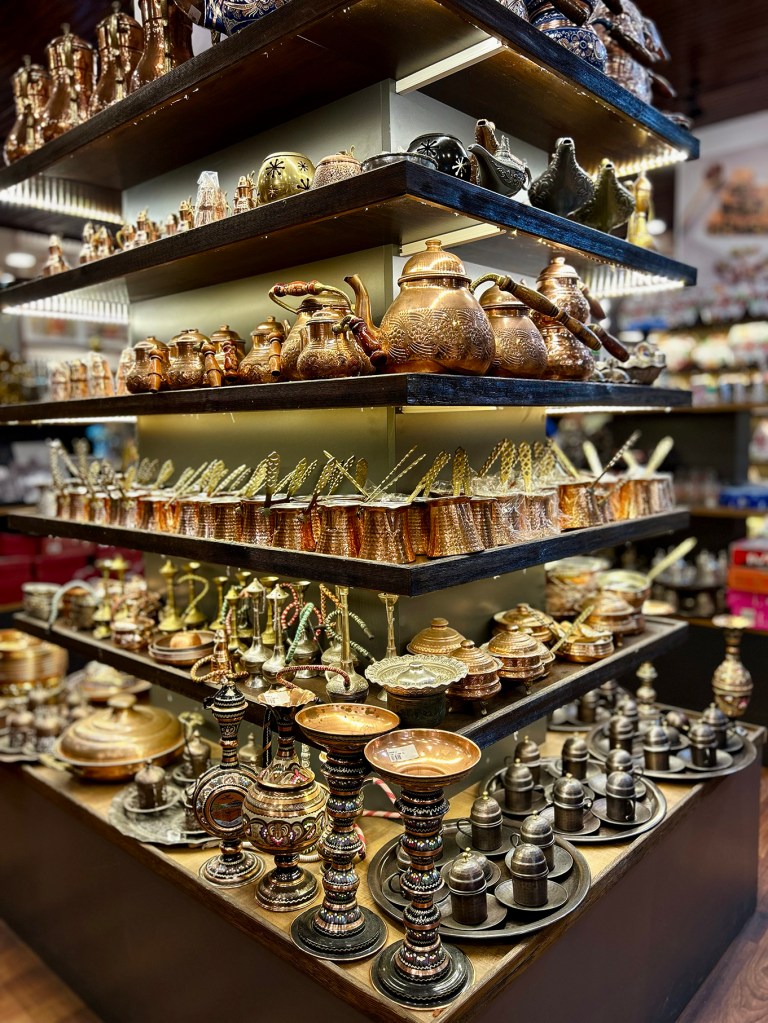
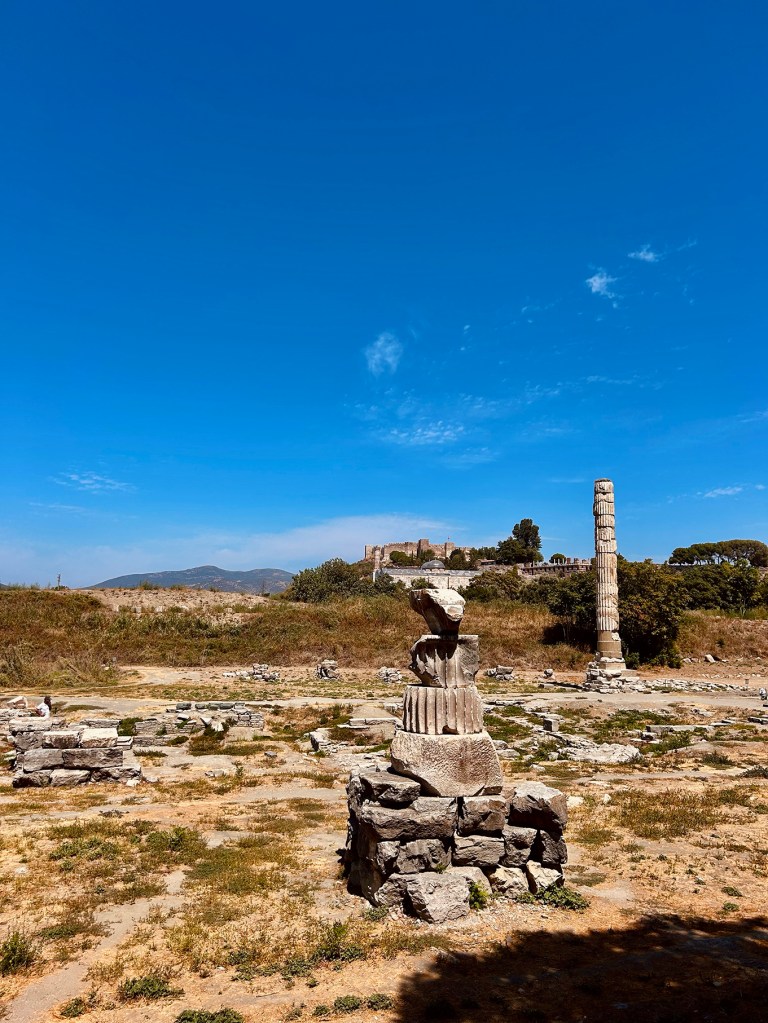
After visiting Ephesus, we also got to experience one of the seven wonders of the ancient world, the Temple of Artemis. And although it’s not much to the eye nowadays, just standing there on the site of so much history really moves you. Then a quick visit to a local bazaar, for the inevitable “try some, buy some”, followed by two hours of free time back in Kuşadası and an adventurous boat trip back to Samos. The solid cruisers docked in the port were unmovable mountains compared to our little vessel which was more of a wonky seal on acid in the water.
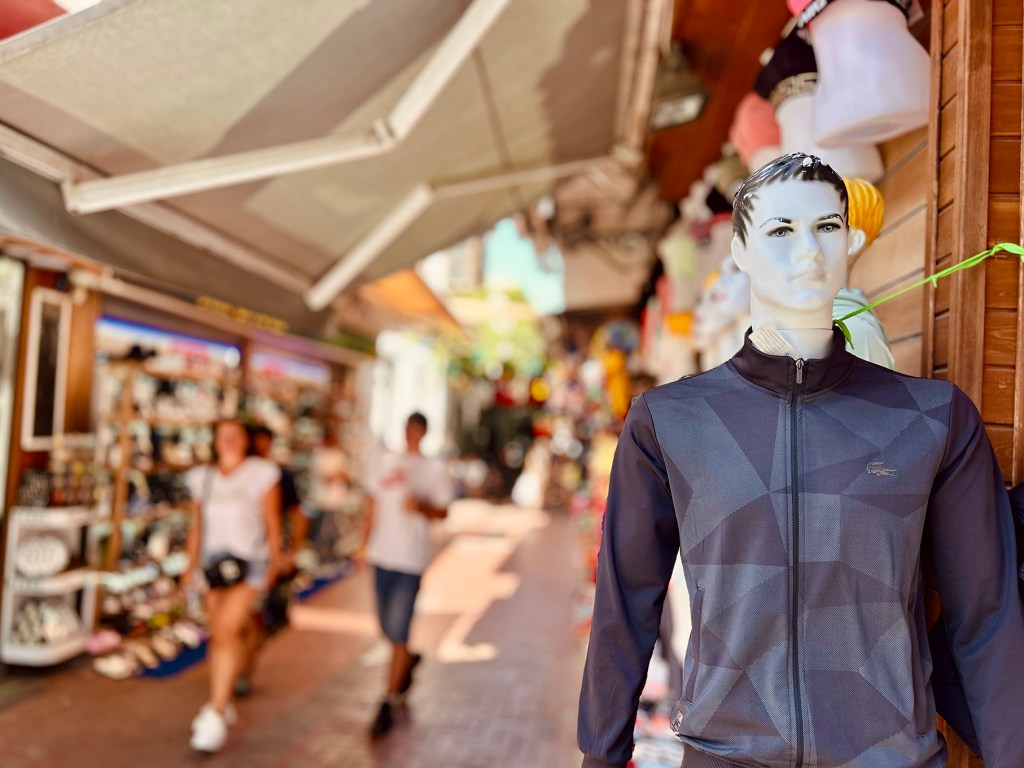
One of the most obvious, and somewhat annoying, differences between Greece and Turkey is that in and around Kuşadası you have to haggle when you shop. You have to ask for the price, which will inevitably be an absurd one at first. If you don’t say anything, you will most likely get ripped off. Then you have to either use a lot of humor and charm, or 100% turn on your bitch switch and walk out of the shop. Salesmen are also very pushy and you’ll get everything from guidebooks to Turkish delight shoved in your face, without much consideration for the words “No, thank you”.
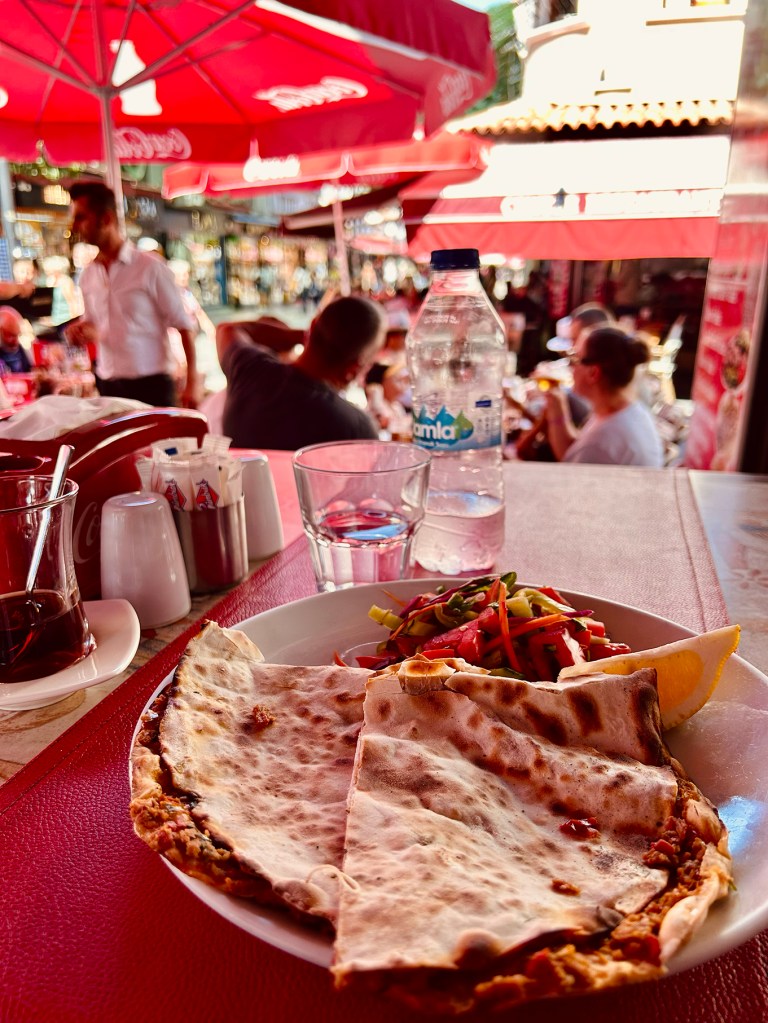
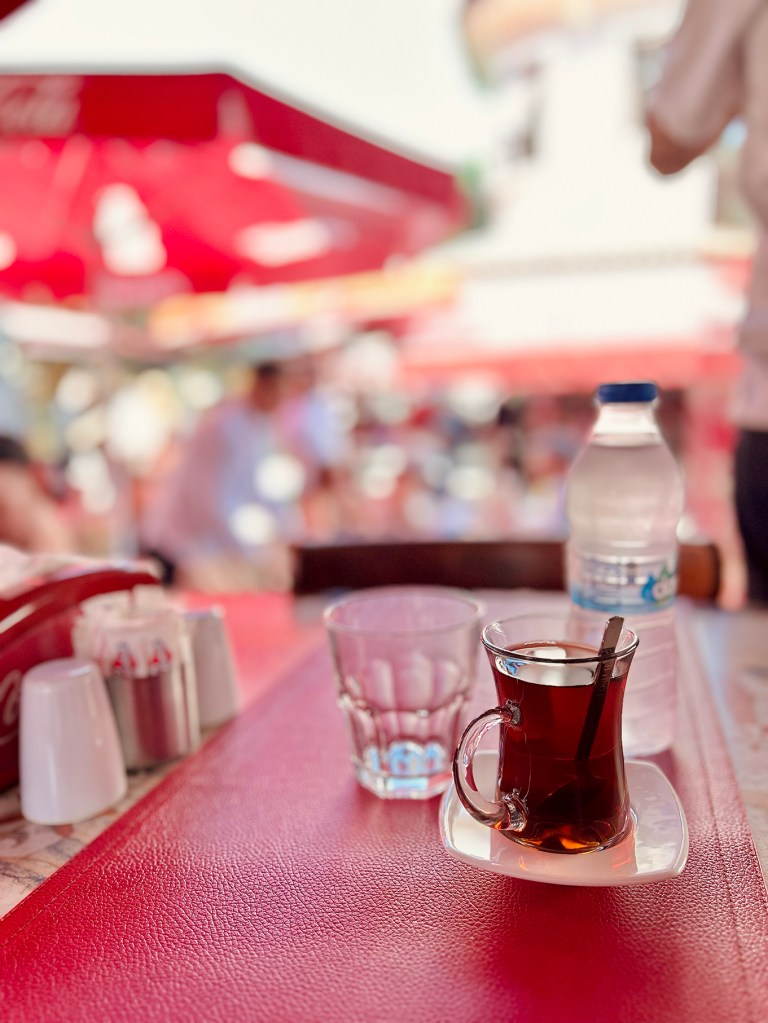
But if you find yourself in Samos, it would be a missed opportunity to not experience a bit of Turkey as well since it’s so close, and you can always find a moment of peace with a good ol’ glass of Turkish tea.


Here are some of the things that I didn’t do, which I’m saving for my future trips to Samos:
- Hikes around the center and north-west of the island, either on your own or with a guide, including Pythagoras’ cave, the Nightingale Valley and walks to the beaches of Mikro Seitani or Megalo Seitani. I opted to not check out the Potami Waterfalls either, as they require a bit more planning and a bigger drybag than what I had on me the day I was in the area. Smaller villages, like Manolates, Pyrgos, Chora, Pagondas, Koumaradaioi, Mytilinioi and Vourliotes, are on the to-do list for some other time. I also went for the more challenging experience of hiking to the very top of Mount Kerkis. Once you’ve done that particular total punch in your lungs, you kind of want to spare your legs for a little while and not be constantly going up and down mountain villages. More about that later.
- A day trip to the neighbouring island of Patmos, known for the Cave of the Apocalypse, where Saint John the Theologian (the Apostle John) is believed to have received the visions that inspired the Book of Revelation. The trip includes a visit to the Monastery of Saint John the Theologian. I didn’t do this one either, as I was weighing whether I should do the organised trip or book the ferry on my own and explore at my own pace. But as soon as you start looking into it, there’s a chance you might want to spend more than one day in Patmos, so I decided to focus more on Samos.
- Various bus tours of the island with stops at vineyards or pottery workshops and visits to some more of the numerous archaeological sites. Samos is famous for its wines so it will be very exciting to do some tasting and see other parts of the landscape some other time.
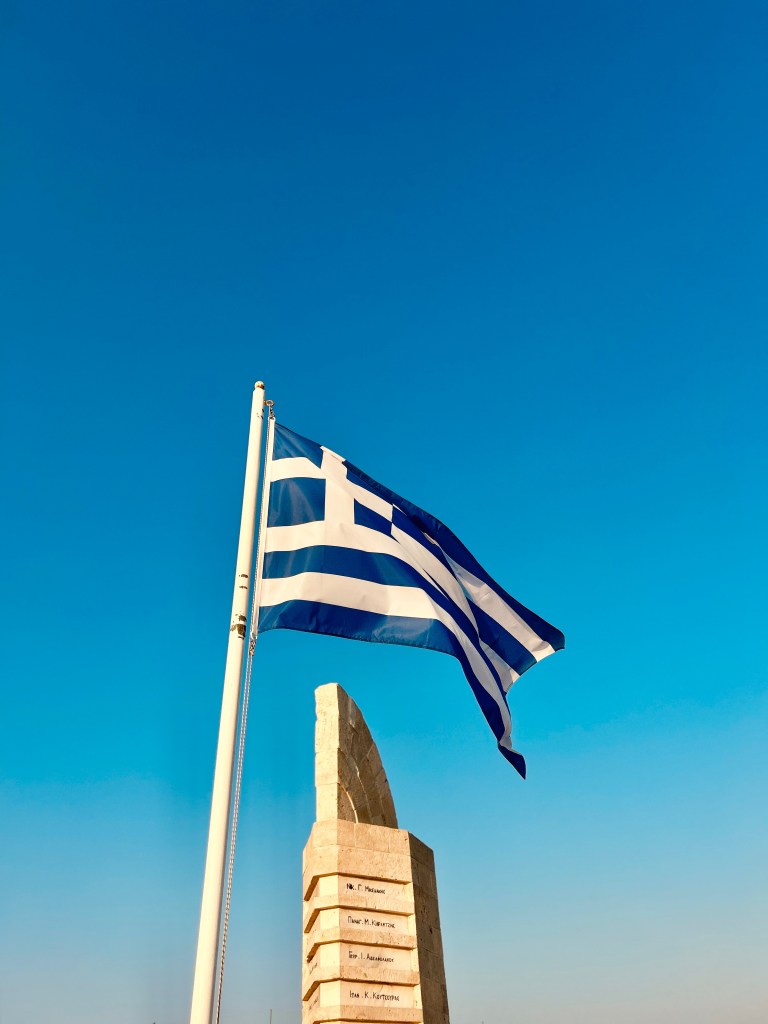
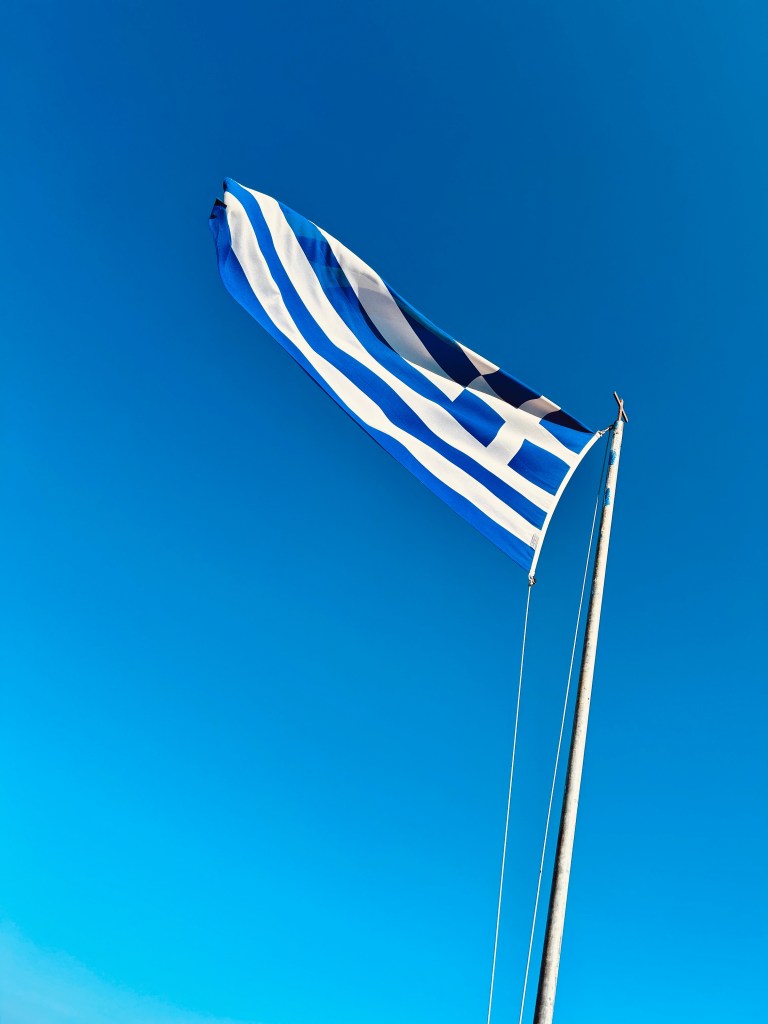
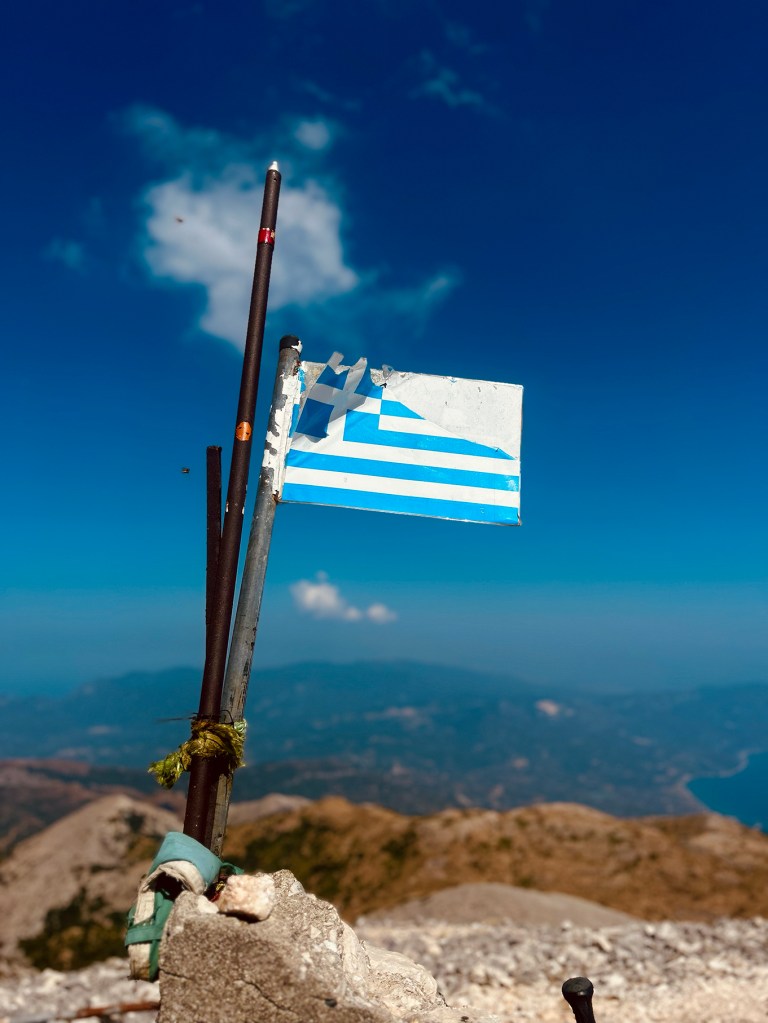
- Visits to more beaches and seaside villages. It’s an island, so you have coastline galore, tens of tavernas in the middle of nowhere and winding paths to get lost on for days on end. There are hundreds if not thousands of Instagrammable bays, cliffs, cacti and flowers. And if there’s a hill somewhere, there will be a small chapel on it. And if there’s a site that anyone is remotely proud of in any way, there will be a fluttering flag there that makes for a gorgeous reel in slow motion against the backdrop of blue sky with zero clouds. If I’d gone to every settlement or hotel resort along the shoreline, I wouldn’t have had time to relax at all and properly take in everything that I did experience.
Now, onto the true pièce de résistance of this whole adventure: hiking to the top of Mount Kerkis.
Honestly, I don’t know what this thing is that I keep doing – checking out hills and mountains at each destination. Or rather, where it comes from. I’m not in the best shape of my life, I’m far from an experienced hiker and I’m not really an adrenaline junkie. I don’t go for speed or heights in that sense, and I strongly dislike sporty people who spend money on very expensive outdoors stuff. But maybe something clicked on my trek in the Himalayas (yes, for my first ever proper trek I went straight towards Everest Base Camp, I couldn’t pick something more accessible, but I did make it to Gorak Shep at an altitude of 5165 metres)…
So if I go somewhere nowadays, I will usually check potential tall rocks that I’m not bound to die on. Like, hmm, maybe this one, why not? Maybe it’s a midlife crisis (possibly better than buying a yacht, brain is still debating on this one), maybe it’s a way to process a lot of things in my life, by strengthening my own will and sense of achievement, who knows? Being in remote places, without the noise of a city, is pretty cool sometimes. Being small in comparison helps to keep me grounded and let me tell you, in the presence of the mountains, you’re pretty small. It also offers a bit of a balance to the 100% lazy relaxation on fancy beaches as well as everything delicious I stuff my face with.
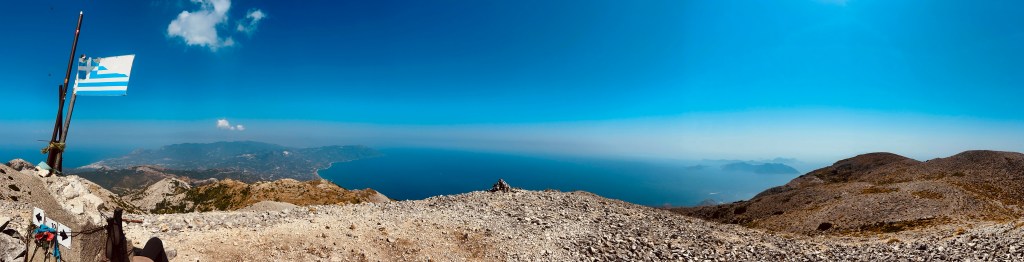
Either way, I did my research and discovered that Samos indeed has one aforementioned tall rock. It’s called Kerkis, it’s located to the west, and the highest peak stands at 1434 metres, Vigla. And just to hit you with its awesomeness straight away, here’s a panoramic view (pause for effect):
People on the internet claimed it was totally doable, and went by themselves or with a friend or partner. Easy peasy. Like a chill, romantic walk. “Oh, even post-knee surgery, it was no biggie, did it in about six hours and was having a cold beer back in the village in the early afternoon.”
Me, after previously “conquering” (read: running out of breath and wondering if the birds would eat me if I died) the pitiful 588 metres of Mount Eros on the Greek island of Hydra all alone, with zero phone reception, shitty battery and way too little water, also in August, I knew that it’s stupid to do this without an experienced guide. First of all, I didn’t know Kerkis. And there are different ways to get to the top of a mountain. One proper, tall mountain doesn’t just stand alone with one peak, it’s not a lamp post. It’s got smaller peaks around it, so there will be various other hills to walk around with different trails, depending on what side you start from and how much of an idiot you are. You don’t climb straight upward, you circle it with a relatively steady incline until you reach the plateau. And although Kerkis doesn’t even rise above 2000 metres, I know damn well that a mountain will kick my ass if I don’t respect it. So any kind of hubris has no place here. If anything should happen to me, what would I do alone in the middle of nowhere?
Kerkis is a rugged limestone mountain with steep slopes, deep gorges, and dramatic cliffs that drop sharply toward the sea. The lower slopes are covered with pine forests, phrygana (Mediterranean shrubland), and herbs like sage, oregano, and thyme. Higher elevations are rocky and sparsely vegetated. The area is home to eagles and falcons, and it showcases a rich biodiversity in flora.
I got in touch with Giorgos from Samos Outdoors and asked about the possibility of doing the hike, what it would take and what it would cost. Not surprisingly, no one else had reached out to book this particular excursion in the middle of burning hell, I mean, August. So Giorgos suggested we could do it as a private tour if by July there still wouldn’t be more of a group on the list.
Said and done, we checked in July and I was still the only crazy person interested. So I squeezed my bank account in various ways and decided to do it as a private tour. Of course it’s more expensive and I’m the one paying for it all. So just like with the trek in the Himalayas I had this weight on my shoulders of trying my best to make it, so that I wouldn’t feel that I was throwing away my money and failing. Generational trauma, deeply embedded shame, you name it…
But because life happens, and we need a bit of extra stress, I got something like the flu literally one week before leaving for Greece. The most horrible headache I’ve ever had in my life, a fever for two whole days and feeling like my body is about to fall apart. Emergency doctor’s appointment, blood tests and some medication for the pain, but they didn’t find anything wrong, no virus, no bacteria, and my COVID tests at home were negative. A bit of an ear infection to go with it and the arrival of my period turned me into a vegetable and I was scared of getting worse and not being able to travel, or having to cancel the hike as well and lose my money. Miraculously, or rather thanks to paracetamol and some medicinal alcohol from Romania to wipe out potential ear stuff (if you don’t know Mona, you haven’t lived), I was good to go on travel day.
Needless to say, I was terrified to do a physically demanding hike without knowing if anything was still in my body and could have caused trouble. As mountain day came closer, I took a break from cocktails and any fatty food, I got proper rest and made sure to prepare a decent backpack – water, sunscreen, first aid kit and snacks.
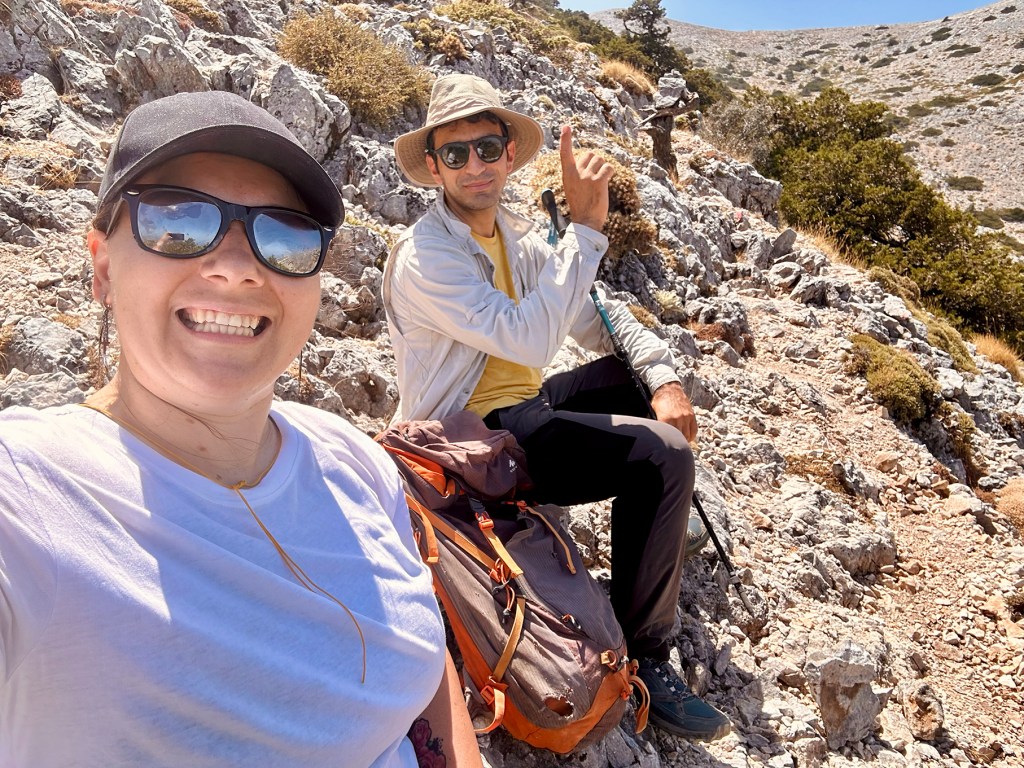
Giorgos picked me up in Pythagorio in the morning and we drove for a good while to the other side of the island, before switching to a 4×4 truck for the last bit off-road. I think we started walking from the Monument (Civil War Memorial) area at about 9:45 and the whole hike should have taken about 6–7 hours. Pretty soon however, it became obvious that I would need a much slower pace and Giorgos decided to carry my backpack on top of his own. 1000% shame for me, but even more gratitude for his effort, patience and encouragement. It would have taken me much longer if he hadn’t done that, and as he said, it would have been nearly impossible for me to keep the pace with a group of sporty people. He was not only helpful with the hike itself, he’s a genuinely nice person, with whom you can have intelligent conversation, and who is very knowledgeable of the area.
The path wastes no time. It climbs steadily and soon the views open up, first back down toward the sea, then across the ridges of Kerkis. The trail is exposed almost the whole way, and the sun is no joke. Typically, there should be a breeze after 10 in the morning, but that did not happen for a good while. My problem wasn’t really the heat, as I quite enjoy that. But the moving stones and unfamiliar terrain were a real challenge and it’s clear that I need to do a whole lot more cardio and get back into more decent shape. Luckily, the trail was well marked and Giorgos had contributed to that by painting the stones and refreshing the paint regularly, ensuring safety. As he also was quicker than me, sometimes he would be many steps ahead and I wouldn’t be able to see him properly, but chasing the red markings helped to know where to step. We also took regular breaks for hydration and rest. One of the best bits was stopping to refill our bottles at a spring in the shade.
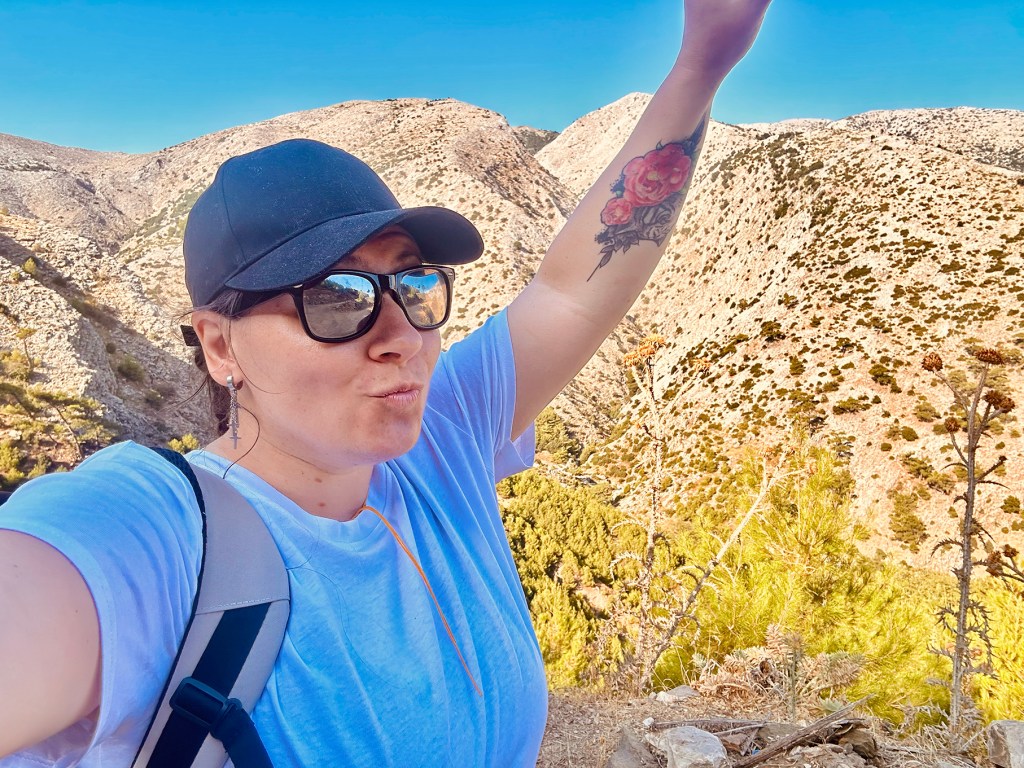
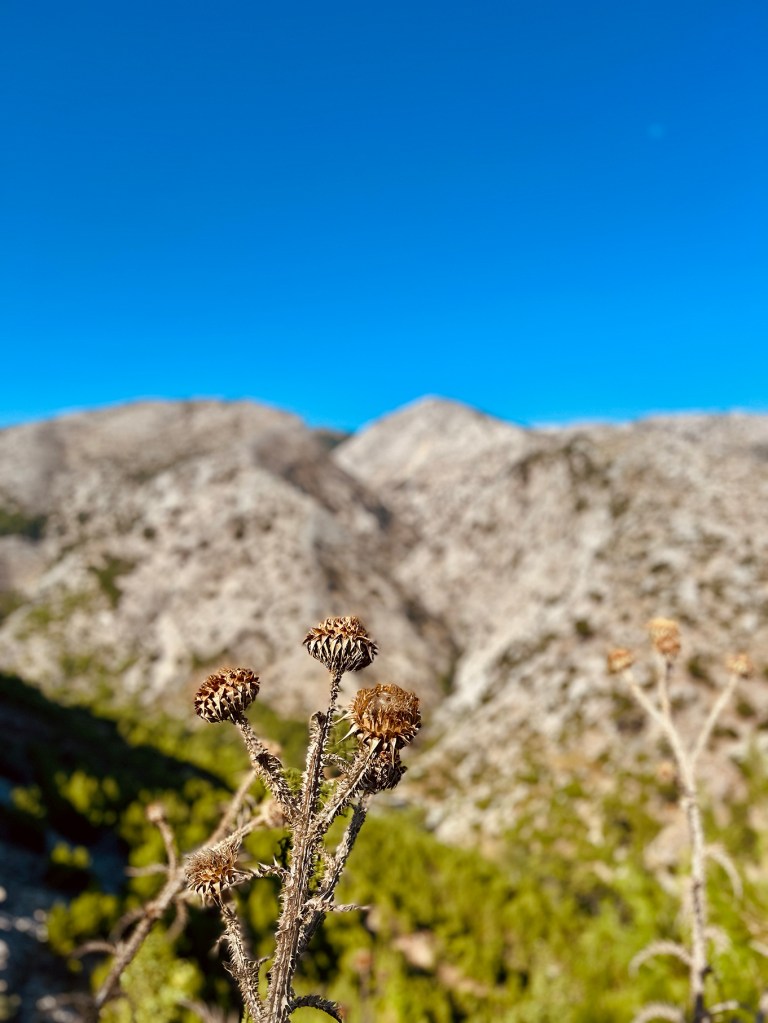
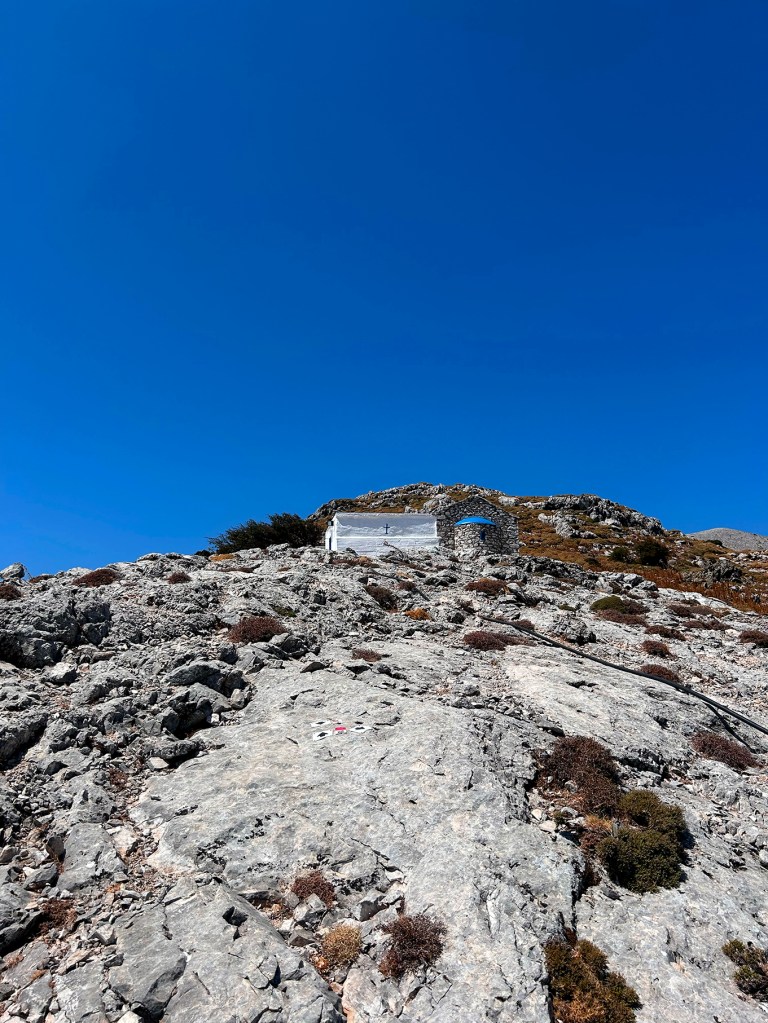
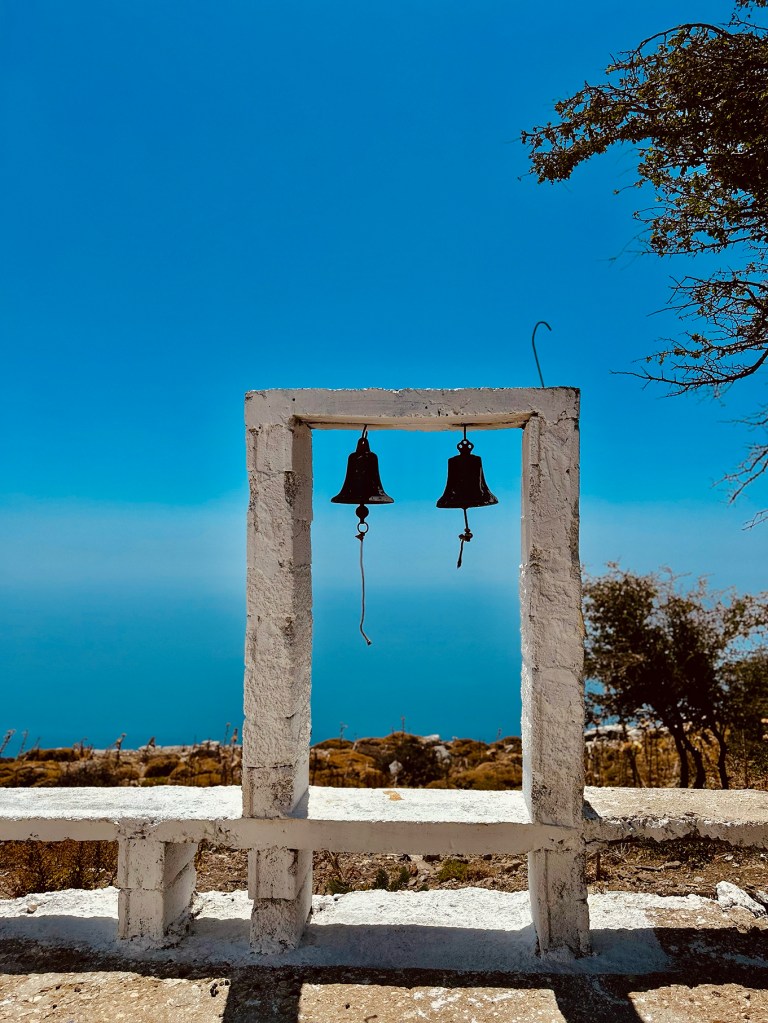
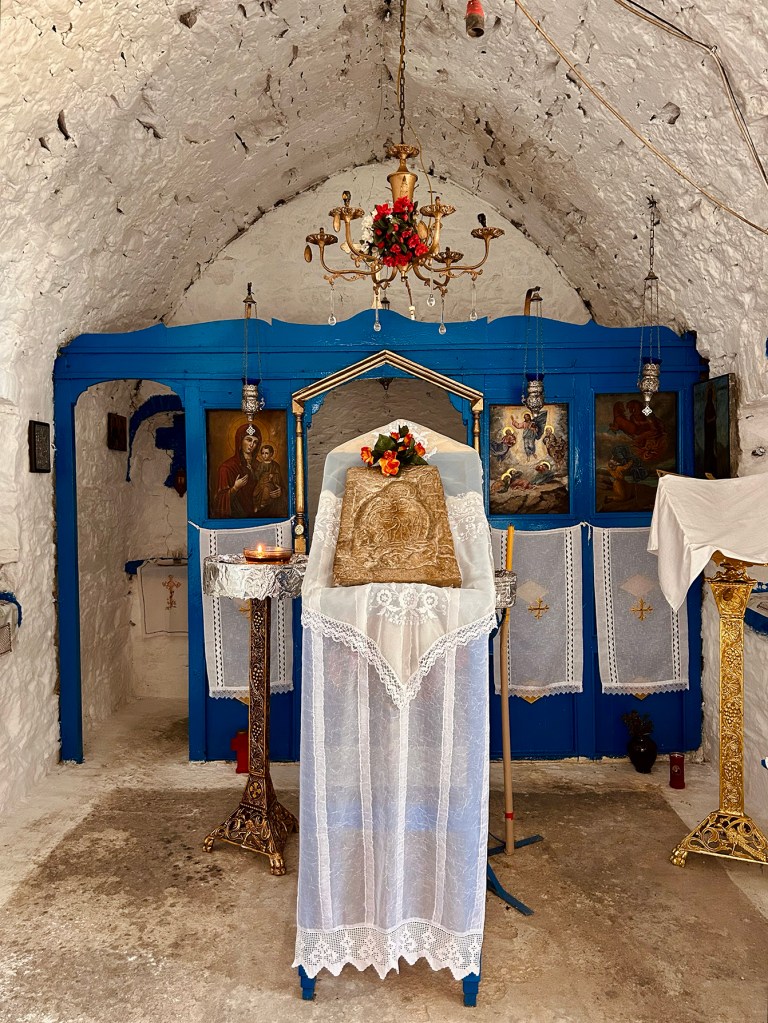
When we finally reached the tiny white chapel of Profitis Ilias (and know that if there’s any church on any Greek mountain it’s most probably called Profitis Ilias) I can tell you that I was exhilarated. A place for proper rest in a cooler room, and a needed toilet break. Without an actual toilet, as there exists neither that nor running water at the chapel, but hey, whatever works… The chapel is usually where everyone makes a longer stop, you can leave some of your stuff there to make the final push easier and some people even spend the night there. But the only people we met that day were one shepherd (with his goats), a dude who had started much earlier in the morning and wasn’t in the mood to talk to us, and a couple who were going up in the evening as we were returning. It’s quite a privilege to have a whole mountain to yourself.
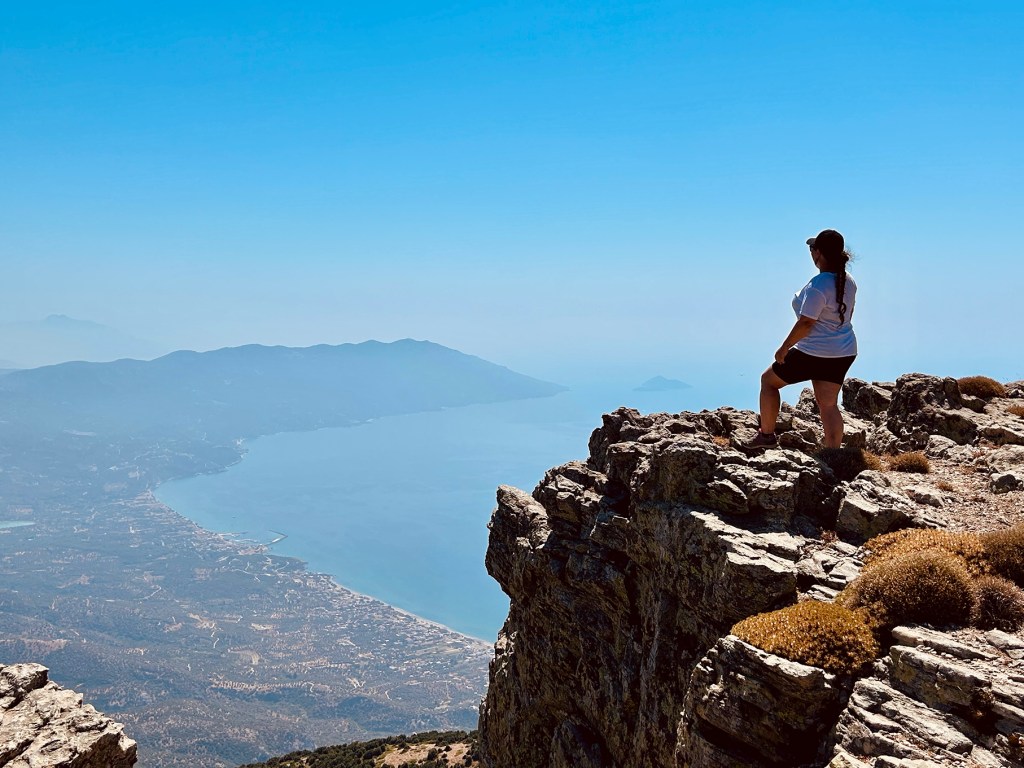
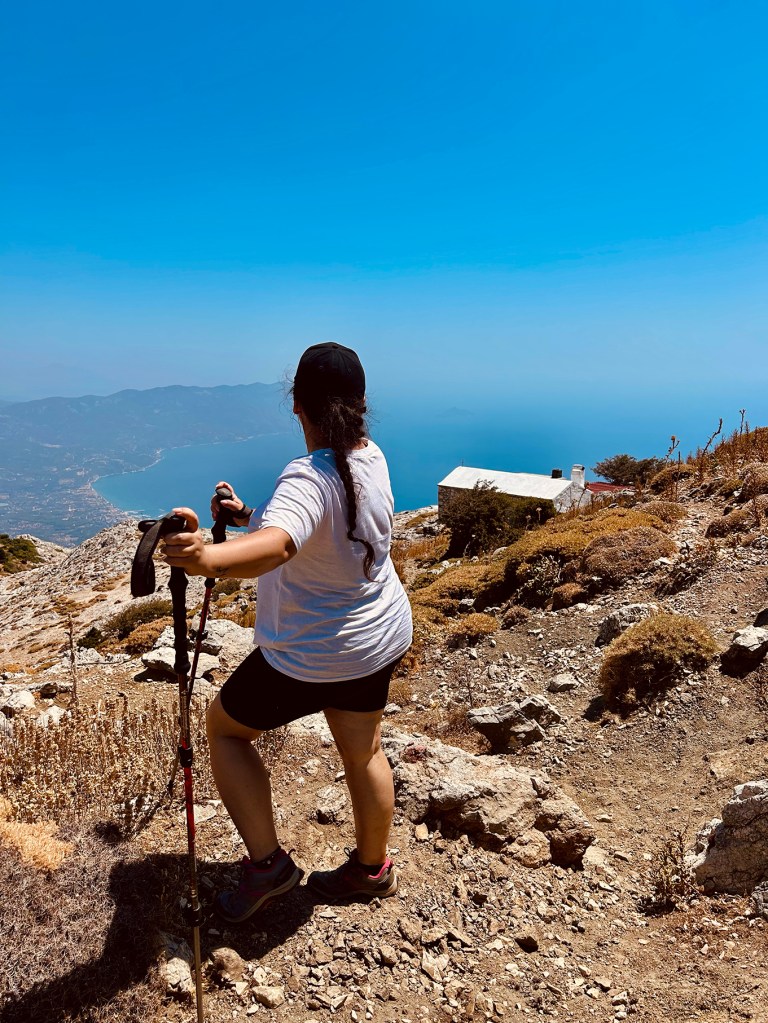
From there, the real challenge began. As Giorgos had said, the first bit was just the warm-up. The trail turned steeper, rockier, sometimes more like a jumble of boulders than a path. You definitely don’t want to miss a step.
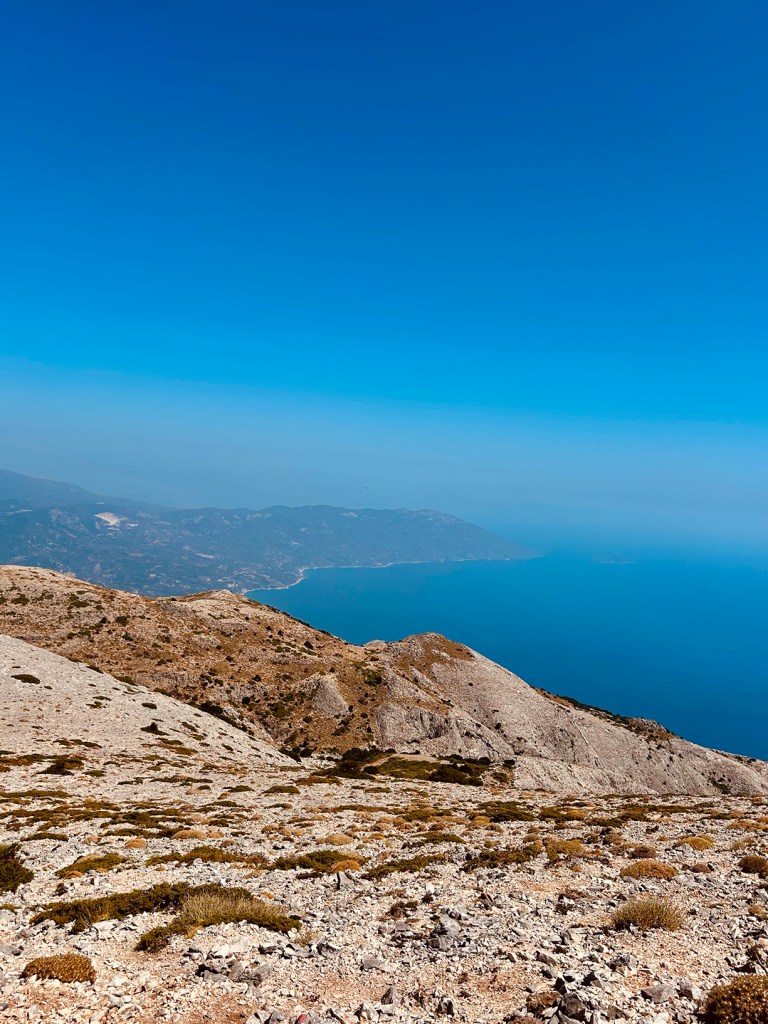
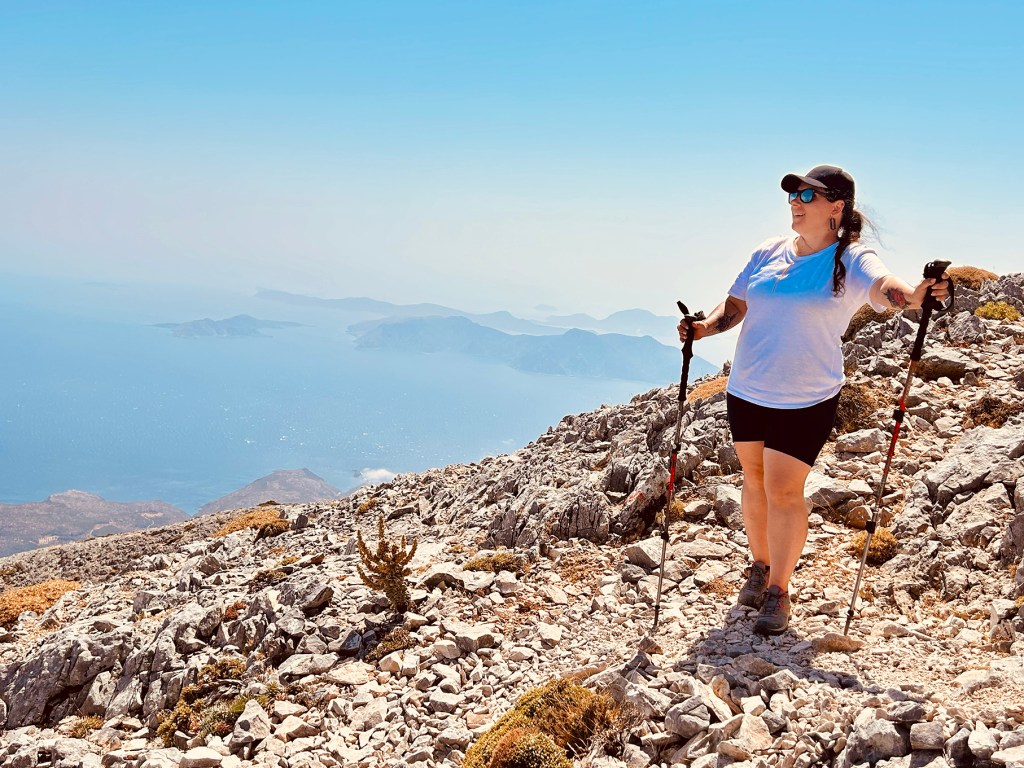
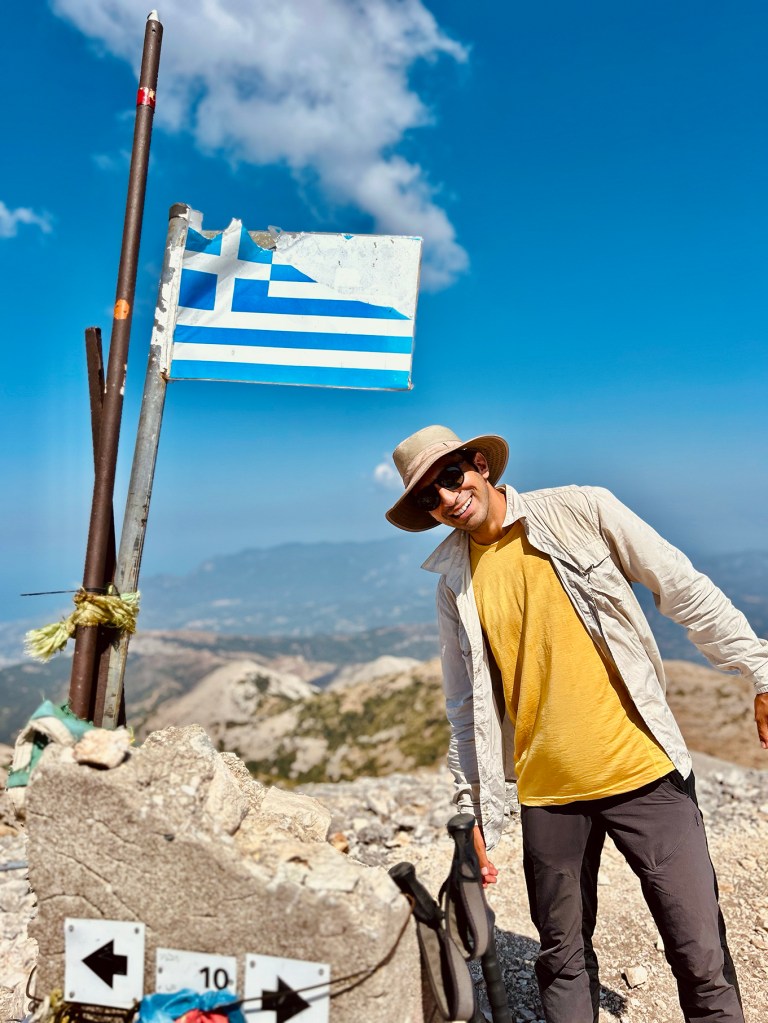
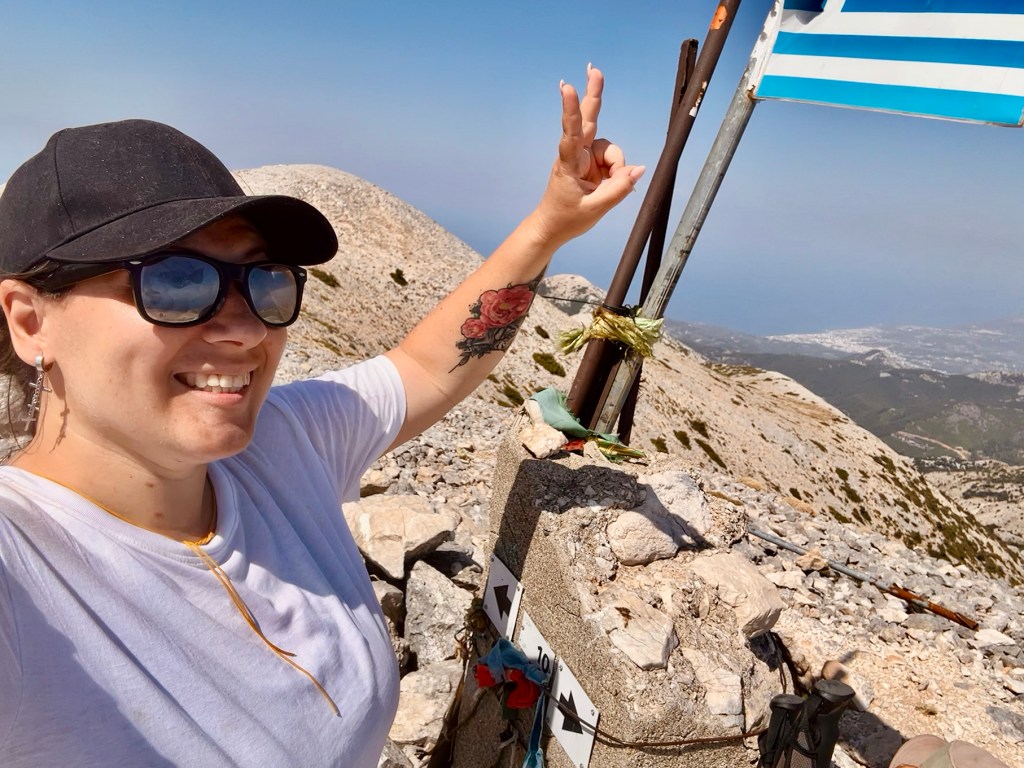
Fiiiiinally, after lots of internal monologue like “What in Zeus’ name am I actually doing?”, another push, and another push, and another push, I stepped onto Vigla Peak at around 16:20. That’s pretty much when we should have been back at the truck, so cue in a bit more shame for me. But at the same time, I also experienced this wave of pride for not giving up and for actually standing at the highest point of Samos. It was a very good moment of acceptance for myself, knowing that getting help is a good thing and that I can go the distance, regardless of speed.
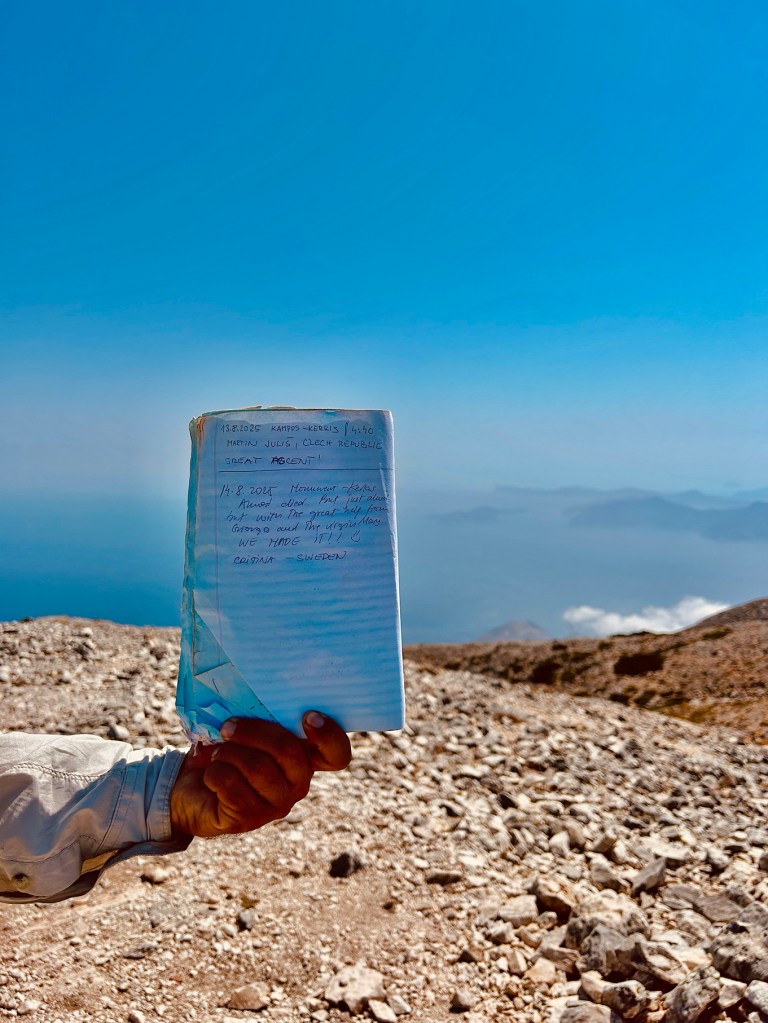
We stayed there a little while, took photos, signed the guestbook that’s stored in a little box, and just stared at the horizon which seems to be endless. As I was literally wasting his whole afternoon, Giorgos managed to get some email work done at the top before we stretched our backs and started the descent.

Going down will test your knees properly and it’s quite challenging to mind your steps when you’re already tired. You want to look up at the scenery but you also have to look down at your feet, so your neck will probably be somewhat displeased after a long hike. If you have herniated discs like myself, you can’t just jump from one rock to another either, a hard landing can cause a hernia attack and, trust me, nobody wants that on a mountain. And once you’ve done the most difficult part of climbing, you can focus your complaints on the never-ending dry and unforgiving thorny bushes. Especially if you do this in shorts. Yes, I bled for Kerkis. Kerkis turned into a cheeky cat with sharp claws and my calves got totally ripped. Giorgos, an experienced guide, had proper trousers, but even he had to pluck out some thorns from the soles of his shoes. This is also where you understand the importance of a good first aid kit in your backpack. Tweezers! Tweezers! You might need a band-aid or something to clean a scratch. At best, it stings a little, but in the mountains there’s always the risk of a more serious cut or a sprained ankle.
We took another break at the chapel, where I actually took my shoes off and walked barefoot for a while, total relaxation for the feet, we picked up the rest of our stuff and continued downward, stopped at the spring for a final refill and made our way through the now cooler and more forgiving landscape as the sun was “moving towards the west” and Kerkis itself was offering us its shade.
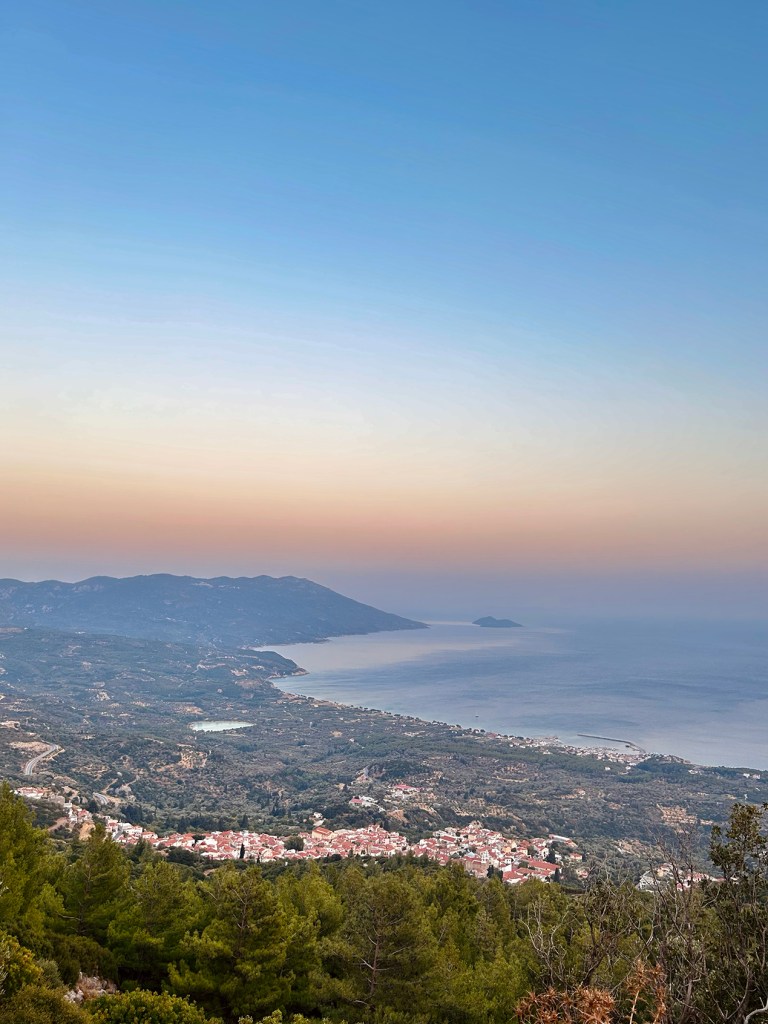
By the time we got back to the truck, I was sunburned on one side of my neck where I’d totally forgotten to schmear myself with SPF 530238057, dusty, and a little wobbly, but deeply happy and yawning – that kind of tired that feels very good on the body. Amazingly, I had no pain in my knees and the legs were doing very well. I thought I would be mashed potatoes by then, but I guess I’m not total crap after all. Total time about 10 hours. Although it could have been much faster and I could have spared poor Giorgos from this ordeal in August, I’d still say it was not too shabby for this tired goat.
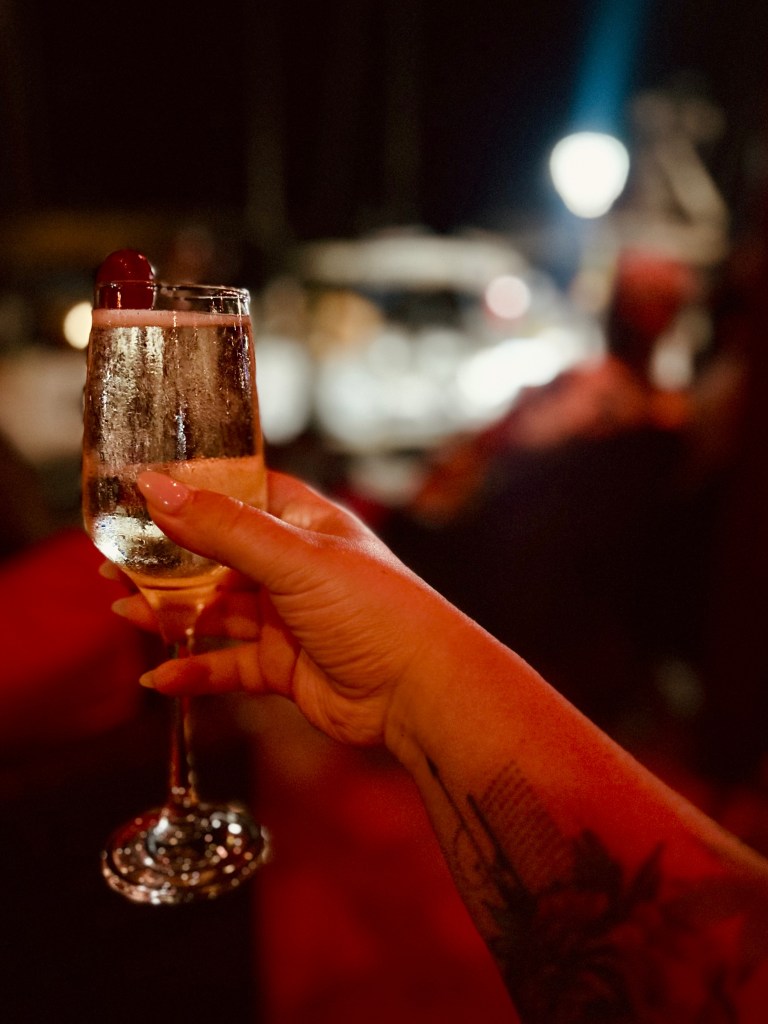
Giorgos drove me back to Pythagorio, where our little adventure together ended, and as he headed back to his own town for an evening of more work emails, I could have my sweaty victory walk back to the hotel and the most sought-after shower of my whole vacation. I finished the evening with delicious food and a celebratory sparkling glass of something equally delicious. The bed didn’t know what hit it…
Thanks Giorgos, thanks Kerkis, and thanks whatever higher power and/or inner spirit that helped me not die and get eaten by the birds on this particular tall rock! I had a blast and it was so worth it!
Samos was worth every penny, from the wild waves of Samiopoula to the postcard-perfect Kokkari, from cozy Pythagorio to the hills of old Vathy, from bargains in Karlovasi to the turquoise strait of Kasonisi, from Greece to Turkey and back in a day on a stormy sea, and from the ancient ruins to the very top of Mount Kerkis. I couldn’t have asked for a better vacation this summer and I can’t wait to go back!
And you, reading this, apart from the obvious “Thank you for your interest and patience”, what are you doing still reading and not visiting Samos???
 CRISTINA ON THE ROAD