It’s difficult to find a good way to begin this post. Dive in, head first, just like Morocco totally hit me in the head with awesomeness and madness, dirt and cleanliness, chaos and order, frustration and relief all at once.
I had two weeks of vacation left since last year and I decided to spend them in Morocco. It had been a dream for many years to visit, but this trip exceeded any expectations and I am so happy that I did it.
Before I tell you how many hours NOT to sit on a camel or what a challenge it was opening a bottle of wine, let me just say – with the risk of sounding cheesy – that traveling through the many different landscapes of Morocco feels like flipping through a collection of artistic photographs, of very high quality and with an aesthetic that makes you question whether you’re awake or dreaming. The Instagram moments just smack you in the head, one after the other. One moment you’re wandering the winding alleys of ancient walled cities, the next you’re cutting across the golden dunes of the Sahara or breathing the crisp air of the snow-dusted peaks of the Atlas Mountains.
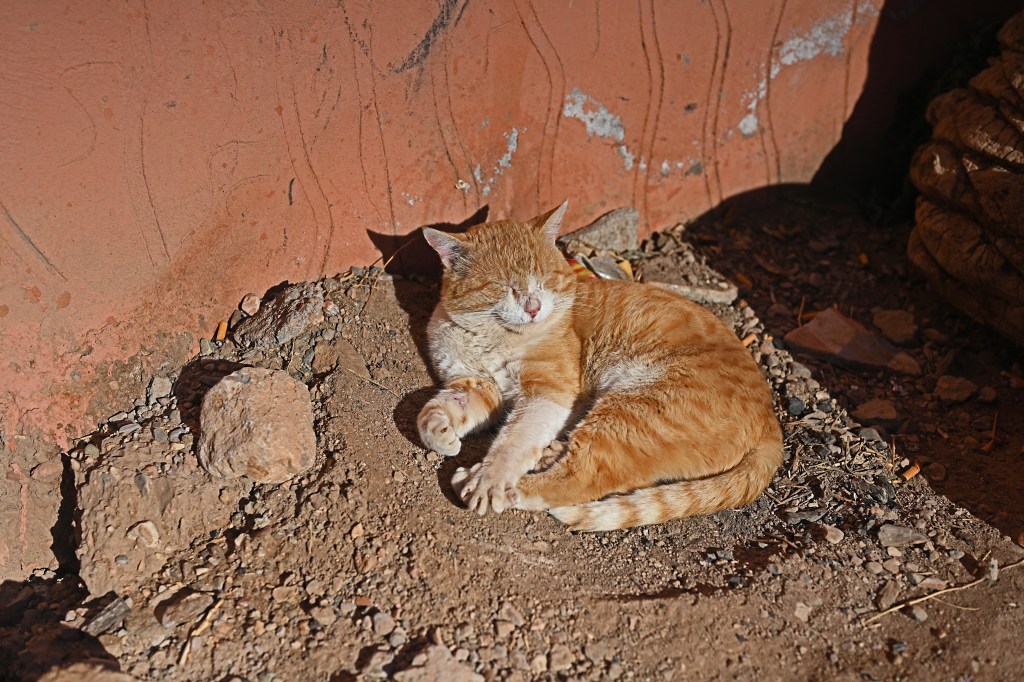
This is going to be a very long post, so for anyone who doesn’t want to read about my love for orange kittens, kefta tajine and the desert, here’s the simple itinerary that I can recommend for two weeks in Morocco:
Day 1 • Travel to Marrakech
Days 2–4 • Tour/transfer from Marrakech to Fes, through Aït Ben Haddou, Tinghir, the Dades Valley and Merzouga
Day 5 • Explore Fes

Day 6 • Travel from Fes to Chefchaouen
Day 7 • Explore Chefchaouen
Day 8 • Travel from Chefchaouen to Marrakech (passing through Tétouan, Tanger and Casablanca)
Days 9–12 • Marrakech
Day 13 • Day-trip to Essaouira
Day 14 • Get a tattoo in Marrakech
Day 15 • Leave Morocco and travel back home (unwillingly, of course, but with amazing memories)
Obviously, the tattoo is more of a me-thing, so you can either spend your last nights in an exciting and vibrant Marrakech, or do yet another day-trip.
Getting there
I traveled from Stockholm to Marrakech on a Saturday at the end of January. It’s a five-hour flight and I chose to do hand luggage only, to save myself the cost and trouble.
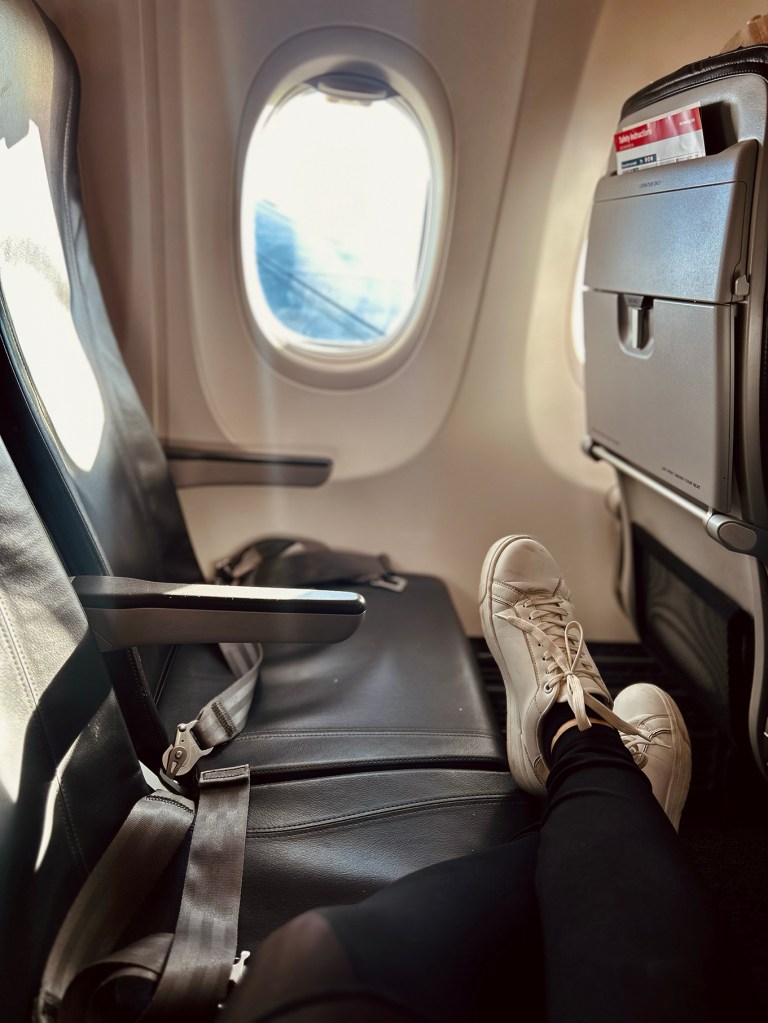
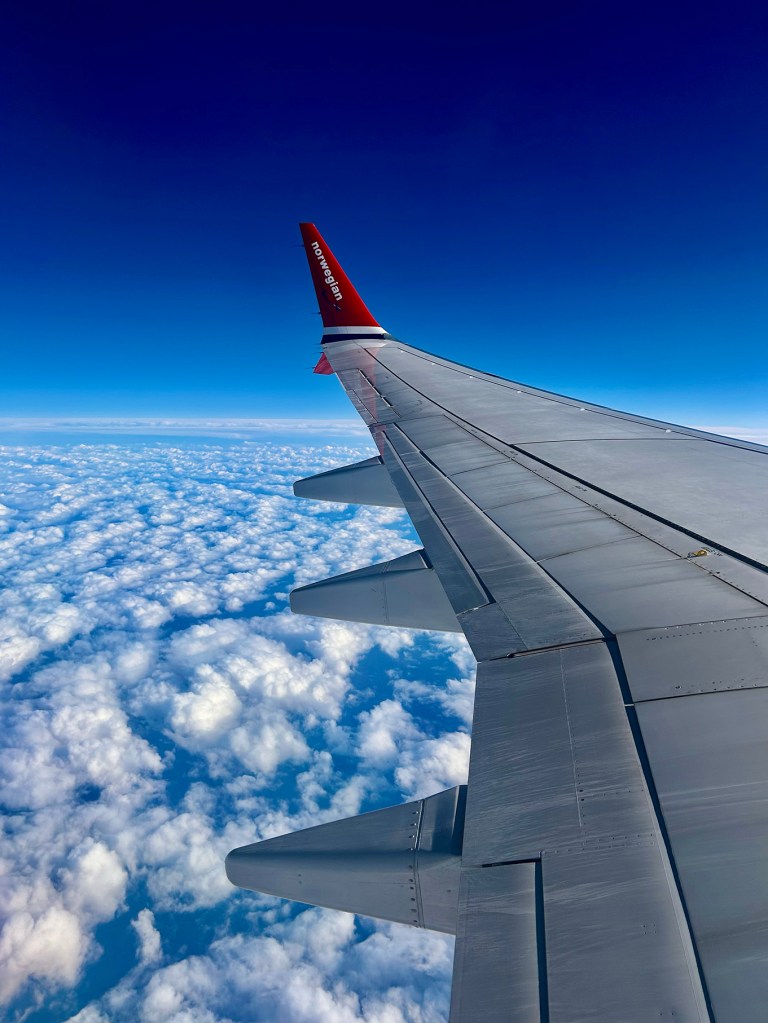
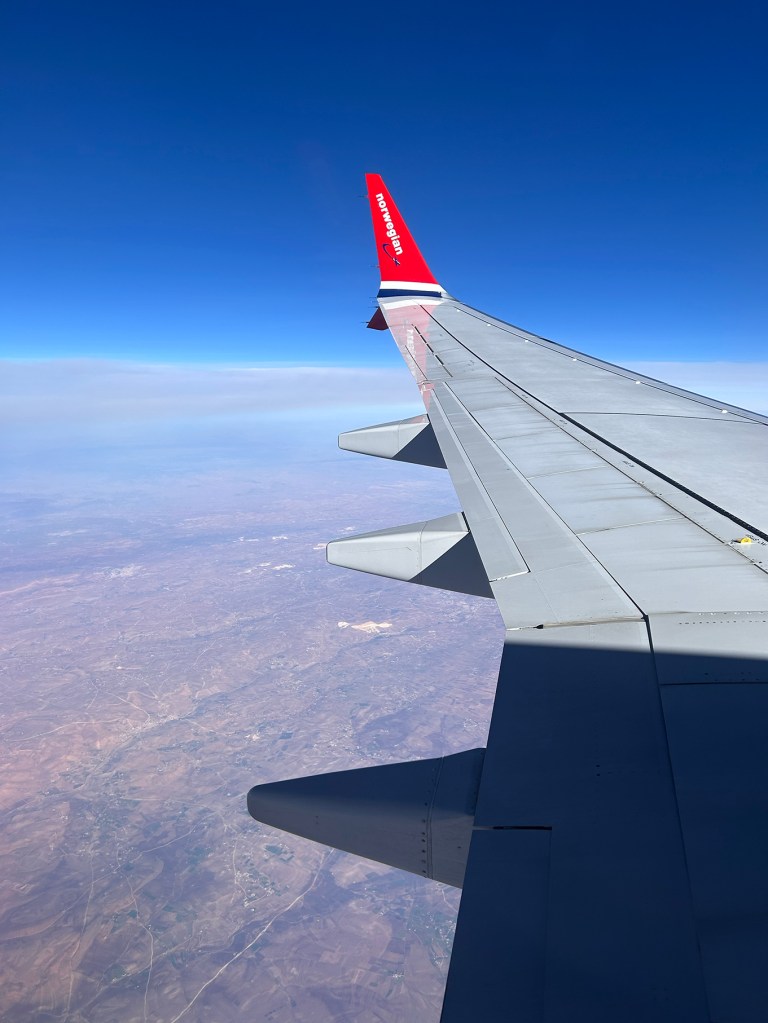
This was totally doable for this trip although after a while I did miss my computer and wished I’d had more clothes to choose from. As my old constant companion Nikon D800 (we’d been together for over 12 years now) had just drawn its last breath, I had to buy a new camera, so I packed as lightly as possible to be able to bring the new Z7 (mirror-less and totally amazeballs, mind you), together with a proper power bank. Technology weighs a lot, when you add them all together. Airlines have become stingy with luggage too. First it was okay with 10 kg hand luggage. In recent times, that has been reduced to 8 and even 7 in some cases. If the bag itself weighs more than 1, you can do the math on how much you’ve got left for your actual luggage. Forget hair straighteners and high heels, painkillers and anything for a potential upset stomach are more important. Turns out I didn’t need them, but hey, better safe than sorry.
I was incredibly lucky with everything, including the weather. I had sunshine for two whole weeks and lovely temperatures, although it gets chilly at night. Especially at higher altitudes in the Atlas Mountains, and in the Sahara. A couple of lightweight garments for warm weather, a few sweaters and a good jacket for the colder moments, and all of these could be layered whenever I needed it. This time of year was perfect for a less hysterical trip, not extremely high temperatures or large crowds.
Arriving in Marrakech in the afternoon, I was picked up by a driver from my first riad. I didn’t book hotels for this trip, staying in riads seemed like a more authentic experience in Morocco and I was not disappointed. Some are as fancy if not fancier than many hotels and I had a wonderful mix of simple&quirky to lavish&grand.
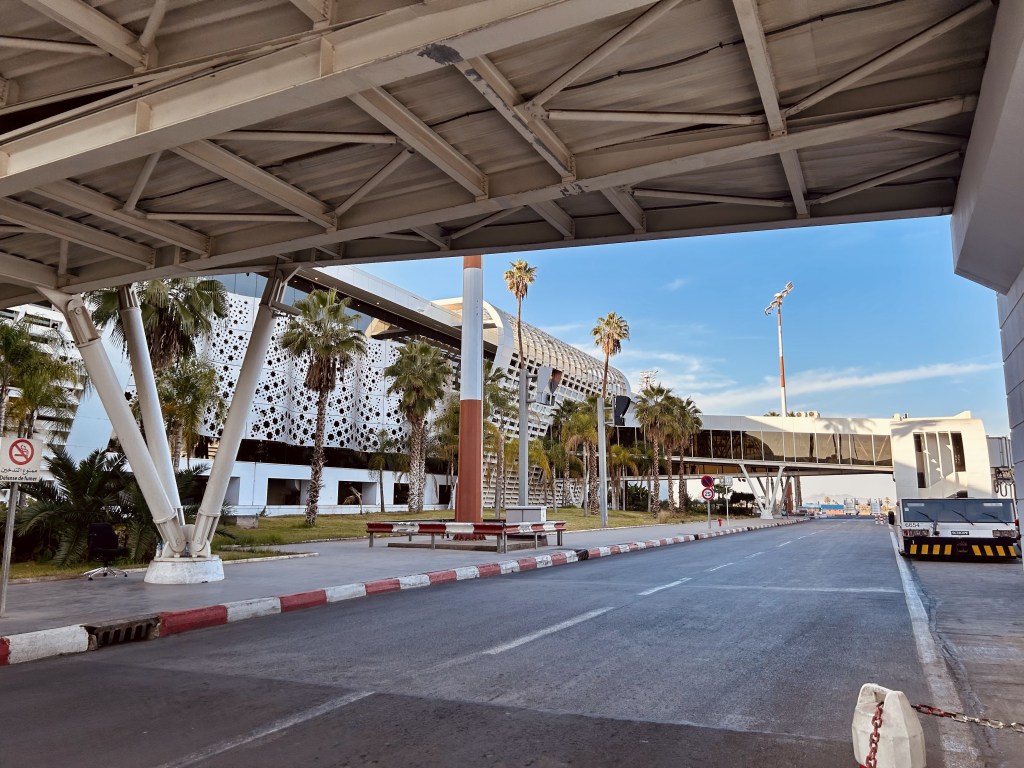
Security is thorough and the lines for passport control are long, so it takes a while to actually get out of the airport. The good news is that the airport is very close to the city, so the ride into town is a short one. The very pleasant sunshine hits you in the face straight away and traffic is bonkers, just what you need as a change of scenery from the Swedish cold and stiffness. Tooting your horn is mandatory and if you don’t drive at high speed, you’re an idiot. Pretty soon, you reach the walled medina, the old part of town, where it’s usually much more difficult to drive. We came to one gate where a traffic officer signaled everyone to take a different route, as that particular road was blocked, something had happened further down the road. So we drove around the area, which gave me a really nice opportunity to see more street life and take in the sounds, smells and colors of the medina. Naturally, all mixed with cheesy pop songs blasting from the taxi radio and my driver having a loud conversation on his phone.
We finally made it to a square inside, I think it was Place Sidi Ayoub. I was just too stoked about being there, to look for the names of the places upon arrival. Someone from the riad came to meet me, as cars could go no further into the narrow alleys. Car traffic is quite limited in the tiniest streets, only mopeds, motorcycles, bikes, smaller carts and donkeys make it through there. Which makes it even more bonkers and so much fun to navigate.
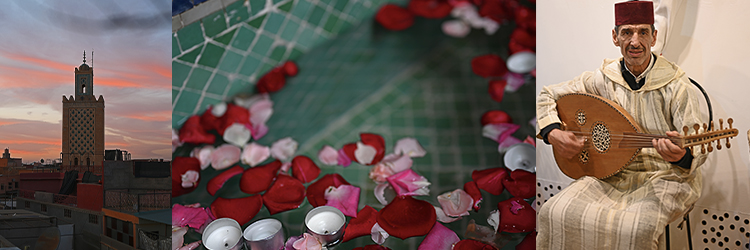
The riad was literally hidden, this concept of anonymity on the outside and a hidden gem on the inside is quite fascinating. Obviously, there are amazing buildings – palaces, monuments, mosques – that showcase all grandeur even on the outside, but so much of Morocco is a simpler wall that hides an oasis in the interior. It was a very friendly welcome and super easy check-in, with the traditional mint tea that is poured from a height to make frothy bubbles.
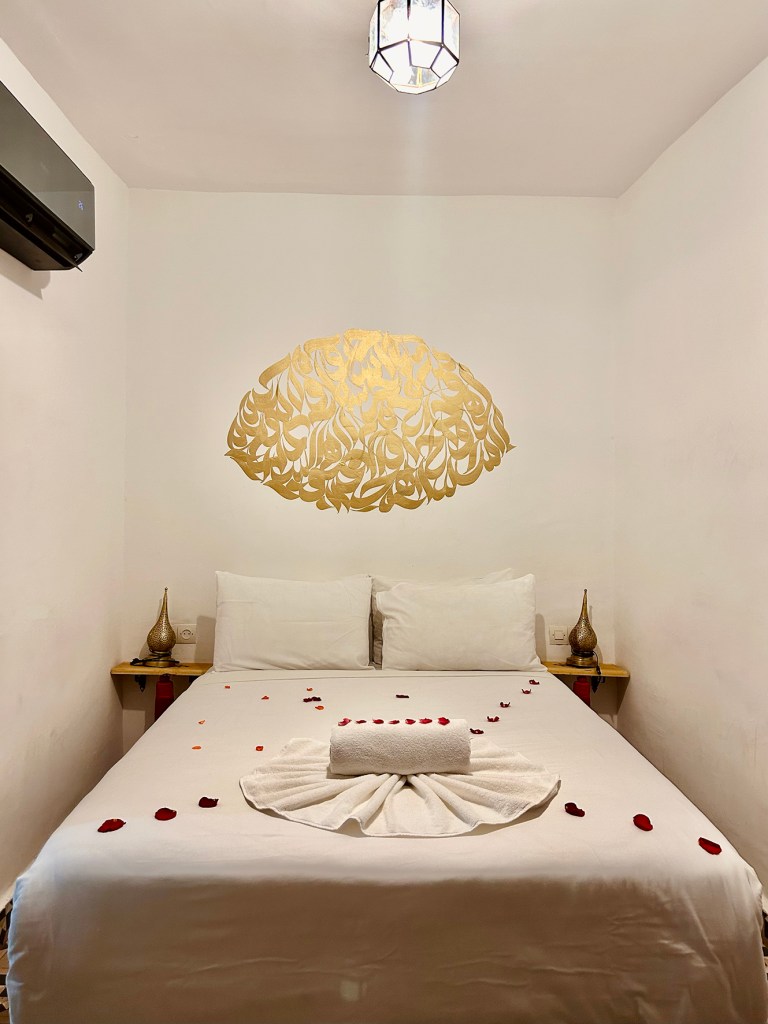
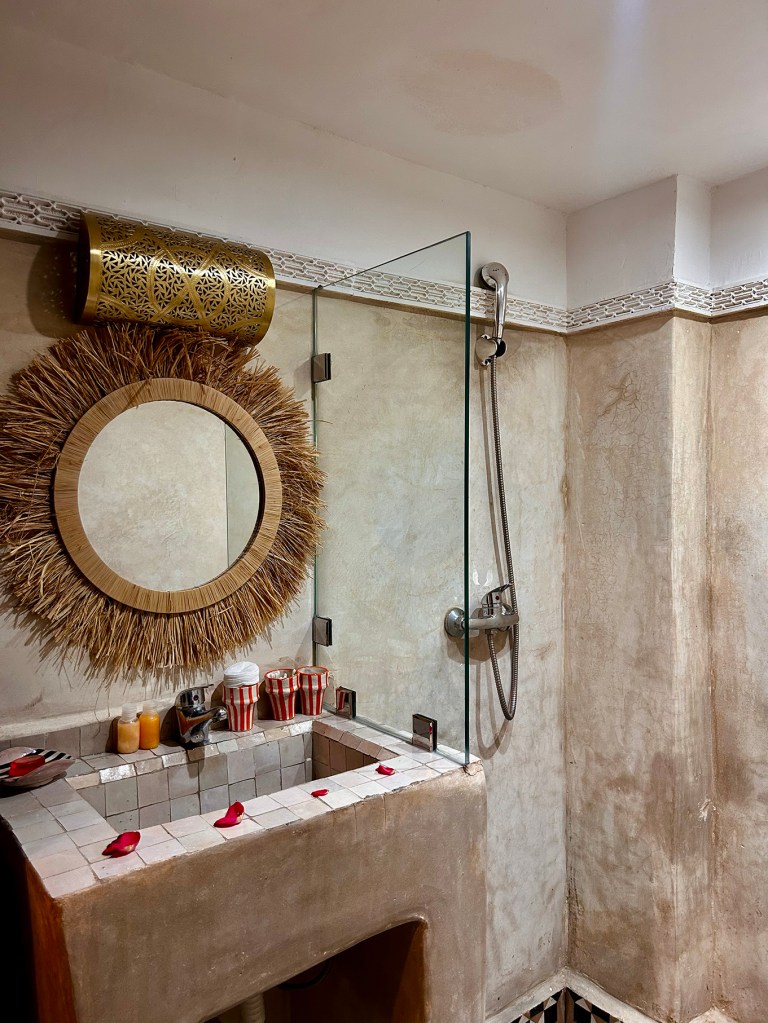
I got a nice room that had rose petals laid out on the bed and in the bathroom. Still high from simply arriving at a destination I had wanted to reach for so many years, all I could think about was that none of my exes ever laid out any weeds on any bed, let alone fresh rose petals, for me. I could marry any Moroccan dude for that alone. Thanks, boys! I know it wasn’t for me specifically, but it totally made my day and reminded me that yes, I very much deserve rose petals on various pieces of furniture!
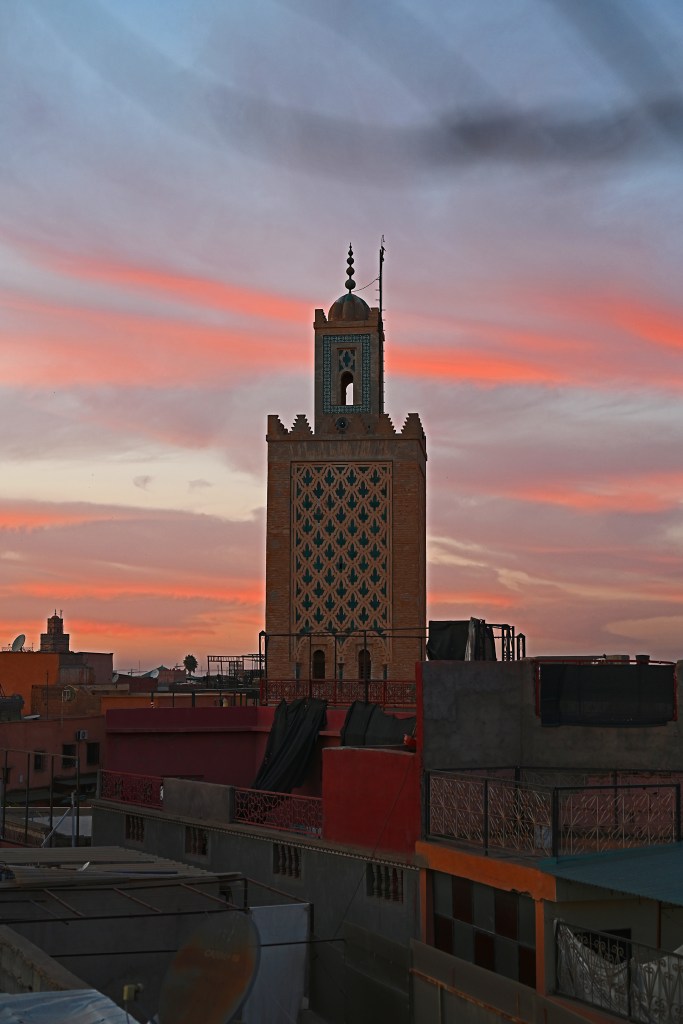
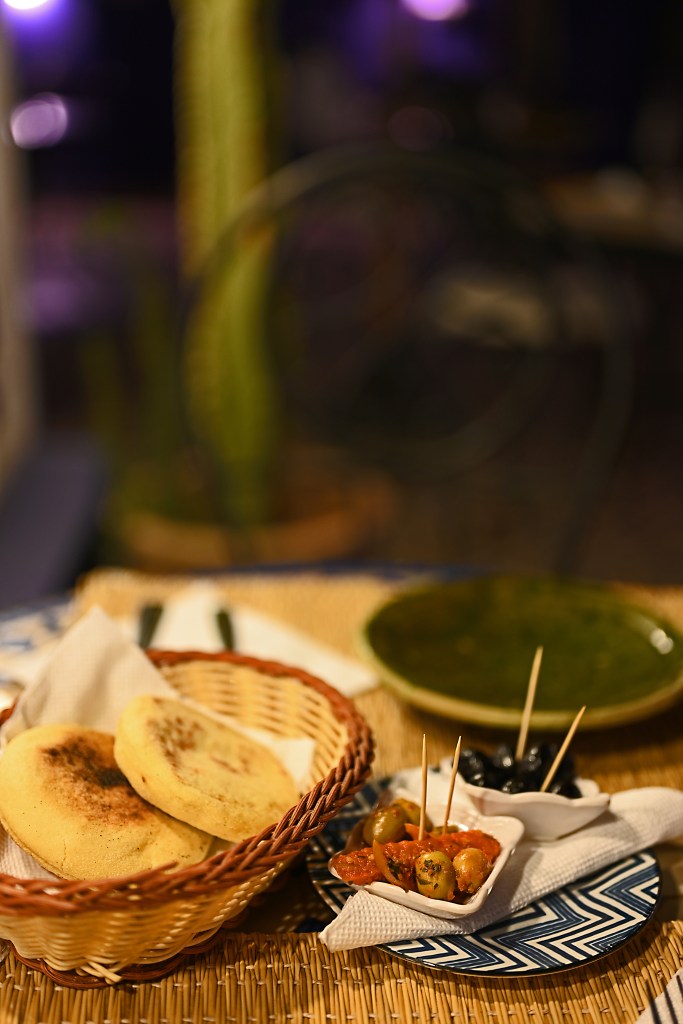
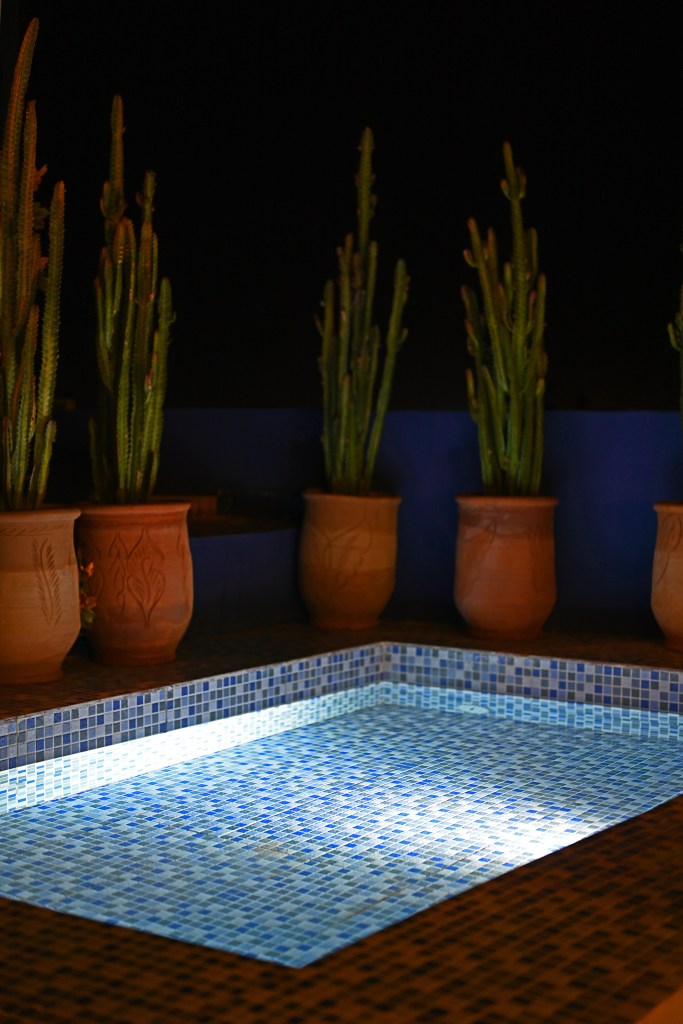
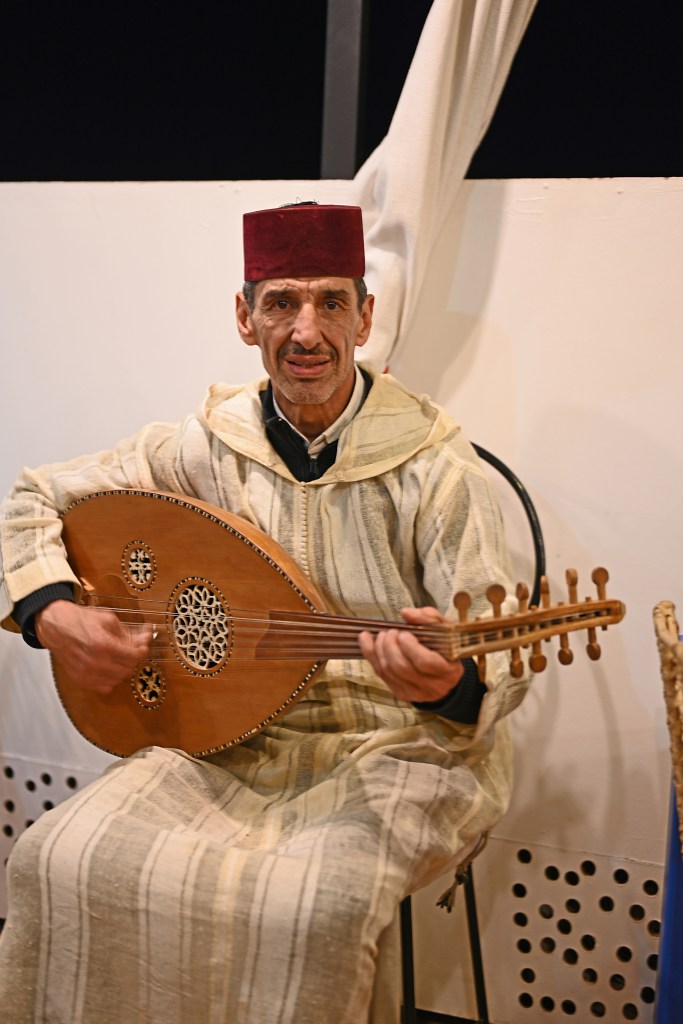
The courtyard/lounge area was so peaceful, and from the rooftop terrace, the views stretched out in unforgettable beauty. I managed to catch my first Moroccan sunset together with an evening call to prayer, and let me tell you, they do NOT disappoint. I also chose to have dinner at the riad and not explore the city by night, as I had an early call for the coming three-day tour from Marrakech to Fes.
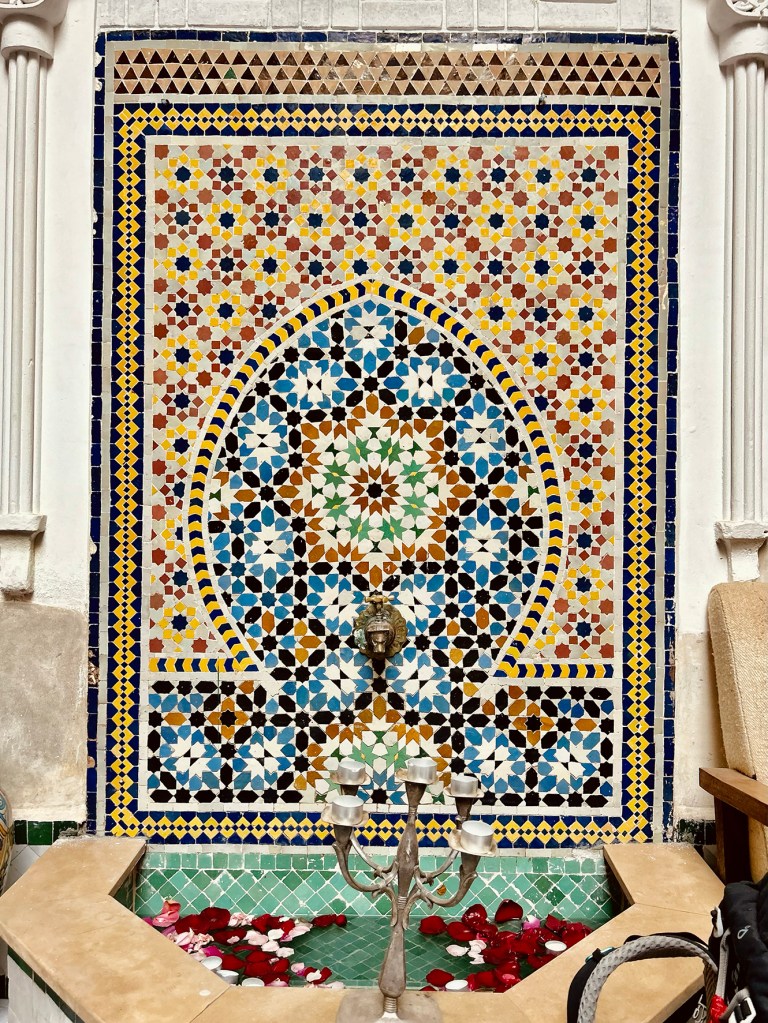
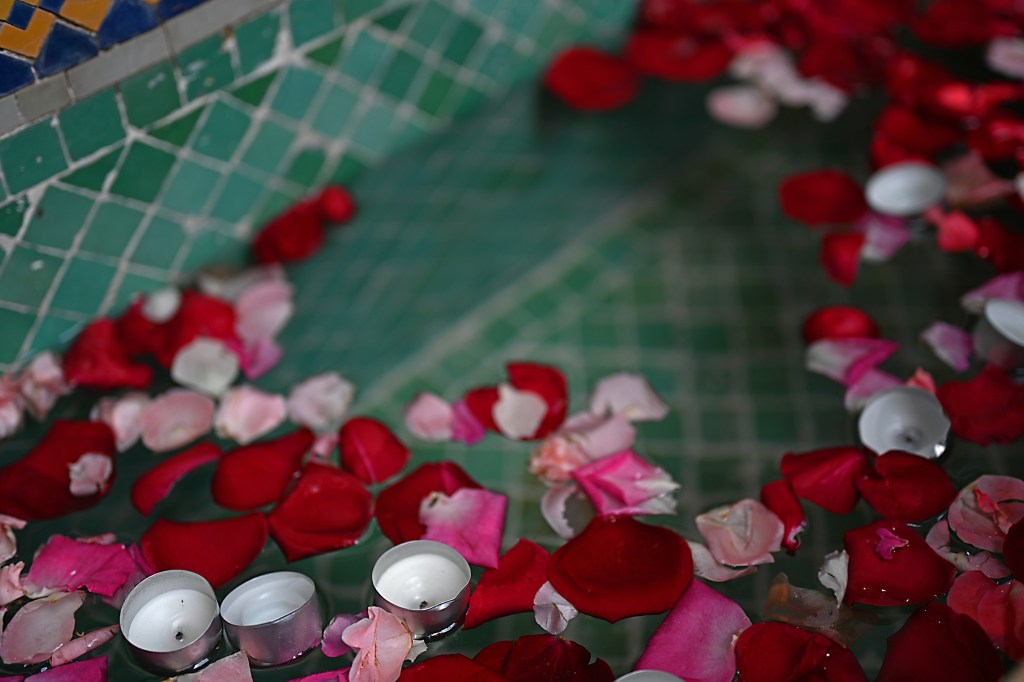
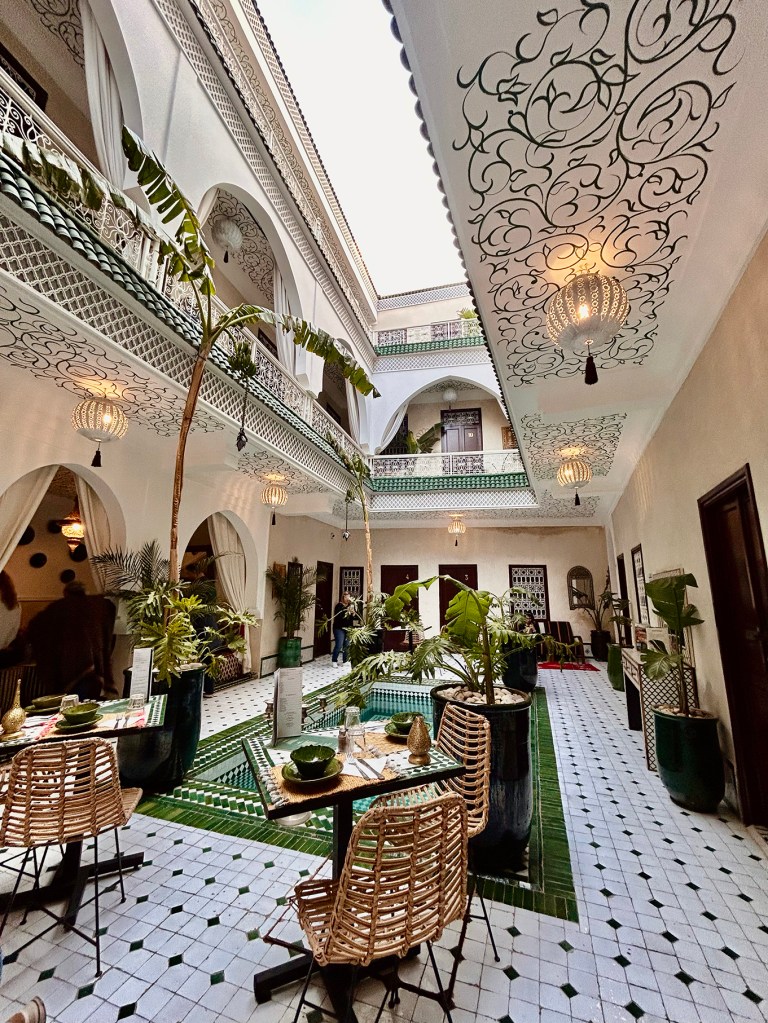
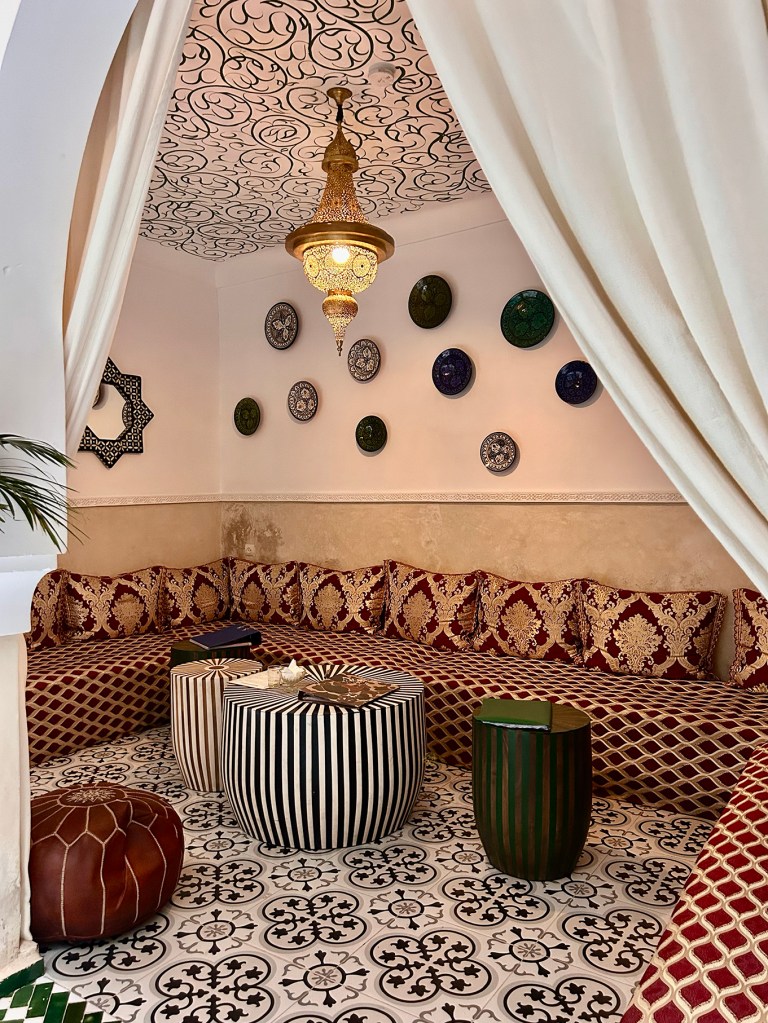
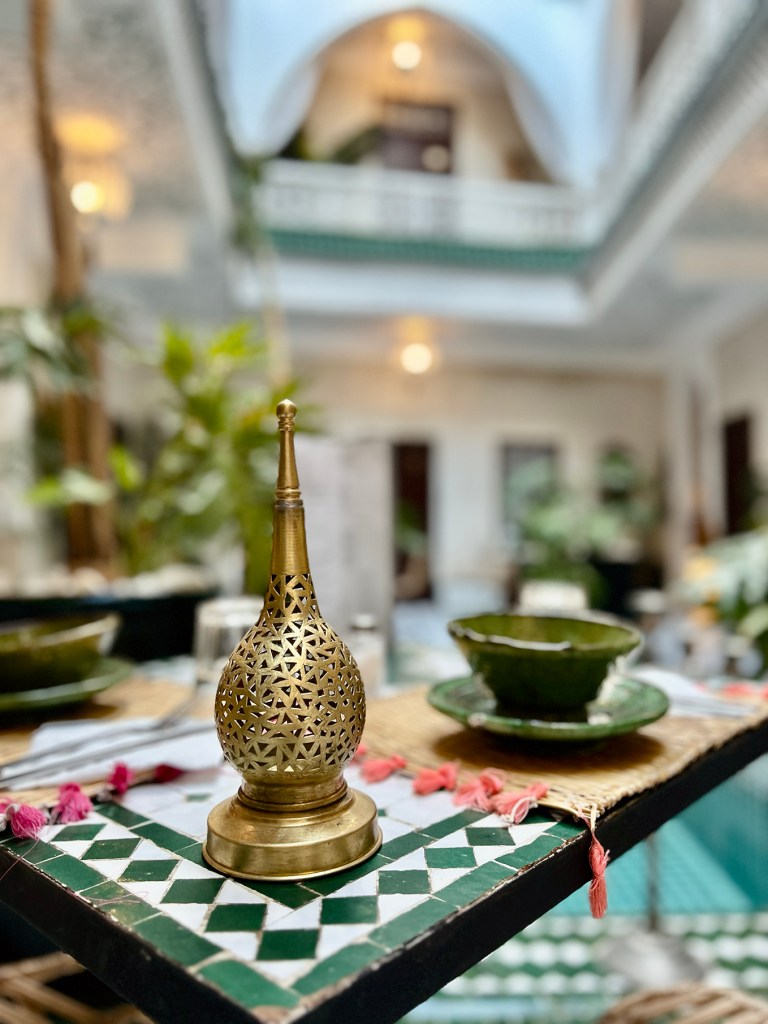
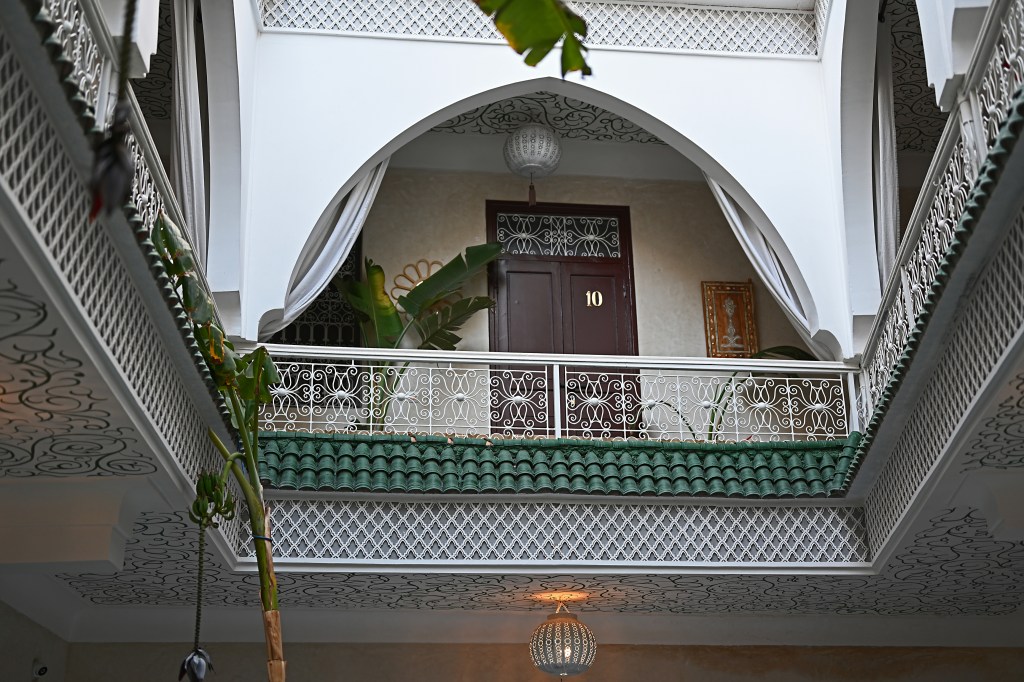
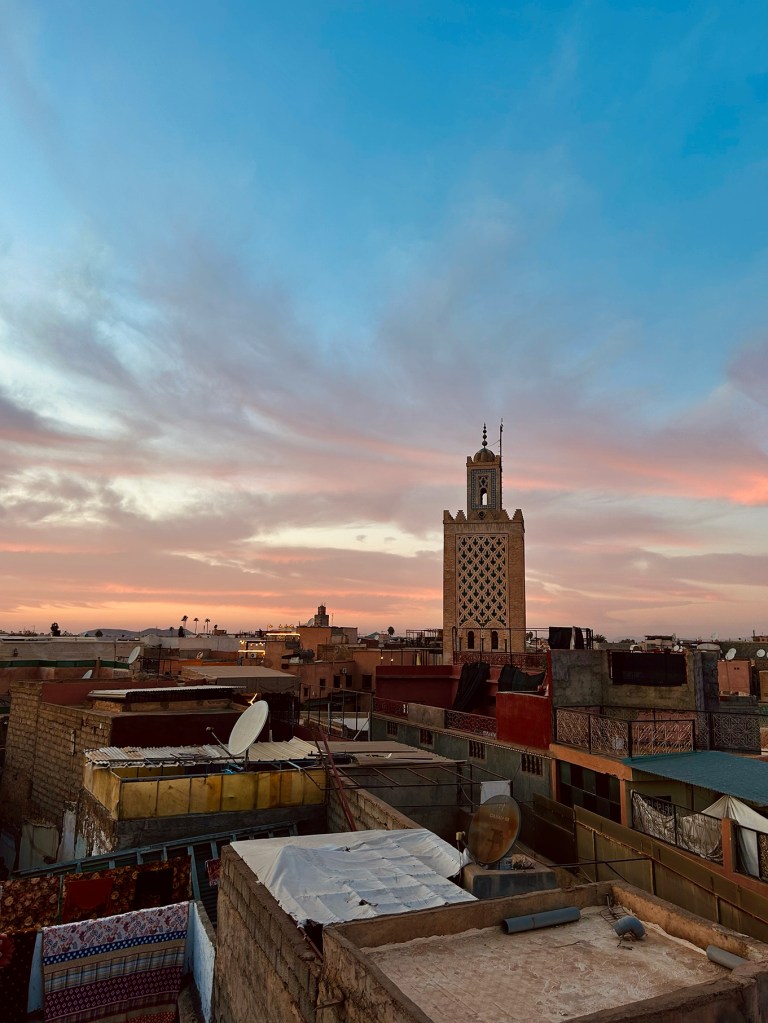
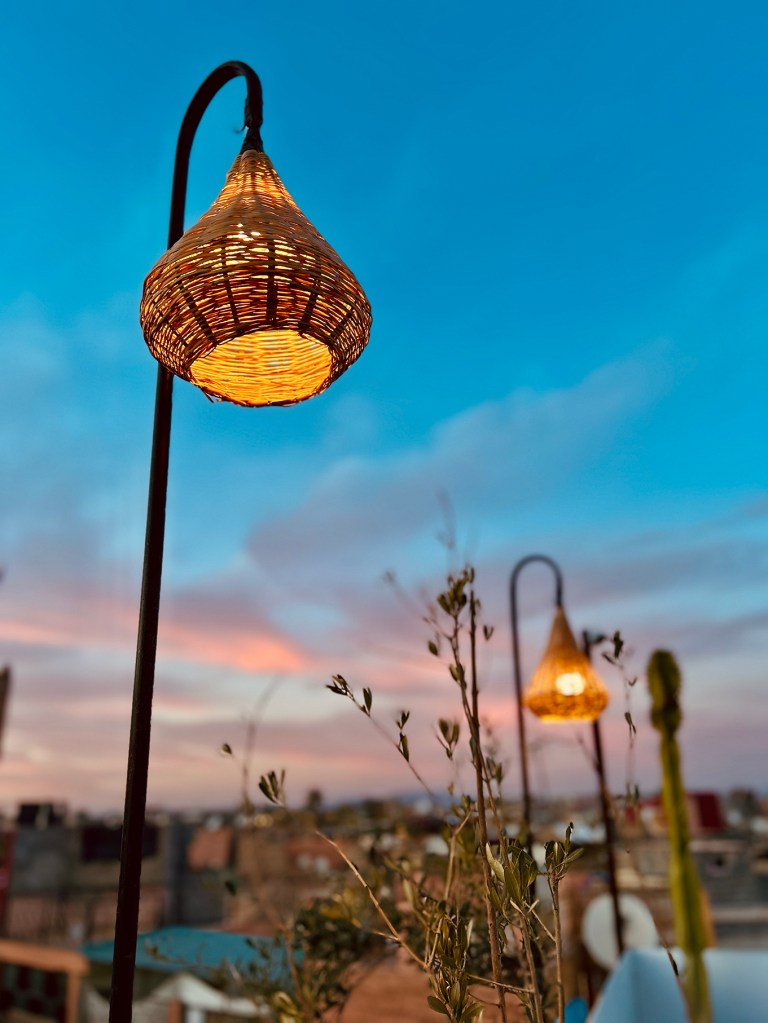
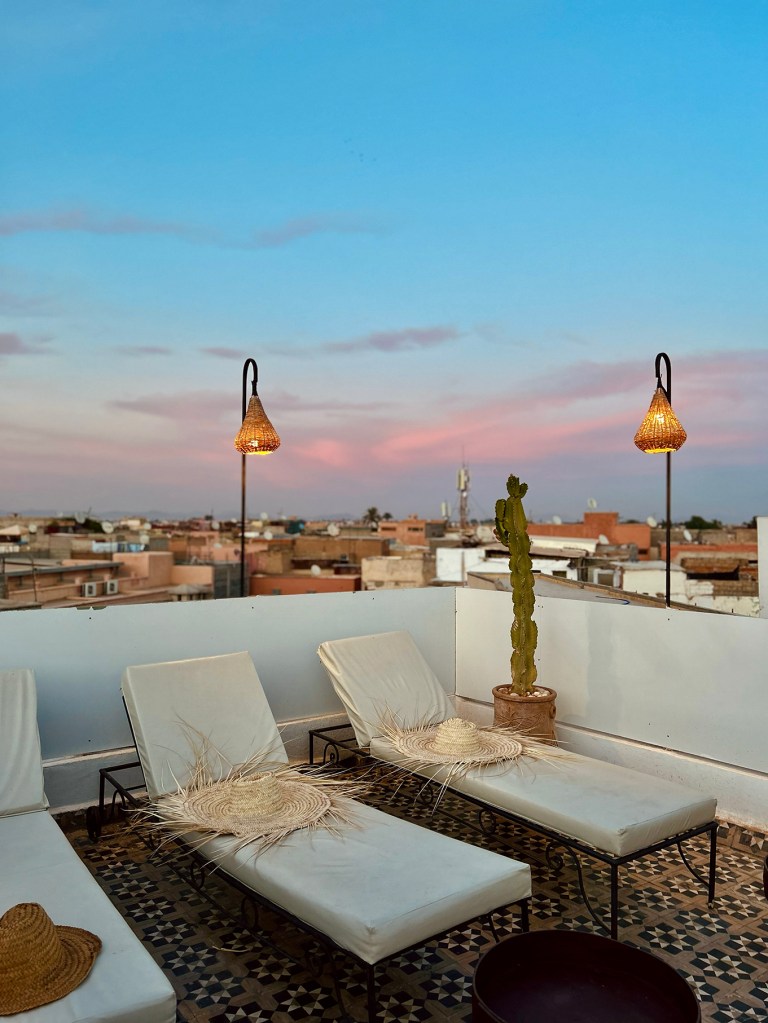
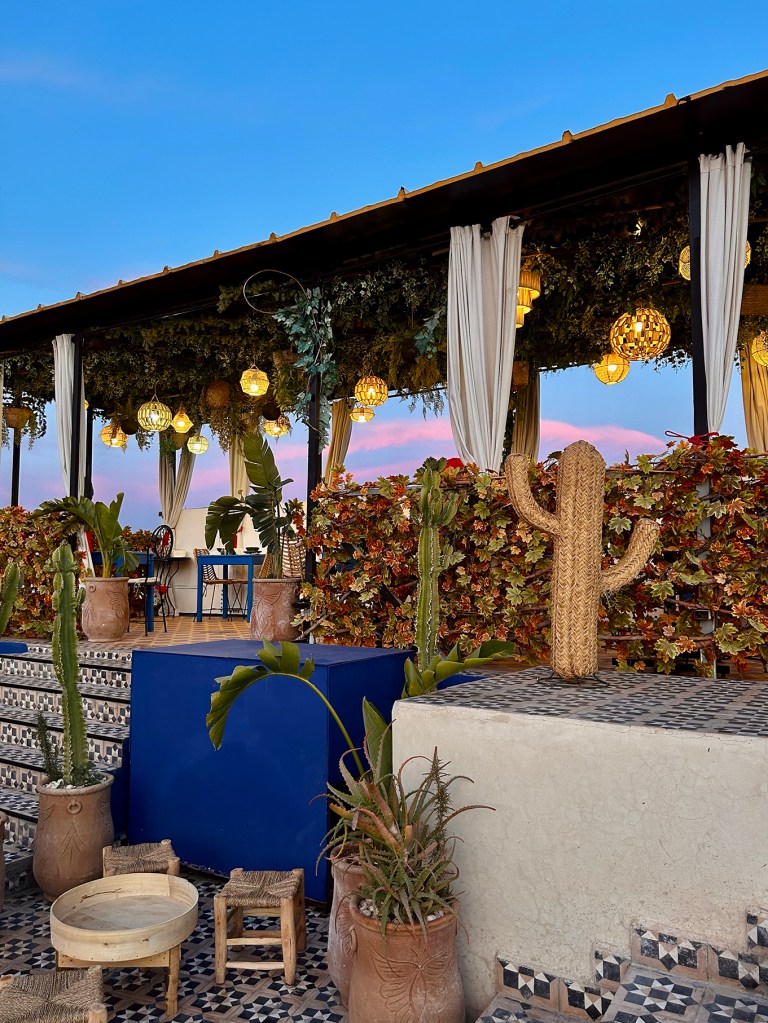

I couldn’t have the breakfast that was included in my stay at the riad in the morning, but they were sweet enough to make me a little takeaway box for the road, and someone from the staff walked with me to the meeting point for my tour. I sat on a dusty block of concrete and had my little pancake breakfast. My love story with Moroccan pancakes began that very moment and I don’t think it will ever end.
It’s definitely dodgier at night in some areas, and it may not always be entirely safe, especially as a woman traveling by herself. But there’s also a lot of prejudice involved in that type of thinking, and looking back, I was very safe most of the time and felt welcome everywhere I went in Morocco. I’ll write more about that later. But the riad insisted I get escorted to the place and since I couldn’t use mobile data at the moment to check the maps properly and get in touch with the tour guide (my operator made it bloody expensive and I hadn’t yet discovered the eSIM, more about that later too), it was okay to walk with someone.
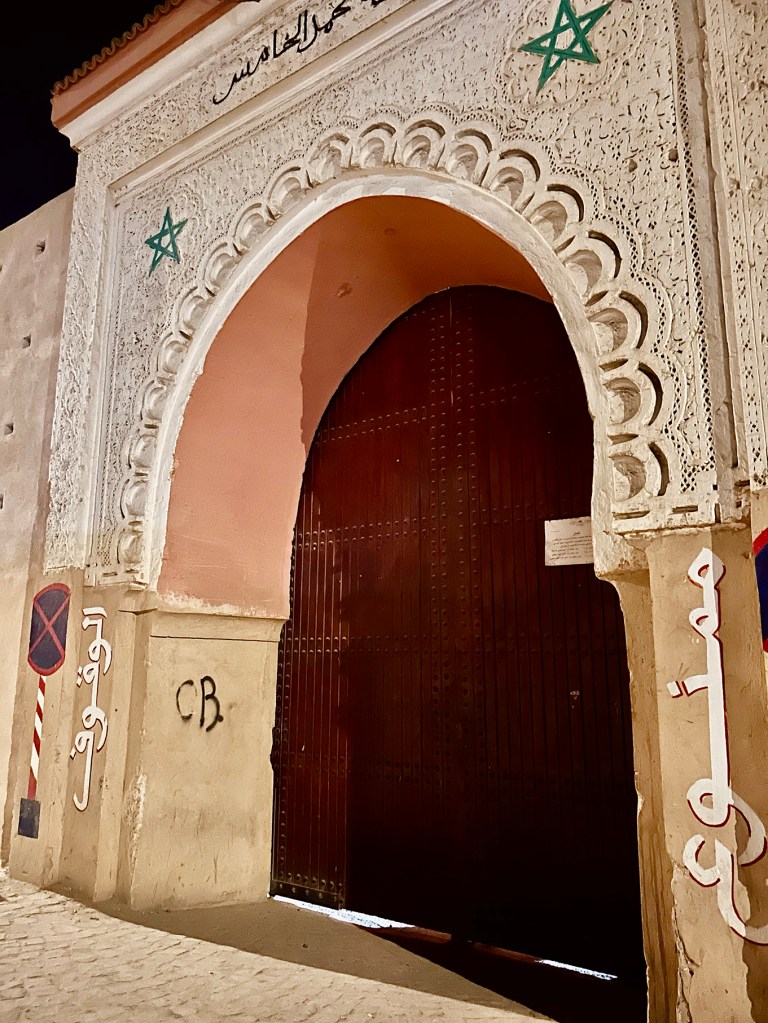
Lots of tour operators communicate through Whatsapp, they send proper instructions on where and when to show up, they’ll answer any questions you might have and pretty much every establishment can arrange something for you. In the towns, there are lots of pick-up and drop-off points for tours and transfers. The logistics function very well, as tourism is very important in Morocco. Traveling on a shared transfer by minivan is very common, and along the road lots of restaurants, shops, cooperatives and hotels cater to the groups that come day in and day out. I had booked my tours on Viator and I really have to say I was very lucky. Especially on the first, three-day trip that took me from Marrakech to Fes and offered so much more than just a ride.
From Marrakech to Fes
I got a really nice driver, Ibrahim, and a wonderful group of people to travel with. In so many of my travels, I’ve encountered spoiled, entitled, boring human beings with zero chill and poor attitudes, who more often than not do not appreciate the places they visit, who don’t show up on time and who will complain about everything between the earth and the sky. But this group of people was so much fun, so nice and so friendly, that I was genuinely sad our time together ended after the third day. There was a lot of laughter, openness and respect, it made the trip such a memorable one. We were from Japan, Germany, Hong Kong, Italy, Spain and Sweden and what surprised me pleasantly was that there were quite a lot of young(er) people in the group. So it was a nice mix of couples, a family, me as a solo traveler and small groups of friends.
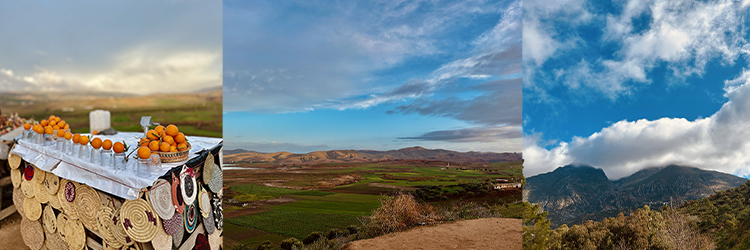
The trip was the perfect way to experience more of the country and landscape than just hop on a flight between cities. From Marrakech, we traveled towards the Atlas Mountains. I had looked at the itinerary and knew approximately what we would be seeing, but it hadn’t really dawned on me that I would at some point during the day find myself at a pass of over 2200 metres of altitude. When we arrived there, at Tizi n’Tichka, I literally had to pinch myself.
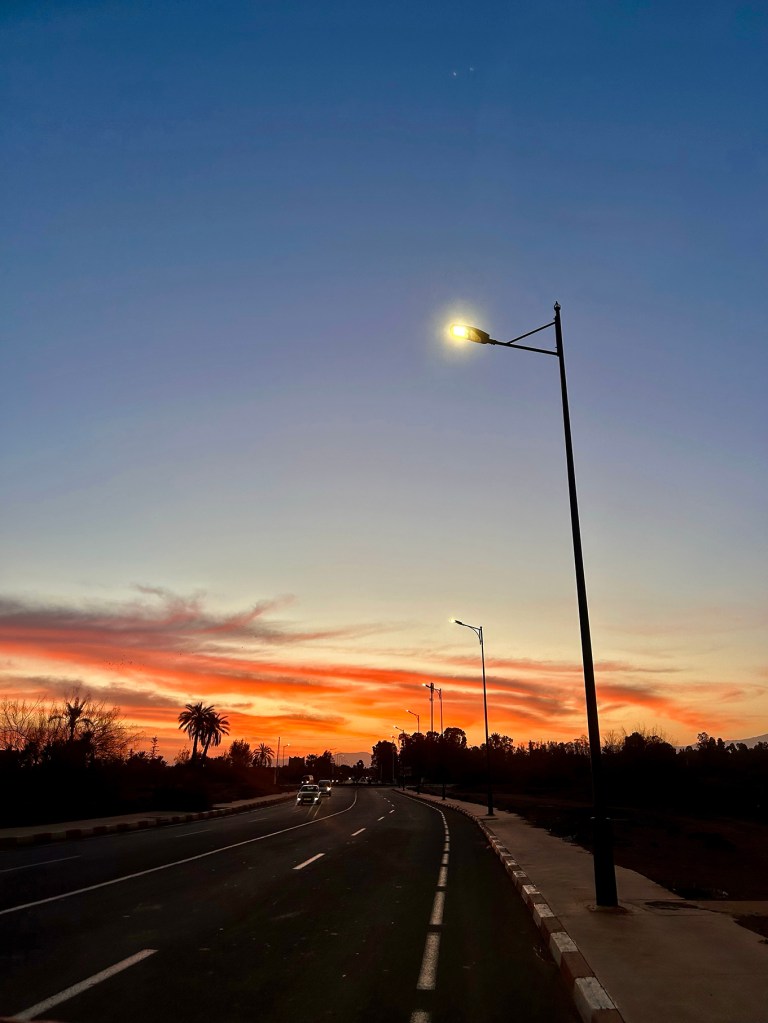
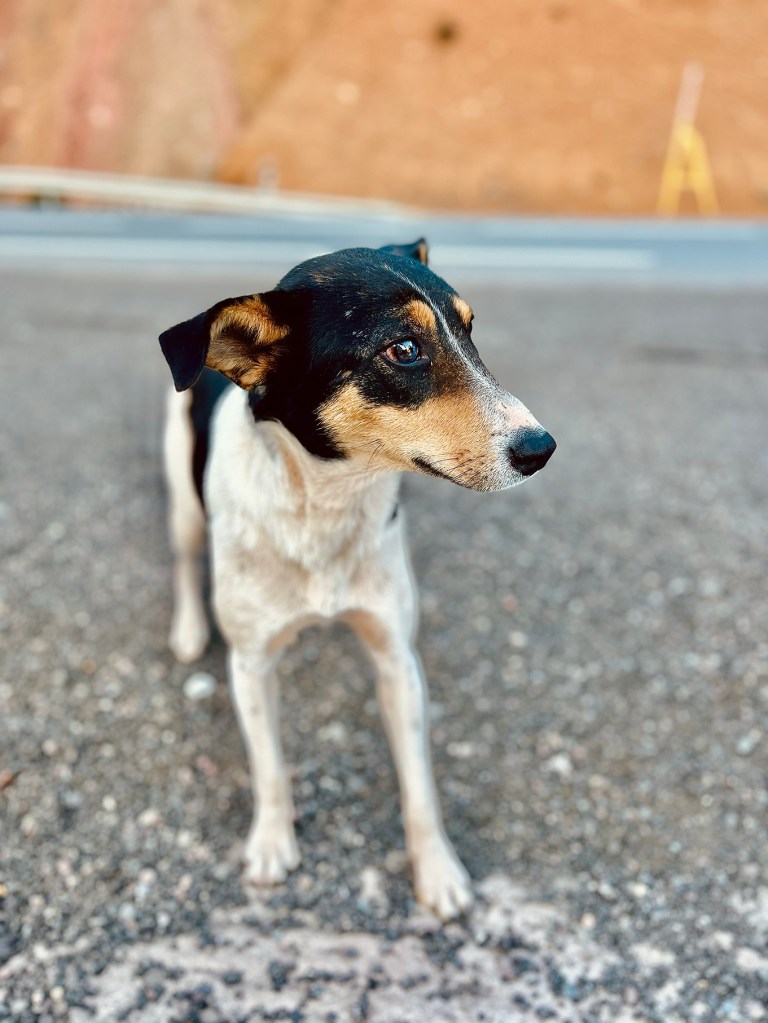
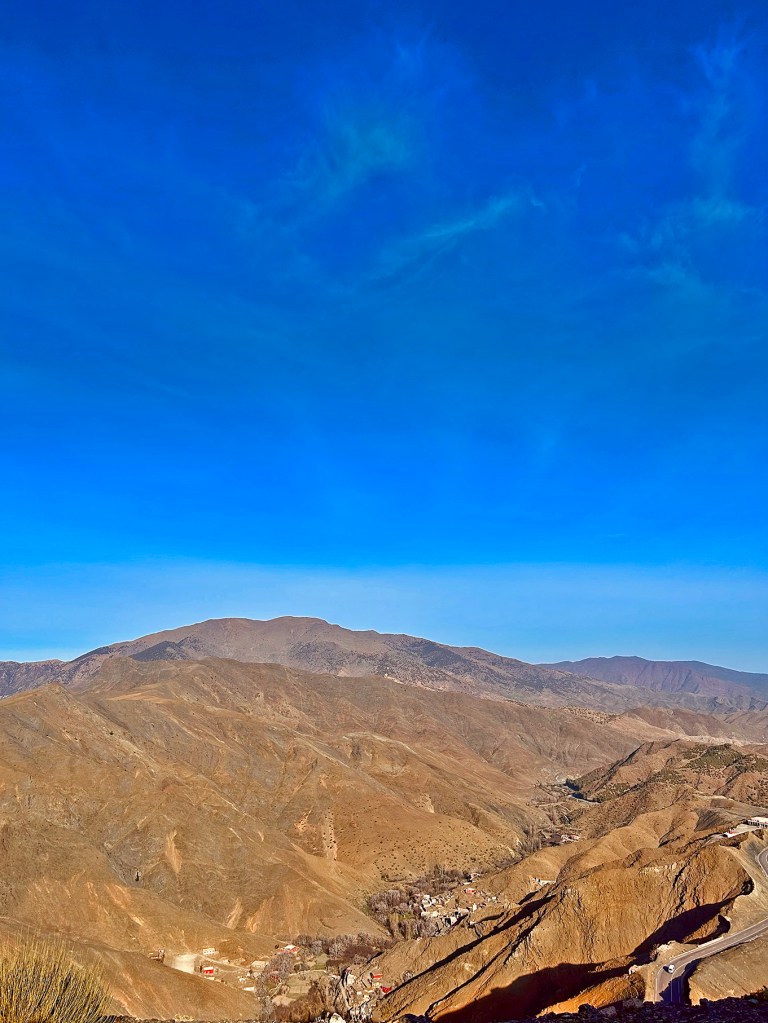


It was windy, but just look at those views!
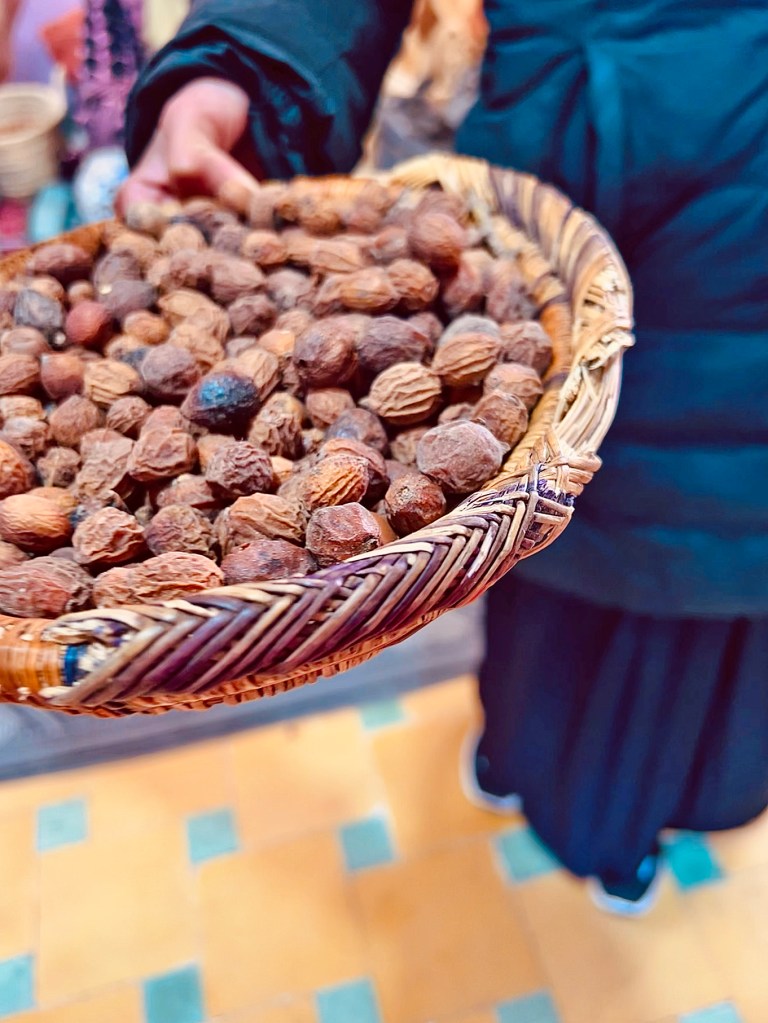
We had bathroom and shopping stops along the way, which is common with these tours. So naturally, if you do various tours, you might get a bit tired of visiting women’s argan cooperatives and family carpet businesses. On the other hand, you meet real people from around the country, it shows a bit of daily life in Morocco, and most of the products are really nice. You can get tea and coffee, some snacks and souvenirs on the road and I love to buy stuff that I wouldn’t find at home. And although some salesmen can be pushy, nobody actually forced me to buy anything on this trip. The only thing to remember is that in most restrooms you will be expected to leave a little contribution, I saw 5 or 10 dirhams as a minimum, and cash is the preferred method of payment in many places in the countryside. But there are ATMs and more and more restaurants and shops are opening up for card payments, Apple pay etc. It’s pretty much impossible to get 20s out of an ATM, so for the first days I had to excuse myself for the 100s and 200s I was paying with, and asking for change, but unlike other places I’ve been to, no one, I mean NO ONE, in Morocco ever complained or saw it as a nuisance. Whenever I paid with the impossible bills, they’d find a way to give me proper change, even if that meant knocking on a neighbour’s door to get it.


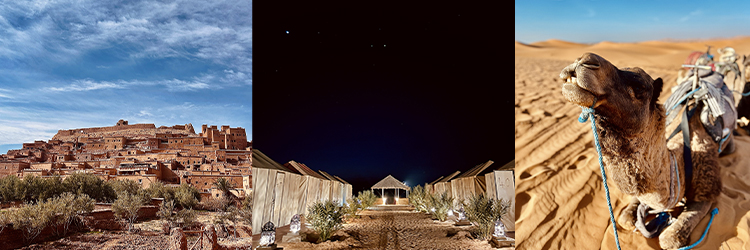
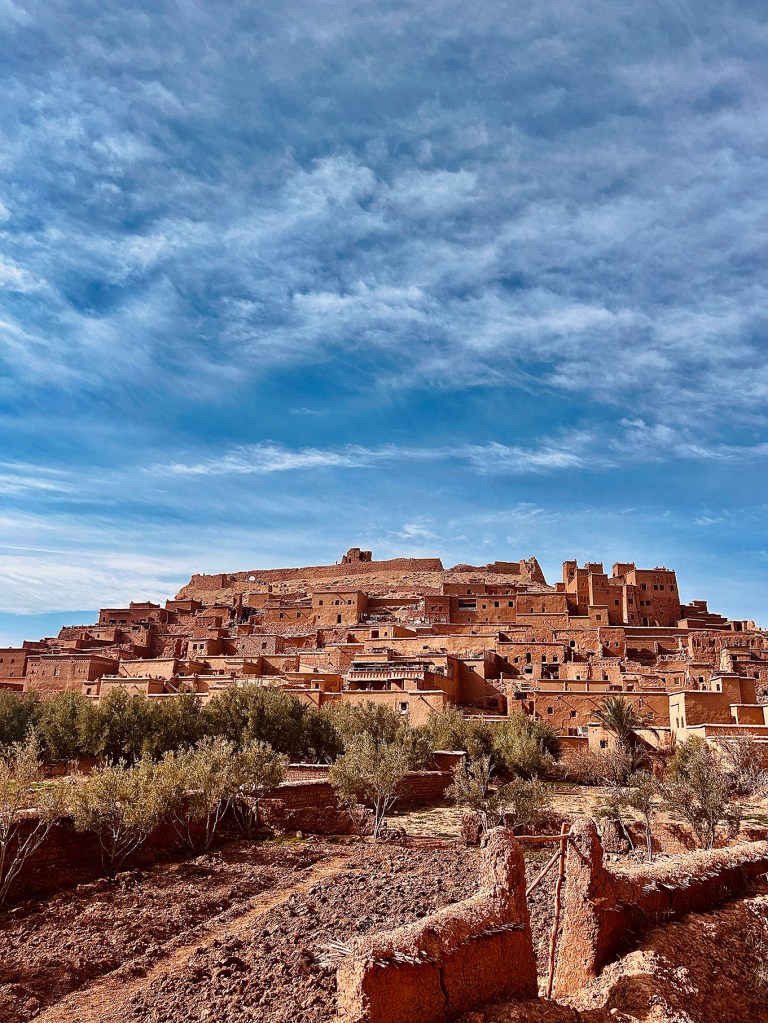
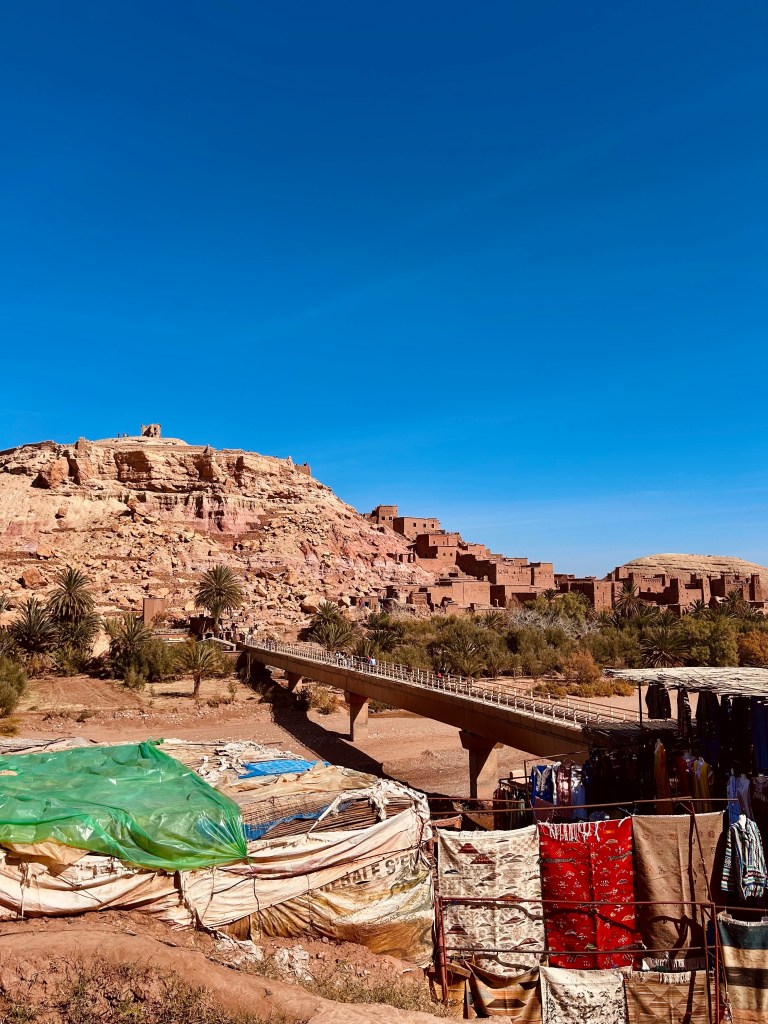
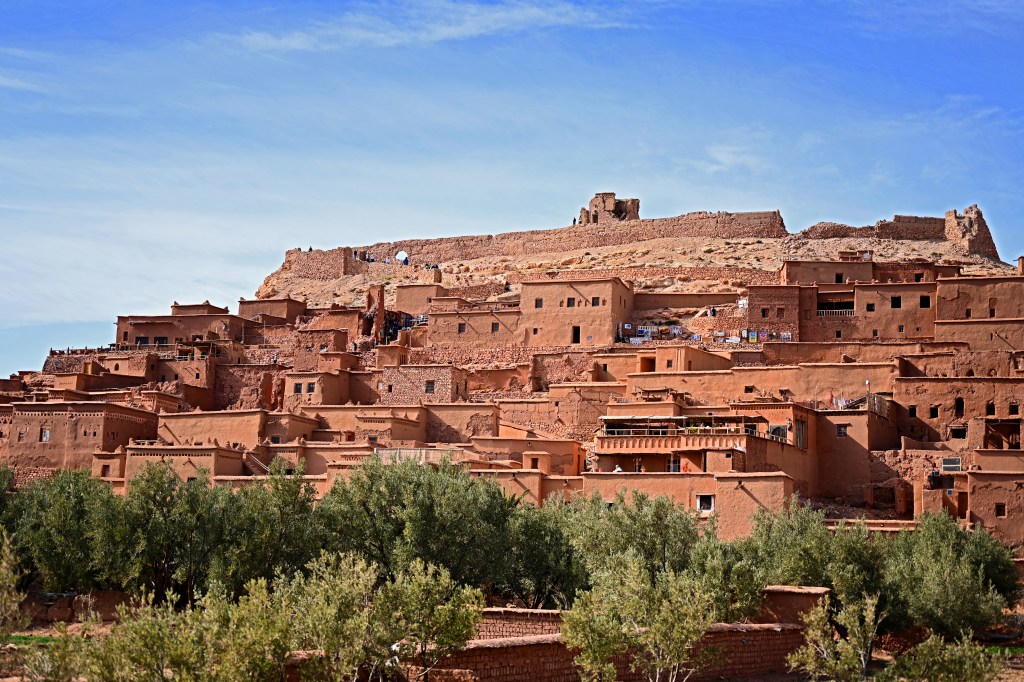
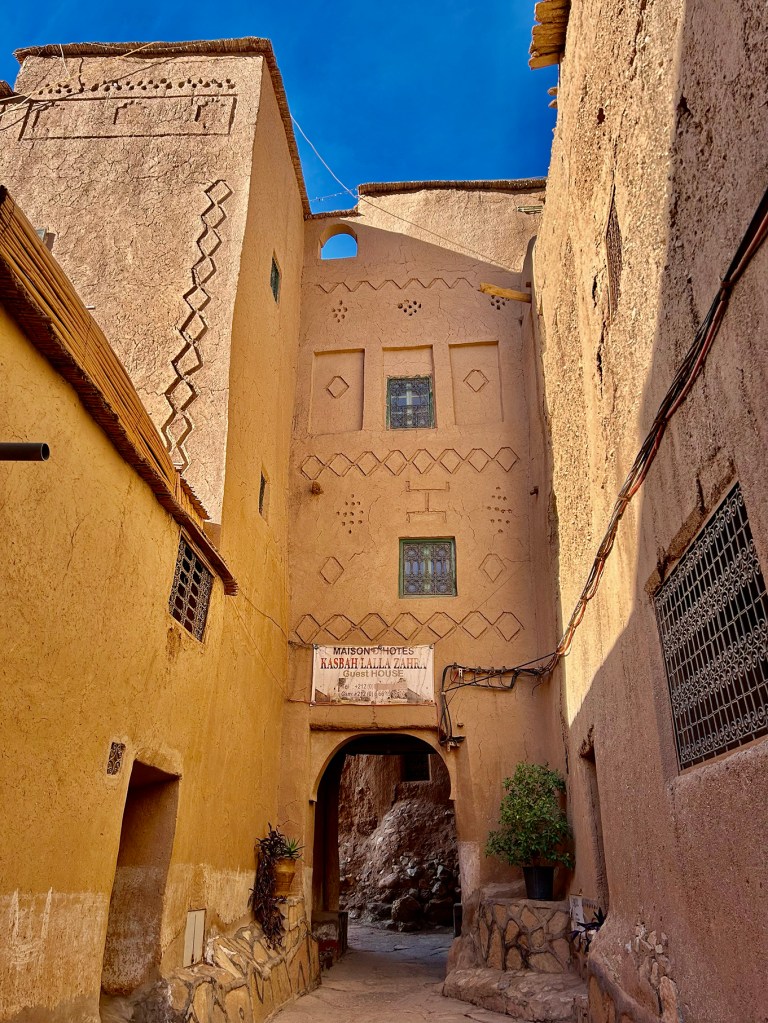
After crossing the mountains, which leave your jaw at a different level than its original position, we visited the Unesco World Heritage site of Aït Ben Haddou. This place is also out of this world. The earthy colors and its specific architecture, the thousand-year-long history… And if you get there and feel like “this is just like in a movie” it’s because the town has been used in a great number of productions, including Lawrence of Arabia, Gladiator, Babel and Game of Thrones. Rumour has it that the third season of House of the Dragon + Aït Ben Haddou = true.
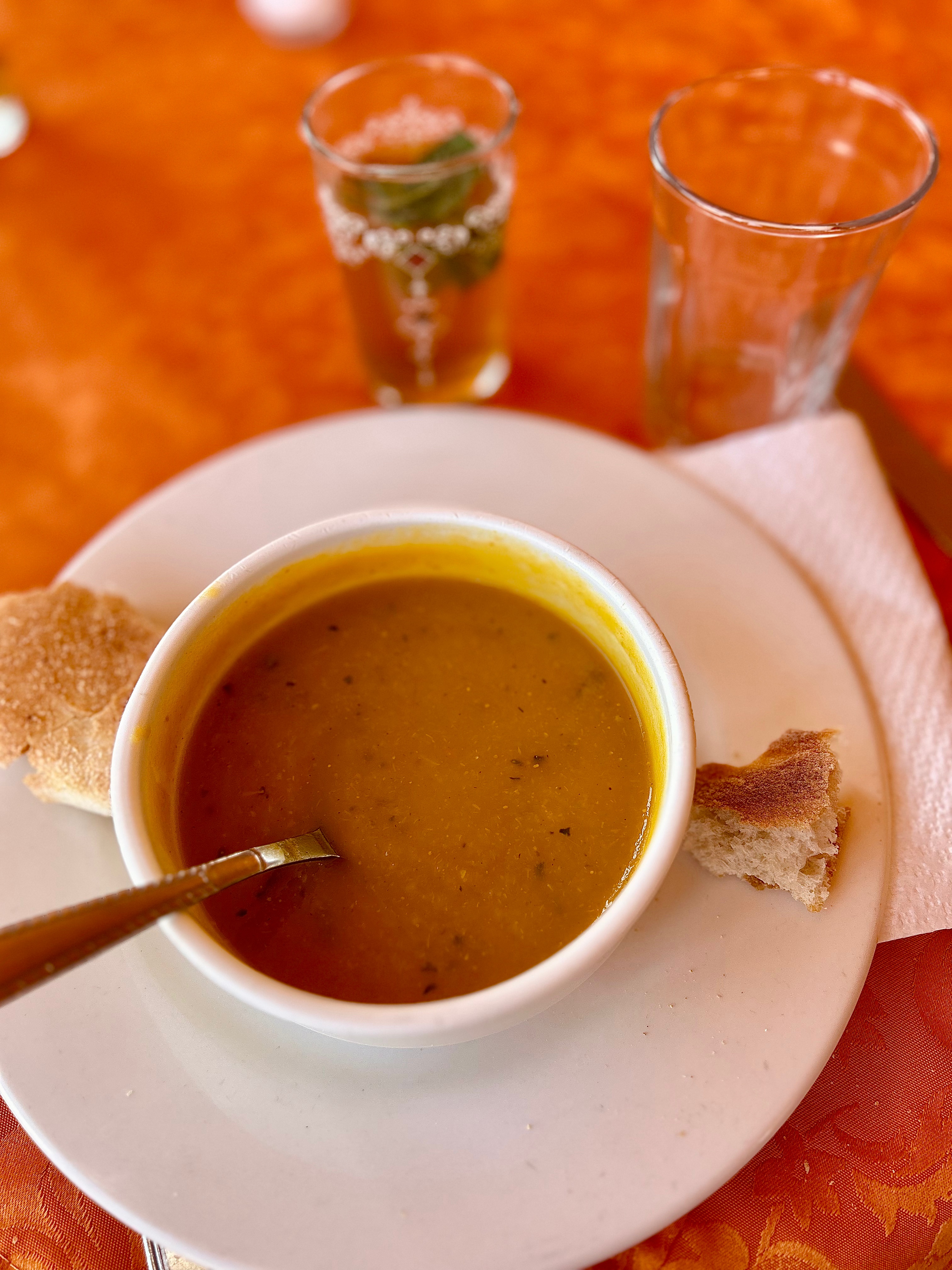
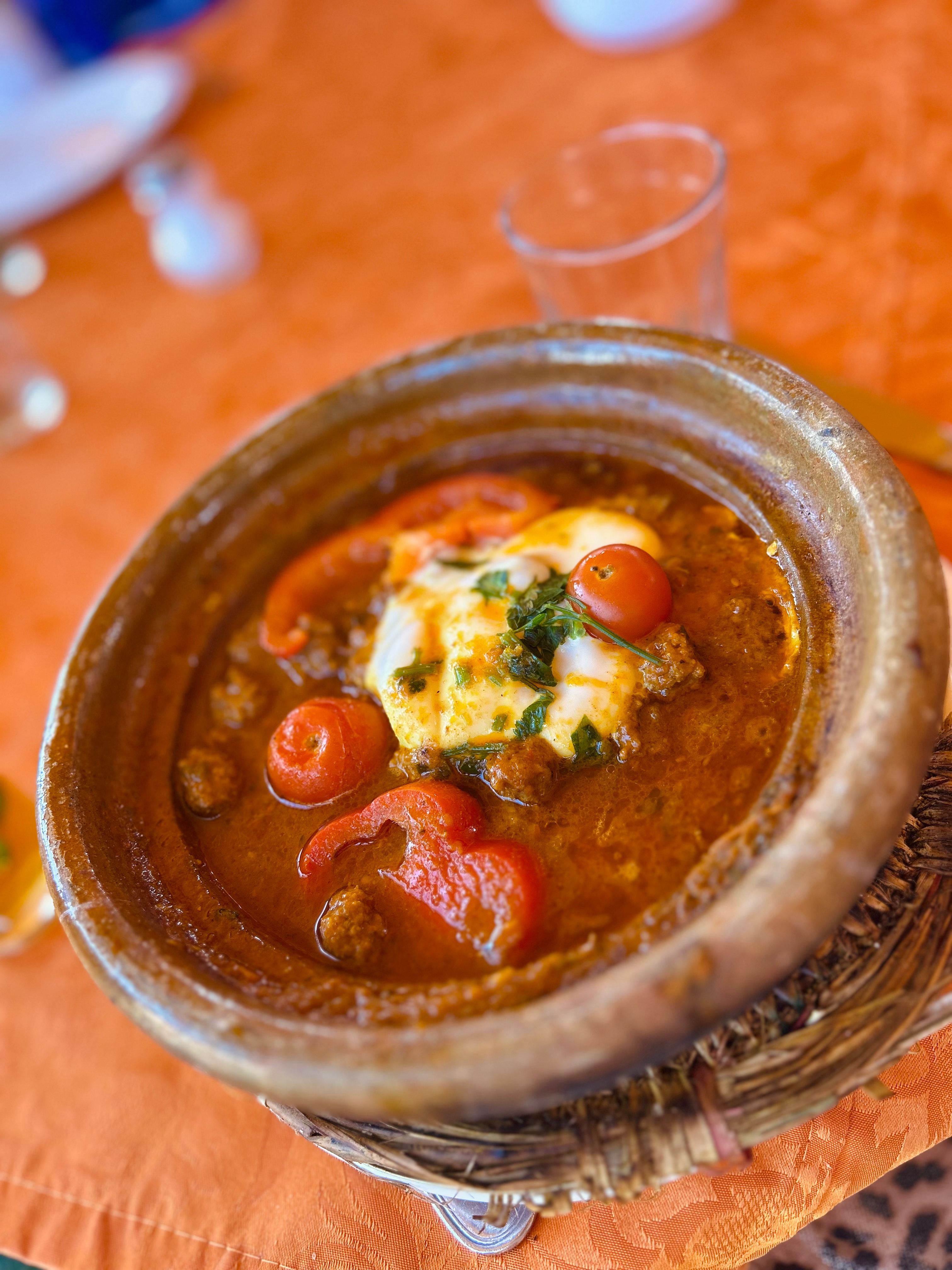
We had lunch on the terrace of a restaurant with views of the kasbah (citadel) and I had my first taste of what would become my comfort food on the trip: kefta tajine. This is a stew with meatballs, tomato sauce and a fried egg. A no-fuss delicious dish that’s more than enough for a proper food coma, especially if you pair it with a hearty vegetable soup, some fluffy bread for dipping and another 85397913 glasses of mint tea.
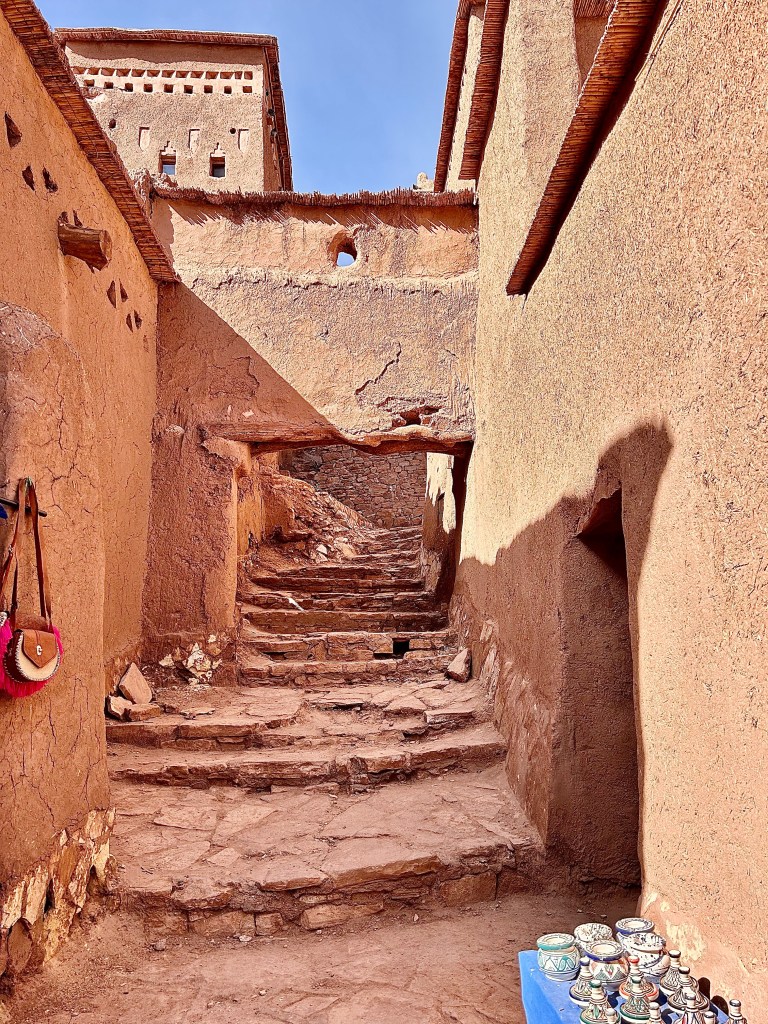
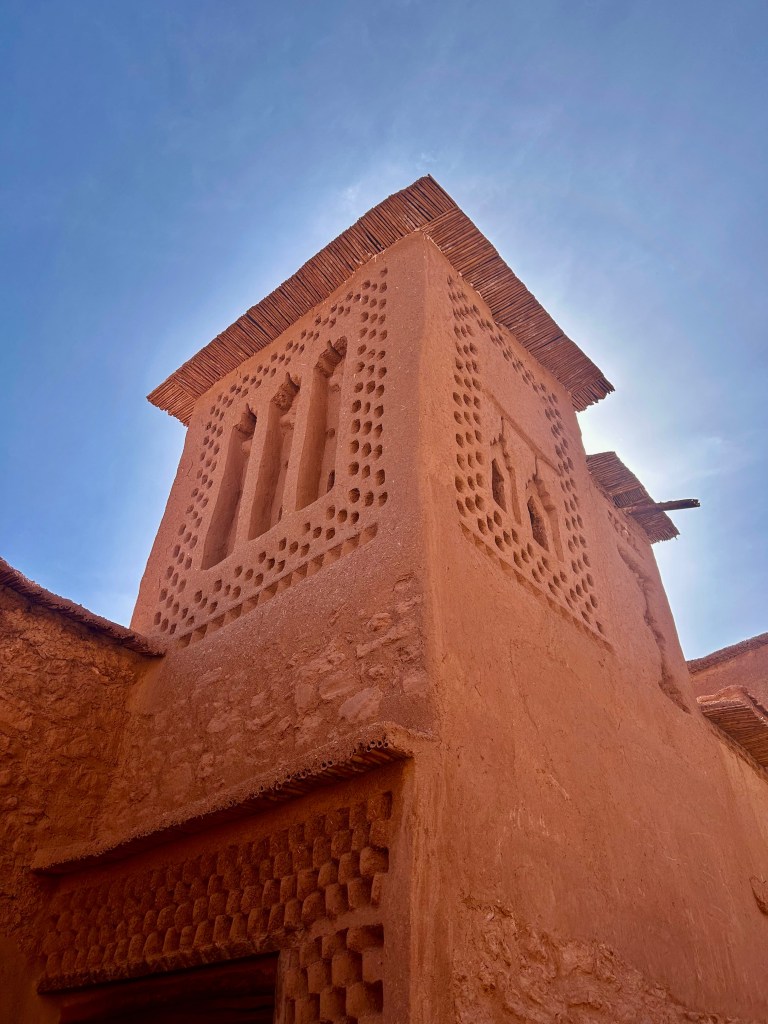
Aït Ben Haddou is made of rammed earth, clay bricks, adobe and wood. So it requires constant maintenance, especially after it rains, no matter how seldom that happens. Very few families still live in the old part, as a new town emerged on the other side of the river, but it’s a very popular tourist destination and when there is a filming production going on, it involves many of the locals.
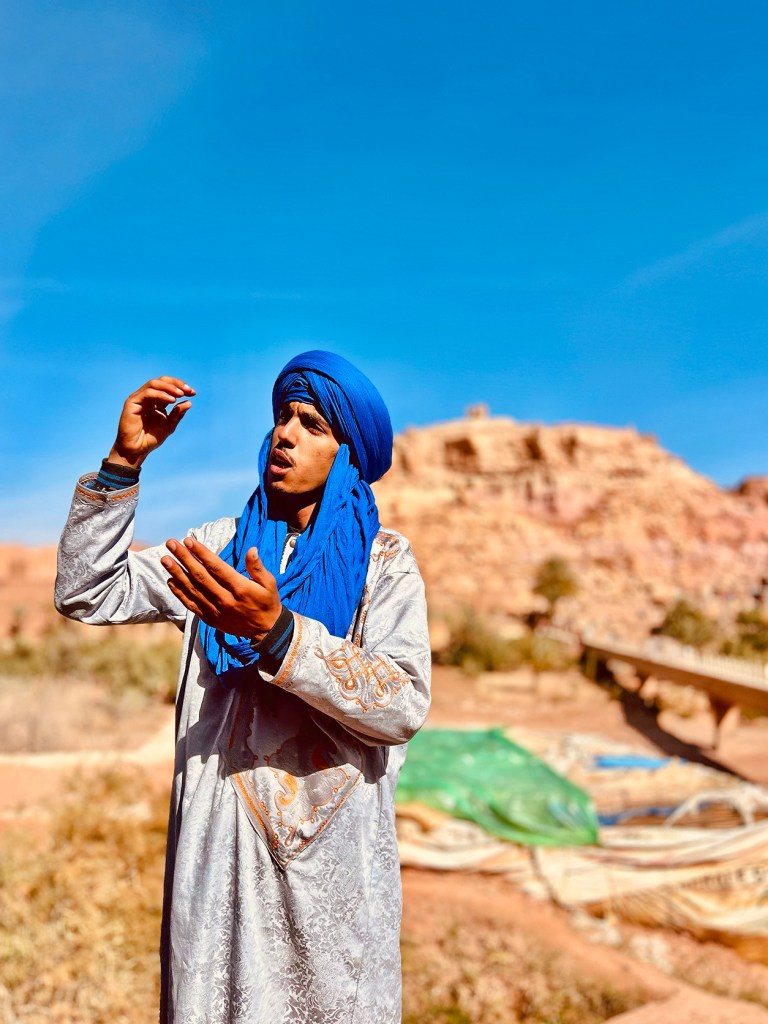
Here, we were guided by a local young man who was very friendly and knowledgeable. He might also be spotted as an extra on screen, something that he was proud of and happy to talk about.
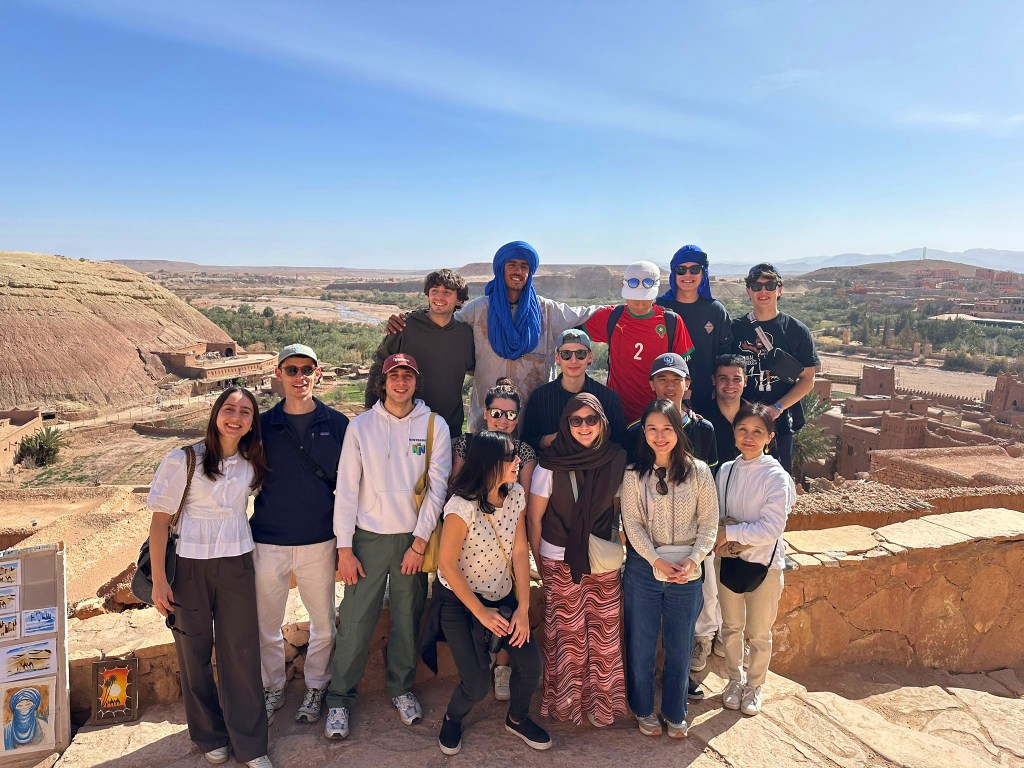
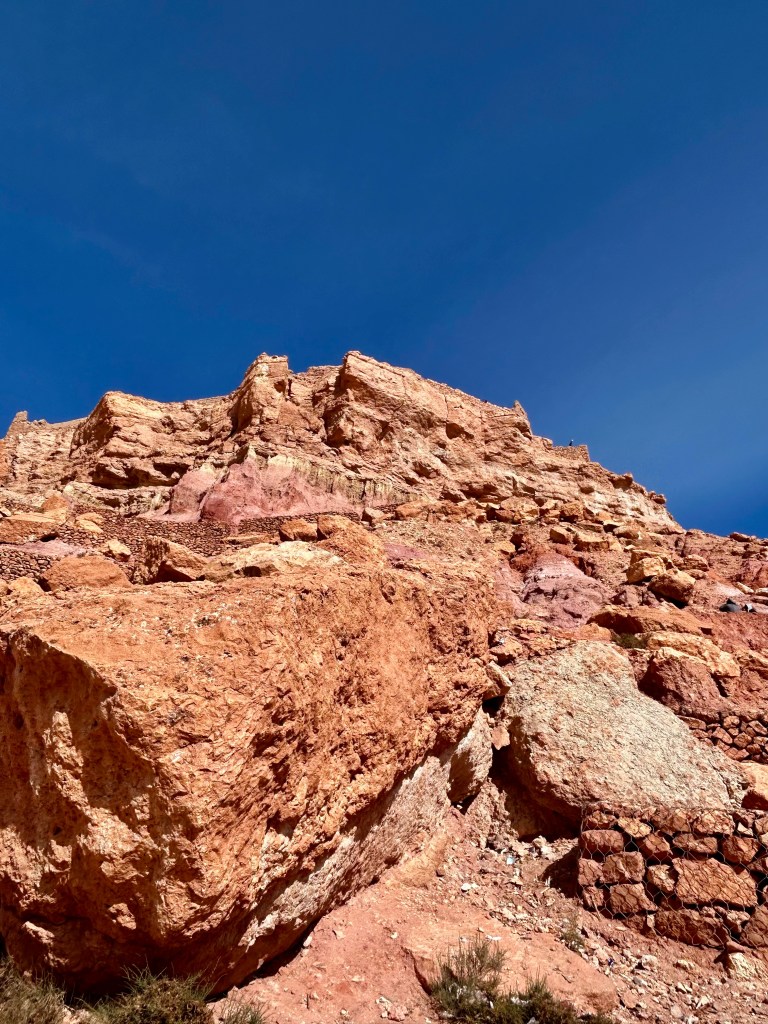
He made going up the hill after a rich lunch actually bearable, with good stops for storytelling, great photo opportunities and a visit to a small shop where the artist made images using a special technique, a sort of invisible ink. Made out of tea, sugar and blended with some pigment, like indigo, for certain details, this paint didn’t look like much when he applied it to the paper canvas, but when in contact with the heat from a gas burner, it turned into lovely colors of yellow, orange, black and blue. By burning longer, he could “paint” the shading and darker details. The sugar mixture smelled like crème brulée after being carefully burned and the postcards or larger paintings were done with various motifs from the area. Historically, this could also be used to pass on secret messages without any enemy discovering them, as the paint would only reveal the message when in contact with fire. At first I didn’t want to buy anything like this, but in the end I did, because I found this to be beautifully done. He also wrote my name on it using the Tifinagh alphabet, and it turned out the small image fit one of my frames at home perfectly.
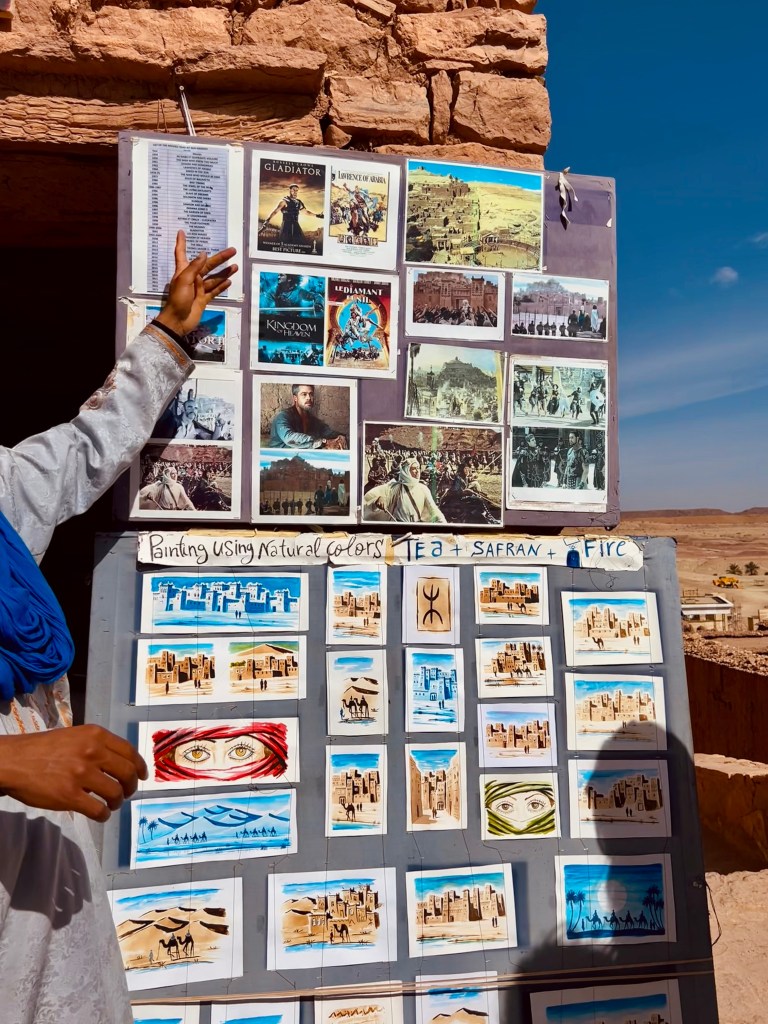
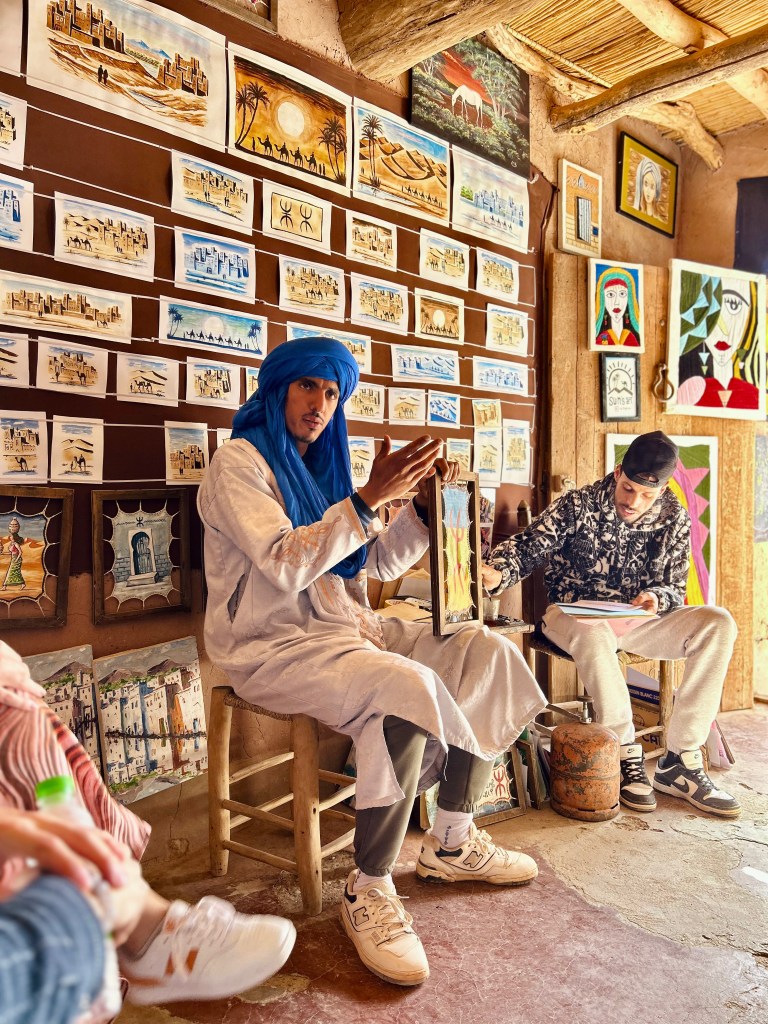
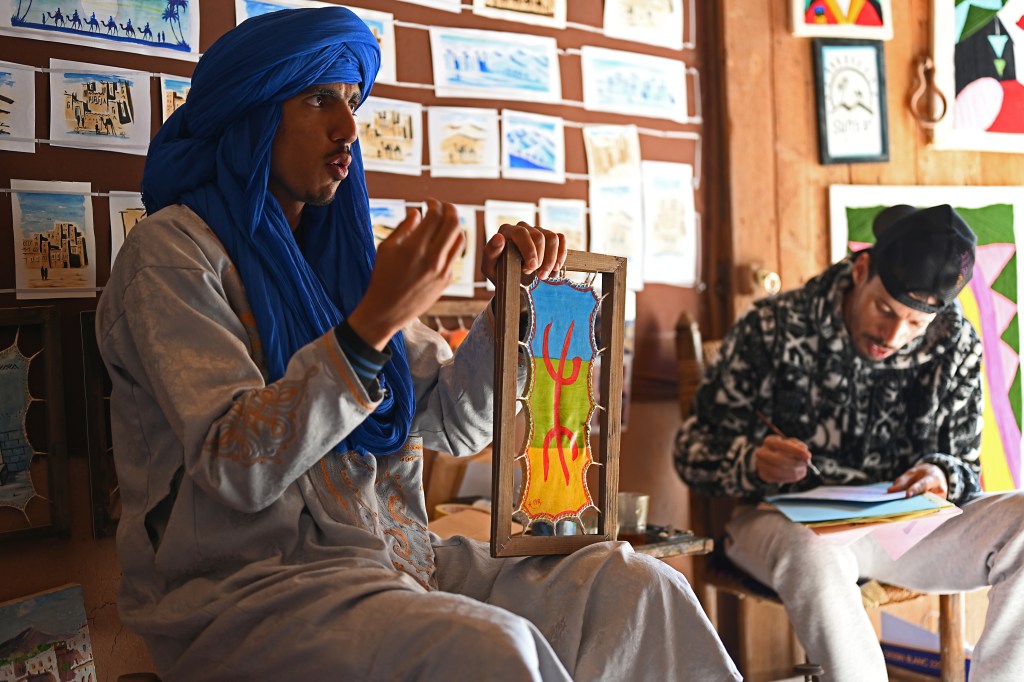
Whether it’s purely for business reasons, as tourism is the main source of income in so many areas of Morocco, or real pride in one’s own heritage, traditions, language, or maybe a combination of everything – I can’t really say. But everyone was happy to do a demo, talk about the history and welcome us.
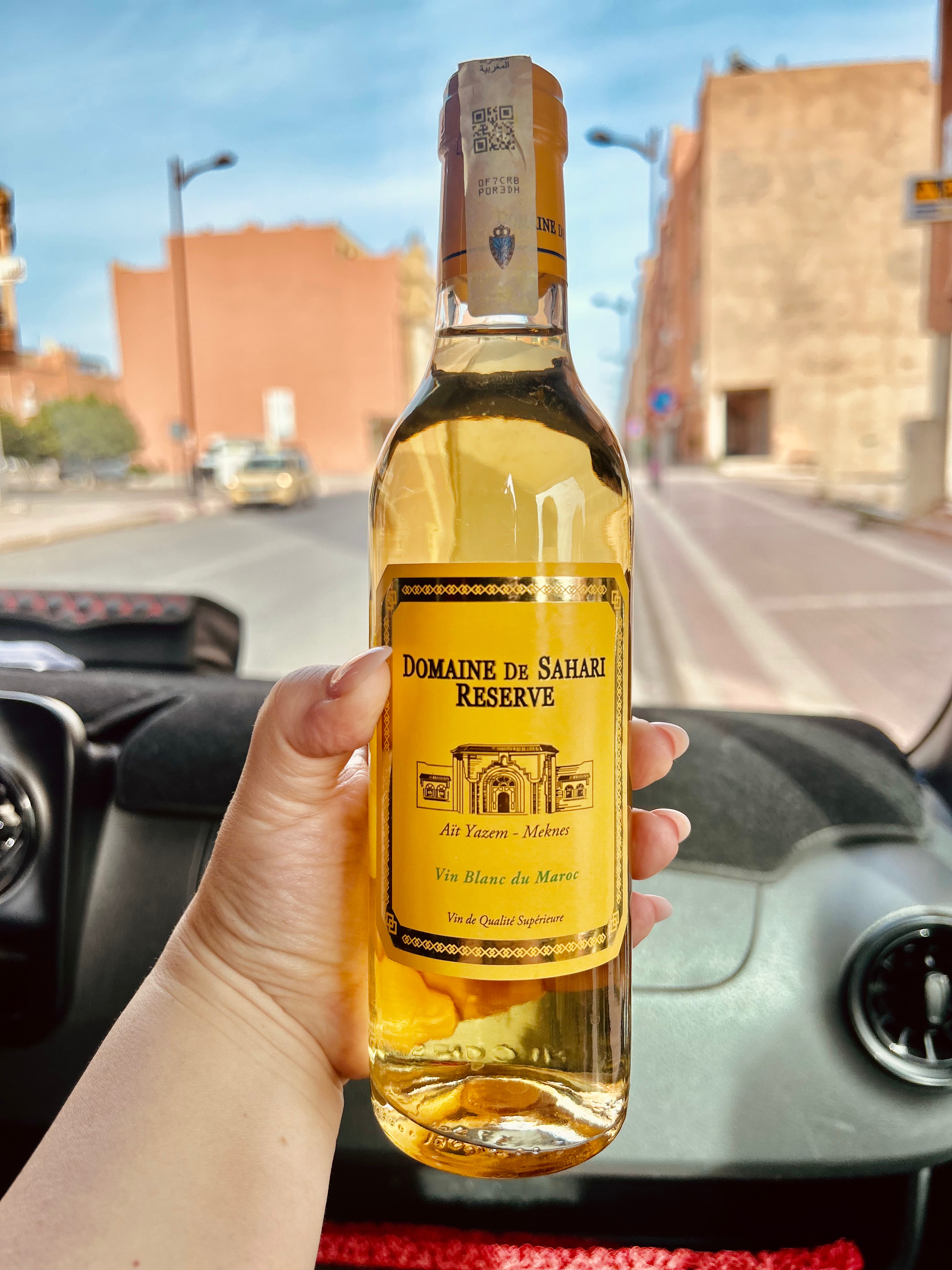
What I didn’t expect on the tour was to make a stop at a liquor store. Alcohol is not the first thing that comes to mind when you visit a relatively religiously conservative place, but by comparison, Morocco is much more liberal and tolerant. Local beers and wines exist, and although I didn’t want to buy anything at first, I decided to try it. It’s also a thing when you go to the desert. Booze is required, to stay warm, to party, or for absolutely no reason at all; people are doing it and it’s available. I got a beer and a small bottle of white wine, which turned out to be one of the most hilarious moments of the tour (more about it later).
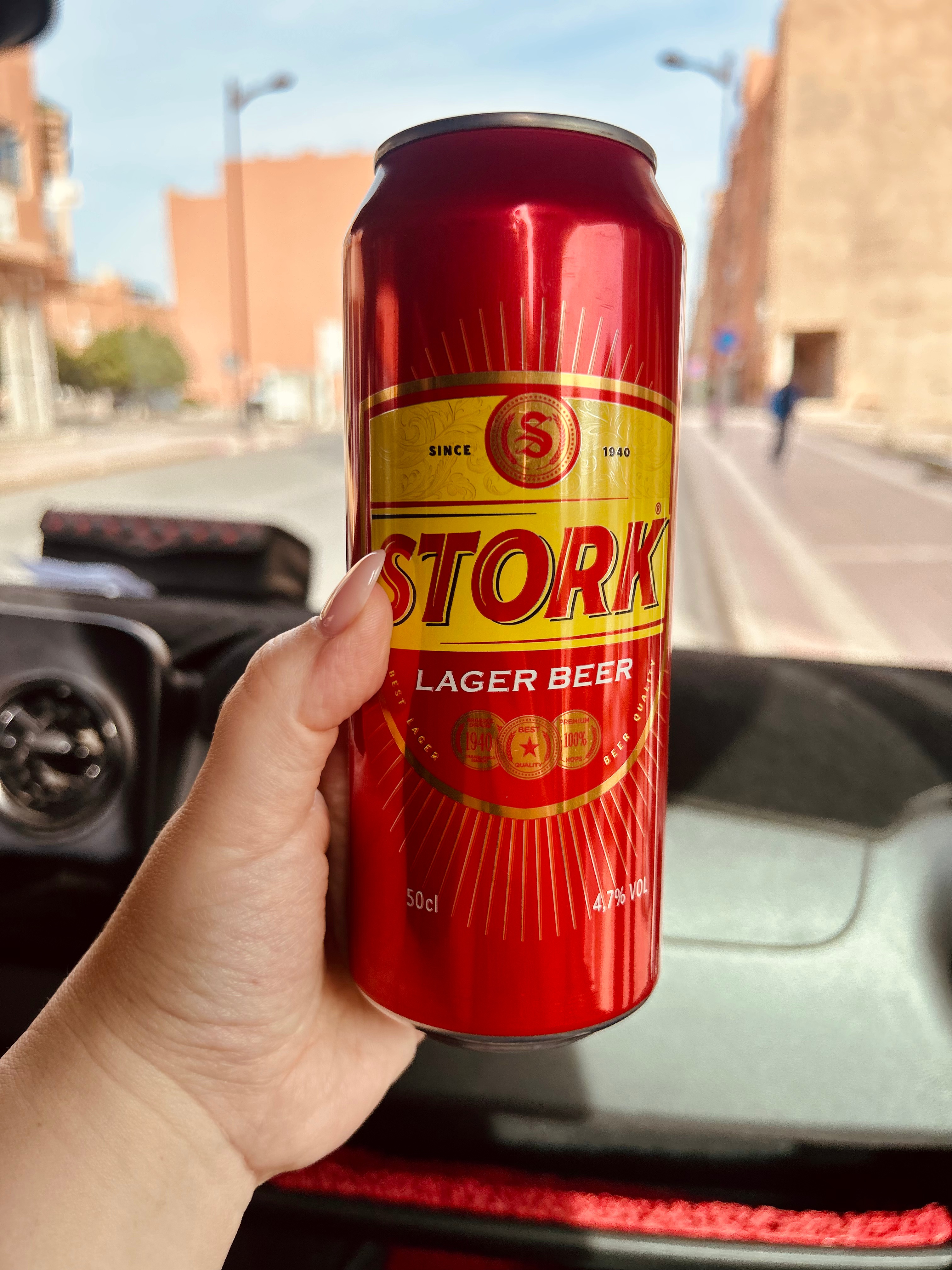
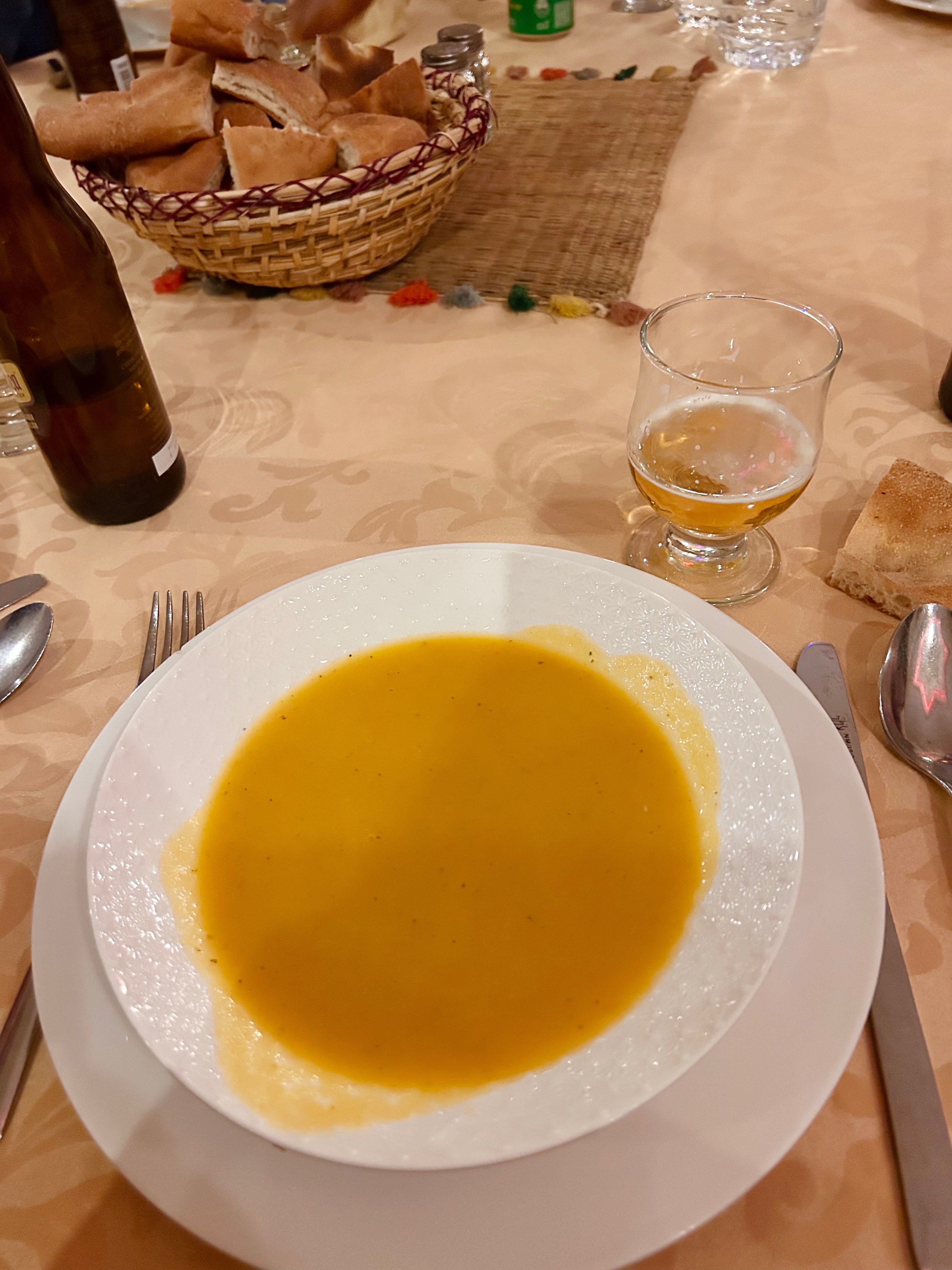
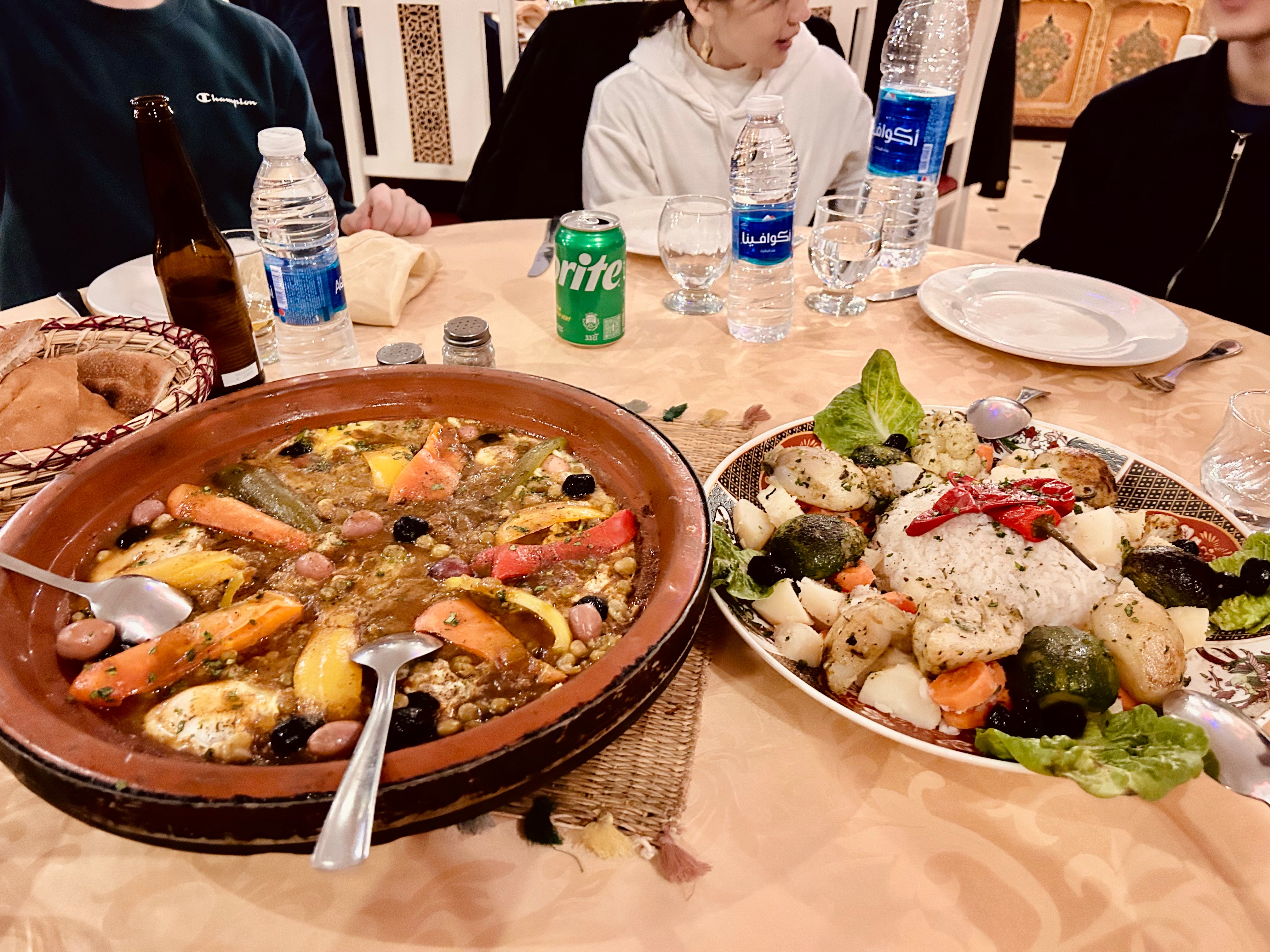
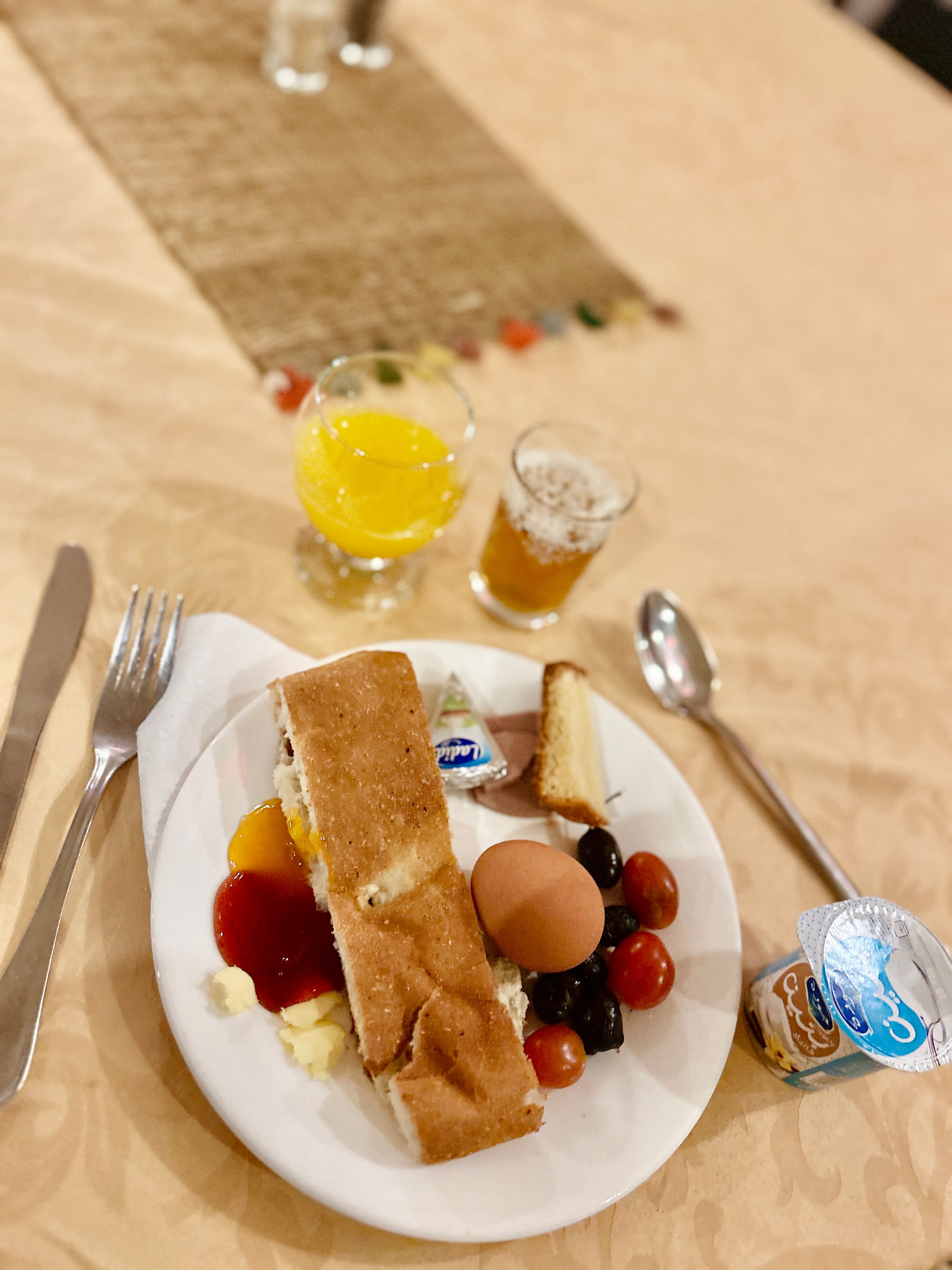
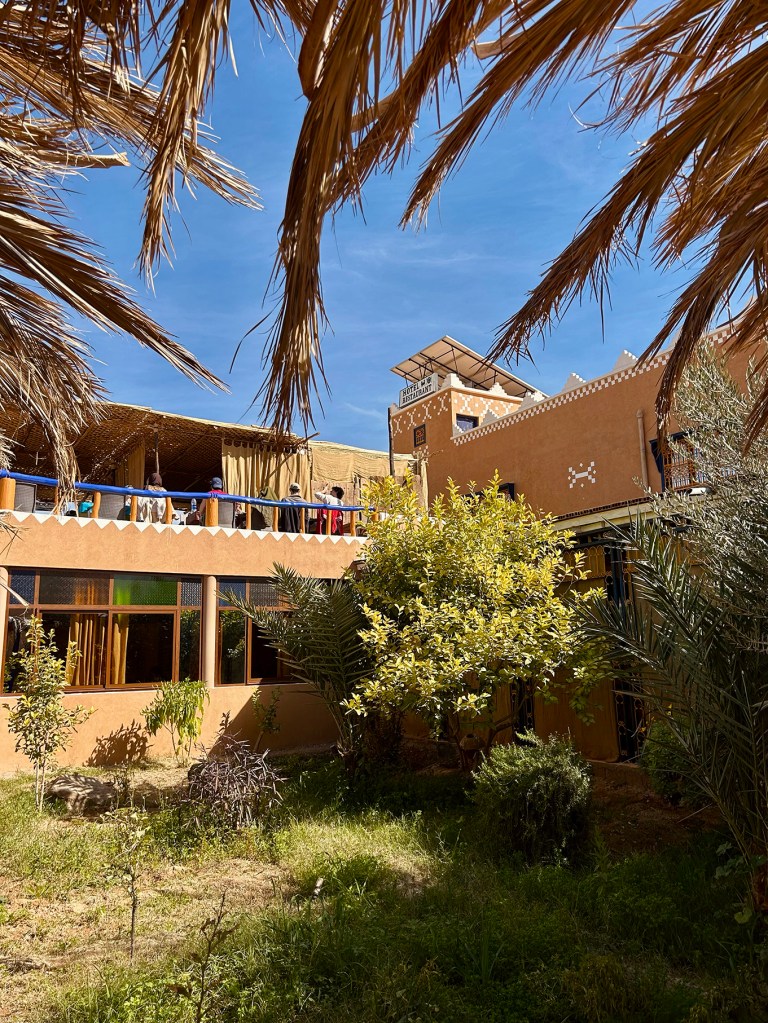
The evening drive took us all the way to the town of Tinghir, and a hotel that really catered to groups. Breakfast and dinner were included in the tour, lunches were usually a buffet somewhere along the road, at a reasonable price and with good food. Upon reading reviews of the tour before booking, I was a bit worried that maybe the food wouldn’t be a hit, but to be completely honest I absolutely loved it. Dinner at the hotel was pretty good and breakfast gave me the opportunity to stuff my face with pancakes again. Moroccan food has flavour and the ingredients are local and fresh. Farmers’ markets are real and agriculture is important.
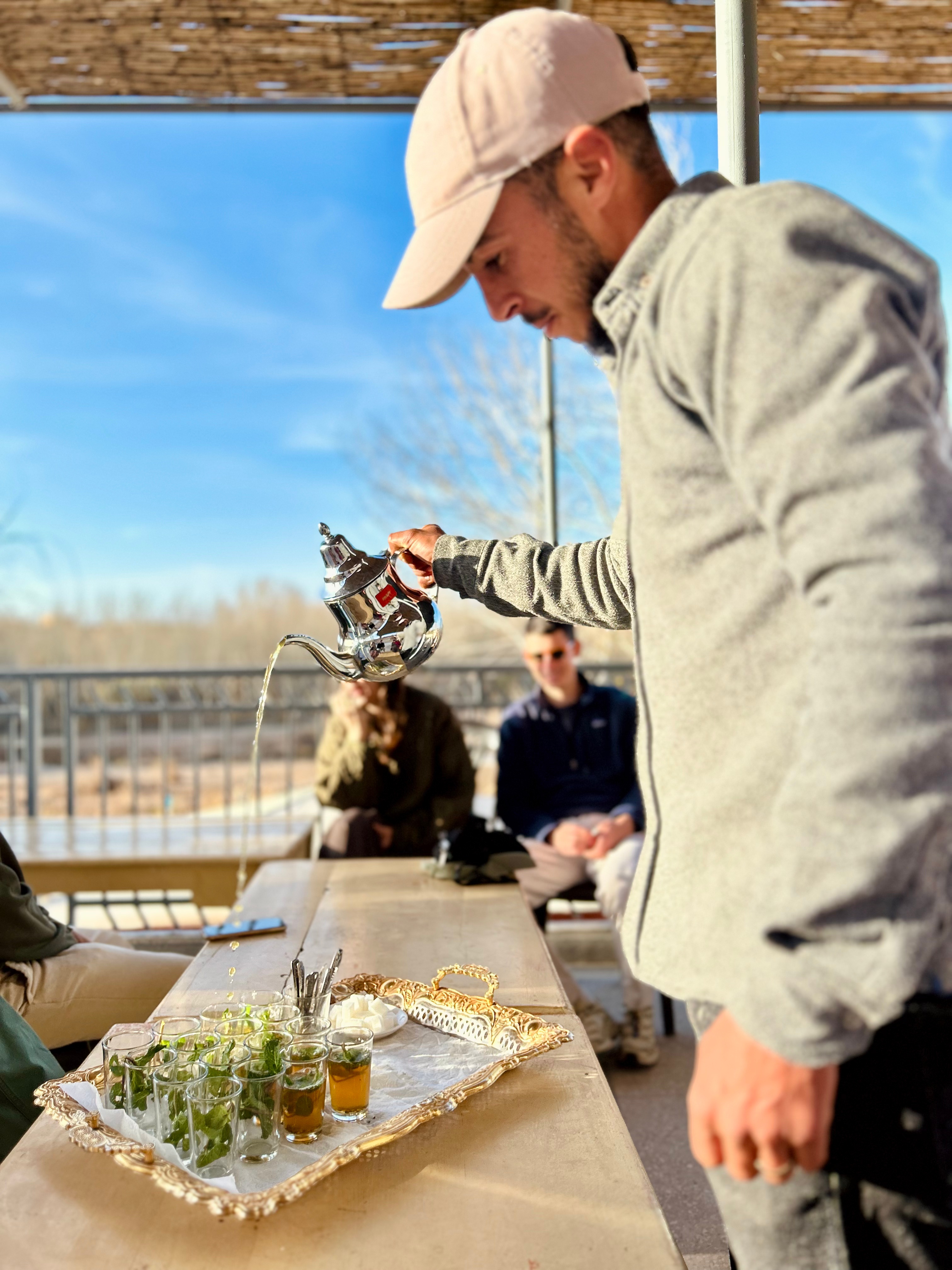

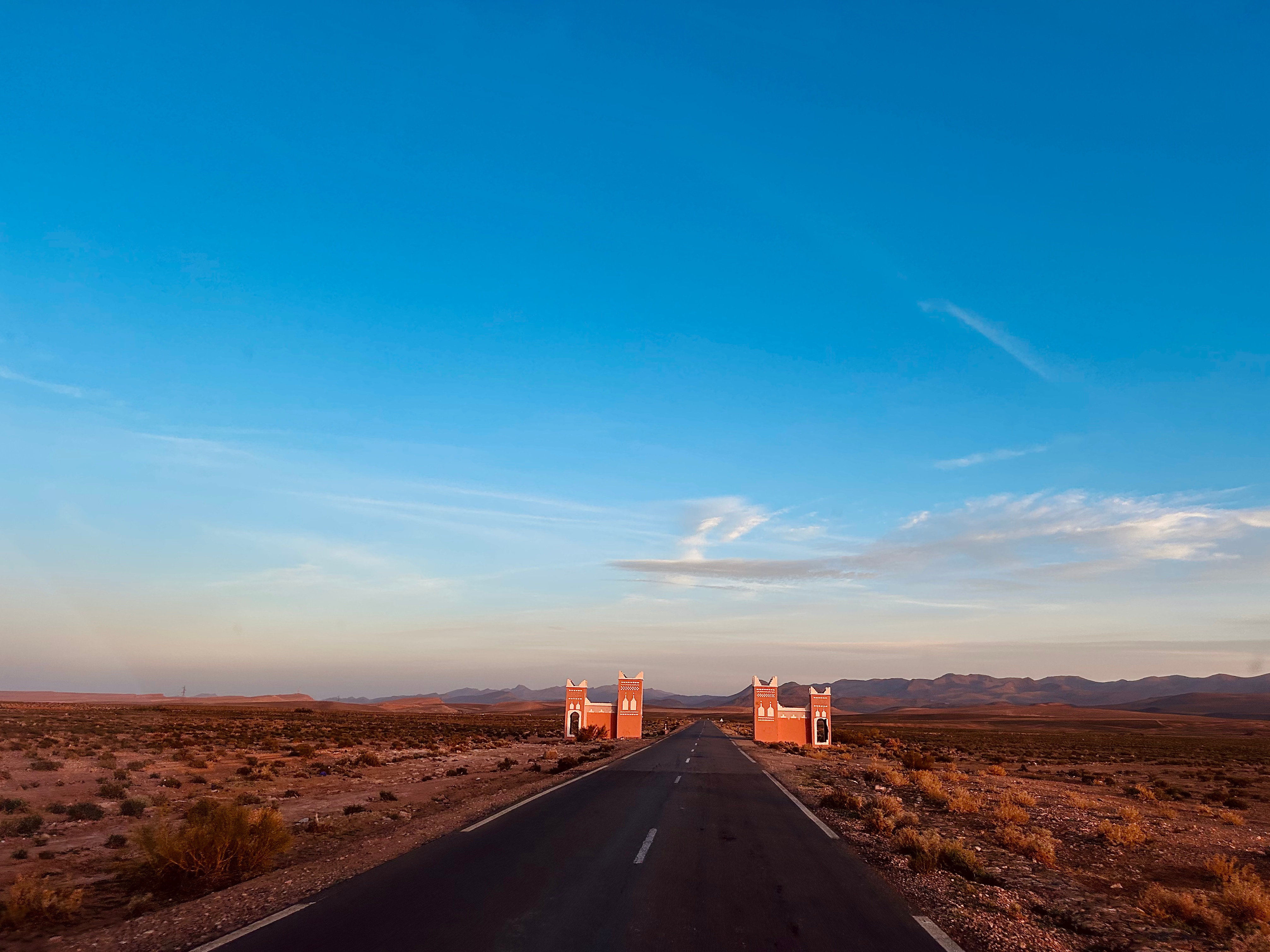


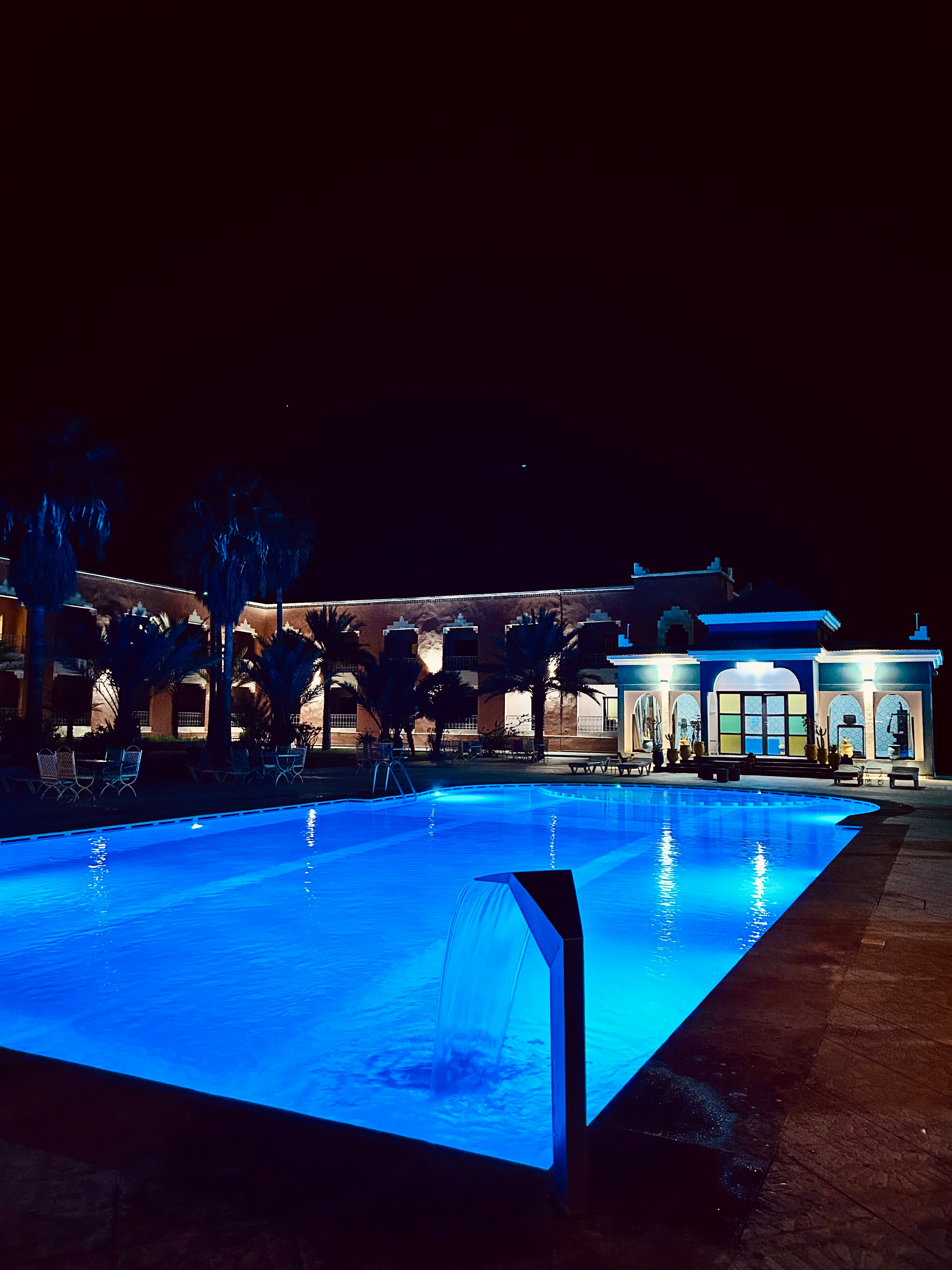
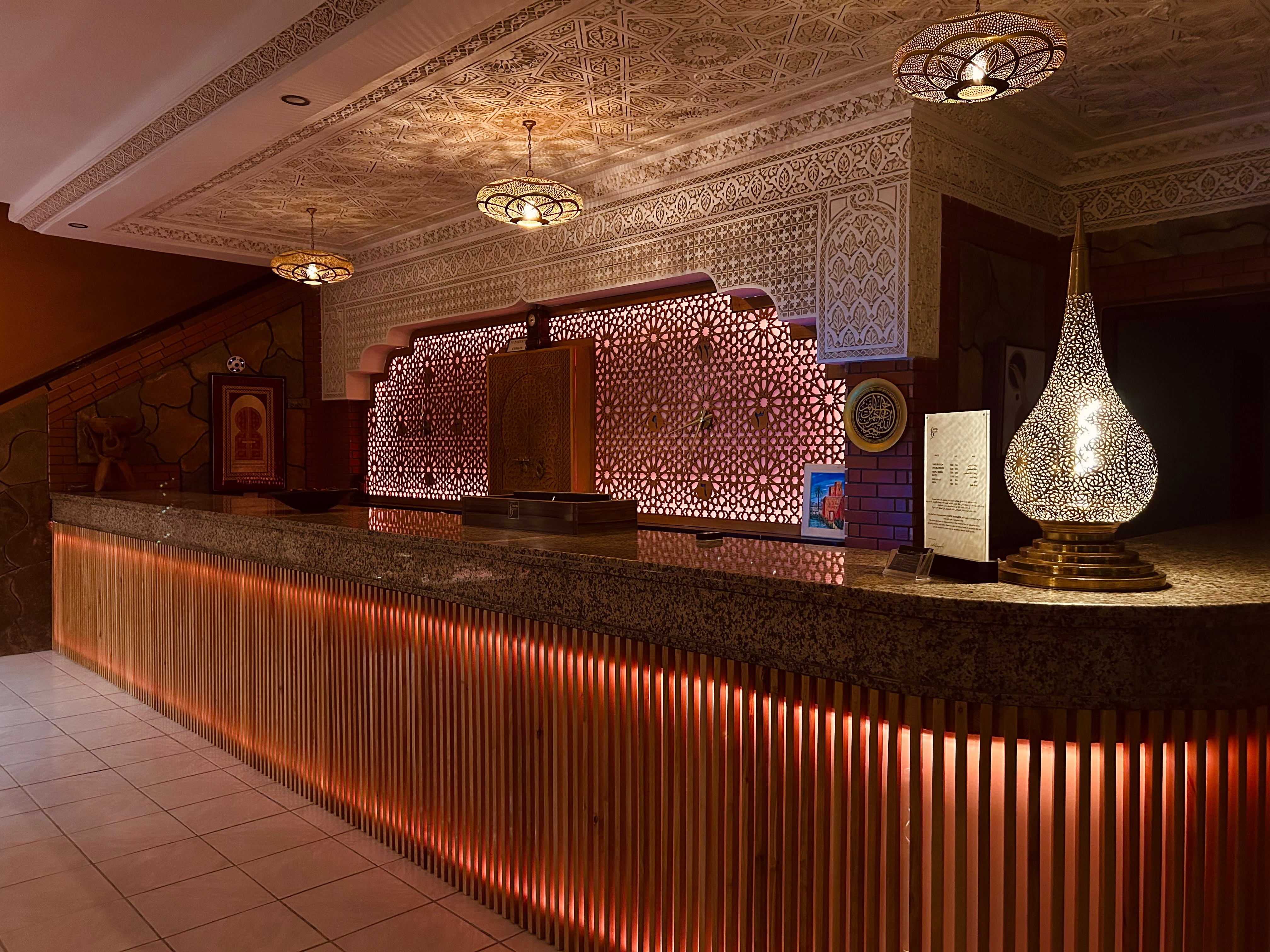
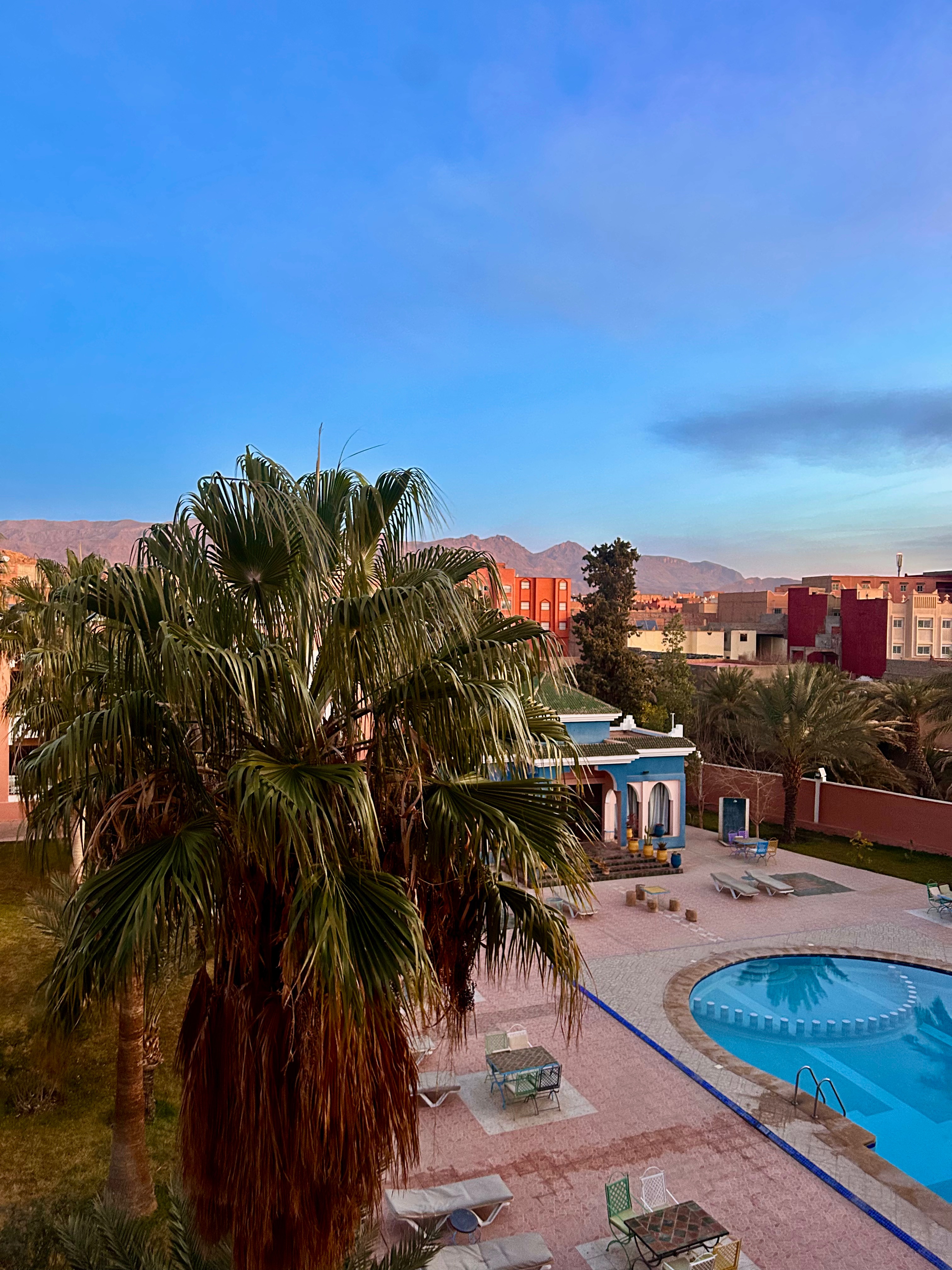
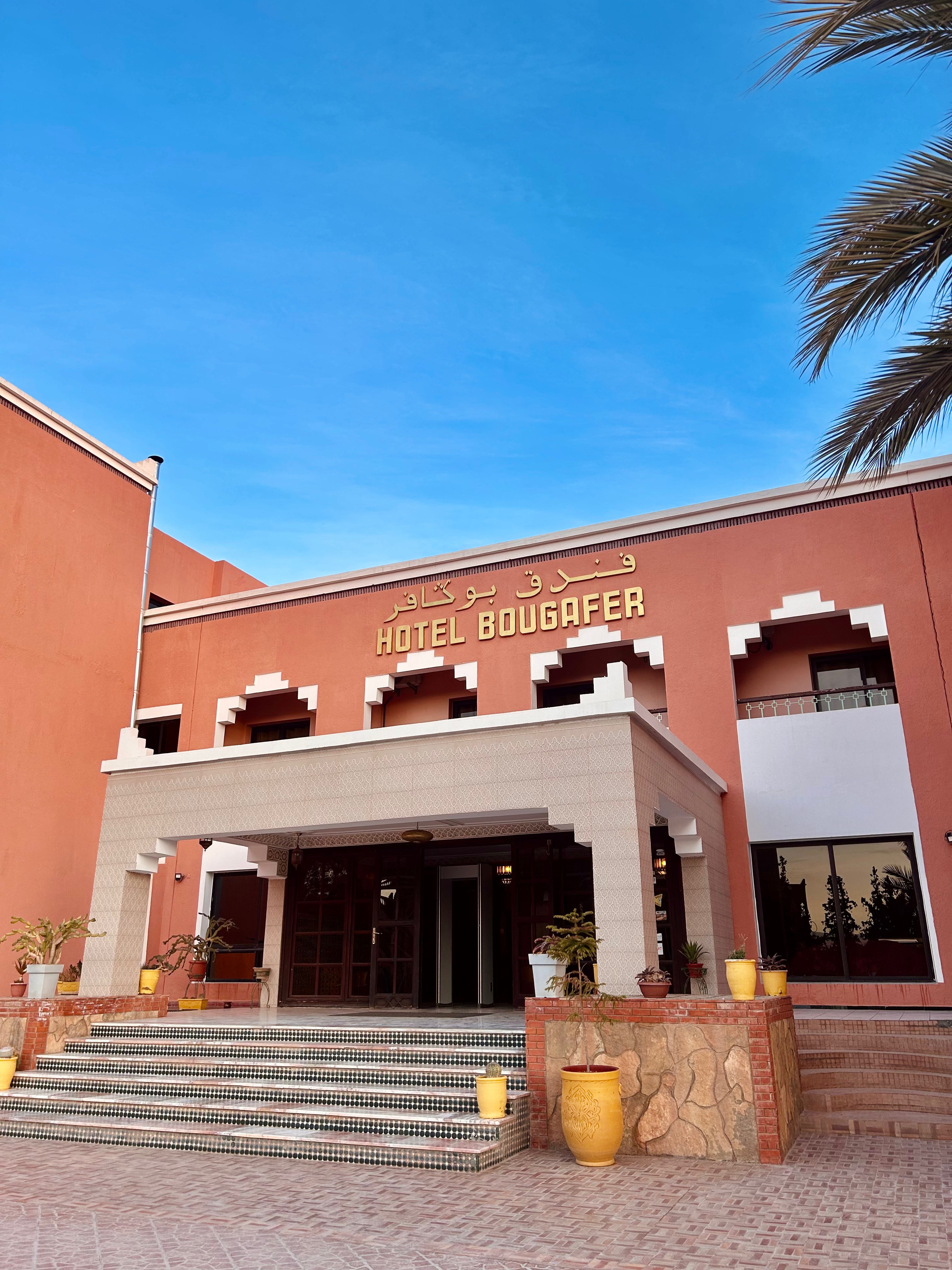
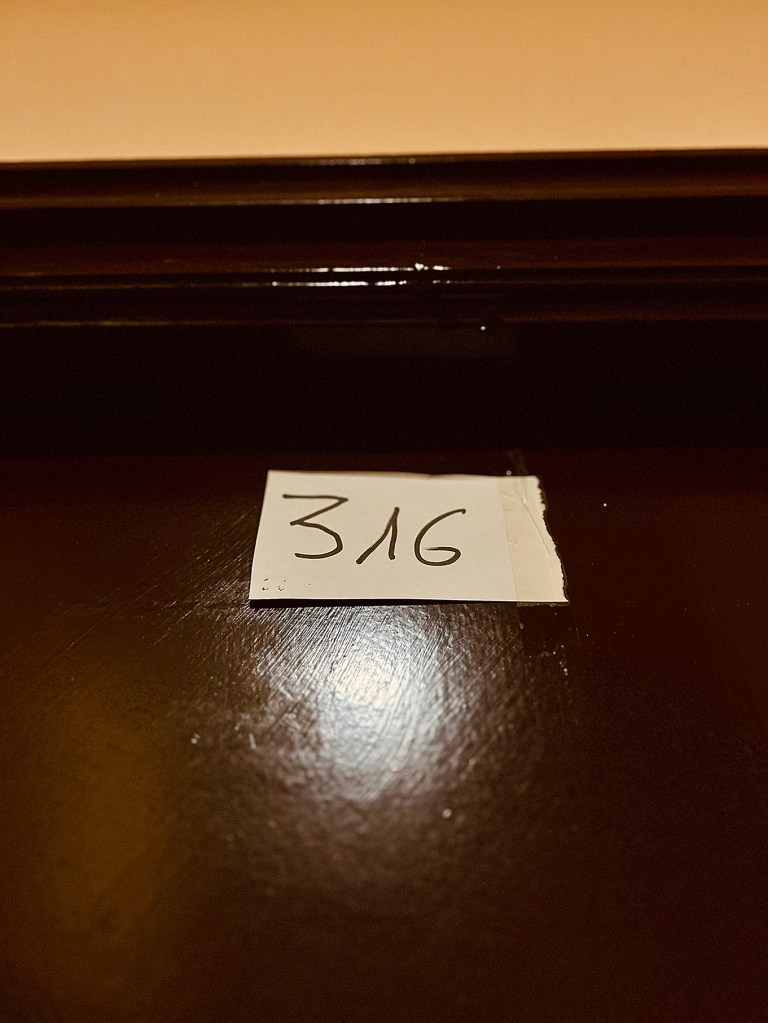
I wanted to wash my hair at the hotel in the evening, but a hairdryer was nowhere to be found in my room and it was pretty cold already, didn’t want to risk leaving my hair wet throughout the night. So I went to reception to ask for one. The gentleman in charge asked me to come back in 15 minutes or so, as he was dealing with something and could obviously not do two things at a time. Said and done. I went down again, but he couldn’t find a hairdryer. He told me he would bring me one if any other guest at the hotel would leave one at reception. In the middle of the night? Seriously? Well that wasn’t gonna help me much. I was lucky that one couple from my group had a spare one, so I got to borrow it, I had a very nice hot shower and dry hair. Also, who needs to screw in the number of the room when you can use paper and tape?
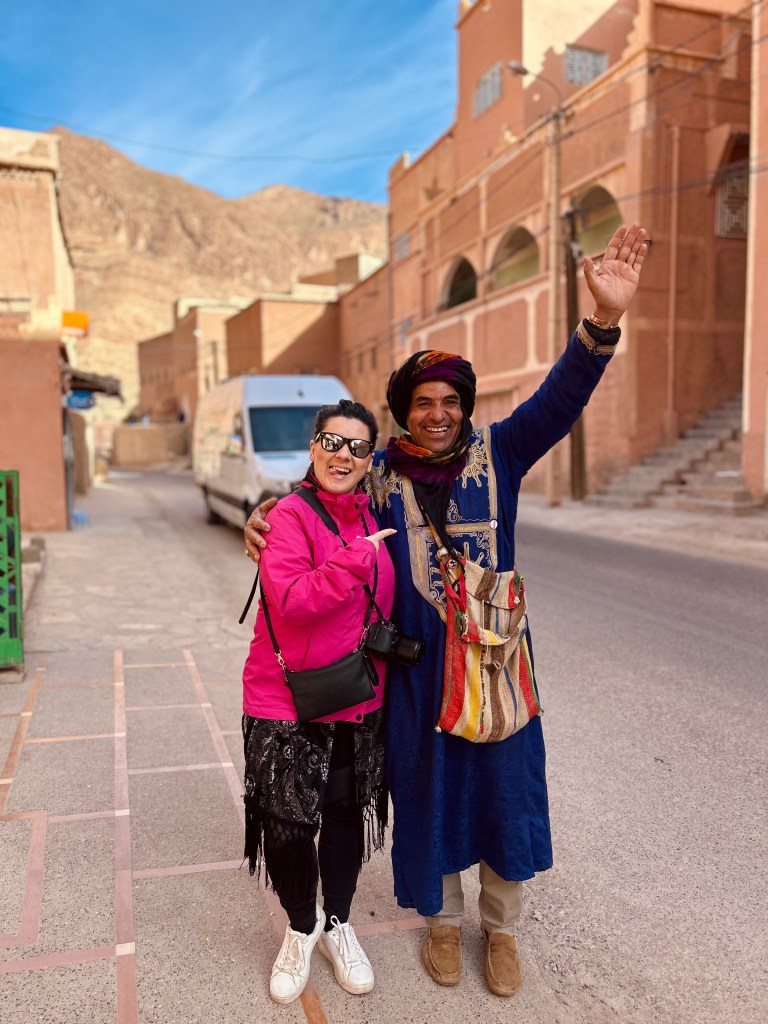
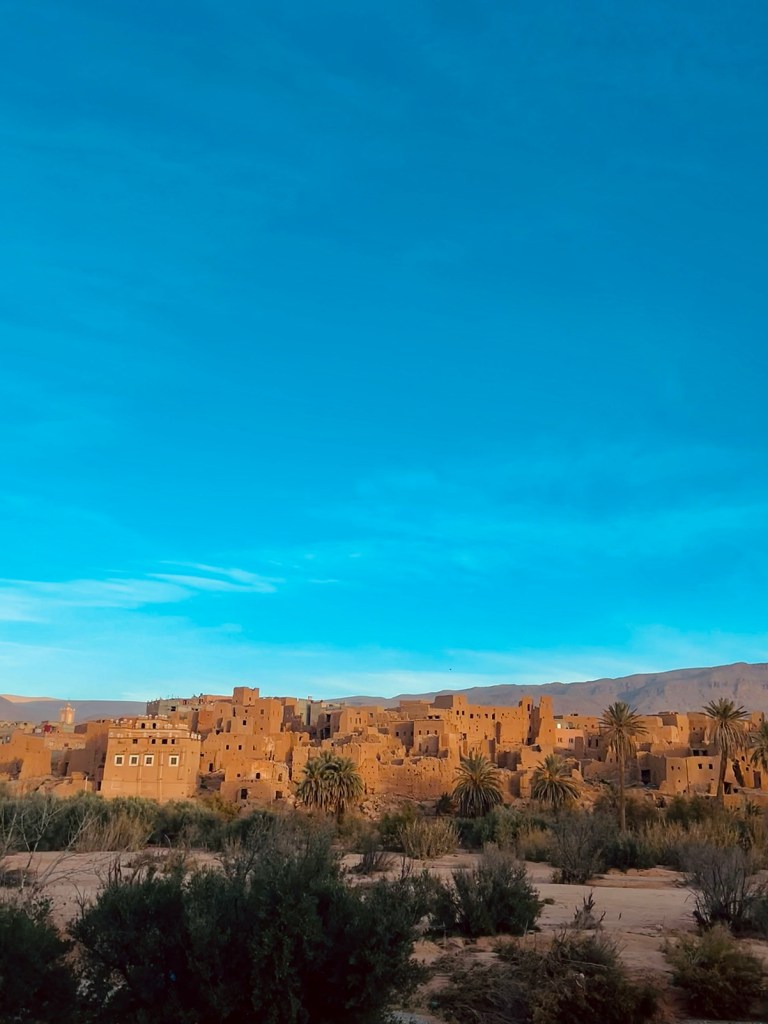
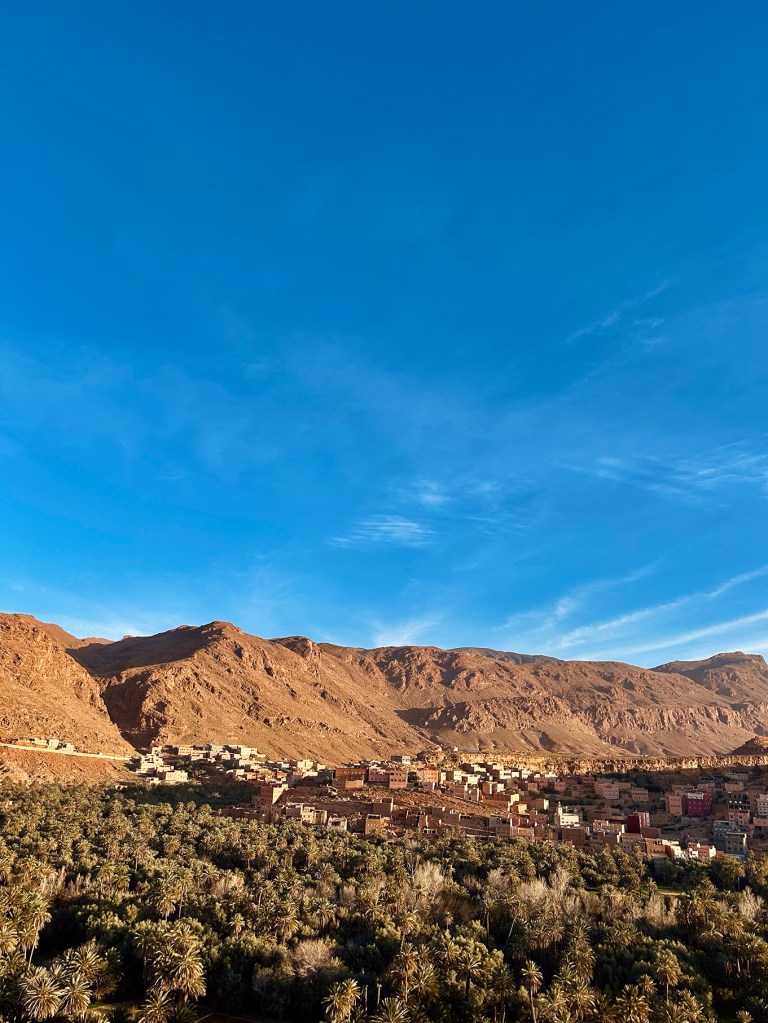
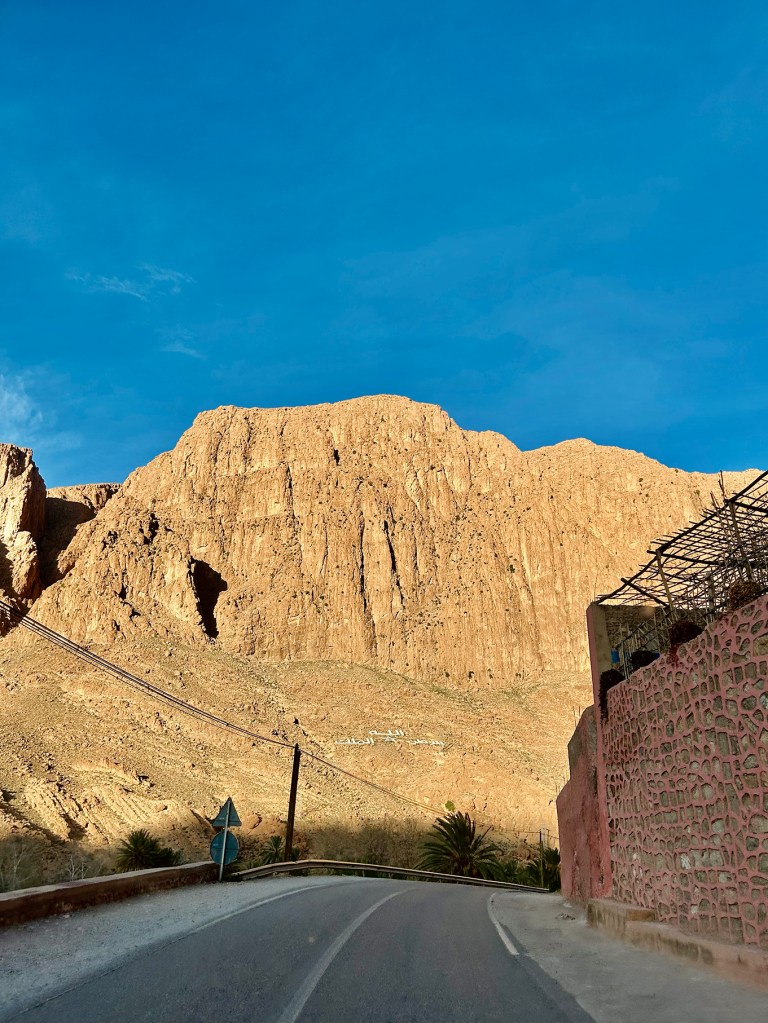
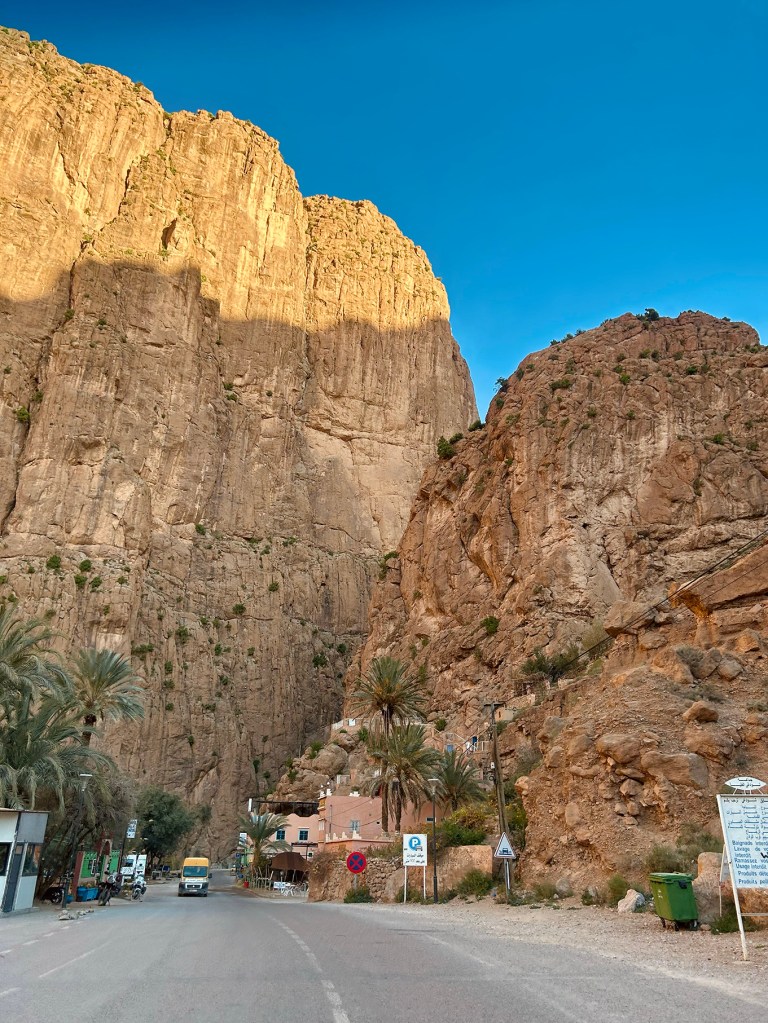
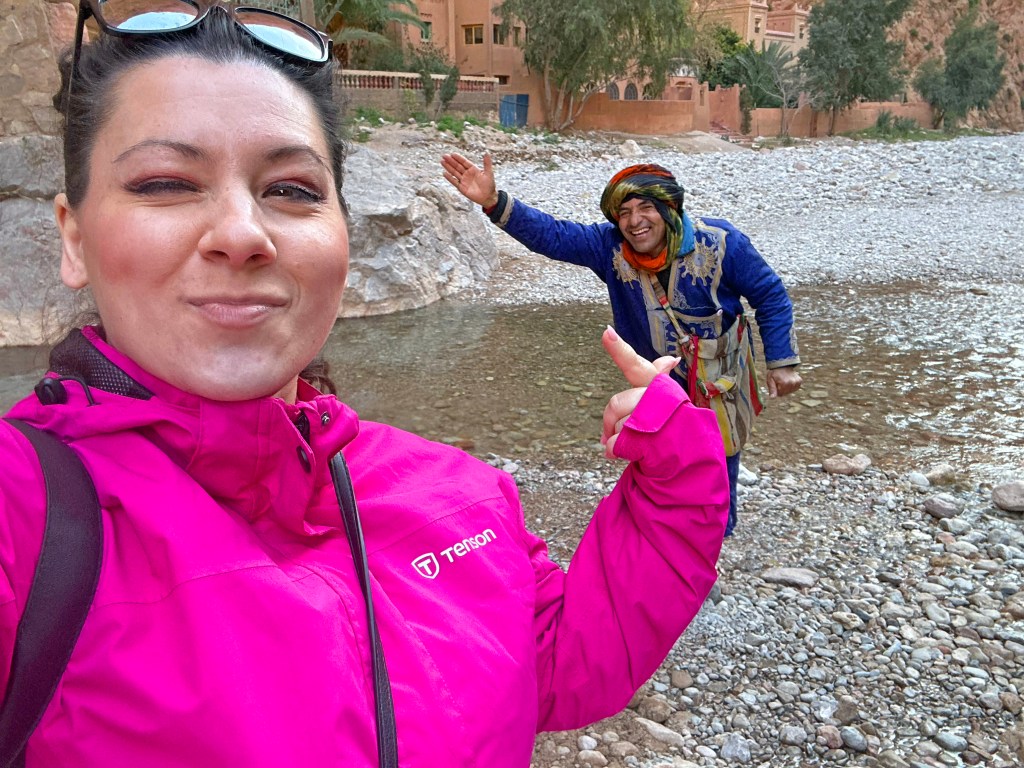
We left Tinghir in the morning heading towards the Dades gorge and Todra valley. We picked up our local guide, Jamil, who was nothing short of a showman. From jumping in photos in the middle of the road, to singing Waka Waka in the van, the first part of the day felt like being shot out of a giant cannon with confetti. In a loop.

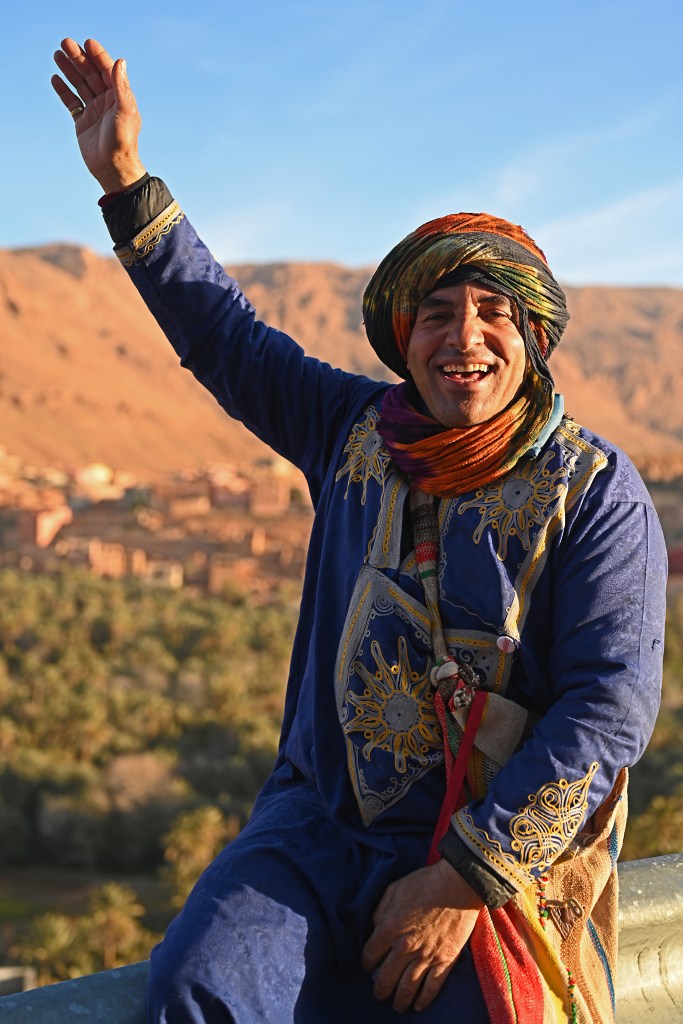
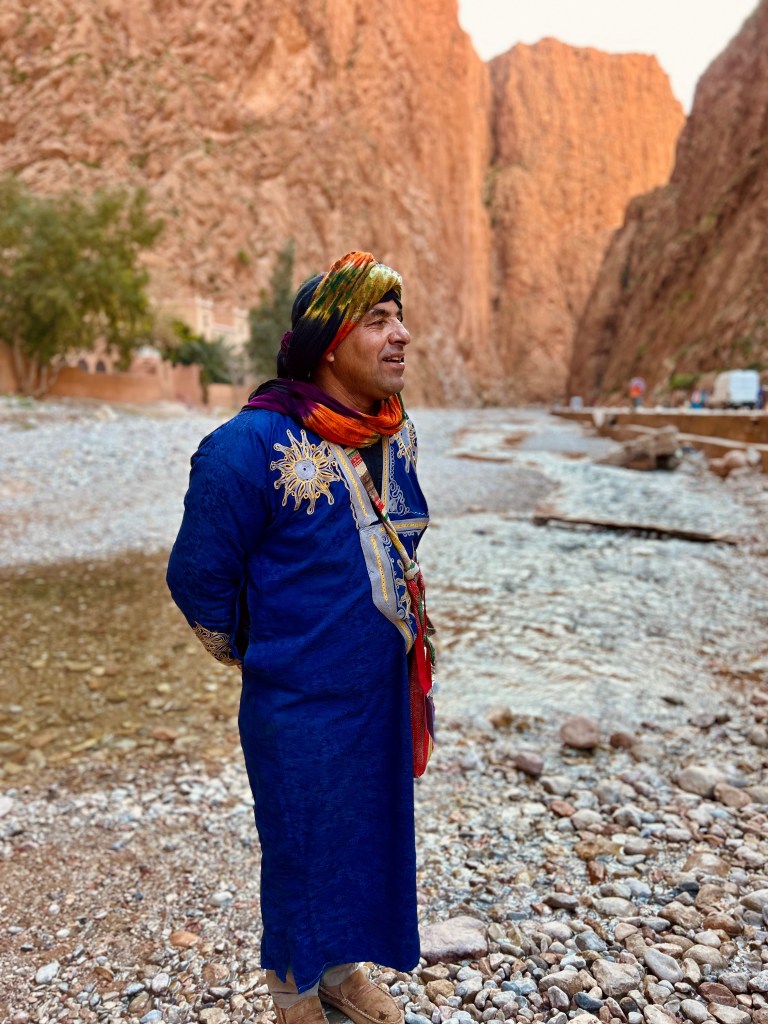
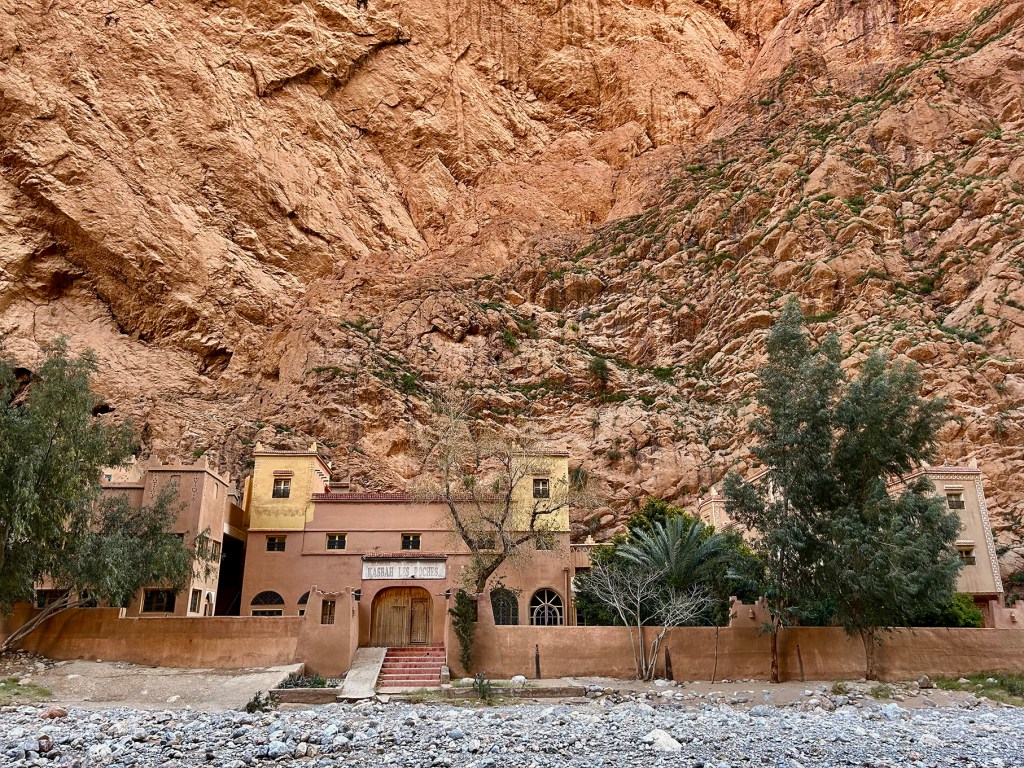
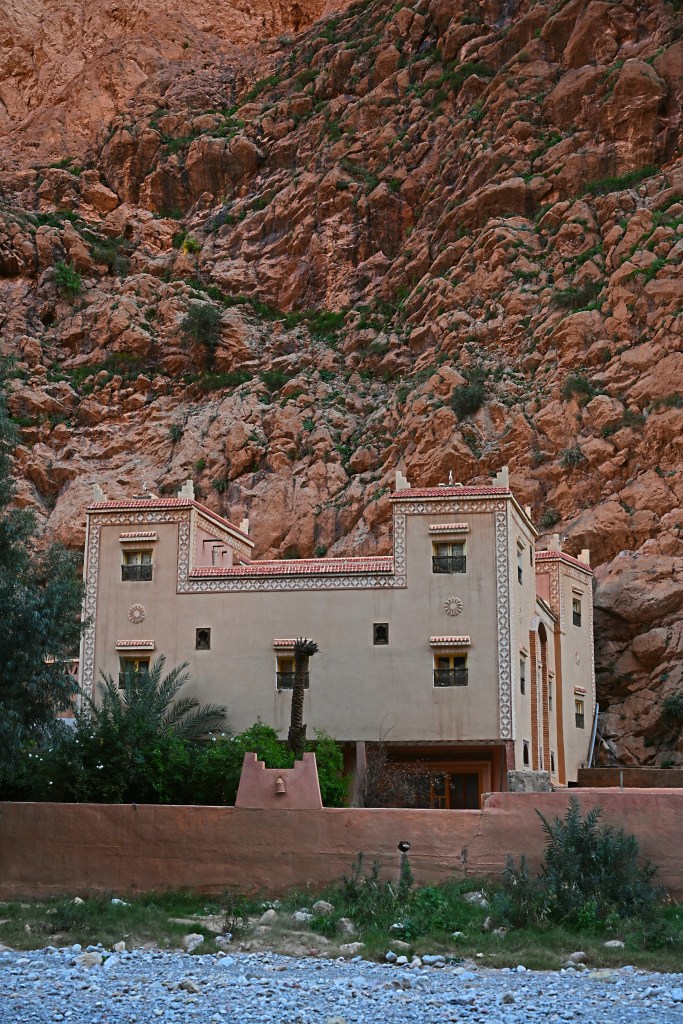
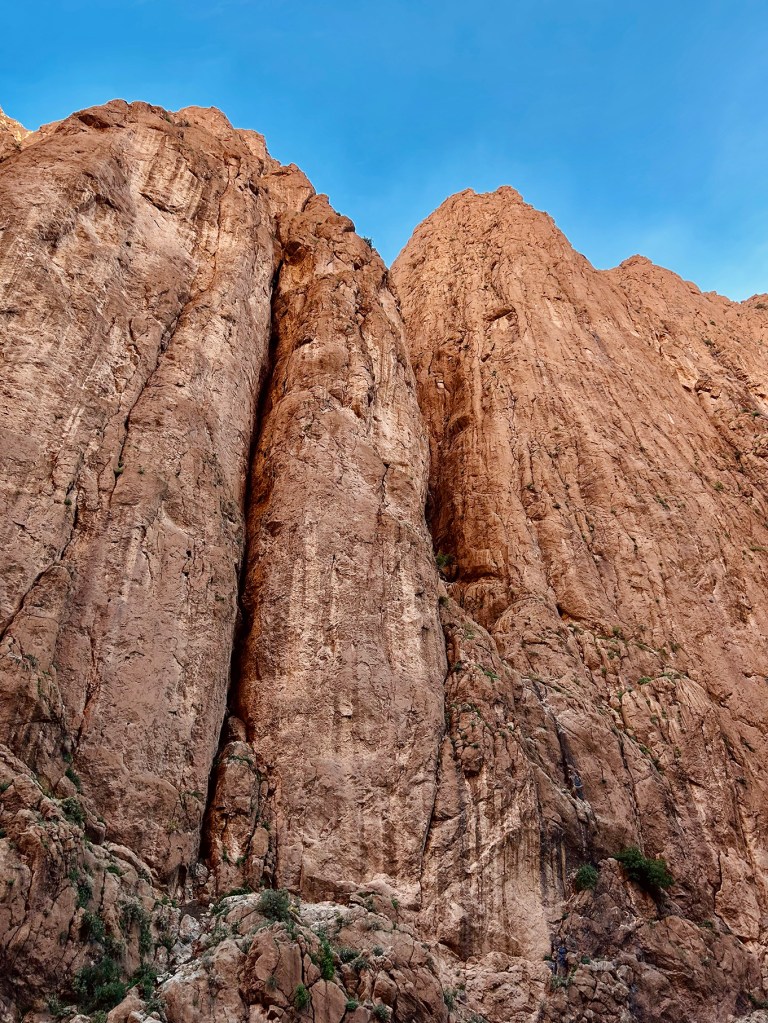
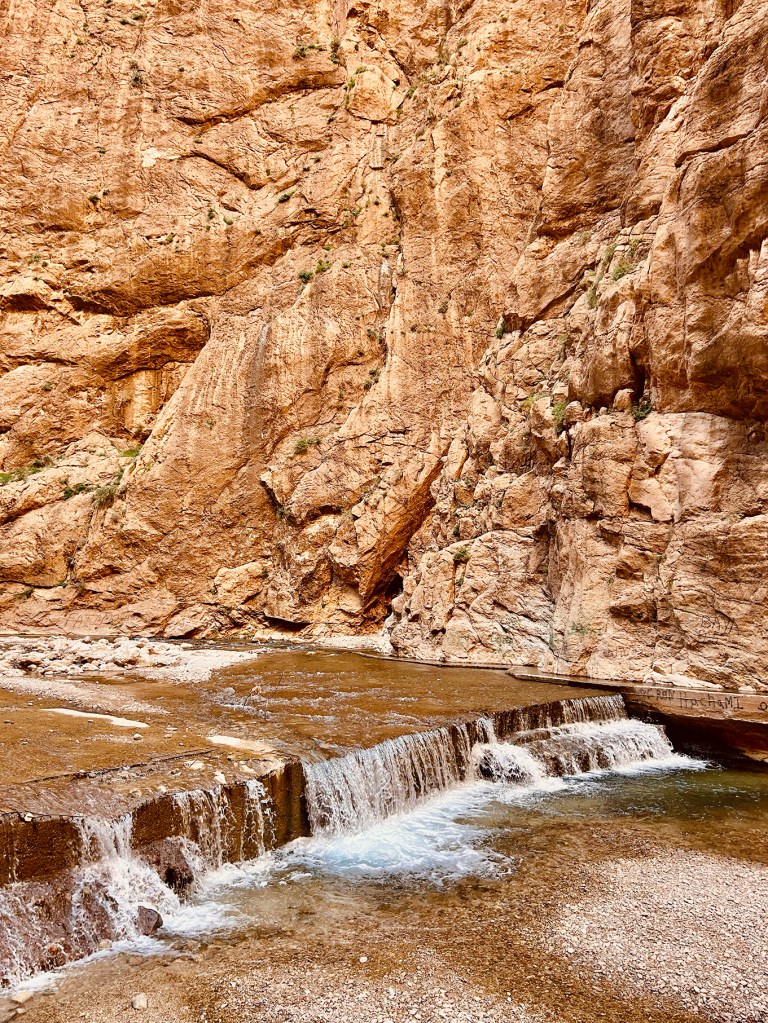
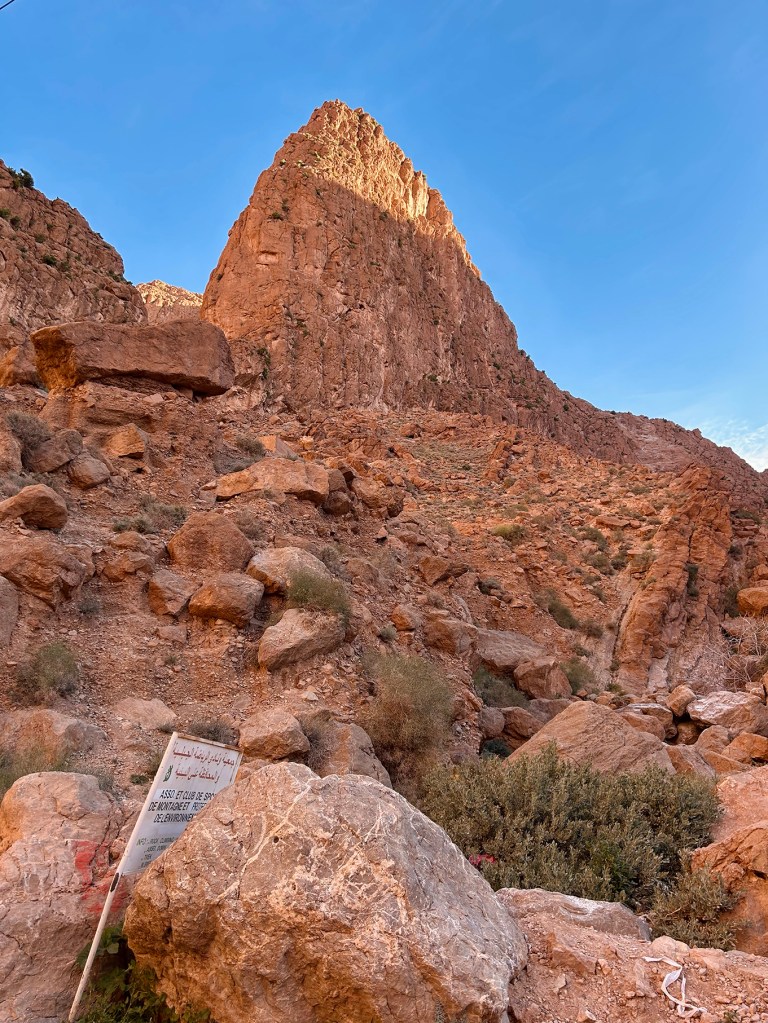
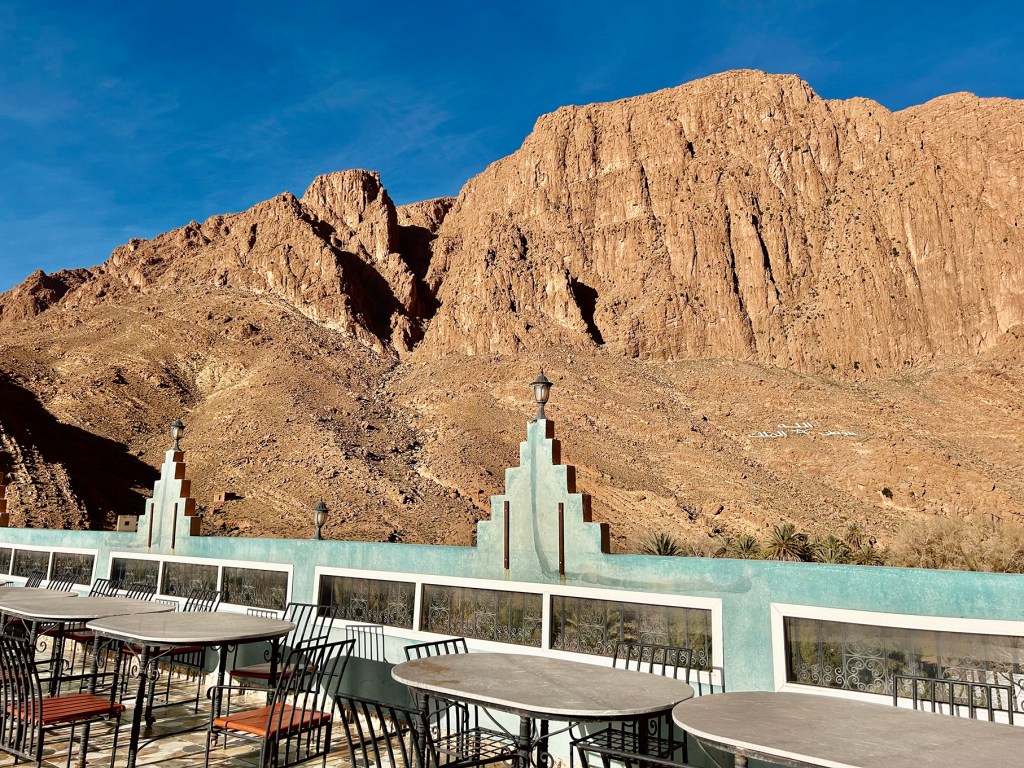
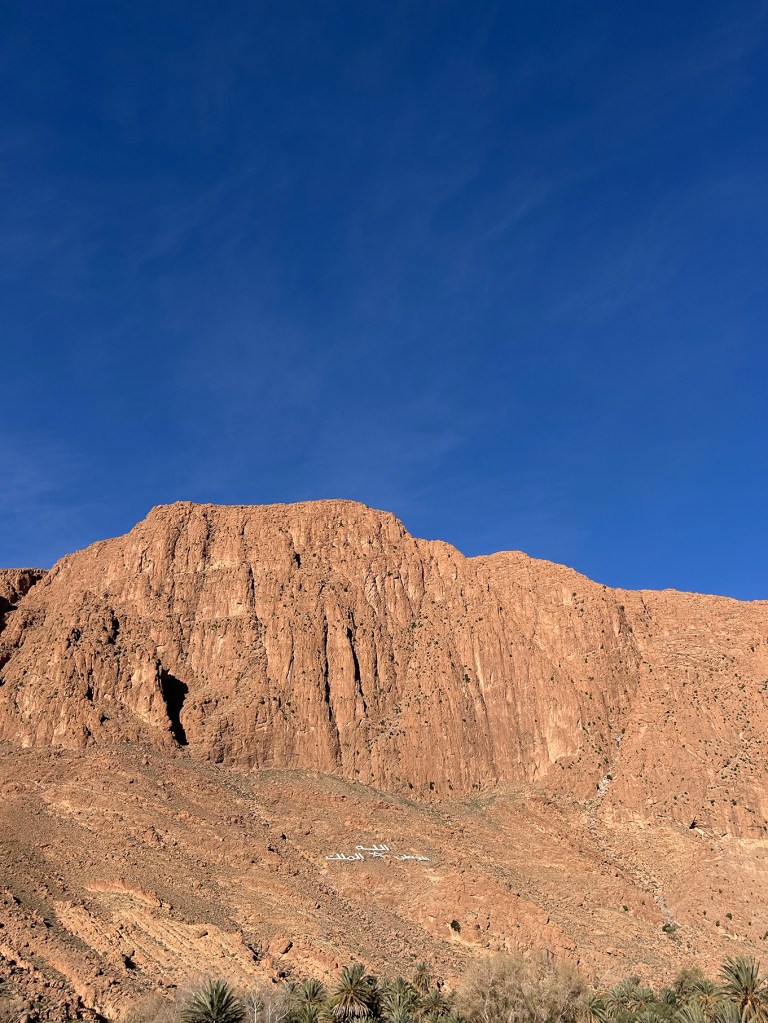
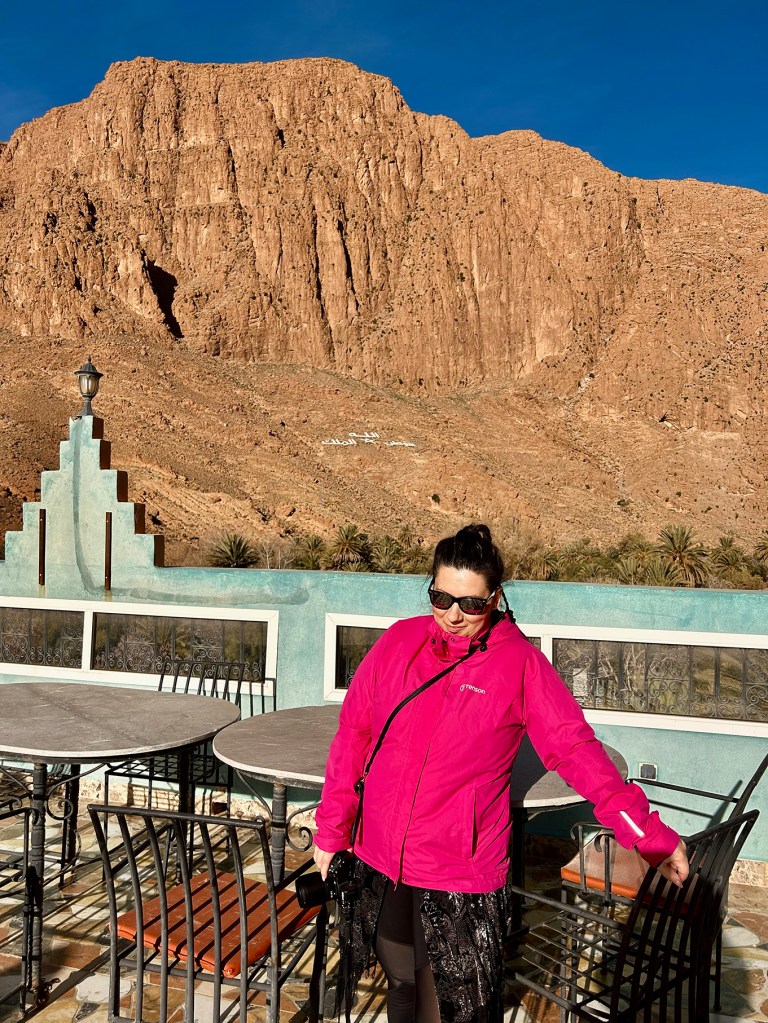
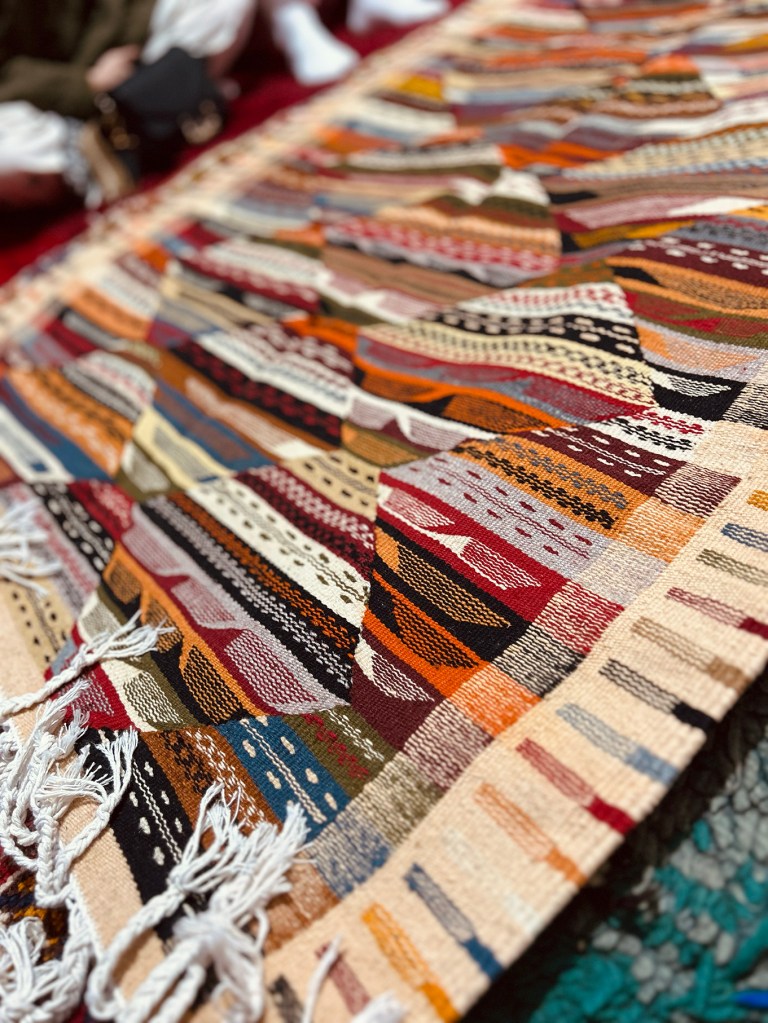
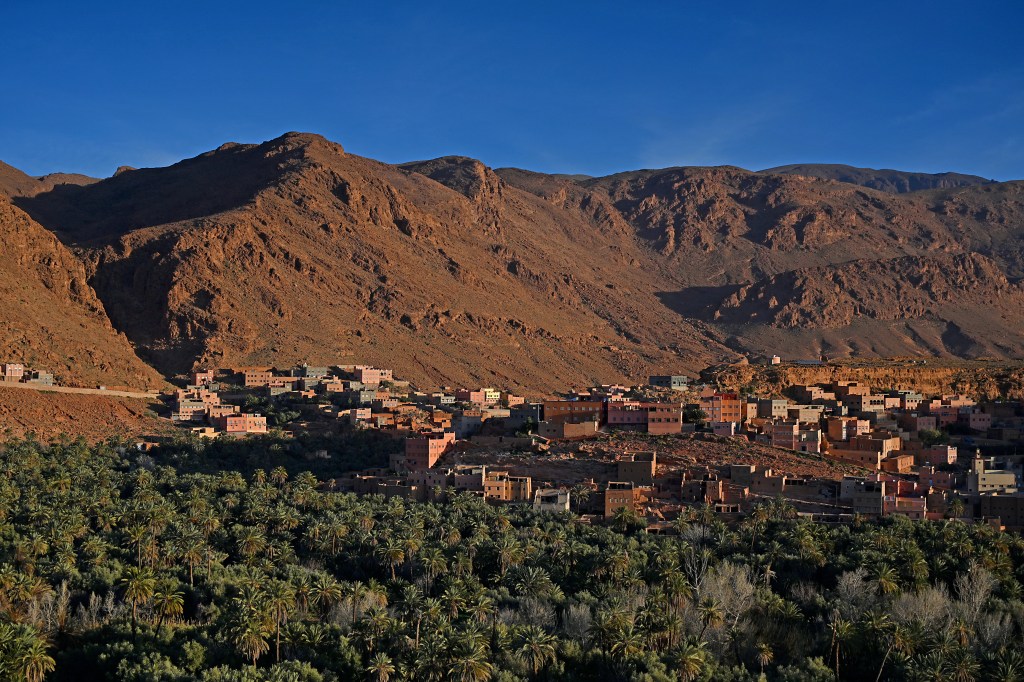
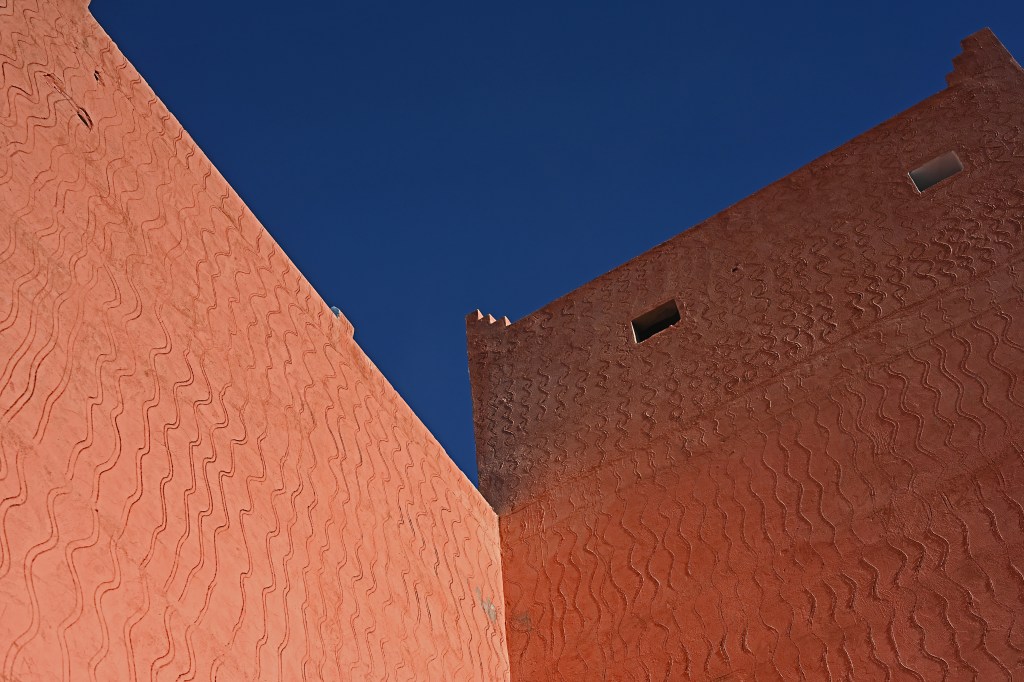
The landscape was otherworldly. The cliffs surrounding the river rise over 300 metres, the river itself is lukewarm and fresh and we walked around the valley through people’s gardens in the sunshine. We also visited a carpet making cooperative, where we naturally got a demonstration while sipping on some hot mint tea. The carpets were very pretty. Obviously not cheap enough for my vacation budget and not suitable for my backpack, but I did fall in love with some of them. The thread came from the camels and it had been dyed using various natural colors. The pink was exceptionally exciting and the women’s work on these pieces was so meticulous. You know when you’re there that these things are for real. It’s not anything mass-produced, it’s well crafted and unique, so if I’d had the possibility to buy anything, I wouldn’t have hesitated. The Japanese family bought a small piece and I have to admit I was a bit jealous, I wish the cooperative had made something even smaller, like a tiny table cloth, that I could fit in my luggage.

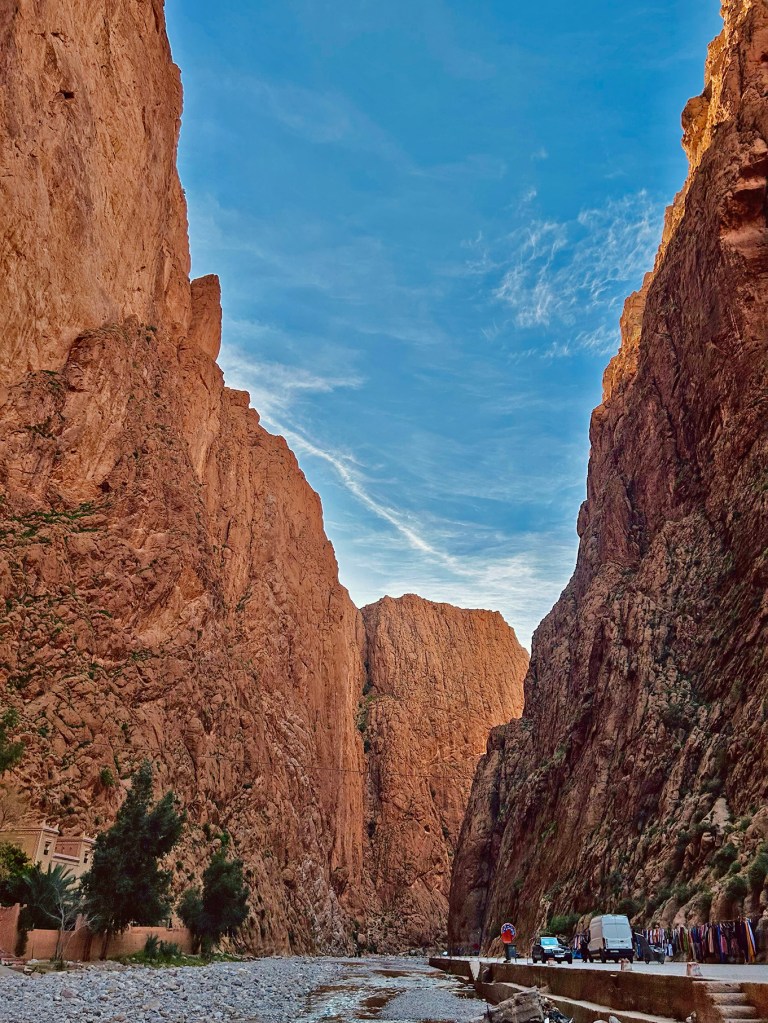
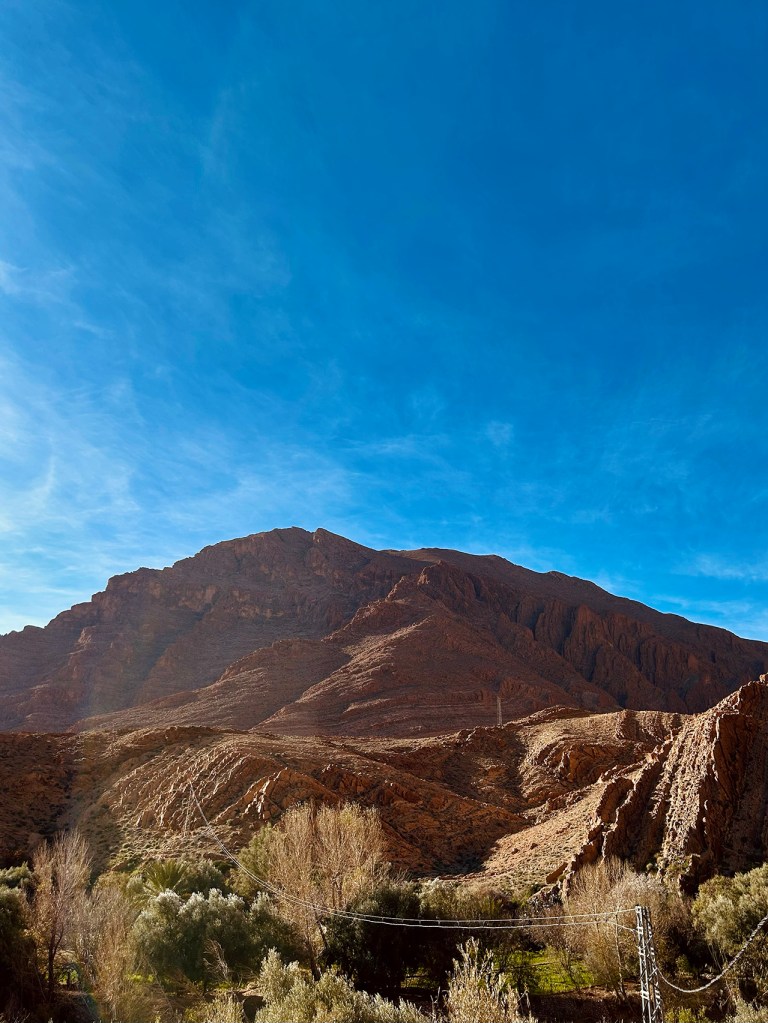
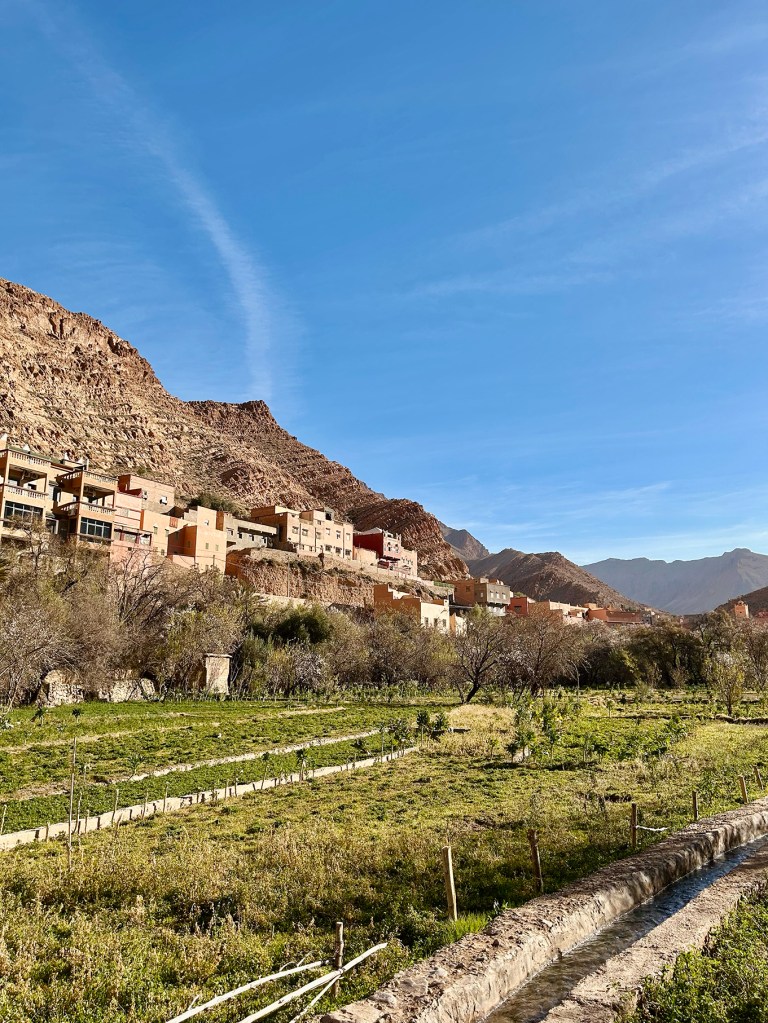
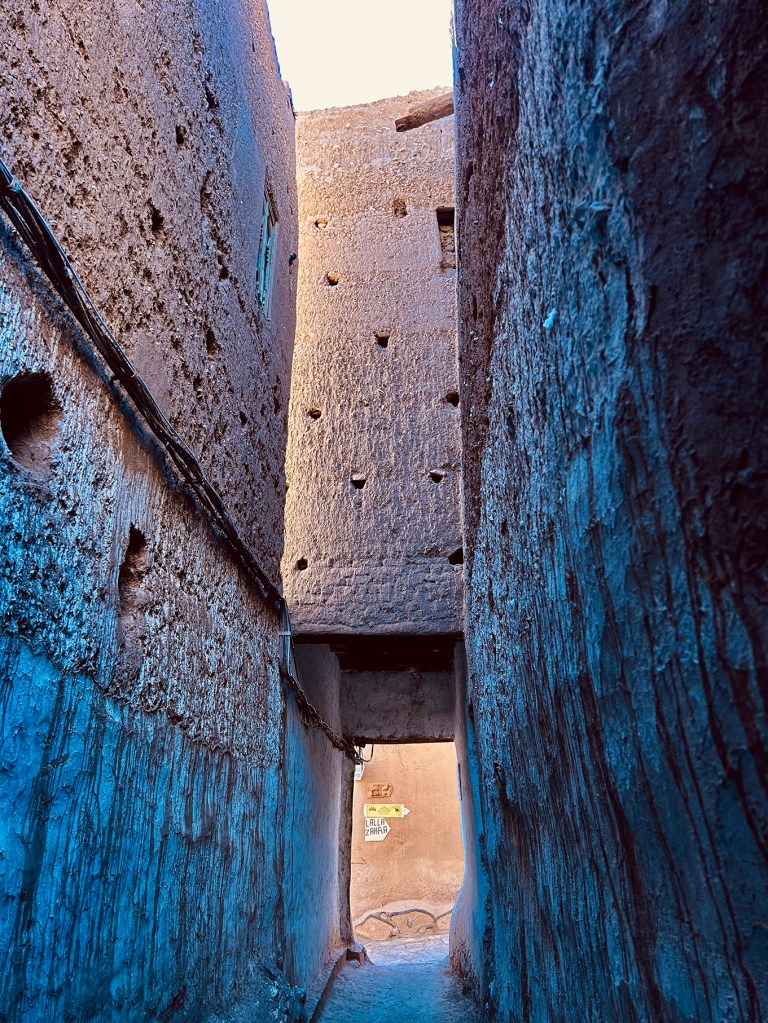
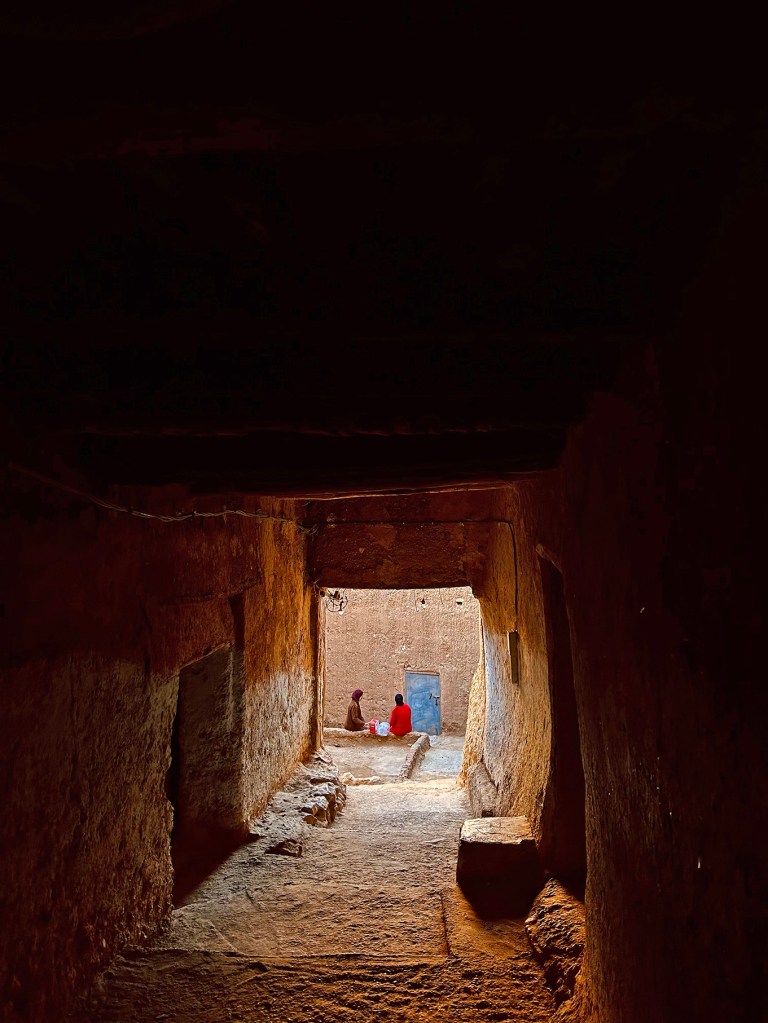
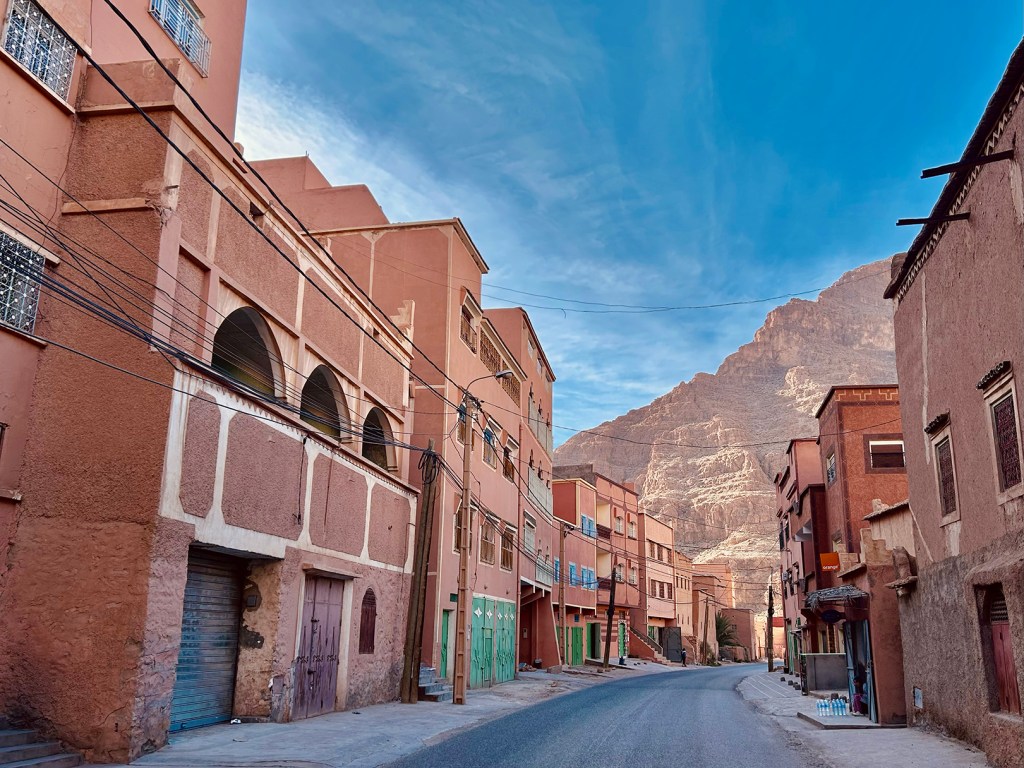
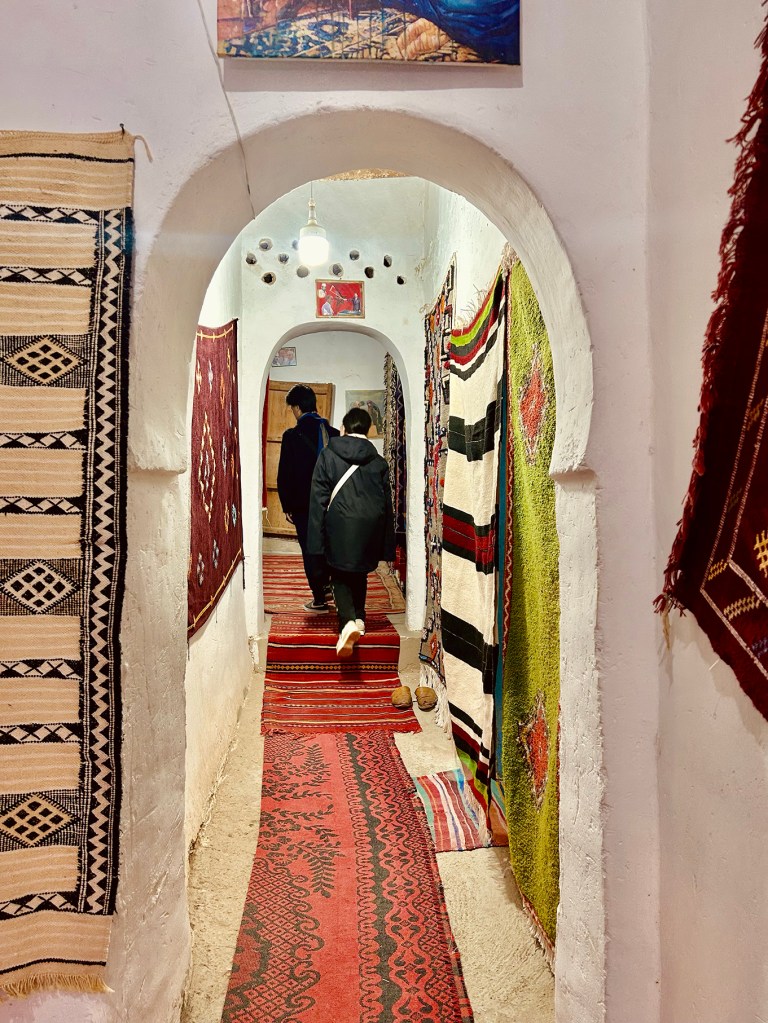
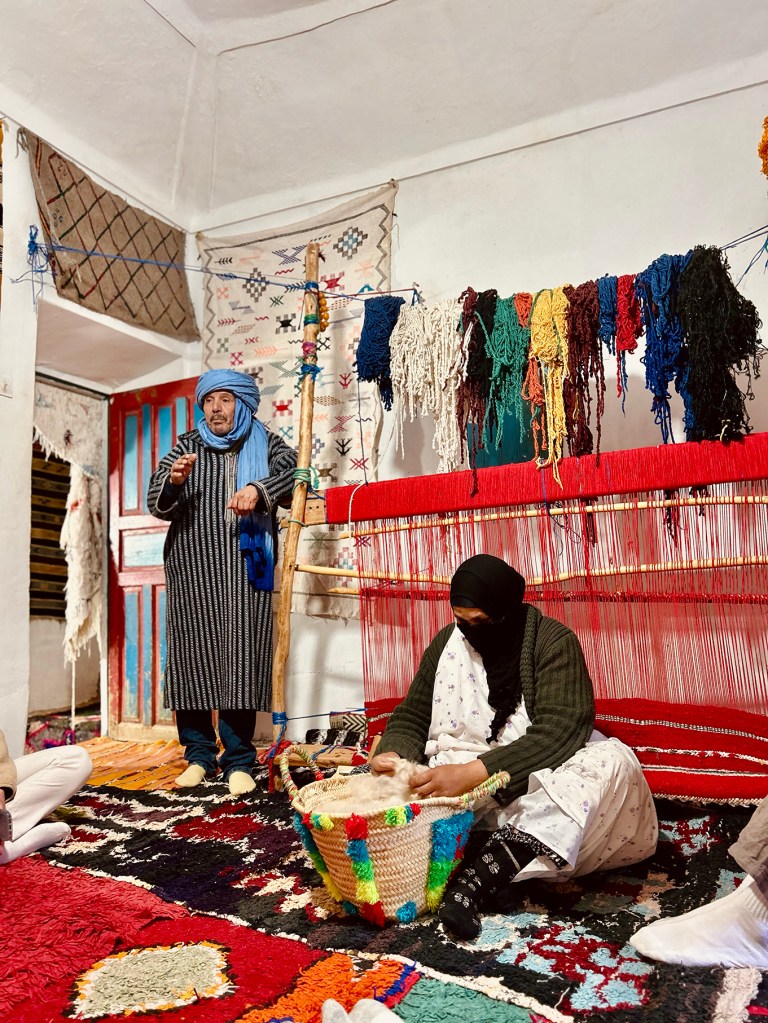
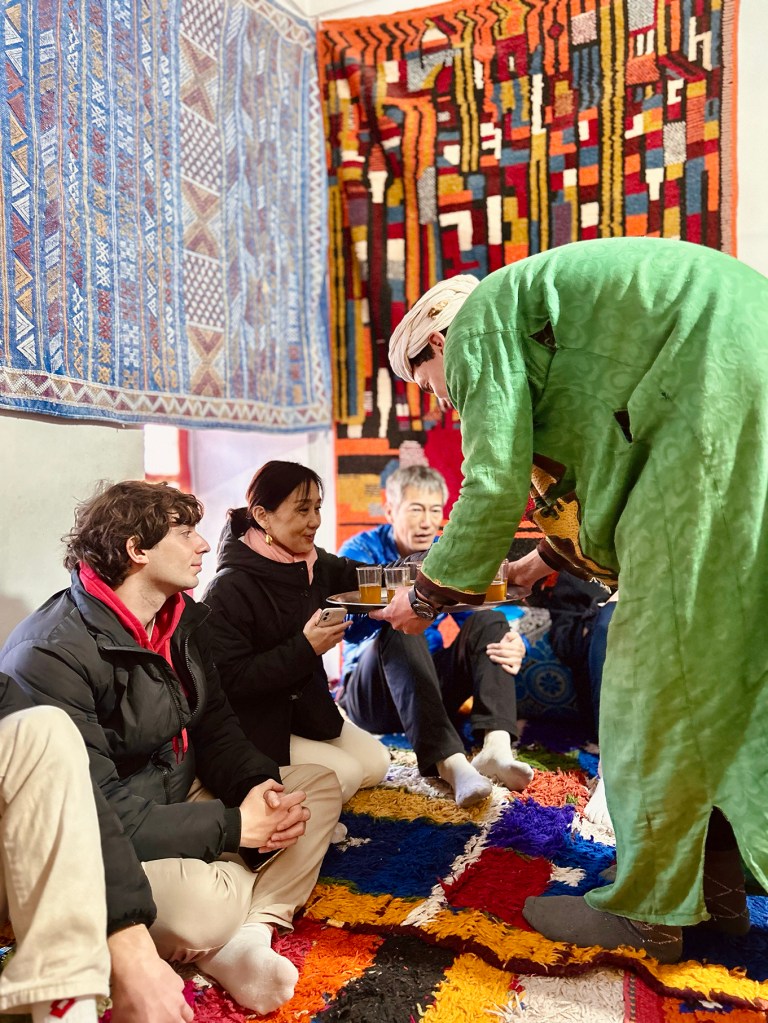


Before reaching the desert area, we had our lunch buffet somewhere in the middle of nowhere, where most of us discovered the chicken (or possibly pigeon) pastry called pastilla. Pastilla is a deceitful dish, as it waves filo pastry, powdered sugar, cinnamon and raisins in your face, making you – the silly tourist – believe it’s dessert and wanting to savor it with your after-lunch tea or coffee. Then you take a bite and discover it’s filled with minced bird and egg and salt, and absolutely nowhere near dessert, and you literally don’t know what to make of it. I did eat it, but I probably won’t be having another one anytime soon.
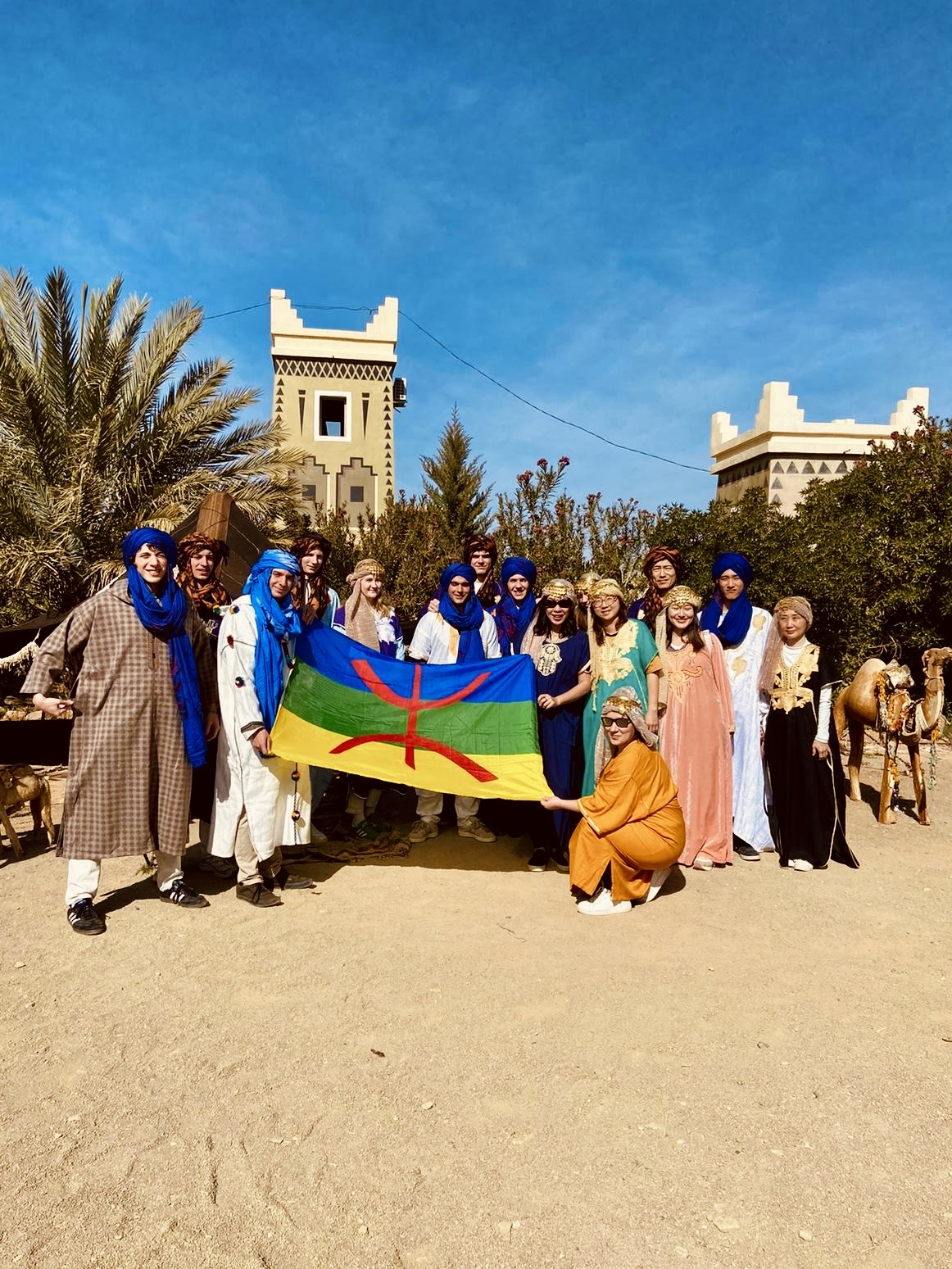
The last stop before reaching the sand dunes of Merzouga was a shop with clothes, scarves, jewelry, souvenirs and just the acceptable amount of cultural appropriation, according to both our guide and other locals. There, we were dressed as something somewhat resembling Berber dress and took a photo in front of a questionable background, proudly and happily holding a large Berber flag which to be honest we knew very little about. Some of us did ask if this is okay for the culture as it did feel a bit awkward at the same time as it felt like we got to experience local traditions that people were genuinely proud of. And by proud of, I mean even totally bragging about it, showing off any piece of clothing, pottery, art or craft that was associated with the history and traditions of the area.
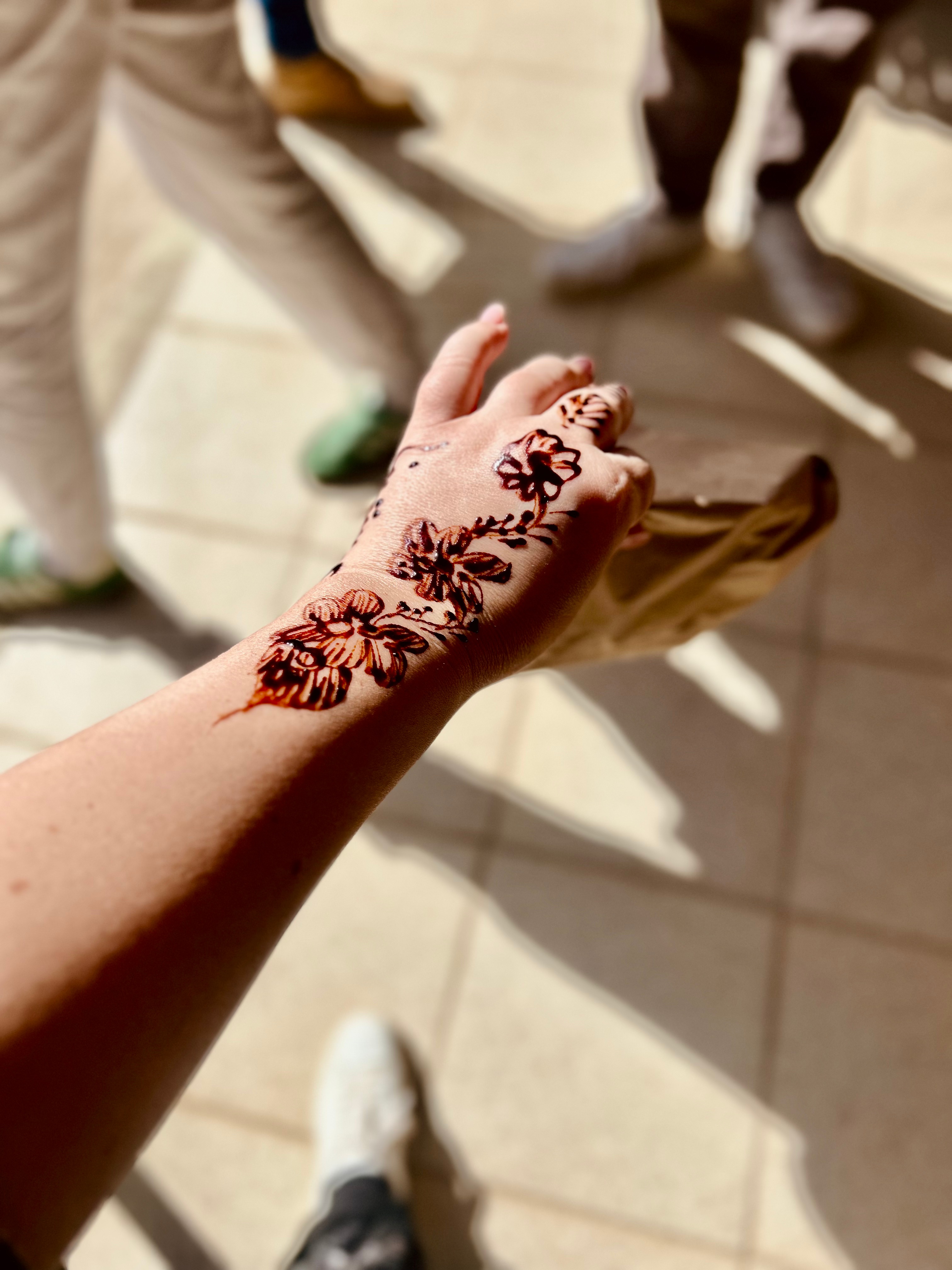
Naturally, we could buy stuff in the shop, in particular scarves for the coming sandy adventures. The part of my personality that is a fancy queen-of-everything also bought a necklace and a pair of earrings in the Berber style, which are nothing short of fabulous, and which I’ve been wearing on various occasions ever since as if I was from there in another lifetime. Throw in a free henna tattoo on my left hand, and I might as well switch my passport for a Moroccan one and start trading in camels.
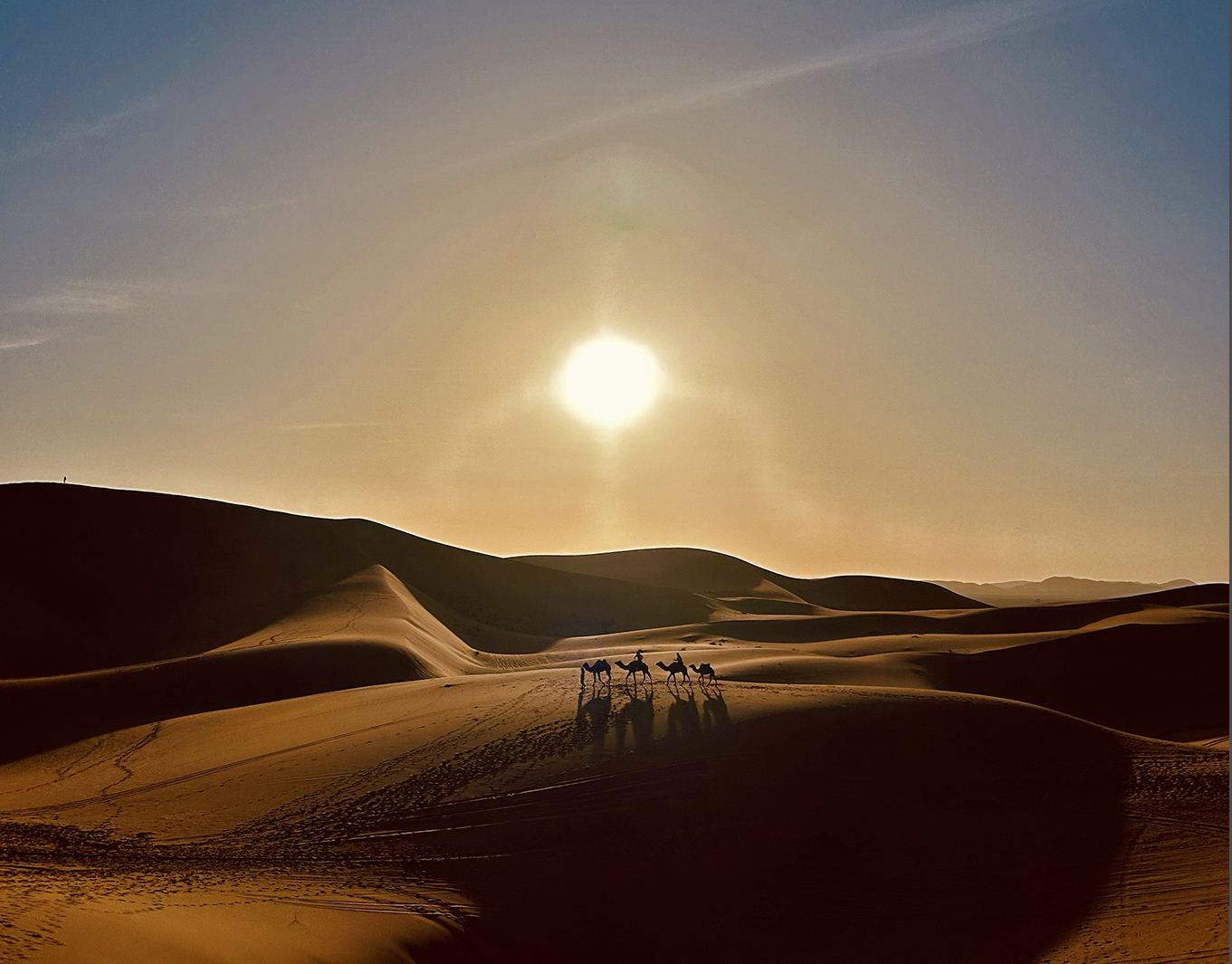
Then BOOM! Out of nowhere on the road you see the dunes of Erg Chebbi, Merzouga. Nothing prepares you for it. No amount of beaches you’ve ever been on, no movies or Instagram reels of flowing fabric in slow motion in any desert. I feel like an idiot everytime I try to describe the place more eloquently, because no better words come out of me. You just have to experience it live, sometimes not even good photos do it justice.
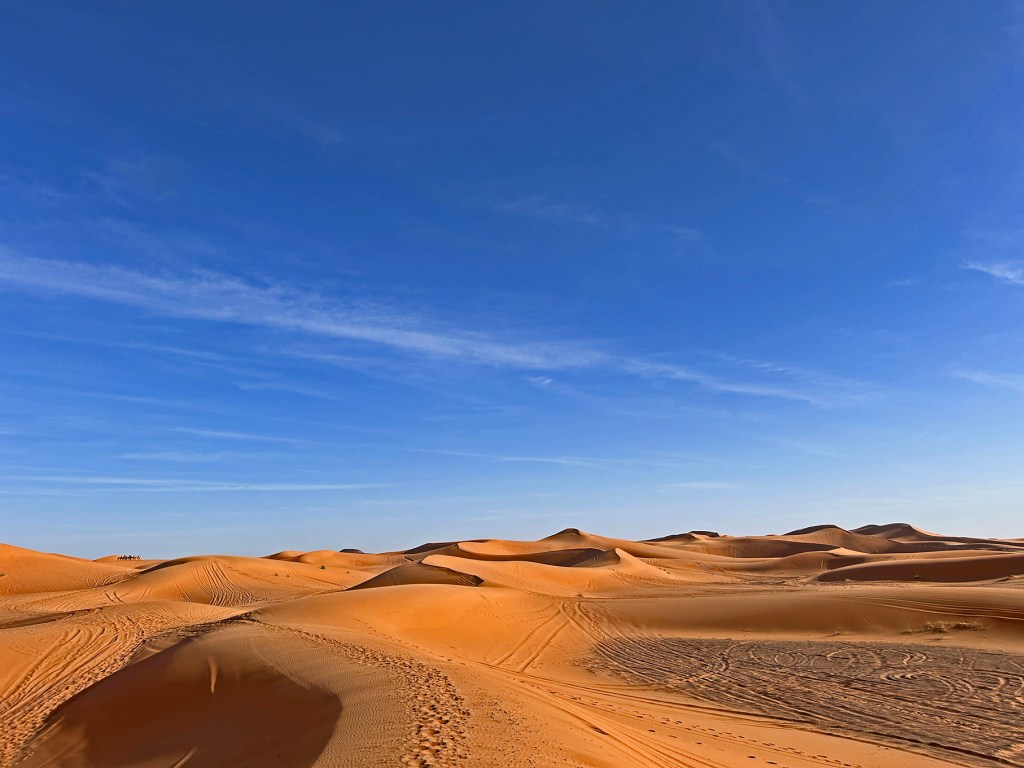
The whole journey to Merzouga, on the edge of the dunes, is a highlight in itself, from the dramatic gorges through palm-filled valleys, to the quiet Berber villages where people welcome you with big smiles and delicious tea. The towering sand dunes shift with the light, camel caravans cross the horizon, and even with a large number of tourists coming and going, there is a kind of silence you probably only find deep in the desert. It’s a place that feels both remote and close, one of these contrasts that make Morocco such a cool country to explore.
Just like in the Himalayas, there is a sort of disruption of the time-space continuum in the desert, and the human brain will inevitably struggle to focus on insignificant details such as “What day and time is it?” So in terms of relaxation and surrender, this place is also hard to beat, and worth more than just one visit.
We arrived at one of the offices in charge of desert activities such as camel rides and ATV. The camel ride was included in the tour, other activities would cost a few bucks more and as I don’t have a need for speed I didn’t join the people in our group who did the ATV.
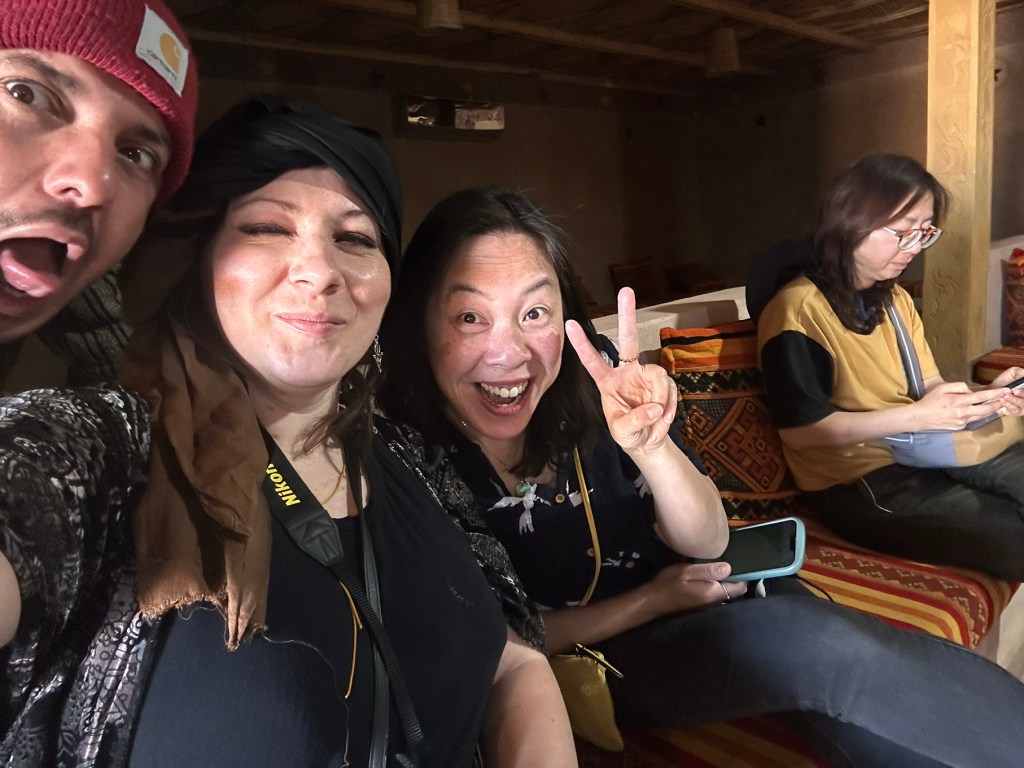
Shirley, Leewai and myself waited for our camel ride and shortly, Ibrahim took us to the camel parking lot. This is for me one of the very few acceptable parking lots. Cars can sod off, we need more camels in the world! Our luggage was collected in terrain cars to be taken directly to the camp, and we’d only have smaller bags with us on the ride.
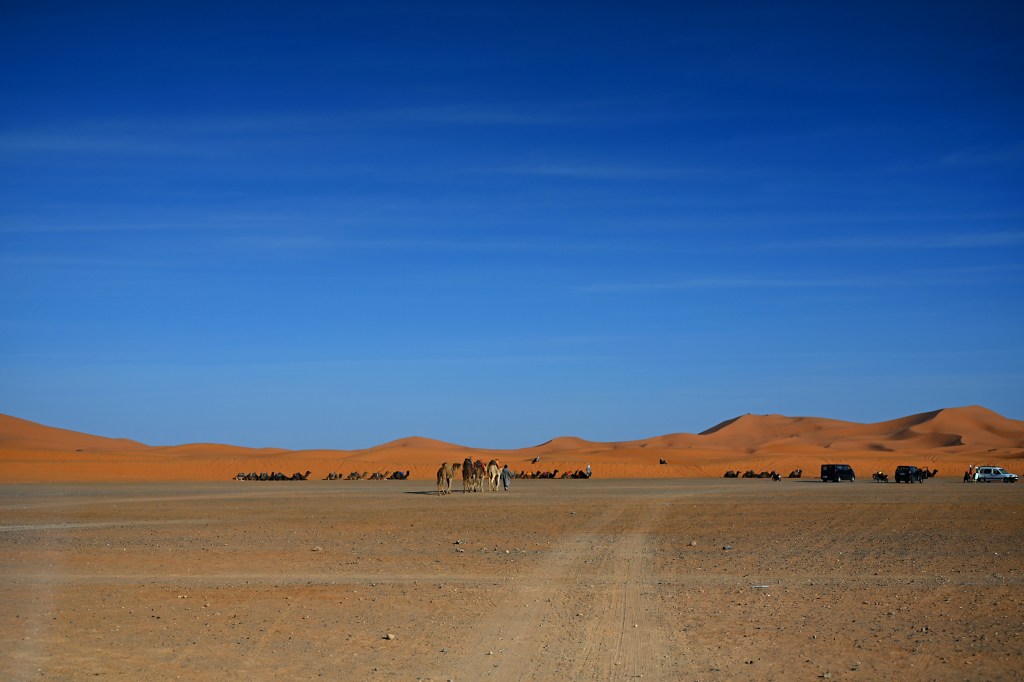
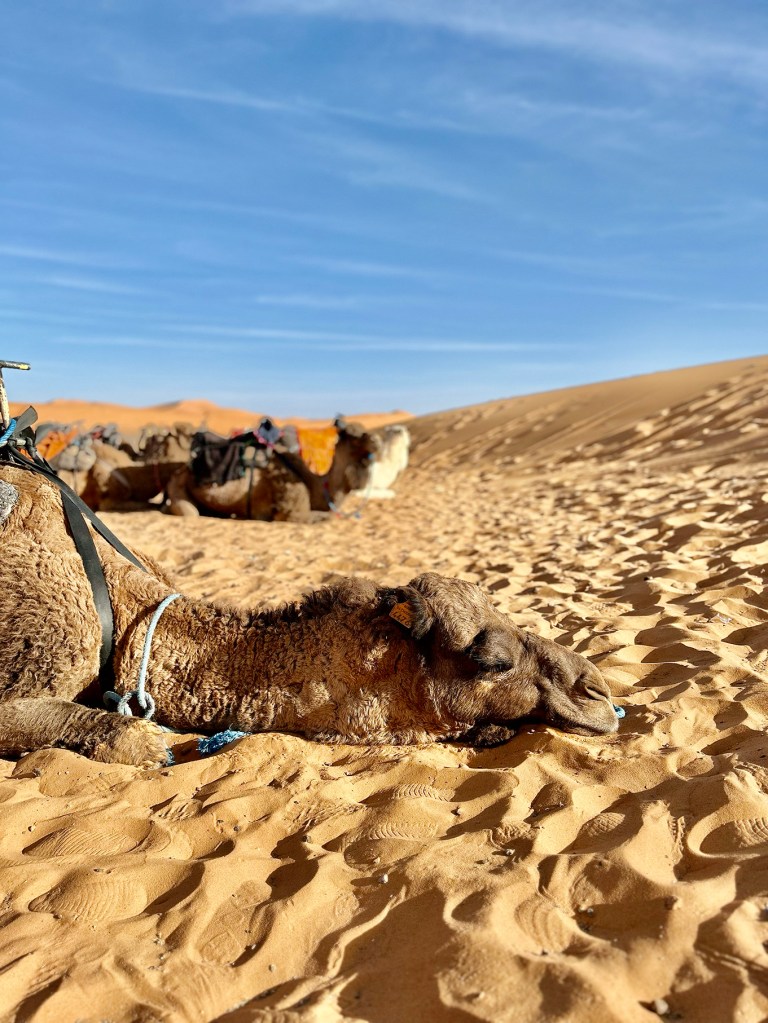
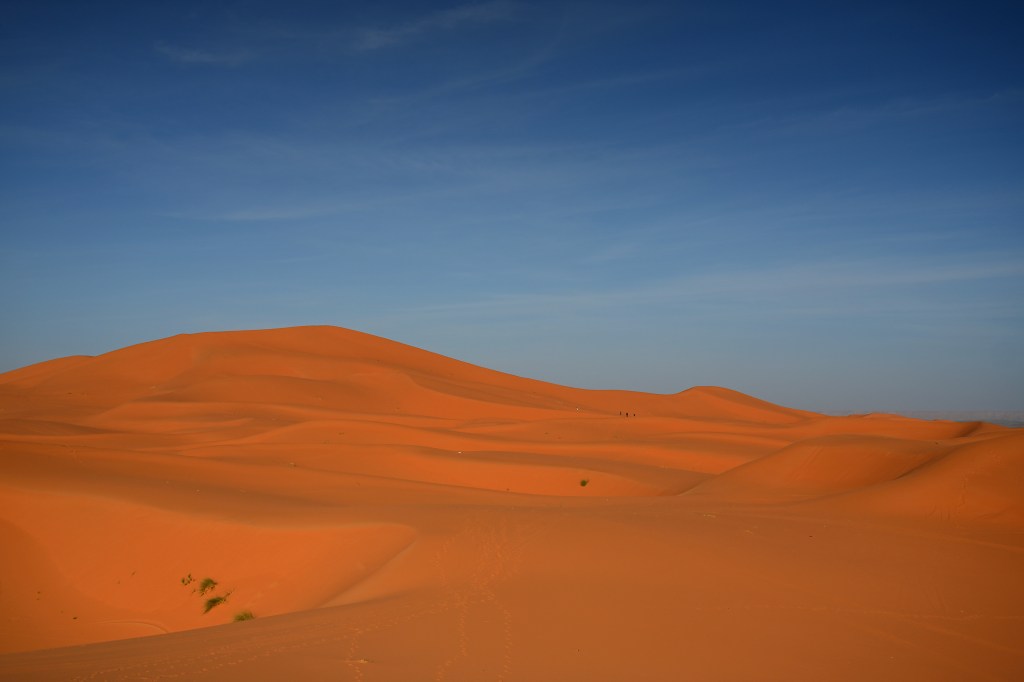
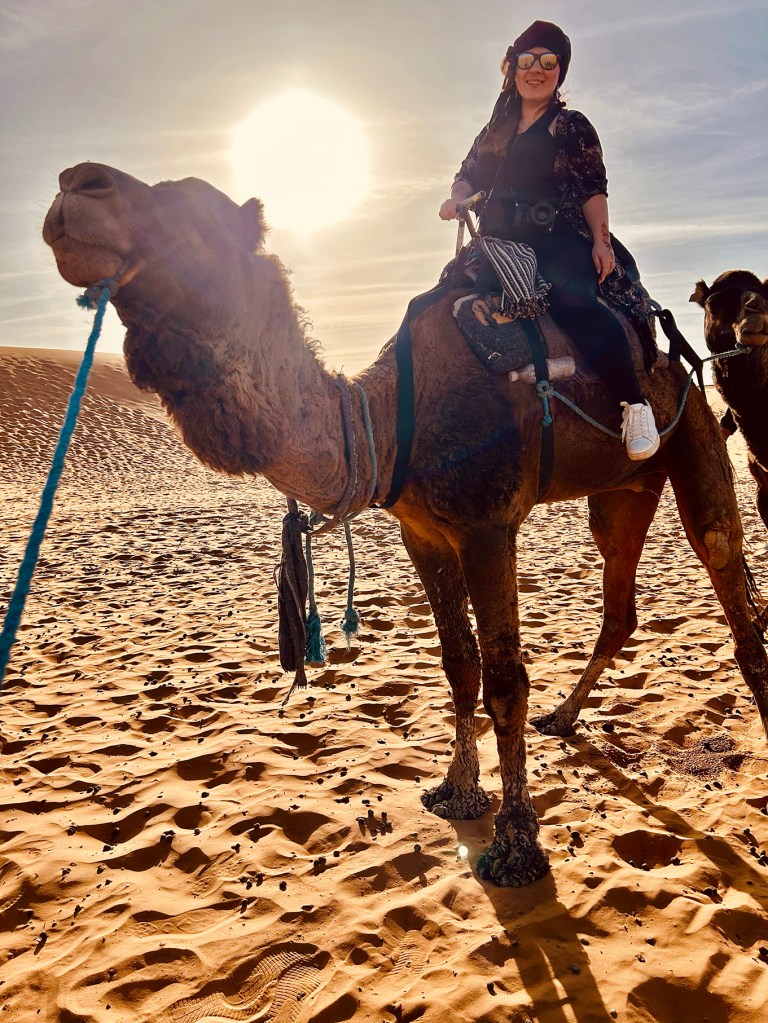
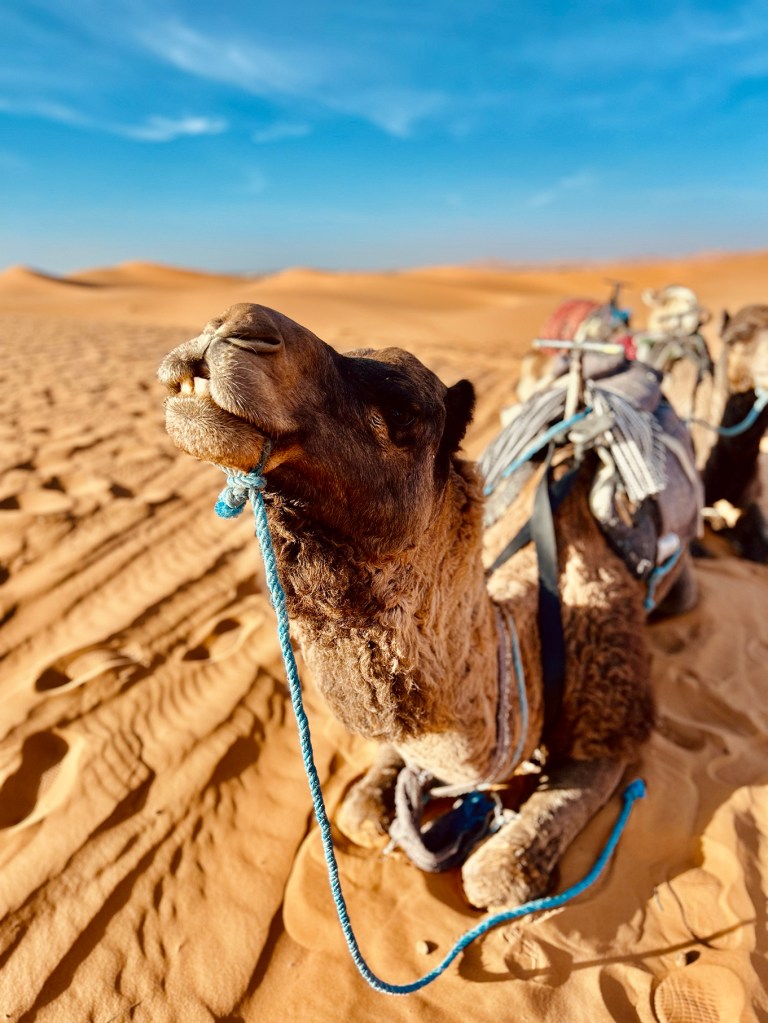
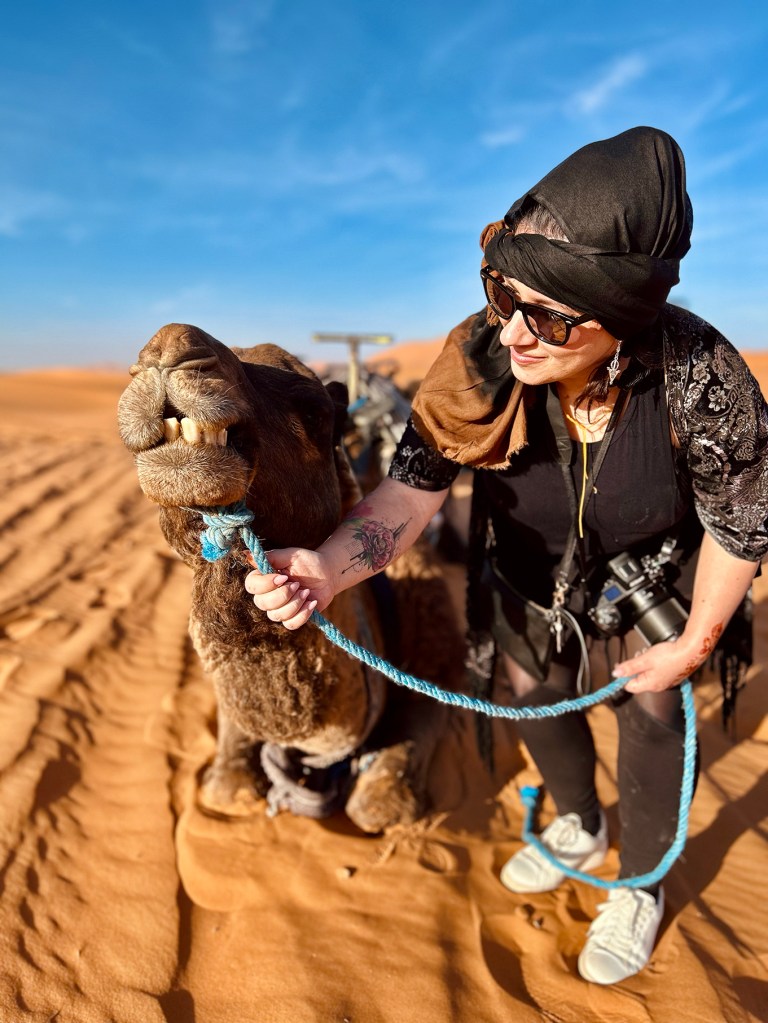
One young man – out of hundreds if not thousands, as we learned, who are in the desert business of camel rides, music in the camps, cooking, ATVs and whatnot – helped us get on our four-legged “desert vehicles” and off we went!
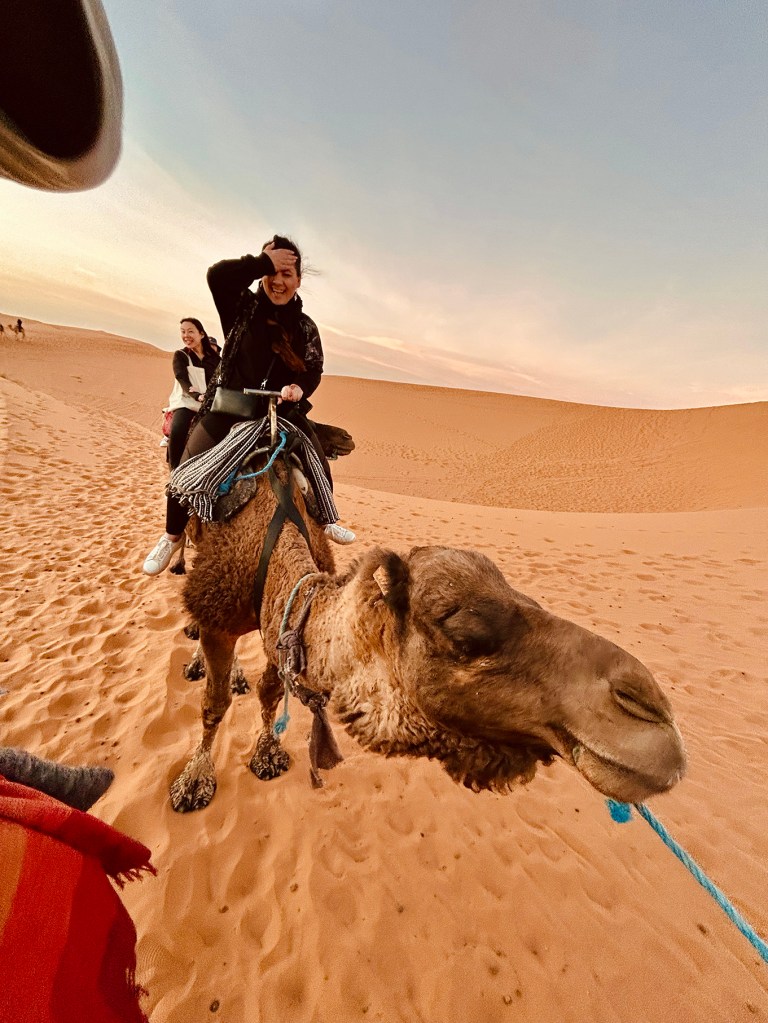
Camels are funny and serious as the same time. They have this smirk on their faces that makes them look adorable, they’re wonky and quirky and stubborn and they really love to chill. But when you think about it, they’re incredible animals. Their resilience is fantastic and you don’t want to stand in the way of an angry one. Sitting on an adult male, you find yourself about two metres up in the air and the process of getting on and off is not the most comfortable one. If you’ve got short legs and any sort of back problem (like me), it’s not going to be a smooth ride for certain parts of you. You will definitely be doing sort of a split up there.
The people of the desert, nomadic and sedentary alike, own camels. It’s like having other farm animals, they breed them, they take care of them, they use them. And it’s obvious that the animals are very close to their owners, even though some parts of the whole business are a bit rough. Training animals for tourism can be cruel at times and as soon as a herd is a family’s sole sustenance, the focus maybe shifts more towards profit rather than the animals’ well-being. Luckily, from what I could see, most camels seemed to be doing fine in the desert area, and from keeping in touch with someone local, I also got to experience a lot of love between humans and their camels.
A camel trek in the desert is relatively slow, but at first you don’t know the dunes properly or the route you’ll be taking, so it’s like one bumpy surprise after another. There’s this rhythm that you have to get into, as the camels walk, and for us silly tourists, they have proper saddles with handles. The handles are lifesavers, because if you get distracted by trying to take photos or turn around, you might totally lose your balance while the camel makes an unexpected turn or walks down on a dune.
They come in smaller groups of around four–five, tied together by their handlers, and after a bit of walking and catching a sunset in the sand, more groups merge into a larger caravan, headed towards their respective camps. Some people go to more basic camps, other go to fancier ones. I thought there were like only two of them, but when I got back home and did some research it turns out there are tens of camps all over the Merzouga area.
We must have trekked for over an hour when it was time to climb down and take a break on the dunes to wait for the sunset. The camels and handlers get a proper rest at the base of the dunes and everyone heads towards the taller ones to get a good spot. Sand-surfing is also part of the experience. As we were on a steep dune and my back was already in a bit of pain, I chose not to get on a board. I didn’t want to hurt anything with a bad landing, even though the sand itself is the absolute softest I’ve ever walked on in my entire life. Not even the white beaches of Aruba were this soft and it wasn’t even hot. It was incredibly pleasant to walk on, a very comfortable experience for tired feet.
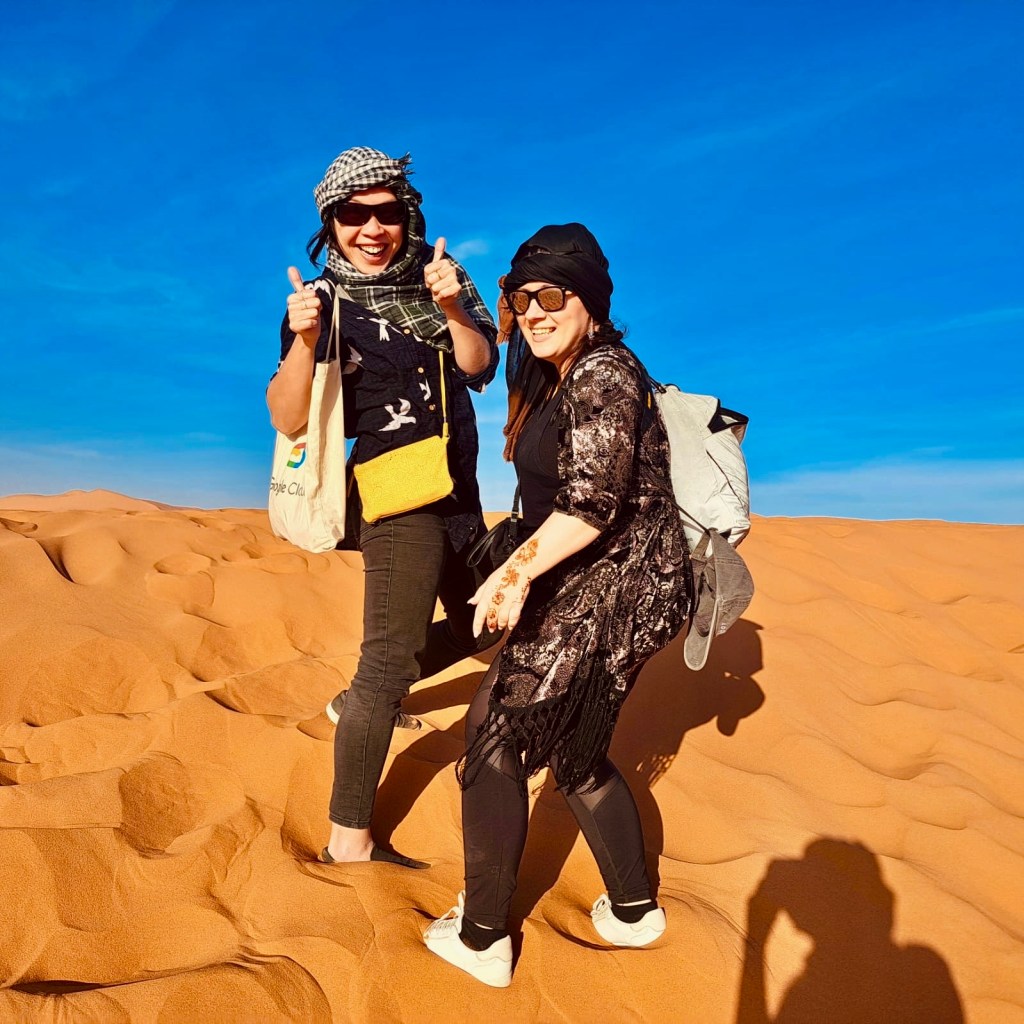
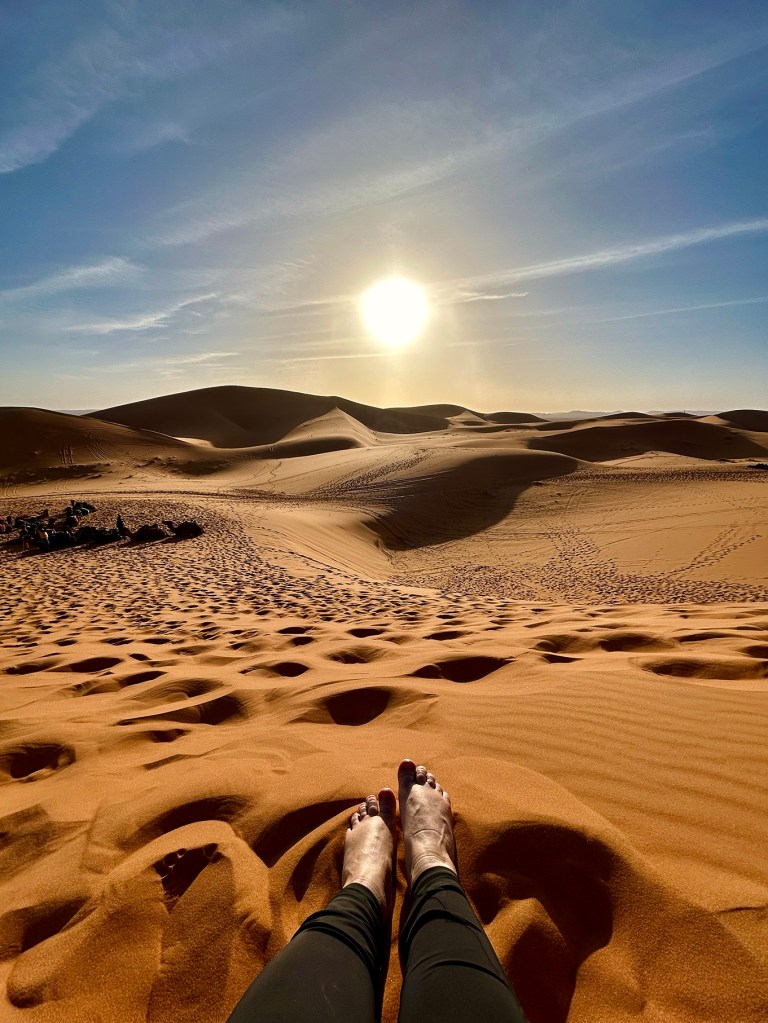
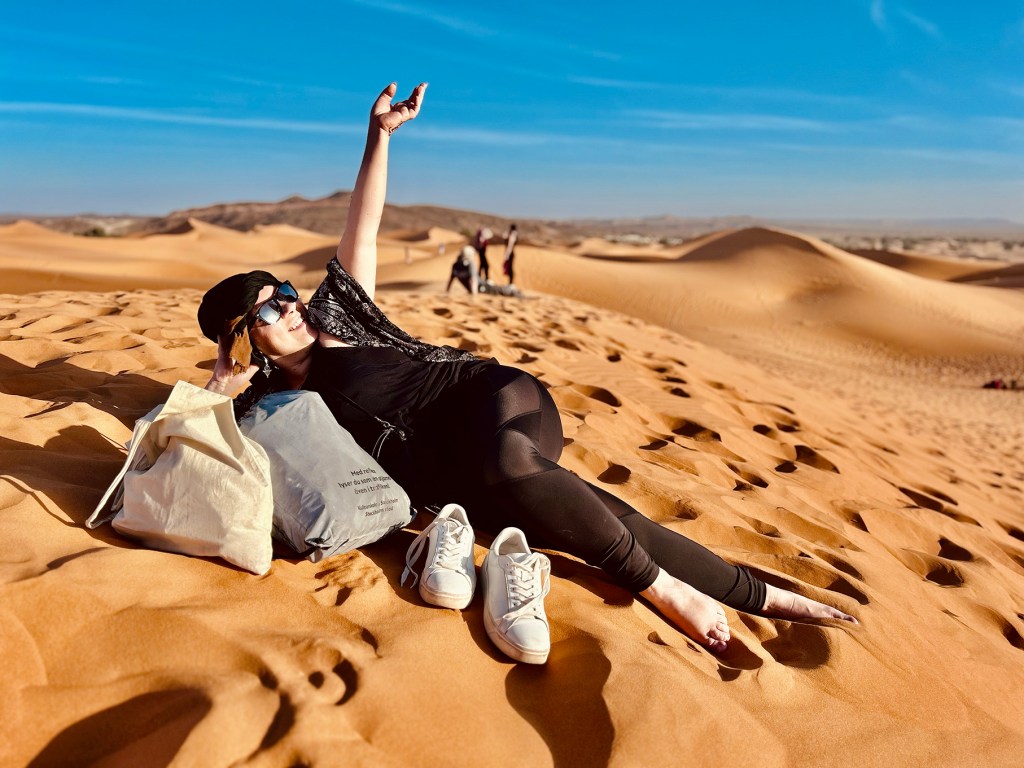
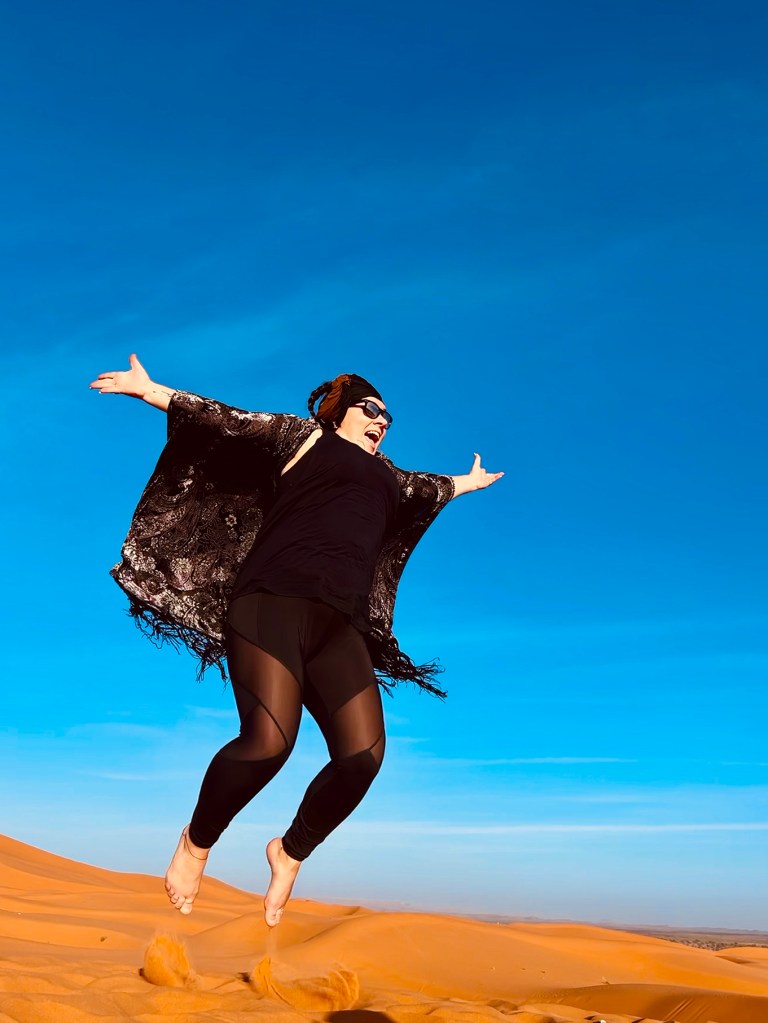
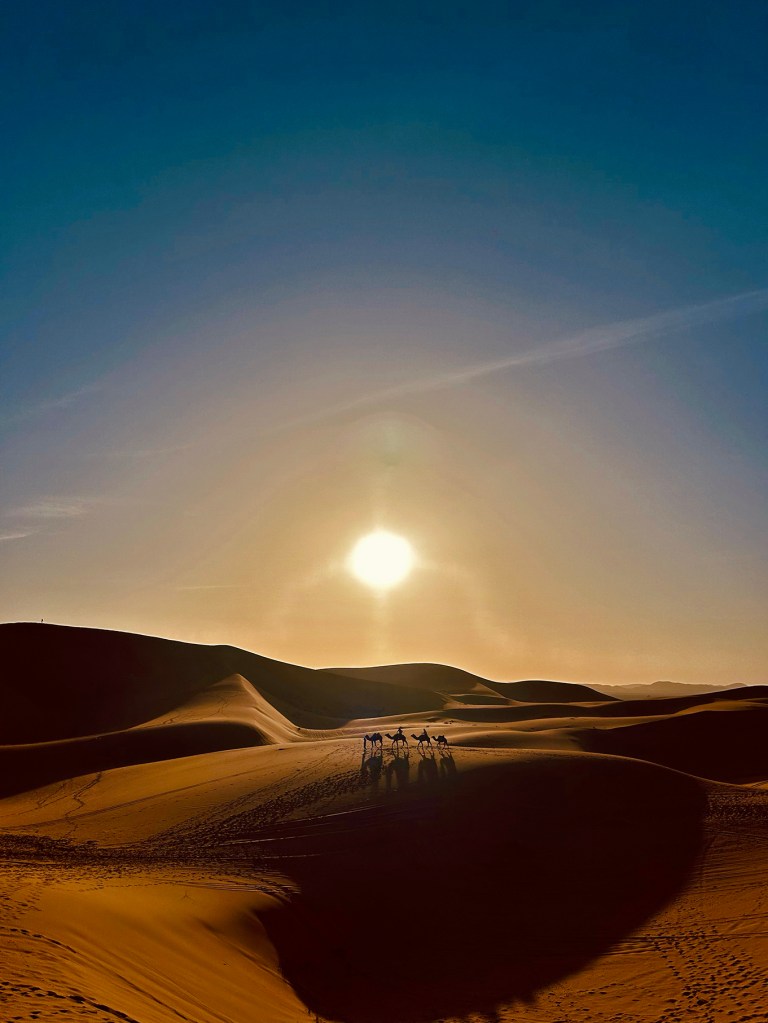
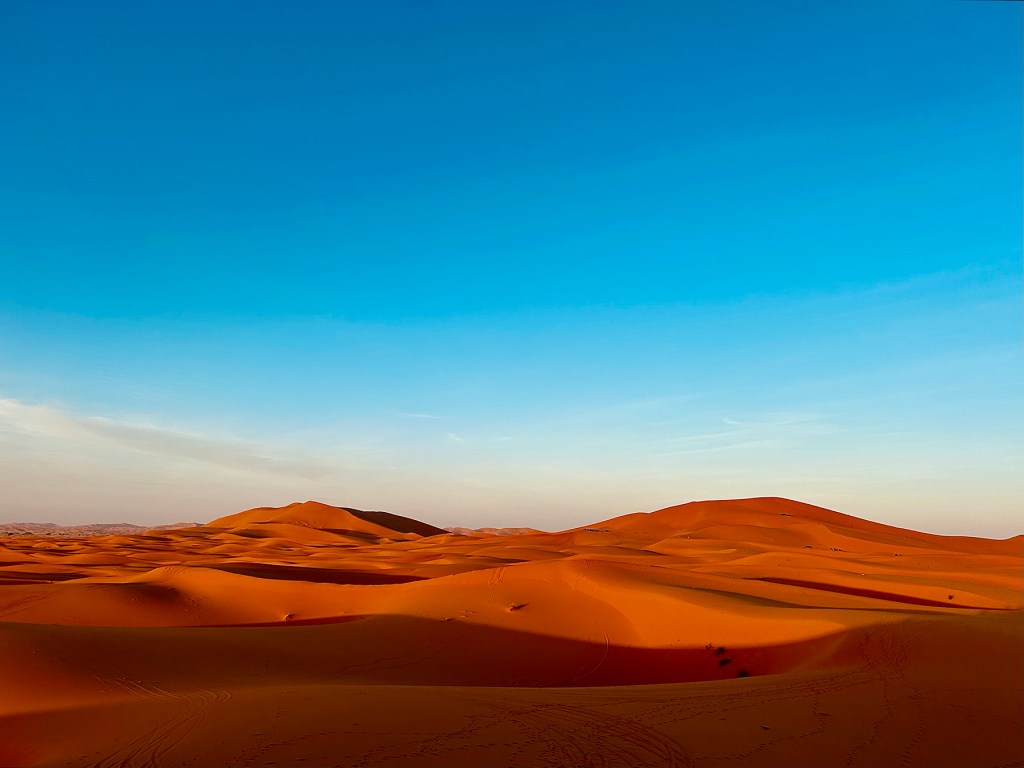
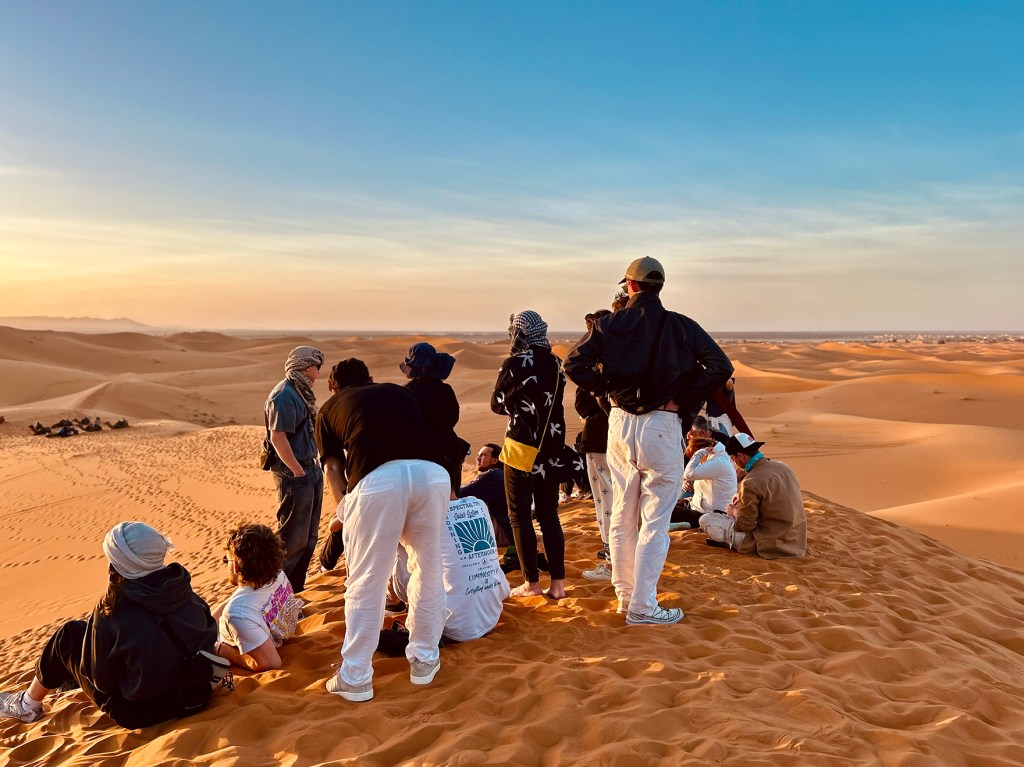
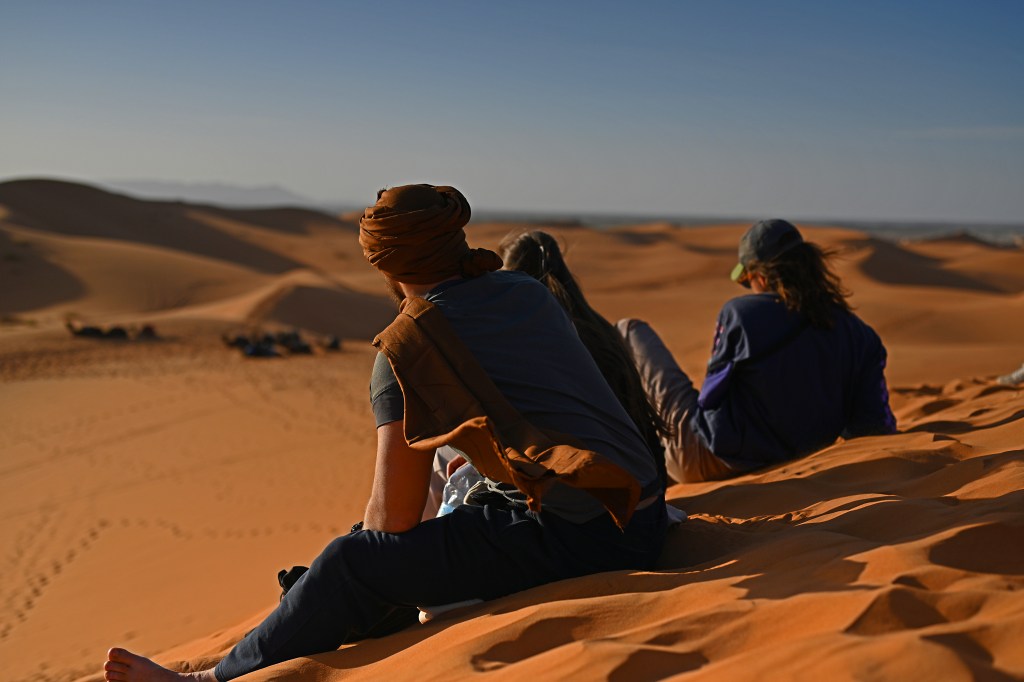
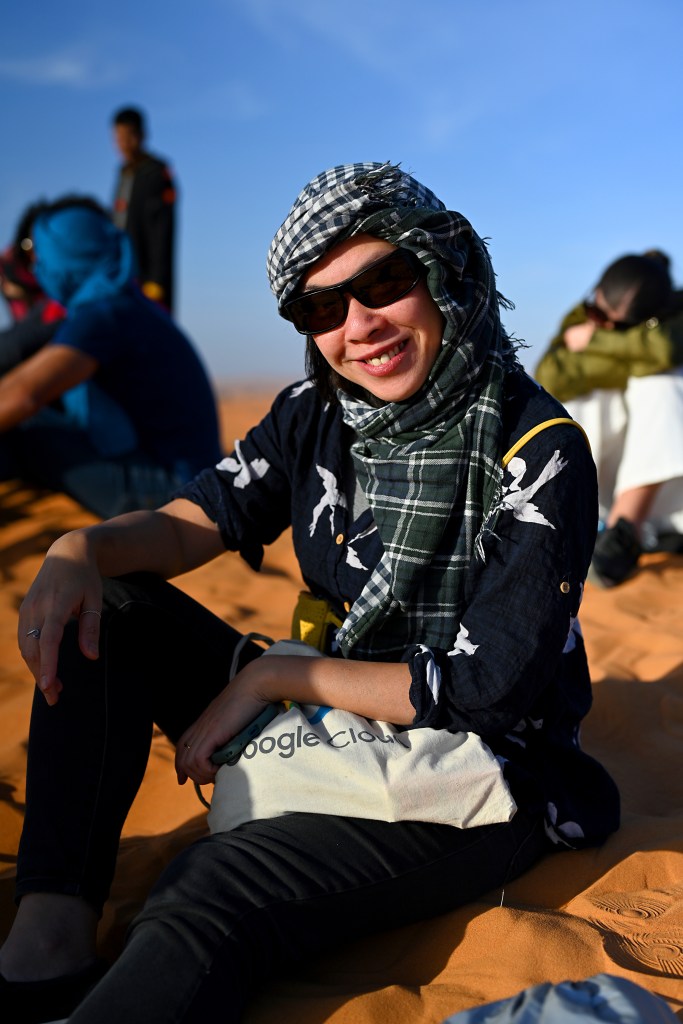
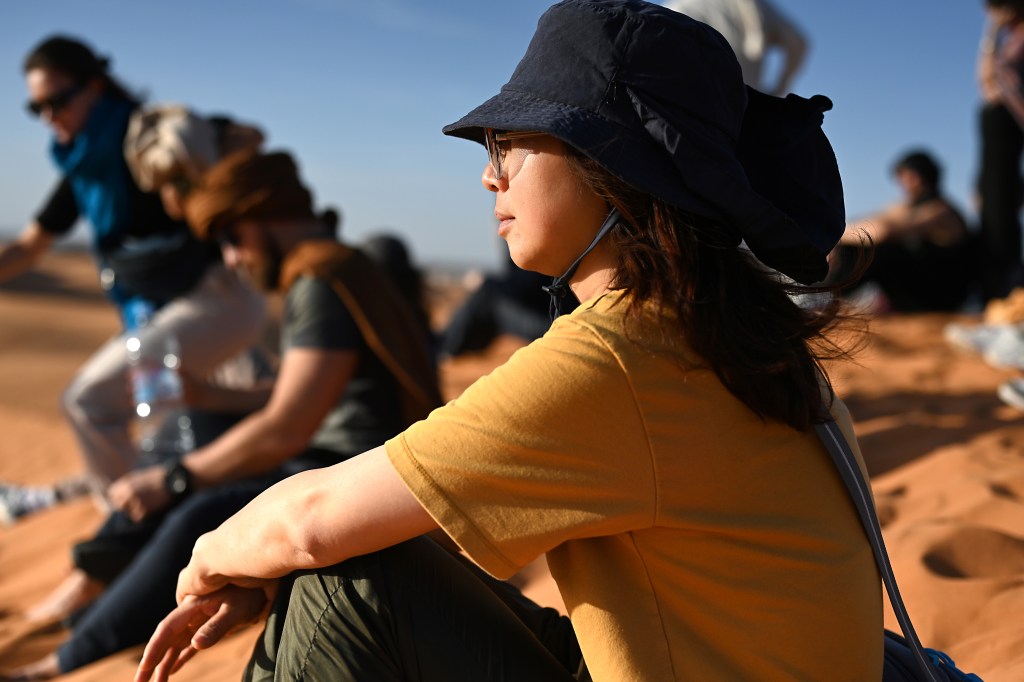
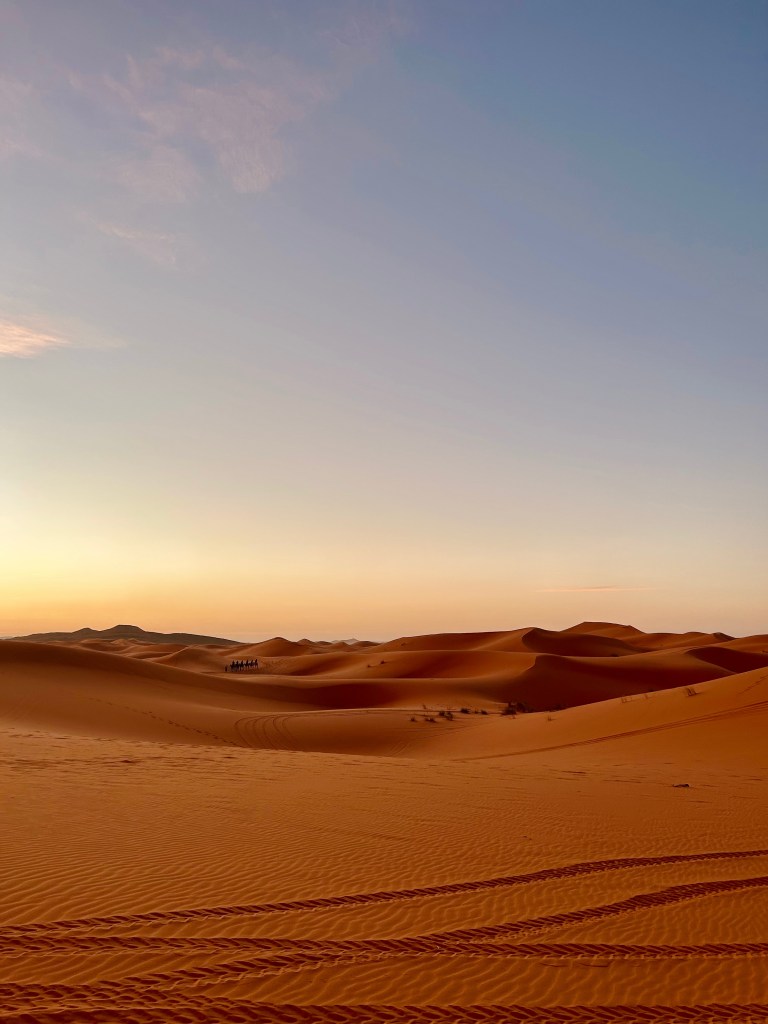
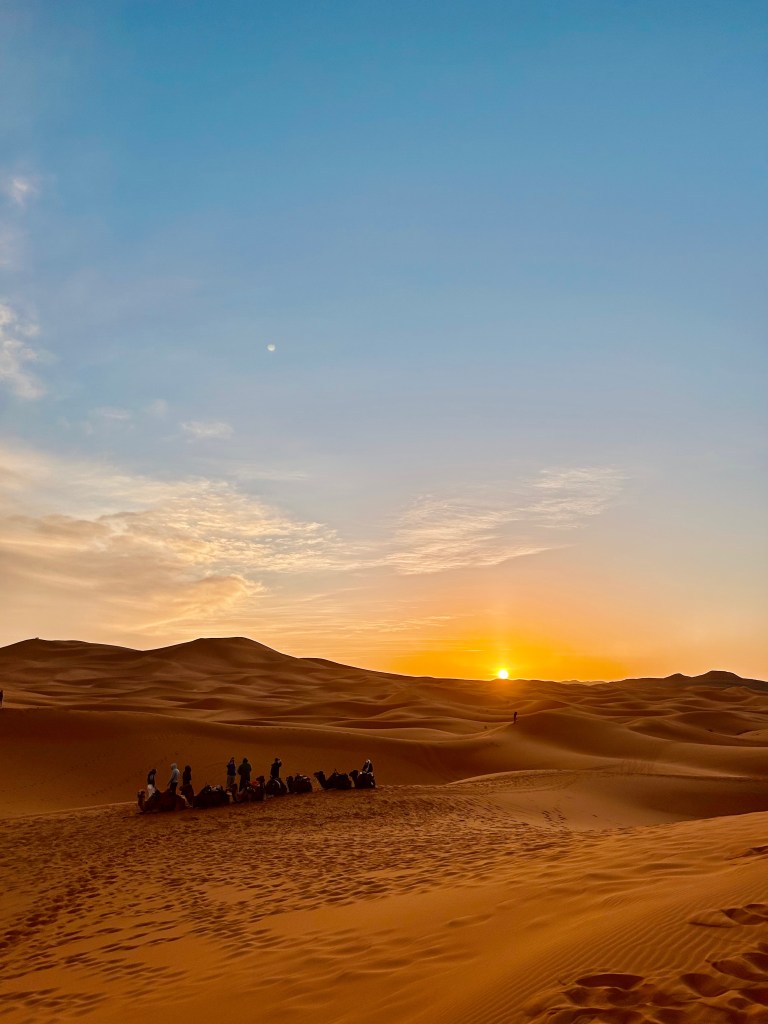
I still feel that my words fail to describe the dunes, and in particular a sunset in the Sahara. The shifting colors, the calm, the softness of the dunes, the vastness of it all. You really have to be there to get it. We were lots of people there, from many groups, there was talk and laughter and running and jumping and photos being taken. Yet it was very quiet. I think everyone was just in awe somehow and really enjoying the moment in a peaceful and grounded way. Or maybe all the noise is just absorbed by the sand and disappears over the horizon.
As the sun hid behind the dunes in front of us, our handlers signaled it was time to get back on the camels and start moving towards the camps. We were joined together in a caravan. Shirley, Leewai and I got a new young man to lead our camels – Mohamed.
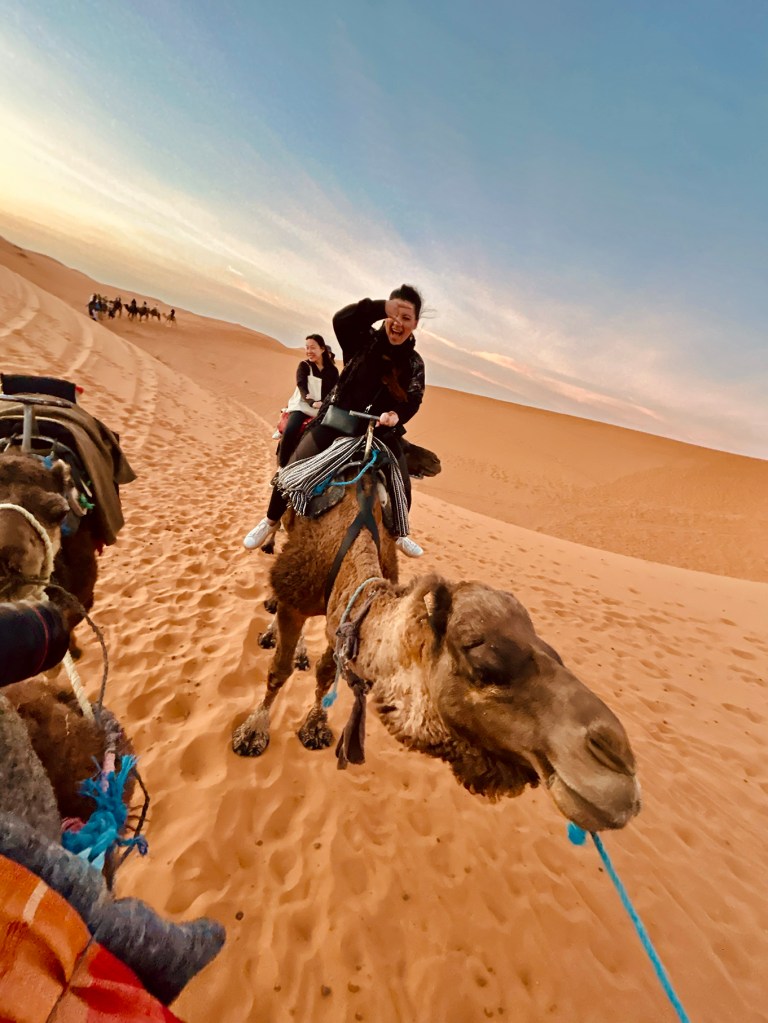
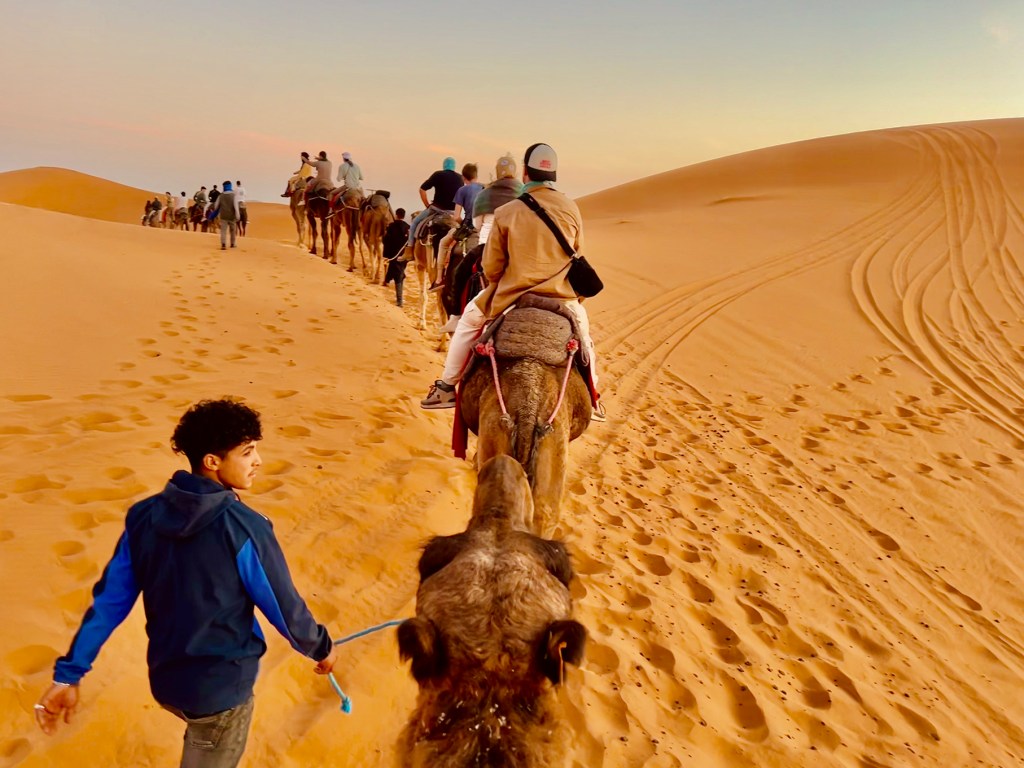
We arrived at the camp and were welcomed with tea and some sweets before settling into our tents and getting ready for dinner. A desert camp usually consists of tents, a larger area with a fire, for gathering, dancing, music, and a bigger tent for dining. Depending on the level of luxury, some have private bathrooms in each tent, others come with a tent of toilets and one of showers. I went to a standard camp, so we didn’t have ensuite bathrooms, but that was no issue at all. Everything was spotlessly clean and there was running hot water. Going to the toilet in a desert camp is like going to the toilet at a restaurant or mall or other public establishment anywhere else. Sometimes you have to wait in line, sometimes you have to ask for more toilet paper, sometimes you have to use another one because the one you were going to just got clogged…
It gets chilly at night in winter and if you only stay for one night, you can totally do without a shower. Ibrahim directed us to each tent and we were told to come to dinner sometime after 8 in the evening. By that time, it was already dark outside and people from various groups had arrived.
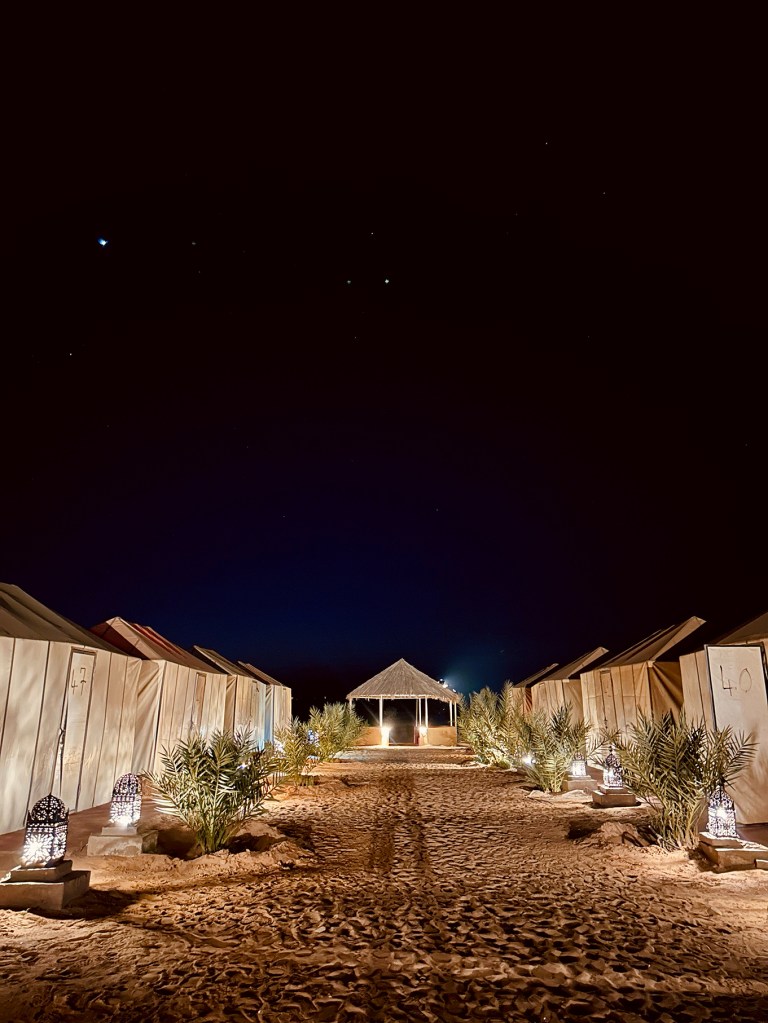


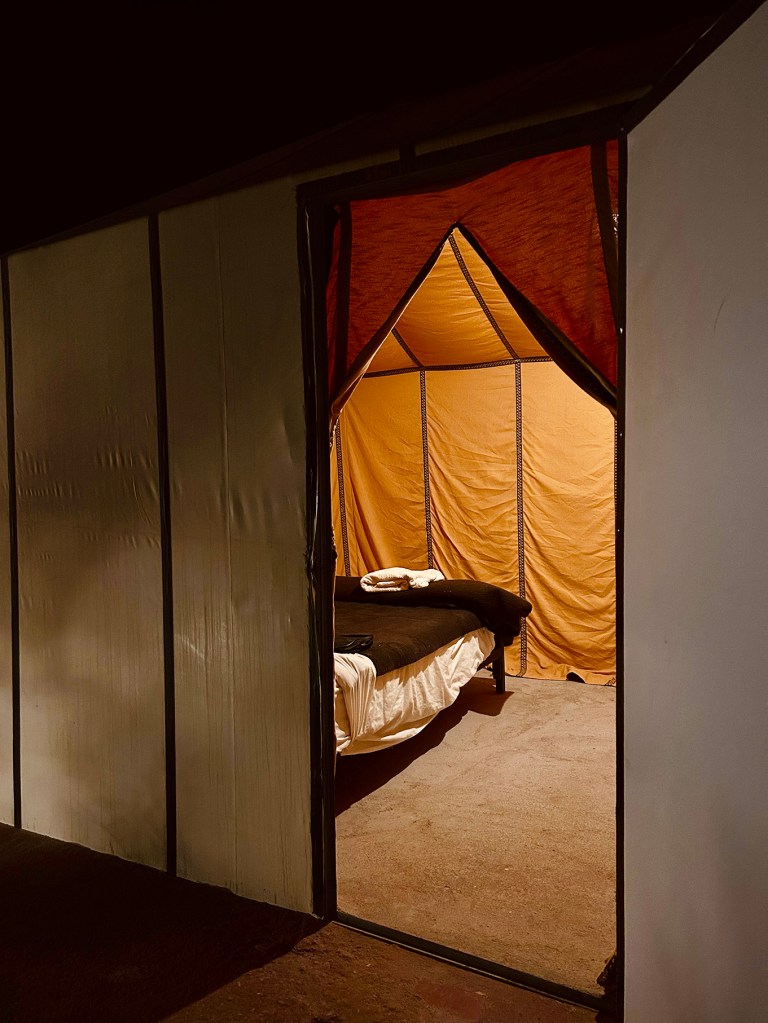
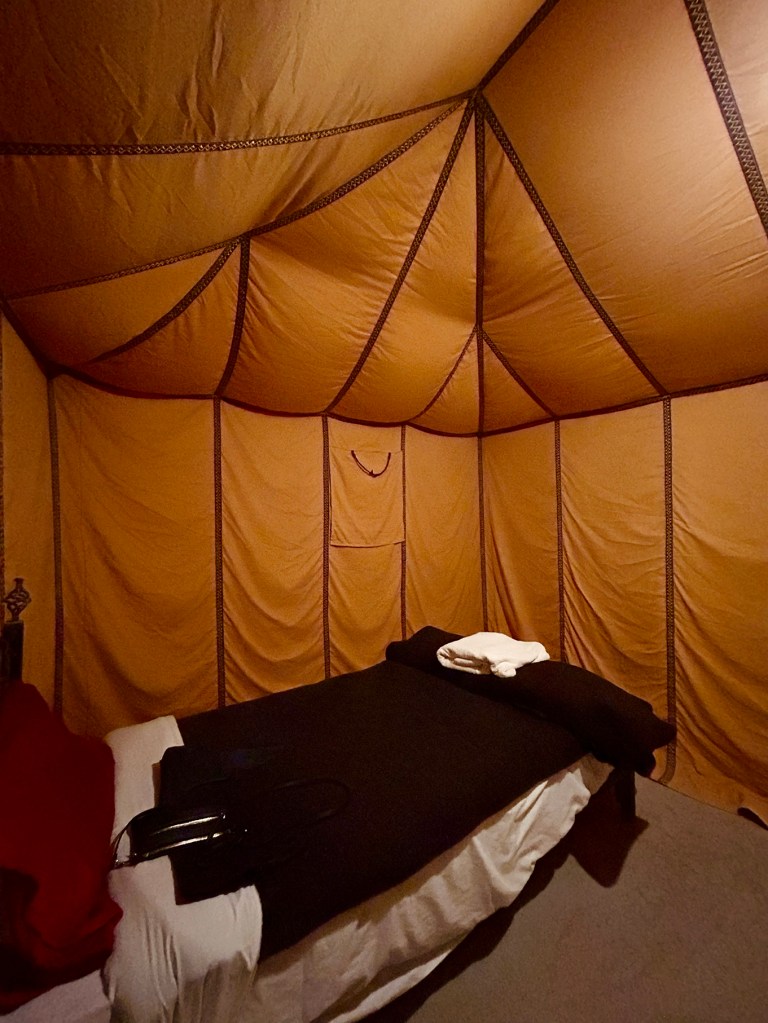
The tent was simple but super cozy, it wasn’t too cold at all and the bed came with very warm blankets. Obviously, if you live in Sweden you’re not really gonna freeze at 5–10 degrees during the desert night. People from warmer countries were clearly struggling more, and gathering by the fire was great, but if you’ve got a couple of layers on, you’ll be totally fine. There was a socket by the bed, so you get electricity to charge your phone, there was light in the tent and a towel was also provided. Wifi was dodgy around the whole camp, it’s the only thing that didn’t really work, but in all honesty, when you’re there in the moment who the hell needs wifi?
Dinner was a delicious buffet and a laugh to remember. It was finally time to sample some Moroccan wine that we’d purchased on the road. The red wine from some of my group friends was quite alright. But when the time came to open my little bottle of white, the bottle opener was nowhere to be found. The friendly gentleman serving us said “Not to worry, lady, I will open the bottle for you.” And the monumental effort of one man soon turned into that of two men. And then three men. And finally four. Four desert gents struggled to get my miserable bottle open and for the good part of fifteen minutes, we were literally pissing ourselves with laughter at the table. Finally, he managed to take the stubborn cork out with a sharp fork (an accident just waiting to happen) and brought the bottle to us neatly wrapped in a fancy napkin, like in a fine French restaurant. Oh the suspense and excitement! This wine must be exquisite, we all thought. Cue in even more hysterical run-out-of-breath-laughter upon tasting it. I don’t know how to describe it. Adjectives fail me. This wine was like no wine we’d ever tasted before. Not in a good way. So for all that effort, the product left so much to be desired, to put it mildly. But I still laugh when I think of that moment, it was like a comedy sketch between Benny Hill, Mister Bean and ‘Allo ‘Allo, four men against a small bottle of cheap plonk, and the crowds falling apart with laughter.
The evening’s second comical act was when the lovely gentleman discovered my camera and simply had to have a whole photoshoot with us in the dinner tent. With varied results, in terms of composition, focus and sharpness. He then asked me to send him the photos and I was trying to figure out a way to do that. It wasn’t until Maggie from our group pointed out that I can’t send the photos to his phone, since it was more of a Nokia 3310…
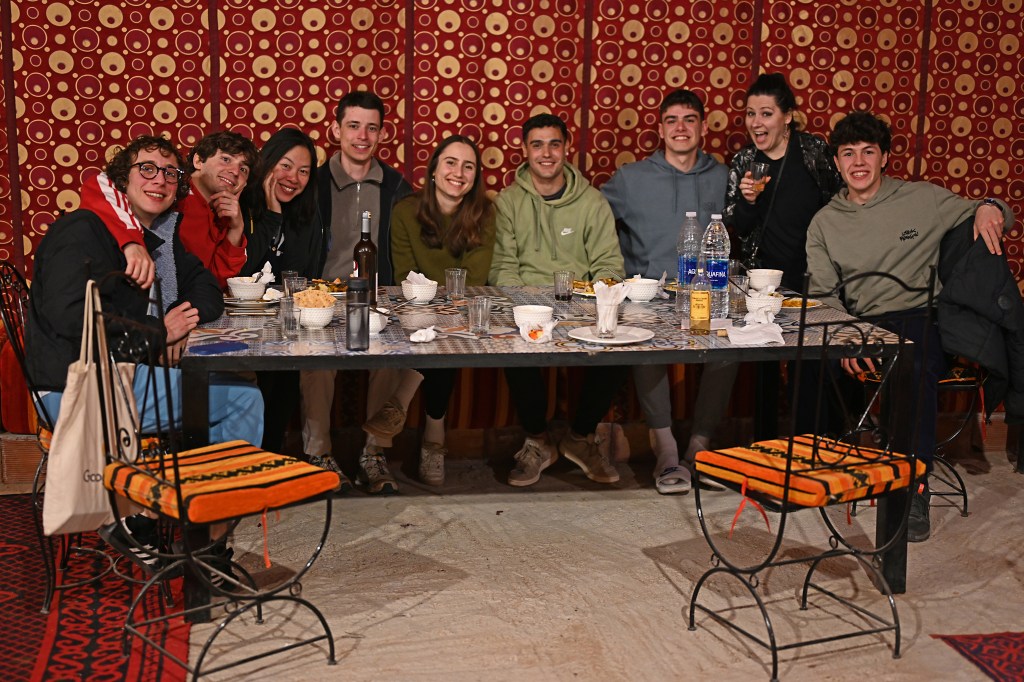
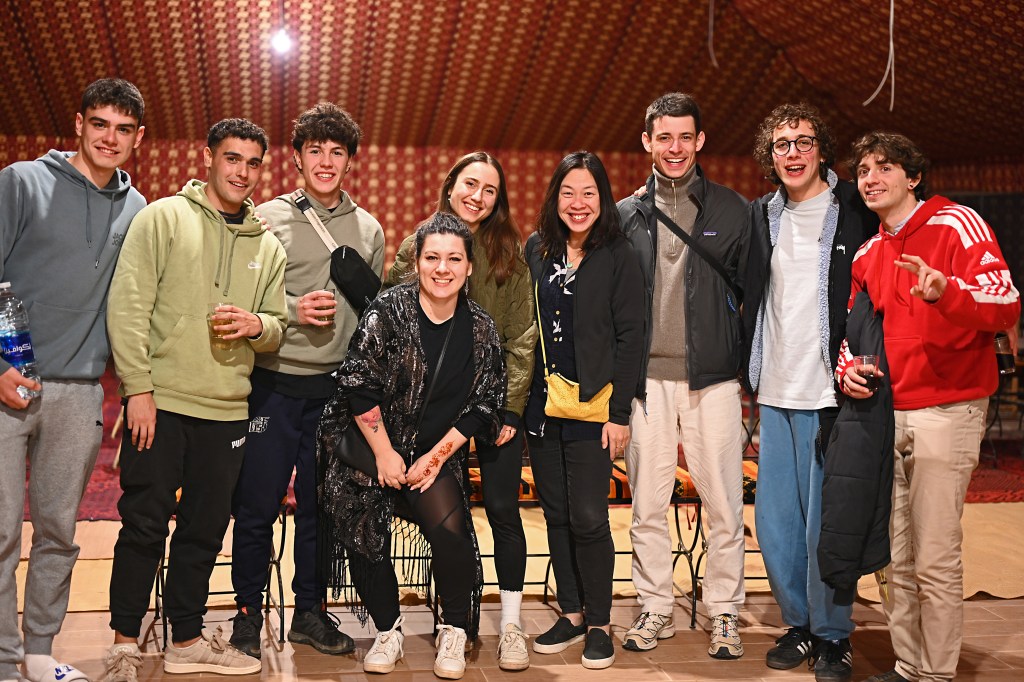
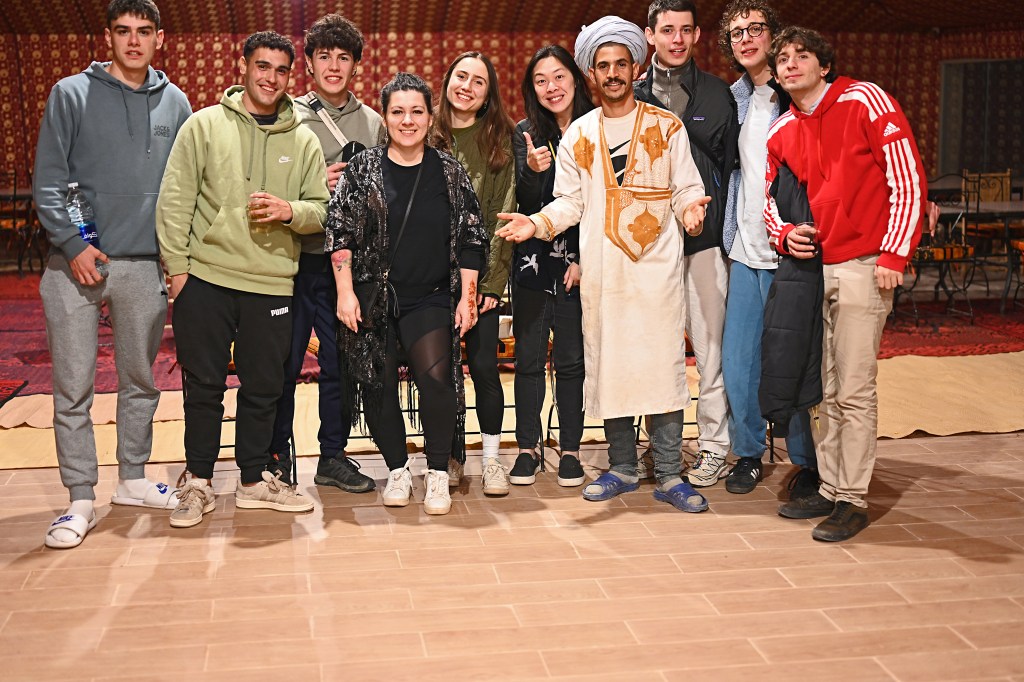
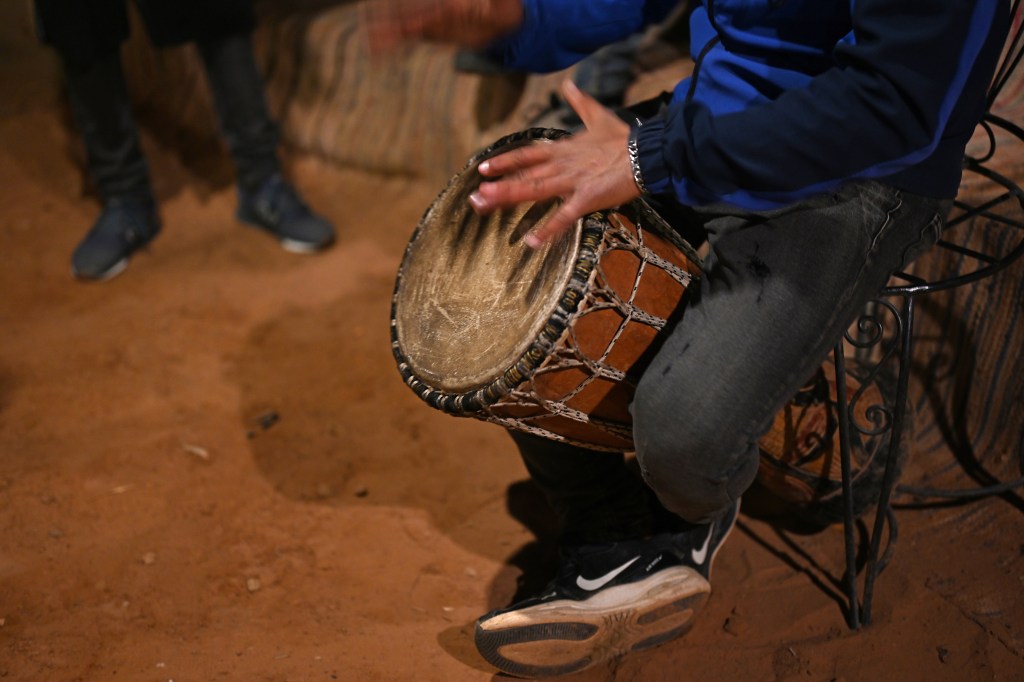
With our bellies full of Moroccan delicacies and laughter, we headed towards the evening’s entertainment around the fire – music and dancing. Apart from doing everything from driving, to handling camels, to cooking, these boys also play music. And they are pretty damn good at it. Mohamed had told me that there would be music after dinner, but I never would have guessed that he would be among the ones playing. He plays the djembe really well and Berber music is groovy. It’s really difficult to stand still with all those drums. We even got to try some rhythm ourselves. Oh, the patience of these people with us…
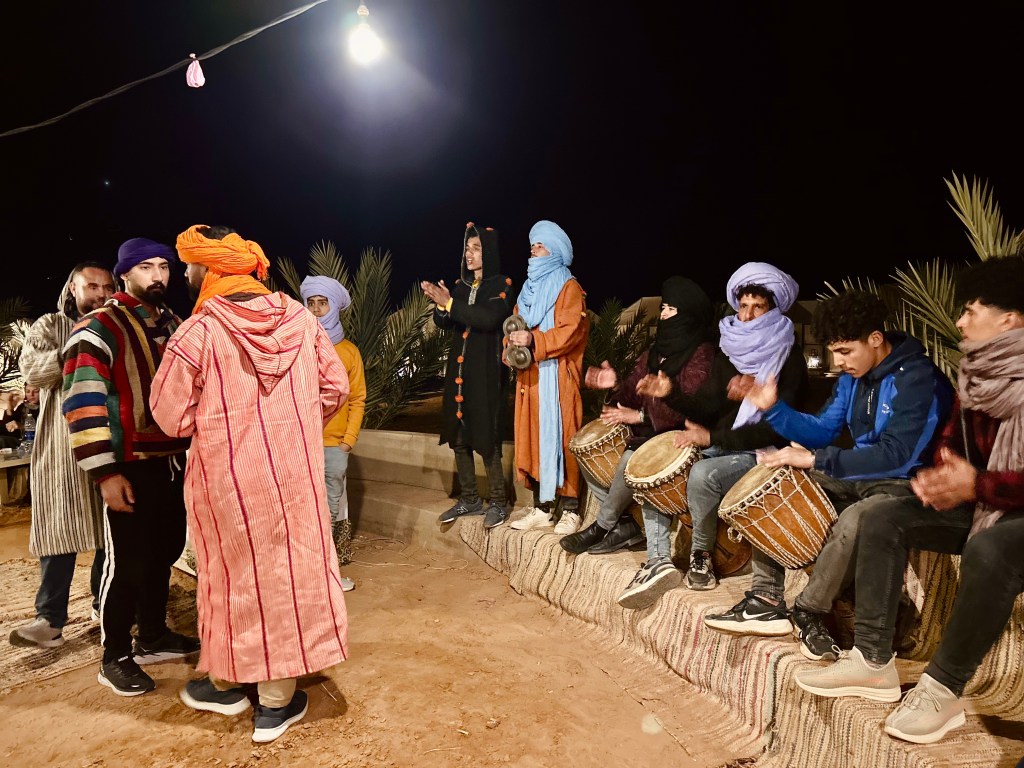
The party around the fire went on for a good while, other groups were still at it when I was well tucked under the warm blanket in my tent. We’d have a very early morning and another day on the road ahead of us, so I left the dance-floor around midnight, looking at the stars for a while and then trying to catch a few hours of sleep. This is another highlight in the desert. Being so far away from light pollution gives you the opportunity to see the night sky in all its glory. It’s hard to beat.
At 5:20 I was up and scratching the ears of a super friendly camp dog right outside the large tent. Note to anyone on the road: get up early to avoid bathroom queues. By the time others started to leave their hangovers in the tents, I was done with everything bathroom-wise.
The area around the fire was quiet and filled with party leftovers, tons of cans, bottles and ashtrays with cigarettes. This was surreal, how rude can people be and just how drunk did everyone get? In my head it didn’t go together with the quiet of the dunes, but I guess it’s like an escape for people, and what happens in the desert stays in the desert… Hopefully, it stays in recycle containers and gets sorted properly, that kind of mess is not good for the environment.
As more sleepyheads started to show up, breakfast was served, we left the luggage in a pile so that it would be taken back to the area where the vans were, and headed towards our camels.
Mohamed was also already up and he had slept next to his camels. Knowing him more as I’m writing this, months later, I feel so bad for that. I also feel bad because I didn’t spend enough time with the locals at the camp. Our stay was short and with all the experiences from the tour, there simply wasn’t enough time and energy for a more meaningful interaction. These people live a completely different life and are there to cater to us, from early morning to late night, every single day. They don’t get the perks of paid vacation or weekends. Many of them had to leave school so that they could support their families, and not all camp owners treat them well. It’s not like they have regular, secure jobs with benefits, in fact they can be tossed around from one place to another and when peak season is over, it’s much more difficult to make a living. The desert is beautiful, but it’s also rather empty. There’s a vastness of nothing, so imagine what it’s like to find true purpose there as a young person… Yet, so many of them learn languages on the go, they master musical instruments in no time, they tame animals, they know how to survive on almost nothing and they welcome visitors of all sorts with humility and kindness.
And the longer we party, the longer they have to stay up as well, to entertain us. While I sat comfortably on his camel, Mohamed had to walk up and down the dunes on his own tired feet. While I was making fun of a bottle of wine, Mohamed’s hands were banging on a drum in the cold desert night air for hours. And while I slept in a comfortable bed, Mohamed was outside, relying on his camel and some simple blankets. And then he’d have to do it all over again with the next group…
We got back on the camels and headed towards a spot to catch the sunrise. Another magical display of shifting colors and dreamy light through morning clouds.

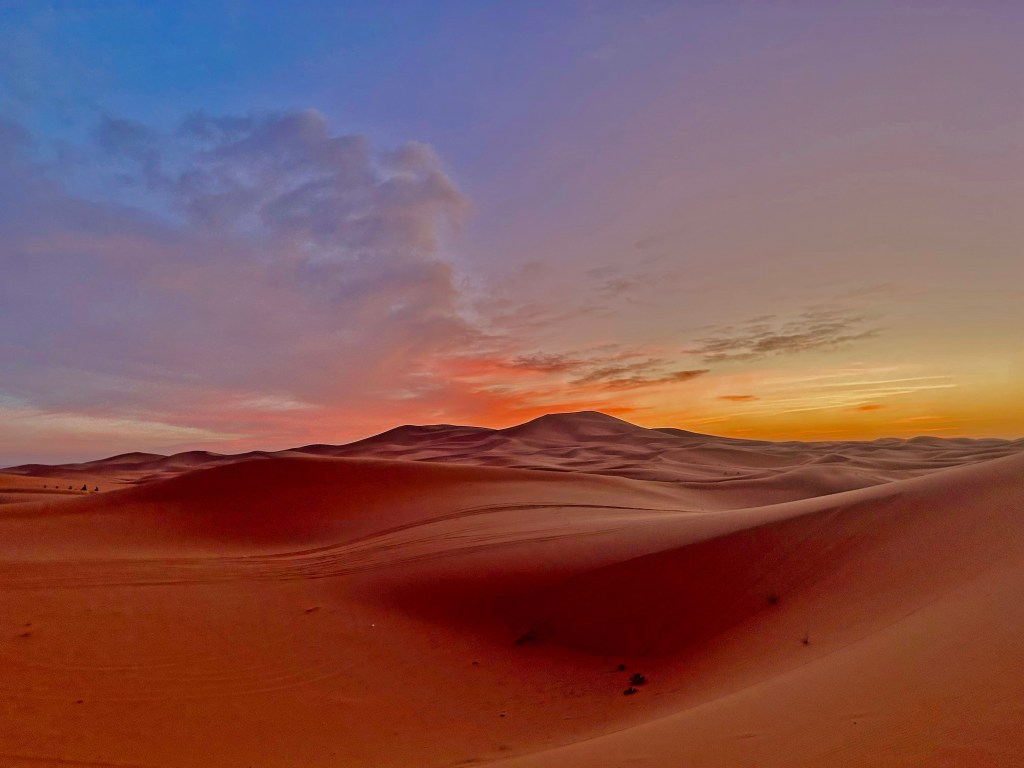

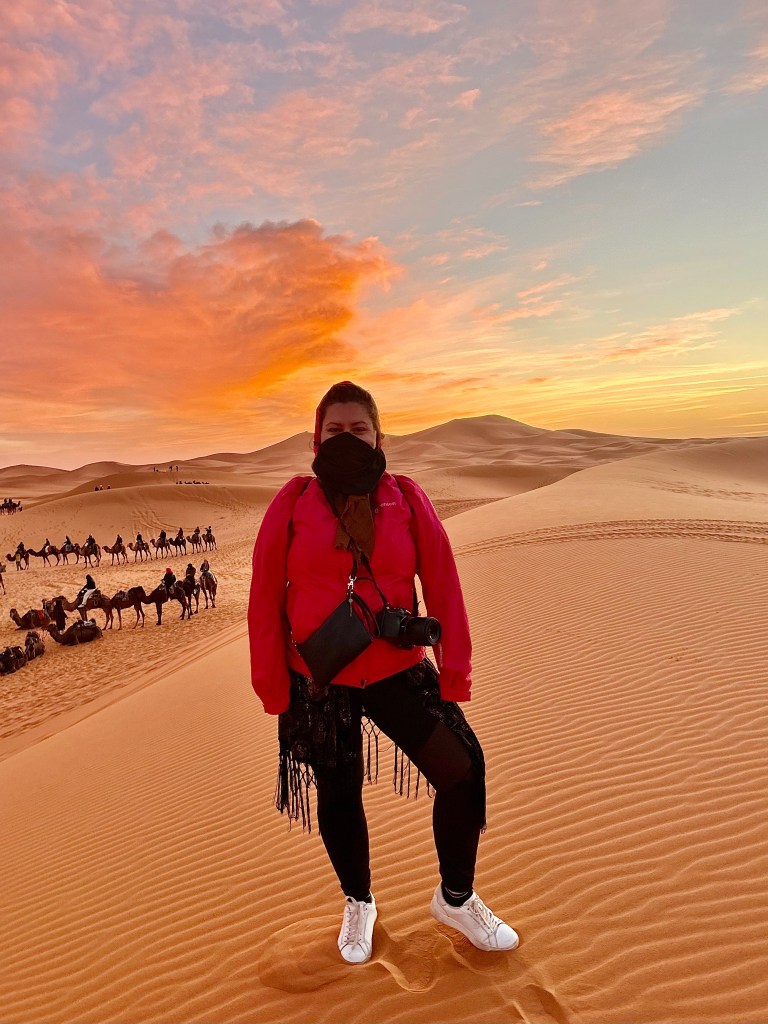
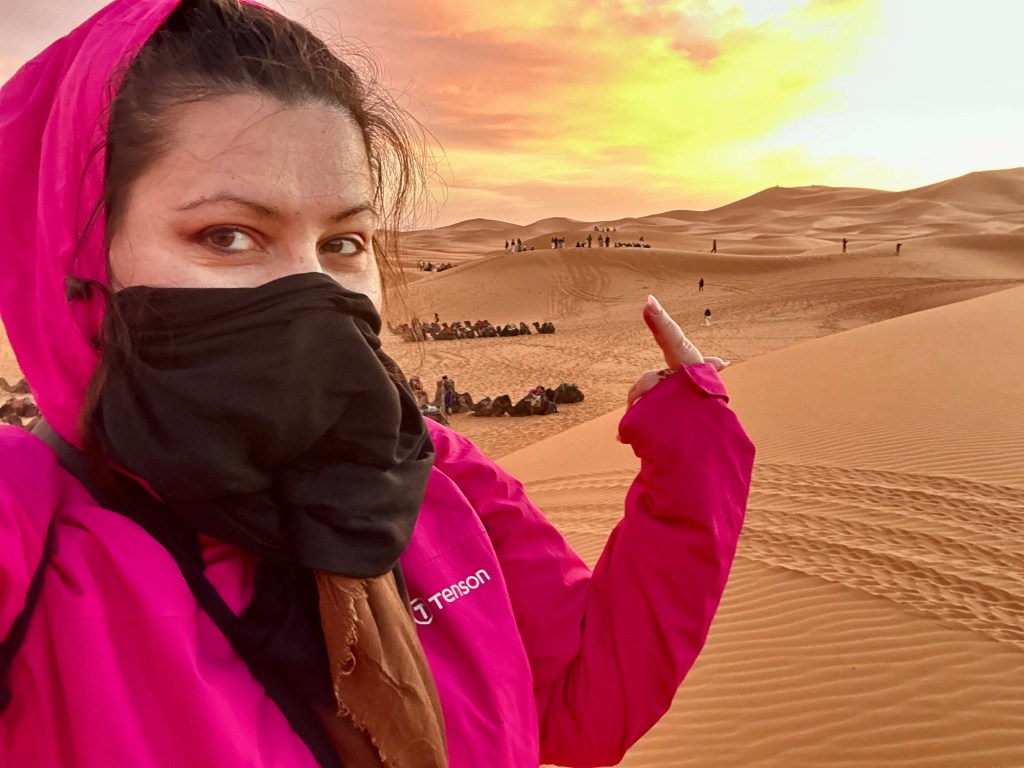
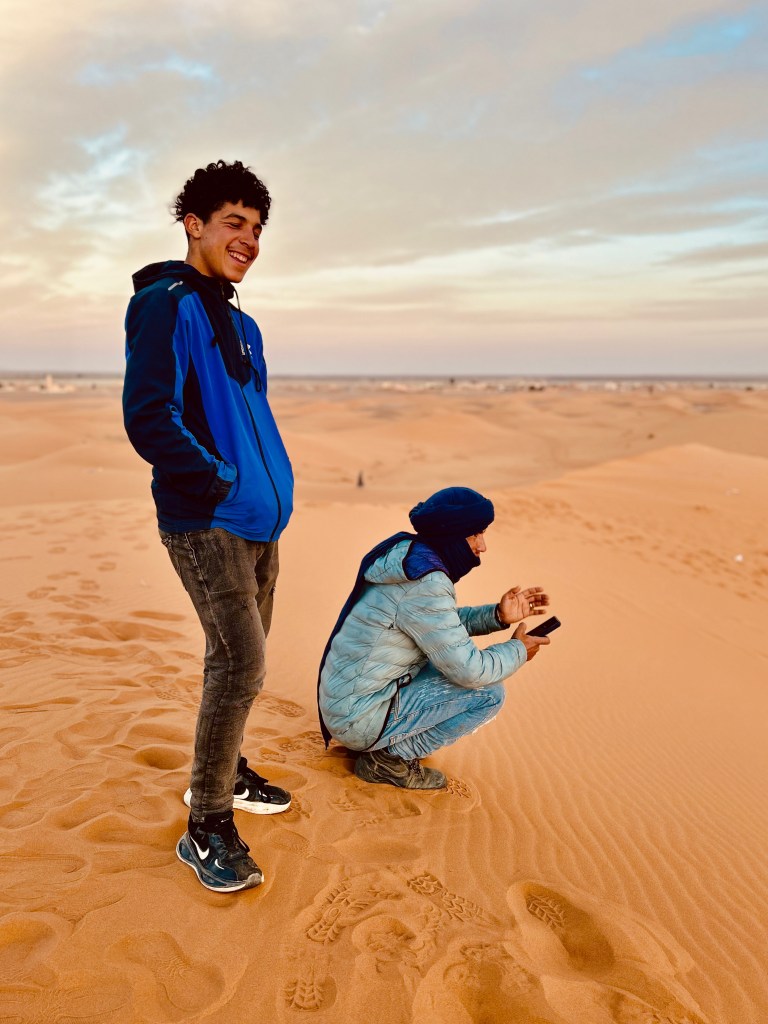
We got to know more about these young men’s families and their lives and as all caravans finally dropped us off at the office area, we took some more photos and exchanged contact details. I also got to lead the camels for a short walk and I can tell you with certainty that you feel like a million bucks when a camel sniffs you and shows a gentle curiosity towards you. They’re almost like very large dogs, so the acceptance of one is the best feeling in the world.
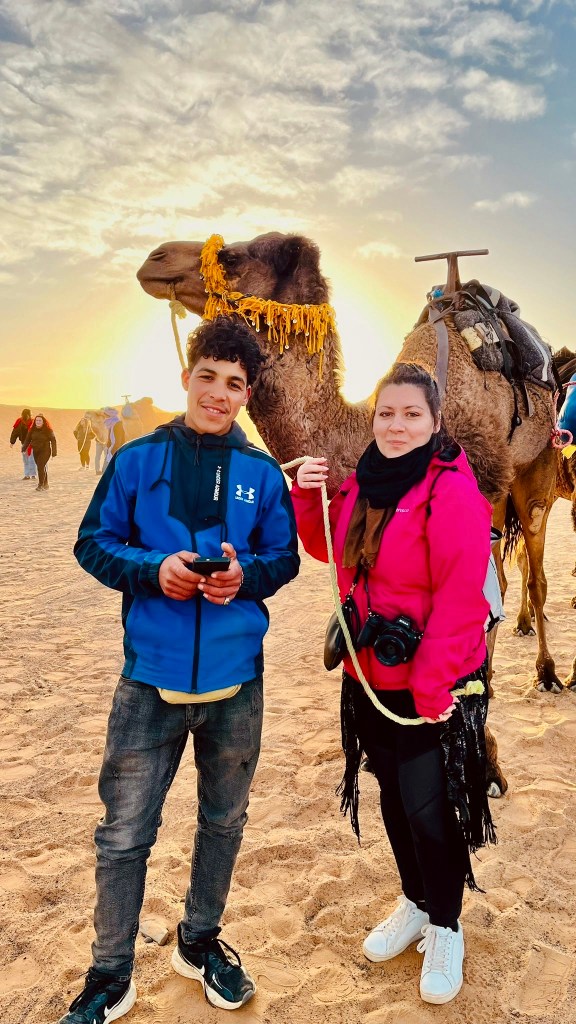
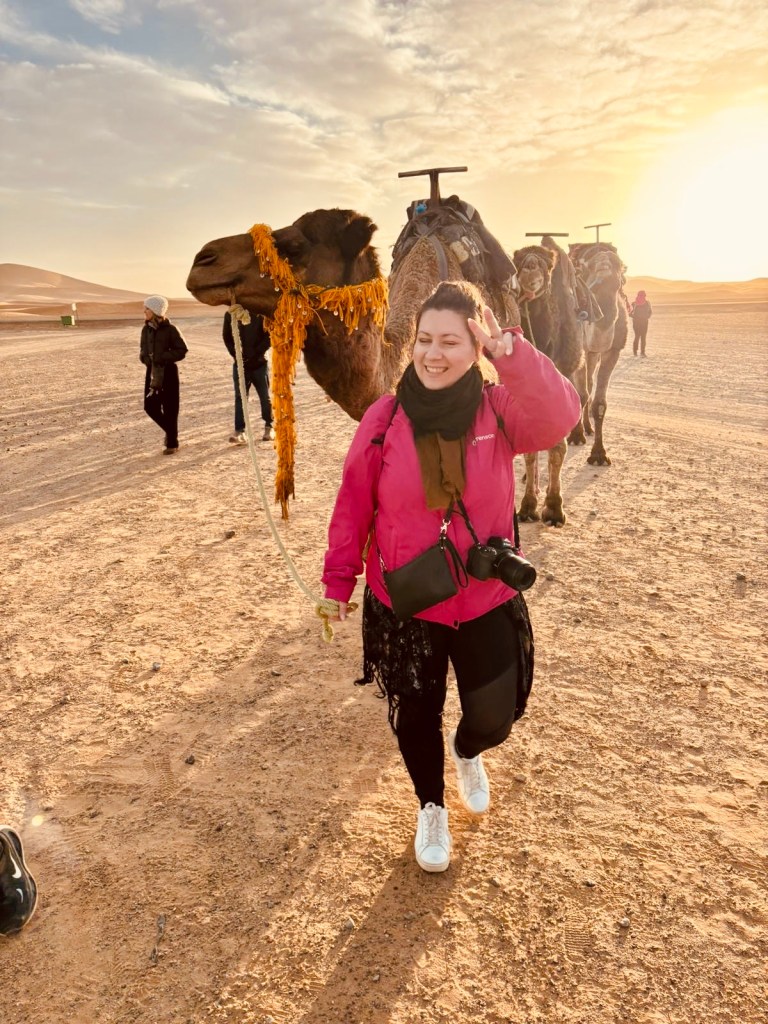
I also felt bad because I only gave Mohamed a little extra money. I didn’t have a lot of cash left and I had to save some for any emergency before reaching an ATM. Not only was he super talented and had been a nice guide to us, when I struggled to get back on the camel after sunrise, he offered his knee and I literally stepped on him to get back up in the saddle. Twice. I mean, I climbed all over him with my 42057053261 pounds, probably kicked him in the nuts as well, and he didn’t complain at all.
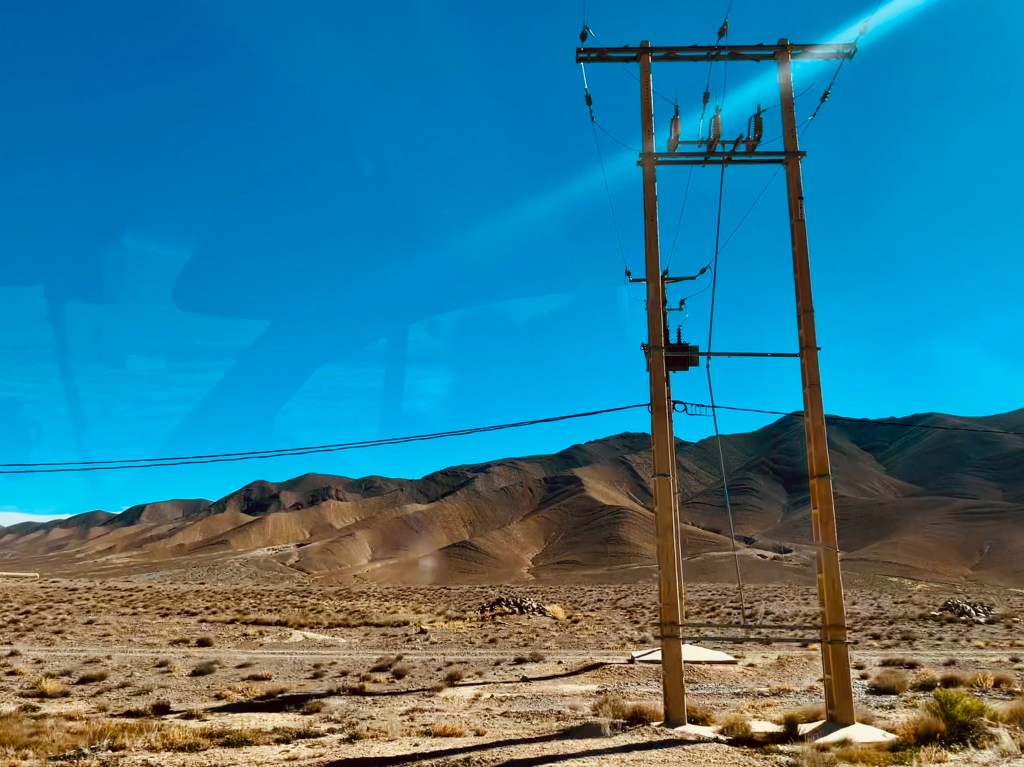
We left Merzouga and headed North on an almost 500 km route to Fes. As we drove, the desert slowly gave way to rocky plains, then to the green palm groves of the Ziz Valley. We passed through some more towns and had our final lunch on the road.
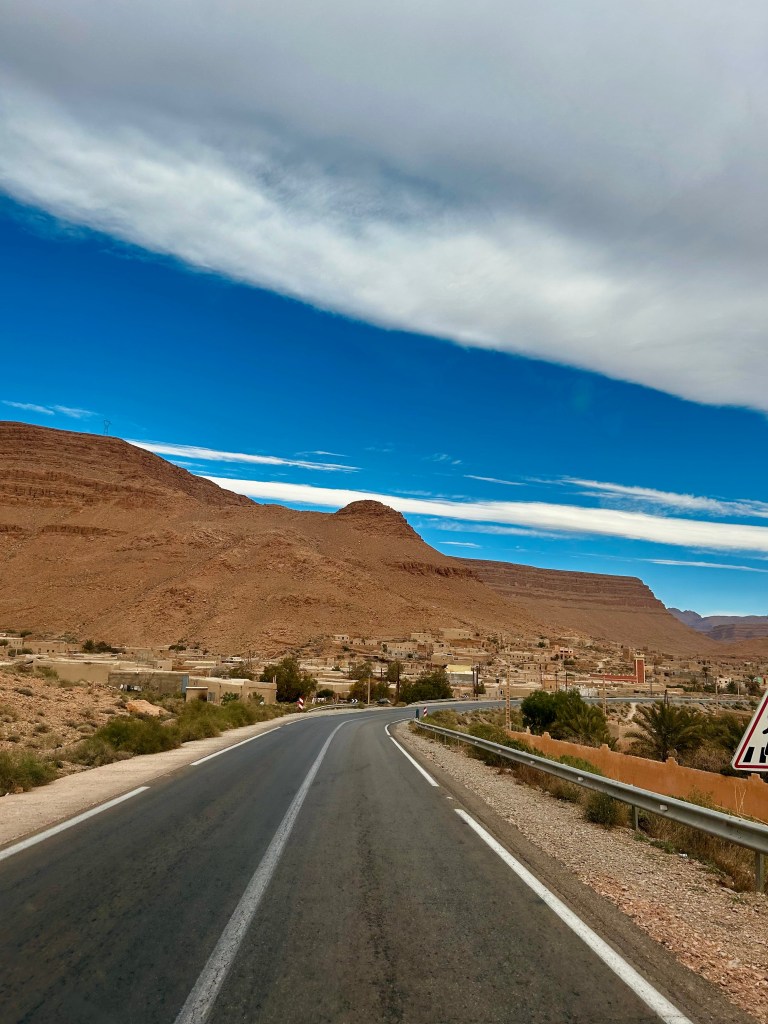
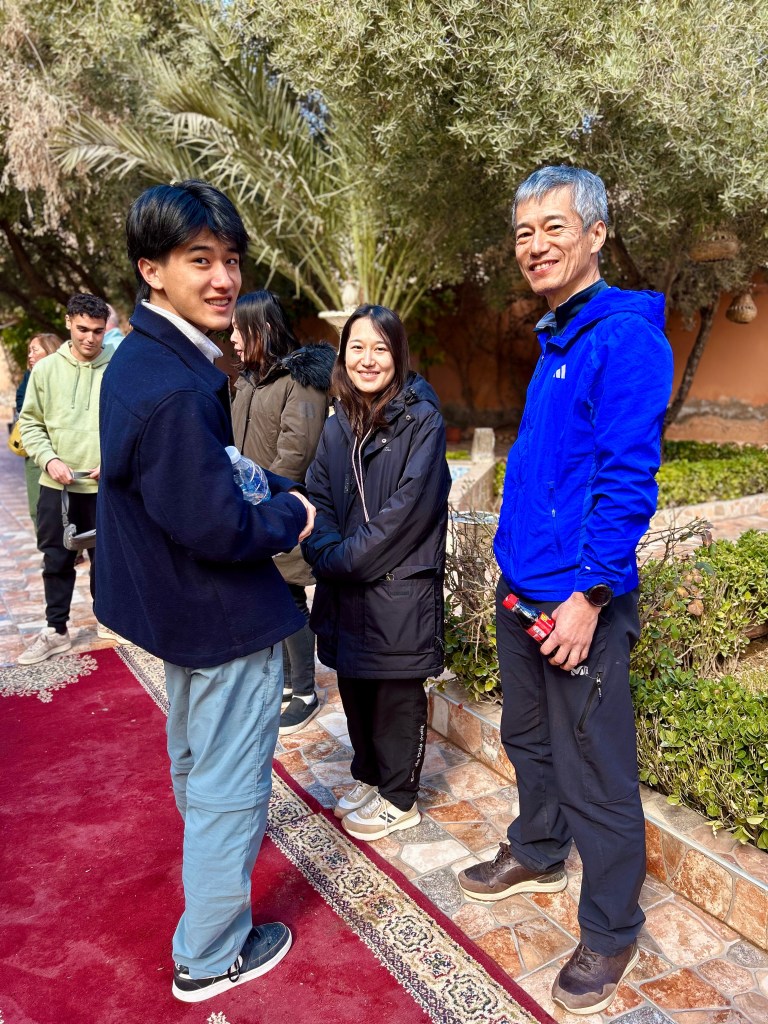
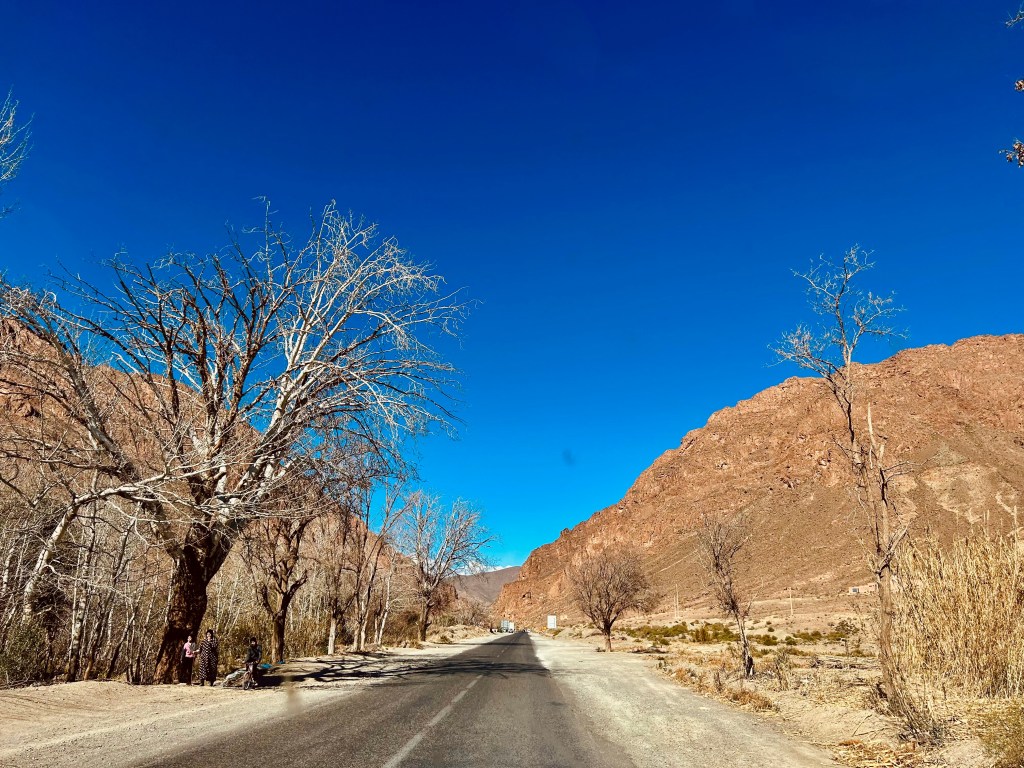
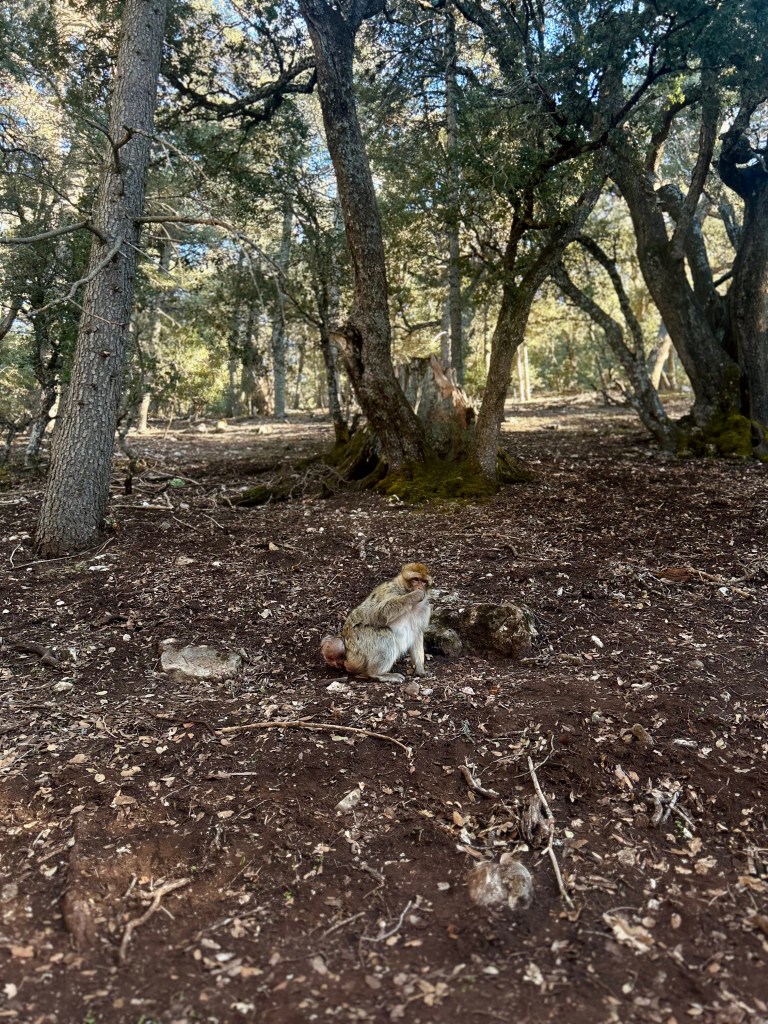
We continued through the Middle Atlas, passing forests, rivers, and small Berber villages. Near Azrou, there was even some snow and ice on the road as we entered the cedar forest and saw a few Barbary macaques by the roadside. This is the main attraction of the forest and people stop to feed the monkeys. The tall trees and cool air were a completely different world from where we’d started in the morning.
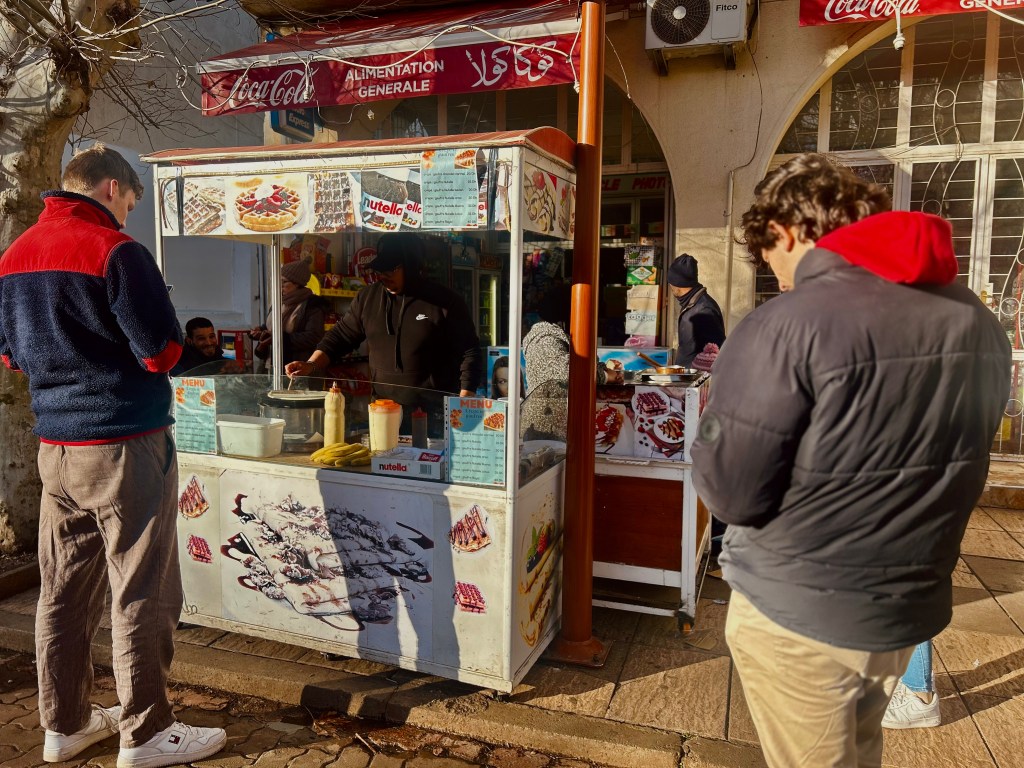
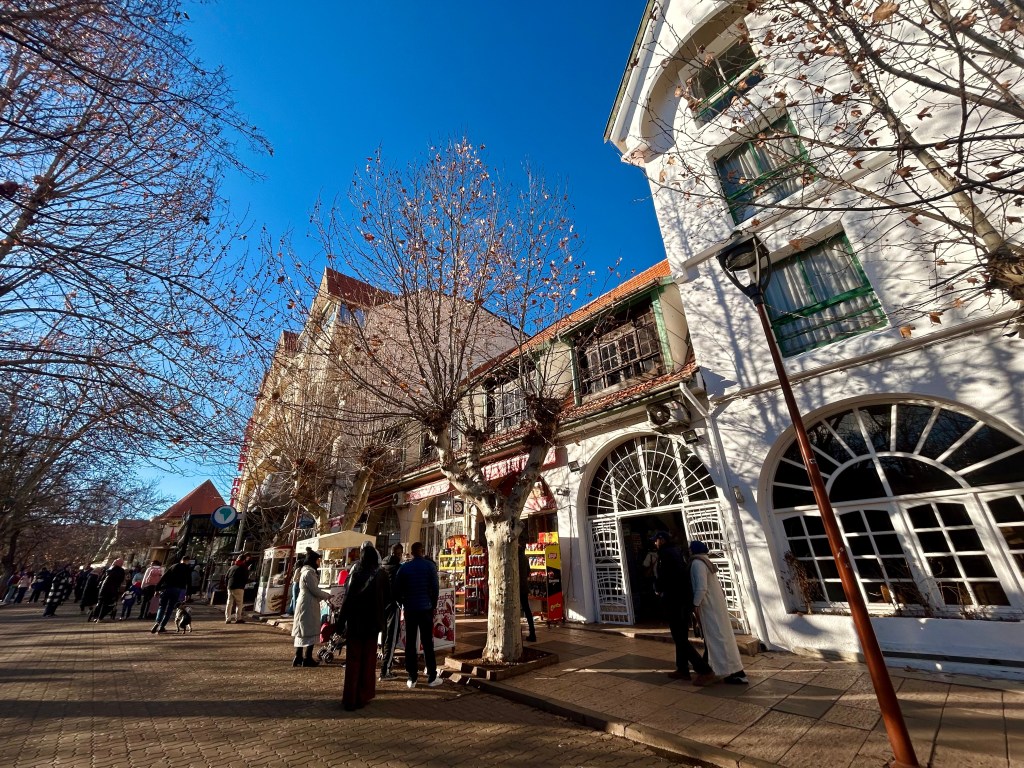
A short drive later, we reached Ifrane, often called the “Little Switzerland” of Morocco. With its streets, European-style buildings, and flower-filled parks, it’s more like a mountain resort town than anywhere else we’d been. Even the Emir of Qatar has a residence here. Everyone was out and about in the town center, having a stroll and a hot waffle in the cool mountain air. ATM, bathroom break, quick photos and back to the van.
From there, it was a smooth ride down to Fes, through rolling green hills and farmland. I didn’t take a lot of photos or videos in the afternoon because I was dozing off in the van. I thought we’d already had overload of literally everything. Little did I know that the coming destinations would offer even more awesomeness. By evening, we were entering the new part of the city, with its busy streets and traffic, heading towards the final stop of our trip together – Place Batha.
It was sad to say goodbye to everyone, because in three days we’d seen and done so much together, it felt like I’ve known these people forever. Luckily, we can still keep in touch through Instagram and WhatsApp and I hope we’ll meet again on some travels.
Fes
Fes is the kind of city that doesn’t just whisper history, it shoves it in your face in colors, alleyways, and the occasional donkey/mule traffic jam. It’s not polished; it’s raw, chaotic, and alive. Quite dirty in some places, too. It was founded in 789 during the Idrisid dynasty who ruled most of what is Morocco today as well as parts of Algeria. It’s home to one of the world’s oldest universities (al-Qarawiyyin, established as early as the 9th century) and an overwhelming amount of other beautiful monuments with centuries of stories to tell. Fes really smacked me in the head after the opposite simplicity in the desert, it was like stepping into a different world altogether.
The riad I had previously booked got in touch while we were in Tinghir and told me they had a water leak, thus not being able to accommodate me anymore. So two nights before arriving, I suddenly didn’t have a place to stay. I was bummed because I thought I had booked a really nice riad with a good rate. So before dinner in Tinghir, I had to figure out a new place. Ibrahim suggested a different area and told me that was a very good base for exploring the city. This is where listening to your guide really comes in handy. He knew what he was talking about! Struggling with a weak wifi connection in the lobby of the hotel, and not a lot of light, I managed to find a place that looked absolutely beautiful, Riad Fes Iline, for almost no money at all. There’s this thing that some booking sites do, you will get a better price if you book through the app, rather than on a web browser. So I paid about 25% of the originally advertised rate. Let me tell you, that was 1000% hitting the riad jackpot in Fes. Super close to Place Batha, somewhat difficult to find on the map because it had been pinned on the wrong side of the neighbourhood, but boy, when I did find it – I heard the angels sing.
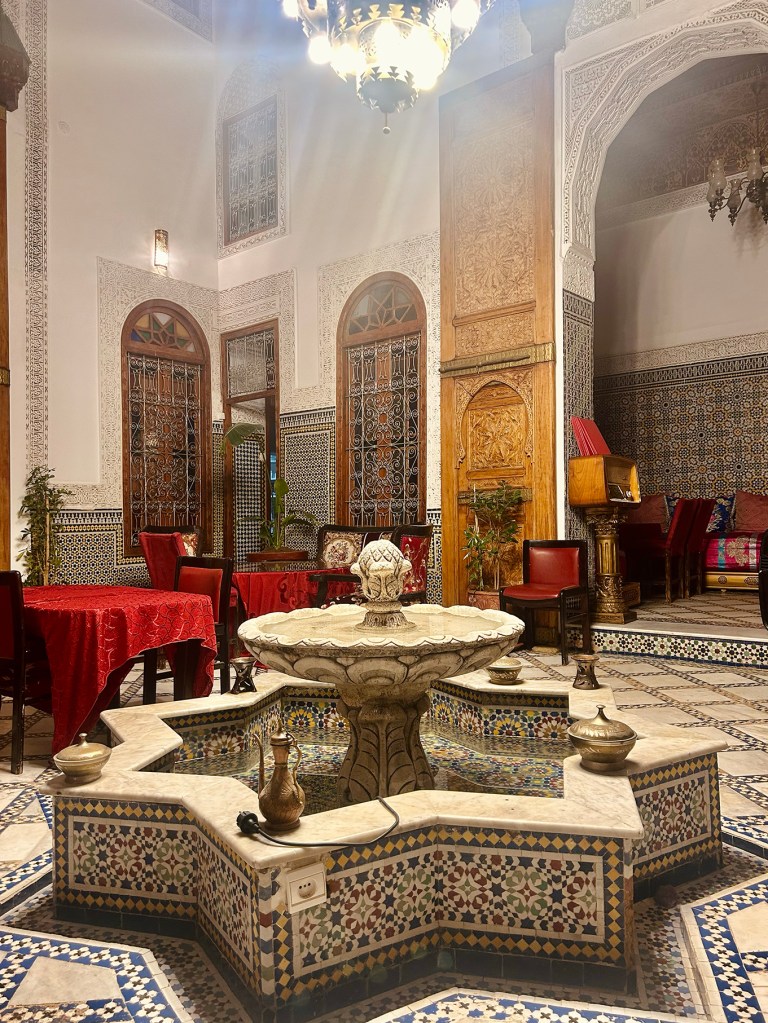

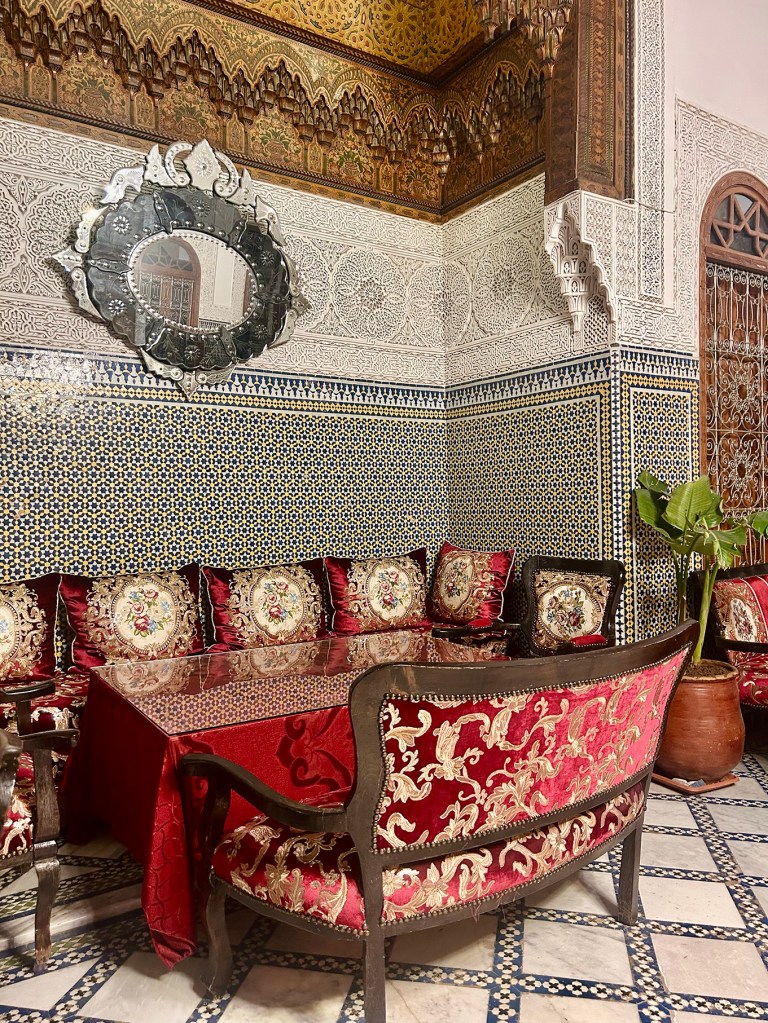
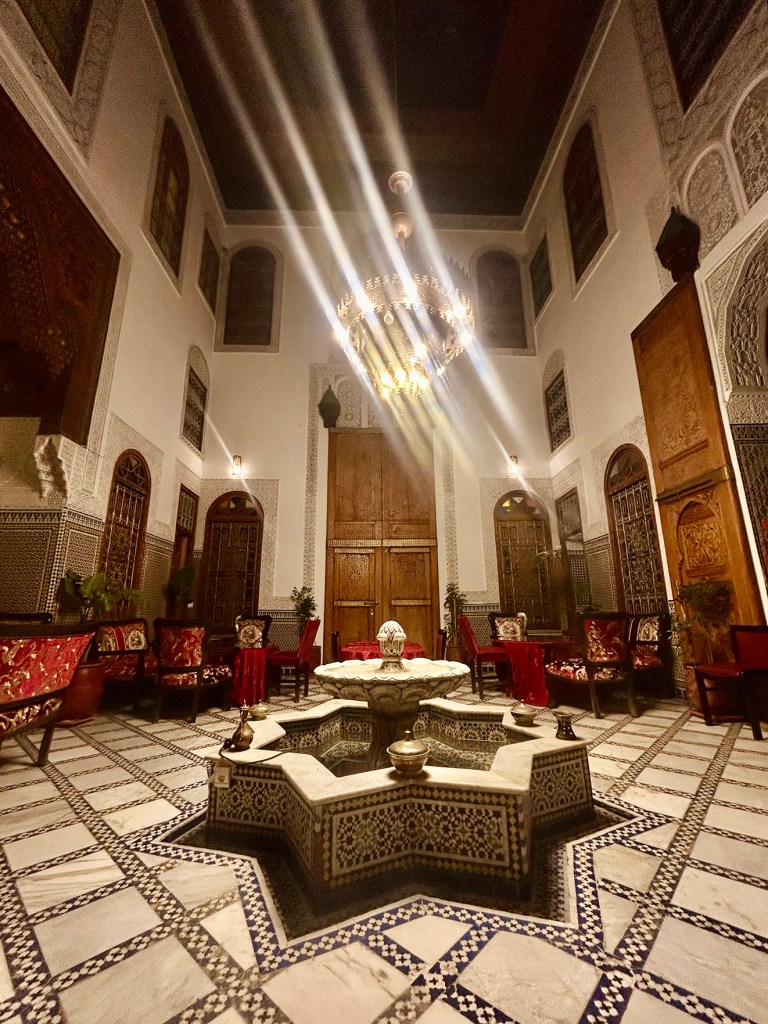

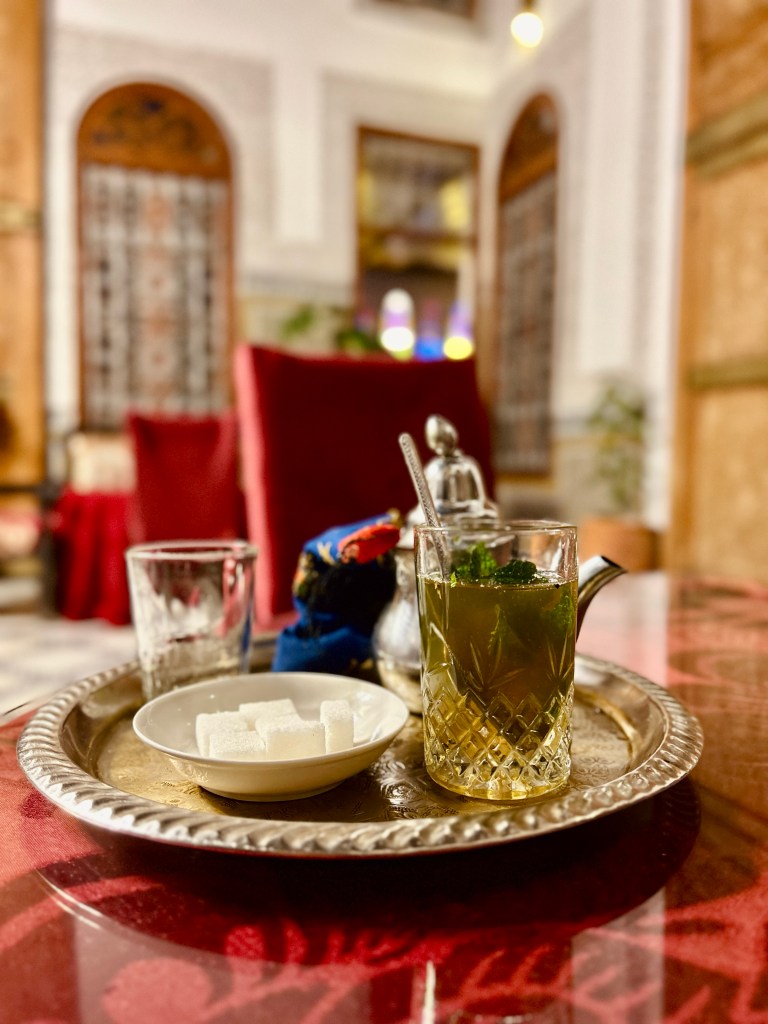
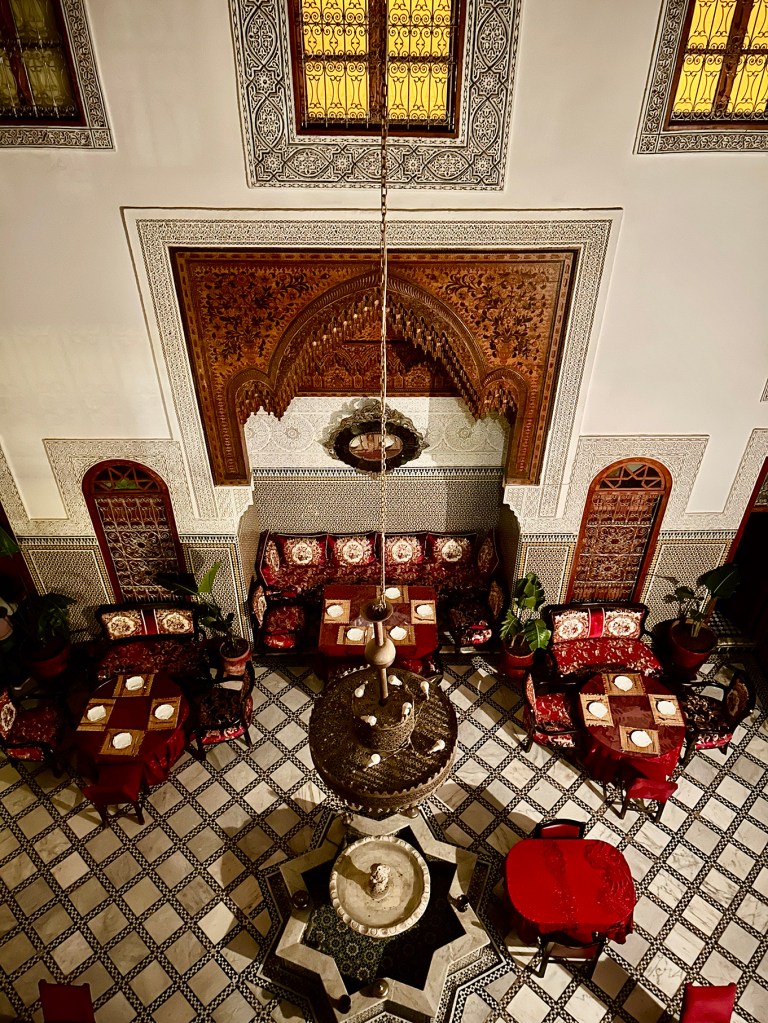
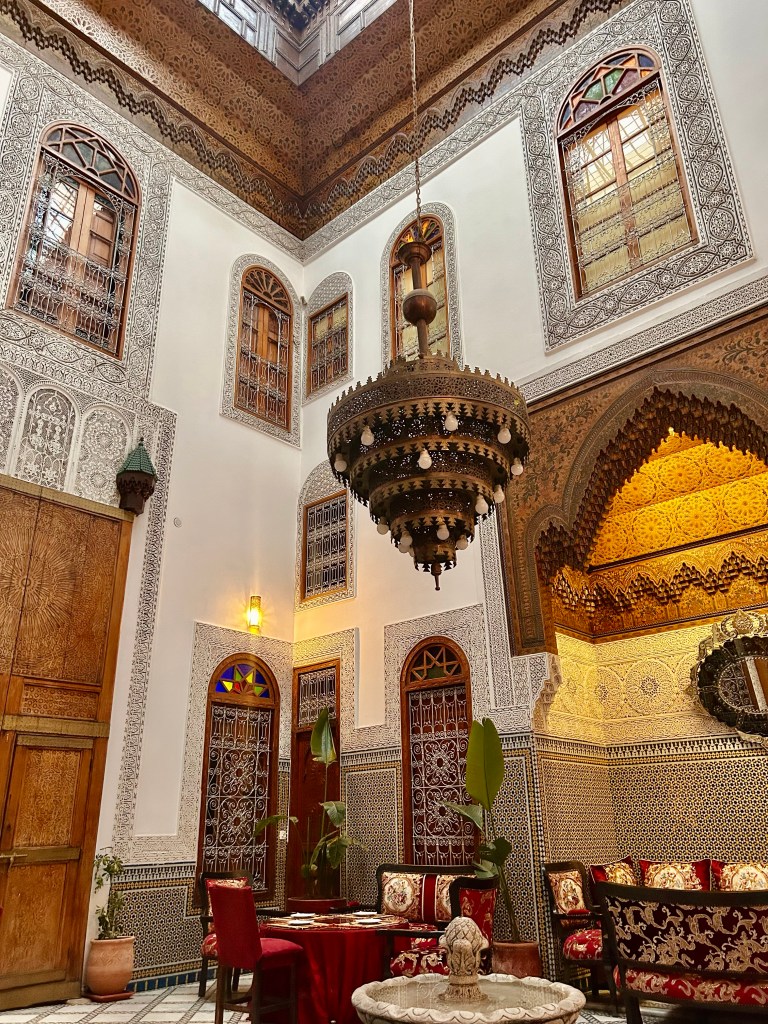
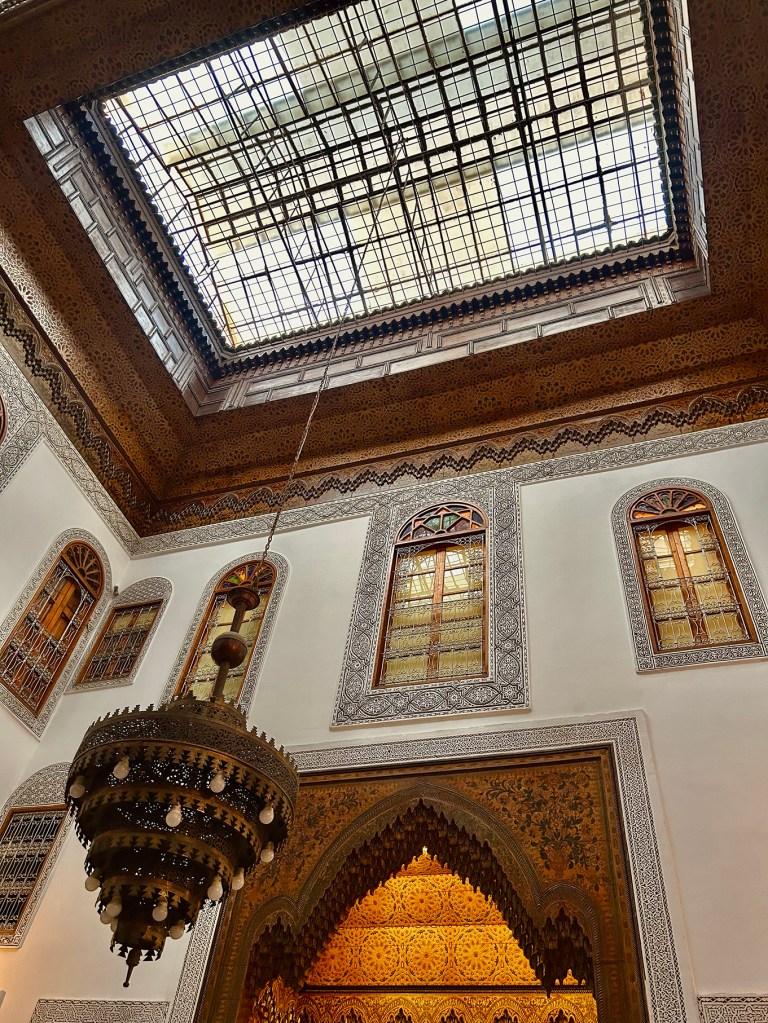
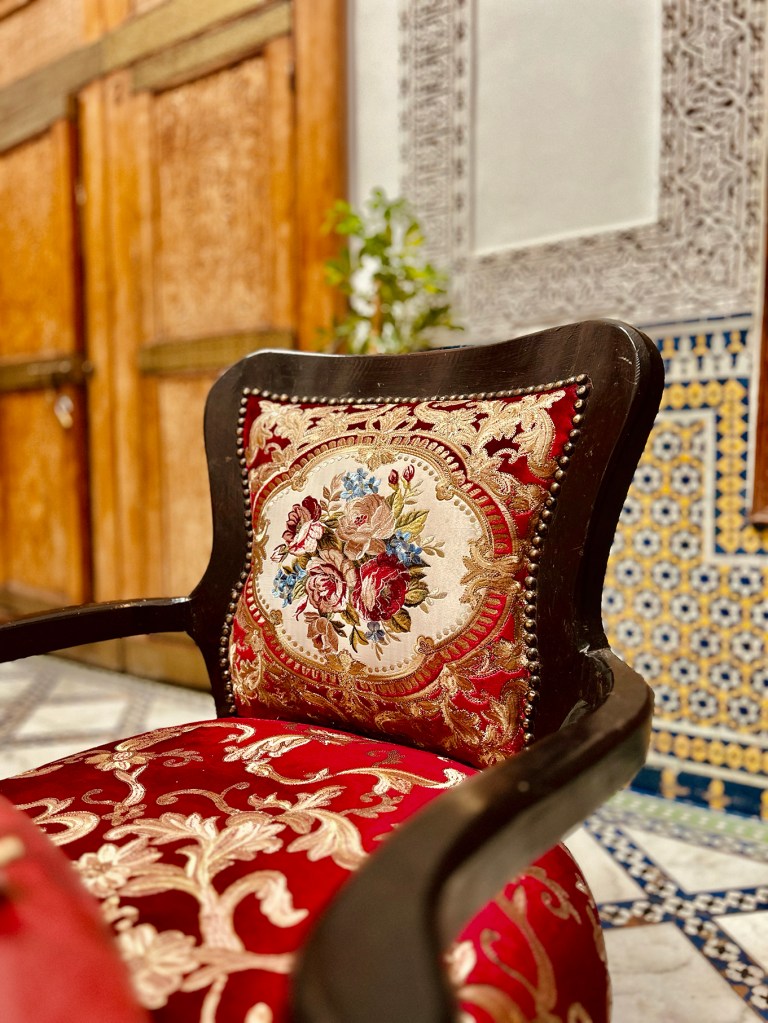
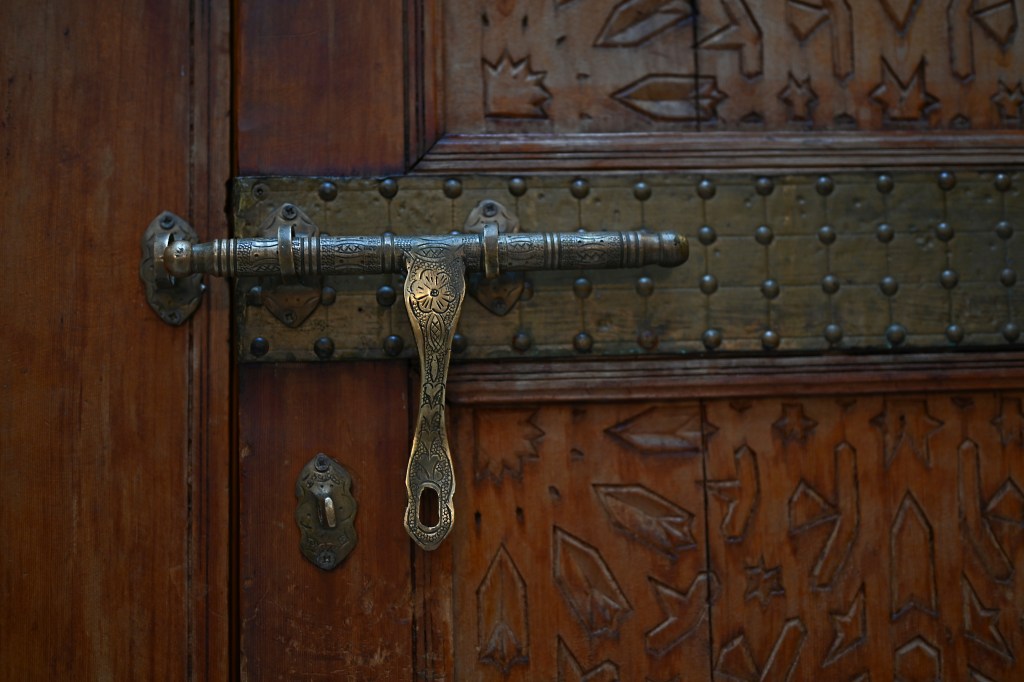
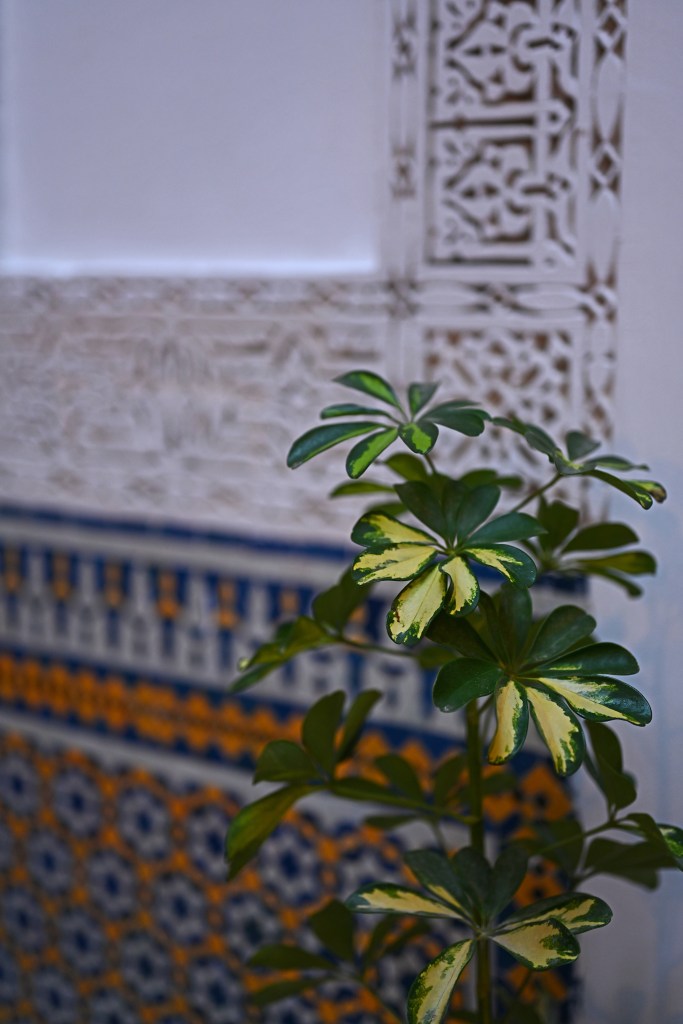
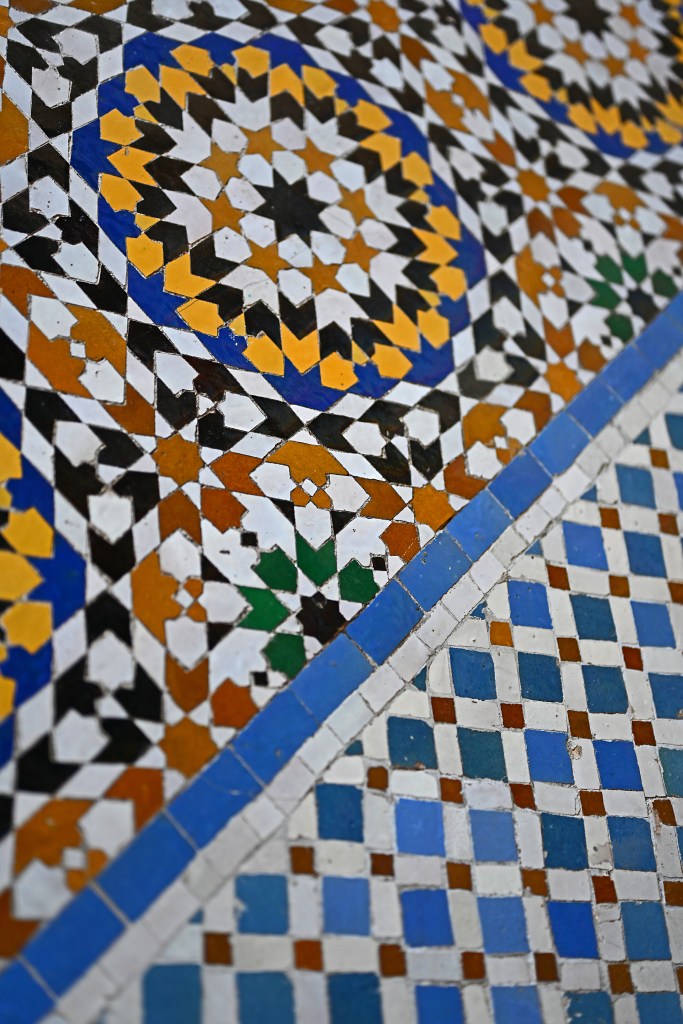
Not only was it gorgeous as soon as you stepped inside, a riad that had been carefully renovated and well maintained, with very welcoming staff and delicious tea. It must have been very low season (read: tumbleweed rolling around, tourist-wise) because I was given the fanciest room. Ever. And I think only one or two other guests were there at the same time. To this day, when I think about this trip, I can’t help but remember my own reaction after climbing the steep tiled steps and entering this room:
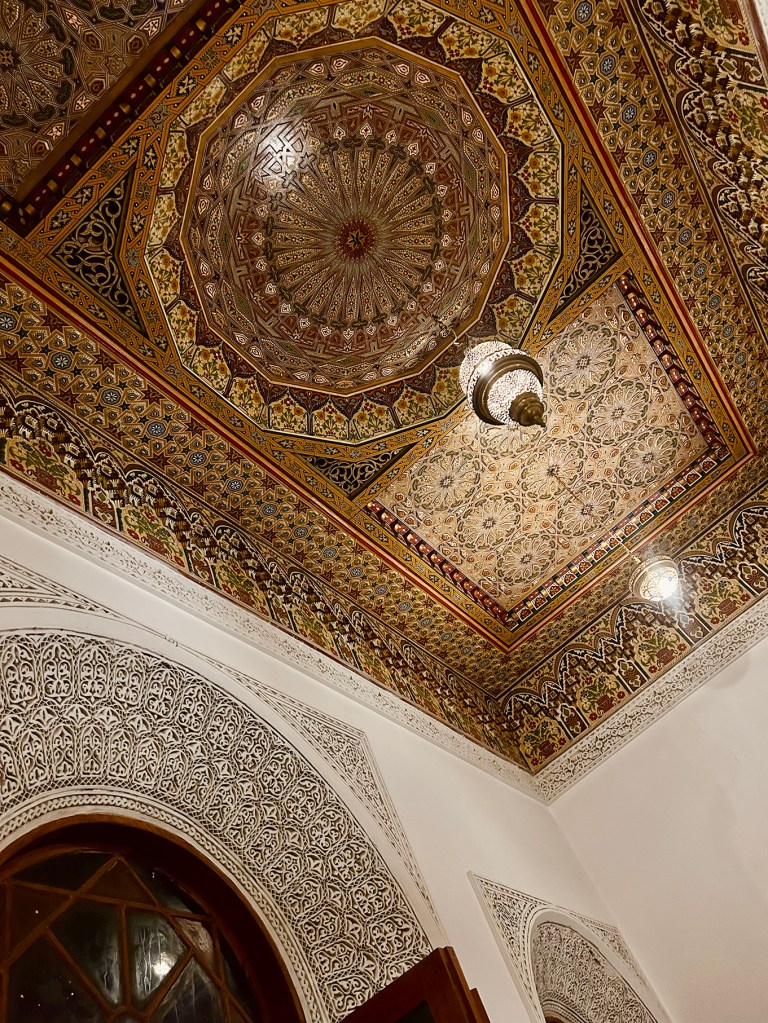
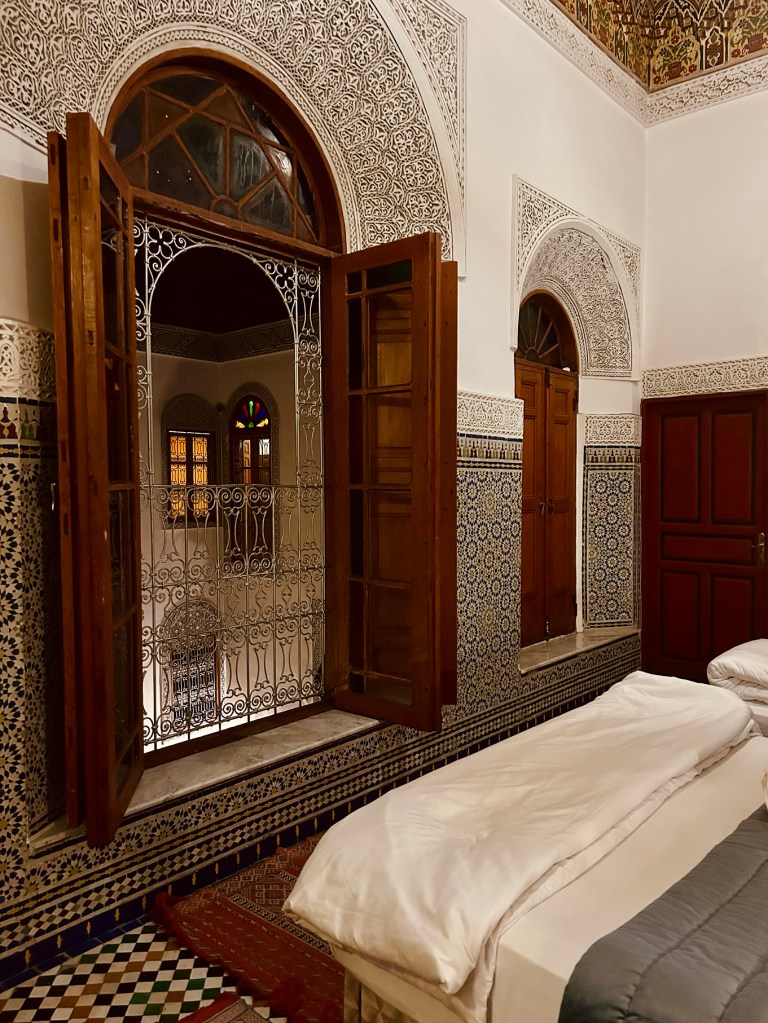
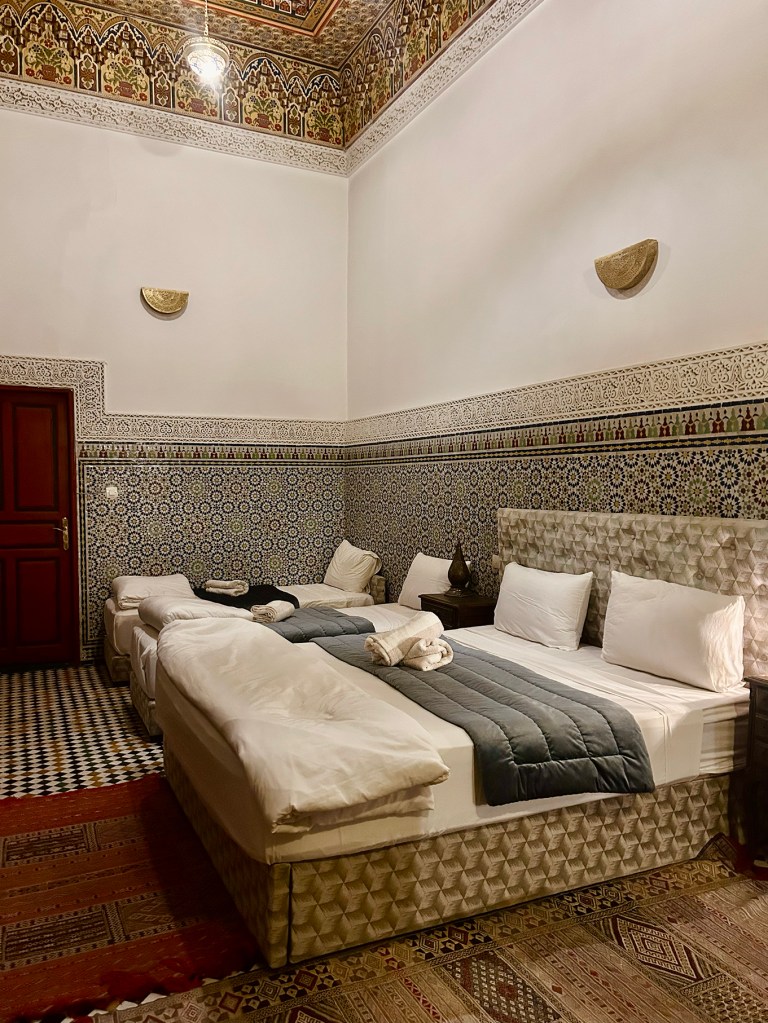
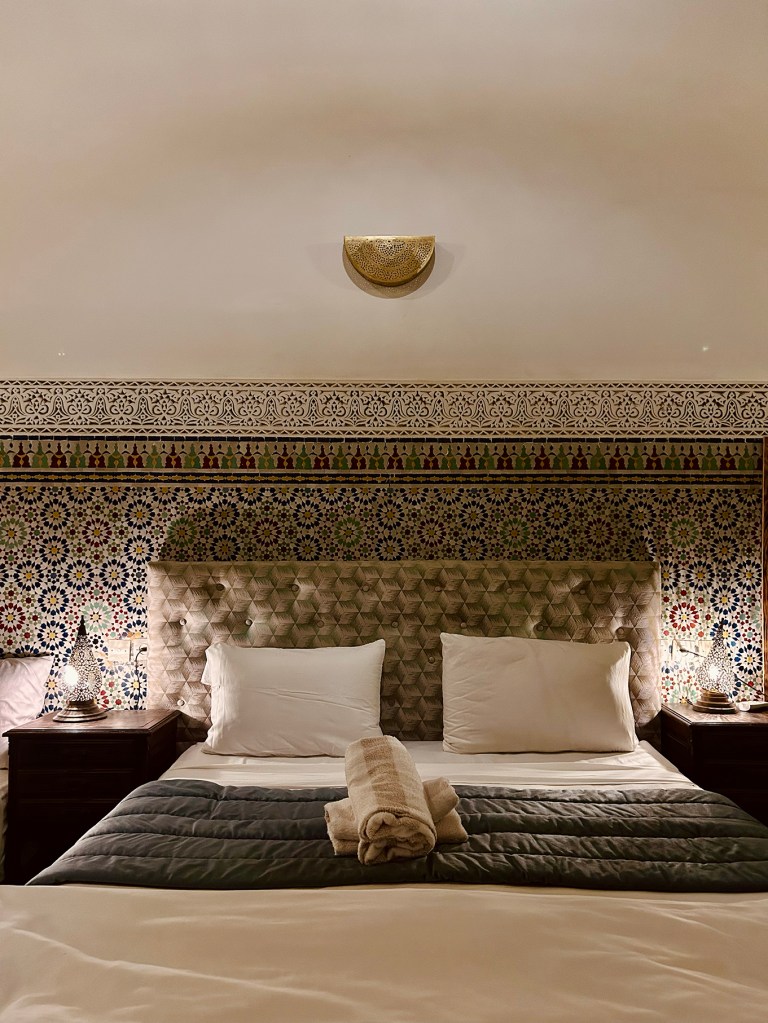
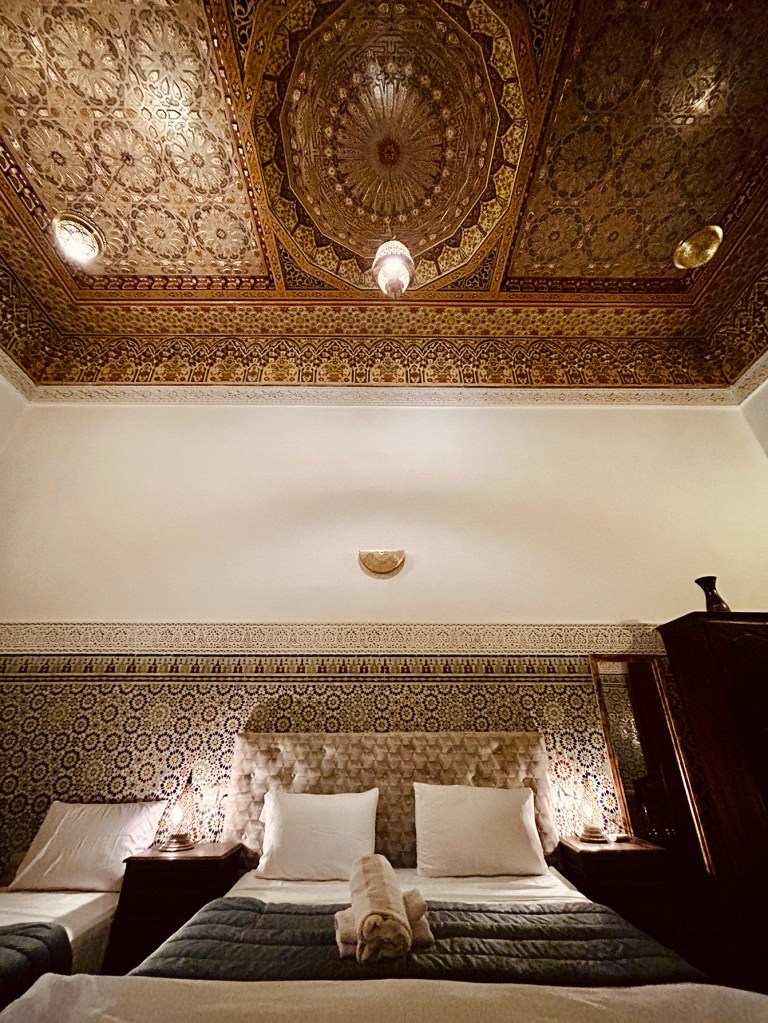

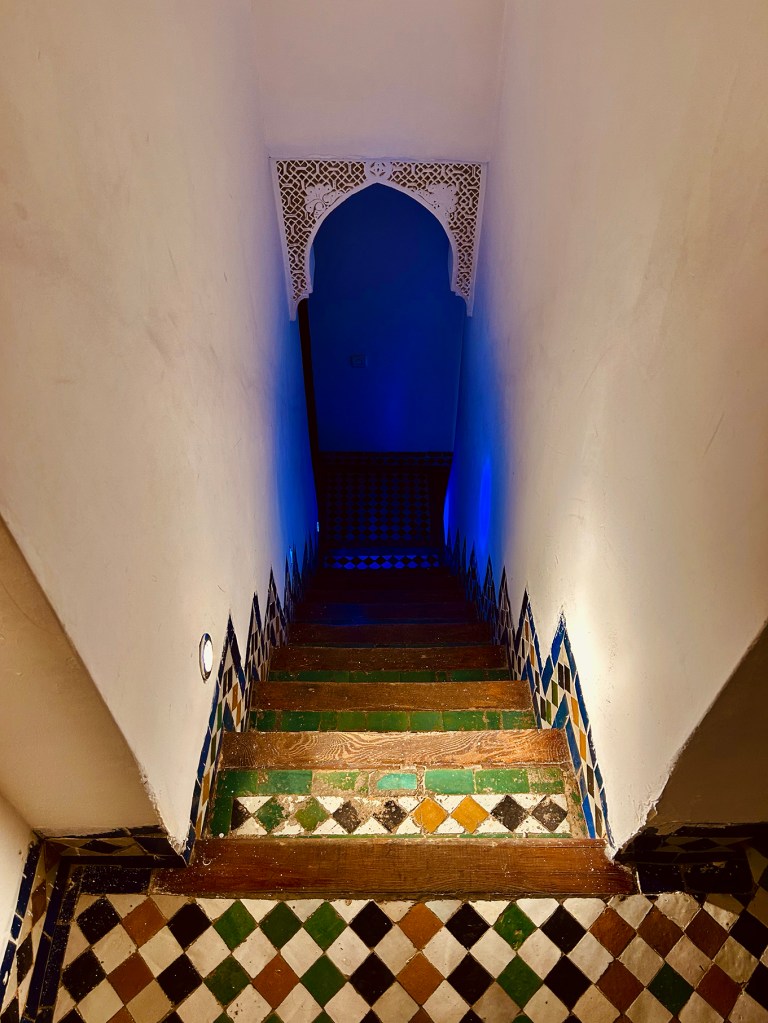
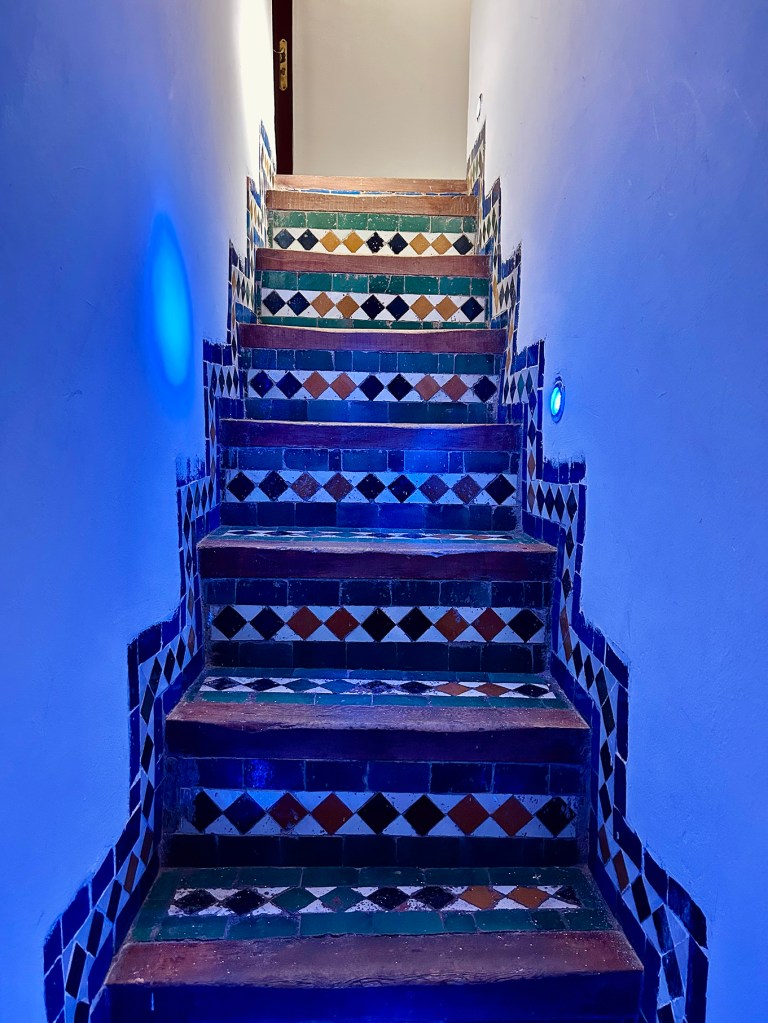
This is the stuff that you expect to see in mosques and palaces, this was like coming back to an Alhambra on steroids or staying at a hotel in a historical building, where you literally pay for the richly decorated ceilings. So the whole family room for myself, with not one, not two, but three beds. And if lounging around on three beds wasn’t enough for me, I got a sitting area too, and a door with direct access to the rooftop terrace. Suddenly, I regretted only staying two nights…
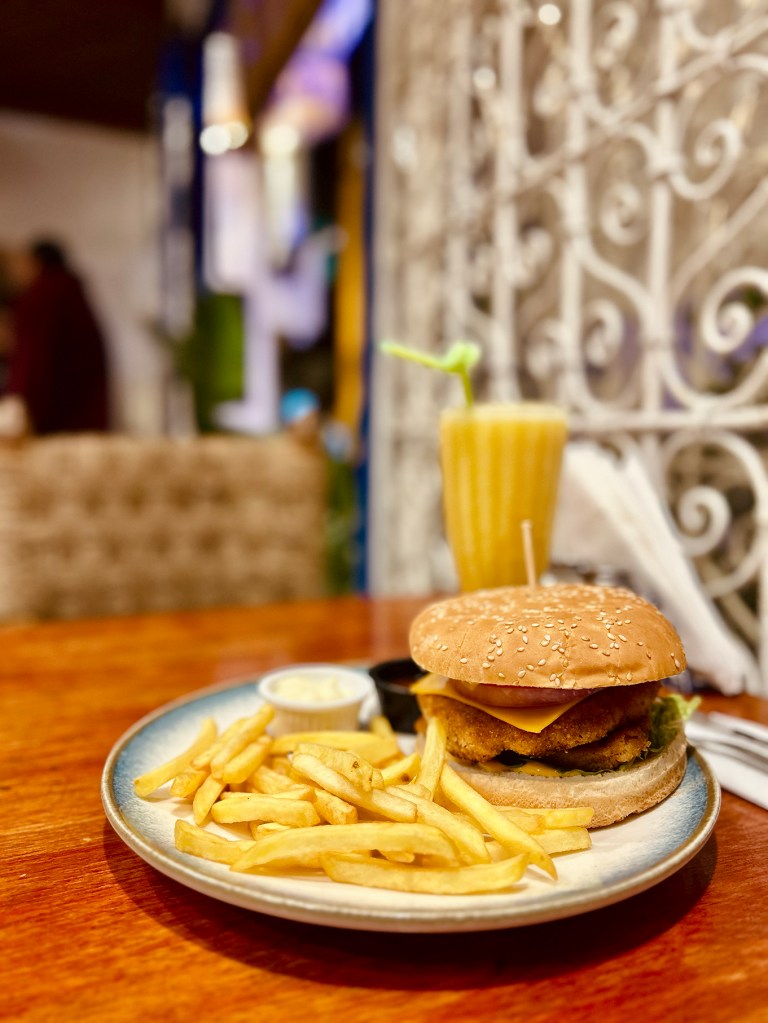
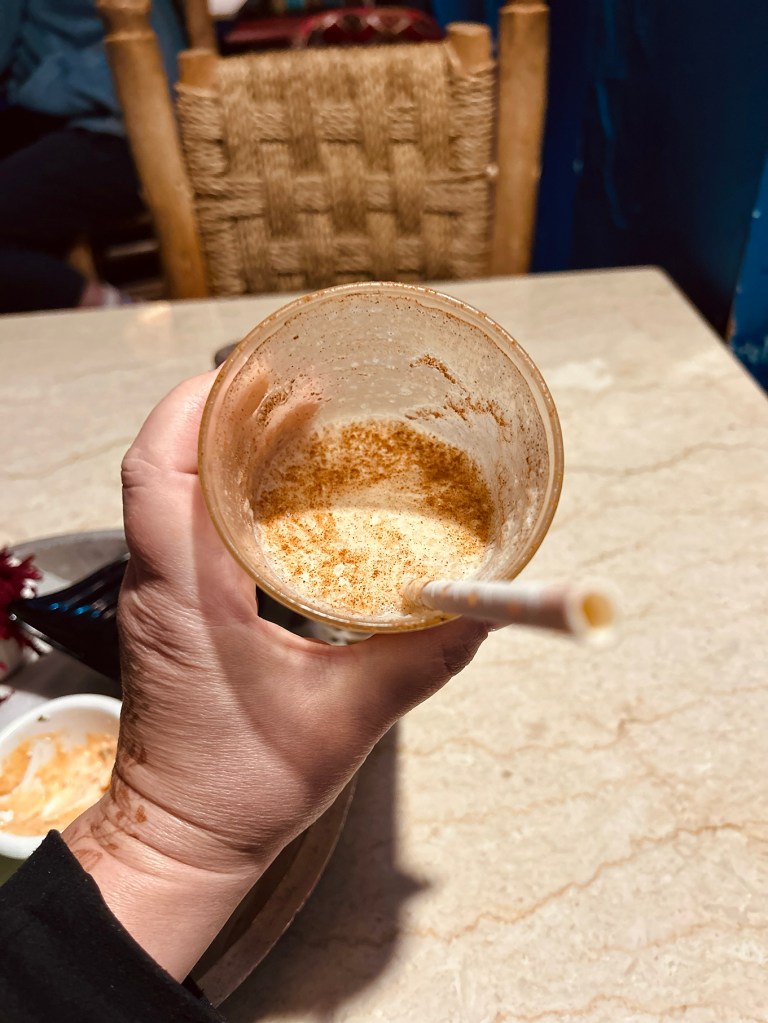
A quick shower in the, you guessed it, also richly decorated bathroom and I was off to find some dinner. The area was super quiet, it was Tuesday night and not a lot going on in the neighbourhood at that hour. But some small shops were open and the restaurants looked inviting. I stumbled upon Encanto and dinner did not disappoint. I went for a tasty chicken burger and the best smoothie one could ask for, in the company of a couple of playful kittens.
It had been a long day on the road, and I was still drooling over the room, so I didn’t continue to explore at night. Instead I went back to the riad to get a good night’s sleep and recharge for the coming full day of walking around Fes.
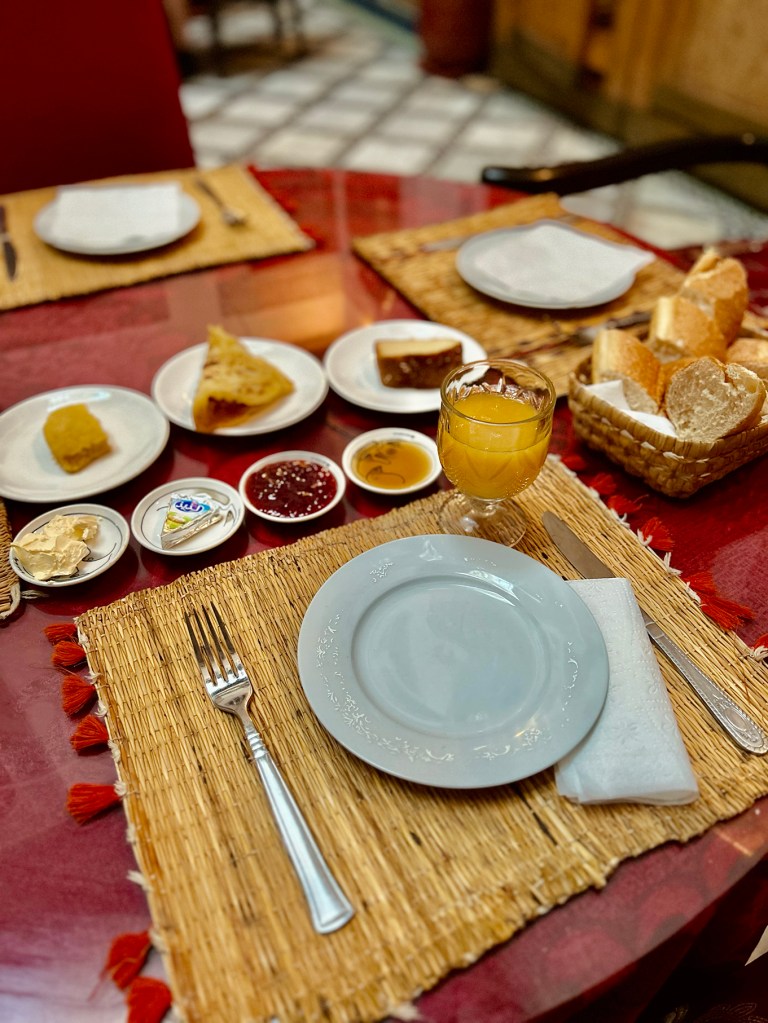
One thing I loved about staying in Morocco is that riad breakfast is usually made on the spot. In the really cozy places, there’s usually a wonderful lady who totally owns the kitchen and will feed you as many pancakes as you want in the morning. This was the experience that a lot of people I spoke to there shared. Fes was no exception. And now back at home I’m kind of insulted that I can’t have breakfast in the inner courtyard of a riad, with a fountain in the middle of everything and mint tea galore. Moroccan breakfast is a sugar bomb, but I can’t help it. So yes, please, I’ll take two.
The heart of the city is the medina, and the one in Fes consists of two parts: Fes el-Bali and Fes Jdid, labyrinths so complex that even Google Maps gives up. You just have to accept that you will get lost. And once you’ve accepted that, you can actually enjoy it. You’ll stumble past spice souks and brass lamps that look stolen straight from Aladdin. And how can one not love that?
My advice is to start exploring early in the morning. Truth be told, that’s basically my advice for any trip, don’t be lazy in your hotel room (unless you get my palatial riad room, that would be an excuse), get out and GO GO GO!!! While everything is just coming out of slumber, you can actually take photos of things without hundreds of others crowding your shots.
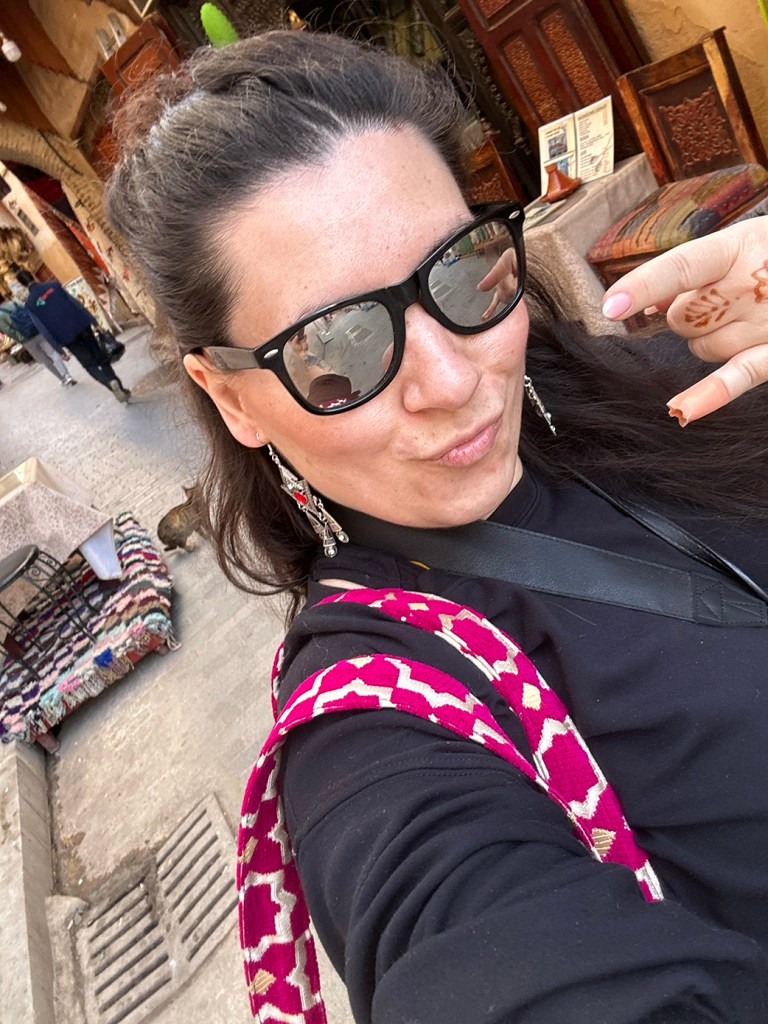
Although I also enjoy being photographed here and there, including taking selfies, as a souvenir of actually being on the spot, I have to admit that people who only show themselves in their travel photos (like here’s my tits&ass in Barcelona, here’s my tits&ass in Paris, here you can’t even see the pyramids because my tits&ass are all over the photo), instead of focusing on the places, stress me. So I try to be out and about as early as possible, to avoid them. By the time everyone else has hit the town properly, you’ve seen most of the medina and you can take a well-earned tea break, while they struggle to pose with a mule.
As tourism is so important in Morocco, shops open early. But even grocers and butchers are fun to experience just as they’re setting up shop, and not only at their busiest hours during the day.

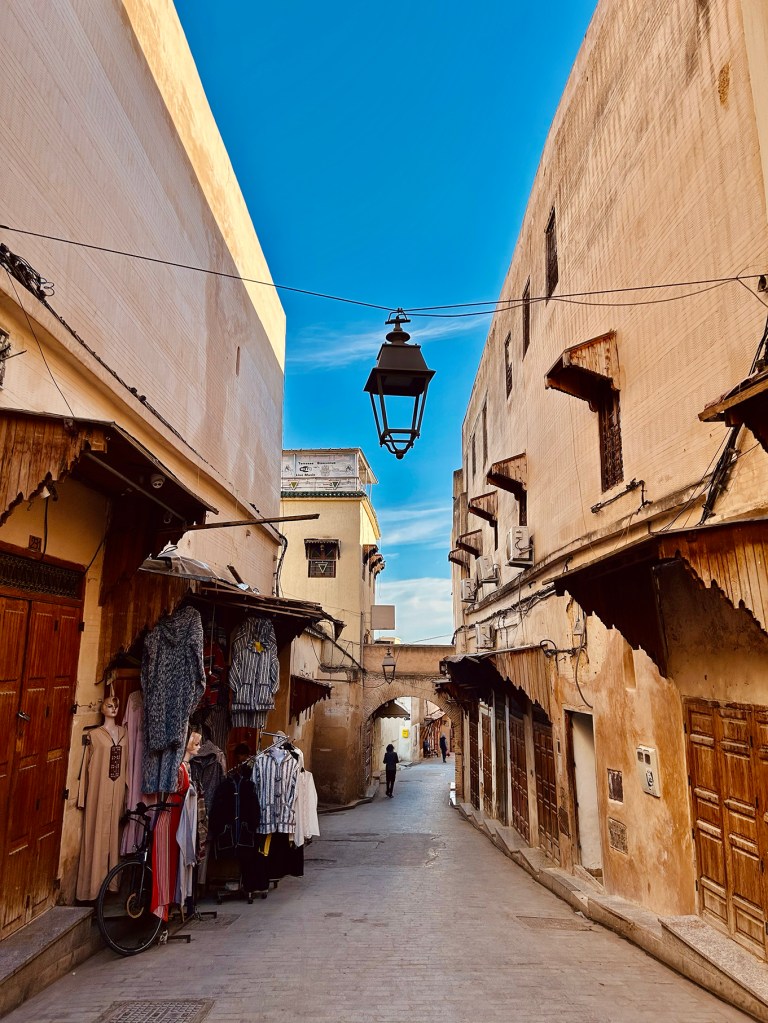
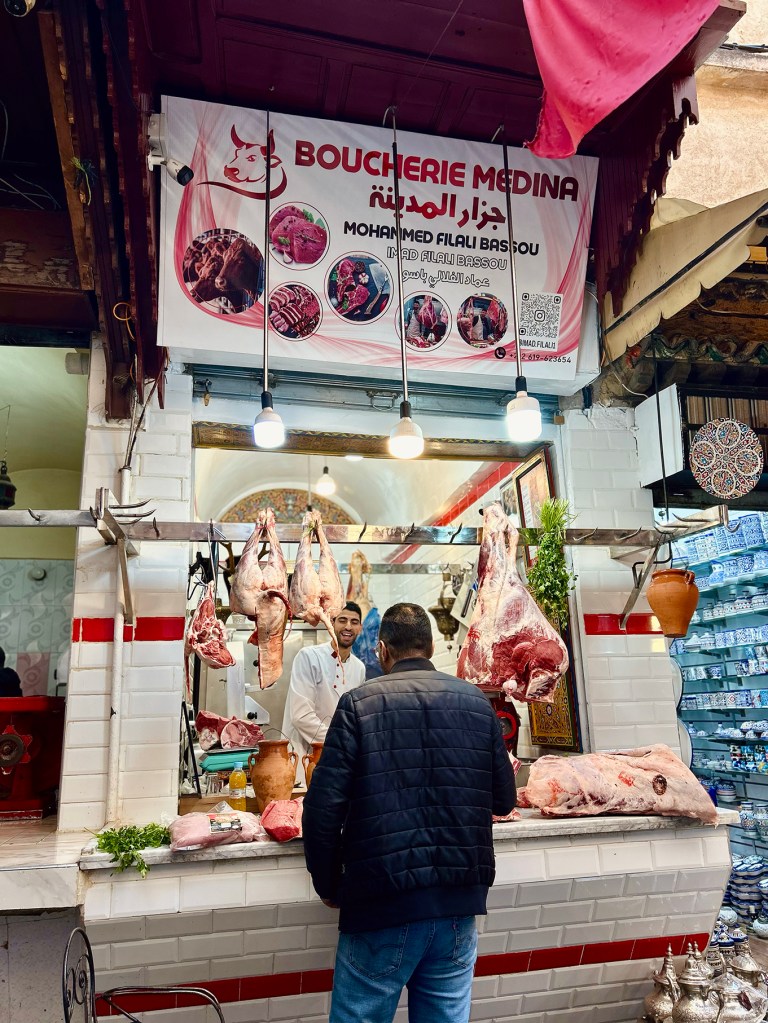
The medina walls glow in warm, sandy beige. Then bam! You hit the Blue Gate (Bab Boujloud), its tiles blazing in cobalt blue on one side, emerald green on the other.
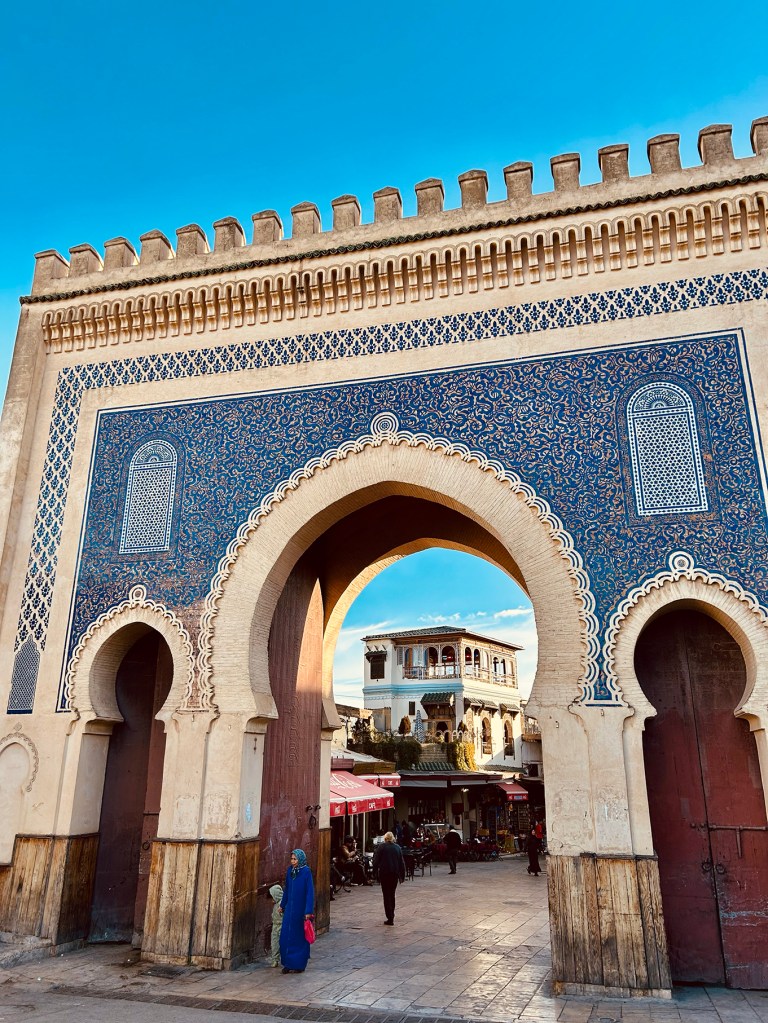
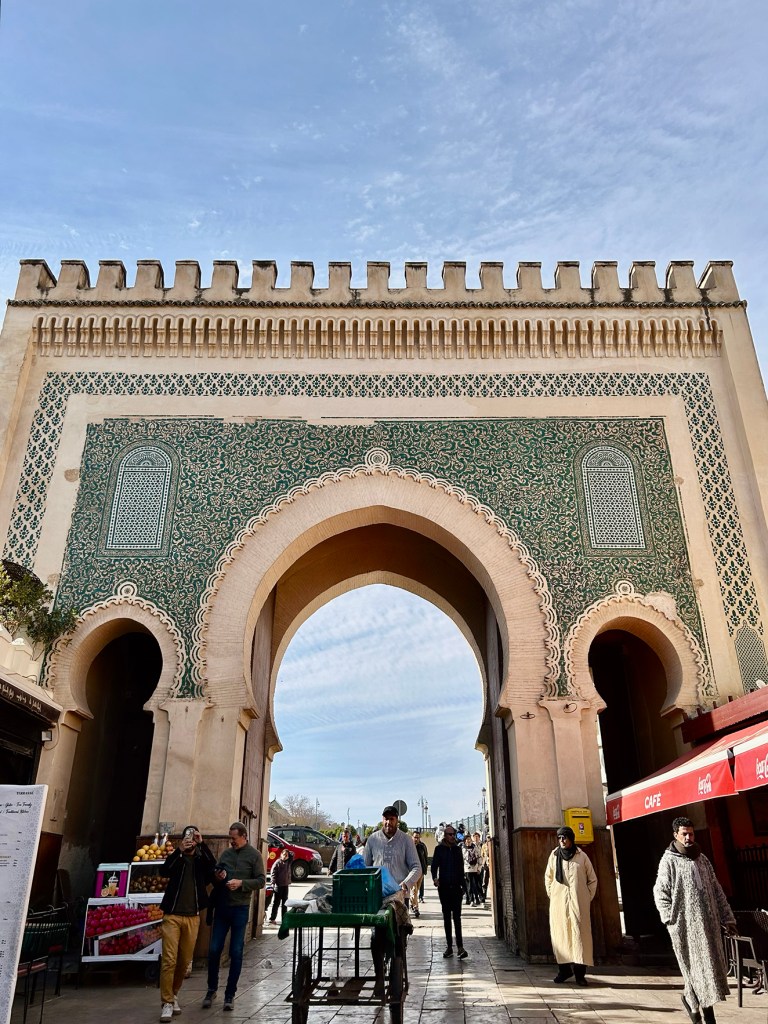
Guides are already waiting next to the gate, offering you all sorts of tours: short tour, long tour, historic tour, souk tour, whatever-you-want-at-your-own-pace tour. There are advantages to a guided tour in Morocco as well: the ones who are licensed are eloquent, polite, funny and knowledgeable. Moroccans usually speak at least two languages: their own Arabic dialect called Darija and possibly a Berber language. A majority of them are fluent in French, usually with an impeccable pronunciation, and because of Spain’s control over parts of Northern Morocco throughout the centuries, Spanish is also spoken often. English is becoming more and more popular and you’ll even hear folks in tourism say words in German, Italian, Portuguese and Japanese. Even regular people without a guide’s license, who approach you in the street, know the places well, it’s their home. Help from the locals is offered around every corner, but it can come at a surprise cost and you might have to haggle. With a guide, however, you won’t have to keep looking at your map trying to find specific things. The intricate maze of the medina sports lots of dead-ends and right outside of it the streets are a bit more run-down, so if you’re not comfortable with that, it’s always a good idea to go on a guided tour. If I’d had more time, I would have gone with a guide first, to get the nerdy info on everything, and then I would have walked the same route by myself, at my own pace, to take the photos. Having just one day, I politely declined the offers and stepped into the maze by myself, shamelessly unafraid as I am when I travel.
Inside, colors are everywhere. Spice stalls burst with saffron yellows, paprika reds, and earthy browns piled into cones and pyramids. Ceramics shimmer in blues, greens and whites, with patterns that hypnotise if you stare too long. You immediately start to calculate if you could fit a couple of them in your hand luggage. In the tanneries, which Fes is famous for, dye spreads out like a painter’s palette: yellow, crimson, turquoise, indigo.
The tanneries are a particular thing to talk about. Historically important for the development of cities such as Fes, when you dig a little deeper, it can become unsettling. The working conditions have been appalling, with few improvements. The amount of chemicals and other polluting factors should be reason enough to end any sort of processing of leather. The tanneries smell like sewers and decay, and people who work there are up to here in goo and dyes and dust, working for countless hours. Random dudes from the streets adjacent usually come up to you and tell you that a family member works in the tannery so they can give you a tour, and then they ask for money after showing you around for about 10 minutes. Some shopkeepers also claim that their terrace offers the best views and I read about people being scammed into paying way too much for something that should actually be free of charge. The tannery does not have an entrance fee, like a museum. It’s just open, but there are establishments around it who will usually try to make a profit. You’ll even be offered mint leaves to put up your nose so that you can better handle the smell, and then someone asks for a bit of money for that too. Hundreds of dirhams is not the right amount to pay there, especially if it doesn’t go straight to the pockets of the actual workers.
On one hand, it’s difficult to not become angry at the situation. You don’t want to support the exploitation of workers and that amount of pollution by visiting. On the other, this is such a big part of Fes’ history and it still contributes to economic development, as the leather is sold and made into goods of very high quality, that eventually reach many other corners of the world. Many dyes do come from natural resources and the colors are beautiful and vibrant. Chouara Tannery is the largest one and as I understood, restoration work has been done on all of them so as to minimise pollution and improve the whole process. And because of their architecture and elements such as the dye vats, they are incredibly popular attractions and make for fantastic photos. I remember seeing colourful photos of the tanneries many years ago, being very curious to visit and wanting to take the same type of photos myself.
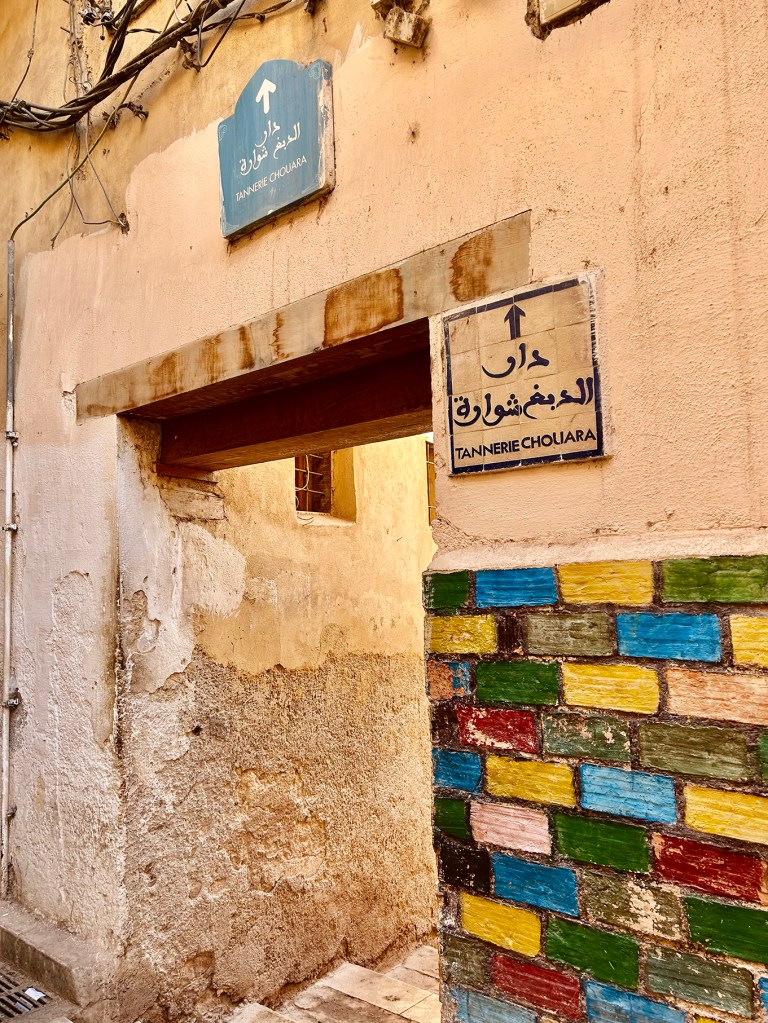
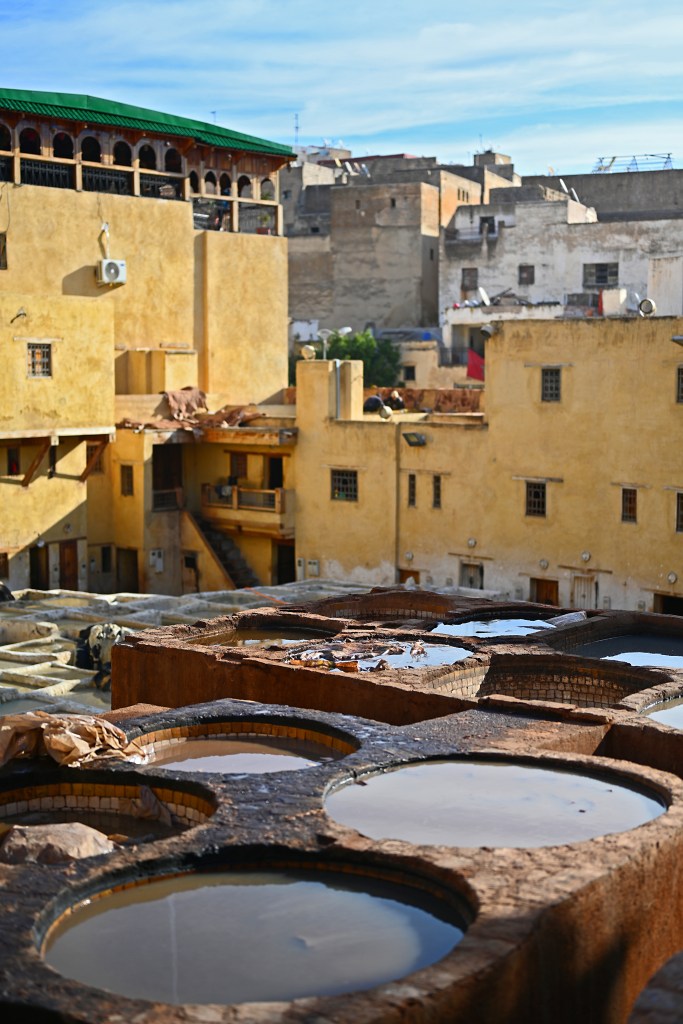
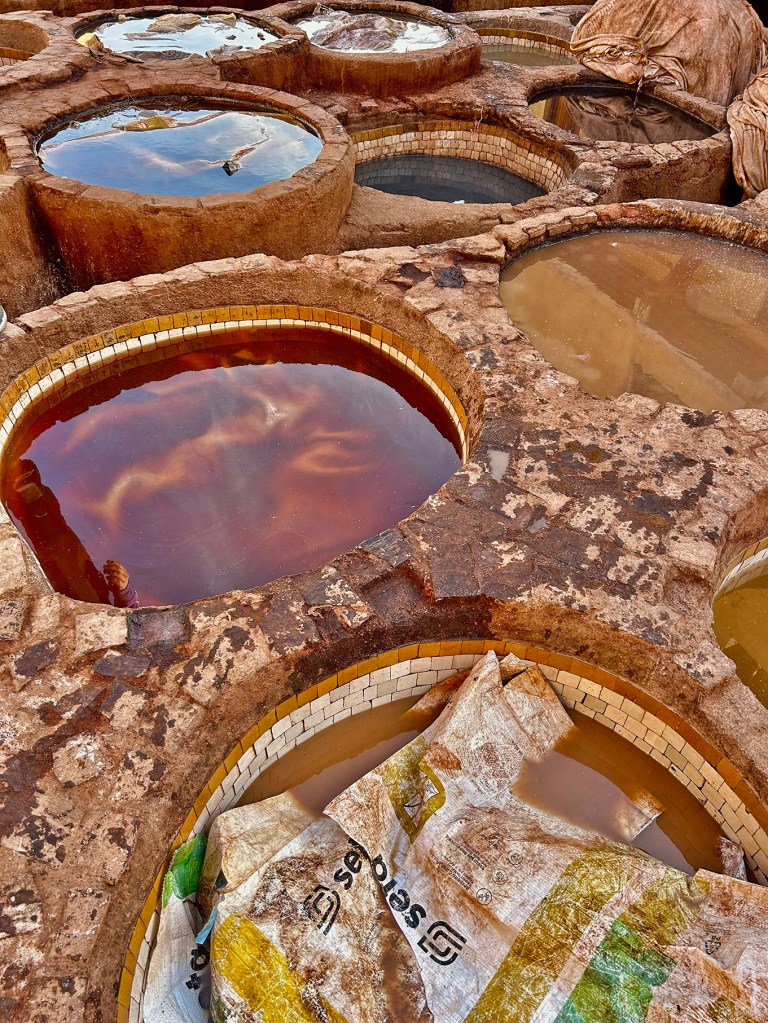
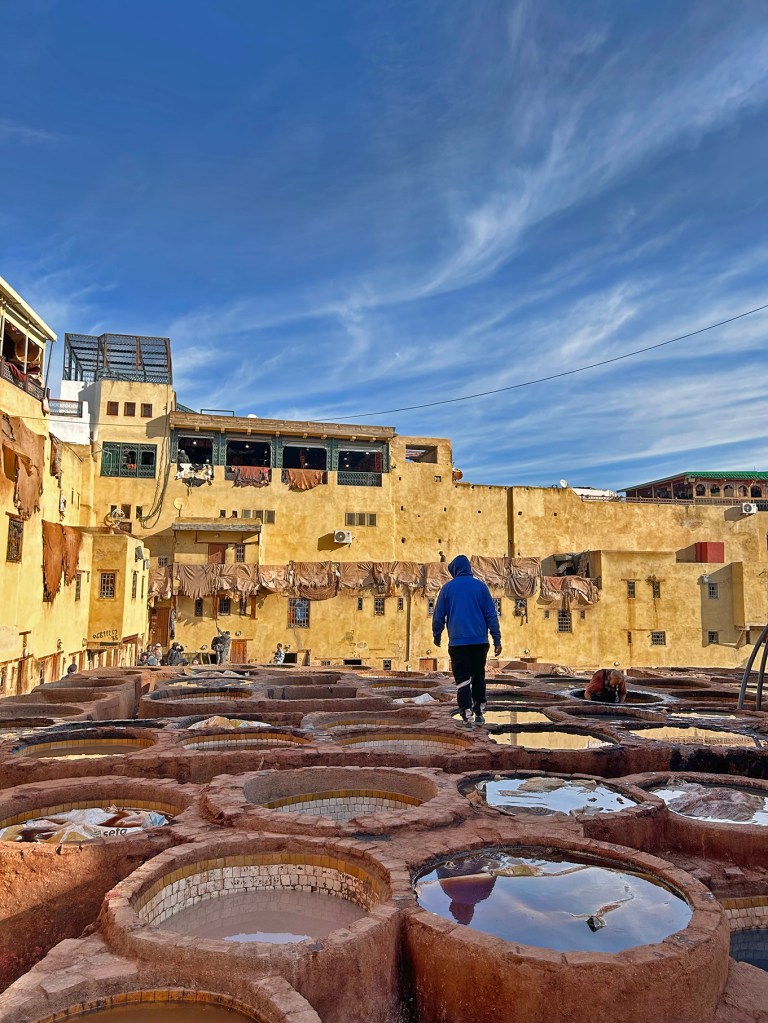
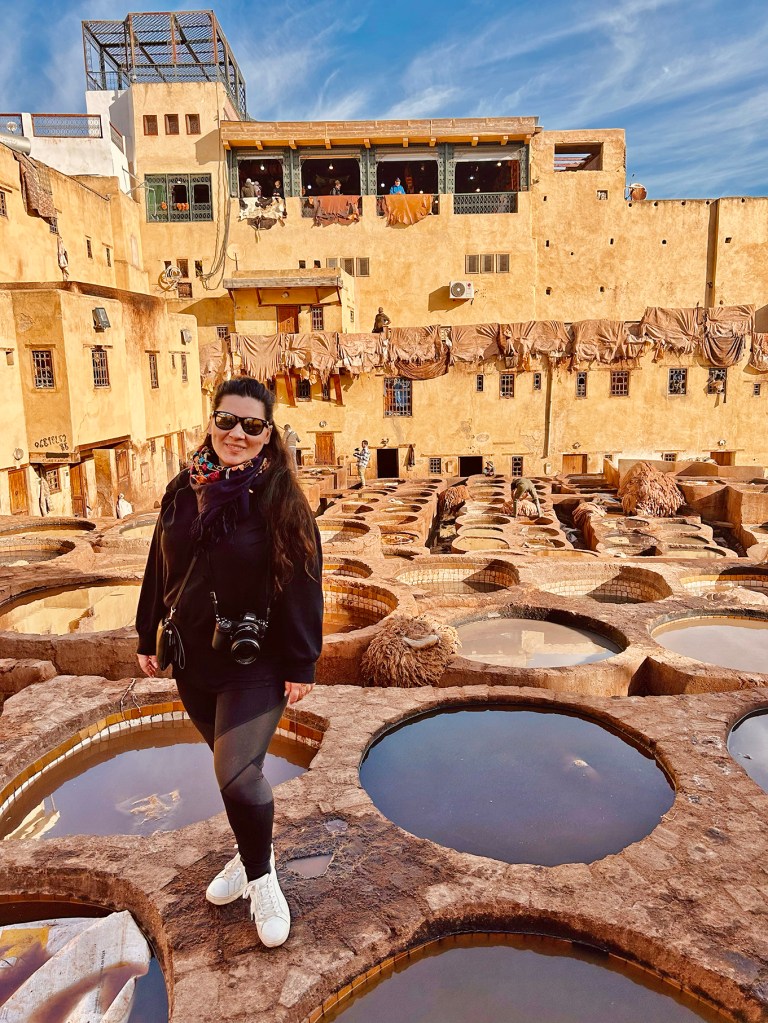
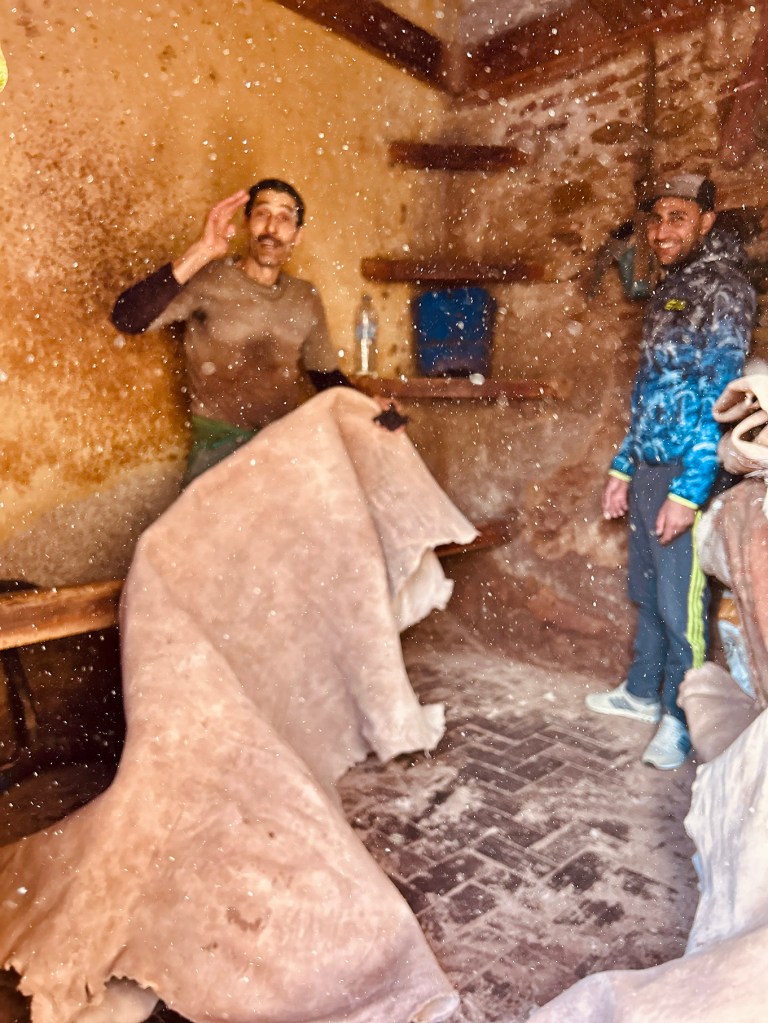
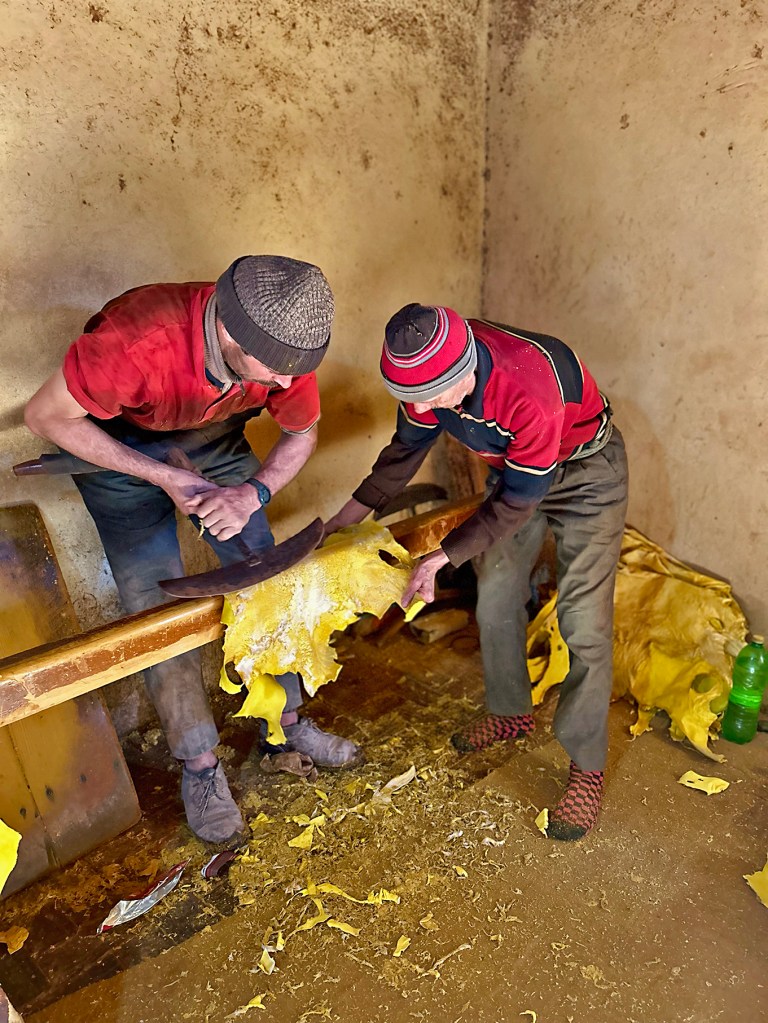

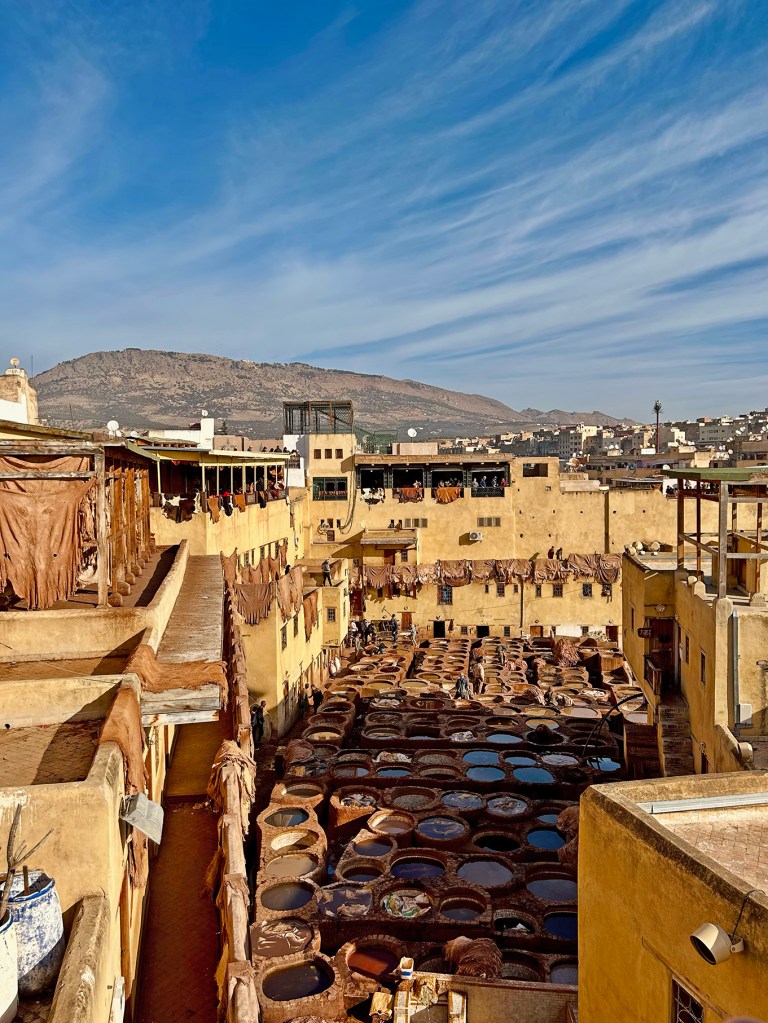
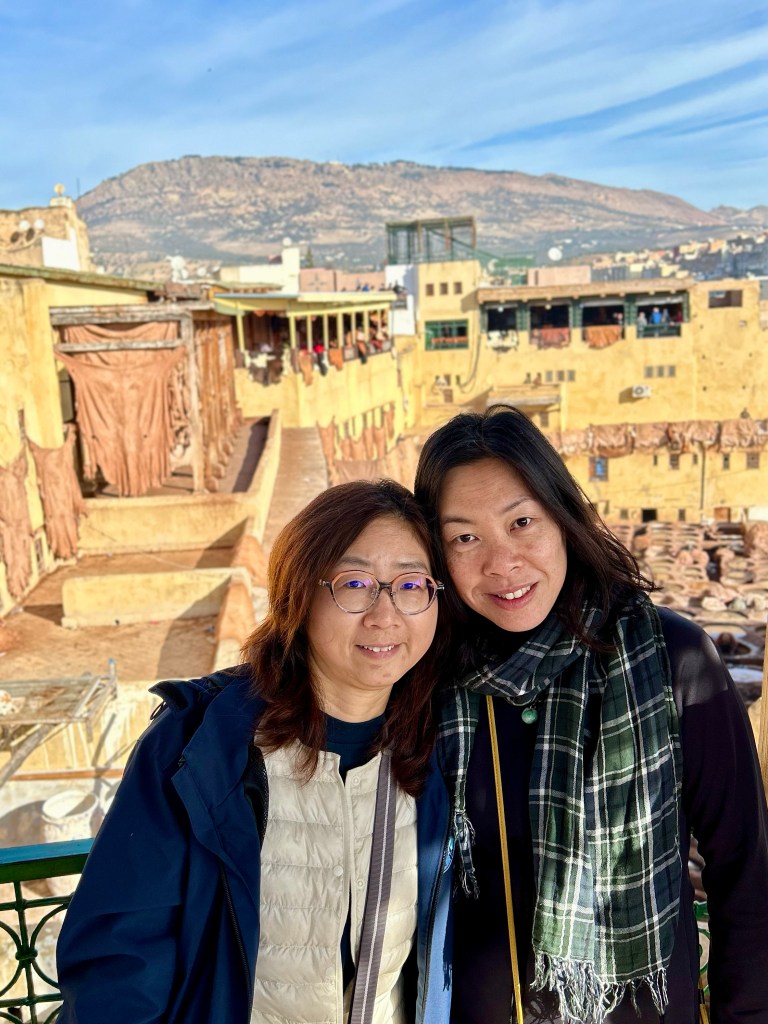
I got a street guide for that visit. It’s almost inevitable when they see you stop for a little while to check your map or the area. It wasn’t a long tour and he wanted quite a lot of money at first. But when you look at the bigger picture, I am a very fortunate person who can afford all these travels, even if I don’t necessarily have a money-making machine at home. A large number of Moroccan workers struggle to make ends meet and can only dream of walking around with the same amount of money that I had in my wallet. So we had a little negotiation and he got something that both of us were okay with. He actually did a good job of taking photos of me, a lot of people I’ve asked throughout the years are not capable of doing that. And if I can treat myself to a meal in Morocco, I can contribute so that a local can do that too.
One pleasant surprise at the tannery was running into Shirley and Leewai, who also stayed in Fes after our three days together through the desert, and were doing a walking tour.
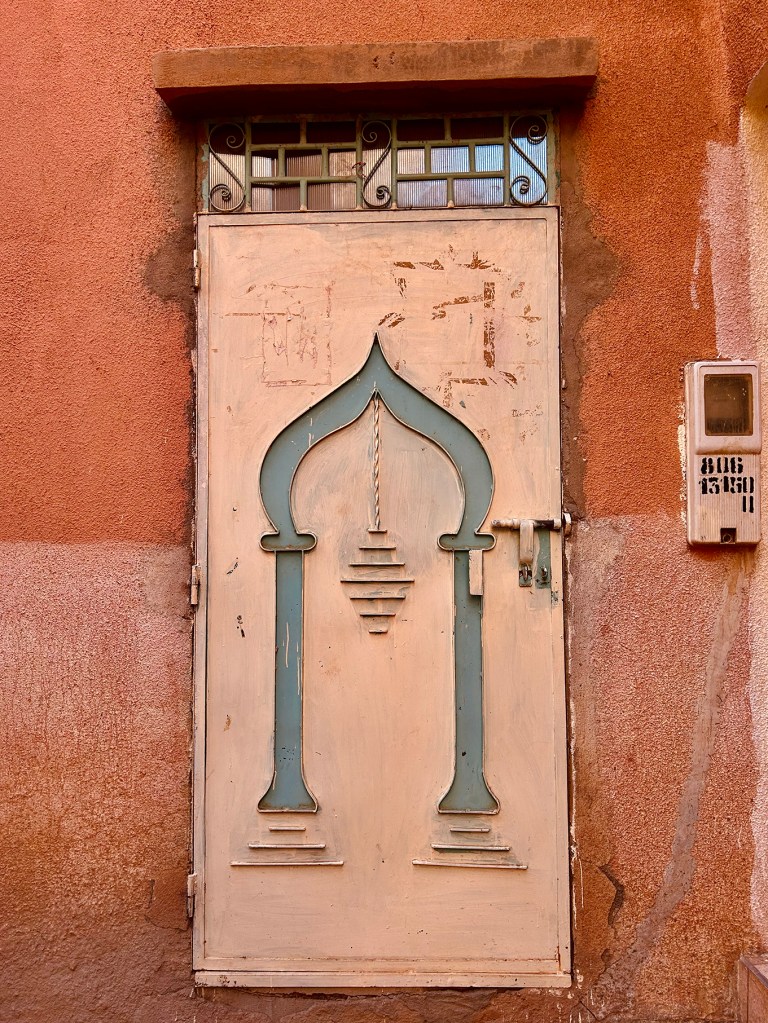
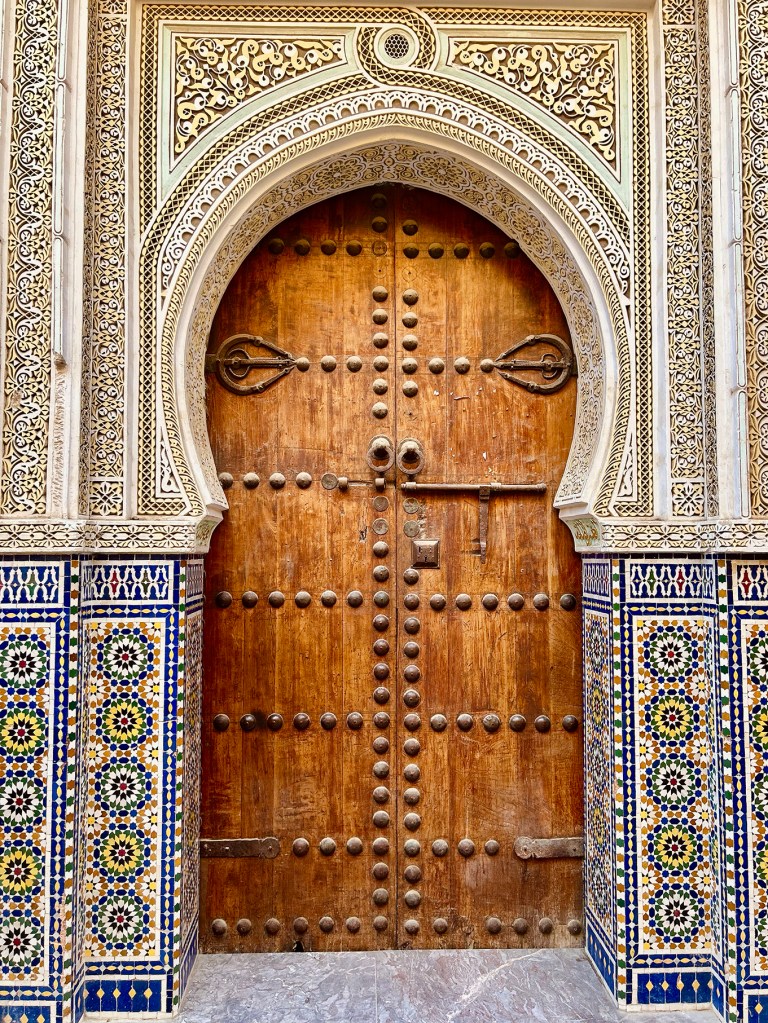
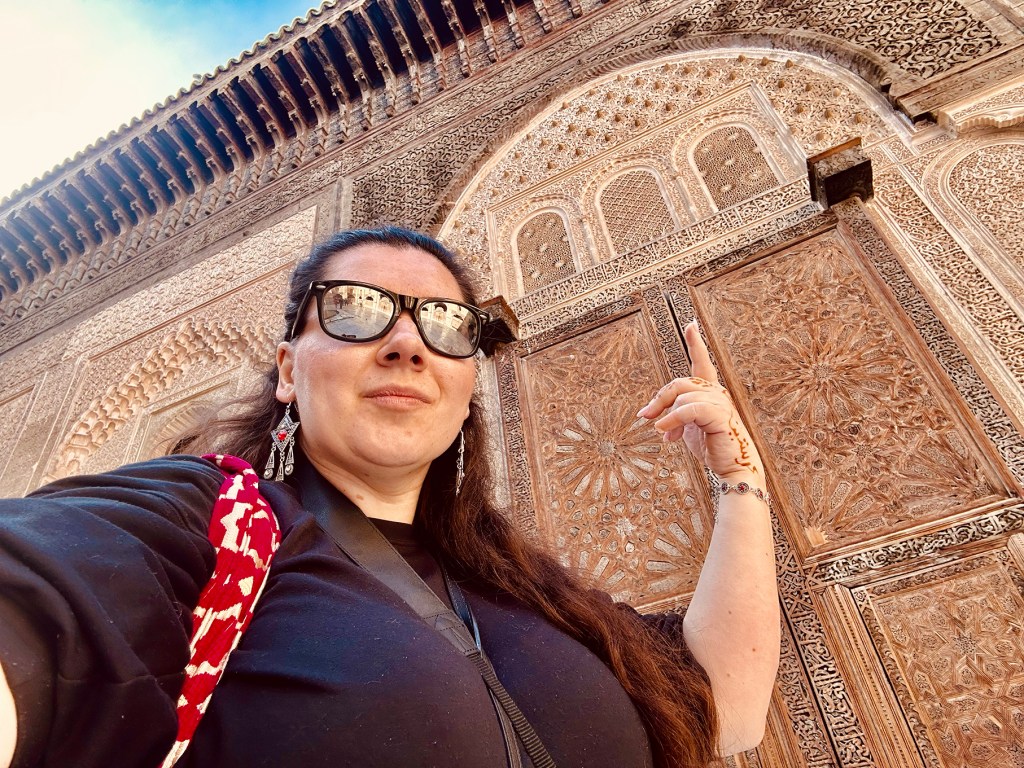
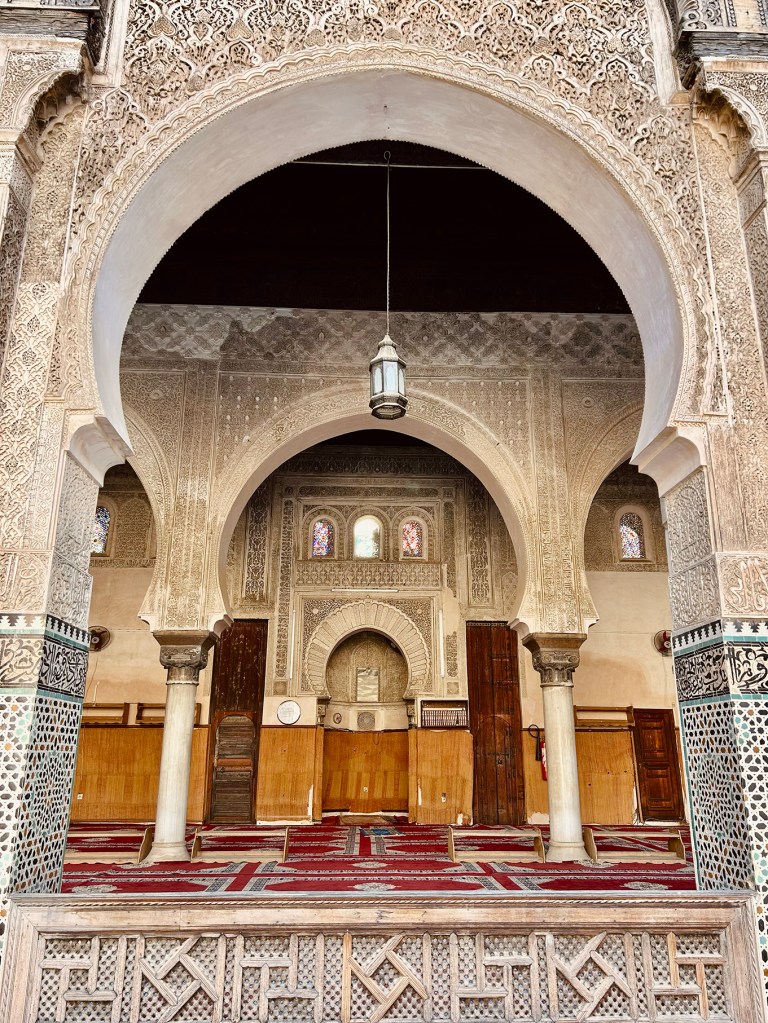
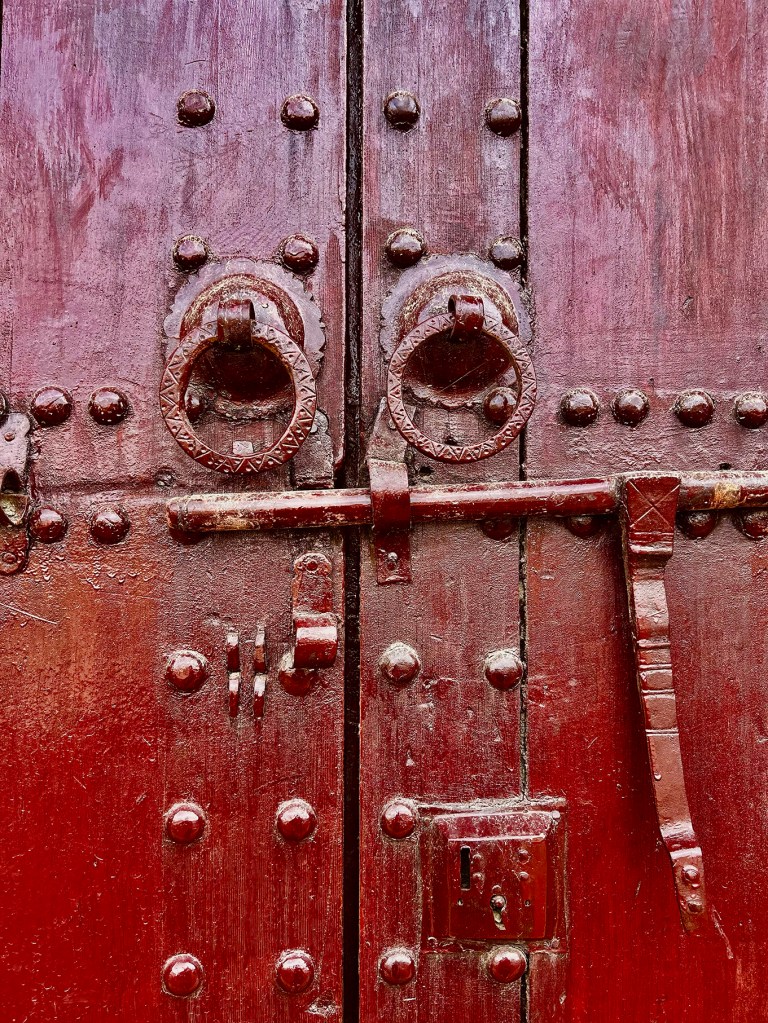
In the Place Seffarine, the noise from coppersmiths working is almost deafening. In the music workshops, you will hear traditional stringed instruments. Wood, ceramics, jewels, leather goods, home decor, sweets, oils, souvenirs. Whatever you feel like buying, eating, smelling or just looking at, you’ll probably find it somewhere in the souks. As for photos, make sure you have enough memory in your phone or camera, because there is an absolute overload of things you will want to photograph. The amount of decorated doors alone is overwhelming. If you enjoy historic architecture, if you’re a fan of symmetry and decorative elements, any city with a rich history such as Fes will be like a comfort blanket and a punch in the gut at the same time. For all your senses.
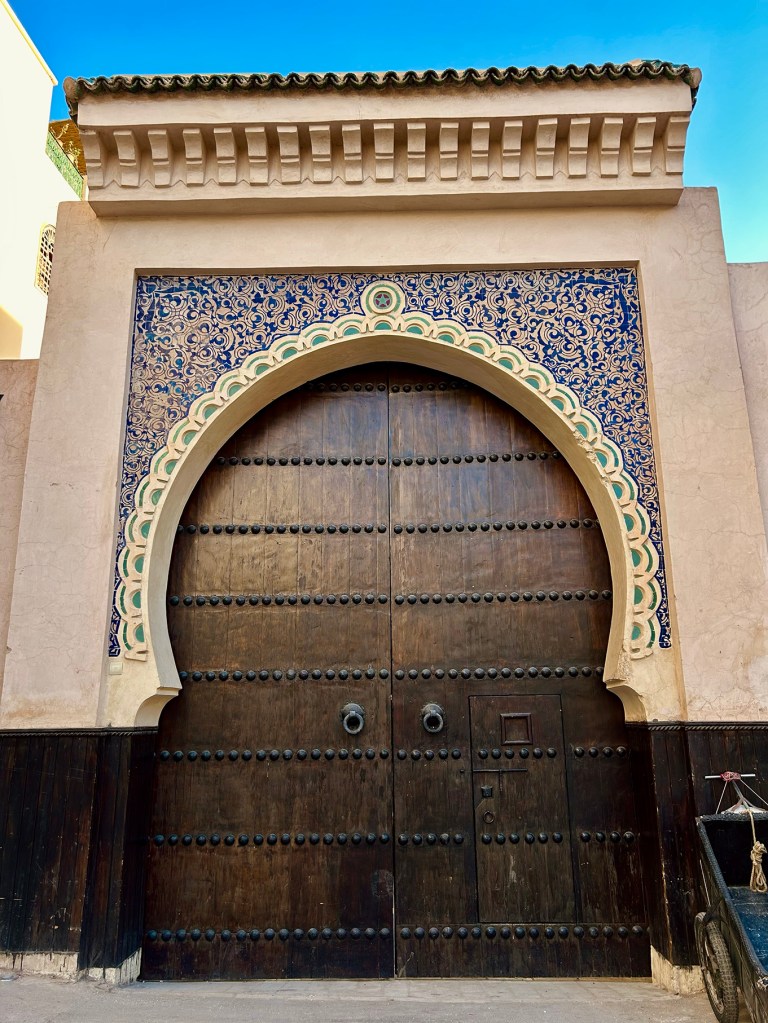
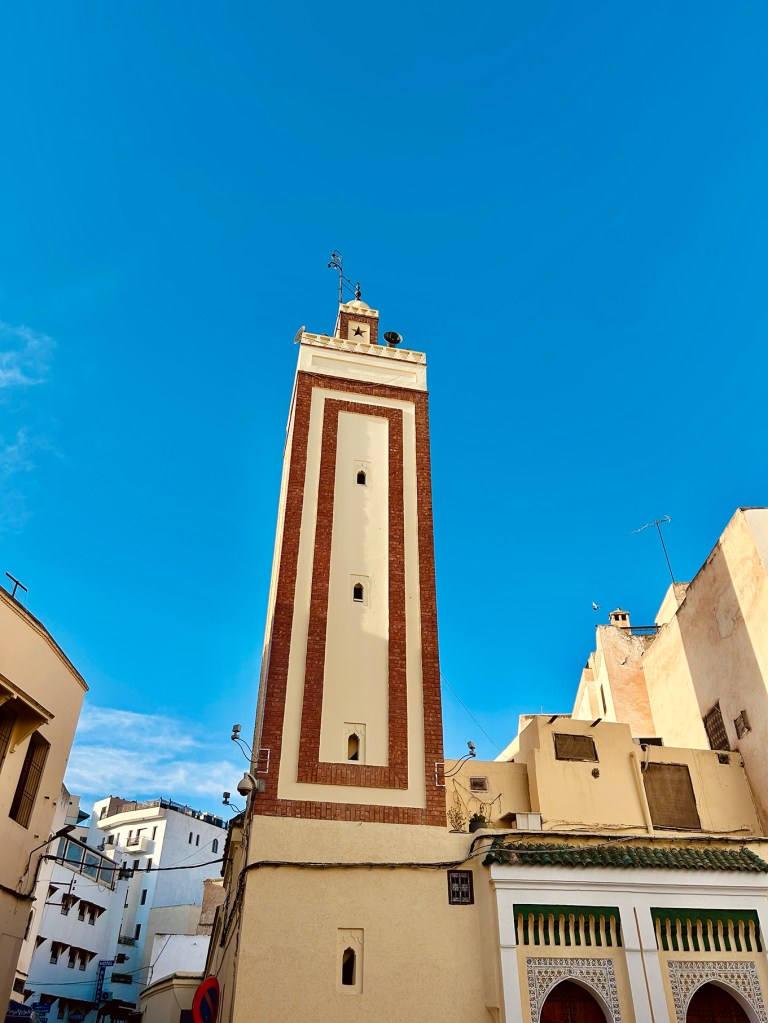
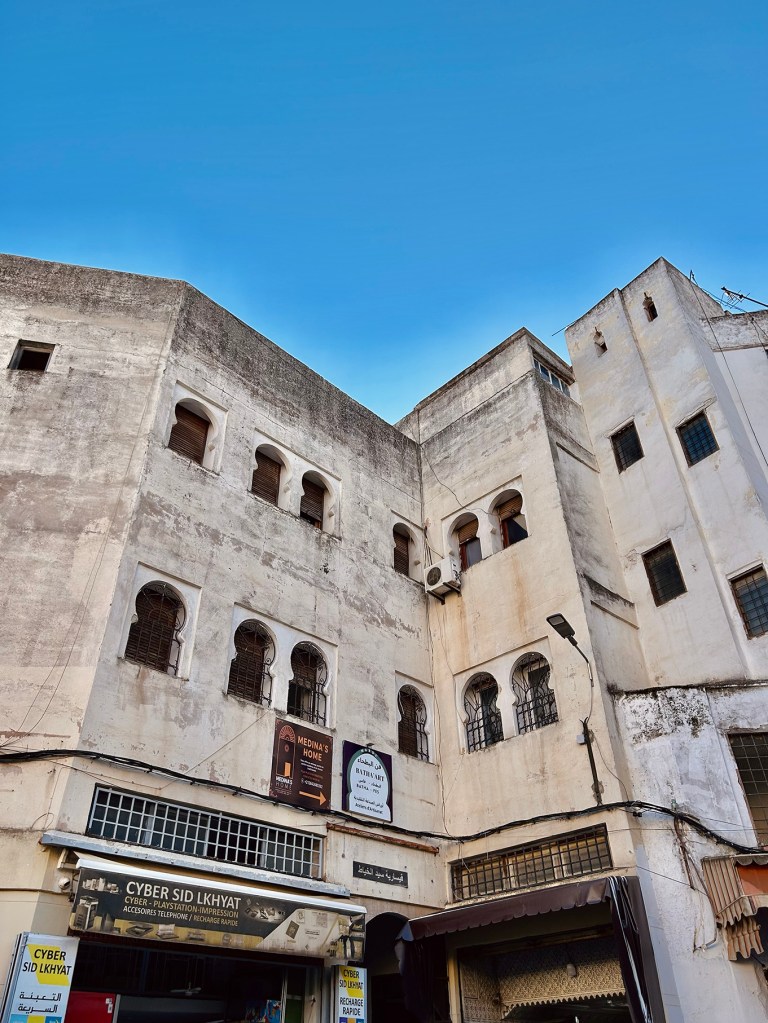
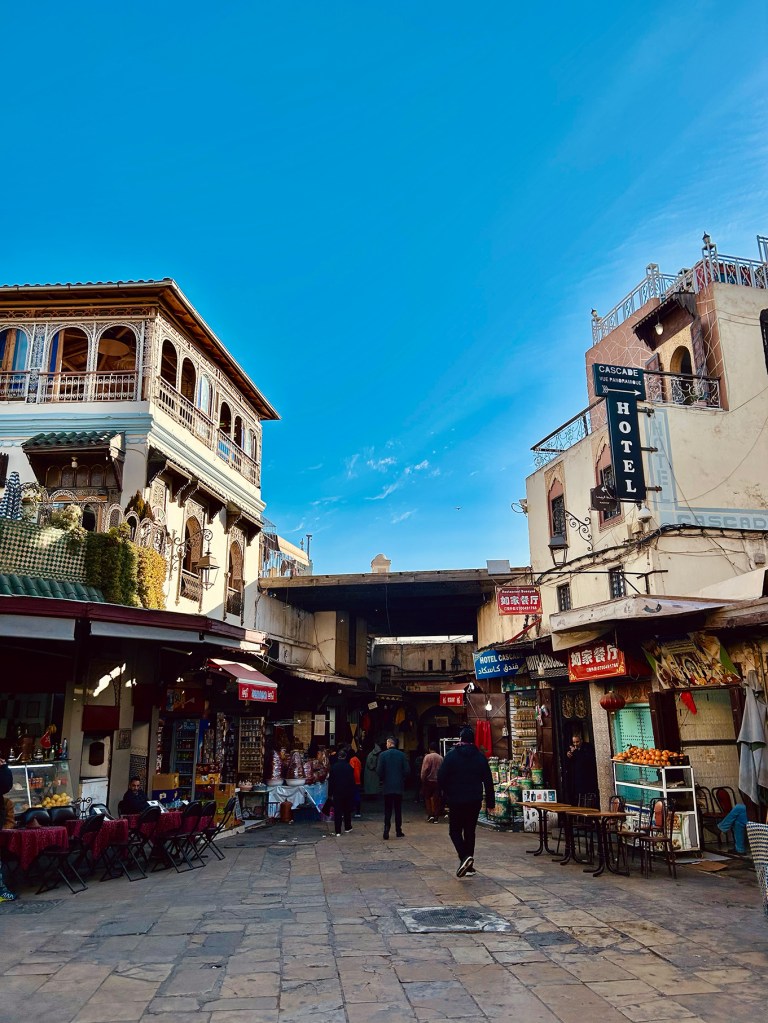
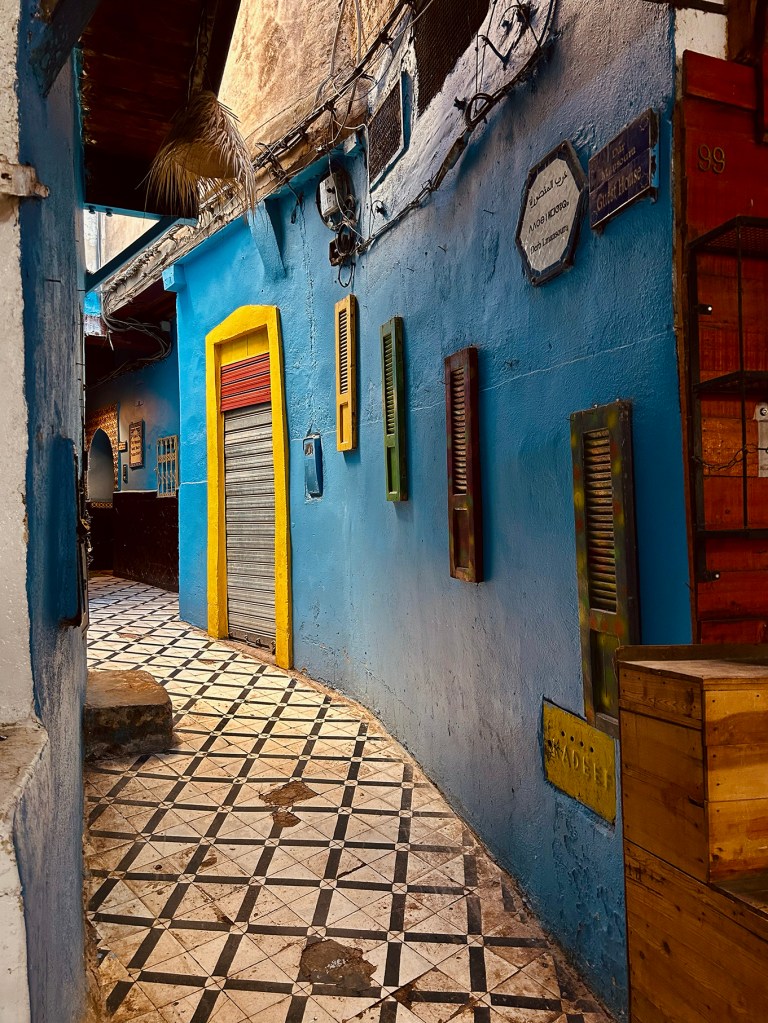
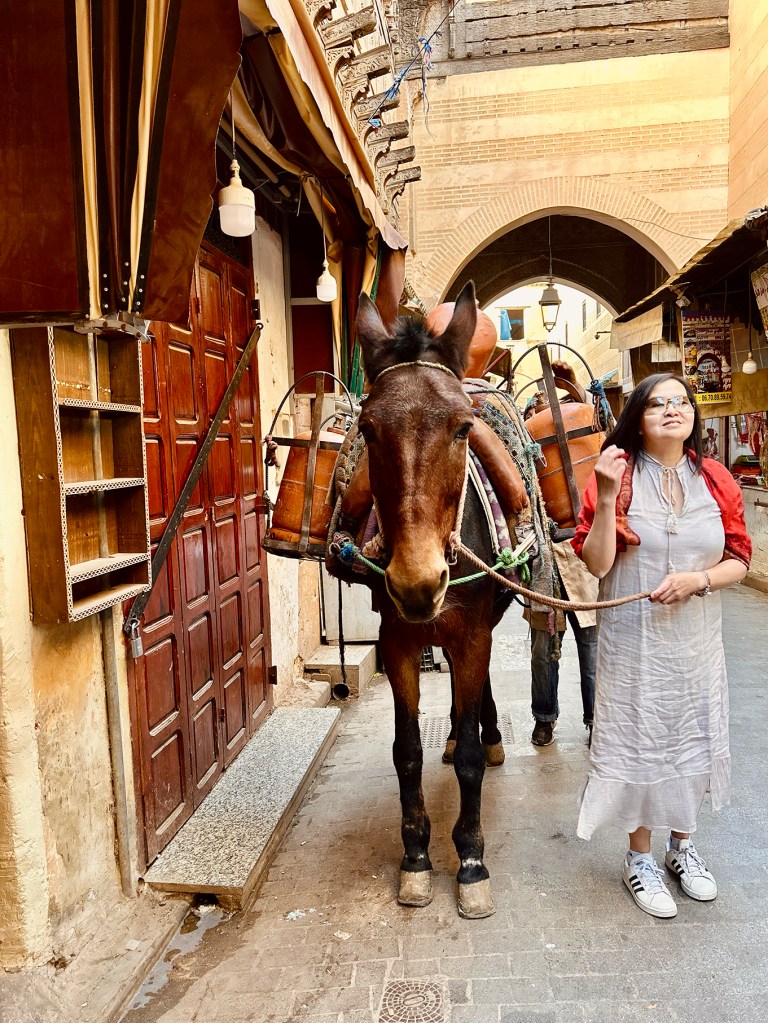
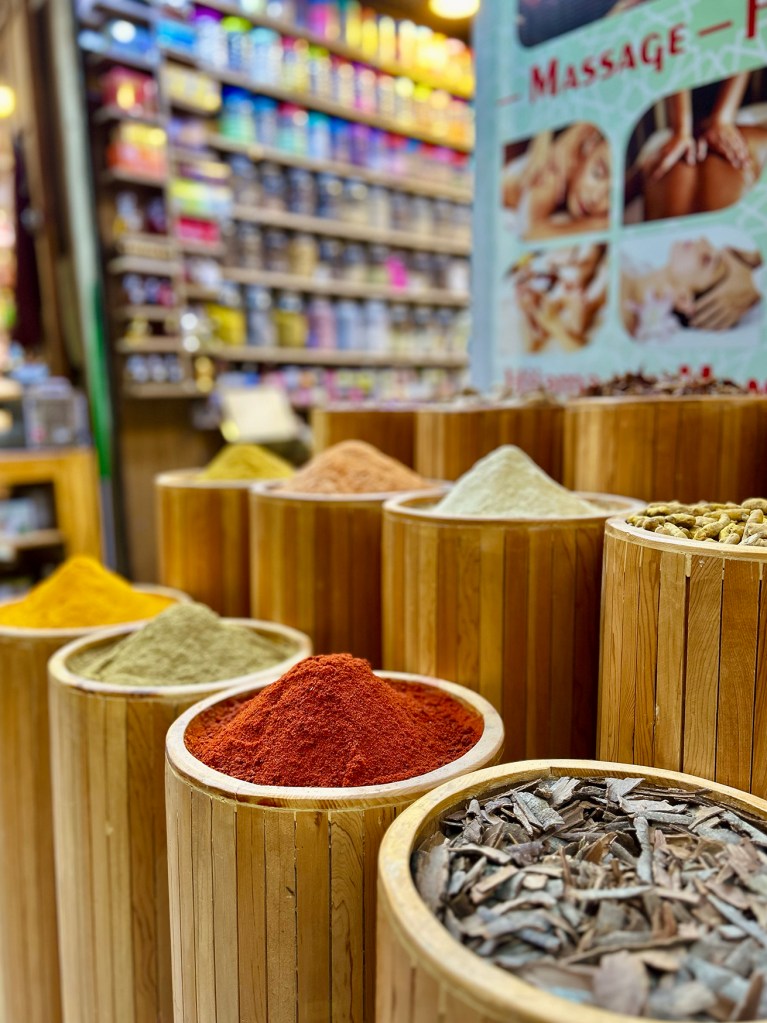
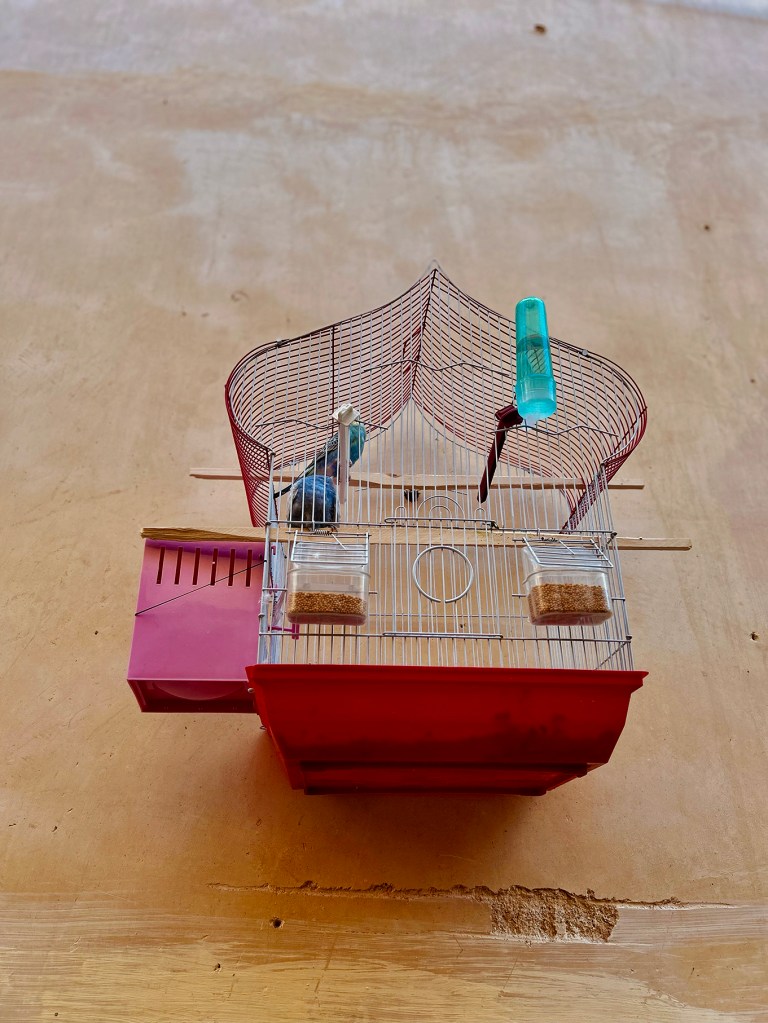
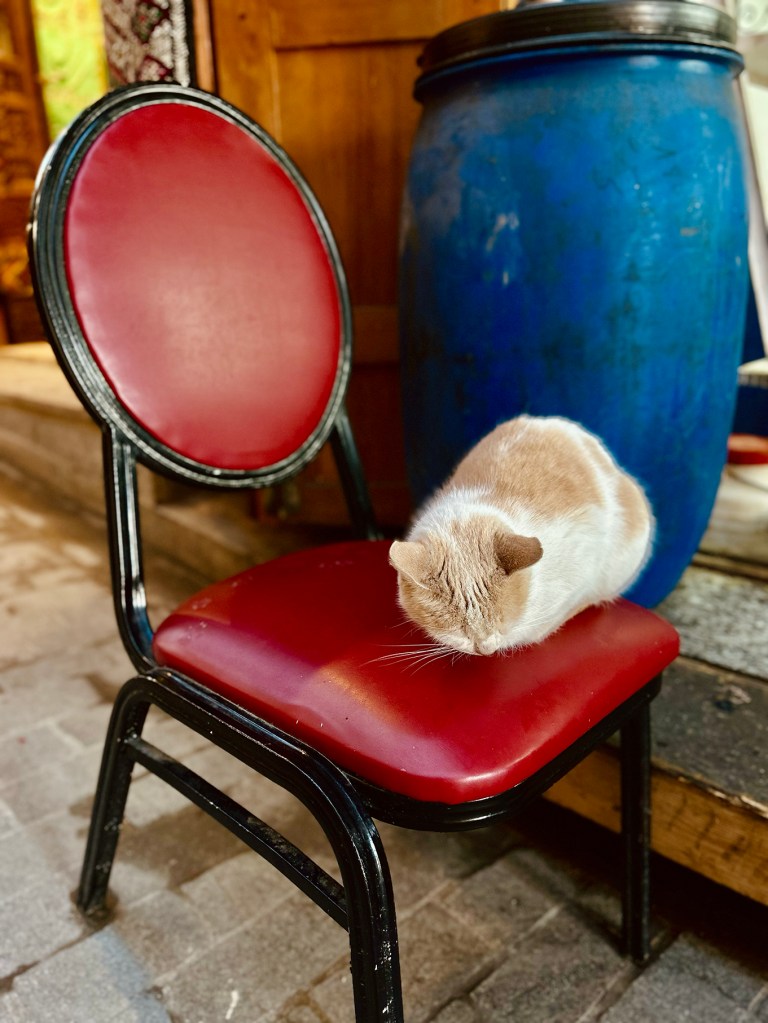
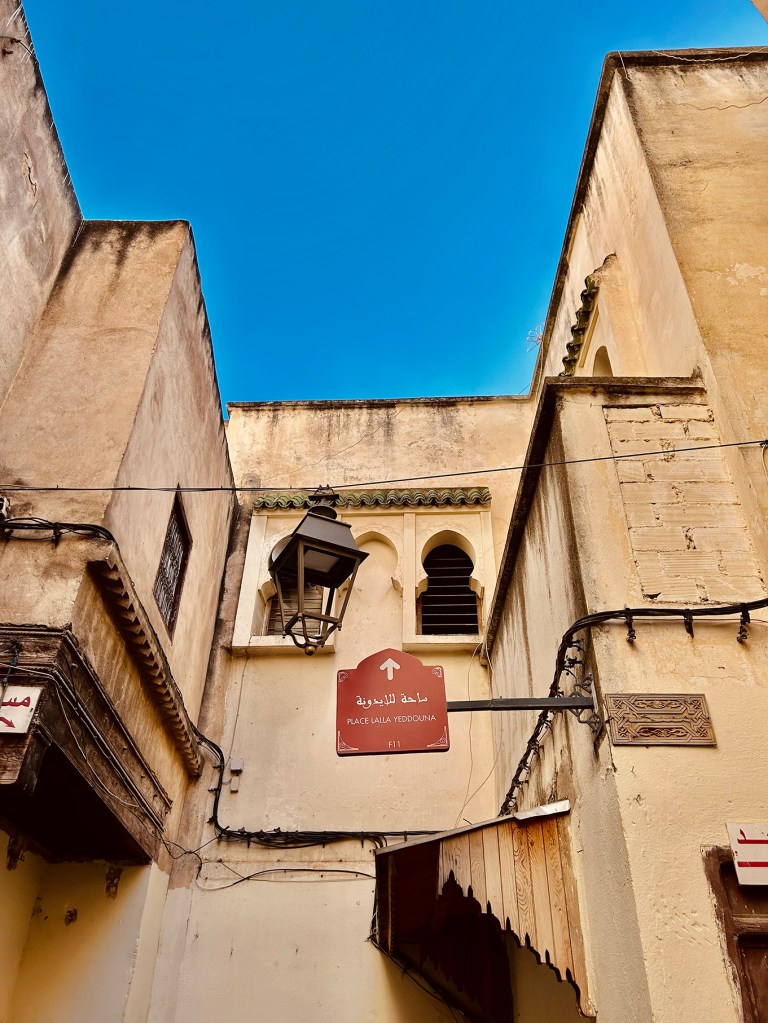
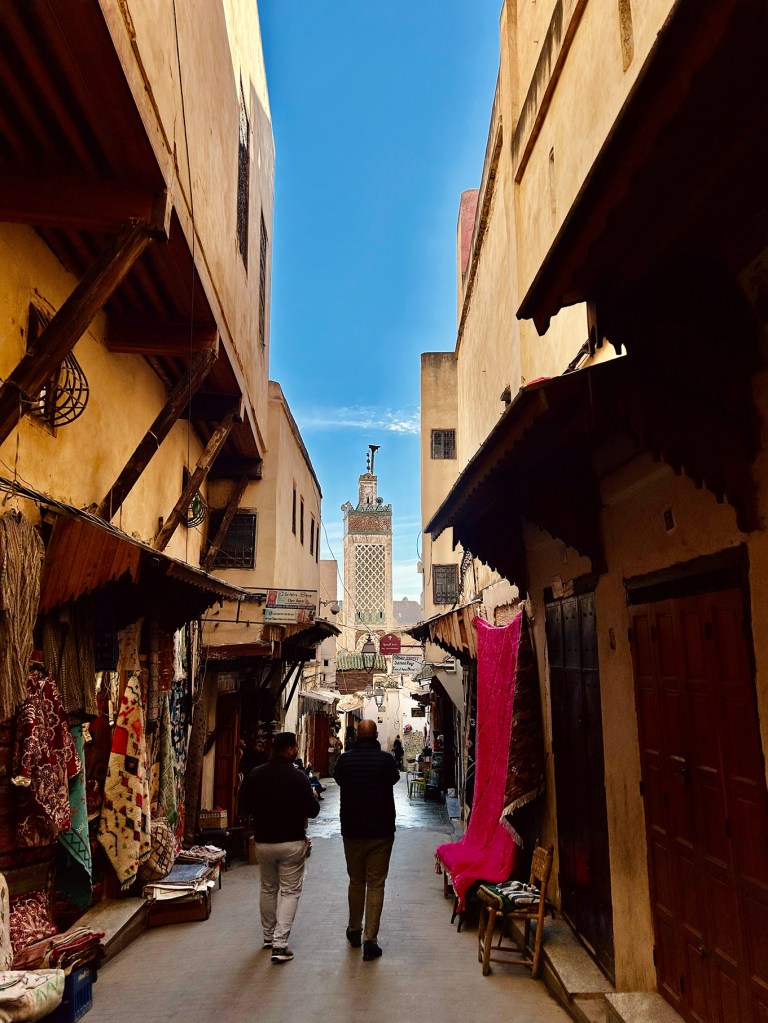
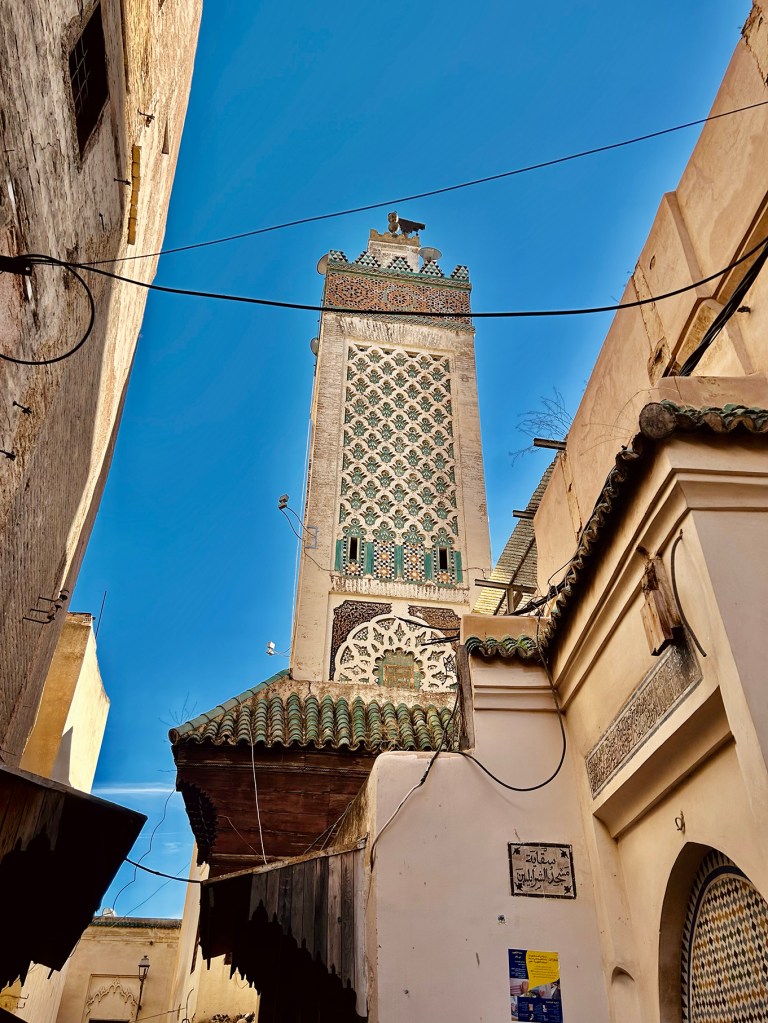
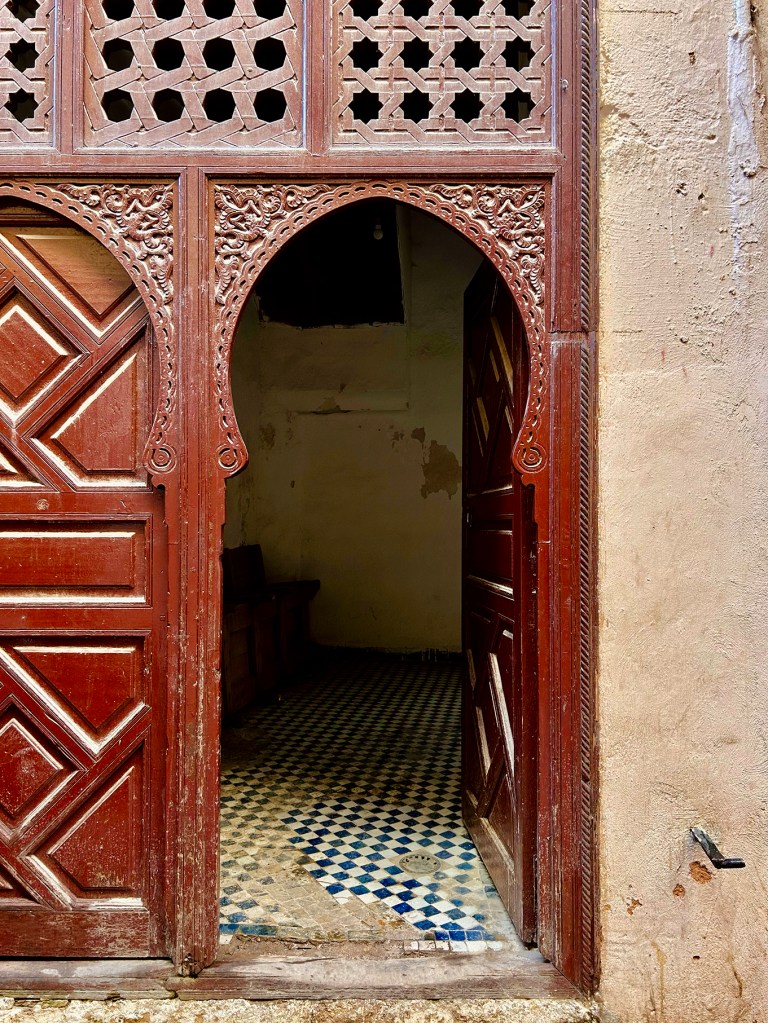
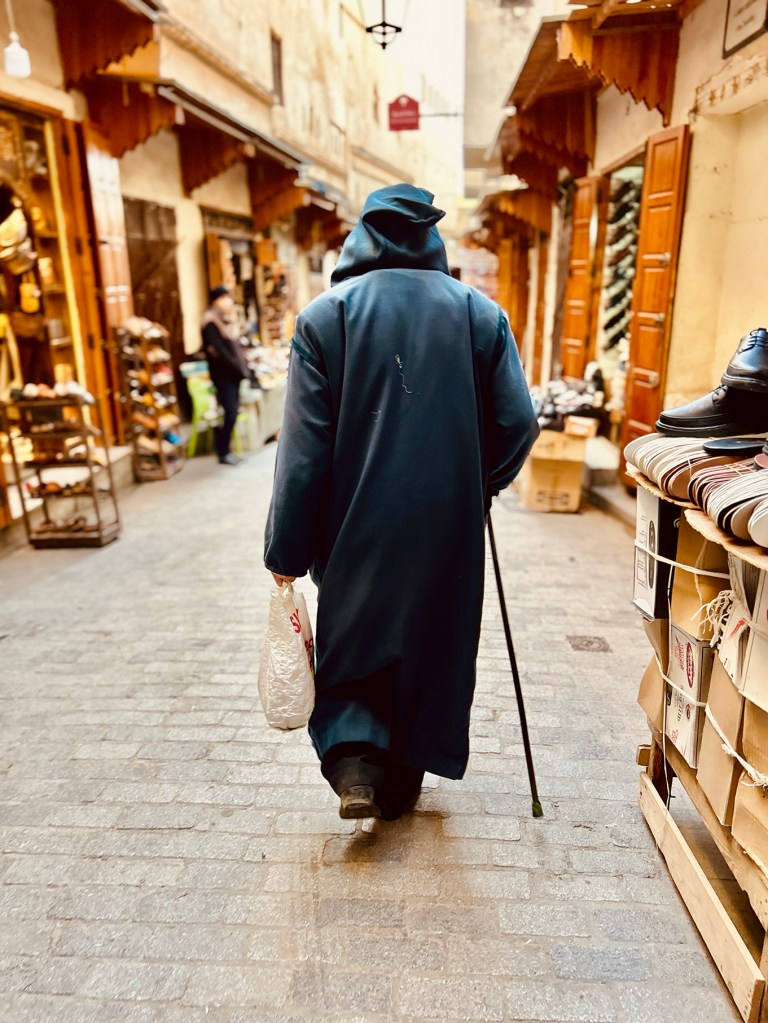
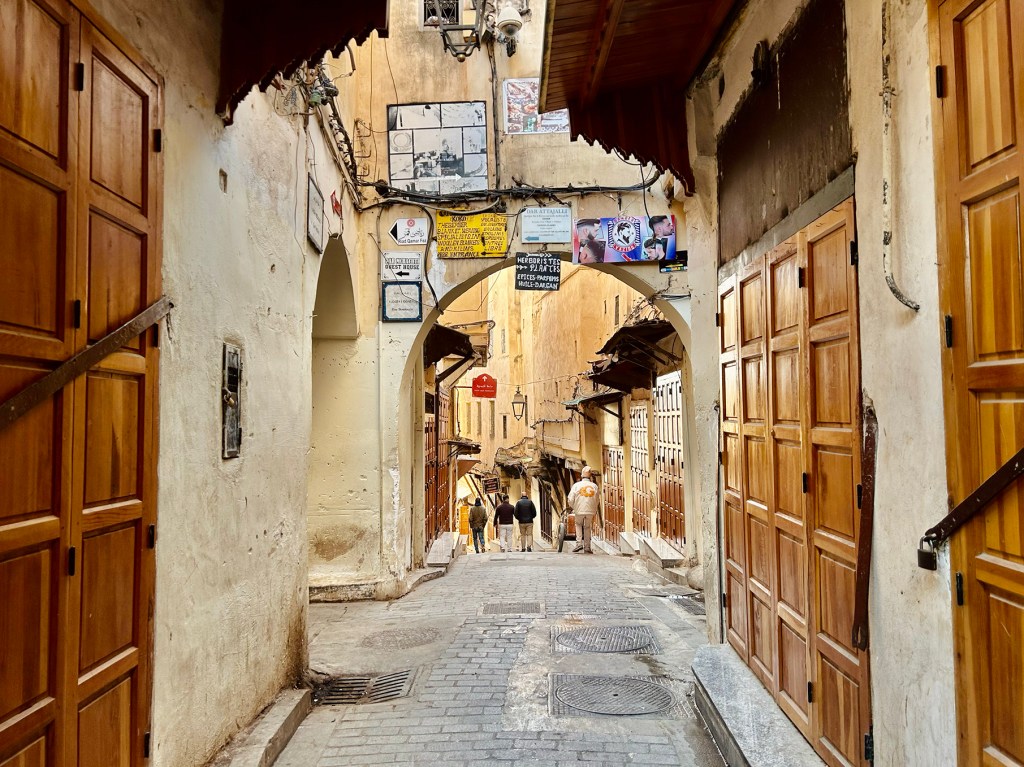
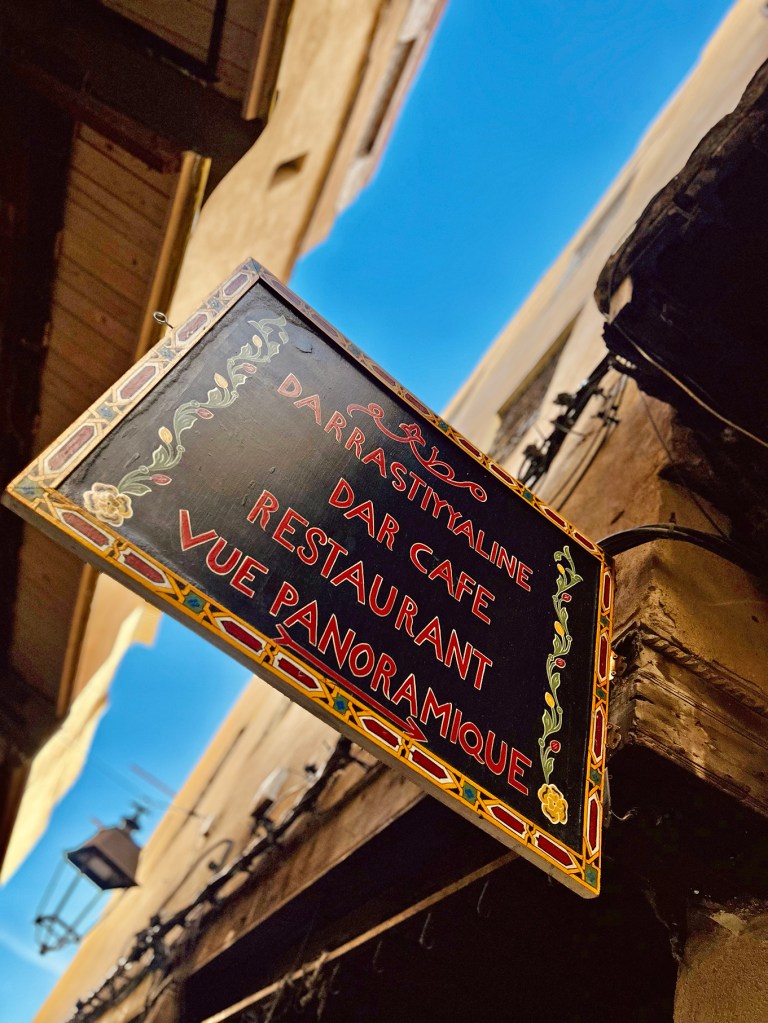
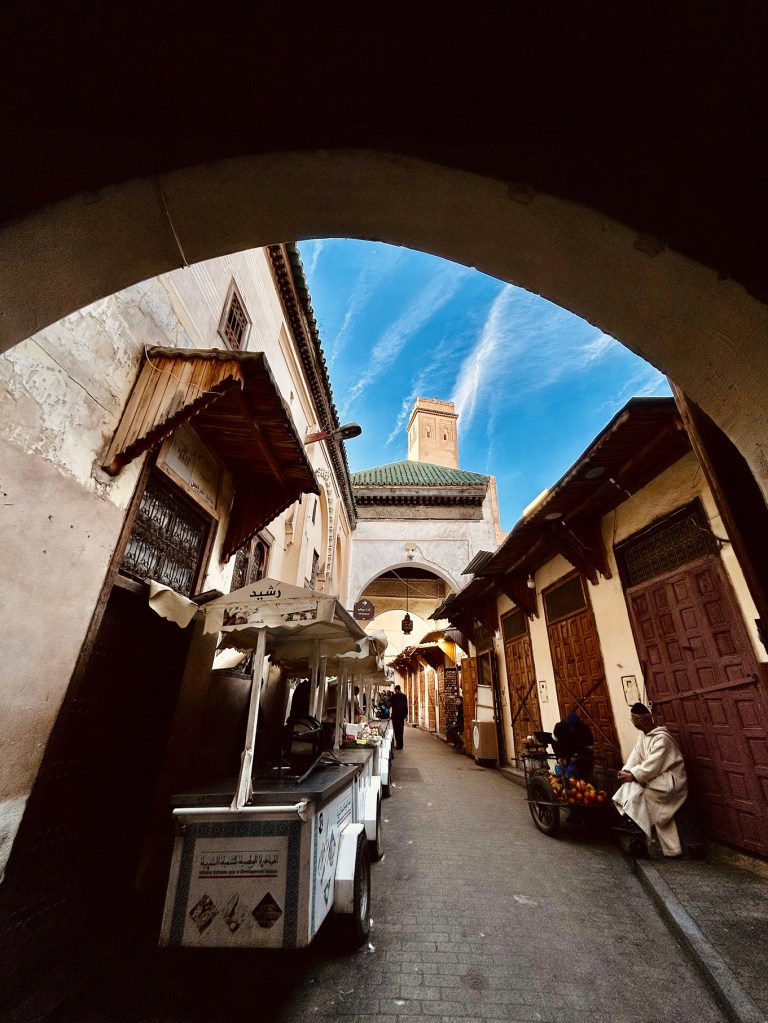
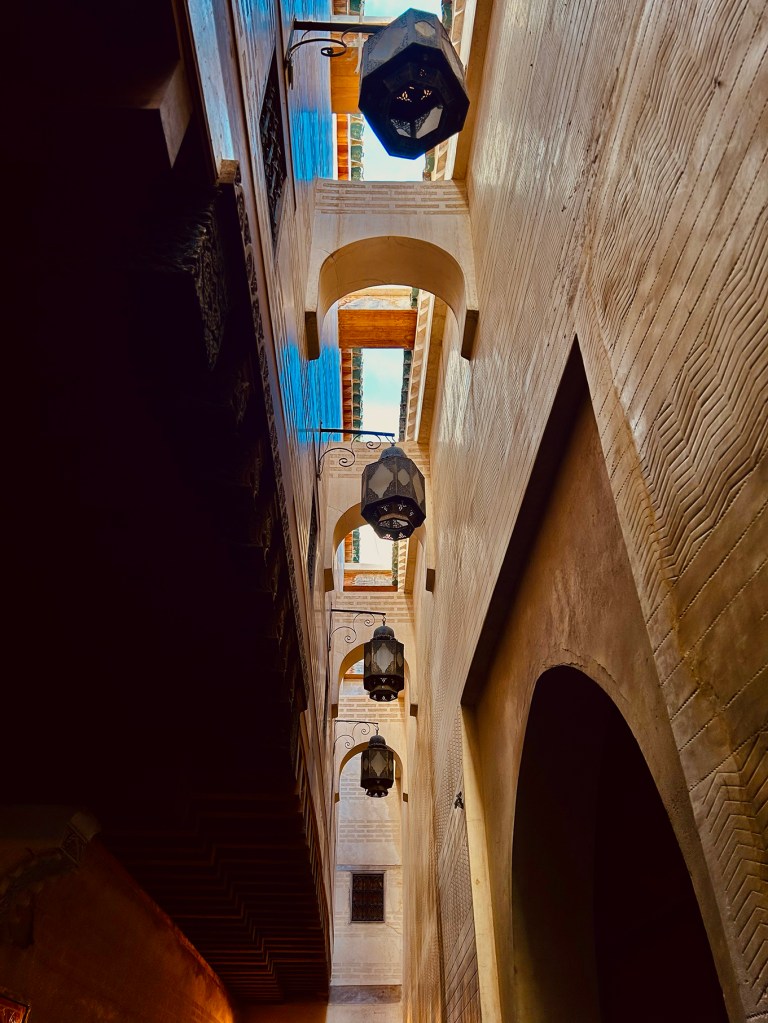
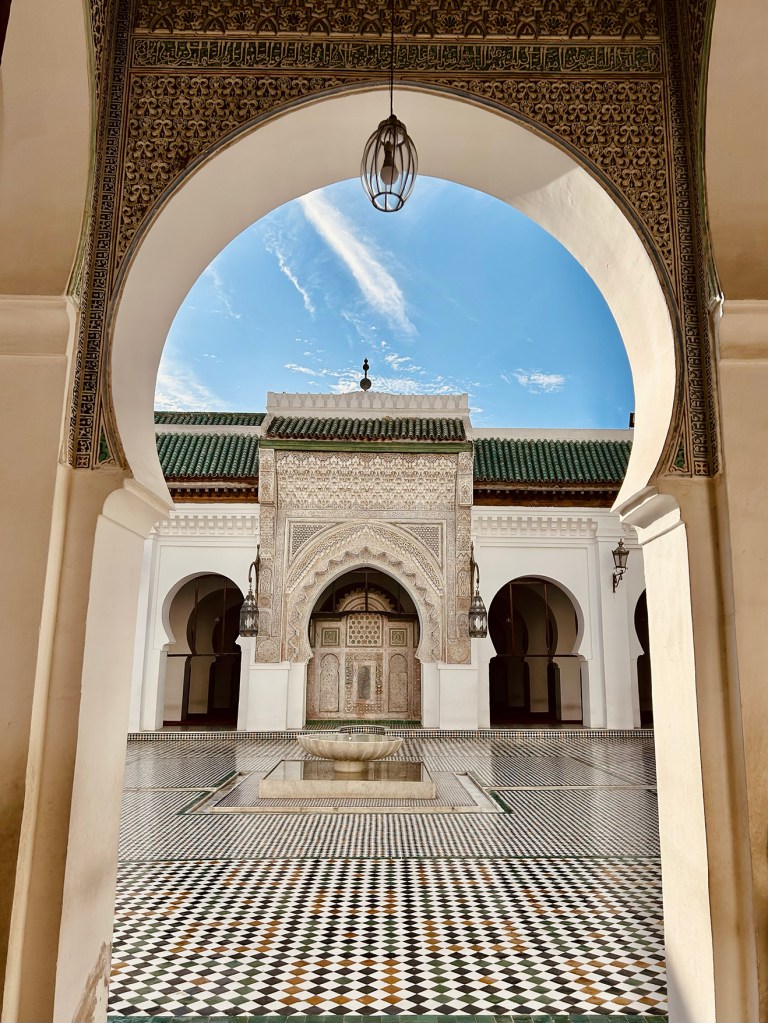
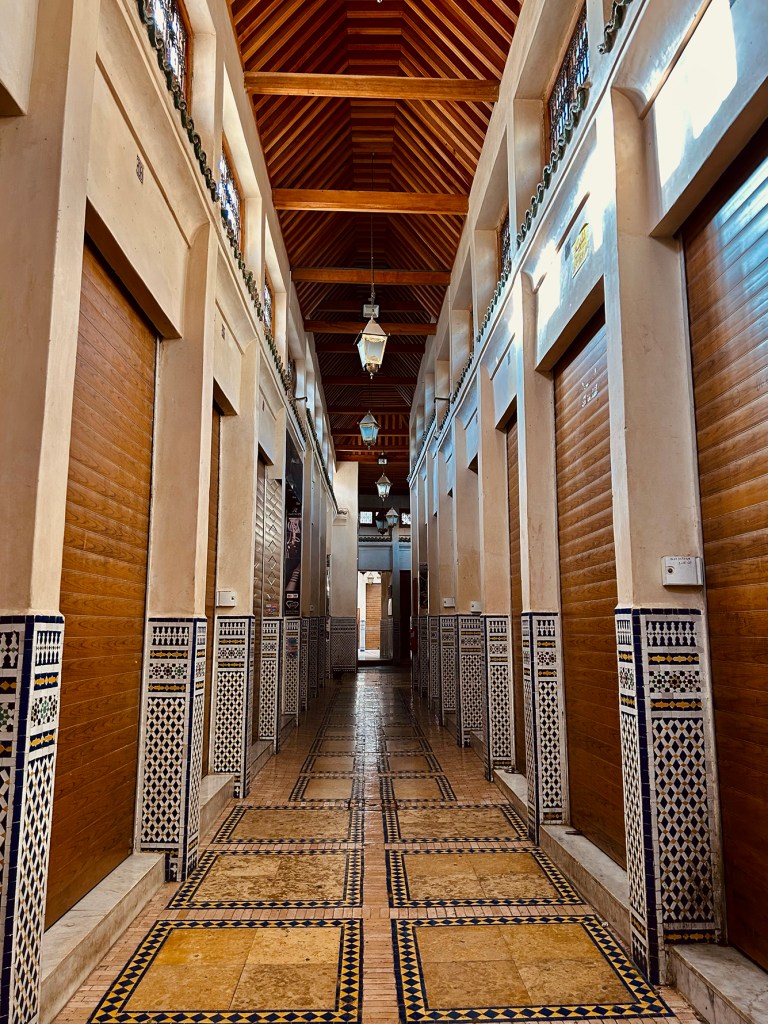
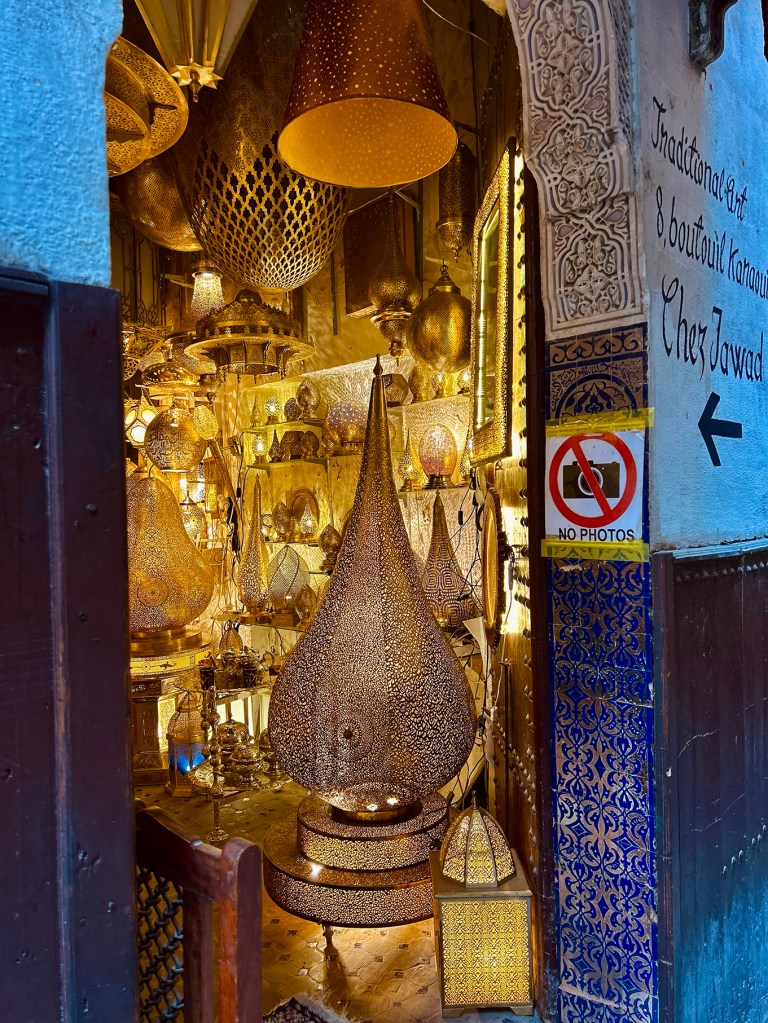
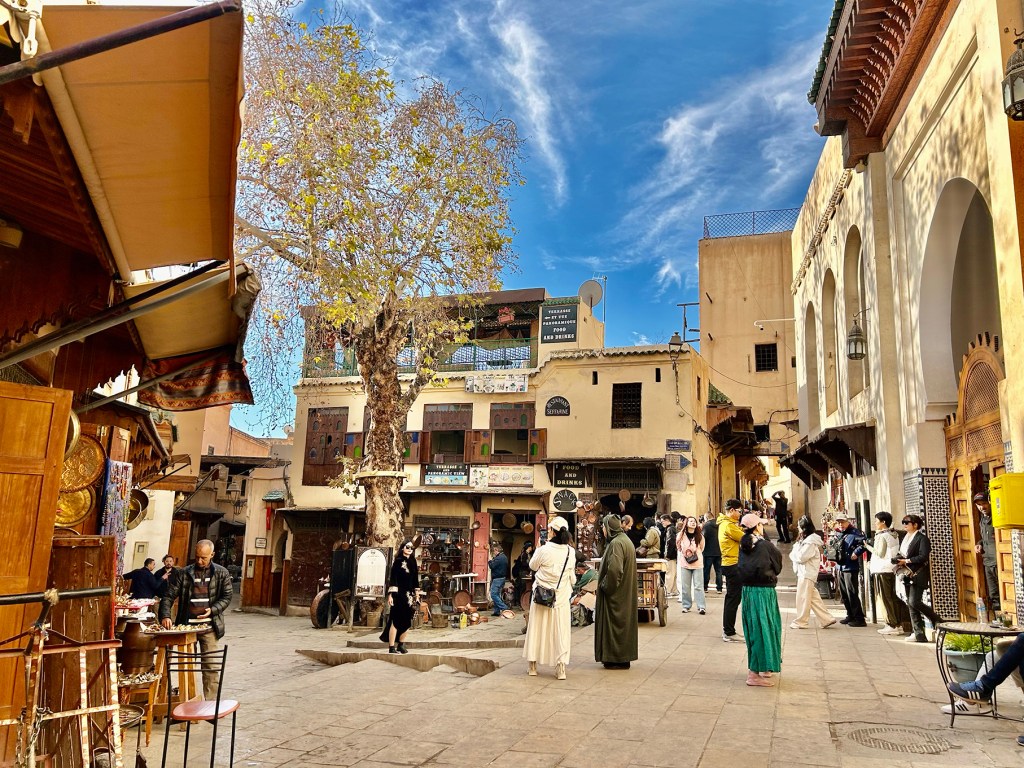

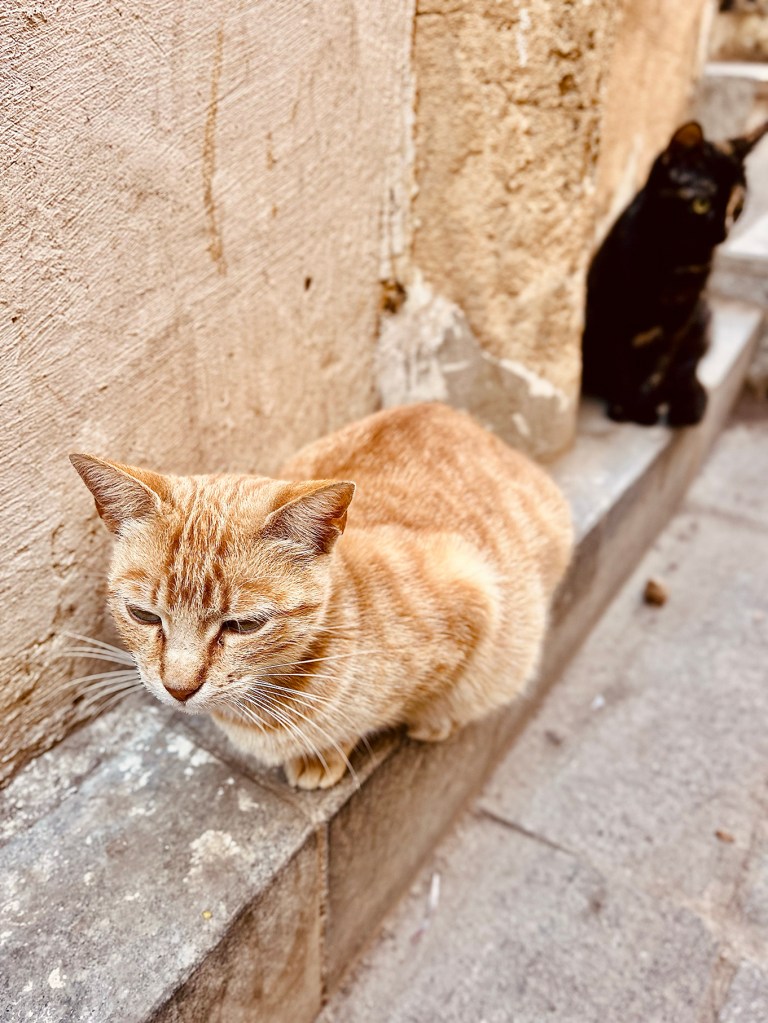
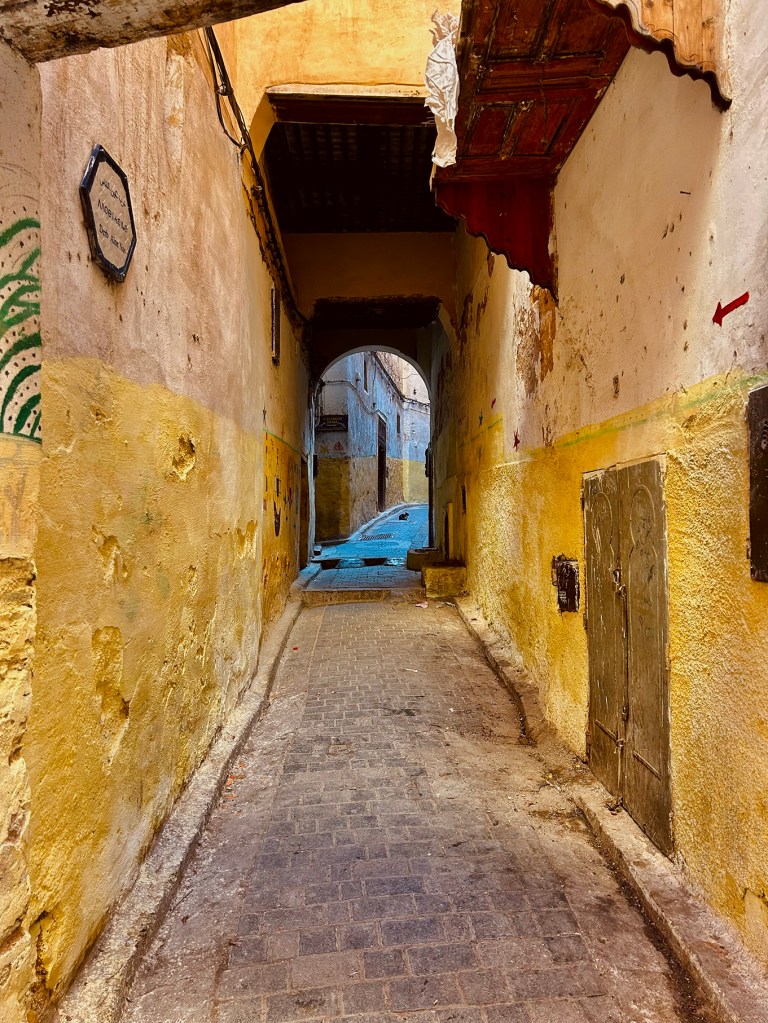
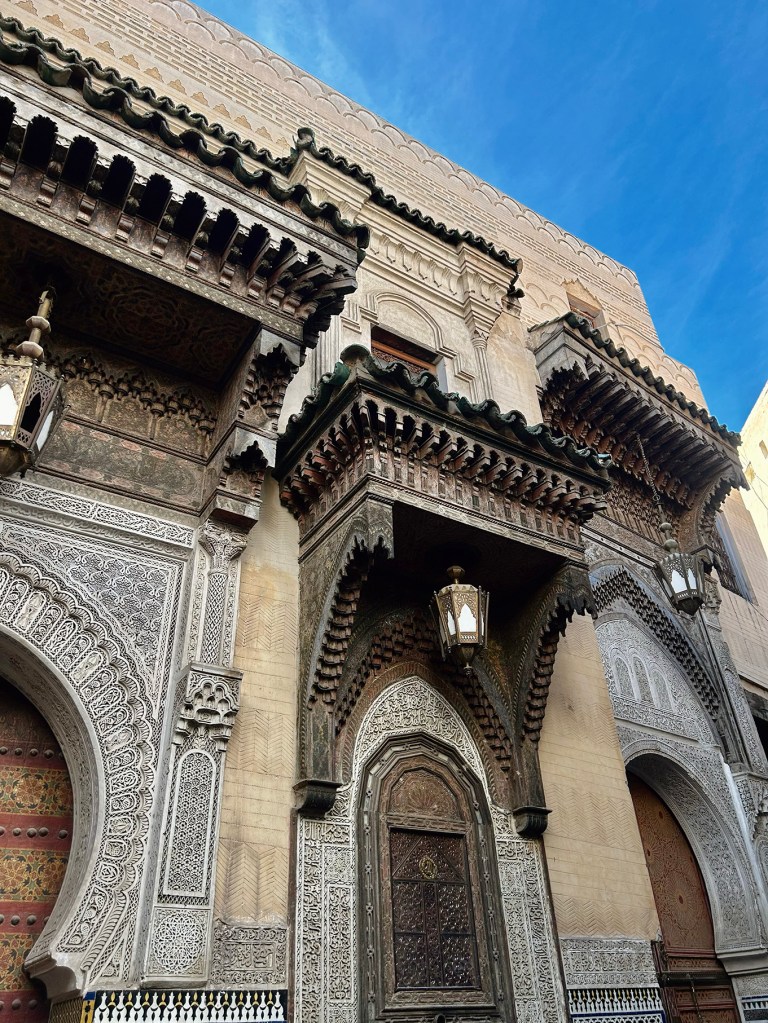


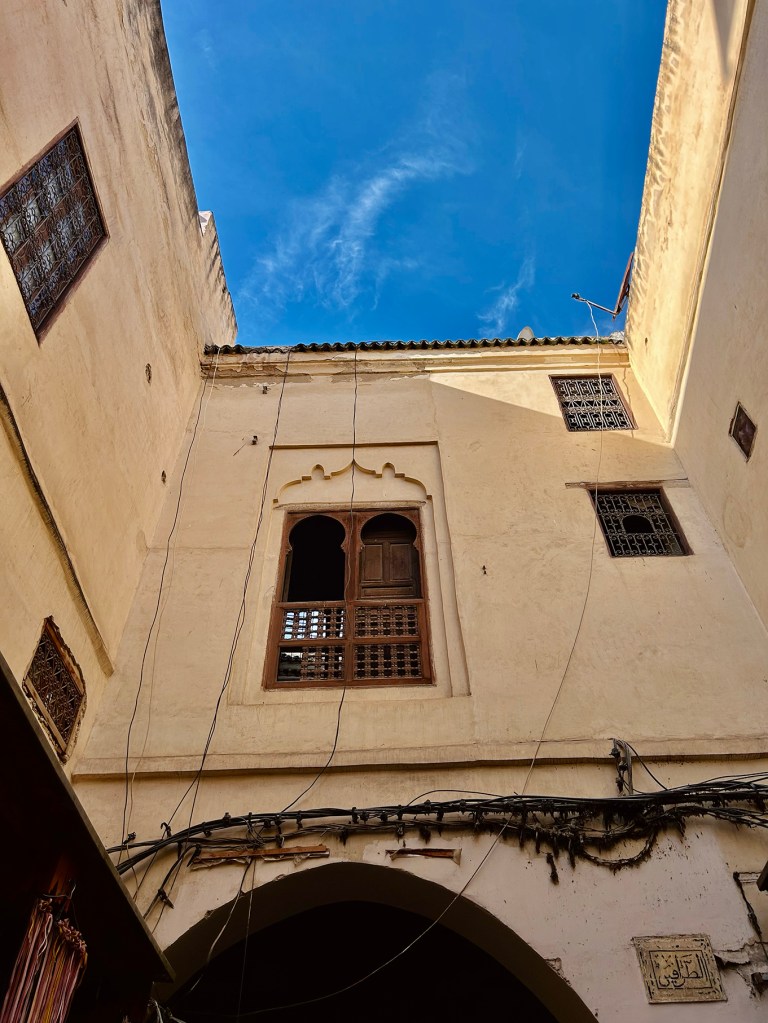
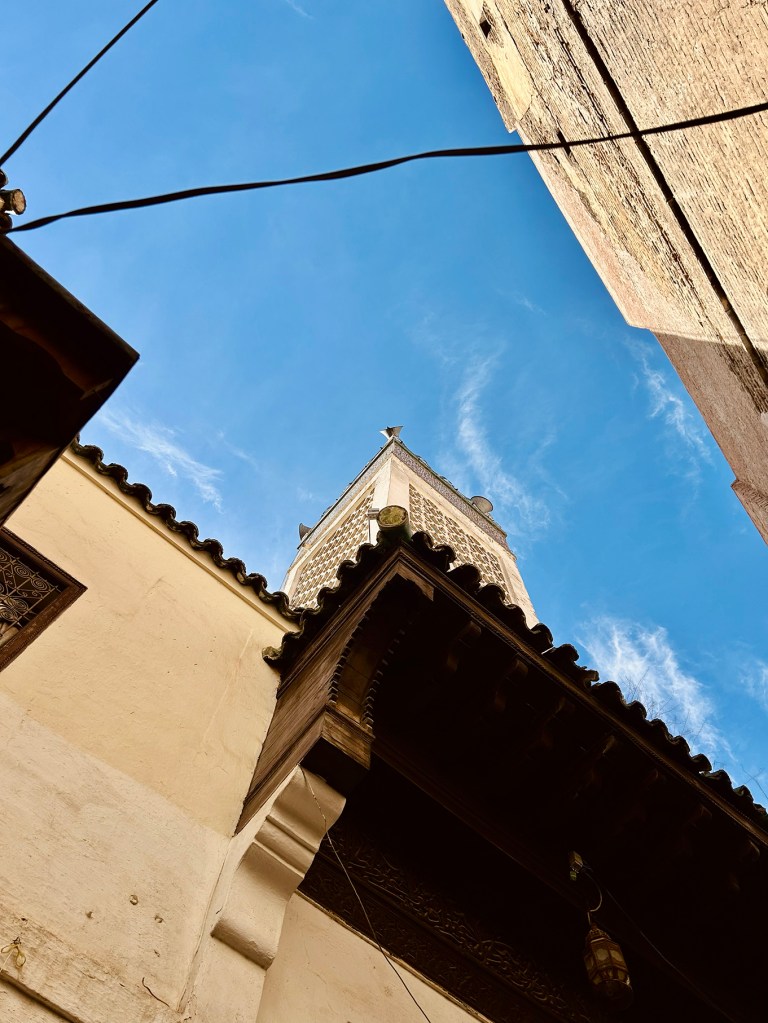


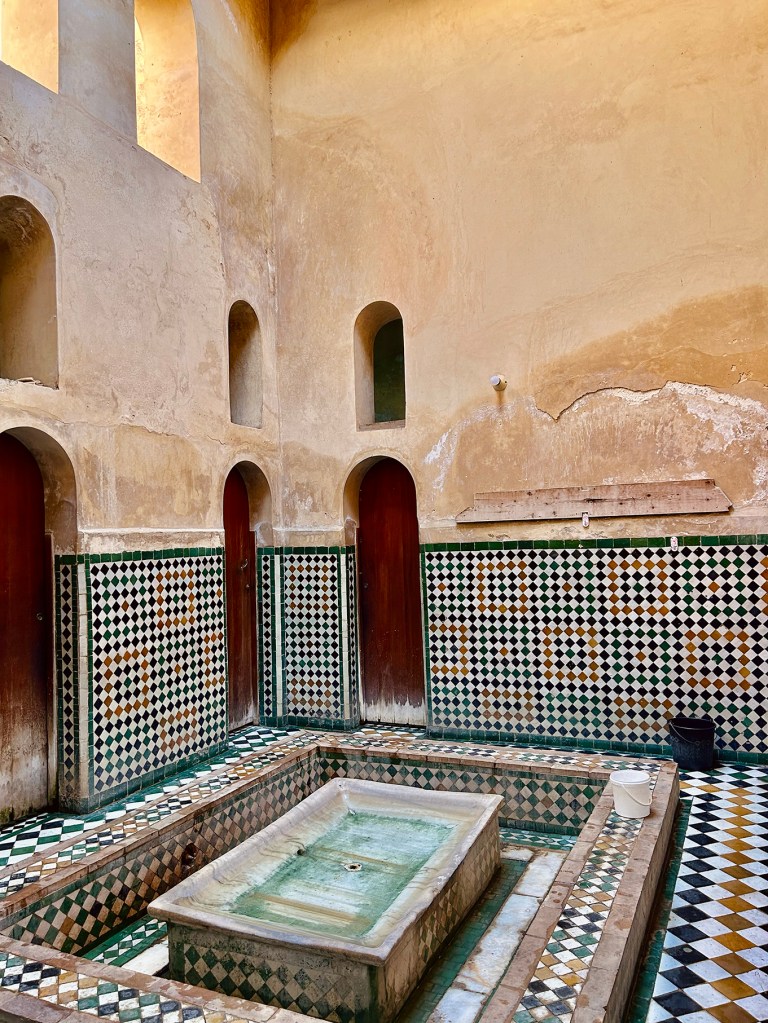
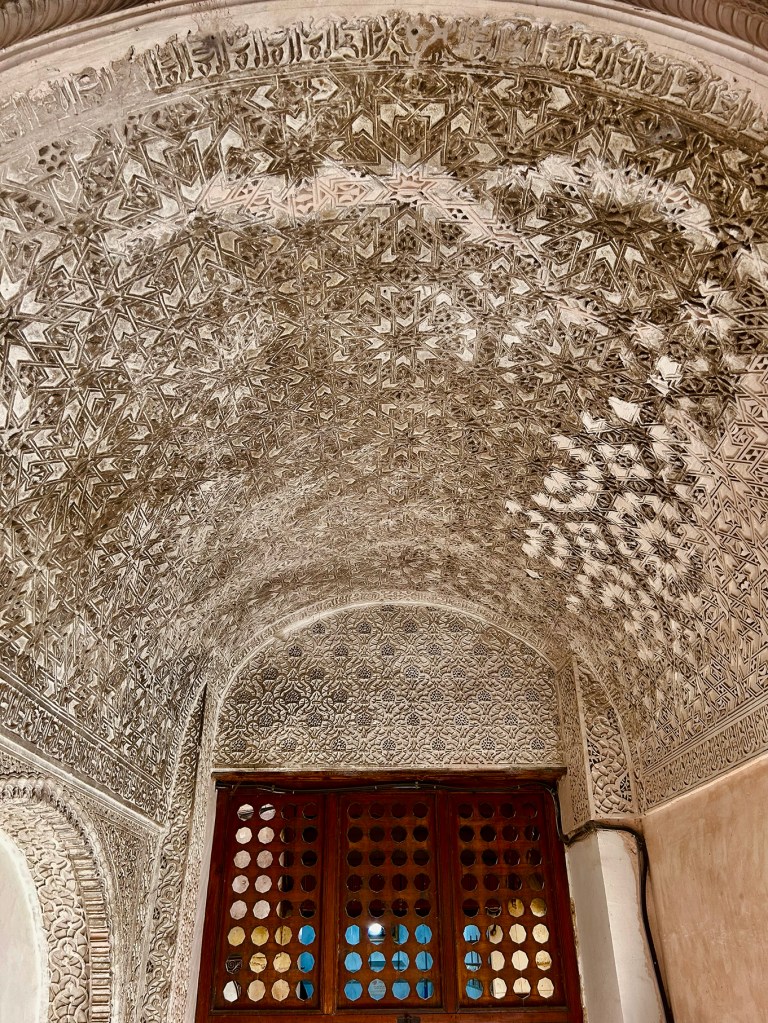
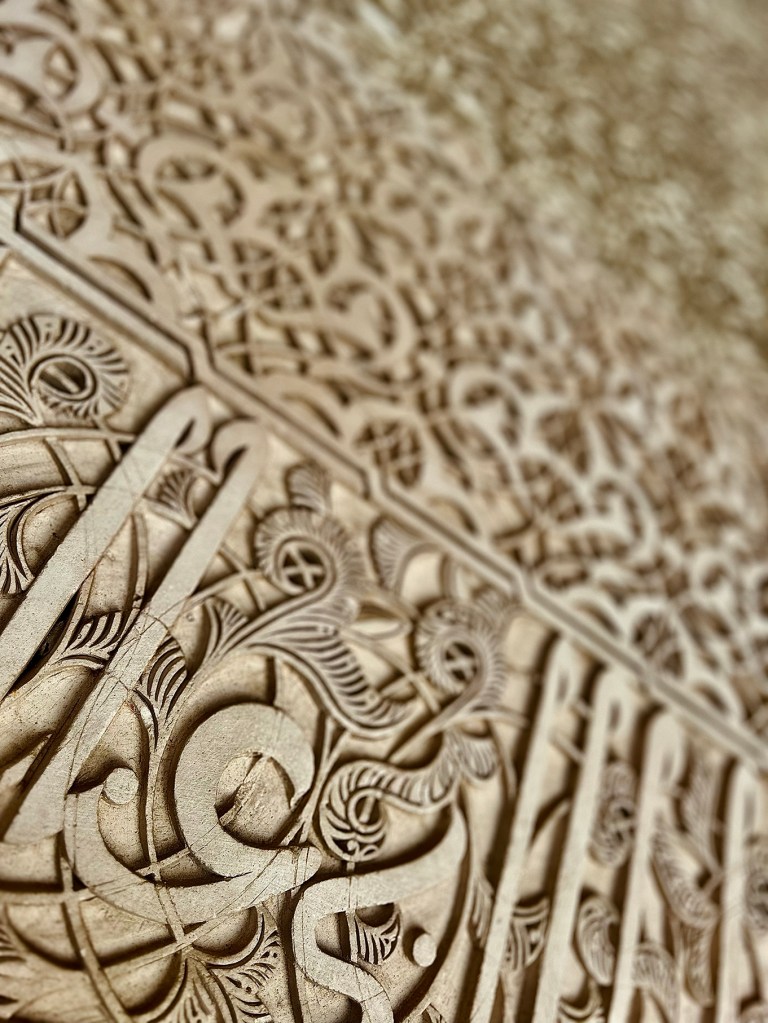
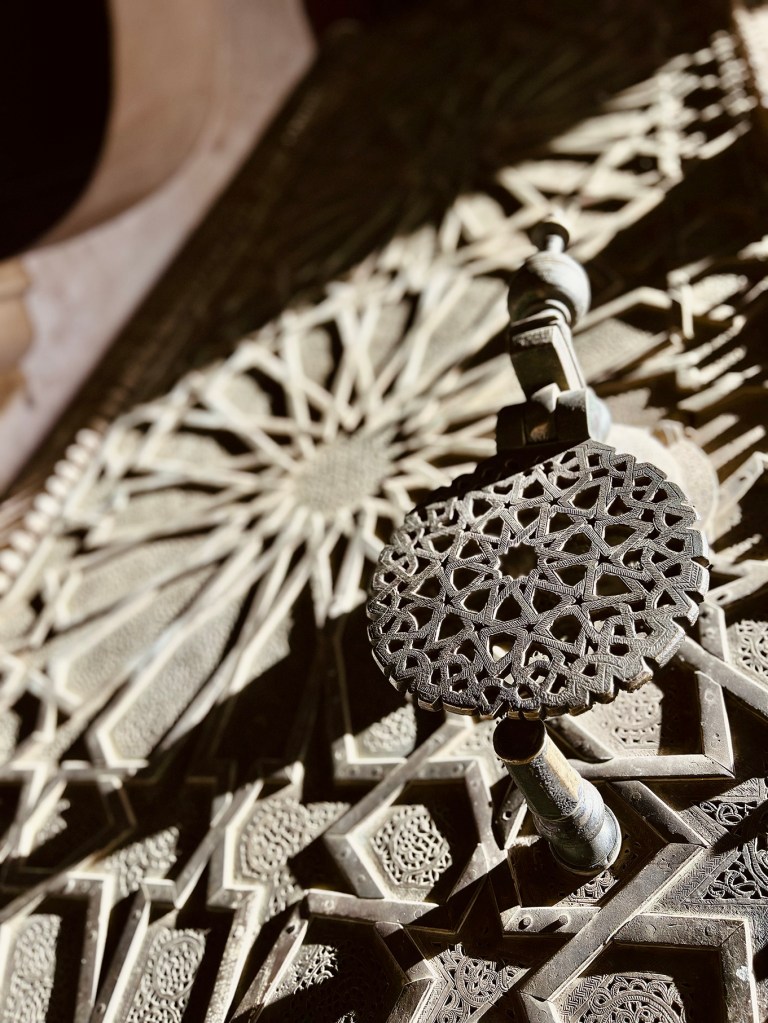
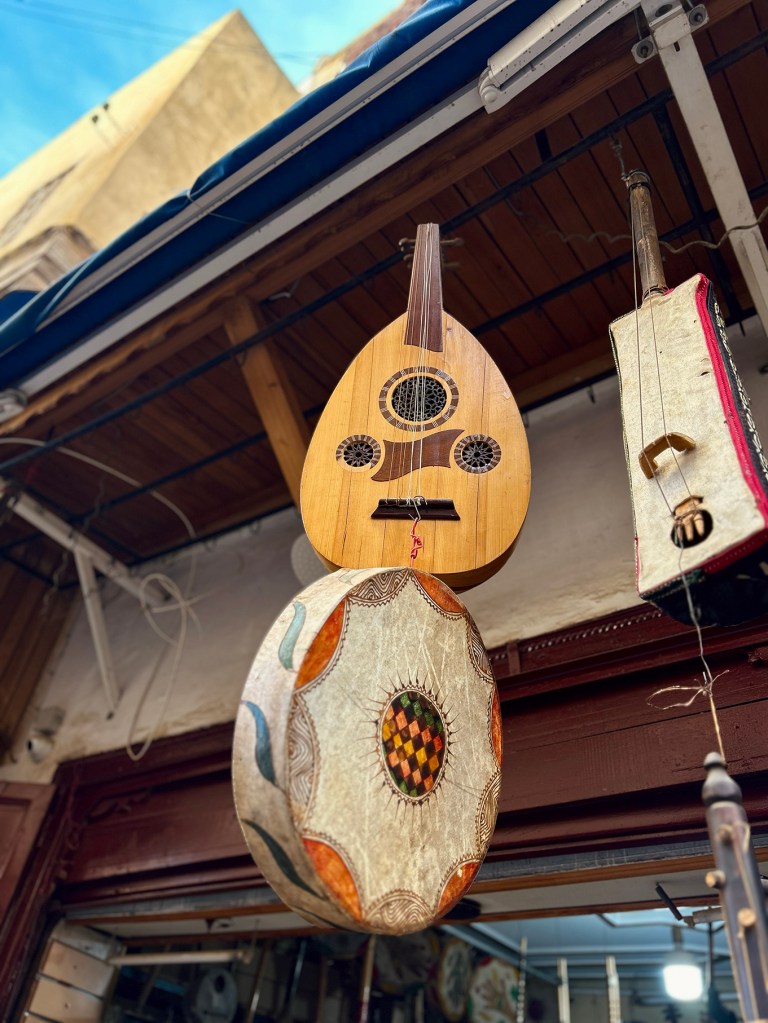
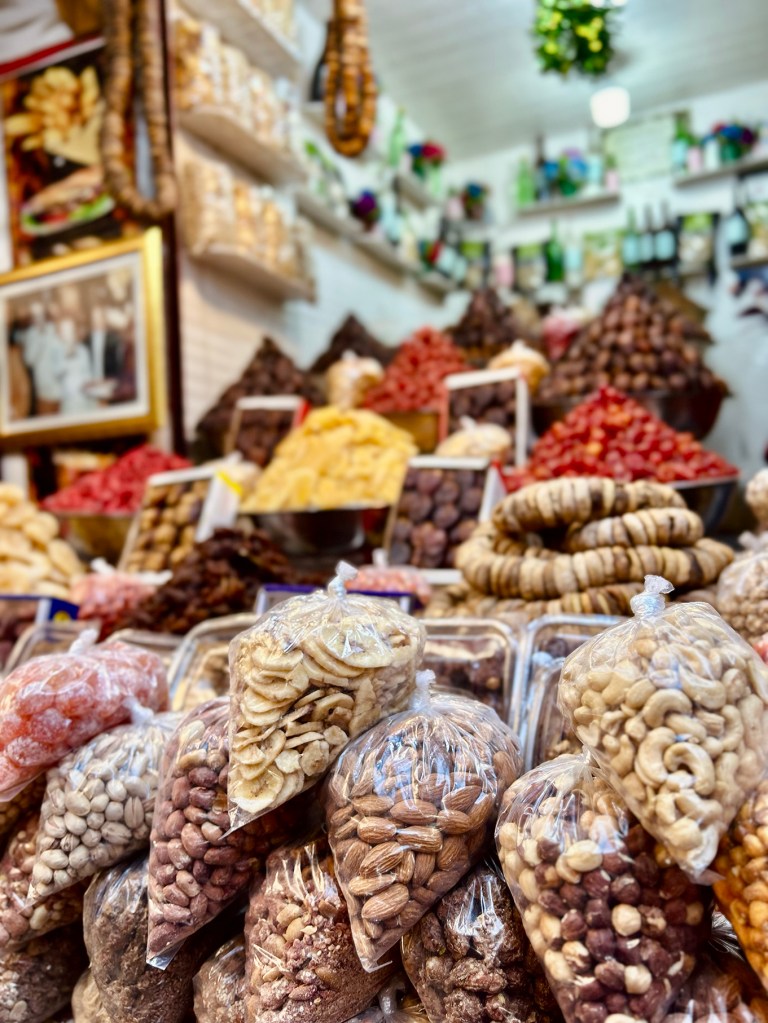
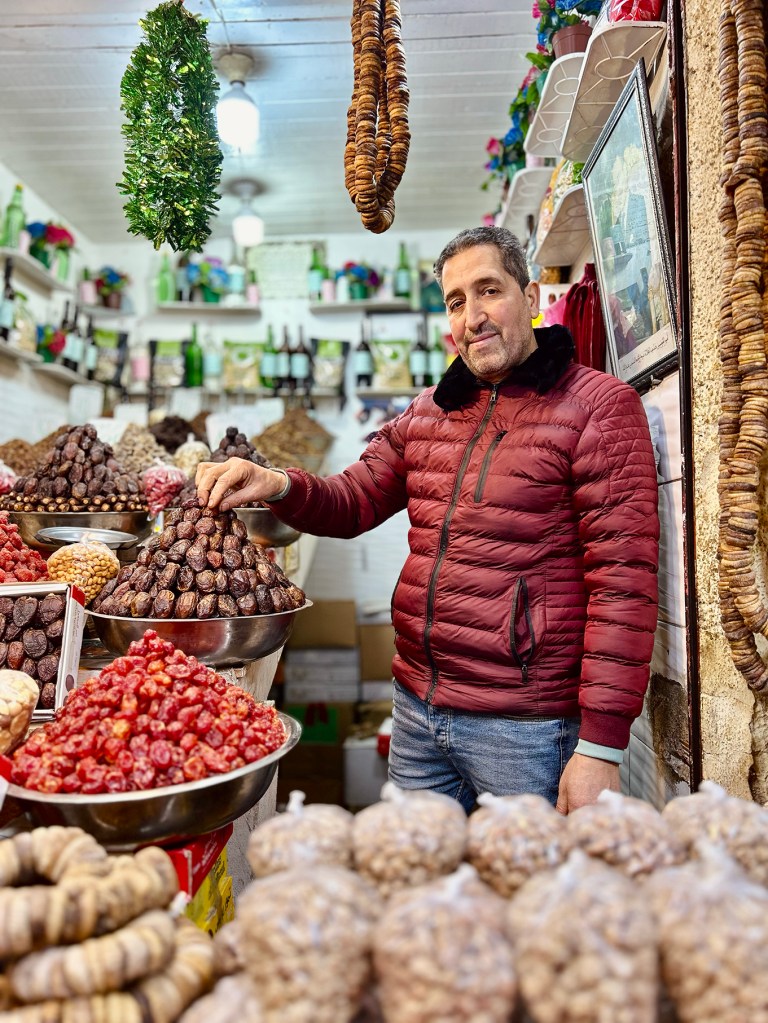
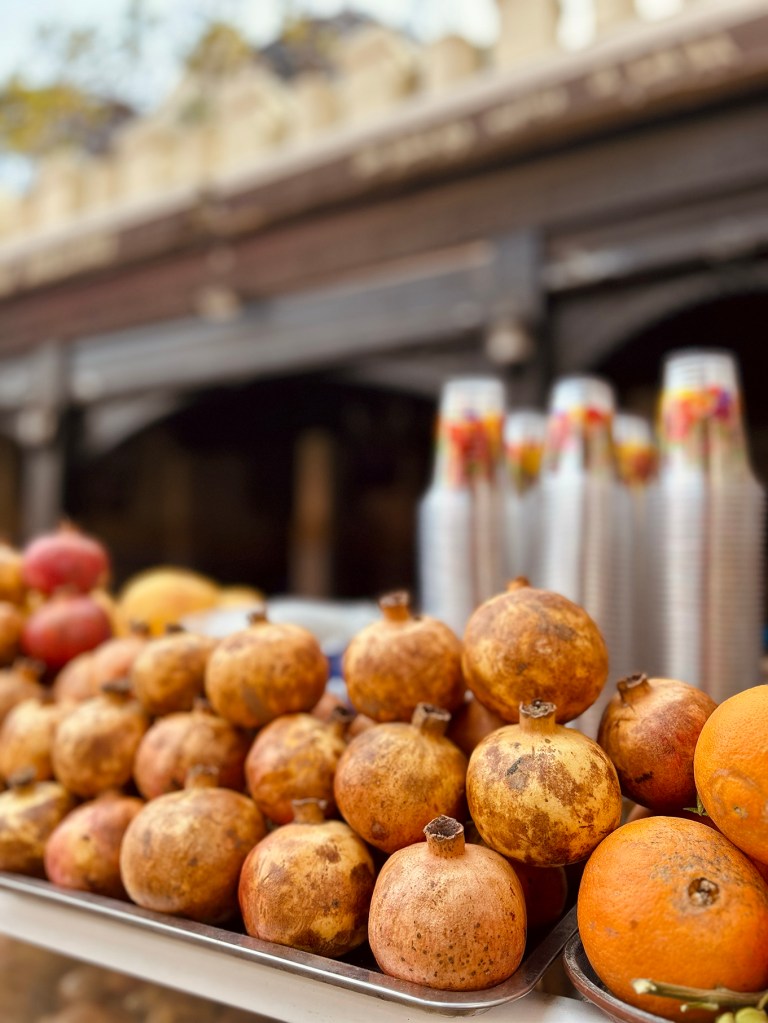
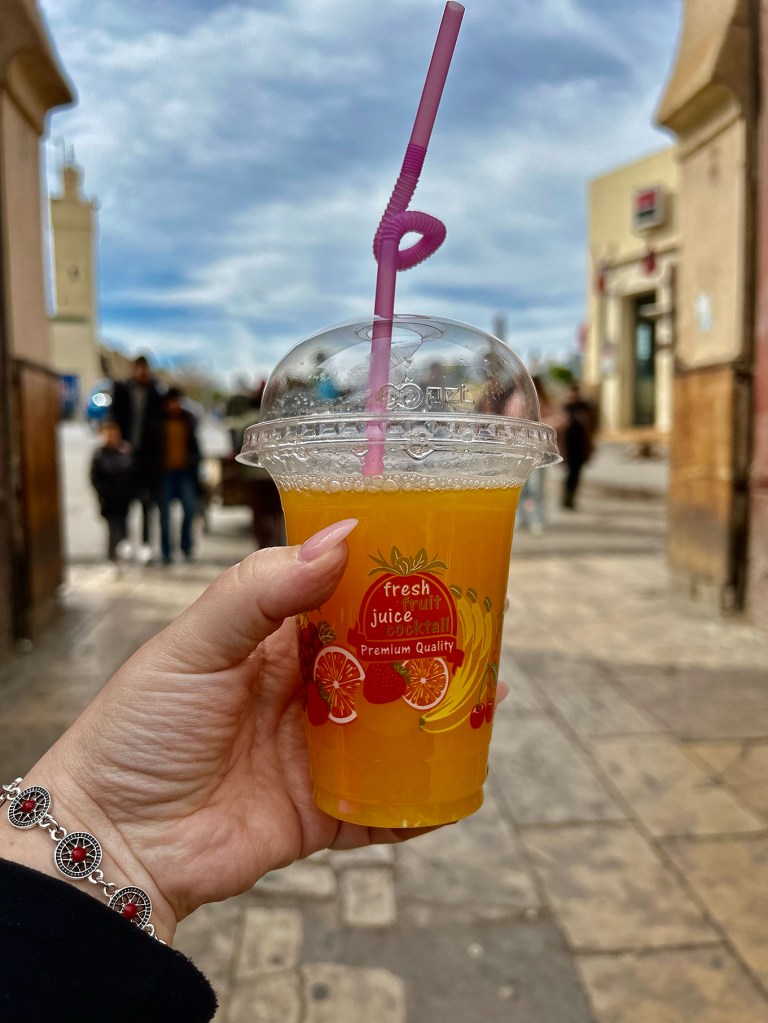
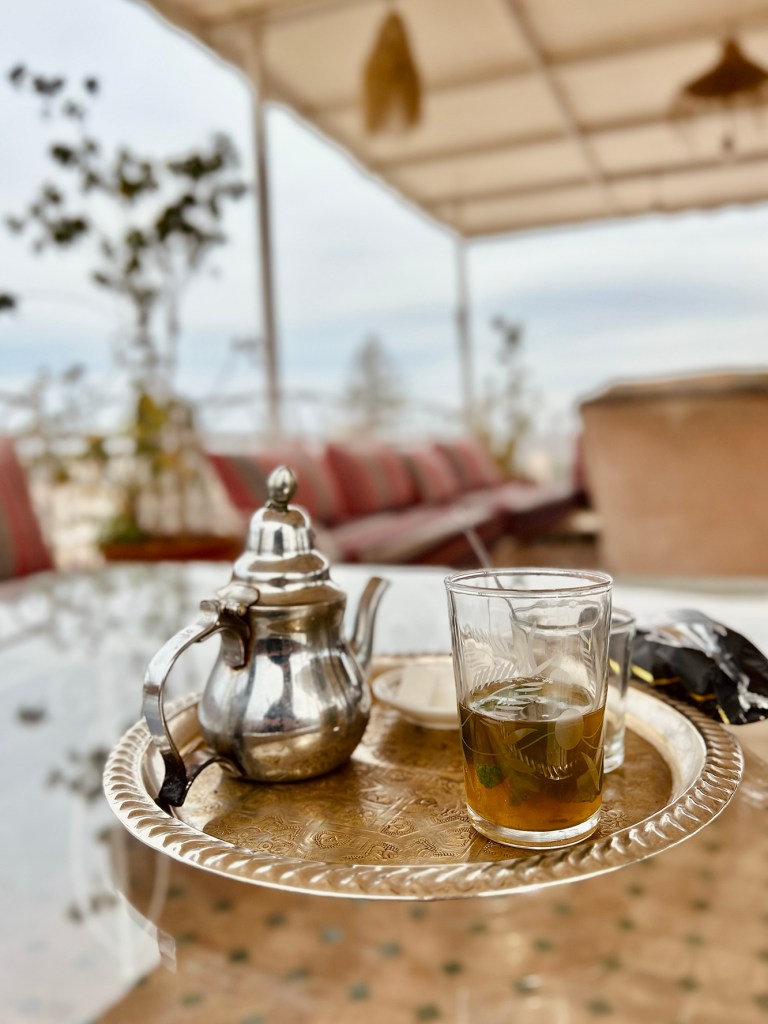
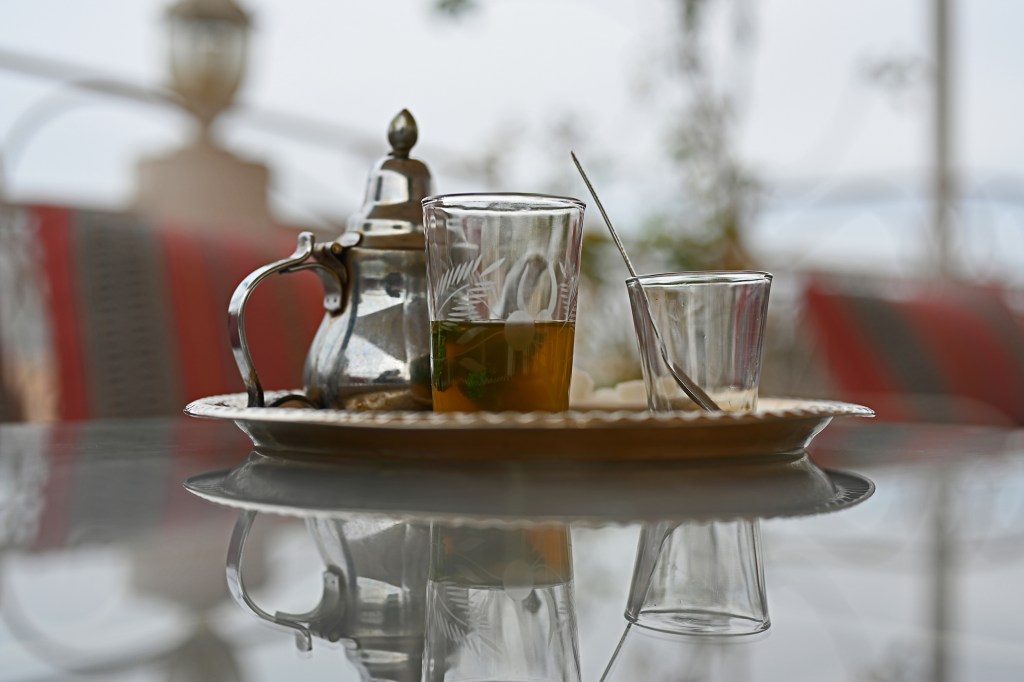
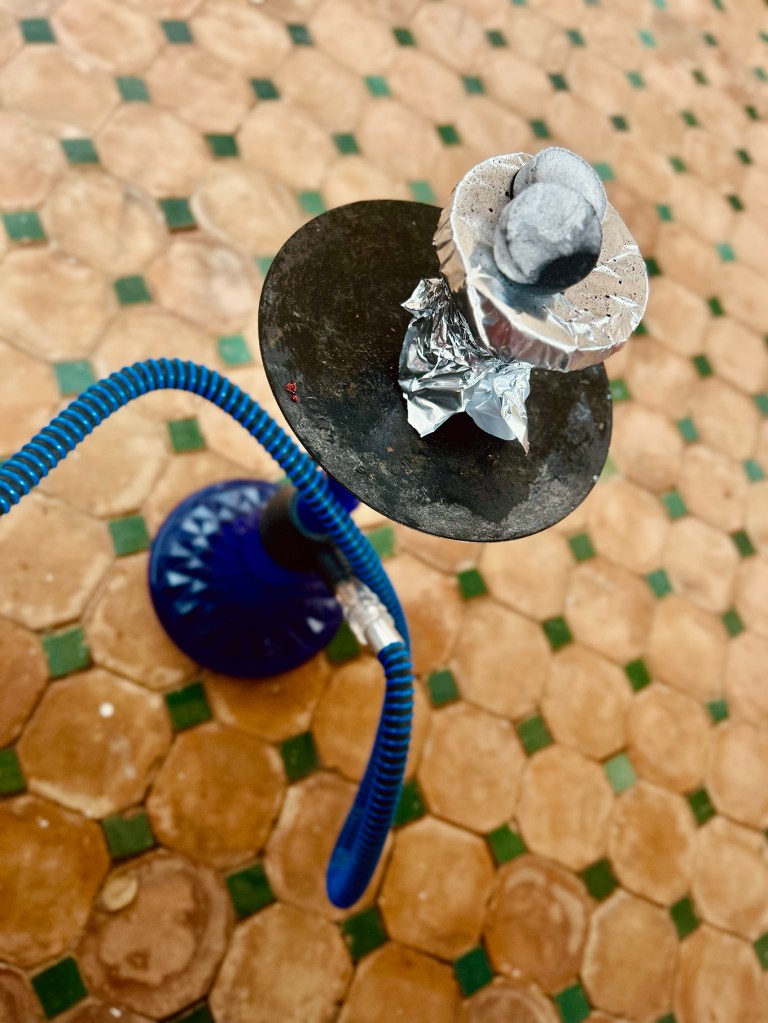
By late afternoon, the whole medina becomes even more golden – before the call to prayer startles you and reminds you to pick up your jaw from the ground. There’s fruit everywhere and you can get a glass of freshly pressed juice. And there’s no walk without a glass of mint tea somewhere, just for a short break. And if the sight of the Royal Palace finally overwhelms you, you even have time to quickly retreat and freshen up at the riad, with yet another glass of tea and a shisha on the rooftop terrace.
I had read about a restaurant called The Ruined Garden but hadn’t really decided on where to have my last dinner in Fes. Then what do you know, just walking around in the early evening – I found it, very close to my riad. Needless to say a delicious kefta tajine was the solution to any and every problem, in the company of Mimi, a cheeky kitten in the garden.
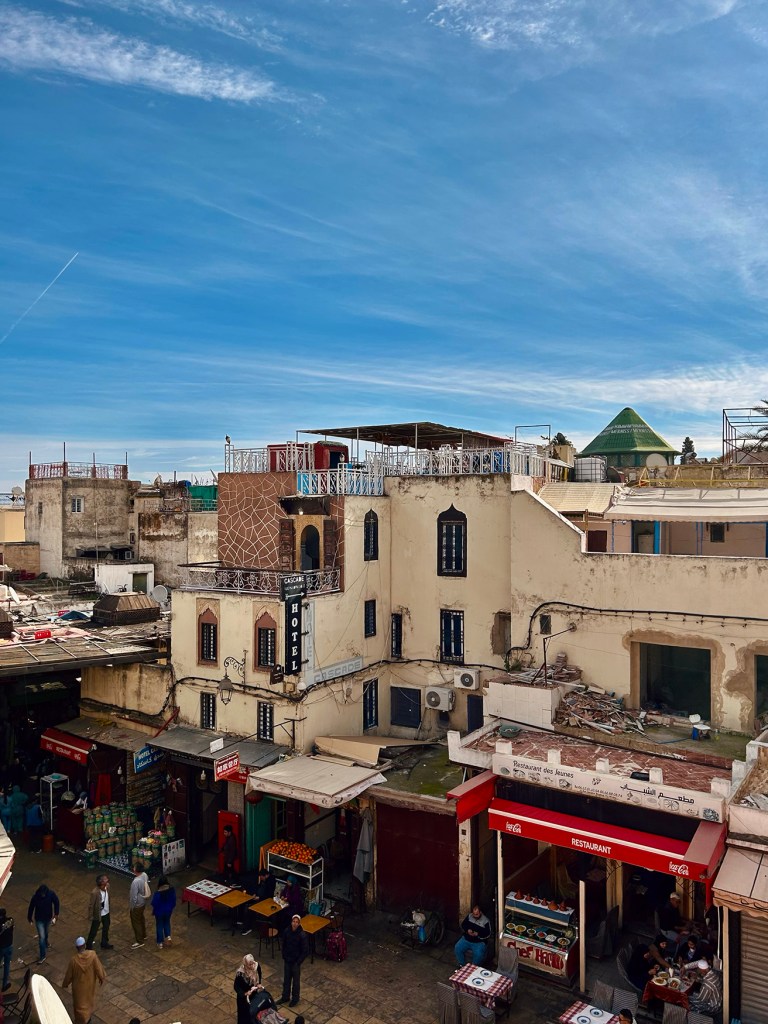
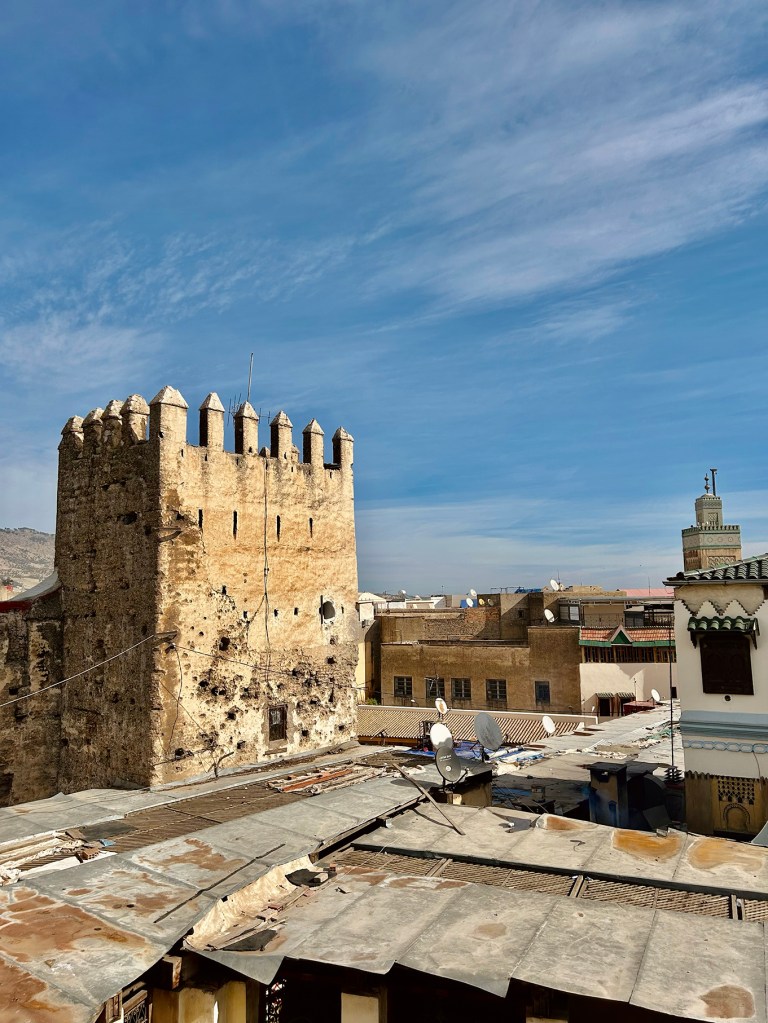
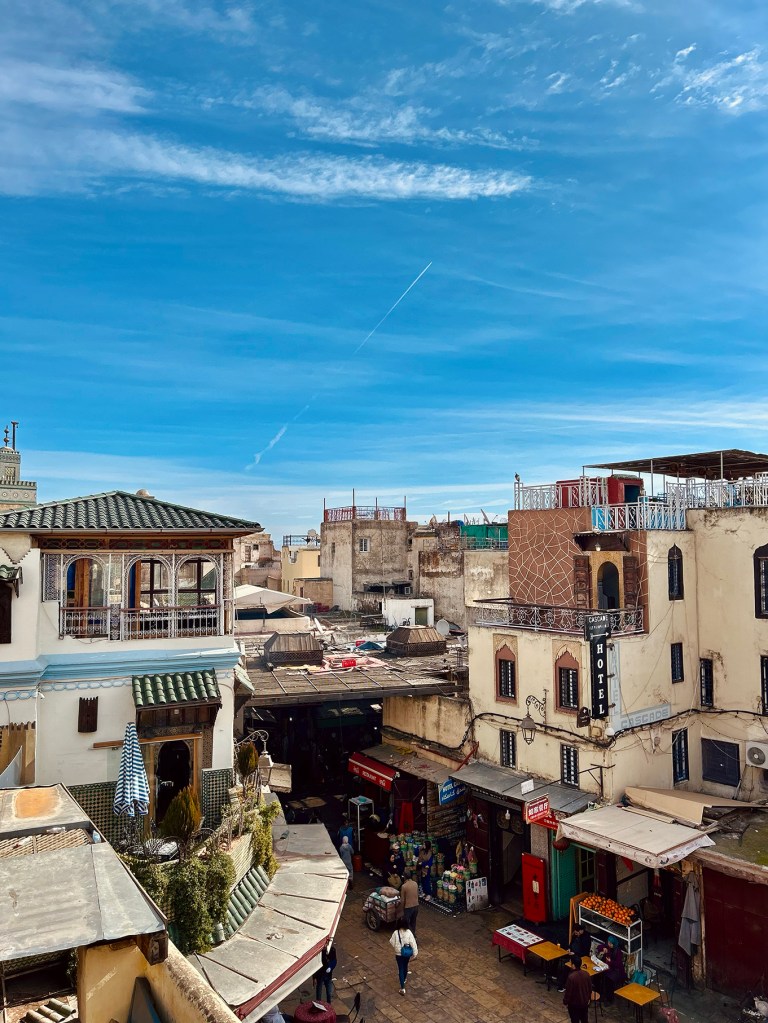
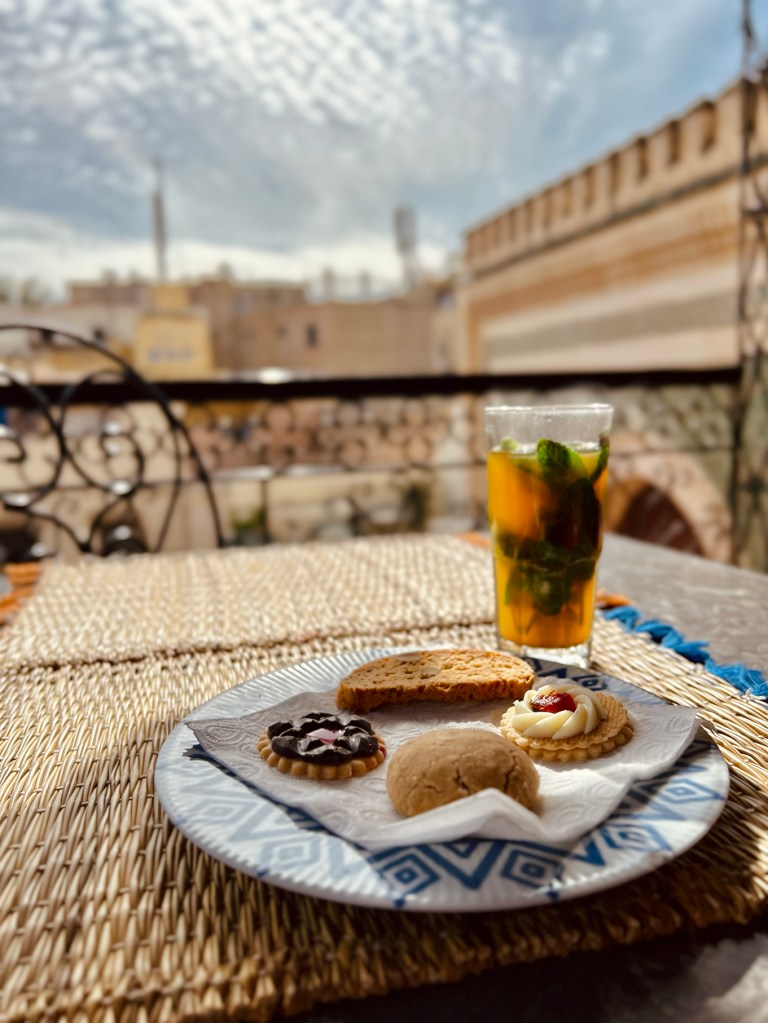
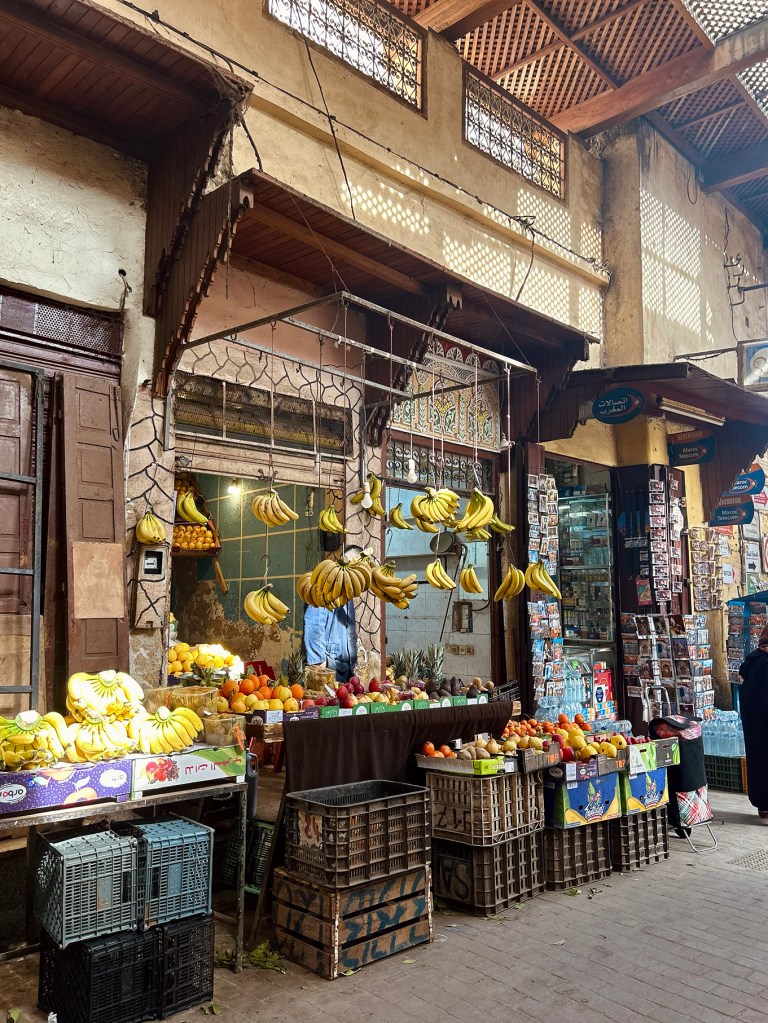


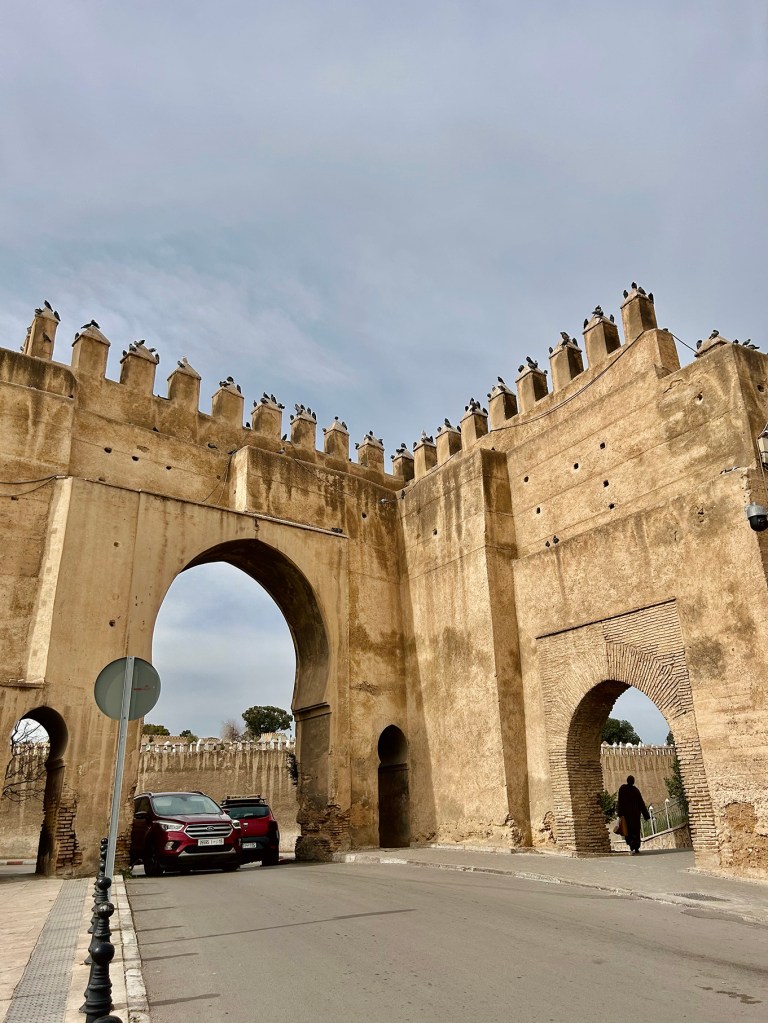

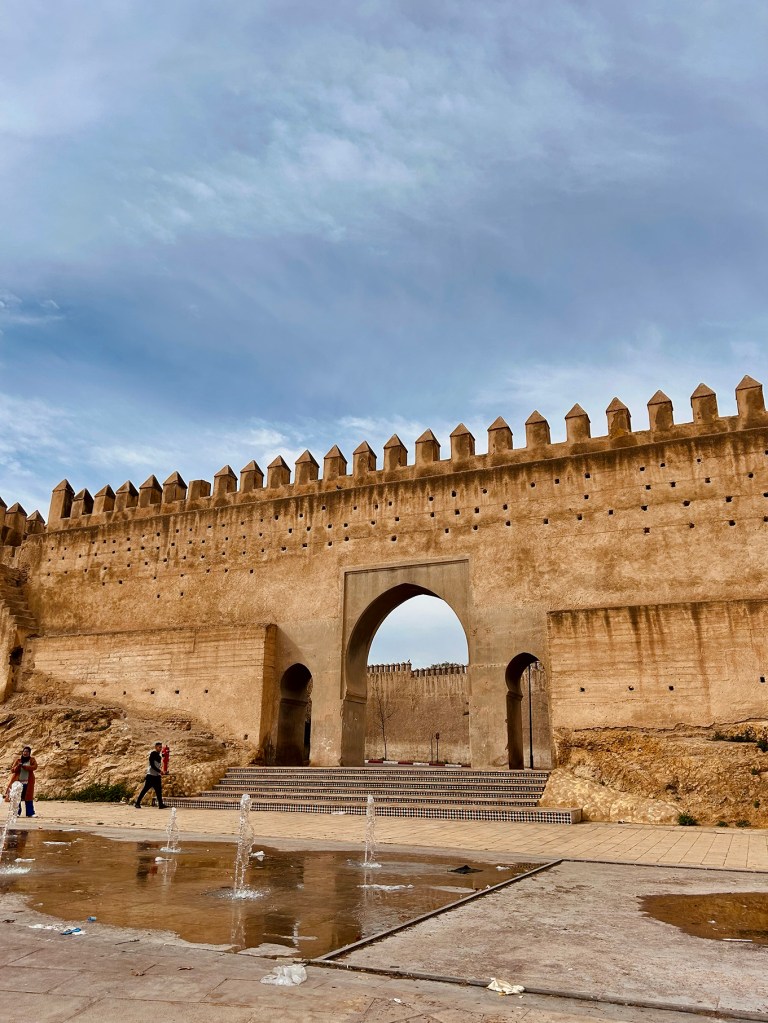
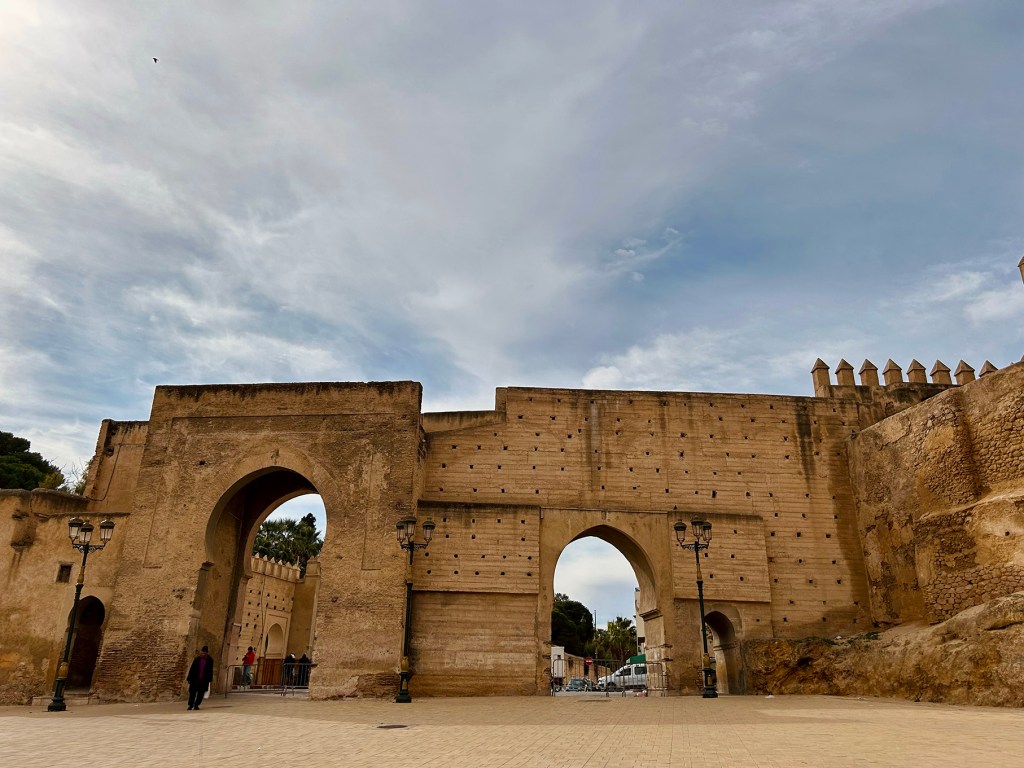
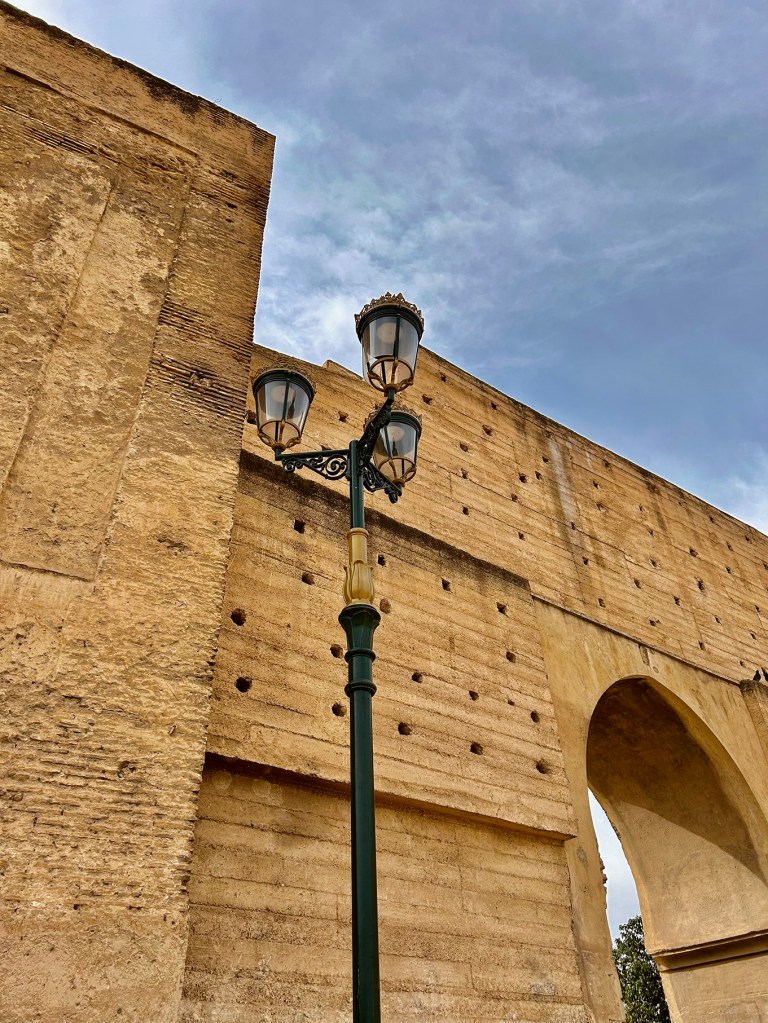

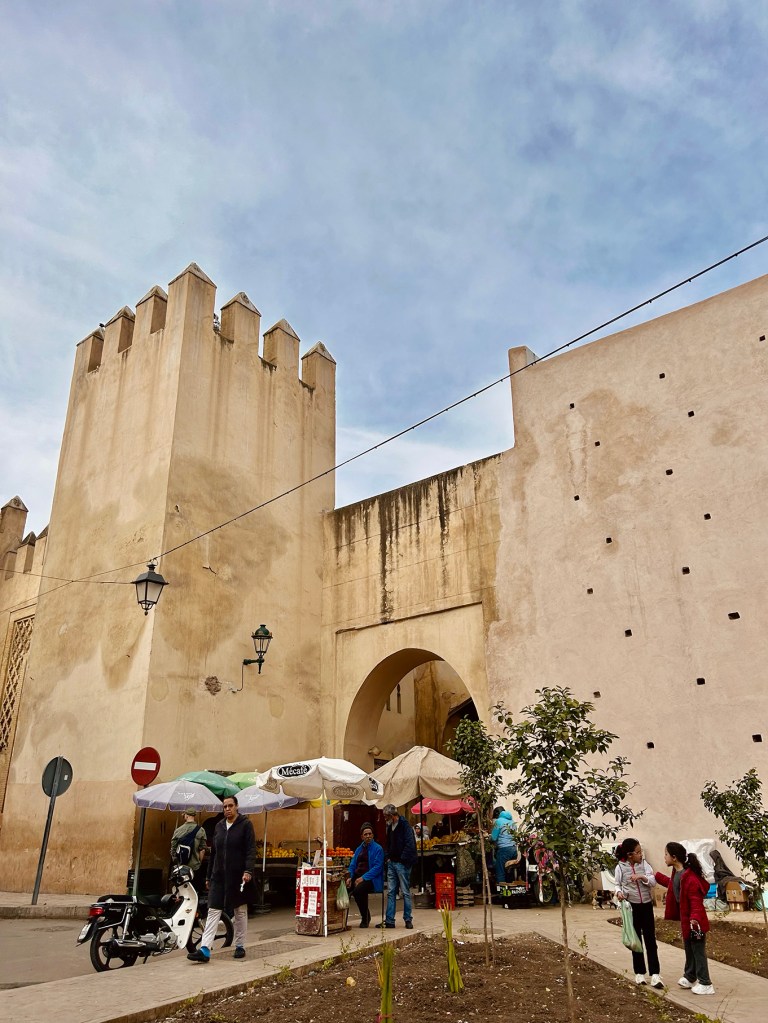
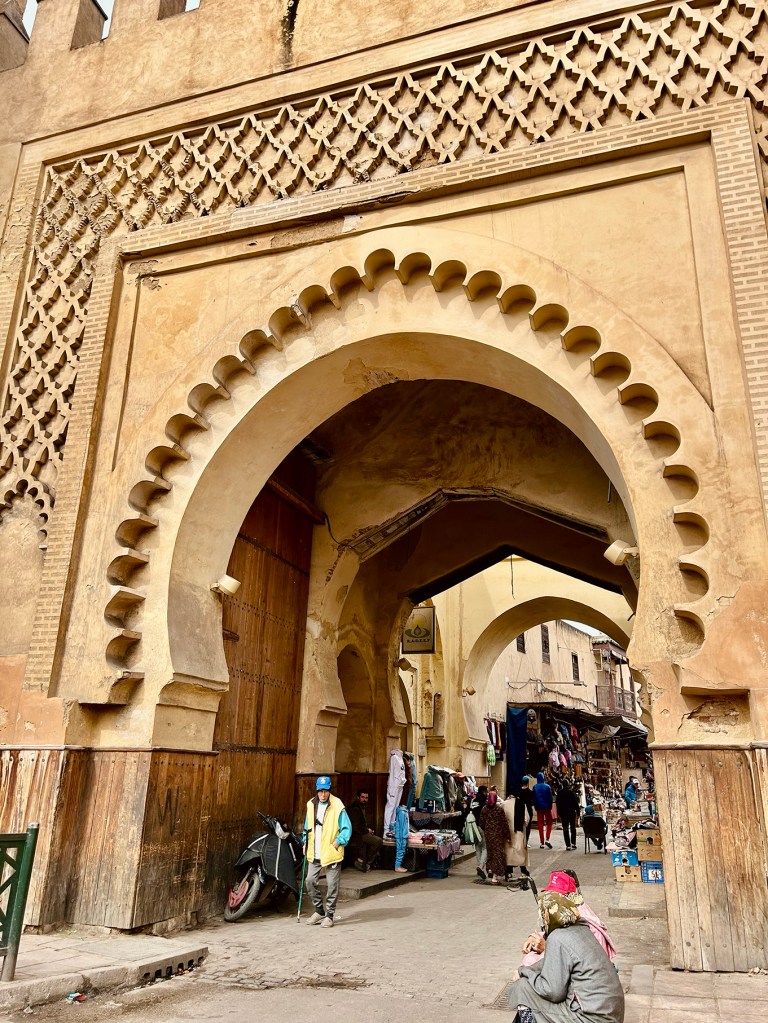
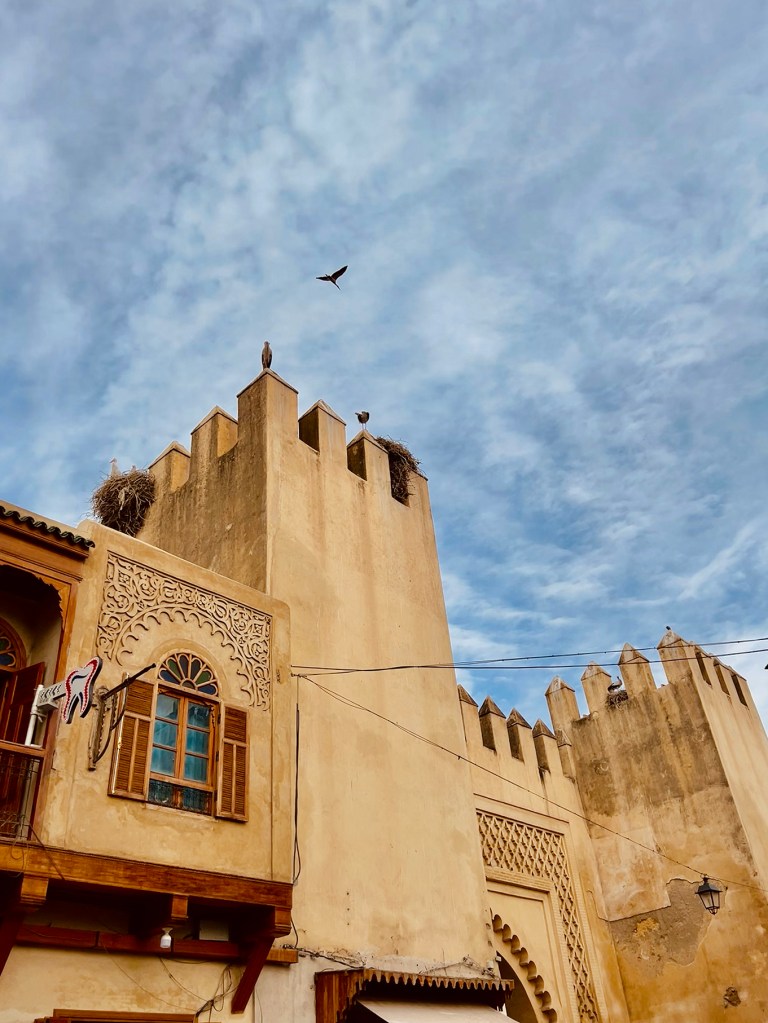
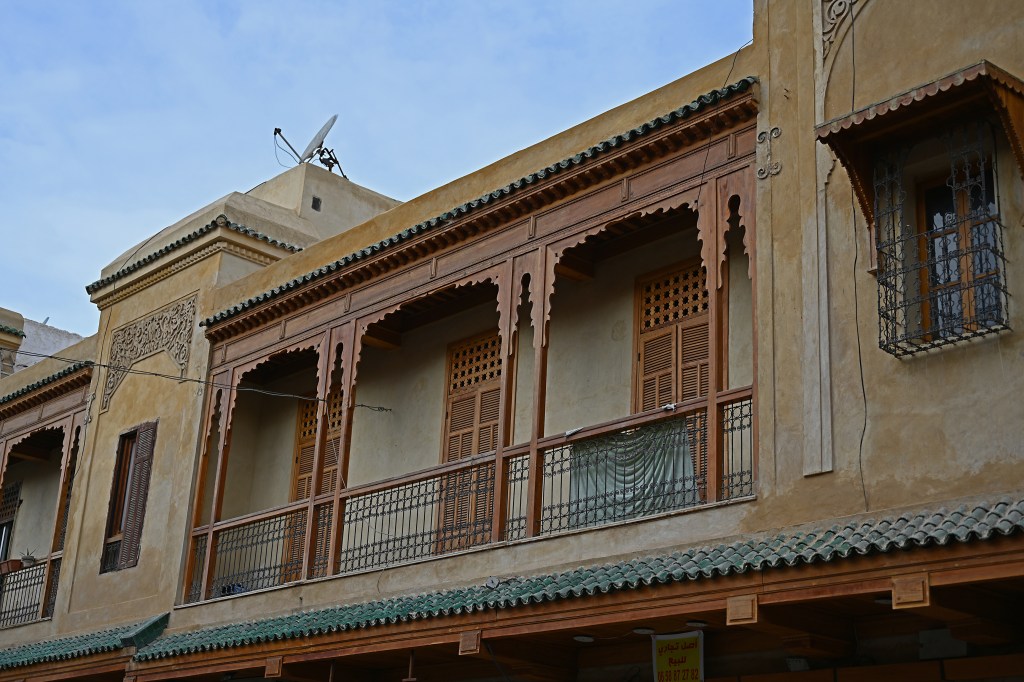
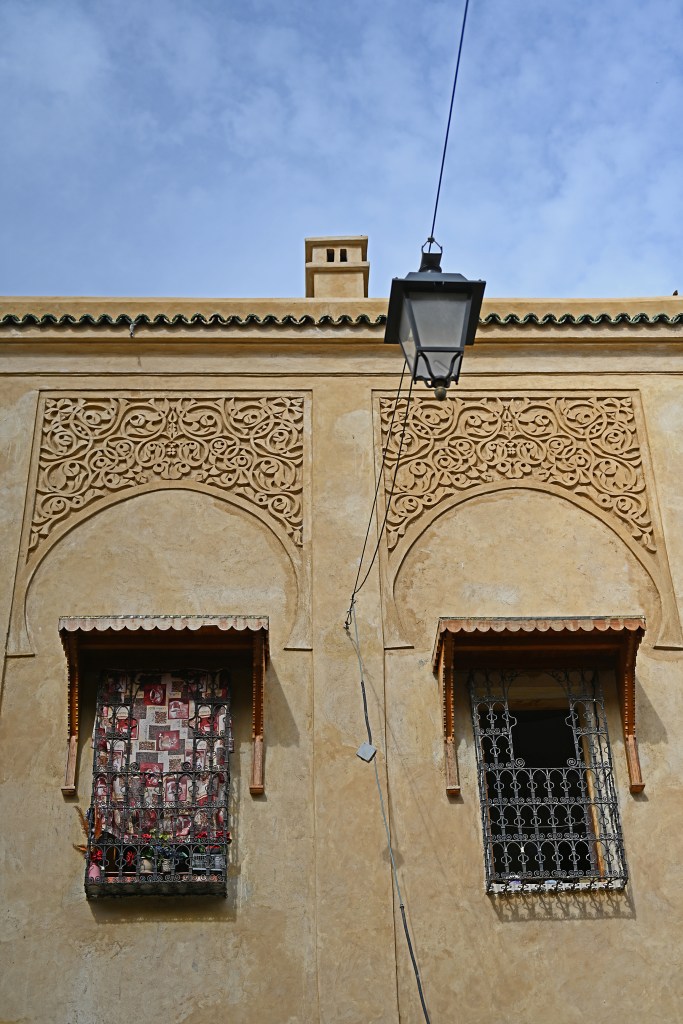

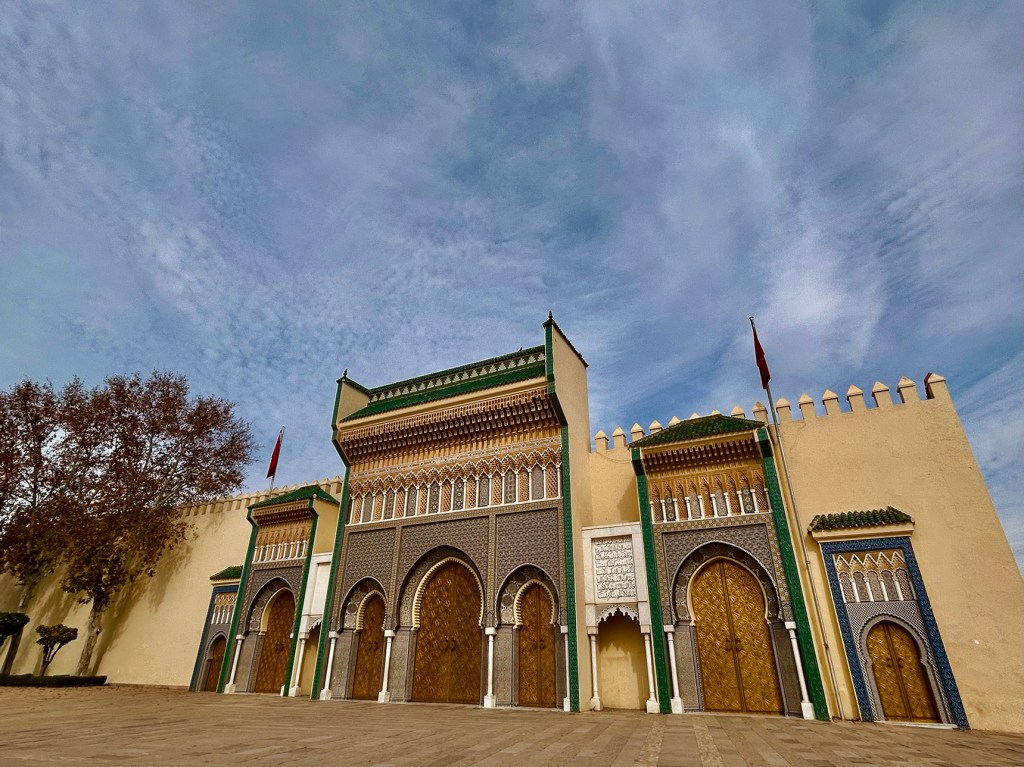
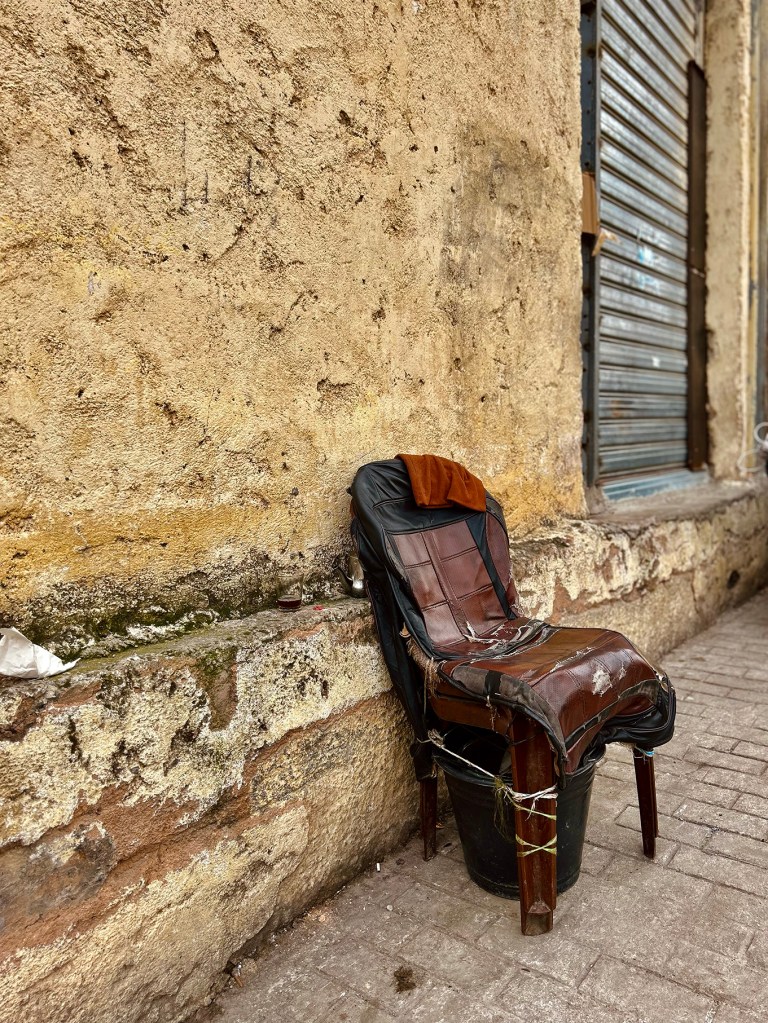
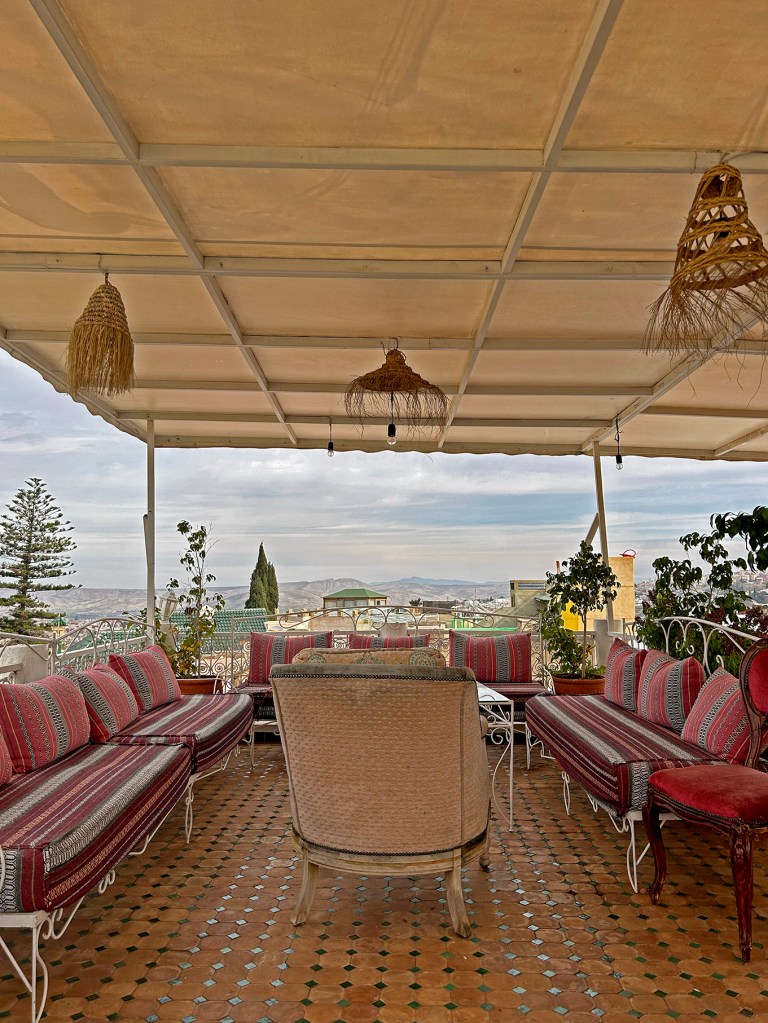
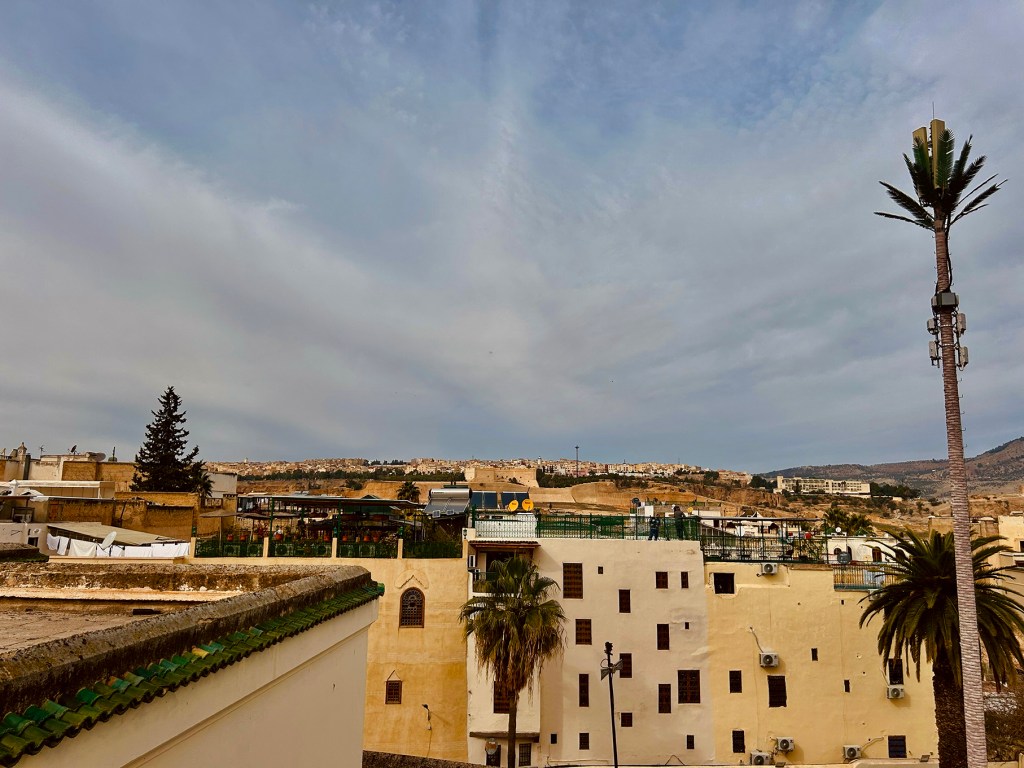
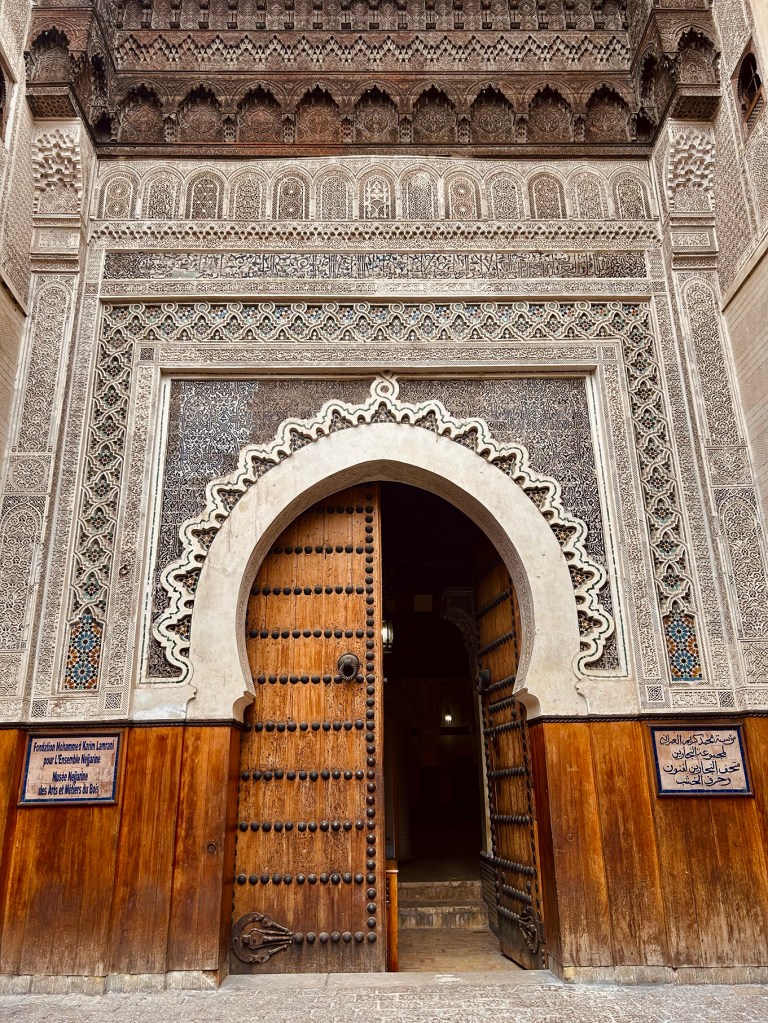
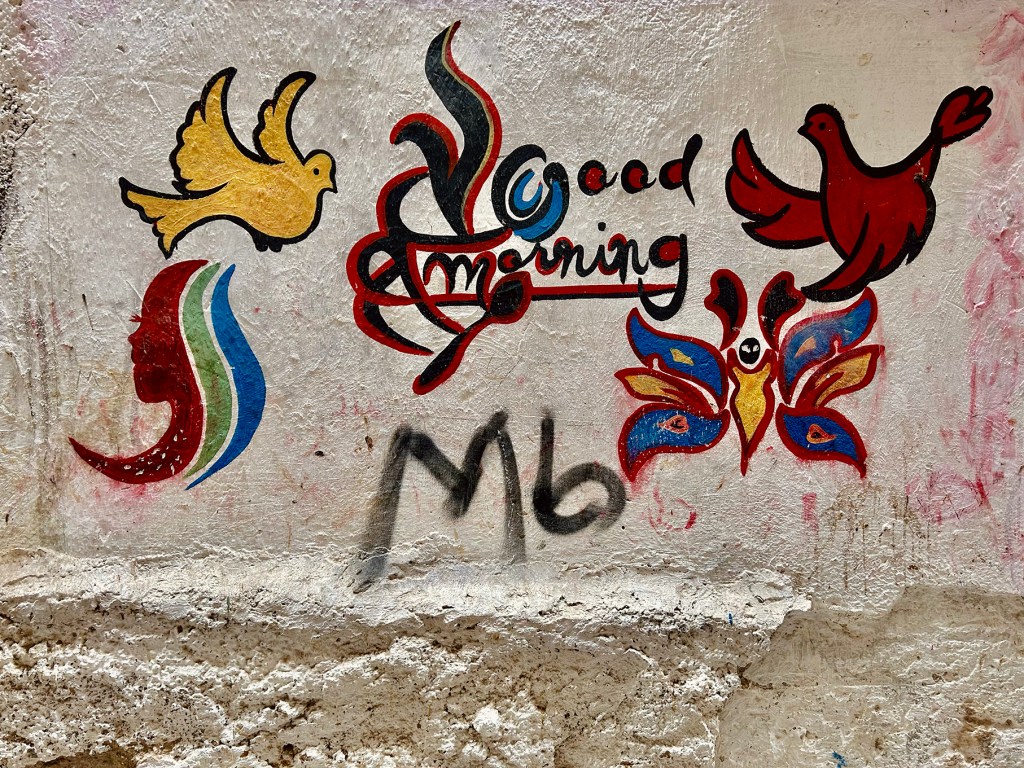
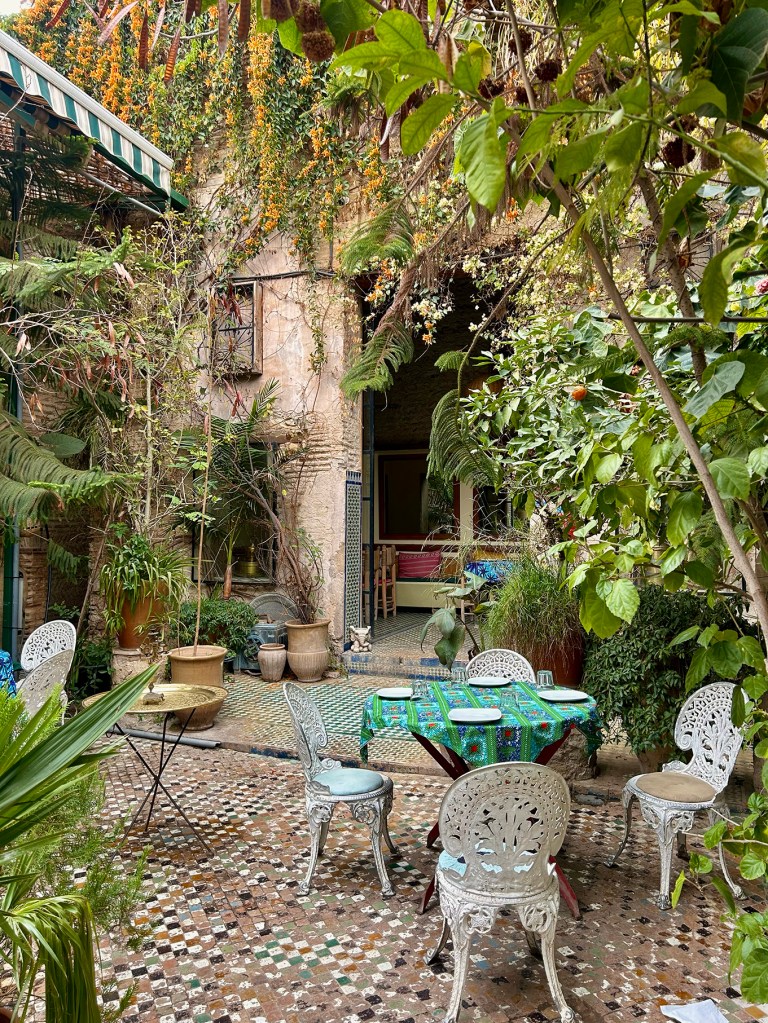

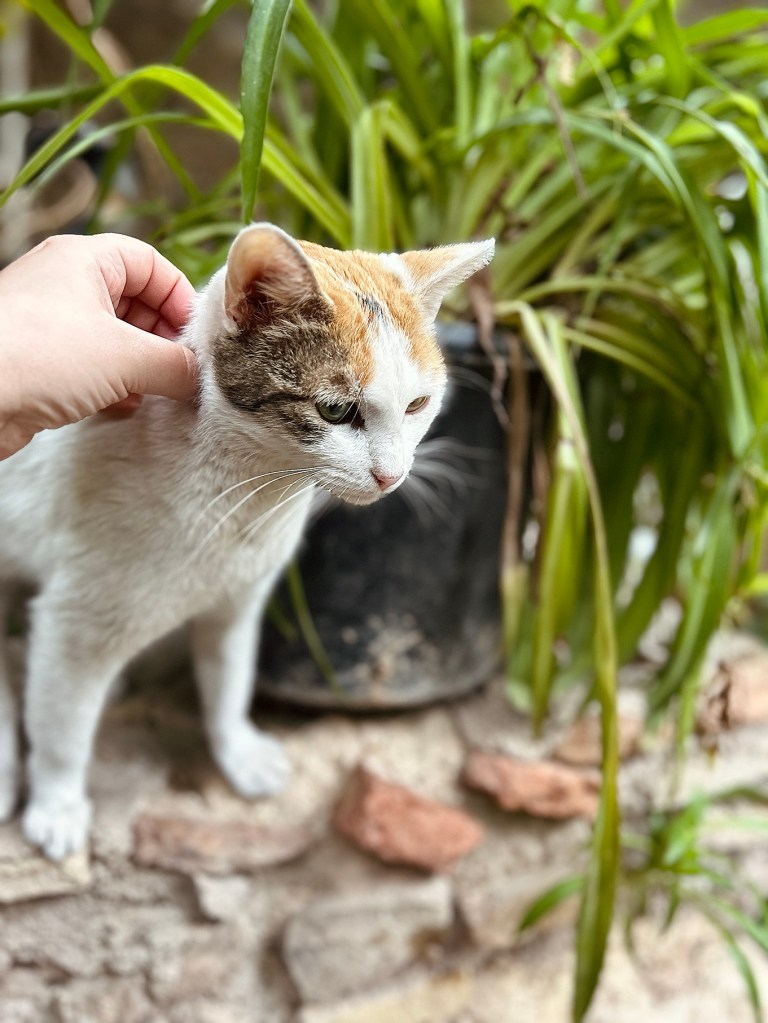
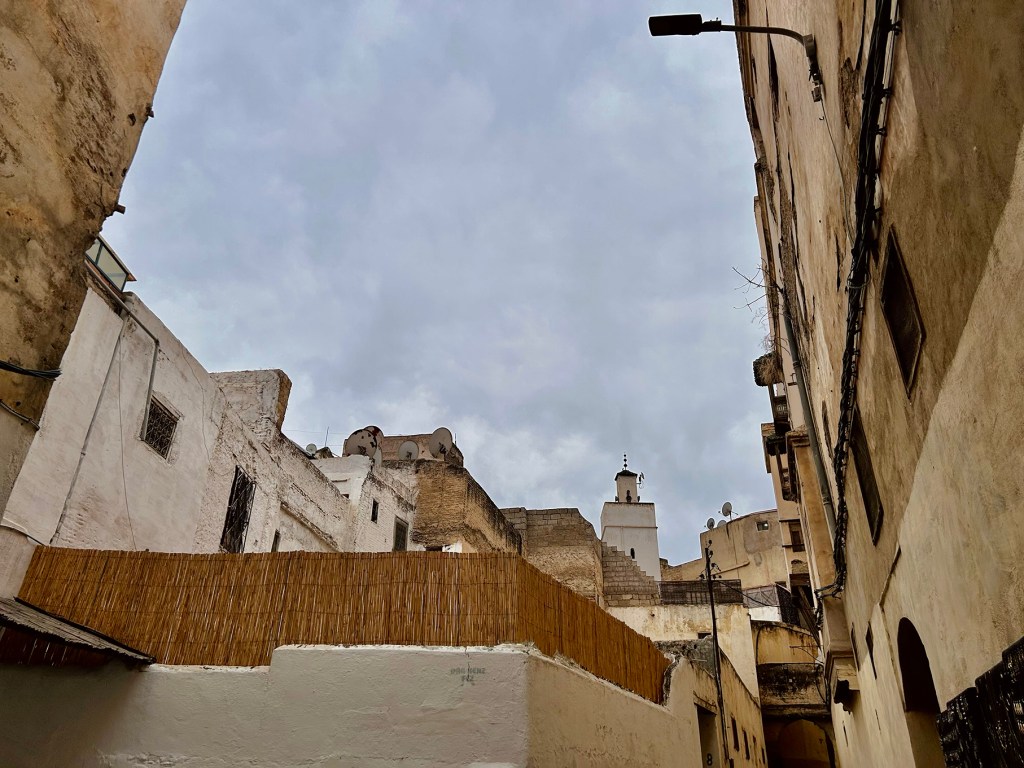


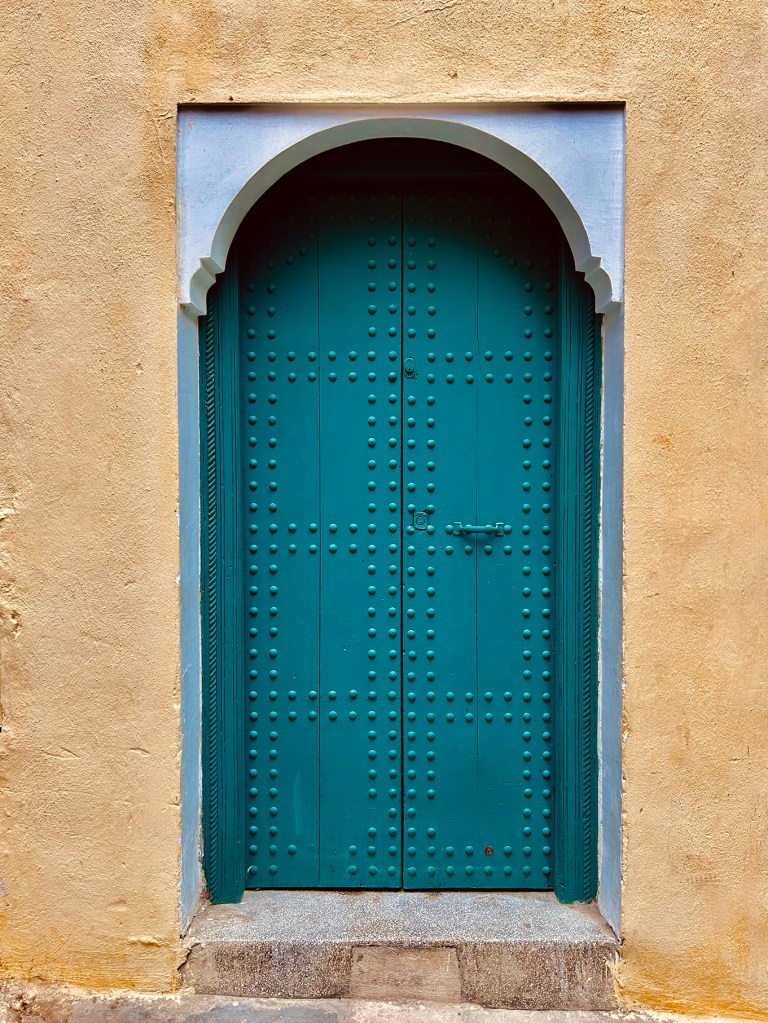
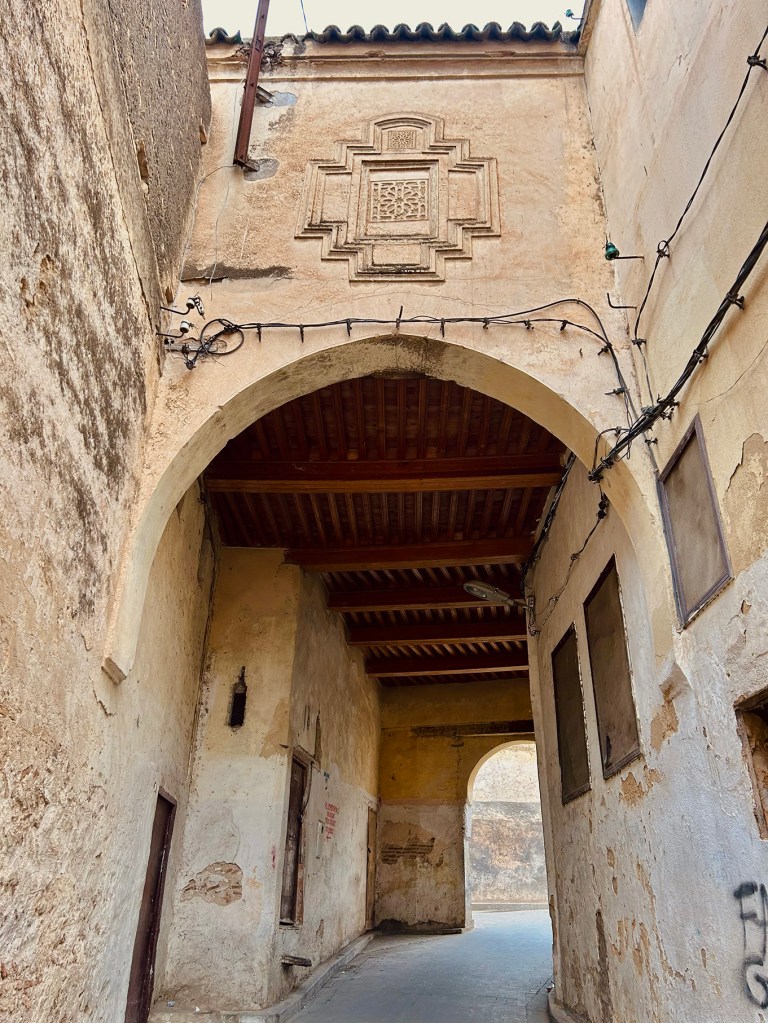
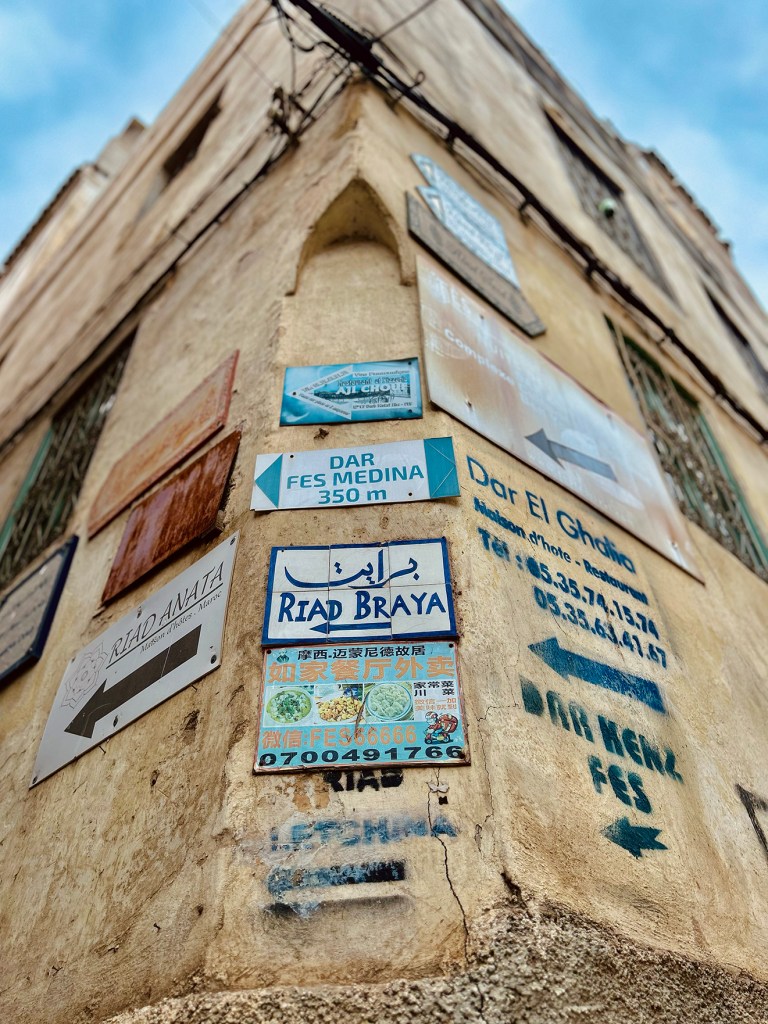
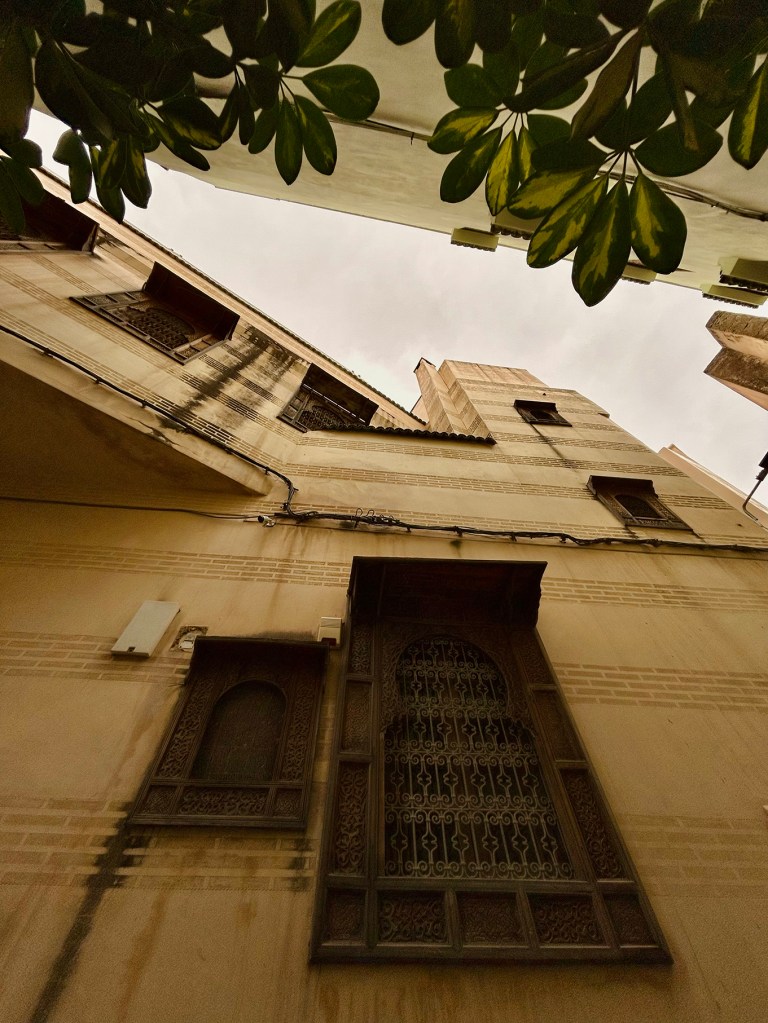
Other things not to miss are the Bou Inania Madrasa with stucco so intricate it looks hand-carved by highly caffeinated angels, the Mellah (Jewish quarter), the Al-Attarine Madrasa, the Marinid tombs, the medina walls with all their imposing gates, the Funduq al-Najjarin, any one of the hammams and endless hidden riads, dars, cafés, restaurants where time slows down over mint tea. The medina is full of rooftop terraces that offer stunning views.
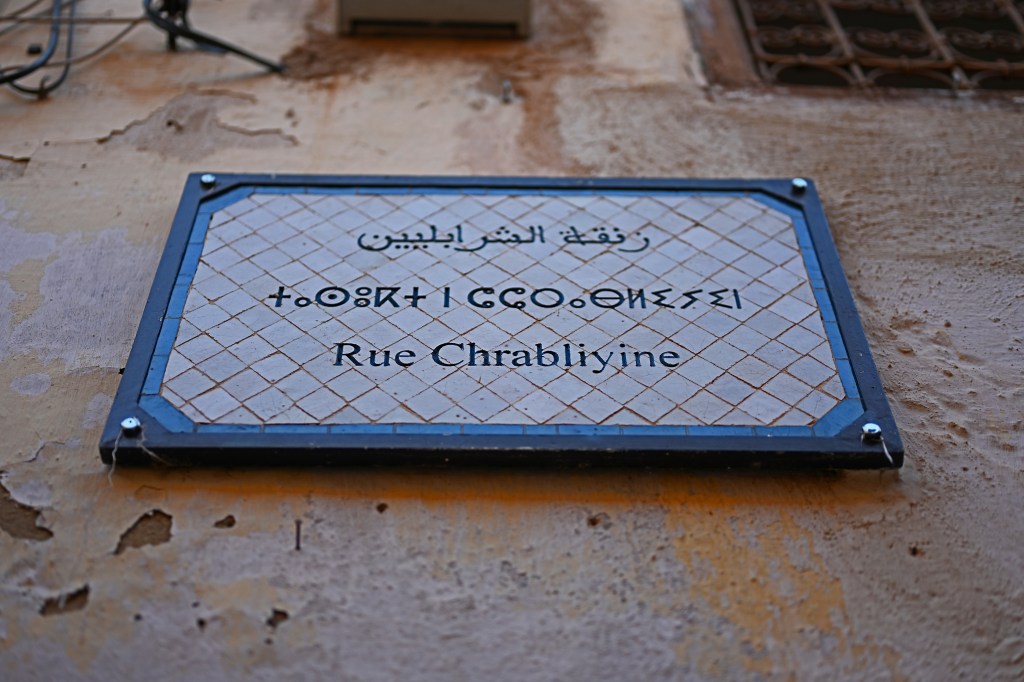
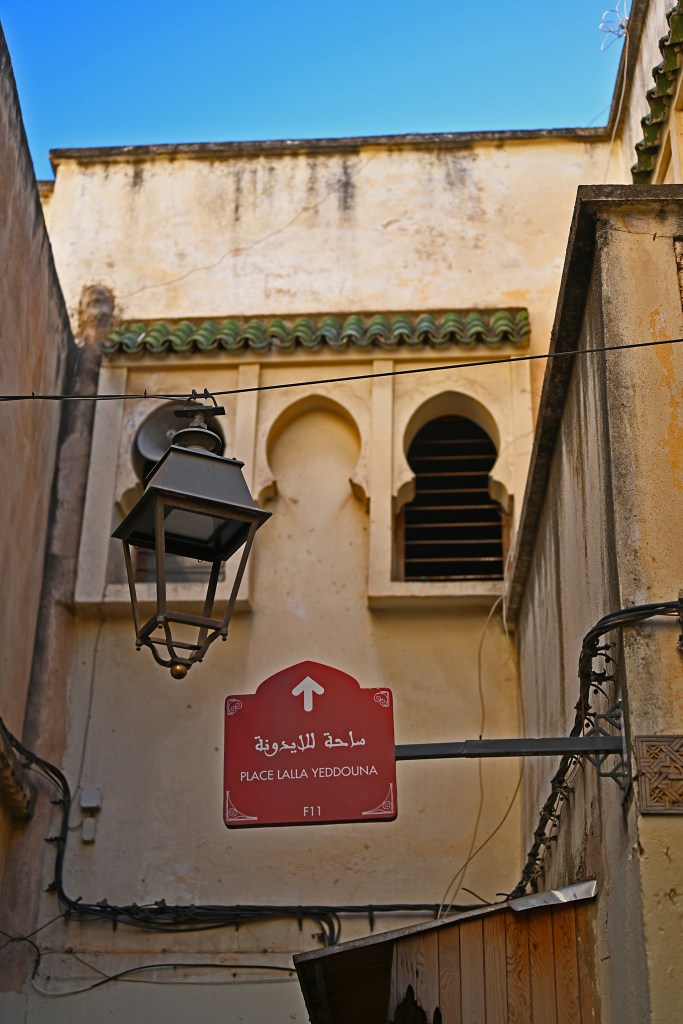
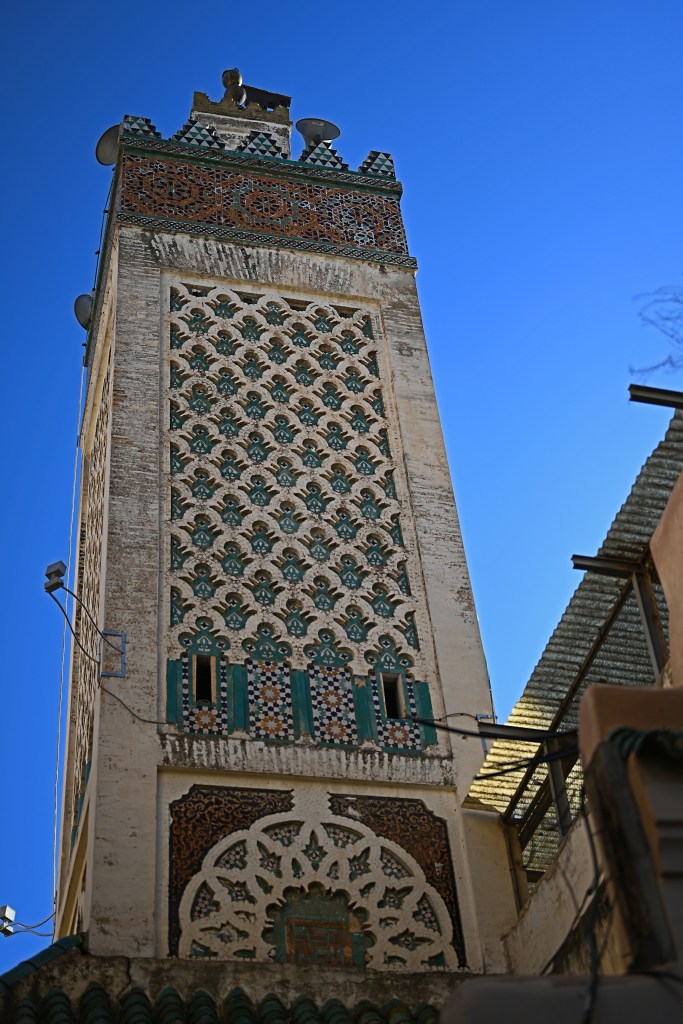
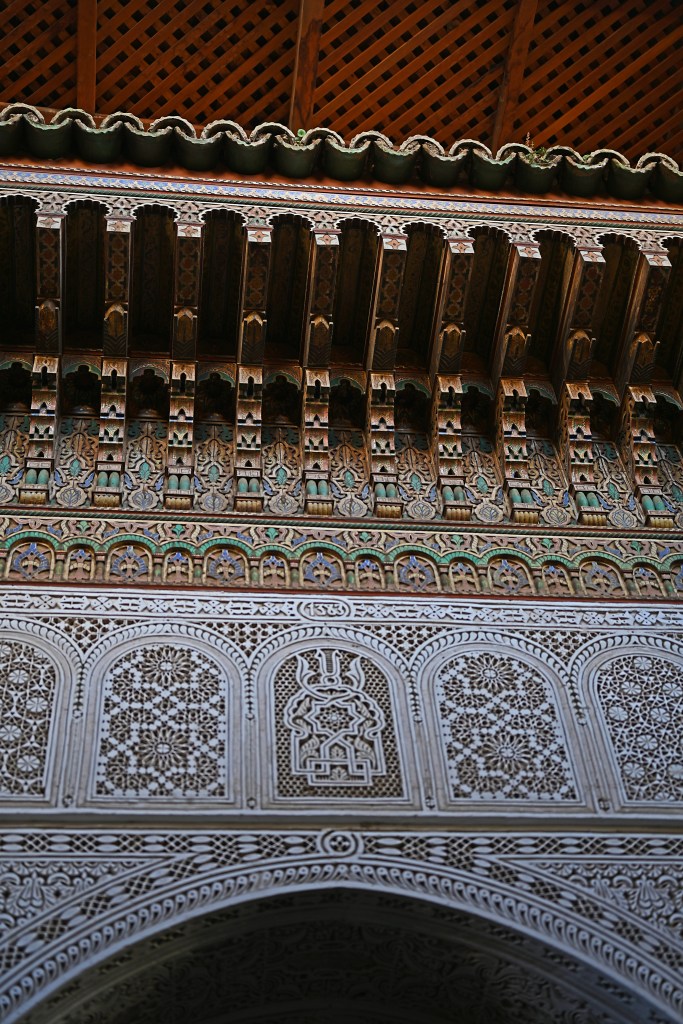
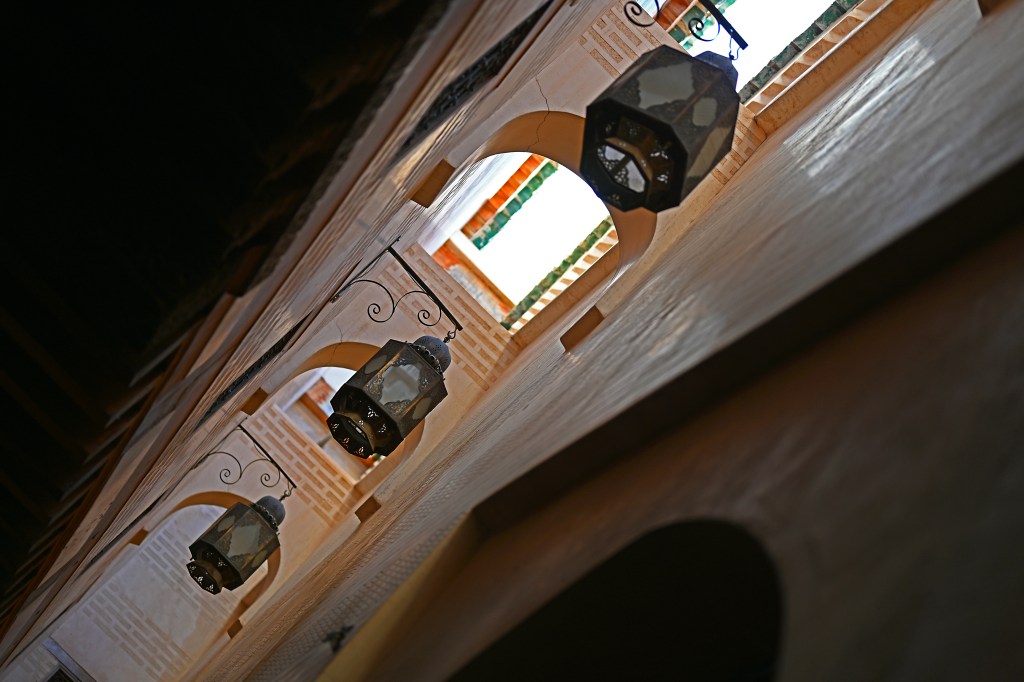
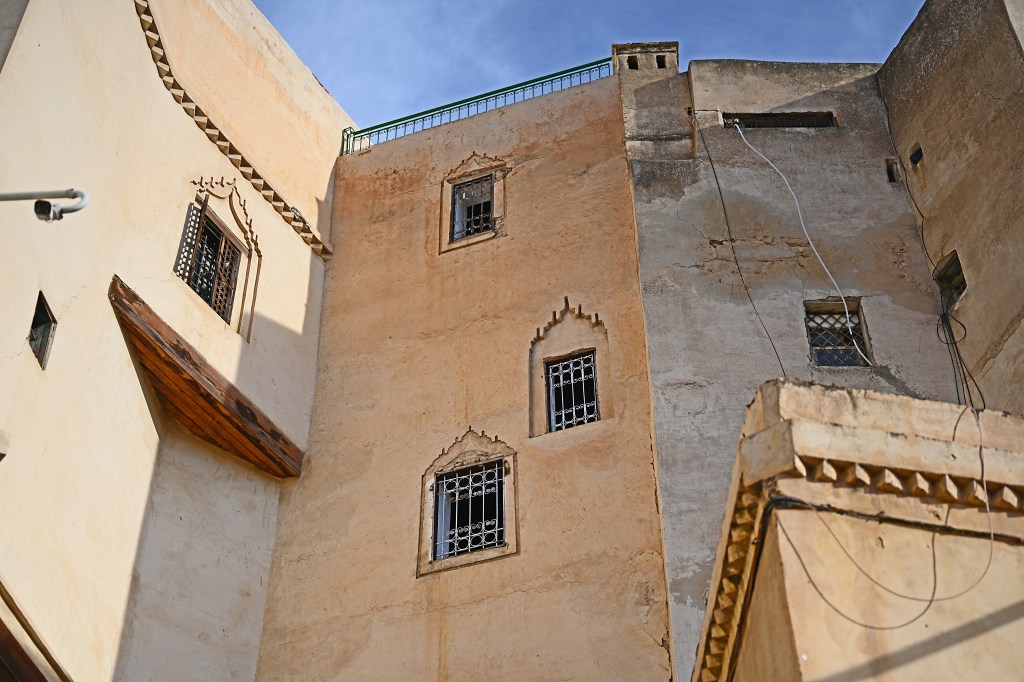
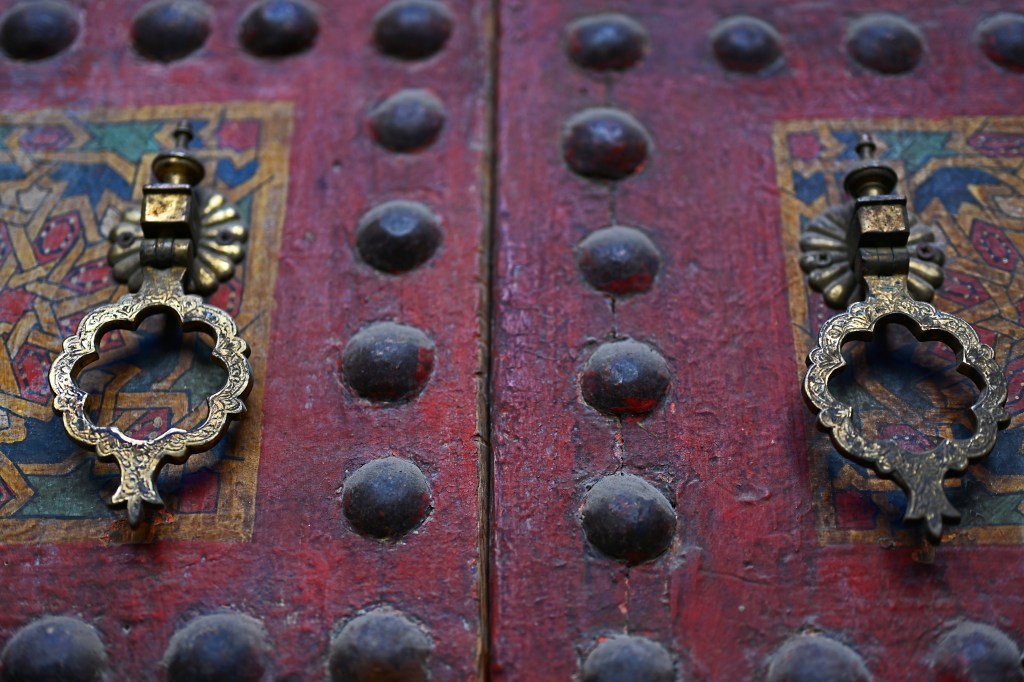
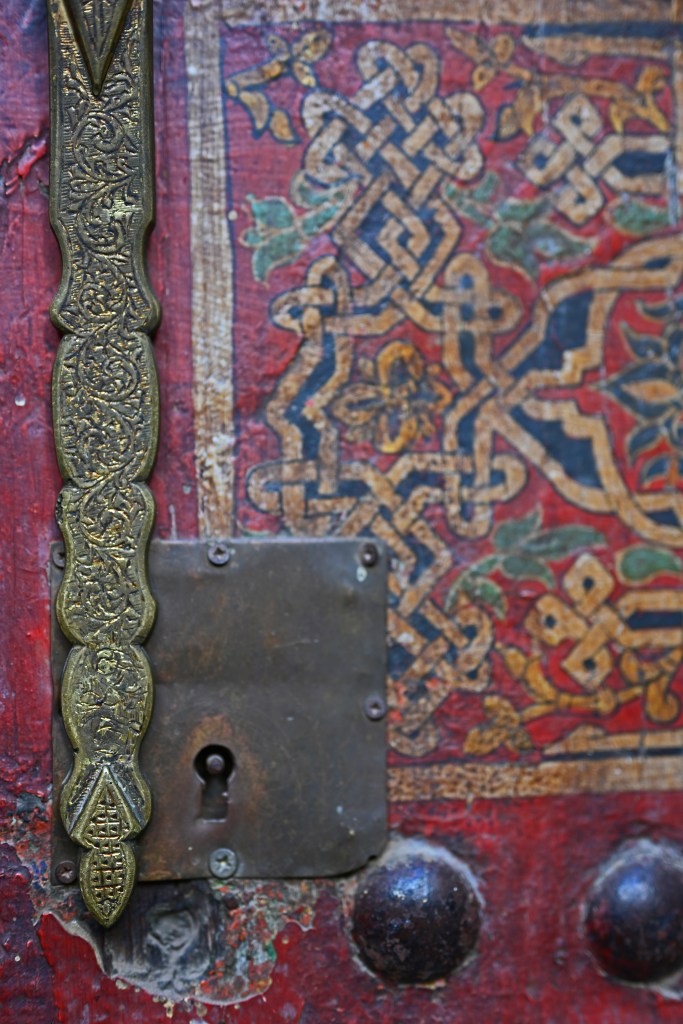
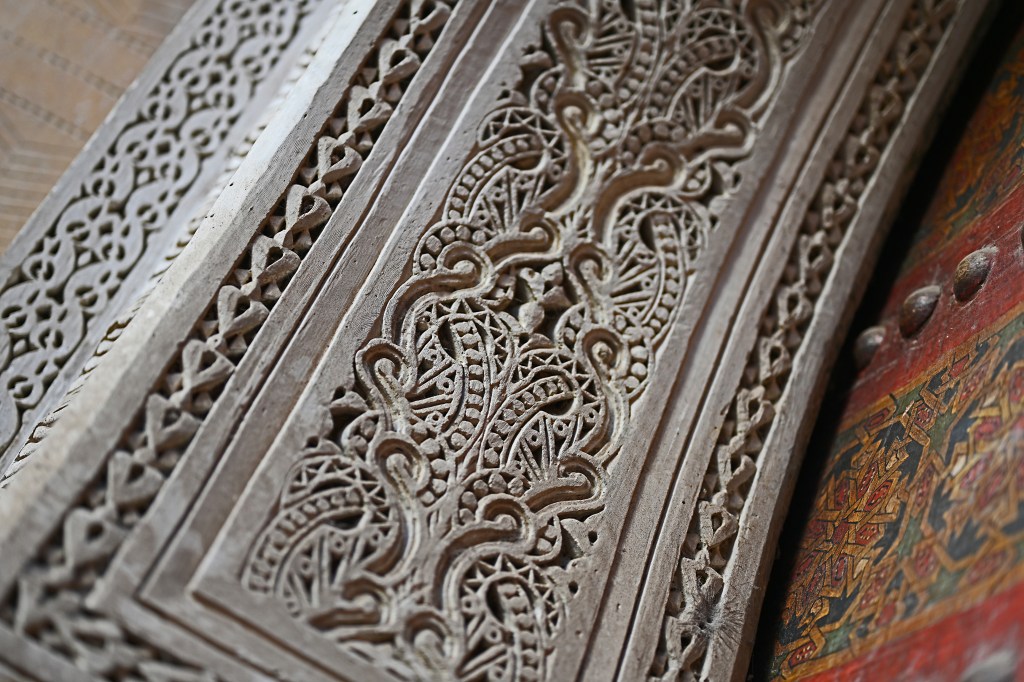

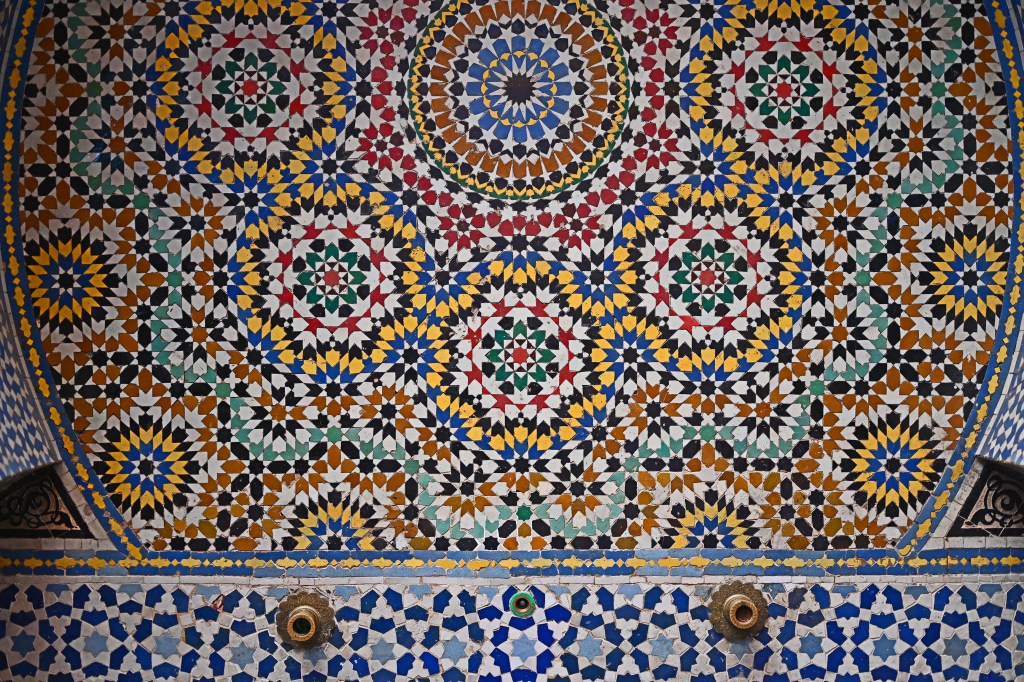
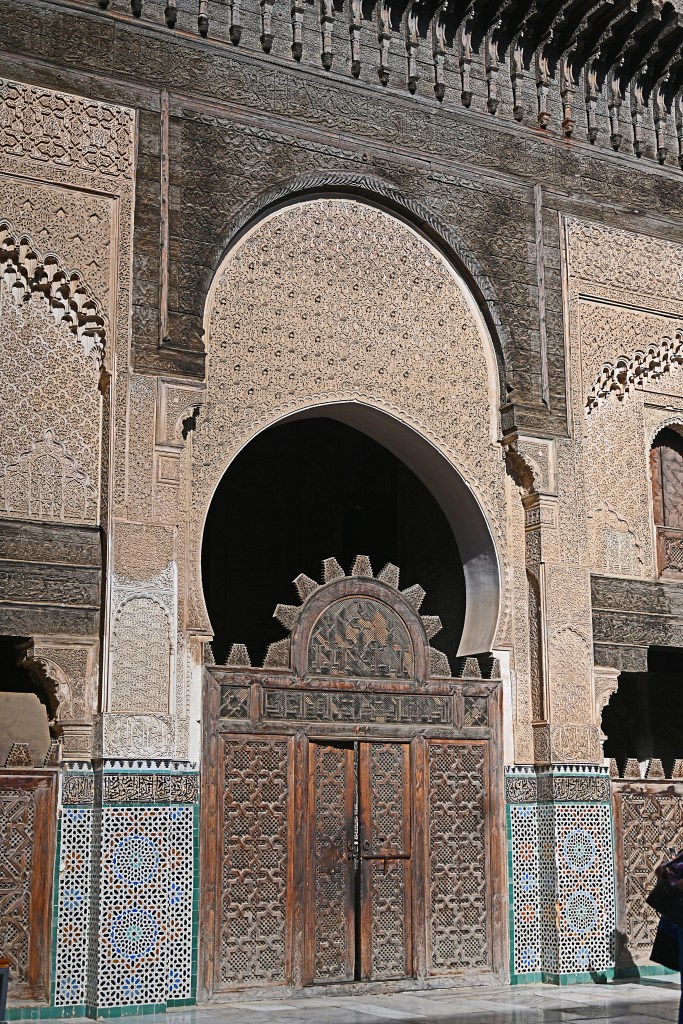
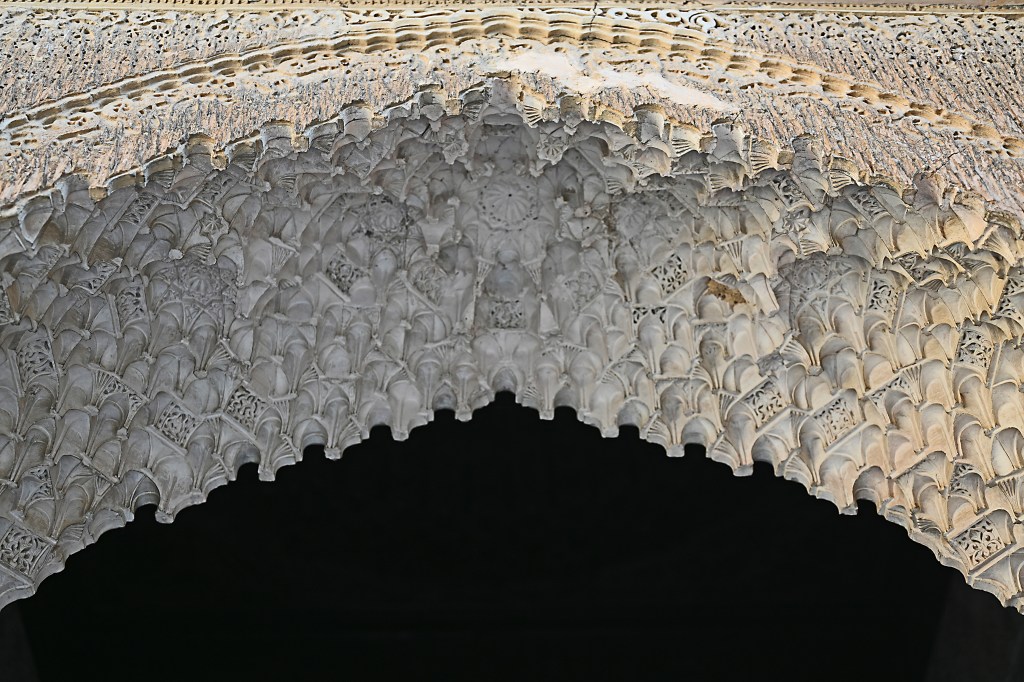

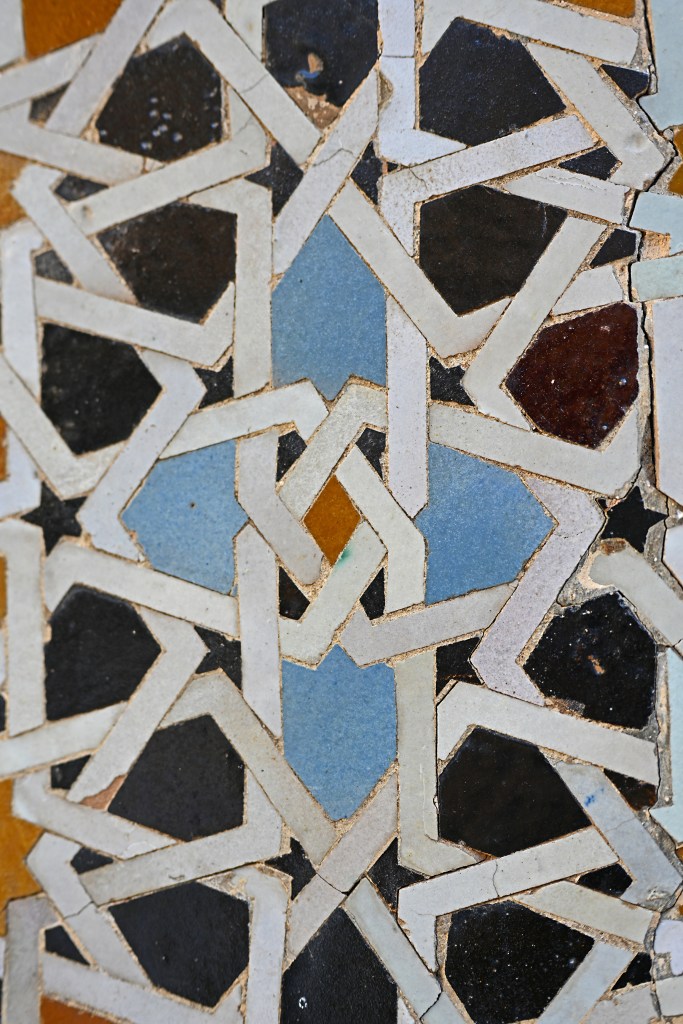
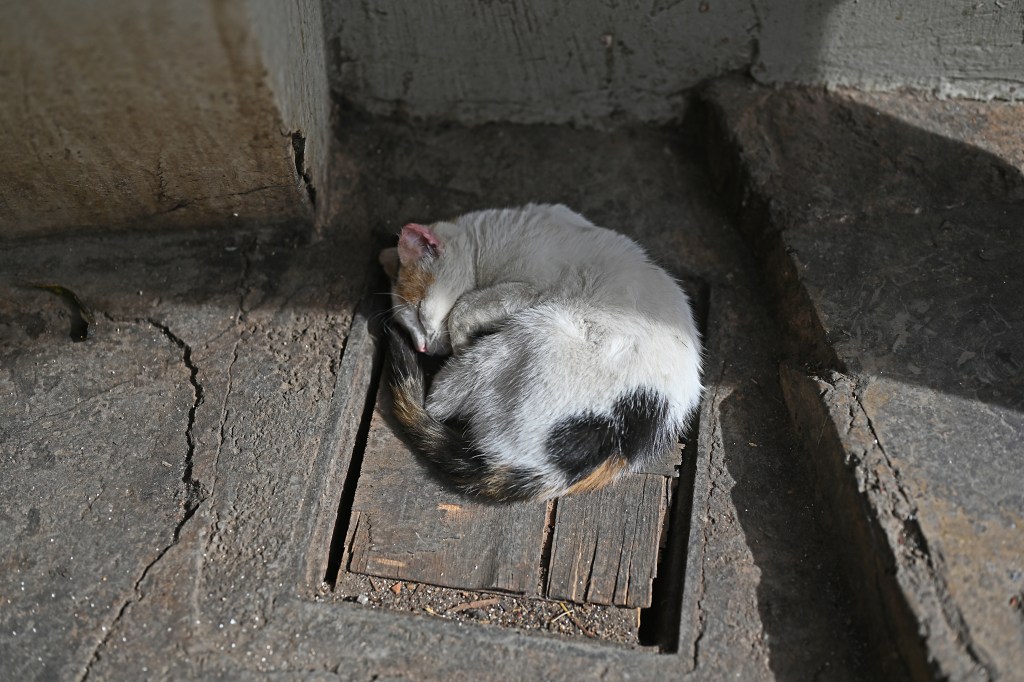
The modern side of Fes exists beyond the medina. Yes, there’s also a world of wide boulevards, palm-lined streets, and actual traffic lights. A large neighbourhood is called Ville Nouvelle and it was built by the French during the protectorate in the early 20th century. It feels like someone picked up a slice of France and dropped it next to medieval Morocco. Art deco facades, European-style cafés where locals sip espresso instead of mint tea, and shady avenues perfect for an evening stroll.
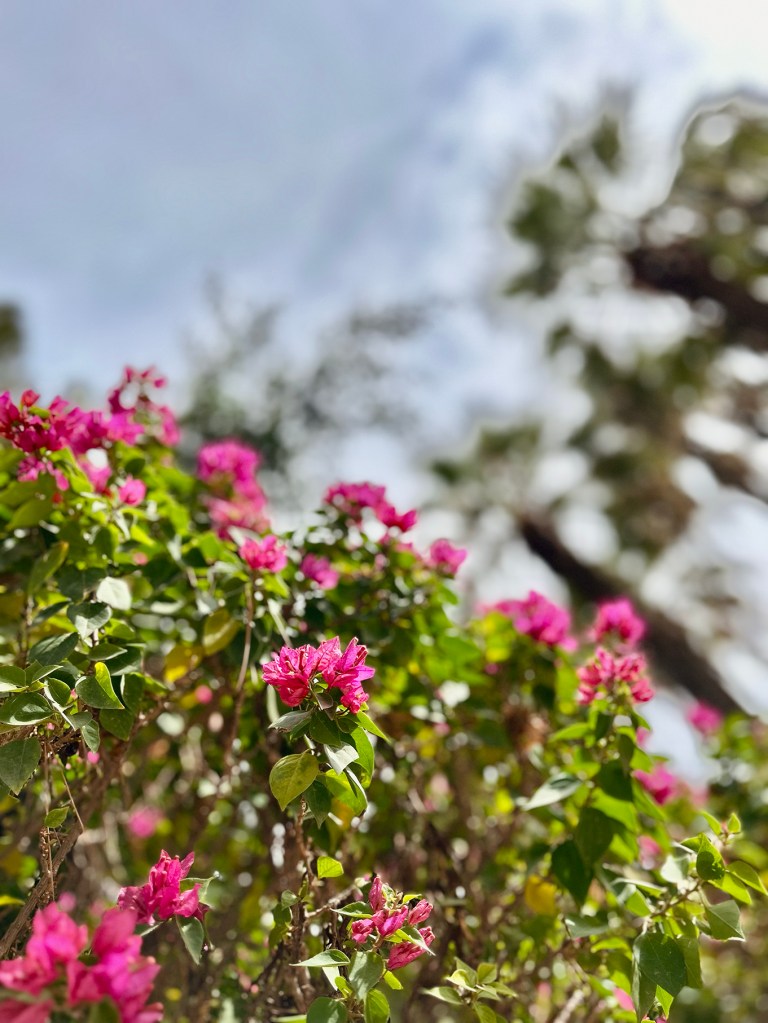
Here, the colors shift: instead of the sandy ochres and chaos of the old medina, you’ll find creamy white walls, pastel shutters, green parks like the Jardin Jnan Sbil, a leafy oasis situated between the old and new city that binds them together, and the occasional splash of bougainvillea tumbling over a wall.
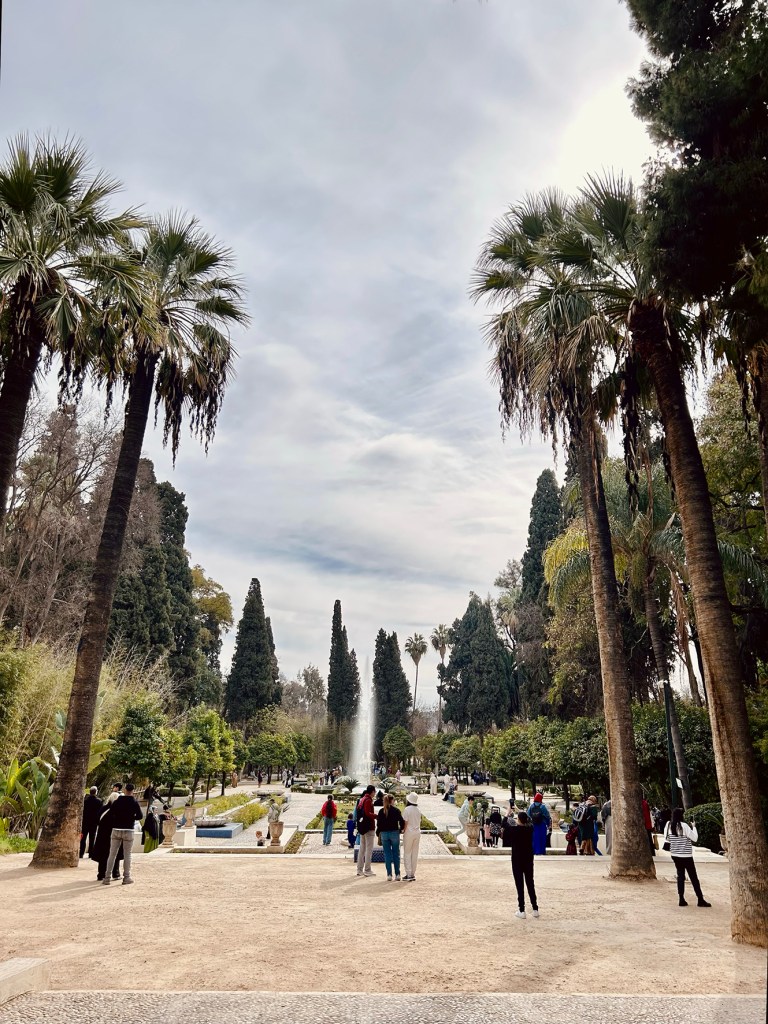
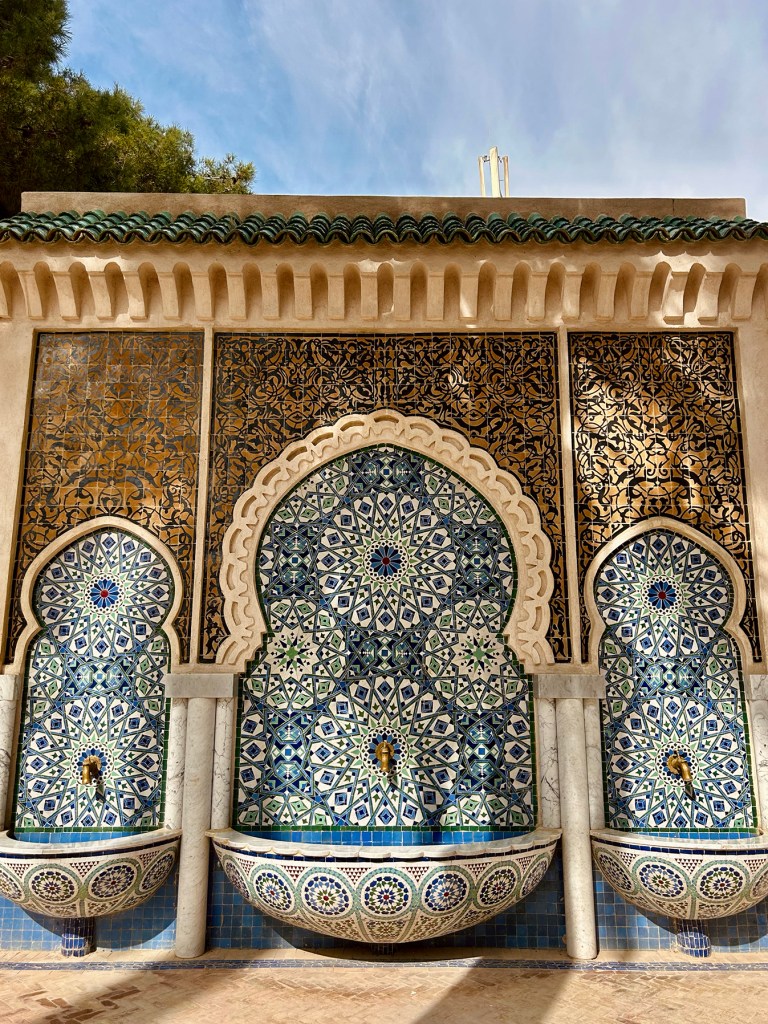
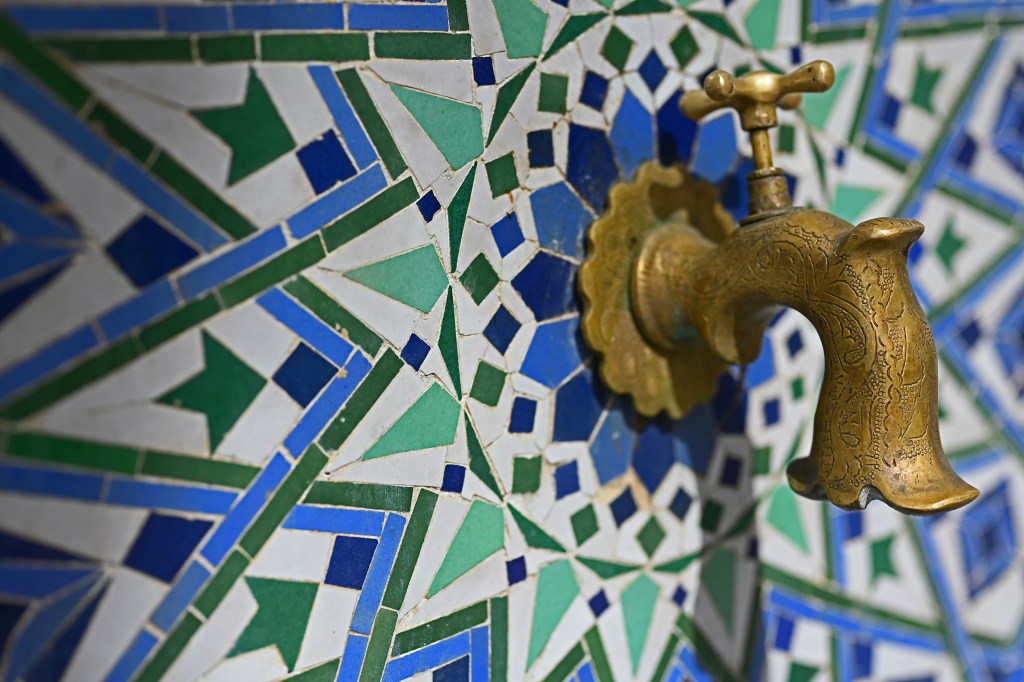
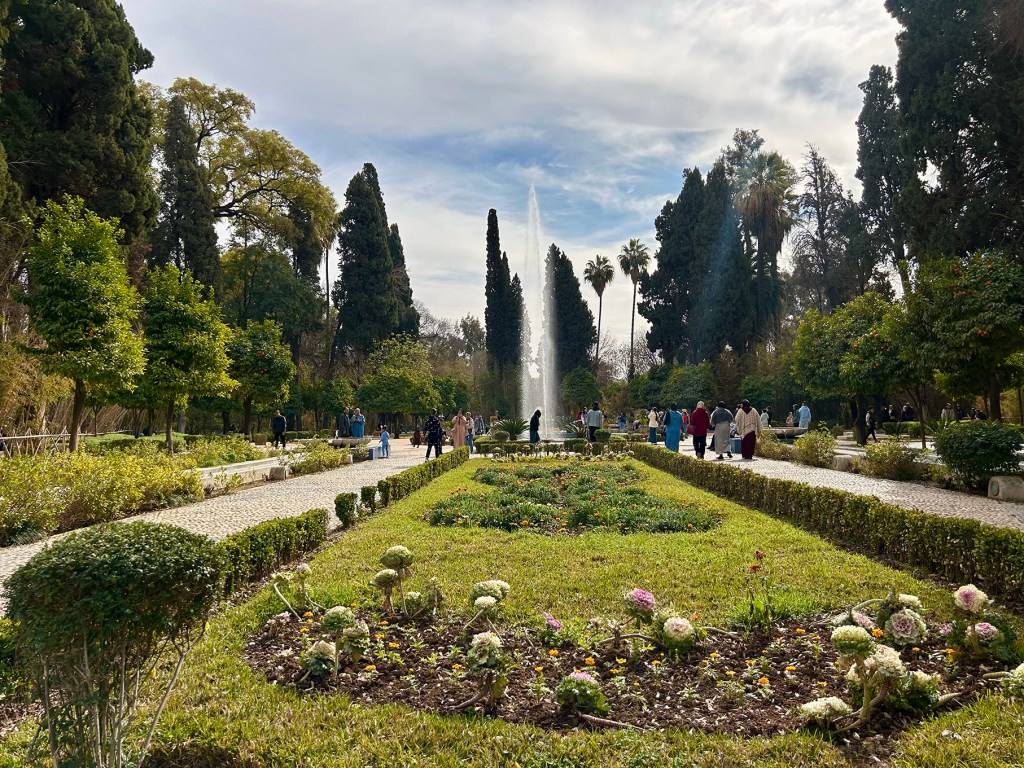
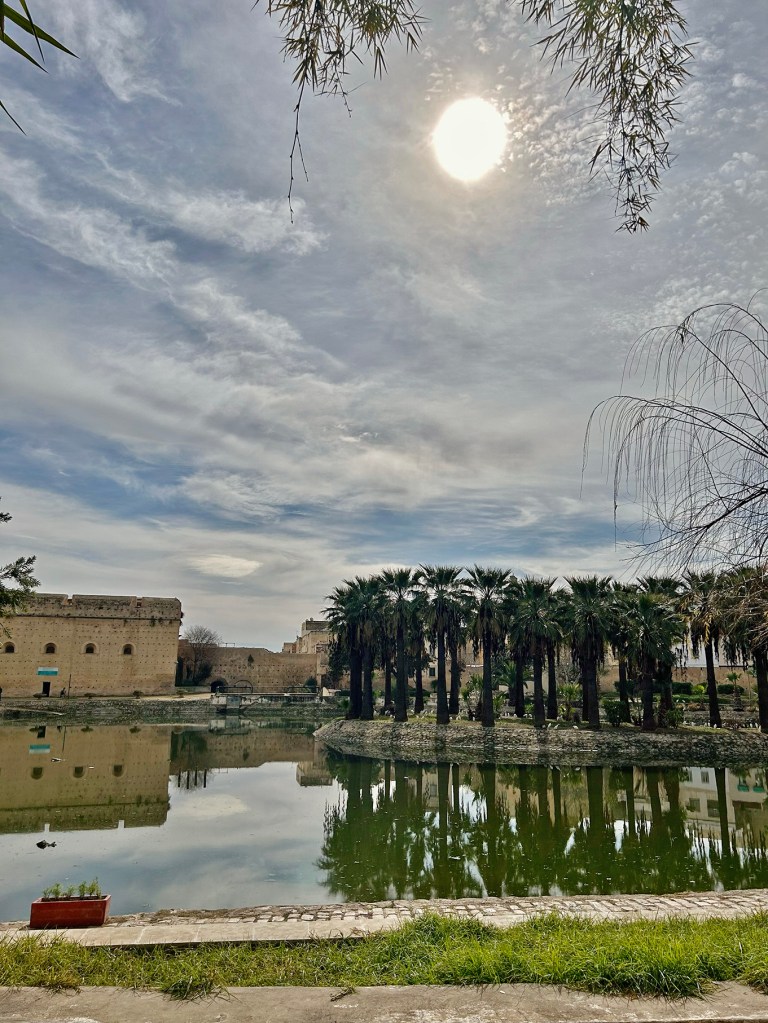
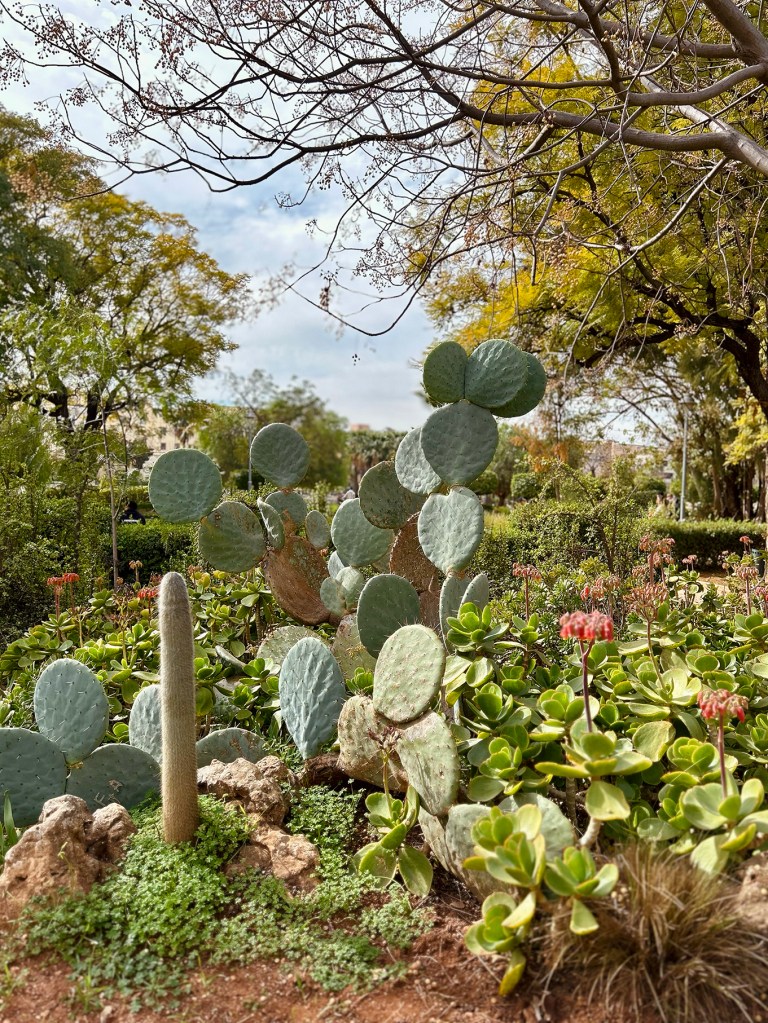
Ville Nouvelle is also where modern life happens: fashion, banks, offices, and the kind of patisseries where you can indulge in mille-feuille. So while the medina is Fes’ soul, Ville Nouvelle is its modern pulse, a place to enjoy a cappuccino, and marvel at how this city balances a thousand years of history with the rhythm of today. As we arrived in Fes in the evening, driving slowly from the south, I got a good glimpse of this side of town. But I didn’t really see as much of it as I wanted to, since I only spent one whole day in the city on my own, and after a certain number of steps (tens of thousands) you kind of throw the towel in. So it’s definitely a place to explore more during my next visit.
I came back to my neighborhood in the evening and got my luggage ready for the next adventure.
Chefchaouen
With a small breakfast takeaway, I left my beautiful Fes riad and headed to the pick-up point nearby, for a transfer to Chefchaouen. It had rained during the night, so the air was wet and crisp.
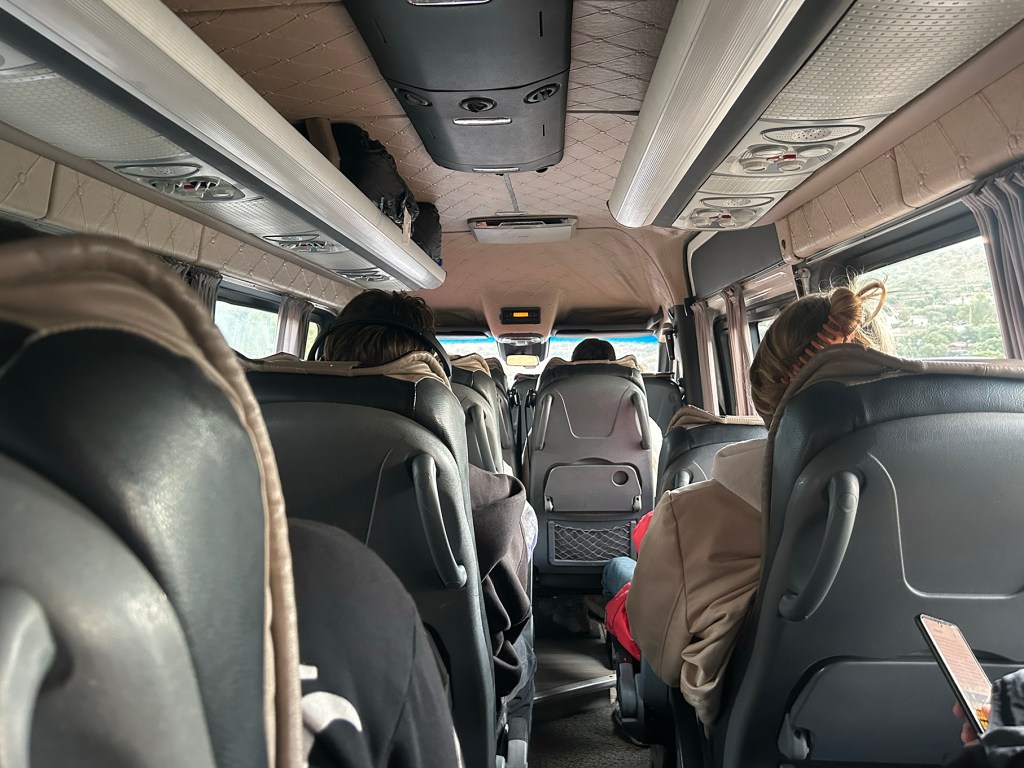
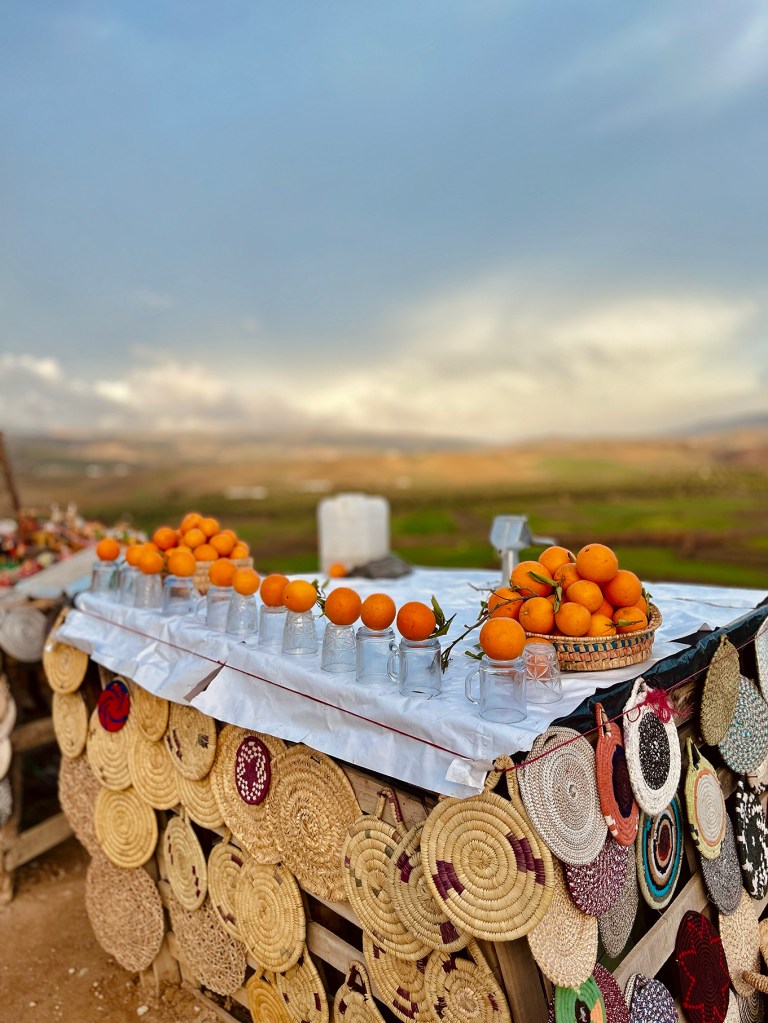
I booked this transfer through Viator as well, it’s been very convenient and trustworthy. The trip takes about three hours and you get to experience even more of Morocco’s extraordinary landscape. Naturally, there will be a toilet break about halfway, and even a chance to buy some fresh juice or pottery goods closer to Chefchaouen.

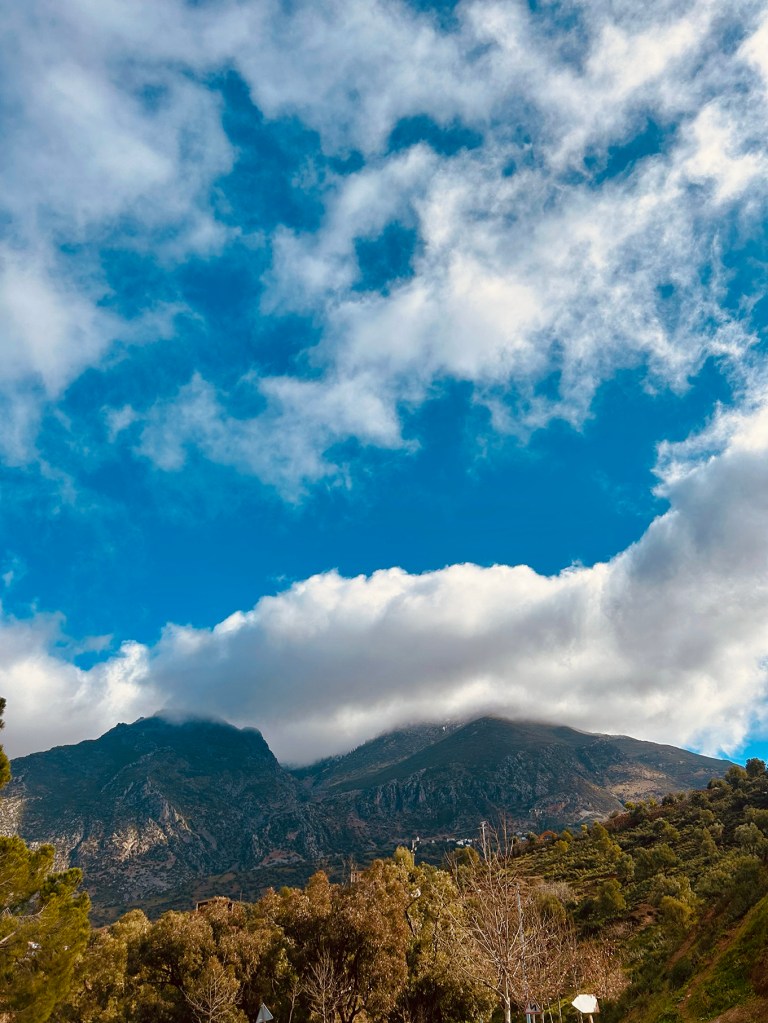
Known as the “Blue Pearl”, this is a small mountain town in the Rif region of northern Morocco, about 110 km southeast of Tanger and 60 km south of Tétouan. Founded in 1471 by Moulay Ali Ben Rachid as a kasbah (fortress) to defend against Portuguese incursions, it later became a haven for Andalusian Muslims and Jews expelled from Spain during the Reconquista, which left a lasting imprint on its culture and architecture.
The town sits at an elevation of about 564 metres above sea level, at the foot of the dramatic Jebel el-Kelaa and Jebel Meggou peaks. The name Chefchaouen itself means “look at the horns”, referring to the two peaks. Its geography gives it a mild Mediterranean climate, with cool, wet winters and warm, dry summers.
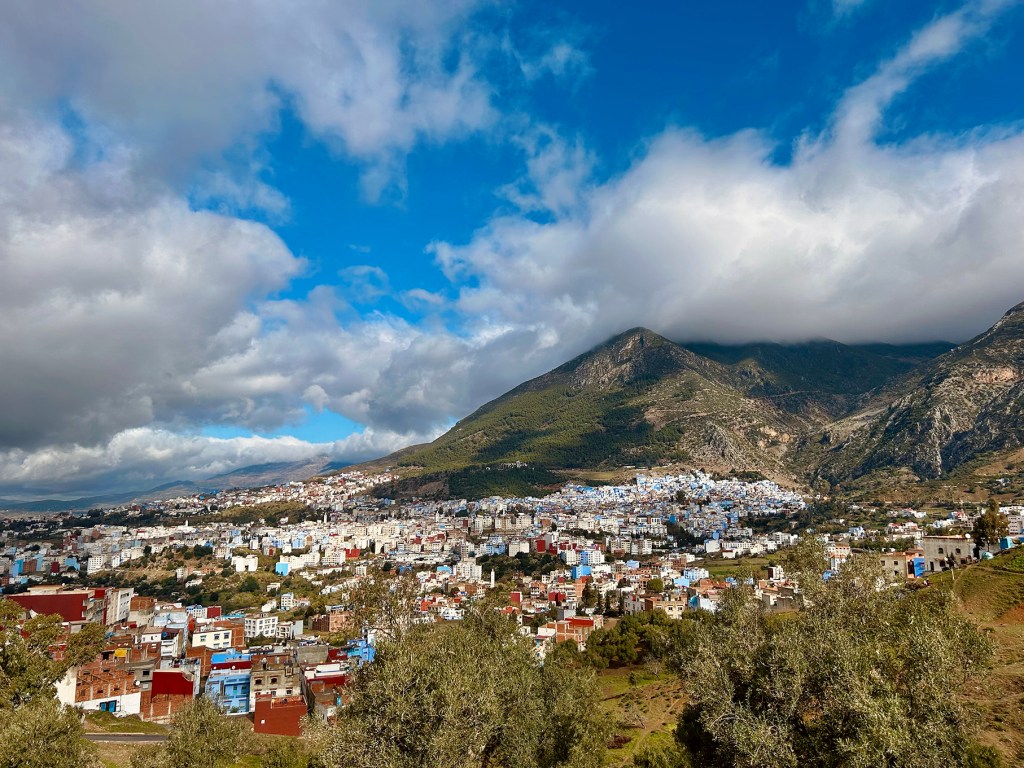
My driver got in touch with the riad I was staying at, to let them know I was on my way, for them to meet me at the drop-off. I was the only person in the van who would stay a couple of nights, everyone else was doing a day-trip. The vans usually park near the Hotel Parador and main square Plaza Uta el Hamman, because the maze and steps of the medina make it impossible for vehicles to go any further. That’s a great aspect of Moroccan medinas, even if they’re chaotic – you’ll most probably not be bothered by a lot of cars in the very heart of the maze.
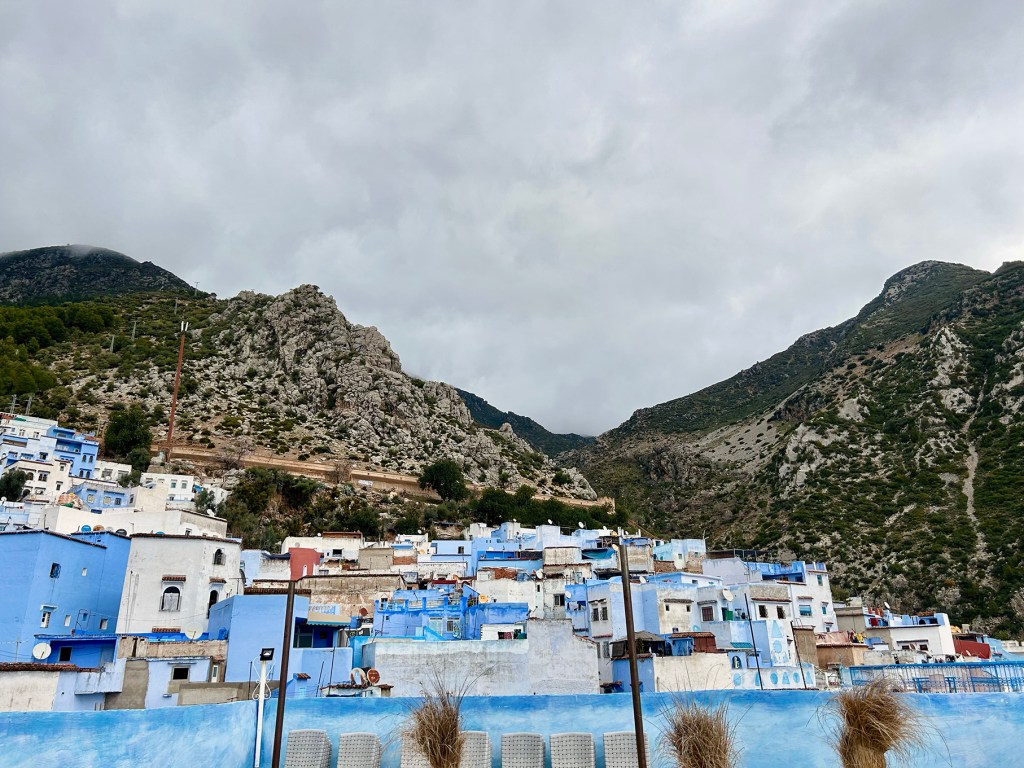
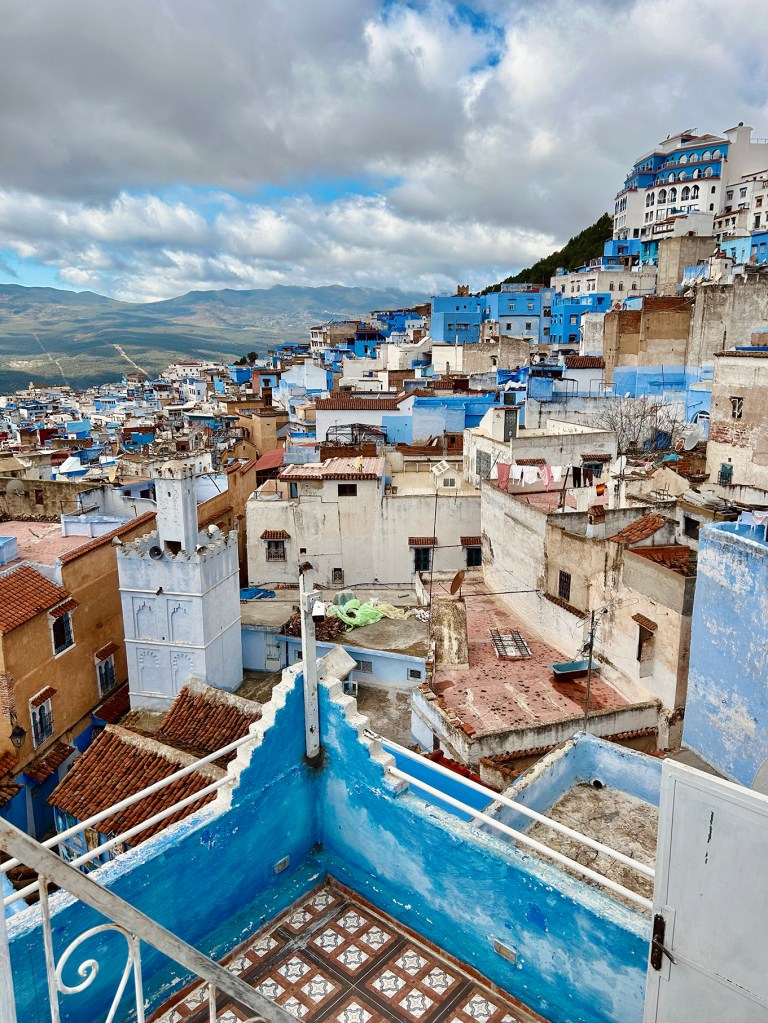
The gentleman from my riad was already waiting and he guided me from the drop-off. The steps were no joke, especially after a comfortable ride and a couple more pancakes that I’d treated myself to. But once we reached the riad, it was obvious that I’d hit another jackpot. A riad a bit higher up will give you views that are hard to beat, and a good workout to balance the hearty Moroccan breakfasts. This is called Riad Antek, and it’s the perfect choice if you want something on a budget that is still in the middle of things, very comfortable and cozy. It’s an older house with tiny rooms and steep steps, so it’s not for anyone with mobility issues. But it’s very clean, it’s got a lovely rooftop terrace and the location is absolutely perfect for exploring the whole town.
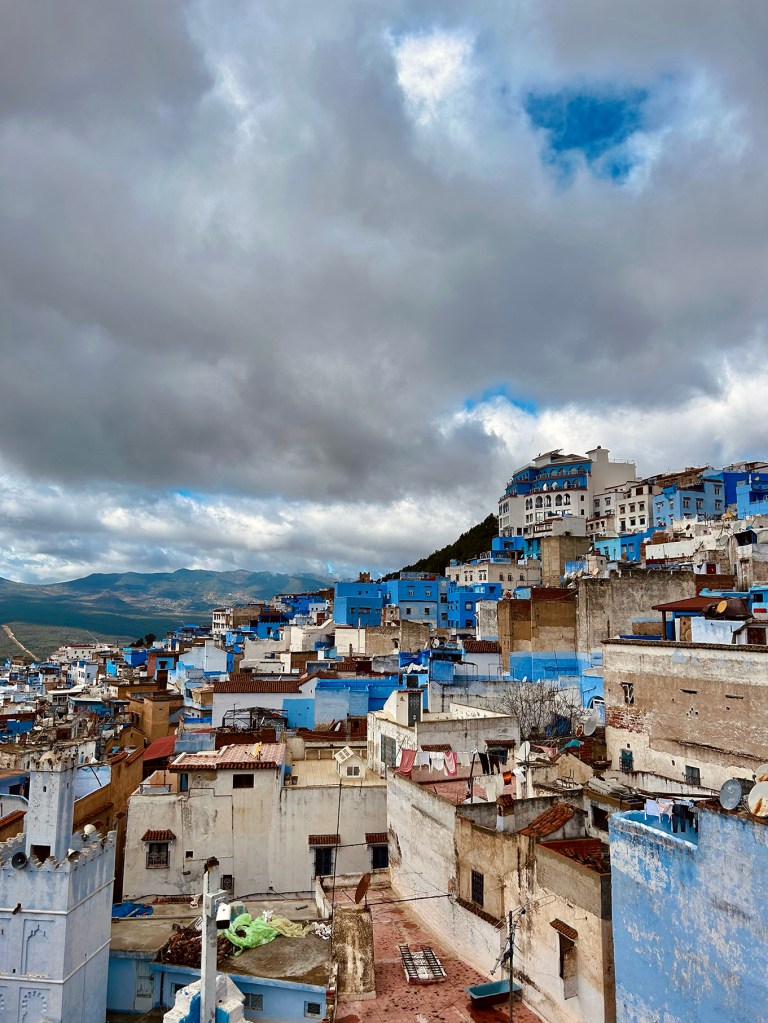
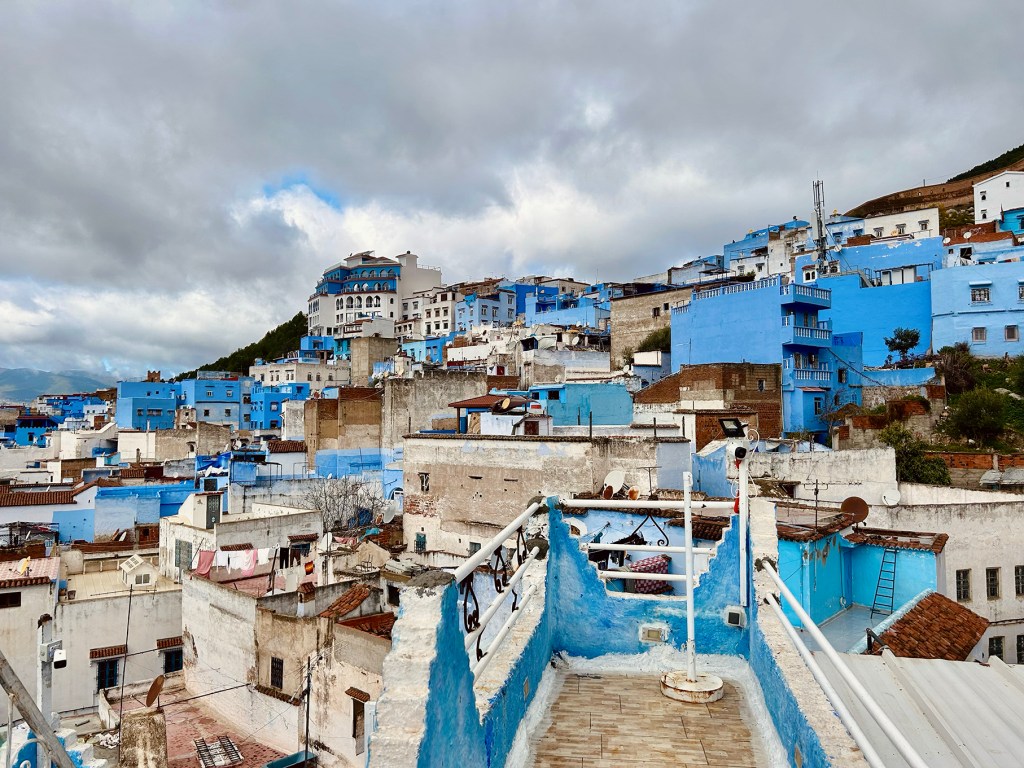
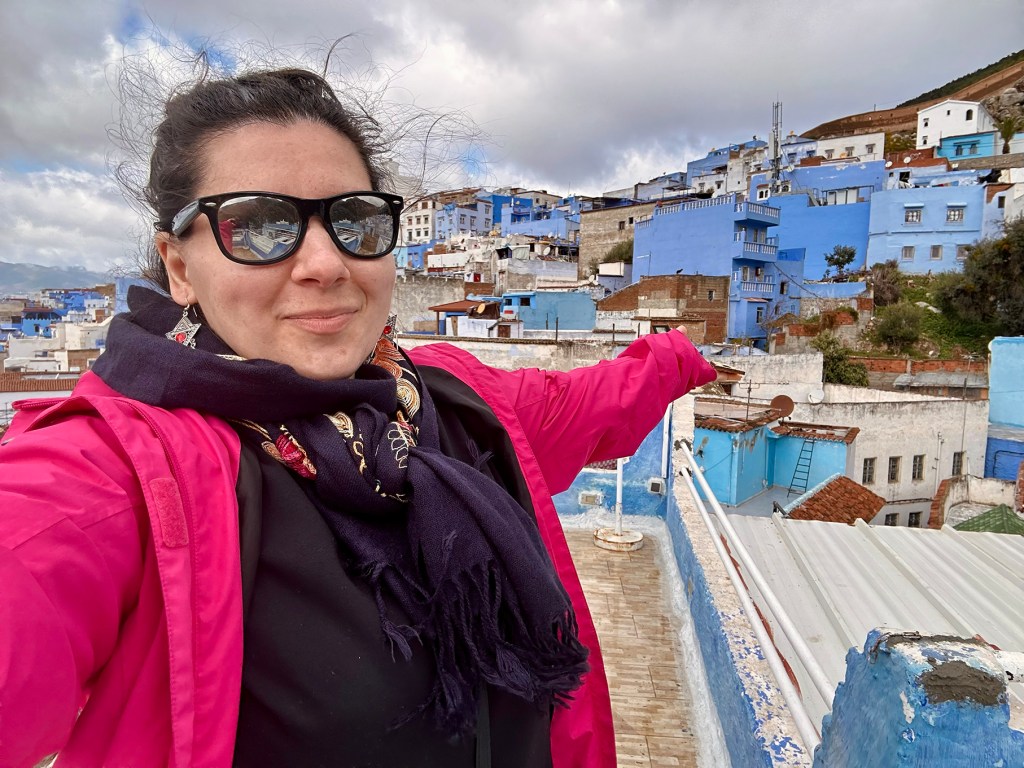
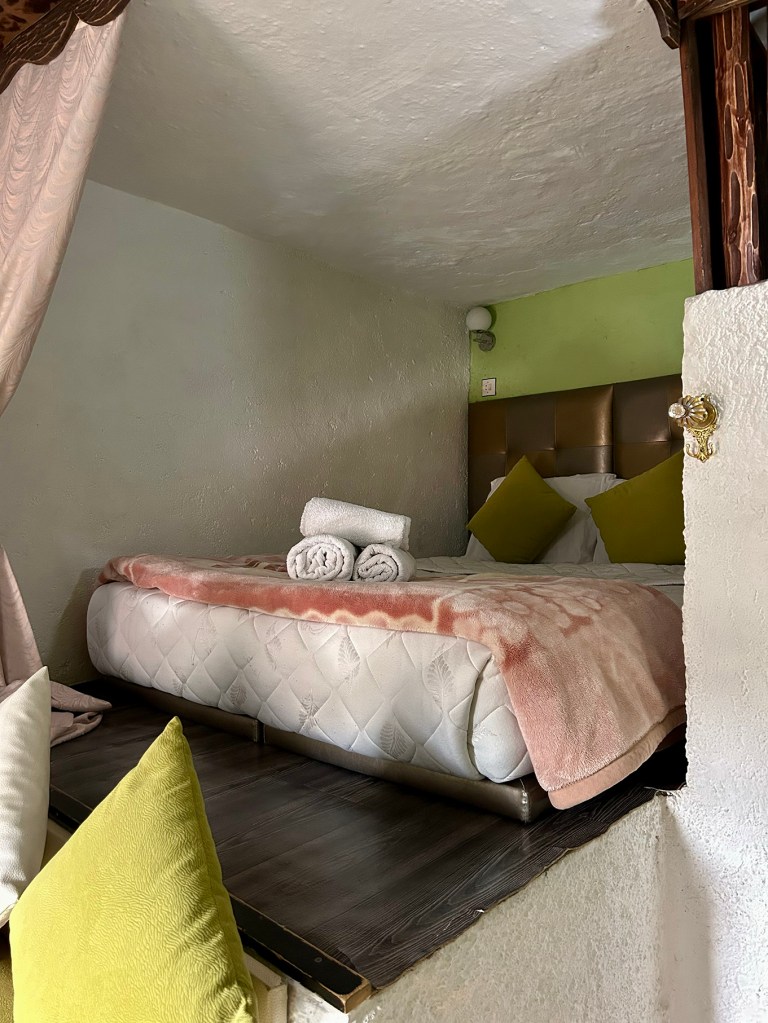
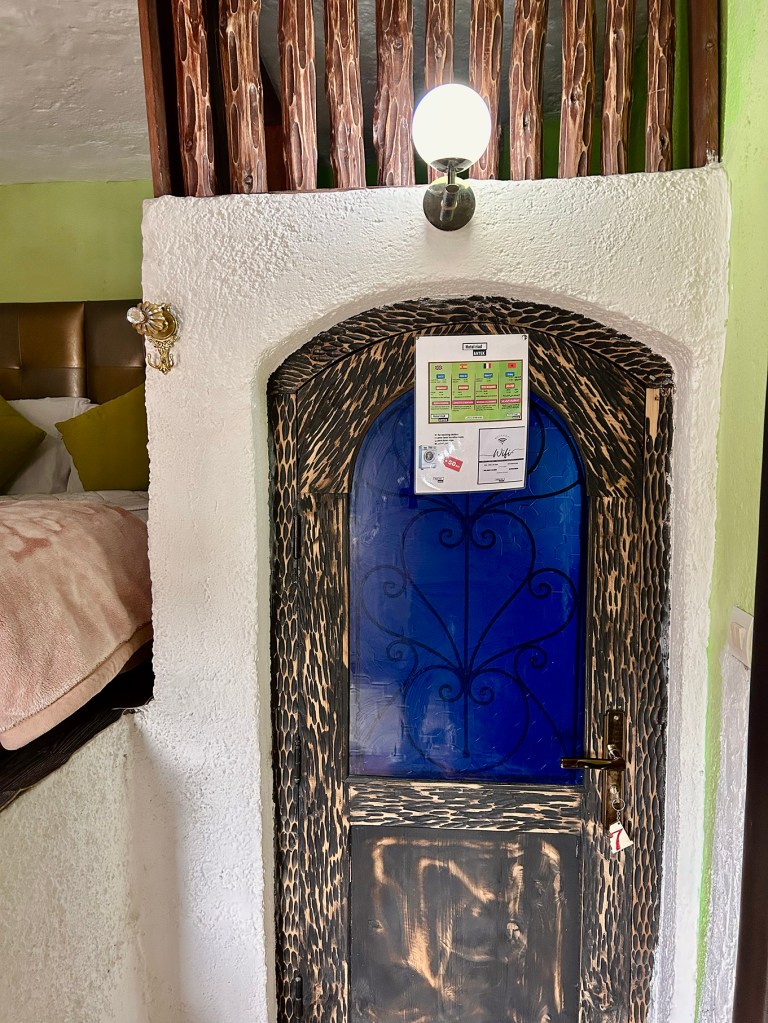
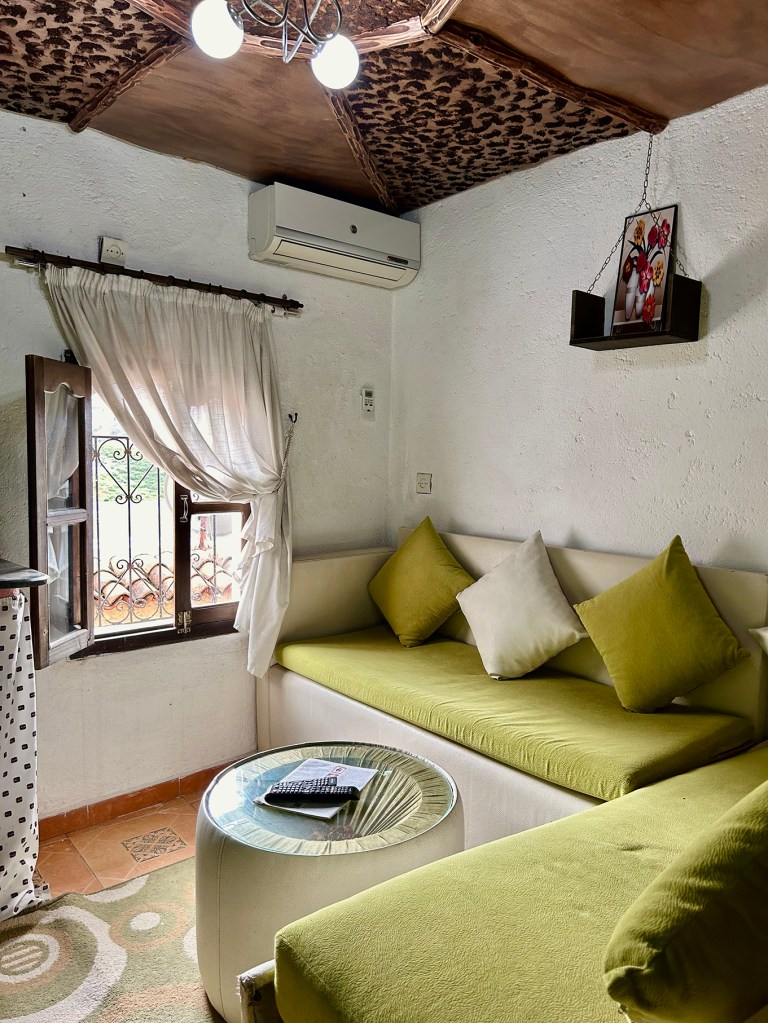
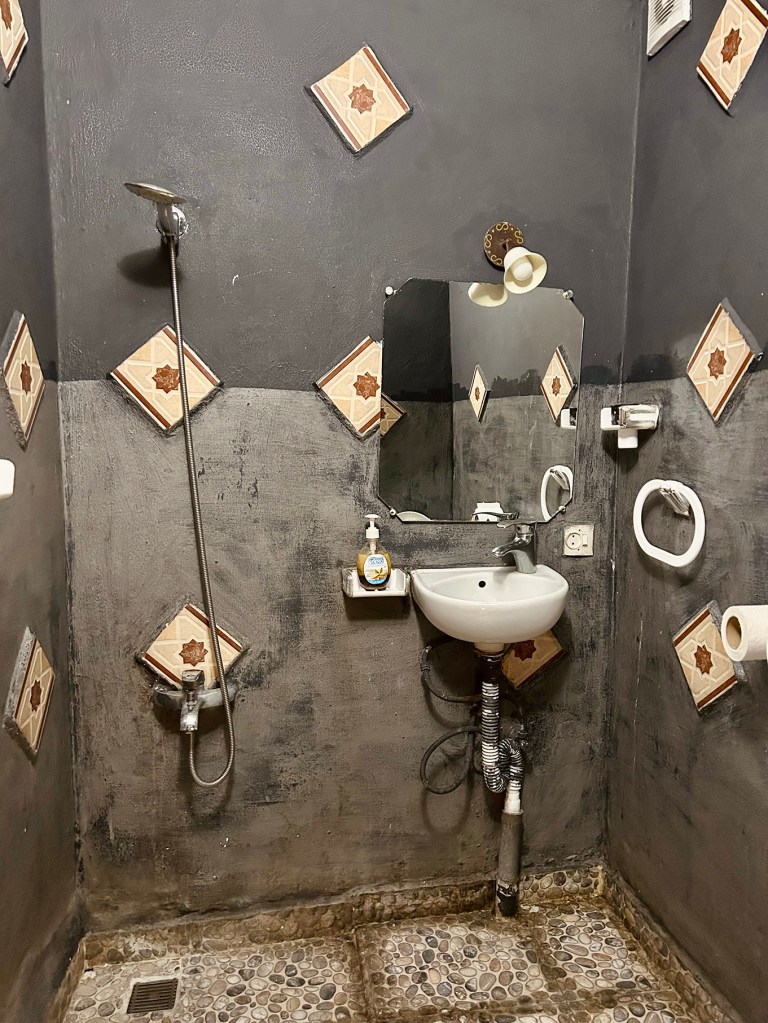
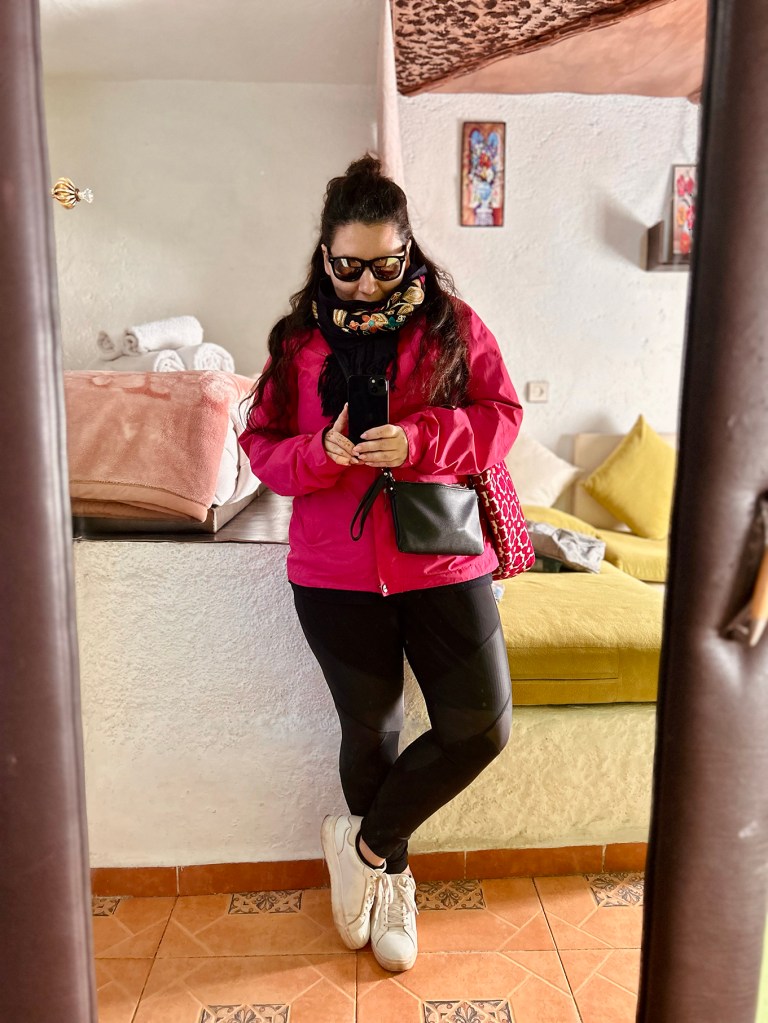
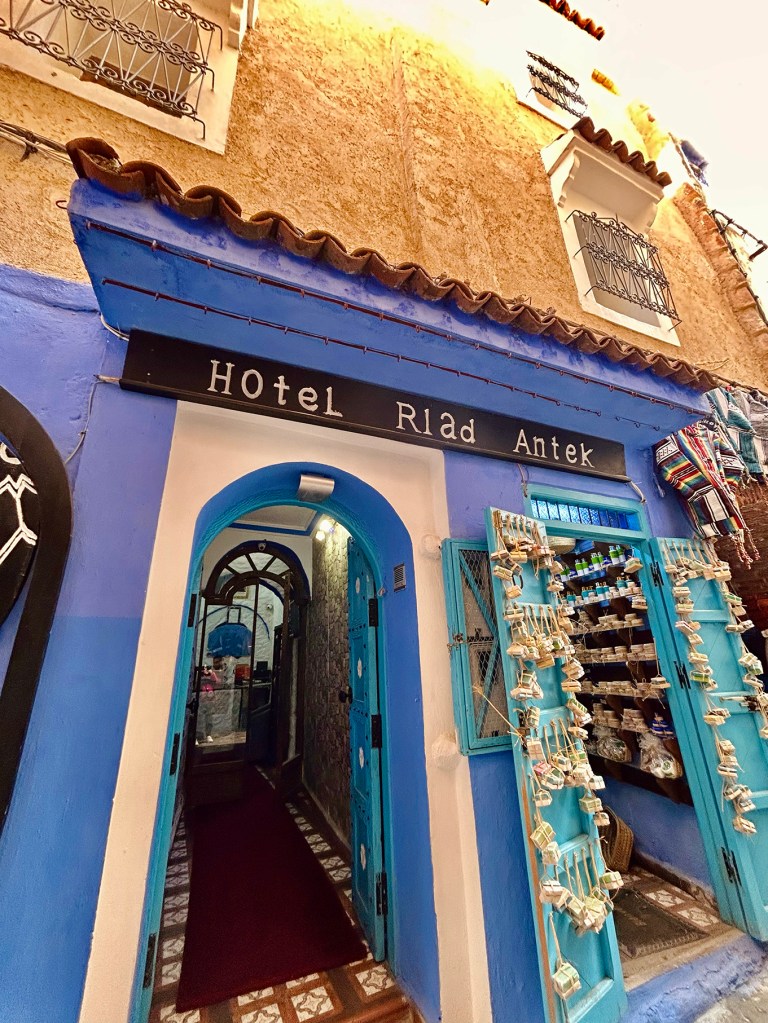
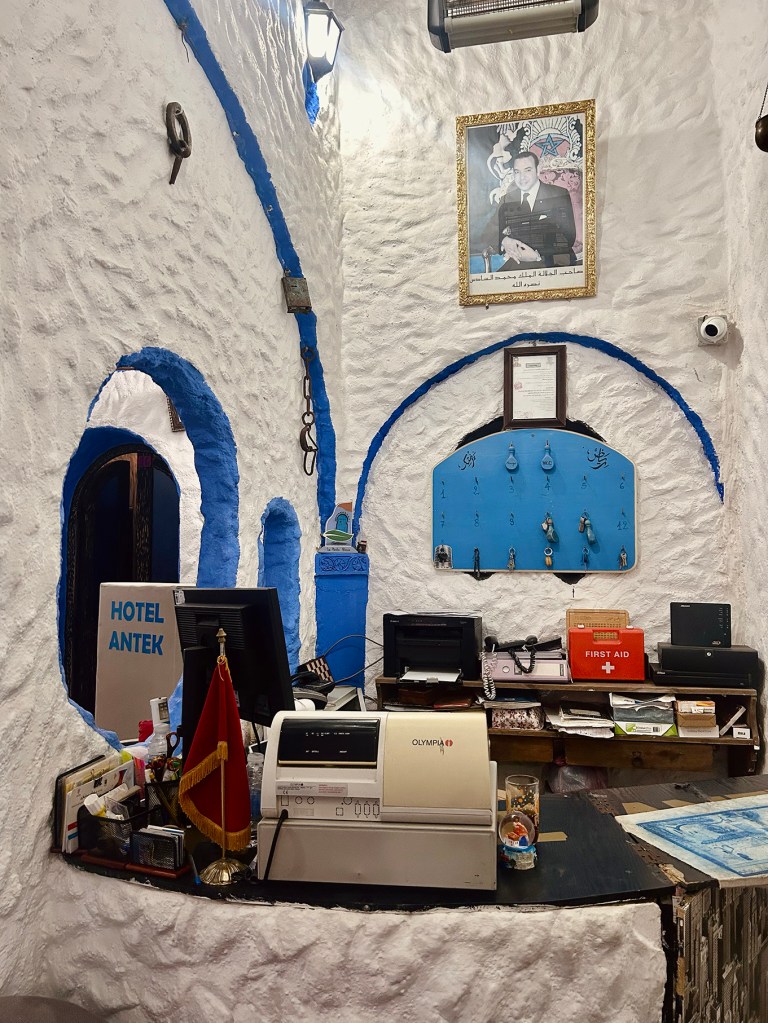
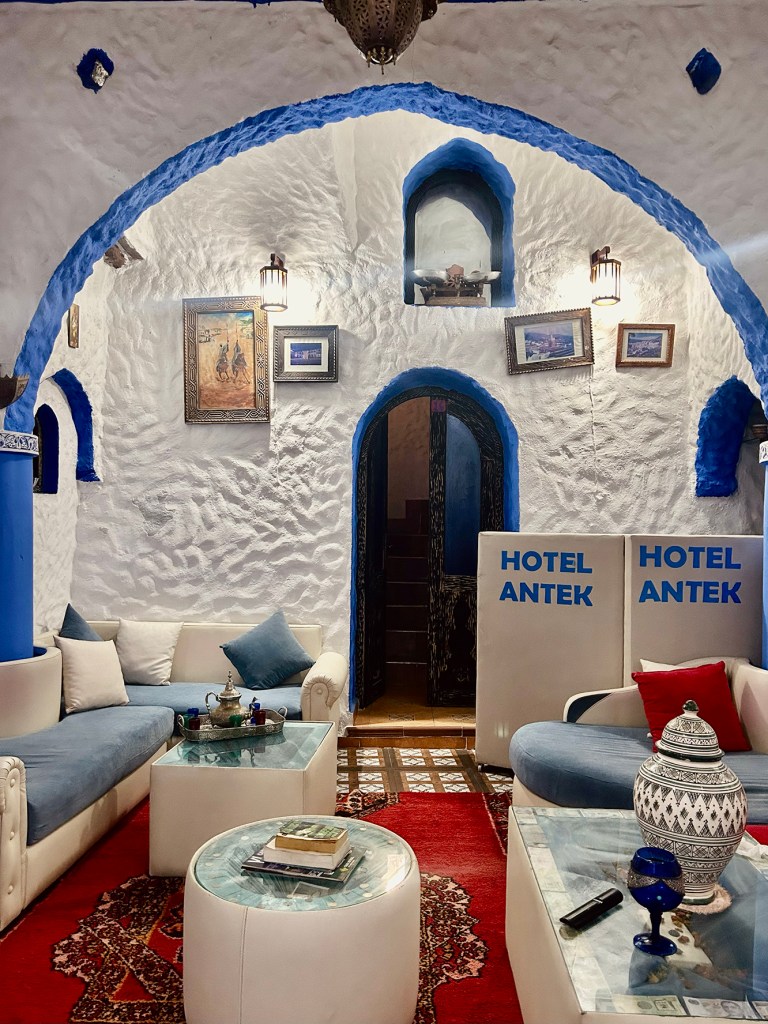
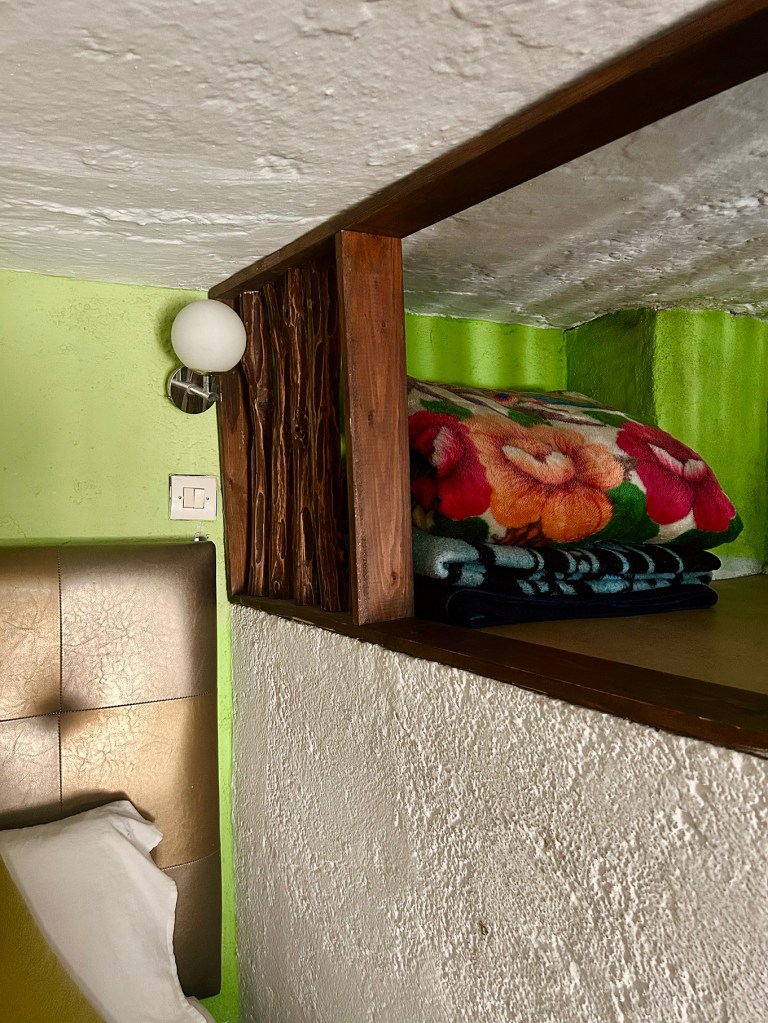
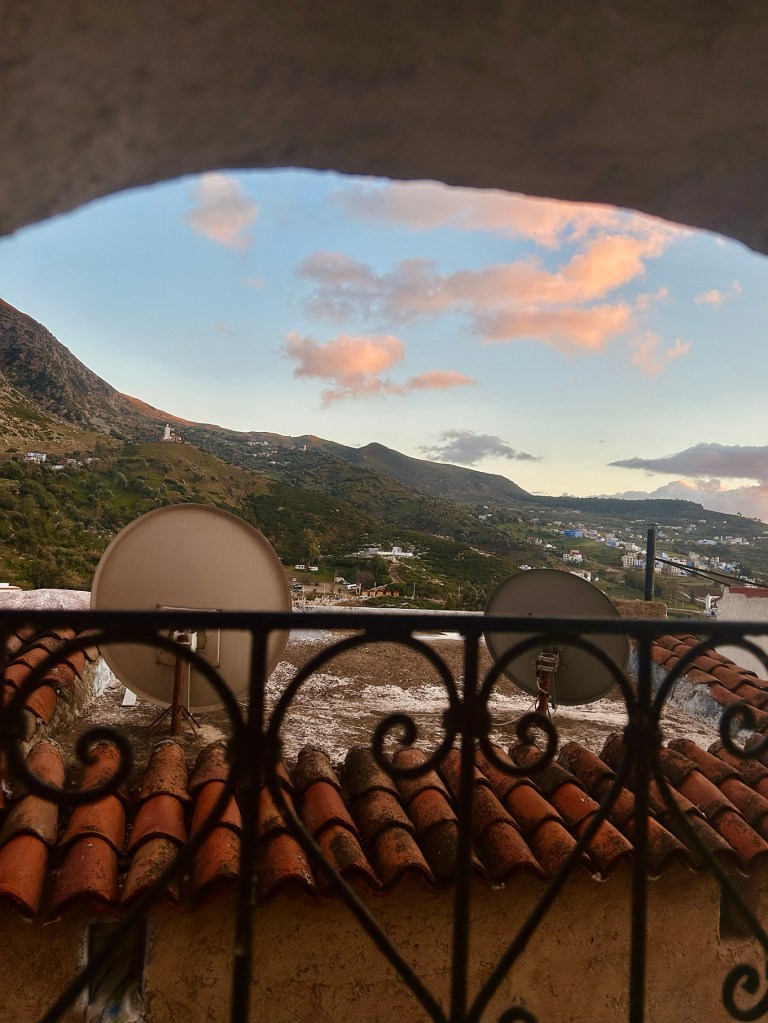

Even the bed in my room required a bit more climbing to reach, but let me tell you – it was sooooo comfortable and warm. All rooms I stayed in during this vacation came with at least one super fluffy and warm blanket. It weighed about a ton, but that combo of layers made the beds an absolute delight to be in. You feel really tucked in when you go to sleep, like your grandma has just made the bed for you and you love to hide underneath the covers while the chilly mountain air makes itself known in the room. In these older houses, there is no heating in the room, other than an AC machine that may or may not have the “heat” function. The houses are perfect for when it gets hot in the summer, with the cold walls and tiled floors. But in the winter, the extra blankets are an absolute necessity.
At Riad Antek, you can have your breakfast on the terrace, even if it’s very cold outside. A lovely lady asks you what kind of eggs you want in the morning and she prepares everything on the spot. Again, I feel insulted that back home in Sweden I don’t get breakfast with stunning mountain views either.
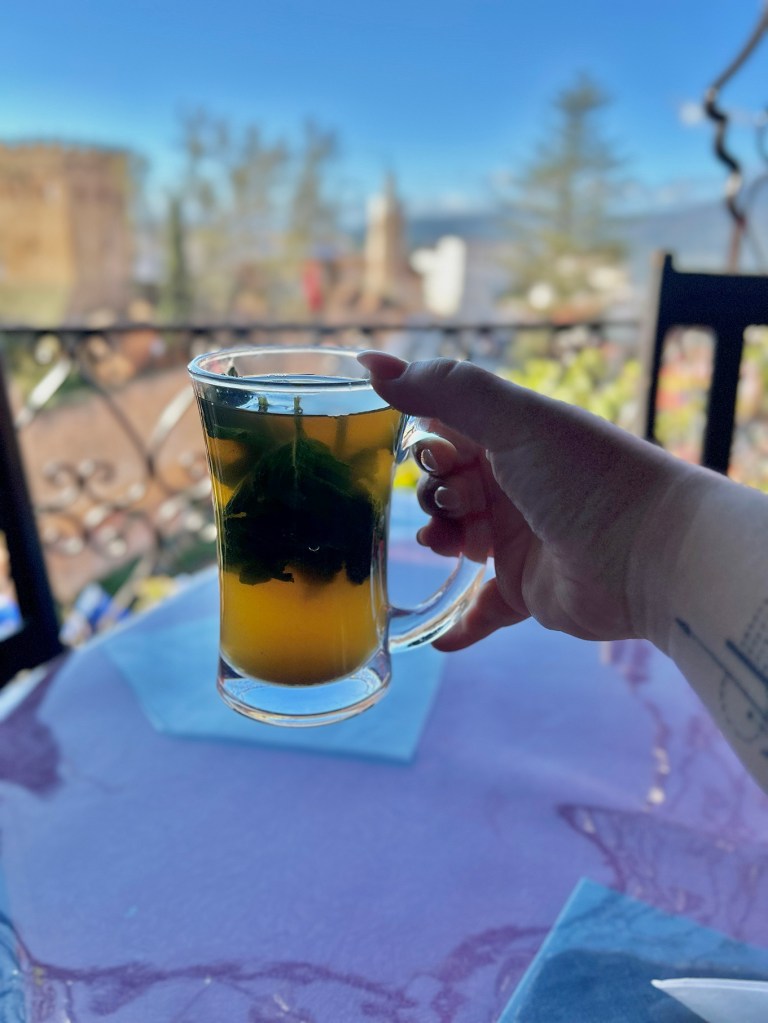
And we haven’t even spoken properly about the tea! I grew up in Romania, with home remedies, a lifestyle that was more in tune with what nature has to offer, and a grandma who knew pretty much all there is to know about plants. Mint tea was the go-to remedy for an upset stomach. It wasn’t pleasant for me at the time, especially without sugar, but as I got older I really got the hang of it. It’s fantastic against bloating and nausea, it helps your stomach stay calm at higher altitudes and I’m starting to think it’s better than toothpaste, because a majority of Moroccans I met had impeccably white teeth. Okay, maybe that’s not only the work of mint tea, but either way, if you’re not drinking lots of it while in Morocco, what are you even doing with your life?
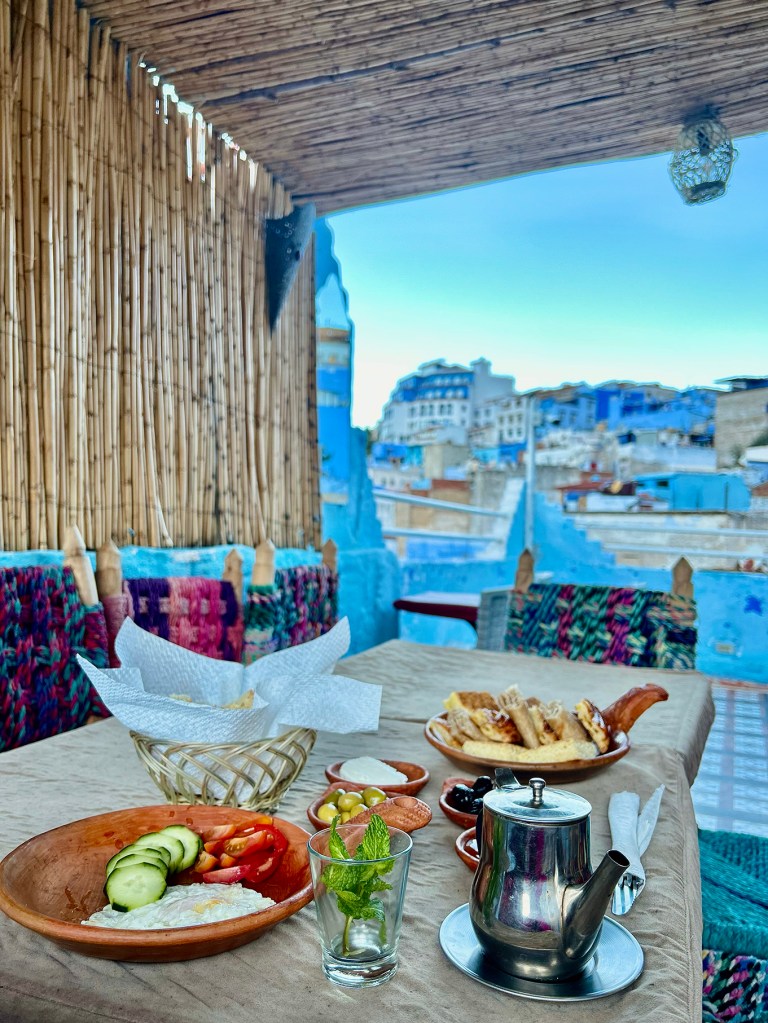
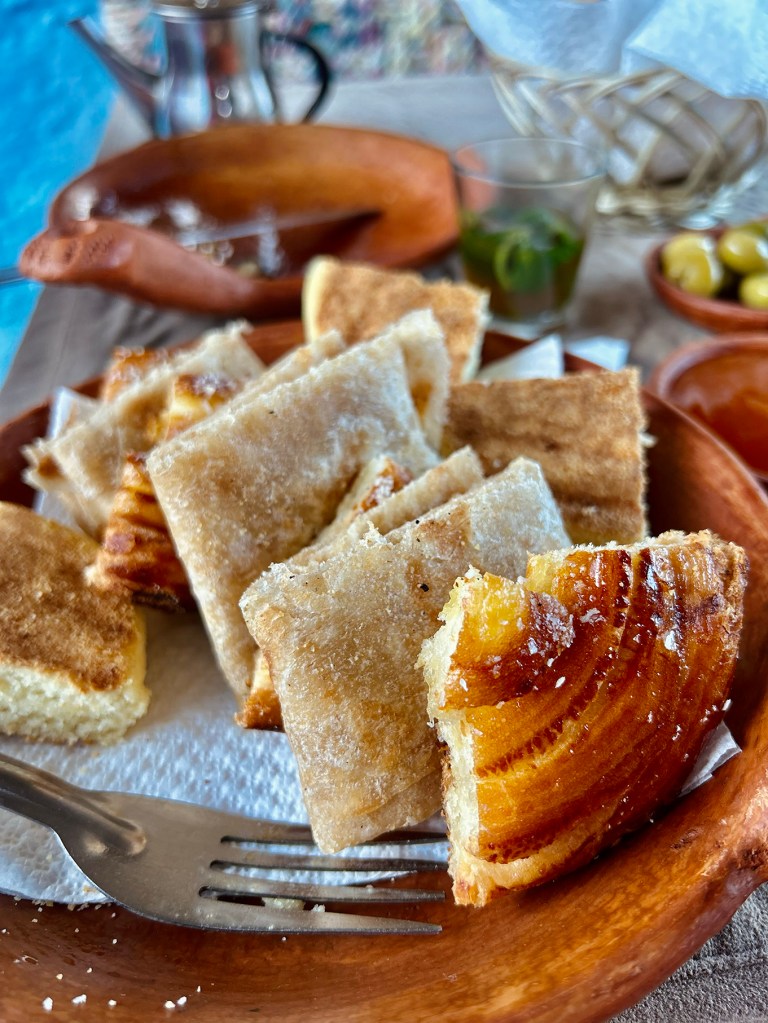
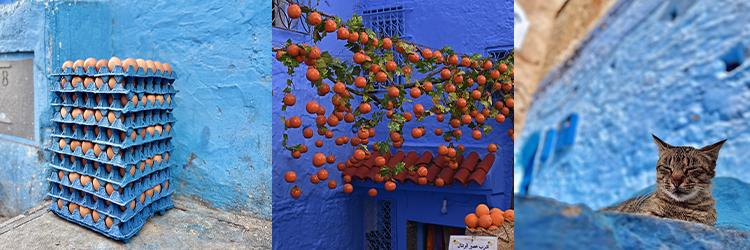
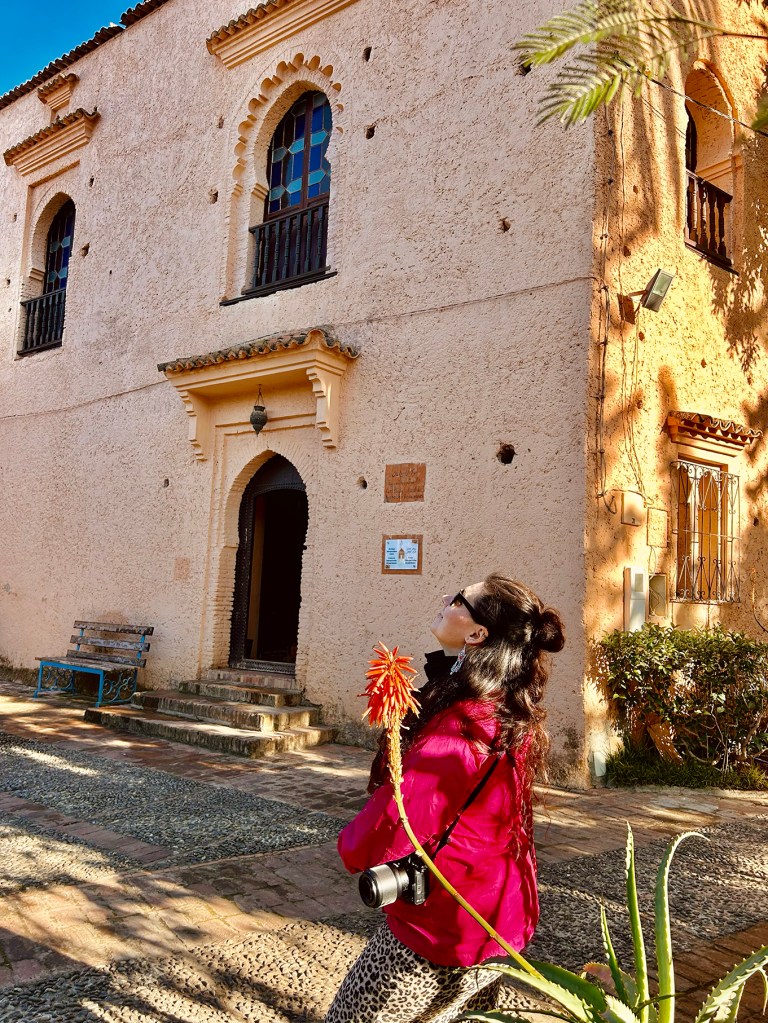
Chefchaouen is famous for its medina, filled with houses painted in shades of blue and white. The town’s design reflects Moorish and Andalusian influences, with red-tiled roofs, fountains, carved wooden balconies, and arched doorways. If you ask me, it should also be famous for orange cats, hippie decor, delicious street food and cafés with live music. The people are very friendly, and Spanish is the predominant language in tourism here. Salesmen are not as pushy as in the south, many house doors were simply open all day long and the town is pretty sleepy in the morning, so you can enjoy a lot of calm moments exploring.
It also has a more modern neighbourhood, as it expanded further down in the valley. That one is obviously not as picturesque, but if you want to get away from the crowds of curious tourists, you can take a break in the Plaza Mohammed V and then check out the areas south and north-west of it.


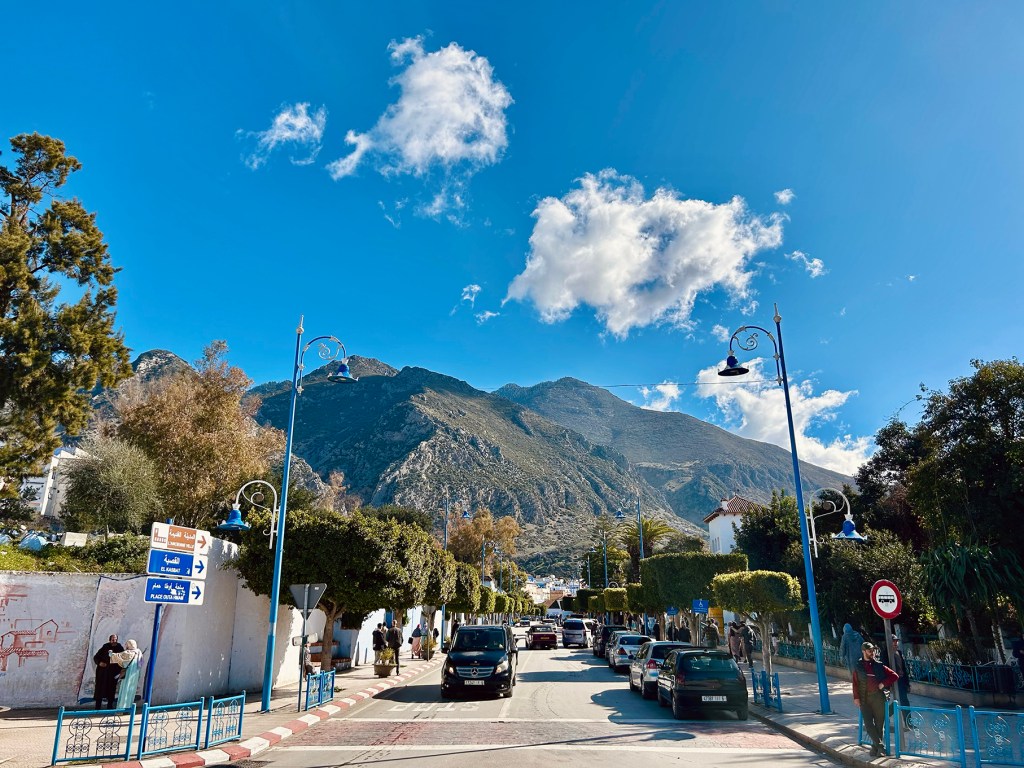
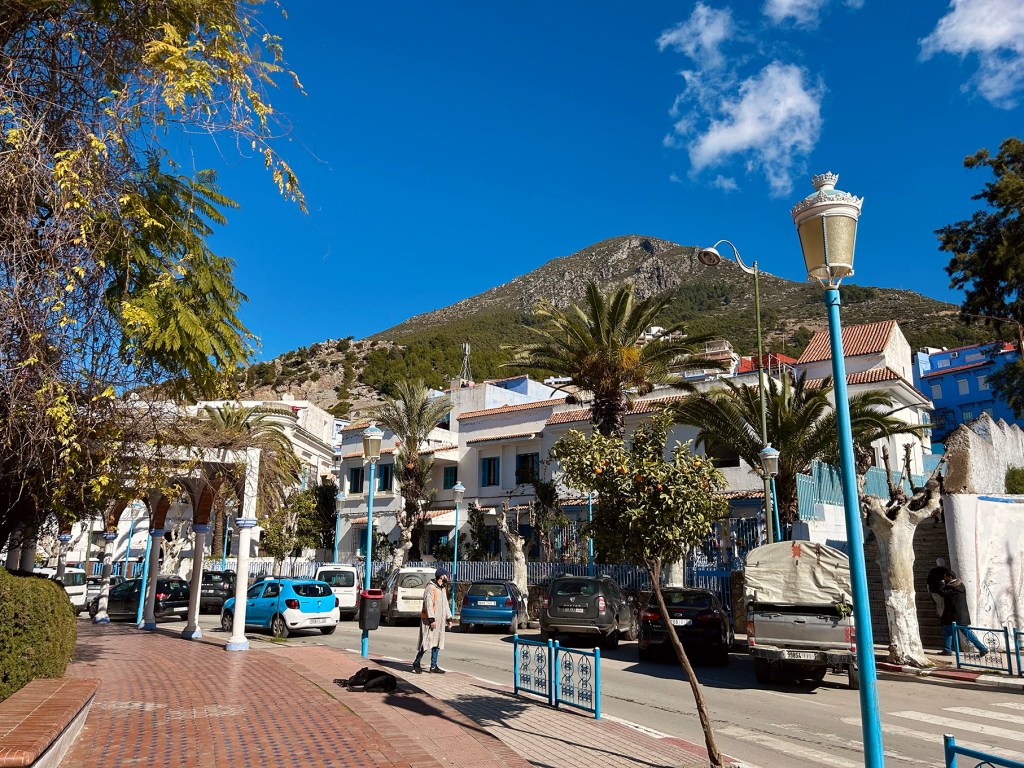
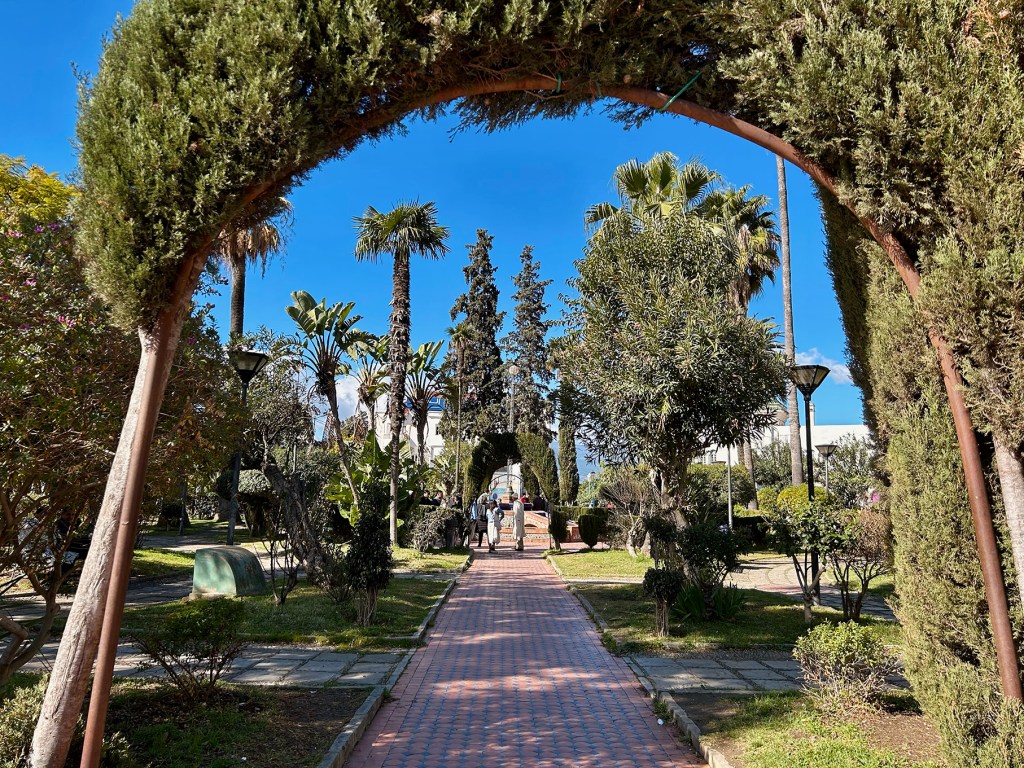
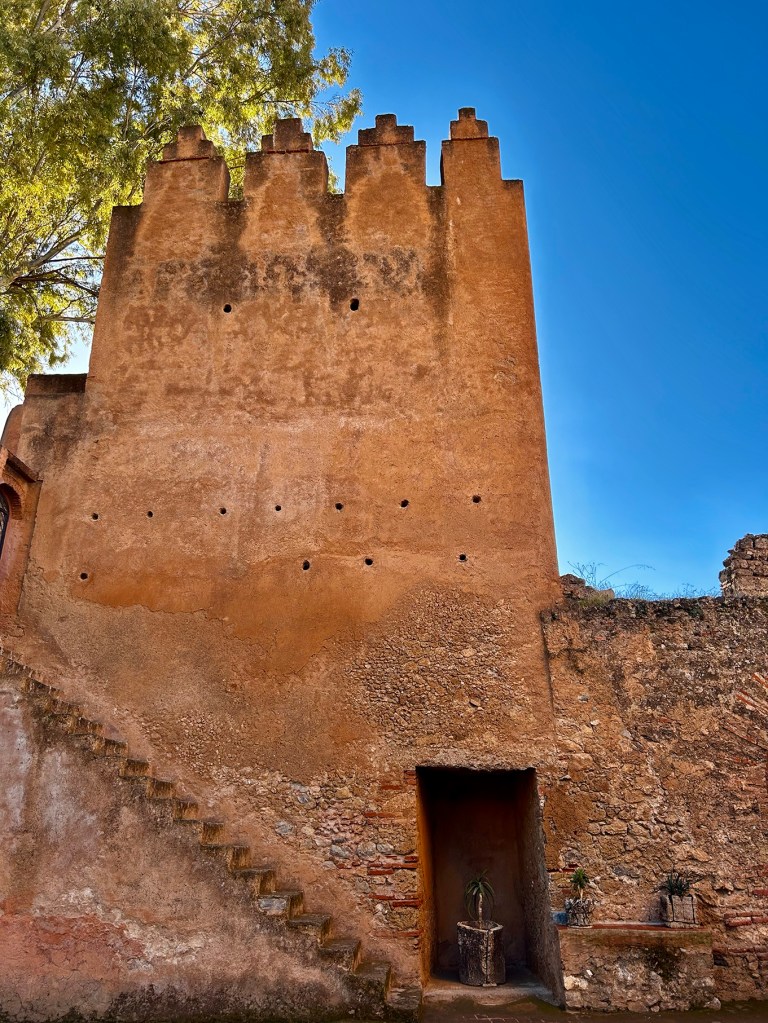
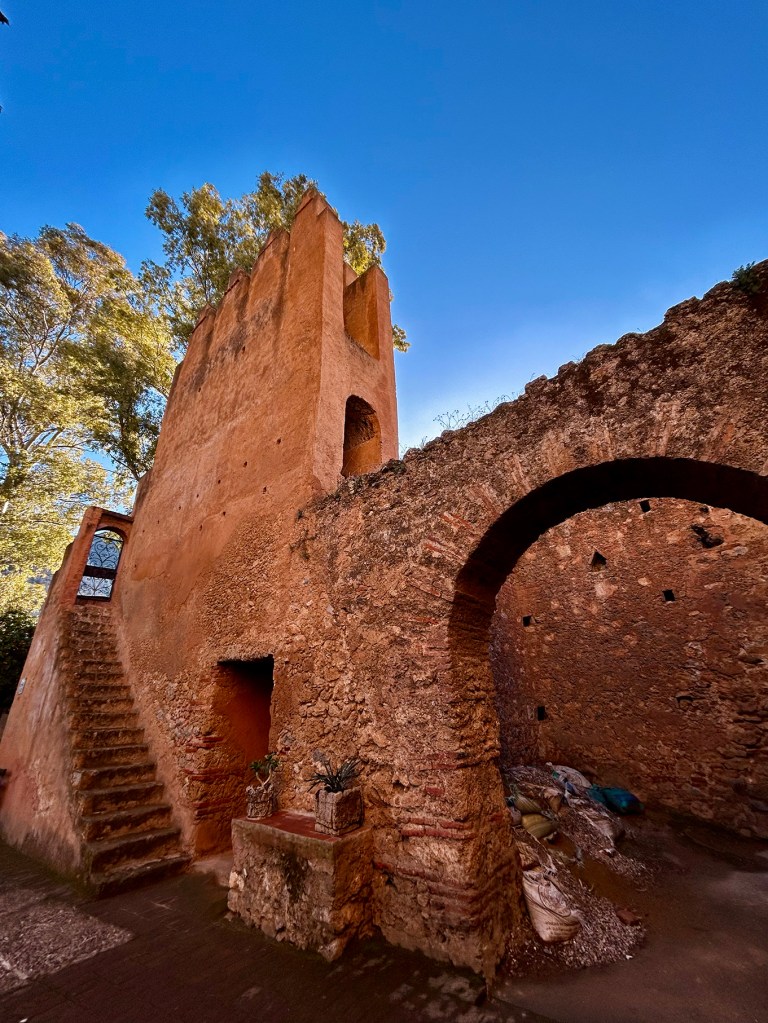
I spent a day and a half in Chefchaouen, walking, walking and then walking some more. Just like in Fes, any map app will struggle when you happen to take a wrong turn and end up in a tiny alley at night. And when so much is painted blue, you’ll find yourself wondering if you’ve lost your mind or just your way. Tiny doors, colourful fresh laundry, the occasional tower and bab (gate) from the middle ages which remind you that you’re standing on centuries of history even if there’s a kebab place or magnet shop just around the corner. It’s so lovely!
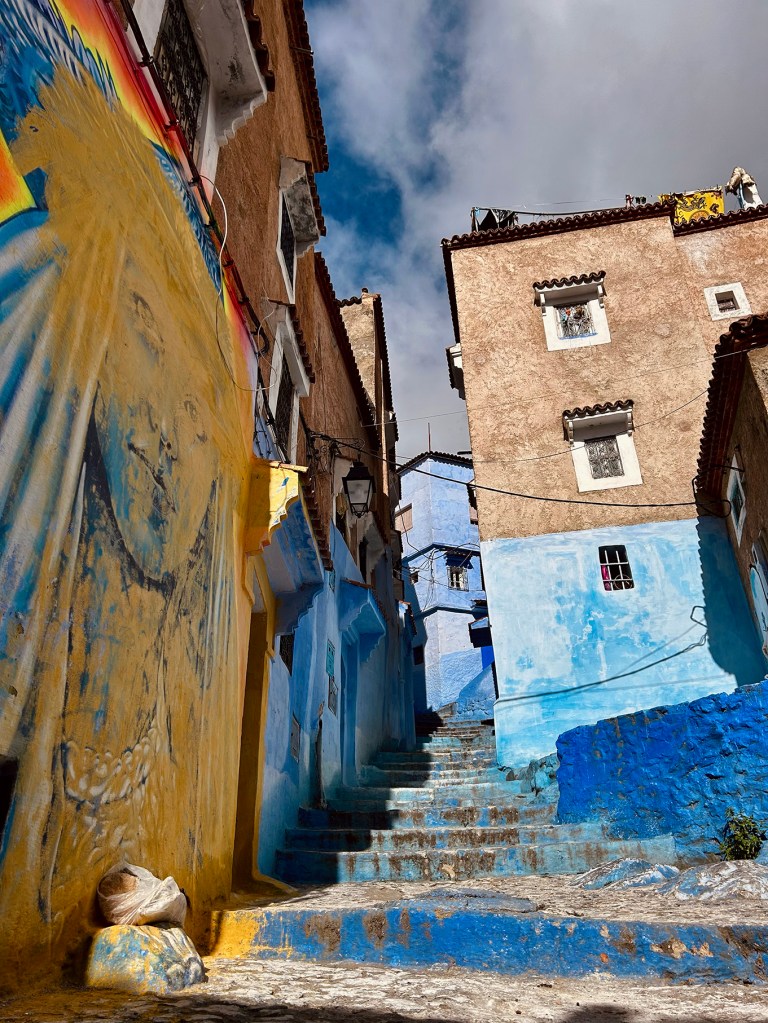
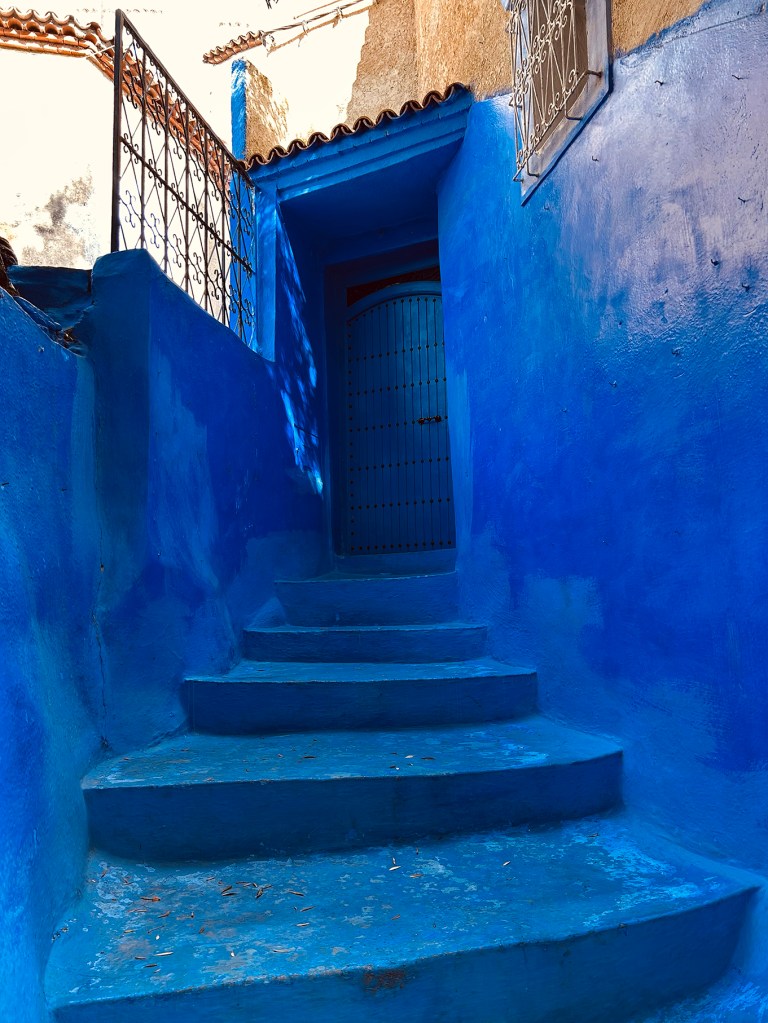
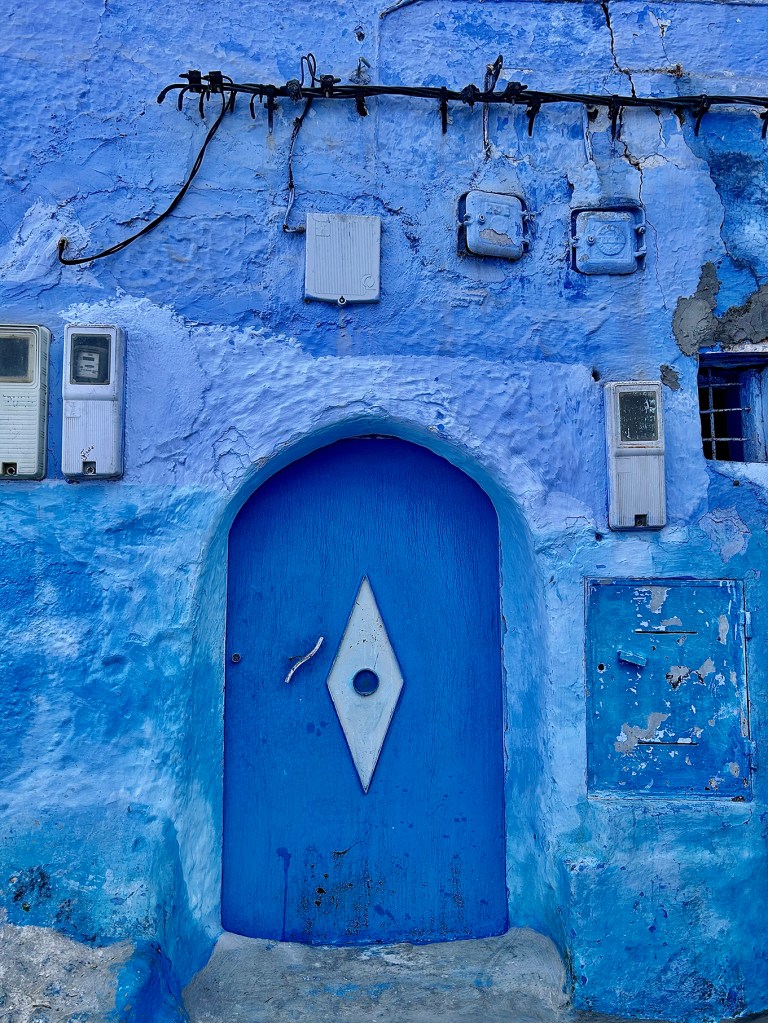
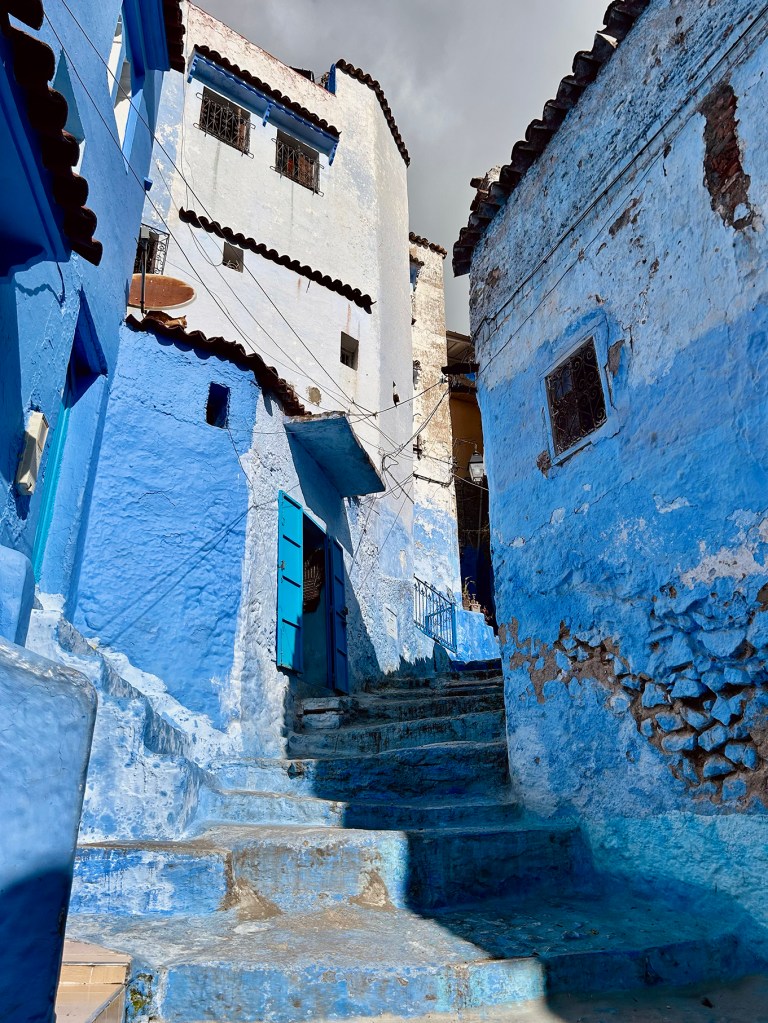

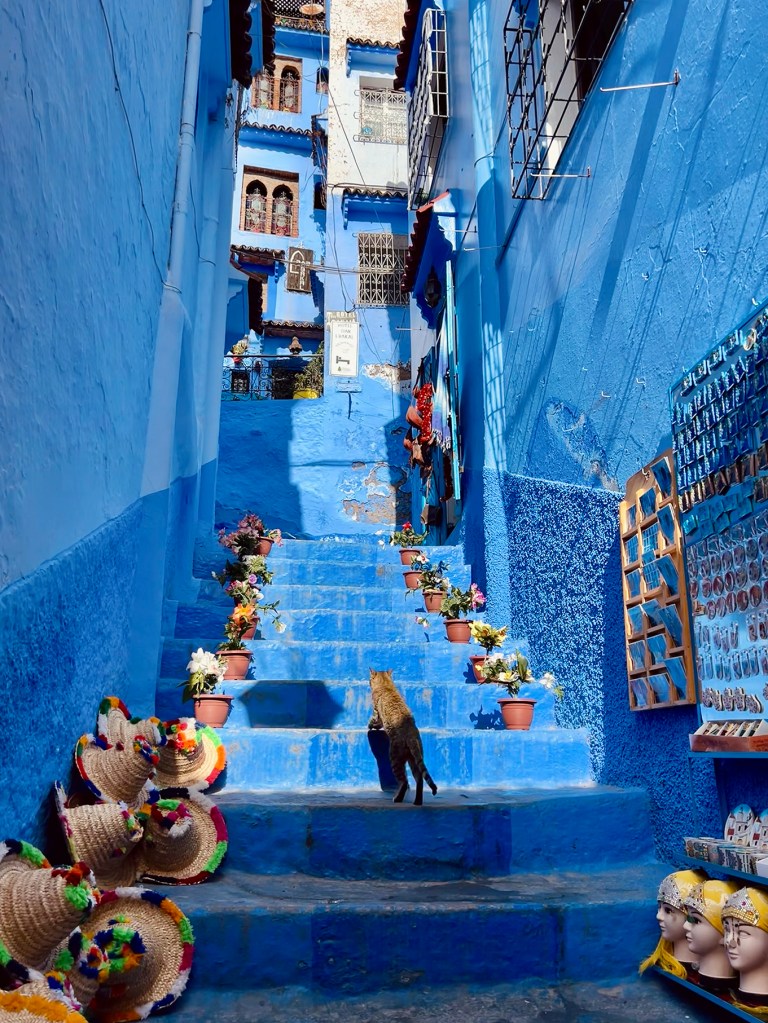
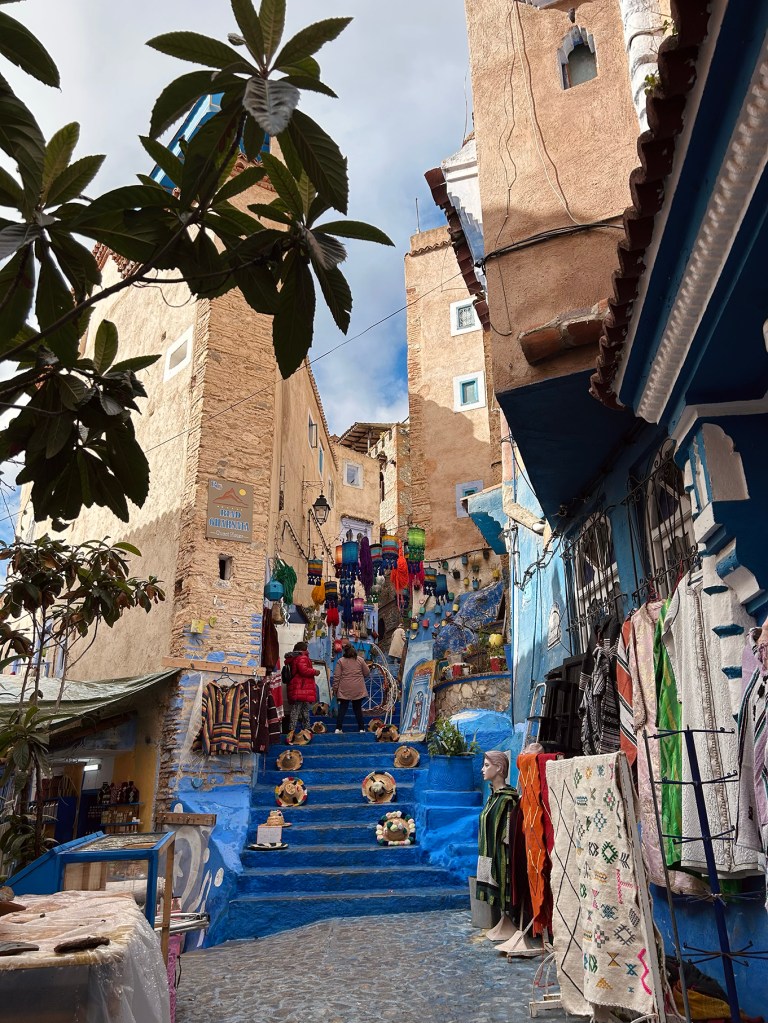
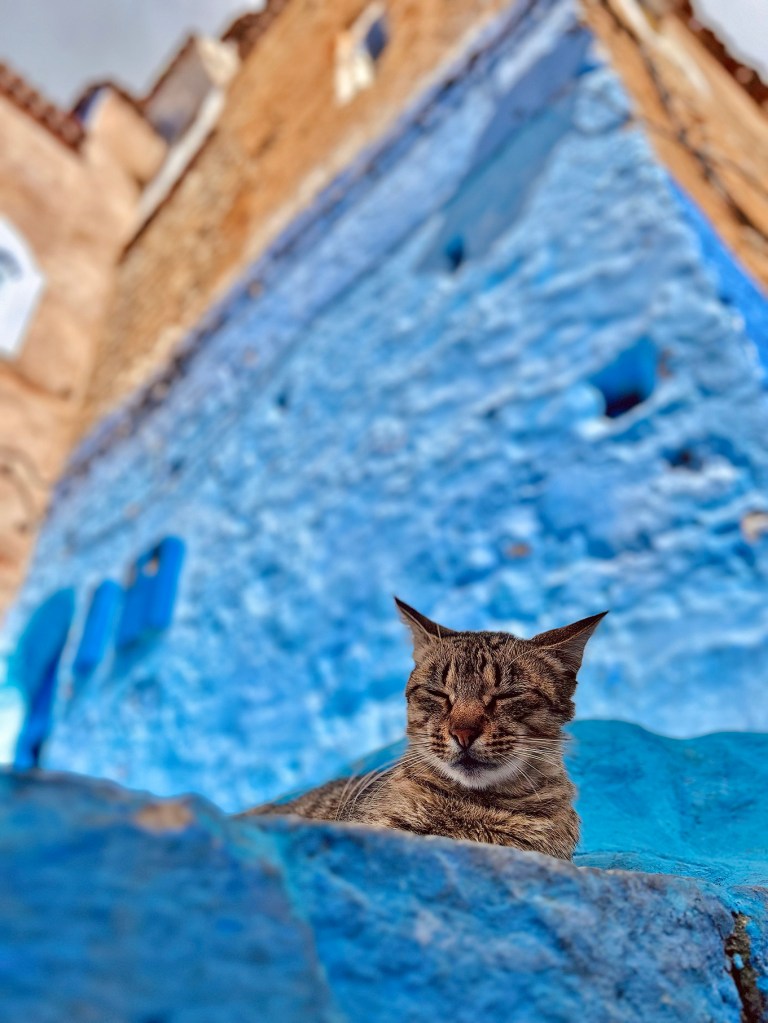
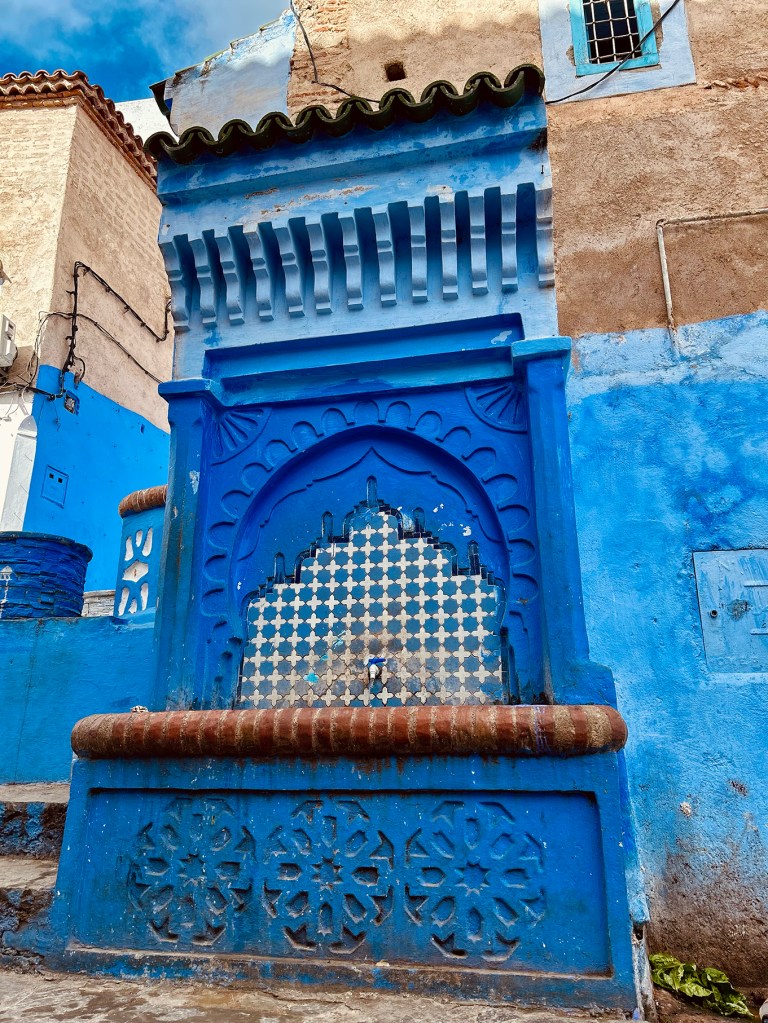
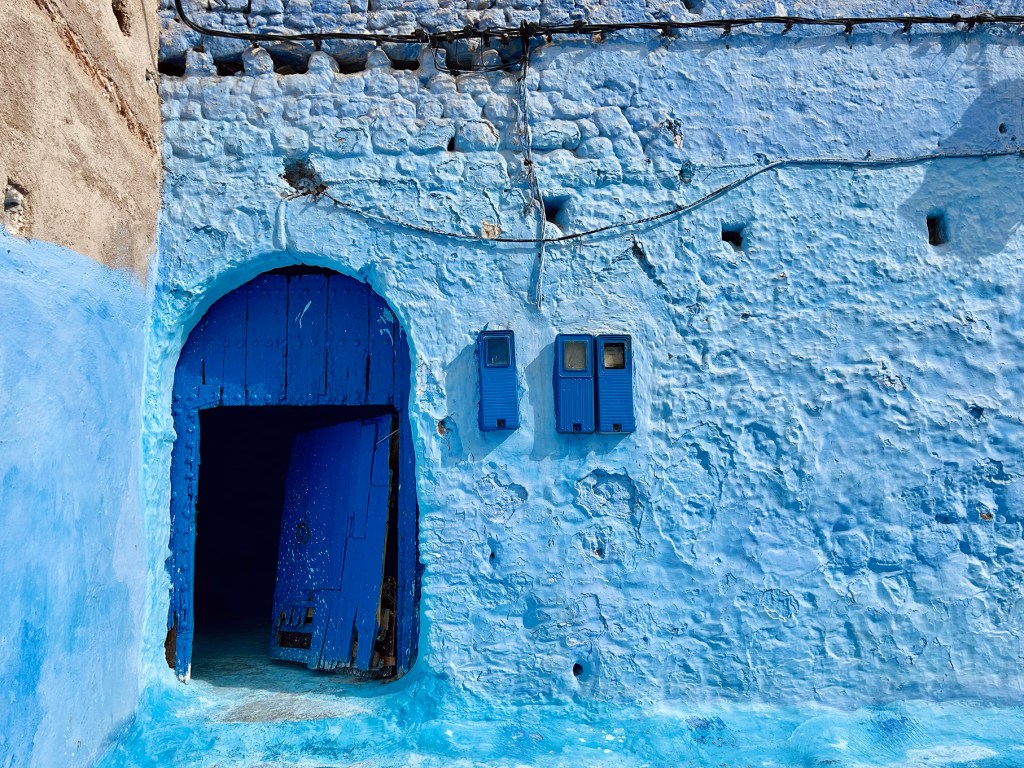
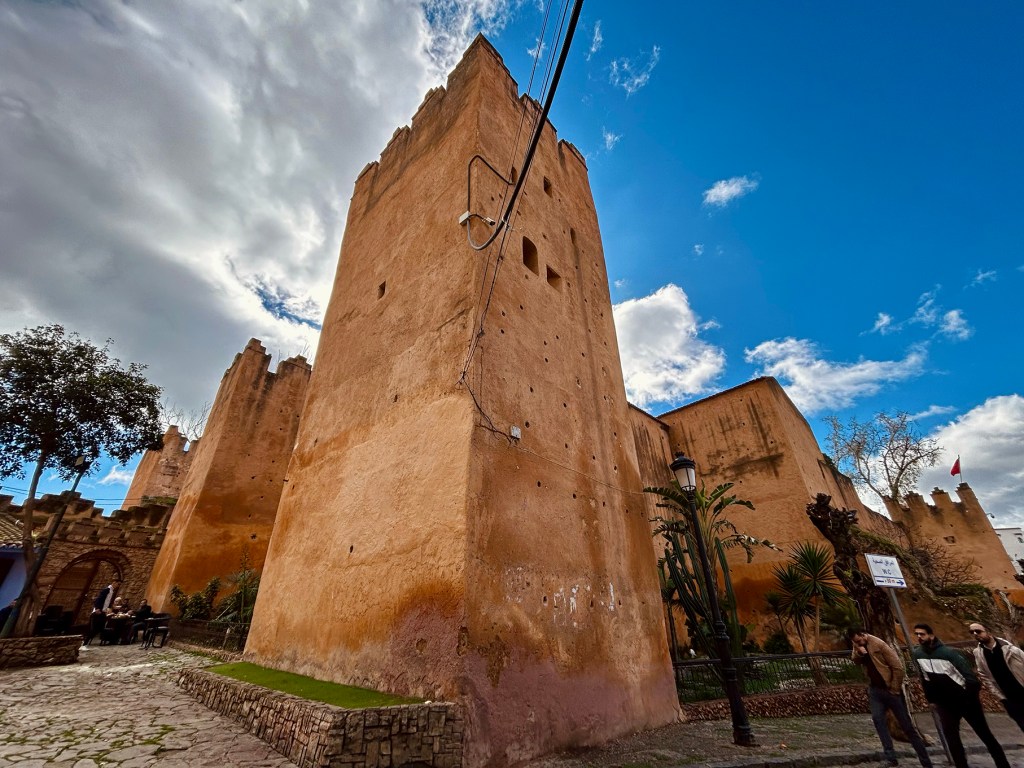
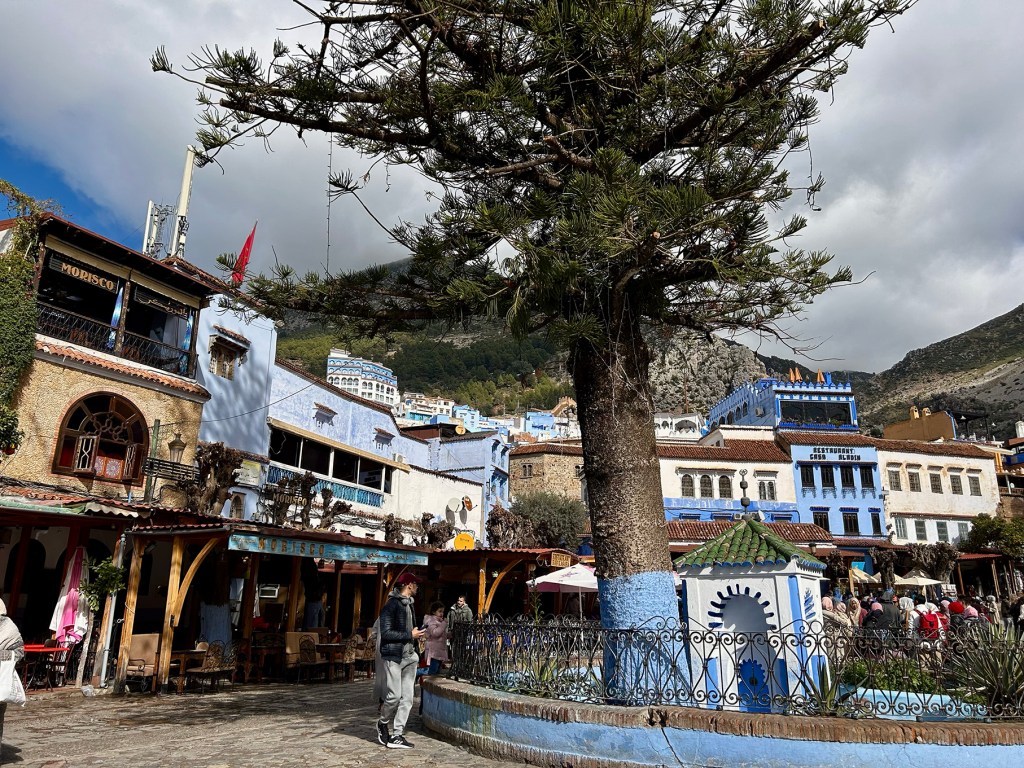
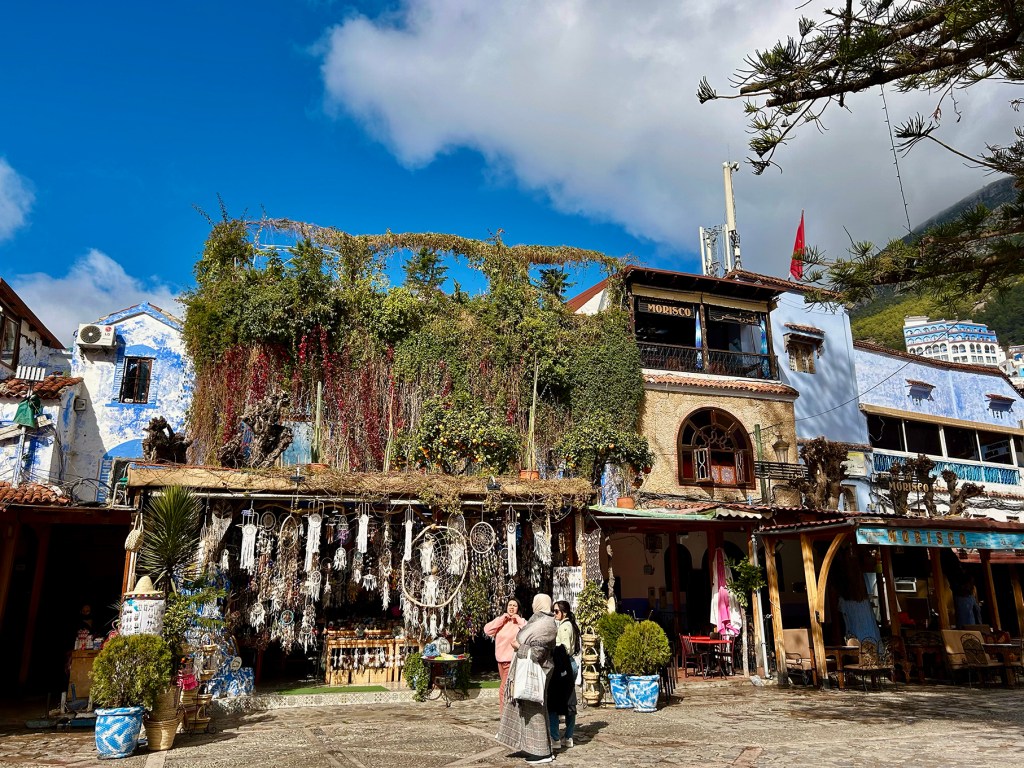
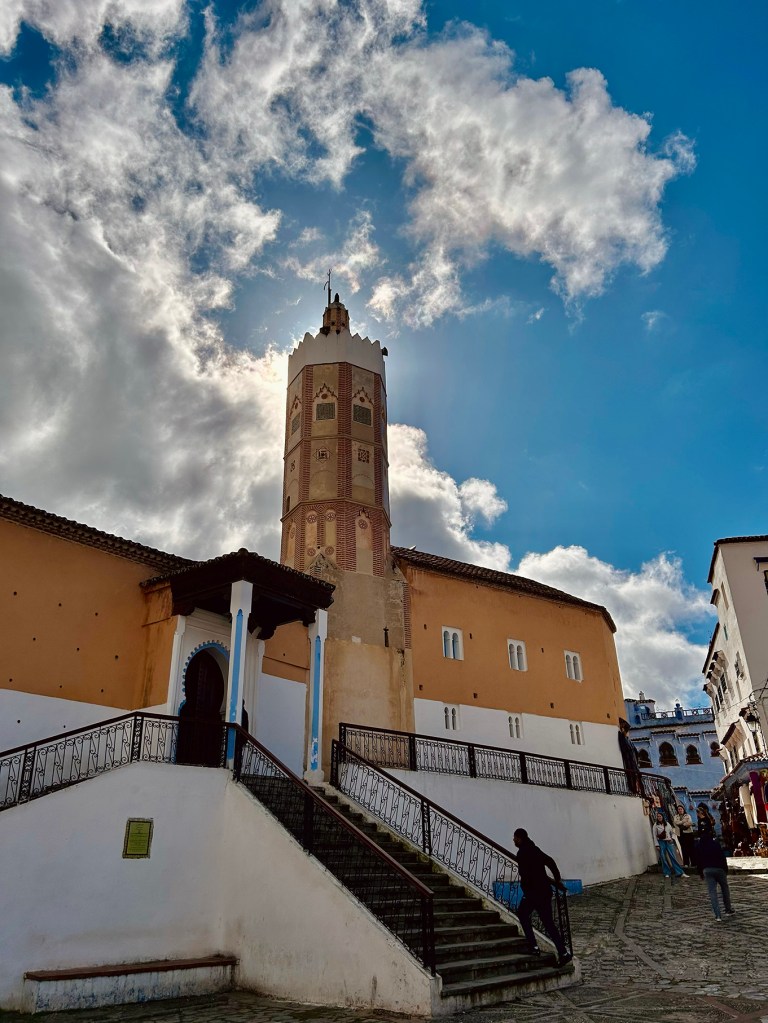
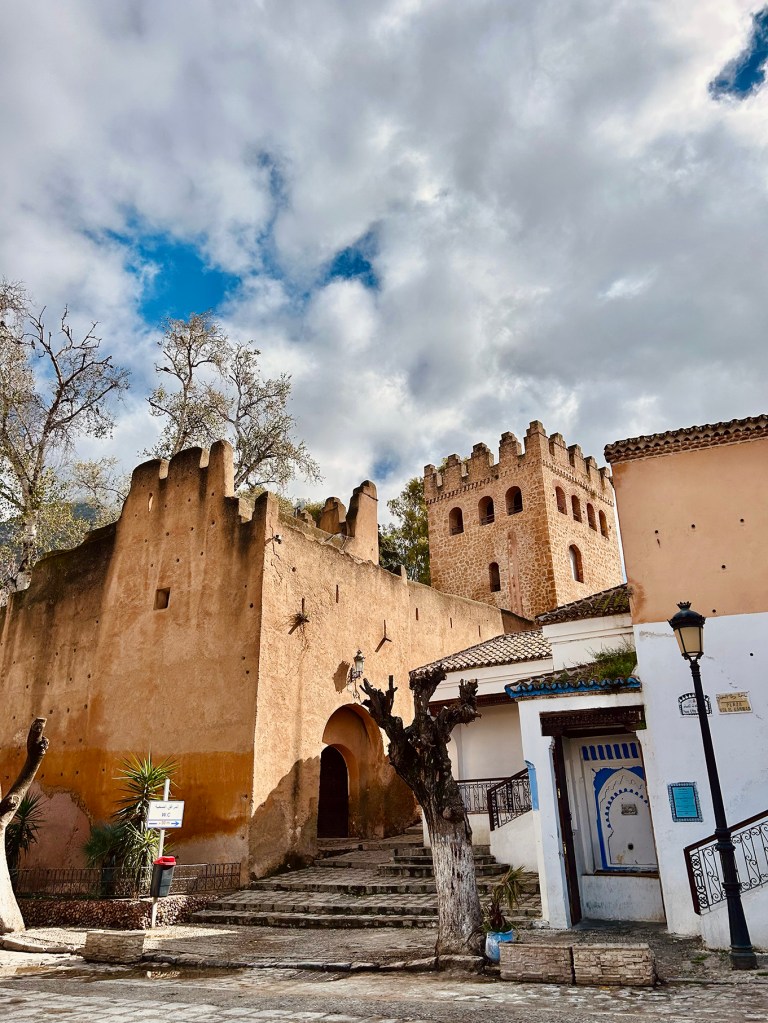
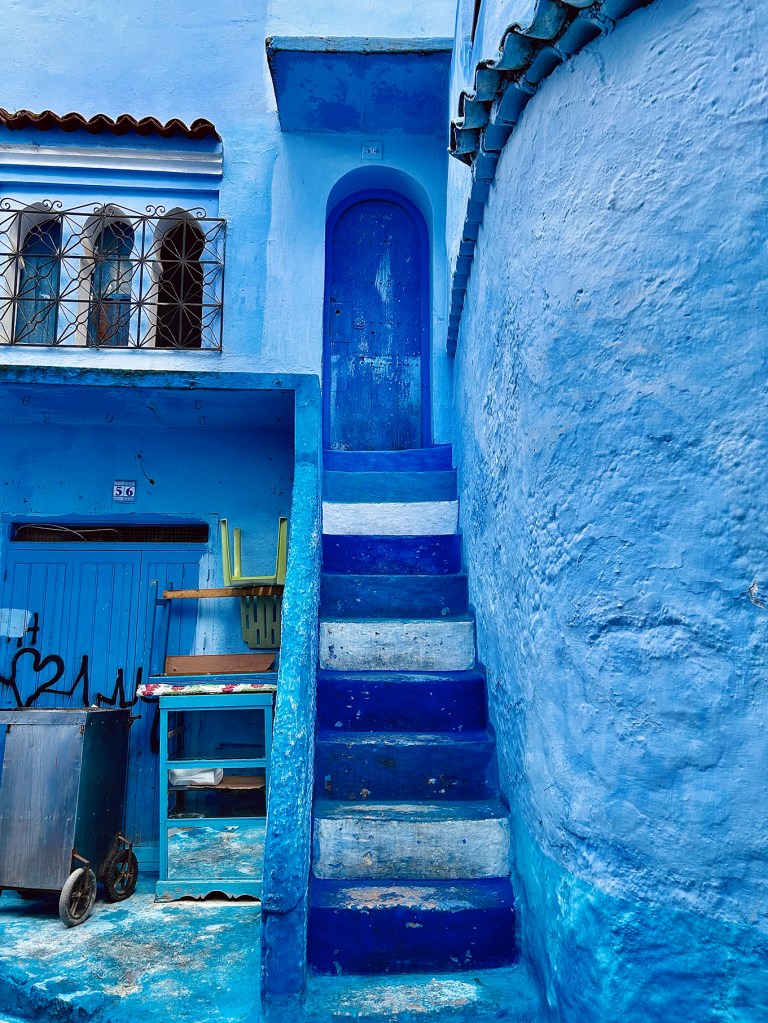
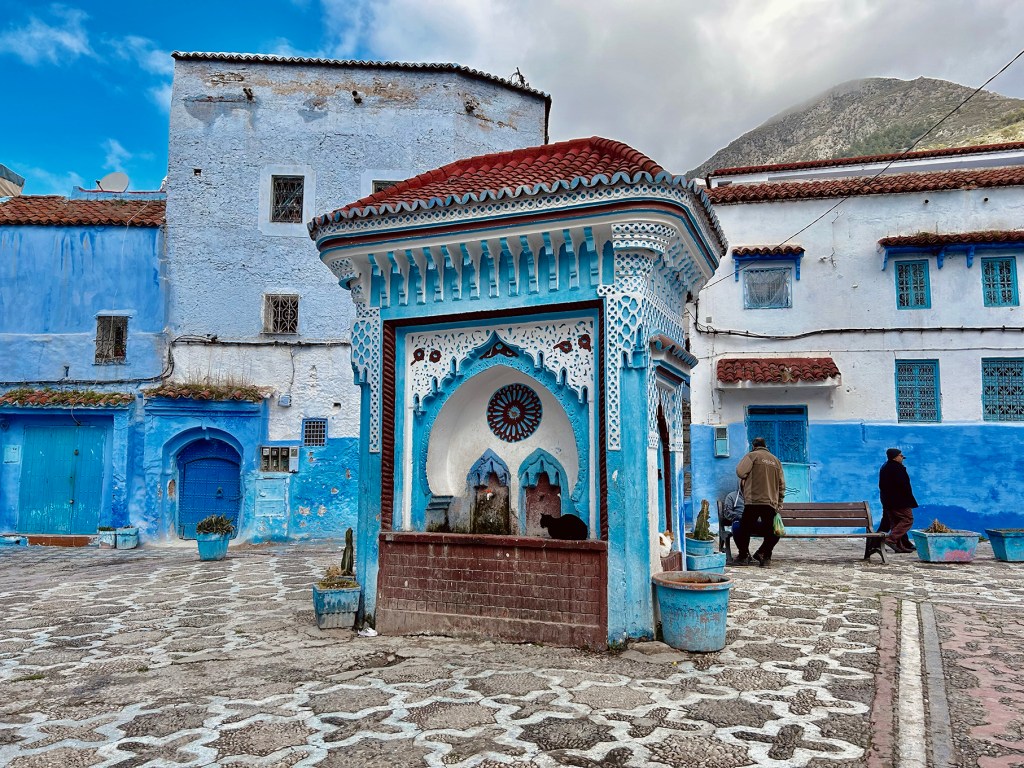
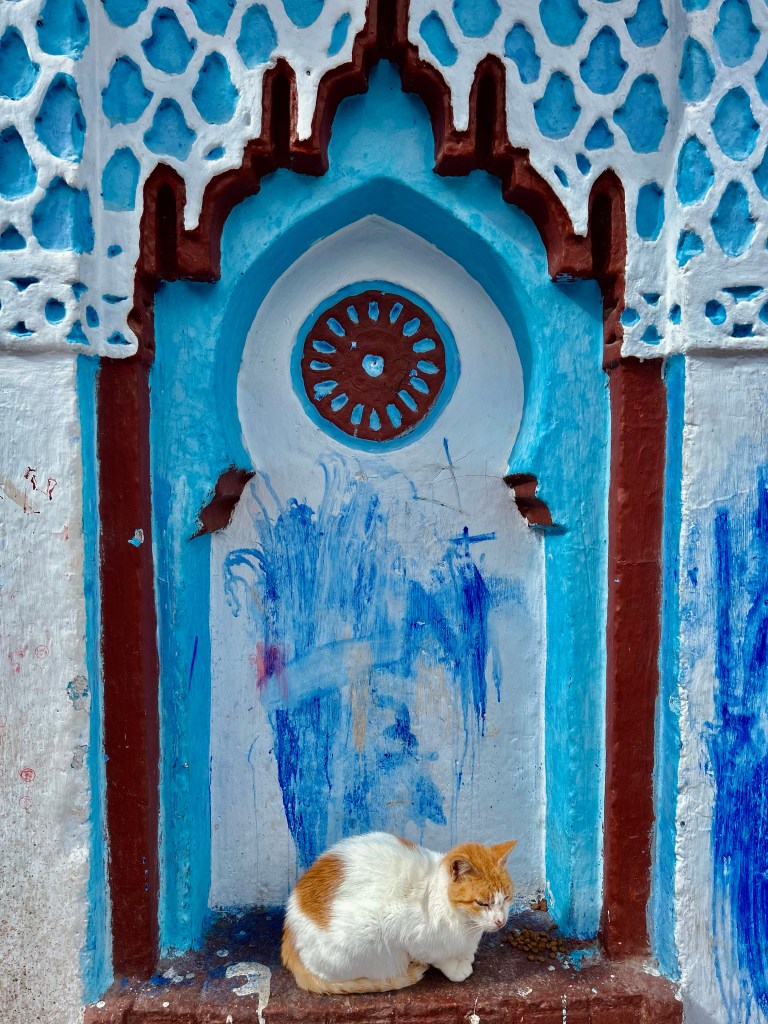
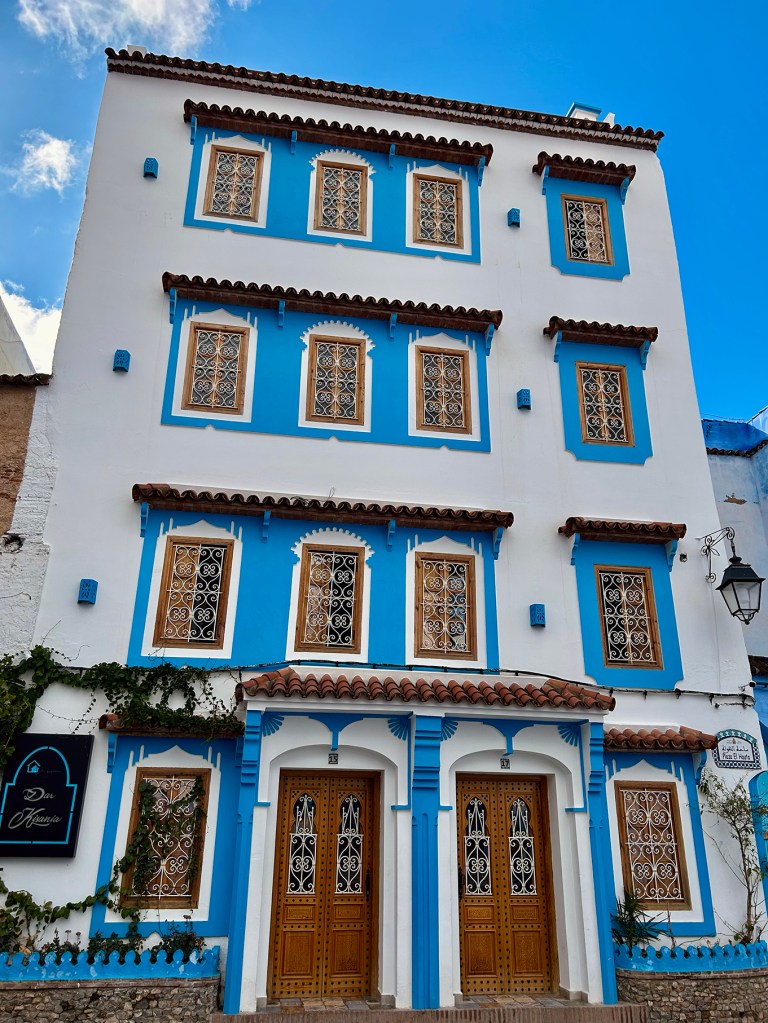
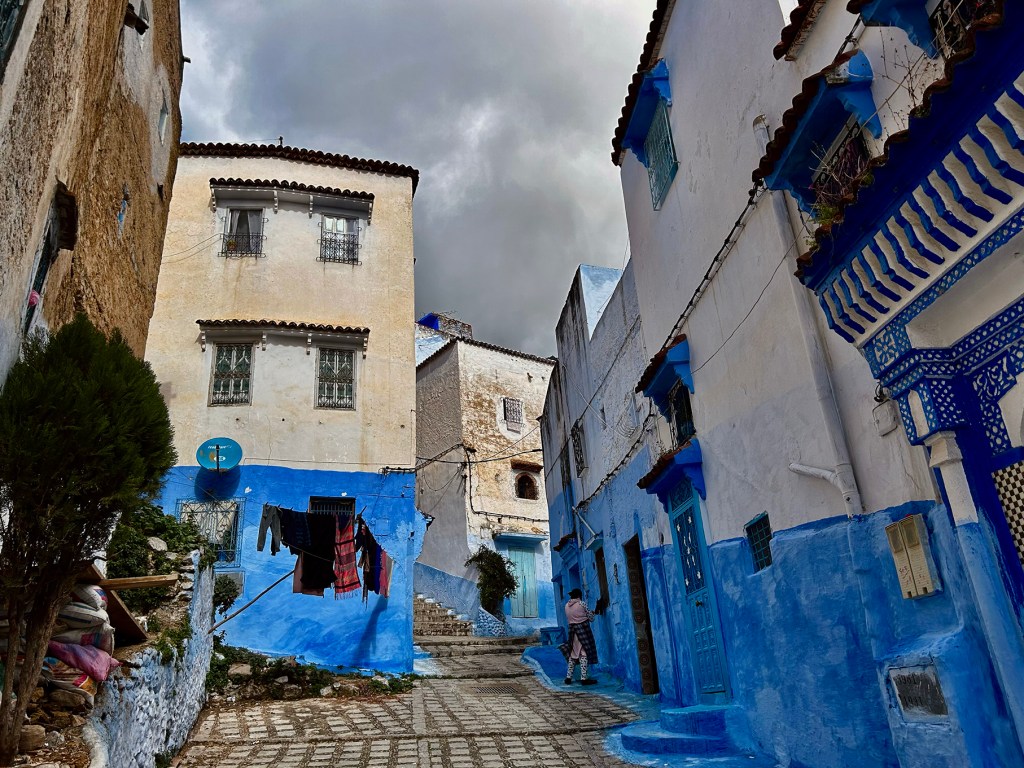
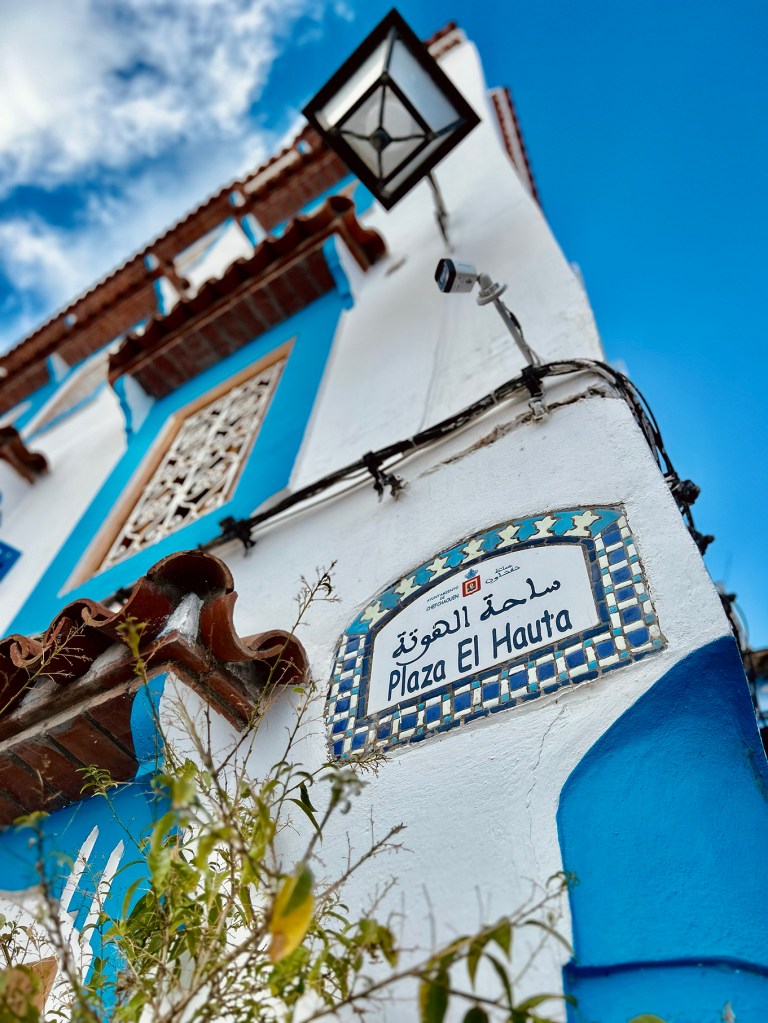
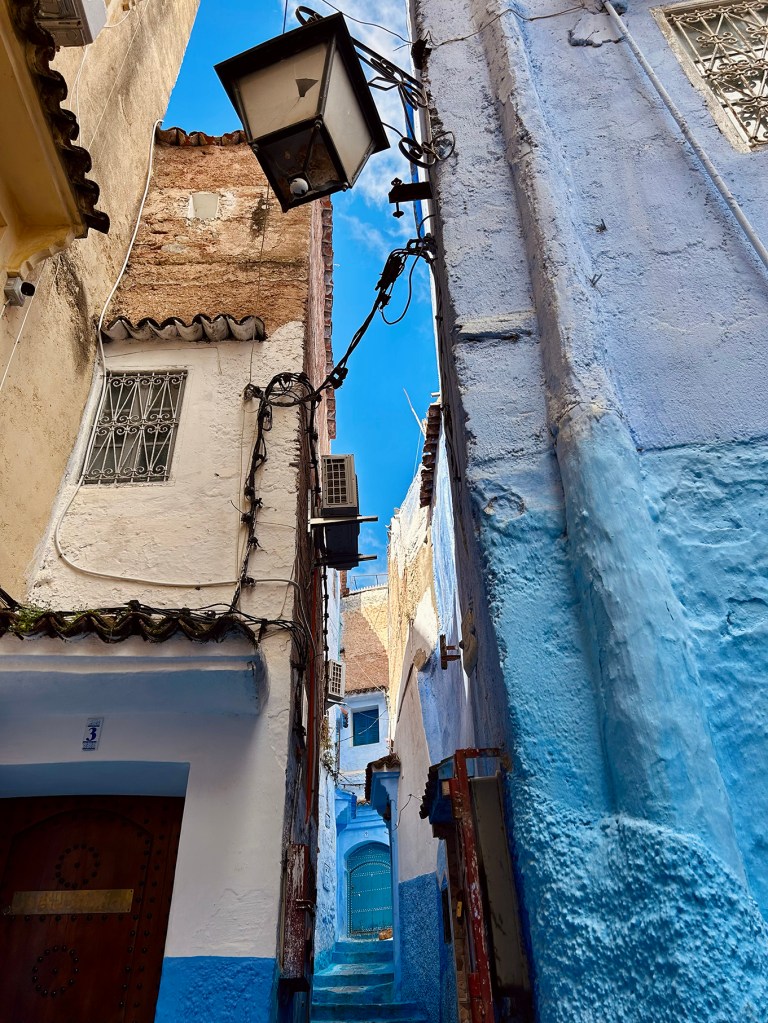
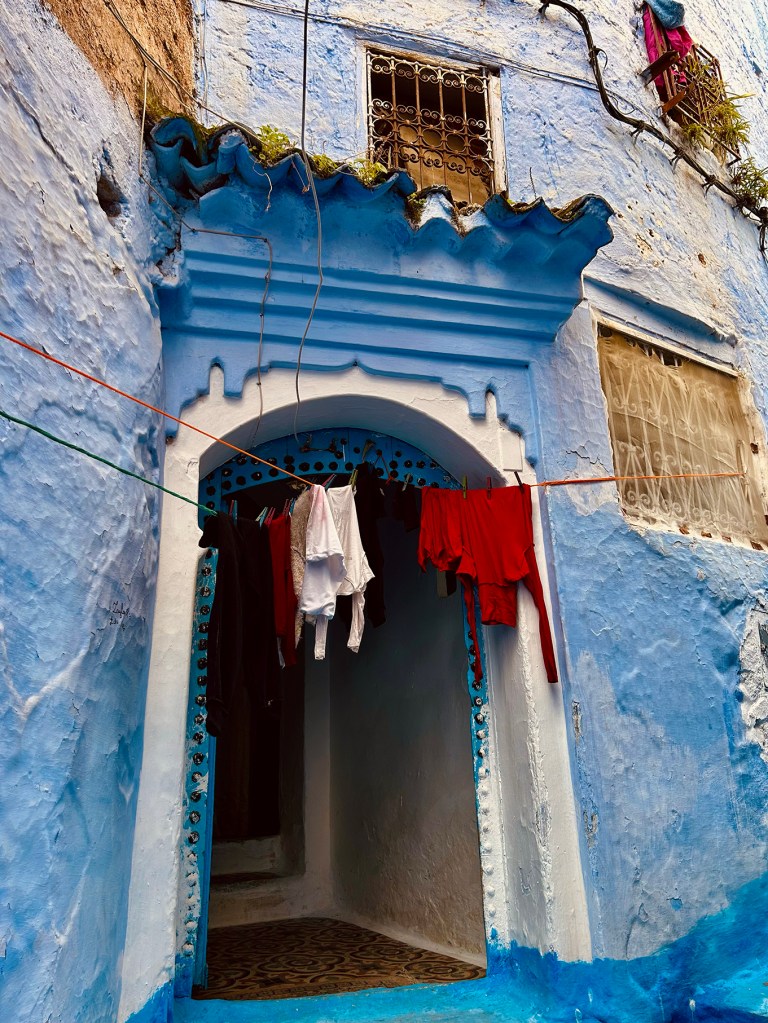
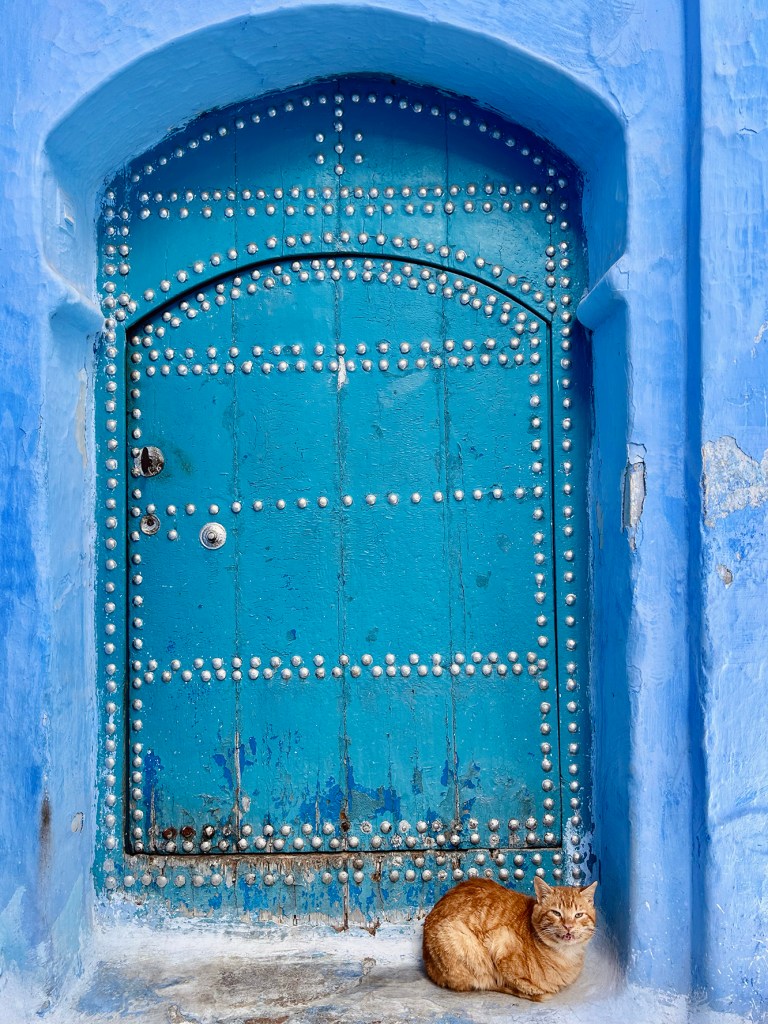
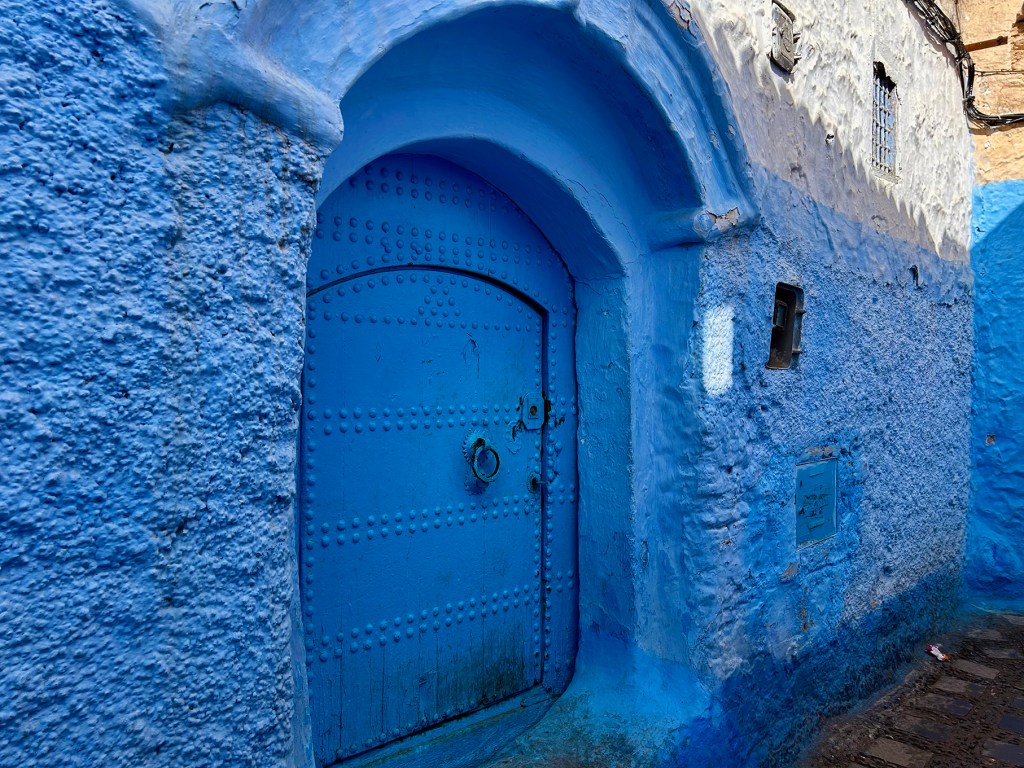
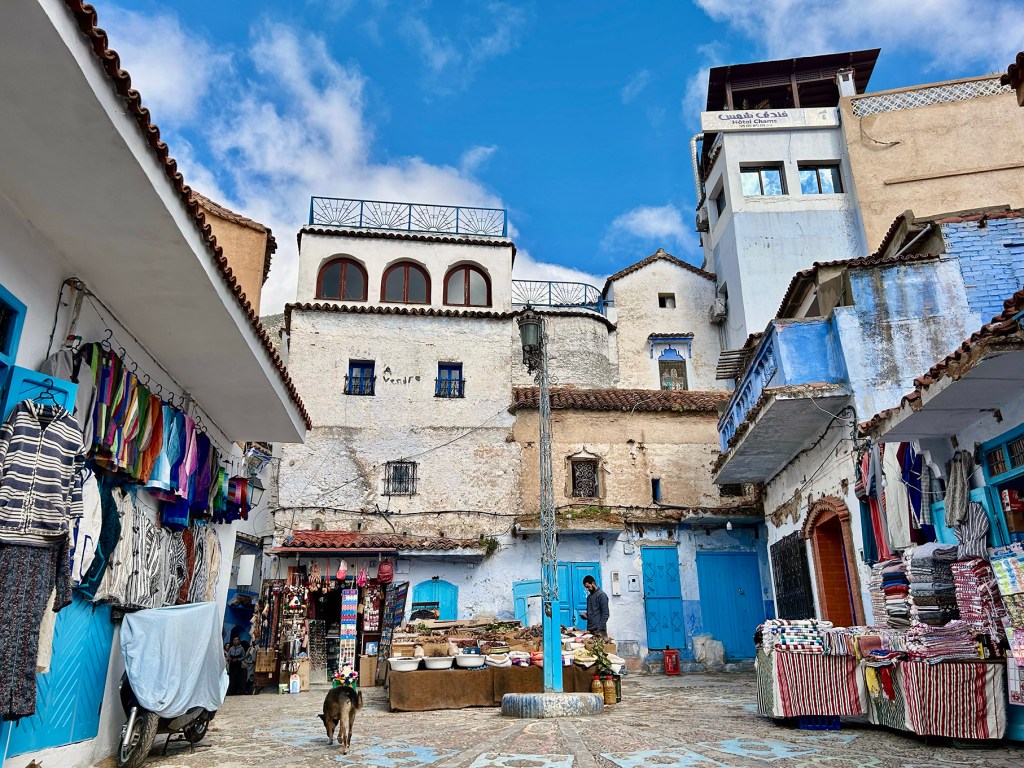

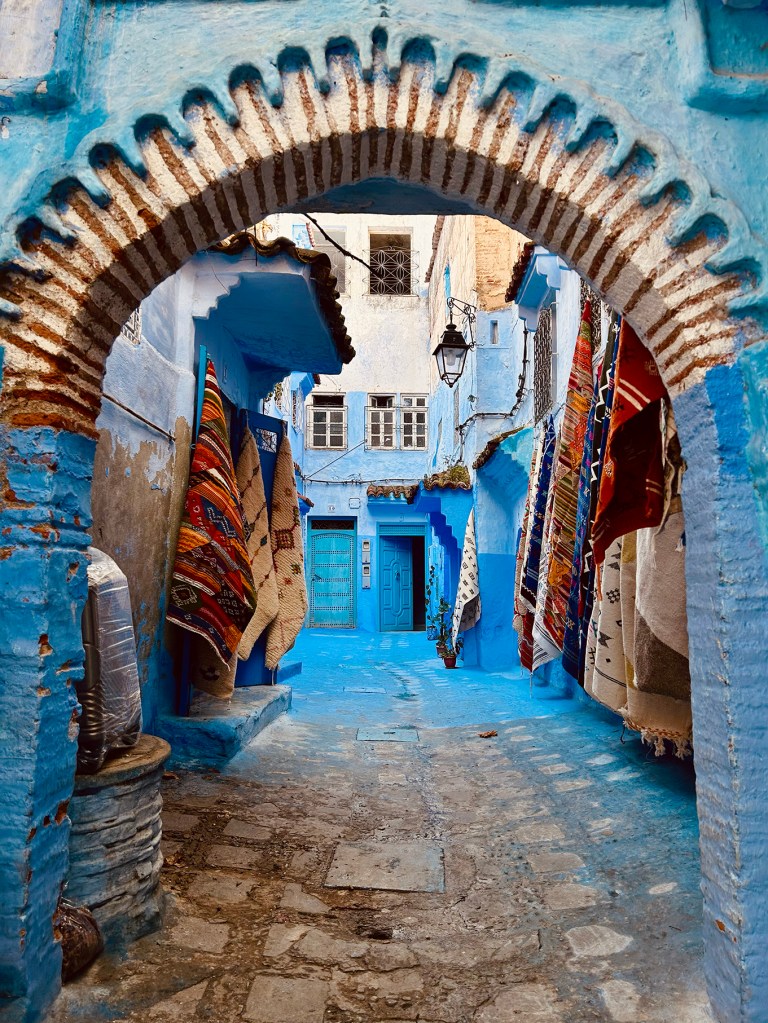
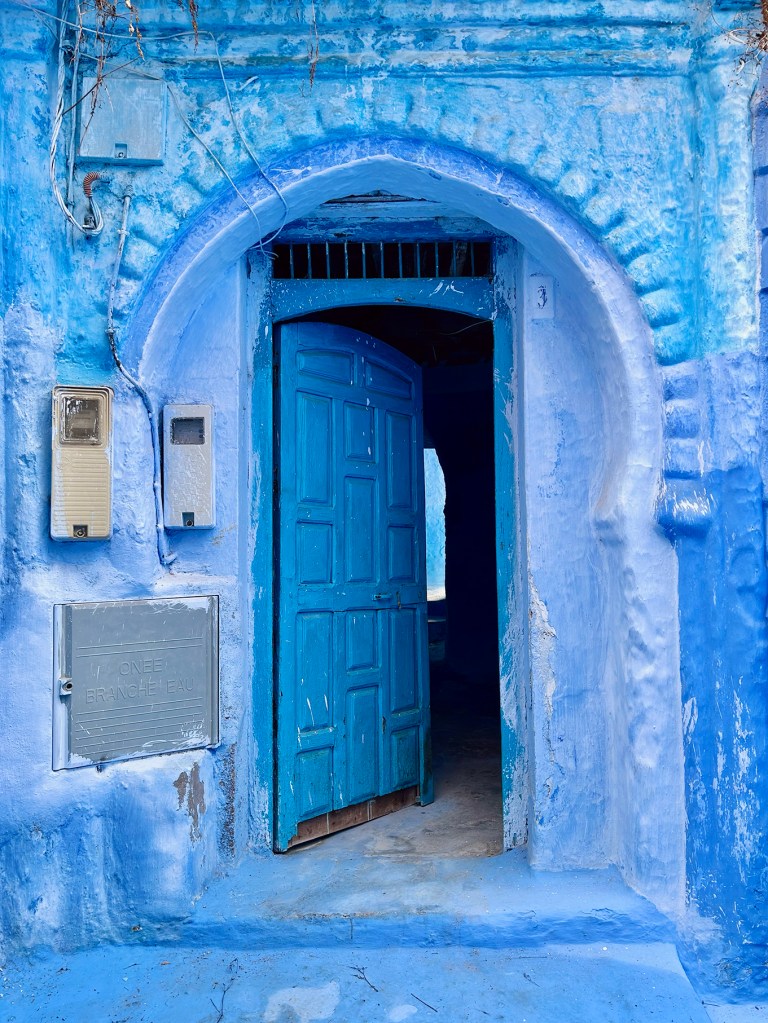
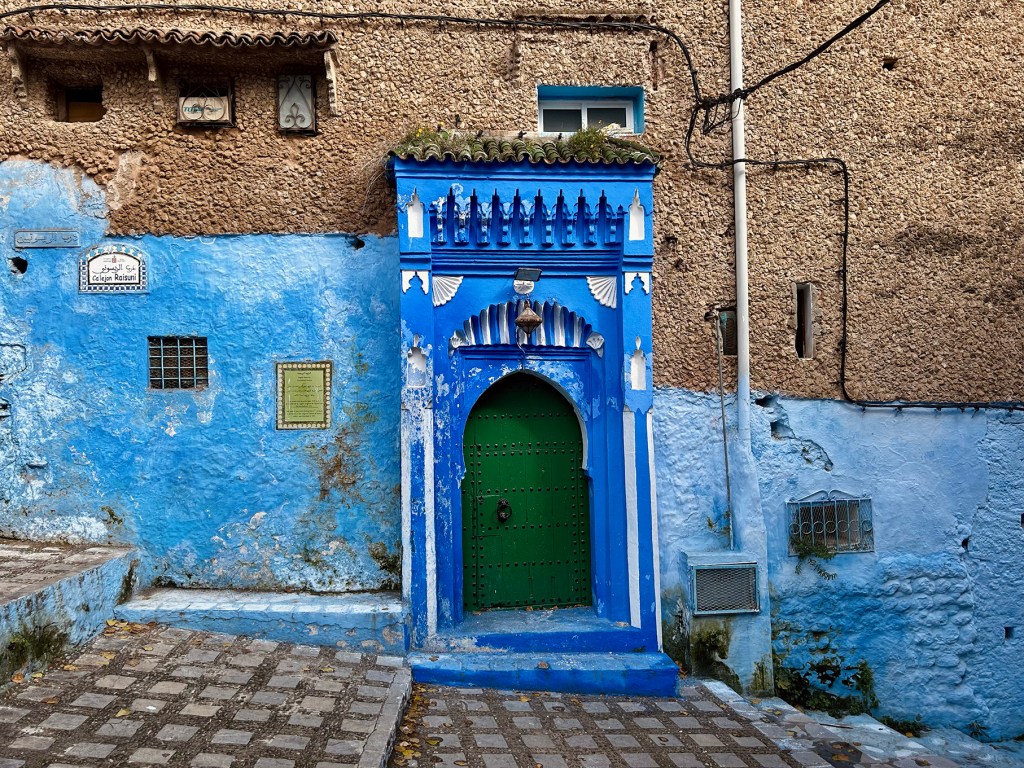
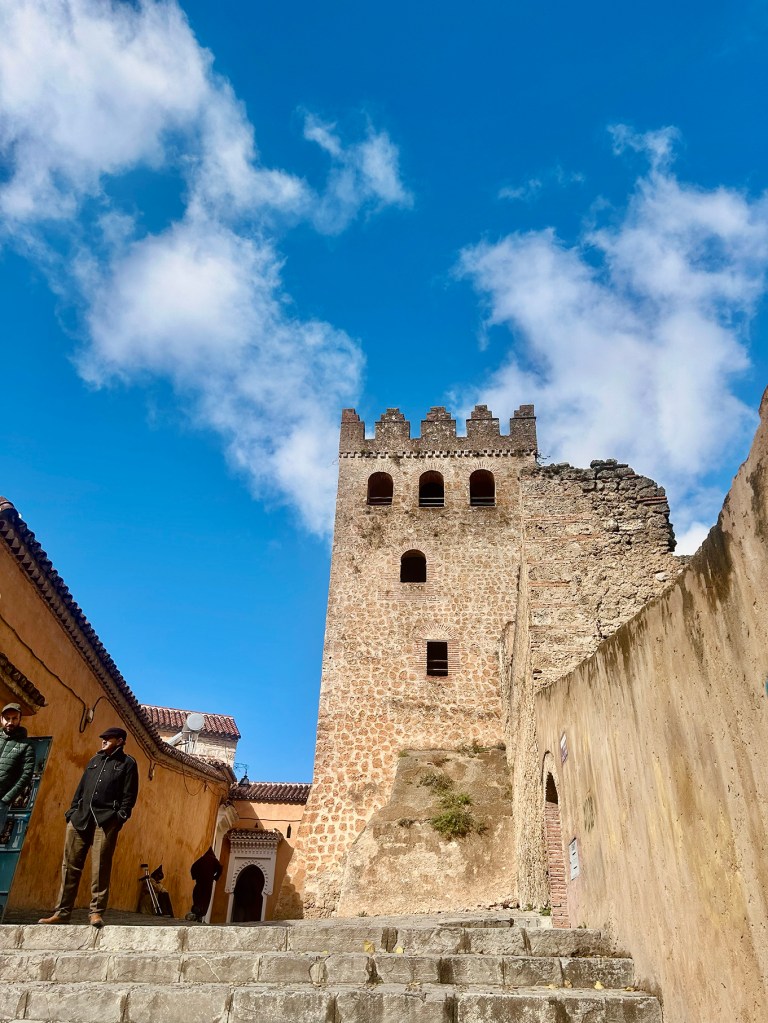
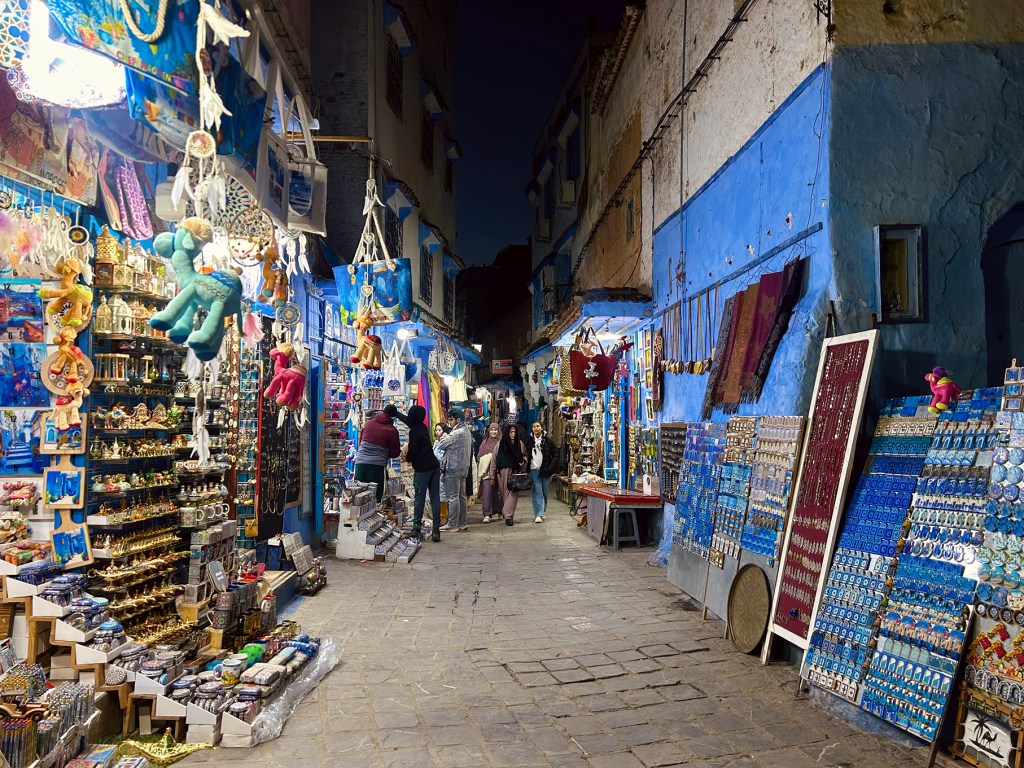
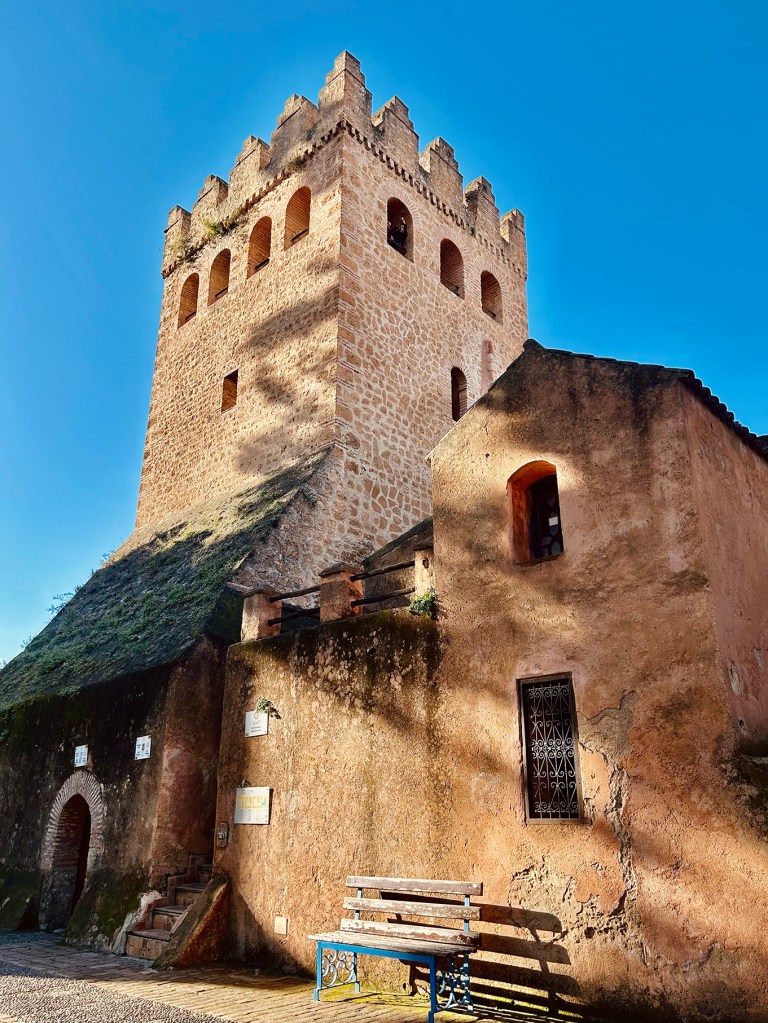
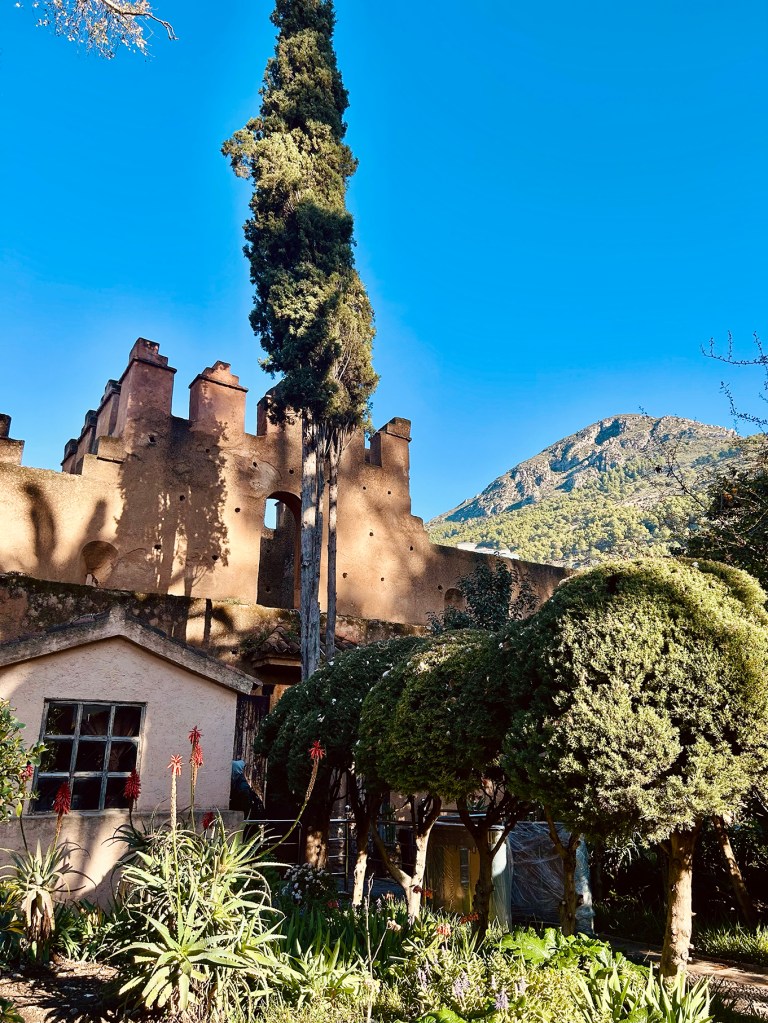
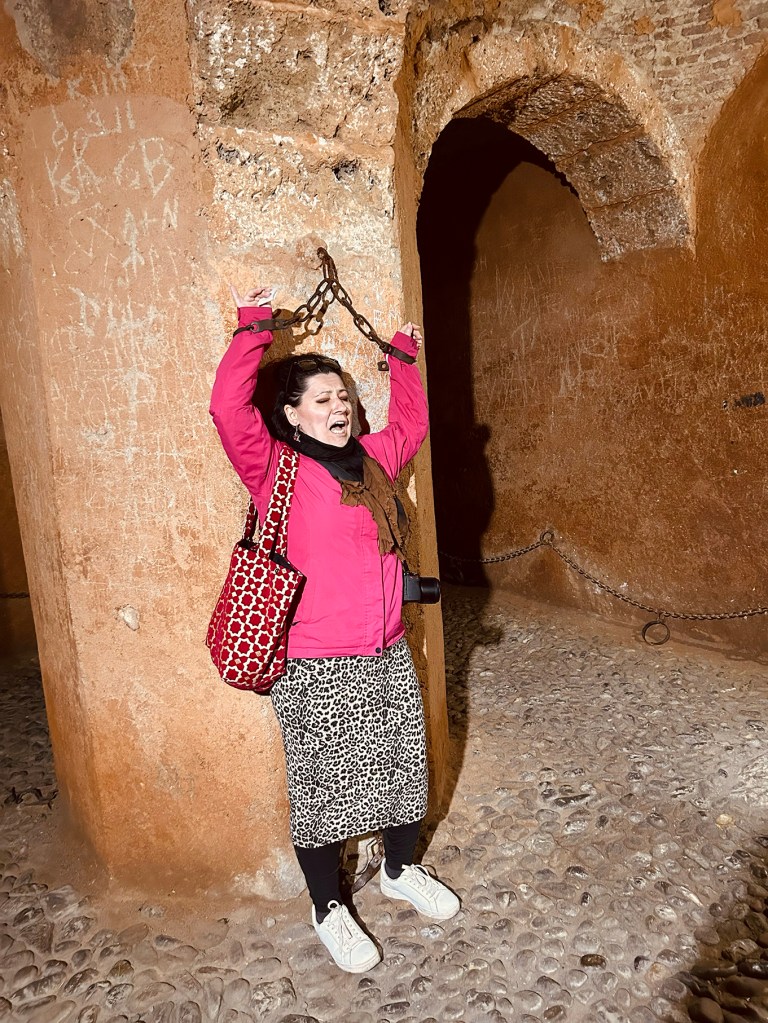
In the heart of Chefchaouen is the Kasbah, a restored fortress and museum that offers views over the medina, while the nearby Grand Mosque, built in the 15th century, is notable for its unique octagonal minaret.
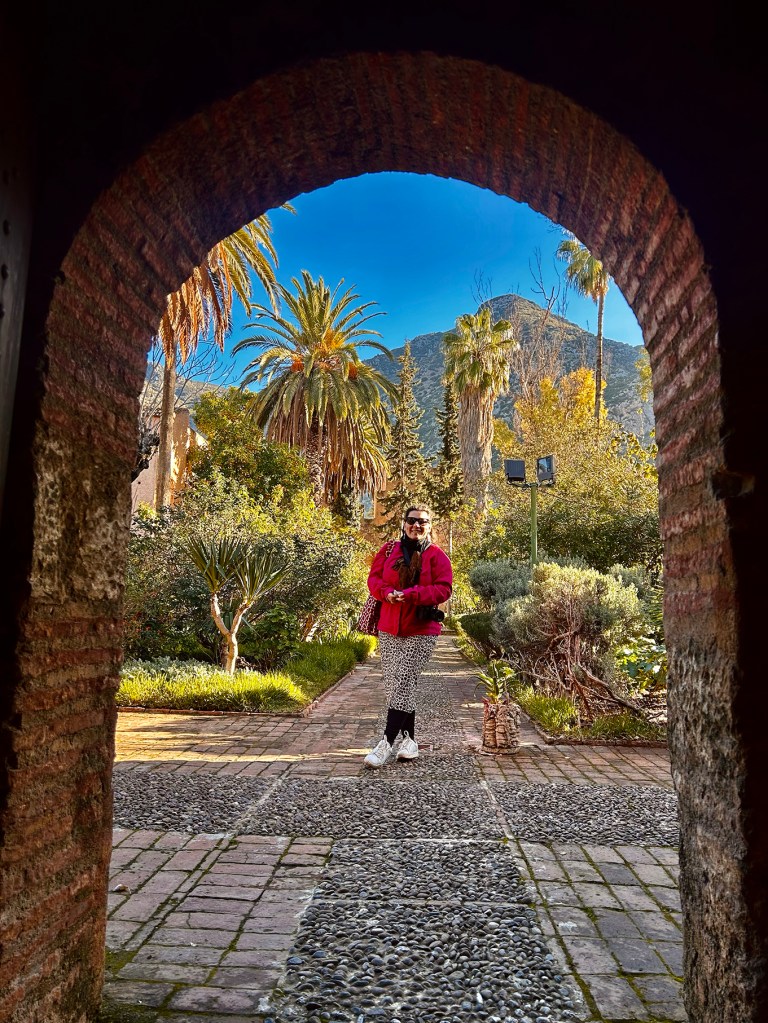
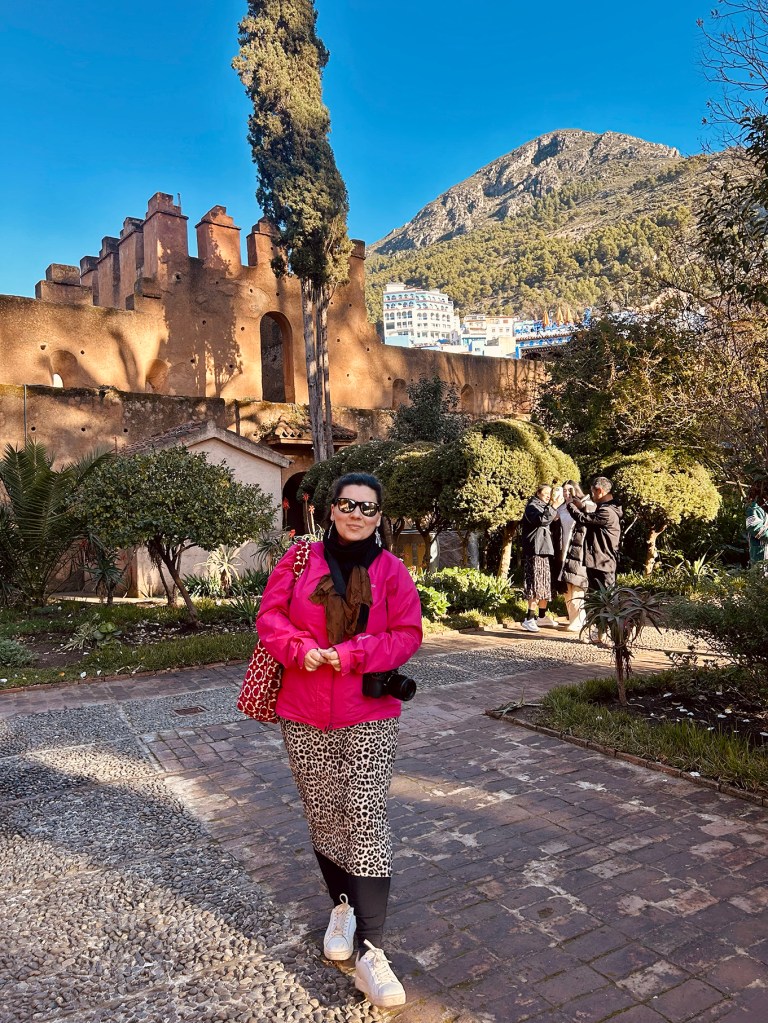
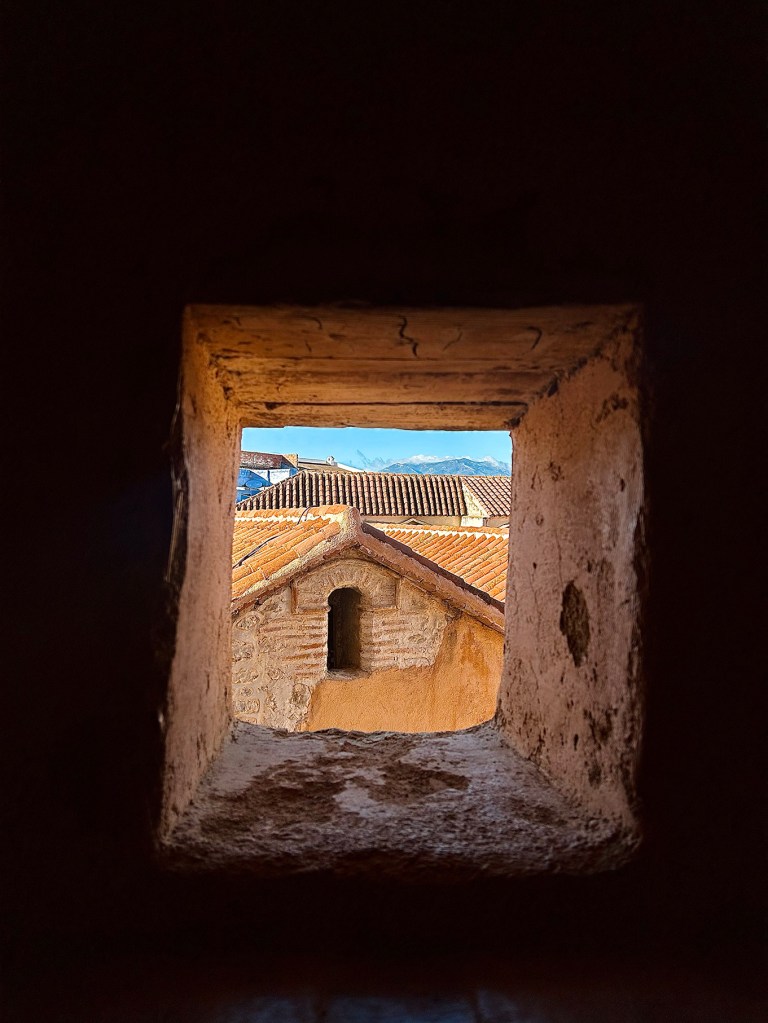
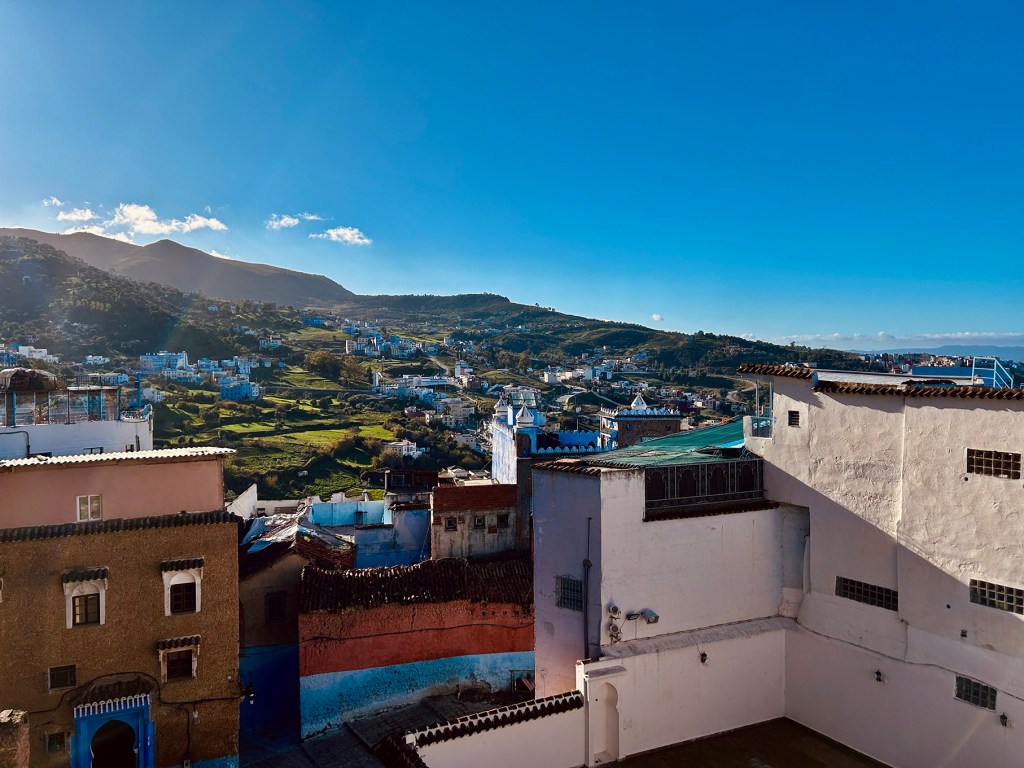
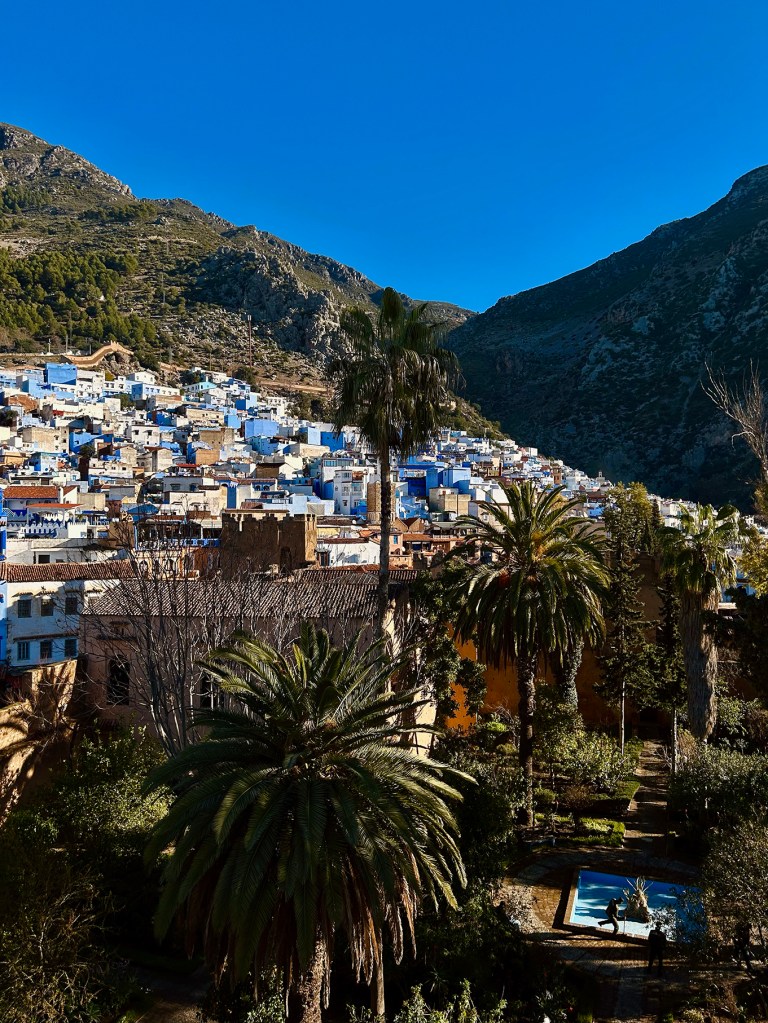
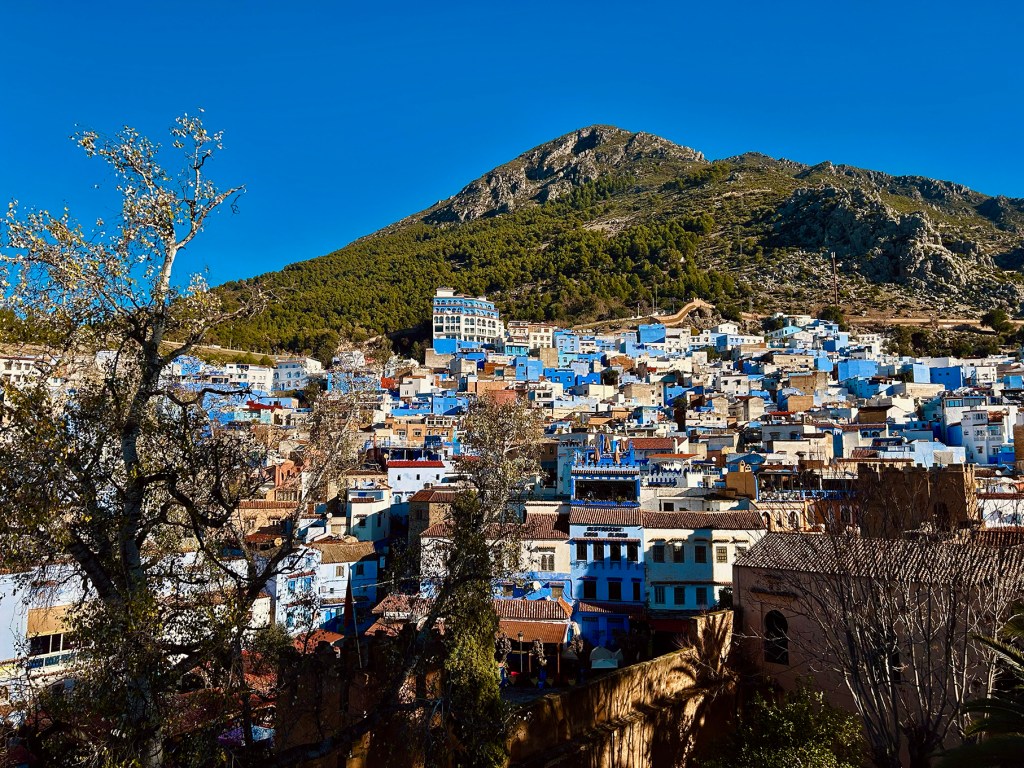
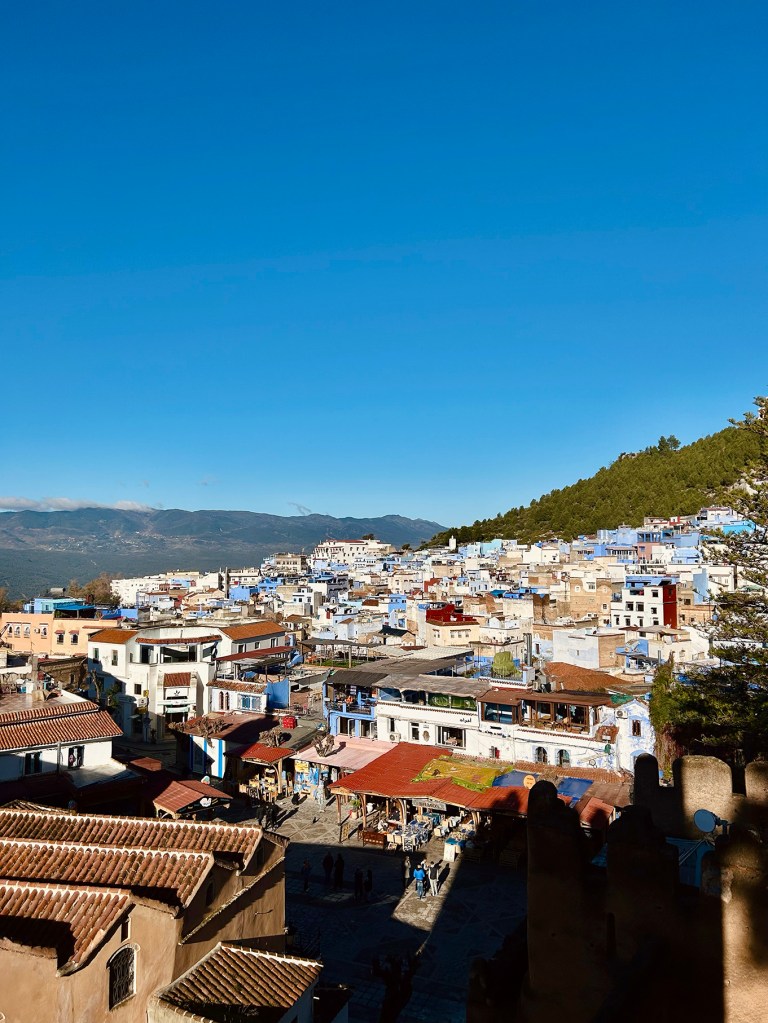
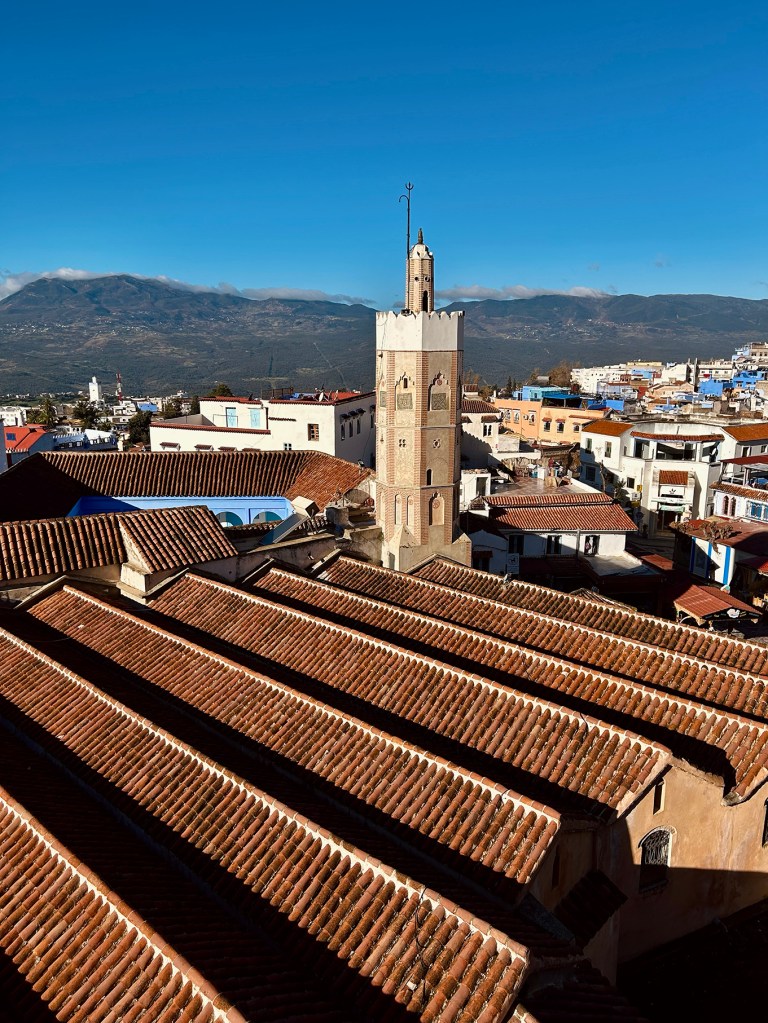
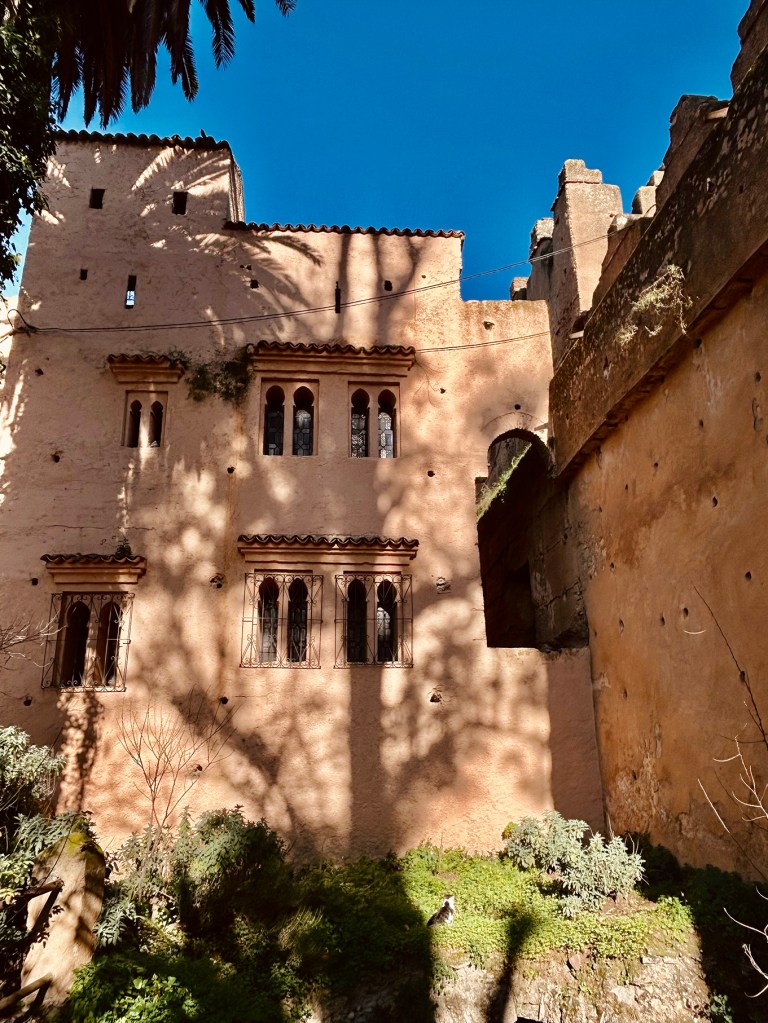
Just above the town, if you’re up for a couple more steps, you will find the waterfall Ras El Ma. And if you want to do more of a hike, you can continue in either direction north or south, upwards, and find beautiful spots for panoramic views and taking in the landscape.
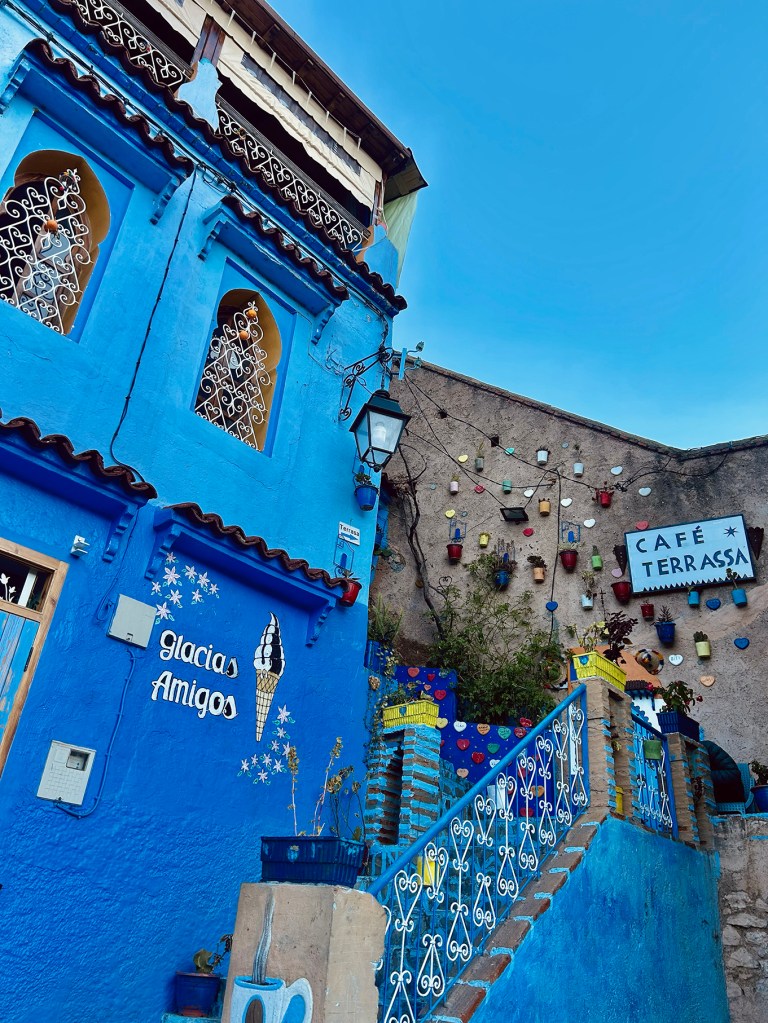


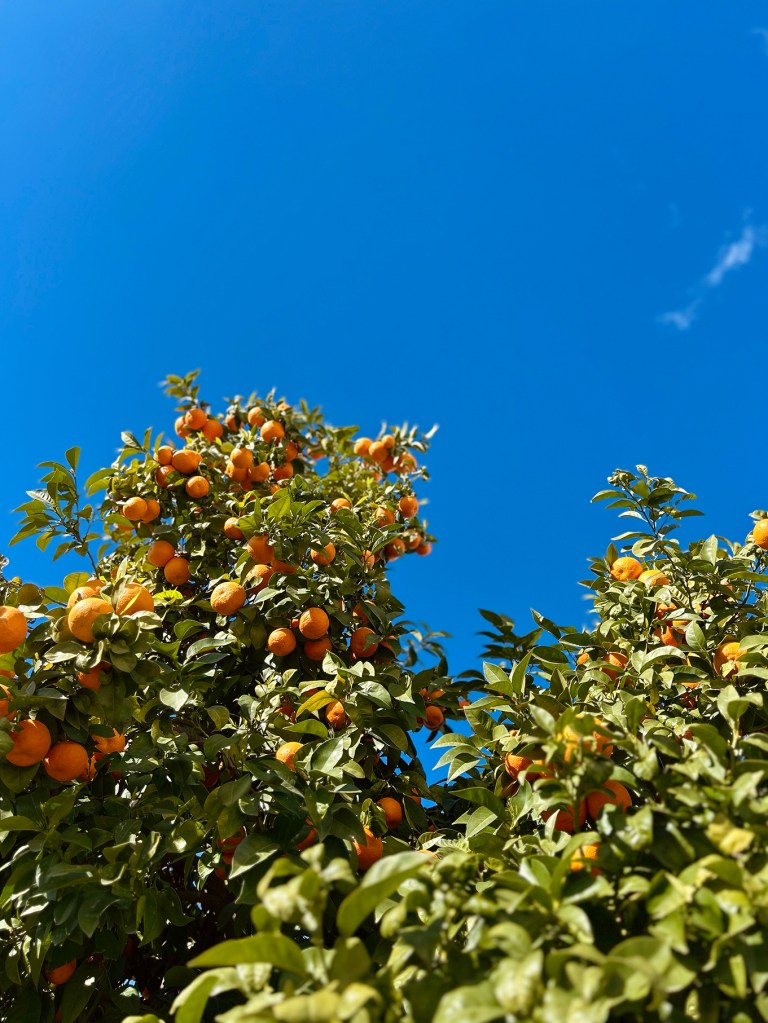
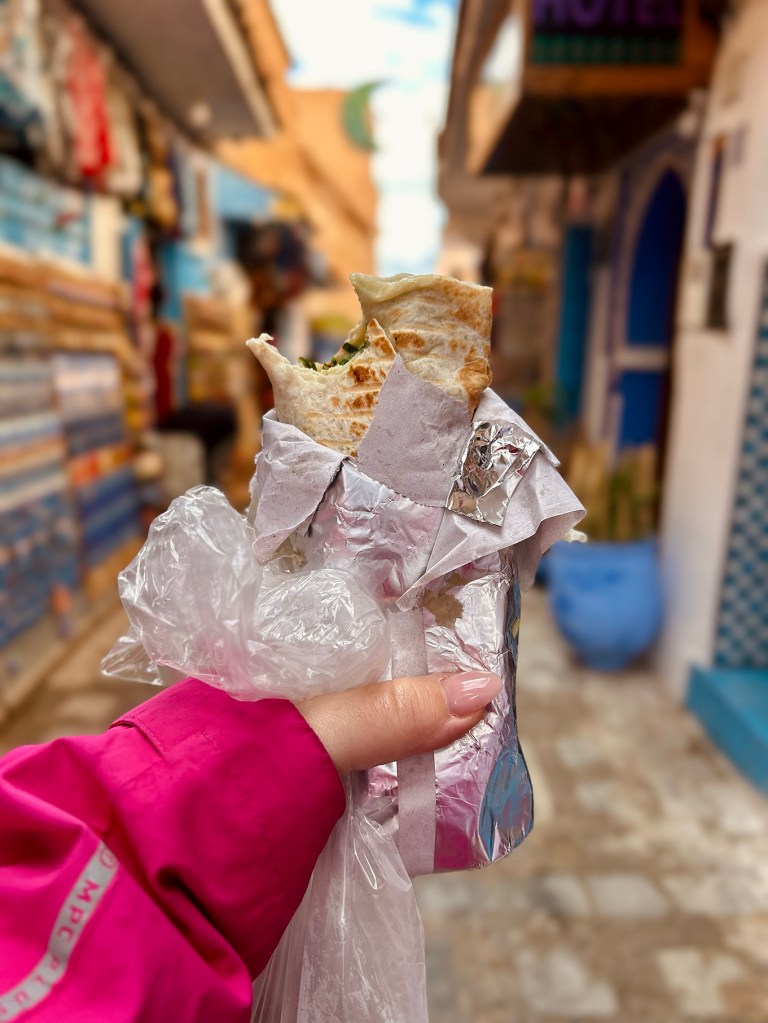
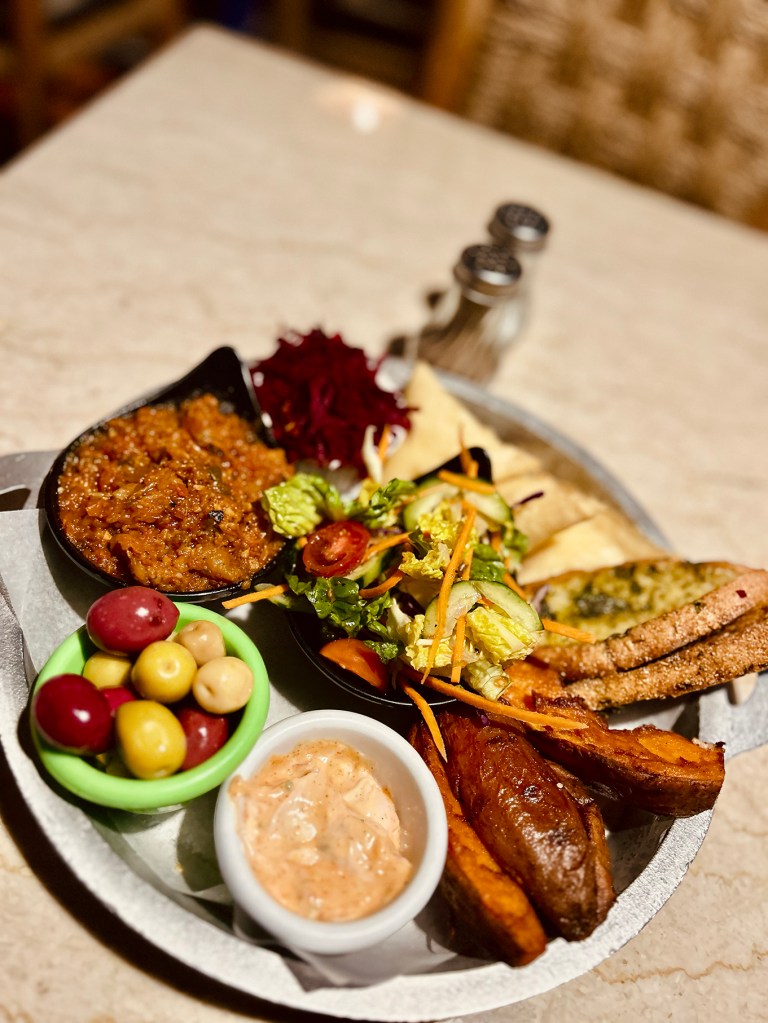
In terms of food, Chefchaouen offers great options for every taste and budget. The restaurants and cafés around the main square are more of a tourist trap. That is not to say that the food isn’t good, rather that it’s a bit more expensive than a joint in a side-alley. There are great places just above or around the main streets and you can get a delicious shawarma for about 30–40 dirhams. And if you don’t stop for a freshly squeezed orange juice somewhere, you’re not doing it right. I had a lovely meze dinner with live music at Café Clock, lots of tea in various cafés around the town, and naturally I ended my stay with a sizzling kefta tajine on another rooftop terrace. The tajines are always on the menu, but if you’re not into that, you will always have the option of getting a burger, some pasta or a pizza somewhere. Soups are great to keep warm and vegetables actually taste like something in Morocco. The coffee and smoothies were delicious and more often than not you will share a table outside with a cat. Another lovely thing in Chefchaouen – the small bakeries around the maze. Fresh bread, cute pastries and other calorie bombs.

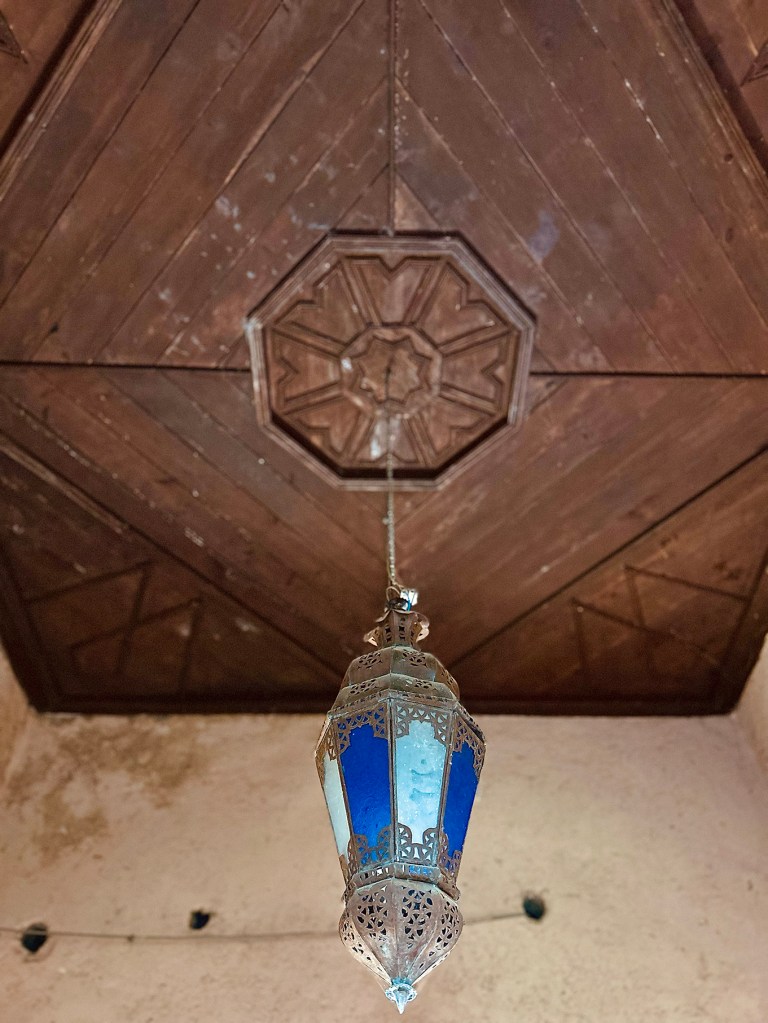
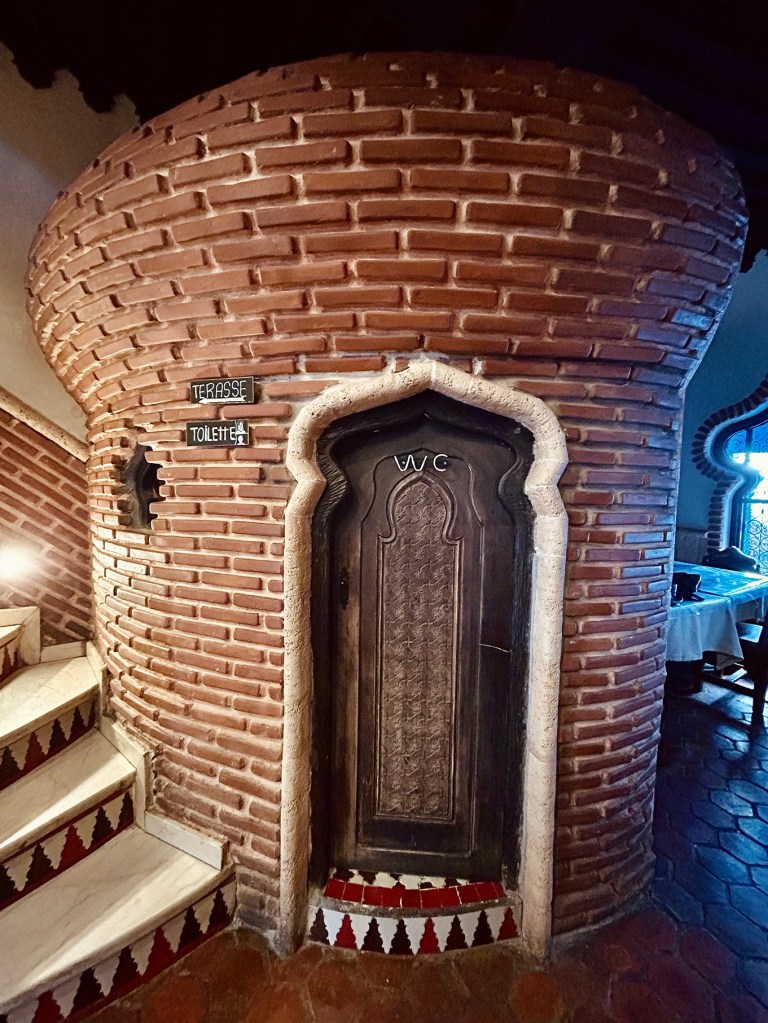
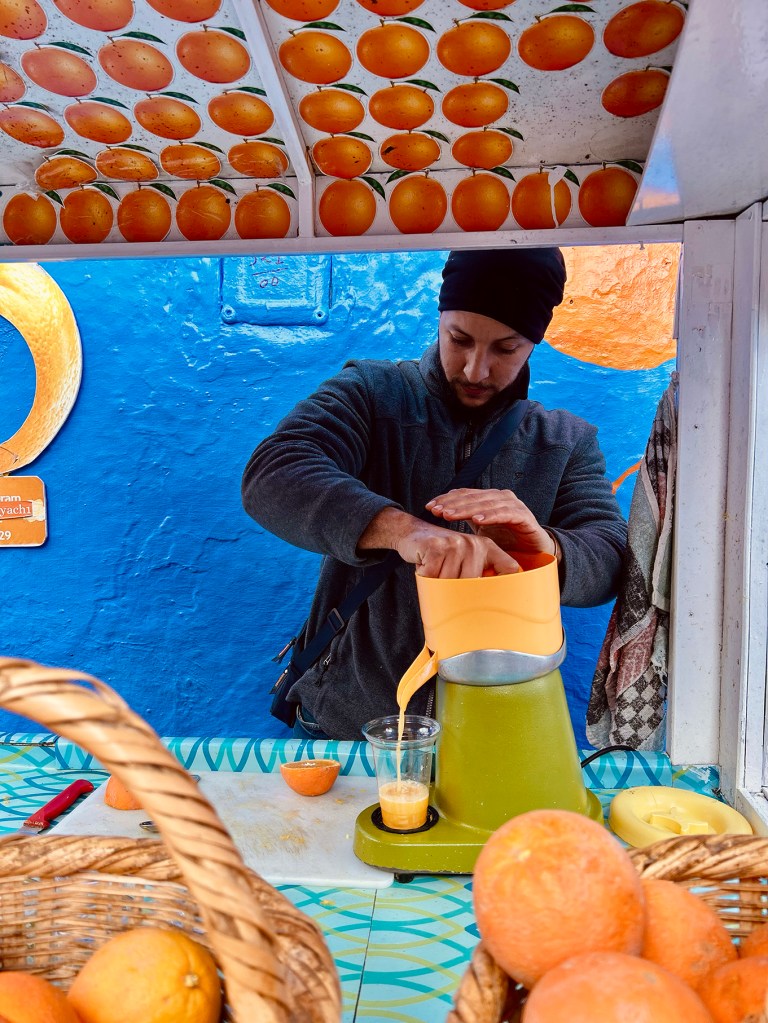
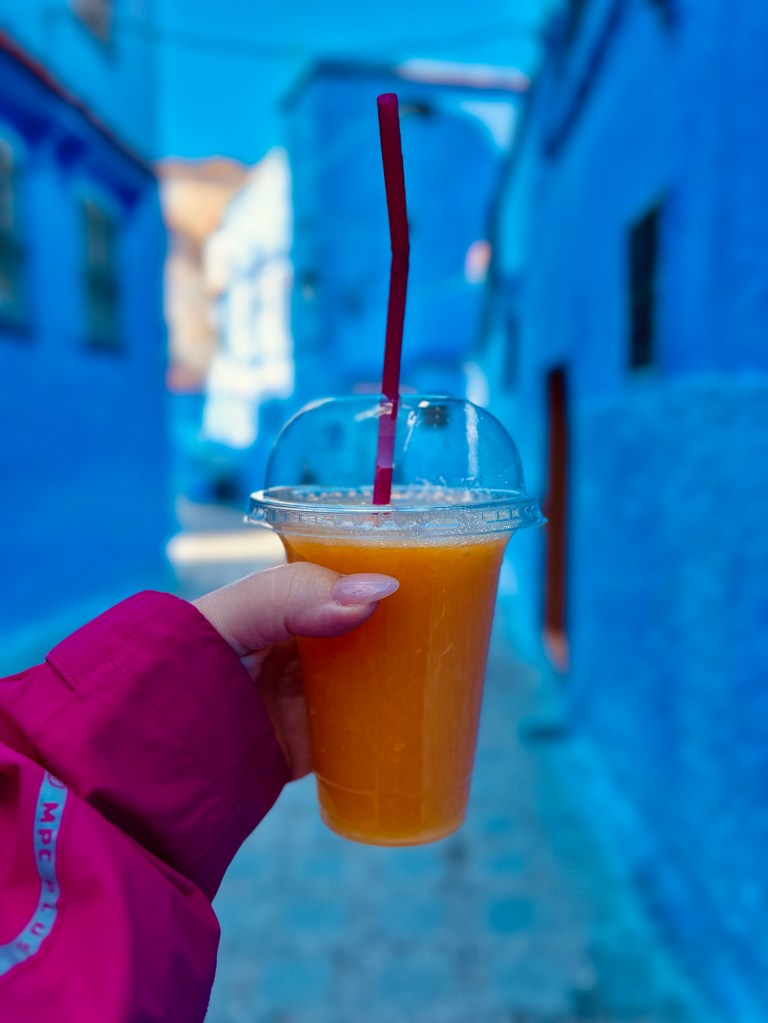
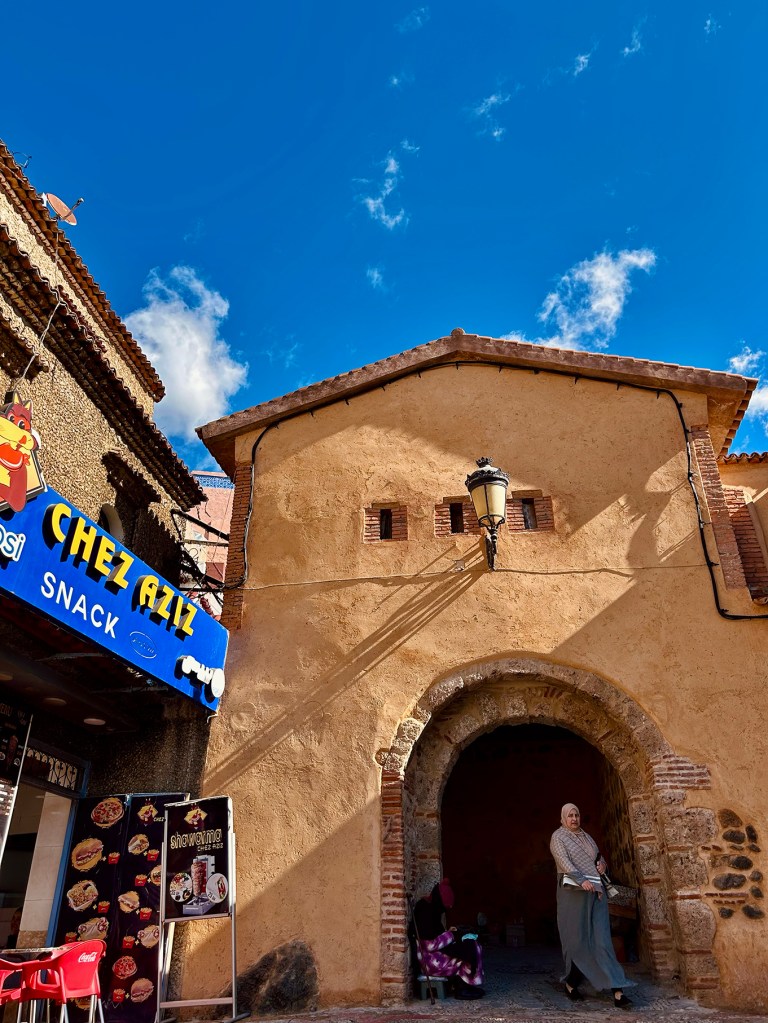
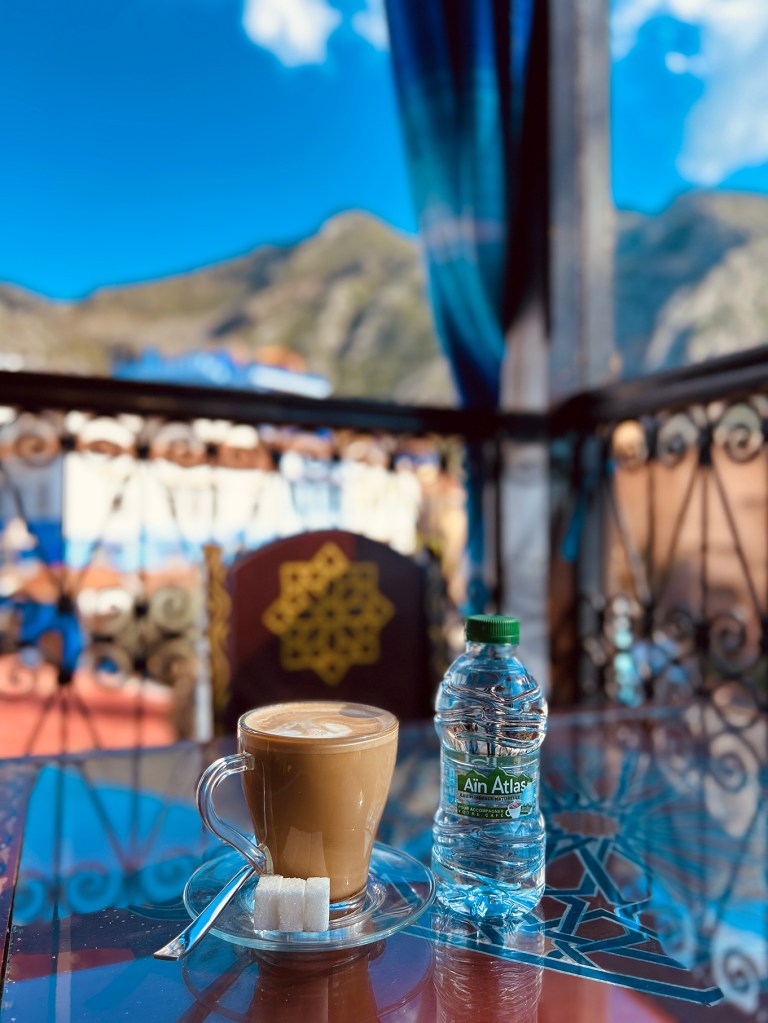
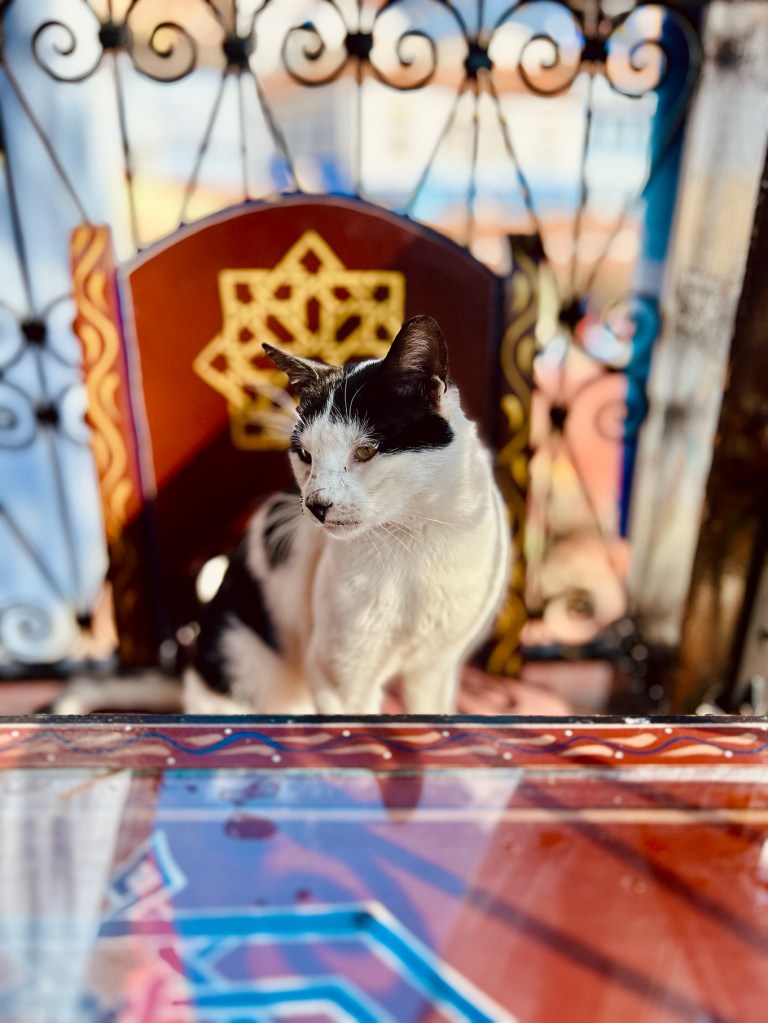
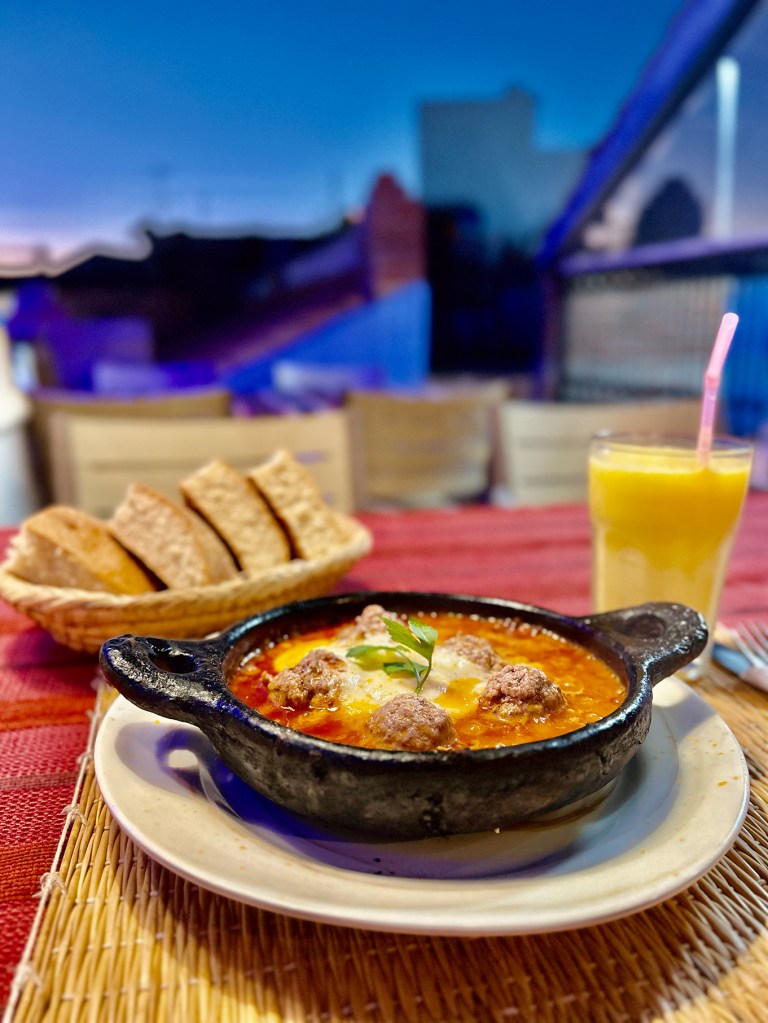
Honestly, if you go to Chefchaouen and don’t fall in love with it, something’s definitely the matter with you. Even with all the workout going up and down the medina, even with hoards of day-trippers looking for cheap pottery, you feel peace and coziness. It’s in the blue streets and the views of the mountains. It’s built-in, somehow. It’s so zen that you won’t even be bothered by the fact that some street signs and municipality logos are are written in Comic Sans. In fact, you’ll be thinking “Oh, how charming, it’s actually kind of cute!”
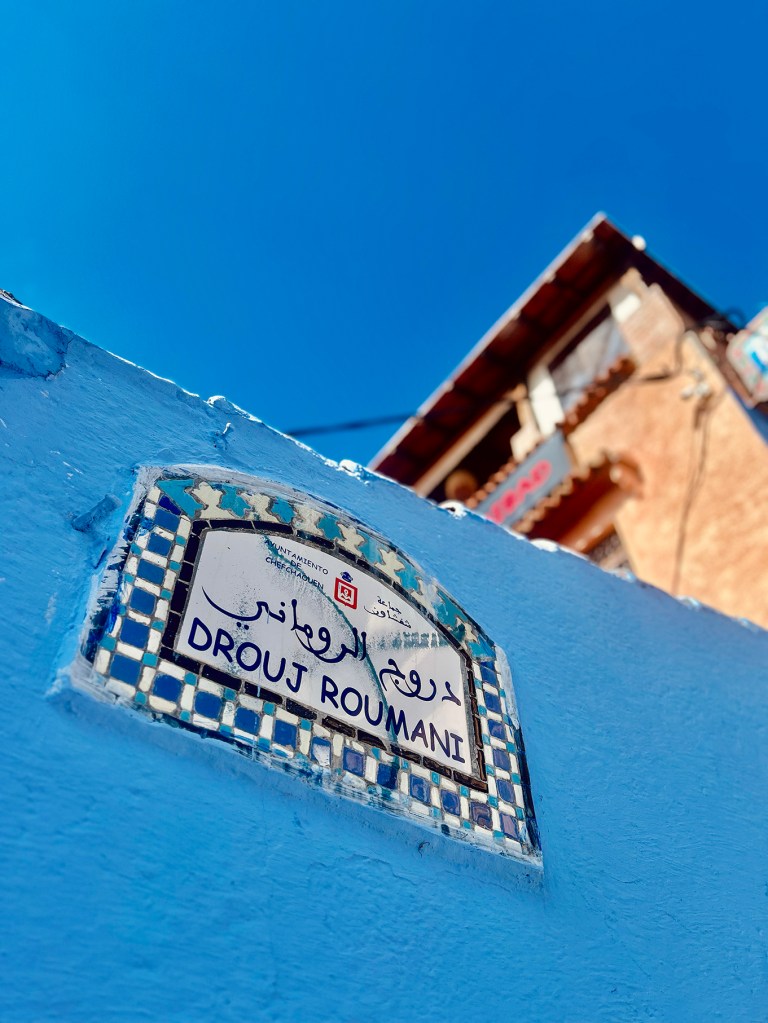
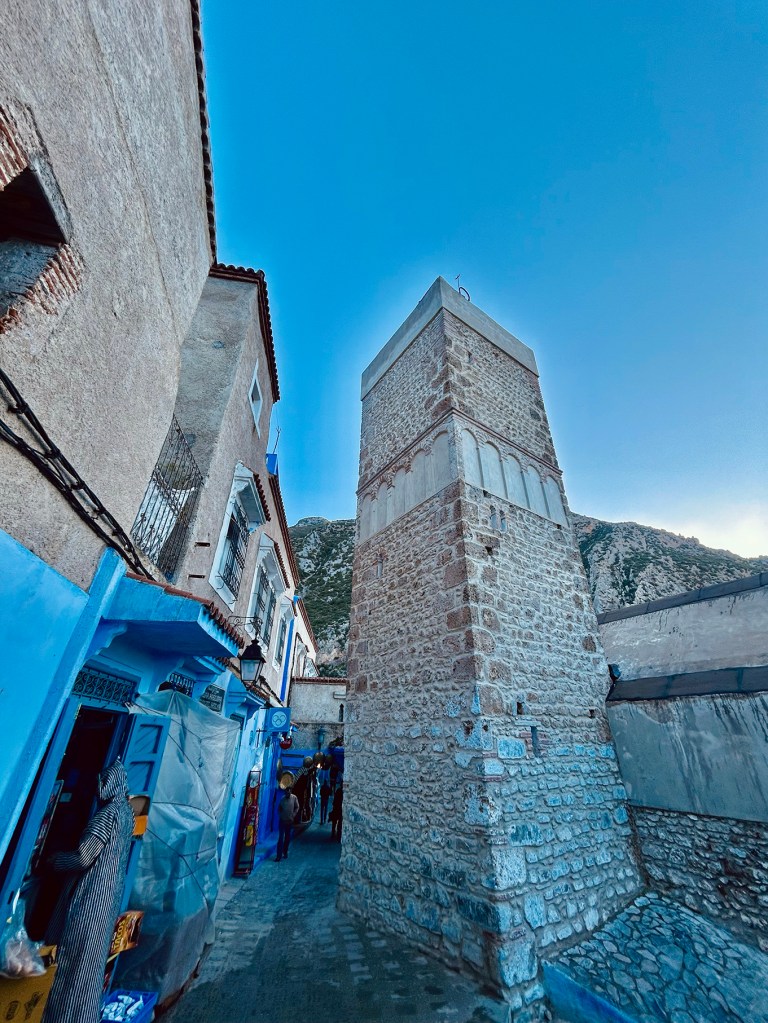
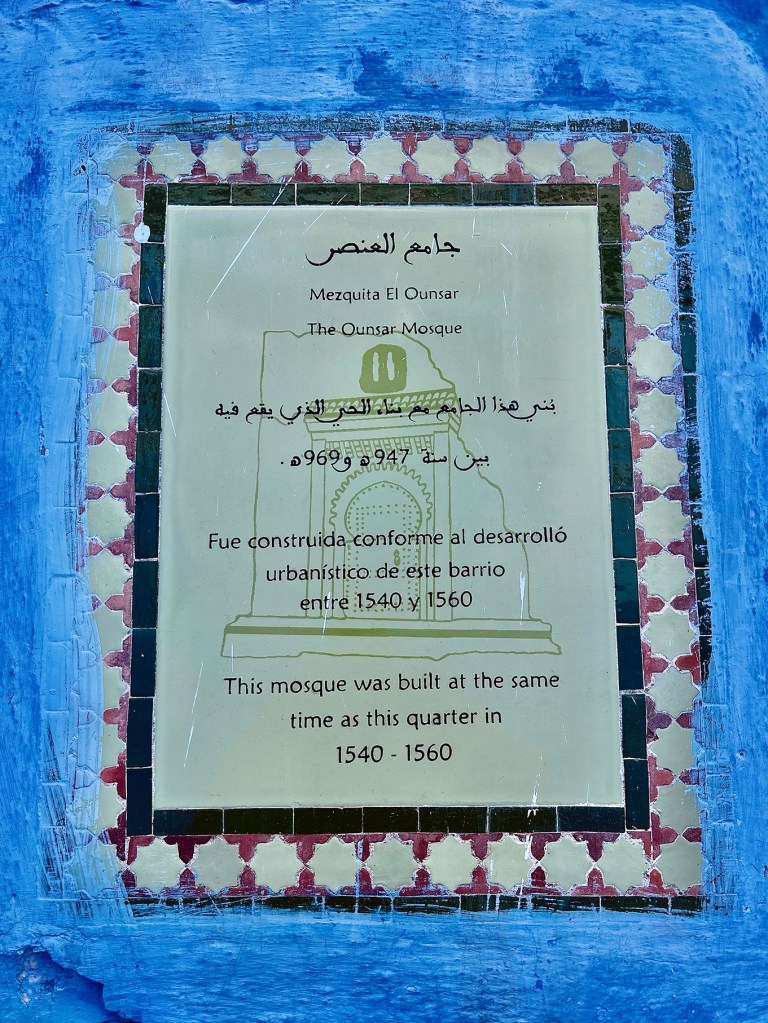

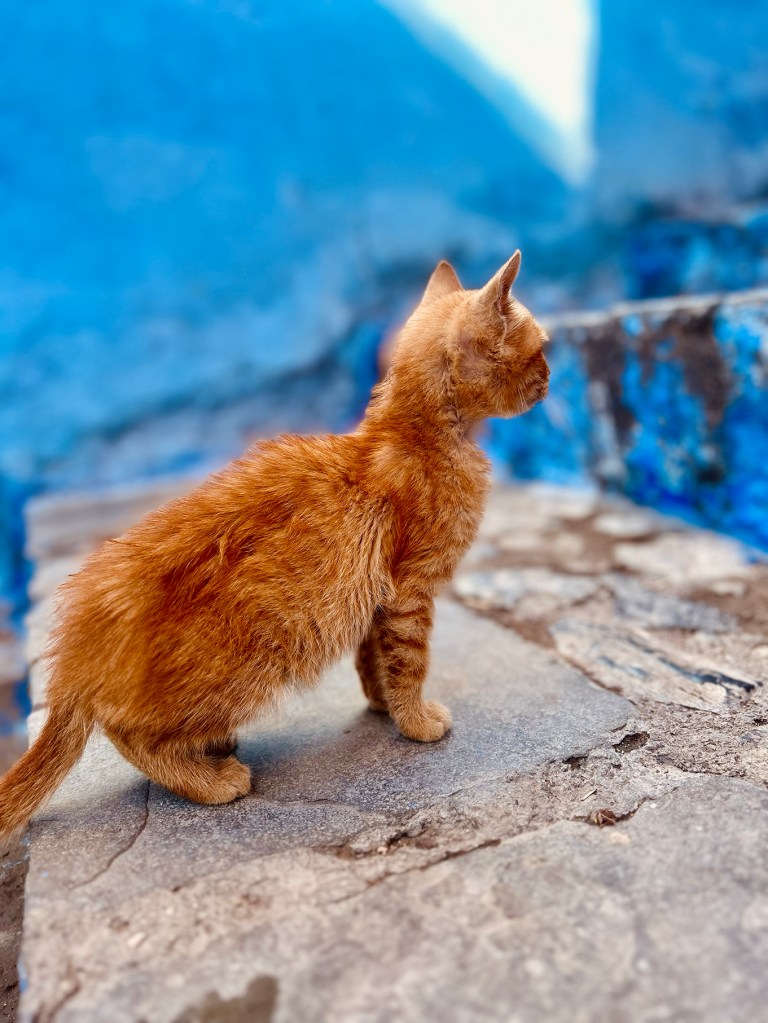
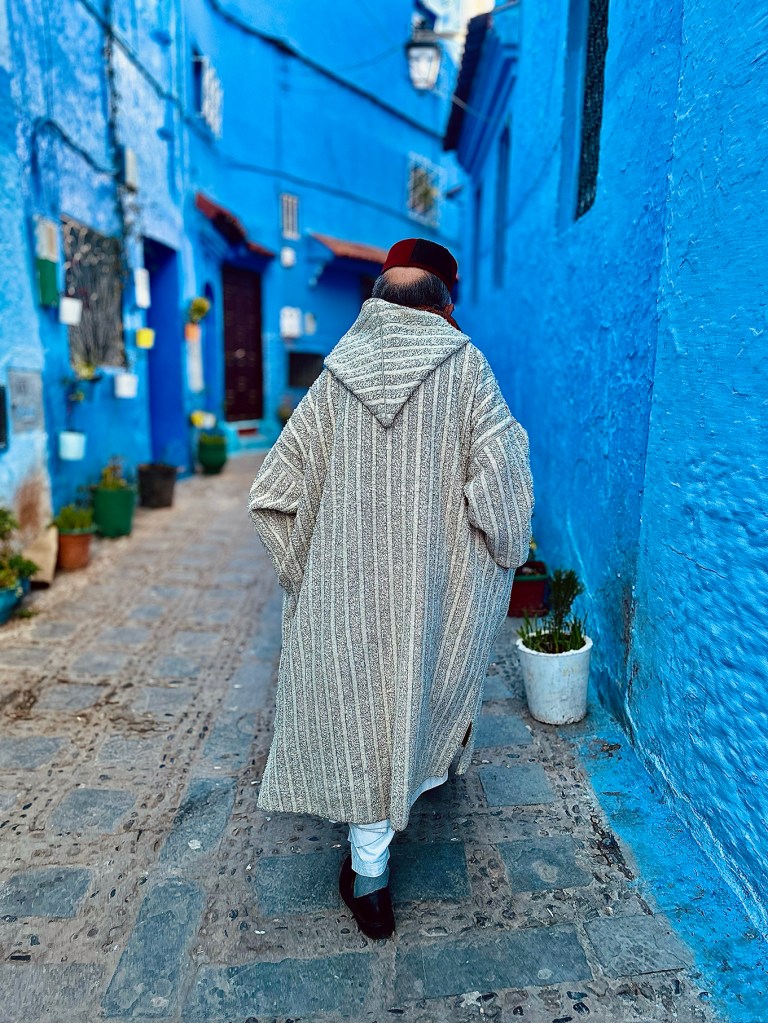
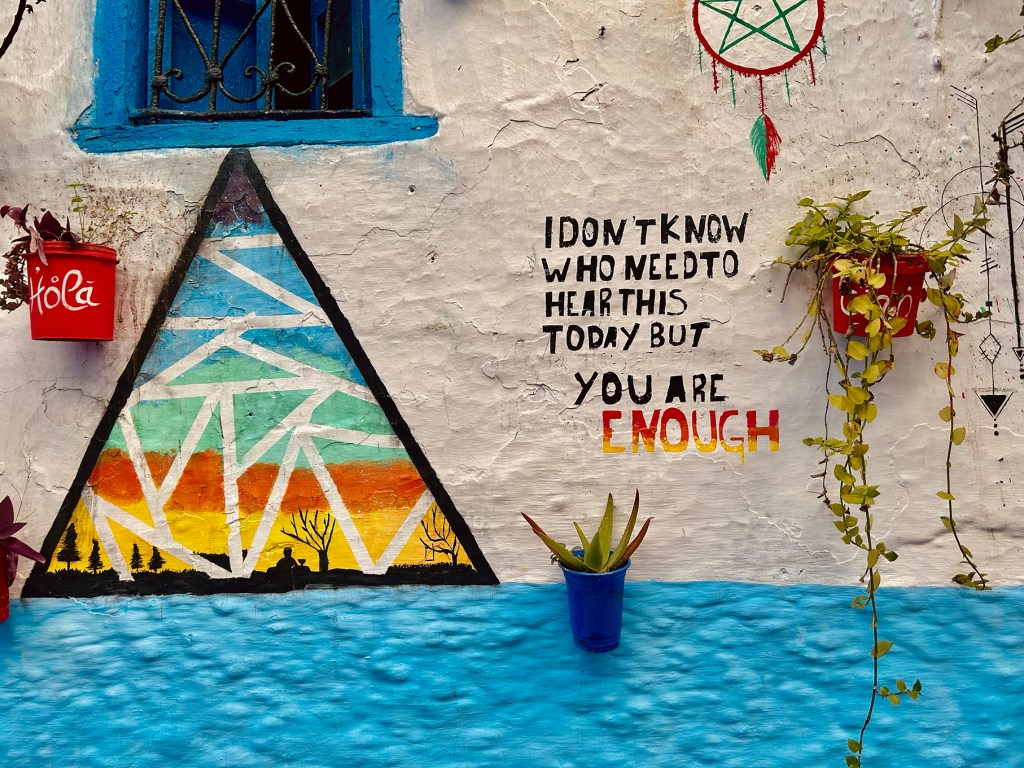
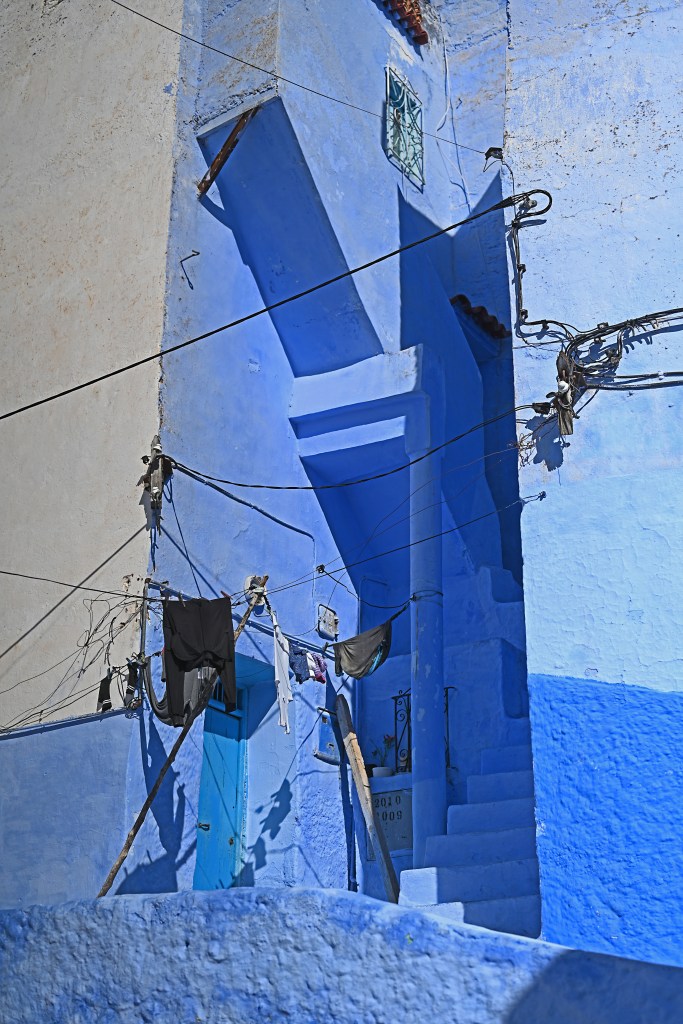
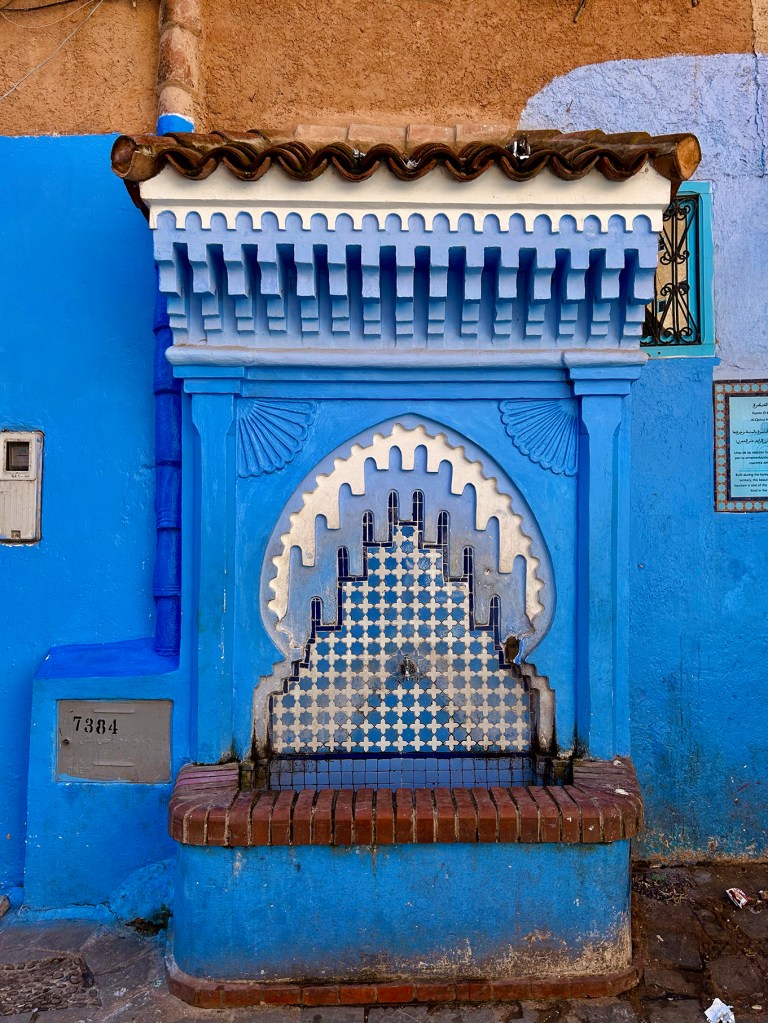
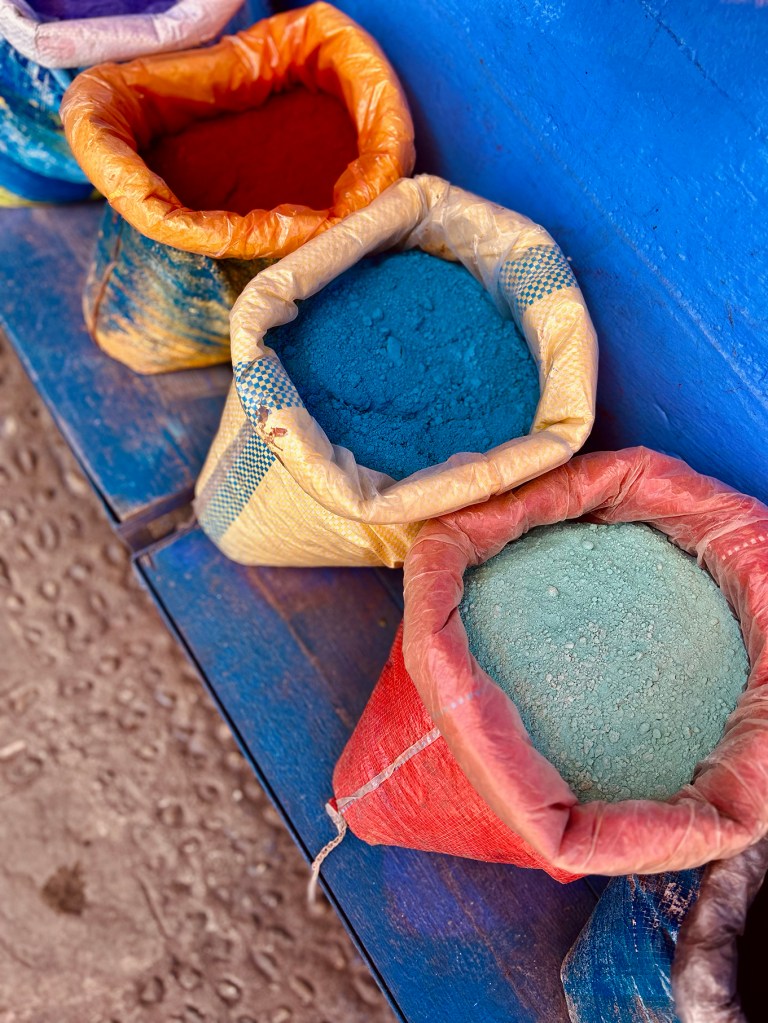
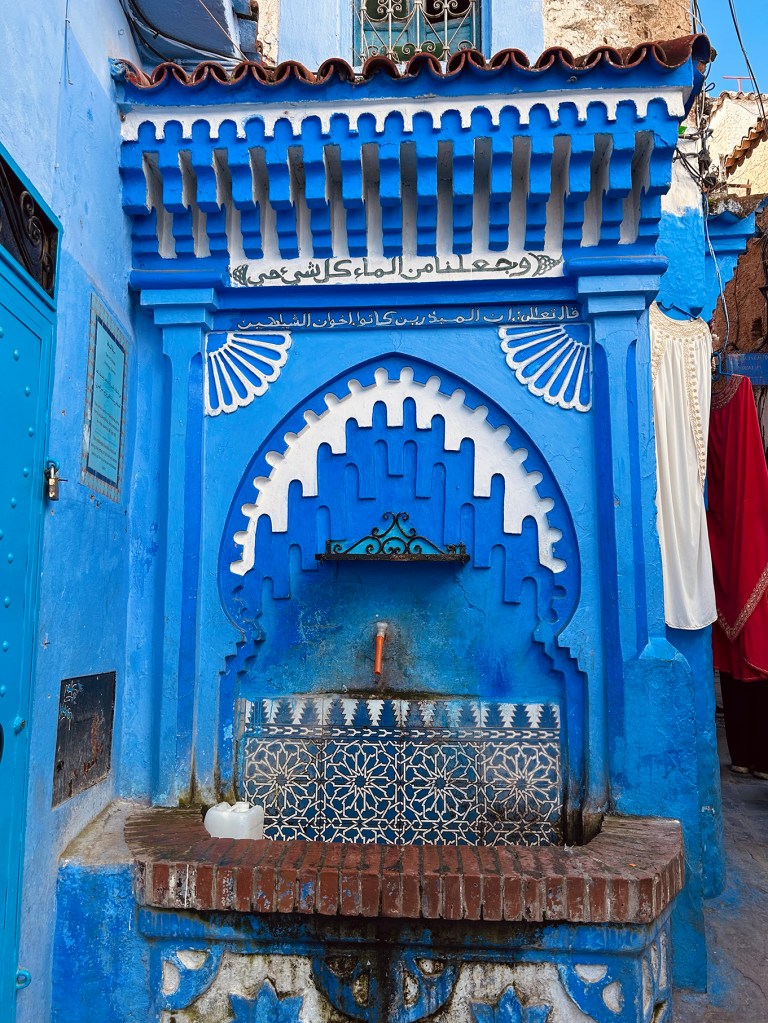
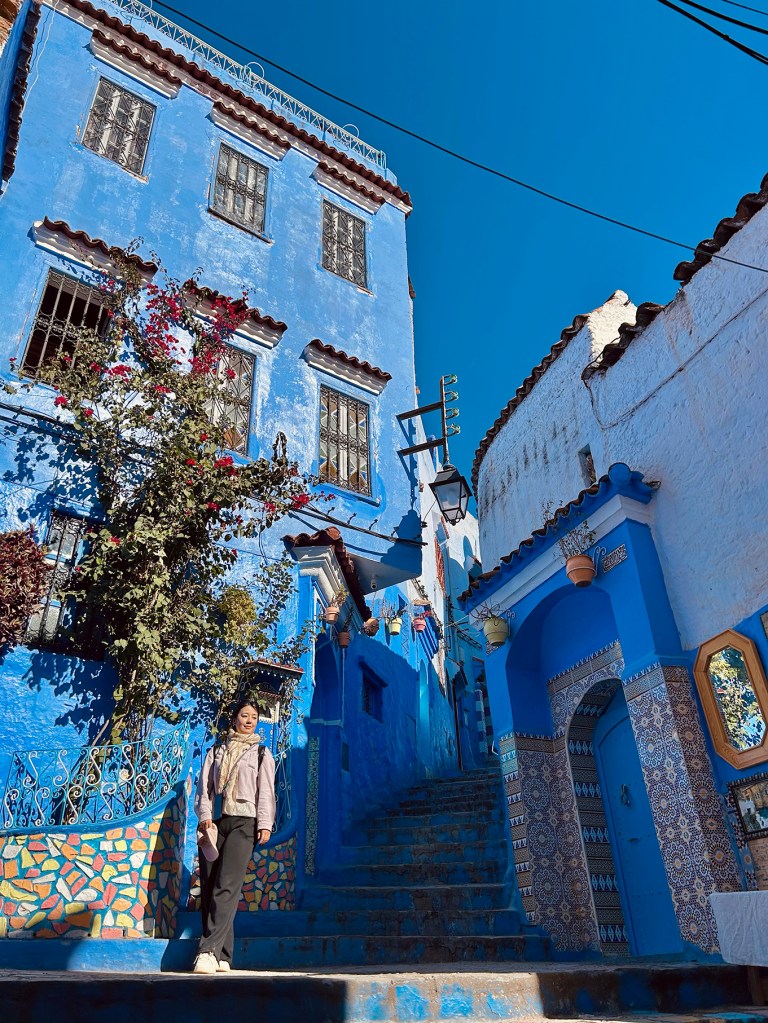
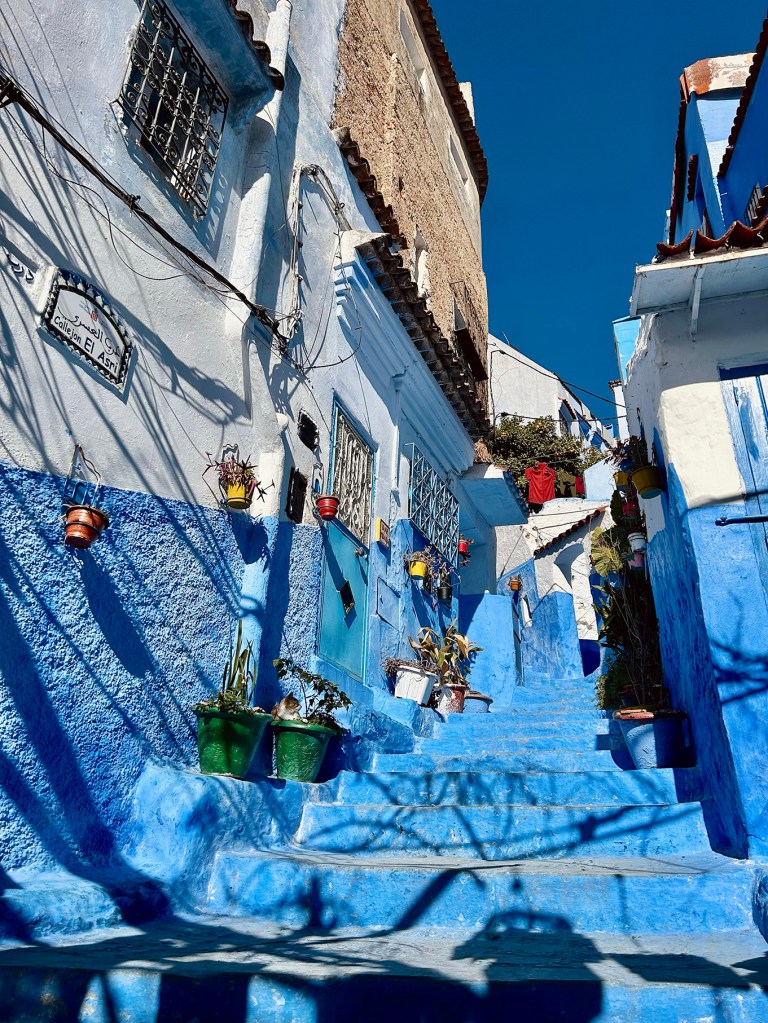
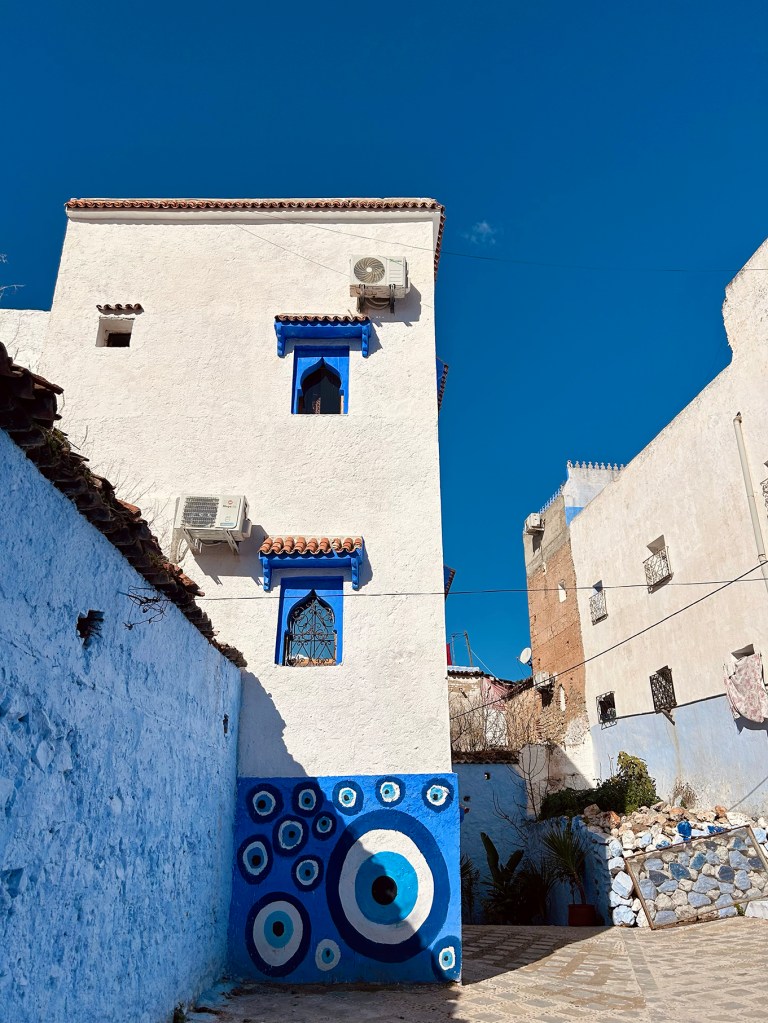
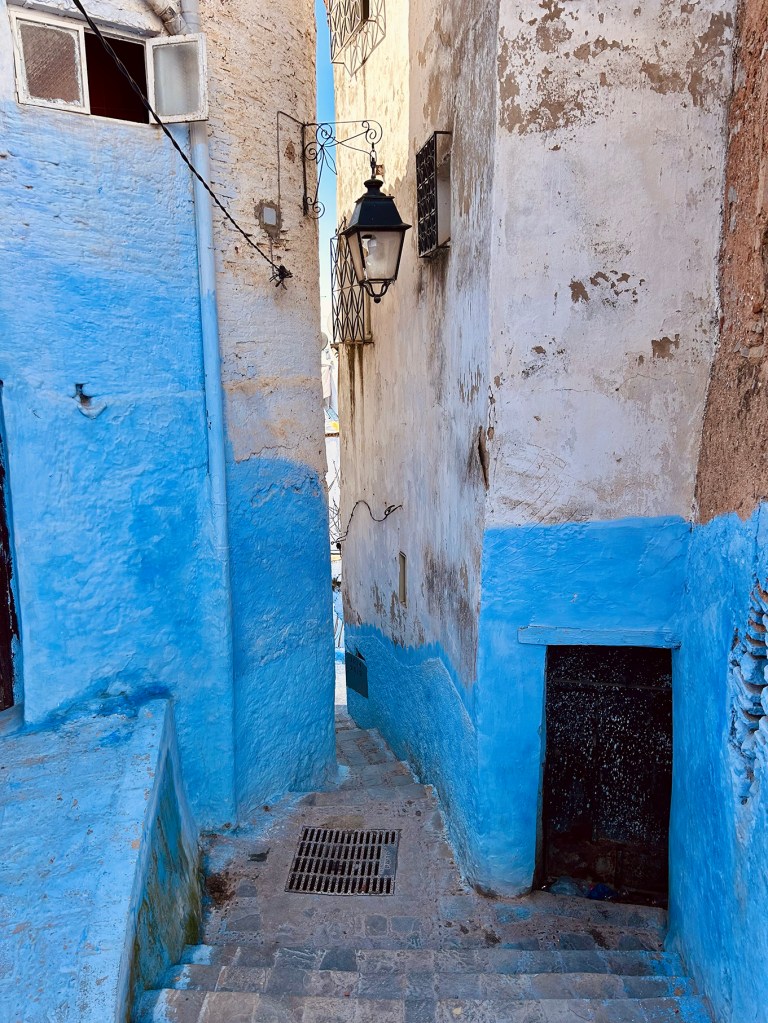
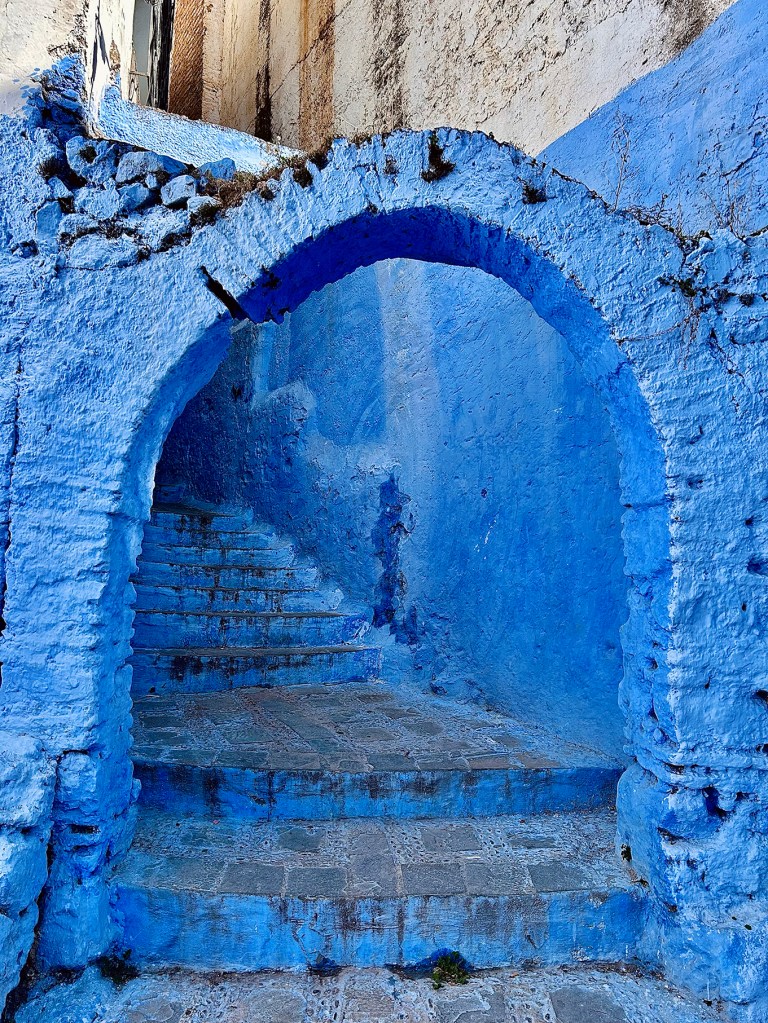
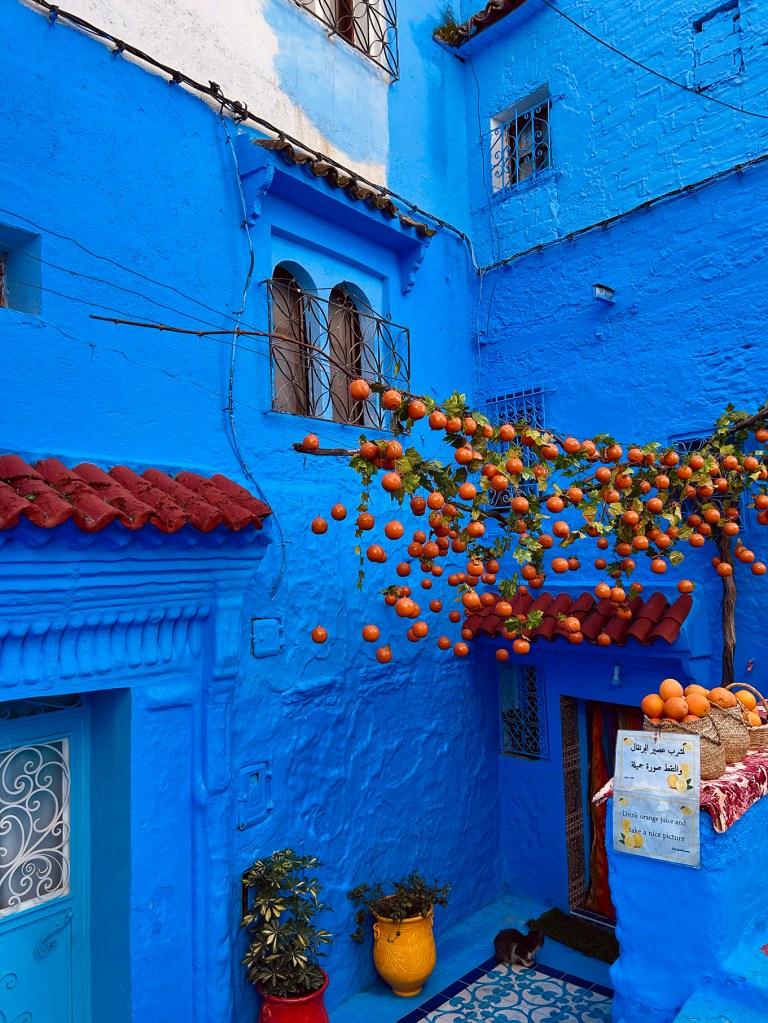
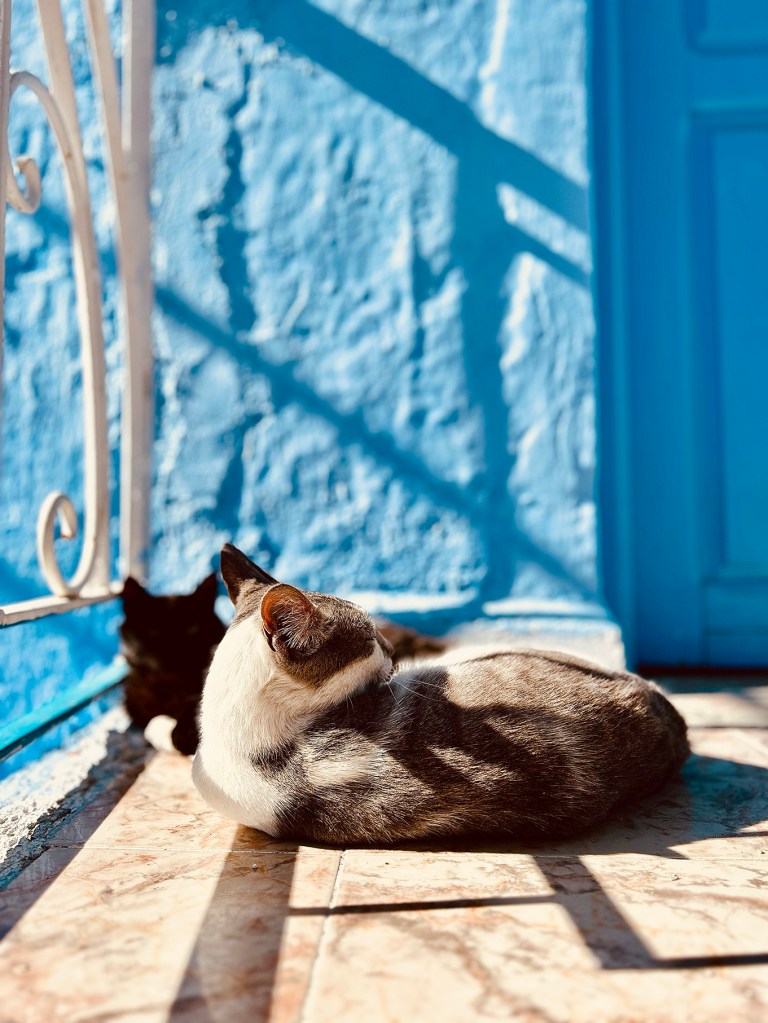
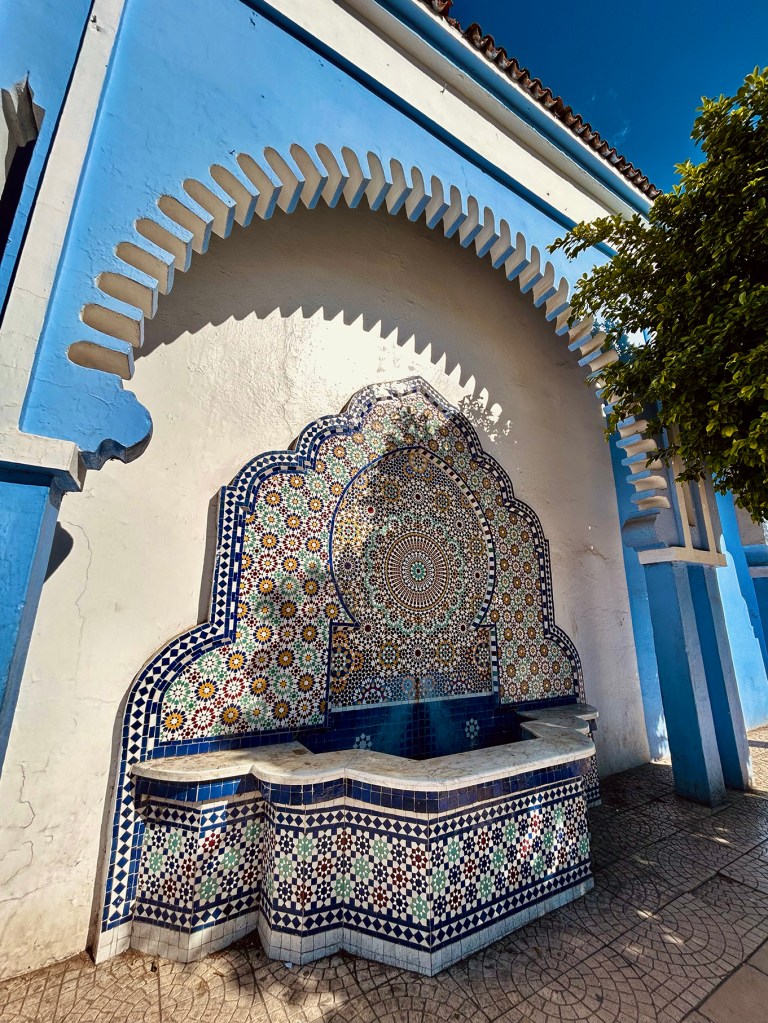
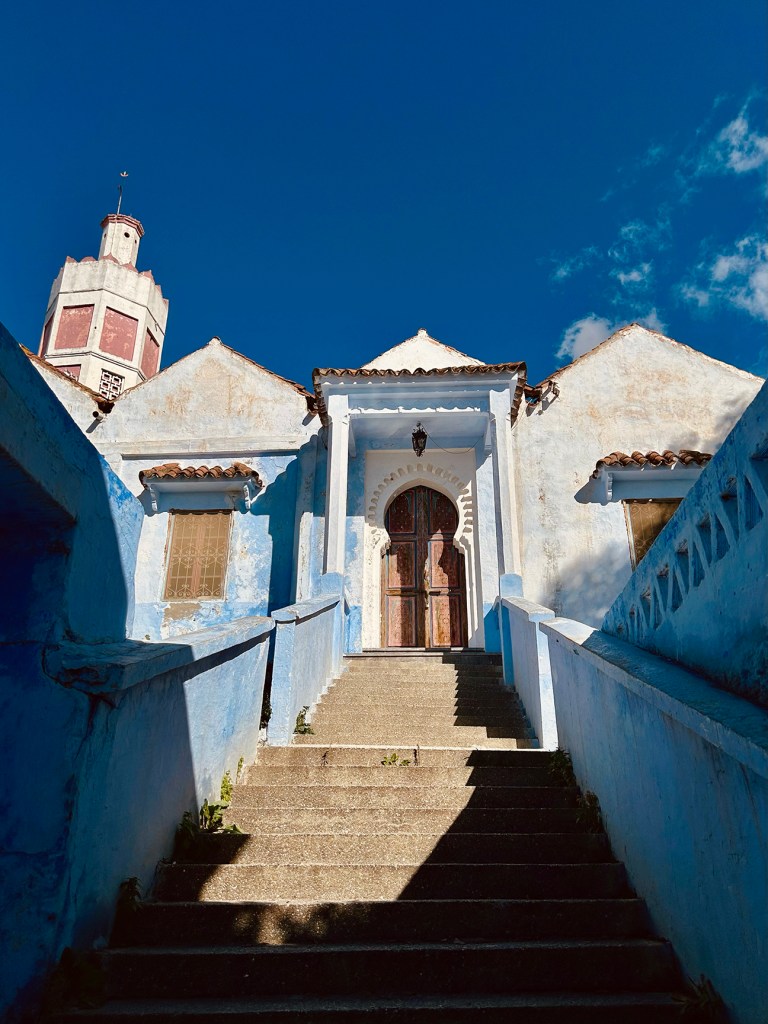
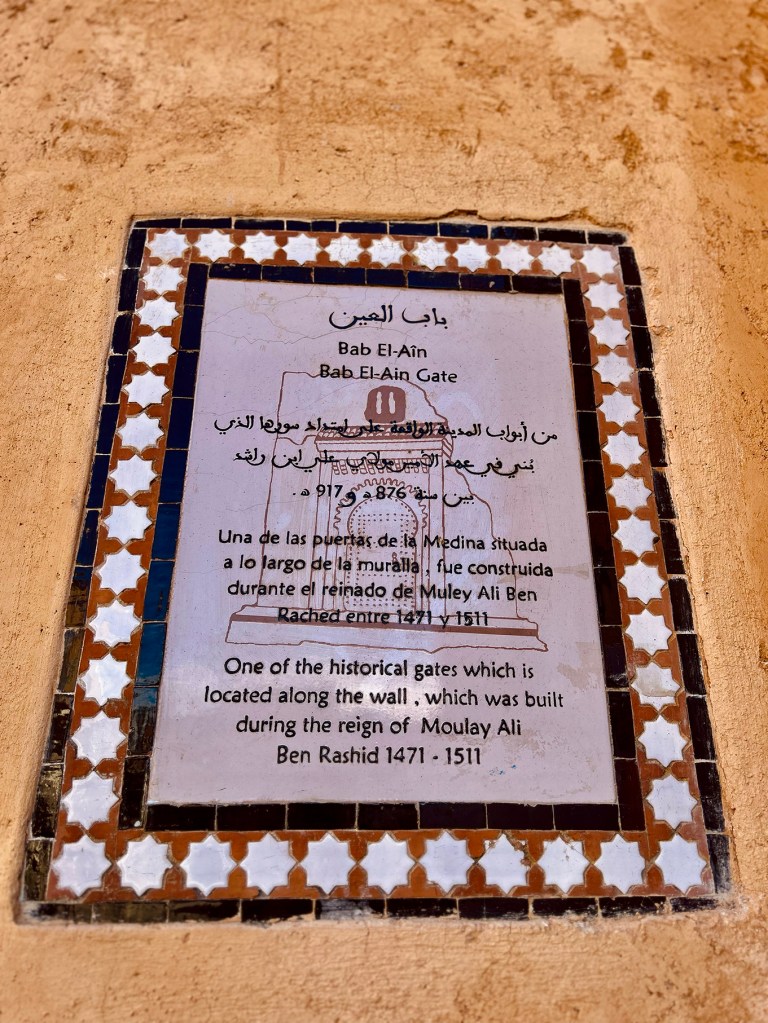
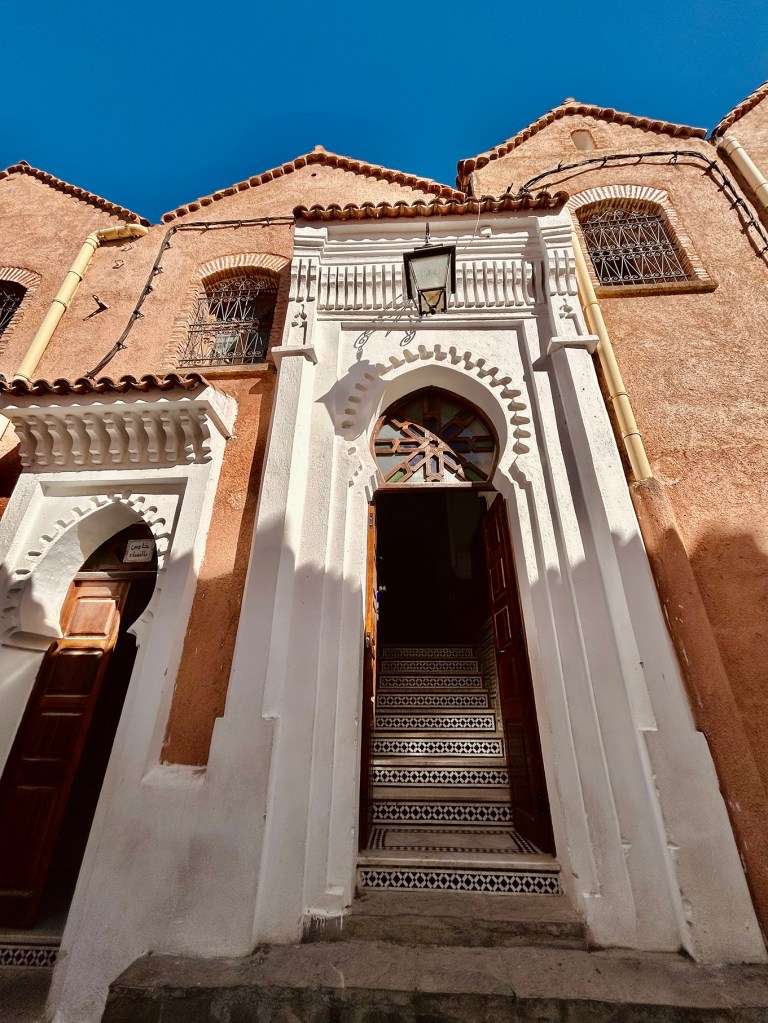
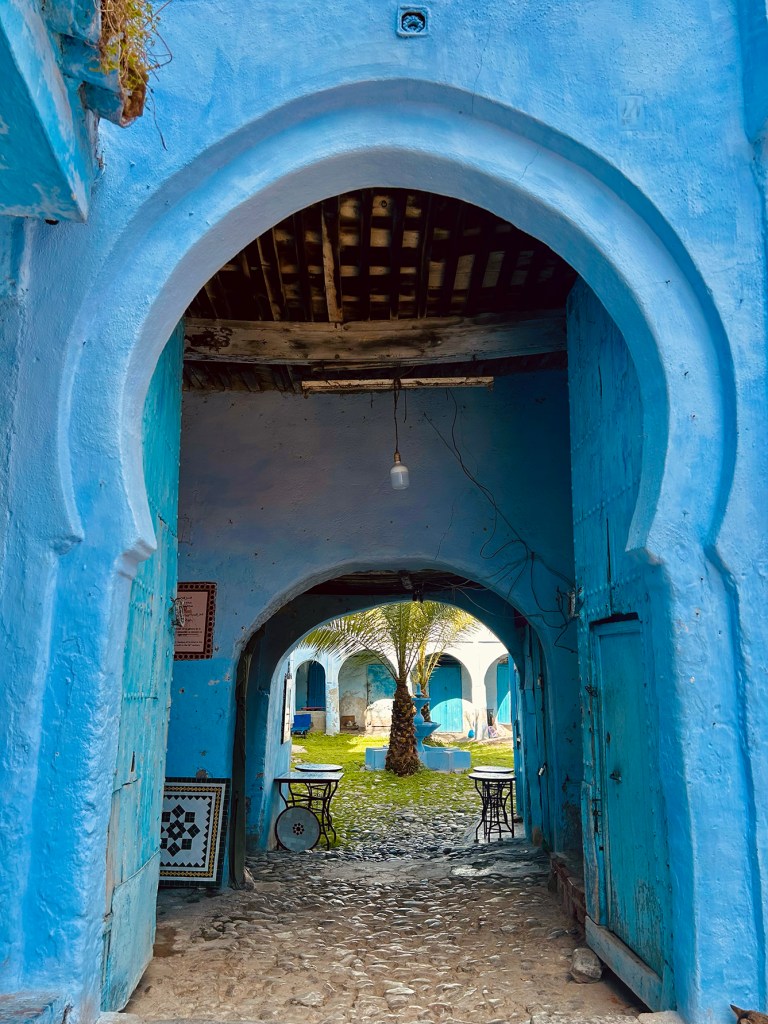
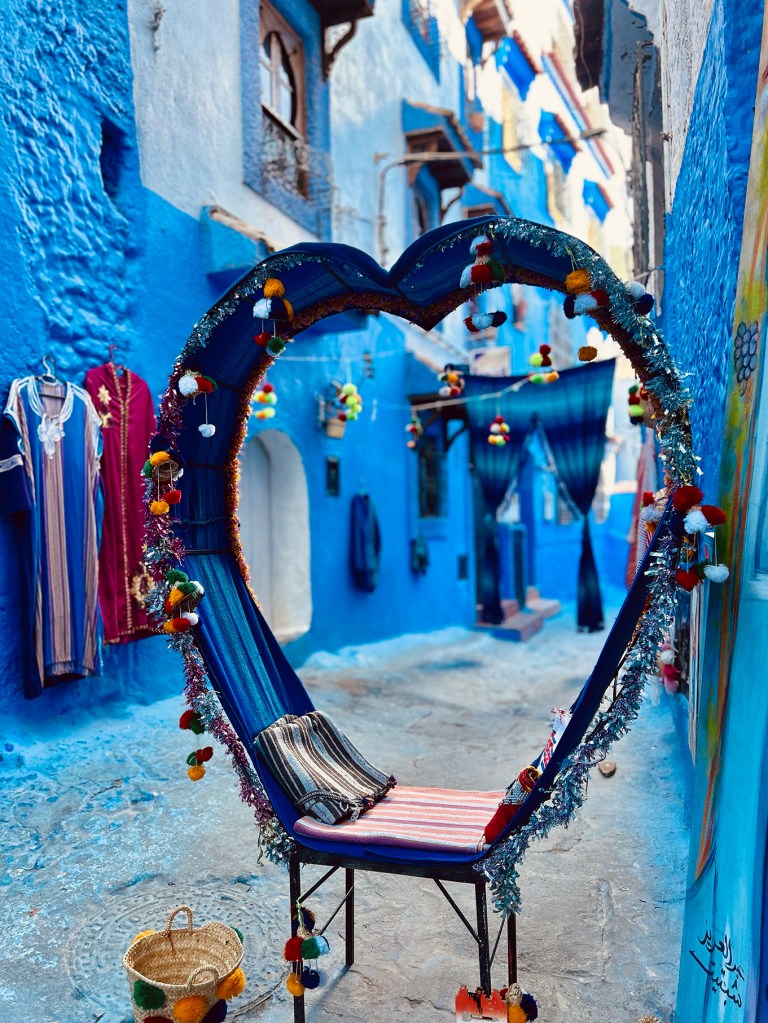
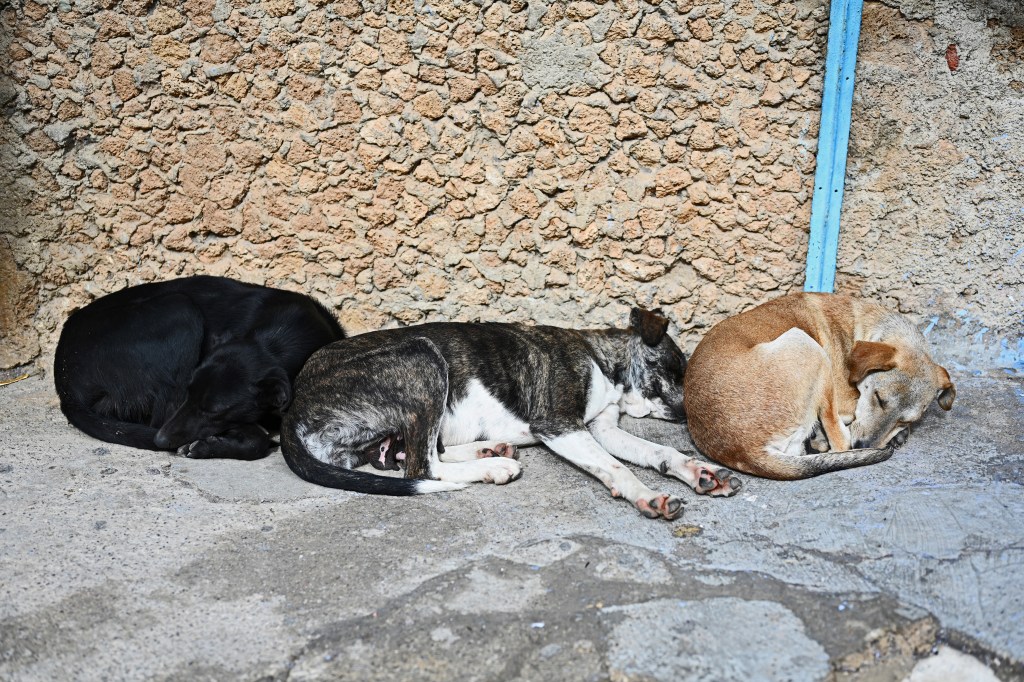

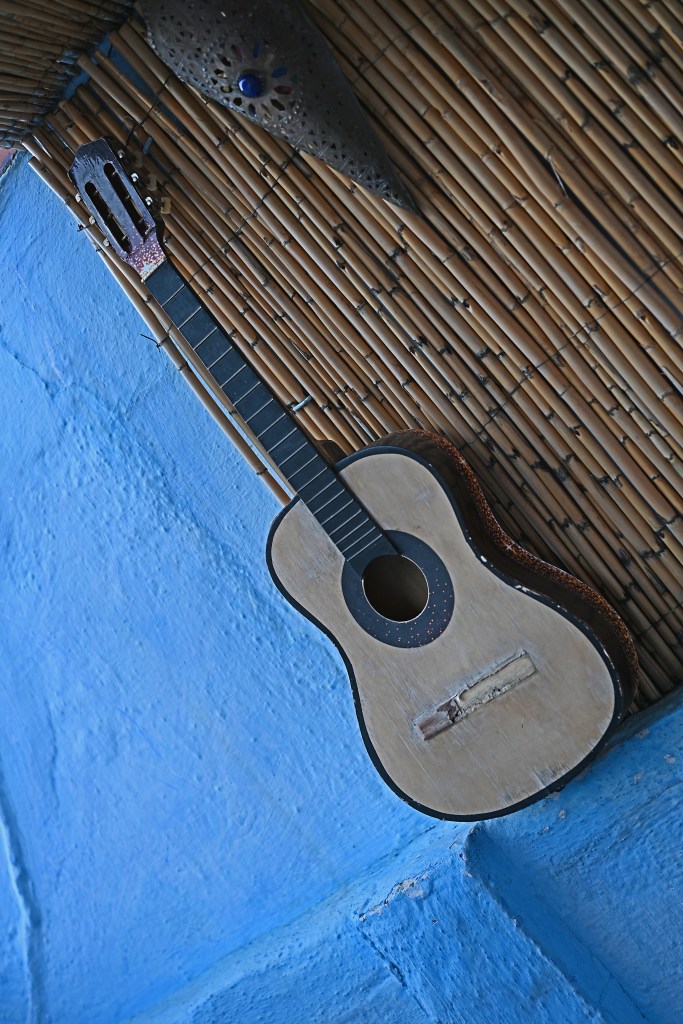
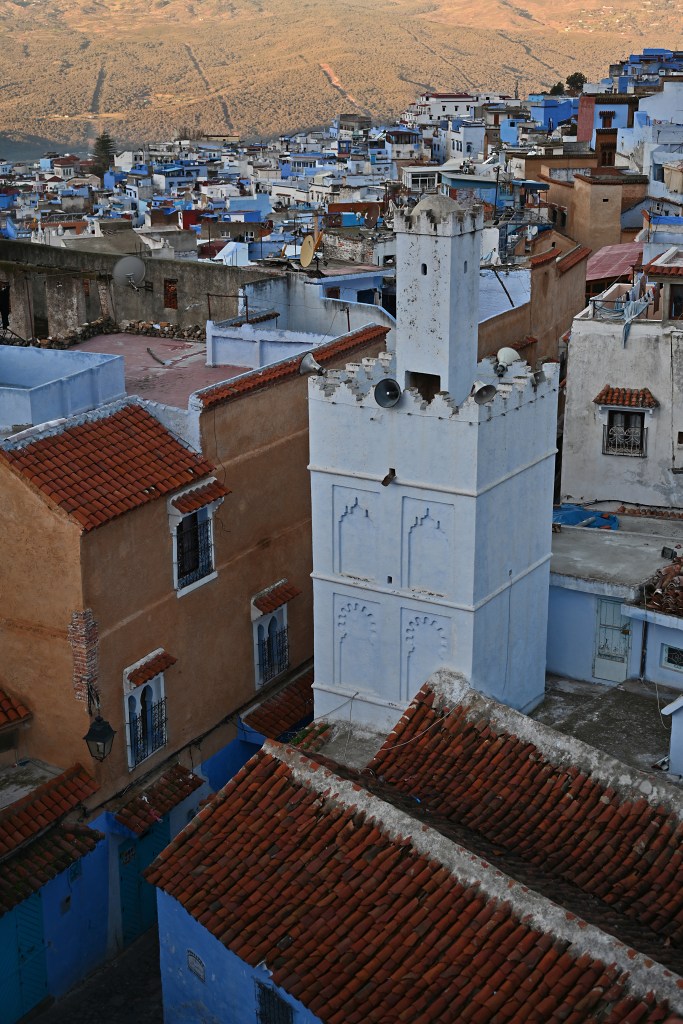
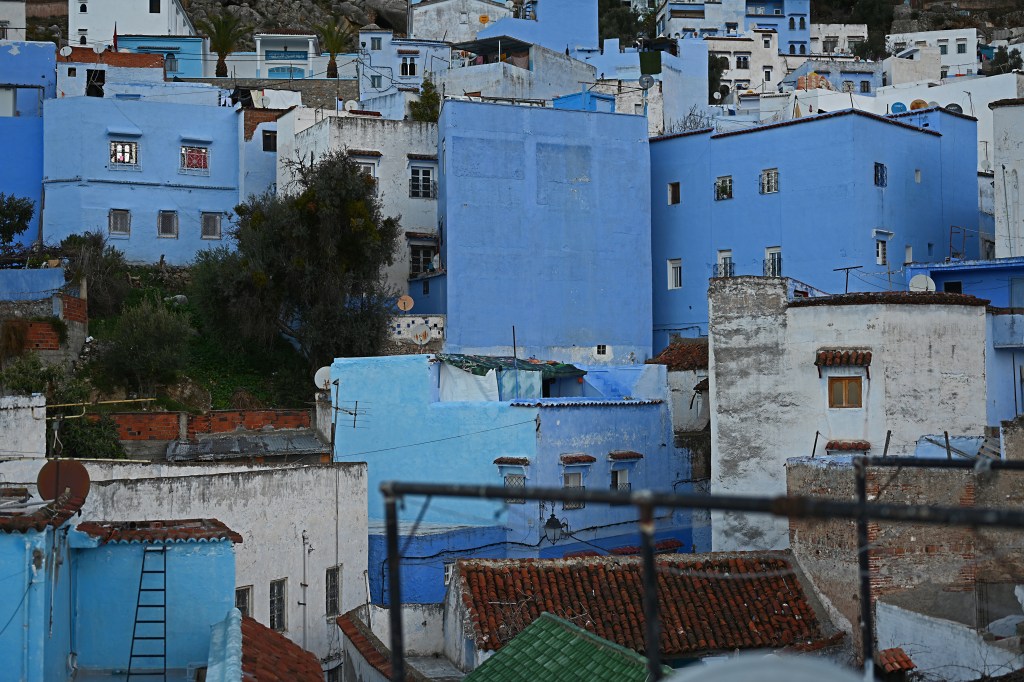
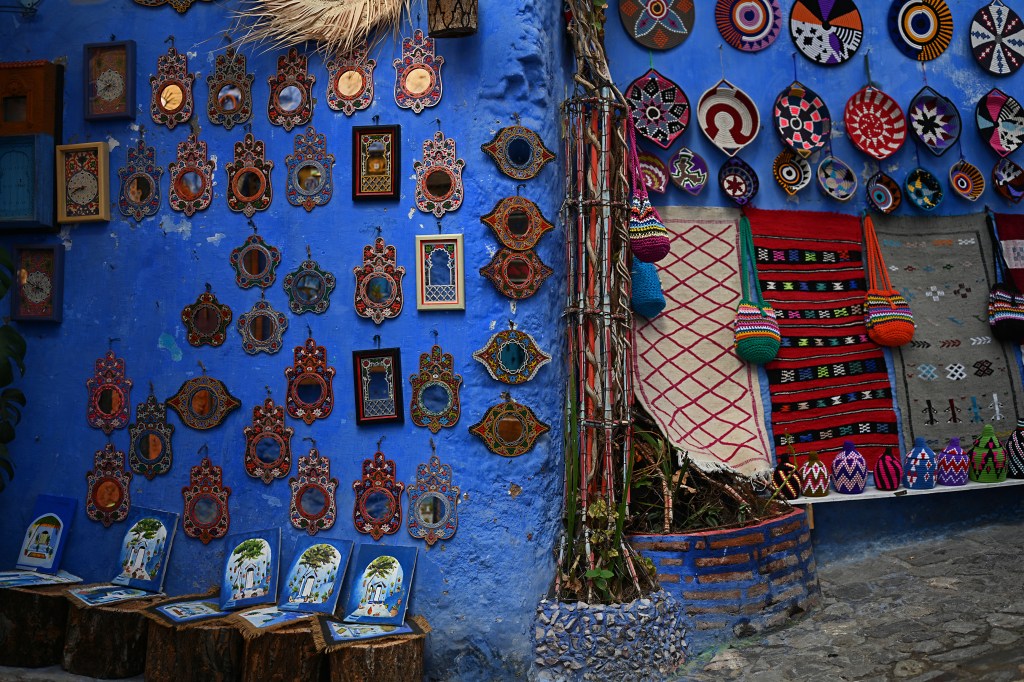

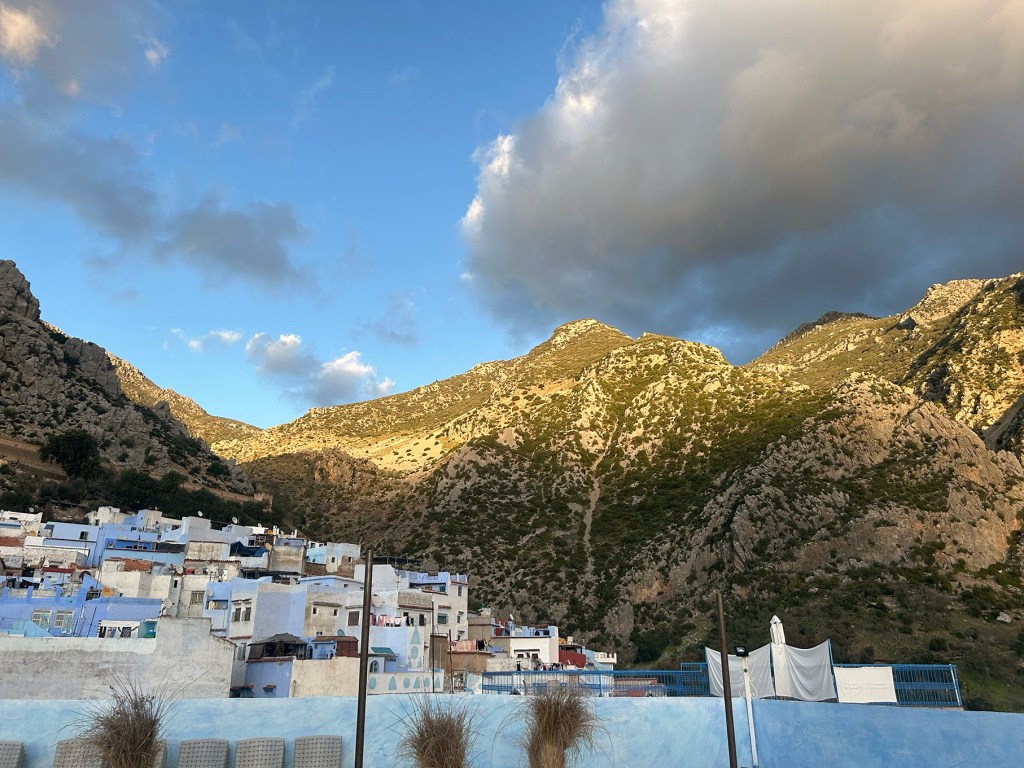
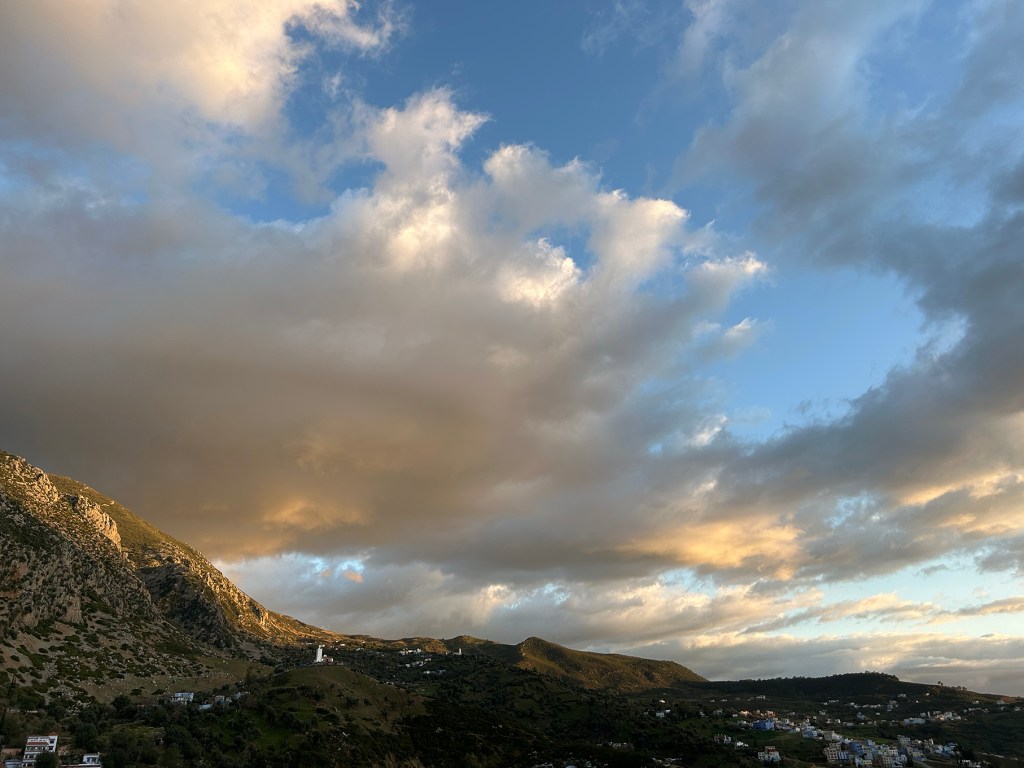
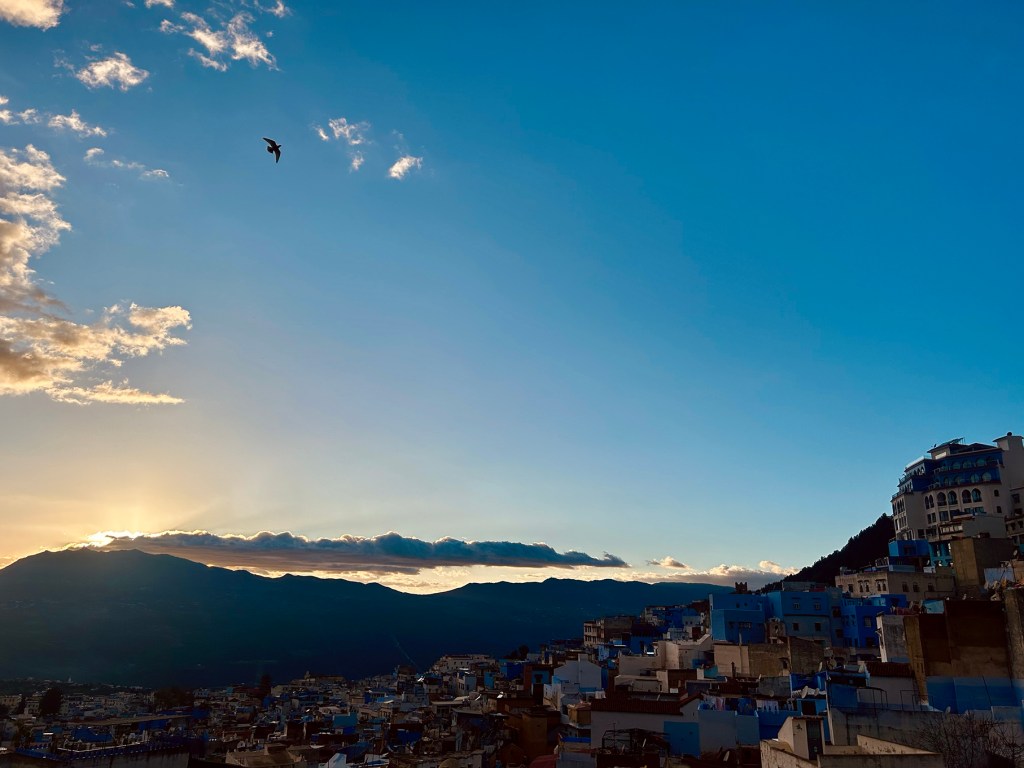
Blue and green – colors that are good for the heart, it’s said. I couldn’t agree more! So with a heart that got a proper dose of feel-good, I said good night to Chefchaouen and got ready for the next day on the road.
Chefchaouen – Tétouan – Tanger – Casablanca – Marrakech
Morocco is a large country, with lots to see and experience. If you’re on speed, you can probably squeeze in even more than I did in two weeks, including Rabat, Casablanca, Agadir, Tanger… Most places are doable for a day trip and all of these cities have their unique character. From a photography point of view, Morocco is paradise. But I decided not to push it this time and as always, save some things for another trip. That way, I always have an excuse to go back. That, and handsome dudes in the desert (insert nervous laughter)… So my plan was to come back to Marrakech from Chefchaouen and then stay there for the rest of my vacation.
The trouble is that it’s a bit more complicated to travel back to Marrakech from the Chefchaouen area. I couldn’t find a direct bus solution, there is no train going through Chefchaouen, and most private transfers would be a bit more expensive. It’s almost 600 km, so naturally it’s going to take a while. So the best I could come up with was to hop in a cab to Tétouan, from there get on the bus to Tanger, then take the train to Casablanca and finally another train to Marrakech. This was easy to book and so much cheaper than in Sweden. And since I only had my backpack, all these transfers wouldn’t be a problem.
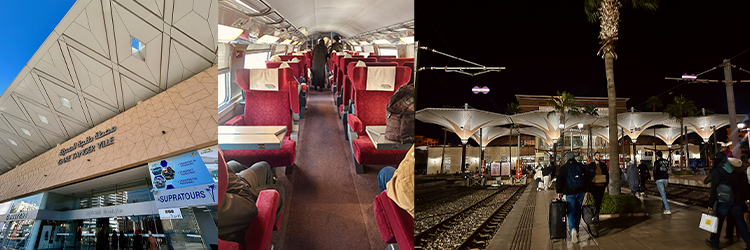
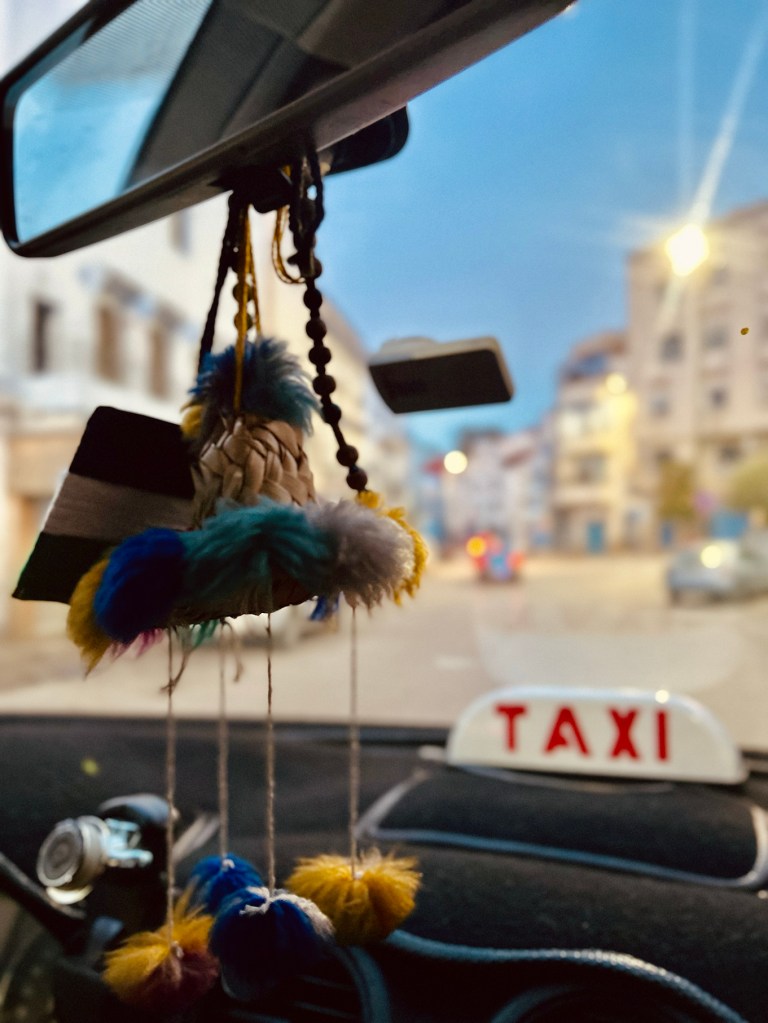
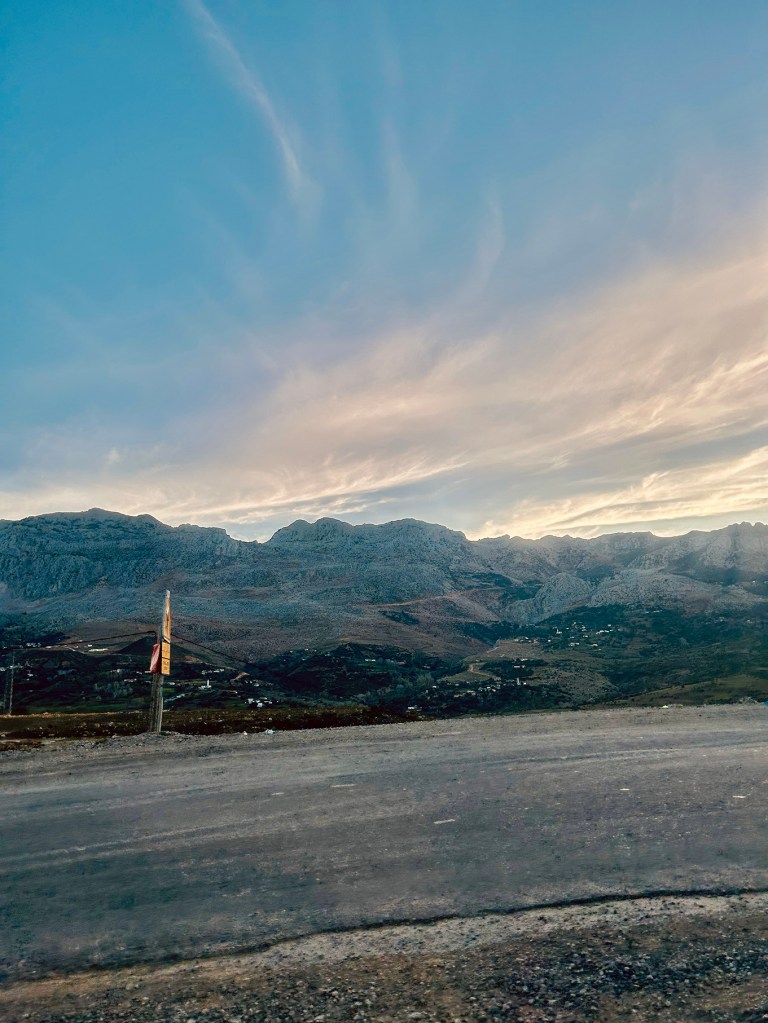
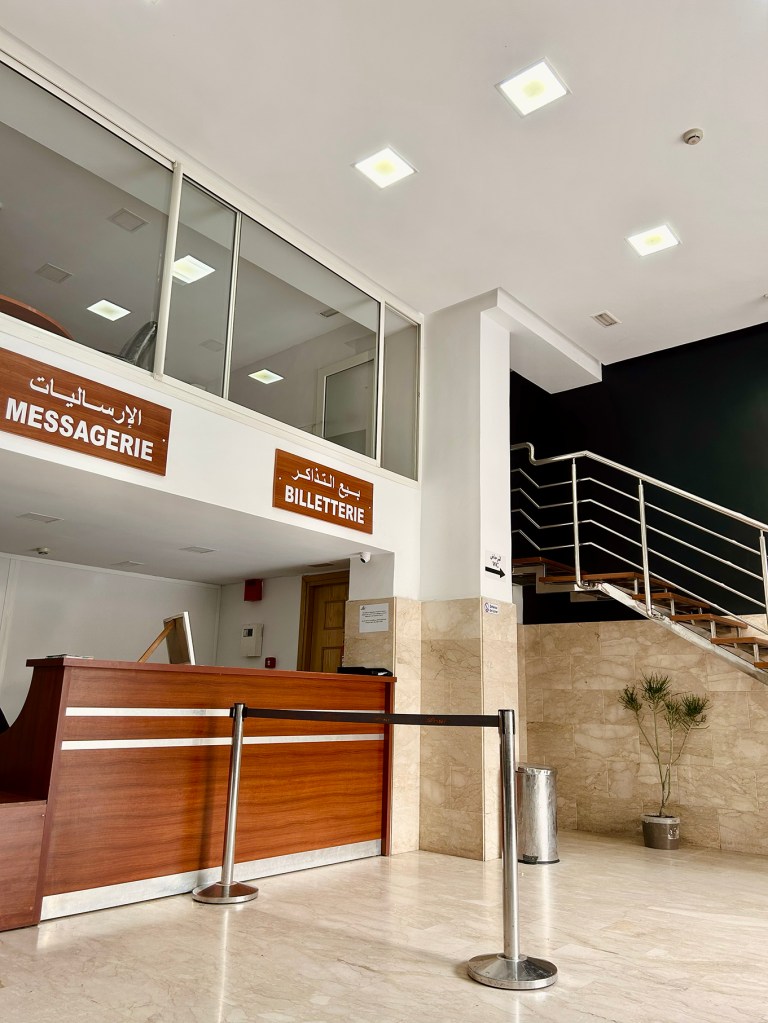
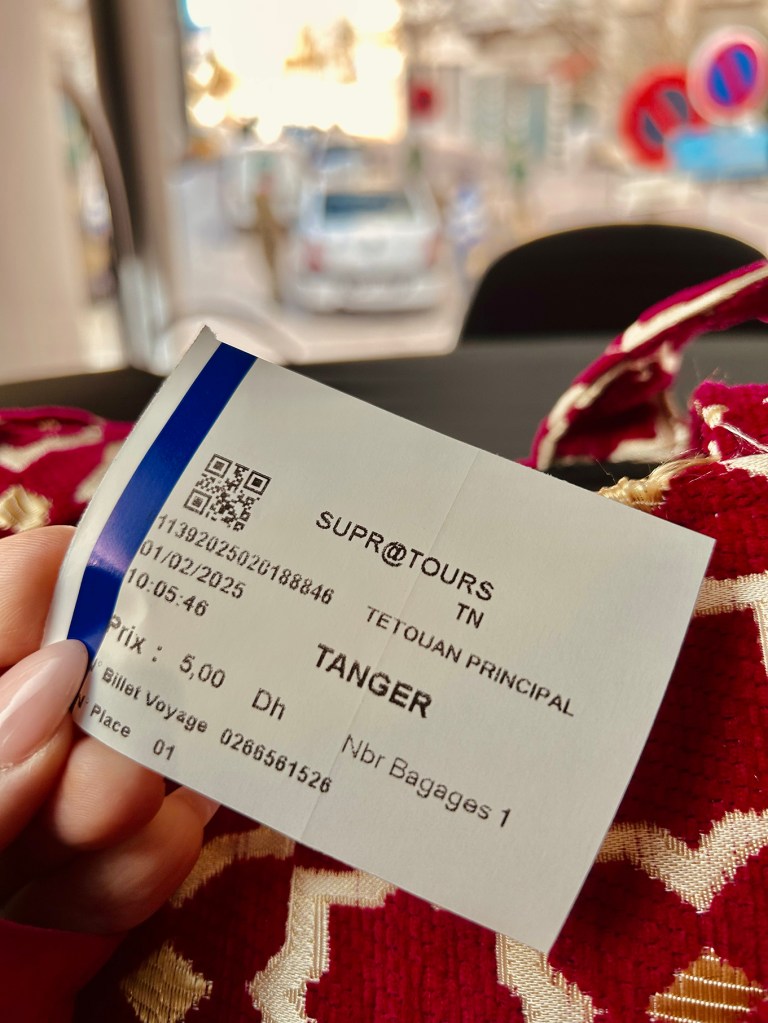
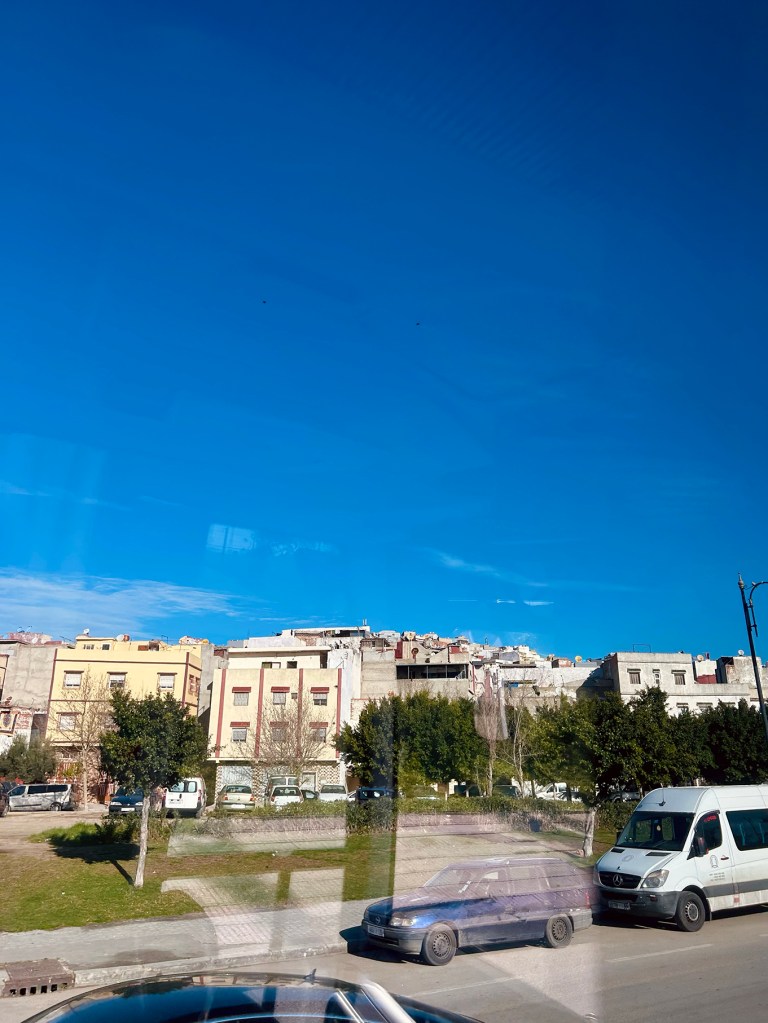
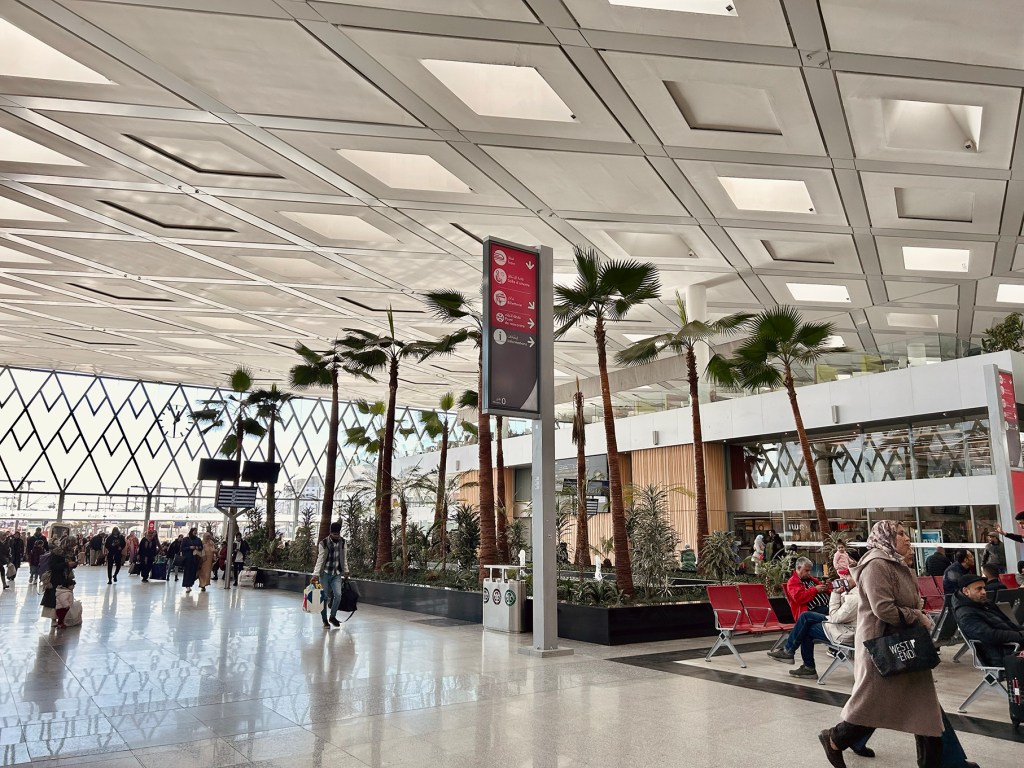
Said and done, the taxi picked me up early in the morning and I had a great ride through the ever-changing landscape to Tétouan. But the ticket said absolutely nothing about which bus exactly I would be getting on, or where that particular stop was. So through a little investigation (and a lot of panic because what if it was the wrong option), I discovered it would be the Supratours office. Supratours, by the way, seems to be a convenient way to travel by bus around the country. What the ticket also didn’t mention was a 5 dirham extra charge for storing your luggage, which I had to pay as we were boarding. But hey, seat number one and bus station with clean toilets! The bus was on time and took me to Tanger in one hour. Even with some road work and traffic, it arrived a couple of minutes earlier than planned. And looking out the window, I discovered that Tanger definitely qualifies on my to-do list for another trip. The train station is great and you have to be an idiot to not figure out where to go, because it’s tourist-friendly and very well organised. And it has palm trees, how can you not love a station with palm trees?

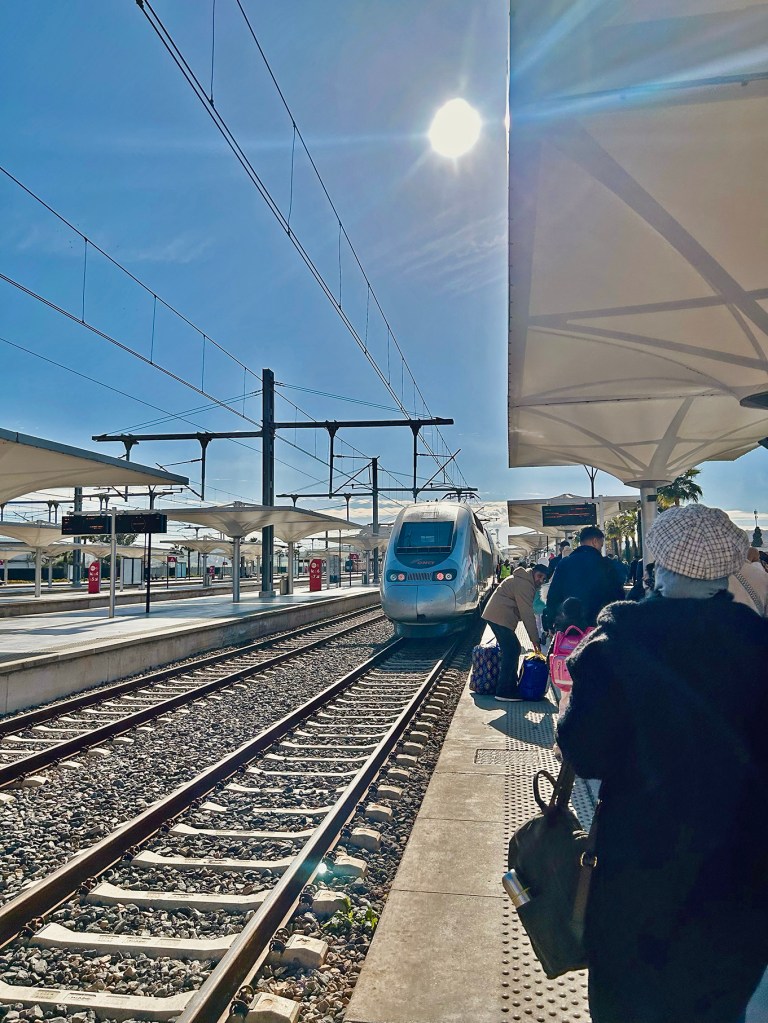
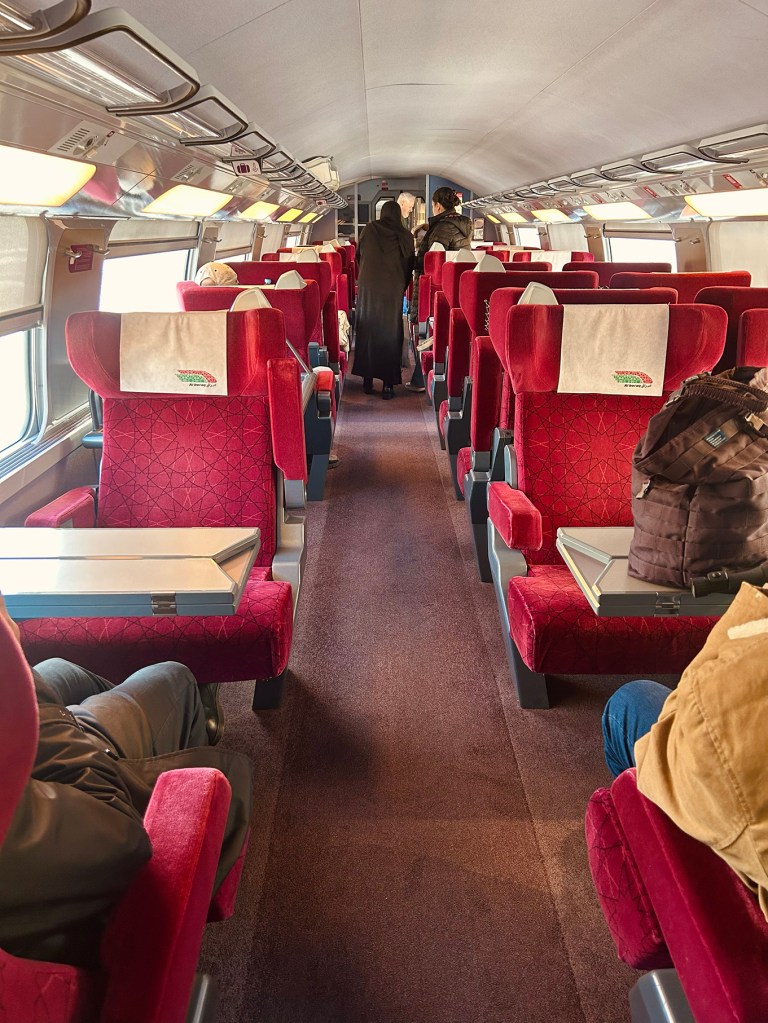
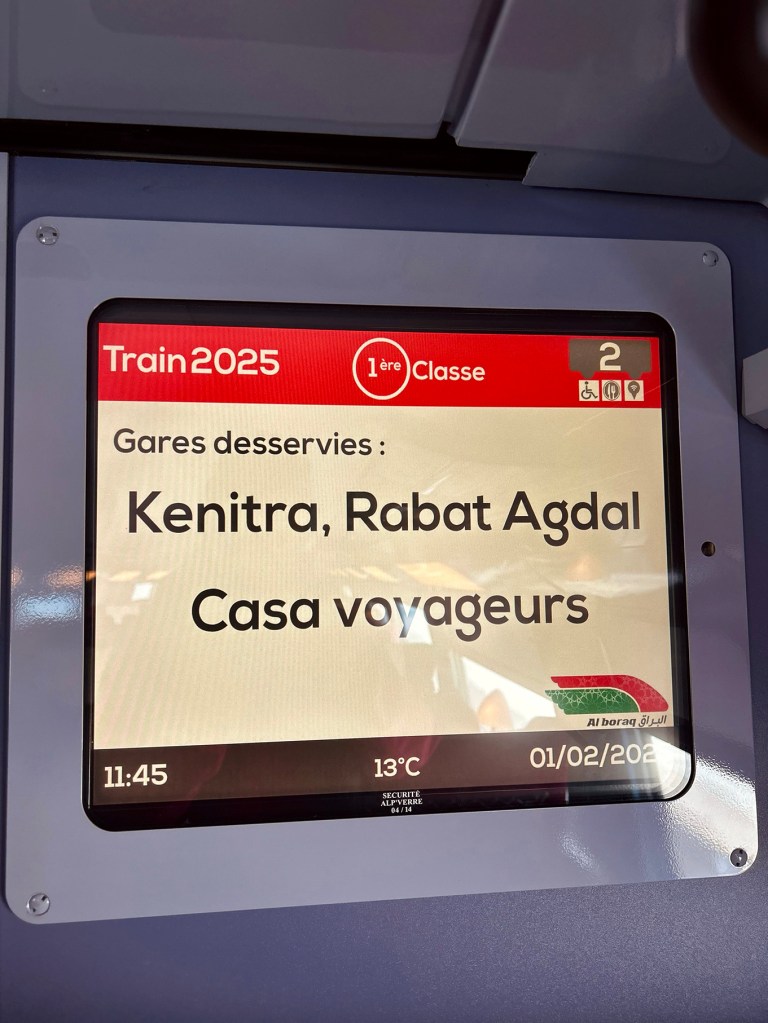
The Al Boraq train from Tanger to Casablanca was a delight. It was comfortable, clean, left on time and arrived on time. The first class car was quiet and it was obvious that people with a better financial situation were the ones who could afford that kind of travel. It was me, some business dudes, other Westerners and a few Moroccans who seemed to be doing well in life.
Casablanca station was a bit different, slightly more chaotic, hotter, louder. I went up the stairs to look for the platform for my next train and ended up going back, as it would be that very same one. That train was more like one from Romania, and even though I had a first class ticket for that trip as well, it was not even close to the Al Boraq.
It did come on time, but what I didn’t know was that there was only one track between Casa and Marrakech. It was also pretty hot outside, the afternoon sun was not merciful. About thirty minutes into the trip, we stopped and didn’t move for a while. In my compartment, there were a couple from the Birmingham area, a gentleman from Wales and two Moroccan ladies – a local grandma and a woman who lives in Paris and often visits her family in Morocco. The four of us who’d never been on that train before were starting to worry about arriving on time, when suddenly the train started to move backwards, back to Casablanca. Cue in total confusion from us tourists, including a Canadian family I’d been talking to on the platform, who were now wandering the corridor outside their own compartment.
Now this is where I have to tell you about the best invention since the folded napkin. Well, something like that… The eSIM card!!! Dear lord in heaven, here, have my money! This is a nifty solution for those of us with stingy operators, and after seeing ads for it all over the airport and my journey so far, I finally decided to get one. If you’re a dinosaur and don’t know what it is, here: it’s a digital version of a traditional physical SIM card, built into the device itself, which means it can be programmed remotely by your carrier. You can buy one with a data plan for a specific country, and choose to use the eSIM instead of your regular card, kind of like using another number. That way, you connect to local networks without any problem. So for 30 bucks I got unlimited 5G surf for my whole second week in Morocco, not needing to find any available wifi. That is a total lifesaver, especially in situations like the Casa train!
So having data access without having to completely go bankrupt, I texted my Marrakech riad that I would be arriving later than planned, due to a delay with the train.
Back at the Casa station, no movement. Instead, new passengers who had been waiting for the following train, thinking we were it, as the schedule seemed to fit. So all of a sudden, super crowded, even hotter, people with tickets and seats they couldn’t get because we were in them. Finally, after about 30 minutes more, we started going forward again. That’s when train staff also told us what had happened. The one-track-thing, yadda yadda, train coming from the airport, yadda yadda, problem on the track, heat, can’t have two trains on it at the same time in opposite directions, yadda yadda, delay, let’s go!
You might think that it would be a smooth ride from here on. Alas, you’d be wrong. This was like the Romanian train called “personal”, which stops in every shithole and moves so slowly that even my grandma could jump in and out of it with heavy luggage. So we stopped at every village on the way, where totally confused commuting locals thought we were the following train, arriving on time, to which they naturally also had tickets with seat numbers on. I can’t even remember the number of times we explained the same thing to everyone squeezing on board in every new village, with their children, elders and goats. I’m not joking. There were goats on this train. Because, why not?
Now you might think that, even with this confusion and overcrowding, we’d finally be rolling smoothly towards Marrakech and arriving with just a small delay. You’d be wrong again. About 50 km outside of Marrakech, we stopped rather abruptly. “Electrical problem”, shouted the staff. And clogged toilets. At this point, we were having a blast together, locals and tourists. Inside and outside compartments. Everyone was getting to know everyone, people were curious about eachother’s backgrounds, what we would be doing in Marrakech, people where sharing food and drinks and the train staff also gave us all small bottles of water.
The Parisian lady had all her tattoos done by the same guy I’d be going to at the end of my trip and the gentleman from Wales gave us tips on how to travel to Morocco by ferry from Spain. The Canadians sounded exactly like when Celine Dion speaks and I got about 3% of what the father was saying. The local goat people were sweet and welcoming.
I don’t know who did what electrical work on our train, but they finally got us moving again, although without also unclogging the toilets, and I can’t tell you how happy everyone was to arrive in Marrakech safe and sound, albeit slightly sweaty and sleepy.
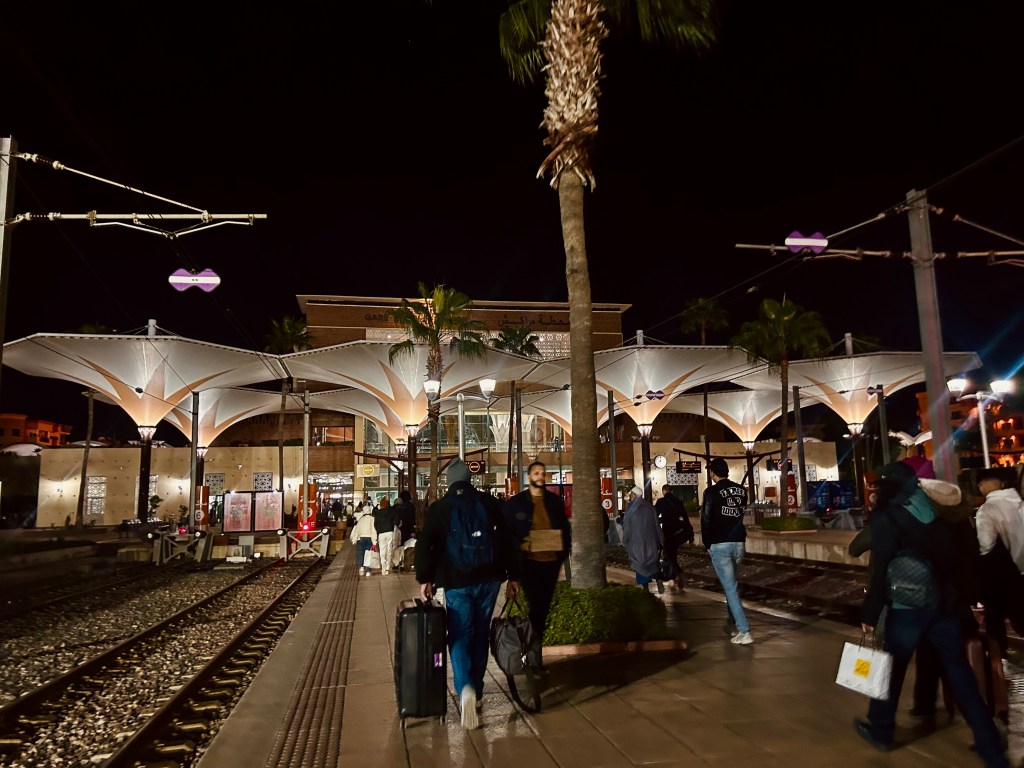
Time on the road? About 12 hours instead of 8–9 from Chefchaouen to Marrakech, sweaty, with butt and back in absolute pain, but with laughter and memories to last a lifetime.
Marrakech
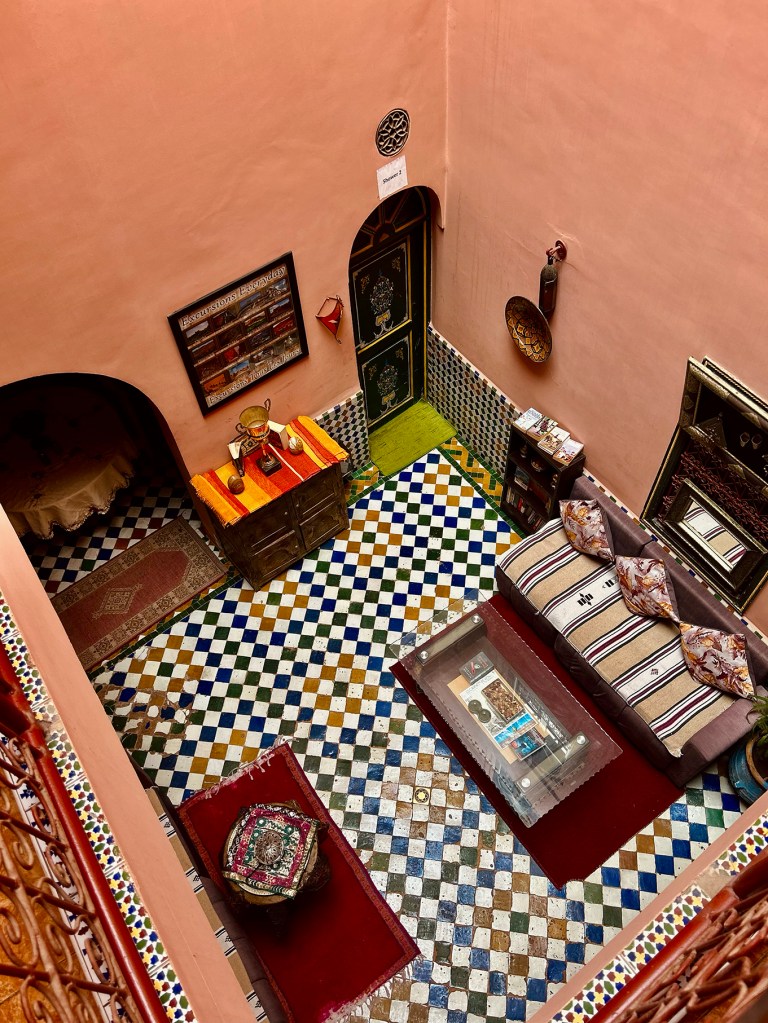
Another riad jackpot for me, not for any luxury, but rather a hard to beat location with a great rate for one week. Literally five minutes in a straight line from the main square, simple but cozy, right in the middle of everything – a fantastic base to explore the whole city. Casa del Sol was a great find, and I’ve already booked it again for my next trip.
My driver had waited patiently at the train station for over three hours and he took me to the meeting point in no time. From there, the riad staff helped me navigate the evening bustle and reach my home base for the next week. A quick shower, a bit of unpacking and a cheap dinner a couple of blocks away. I went to bed with tired feet, an even more tired ass (from all the sitting, duh), but with a huge smile because, hey, when morning comes, I get to eat pancakes!
The neighbourhood didn’t look super fancy, and when there’s garbage in the streets and dark alleys, you get a false sense of it being unsafe. That feeling couldn’t be more wrong. I went out and about at all hours and had no problems. And the evening’s leftovers are cleaned thoroughly before a new work day starts in the souks. Street vendors are pushy sometimes, random people can offer help and ask for money just like in Fes and every place has its challenges. Poverty, injustice, mental health issues exist in Morocco as well, and obviously there are areas that struggle more than others. But they’ve been no threat to me whatsoever. It was rather a reminder of my privileged position and how lucky I am. I had that sense of safety because I could go back to a warm riad and I could afford food and travel. I felt much safer there than I do many times here at home, when walking at night. And the people who appeared to struggle the most showed a genuine warmth and welcoming attitude, which is sometimes very hard to find in those who are privileged like myself. Those who have nothing will usually give you everything.
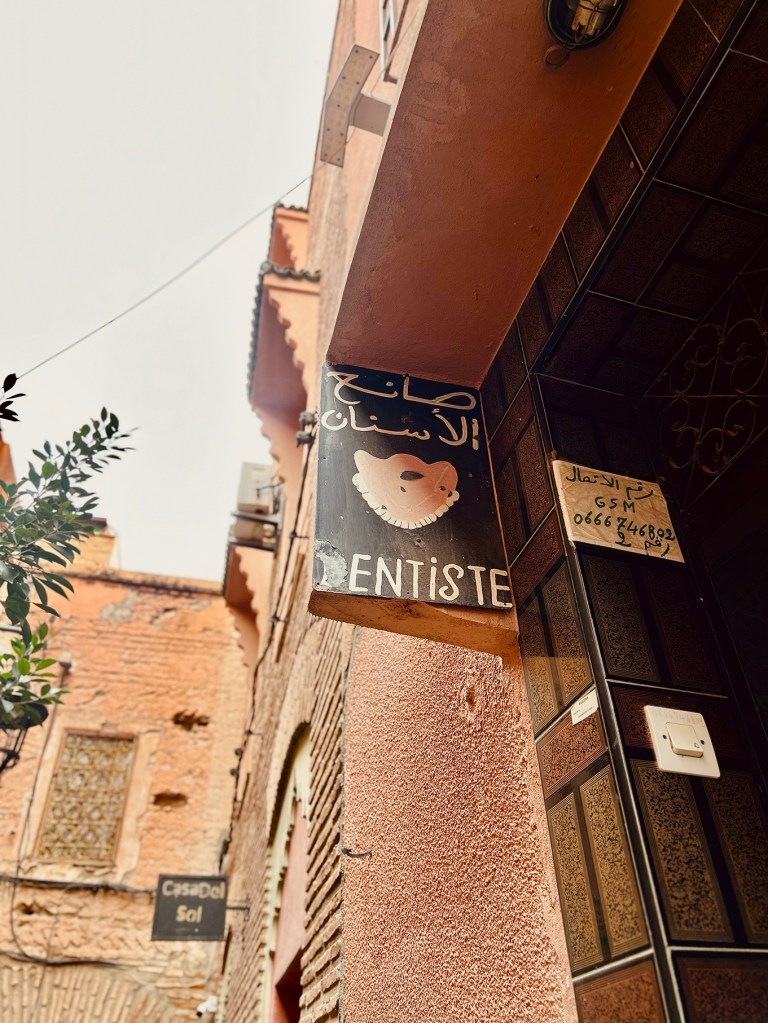
Counting my blessings, breakfast was also made on the spot and the terrace offered me lovely morning views over a sleepy Marrakech. And if any of my teeth eventually had enough of all the sugar, I wouldn’t have to worry, because the riad was conveniently located right next to a dentist’s.
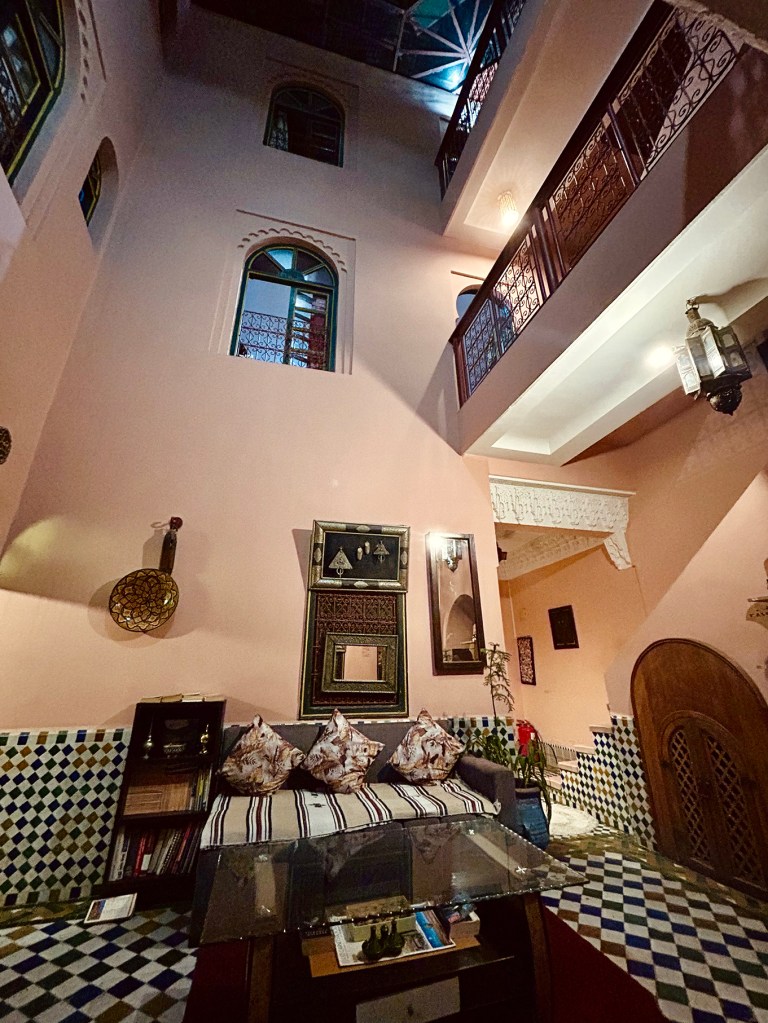
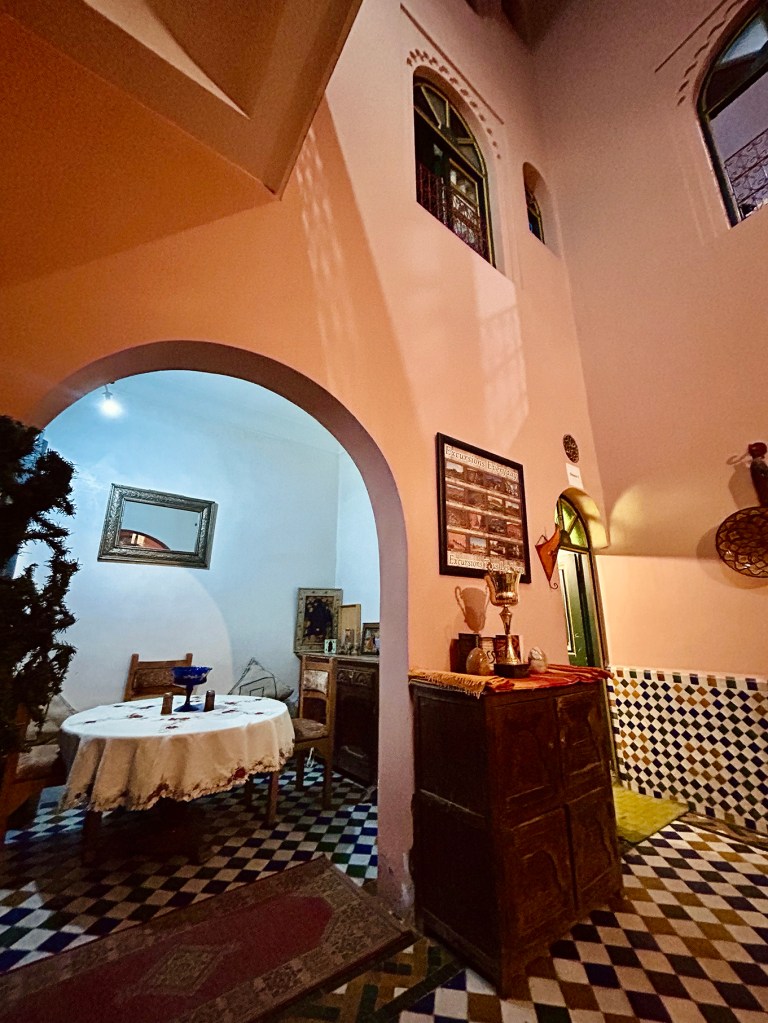
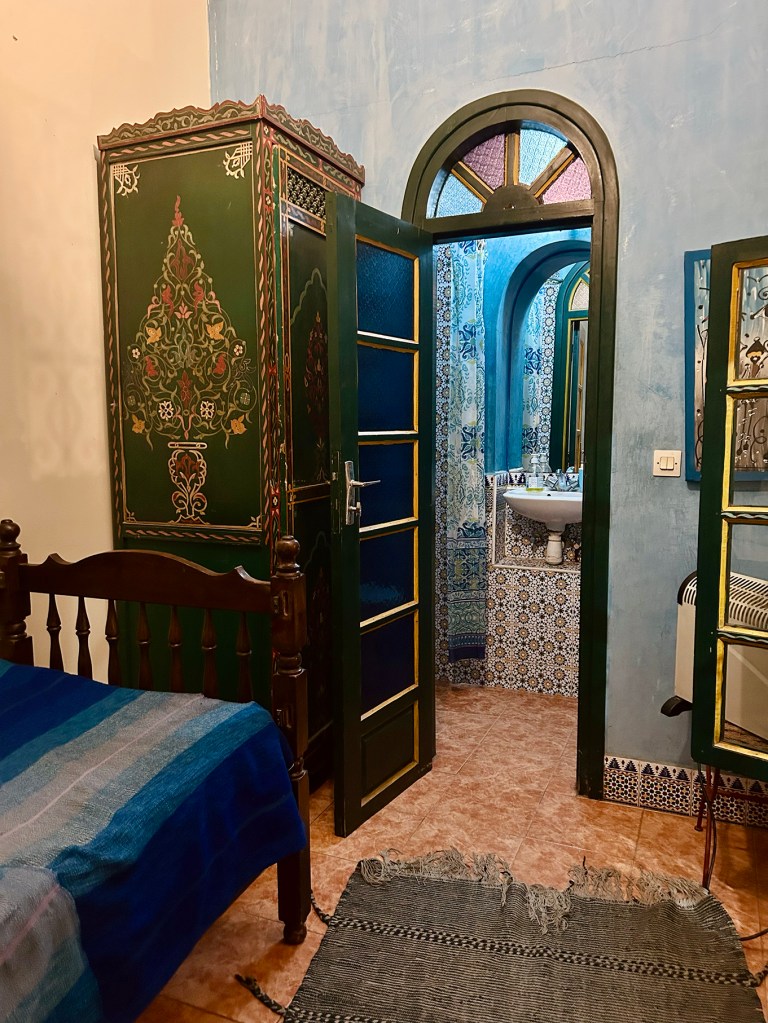
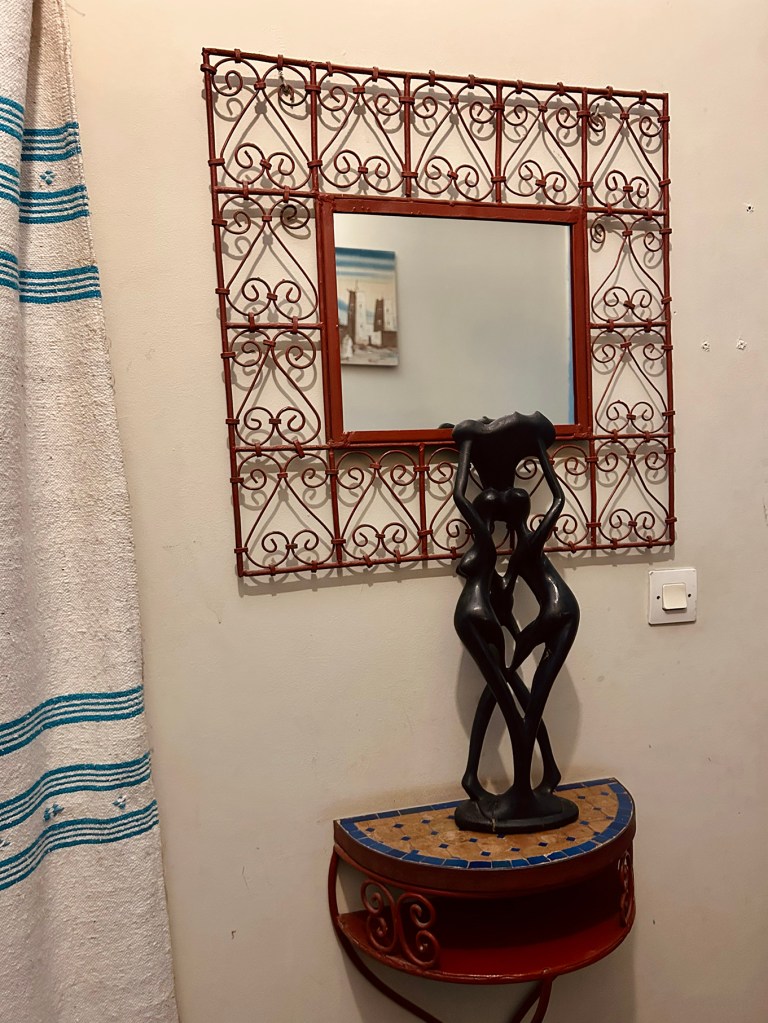
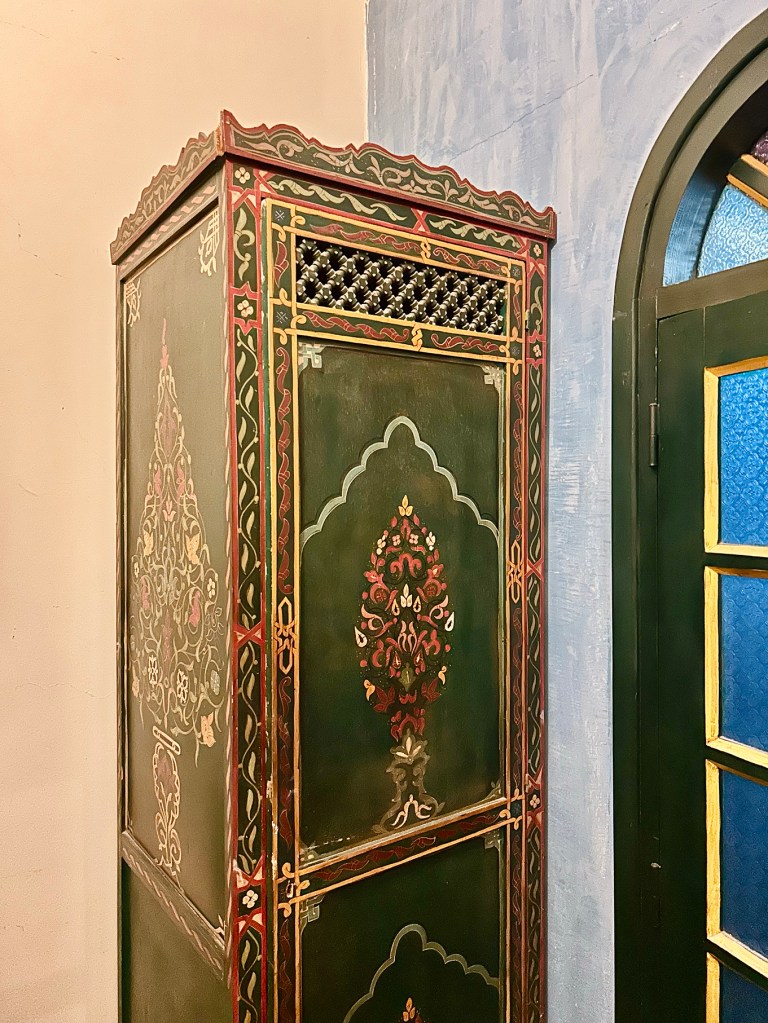
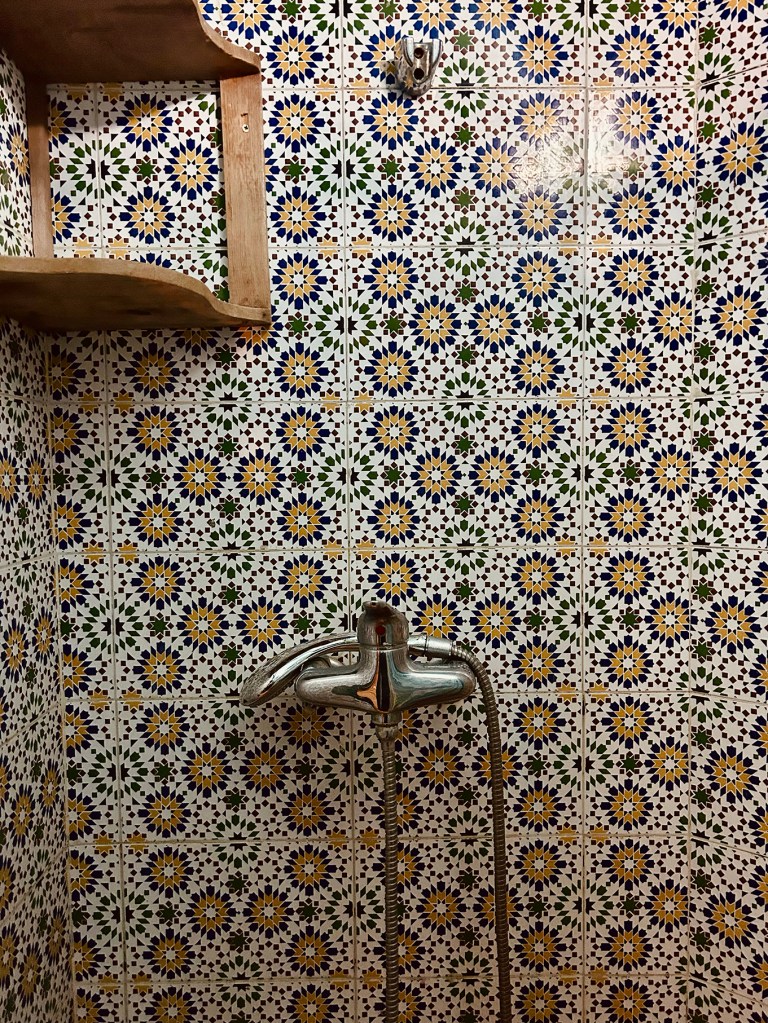
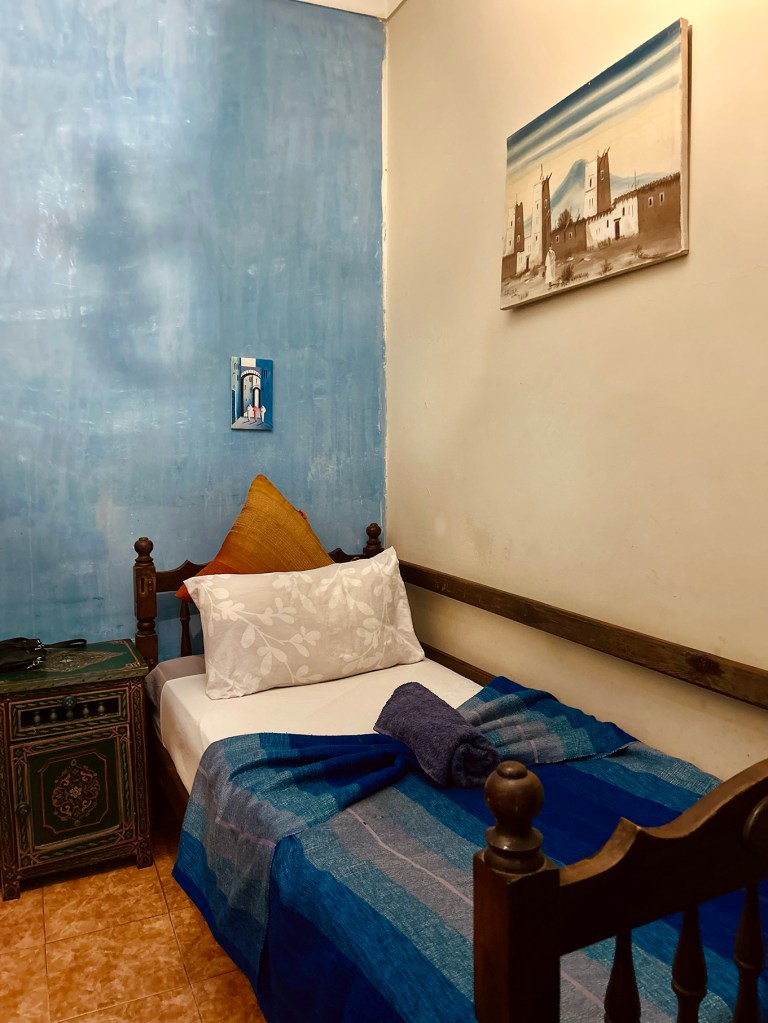
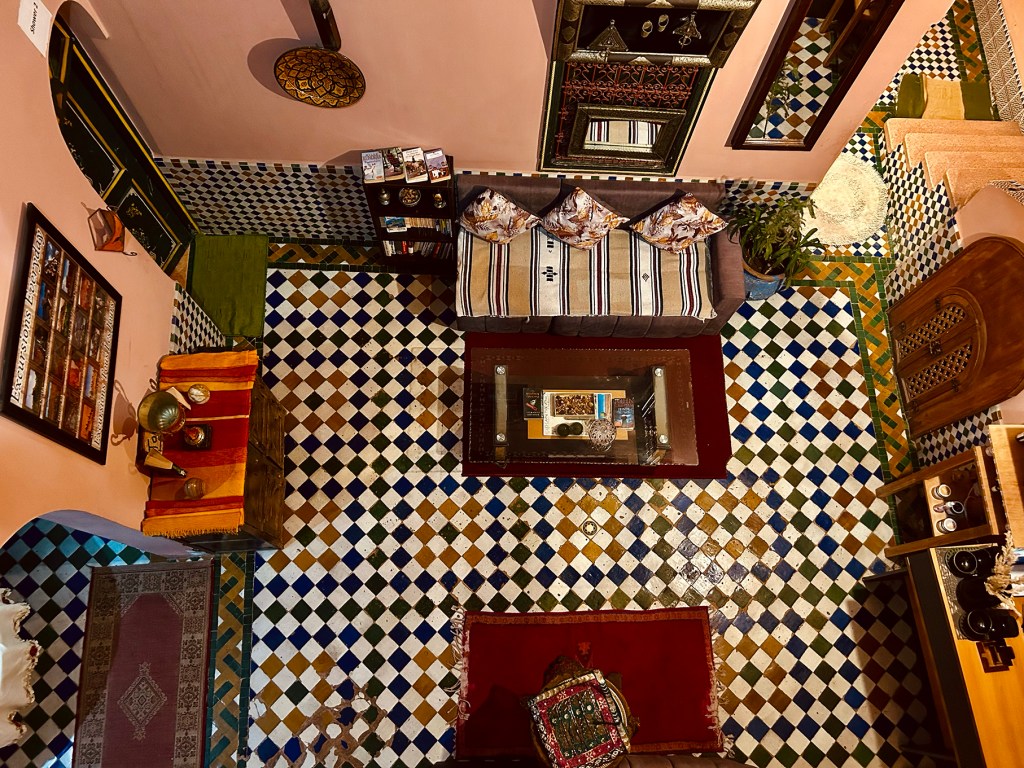
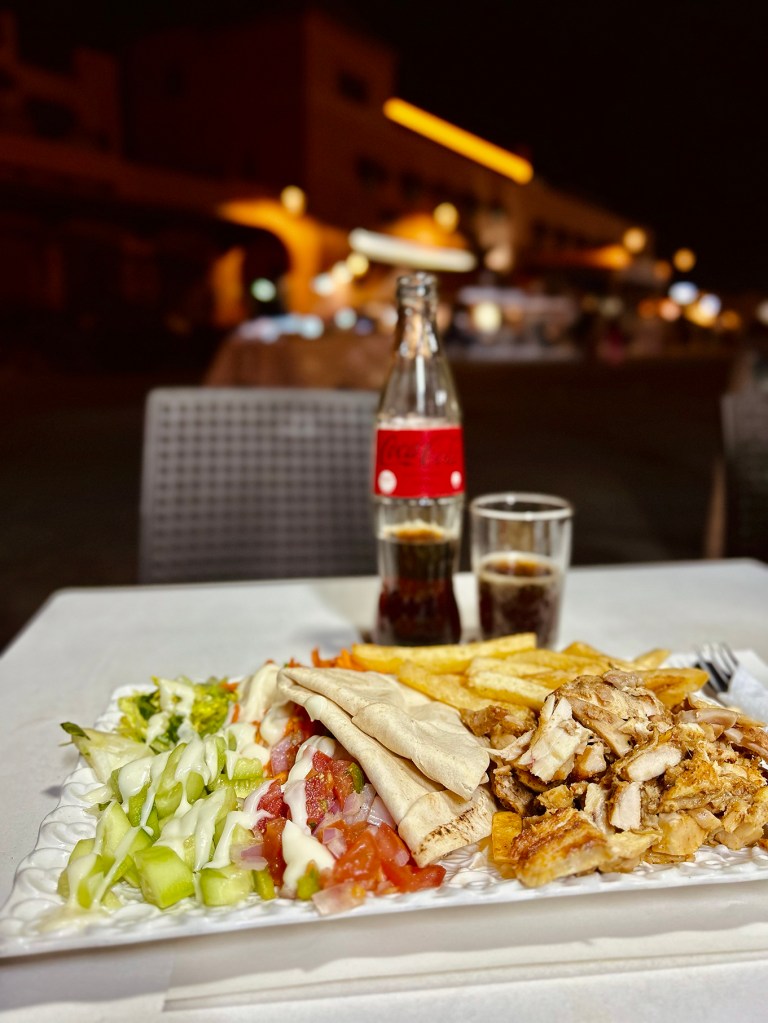

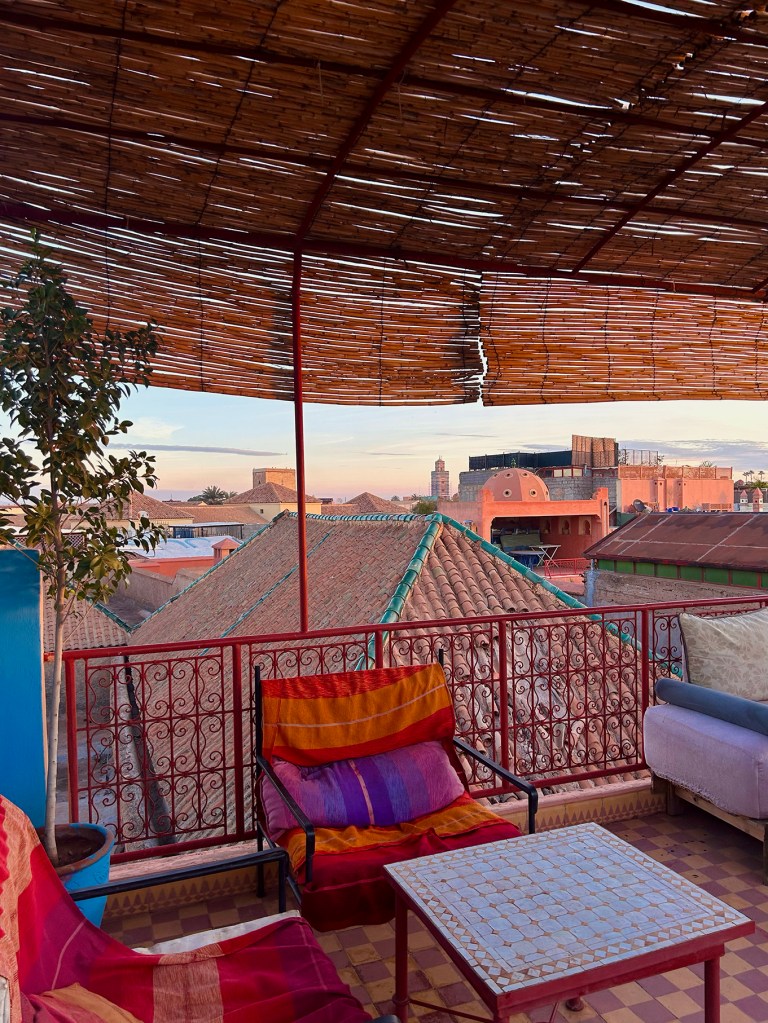
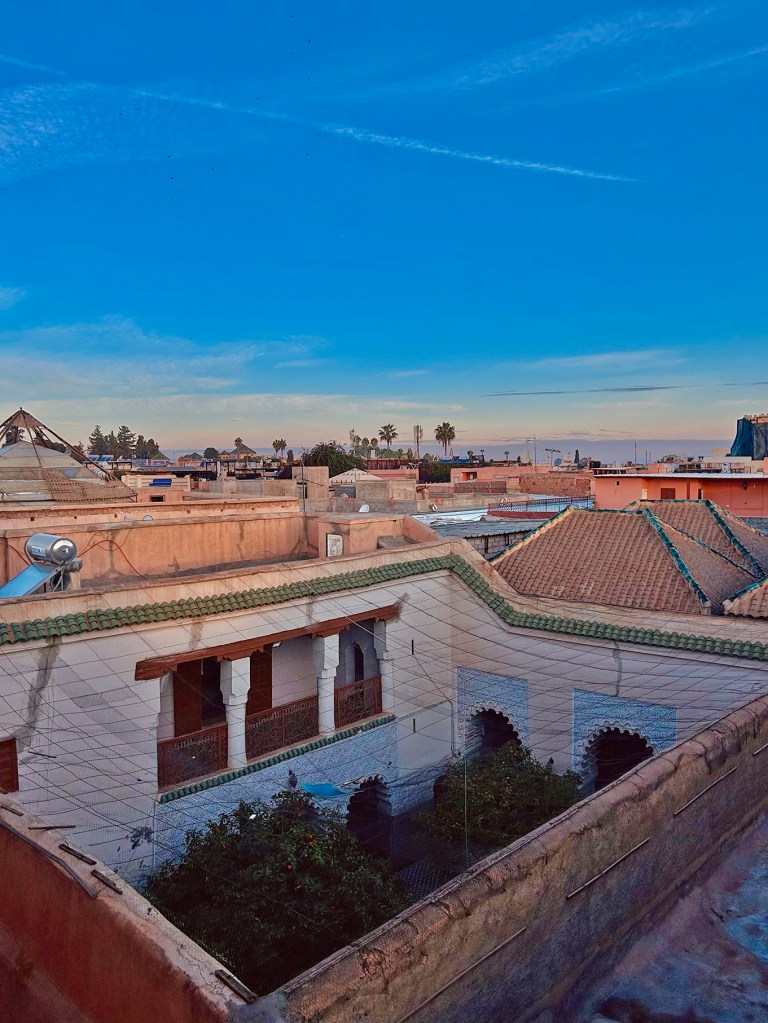
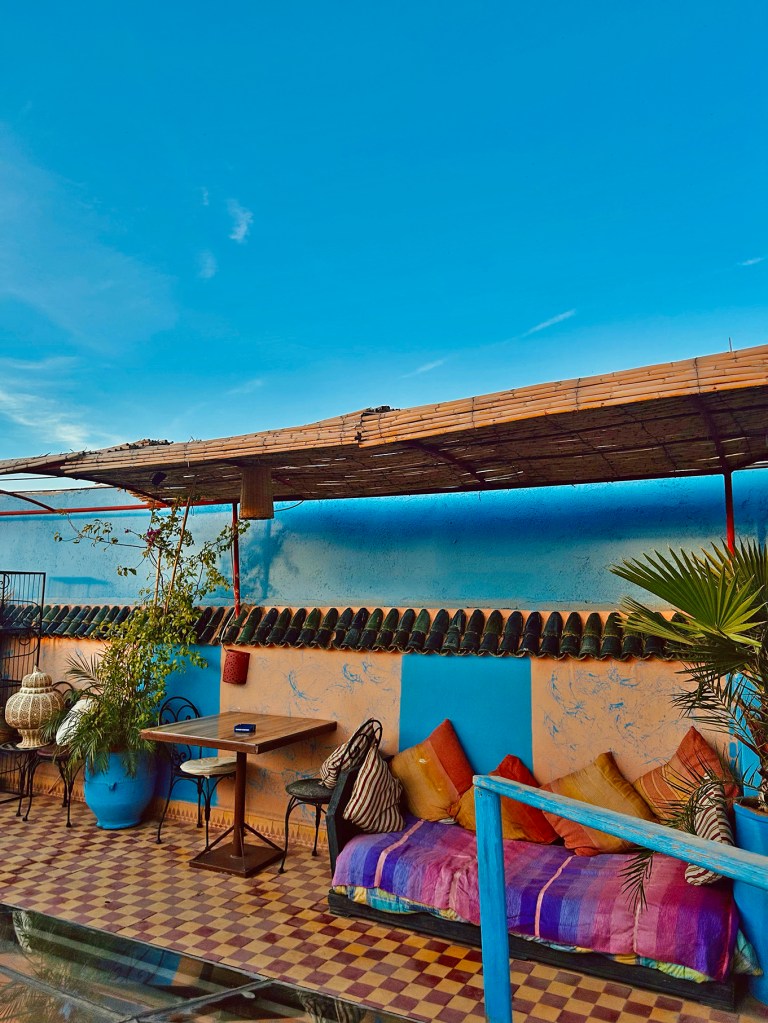
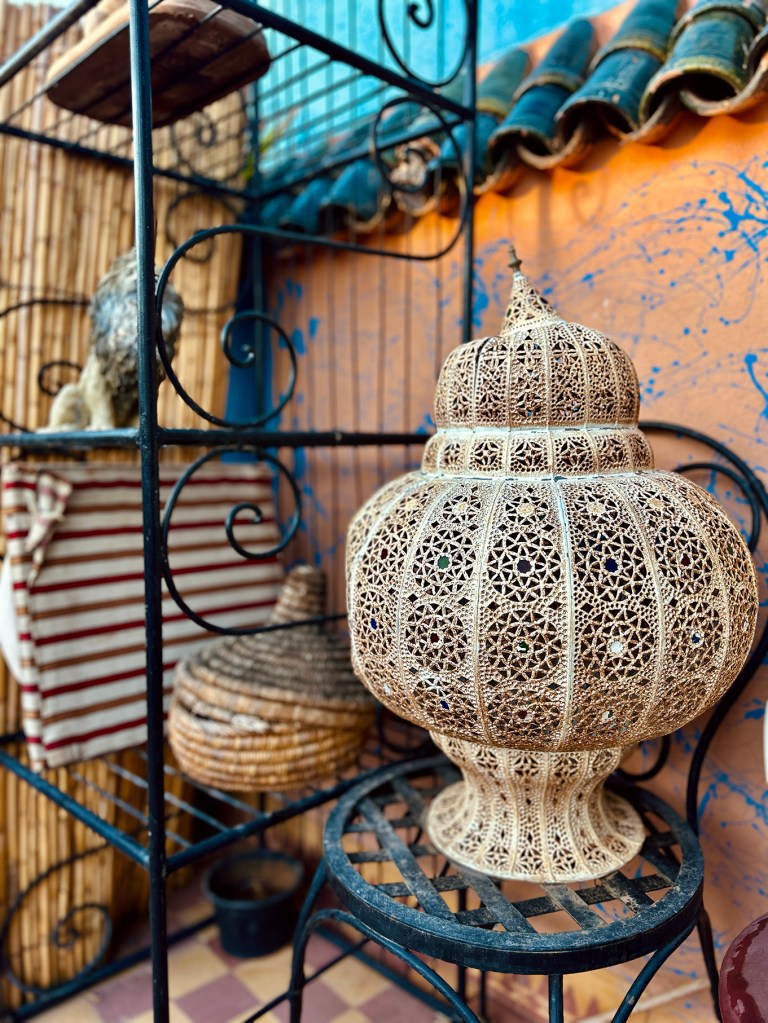
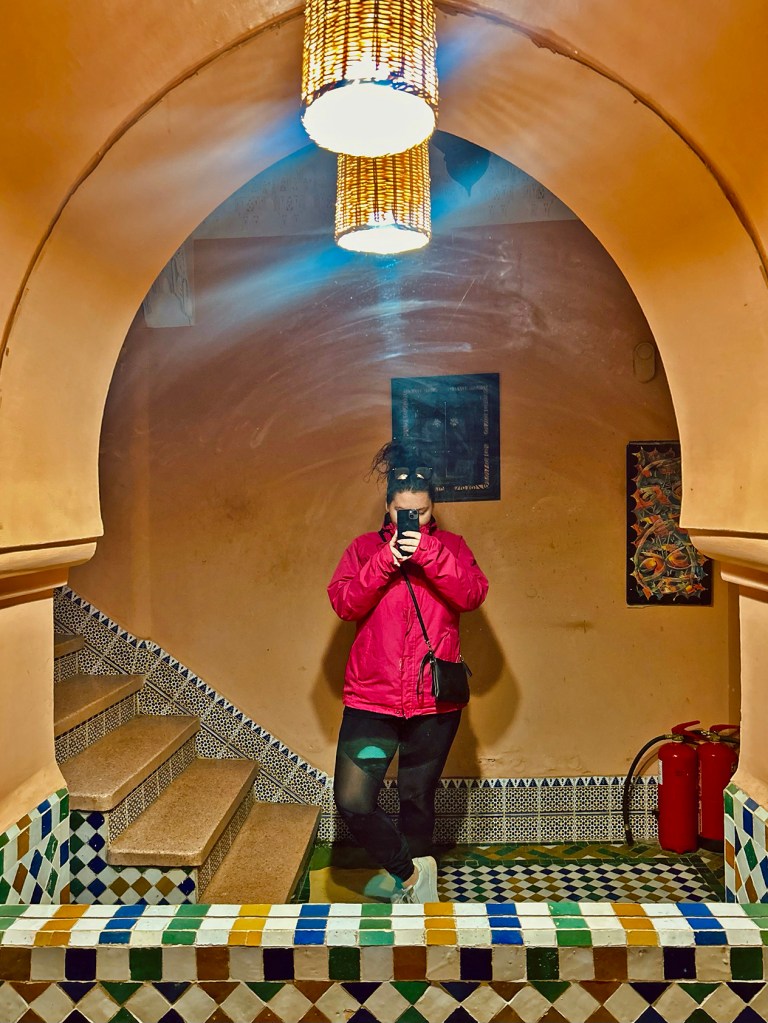
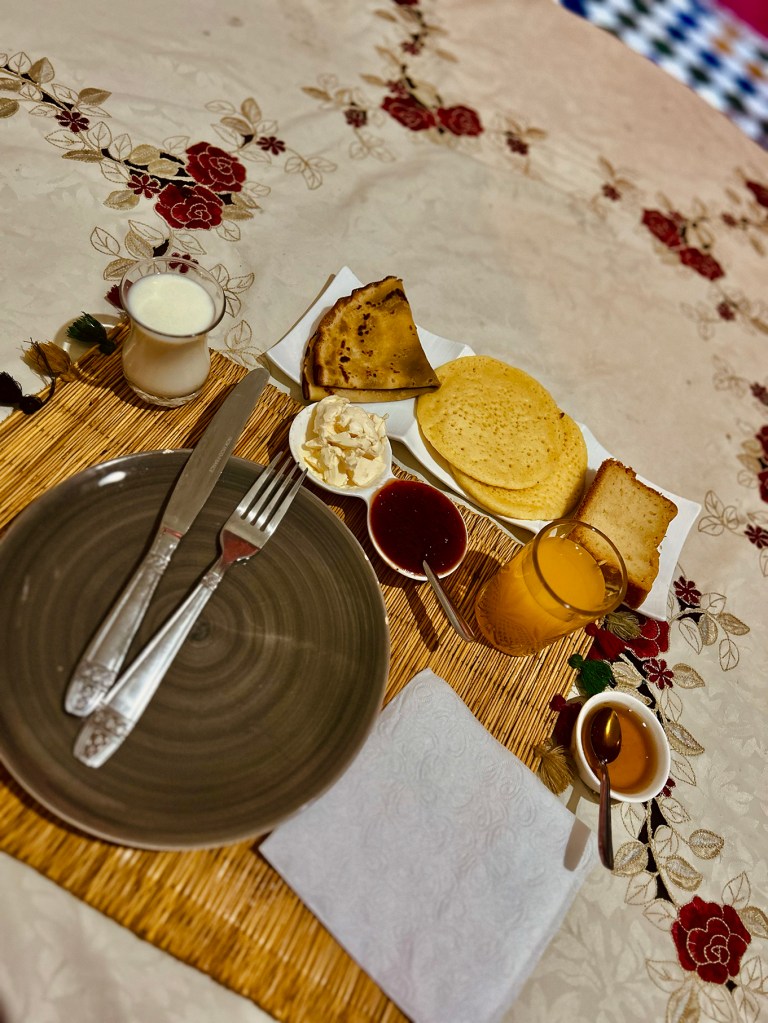

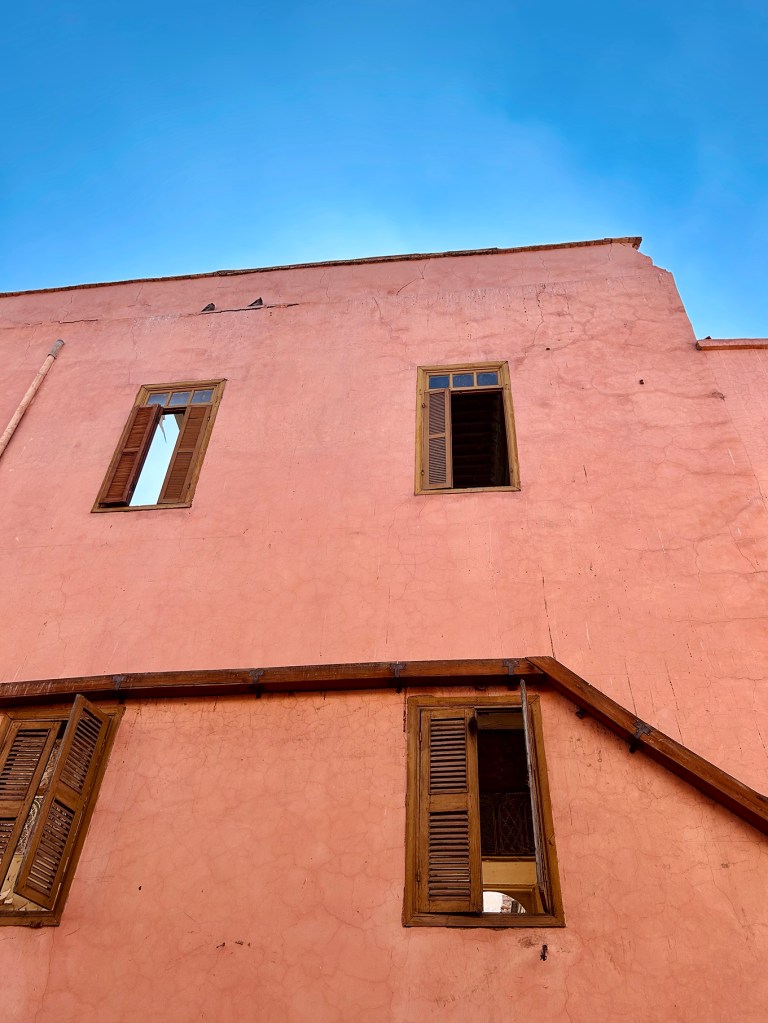
Often called the “Red City” for its rose-colored walls and buildings, Marrakech is a lively and historic city at the foothills of the Atlas Mountains. It’s a place where tradition and modernity meet, creating an atmosphere that feels both timeless and electric. I’ve wanted to visit for such a long time and I’m very pleased with my decision to stay a whole week. Of course, it’s doable in fewer days as well, but that doesn’t really give you the time to land after every colourful punch in the face around every single corner, that Marrakech so kindly administers. On top of that, some of the attractions are not open every day, or the lines are very long, or ticket prices vary. So it’s safer to stay longer and really enjoy it. But even then, you still won’t be able to squeeze in everything, because it’s not a static city. There’s something going on everywhere, it’s very much alive.
The city has several distinctive neighbourhoods, each with its own character, but three main areas stand out and will be of interest to visitors: the Medina, Gueliz, and Hivernage. Each of these offers a unique slice of Marrakech, from historic charm to modern energy to luxury.
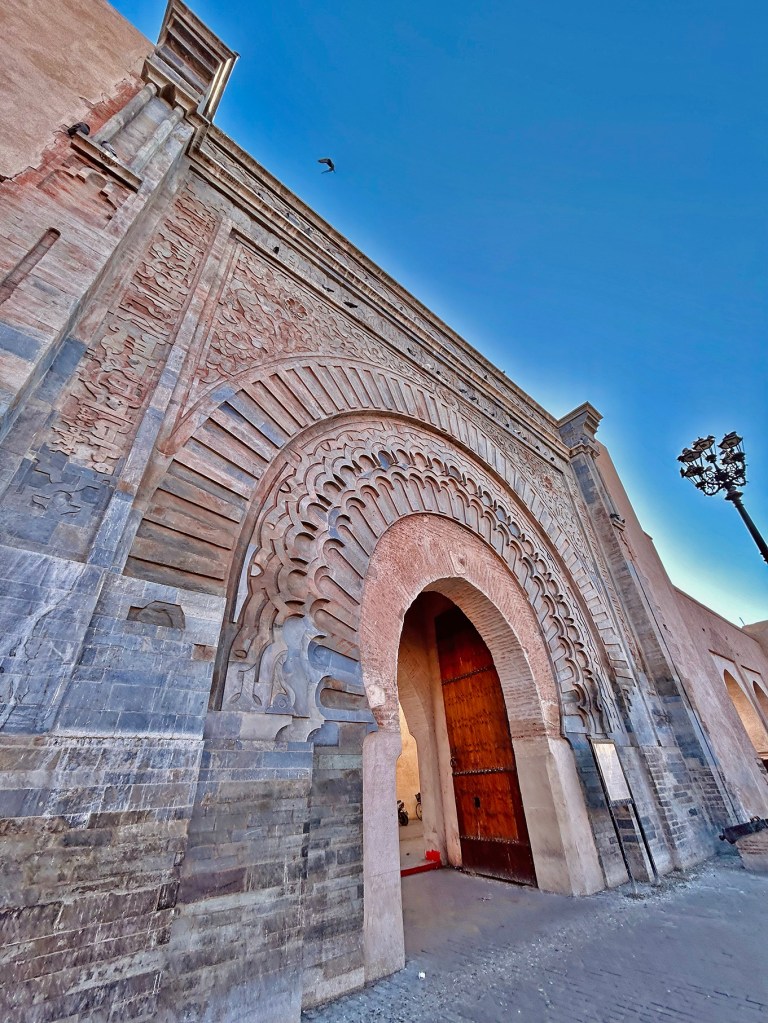
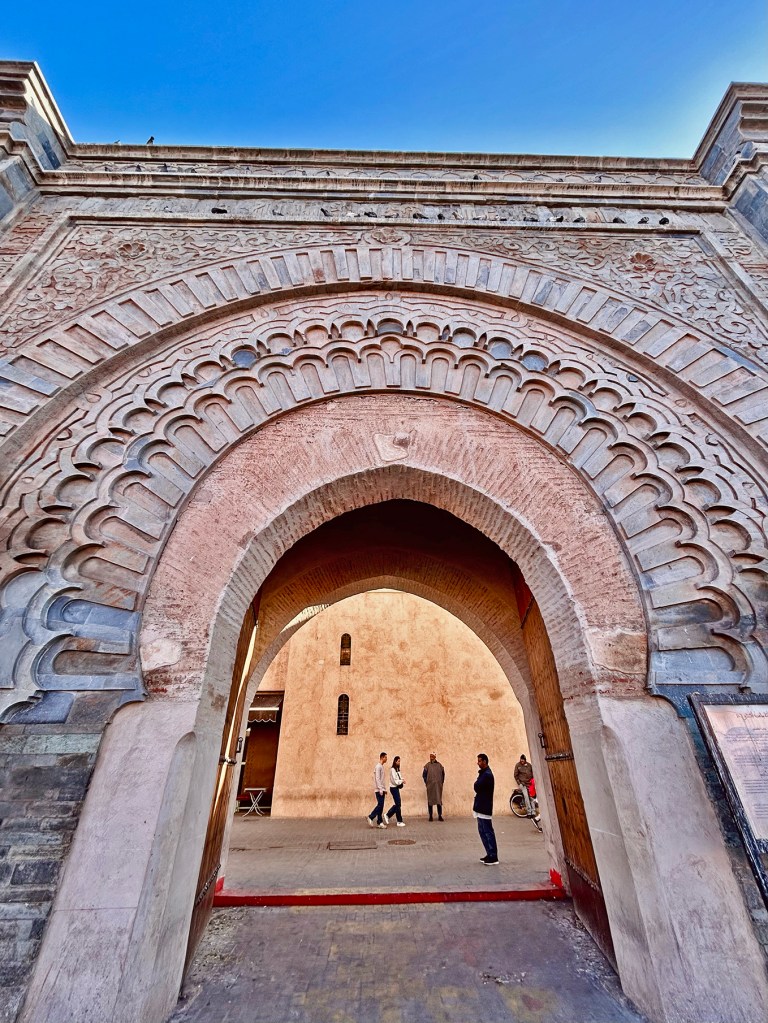
Medina – The historic heart of Marrakech, a labyrinth of narrow, winding streets, surrounded by red walls with gates that knock you over as soon as you lift your eyes to look at them. Here, life is bustling. It’s filled with souks, vibrant spices, traditional crafts, and hidden courtyards. The famous Jemaa el-Fnaa square comes alive with storytellers, musicians, and food stalls, while serene riads and lush gardens like Le Jardin Secret offer a peaceful contrast to the city’s bustle. Markets are overflowing with textiles, ceramics, lanterns, jewels, food. This neighbourhood is home to a lot of the main attractions in Marrakech.
Gueliz – Often called the “new city,” it’s modern and cosmopolitan. Streets are wide, lined with chic boutiques and contemporary cafés. Compared to the Medina, it’s somewhat calmer and more organised, giving a sense of modern Moroccan life blending with Western influences. It’s also the hub for shopping and nightlife beyond the traditional markets. This is the place to go if you want to party in a club until dawn.
Hivernage – Known for its luxury and elegance, this area is dotted with high-end hotels, resorts, and upscale restaurants. Palm-lined avenues and lush gardens give it a serene, resort-like vibe. It’s where you can experience Marrakech’s more glamorous side, with fine dining and tranquil spaces to relax away from the city’s bustle. A bit too snobbish, as I discovered during my last day, but absolutely very pretty to look at.
Here are the things and places I checked off my list this time, which I would say are a must for one’s first time in Marrakech:
1. Jemaa el-Fnaa
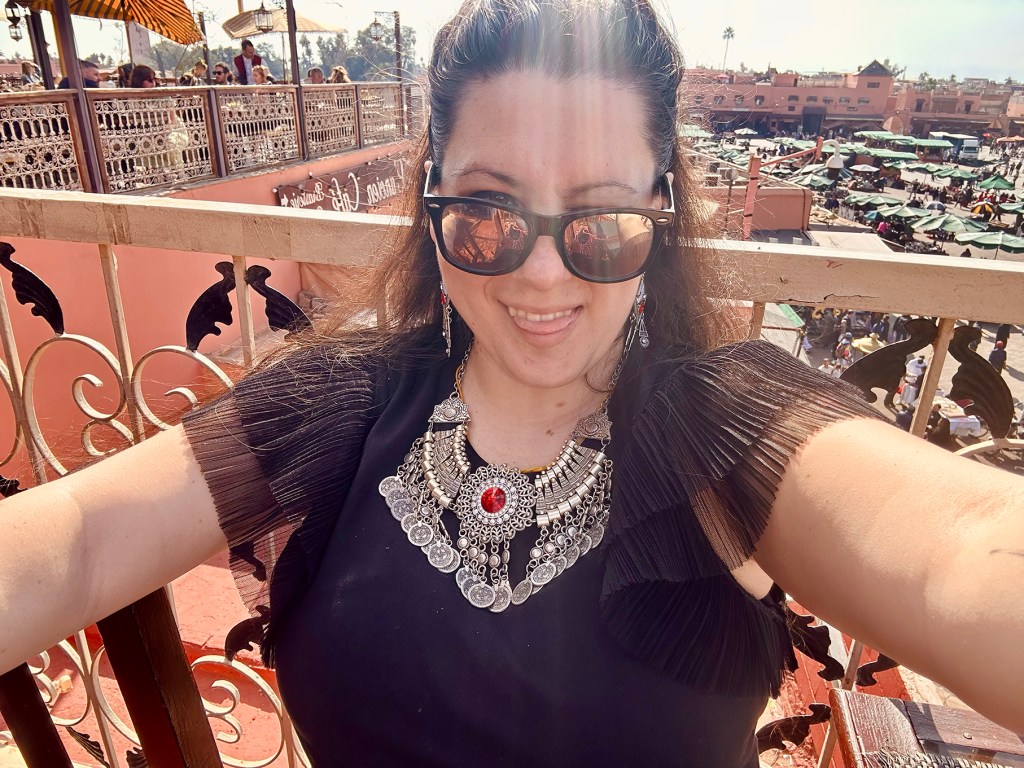
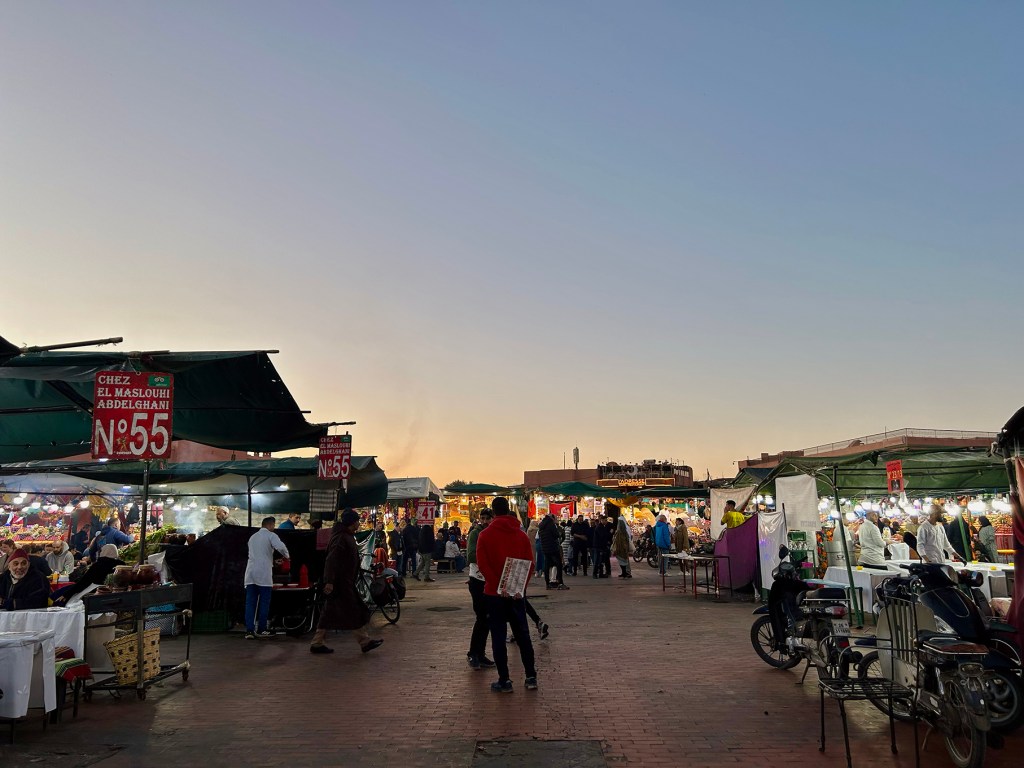
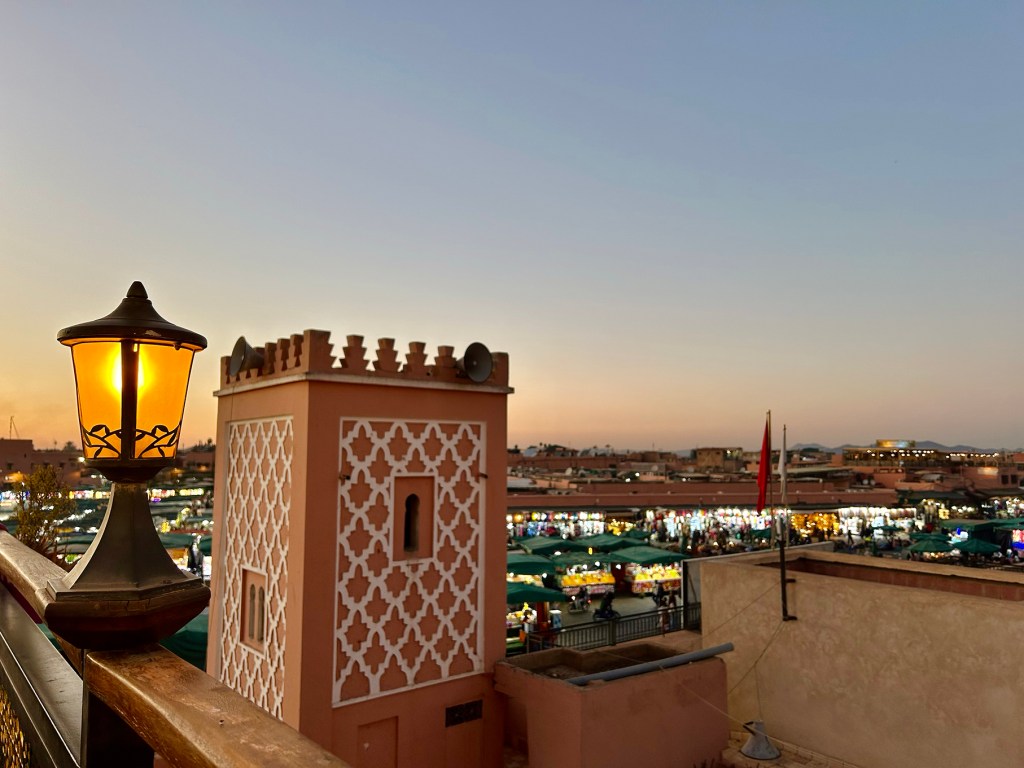
Marrakech’s most famous landmark – a sizzling dish of a main square. From early morning until late at night, Jemaa el-Fnaa is alive with activity: orange juice vendors, snake charmers, henna artists, musicians, storytellers, and food stalls. After dark, smoke from dozens of grills fills the air as locals and visitors gather around tables for plates of kebabs, tajines, couscous and sweets. The stalls are numbered, the vendors are a hoot, and at the other end of the square you can do your groceries and even buy plants for your garden. The square is lined with hotels, restaurants and cafés, which are a bit of a tourist trap. But the food is tasty and from a chill rooftop terrace you can have your daily dose of people-watching. The square is noisy, chaotic, and sometimes overwhelming, but no trip to Marrakech is complete without experiencing it. Here is where you’ll most probably be called a gazelle, regardless of how big the dark circles under your eyes are or if you’ve been wearing the same sweater for days.
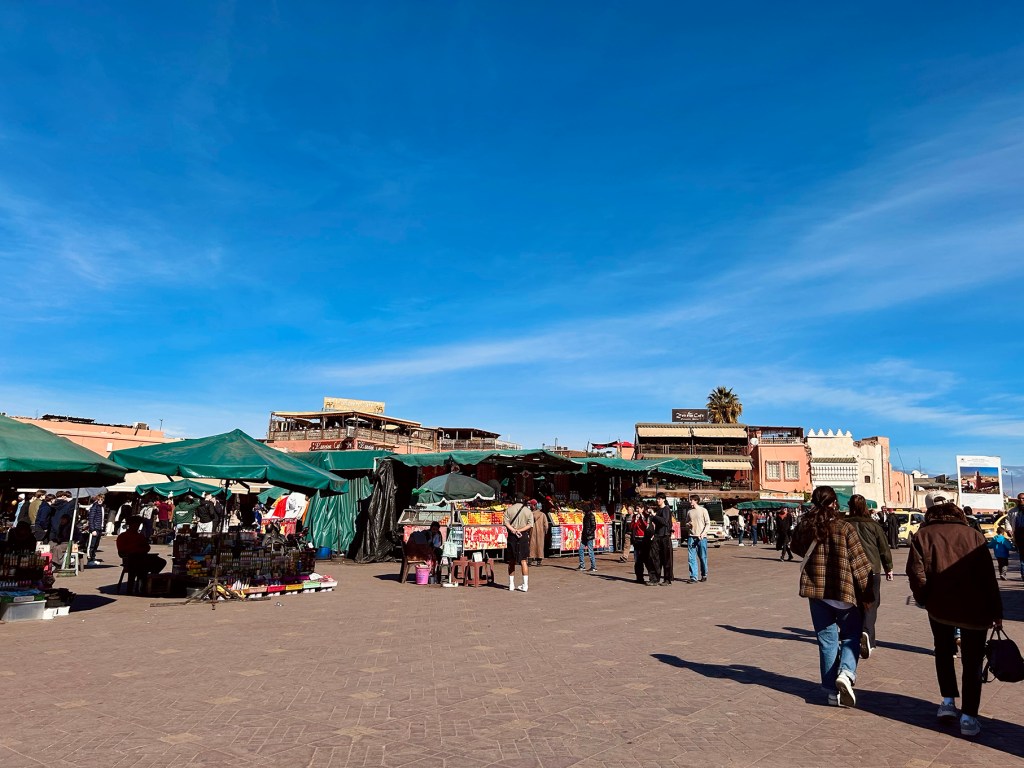
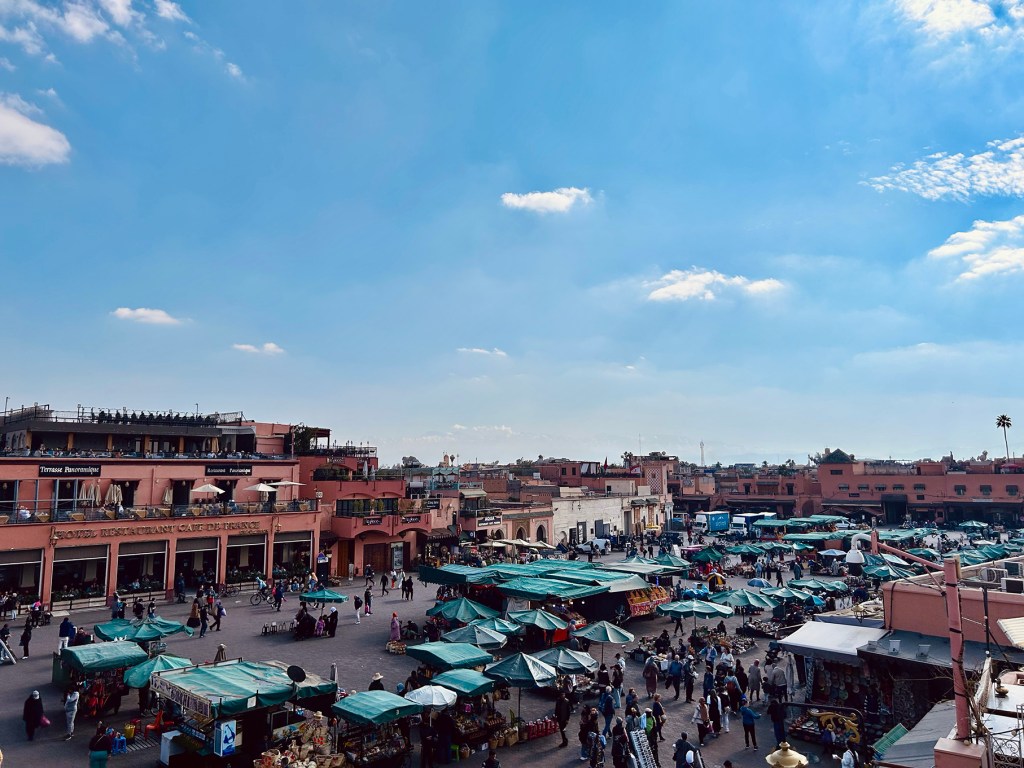
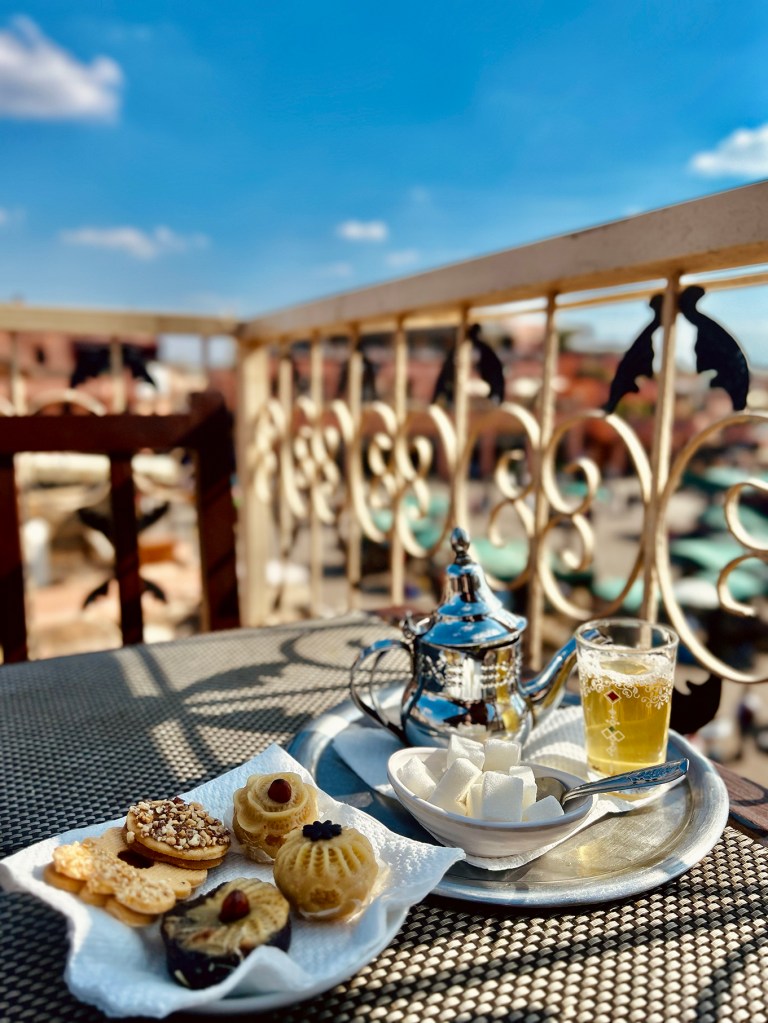
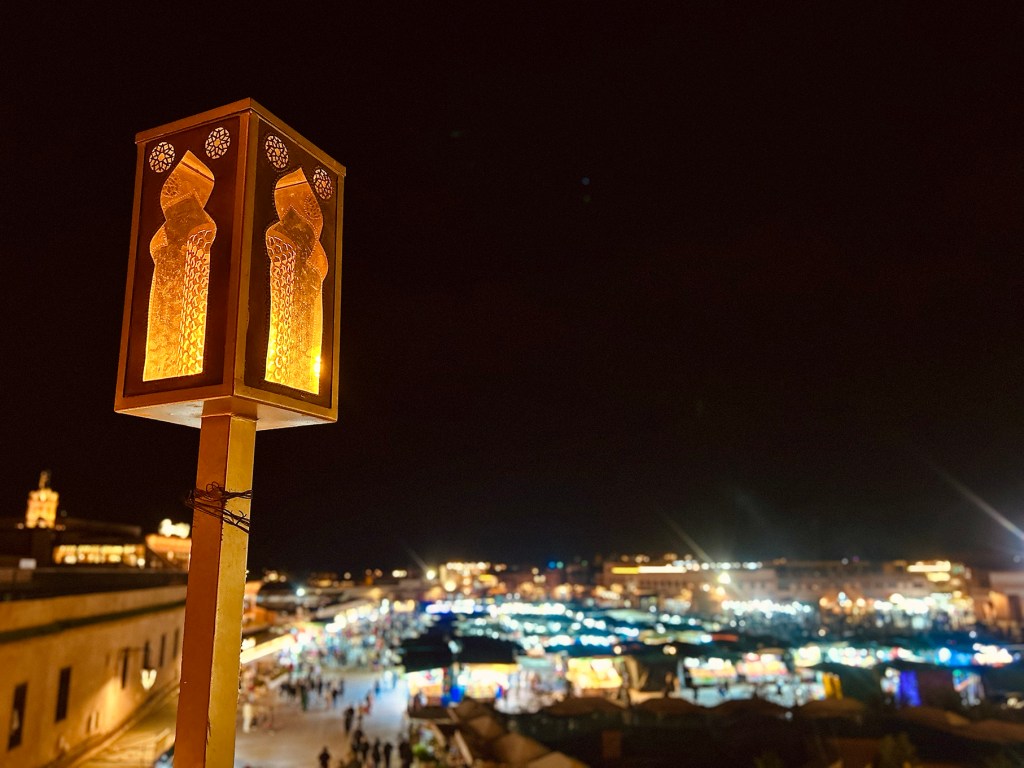
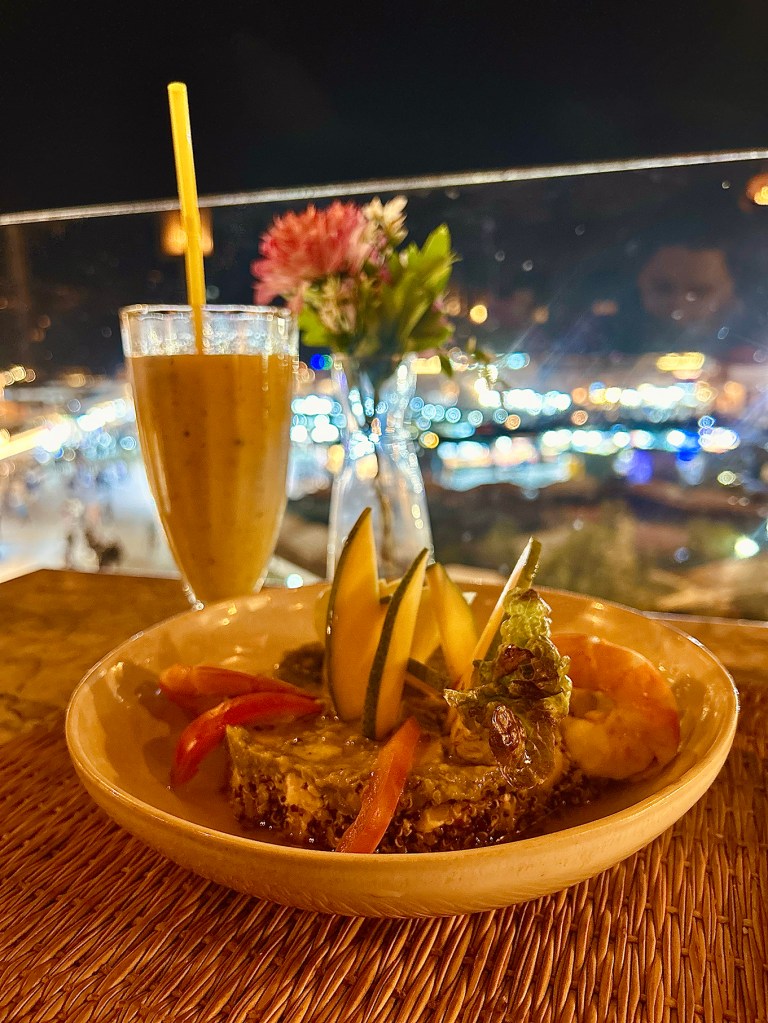
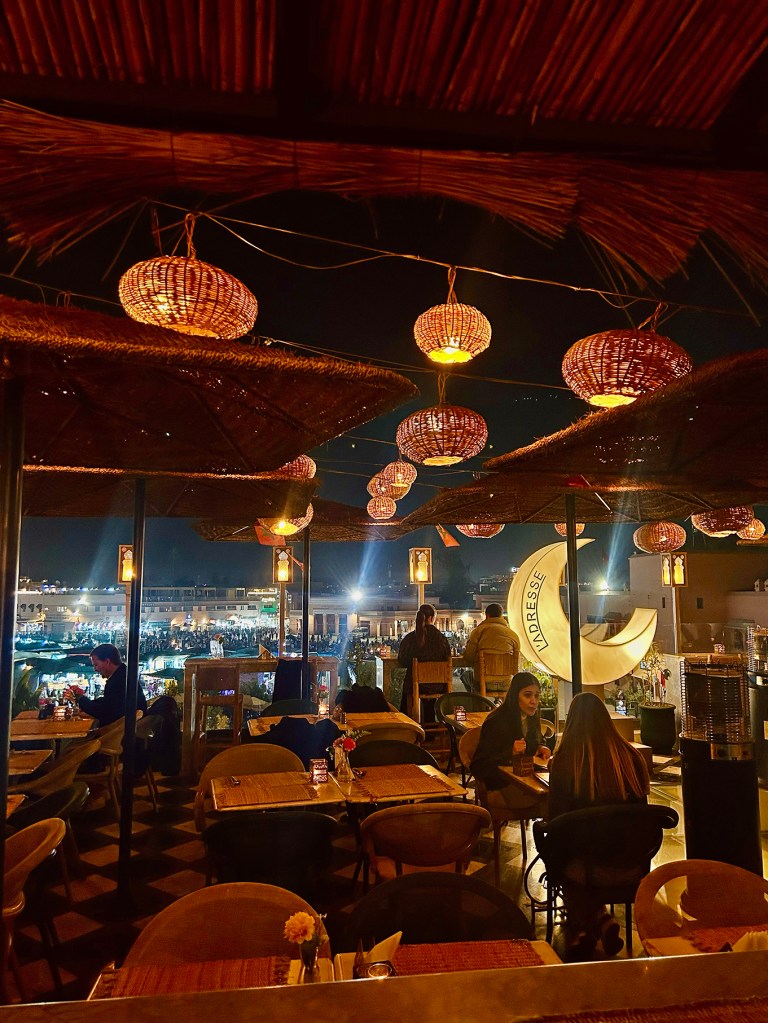
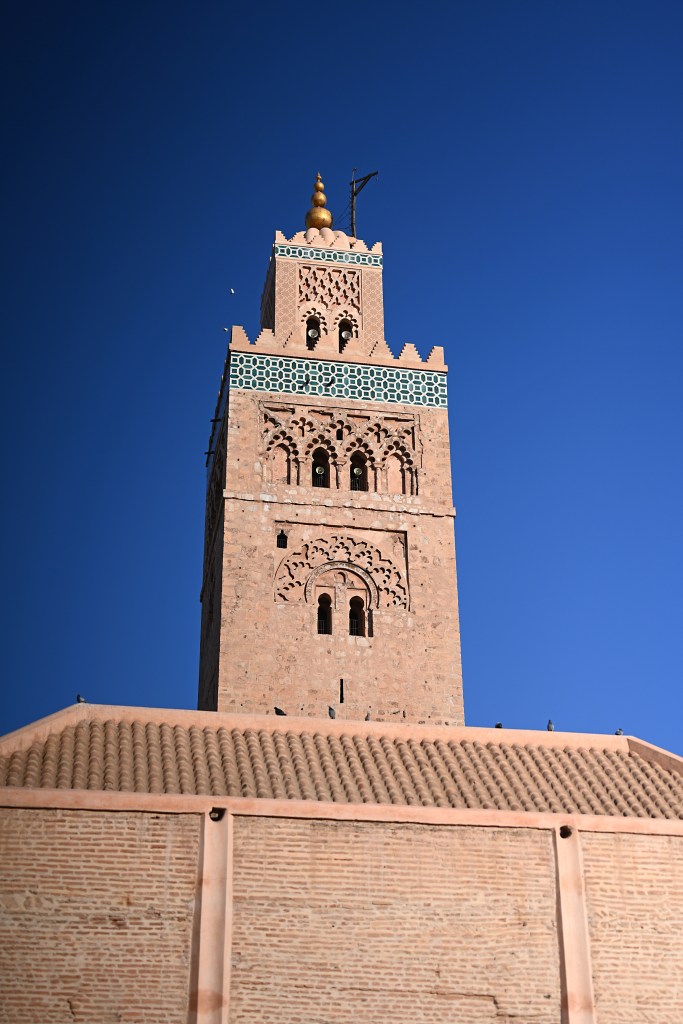
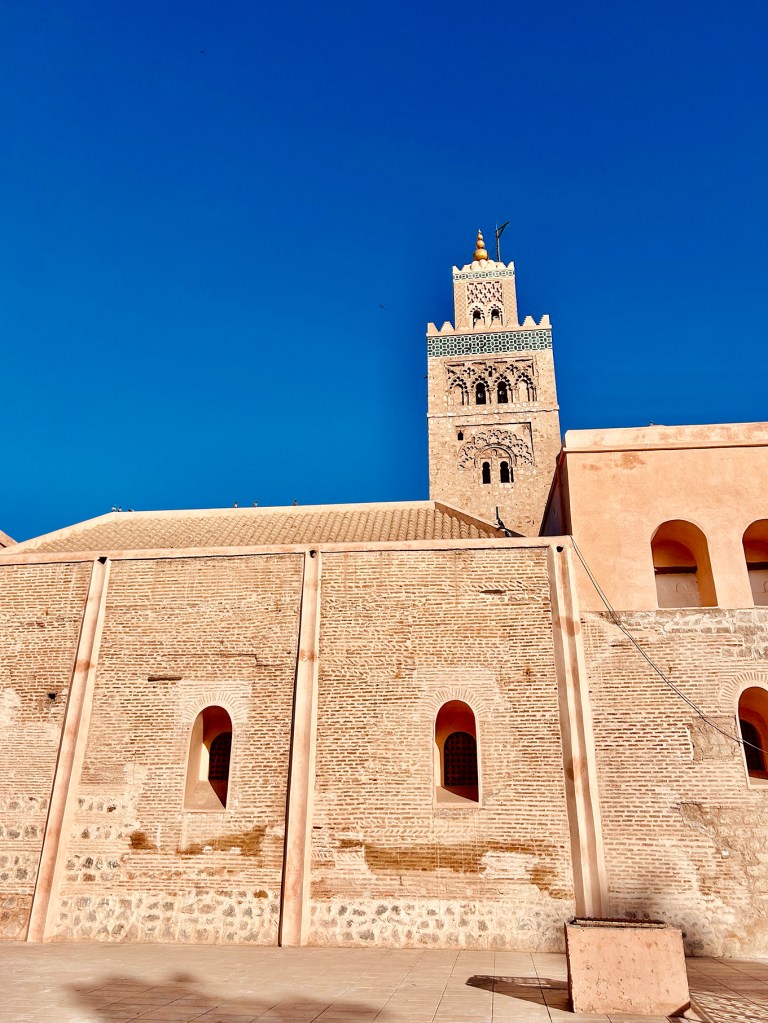
2. Koutoubia Mosque
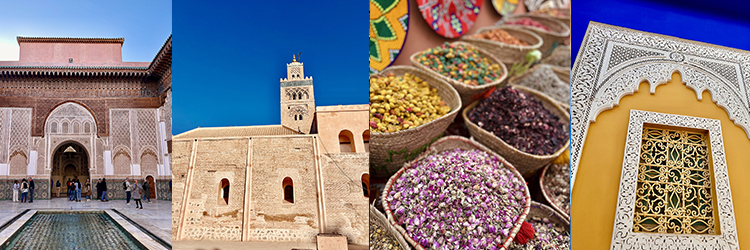
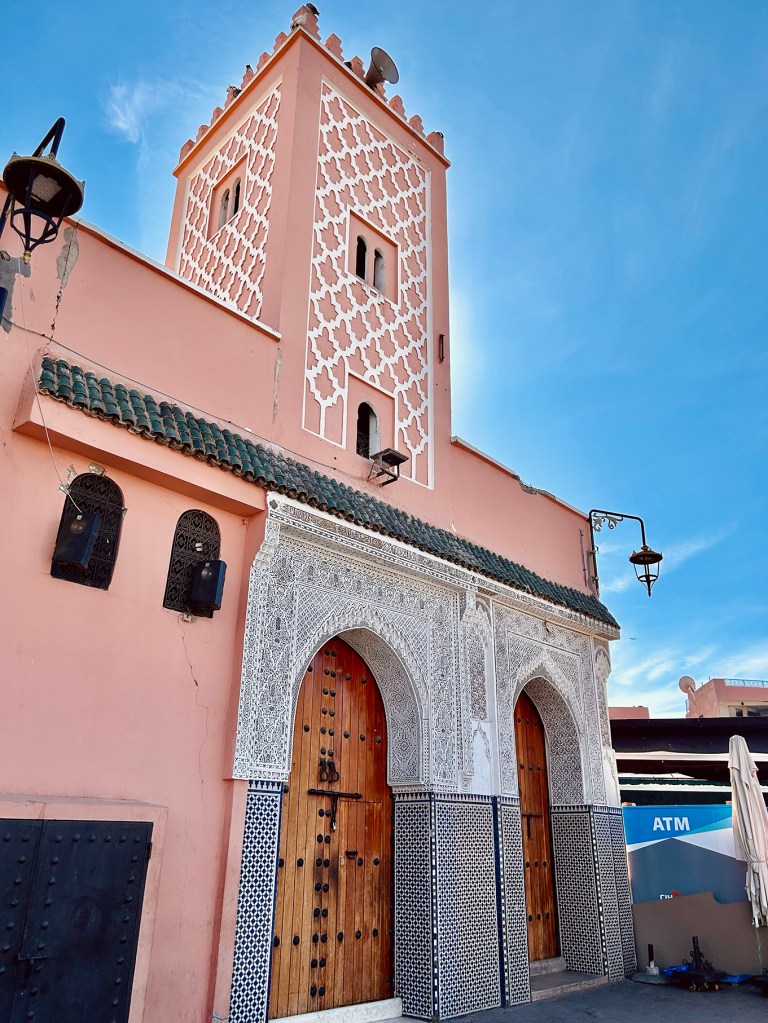
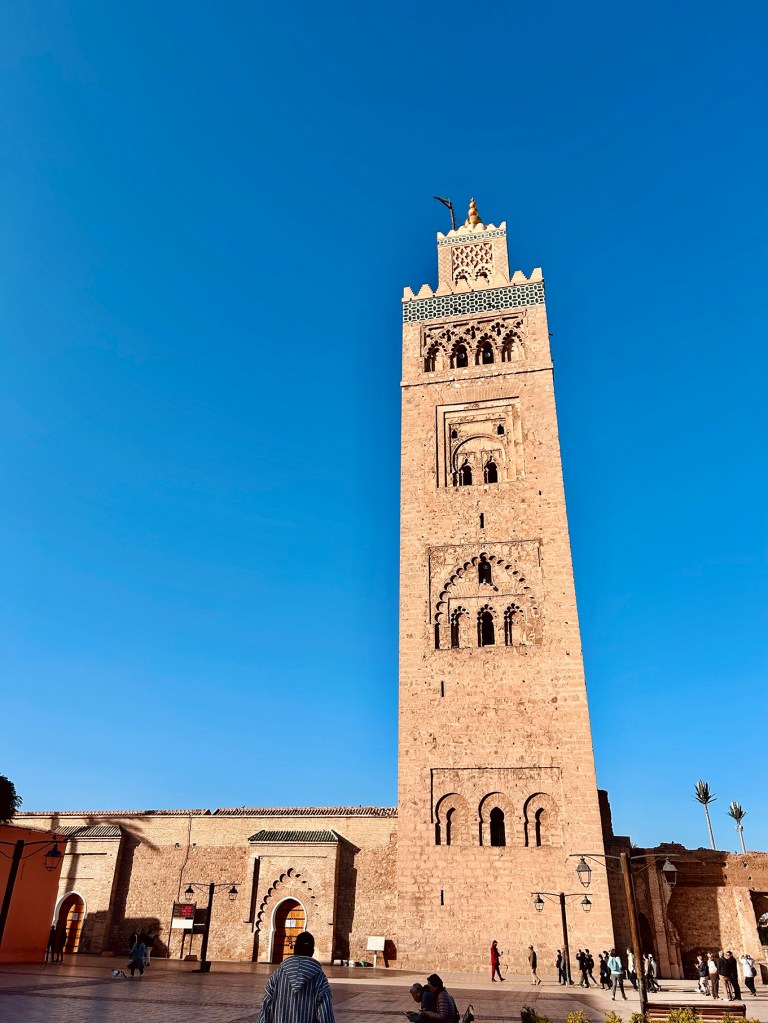
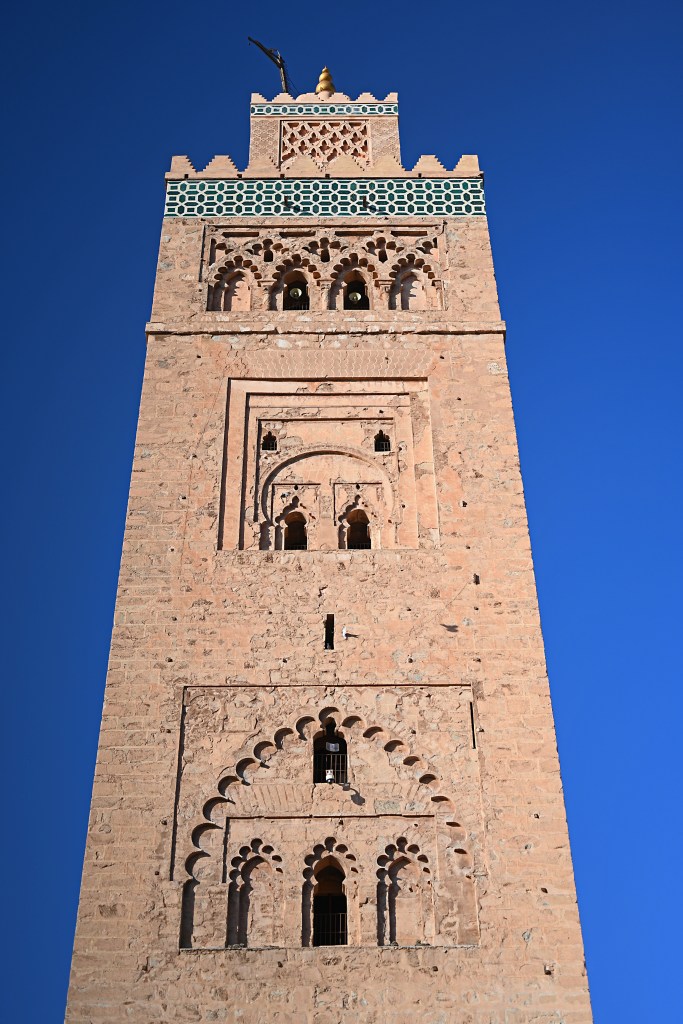
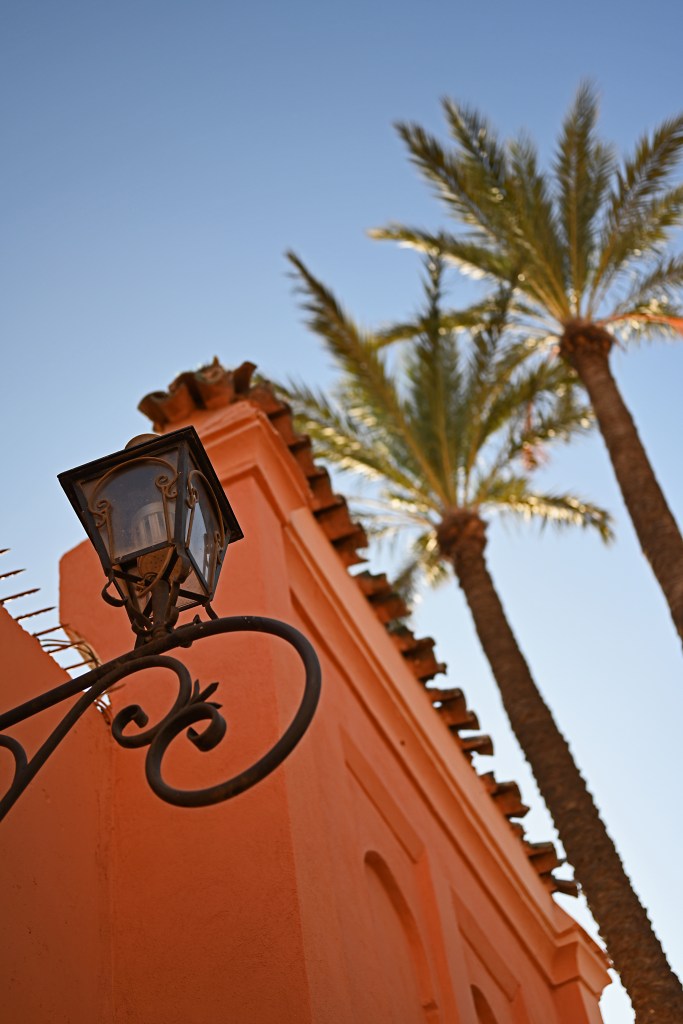
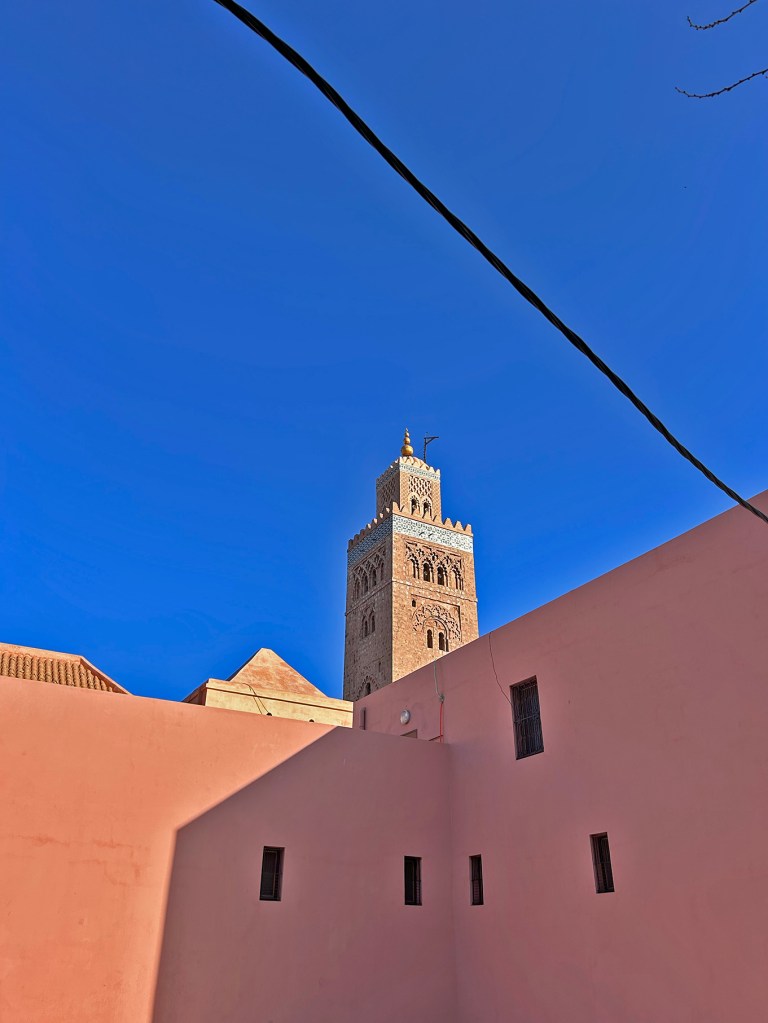
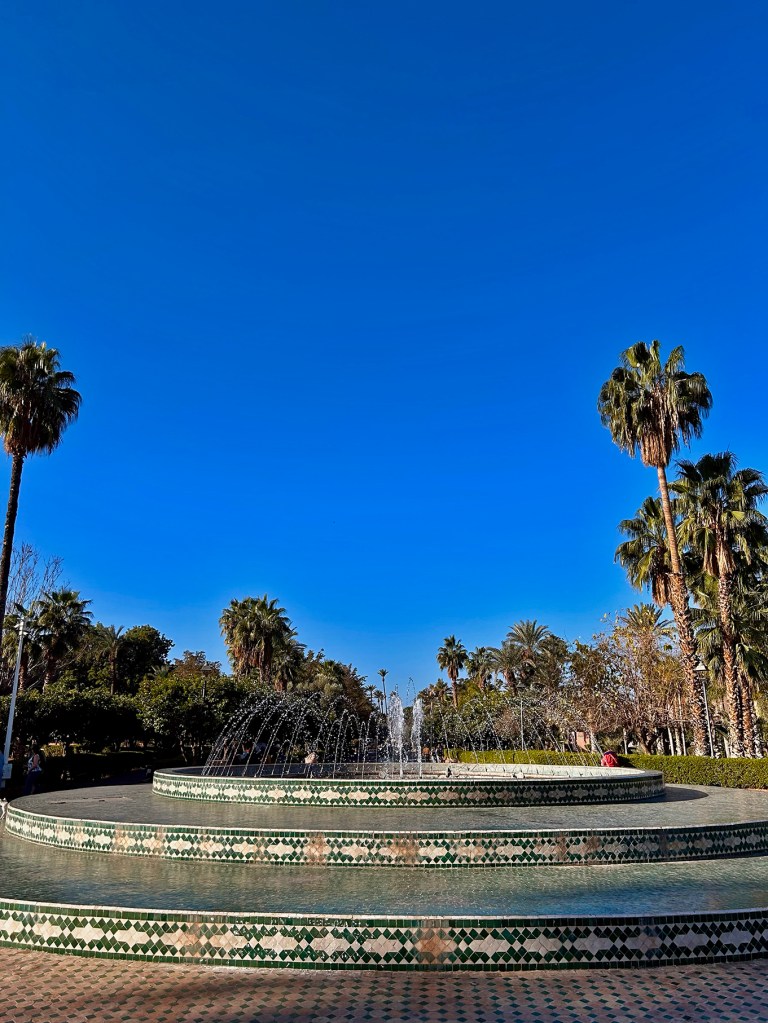
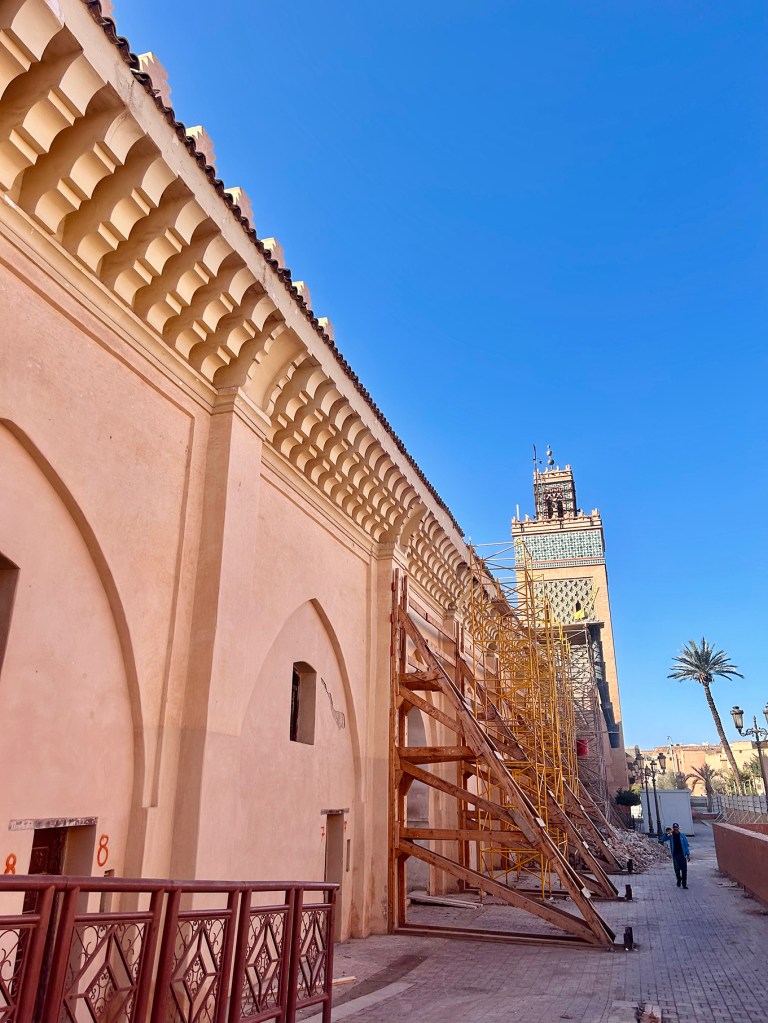
Just steps from Jemaa el-Fnaa, the Koutoubia Mosque dominates the skyline with its elegant 12th-century minaret rising 77 metres high. Its proportions are said to have influenced later buildings such as the Giralda in Seville. The name refers to booksellers who practiced their trade in the nearby souk. While non-Muslims cannot enter, as is the case with a majority of mosques in Morocco, the exterior is worth admiring, and the gardens that surround it offer a calm place to take in the view. At sunset, when the call to prayer echoes across the Medina, it’s especially atmospheric.
3. Bahia Palace
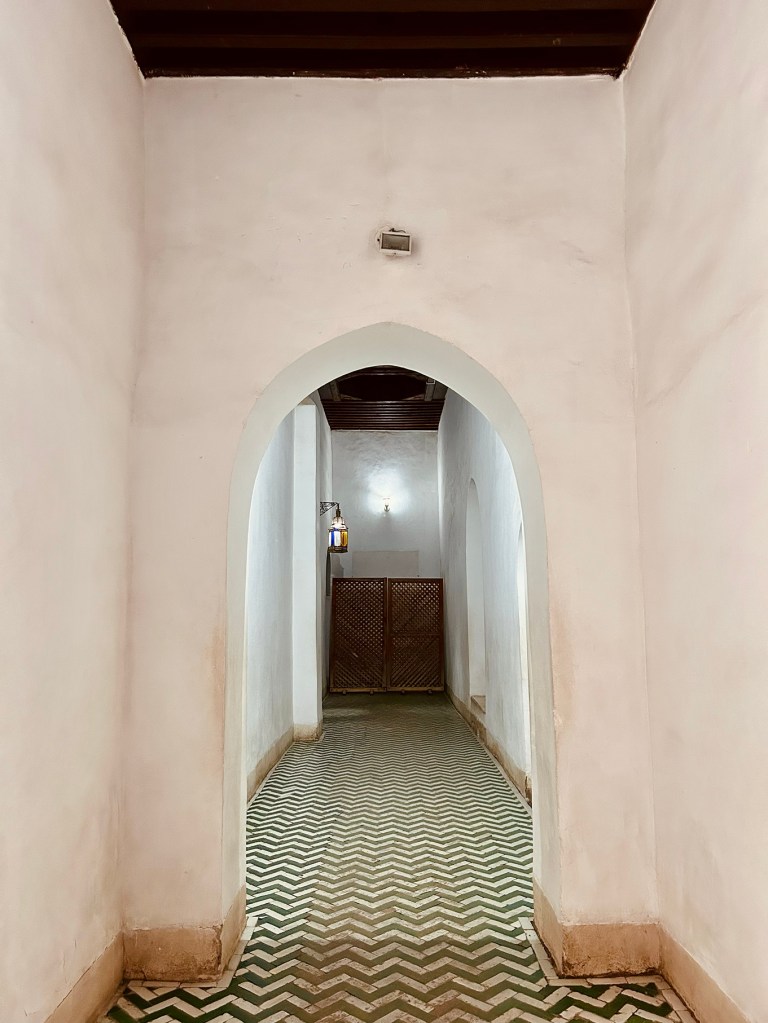
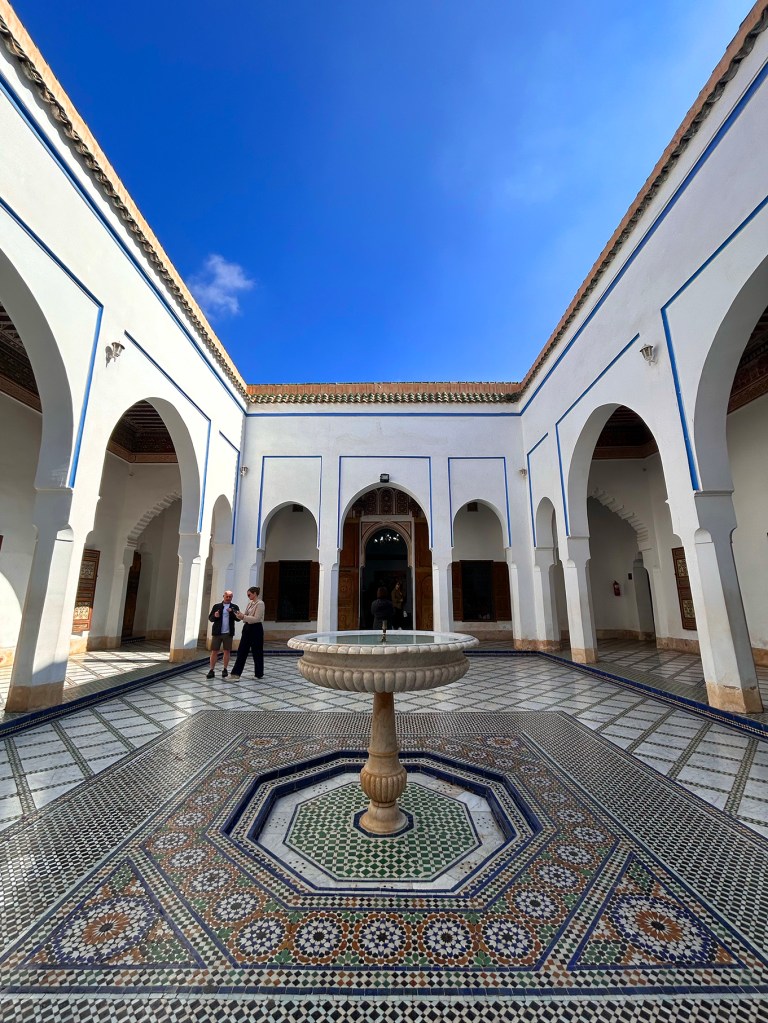
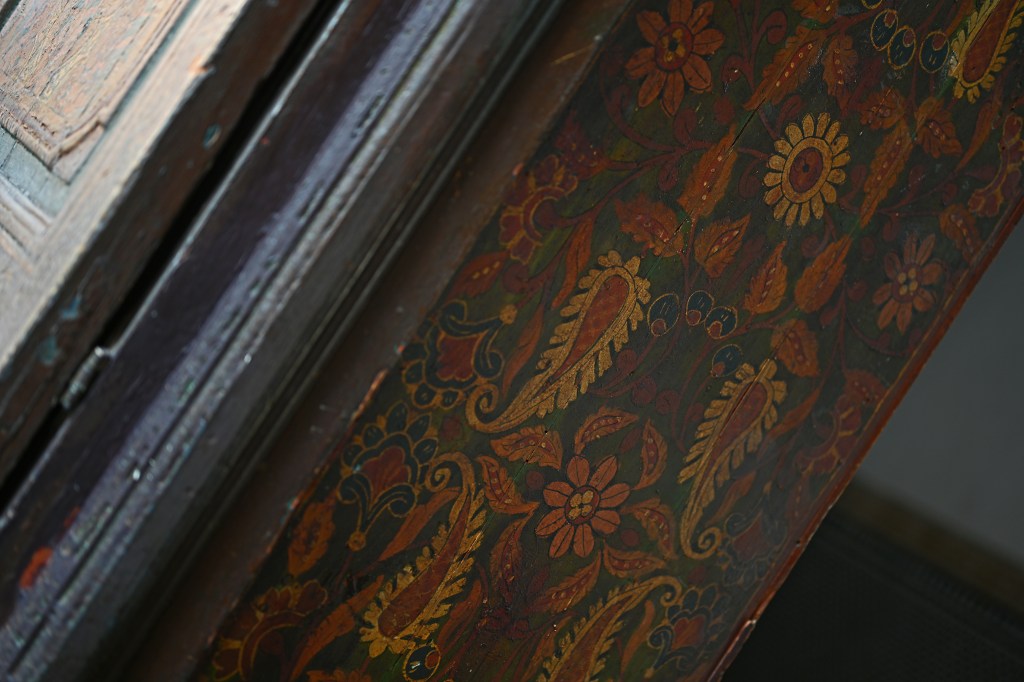
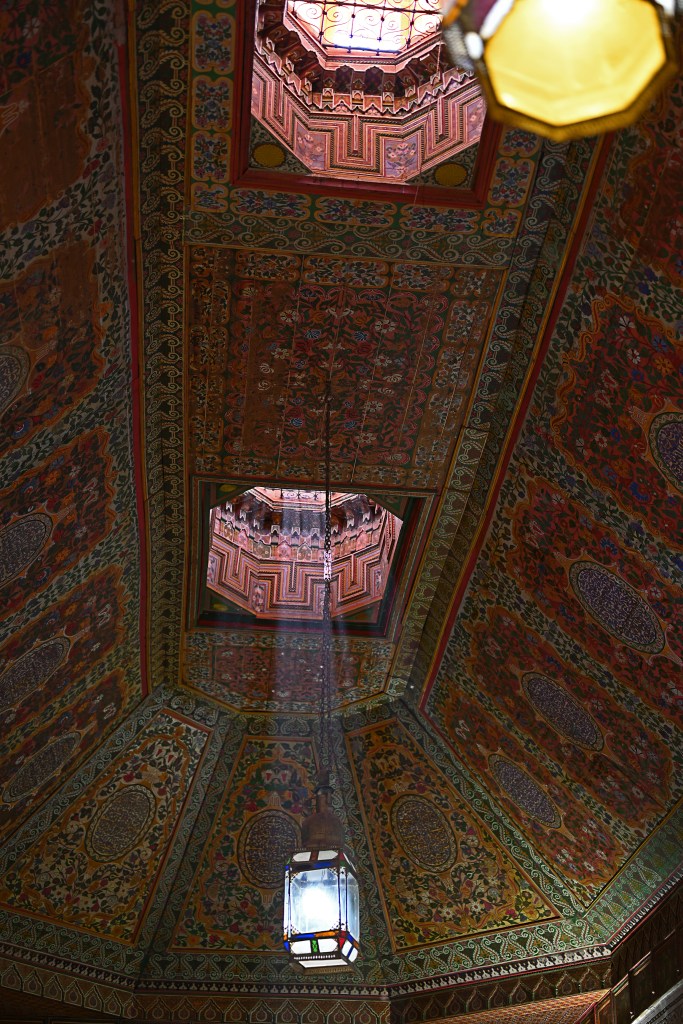
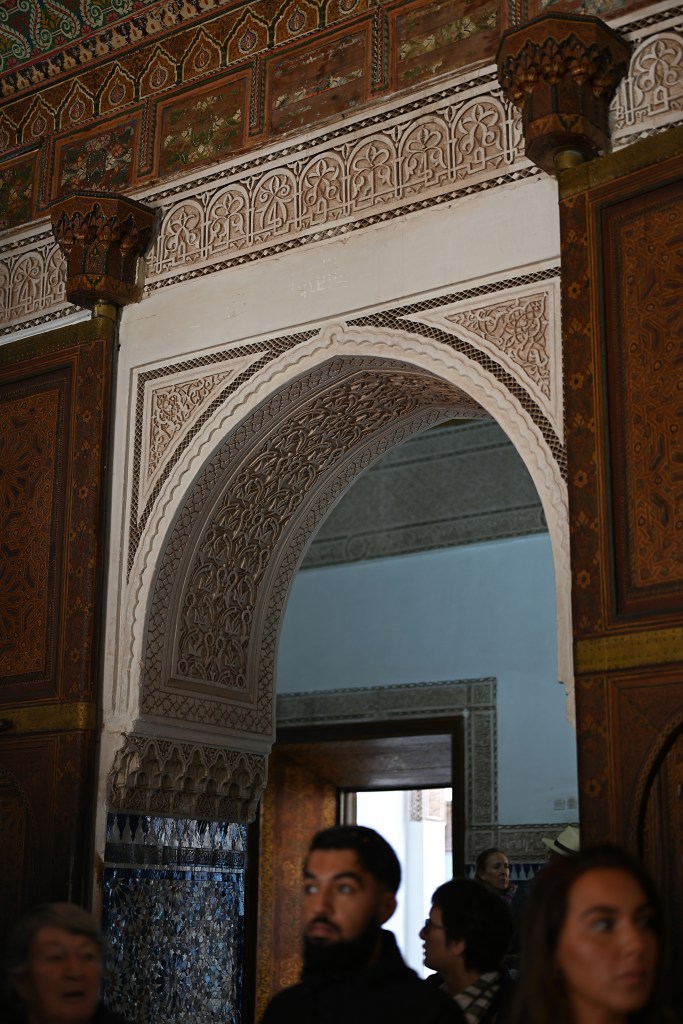
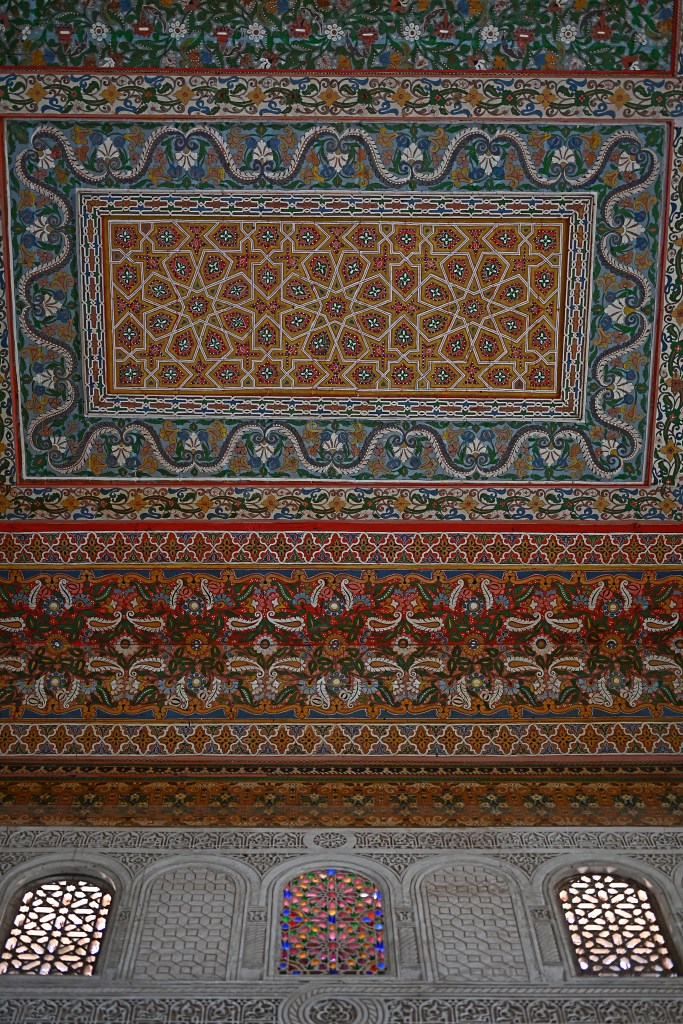
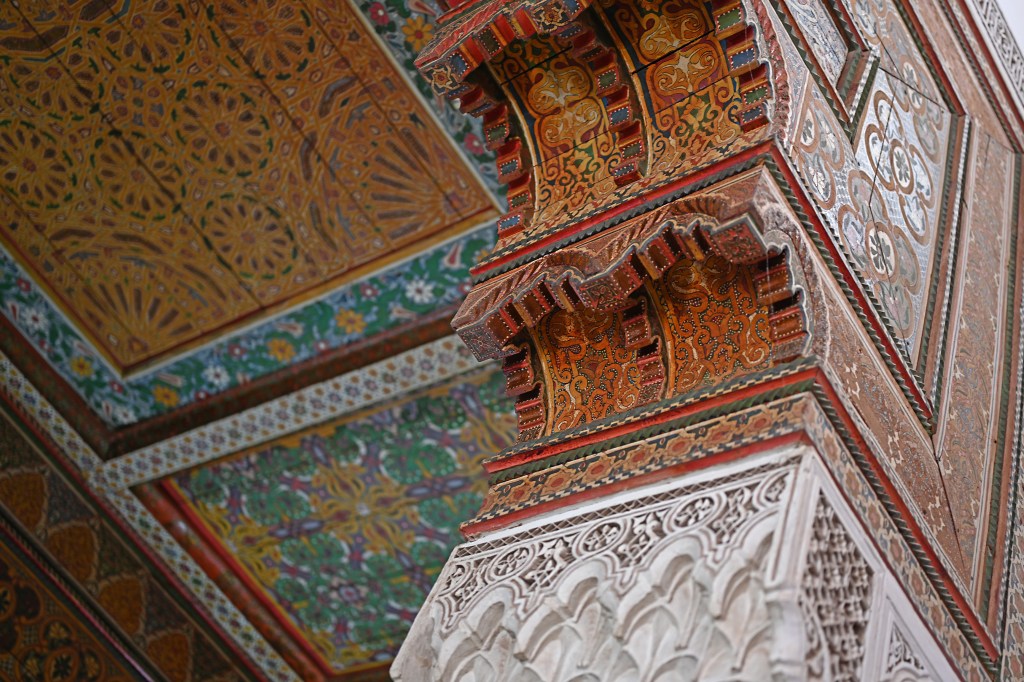
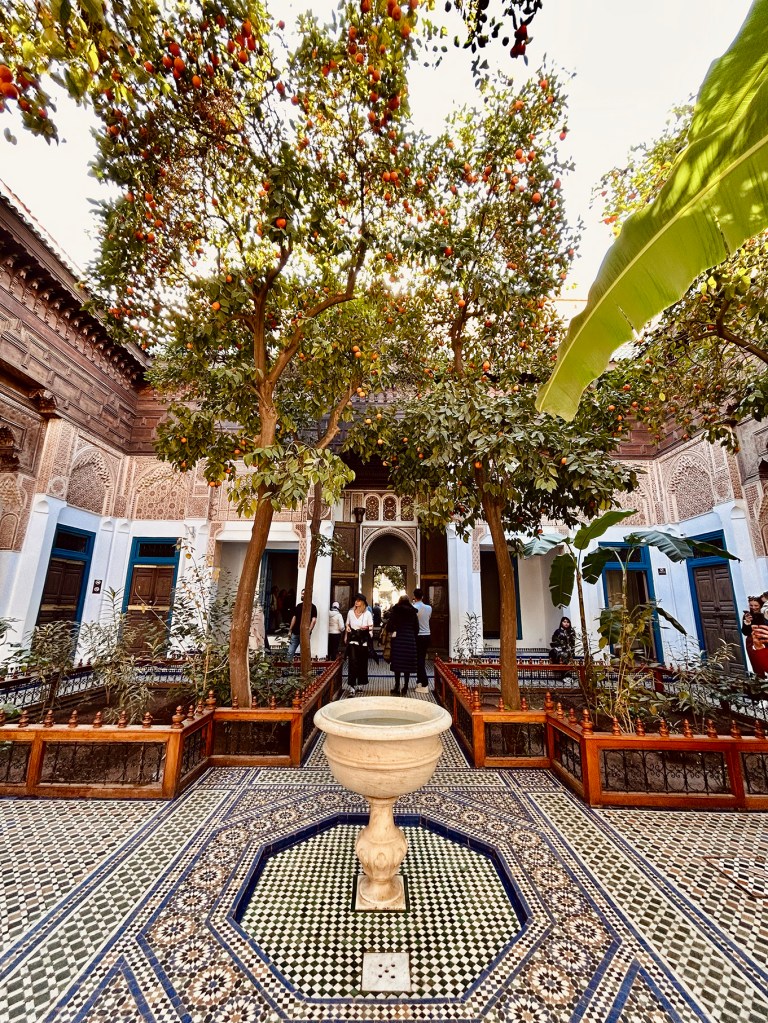
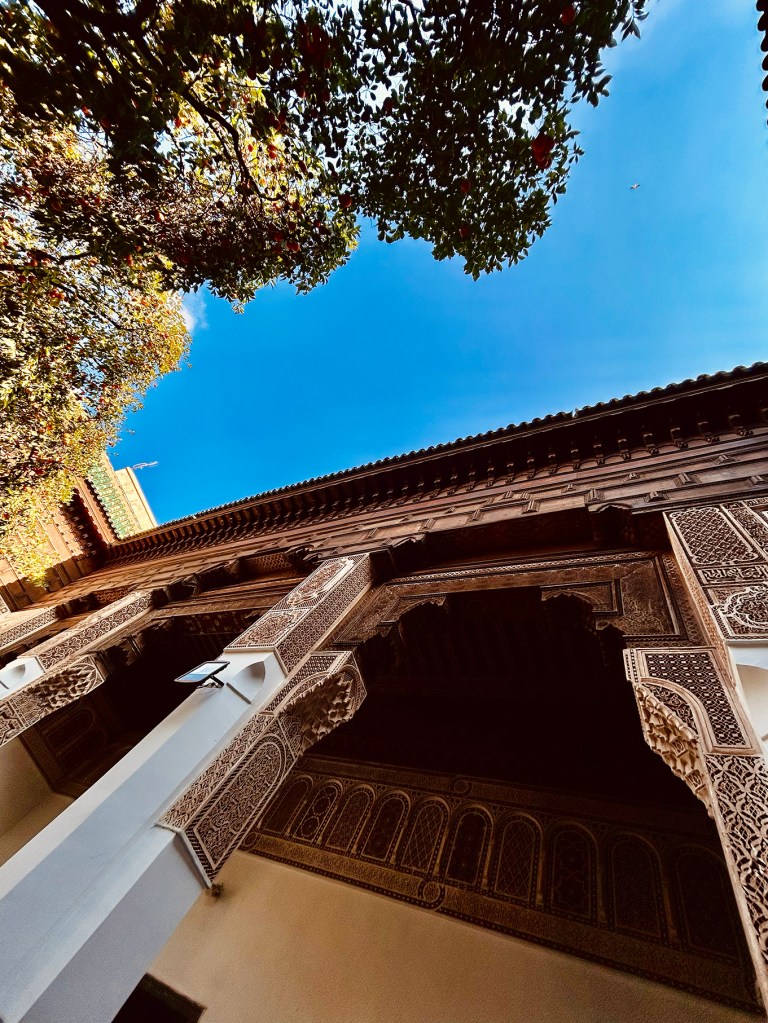
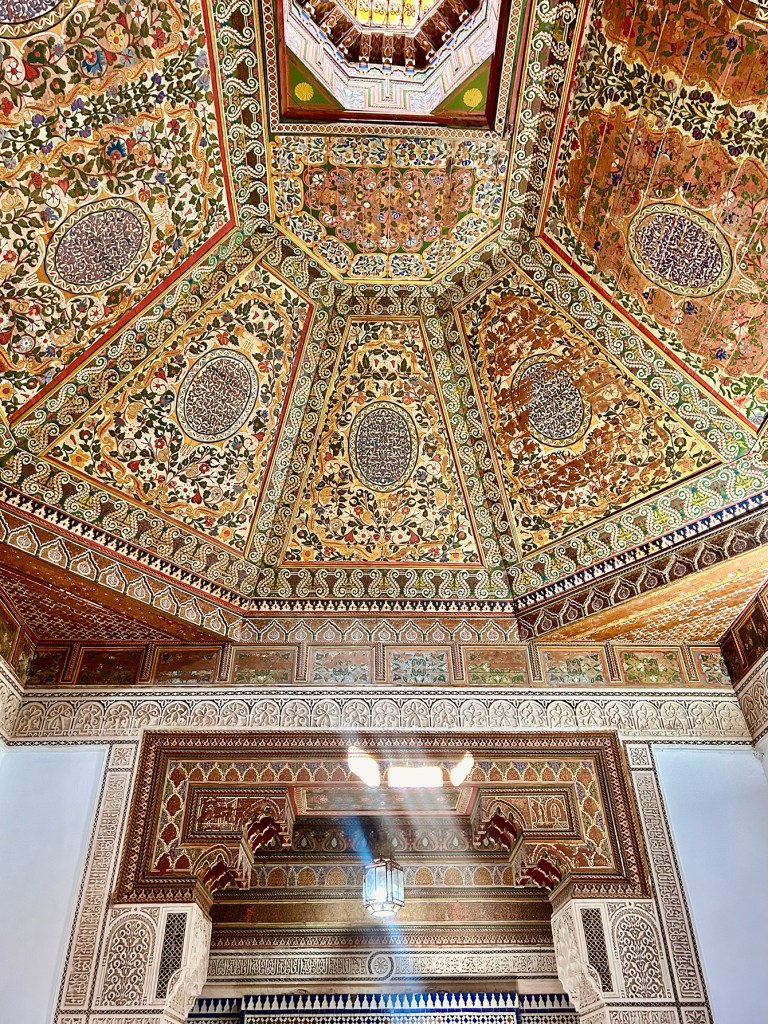
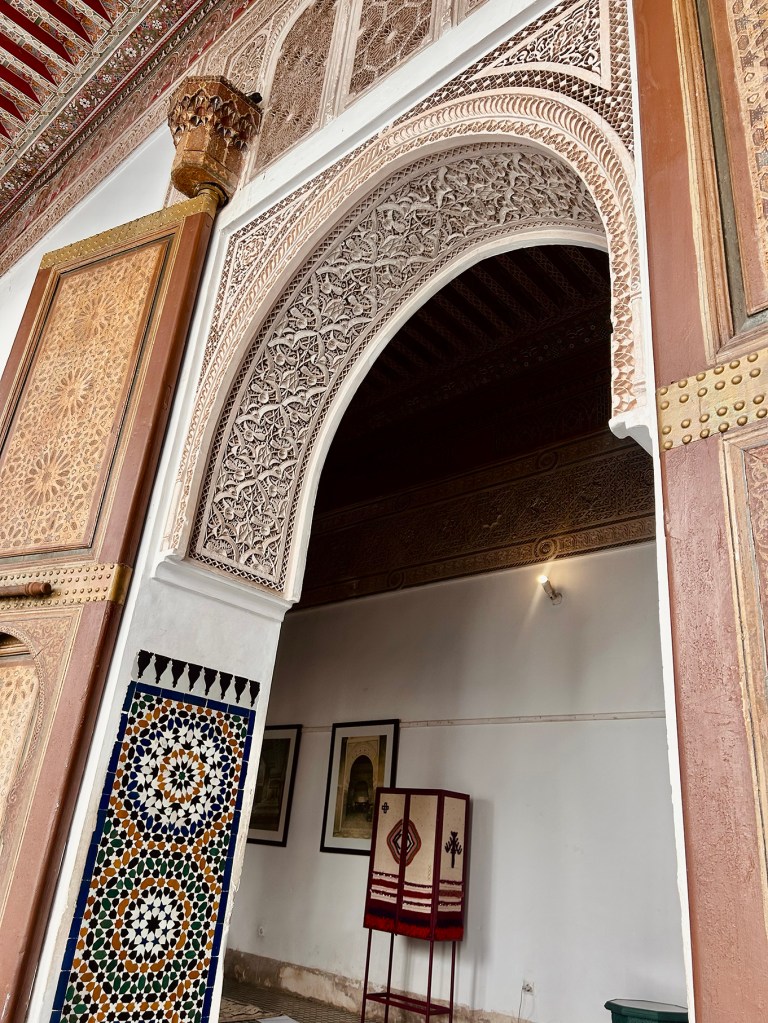
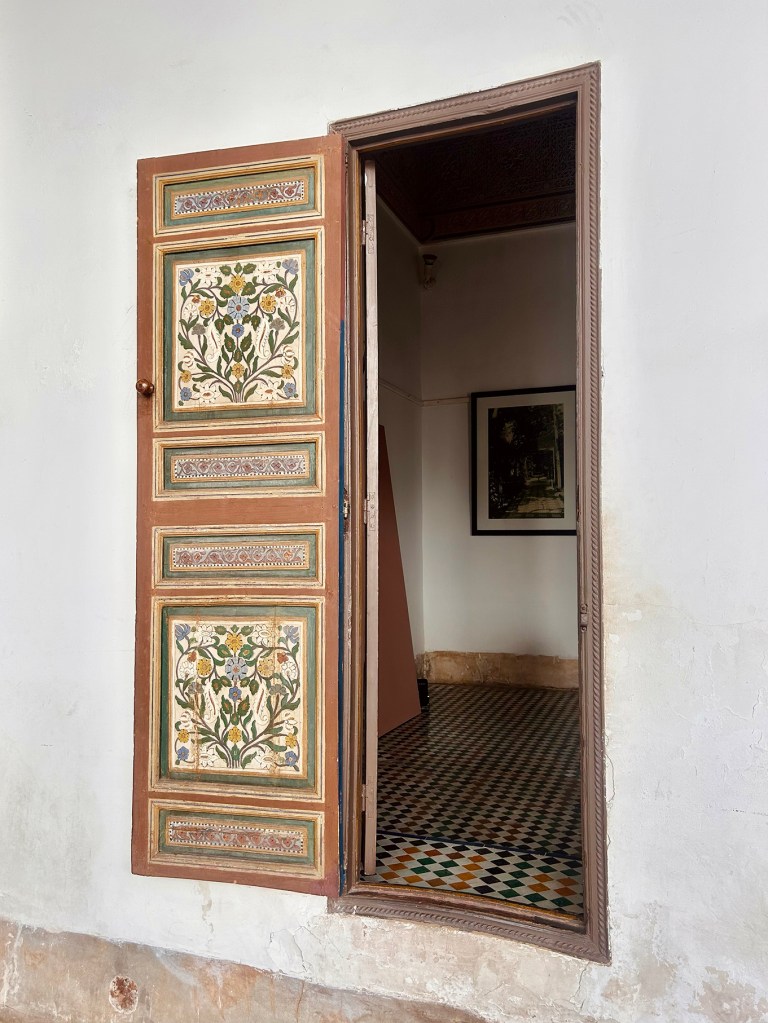
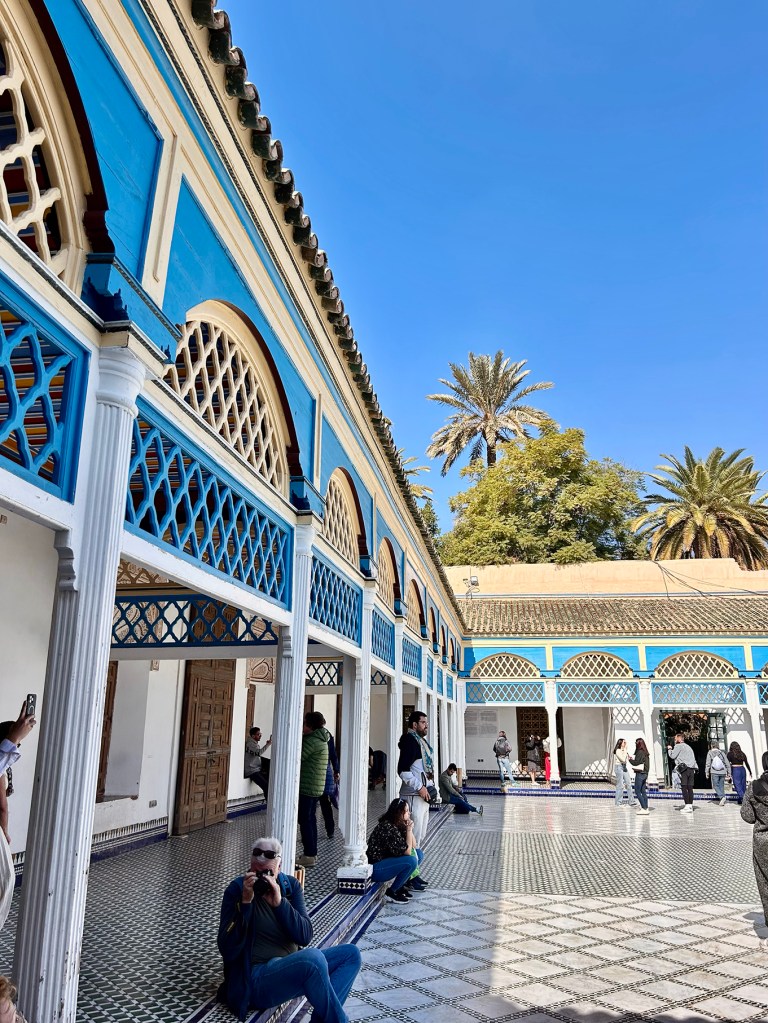
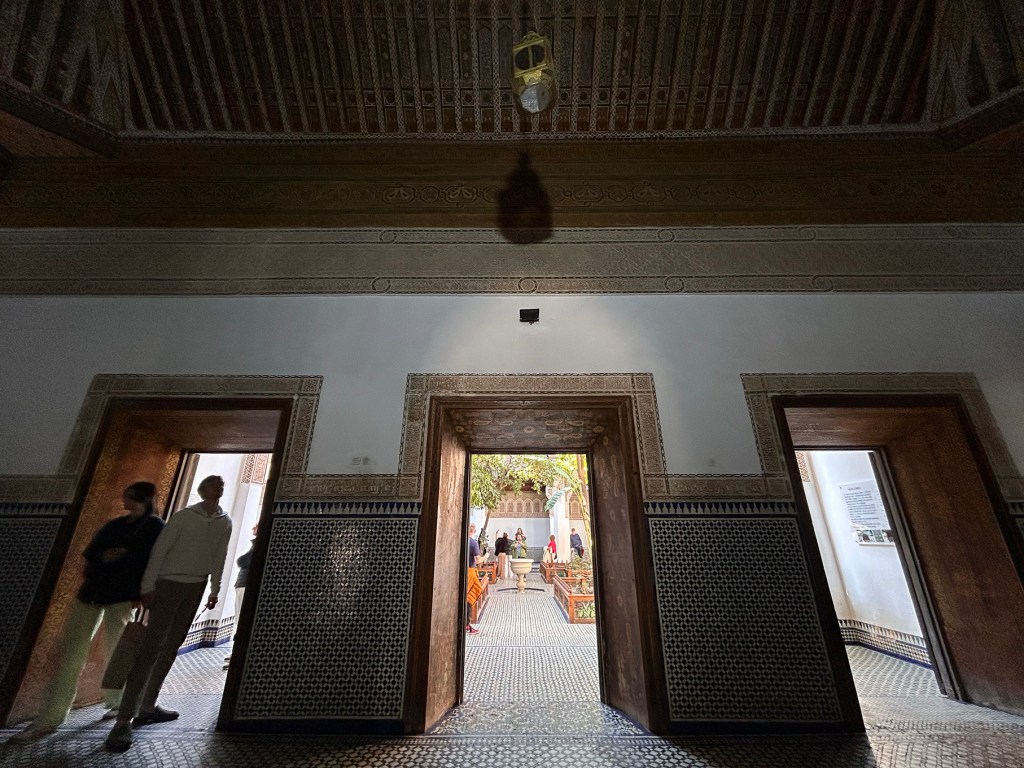
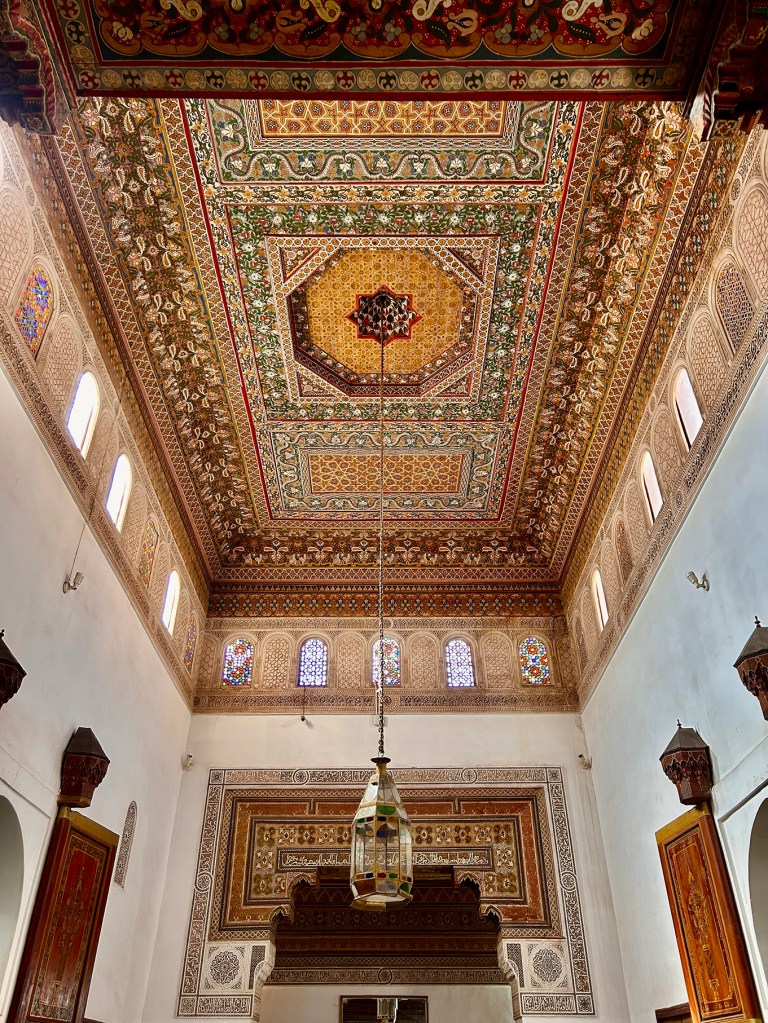
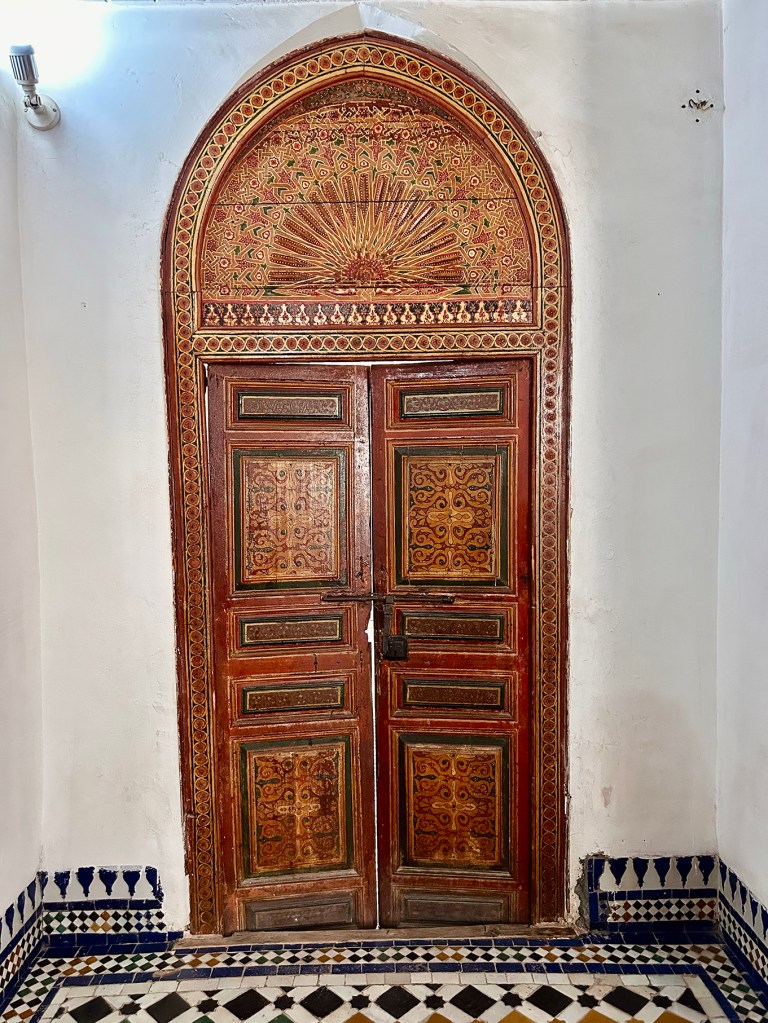
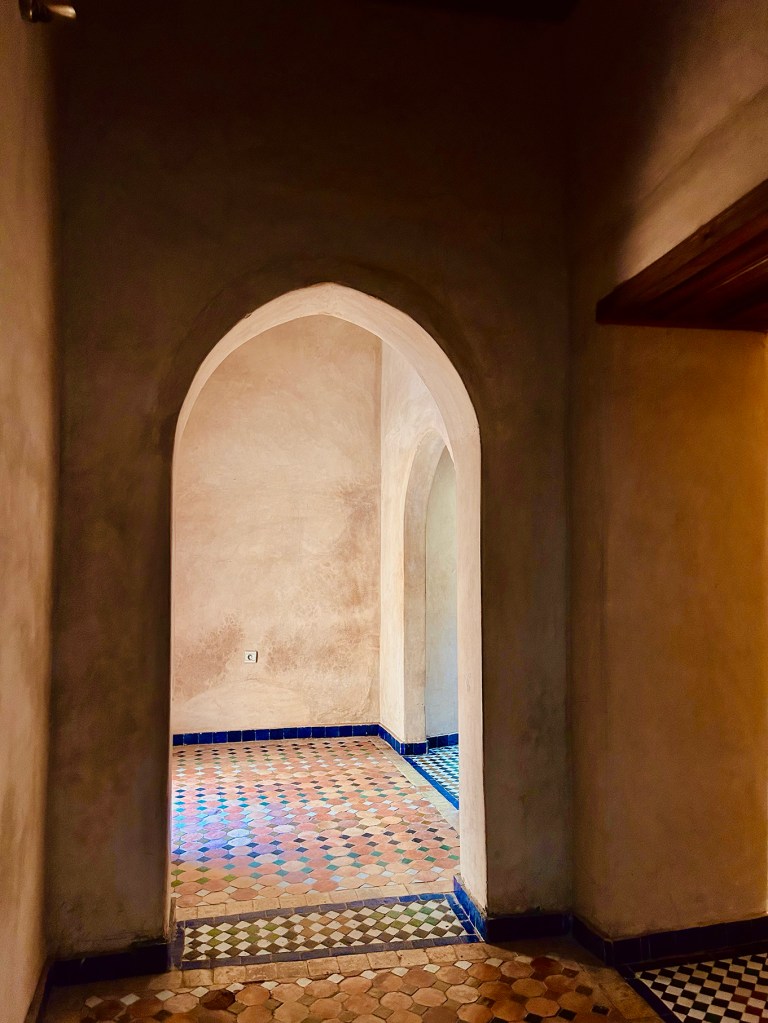
Built in the late 19th century by a grand vizier, the Bahia Palace was designed to be a showpiece of Moroccan-Andalusian architecture. Again, I found myself thinking I was somewhere around the Alhambra, knowing that this here is where it all began.
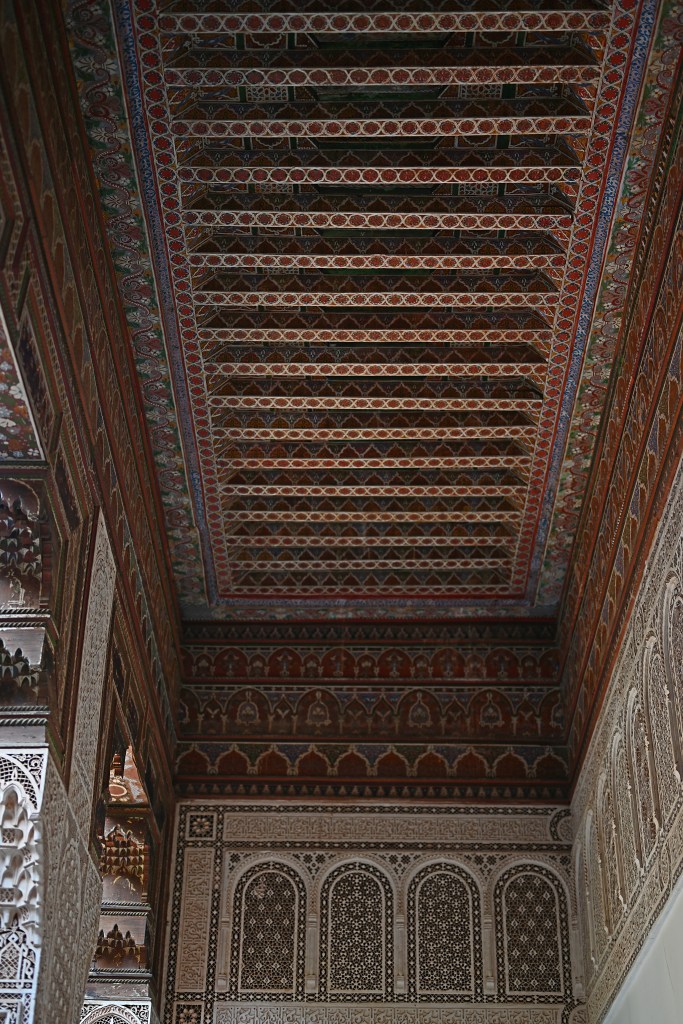
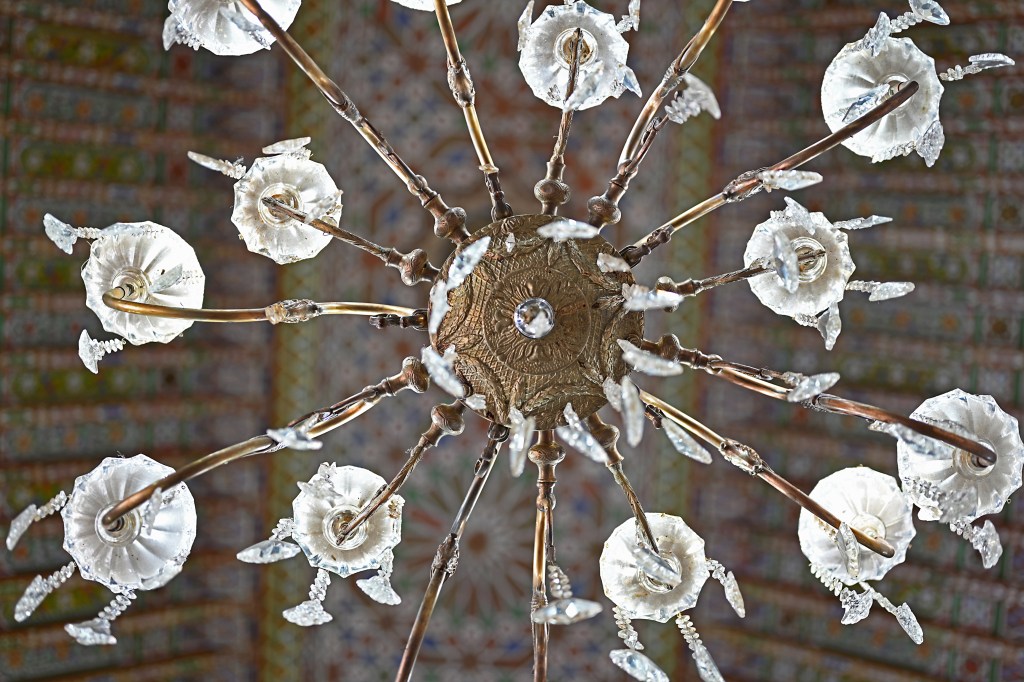
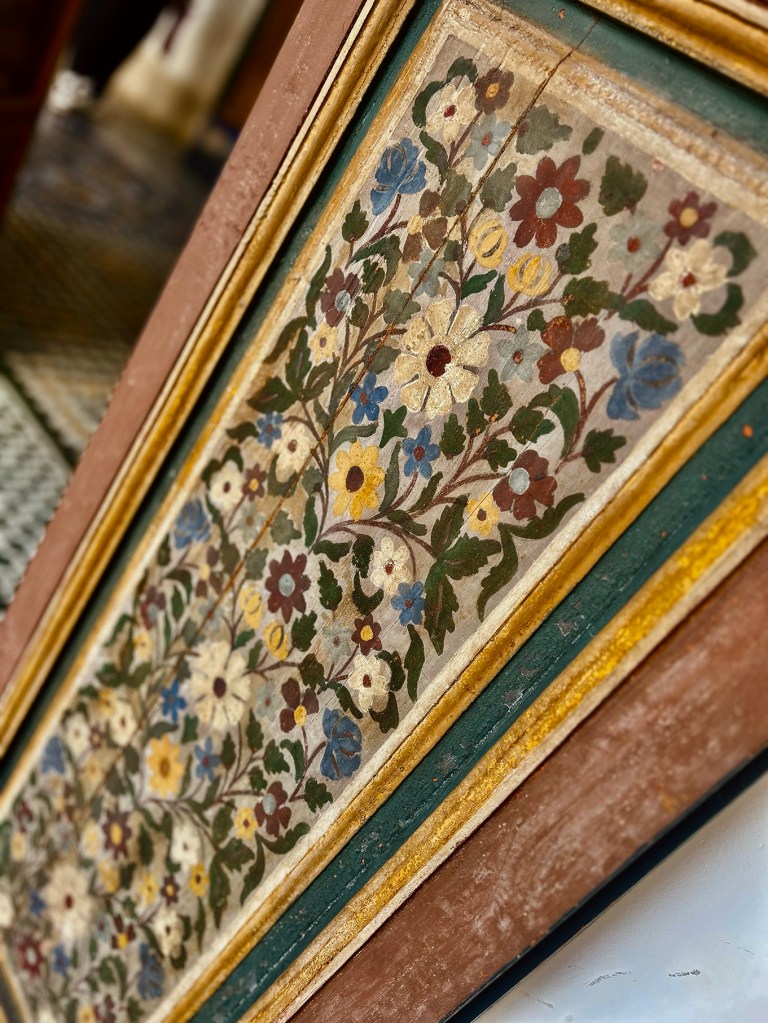
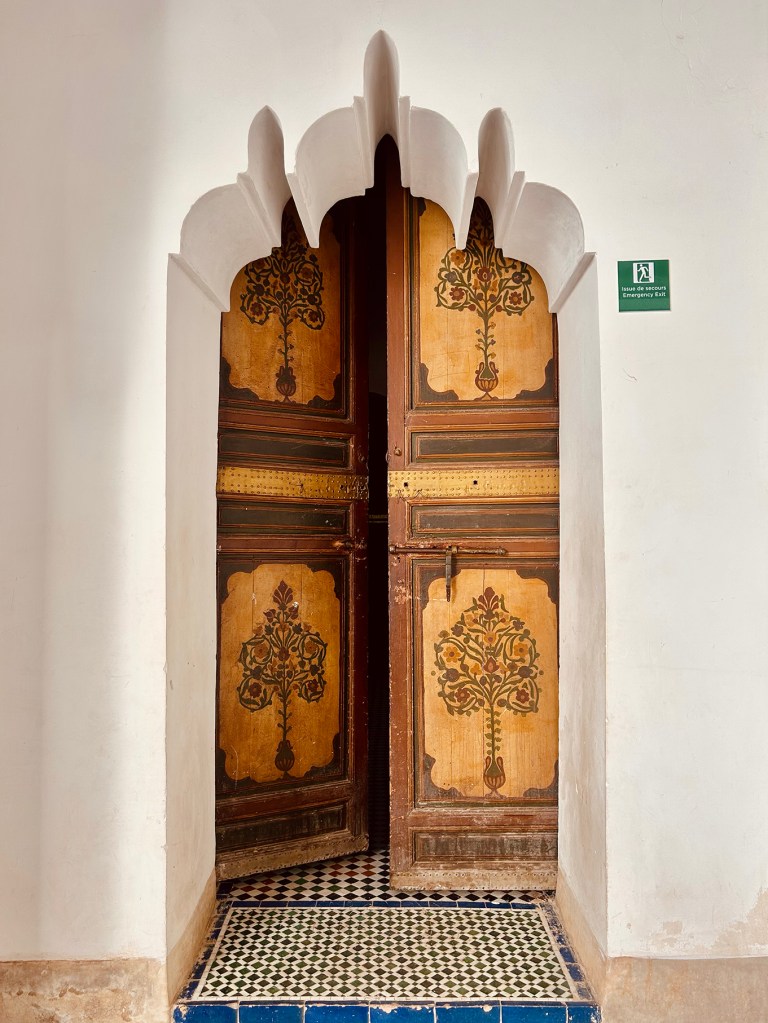
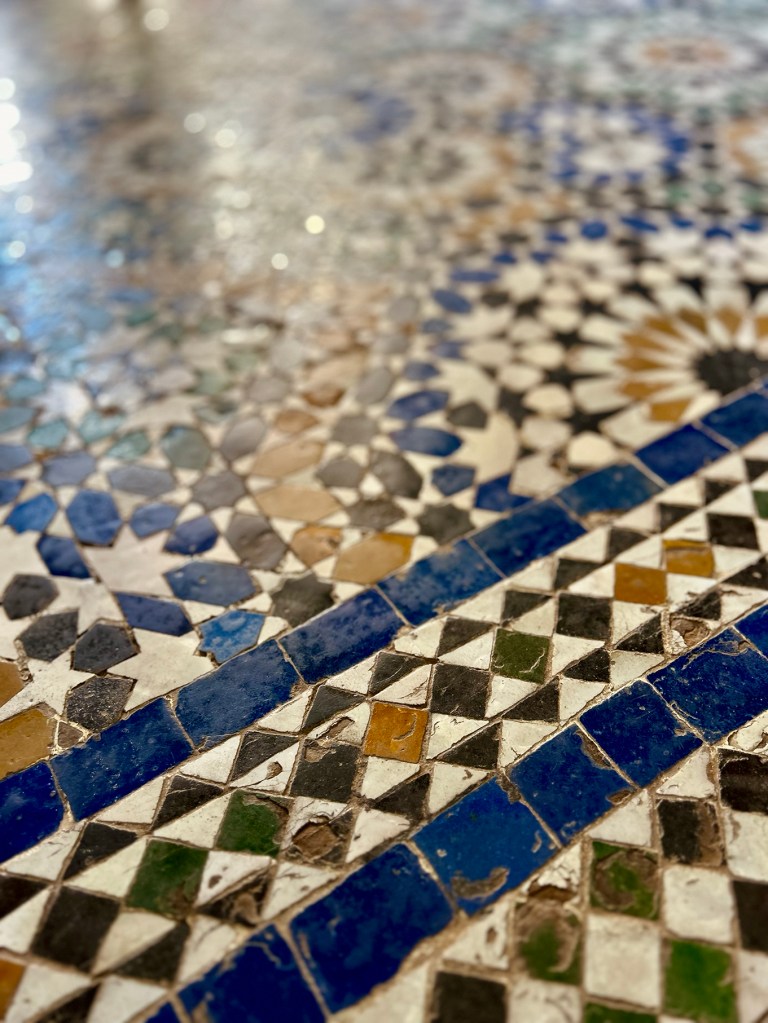
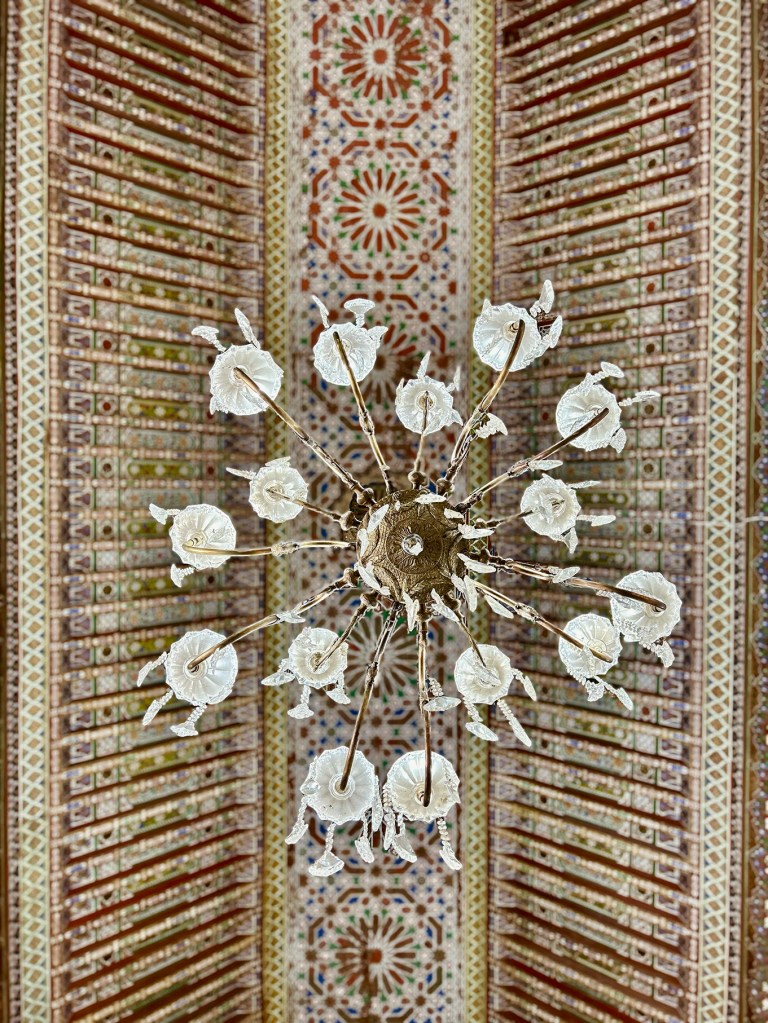
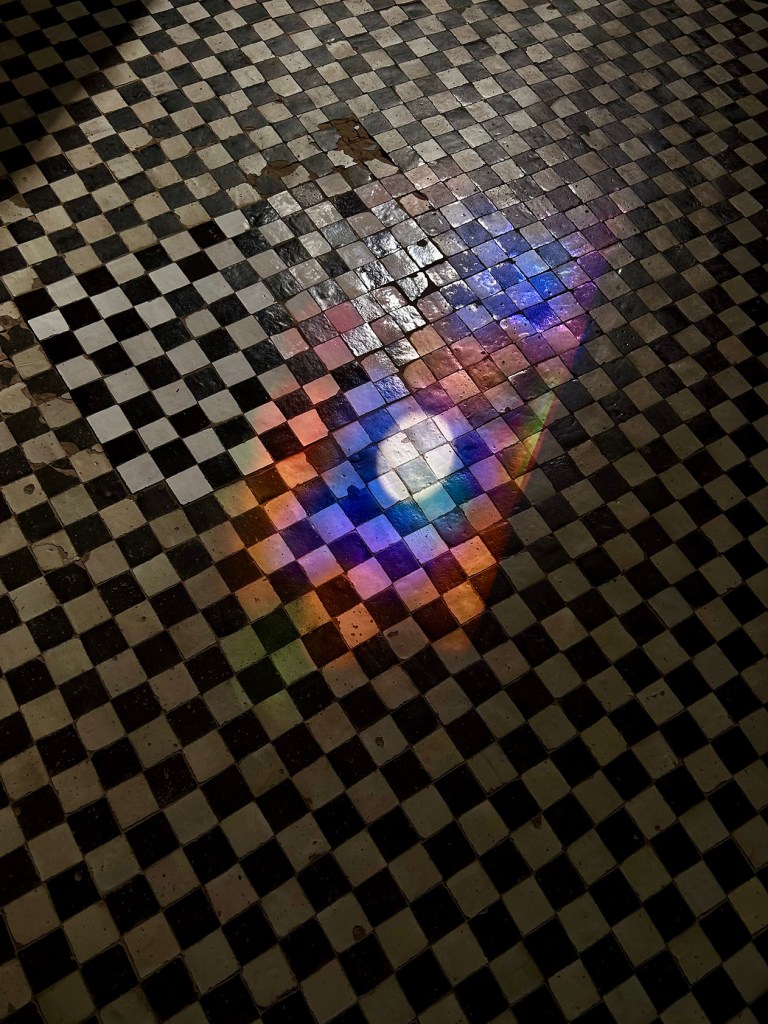
Visitors can wander through the palace’s many rooms, leafy courtyards, and intricate mosaics. Though it is unfurnished, the craftsmanship is remarkable, from hand-painted ceilings to delicate zellij tilework. It offers a glimpse into the opulence of Morocco’s ruling class at the time. And when the light cracks through the stained glass decorations in some of the ceilings, it surely feels as if something divine is present above us. Yes, even to me, an agnostic with atheist leanings. Divinity or not, I mean laws of physics, absolute beauty.



4. Saadian Tombs
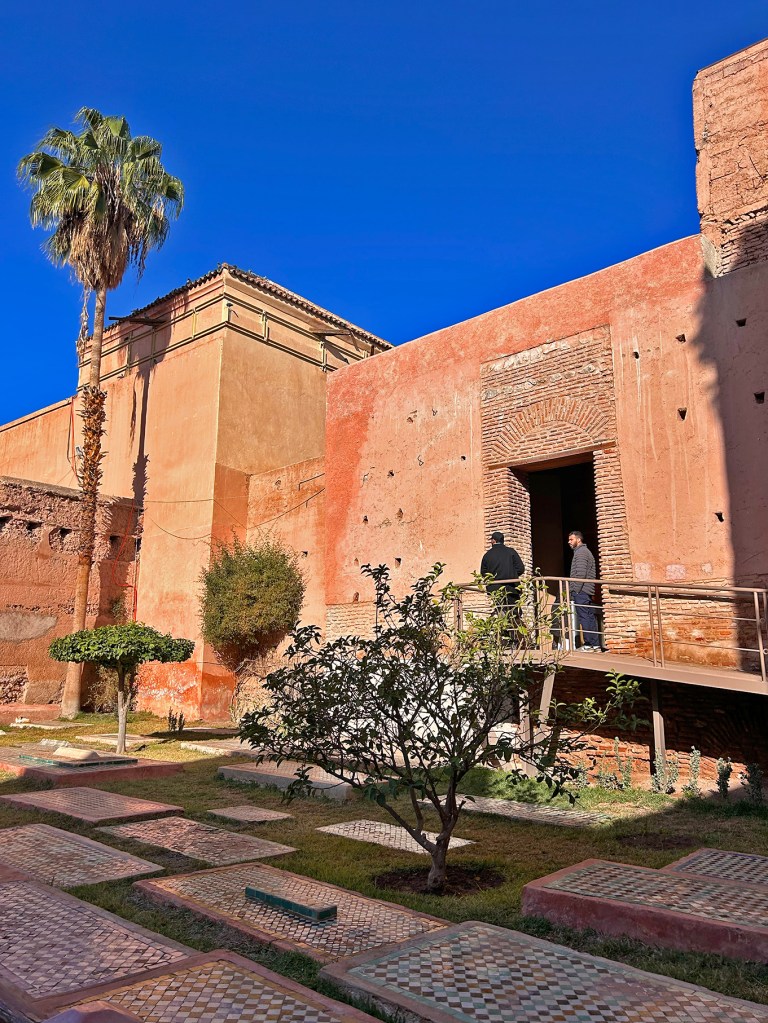
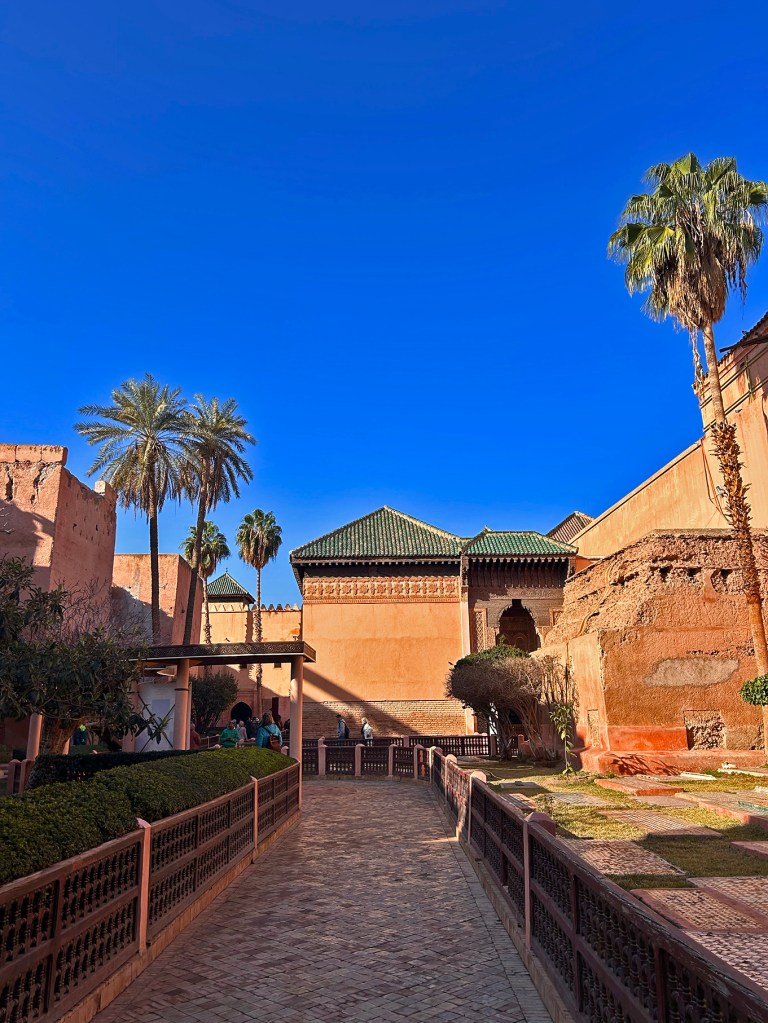
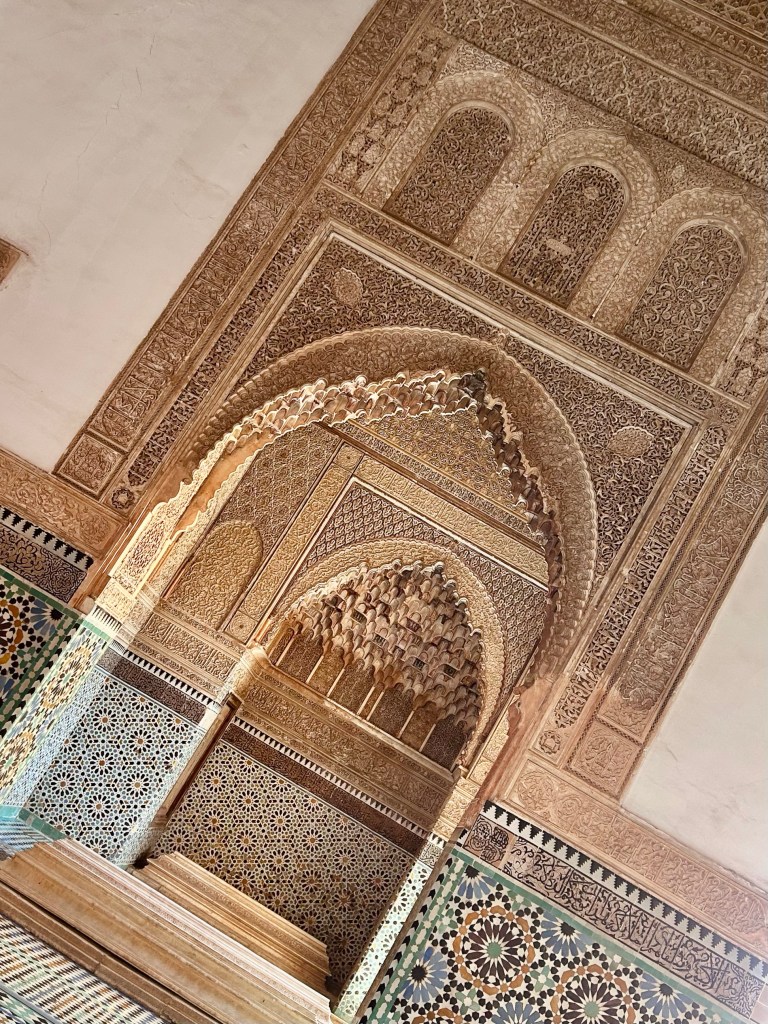
These royal tombs were sealed for centuries and only rediscovered in 1917. They contain the remains of the Saadian dynasty, who ruled Morocco in the 16th and 17th centuries. Despite the site being relatively small, the level of decoration is extraordinary: Italian Carrara marble, detailed stucco, and colorful tiles. The “Hall of the Twelve Columns” is the most famous chamber, often described as one of the most beautiful interiors in Marrakech.
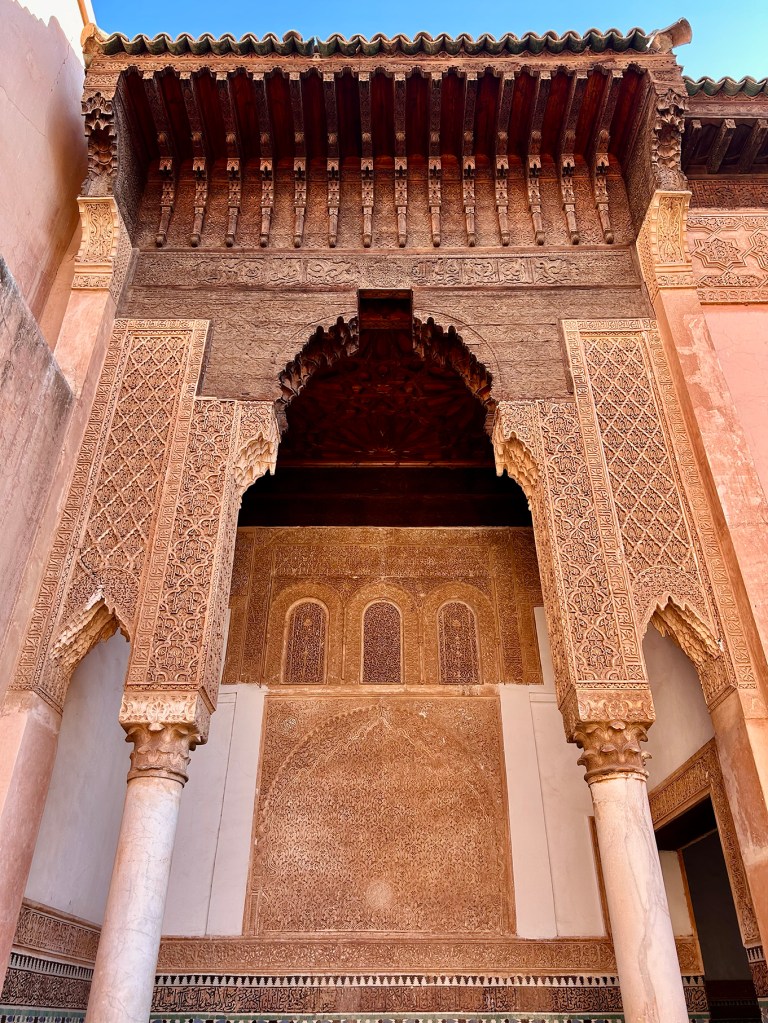
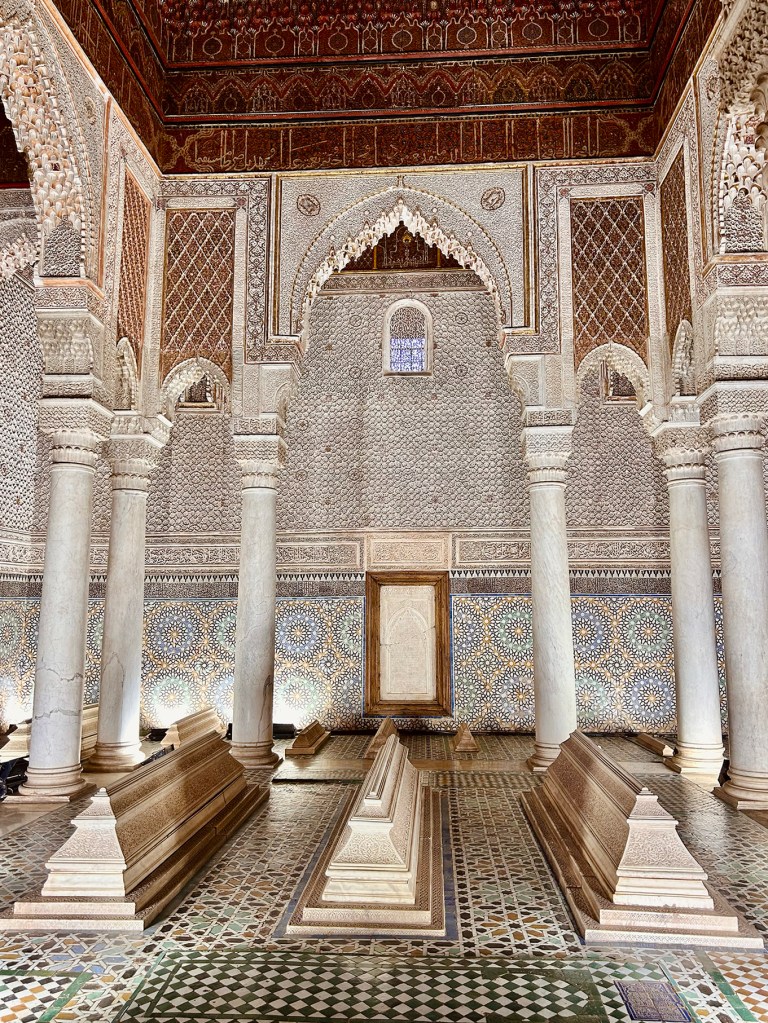
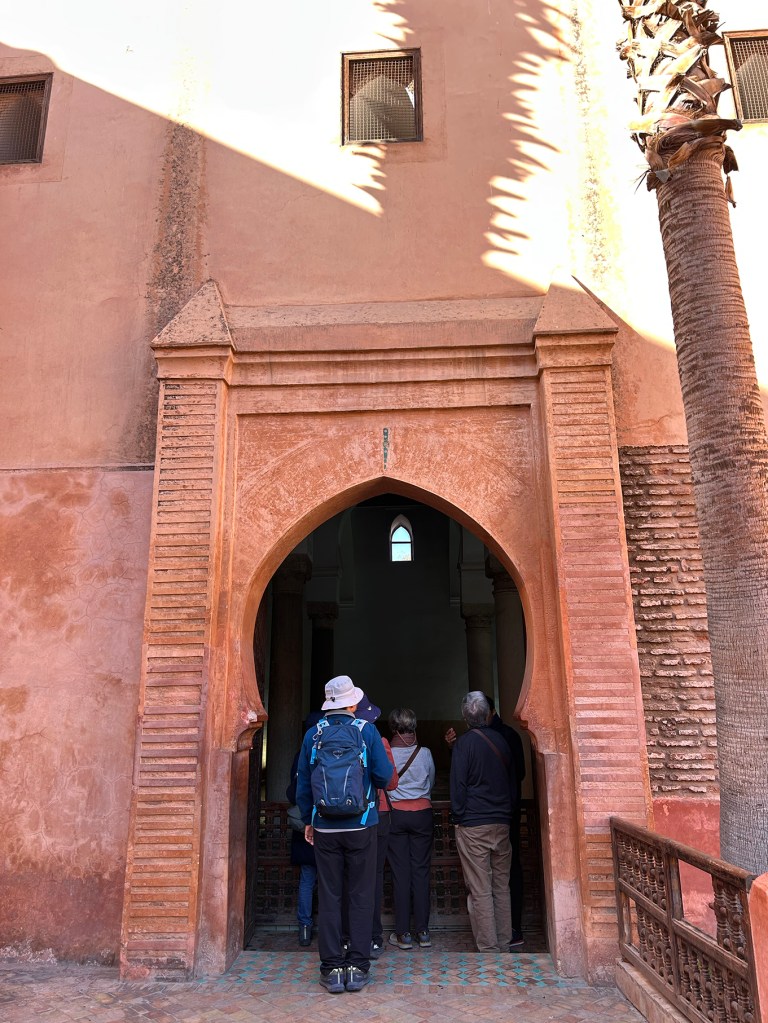
5. The Medina and souks
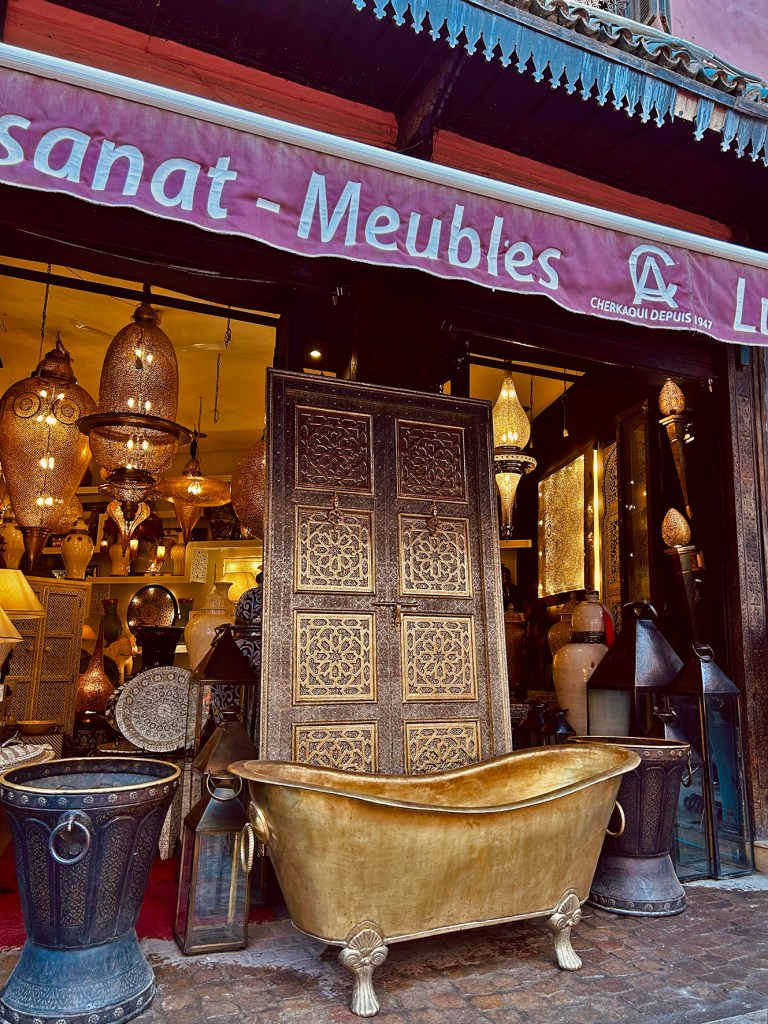
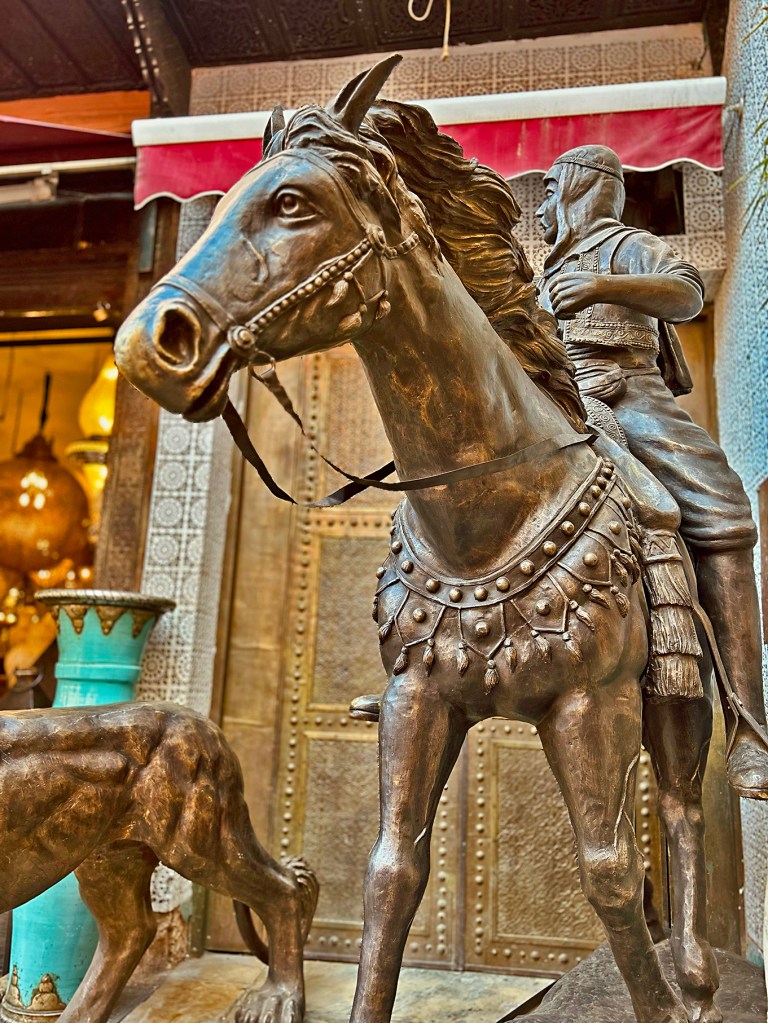
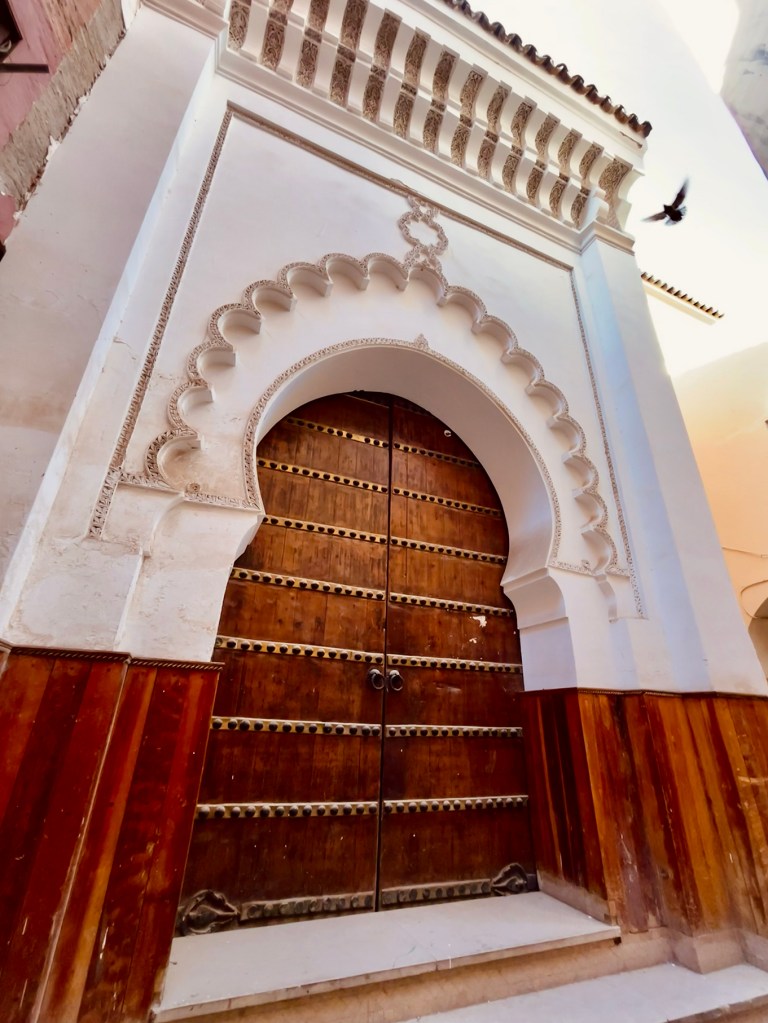
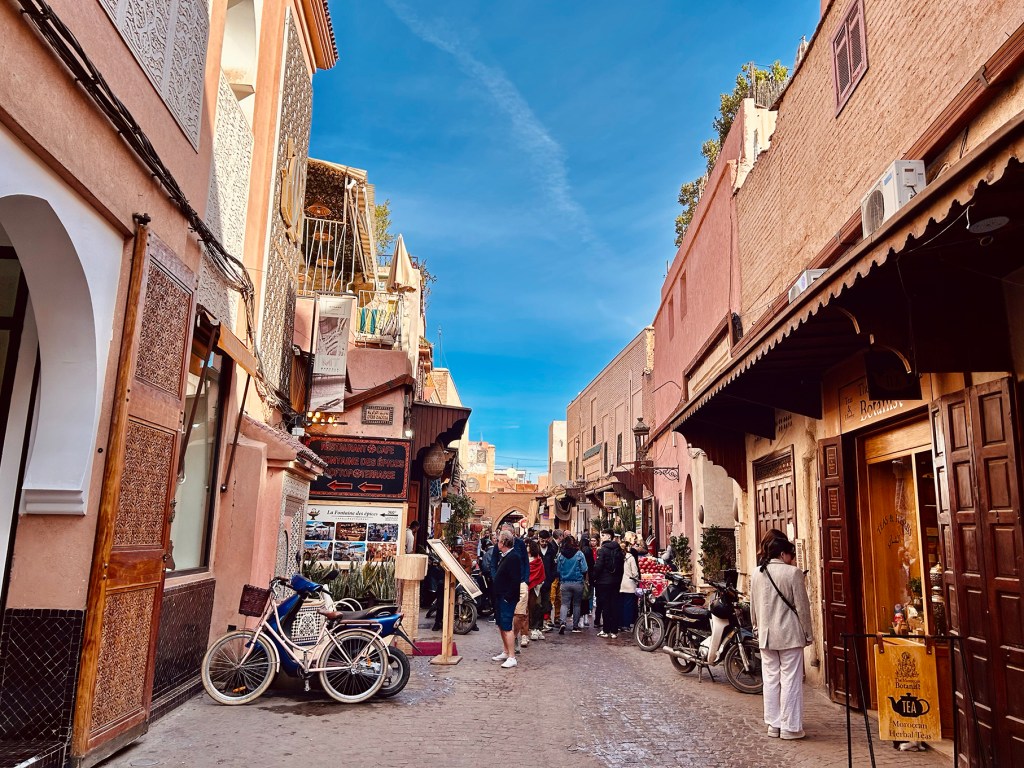
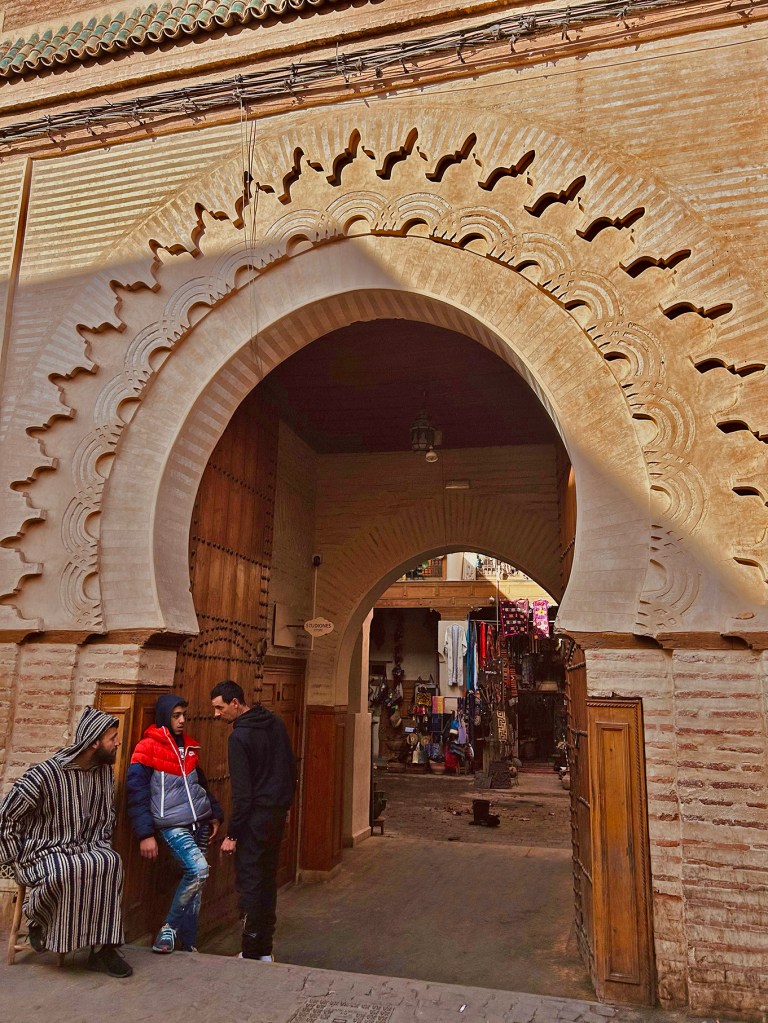
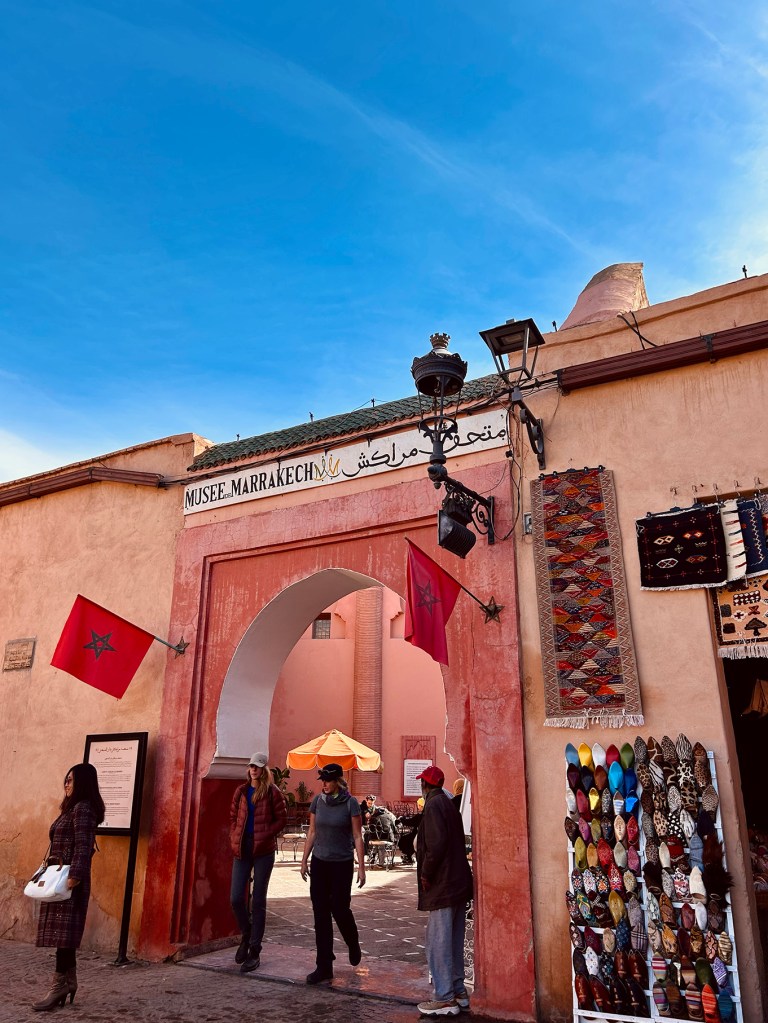
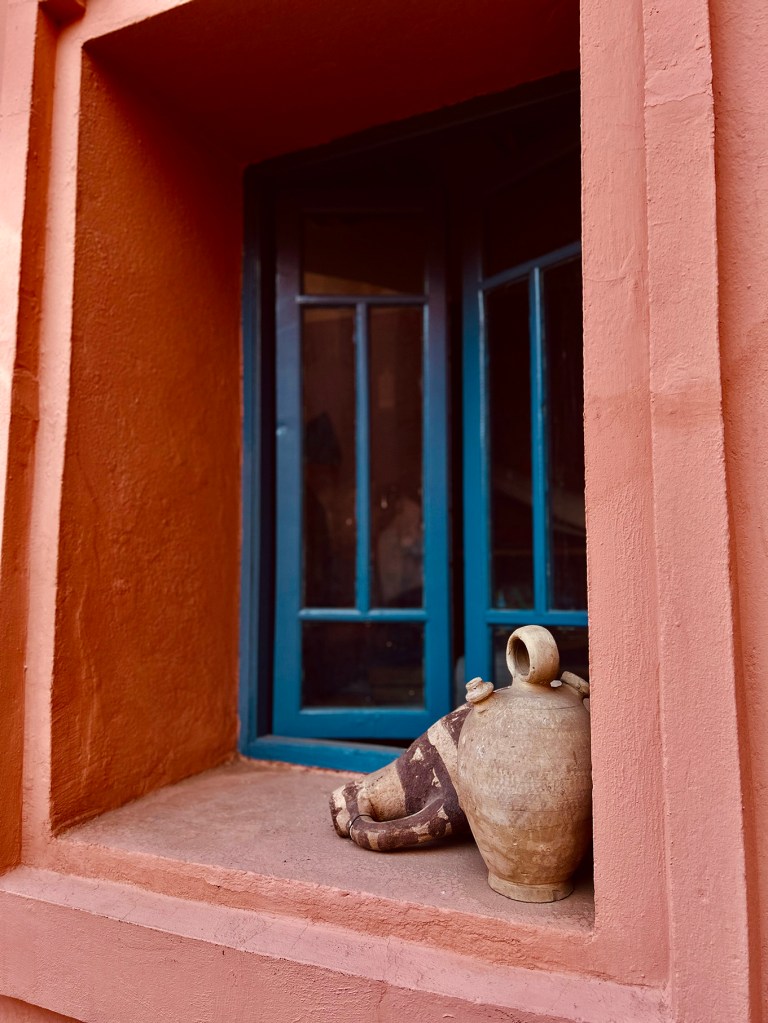
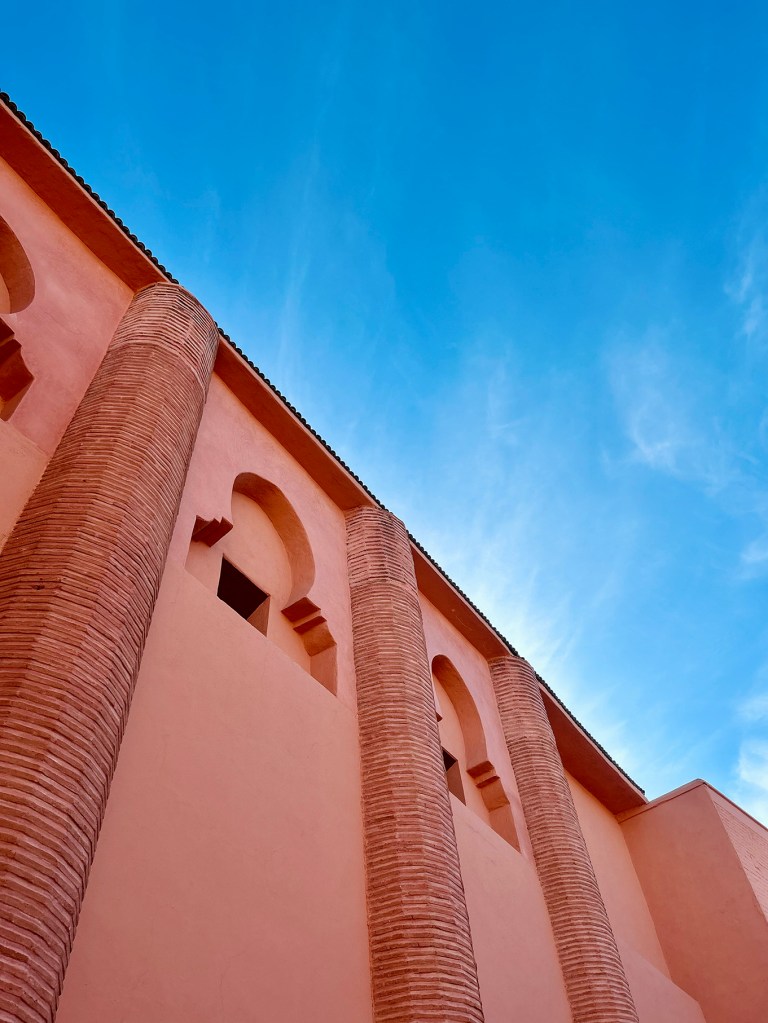
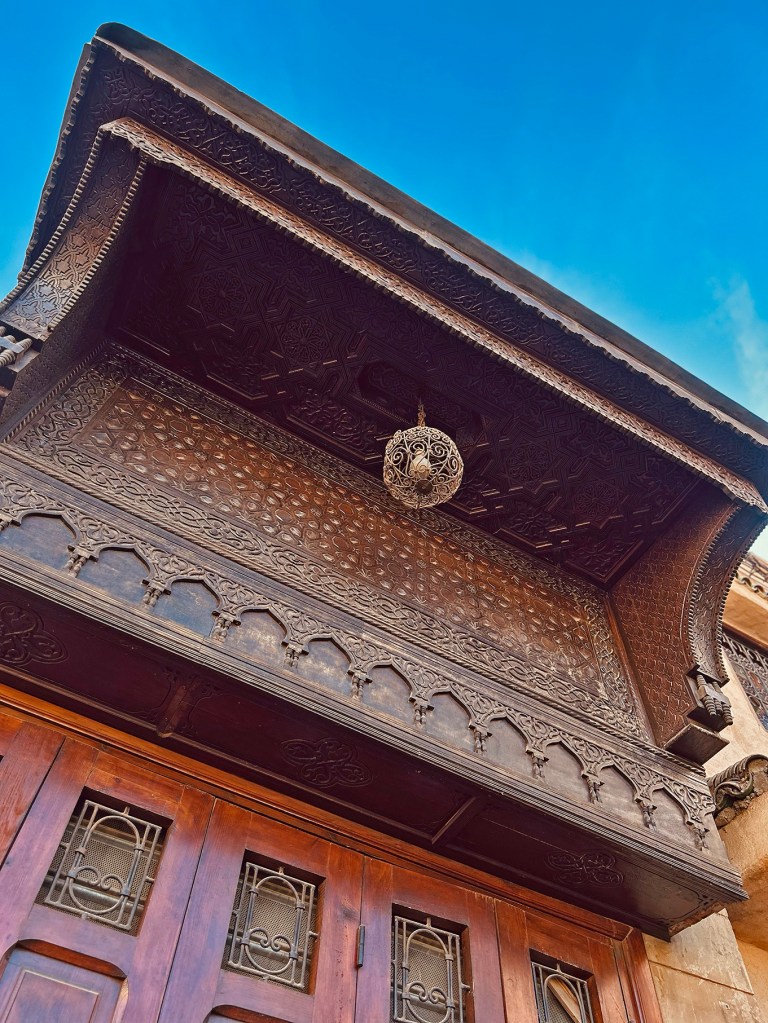
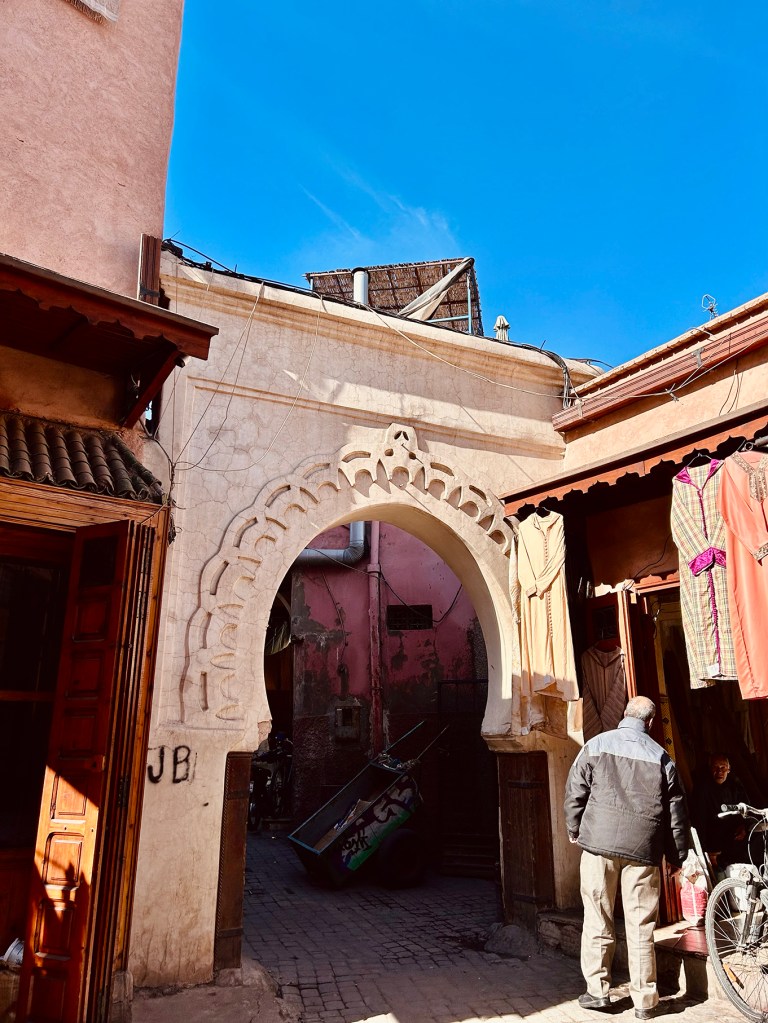
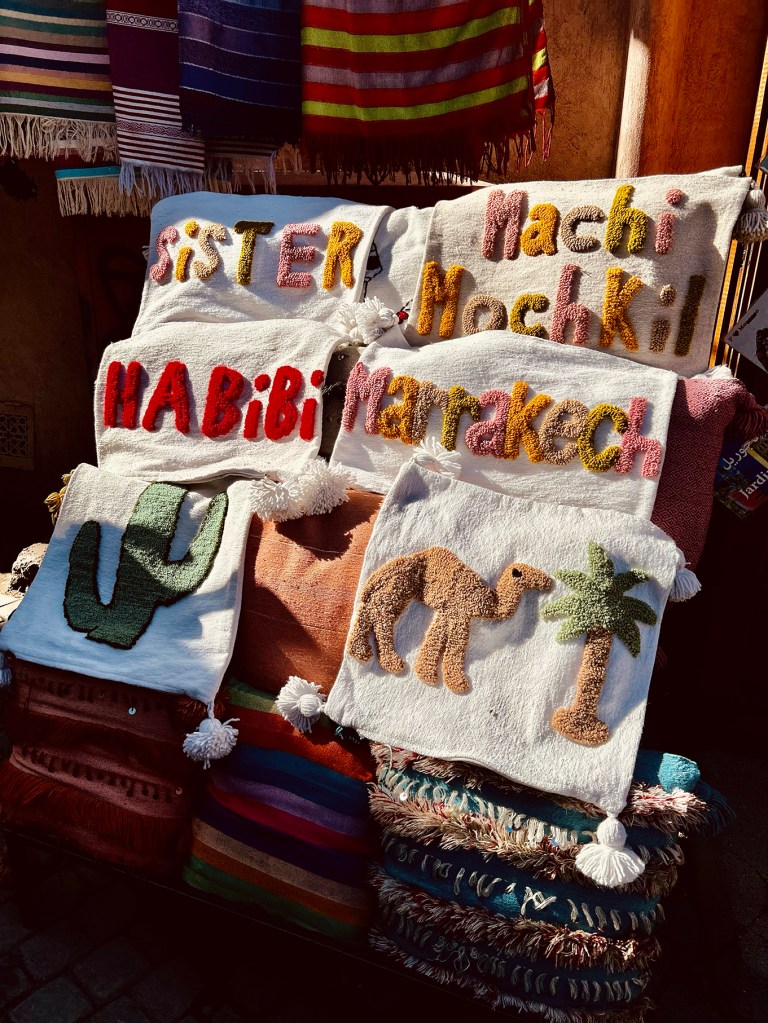
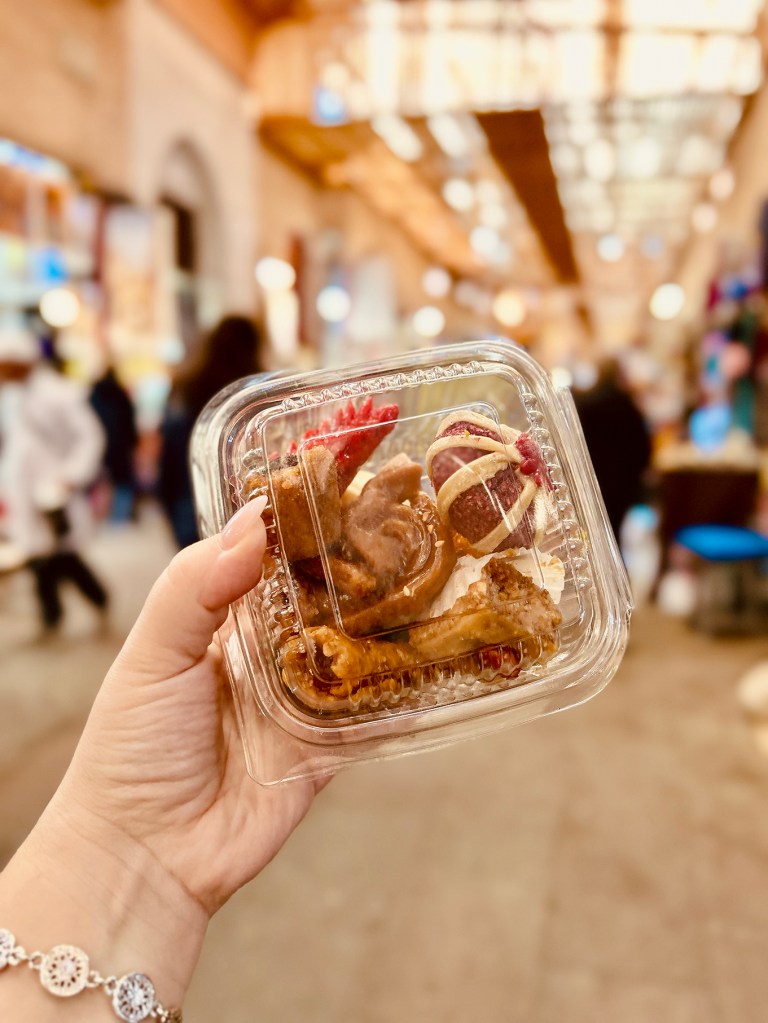
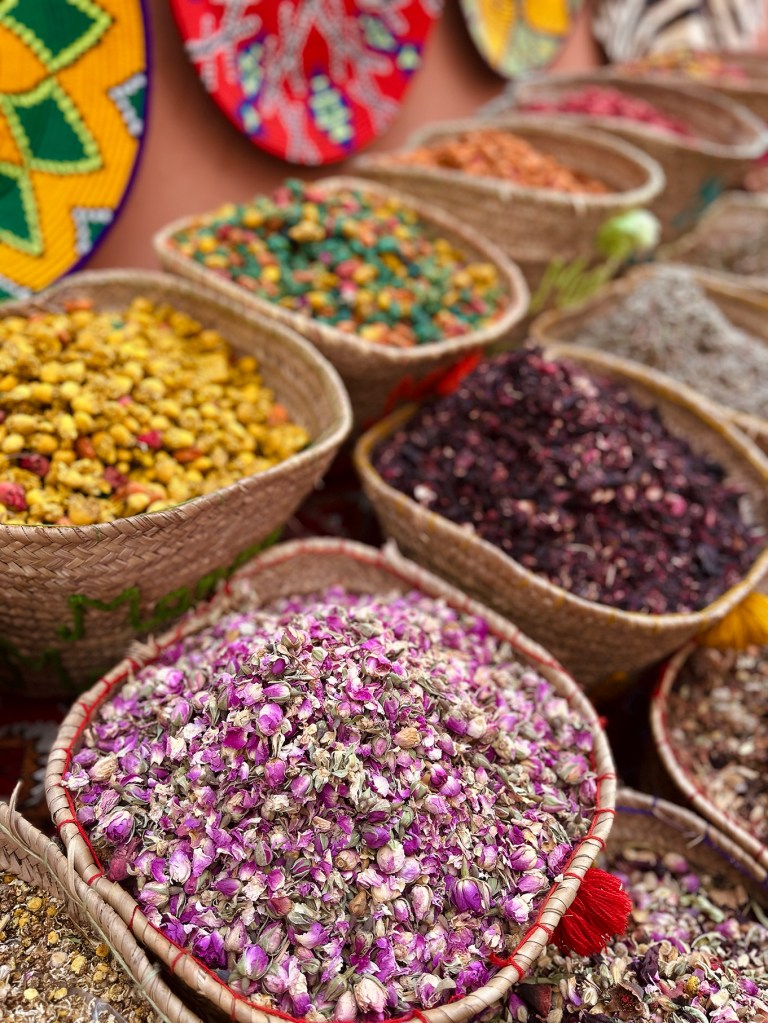
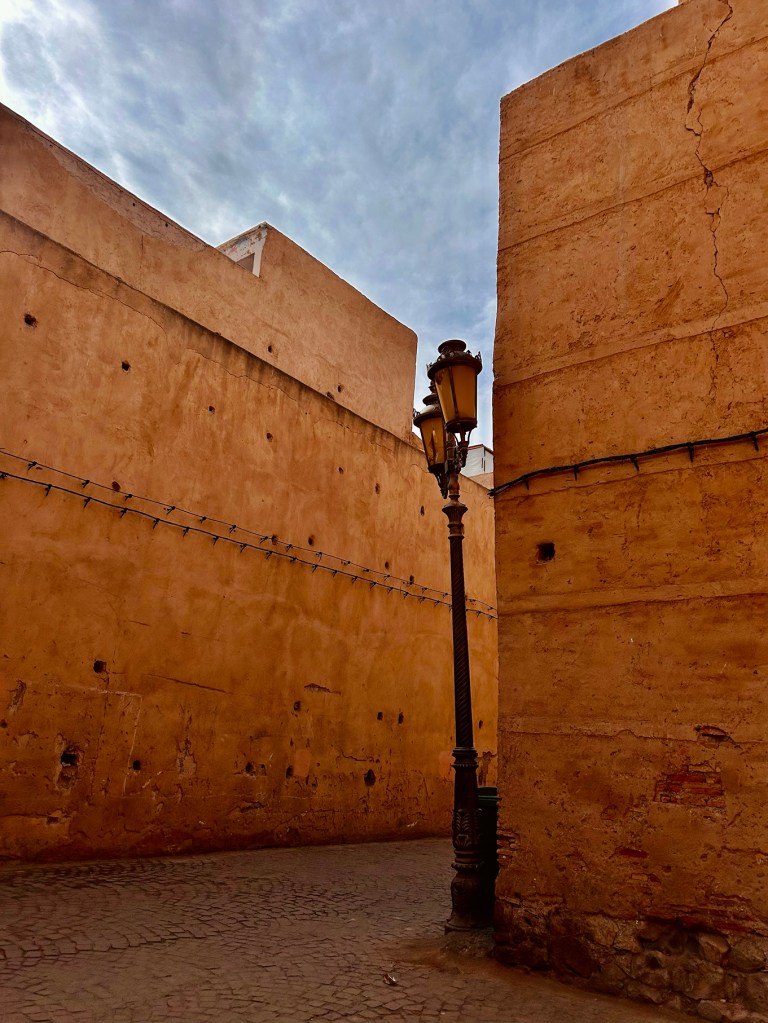
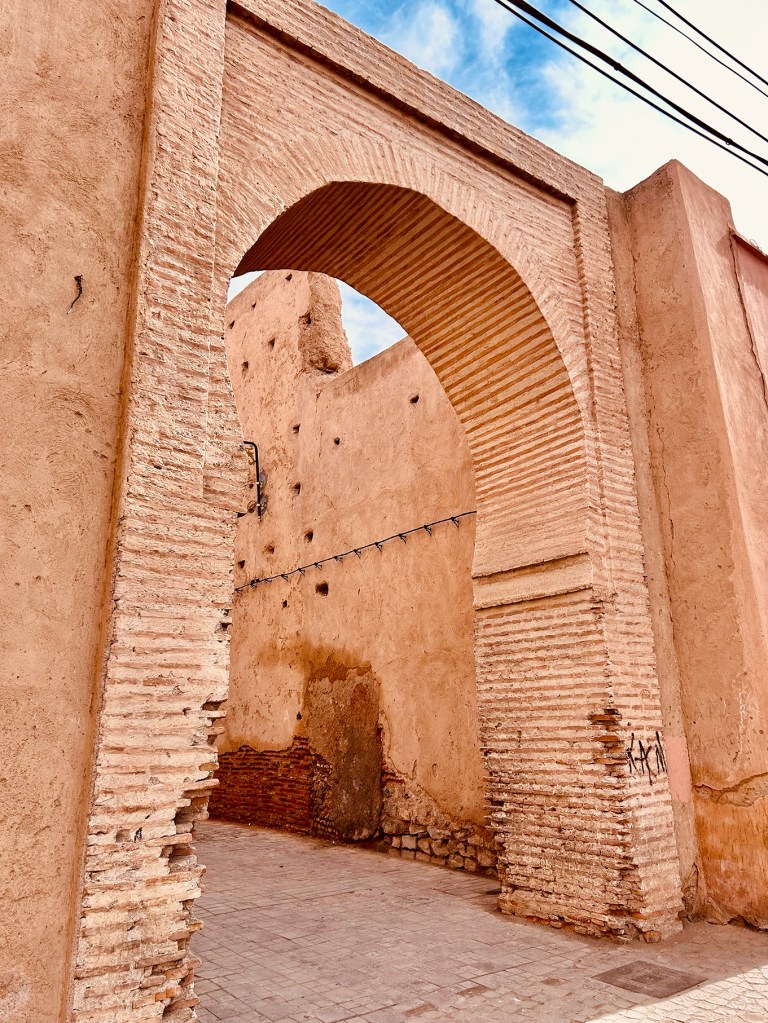
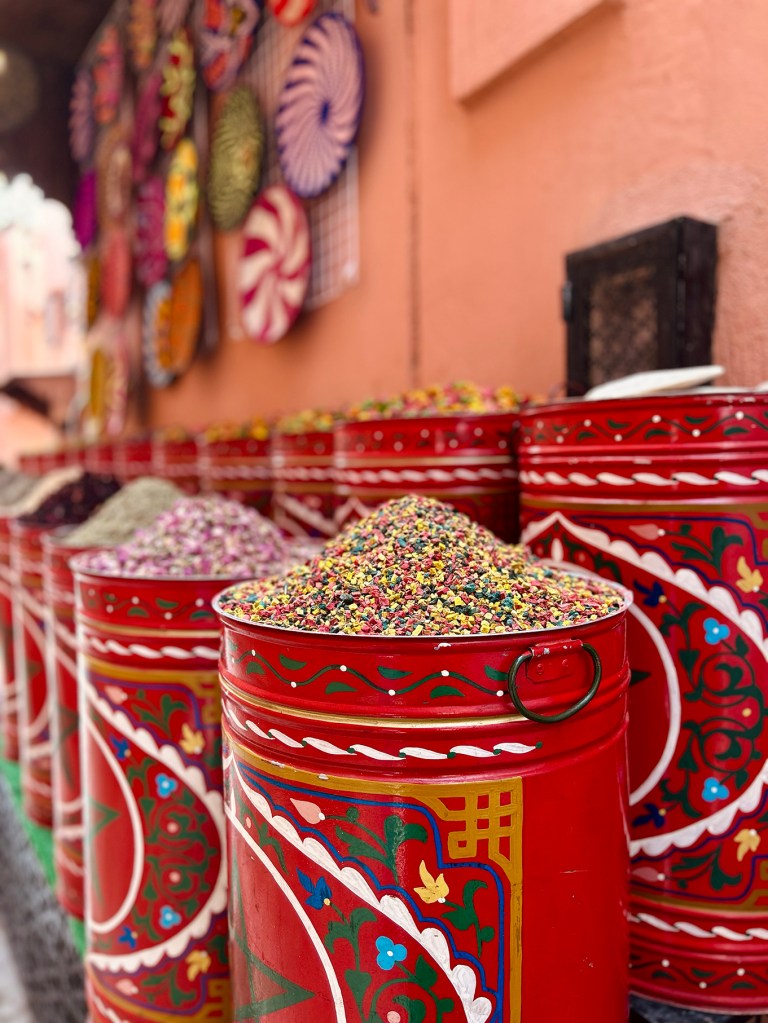
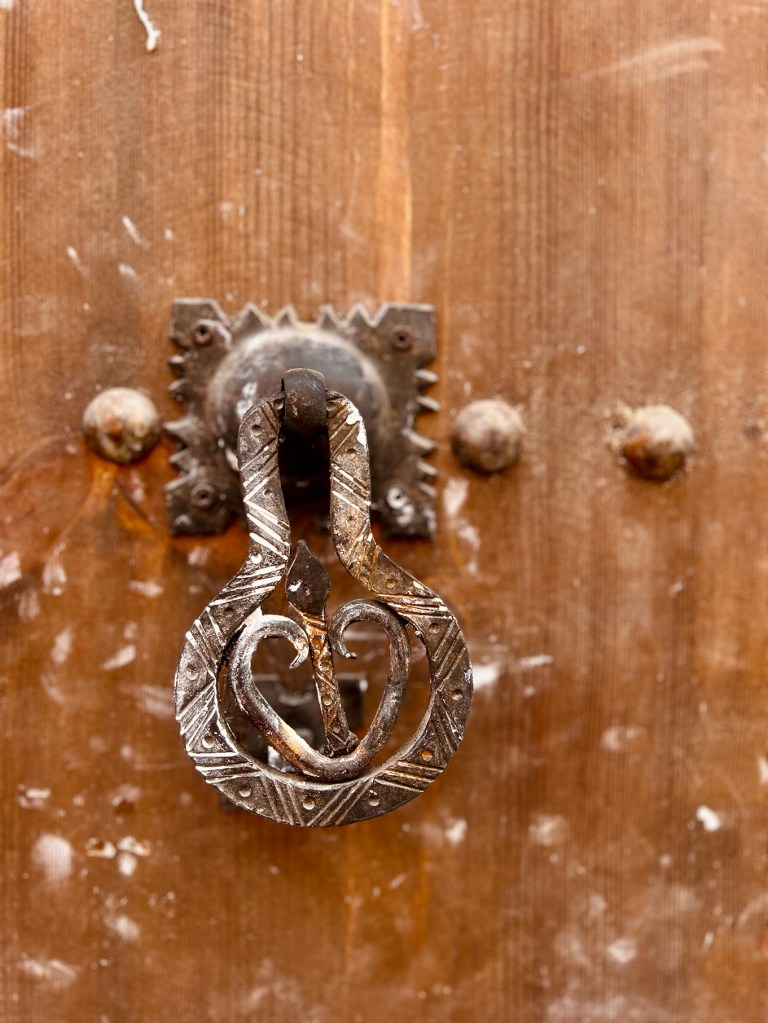
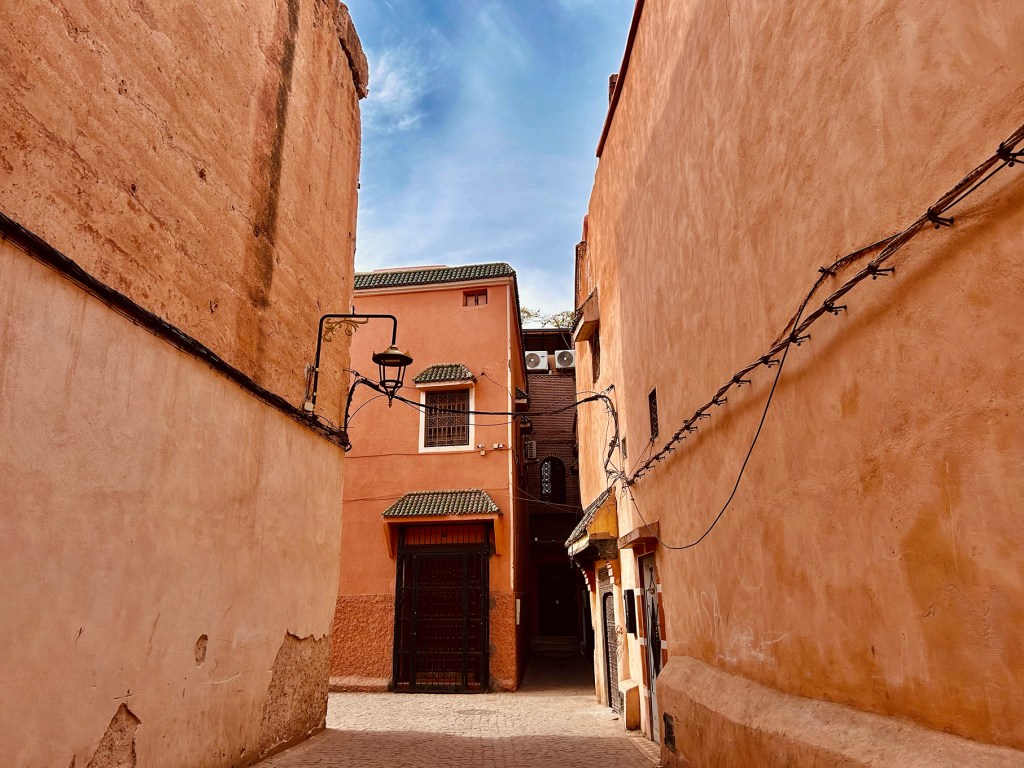
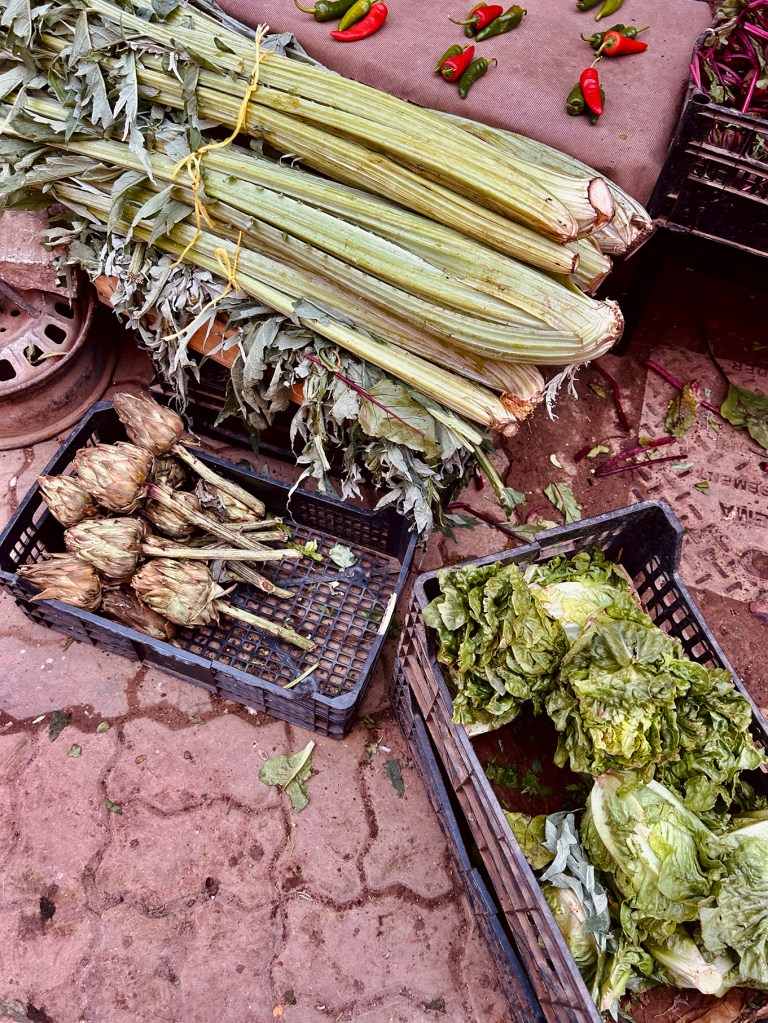
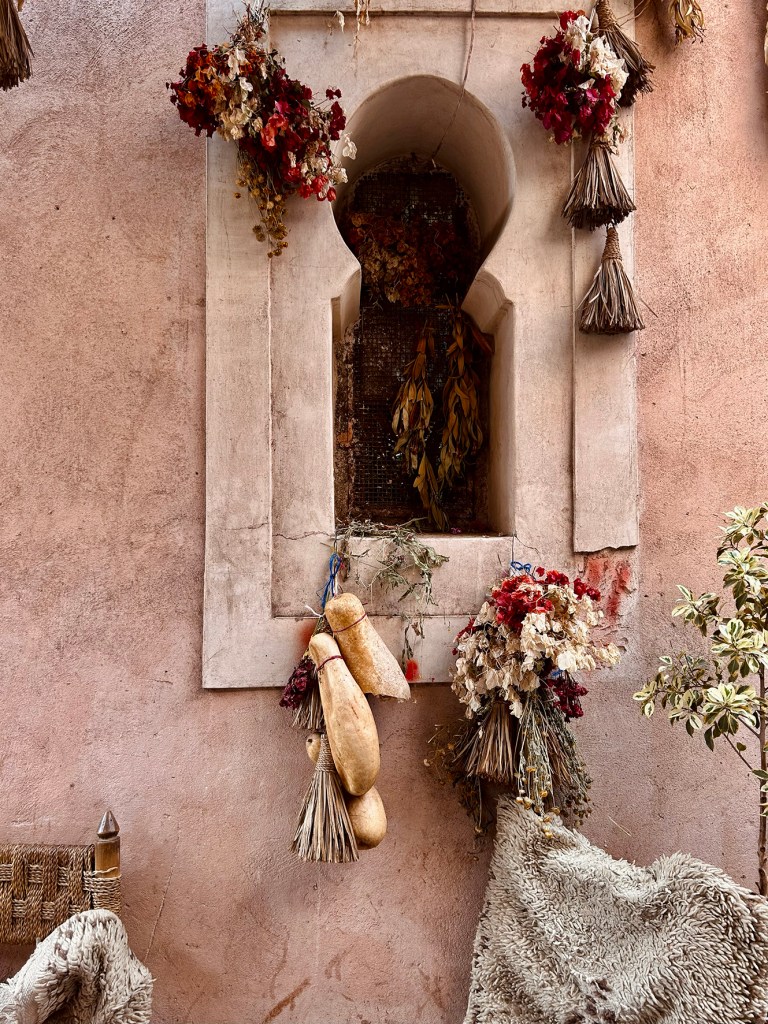
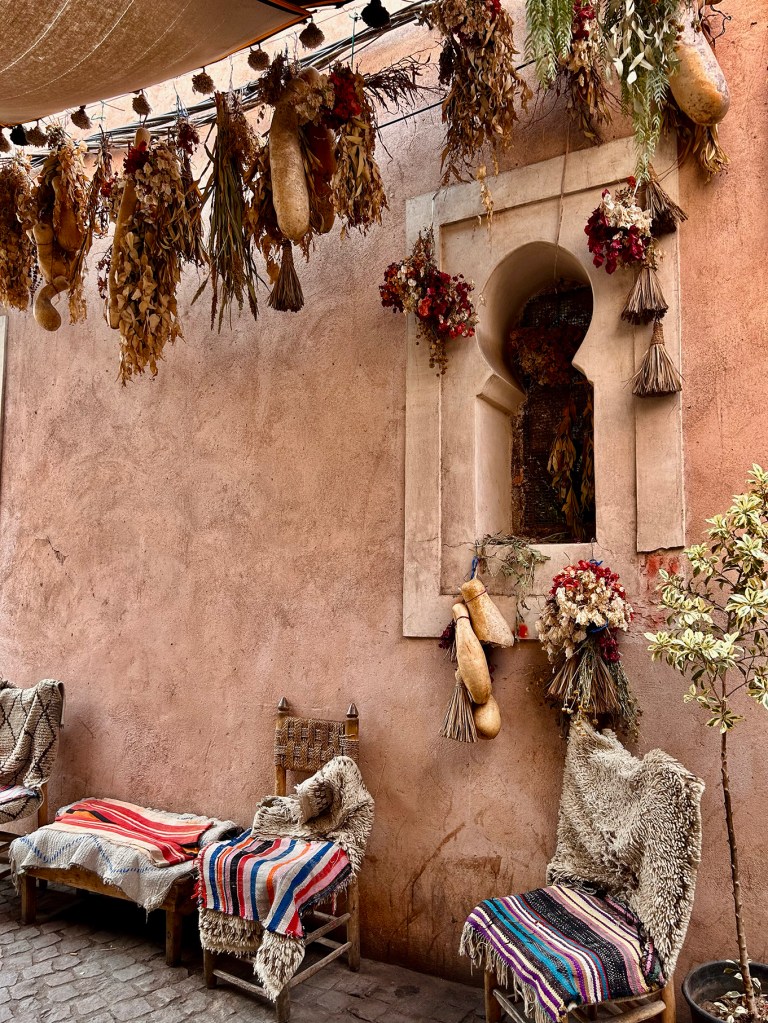
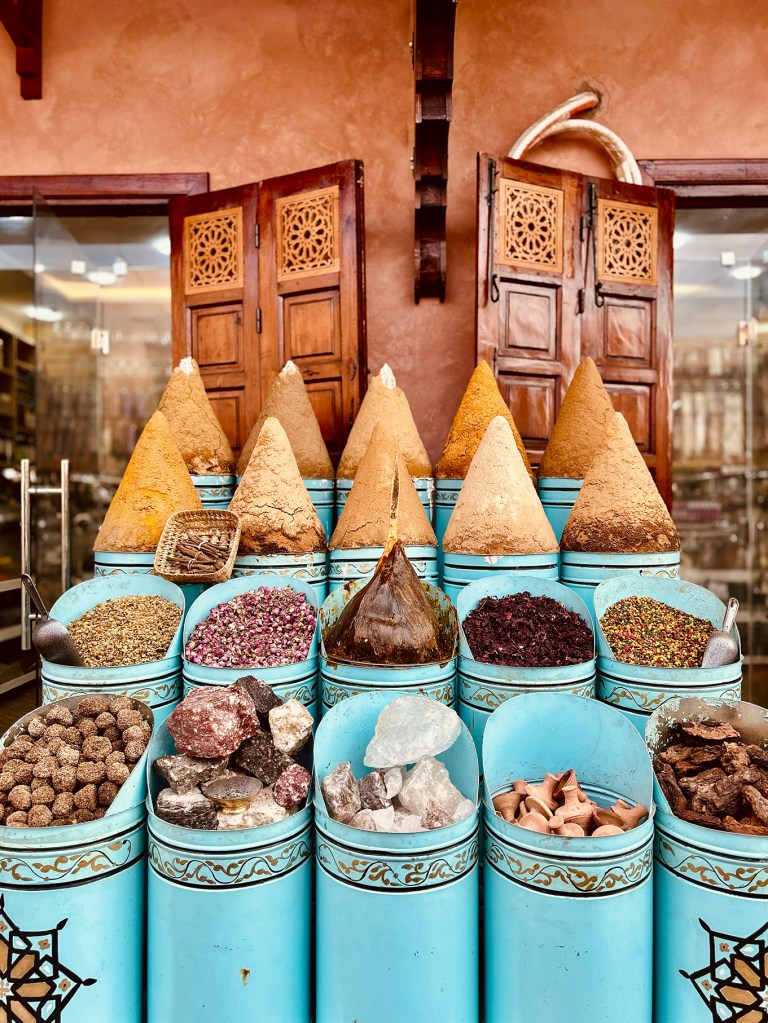
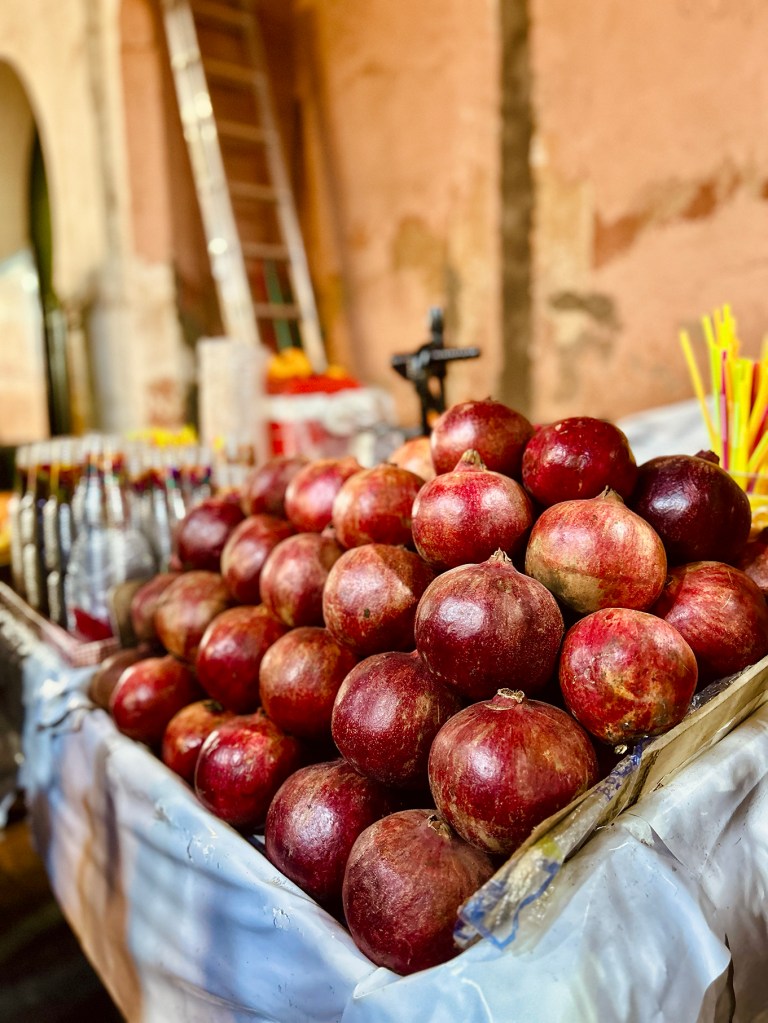
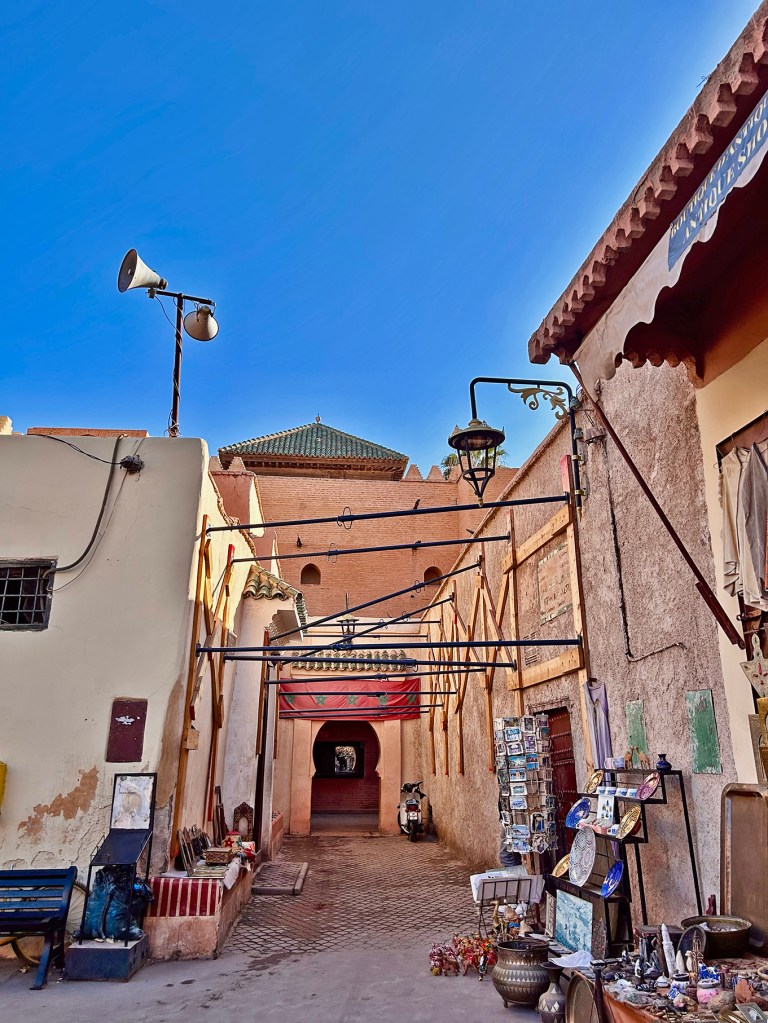
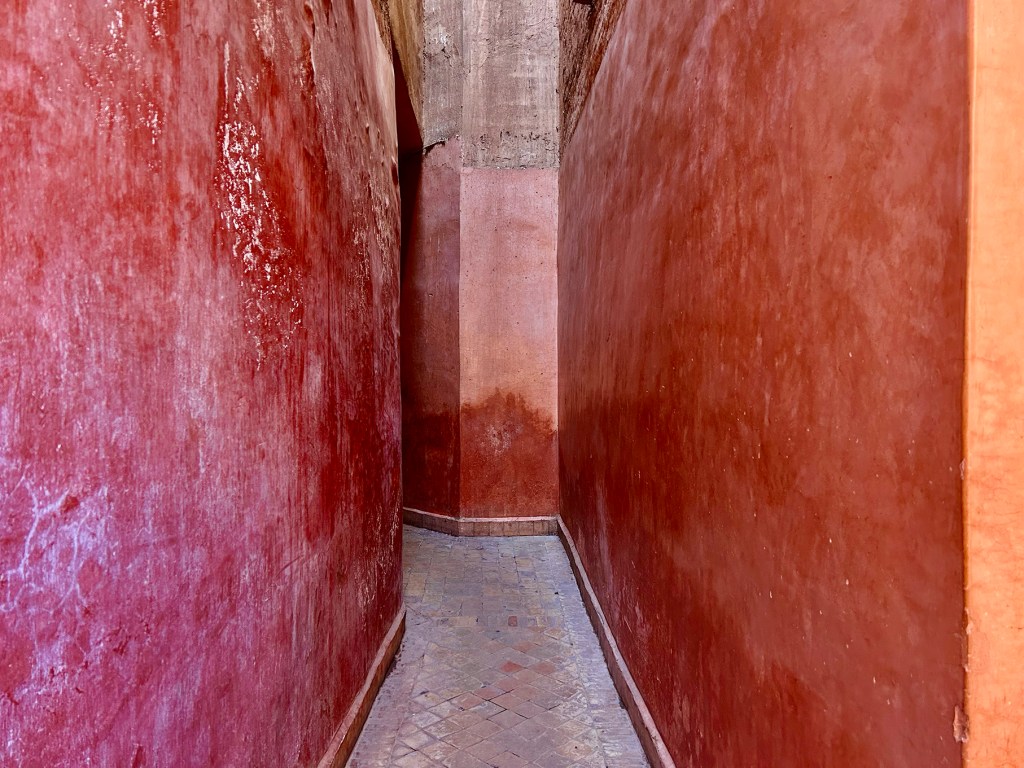
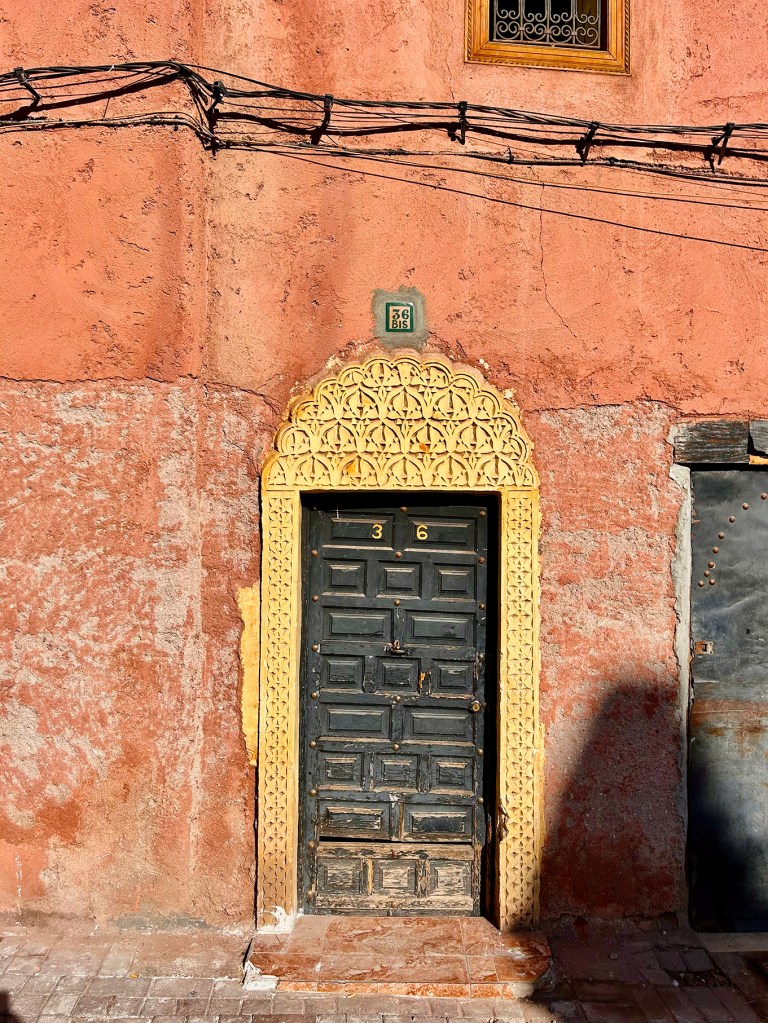
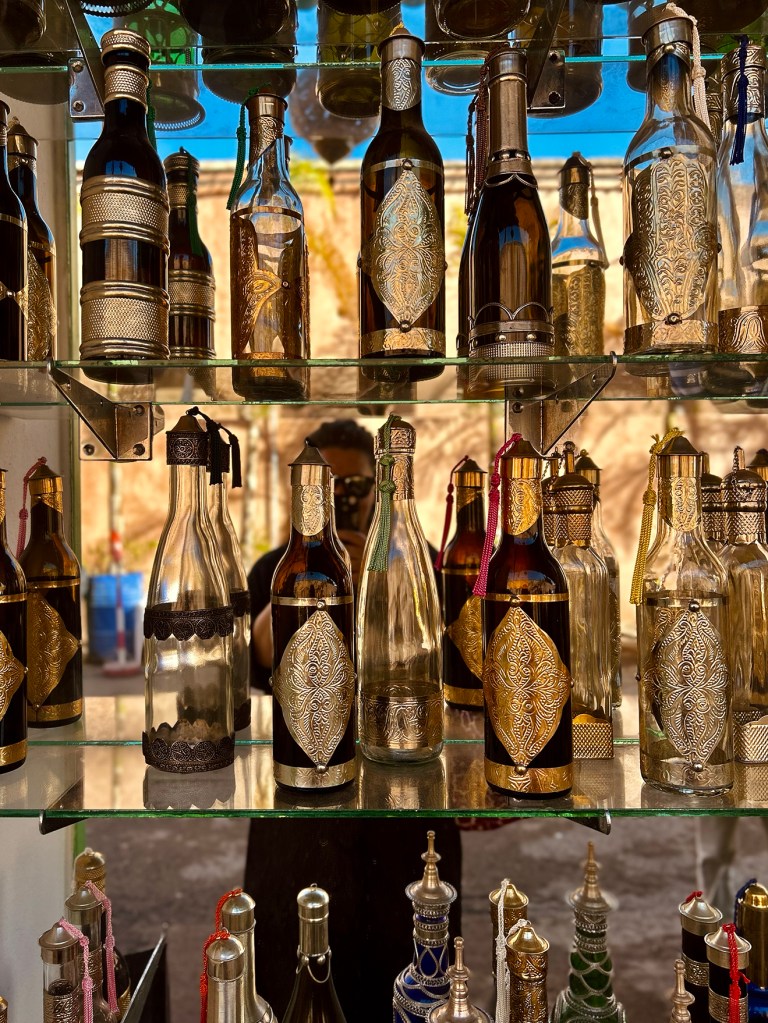
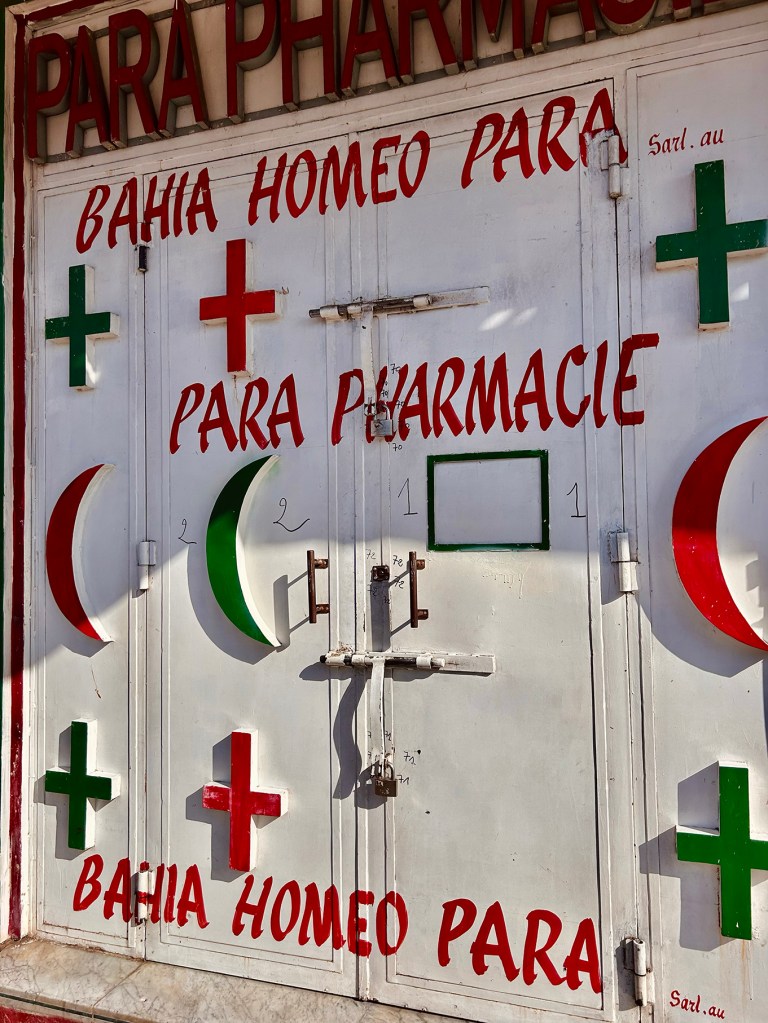
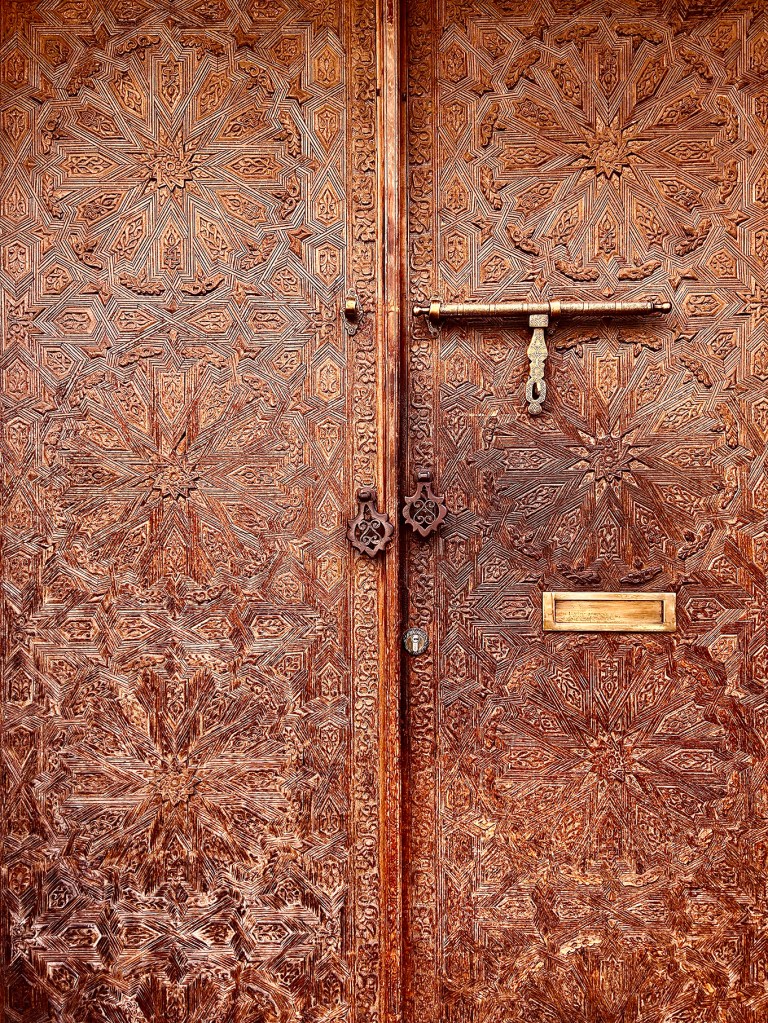
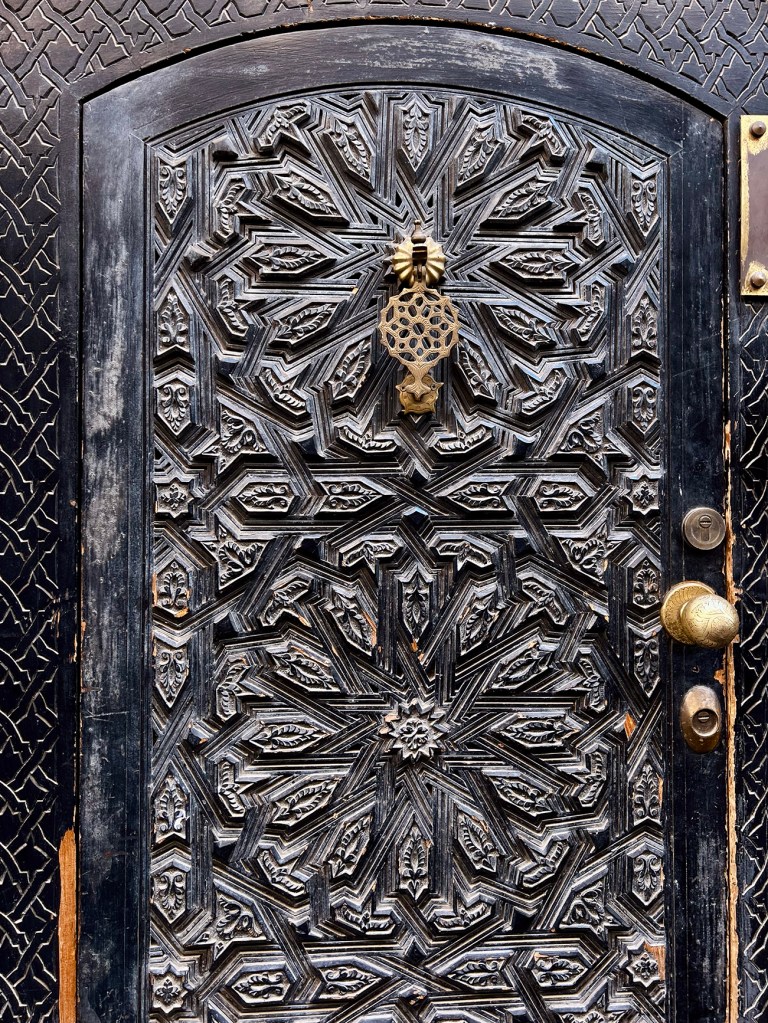
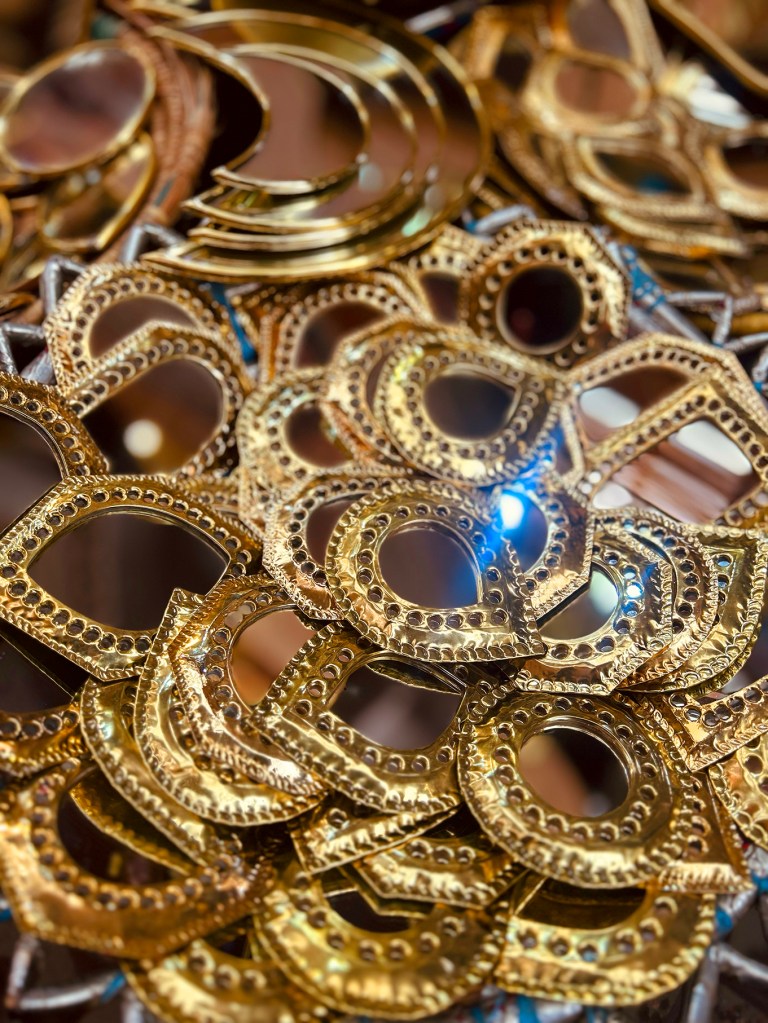
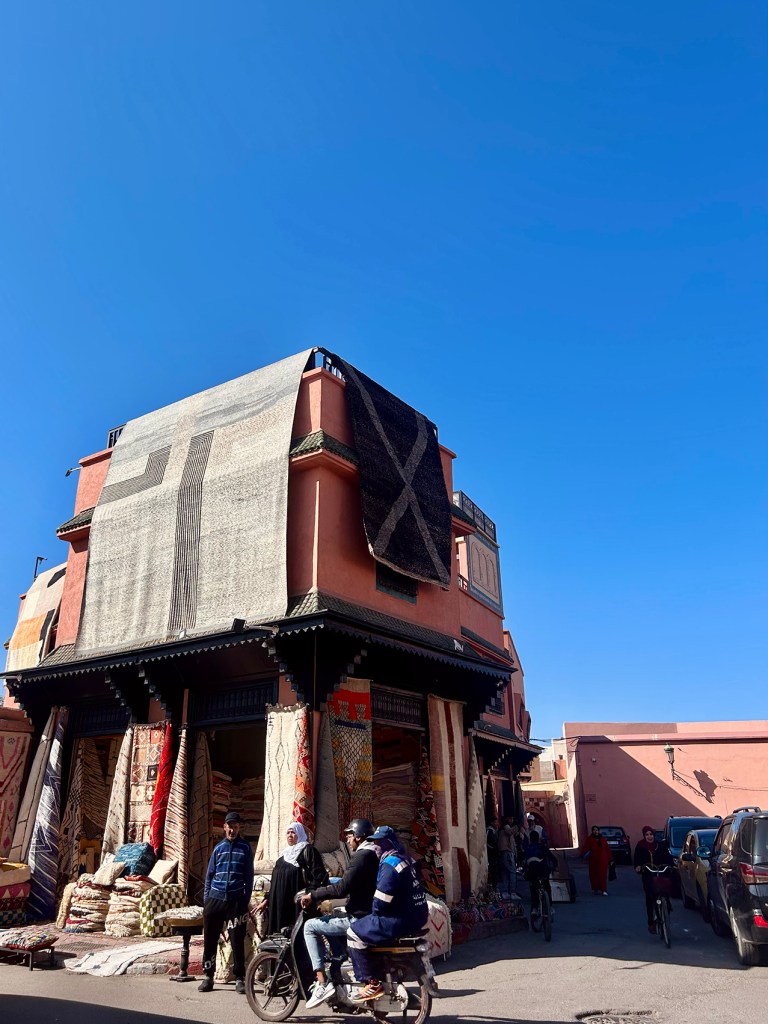
The Medina of Marrakech is a UNESCO World Heritage site and, as I’m sure you can imagine, a maze of alleyways. The souks within it are divided into sections: leather goods in one area, spices in another, textiles in another, although with the growing tourism that supports this economy, it’s become more of “everything everywhere”. If you want a thousand magnets, you will easily find a thousand magnets. If you want bags, shoes, necklaces, carpets, sparkly trinkets, pillowcases, wooden boxes, ivory chess boards – the souks have got everything. And if you’re still not satisfied, you can even splurge on carved doors, golden bathtubs, lamps galore and life-size equestrian statues. I’m not joking, check out the photos!
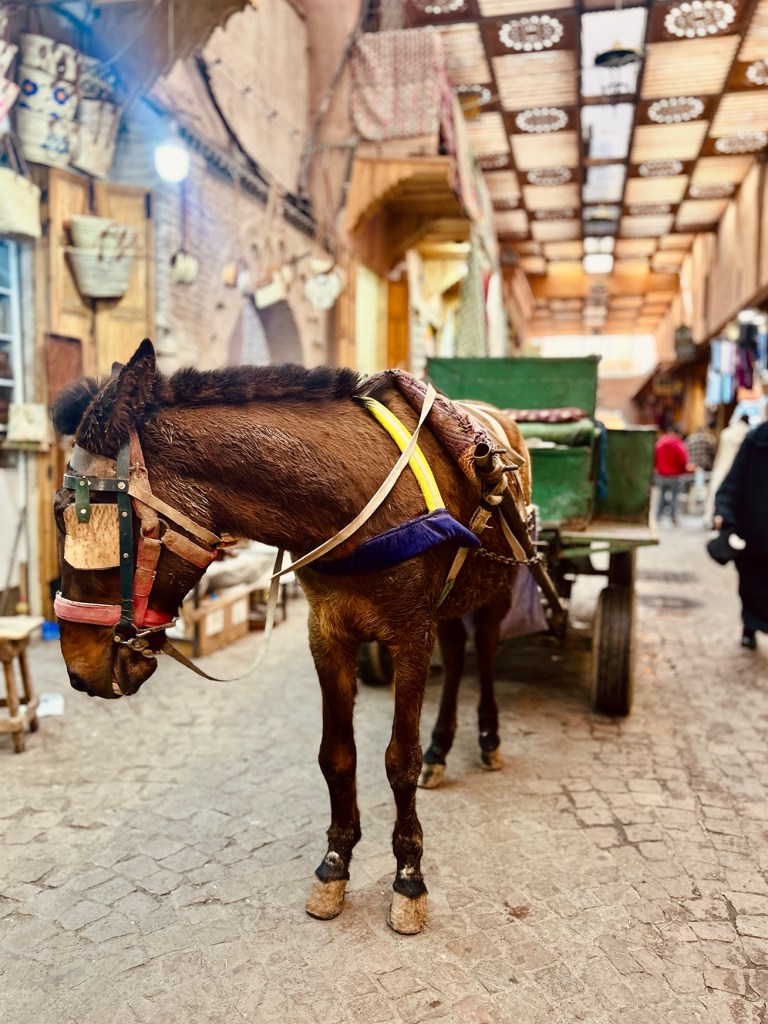
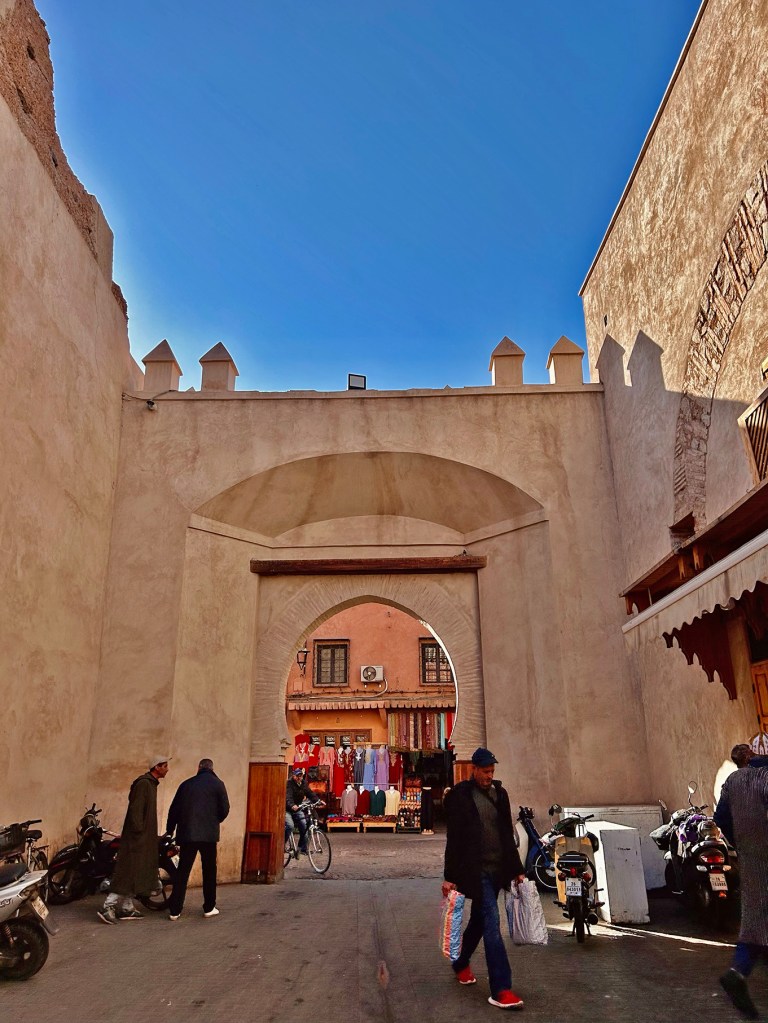
Getting lost here is a given; just like in Fes and Chefchaouen, all map apps struggle to cope and there is understandably no street view. The thing with medinas is that you look at your map and one establishment appears to be in one place. Then you arrive and discover that it’s most probably on top of another establishment and the door is actually on the other side, so more often than not, you have to find your way through another souk to get there. You’ll encounter artisan workshops where craftsmen hammer metal, dye fabrics, or carve wood. Haggling is expected, and even if you don’t buy anything, the colours, smells, and energy are unforgettable. A salesman will as always start with an absurd price and if you really like the stuff, you’re going to have to deal with that. I’m uncomfortable with haggling, but I did manage to get a beautifully decorated thermos for half the price that one vendor was asking. Traffic jams with donkeys and mules or speedy Moroccans on mopeds are part of the experience, and if you don’t say hello to all the cats, what is the point of your life?

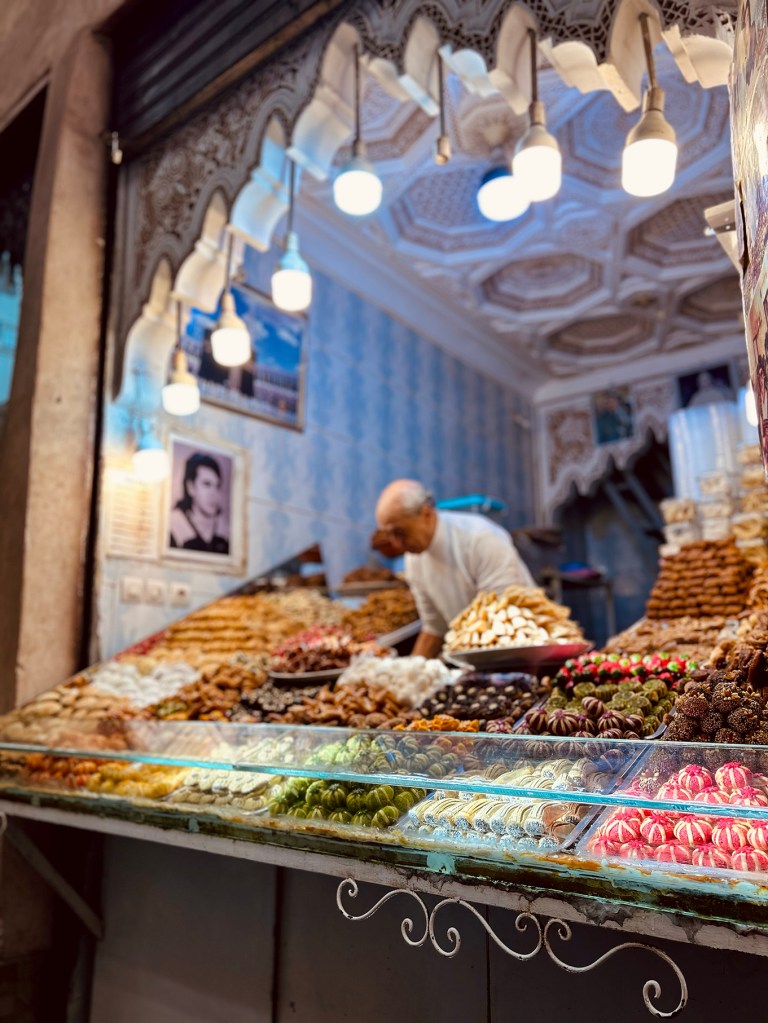

6. Jardin Majorelle
This botanical garden was created by French painter Jacques Majorelle, whose name would be given to the characteristic vibrant blue color that is used in the garden and house. It was later purchased and restored by Yves Saint Laurent, who owned it together with his partner Pierre Bergé. It’s quite extraordinary that they resided here, given that in Morocco being gay is not okay. It’s so not okay that it’s been criminalised since the 1960s and any sort of homosexual activity can lead to imprisonment. Despite the legal status, there has apparently been a historical trend of tolerance in more progressive cities, where queer communities and artistic expression have flourished. As I understand, Yves Saint Laurent was famously private in Morocco. He stated that he was a VIP in Paris, but in Morocco, “people did not know him and he was never approached in the street”. This suggests that while living there, he and Bergé were not widely known to the general public, which would have reduced the potential for public scrutiny or widespread opinion on their relationship. Morocco, especially Marrakech, was also a place of inspiration for Saint Laurent, who was captivated by the country’s colours and light. The couple owned the villa until the designer’s death in 2008.
Its vivid cobalt blue buildings are iconic, standing out against the greens of cacti, palms, bamboo groves and pools filled with lilies and enormous koi fish. Though it’s often busy, it remains a tranquil escape from the Medina. Ticket prices were a bit steeper than in other attractions, you have to book in advance, you choose a time slot to visit and the route and security are very strict. You can’t just go wherever and however you like, you have to follow the marked trail.
That’s quite pleasing in a way, because otherwise people are chaotic and the amount of posing is absurd. Everyone hijacks every blue corner as if they’ll never again have a background so perfect in their whole lives. It was like every single woman dreamed of Yves Saint Laurent himself returning from the dead to exclaim “There’s my new muse!” upon seeing their photographic efforts against the spectacular backdrop. Needless to say, a majority could only deliver a mediocre effort, because, surprise surprise, a majority of us are not models.
I asked a group of girls if anyone could take a photo of me. Before I knew it, my temporary photographer was coaching me into modern influencer poses and said “Maybe you shouldn’t show your big camera.” That’s 100% where she lost me, because I’d much rather take a photo where I’m showing a proper tool that I actually know how to use; zero interest in showing my derrière in a ridiculous and inappropriate way in relation to the place I’m visiting, in the way that soooo much of one’s feed sadly looks nowadays. But hey, one advantage of all these girls looking for aesthetics is that they are able to take decent photos of me. By comparison, the men have not really delivered during this trip.
A small Berber Museum inside the garden highlights traditional culture and crafts. Photos are not allowed inside the Berber rooms, but I can tell you that the garments and objects exhibited are extraordinary. They are of a rare beauty and whoever curated the collection has truly managed to pay wonderful tribute to Berber culture.
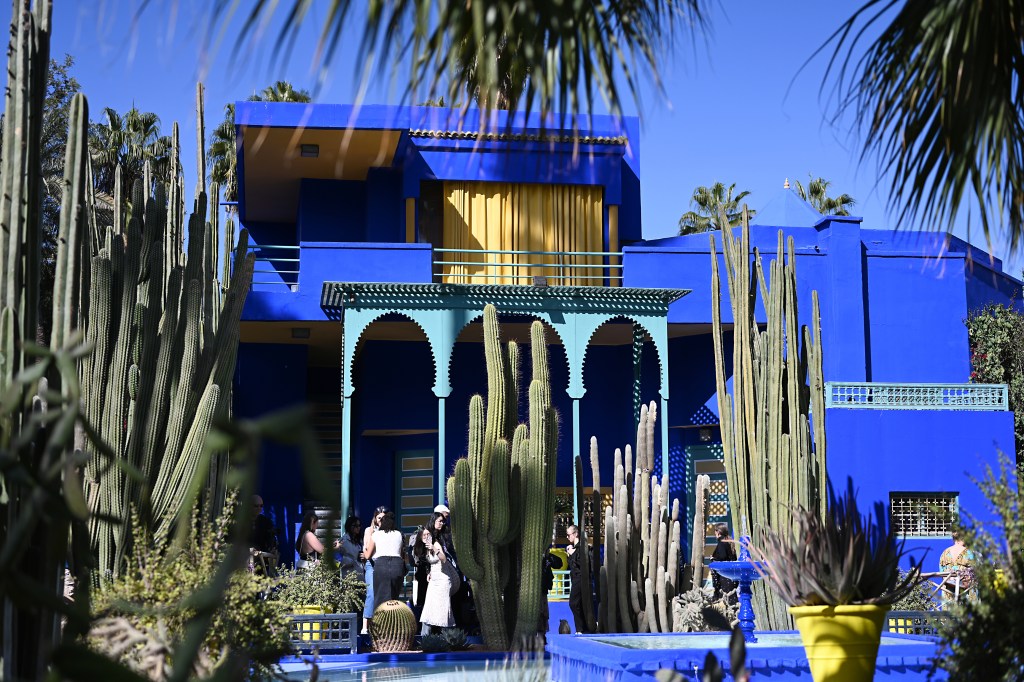
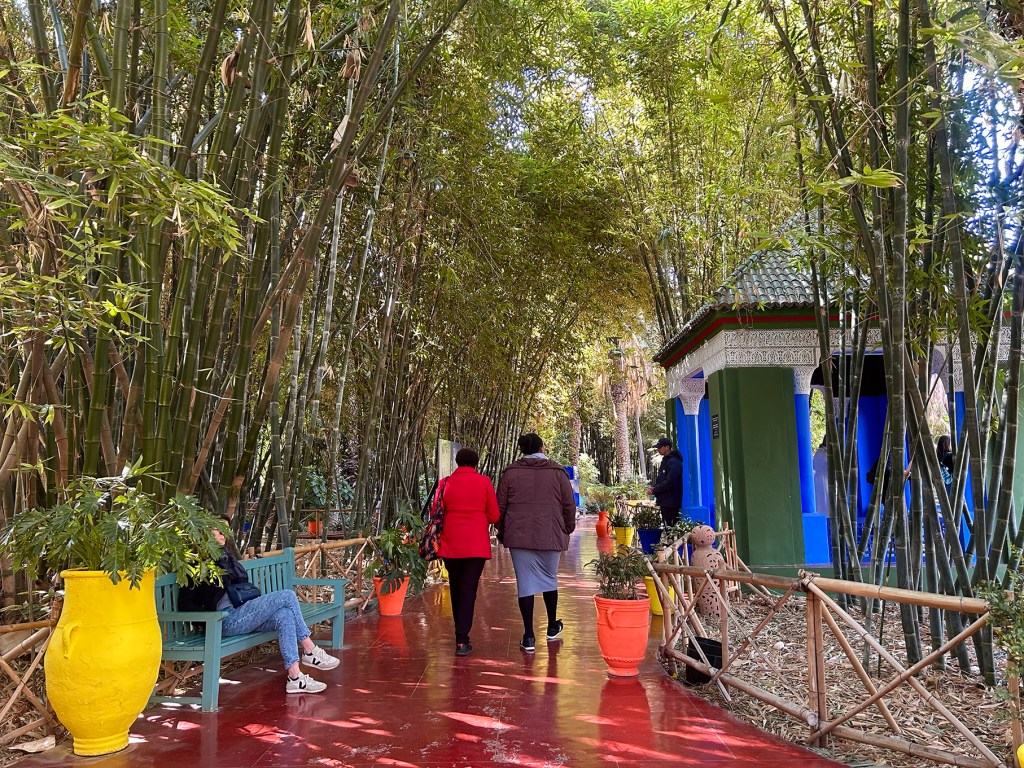
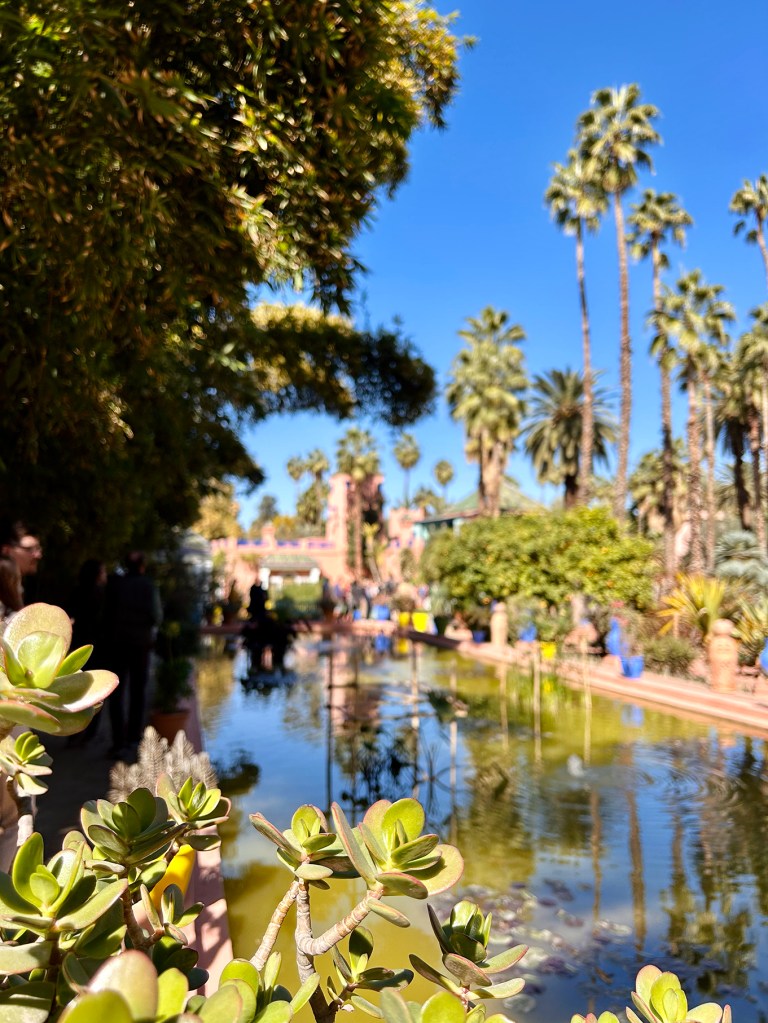
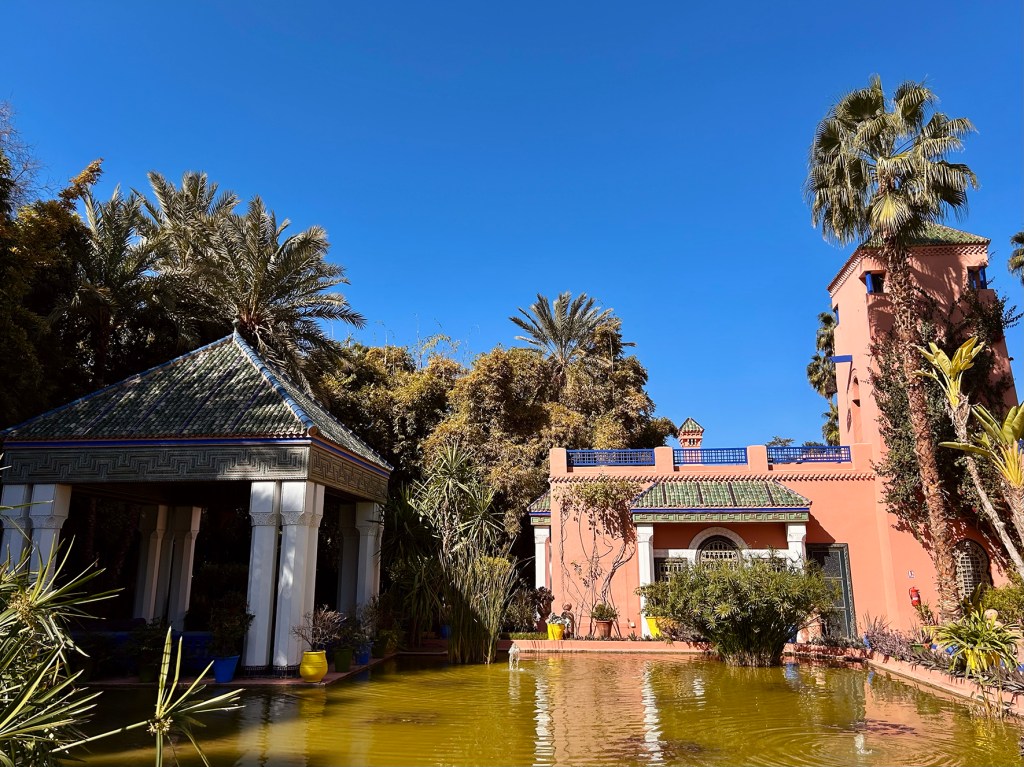
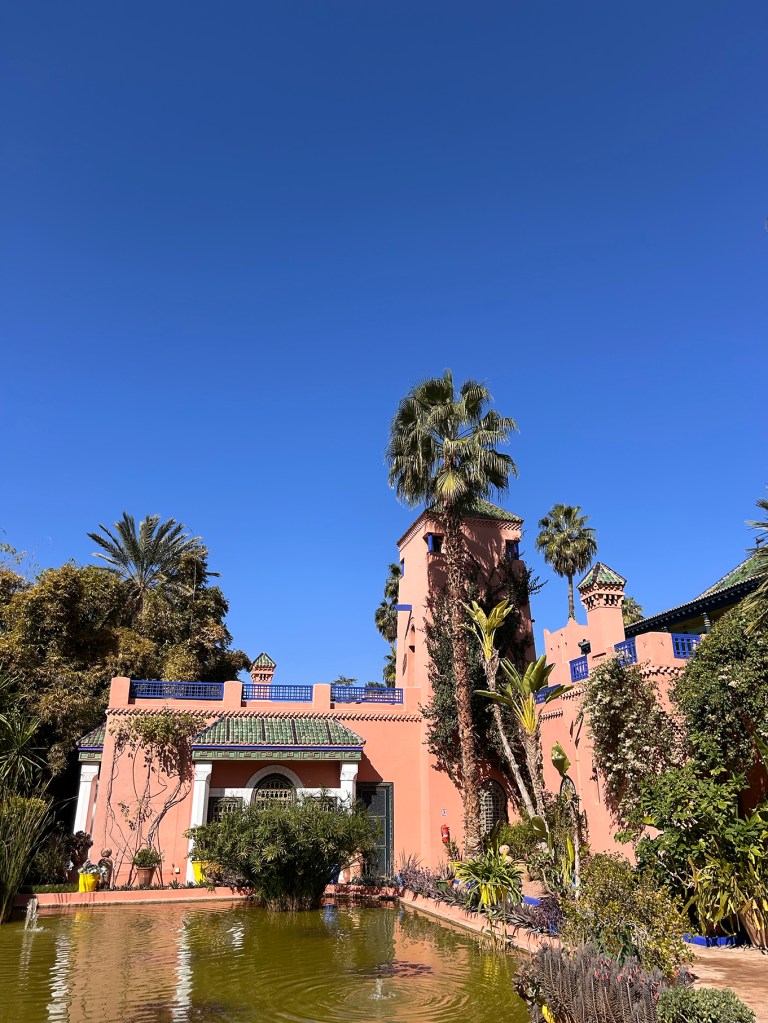
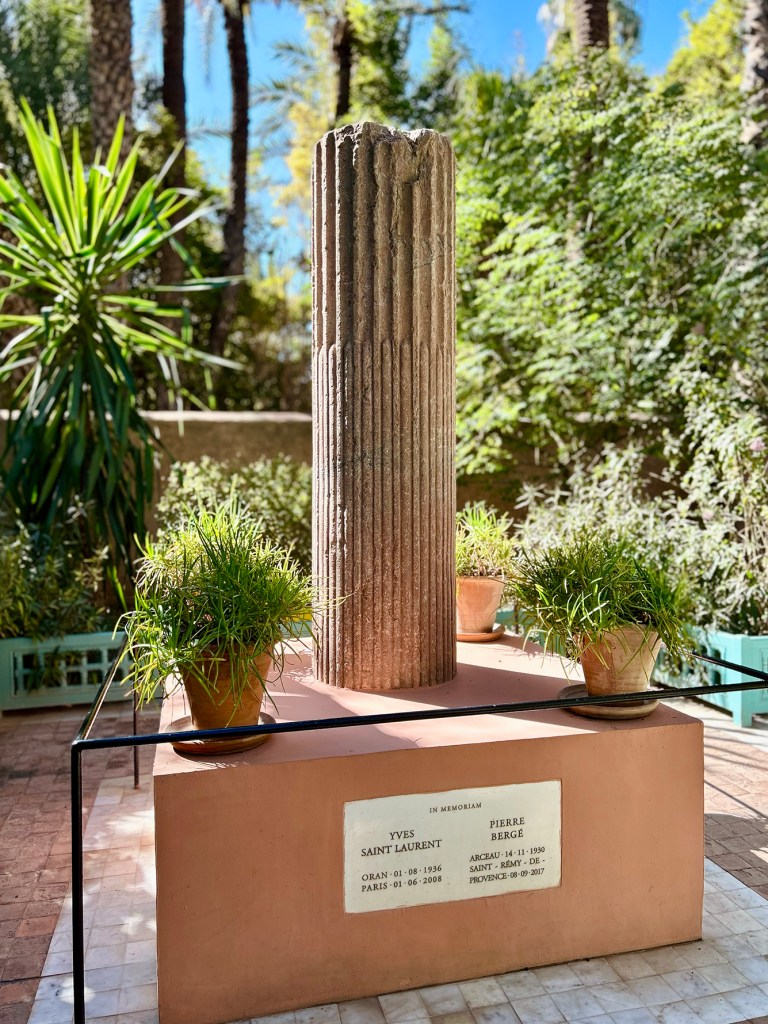
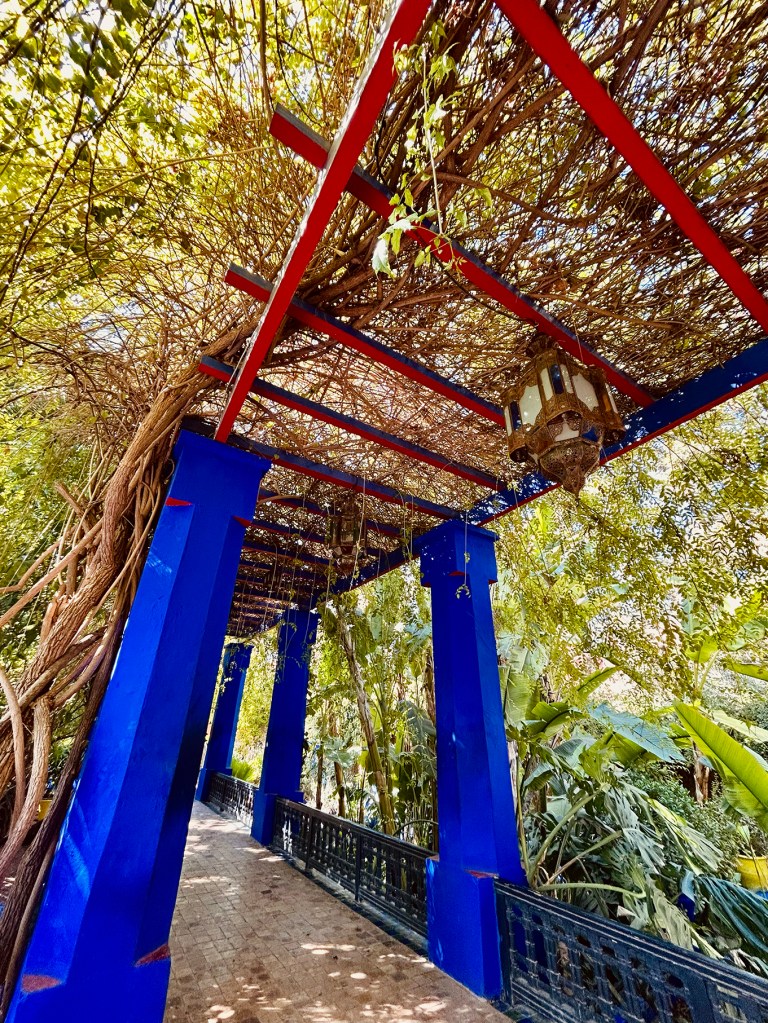
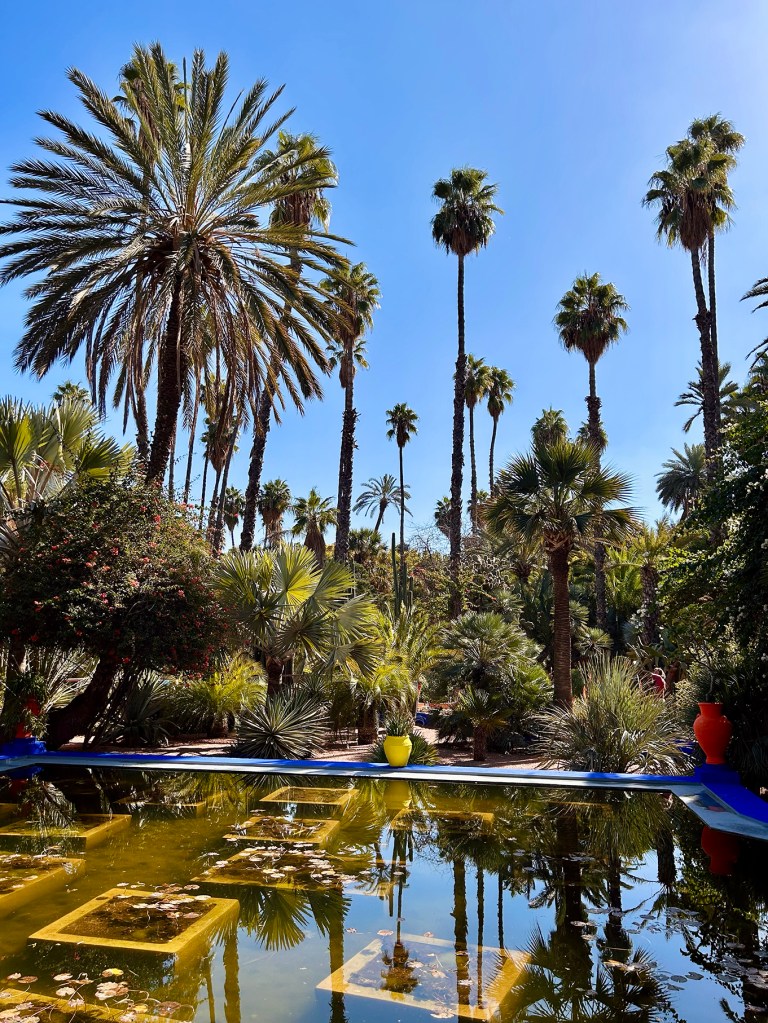
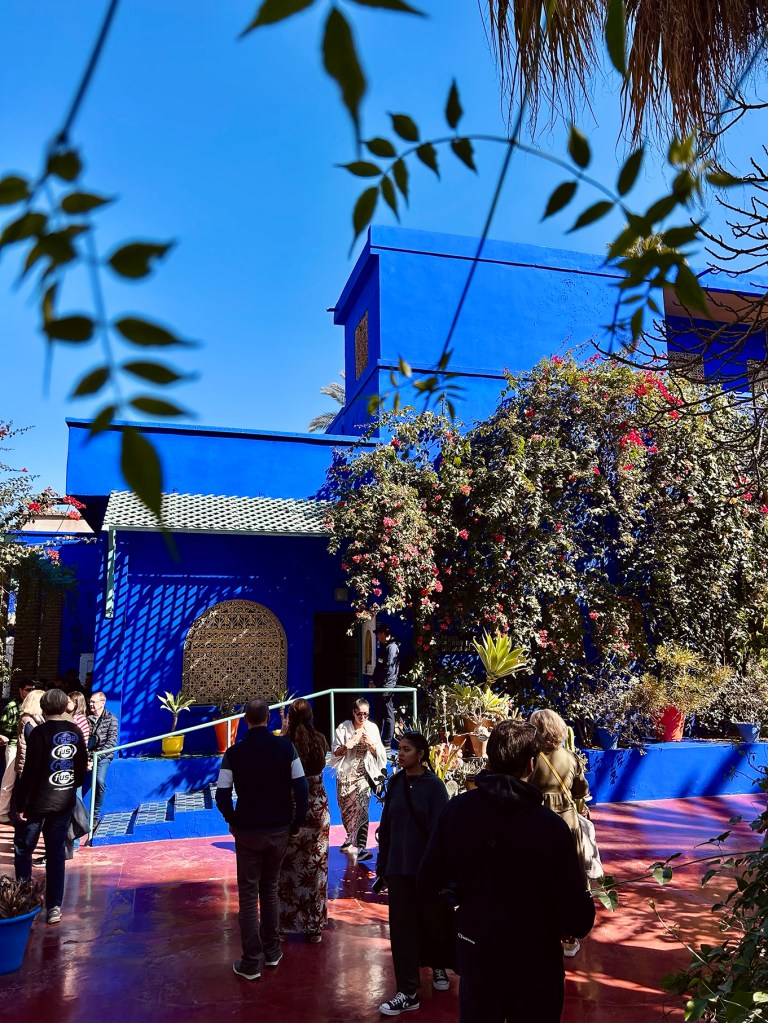

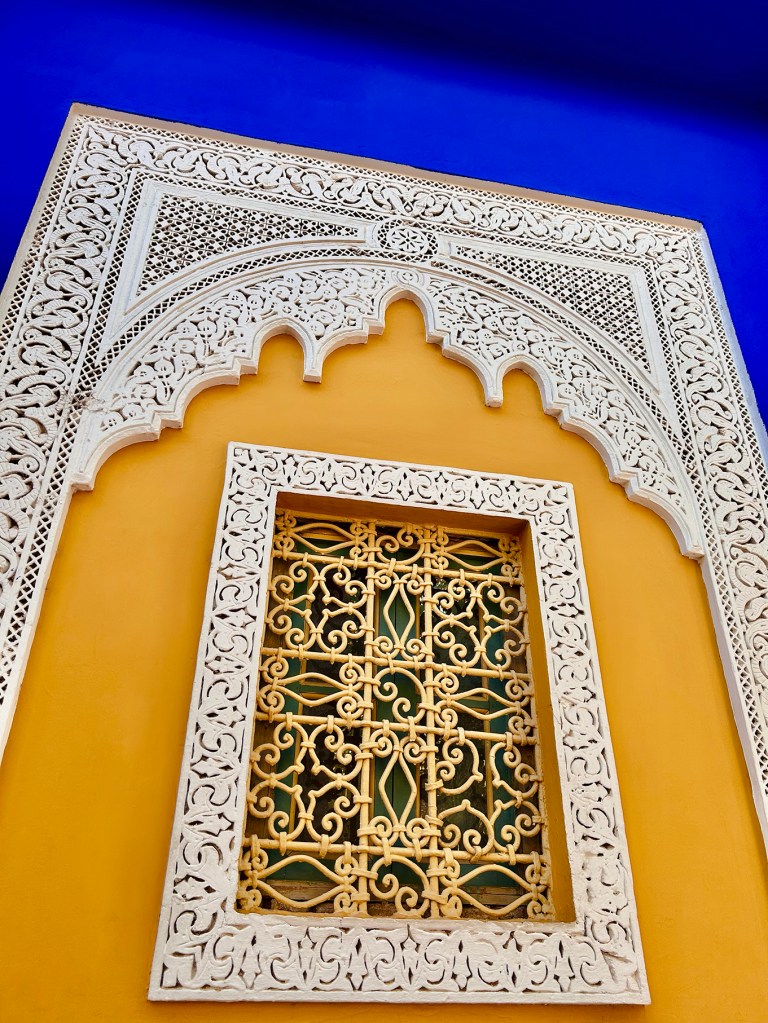
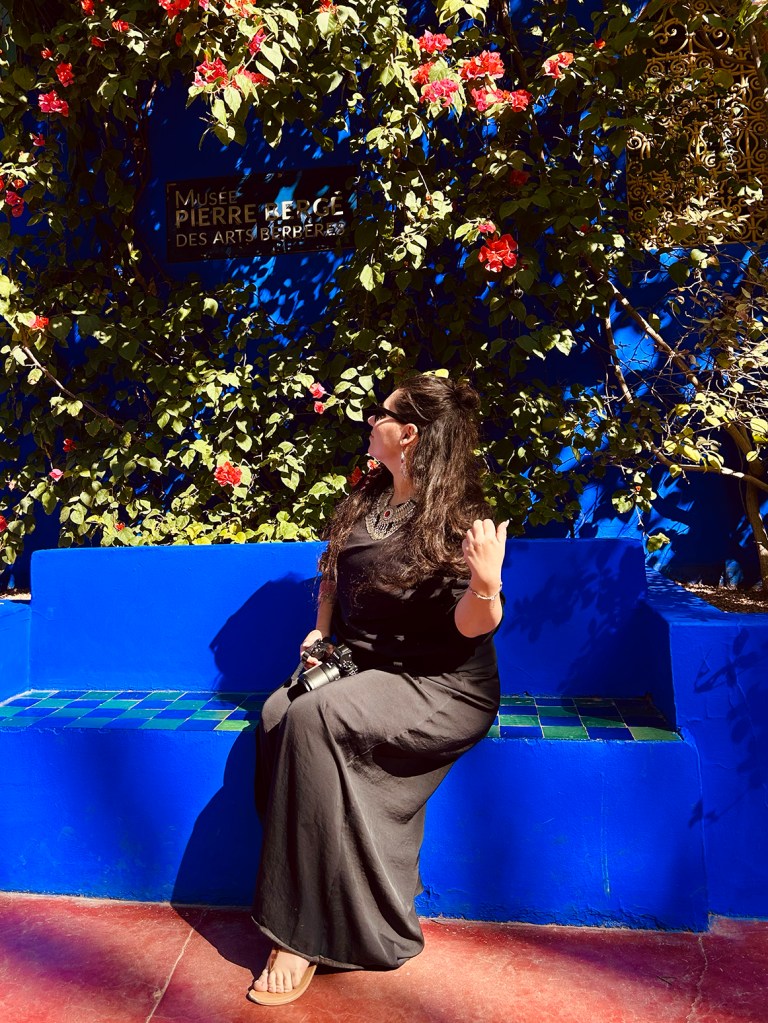
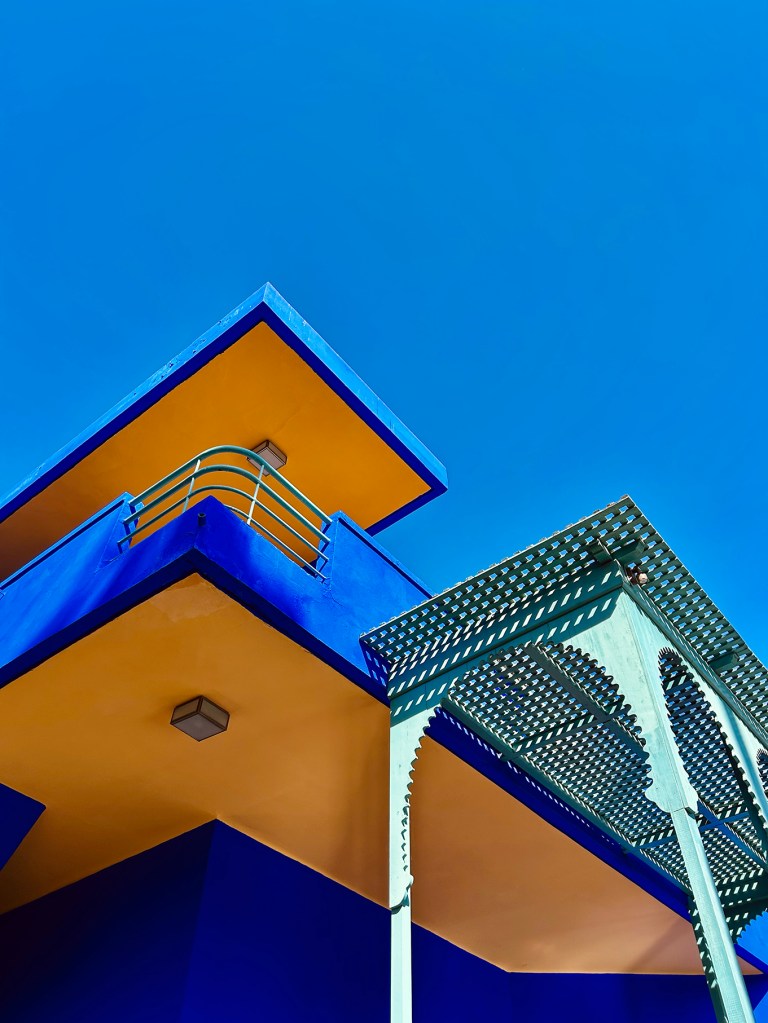
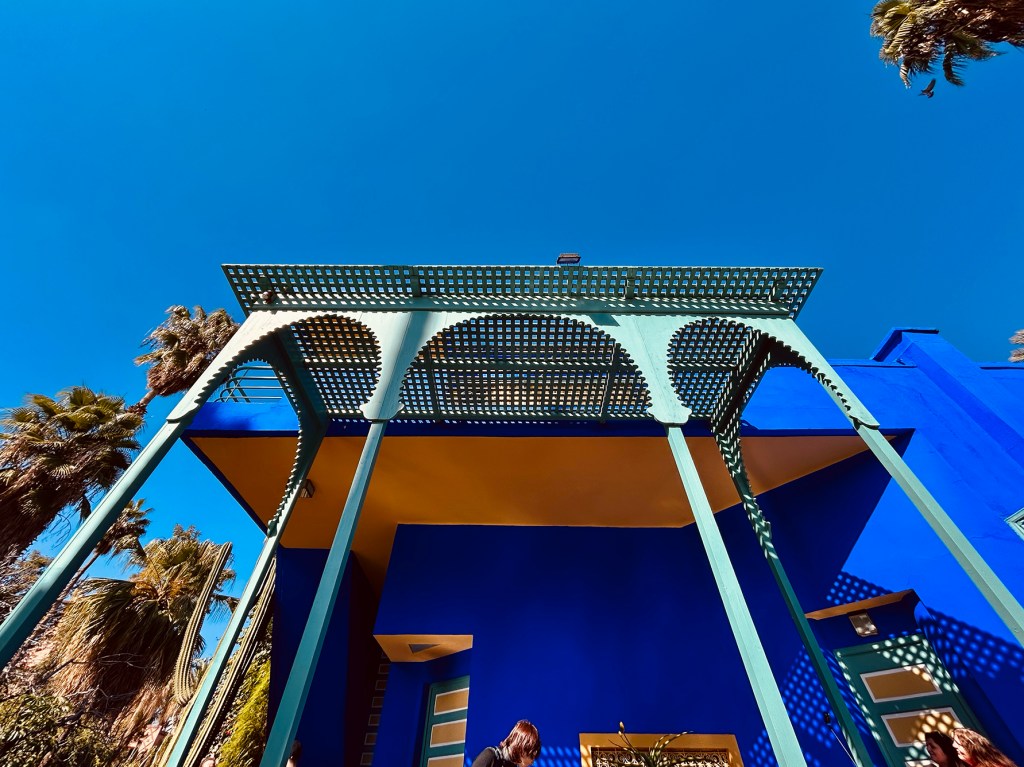
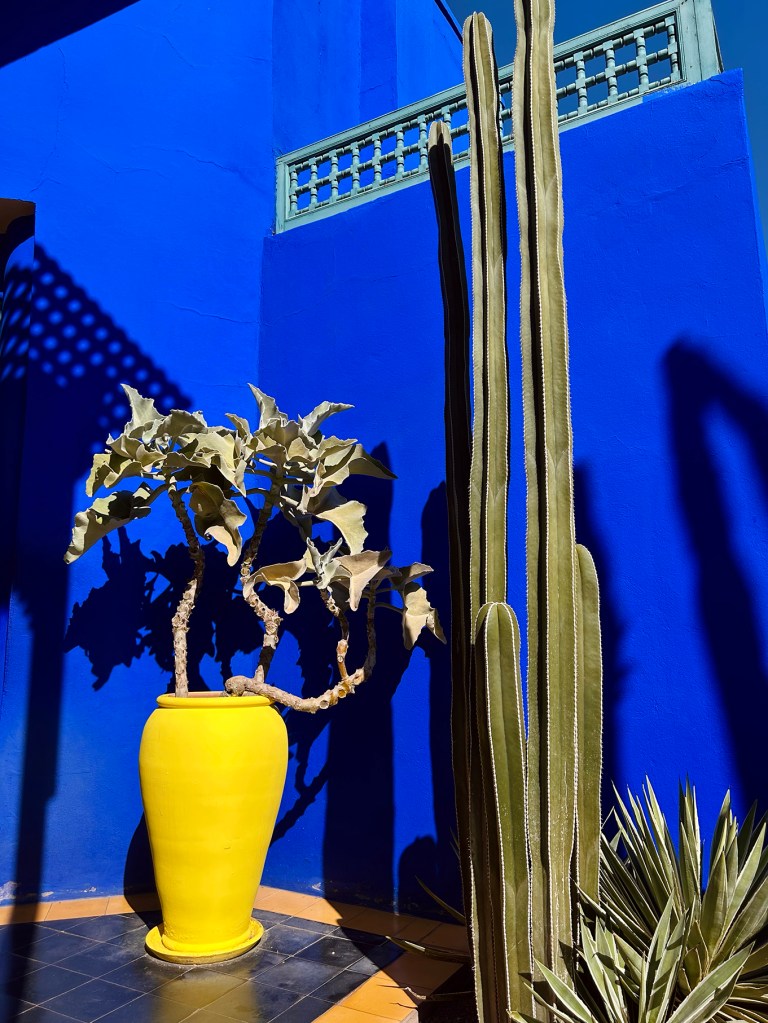

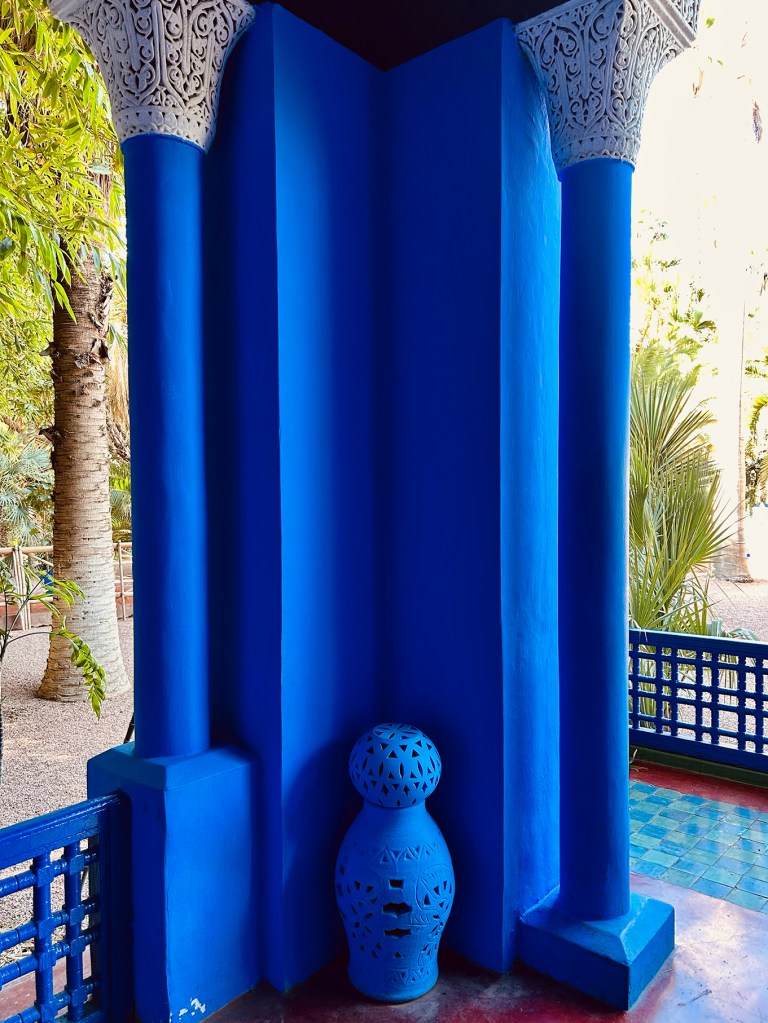
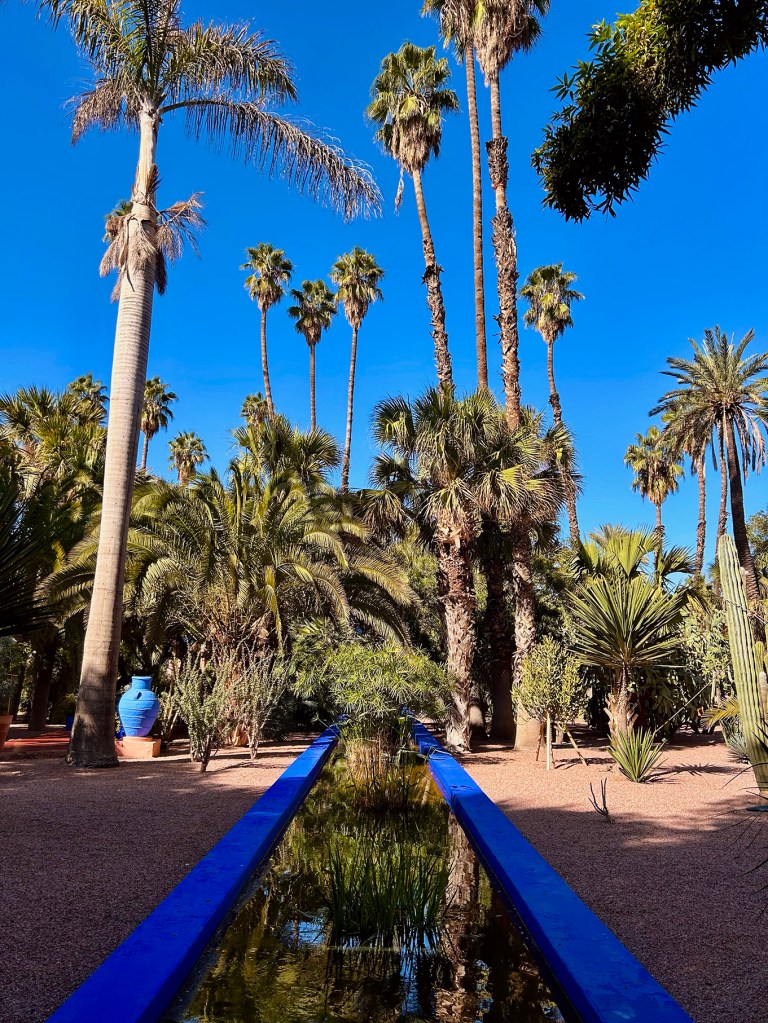
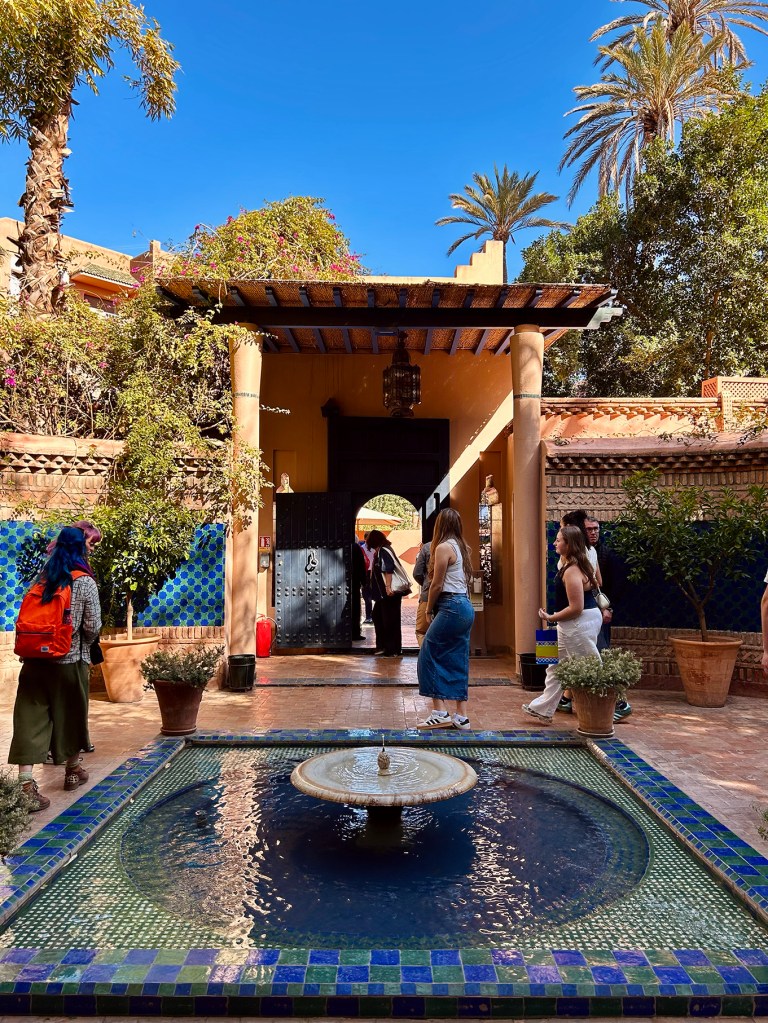
7. Yves Saint Laurent Museum
Next door to Jardin Majorelle, this museum celebrates the fashion designer’s legacy. Its permanent collection includes some of YSL’s most famous haute couture pieces, alongside sketches, photographs, and rotating exhibitions. Even if fashion isn’t your passion, the modern architecture and thoughtful curation make it a worthwhile visit. Photos of the pieces are not allowed, but even here I can confirm that the exhibit has been beautifully curated. And if you are a fan of haute couture and merchandise that comes with it, like coffee table books, quality prints, luxurious totes and scarves – the museum shop here is the right place for you.
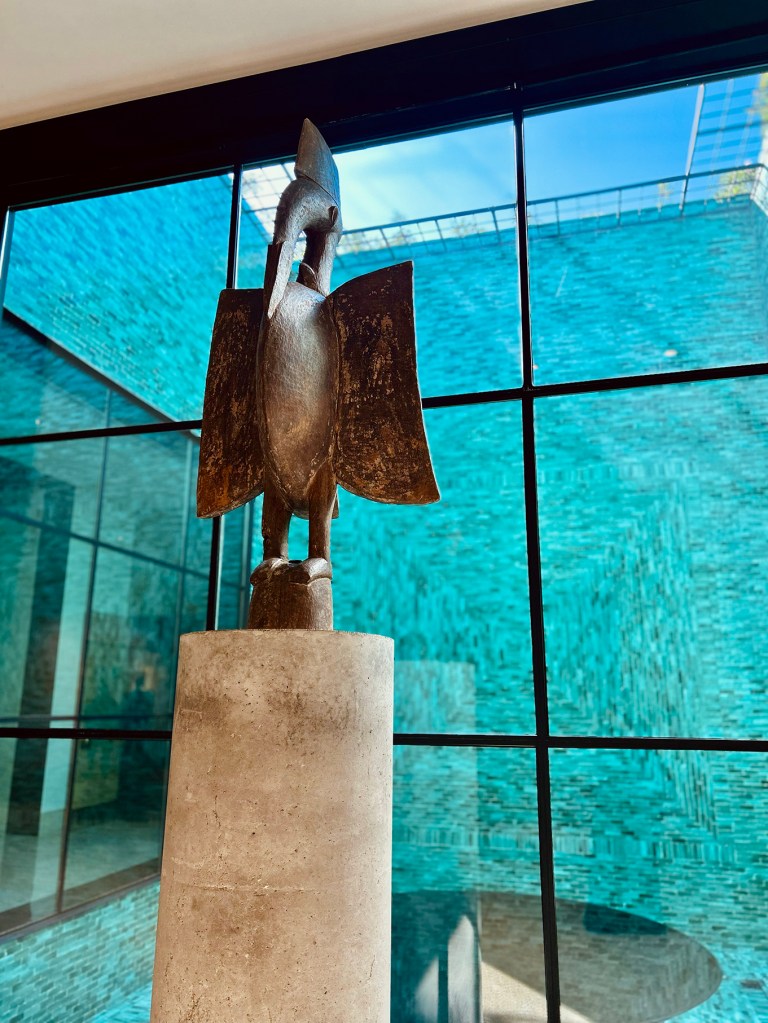
8. Almoravid Qubba
One of the few surviving monuments from the Almoravid dynasty, this is a 12th-century structure who in comparison to other monuments appears small. Nevertheless, it’s historically important. Its domed chamber is decorated with carved arches and intricate motifs, offering insight into Morocco’s earliest Islamic architecture. It’s located near the Ben Youssef Madrasa, making it an easy addition to a walk in the area.
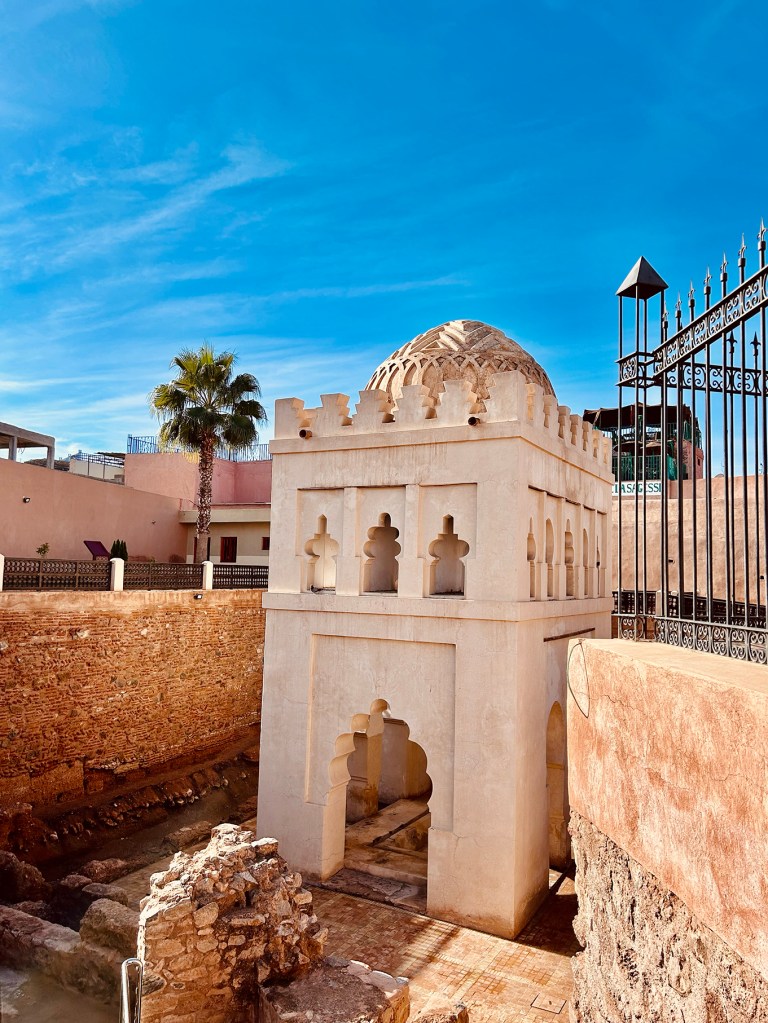
9. The Mellah
Moroccan old towns are traditionally organised around a central medina or kasbah, which often serves as the historic heart of the city. Surrounding the kasbah, neighbourhoods expand organically, with residential areas interwoven with markets and public spaces. In many cities, the mellah – a separate quarter historically designated for Jewish communities – develops nearby, typically enclosed and featuring its own synagogues, schools, and markets, reflecting both social and cultural distinctions within the urban fabric.
The Mellah is Marrakech’s historic Jewish quarter, established in the 16th century. Walking its narrow streets offers a slightly different perspective from the rest of the Medina, and synagogues like Lazama and Bitoun are places of cultural memory. Nearby, the Miâara Cemetery is the largest Jewish cemetery in Morocco, with thousands of whitewashed tombs stretching into the distance.
Locals told me that this is the place for getting the best spices and there’s a weekly market. I can’t say if the advice maybe came from those actually in the spice trade, like a bit of shameless advertising, but there were absolutely a lot of shops selling piles and piles of powder and leaves and petals and corns, many of them beautifully exhibited out in the street.
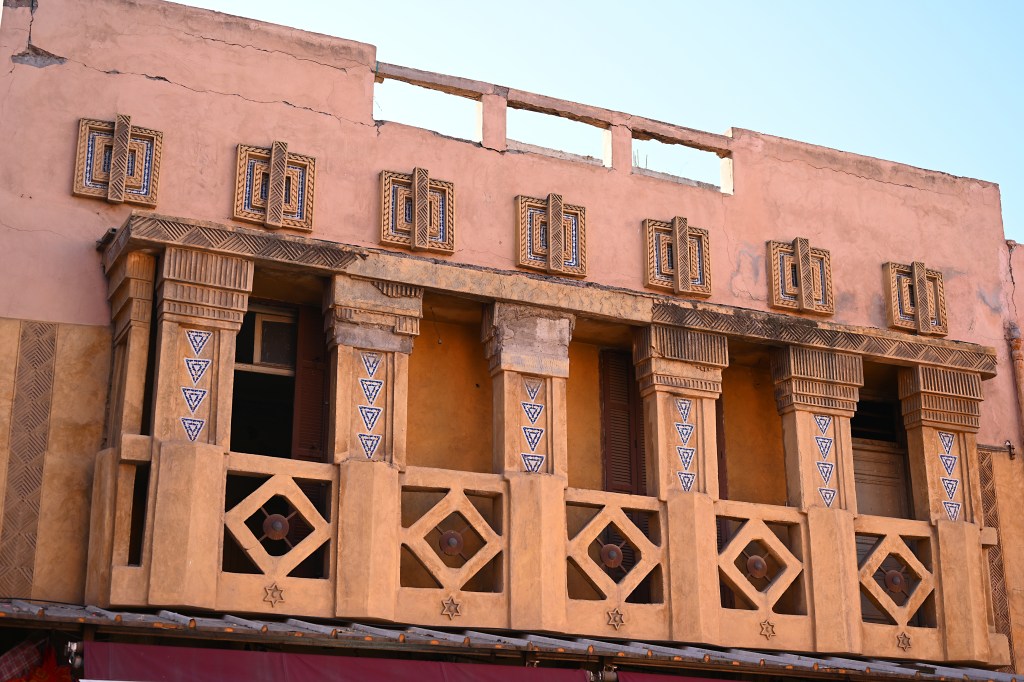
10. Le Jardin Secret
Hidden within the Medina, Le Jardin Secret is a beautifully restored palace complex that recently opened to the public. It features two contrasting gardens: an Islamic garden designed around symmetry and flowing water, and an exotic garden filled with plants from around the world. Traditional irrigation systems are on display, and visitors can climb the tower for sweeping views over the rooftops of Marrakech.
This is also a popular backdrop for mediocre tourist poses and I admit to contributing to the statistics.
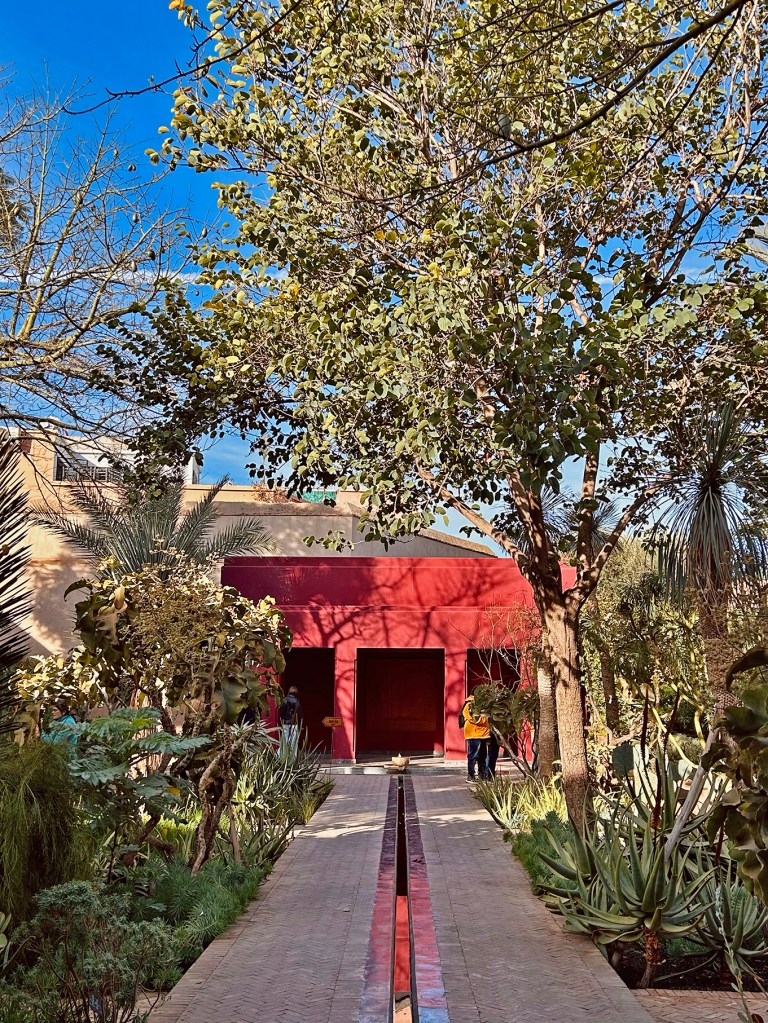
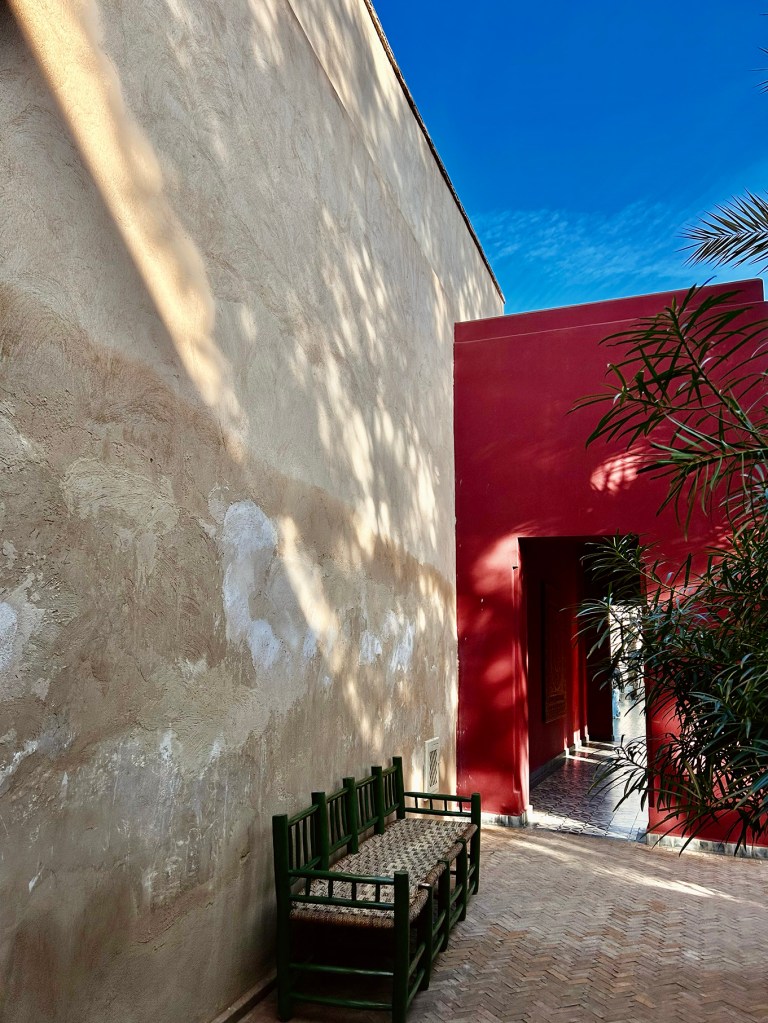
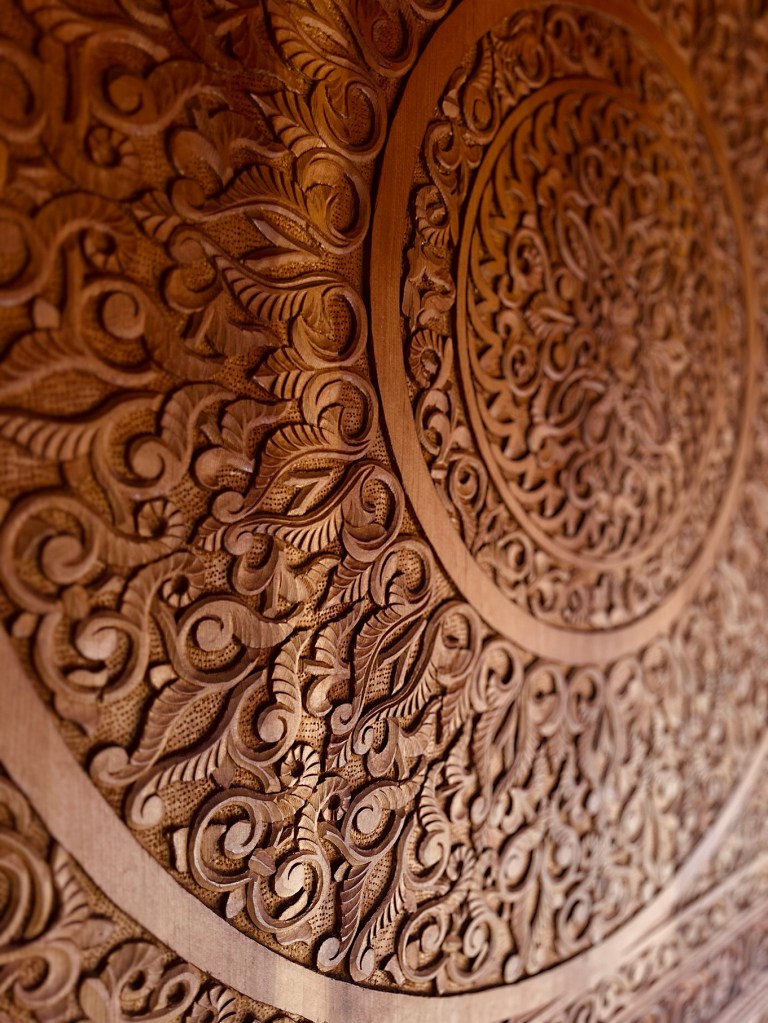
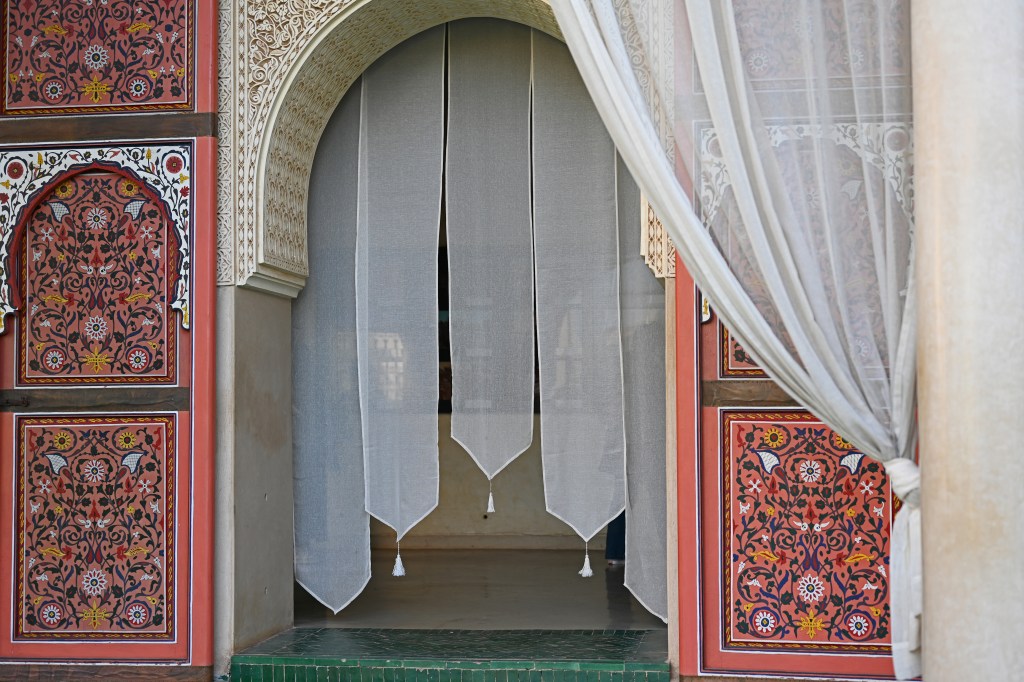
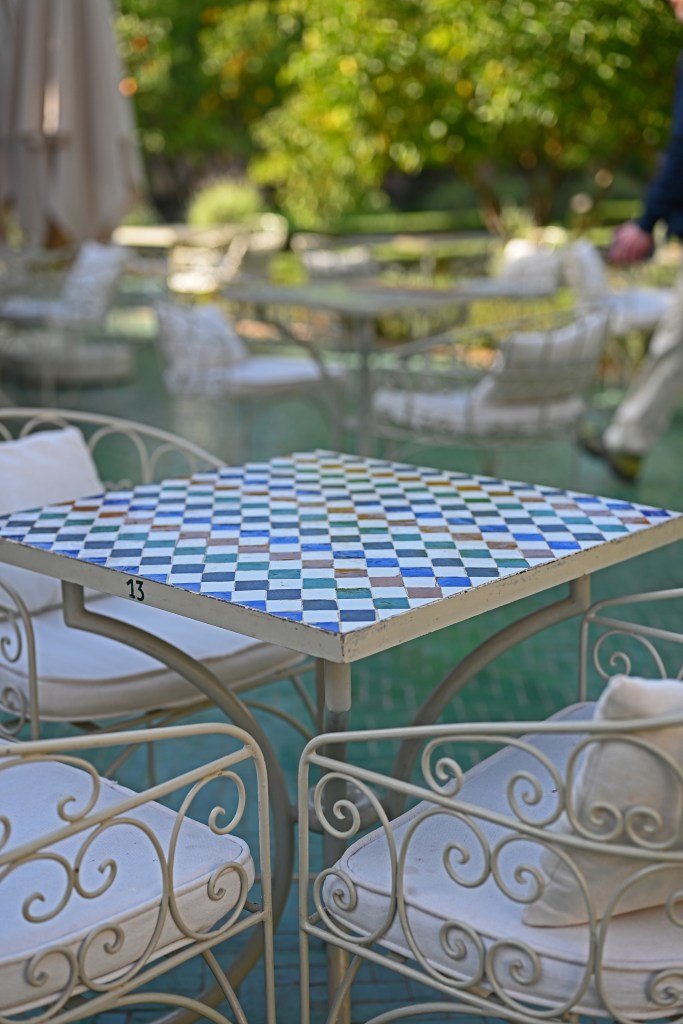
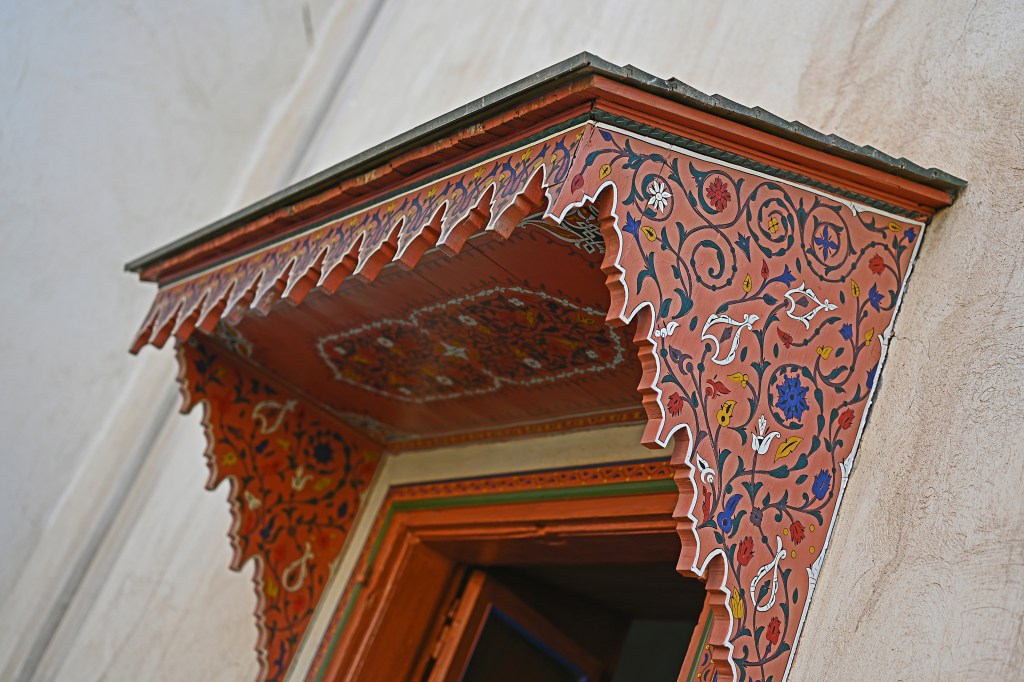

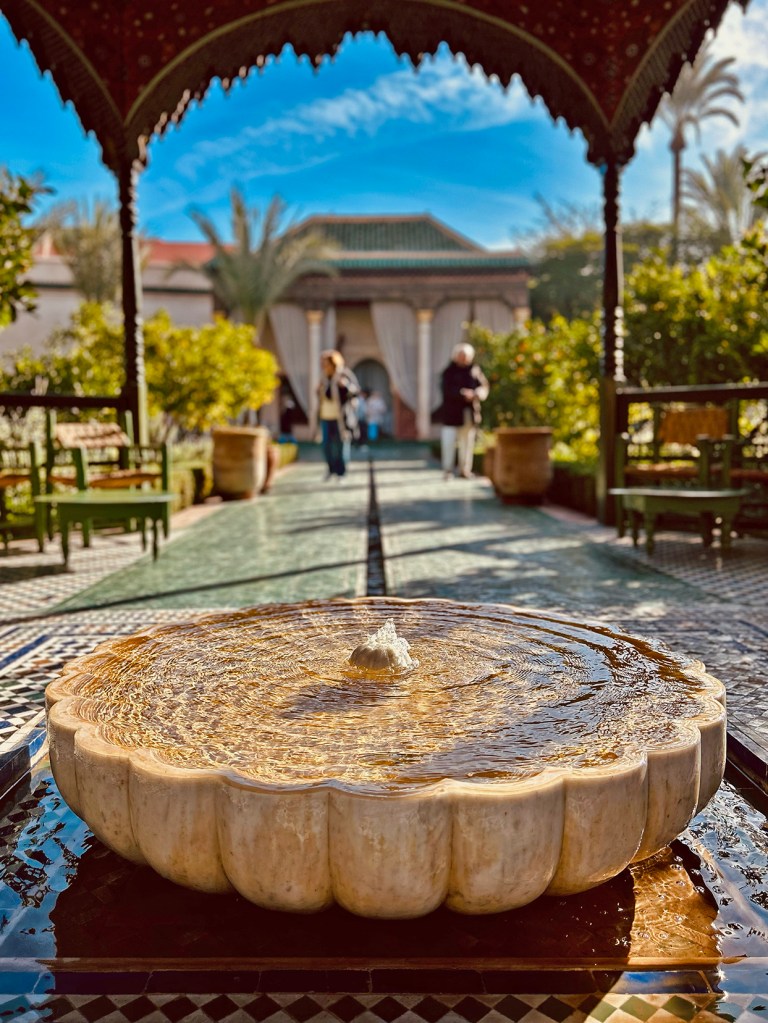
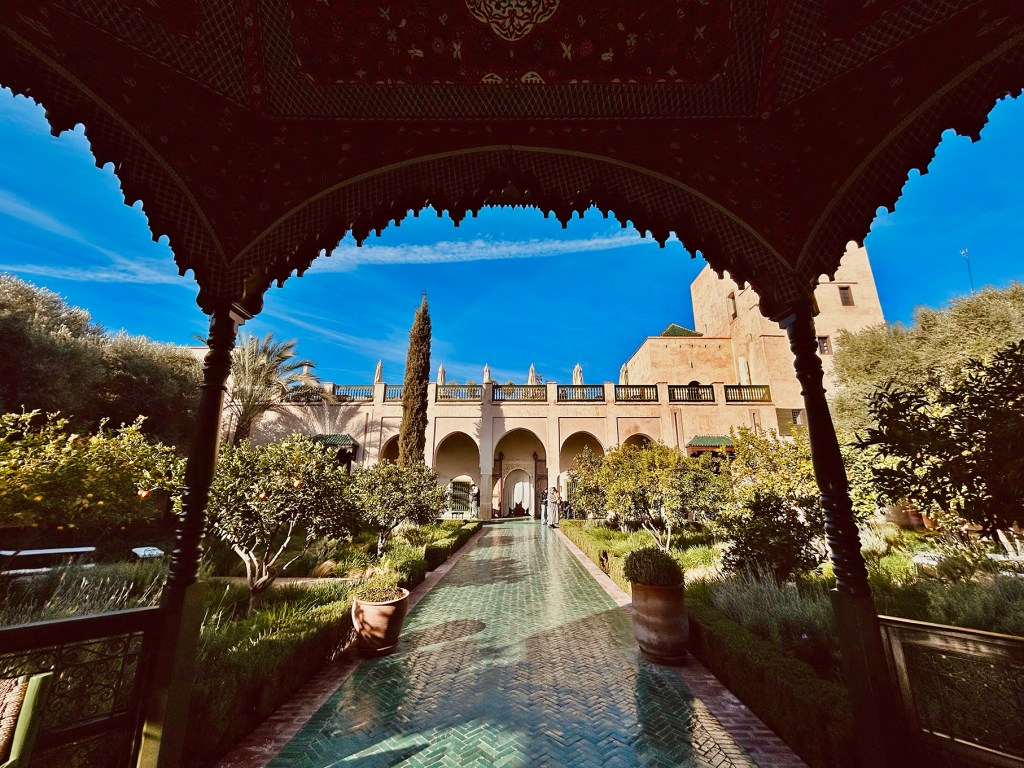
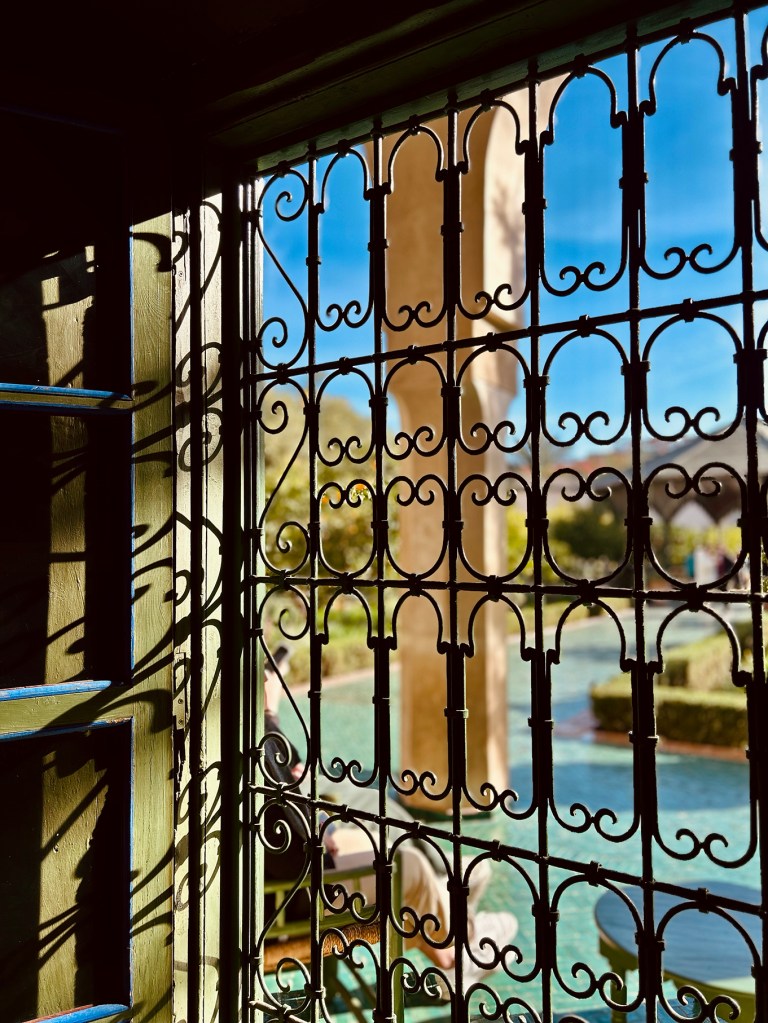
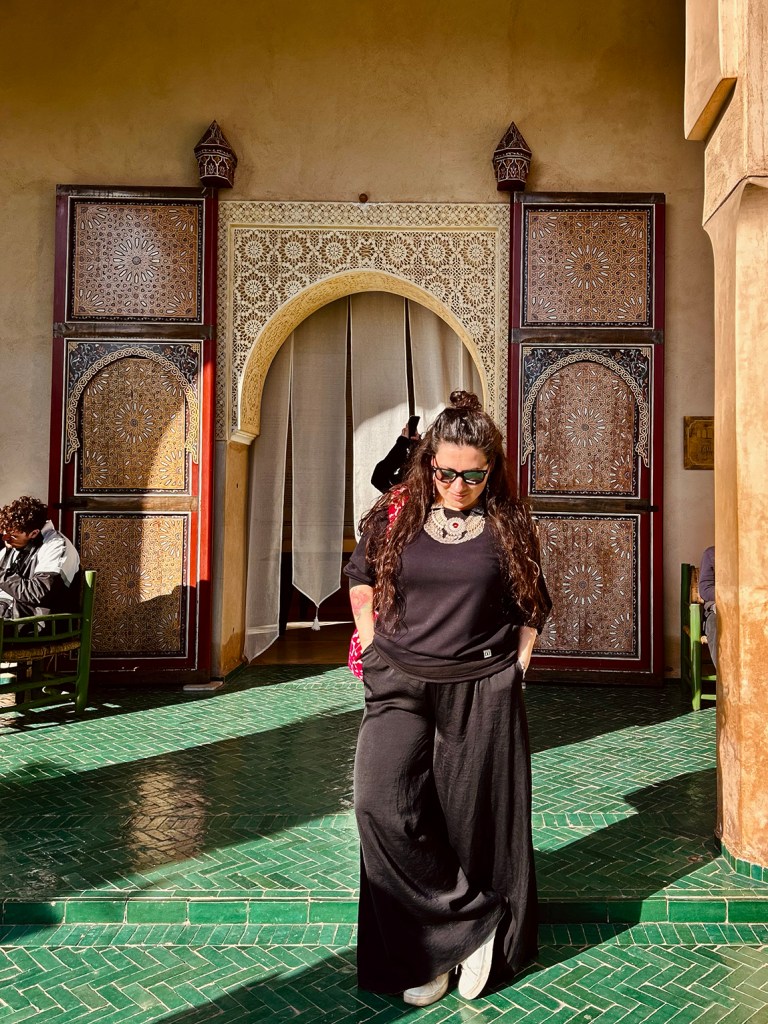
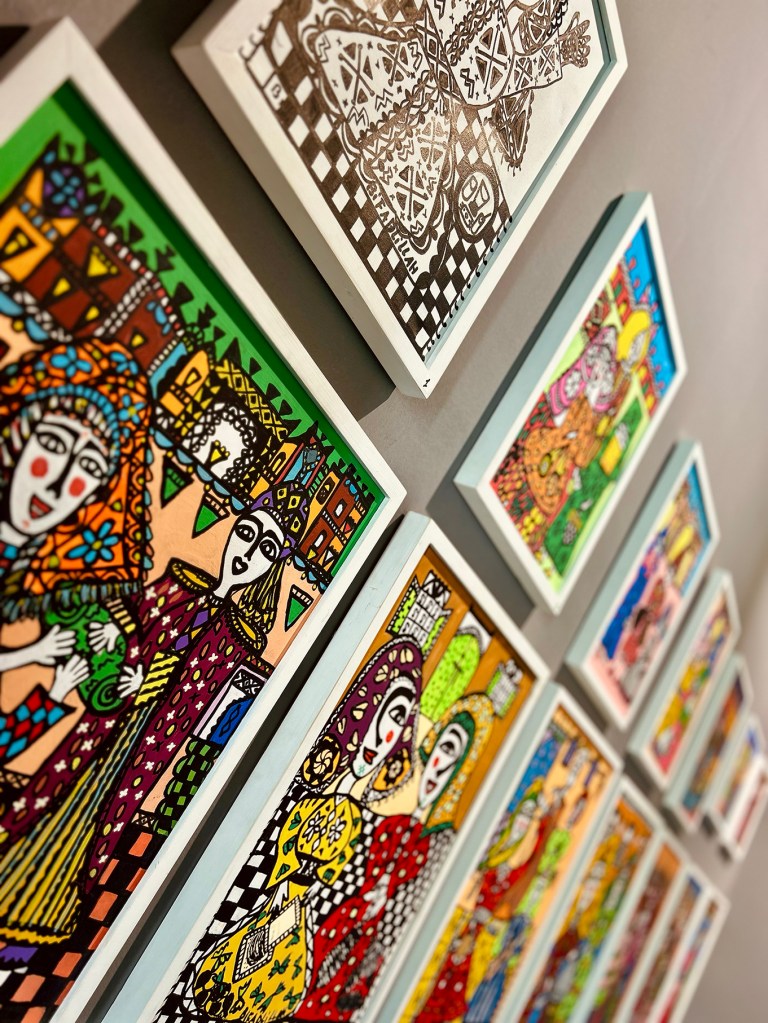
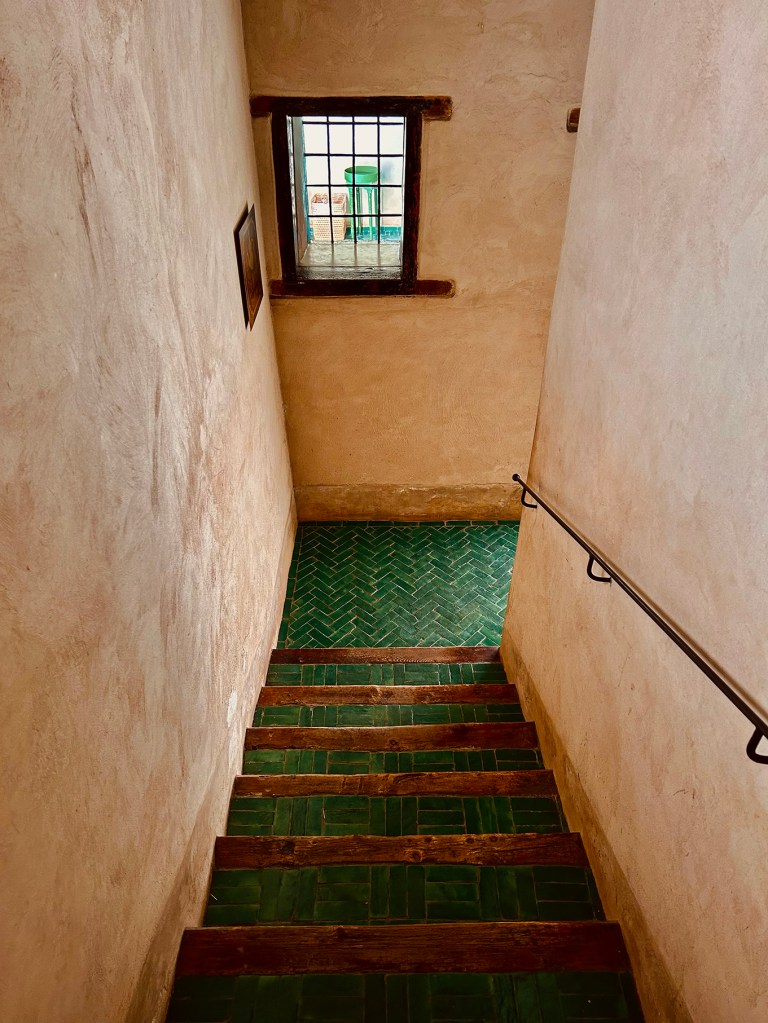
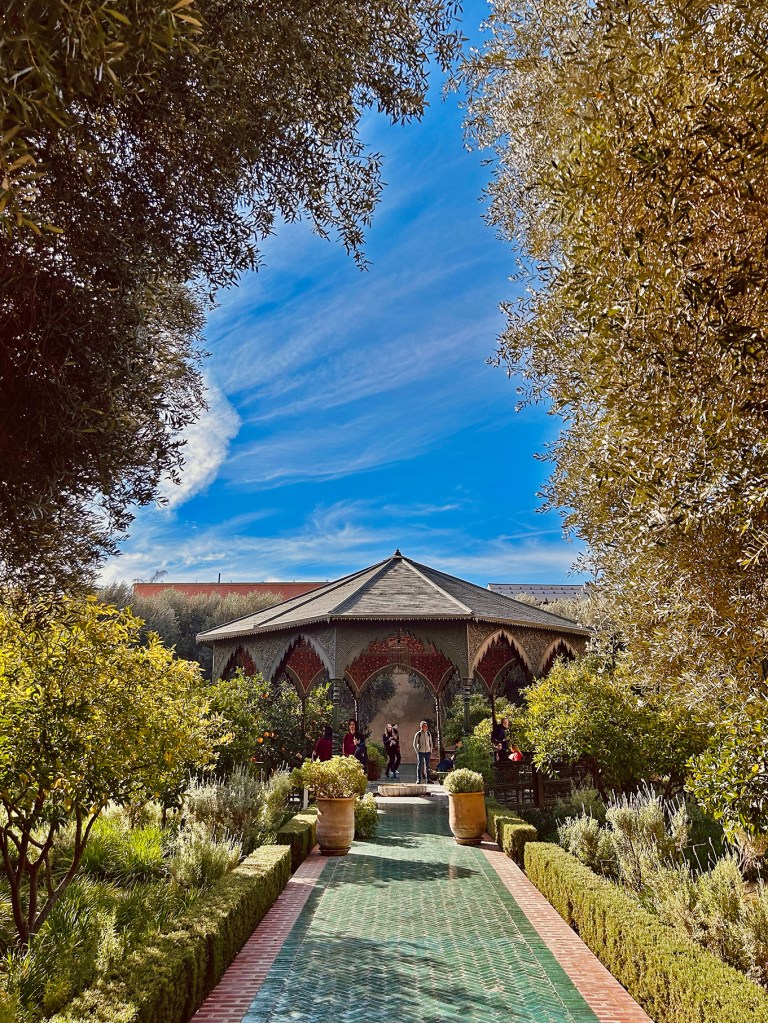
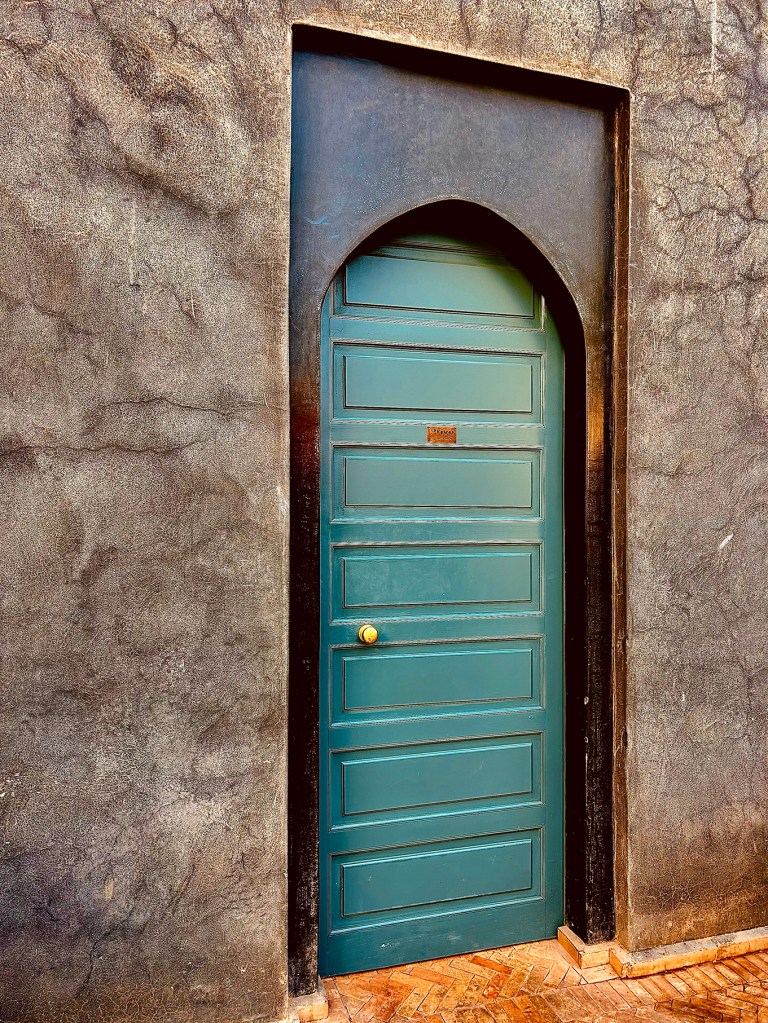
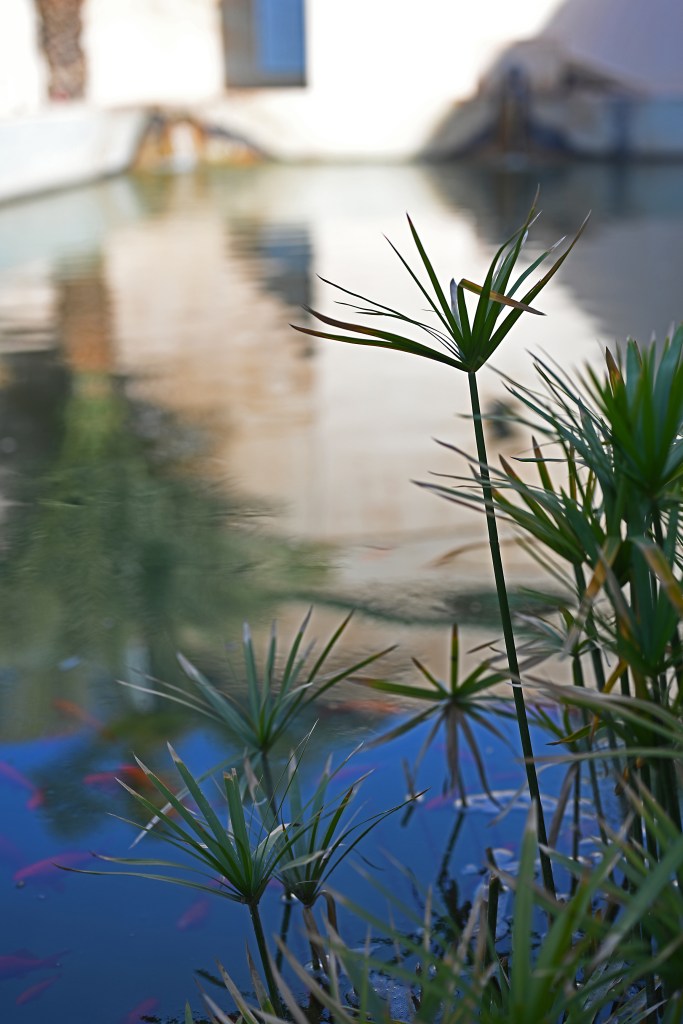
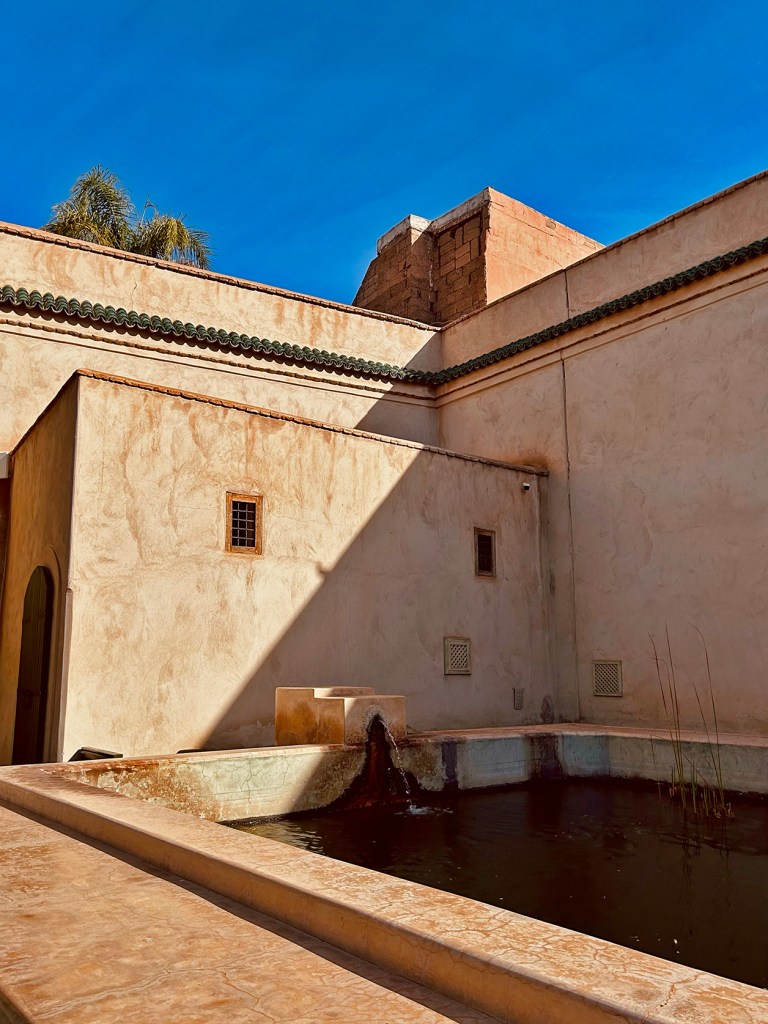
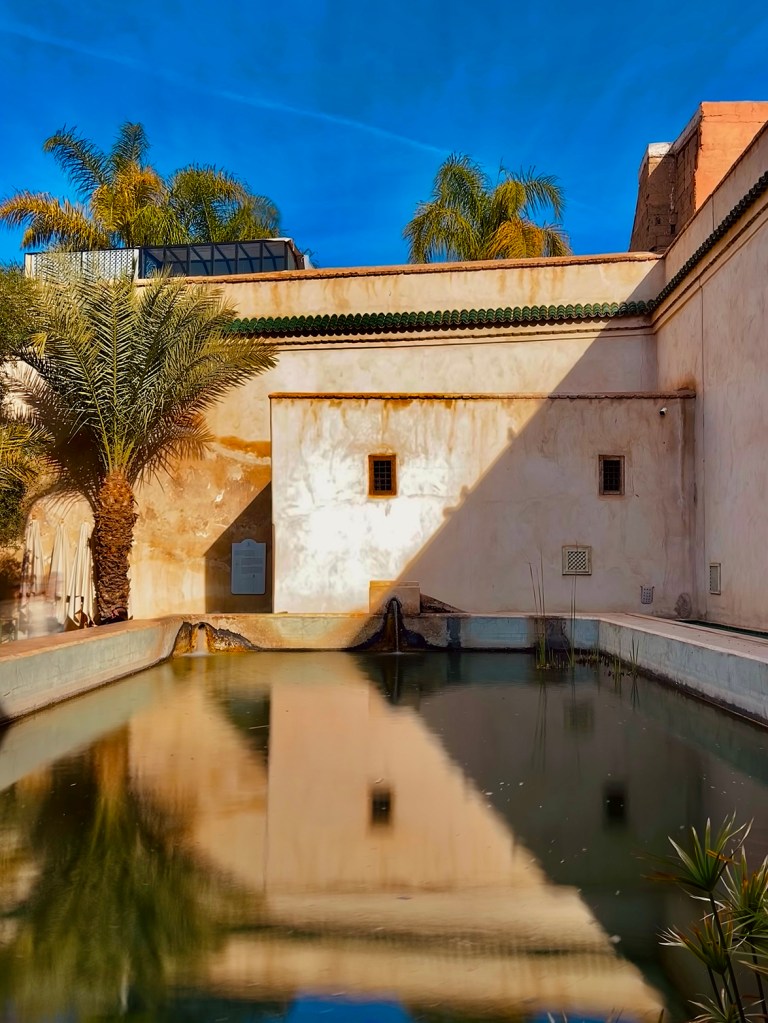
11. Ben Youssef Madrasa
Once one of the largest Islamic colleges in North Africa, the Ben Youssef Madrasa housed hundreds of students. Today, it’s a showcase of Moroccan artistry, with a dazzling courtyard, colourful mosaics, carved stucco, and cedarwood ceilings. The old small student dorms are simple, contrasting with the grandeur of the communal spaces. It has been recently restored, and the visit is worth every penny. Just like the madrasas in Fes, it feels like stepping back into the city’s scholarly and spiritual past. The Islamic world has throughout the story of humanity made extraordinary contributions to learning, science and the arts. Architecturally stunning, richly decorated, this is in a way an urban oasis that rests on centuries of history and knowledge.
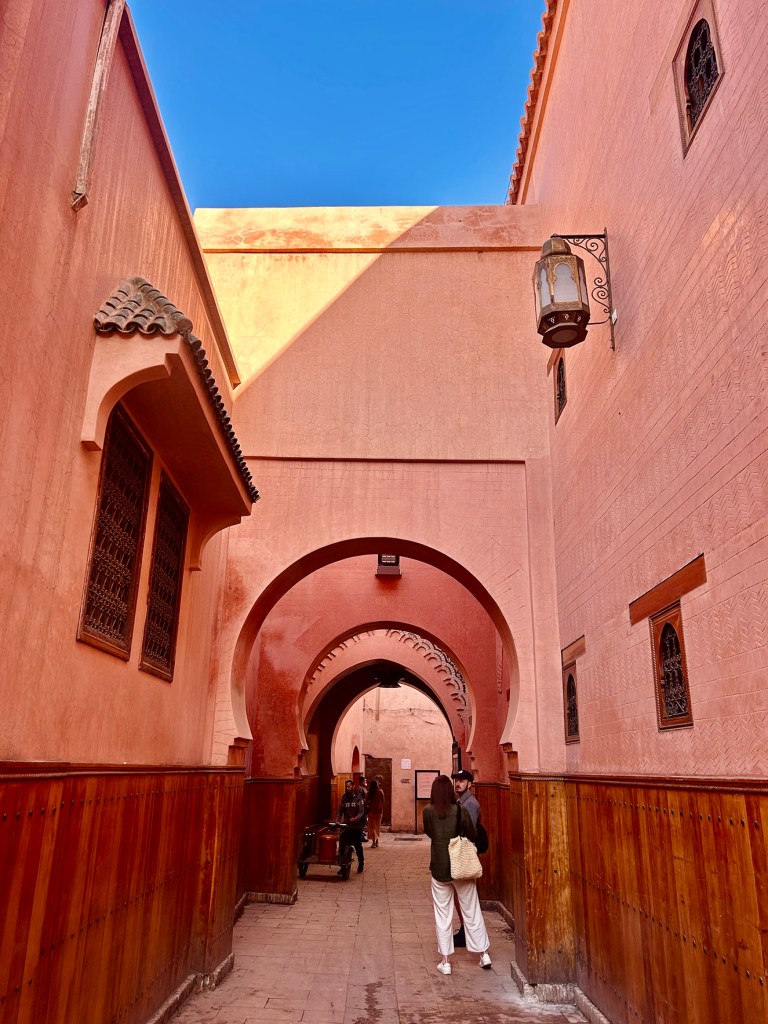
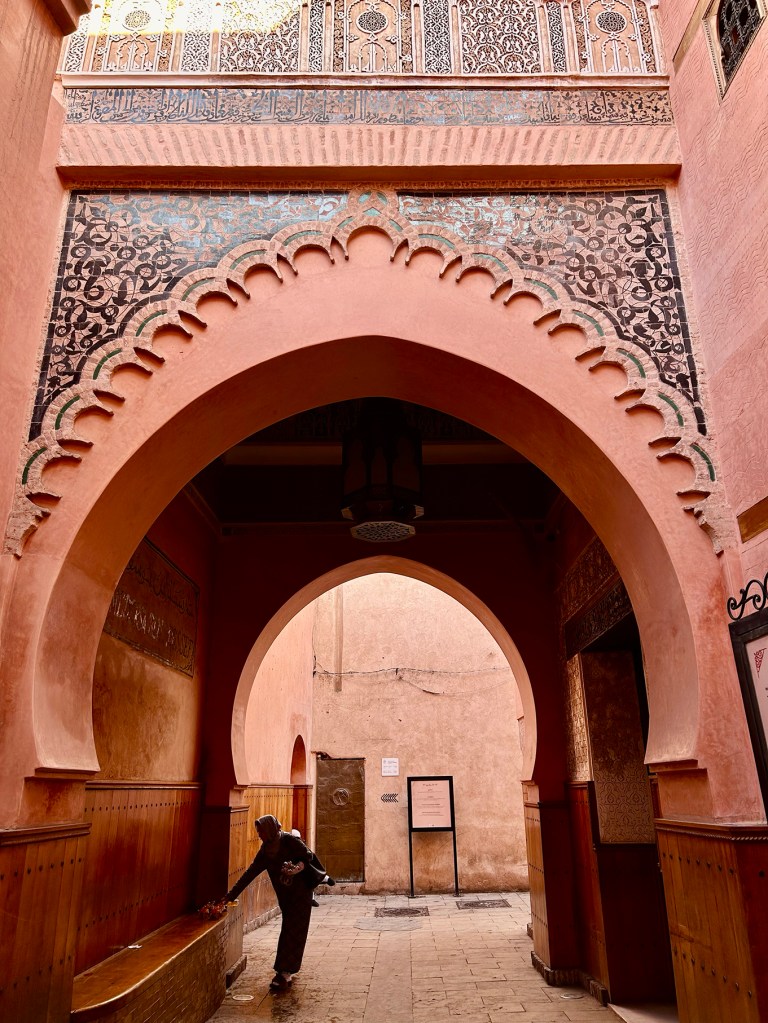
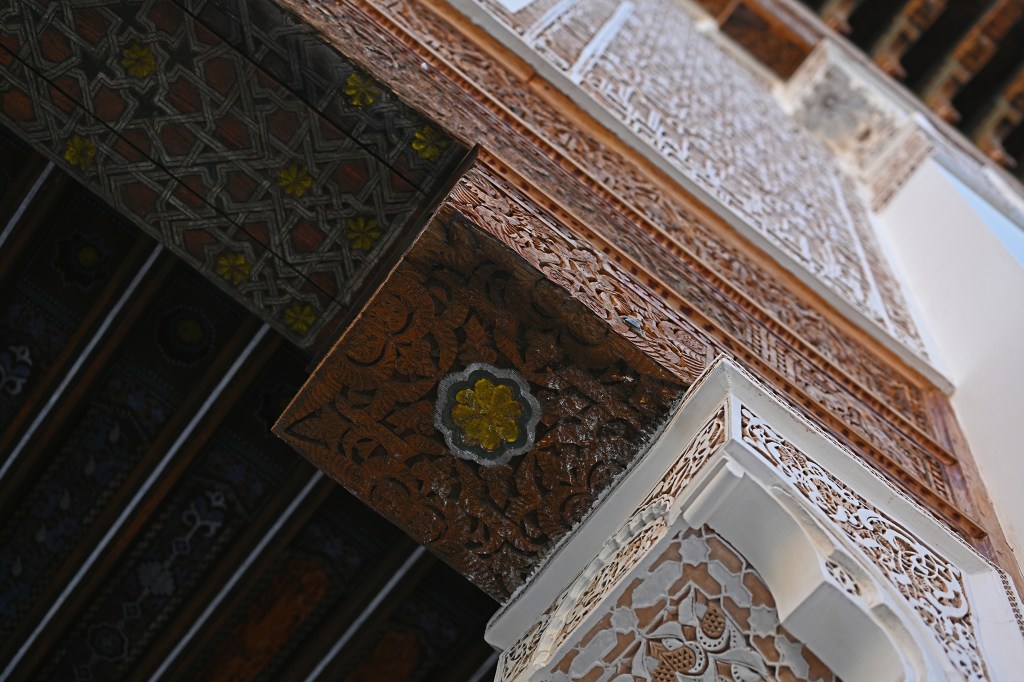
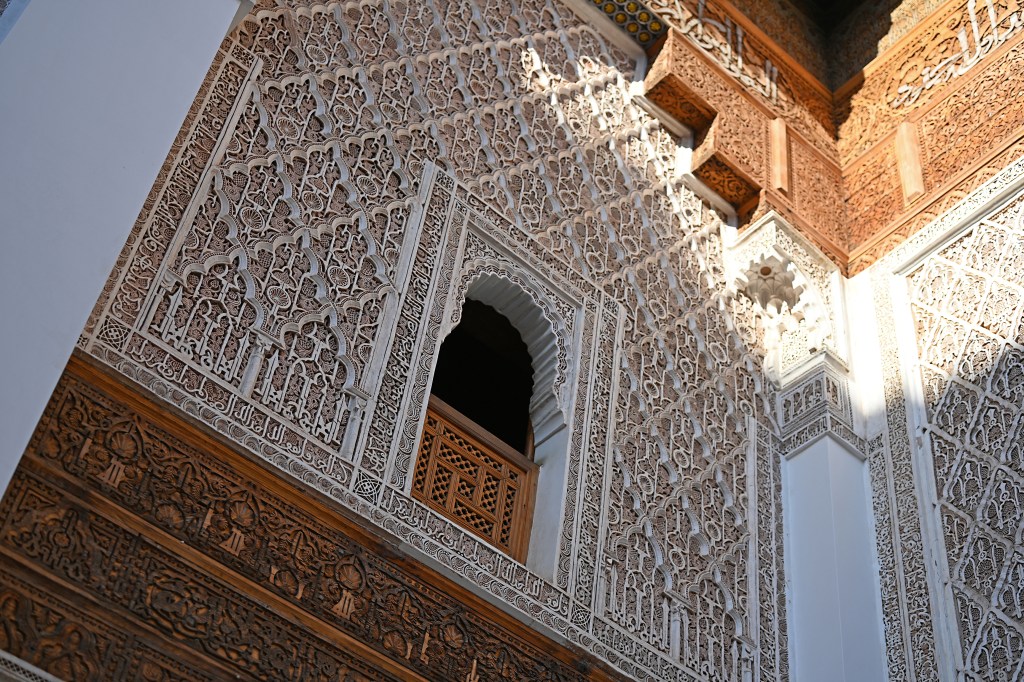
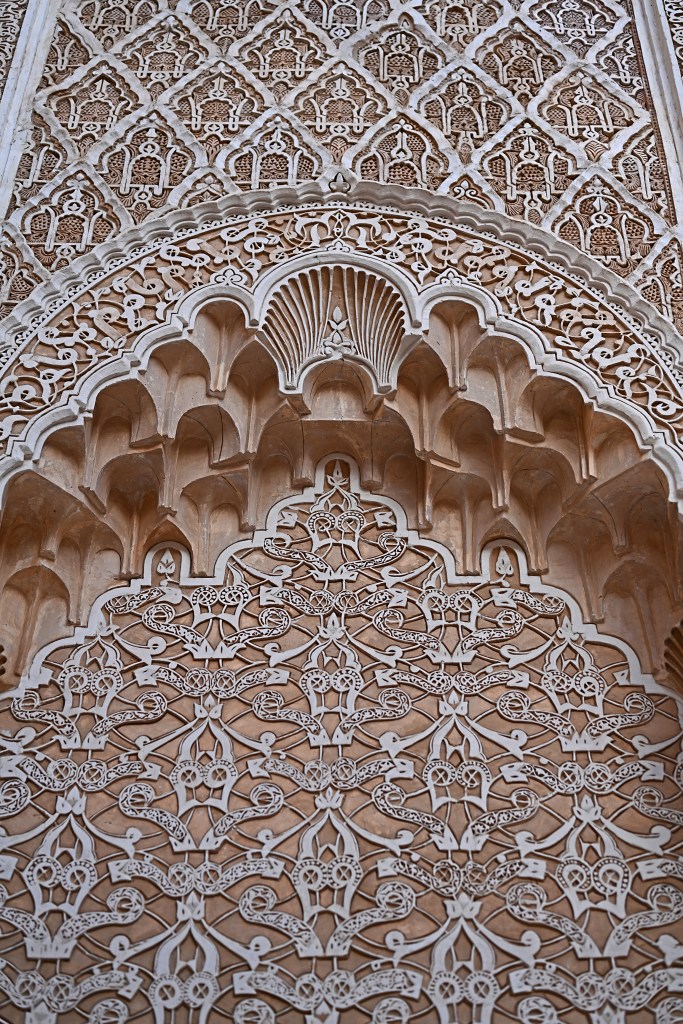
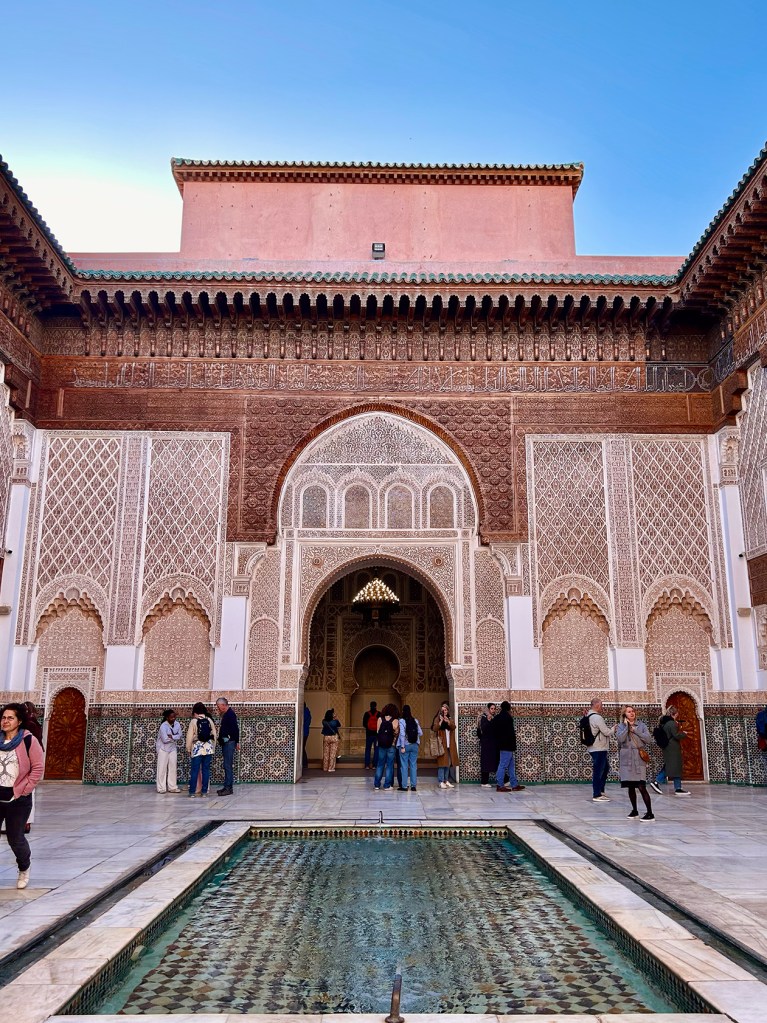
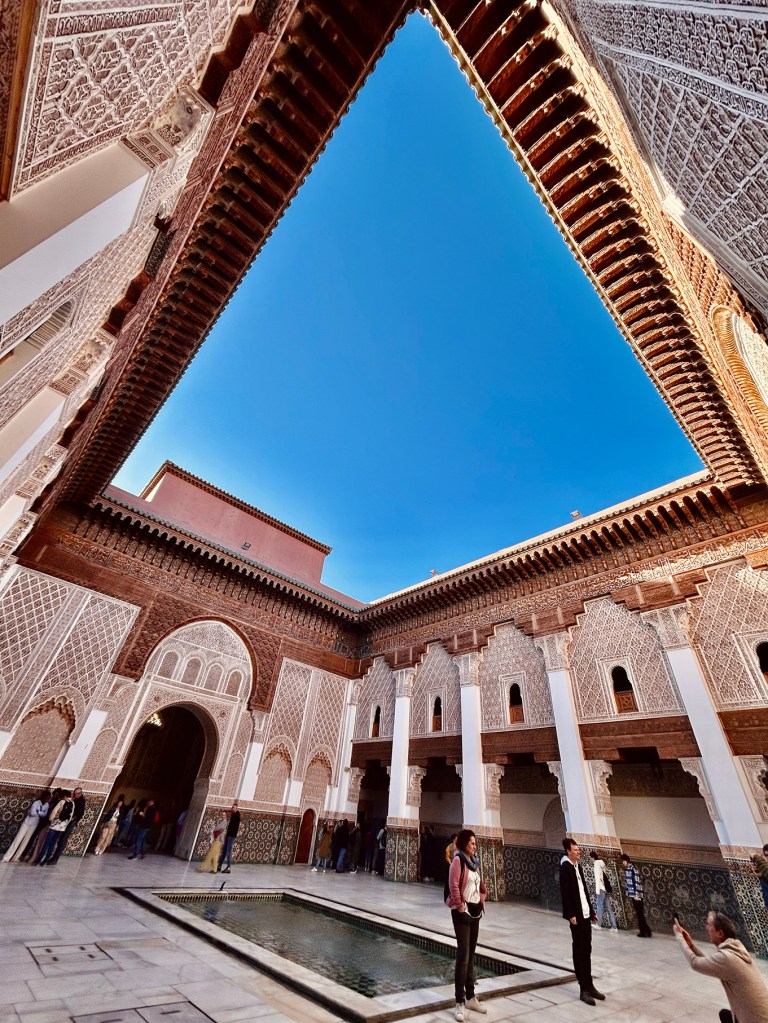
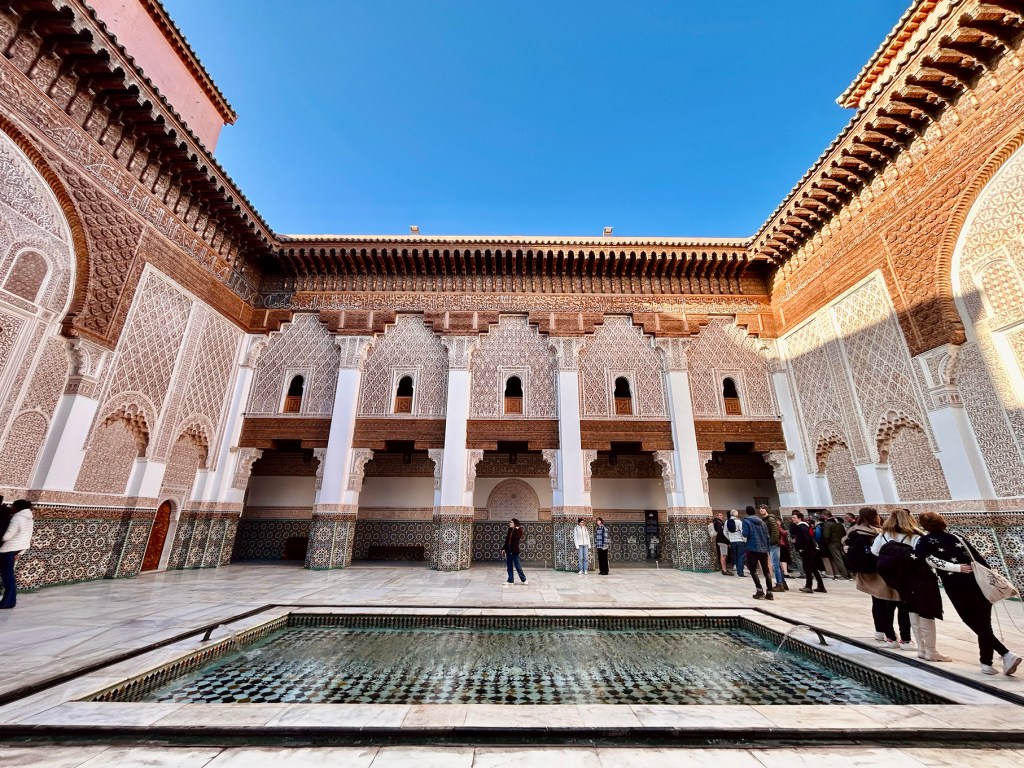
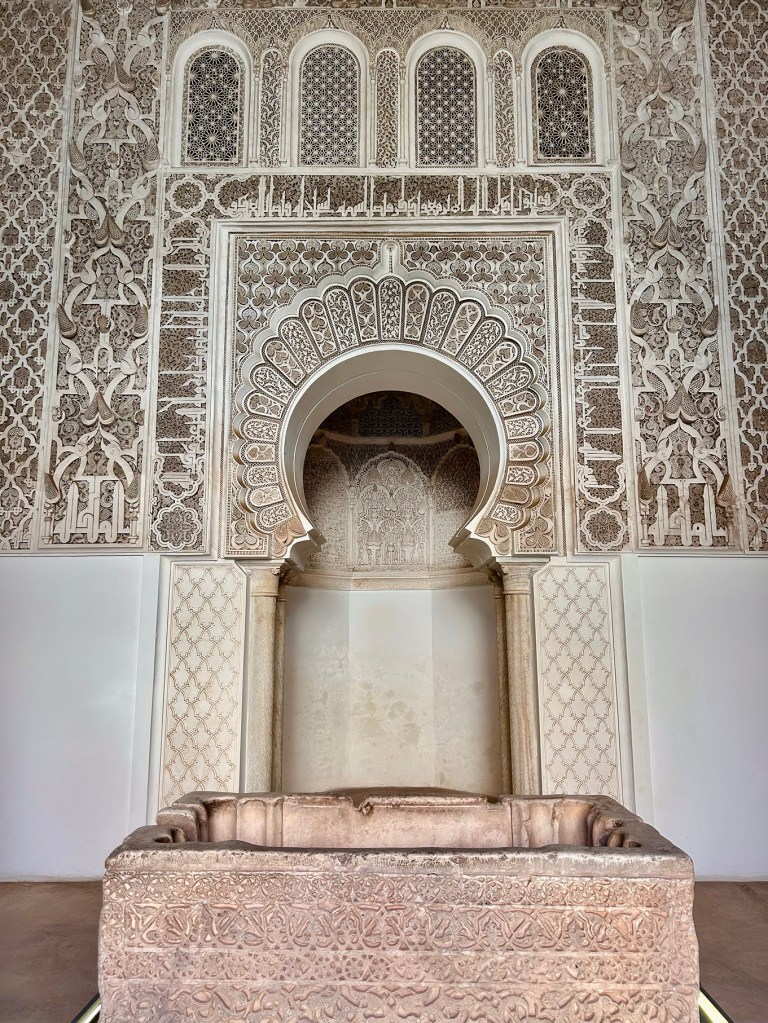
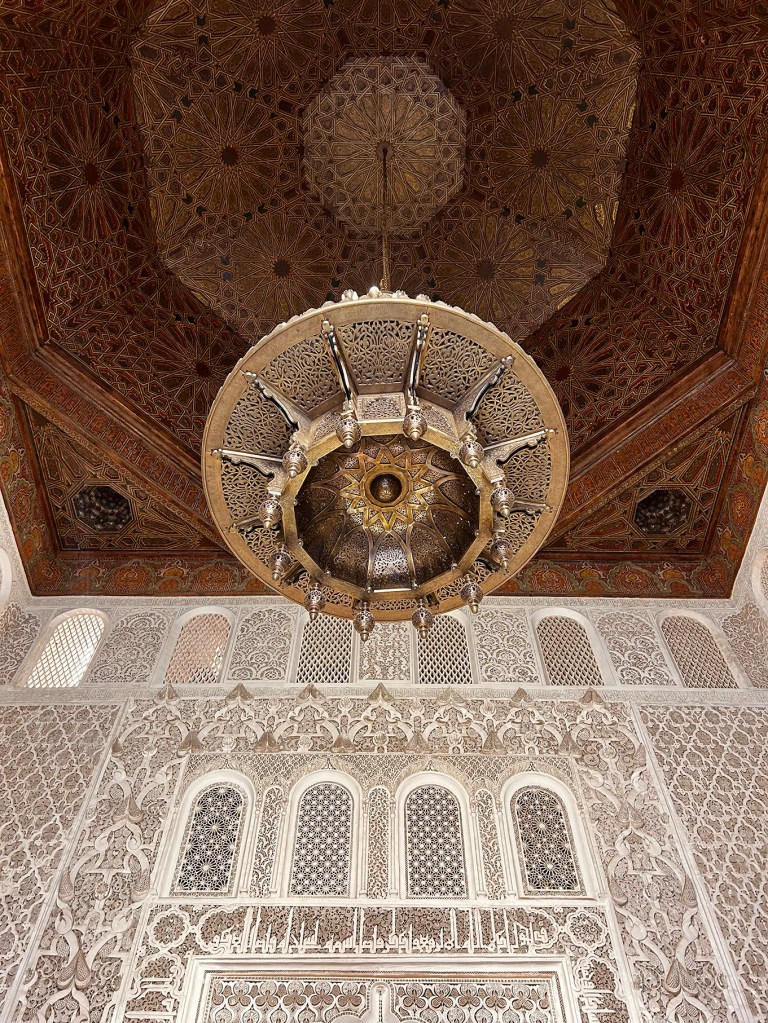
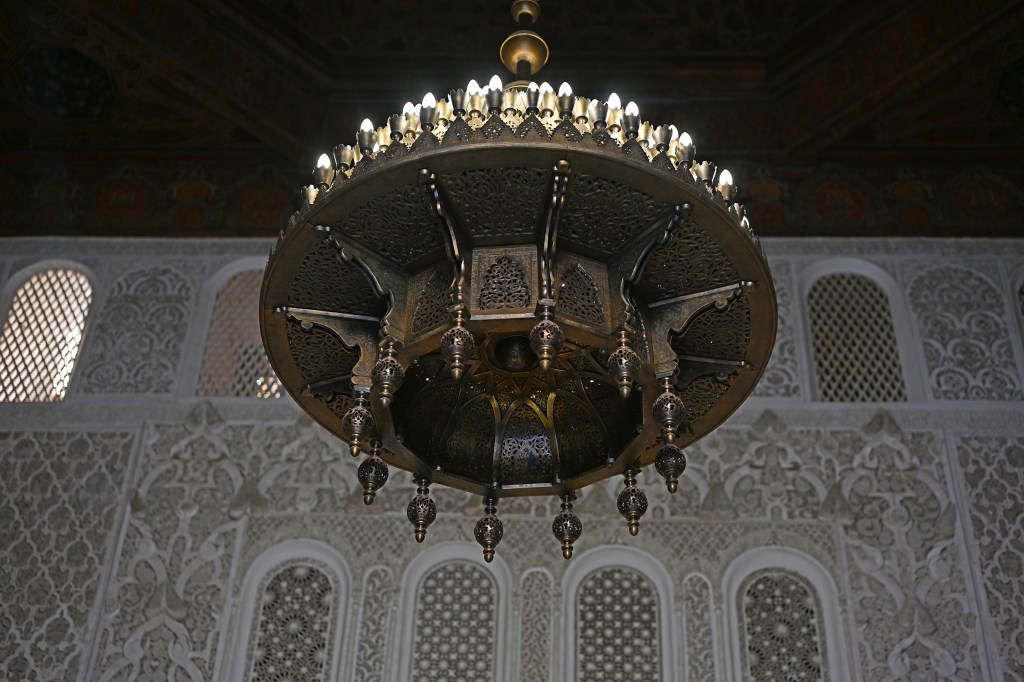
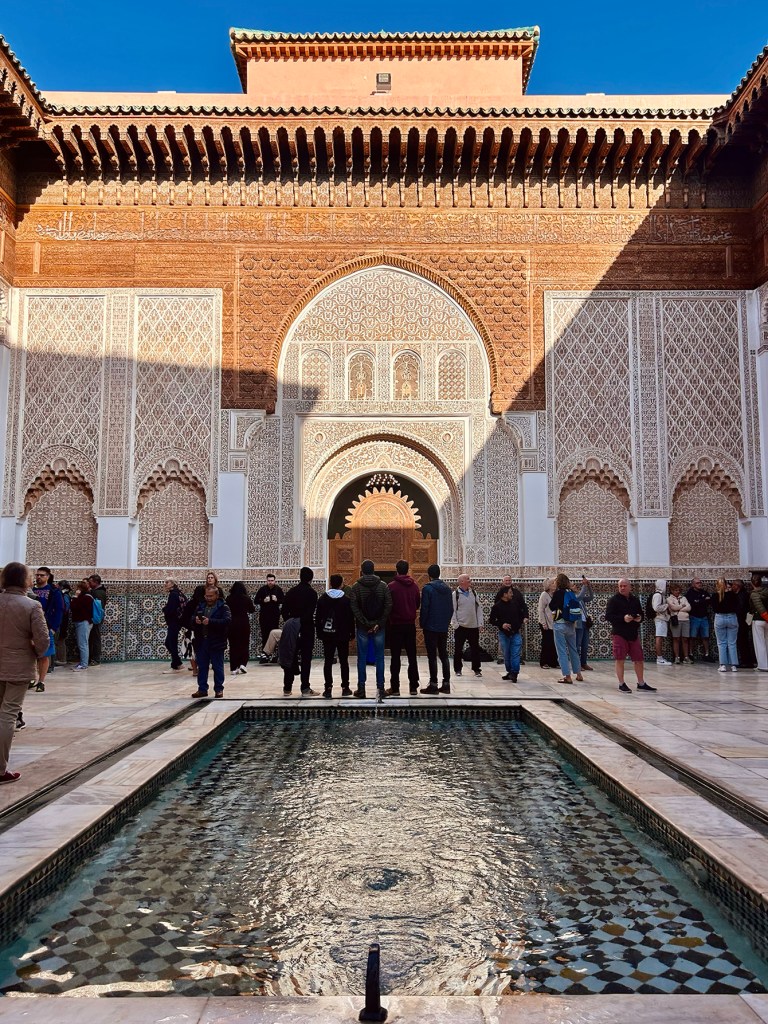
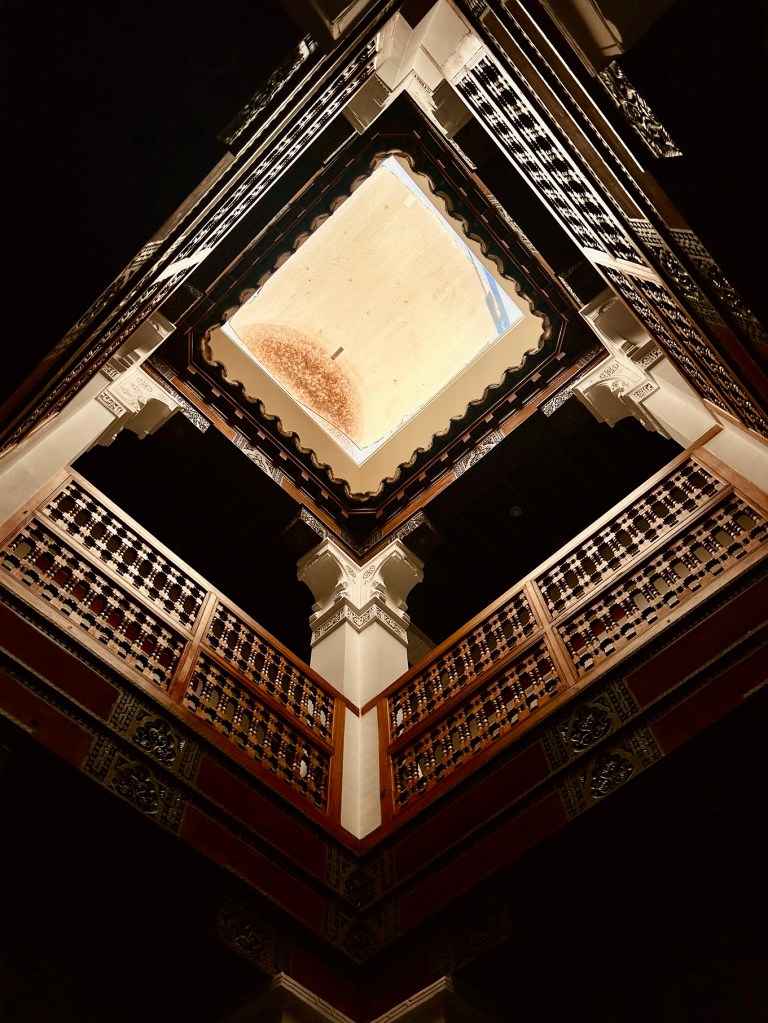
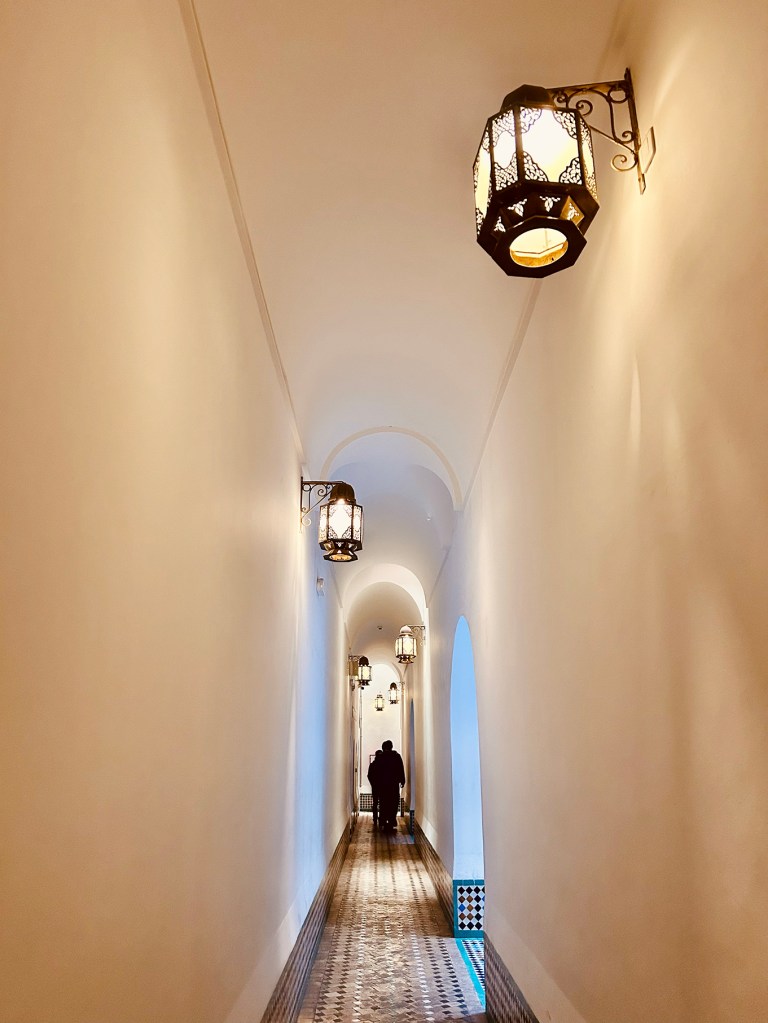

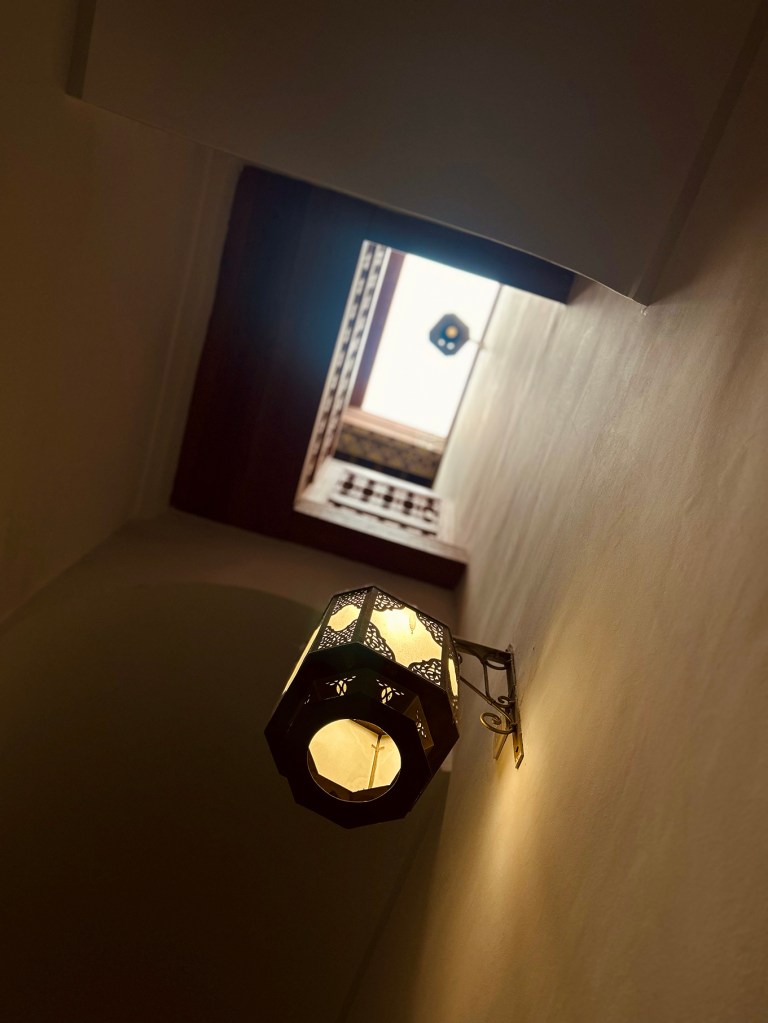
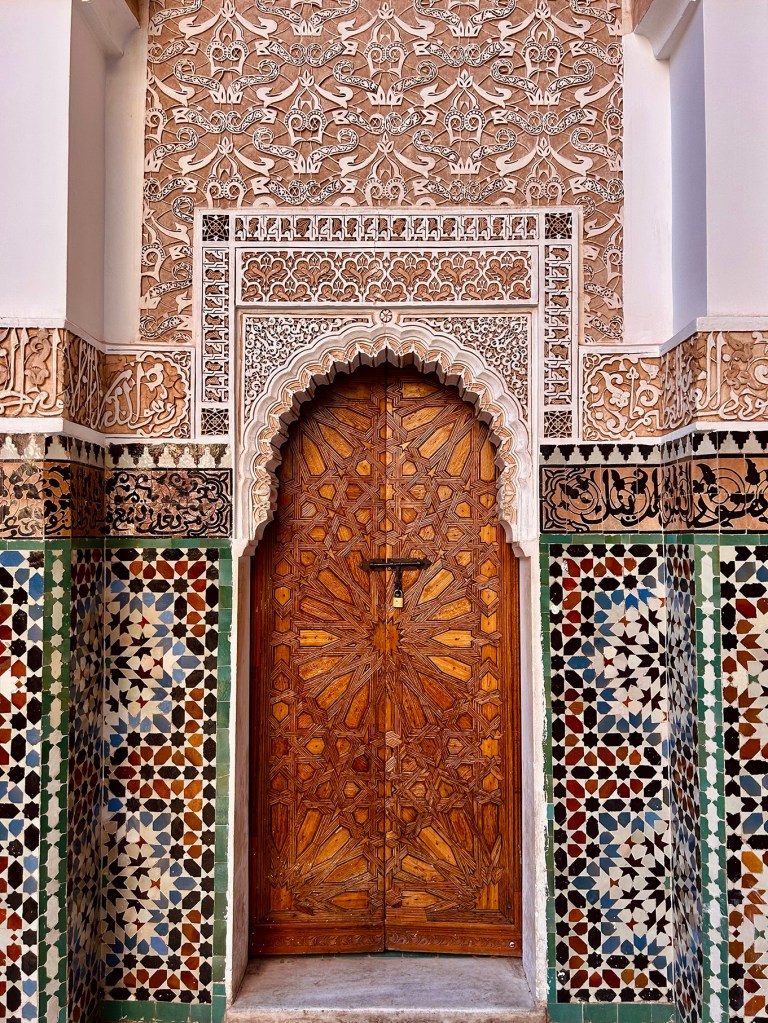

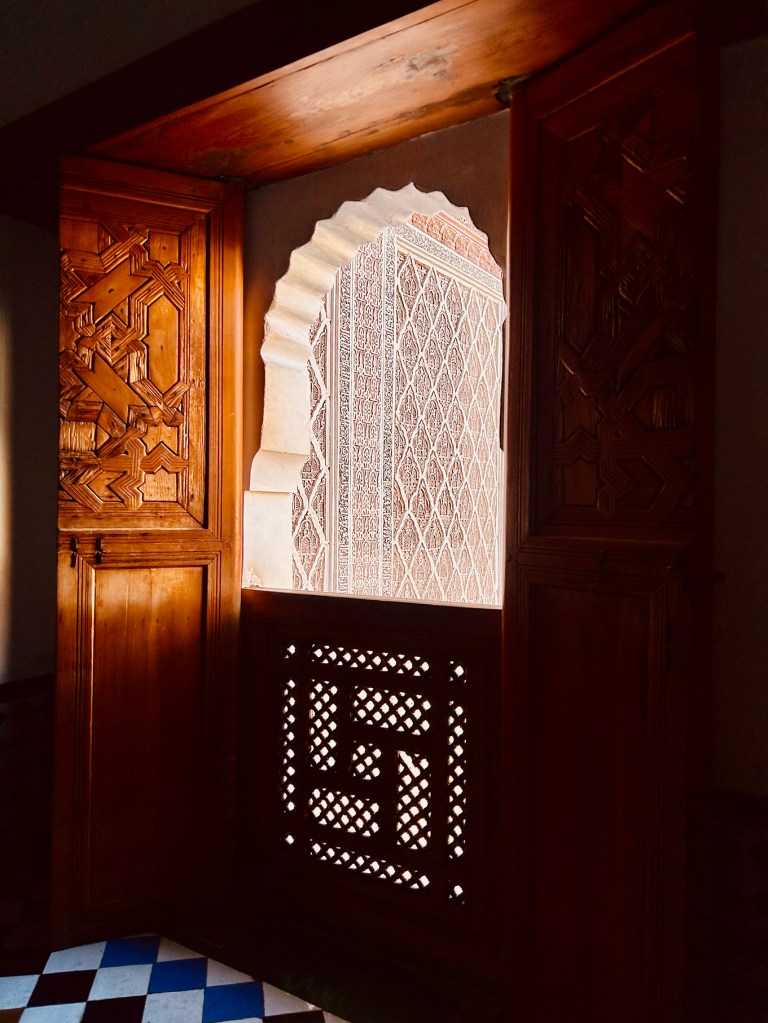
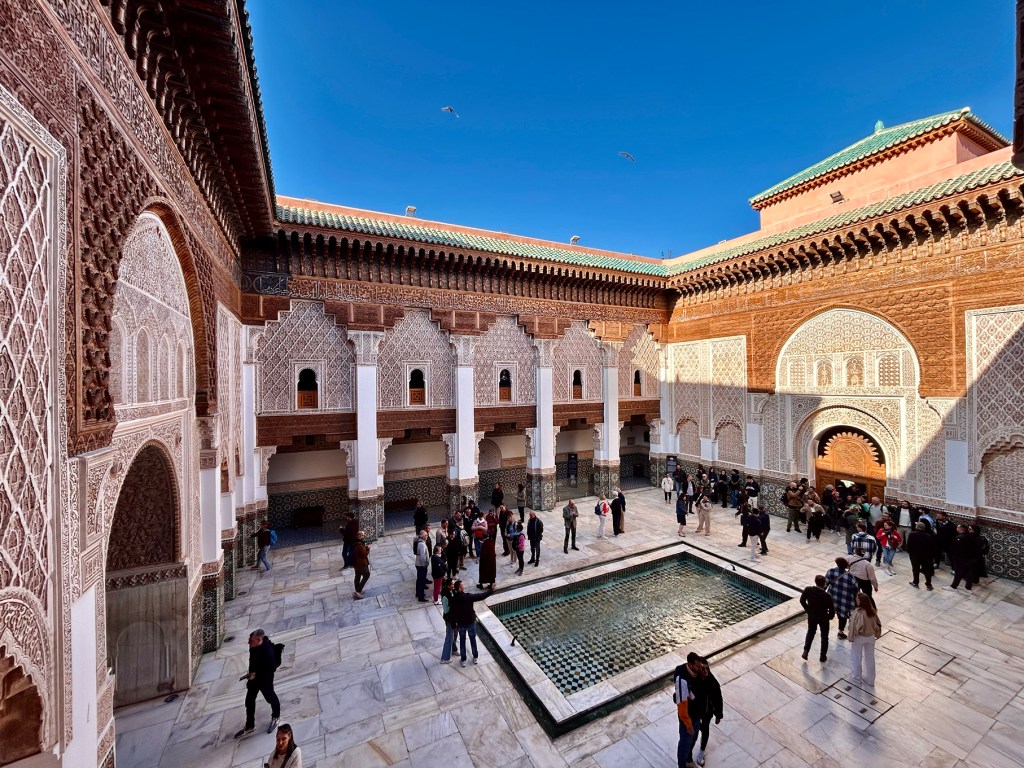
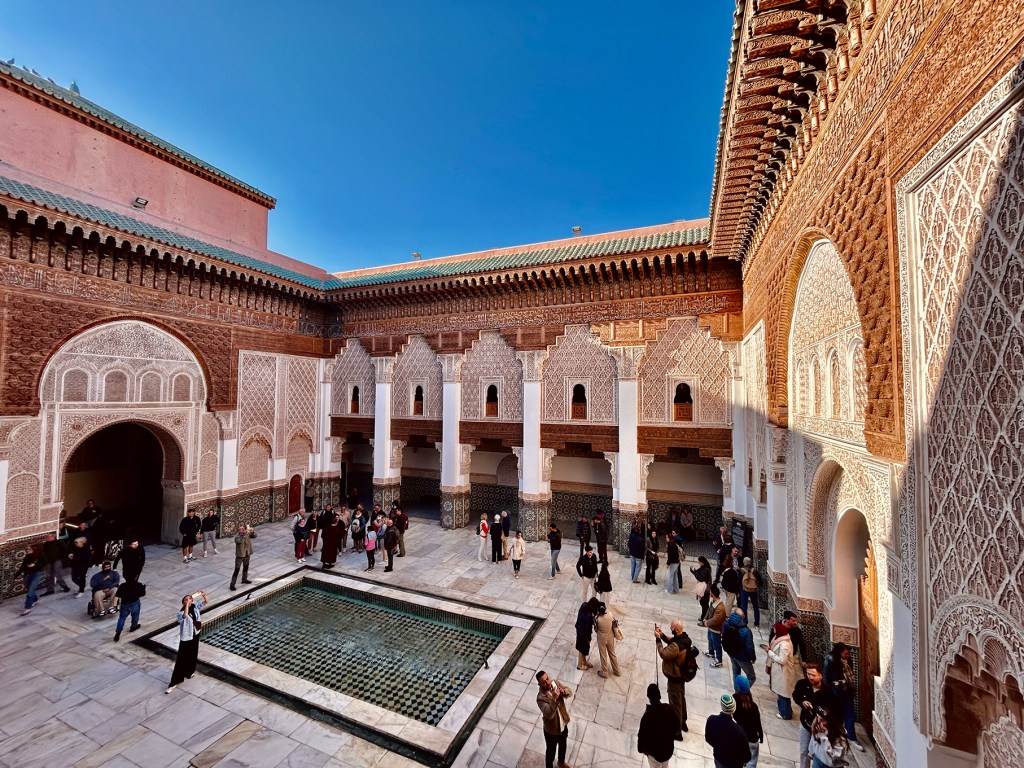
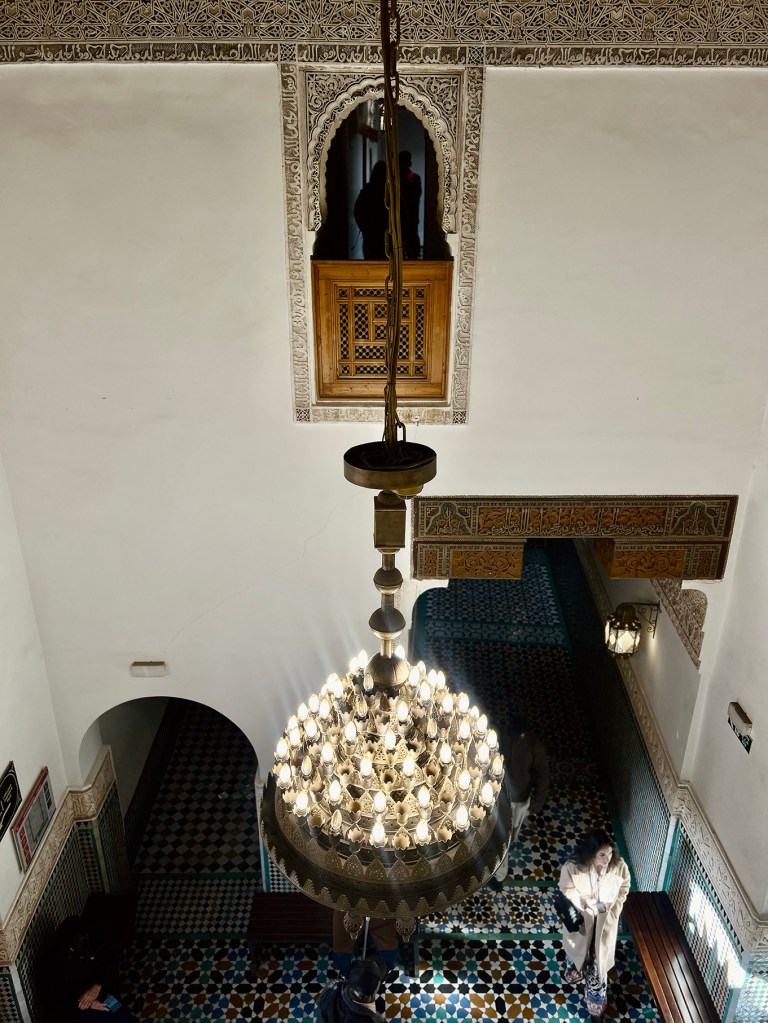
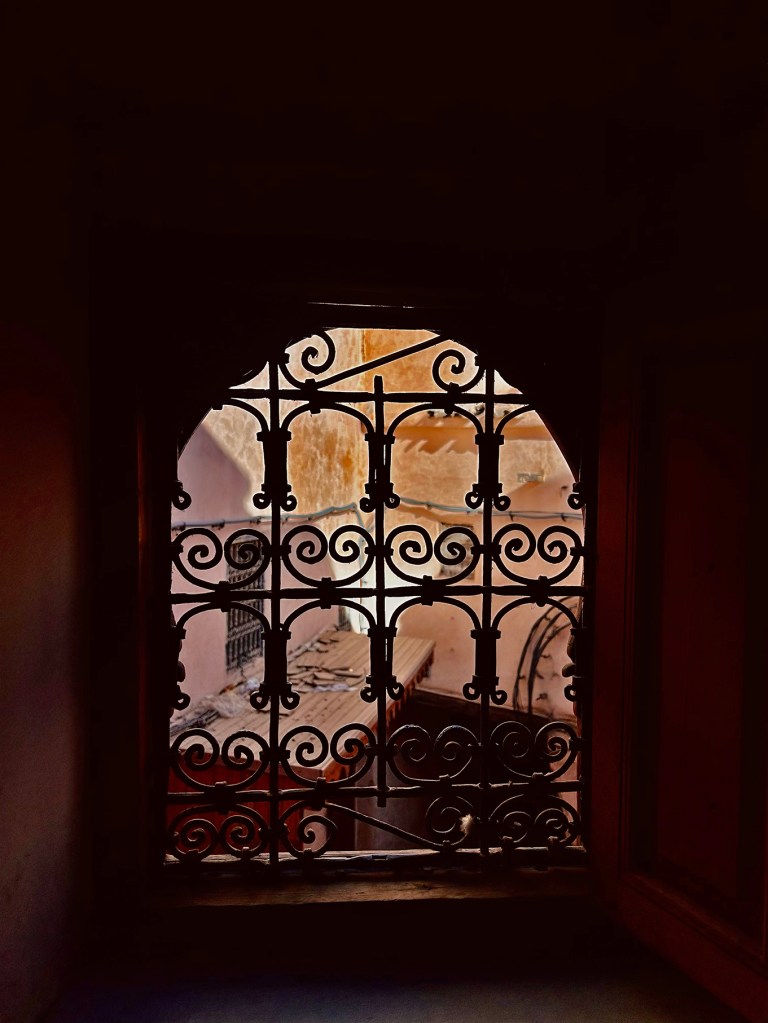
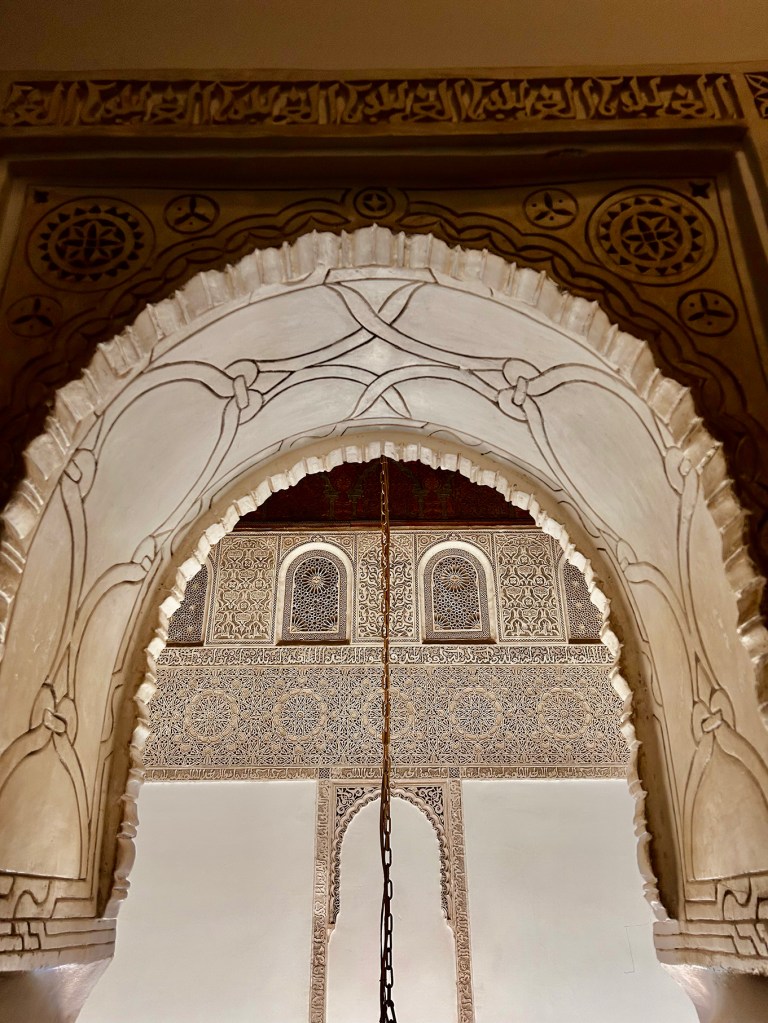
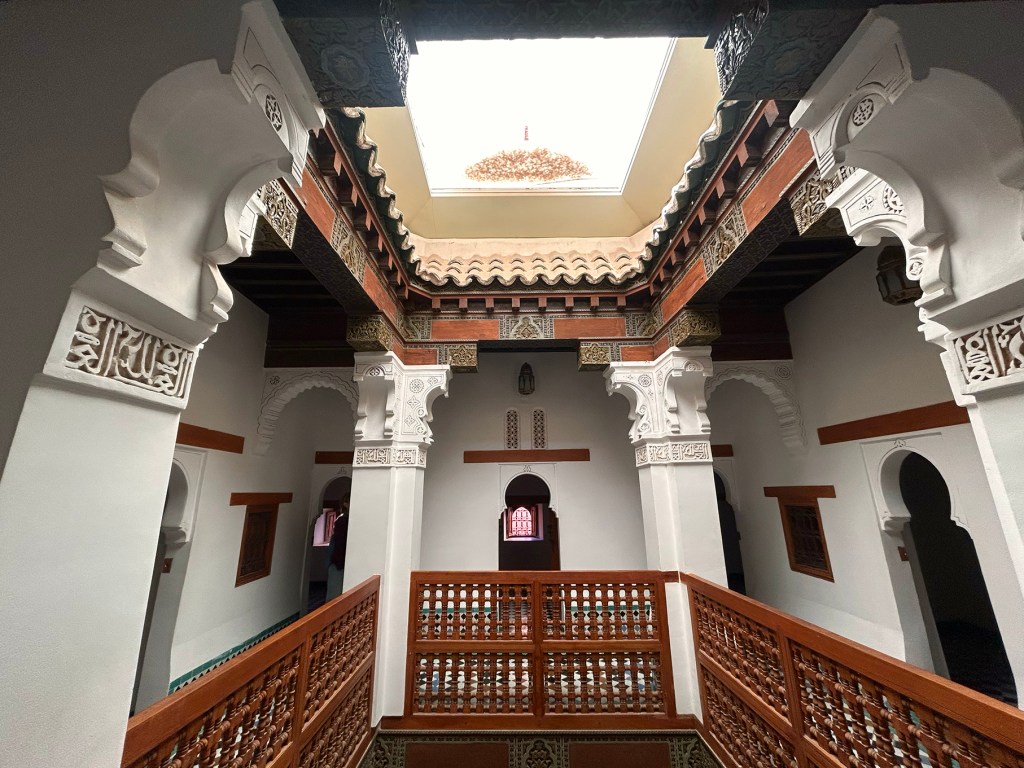
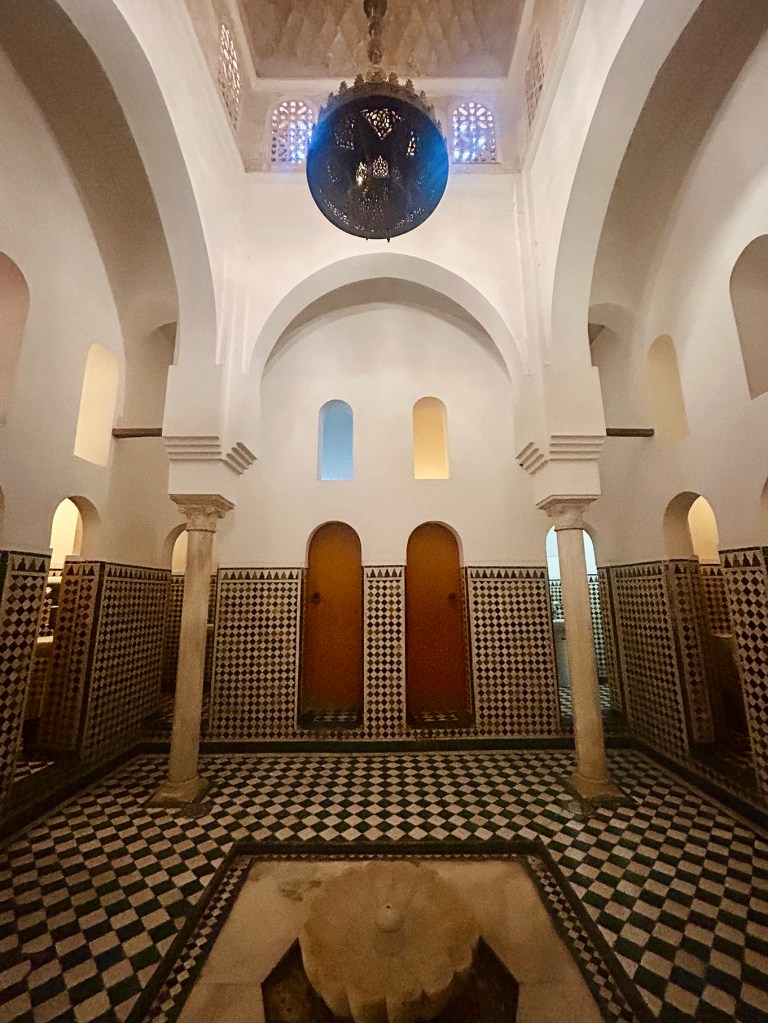
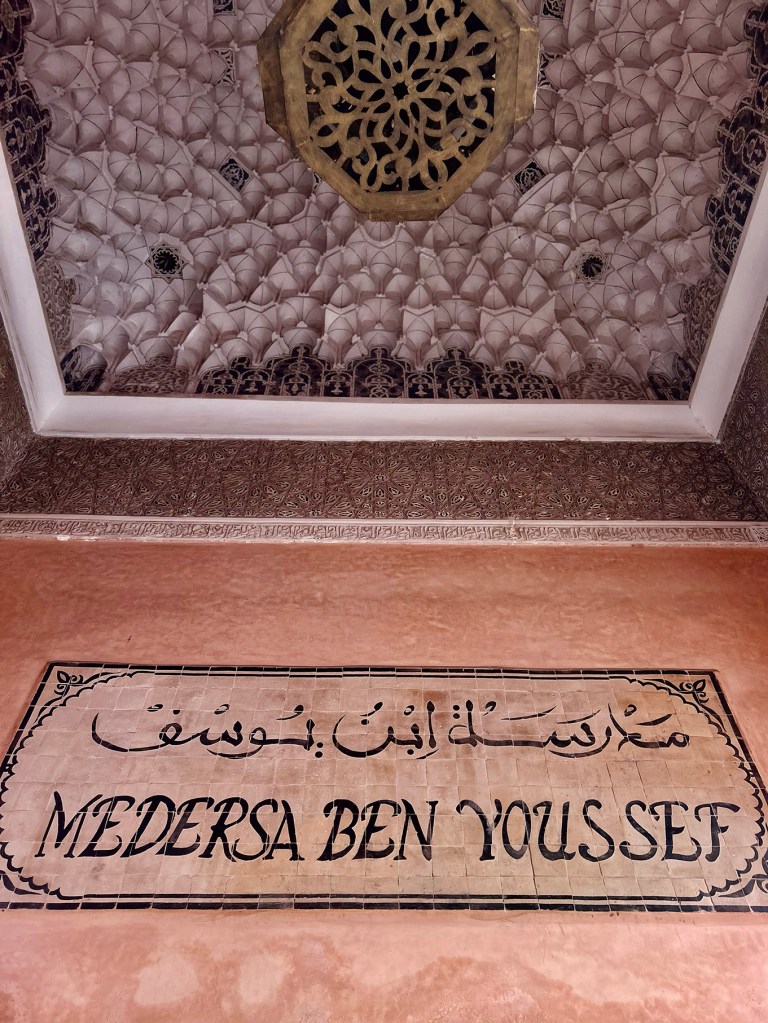
12. Hammam Mouassine
In the heart of the medina, this public bathhouse is one of the city’s oldest, dating back to the 16th-century Saadian dynasty. Unlike the polished and modernised spa hammams, this one feels authentic, rustic, and lived-in. It’s a place where locals still come for their weekly ritual.
I had a fantastic time here, together with the largest agglomeration of girl-power I could find in a substantial radius. The women are absolute powerhouses. Fatima and Rashida took good care of me for well over three hours, and although the place is simpler than simple – you literally lie on the tiled floor and wash yourself from plastic buckets – I would visit every single day. Here, nobody give a **** about what you look like and I could tell that the women who were washing themselves absolutely deserved this moment. It was away from home, husbands and children, a place to catch up with sisters and girl squad, relax, vent, have a laugh – without having to take care of anyone else but themselves.
The classic routine includes black soap, steam, a vigorous scrub with a kessa glove, and sometimes a rhassoul clay wrap. The treatment is simple and wonderfully effective. It’s usually open between 9:00 am and 9:00 pm, women and men enter in separate sections and it’s much cheaper than the spa hammams.
It may not be luxurious, but Hammam Mouassine offers something harder to find: a genuine slice of Marrakech life. One visit here and you step out feeling like a new person.
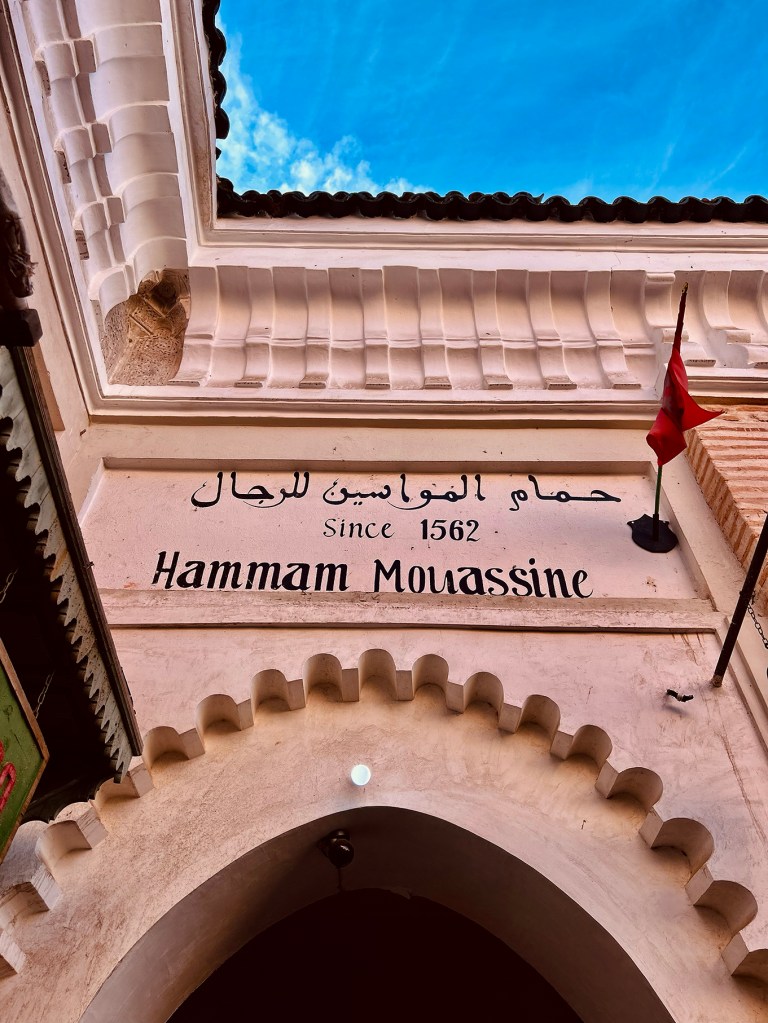
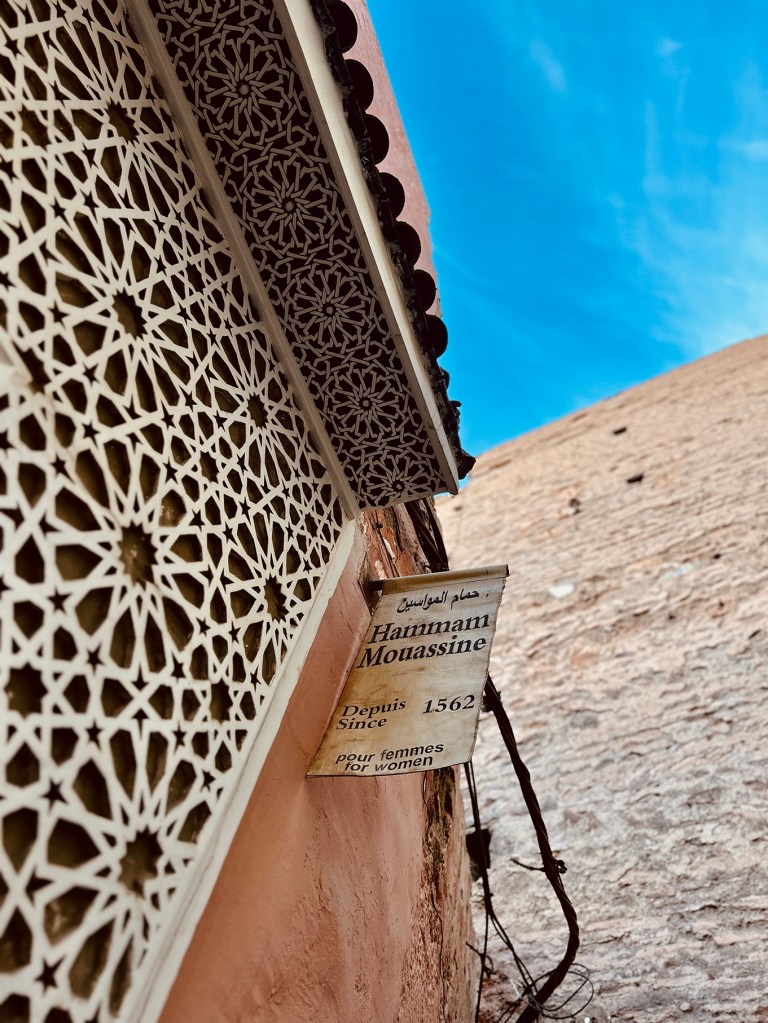
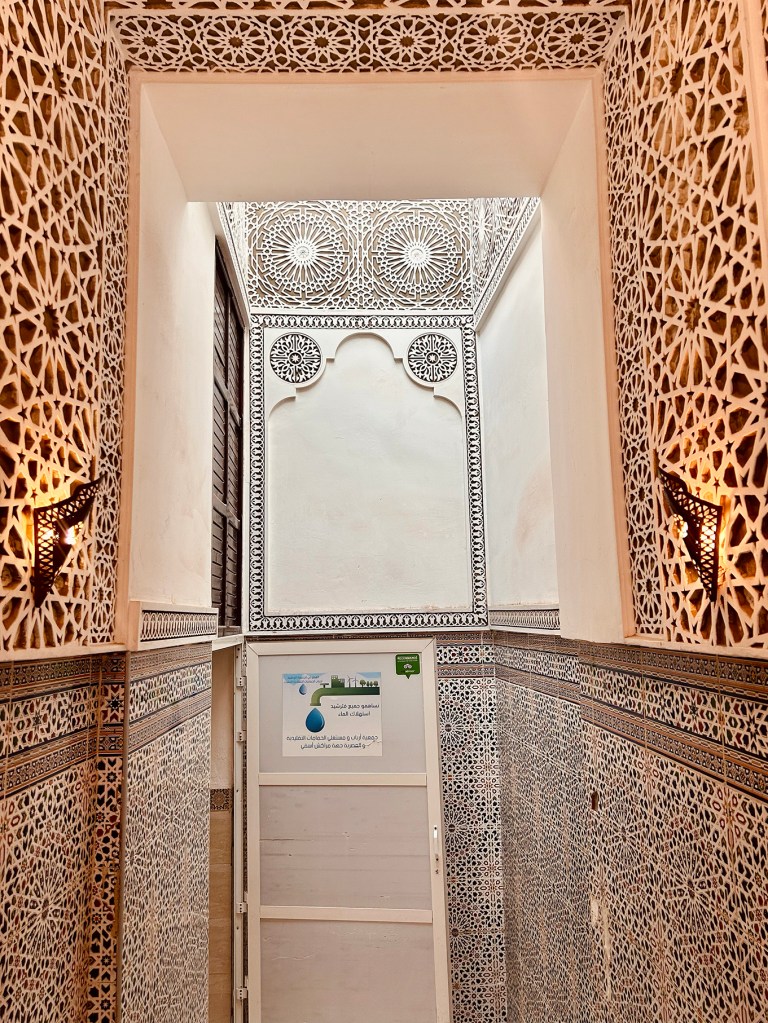
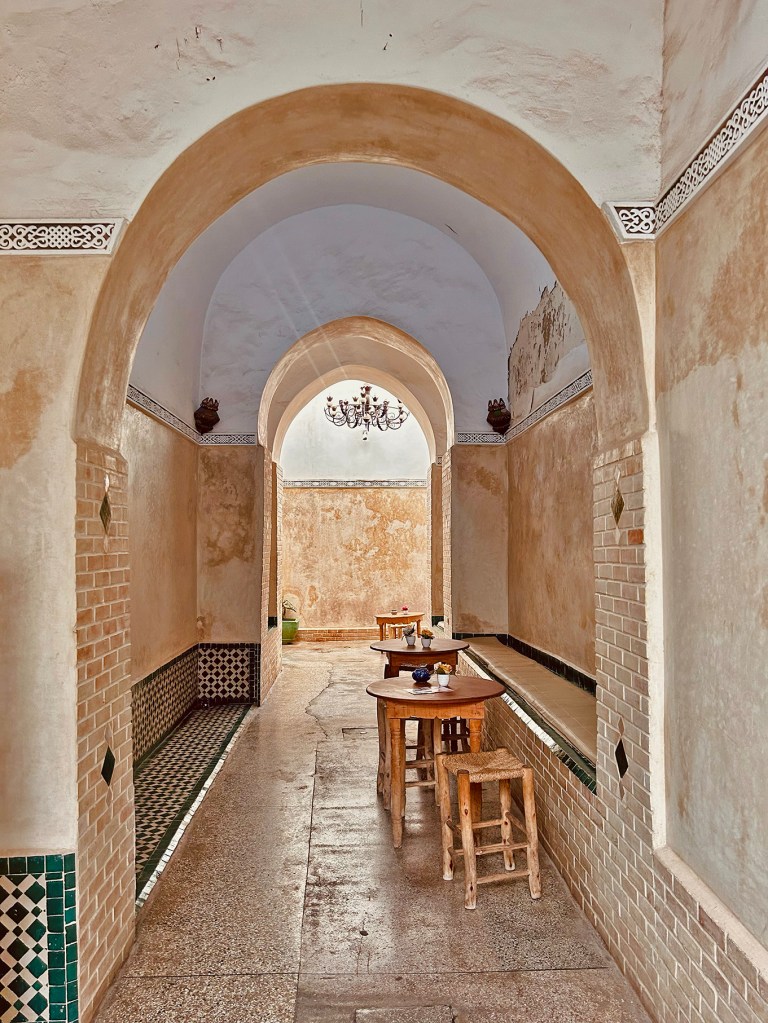
Other places of interest were either closed for renovation, only open on specific days that didn’t work with my schedule, or too many steps away for a pair of tired feet. I have lots to look forward to on coming visits!
Essaouira
I never imagined I would feel restless in Marrakech. Or maybe it was due to the fact that I’d be going home in a few days and felt that I needed to see a bit more, reluctant to leave Morocco. So I said, why not check out Essaouira as well? An advantage of booking with Viator is that you get points and can sometimes use them as payment for another trip. So for this one, I used some points and ended up paying just 7 euros for a day-trip. Yes, s-e-v-e-n euros.
Located roughly 190 km west of Marrakech, the coastal town of Essaouira is sunny, breezy, and relaxed, with a charming medina, a lively port area and delicious seafood.
The journey takes you along the High Atlas foothills and through the wide, open plains of the Moroccan countryside. You’ll also pass scattered argan trees and even more quiet Berber villages. Goats used to climb the trees and people would stop to take photos of them, but we were told that nowadays it’s not as often that one can see that, and that the farmers are basically forbidden to encourage the goats to climb, for the animals’ safety.
The landscape is rugged but beautiful, and tours will inevitably stop at one of the roadside argan oil cooperatives. These small women-run workshops demonstrate the traditional process of extracting argan oil, from cracking the nuts to pressing them into golden oil.
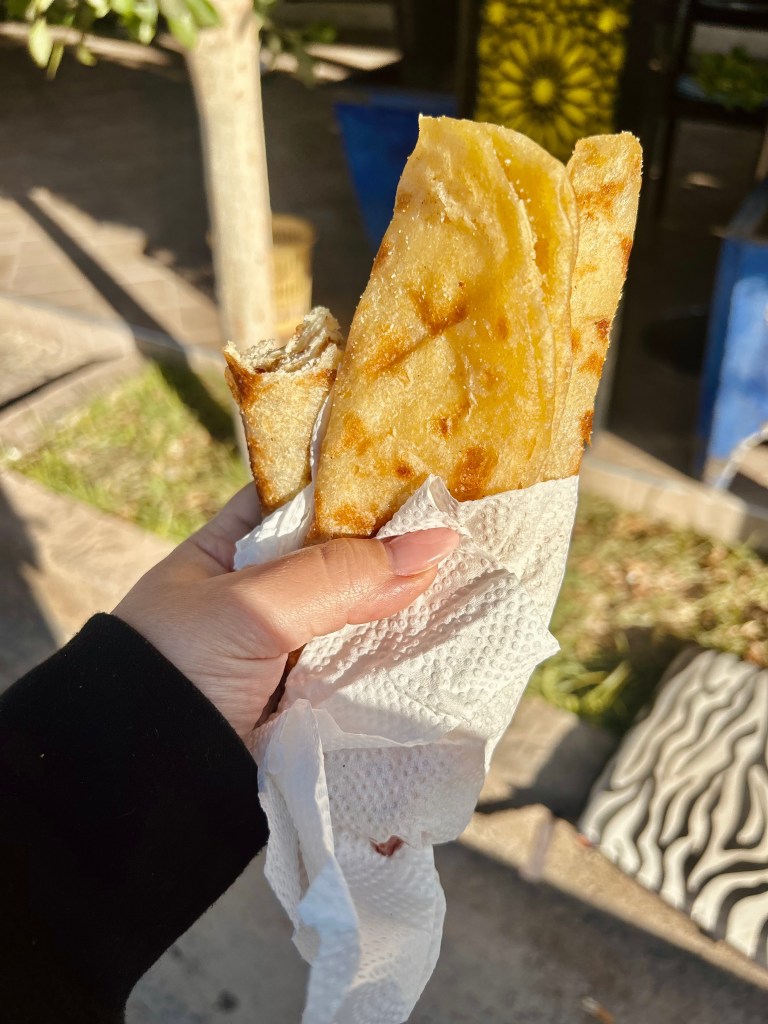
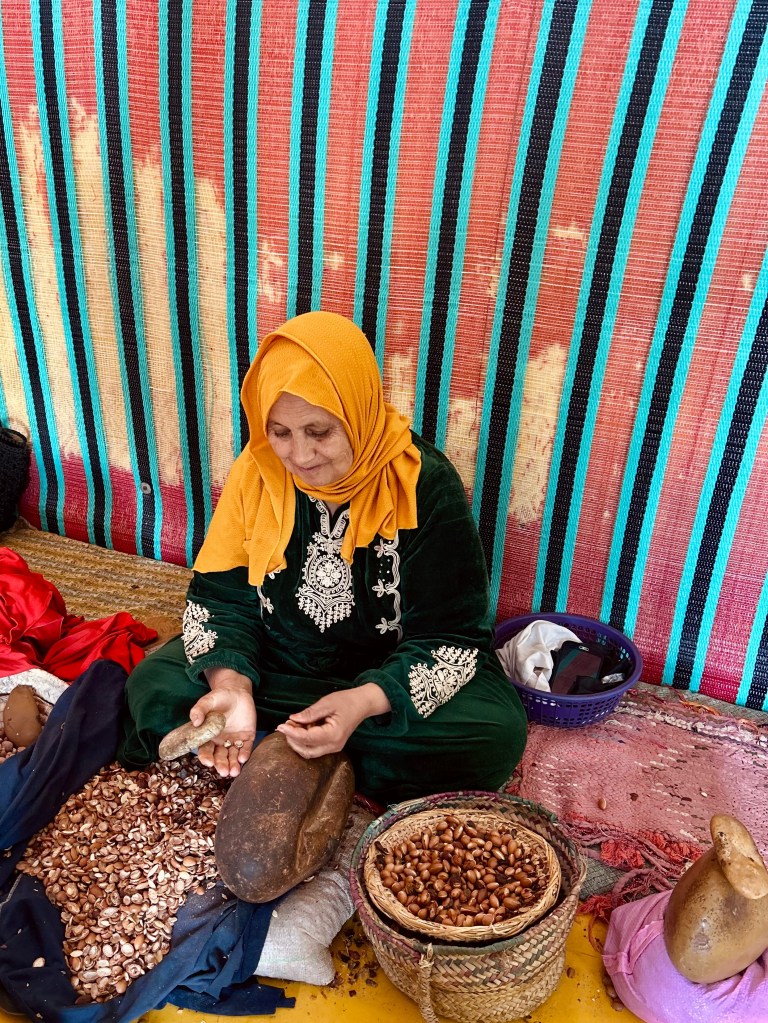
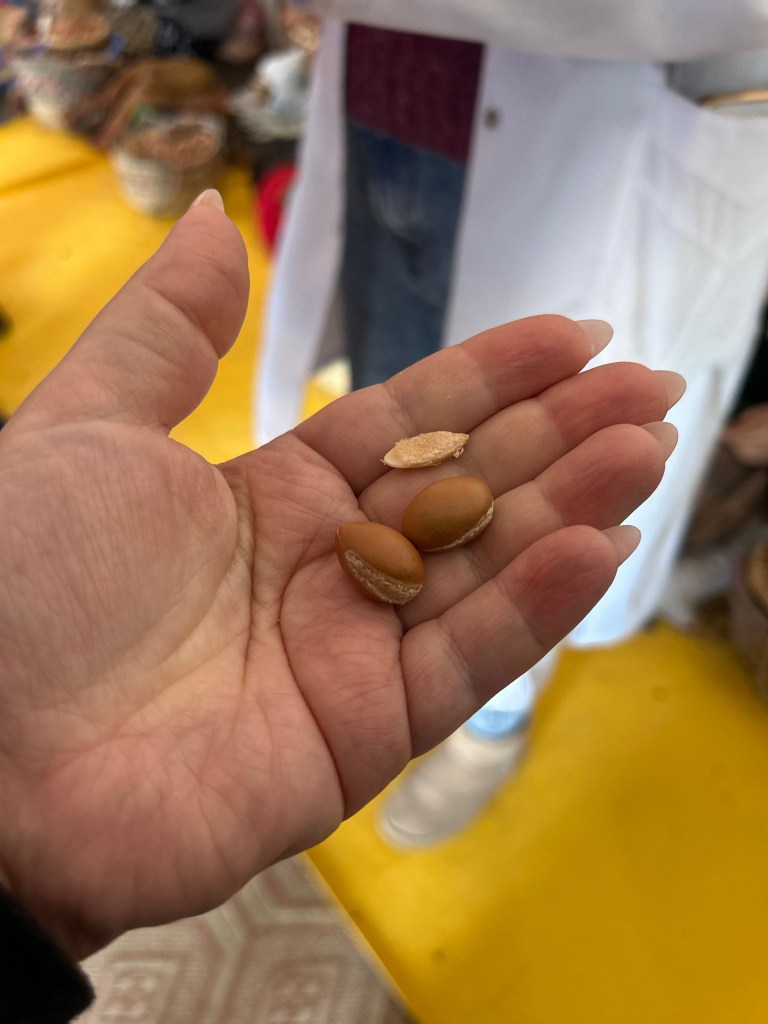
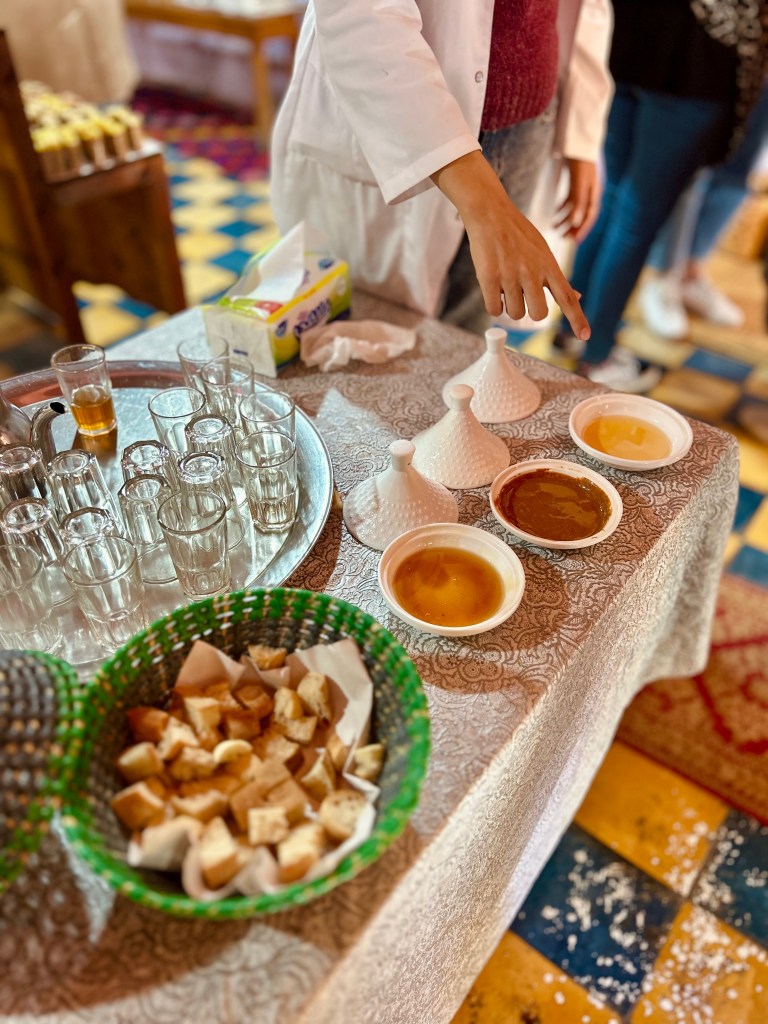
The town itself is compact and easy to explore on foot. The driver will drop you off somewhere around the port and tell you when and where to meet again for the journey back. The port area is busy and postcard-like. The blue boats and fortified walls are often photographed and are what usually illustrates Essaouira, on magnets, coasters, bottle openers… There’s activity from early morning, while the rest of the town is sleepy: men carrying crates of fish, seagulls diving annoyingly close, and smoke rising from small grills where sardines and calamari are being cooked on the spot. What the postcards don’t include is the foul smell around the boats. That part is a bit like a sewer, you know when there’s too much fish and garbage. Yes, that’s part of the experience as well and in all honesty, it does help you not dwell there too long, which gives you more time in the town.
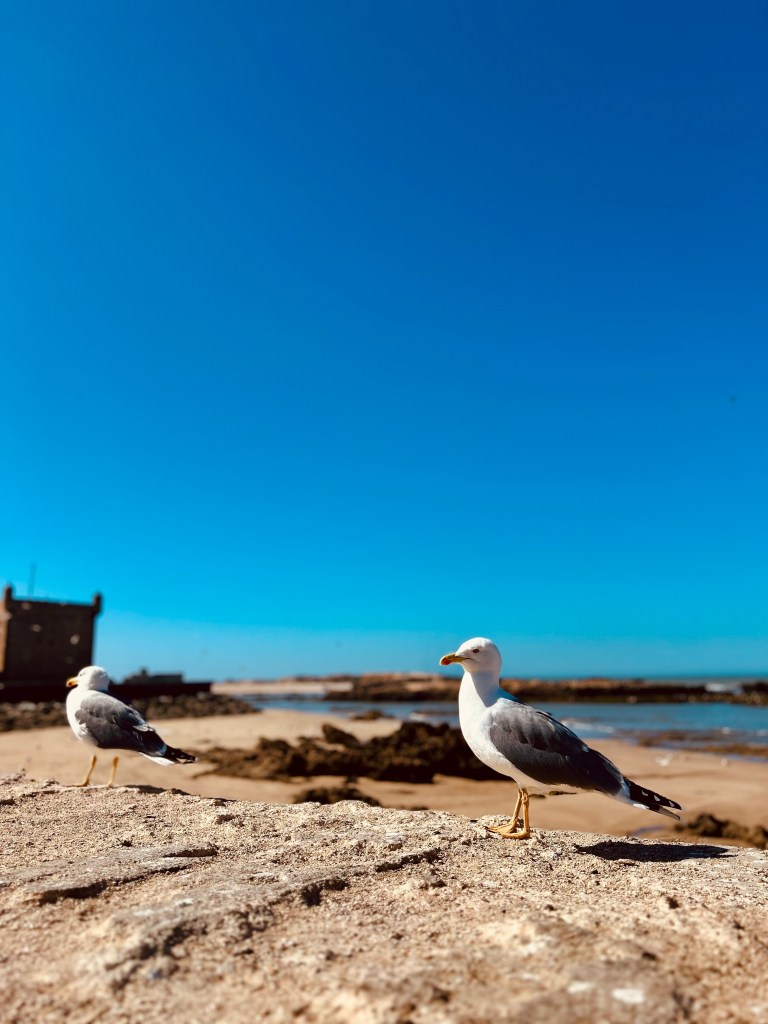
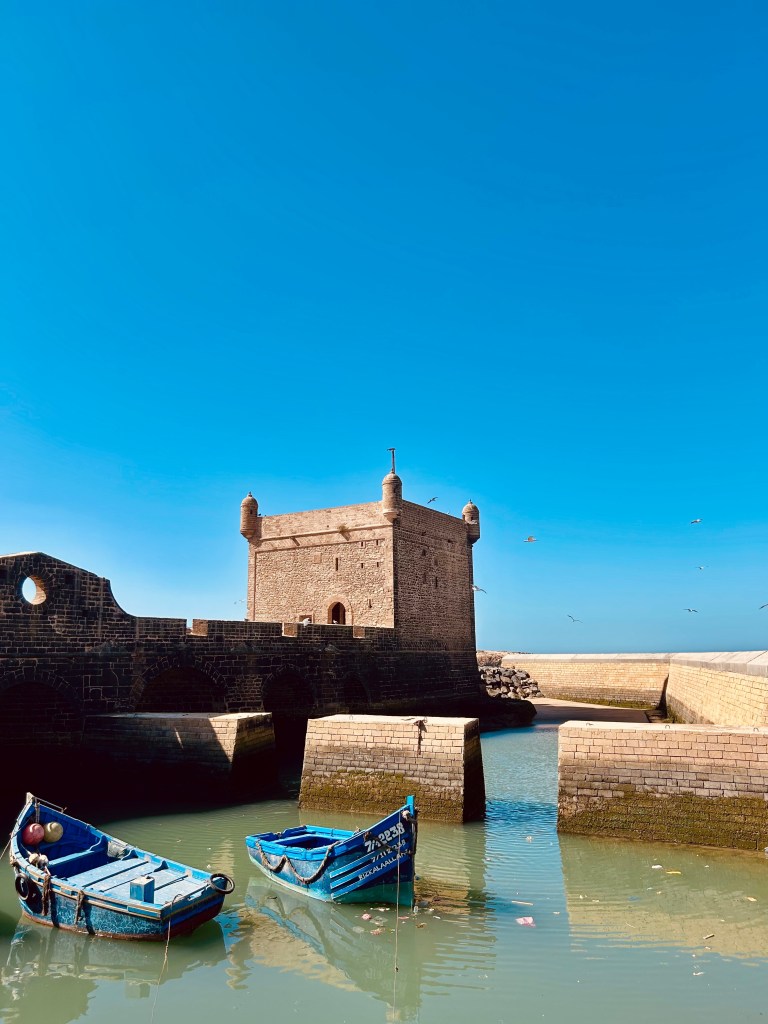
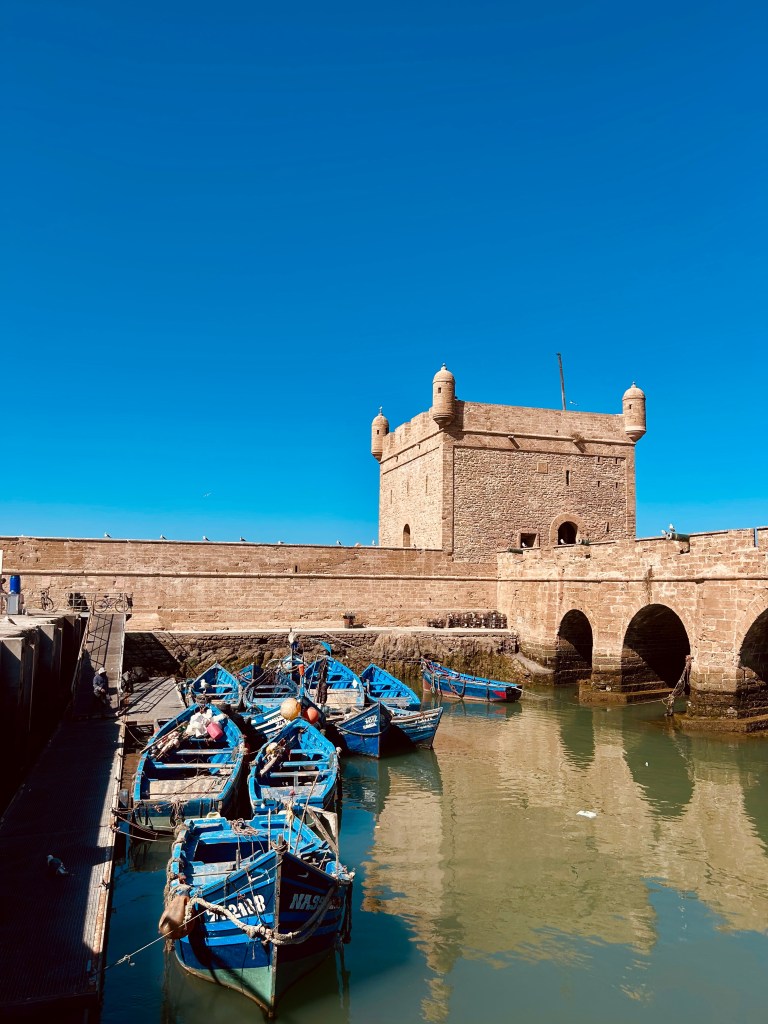
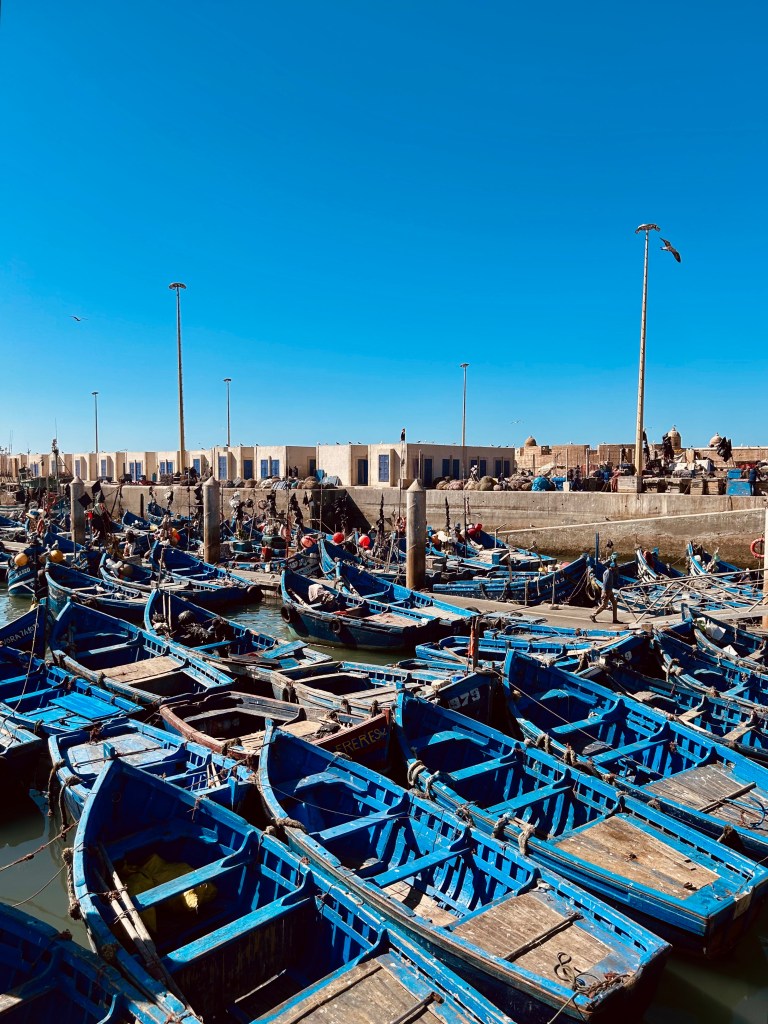
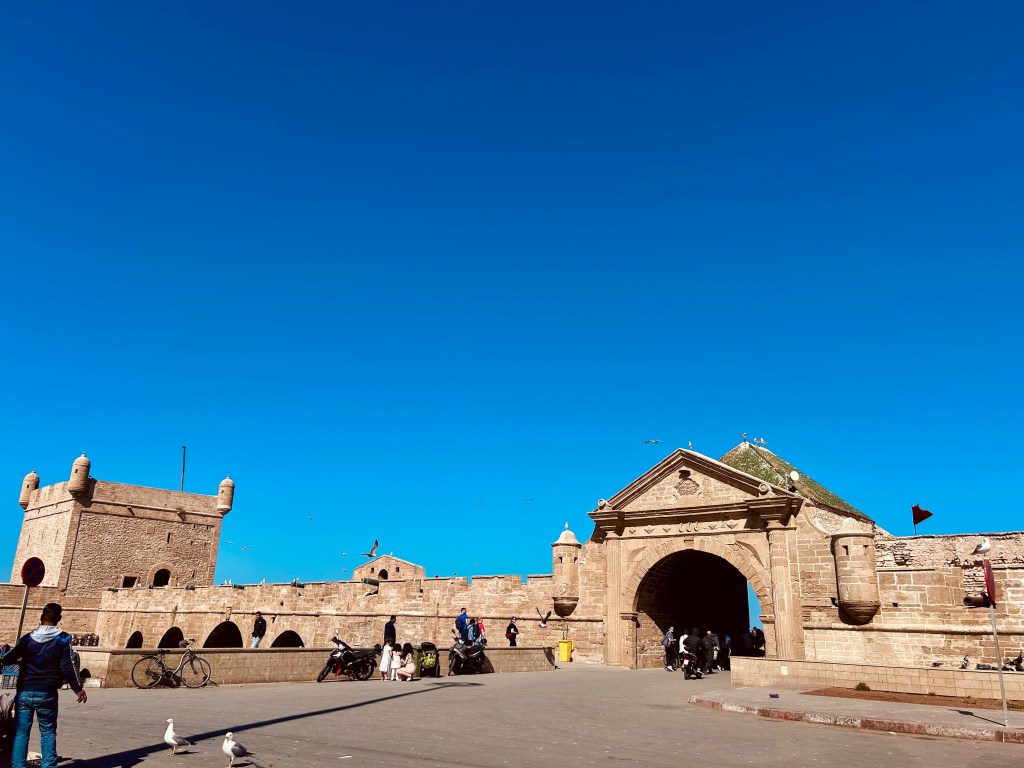
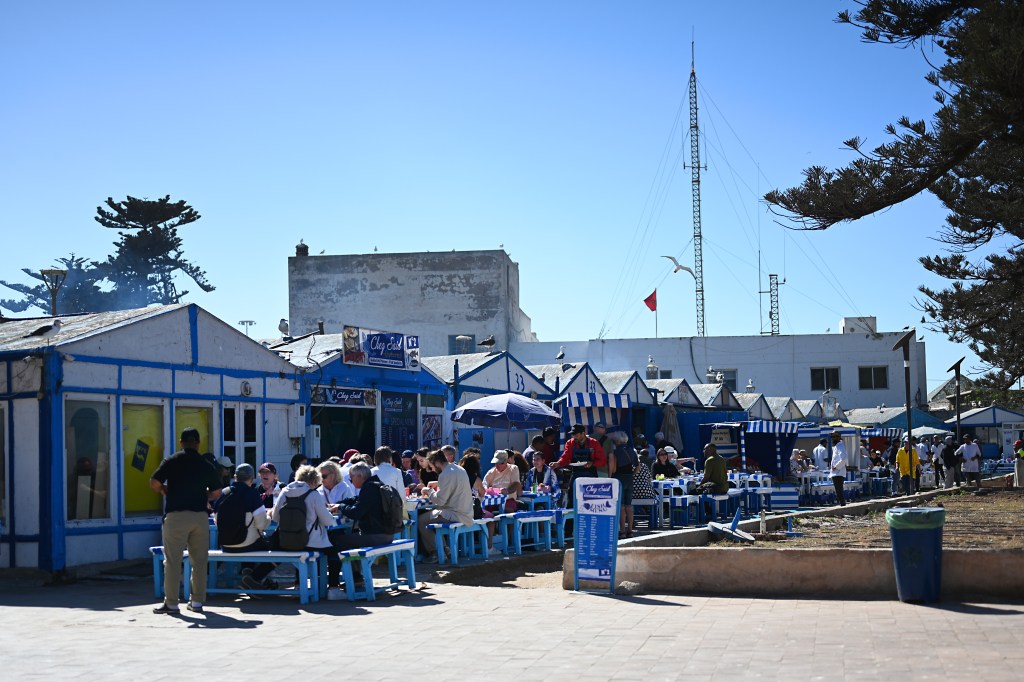
The streets are narrow, whitewashed, and lined with bright blue shutters. And bikes. Lots of bikes. Shops are full of carved wood, jewellery, rugs, and art galleries, but the vendors are calm and they don’t swarm you. The town doesn’t properly wake up until noon and that’s when it gets more crowded. But if you’re out walking a bit earlier, you’ll have a lot of streets to yourself.
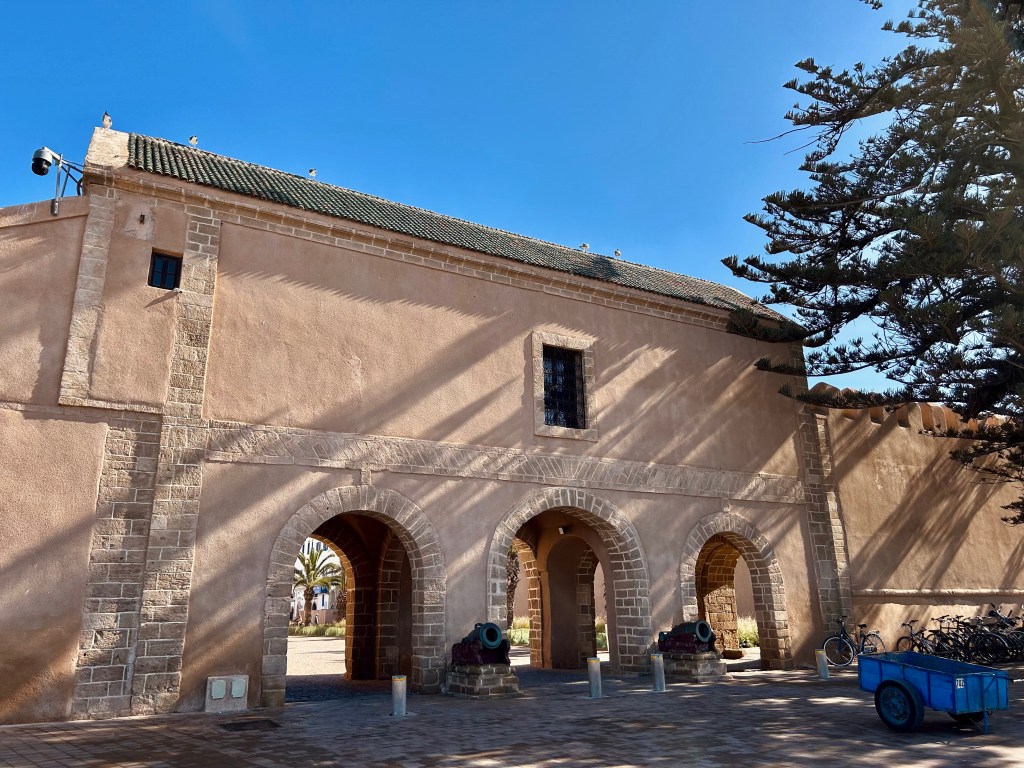
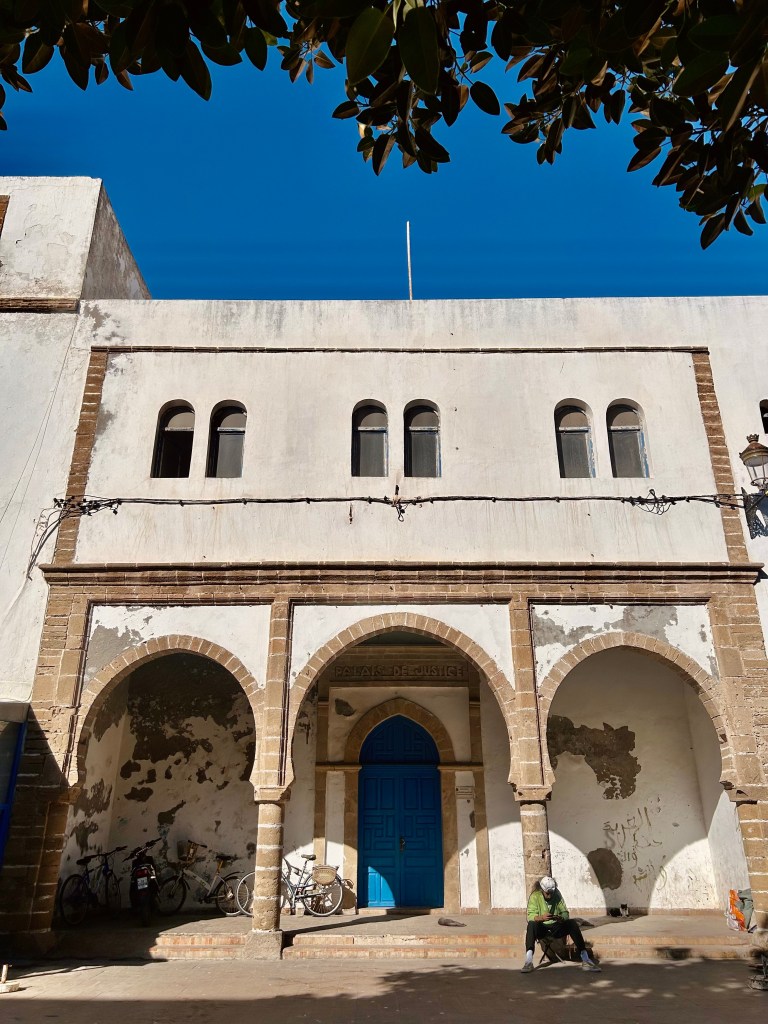
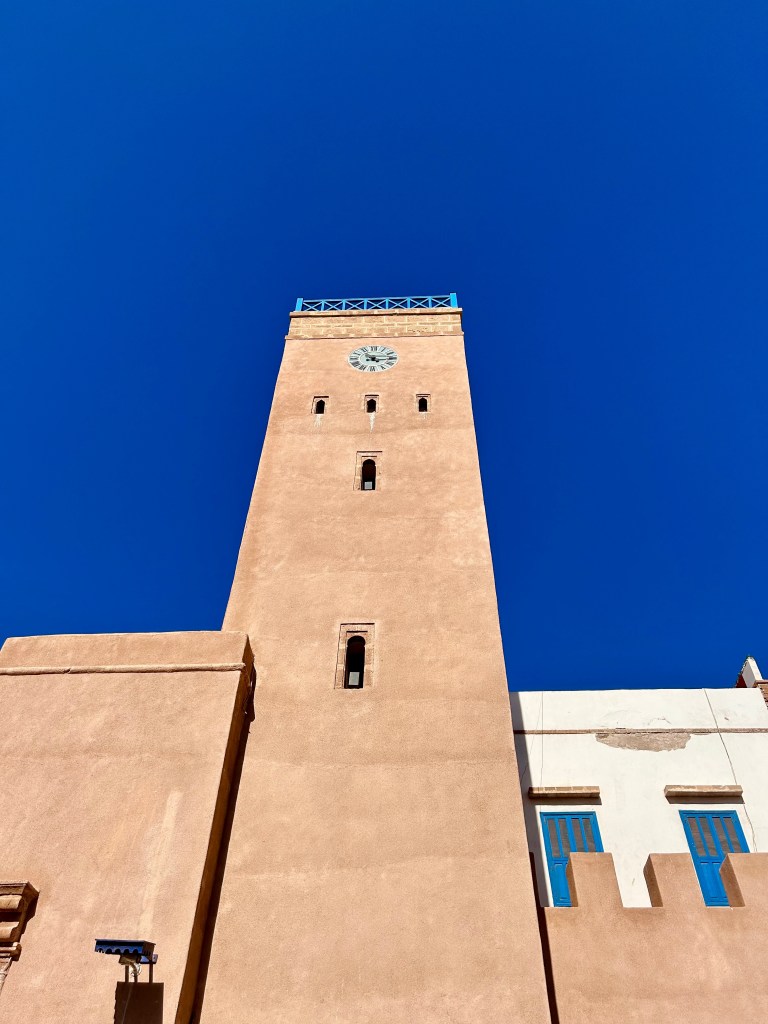
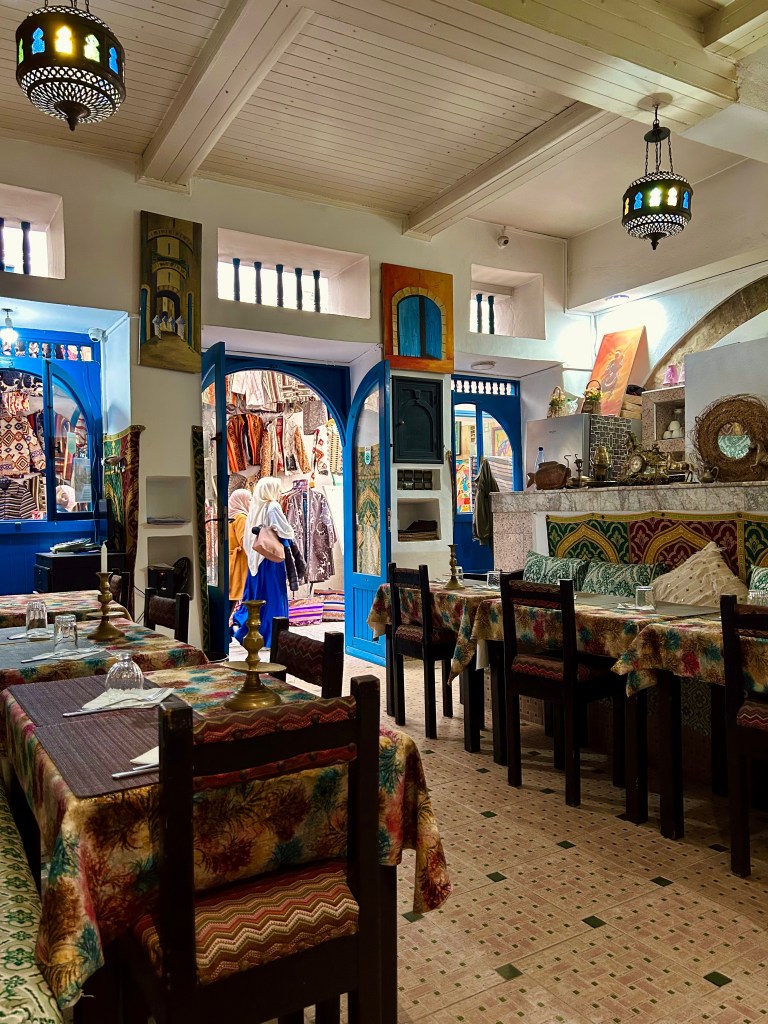
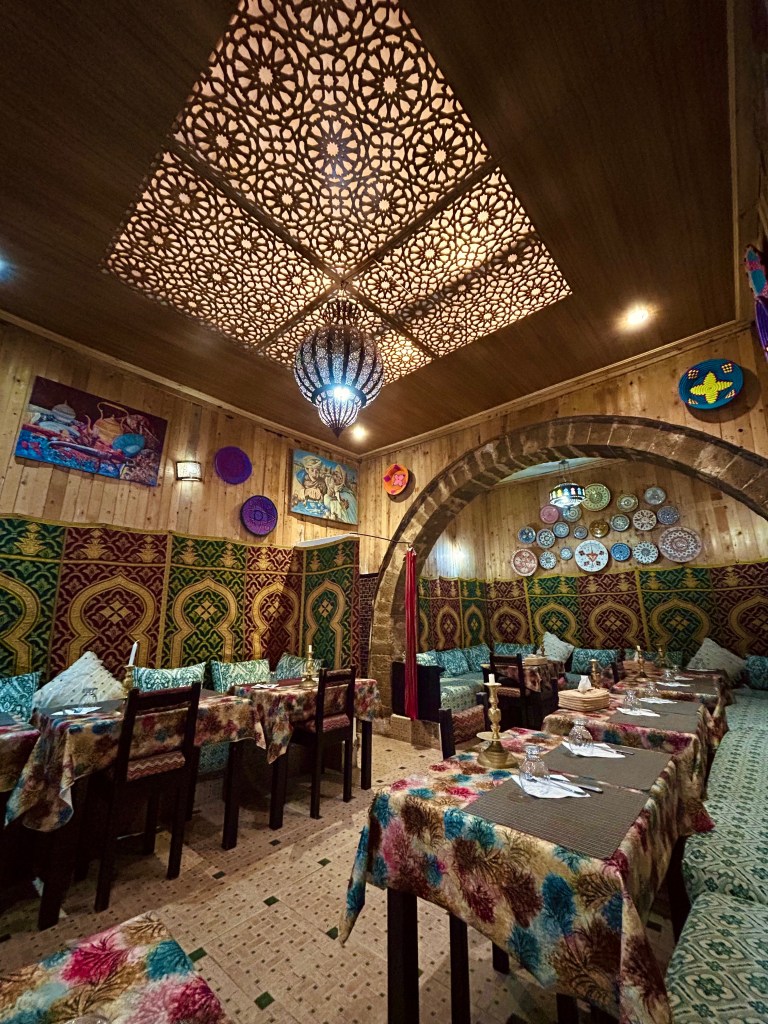
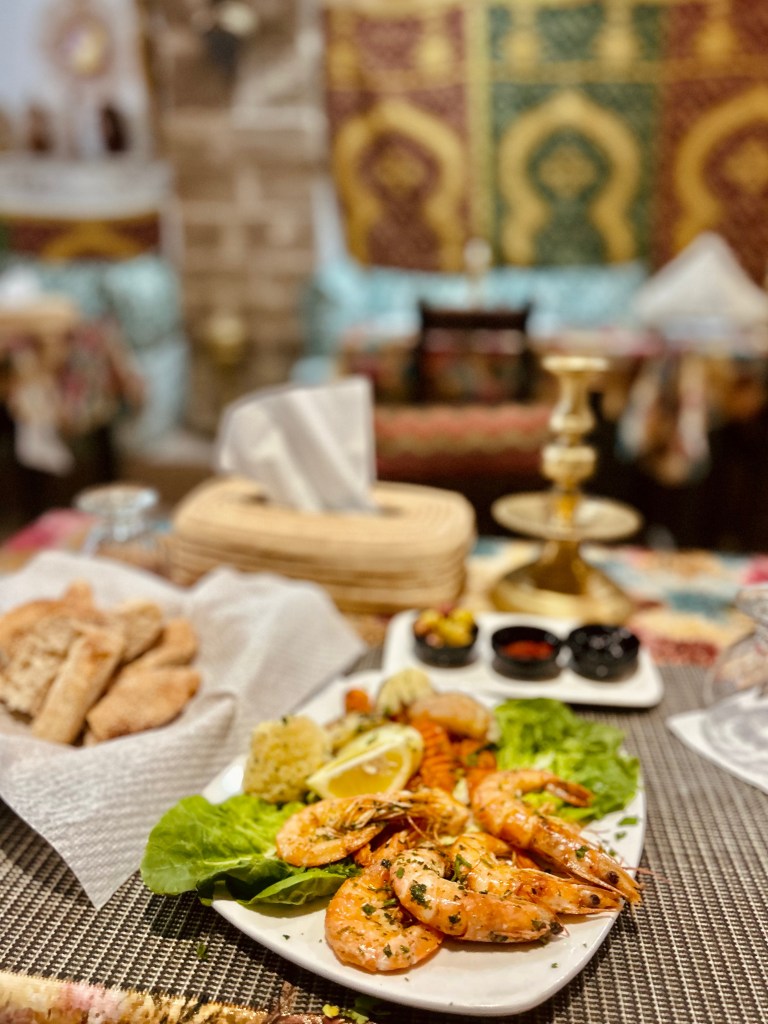
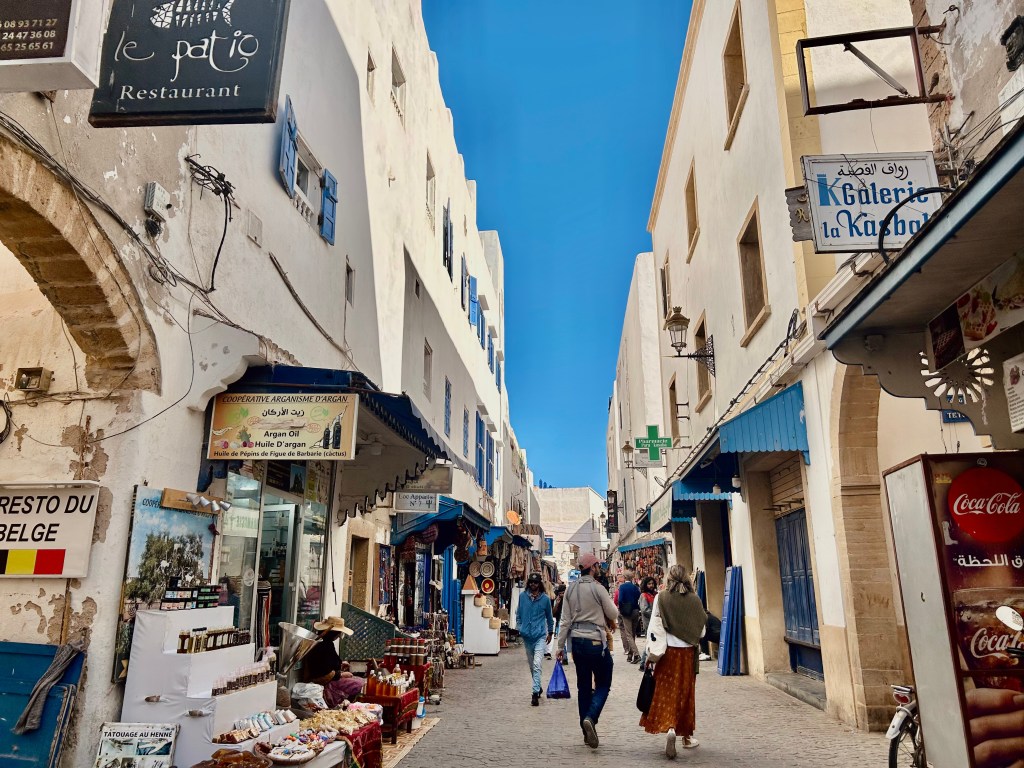
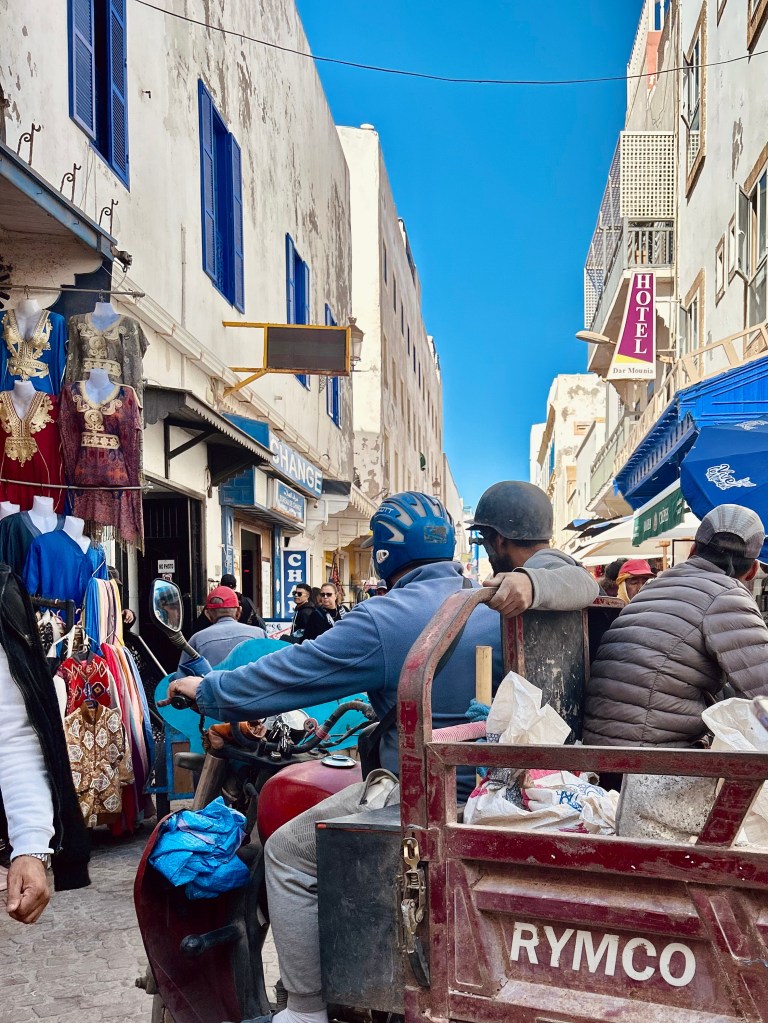
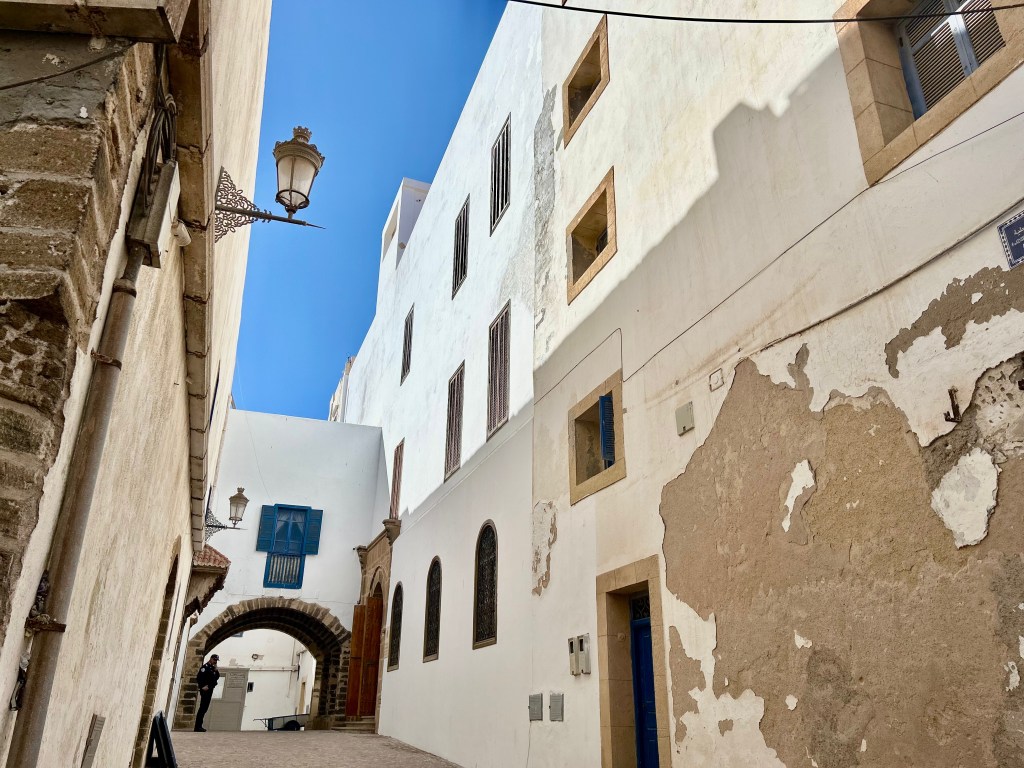
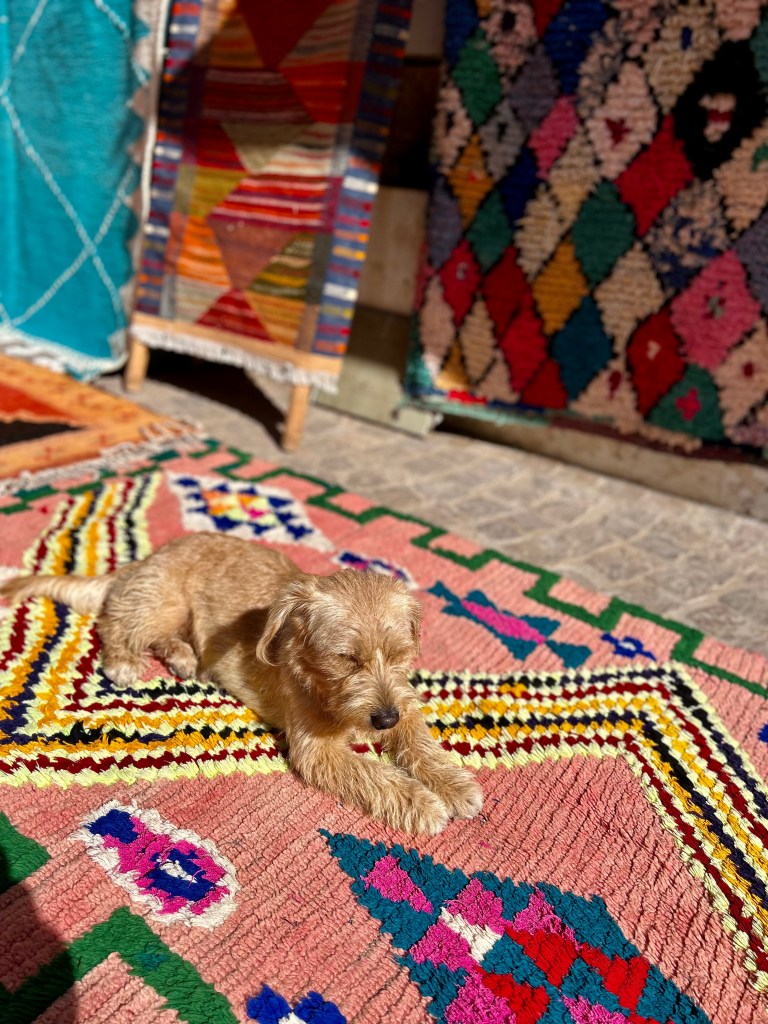
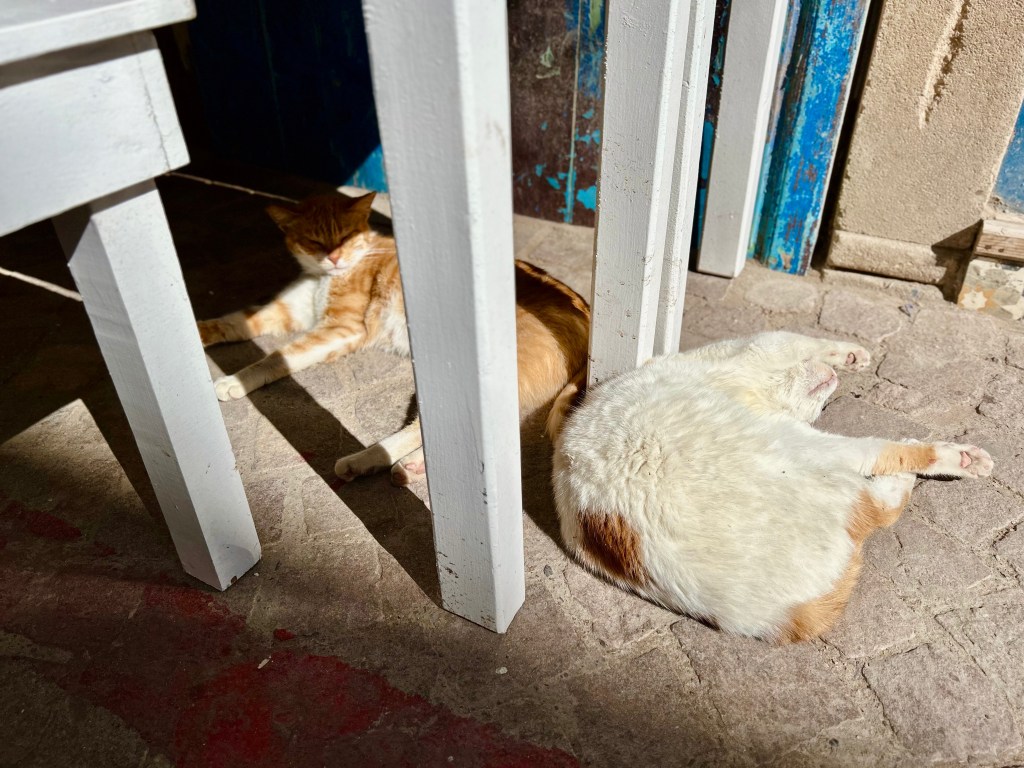
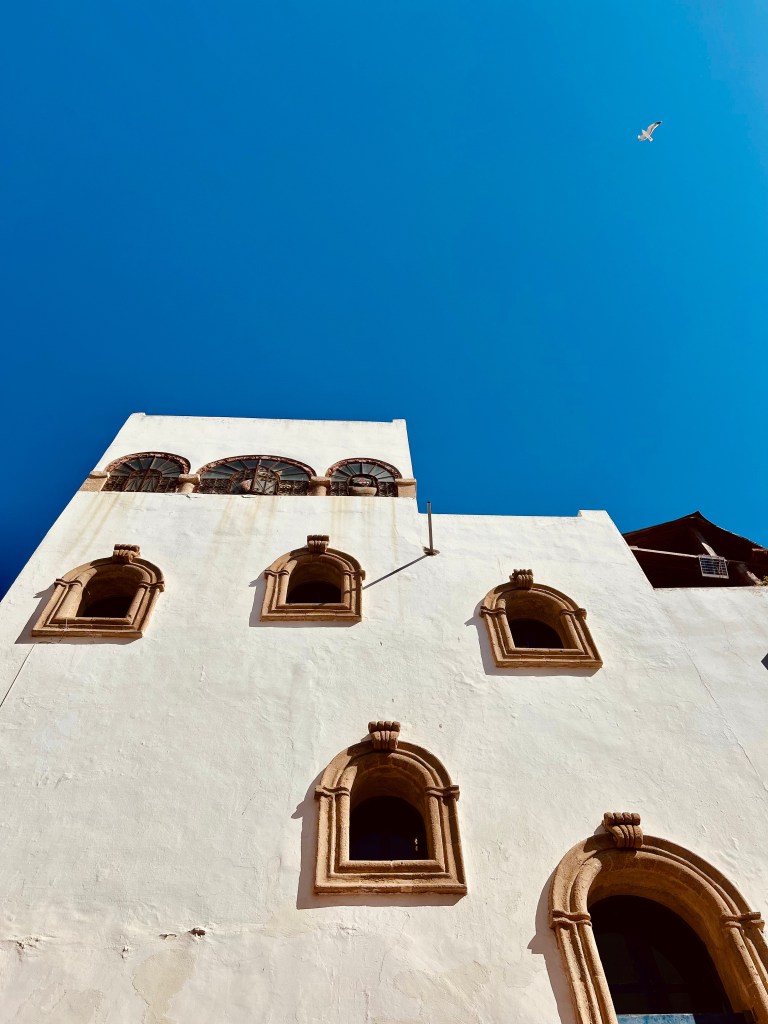
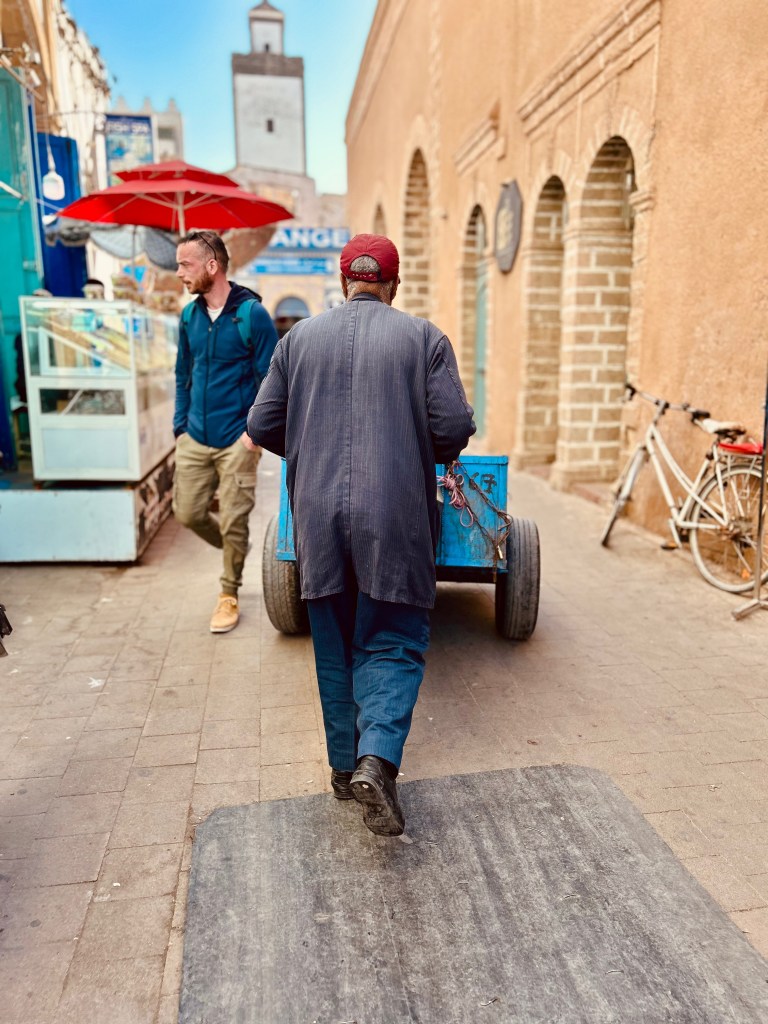
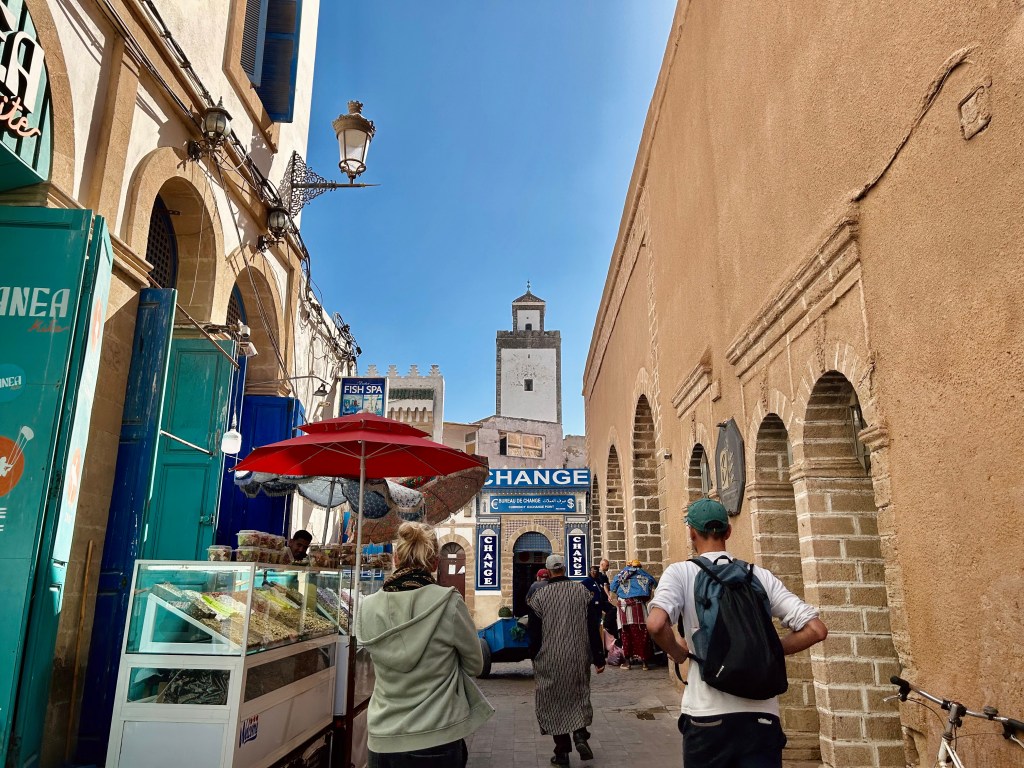
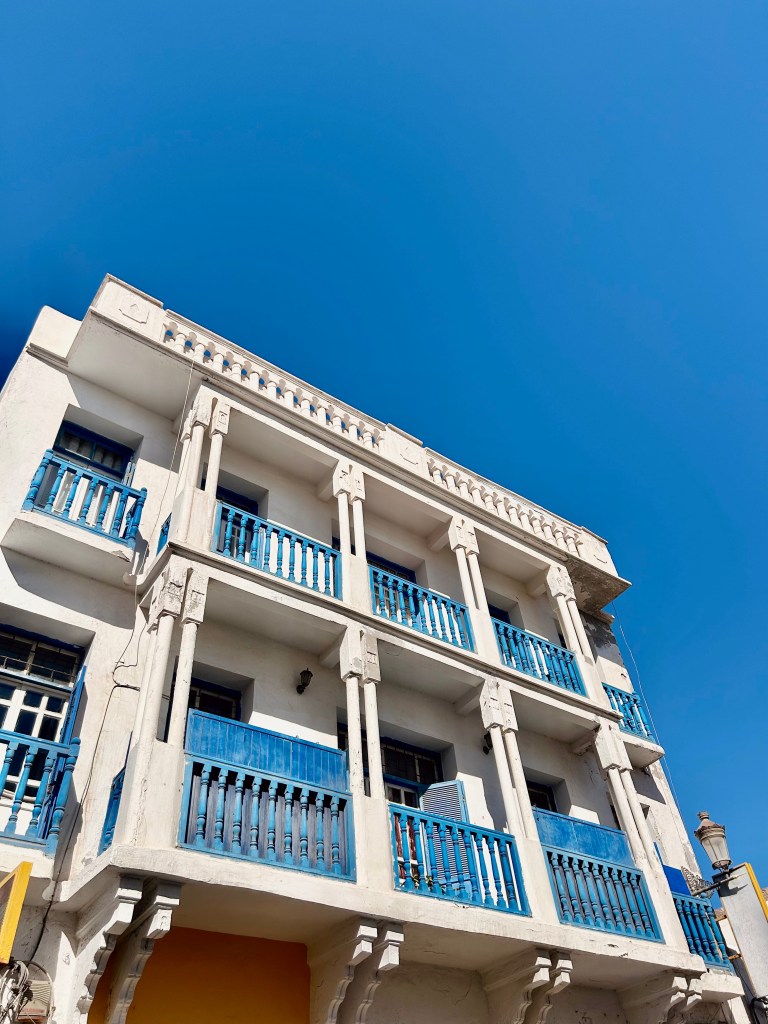
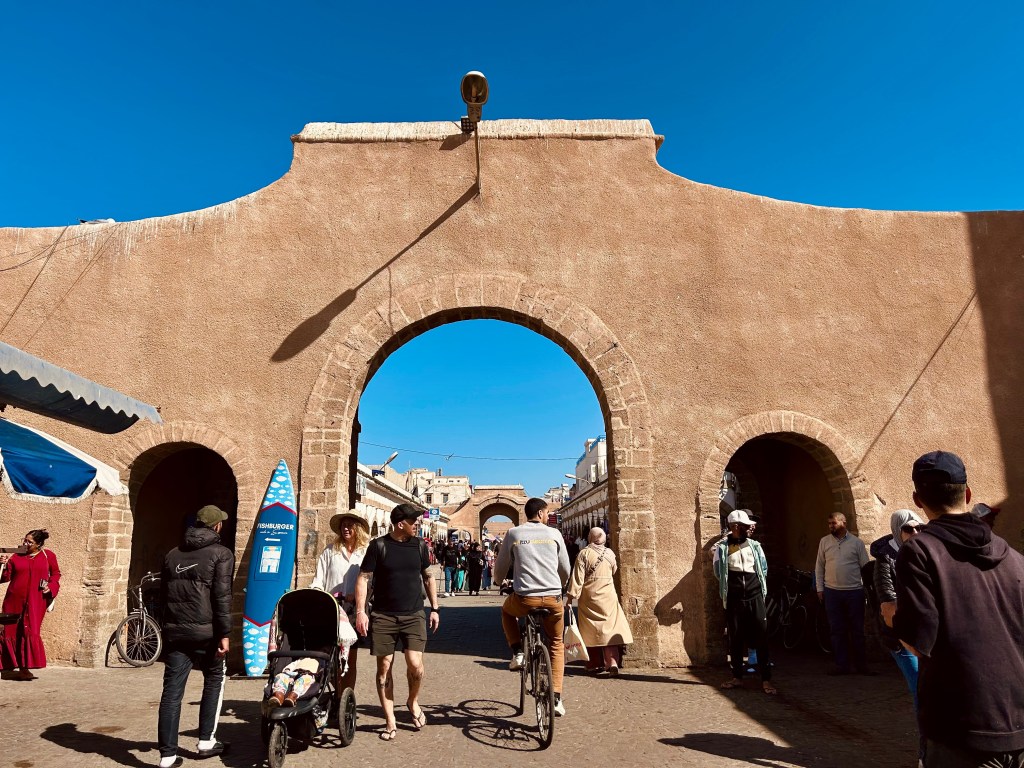
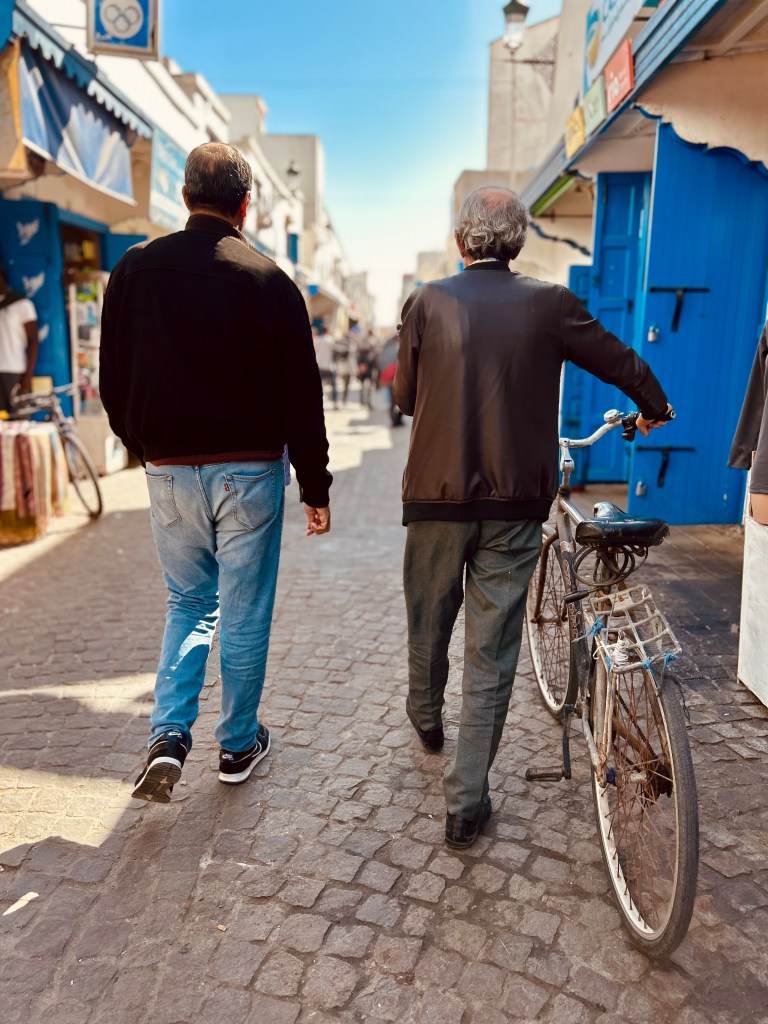
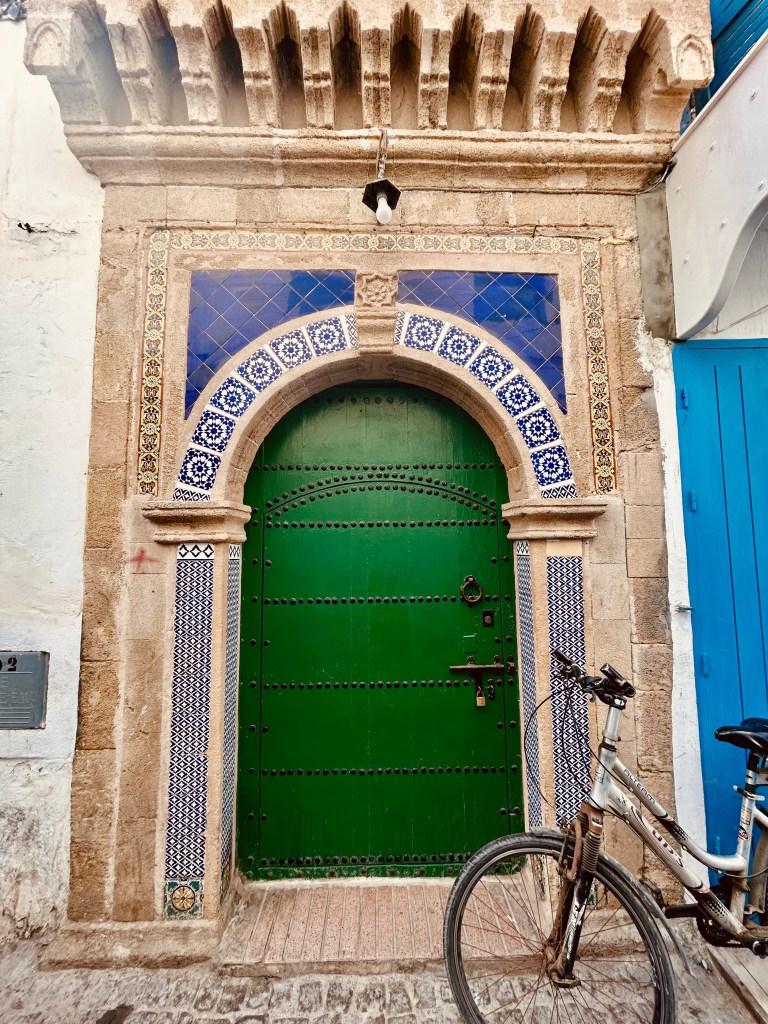
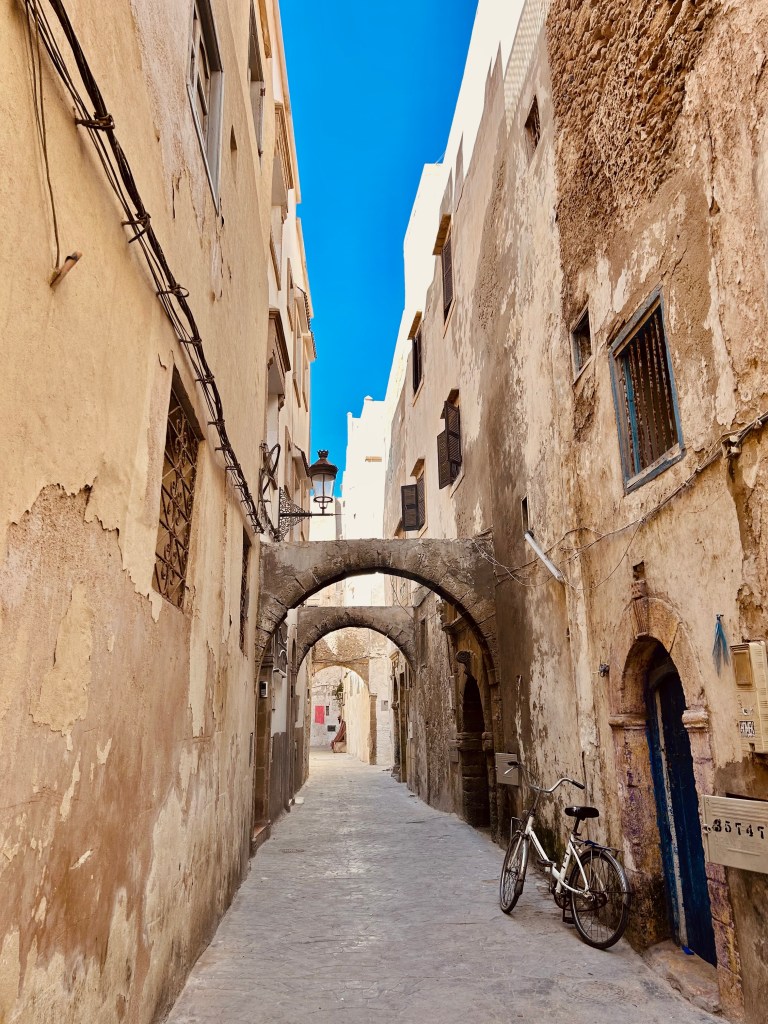
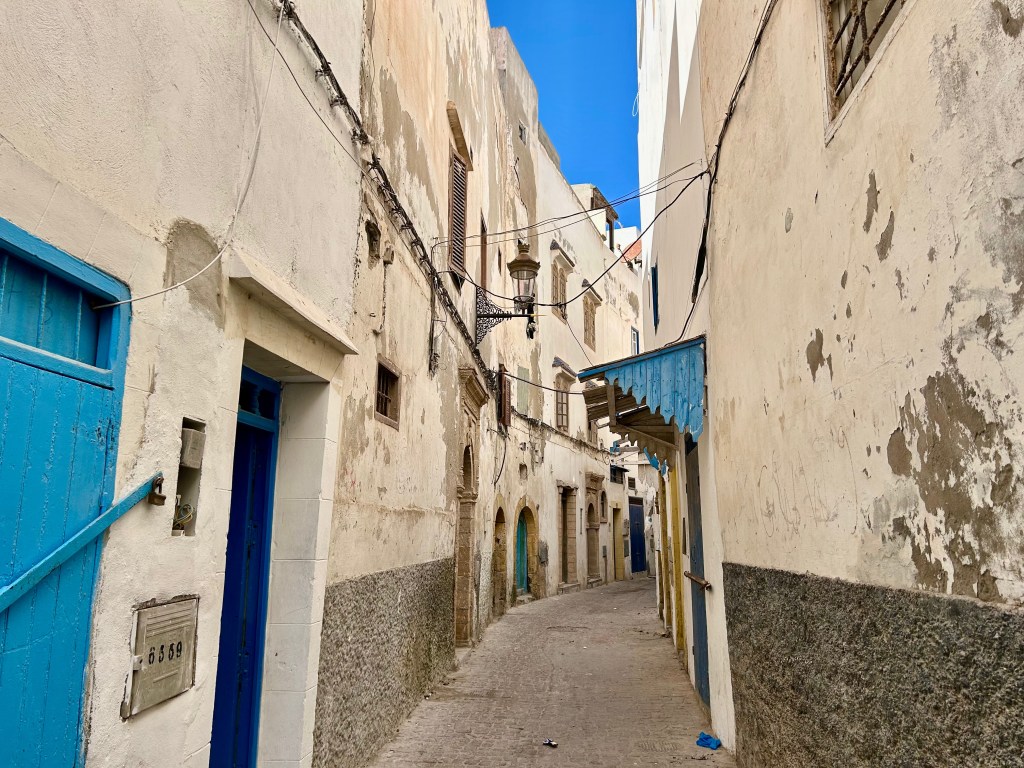
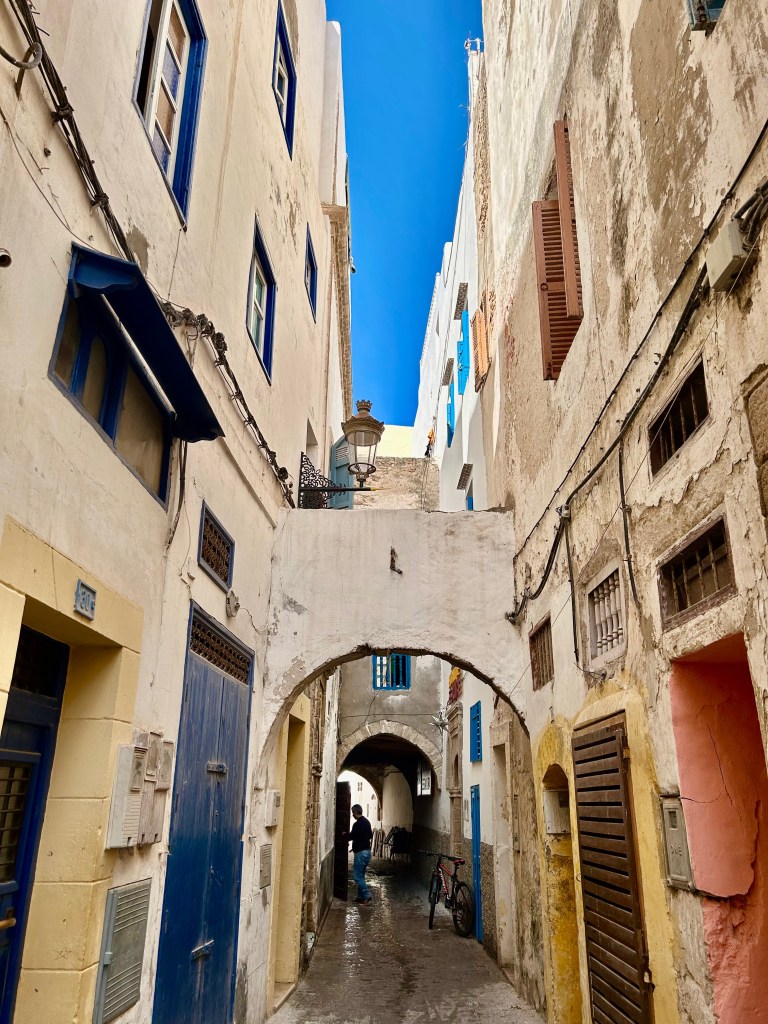
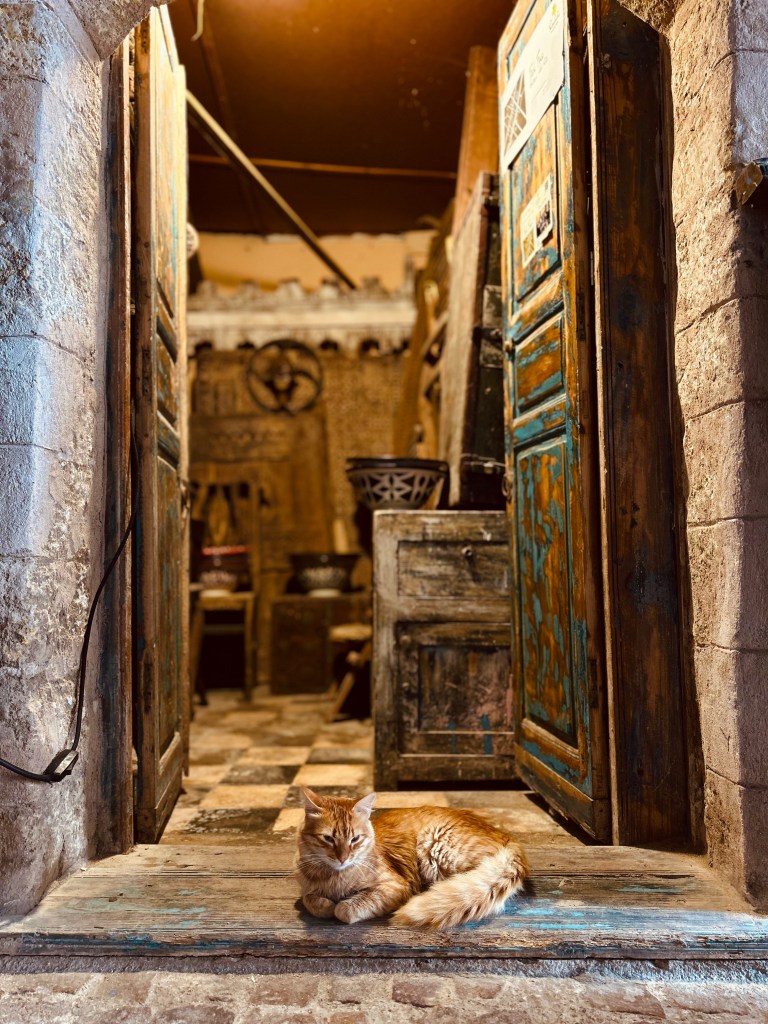
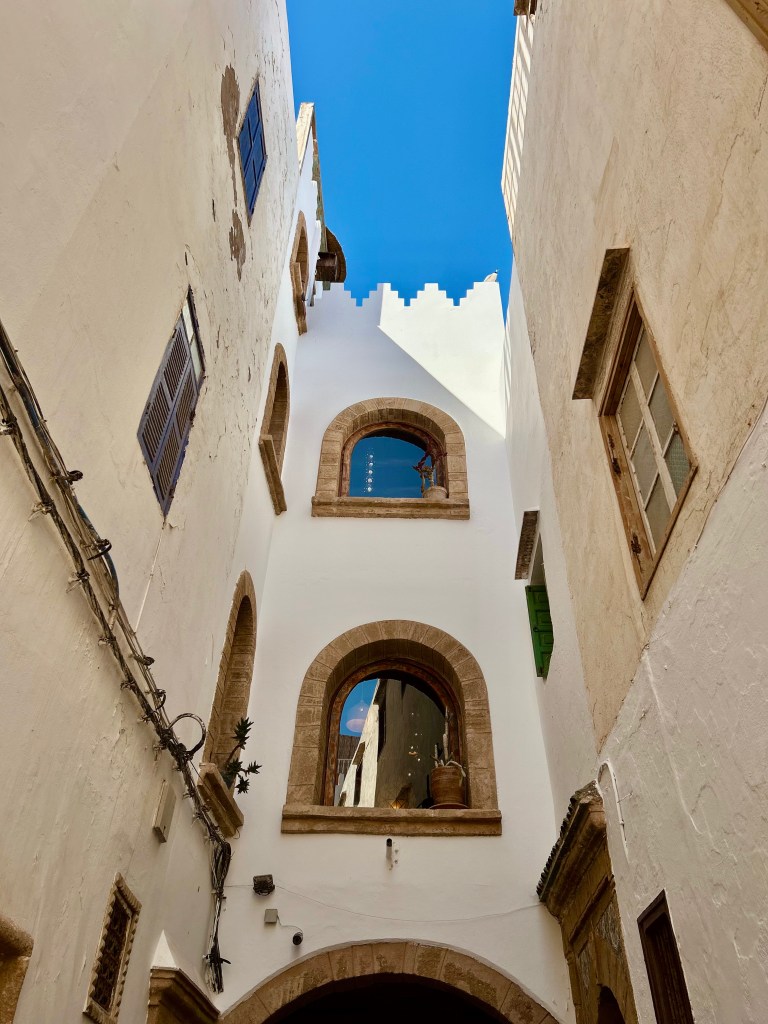
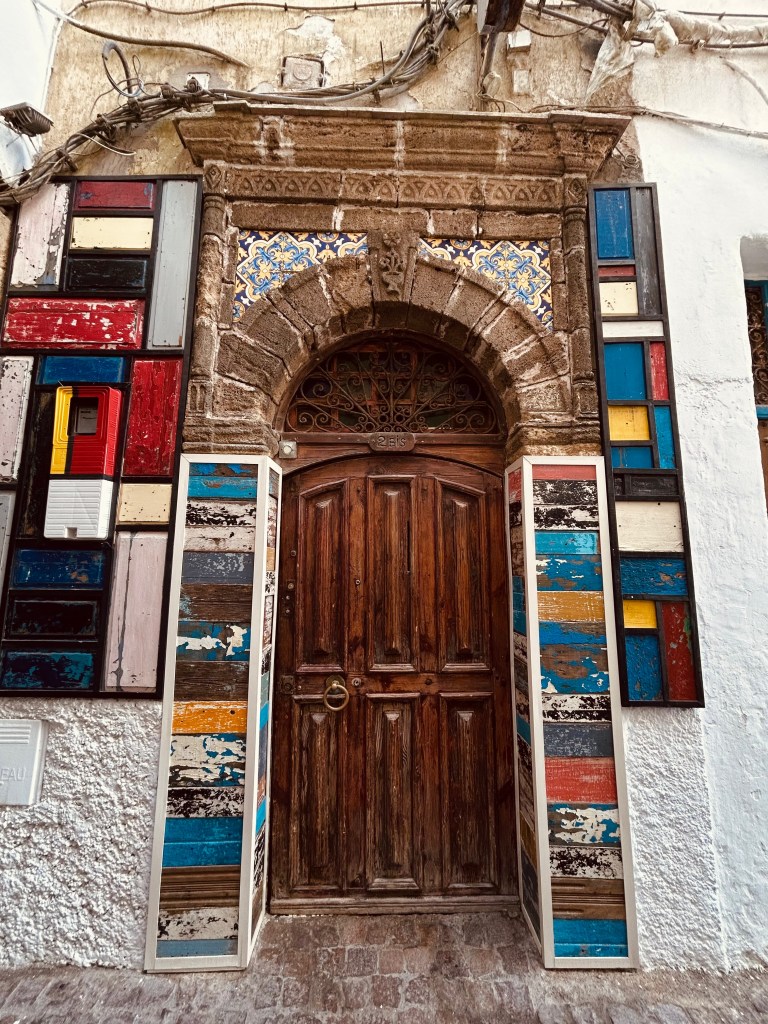
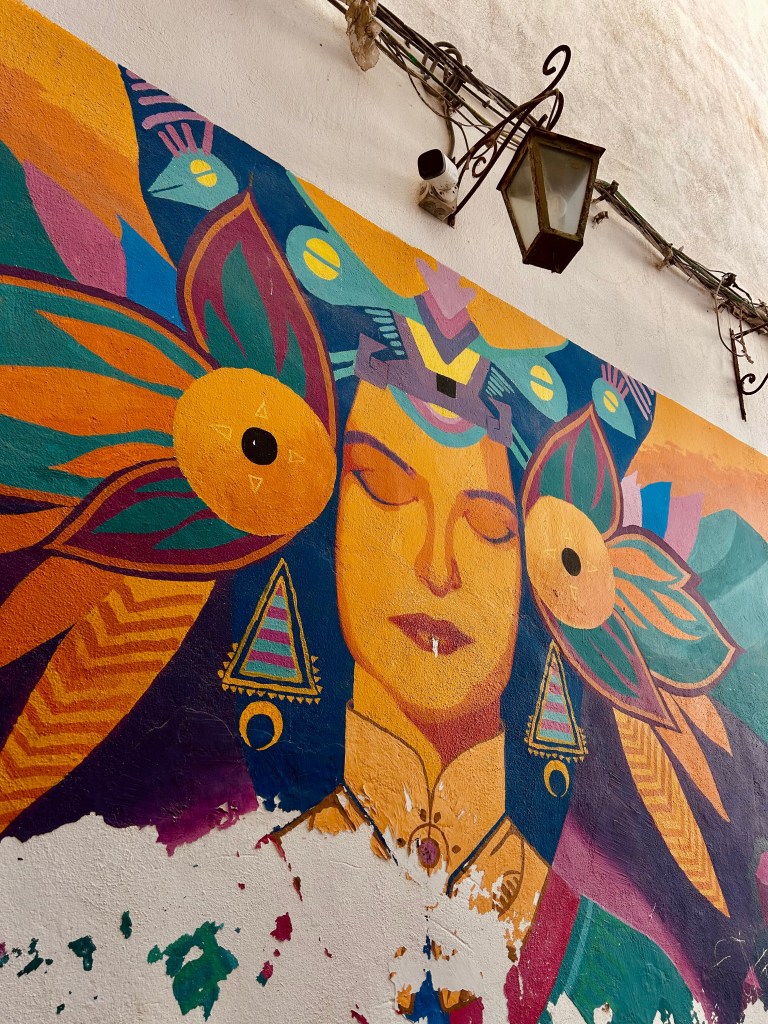
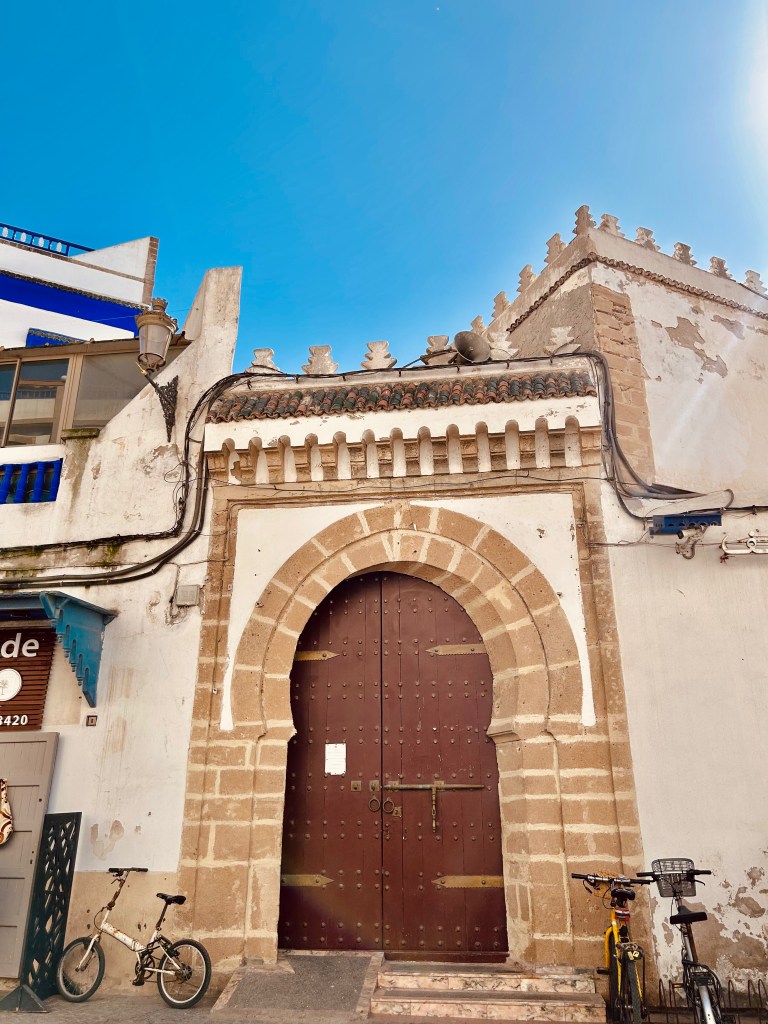
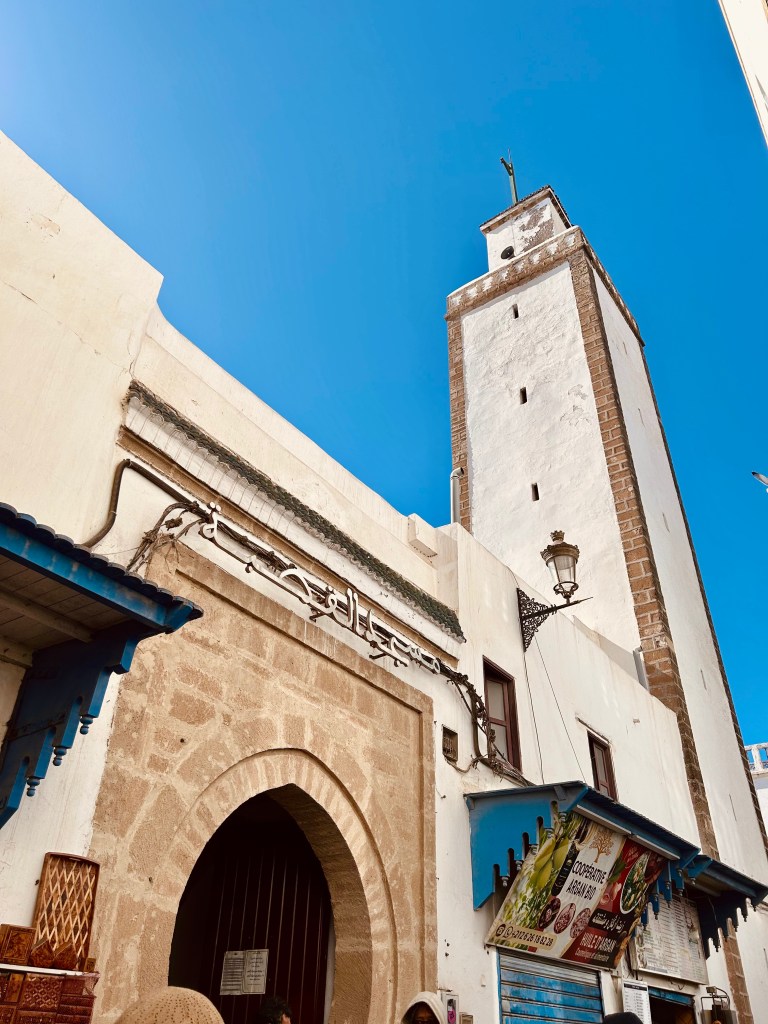
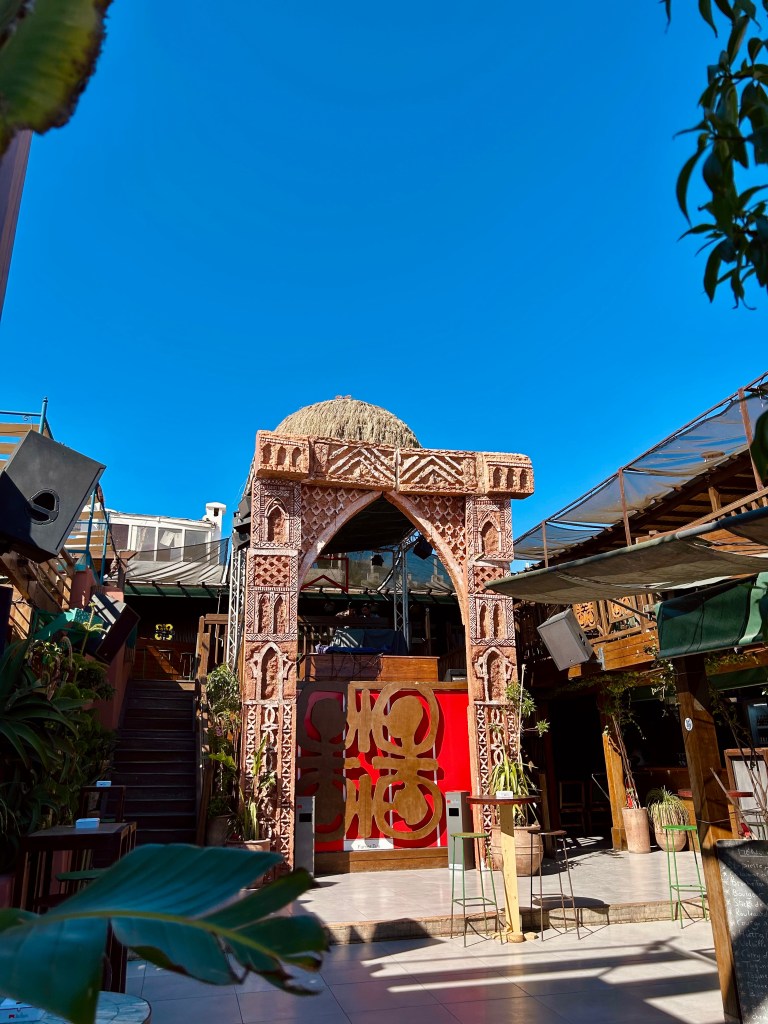
I also walked along the old stone ramparts overlooking the ocean. Cannons line the walls as reminders of the town’s defensive past, but it’s the view that steals the show: waves crashing against jagged rocks and the smell of salt in the air. People sitting for a quiet moment on the rocks, just looking into the vastness of the ocean. Wind in our hair, blue skies and the occasional cat basking in the sunshine.
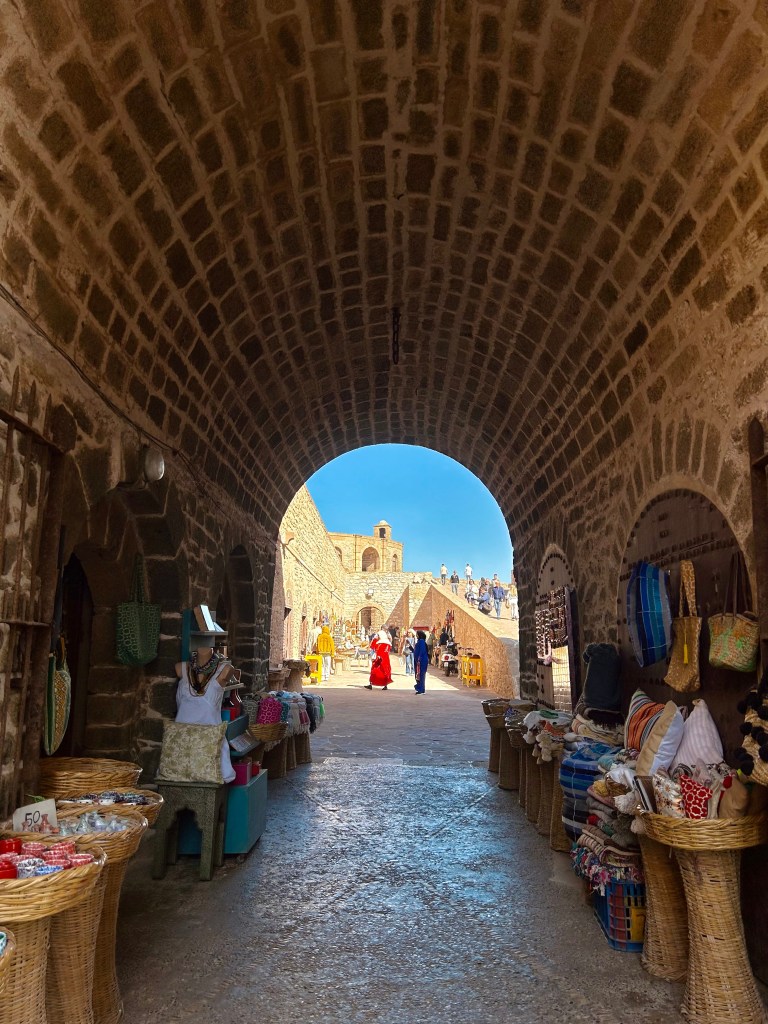
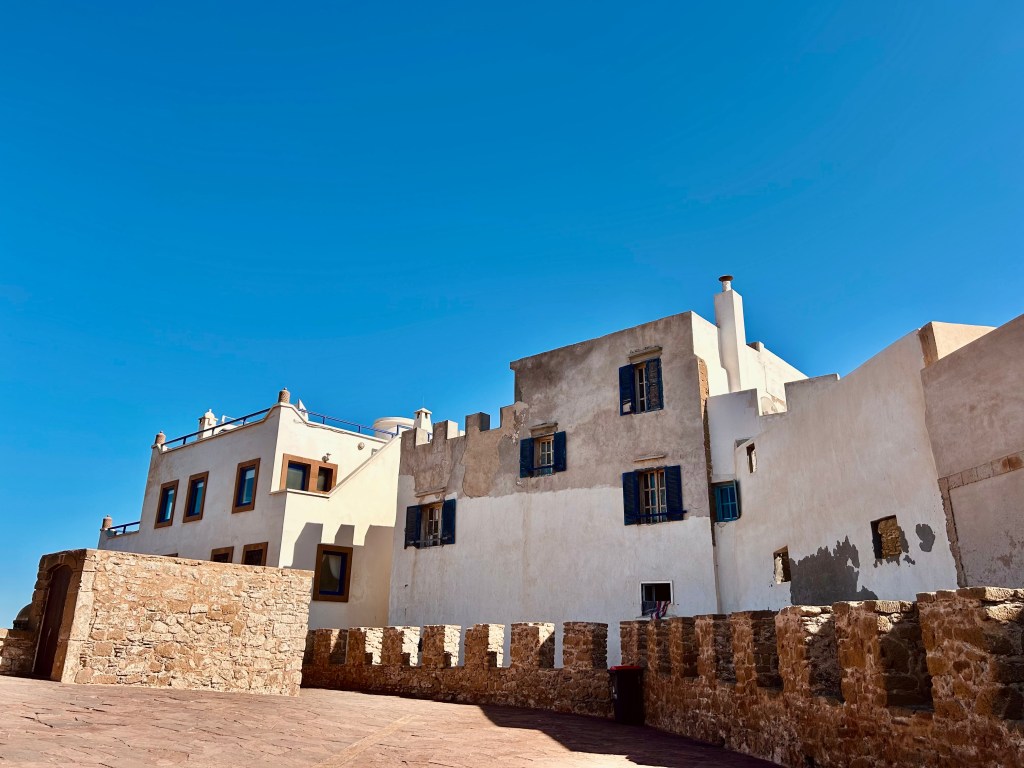
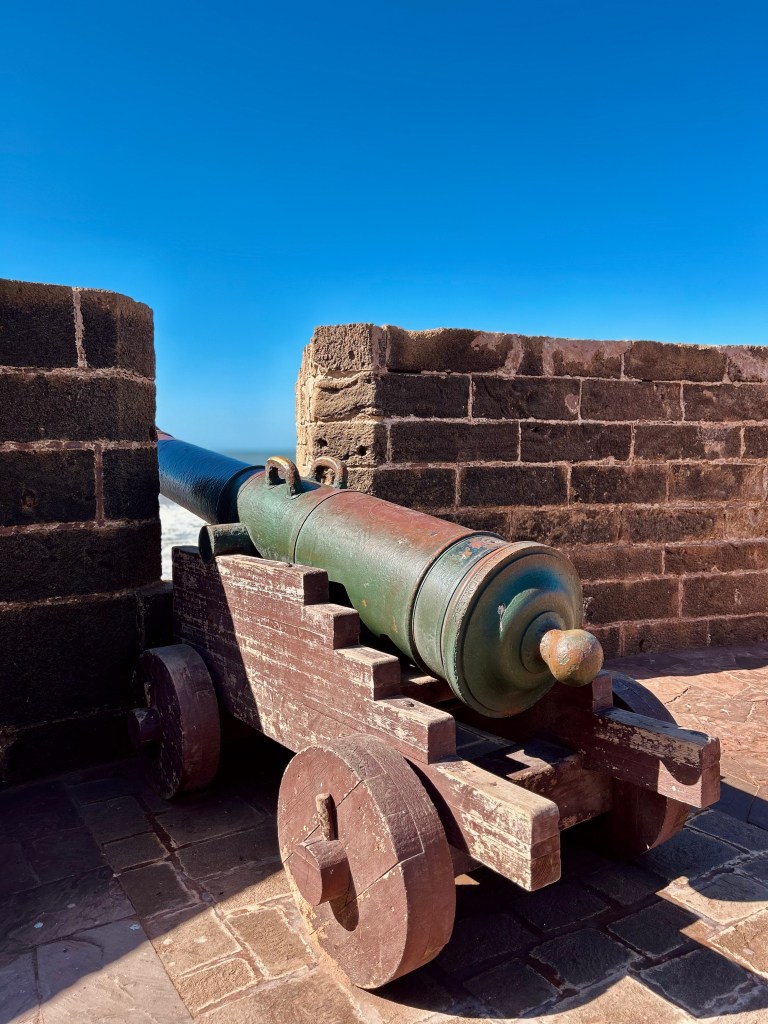
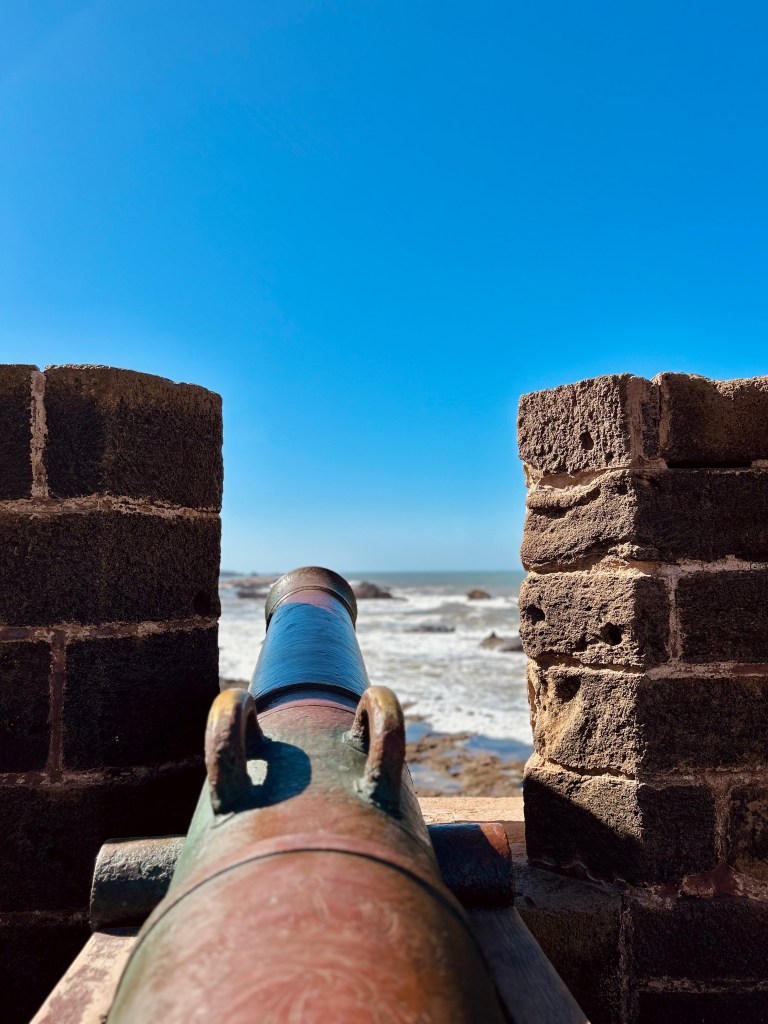
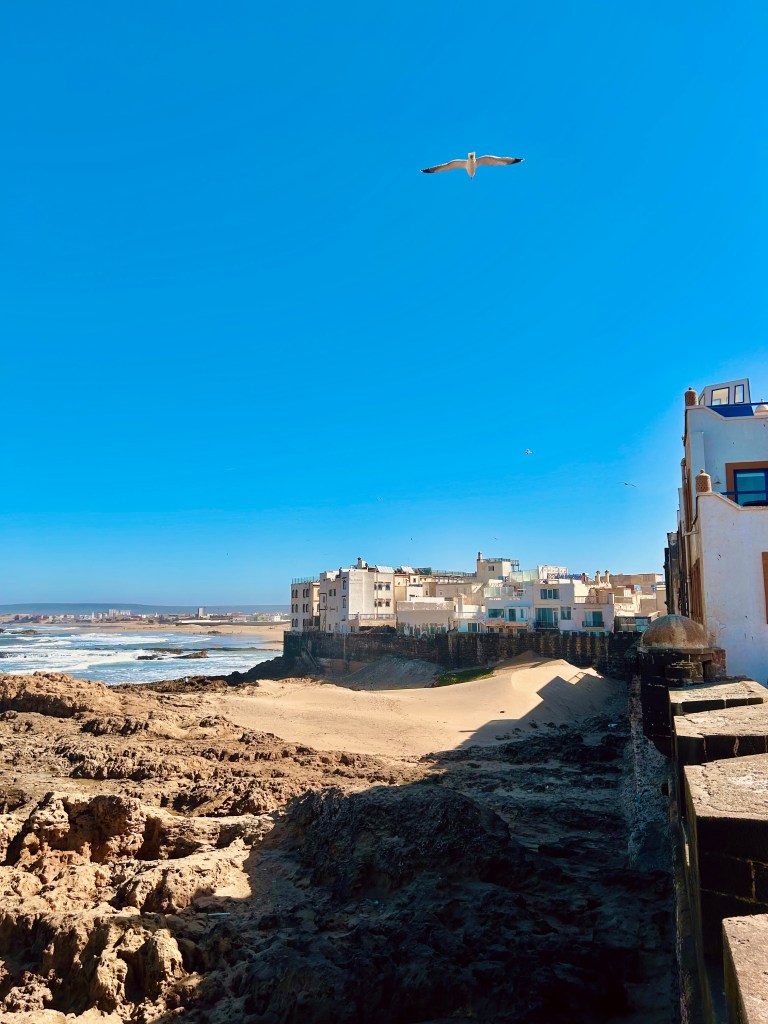
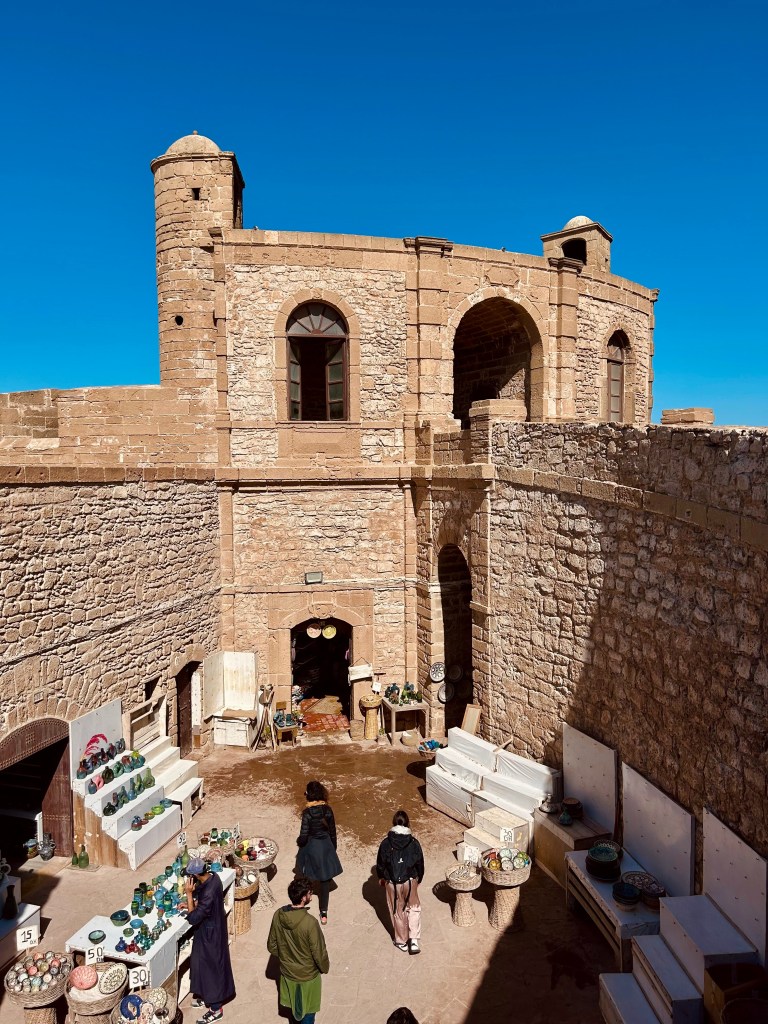
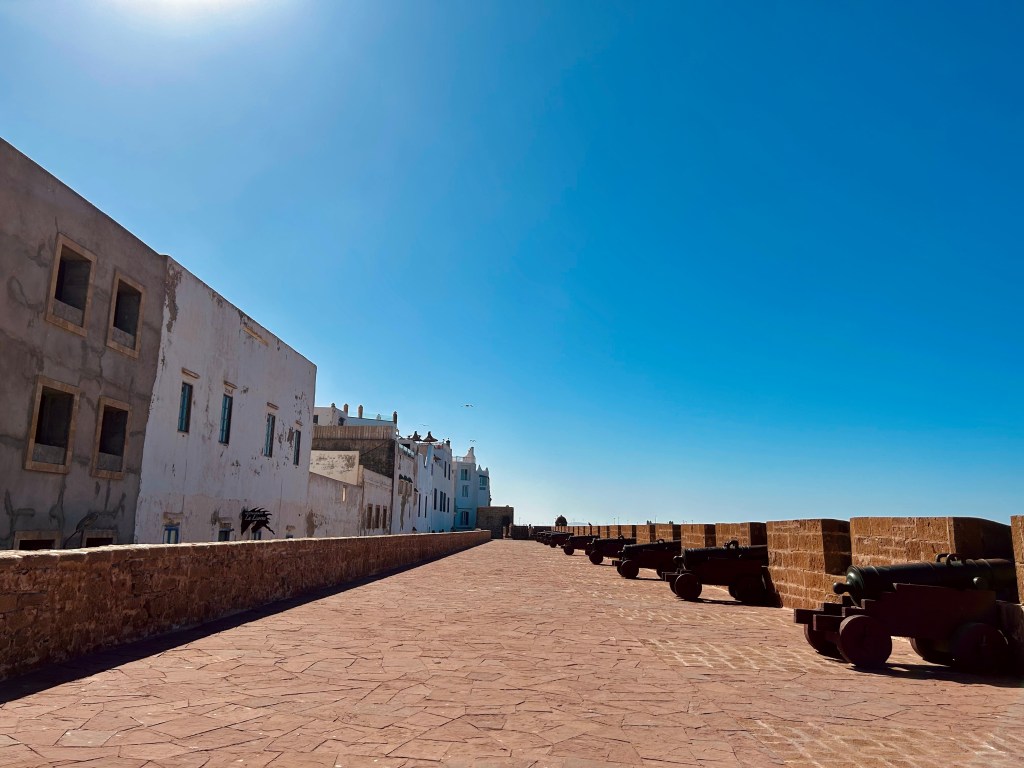
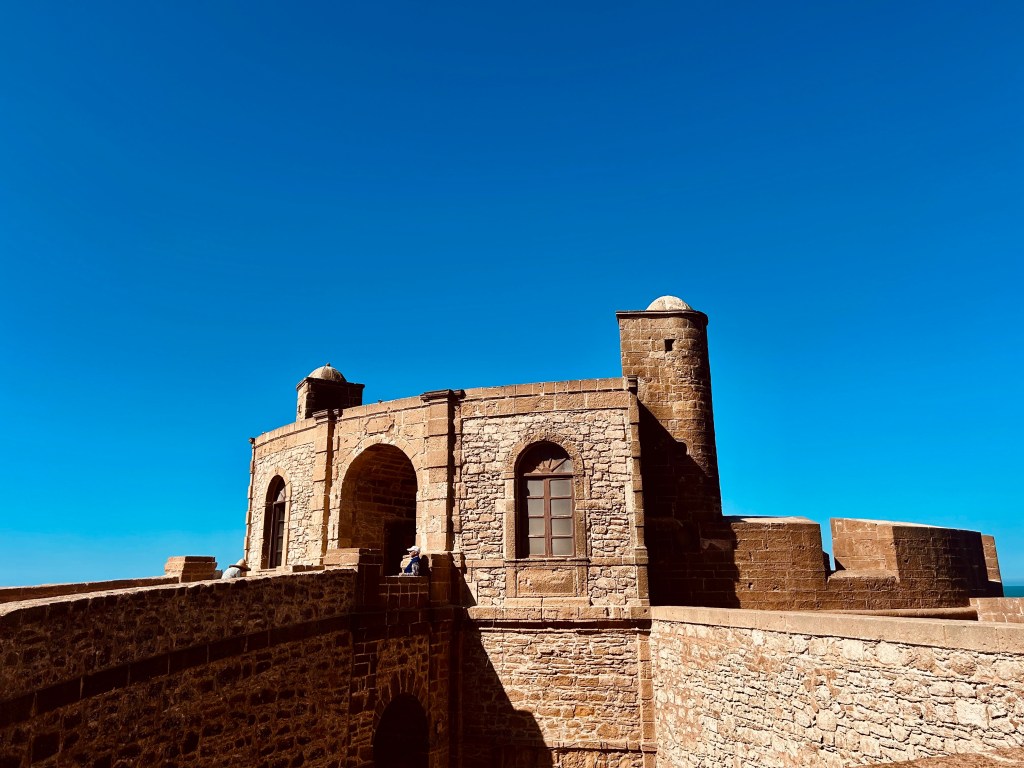
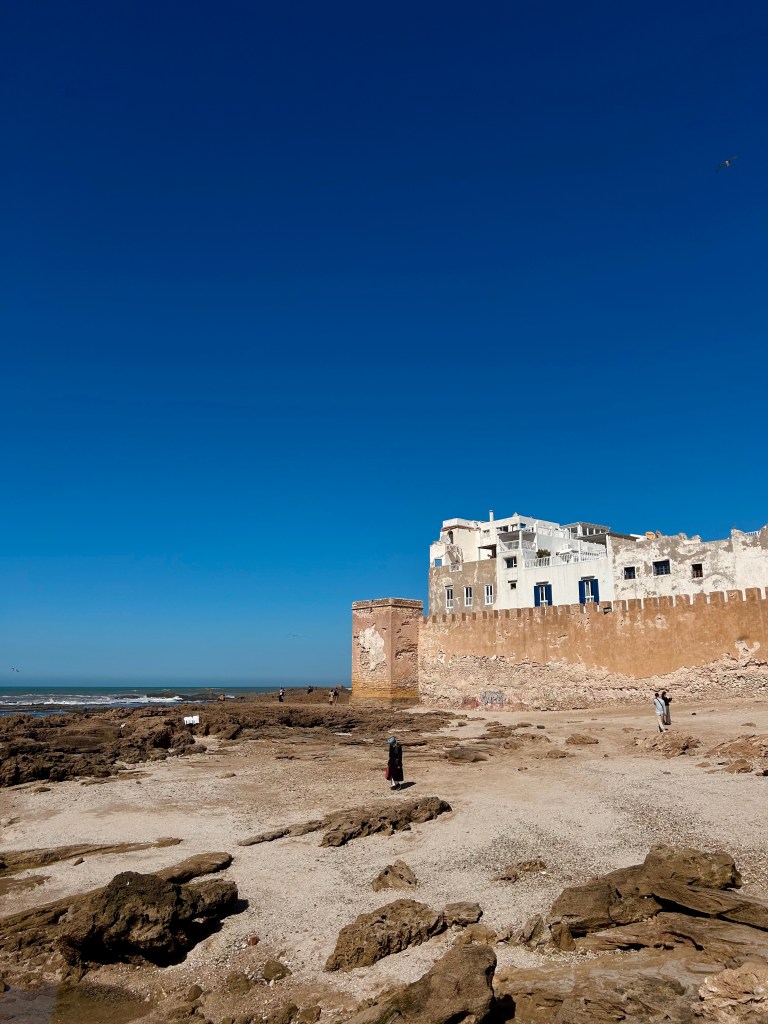
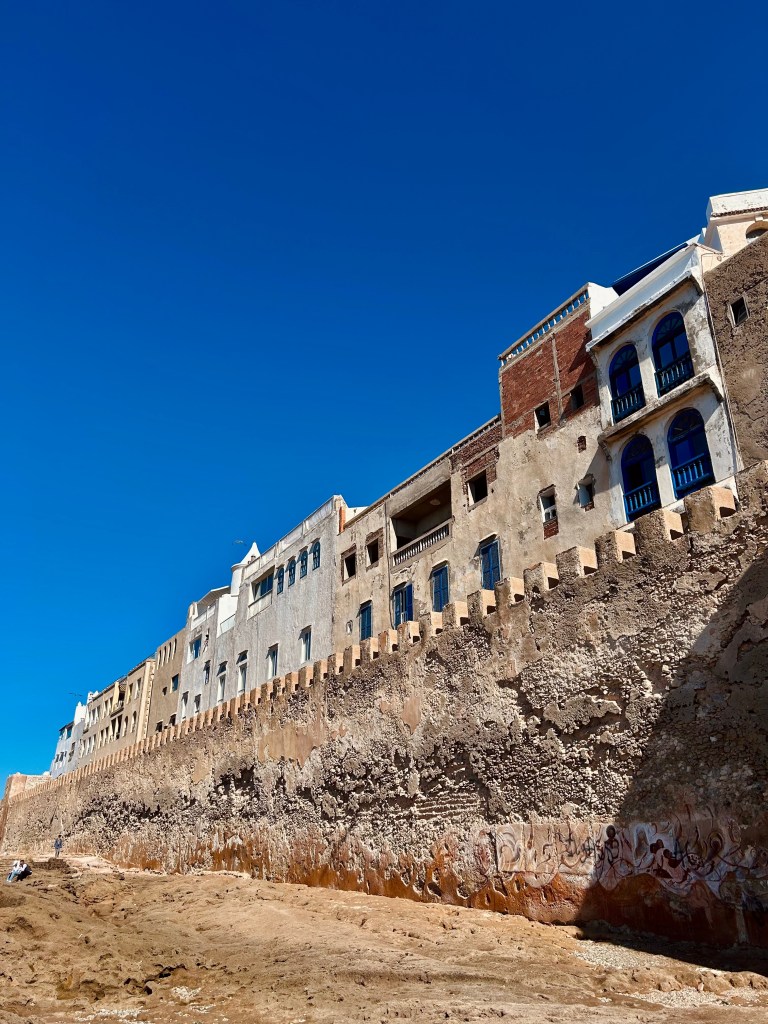
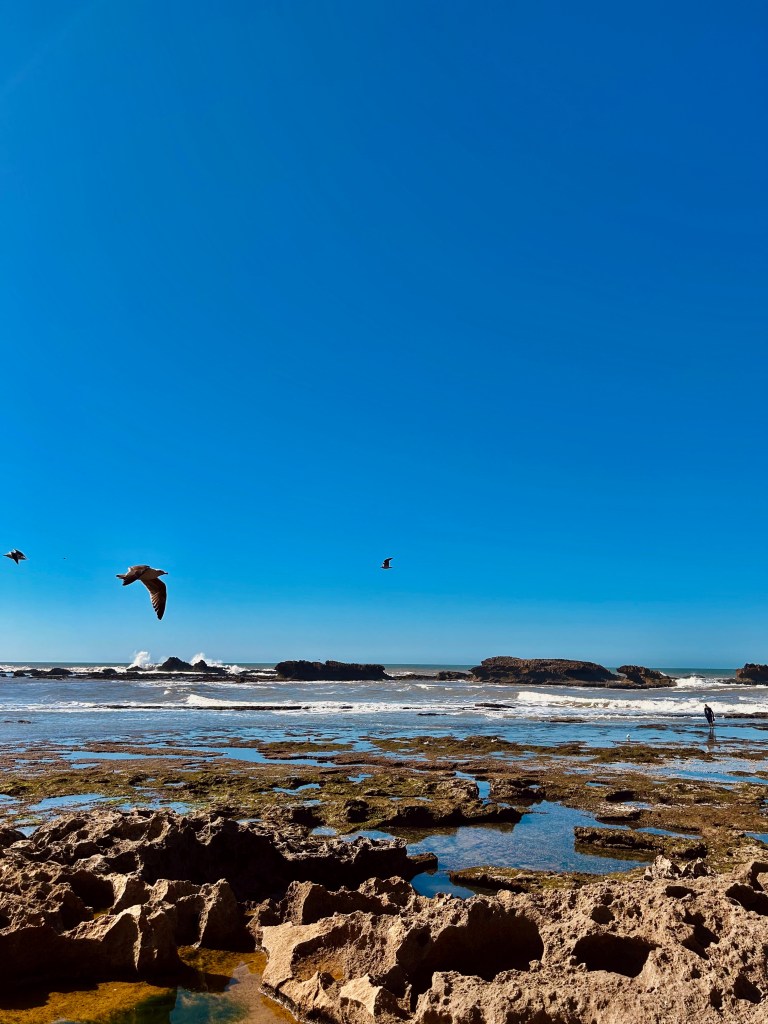
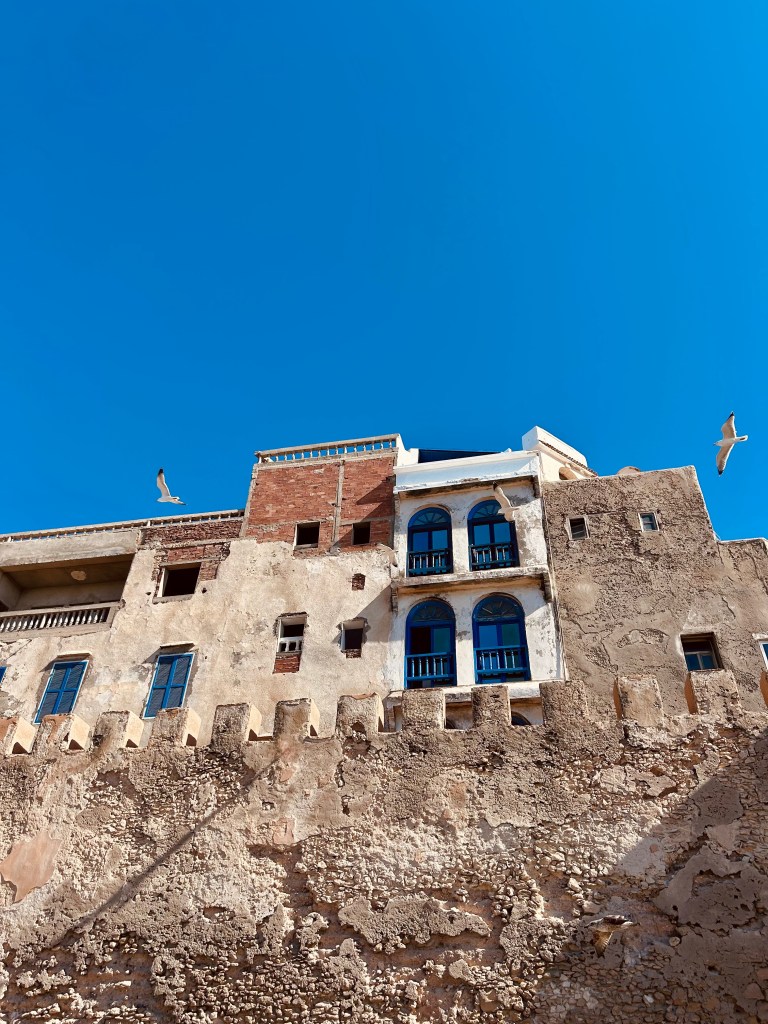
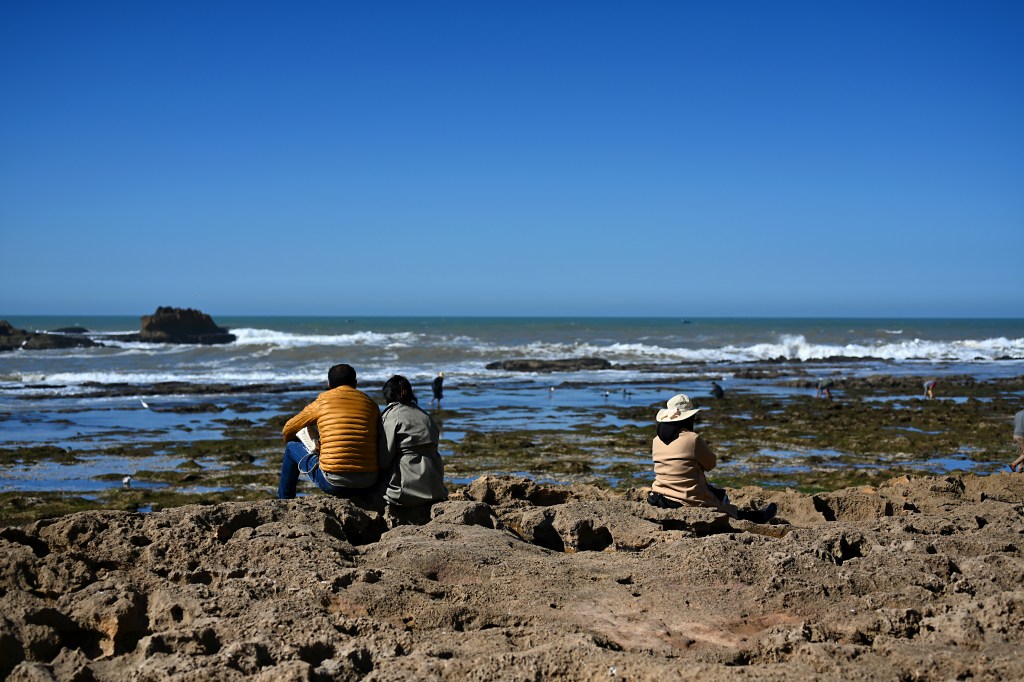
Essaouira has a wide, flat beach, perfect for walking, even if the wind makes you hold onto your hat. The waves and wind also make it perfect for surfing. A few local families were enjoying the sun, while I had a little dip into the cold waters of the Atlantic.

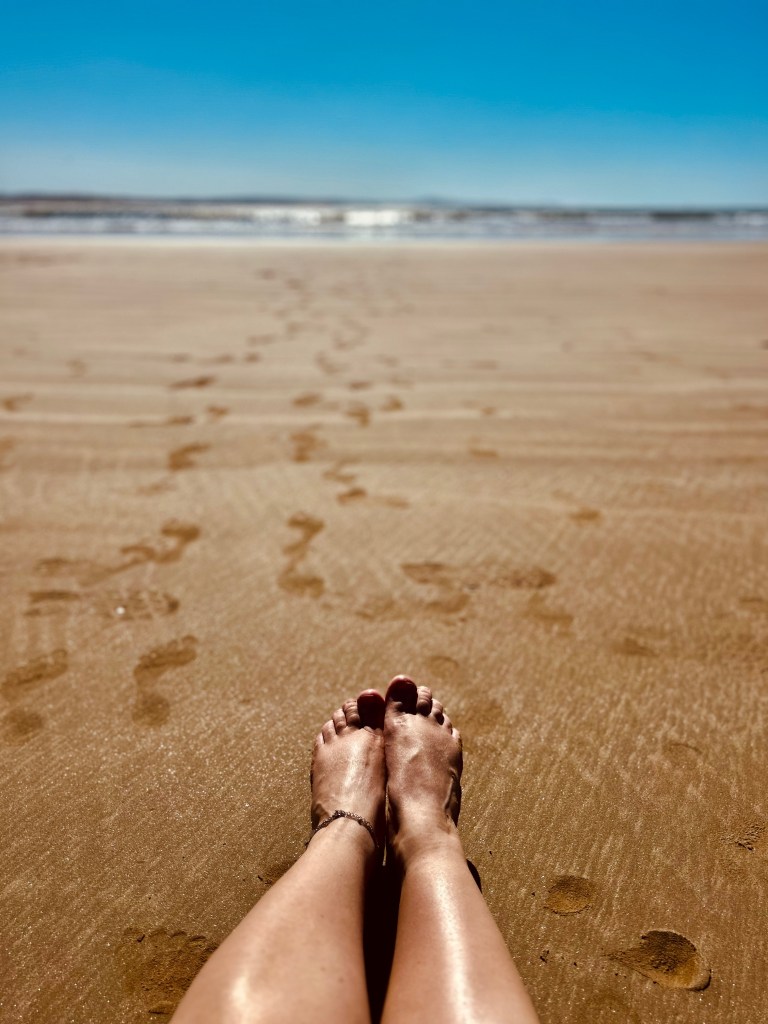
By late afternoon, it was time to return to Marrakech. Sunsets in Morocco really are something else and it’s an absolute delight to have a walk in the warm evening light, from the drop-off point to the riad, through the lively Jemaa el-Fnaa when the colors begin to shift. The evening ended at my favourite hole-in-the-wall joint, Kathi, with the most delicious chicken wrap in the history of delicious chicken wraps.
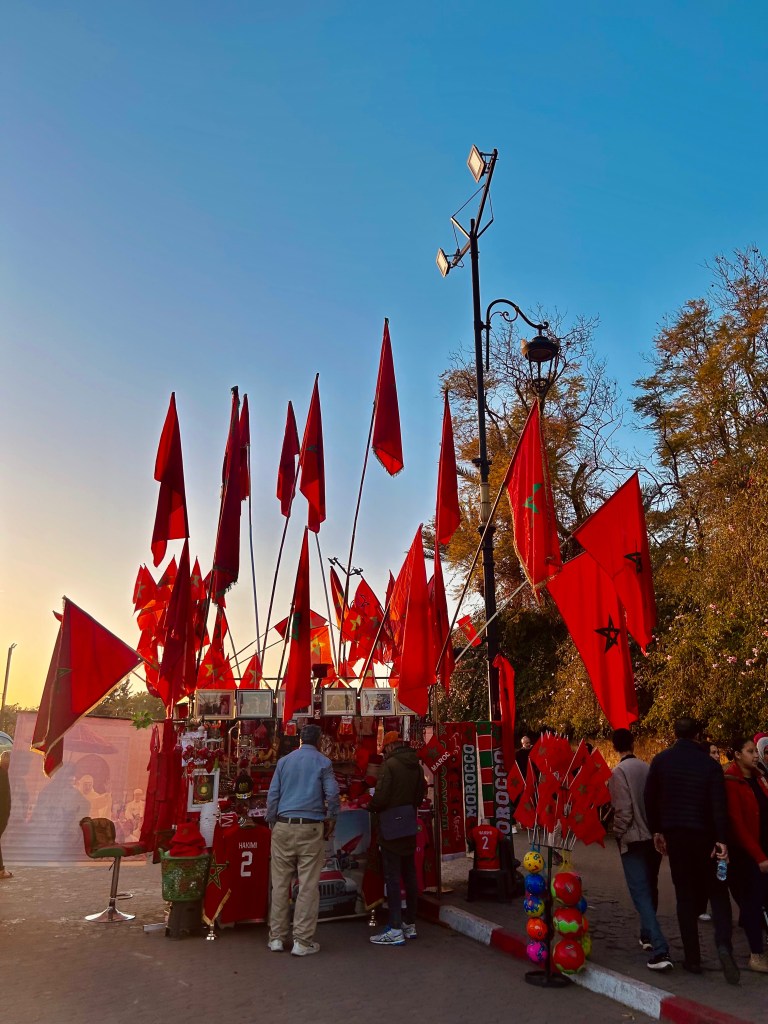
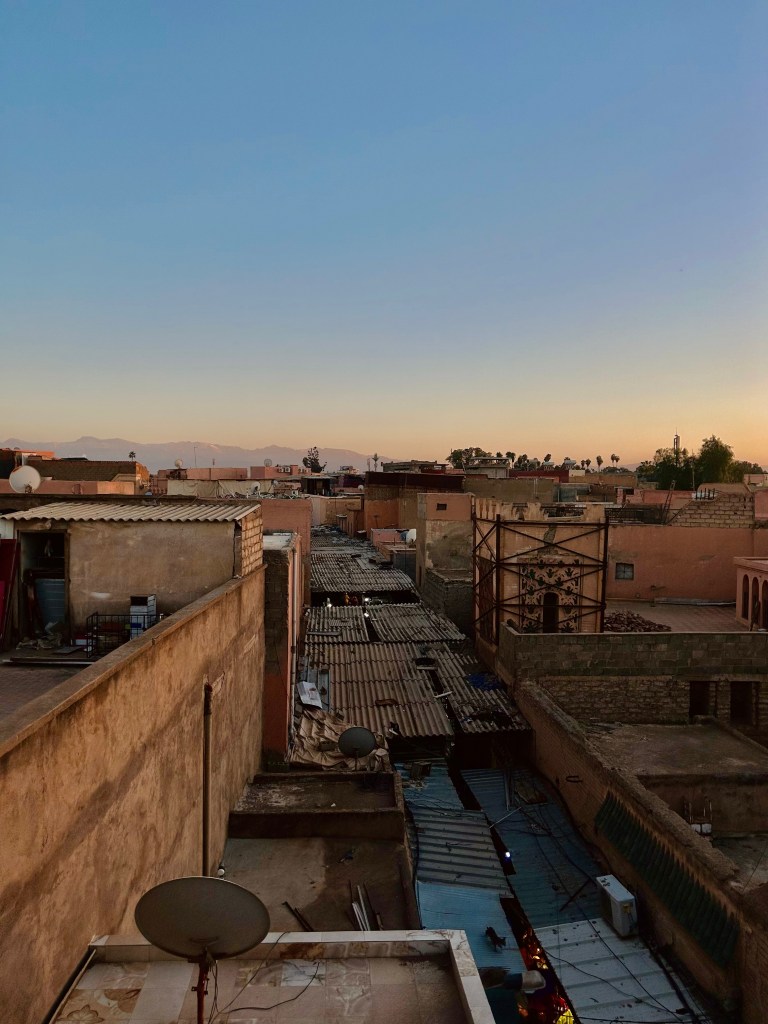
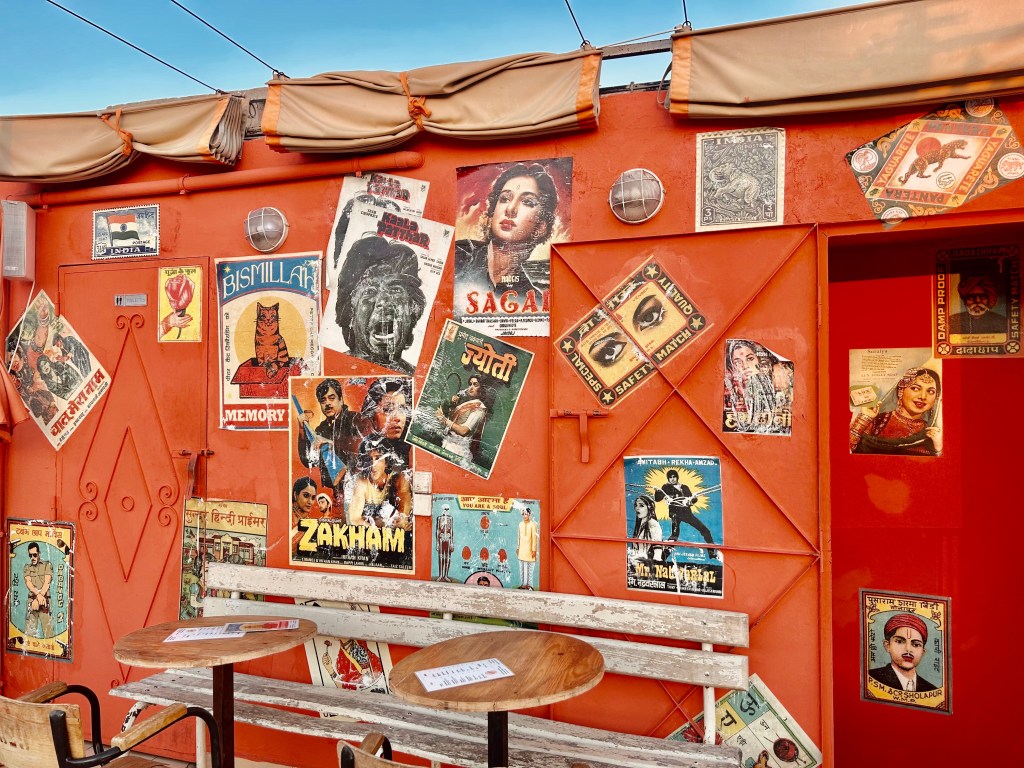
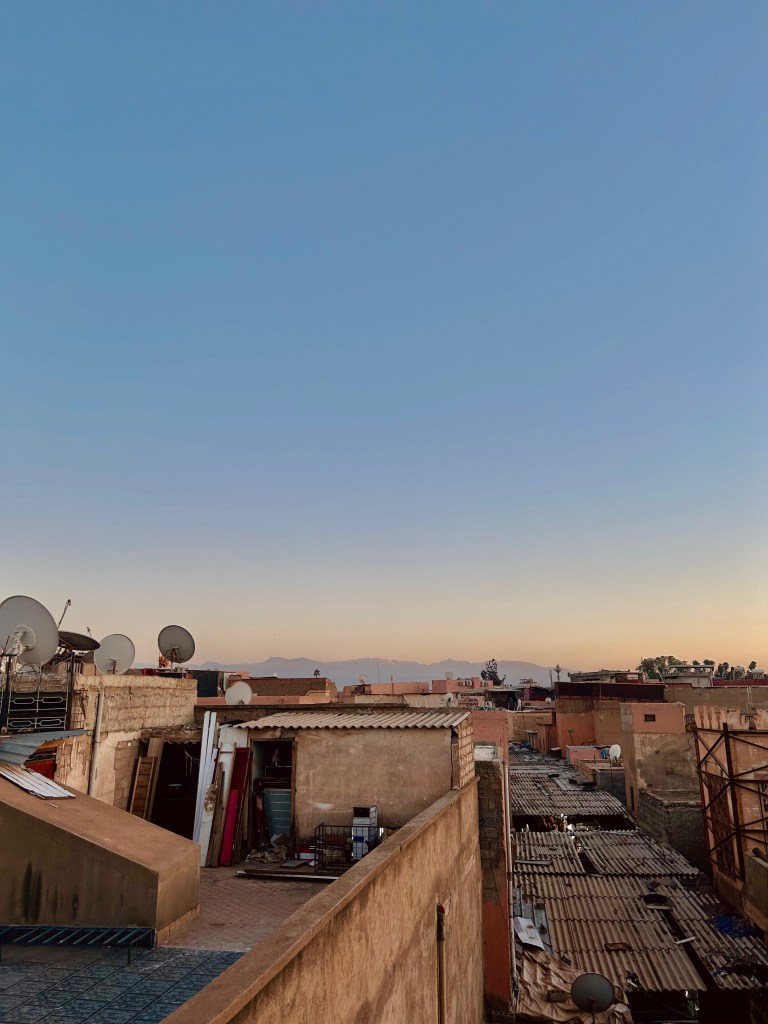
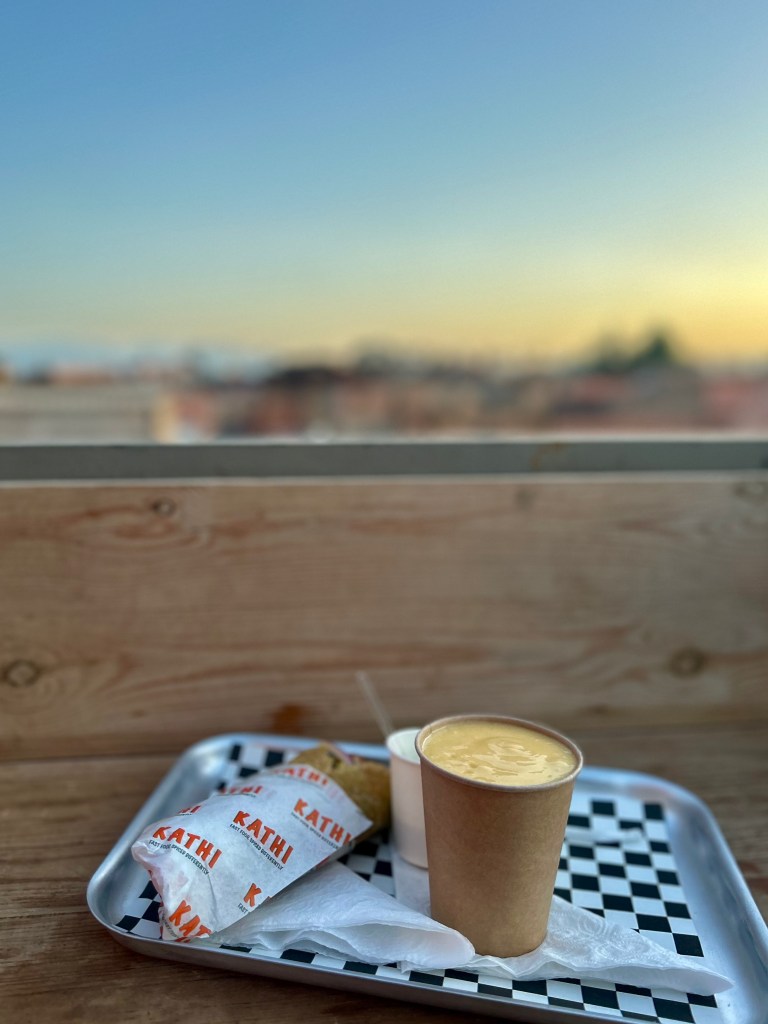
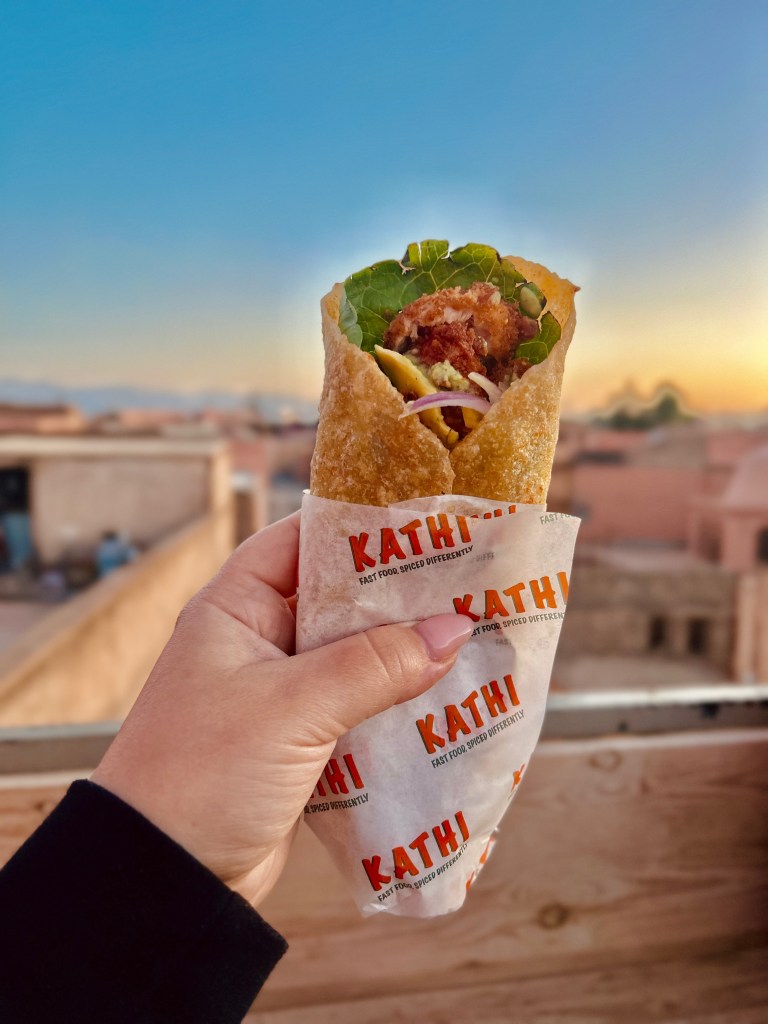
Almost time to go home, but first…
…a visit to a guy with some needles and ink.
I figured I couldn’t go to Morocco and not check out the tattoo scene. So I did my research and found Merwan of Marrakech Ink. I couldn’t afford a large piece and I didn’t want to spend too much time getting inked either, so I decided on four small words in Arabic, as a nice memento from the trip and a reminder of important things in my life.
Friday morning walk from the Medina, through Hivernage and onto Gueliz, gave me a nice opportunity to see more of Marrakech. Unlike others around the Mediterranean (read: the Greeks), Moroccans have understood that trees on pavements are a good idea and we all benefit from it. Even when the sun is as unforgiving as it can be in Morocco, you’ll find shade somewhere. Viva the oasis!
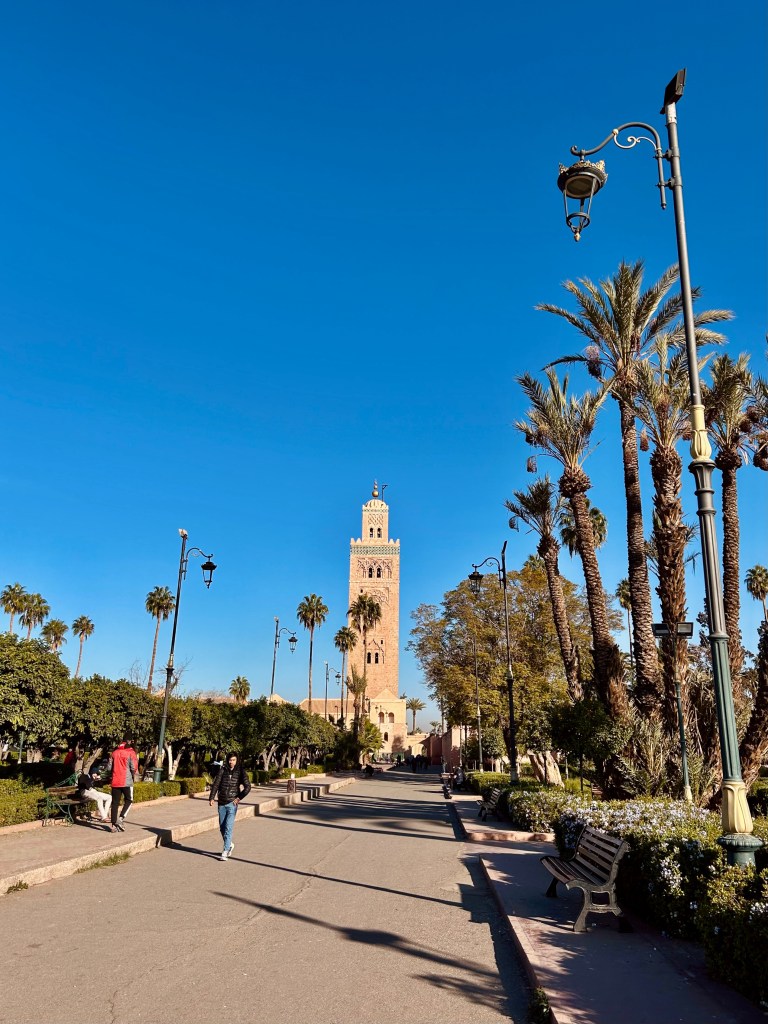
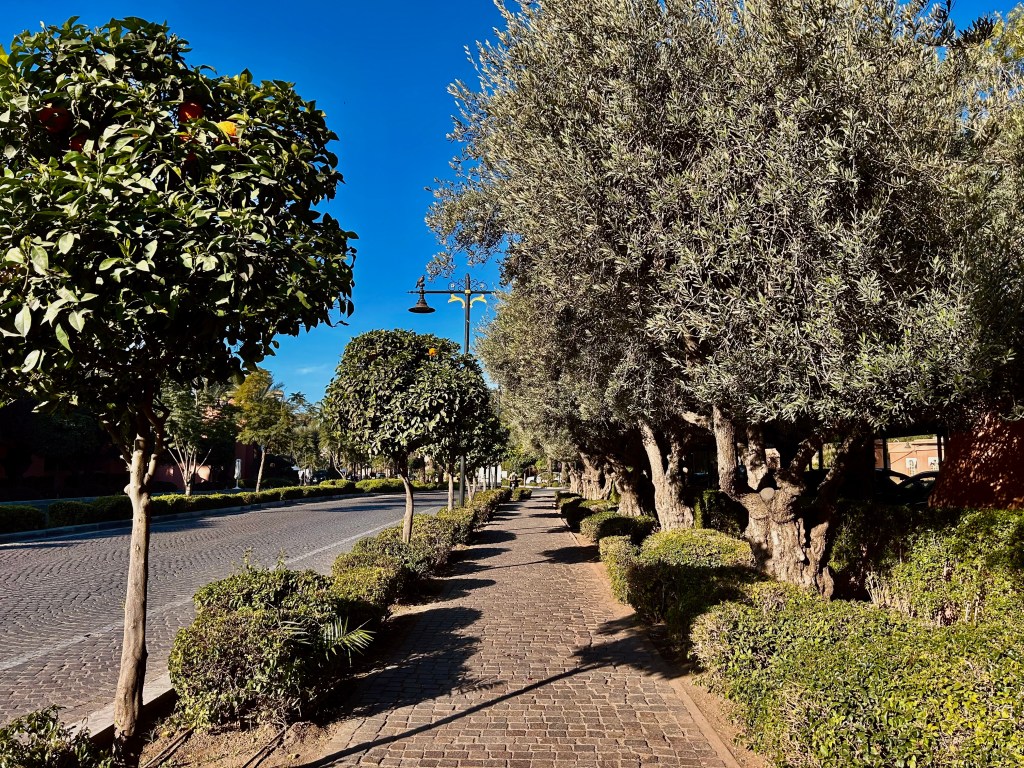
I was thinking of finishing my trip with a nice drink at the famous La Mamounia hotel and I walked by the main entrance to check the status and ask if anyone not staying at the hotel would be welcome for dinner and drinks. Luckily for my wallet, the conversation that followed helped me change my plans.
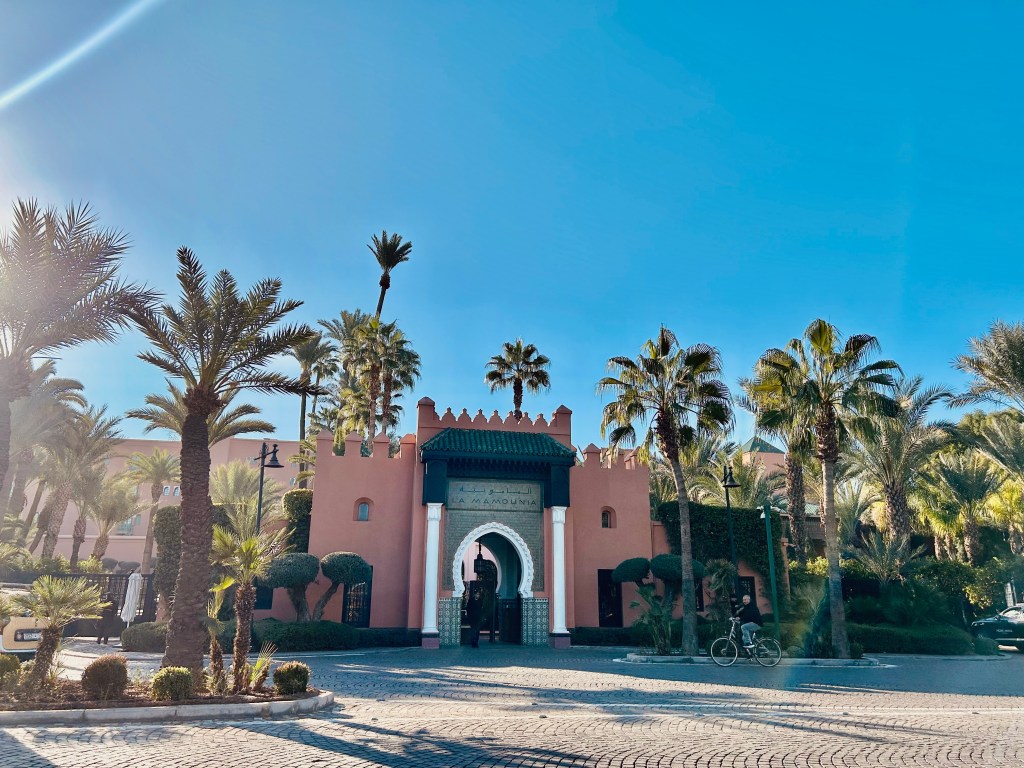
I was wearing a casual and comfortable outfit, nothing fancy, on my way to get the tattoo. I asked about a visit in the evening, where naturally the plan was to dress up and squeeze as much money as possible out of my bank account for a proper celebration. Parce que je le vaux bien and all that. In under a minute, the member of staff I spoke to, pointed out no fewer than four times that there was a dress code at the hotel, eyeing me from top to toe and insinuating that I would not be spending my evening there. I mean, how dare I, person with credit and impeccable manners, believe I would be coming inside where they HAD A DRESSCODE. The more details I asked about the dining experience, the more adamantly he said that they HAD A DRESSCODE.
I left the main entrance thinking about how I would pimp myself up enough for a luxurious evening at the Mamounia, what sparkly jewels to wear and which handbag would go well with that. Oh, I could also go shopping and get something even sparklier. Oooh! Then I heard myself in my head and felt disgusted. The people pleaser had to go. Some bloke judged me without knowing me, he looked at me as if I was some hobo. Why? Because I had sneakers on during a morning walk? He made it pretty clear that he didn’t think I was fancy enough for his employer. I calculated the amount of money I had spent on my outfit. It was more expensive than what many Moroccans make in months, and he had no idea about that whatsoever, yet he made me feel less than, in less than a minute. It’s very few other times in my life when I’ve felt so insulted.
La Mamounia could shove it. After reading reviews from people being put through the same scrutiny and humiliated even more, when they had made reservations but were actually denied at the entrance although from the photos it was clear that they were very properly dressed, I decided my last evening in town would be spent somewhere else, where I’d be welcome without judgement.
I continued my walk around the neighbourhood and arrived on Merwan’s street just in time to have lunch and squeeze in some hot tea before the tattoo. Hydration and all, no booze before the needle.
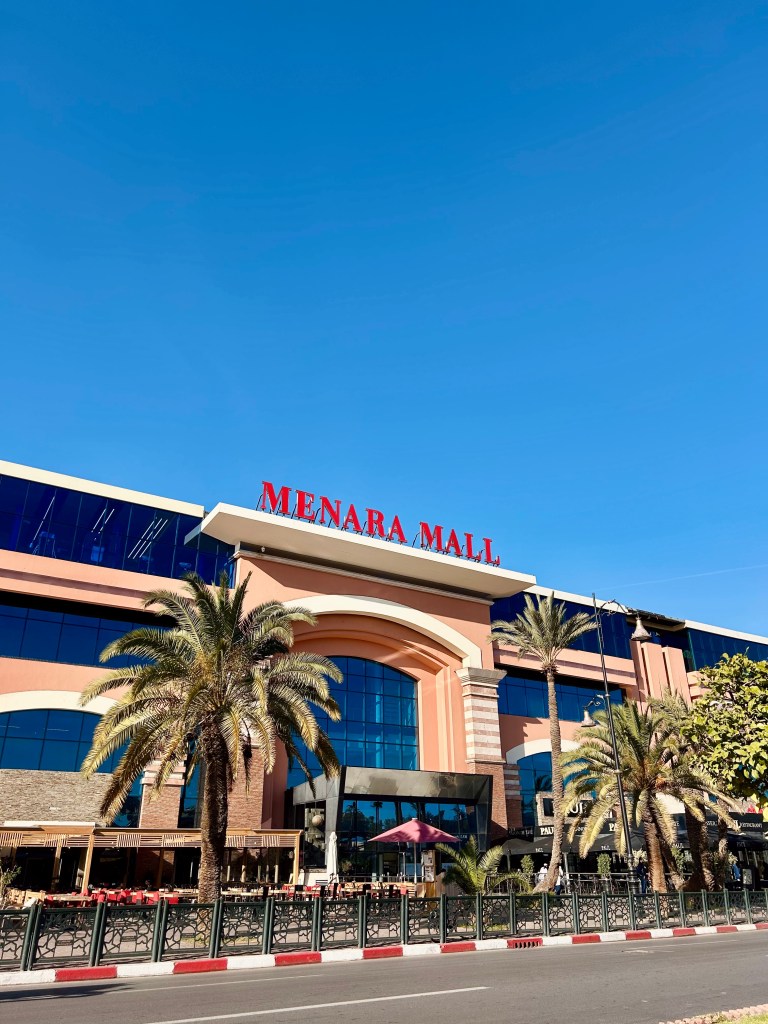
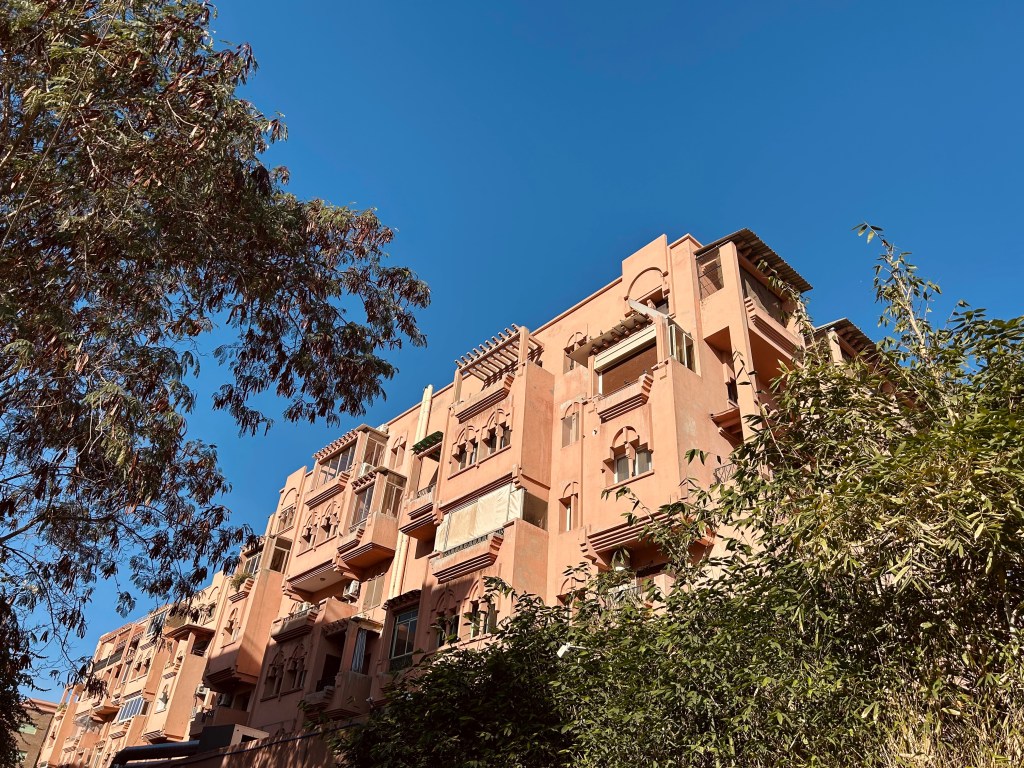
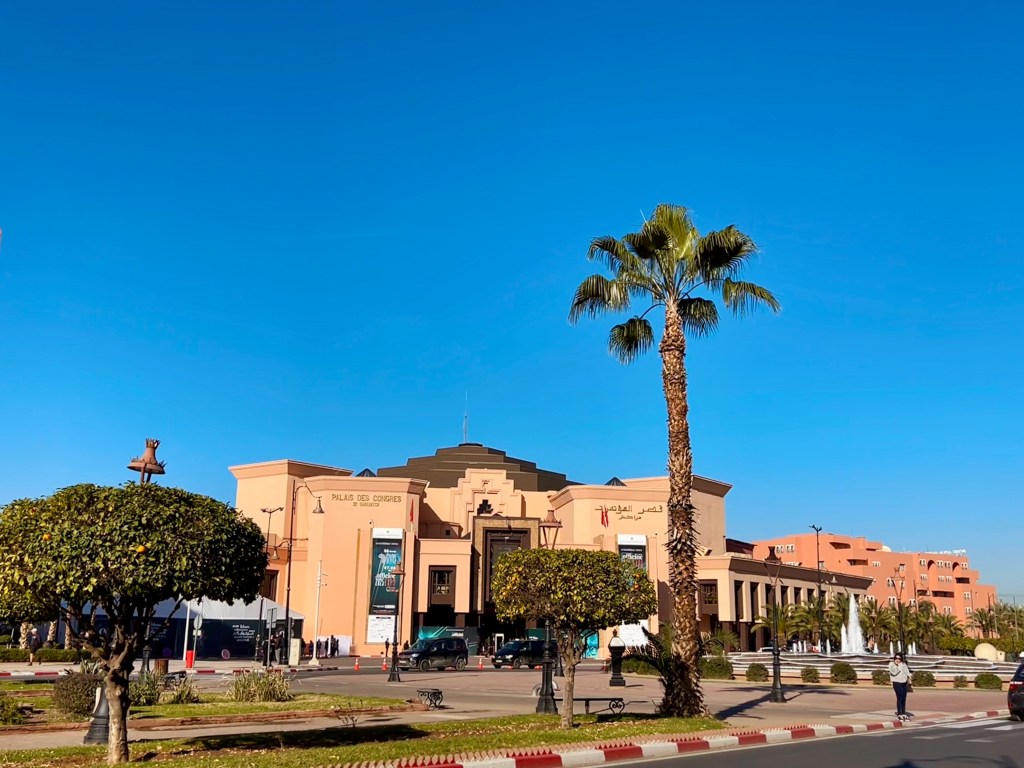
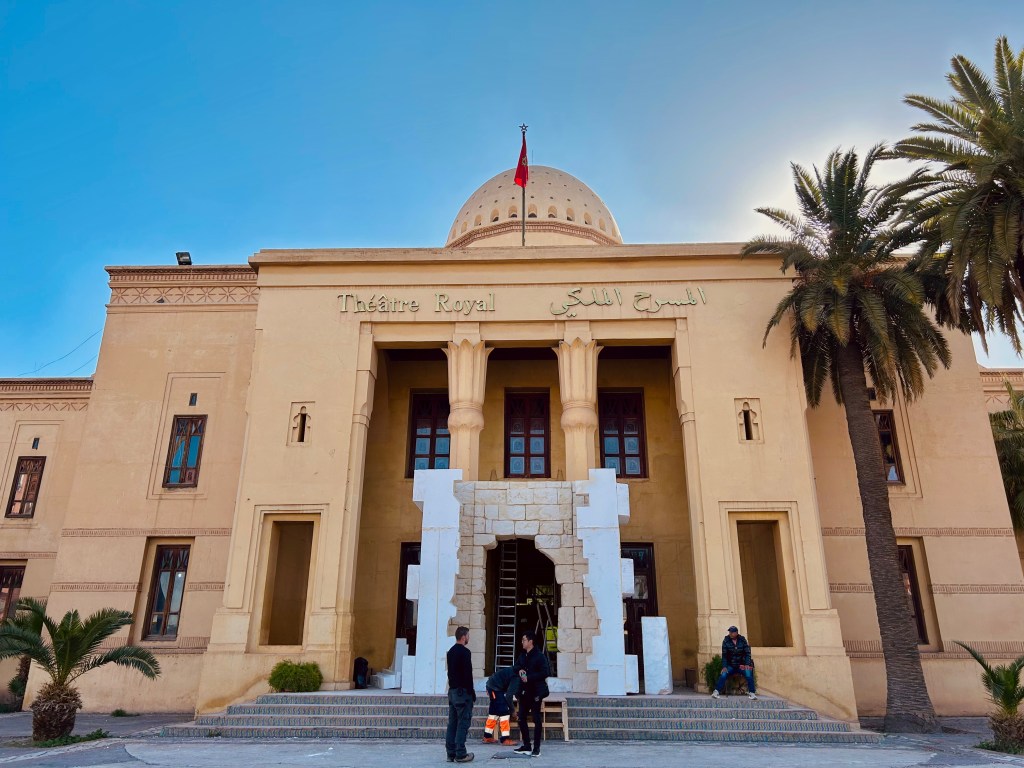
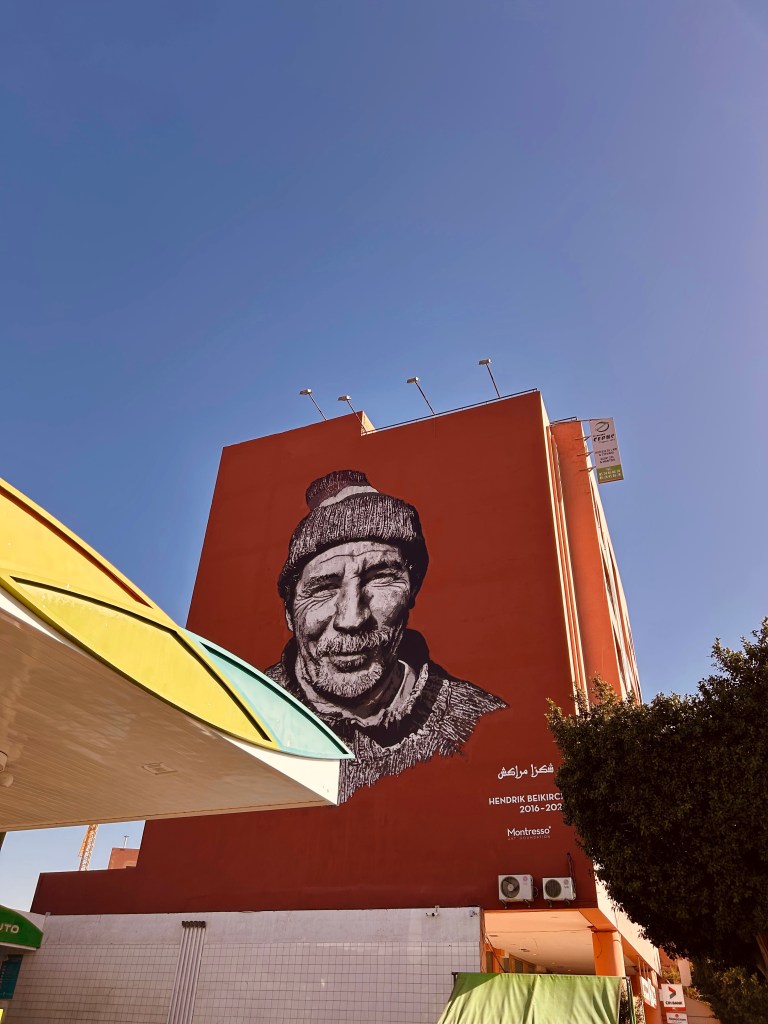
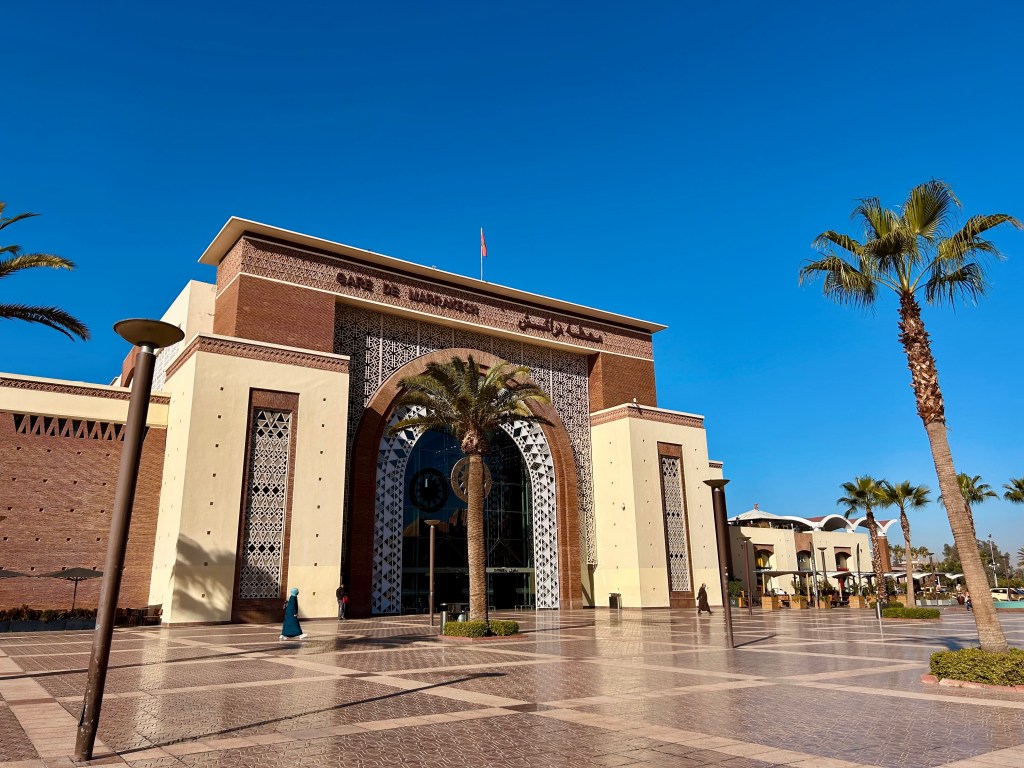
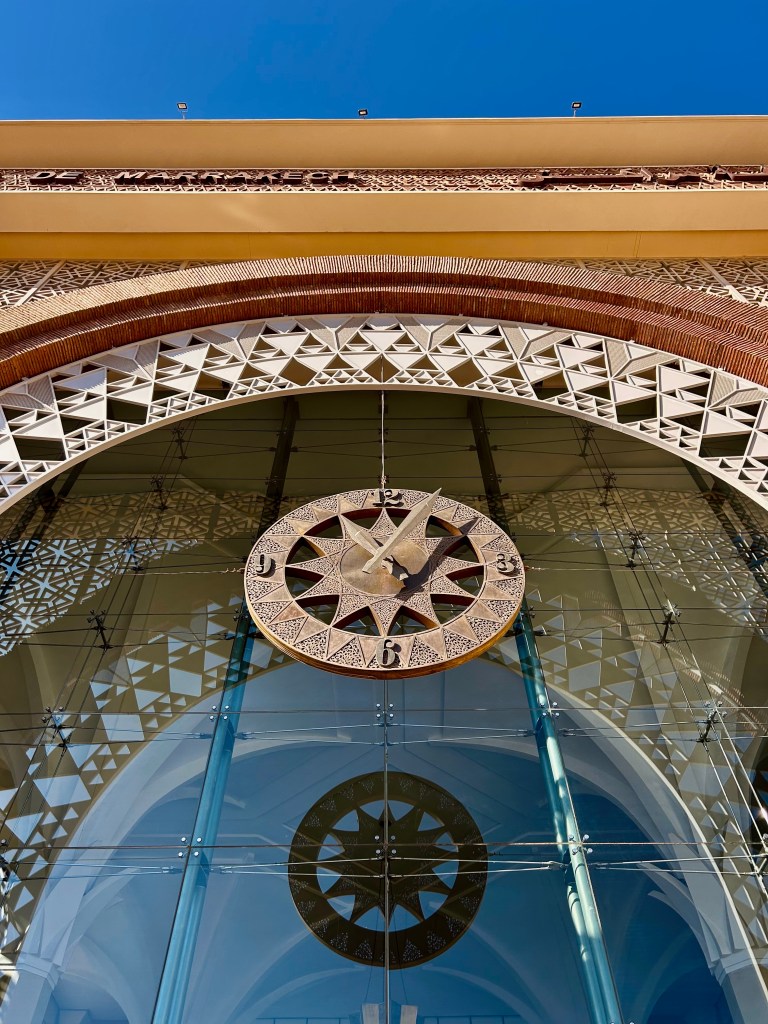
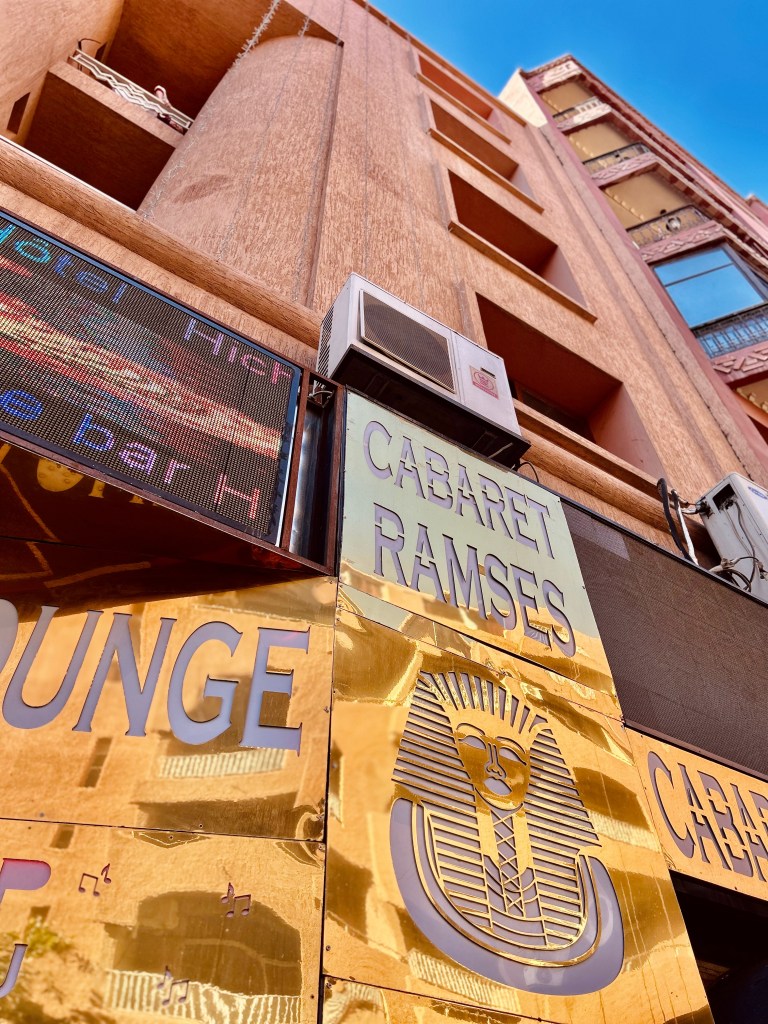

The tattoo studio was located in a residential building, super clean and very welcoming. And how can one not love a studio that has a dog – Buddy the Cane Corso, who was completely unbothered by our presence? Merwan speaks both English and French and he’s very good with small delicate tattoos with fine lines. 900 dirhams for my words and great bandages to help me during my coming day of travel. I’ve done this before and it’s a pain to schlep heavy luggage through hot cities and airports when you’ve just gotten inked, especially if it’s a big one. When you get a tattoo, you feel a bit like you’re coming down with the flu the following day. Good protective plastic or bandages are a must if you’ve got a long day on the road. Even if these were tiny letters, the placement made them quite vulnerable during travel, sleeves up and down, use of hands and arms, and the last thing you want is to get nasty bacteria or other damage to tattooed skin.
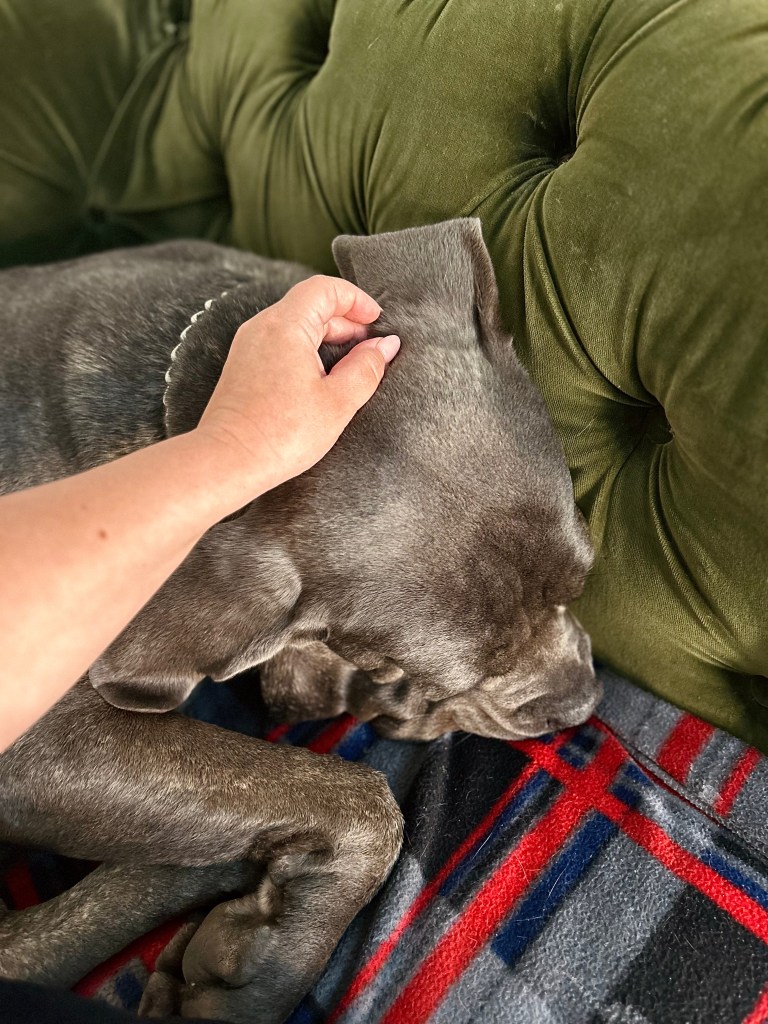
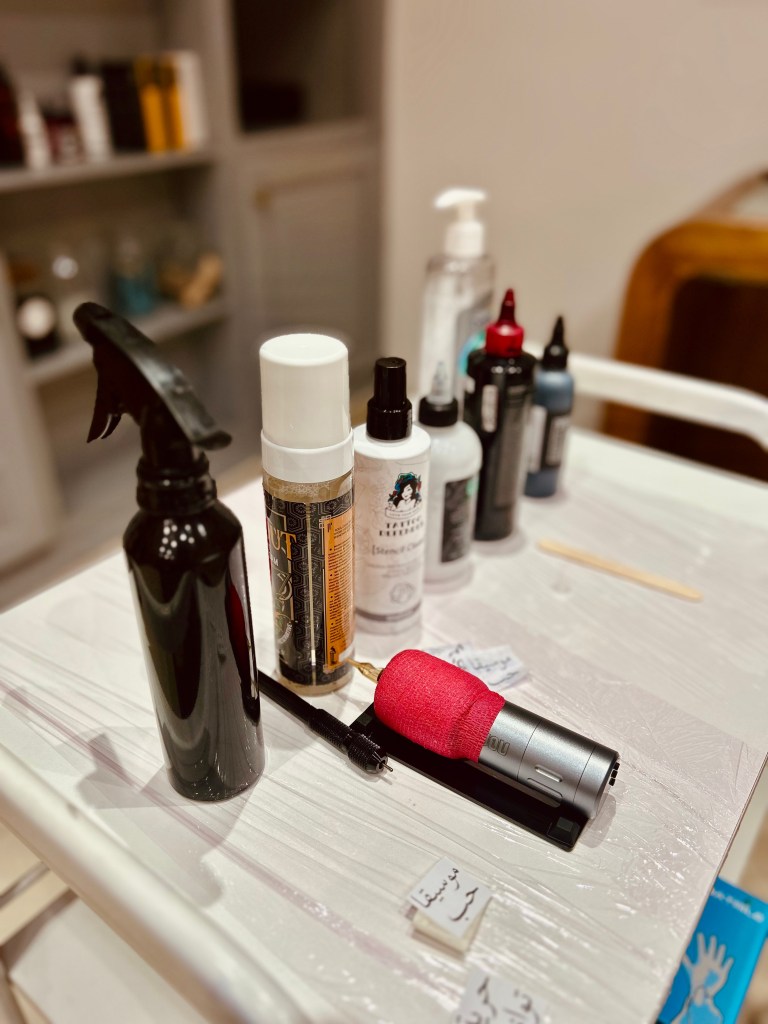

Quick walk back to the riad, packing my bags and off to my last dinner in Marrakech. I was certainly not disappointed. The streets around Jemaa el-Fnaa are also super fun to explore, and everything really comes alive after sunset. Shopping, souvenirs, cozy terraces with good food – the options are many. I ended up at Marjana. I see it has mixed reviews and I can’t really agree with those who complain, because my experience was very positive. It was very welcoming, I had a table with amazing views and the food was more than delicious. Naturally, I had a kefta tajine, I hope that by now you were already counting on that…
And even though I was in a total food coma, I couldn’t help but get ice-cream too, on the way back to the riad. I mean, February, walking around in shorts, Marrakech, fabulous vacation, tons of amazing memories to cherish – how could one not want to treat one’s self to little frozen mango and pistachio? And let me tell you, ice-cream in Marrakech is to die for.

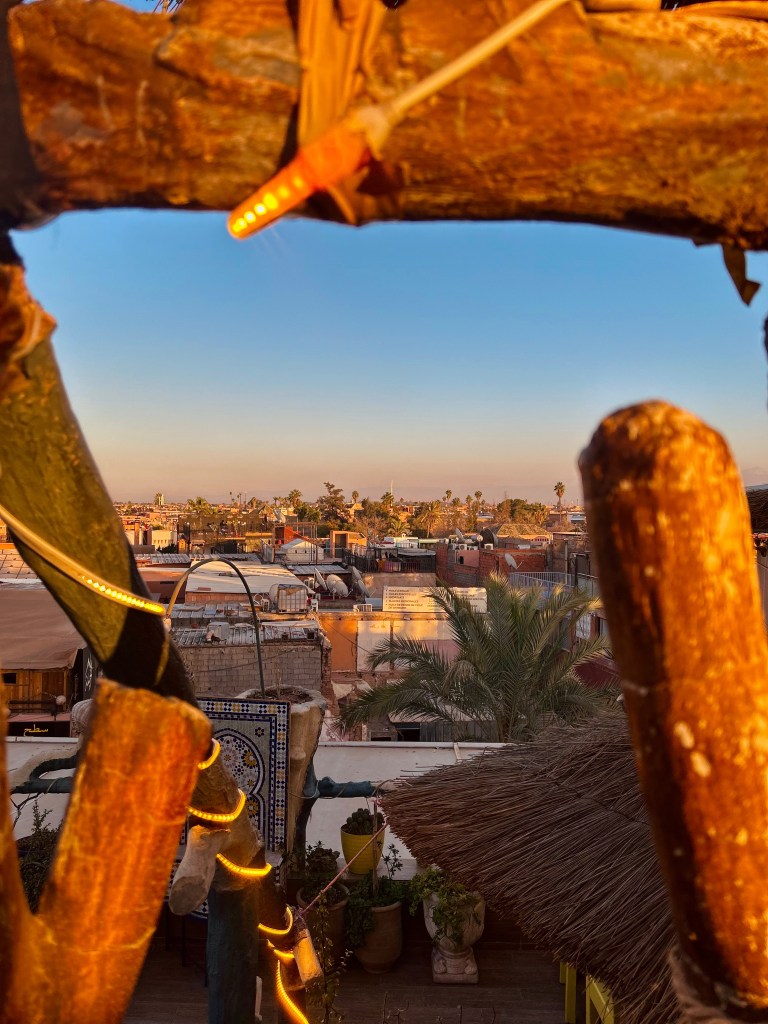

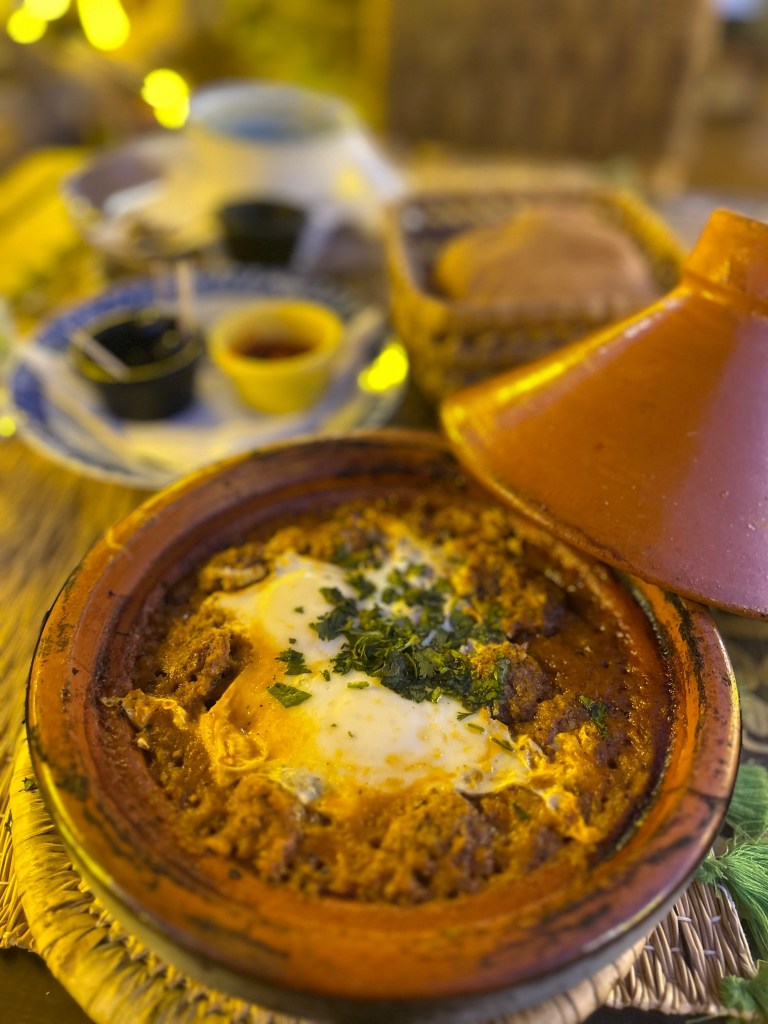
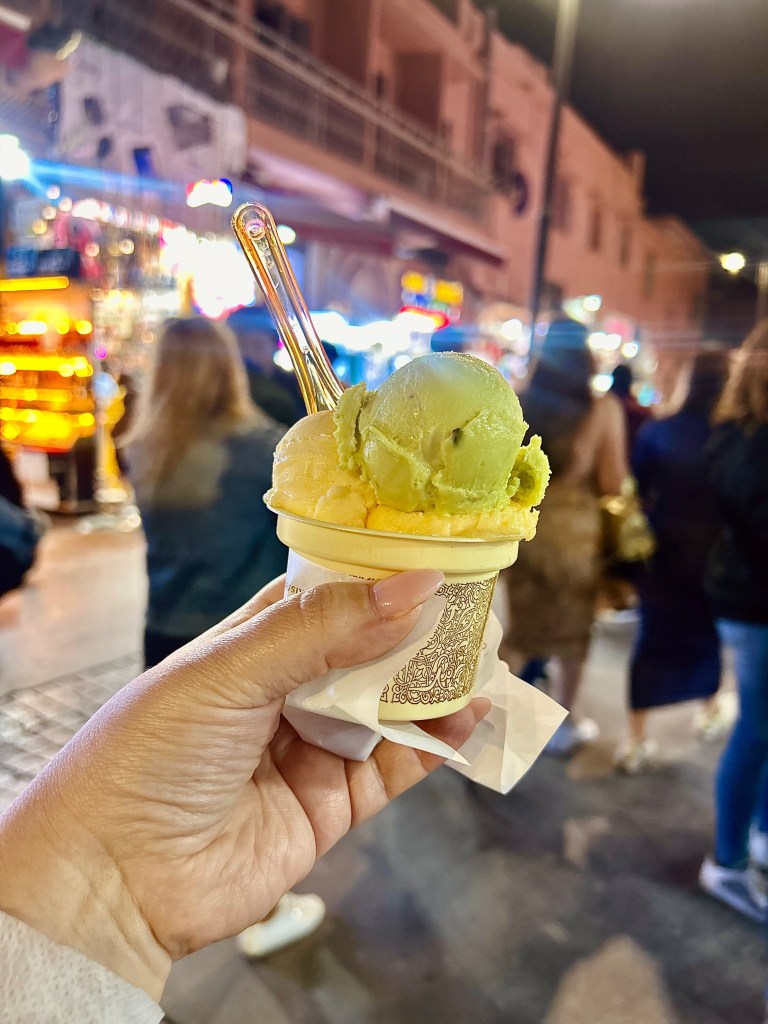
As my flight was in the afternoon, I had at least half a day left in the city, and one last pancake breakfast. I spent my time in the neighborhood, enjoying the morning routine in the souks and lingering on the pretty views over the rooftops of Marrakech.
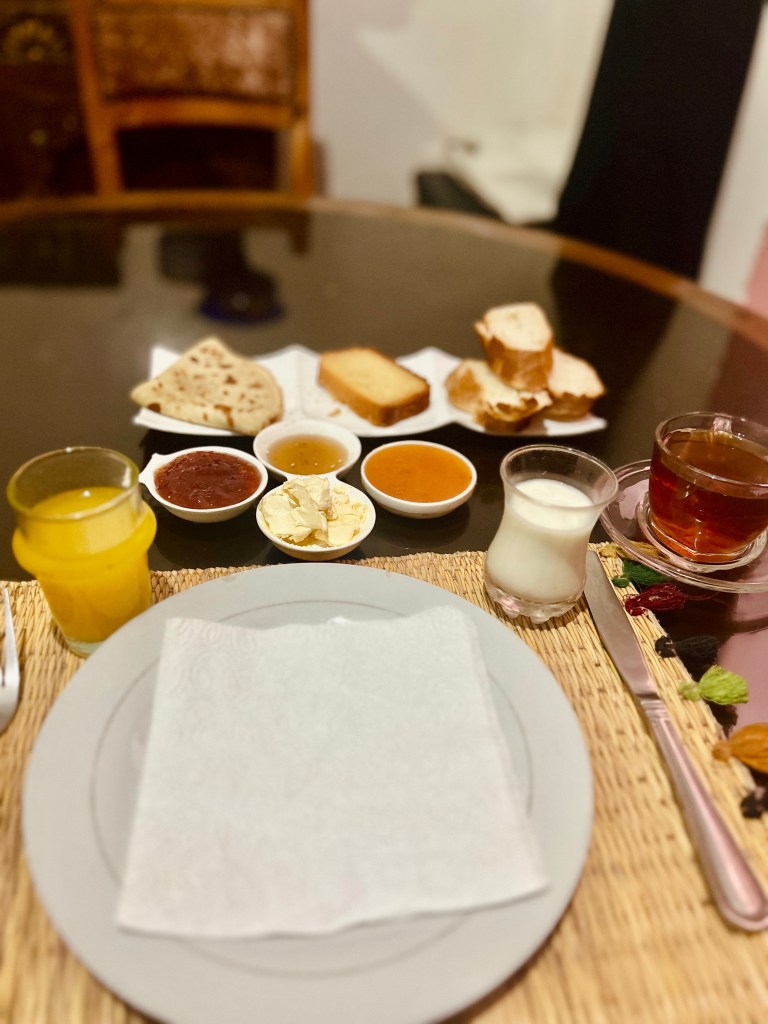
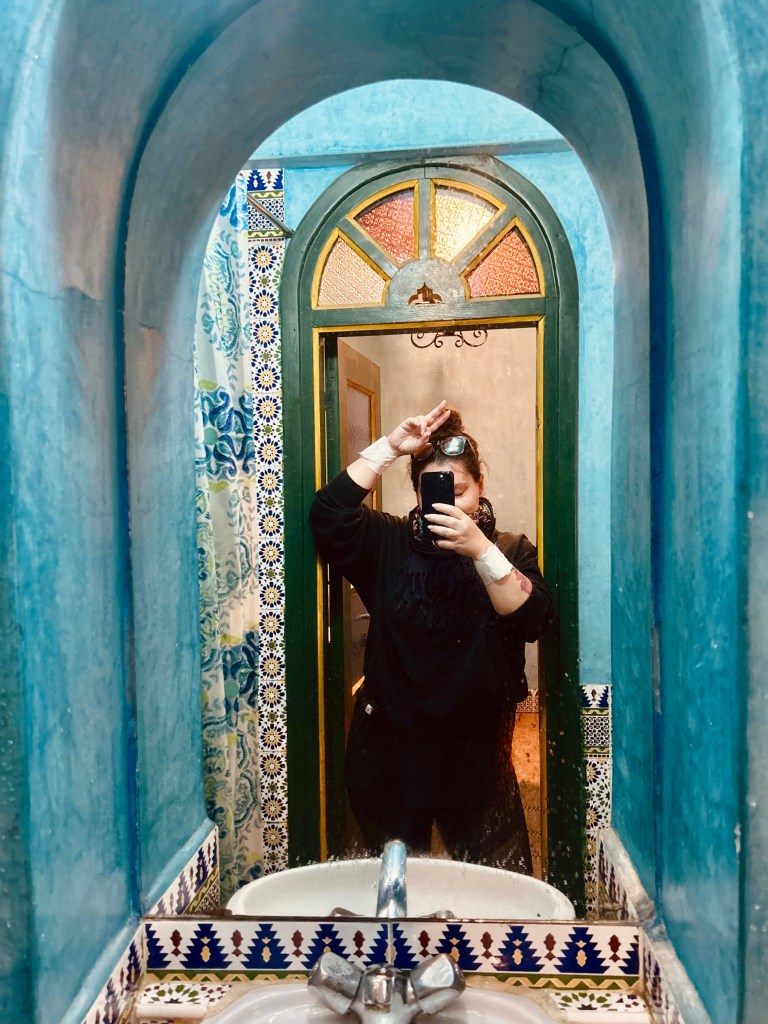
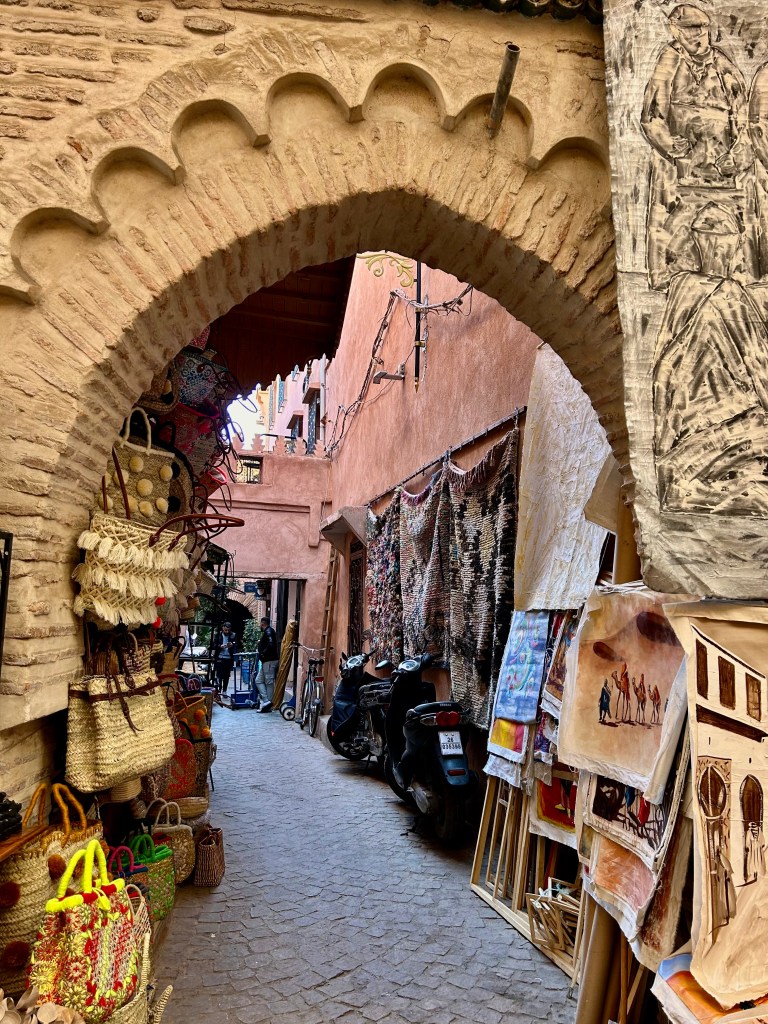
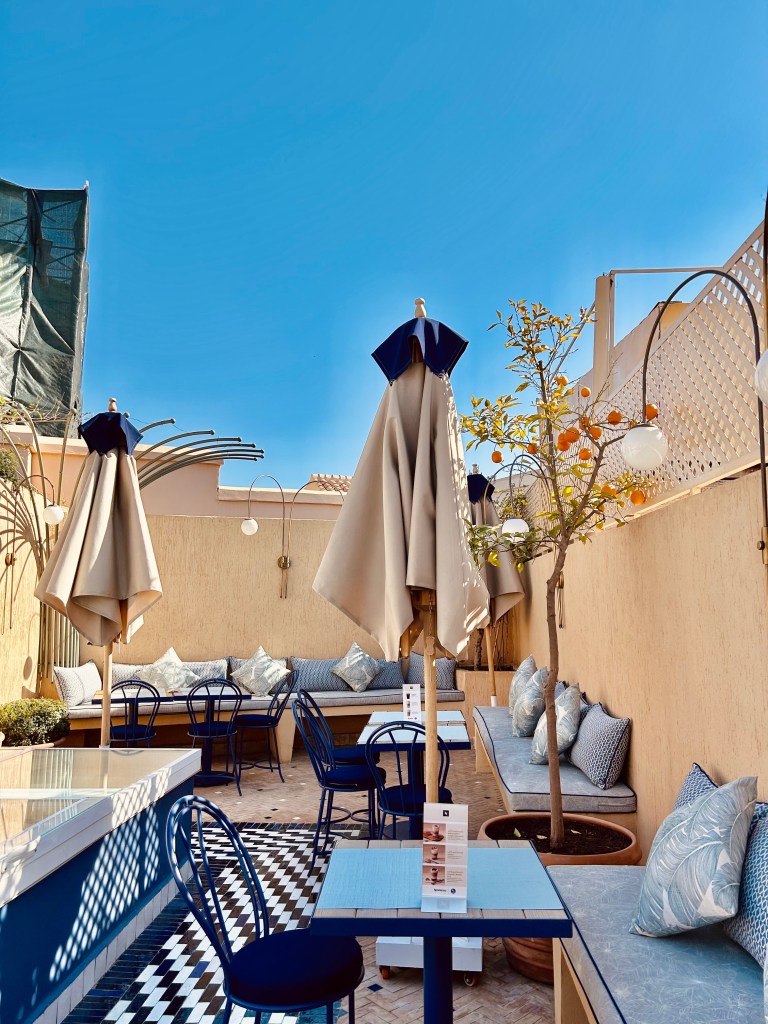
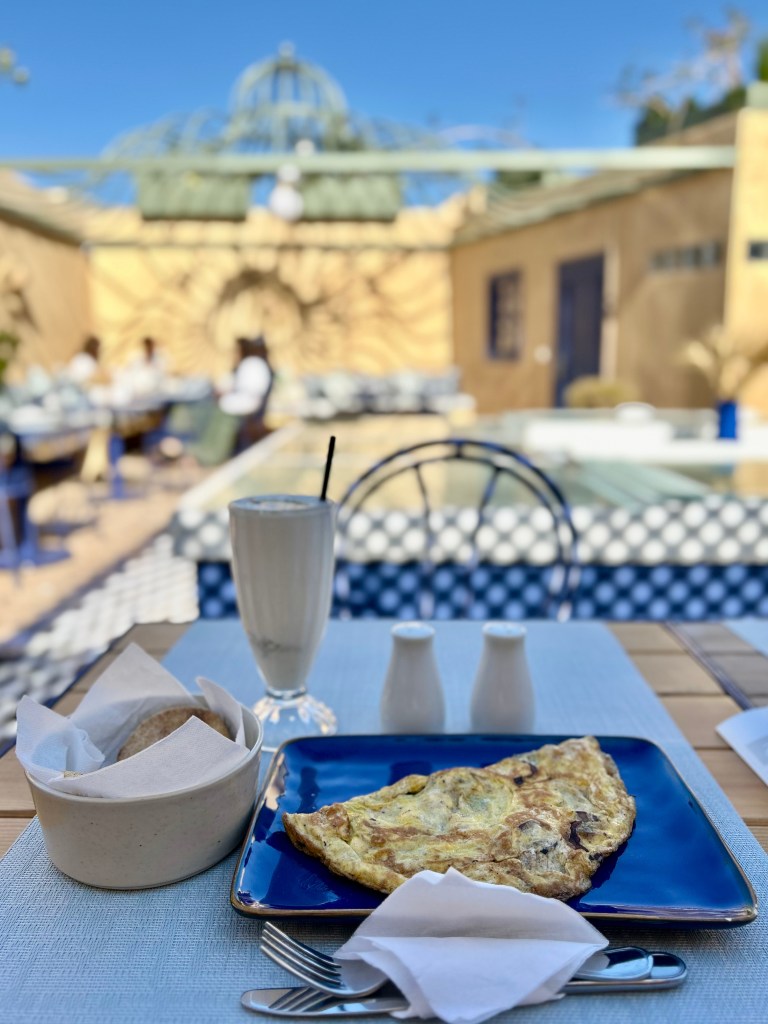
A trip to Morocco can easily turn into an eating frenzy because there are so many great restaurants, bars and cafés, each offering something extra to enjoy. Luckily, there’s also a lot of walking involved, and Marrakech is very good for that. Even though public transportation is available, as well as taxis and horse-drawn carriages, it’s not difficult at all to navigate between the Medina and other neighbourhoods on foot, as a visitor.
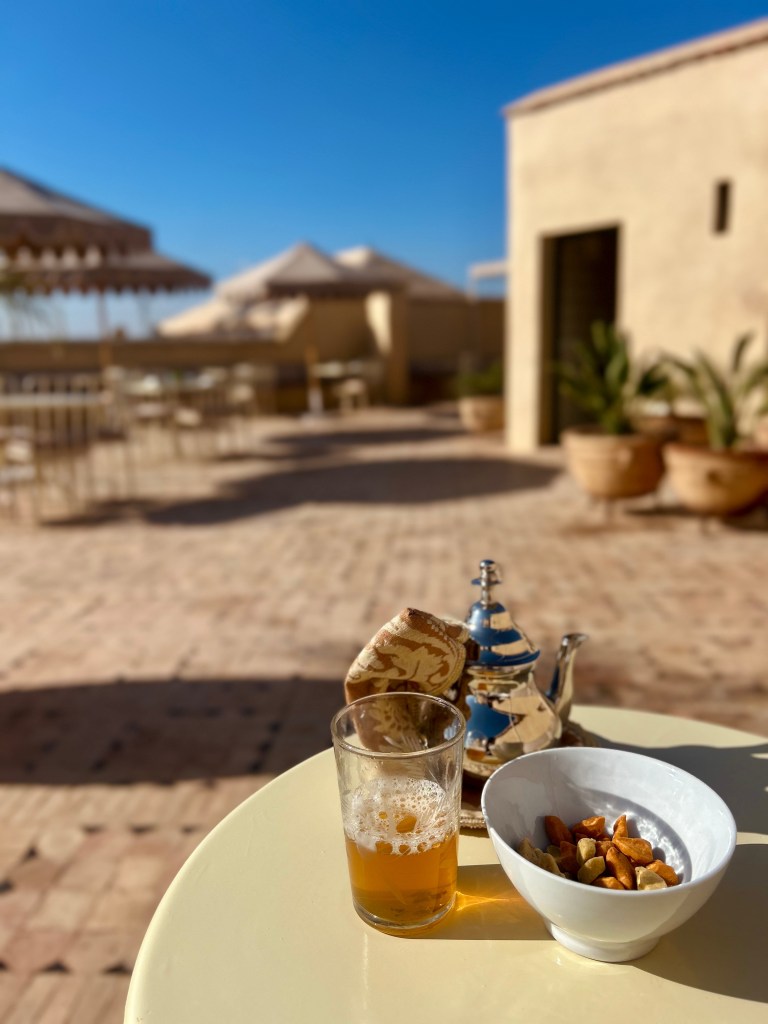

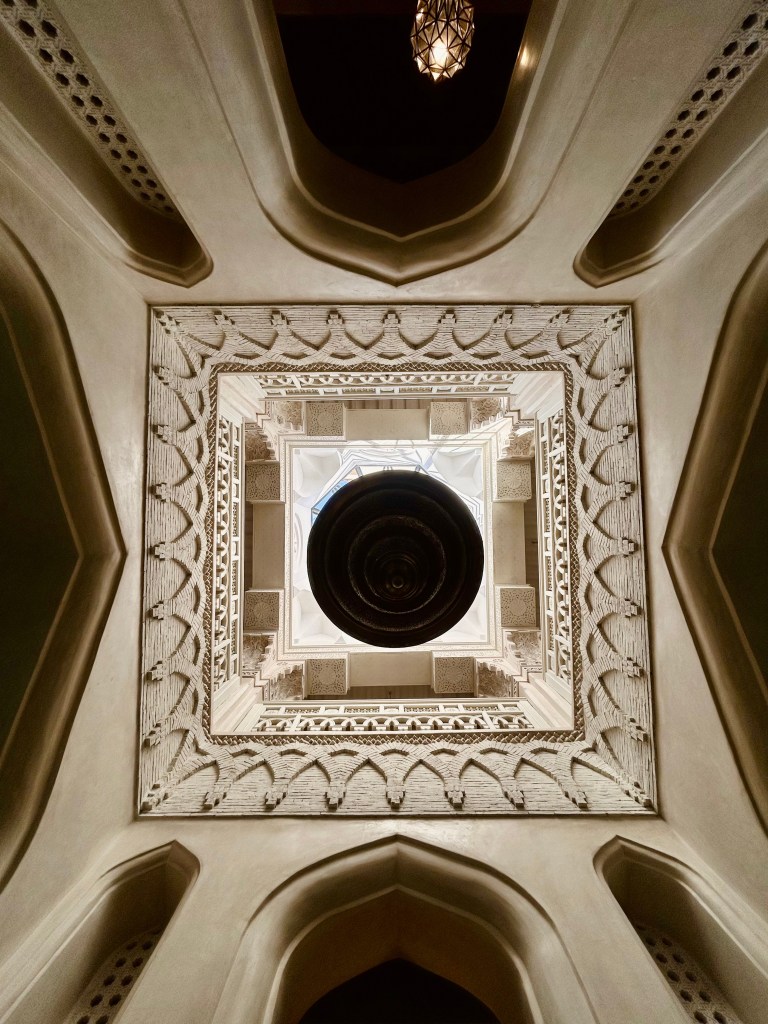
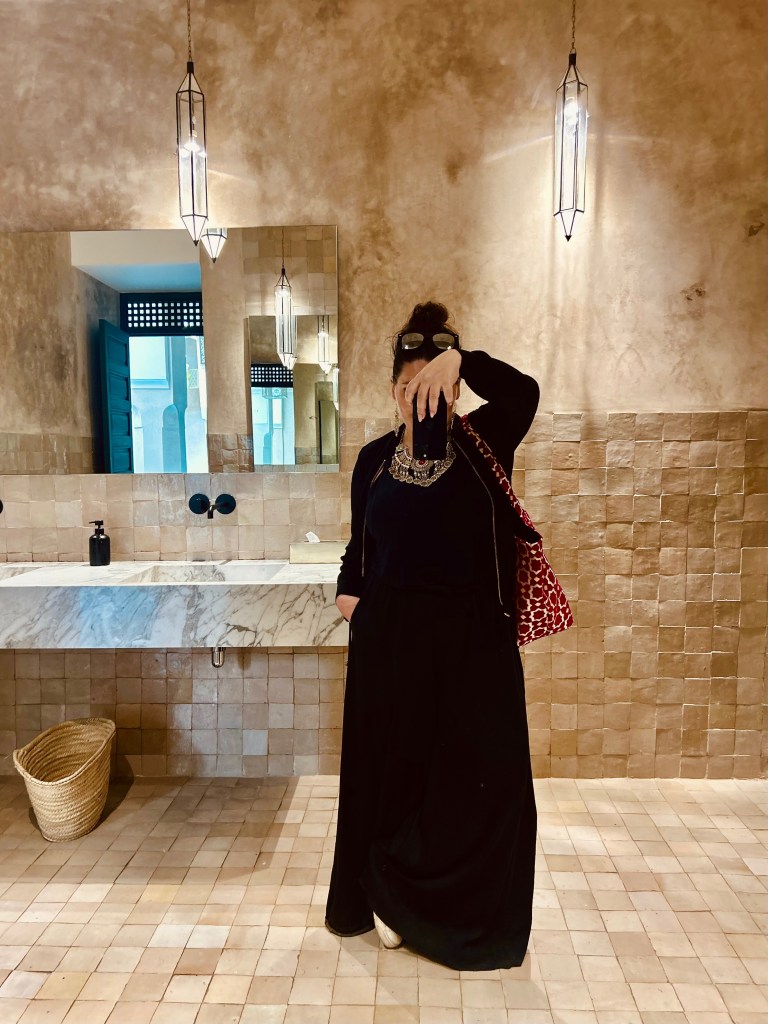
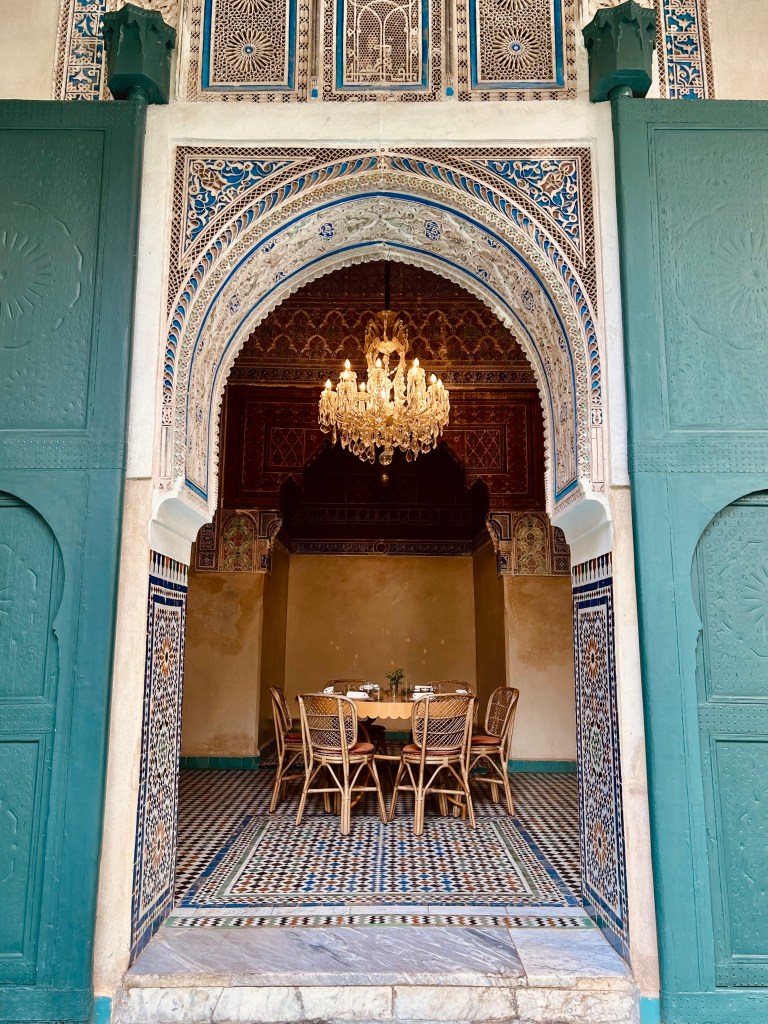
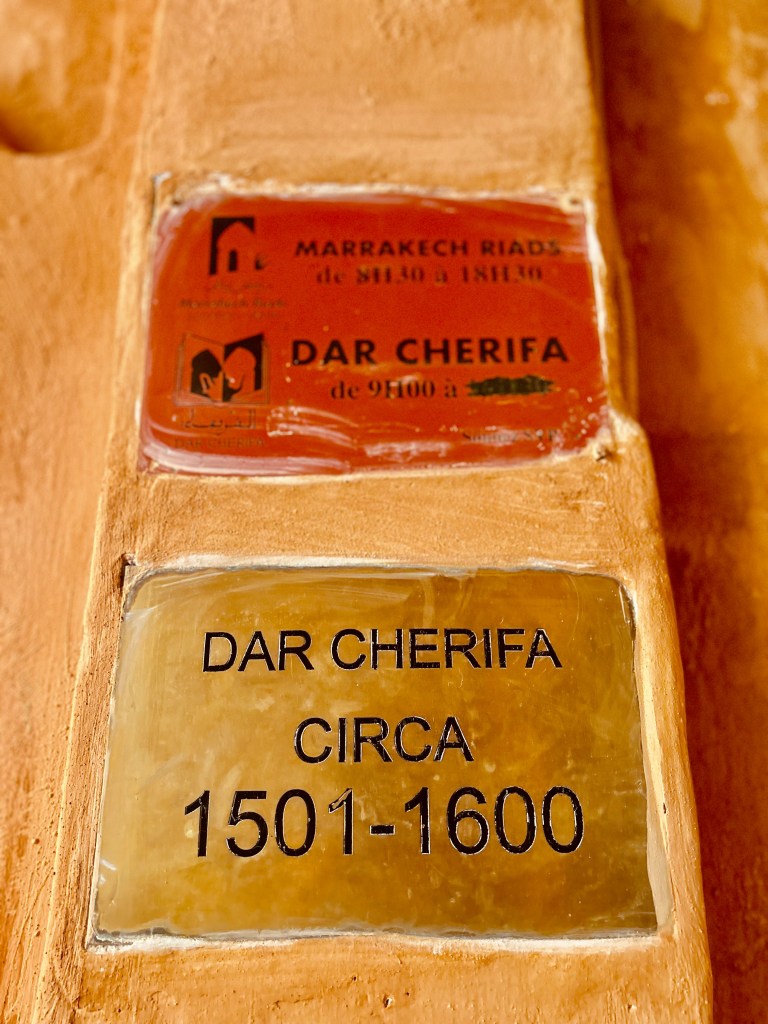
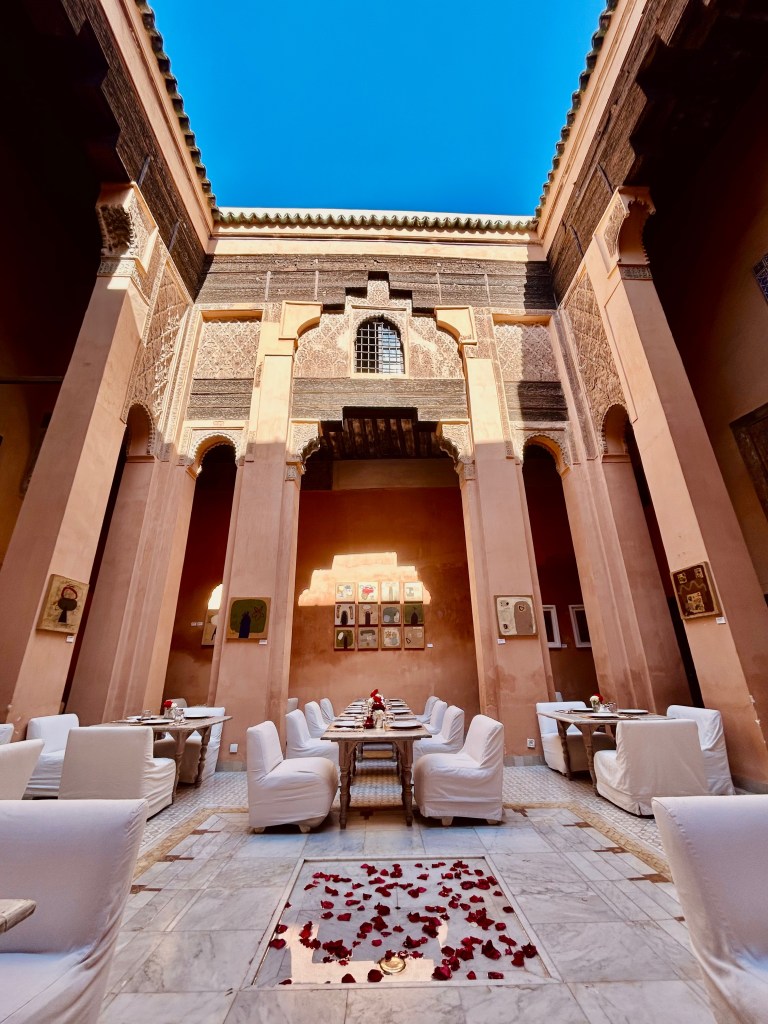
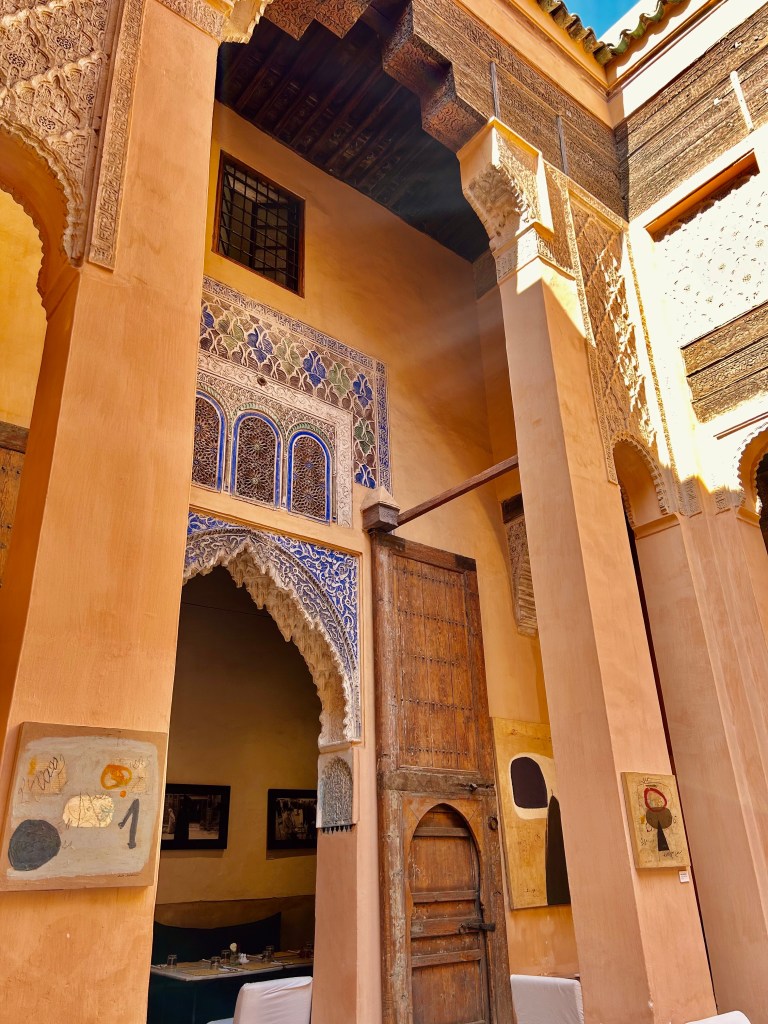
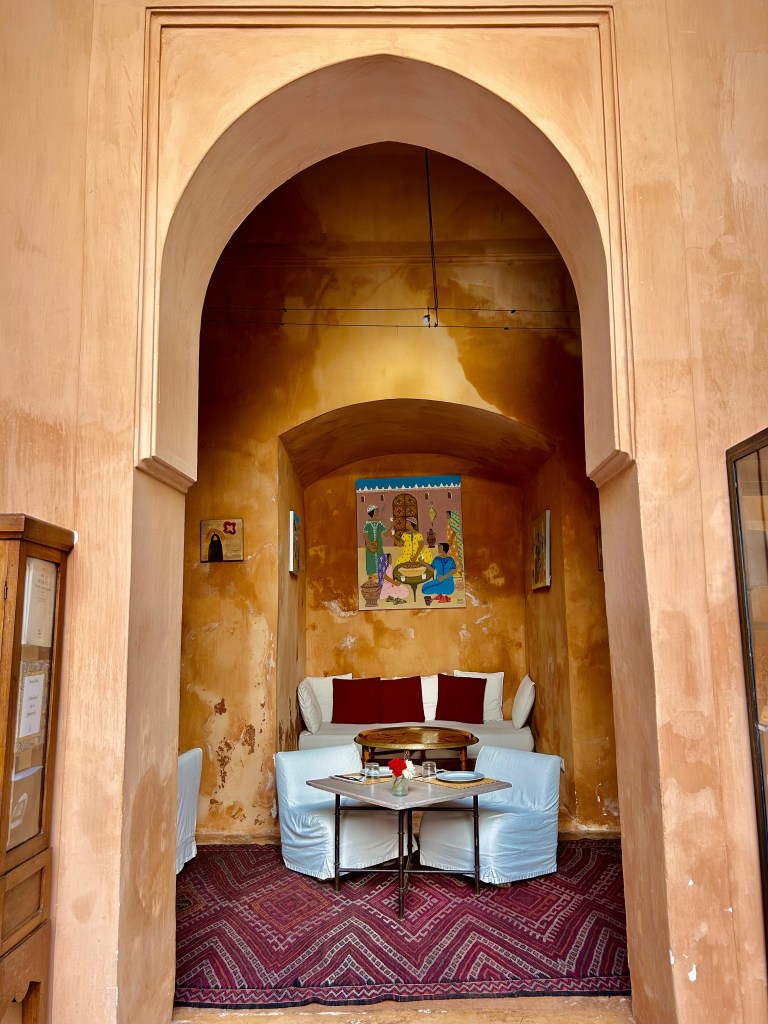
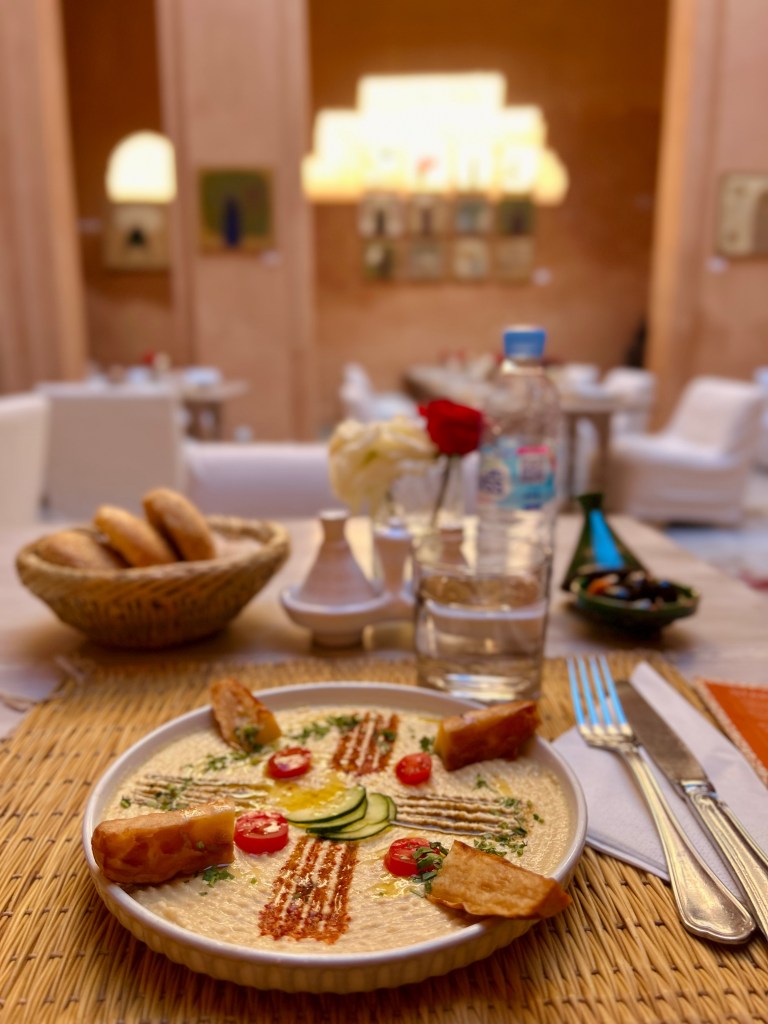
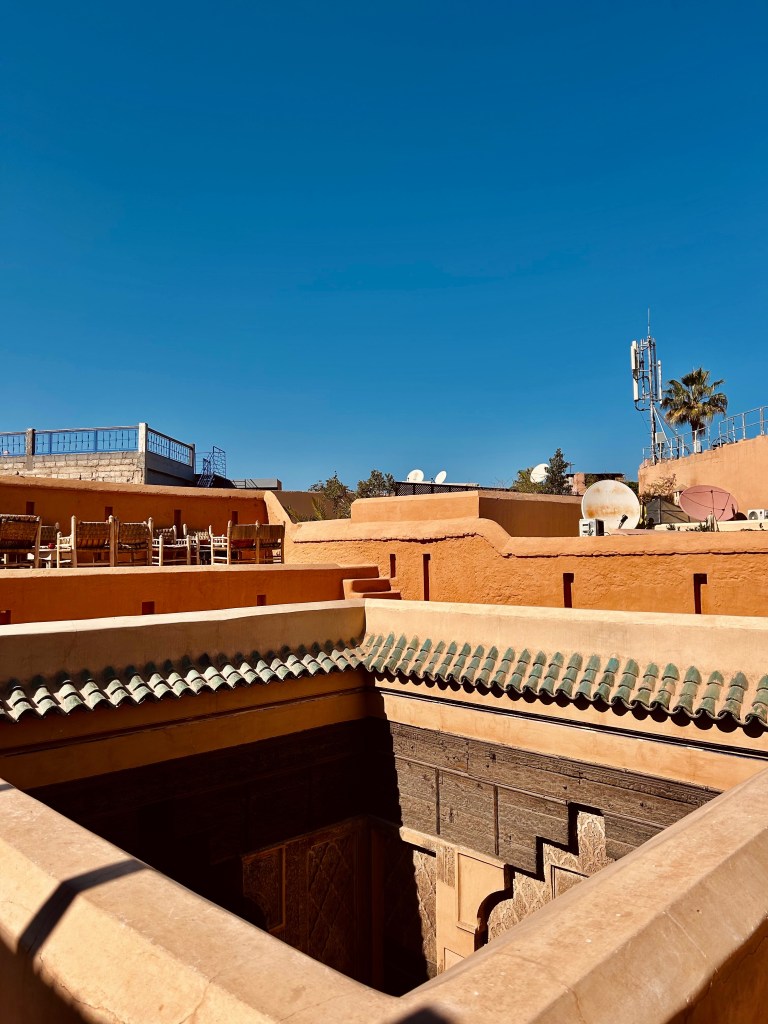
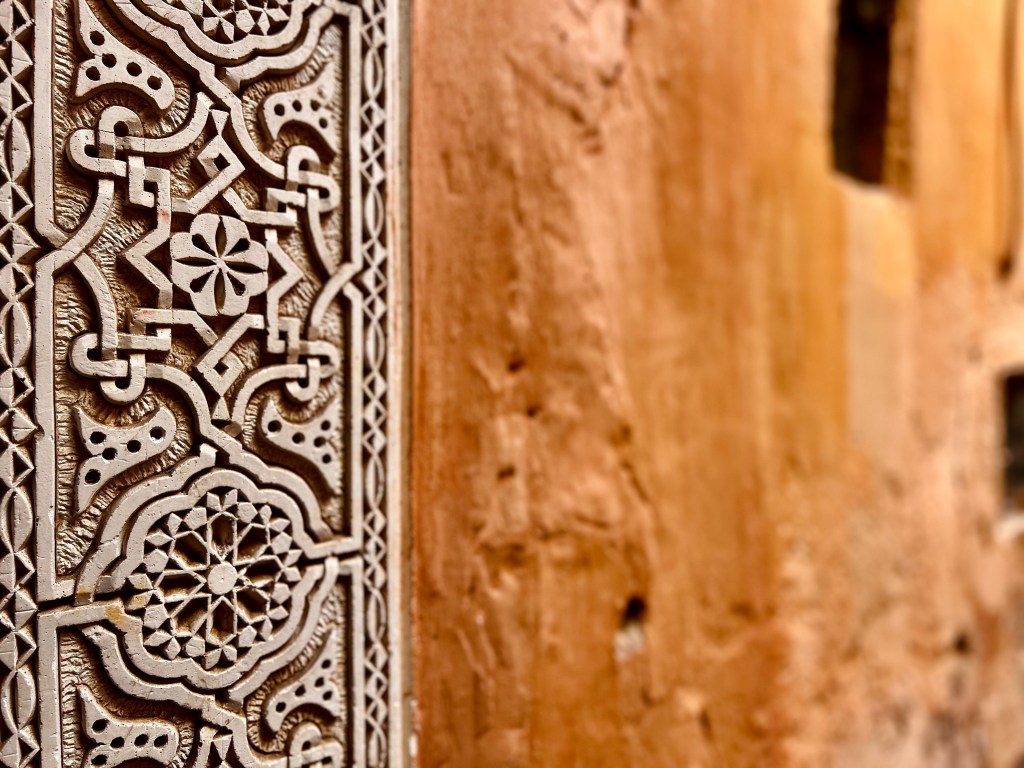
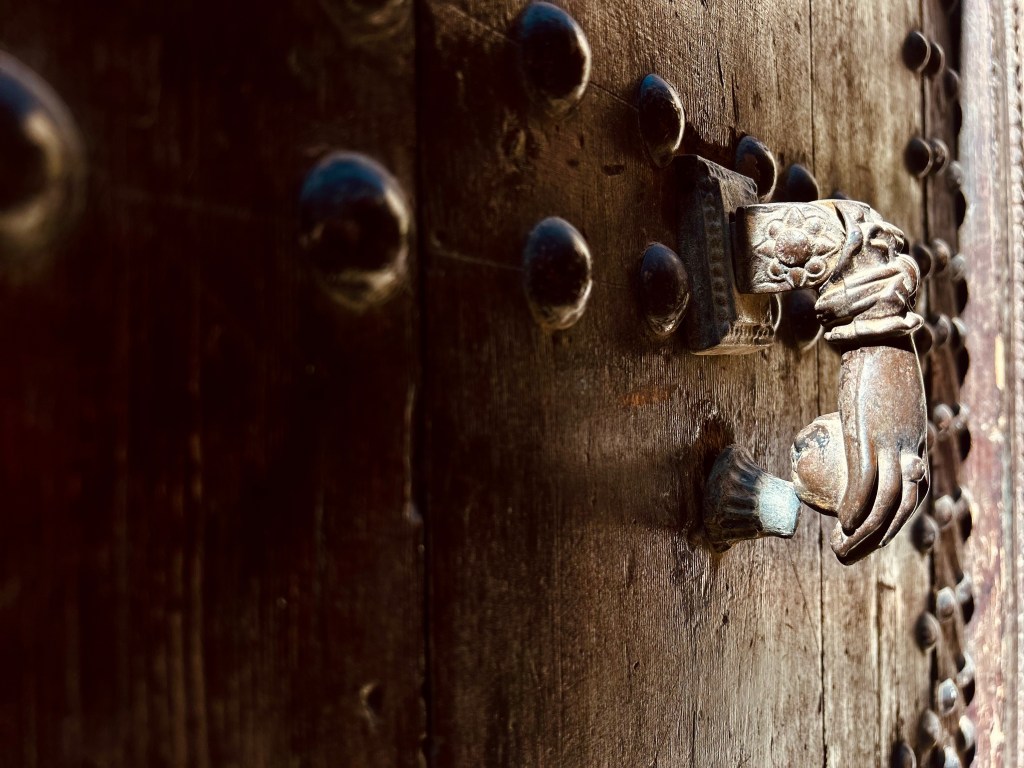
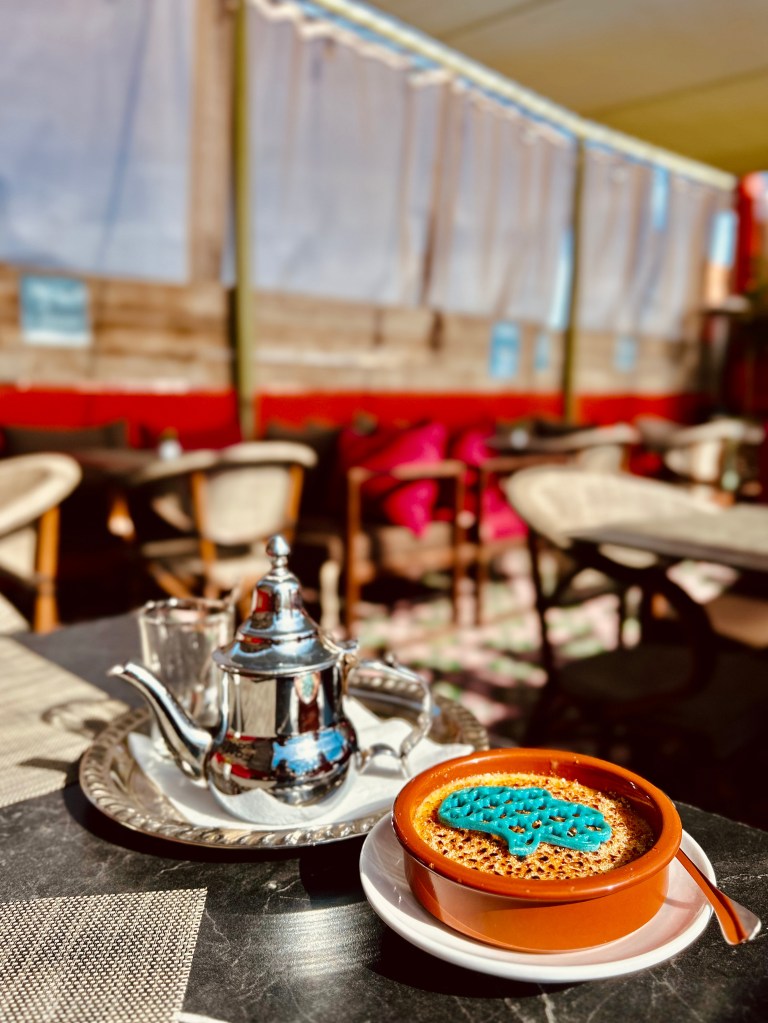
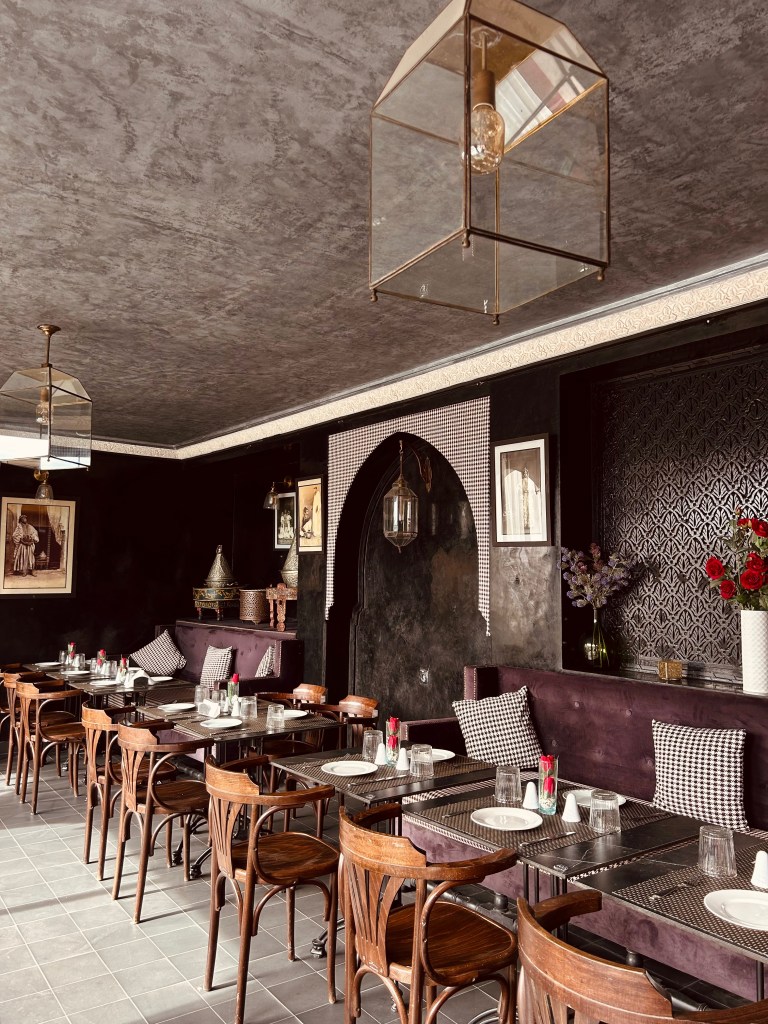
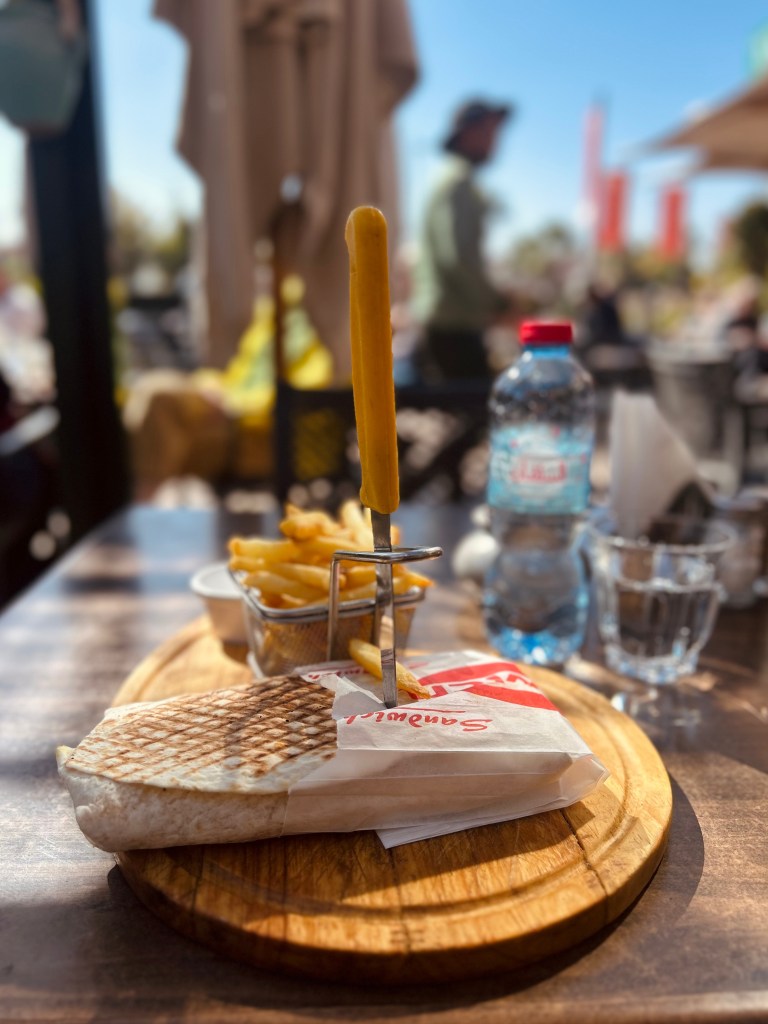

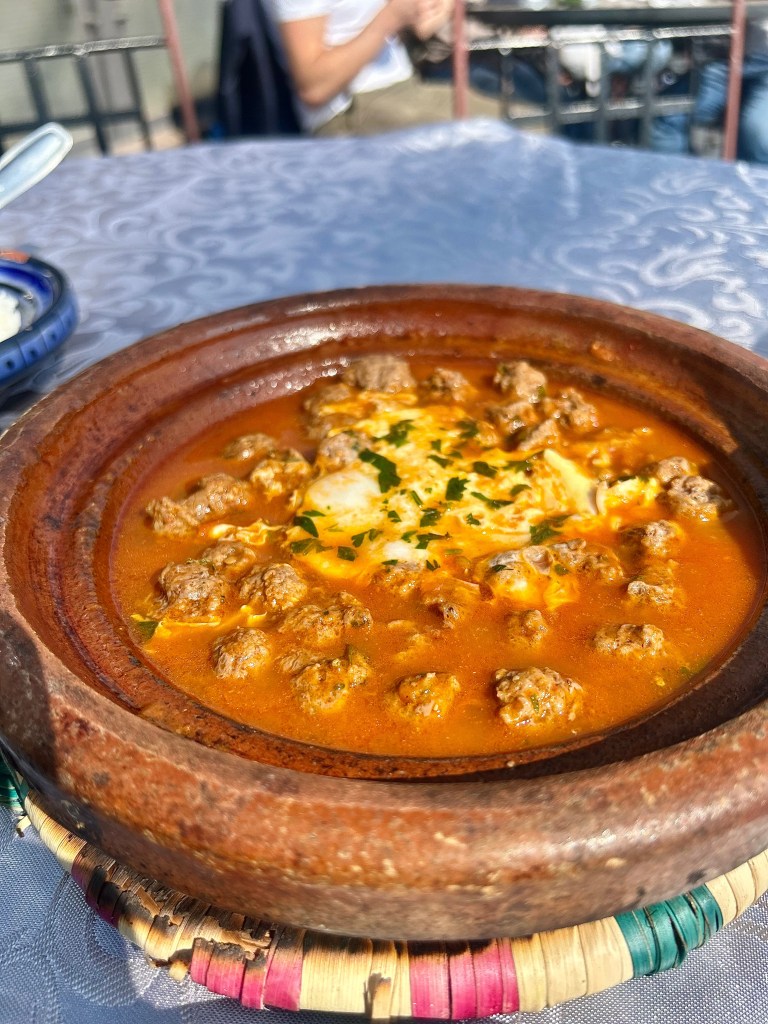
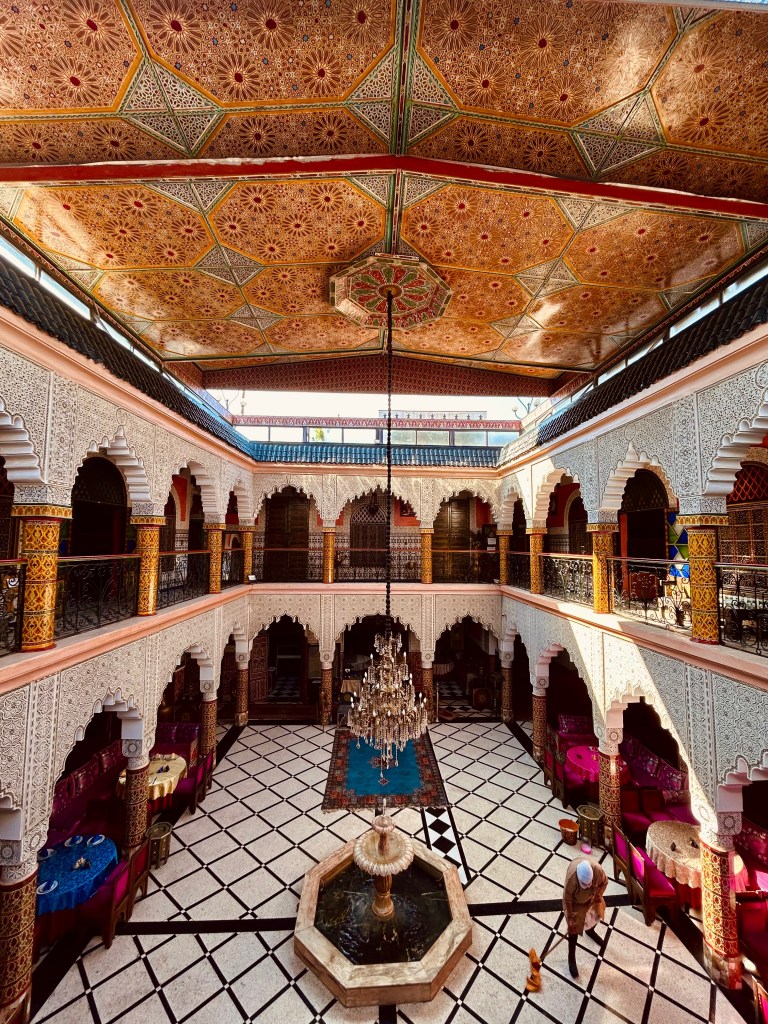
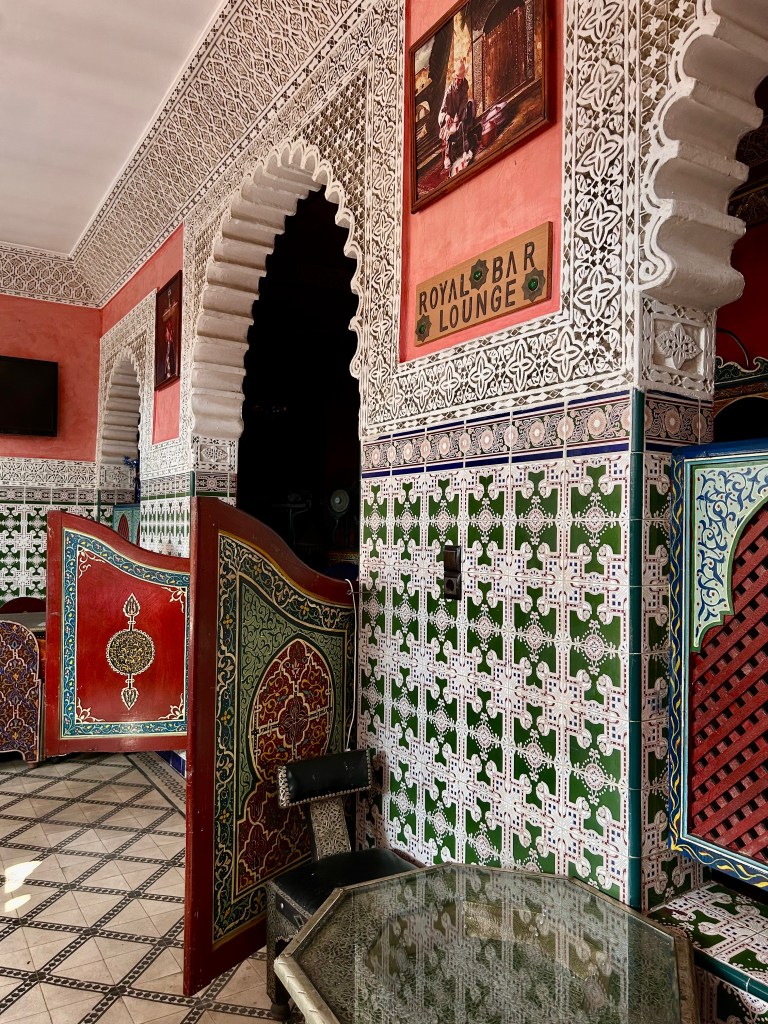
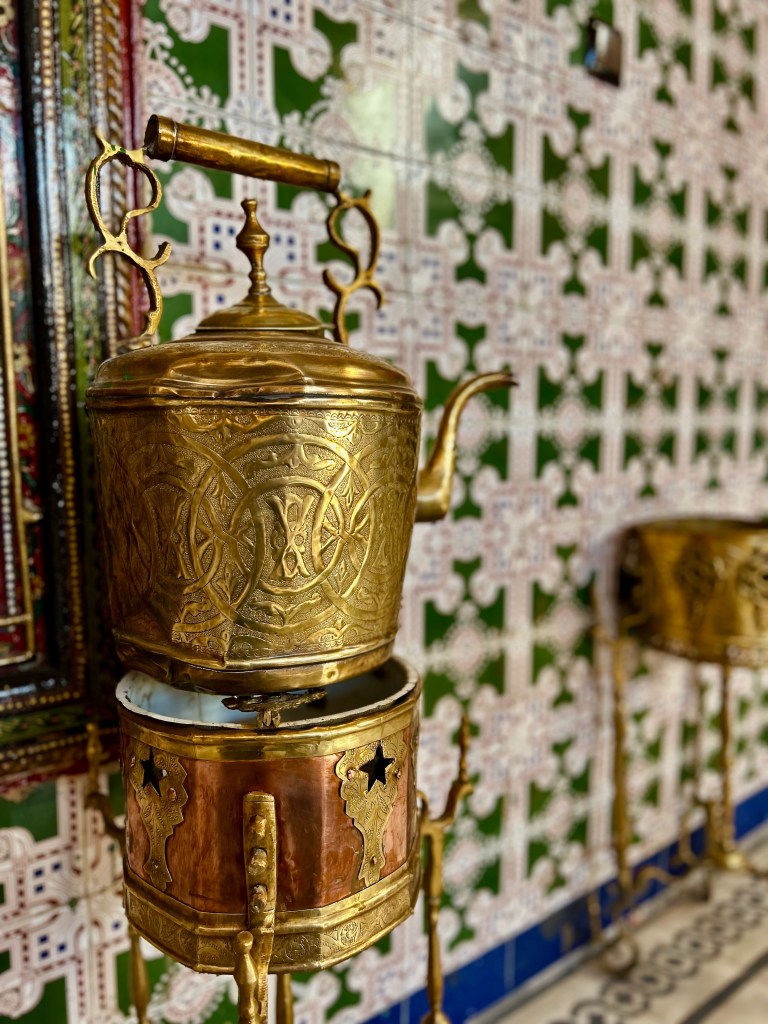
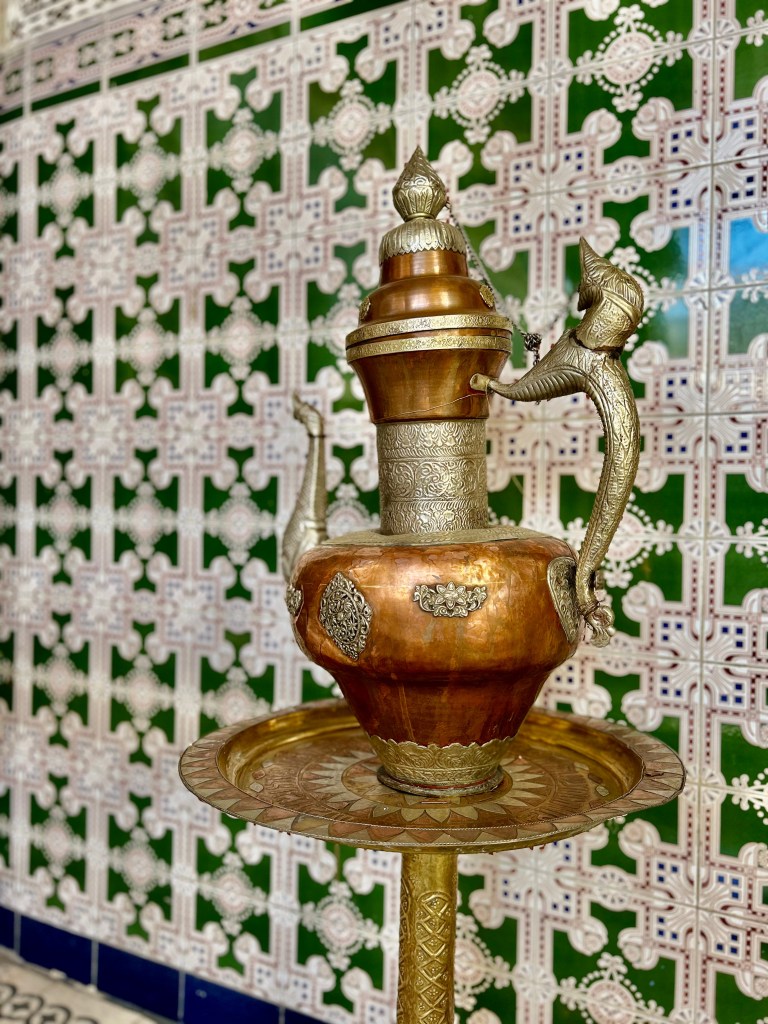
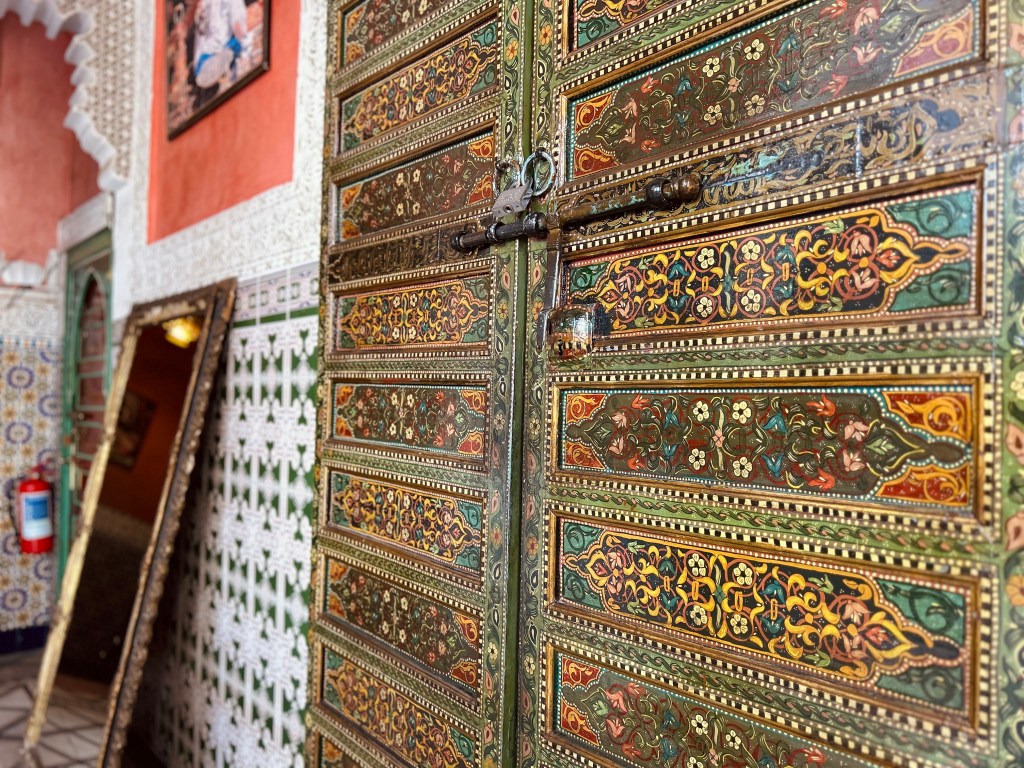
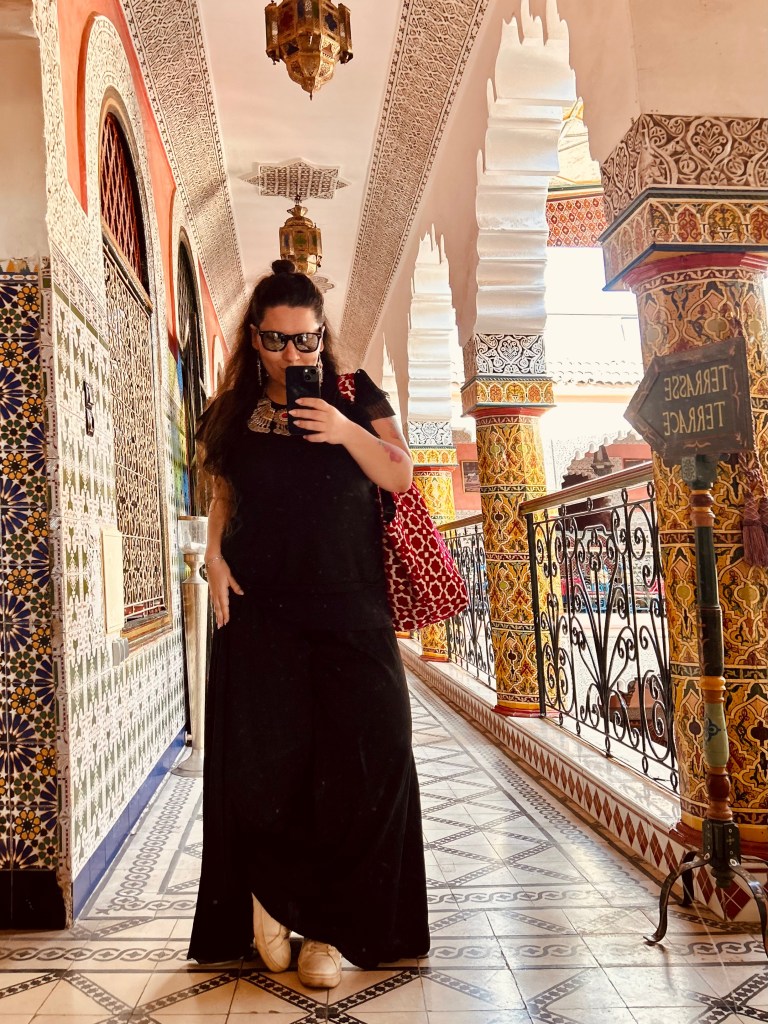
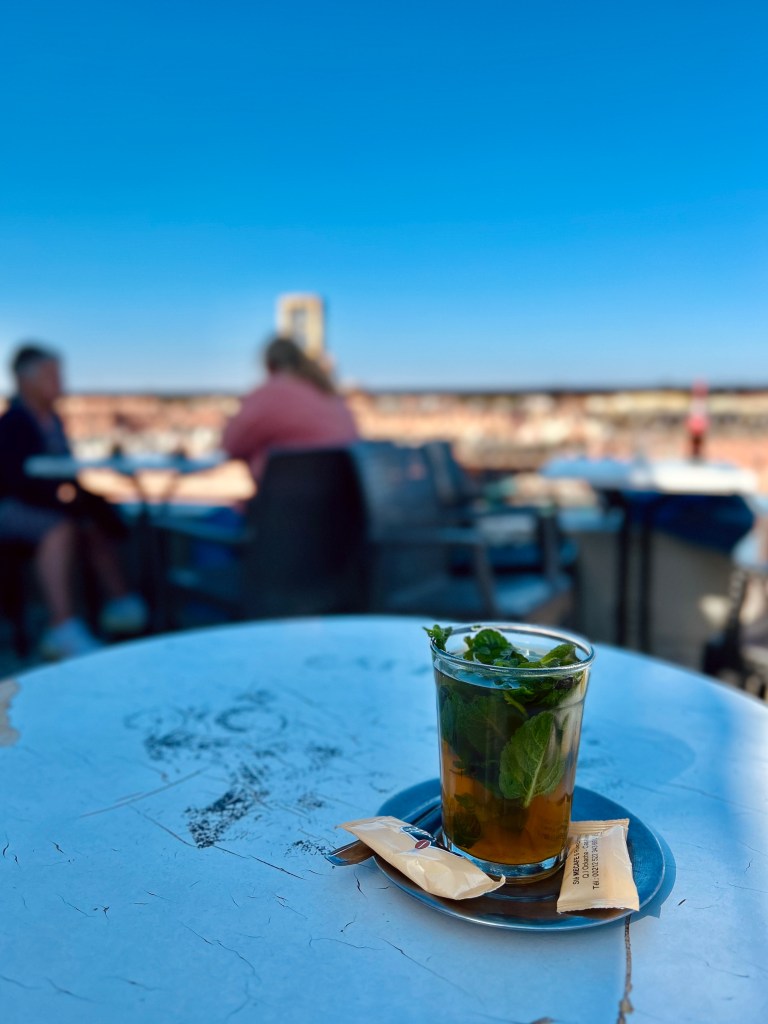

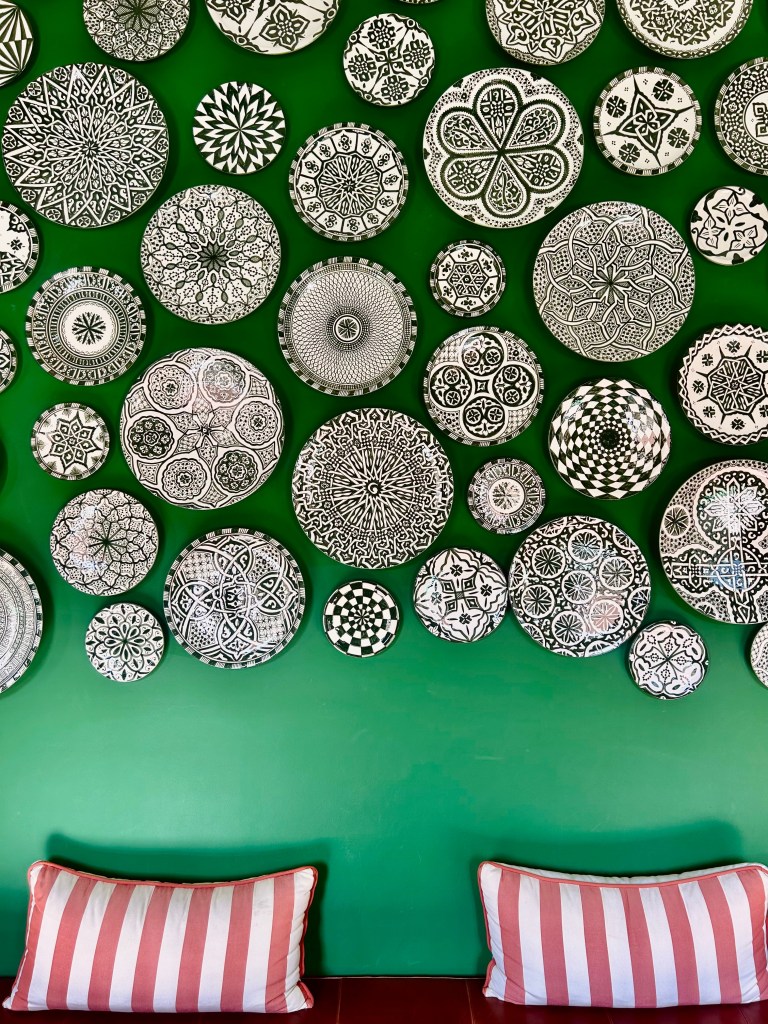
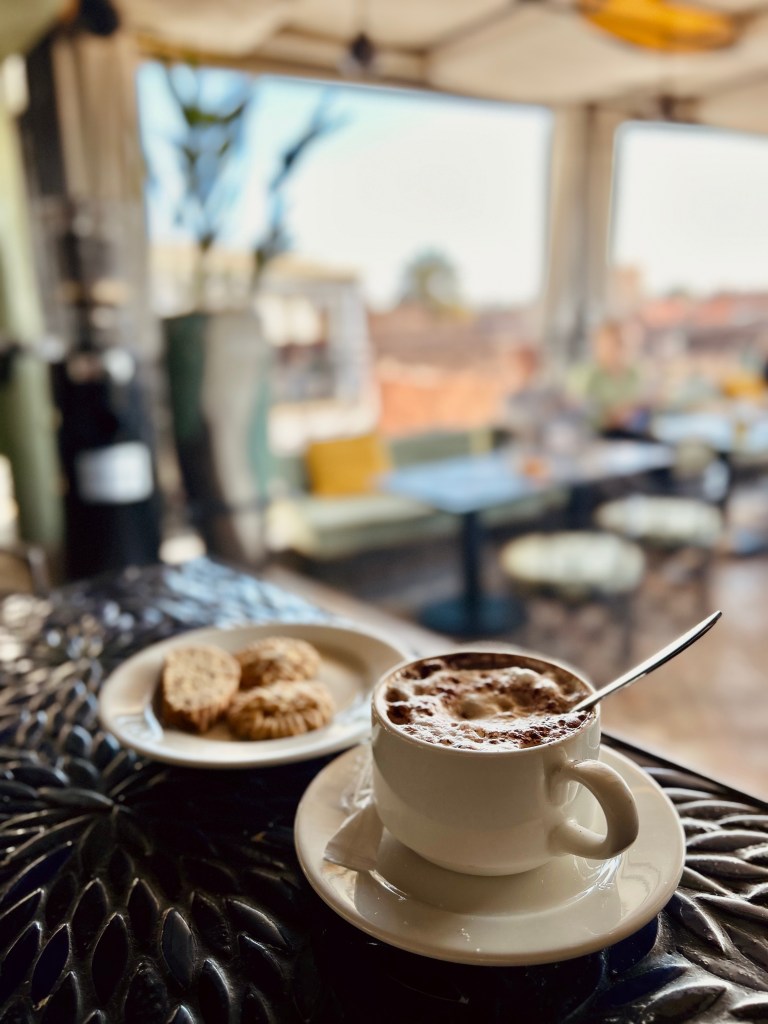
With a bit of traffic, the trip to the airport took no more than 15 minutes. Thorough security once more, but an easy process and then a bit of time to relax before departure. Imagine the surprise of running into one of the kids I had in a work project, at the very same gate. He was of Moroccan descent and had visited some relatives, now we were both returning to Stockholm.
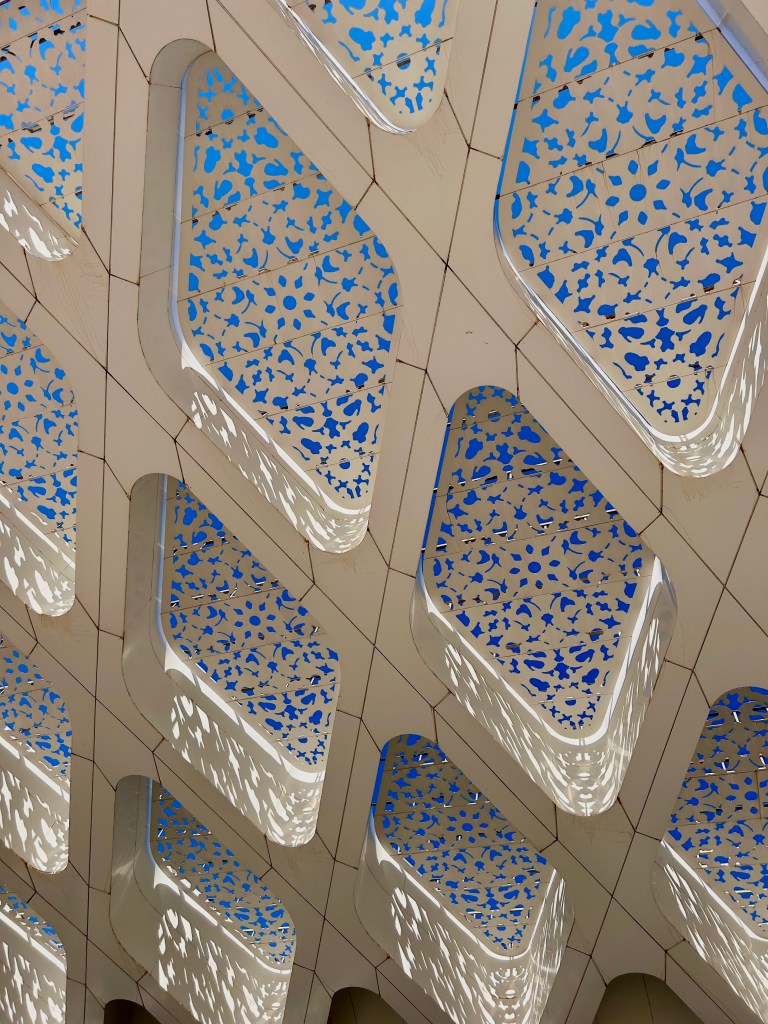
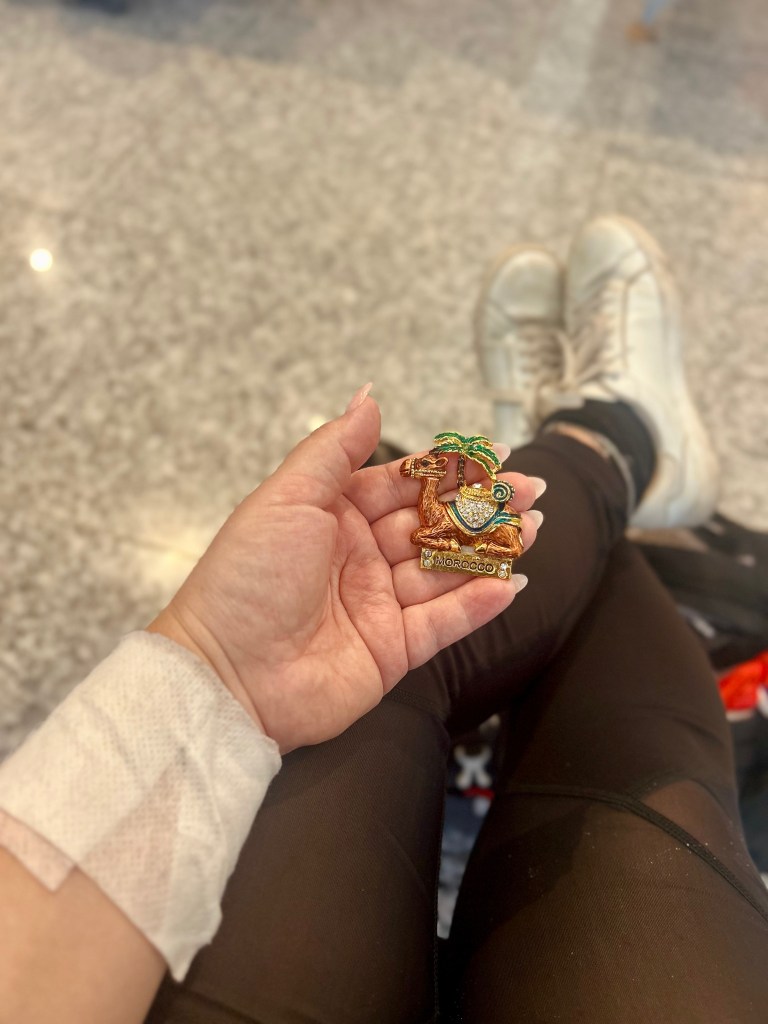

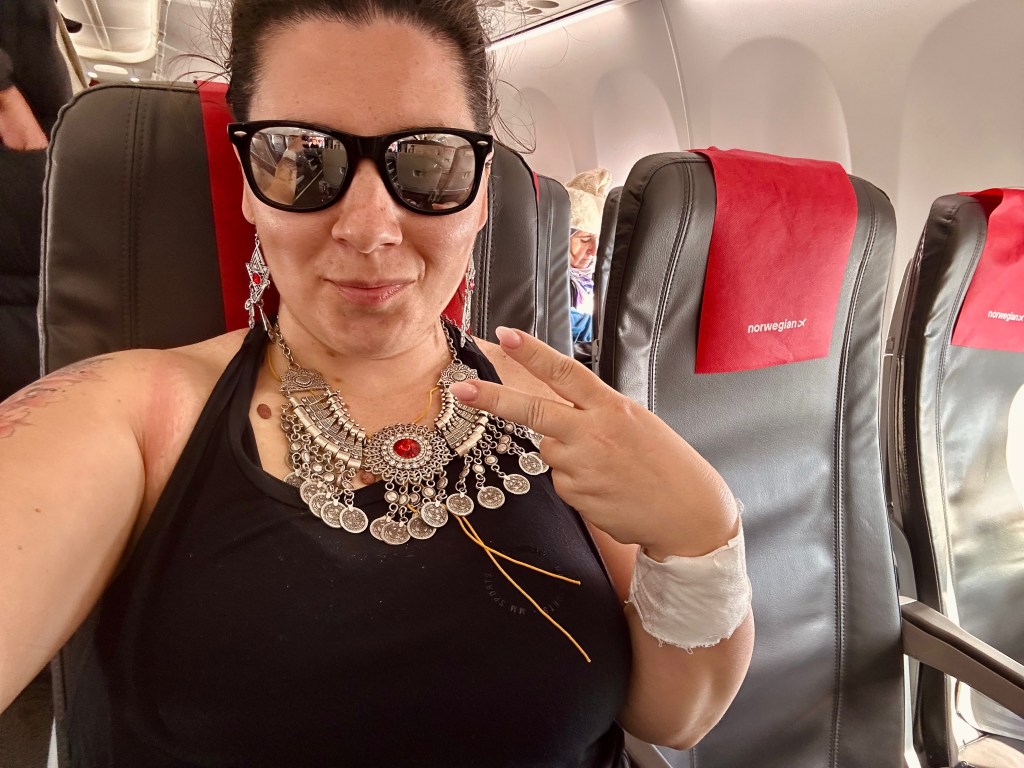
As my two weeks in Morocco came to an end, I found myself remembering all the small details, from the call to prayer echoing at sunrise and sunset to the the swirl of colors in the markets, from the warmth of shared tea to the endless horizon of the desert, from narrow souk streets to centuries of history and art.
Morocco doesn’t just give you an itinerary, it gives you real life in a fabulous mix of adrenaline and hospitality. It’s a place that surprises you, embraces you, knocks you in the head and sends you home with stories you can’t stop telling. It’s the slow camel trek and crisp mountain air, it’s the colourful ceramics and warm blankets, it’s the sacred spaces, it’s the loud spaces, it’s the crammed spaces and the remote spaces. Morocco isn’t a one-time destination, it’s a place that calls you to return.
شكراً and ⵜⴰⵏⵎⵔⵜ, Morocco! It’s November now, see you again in two months!
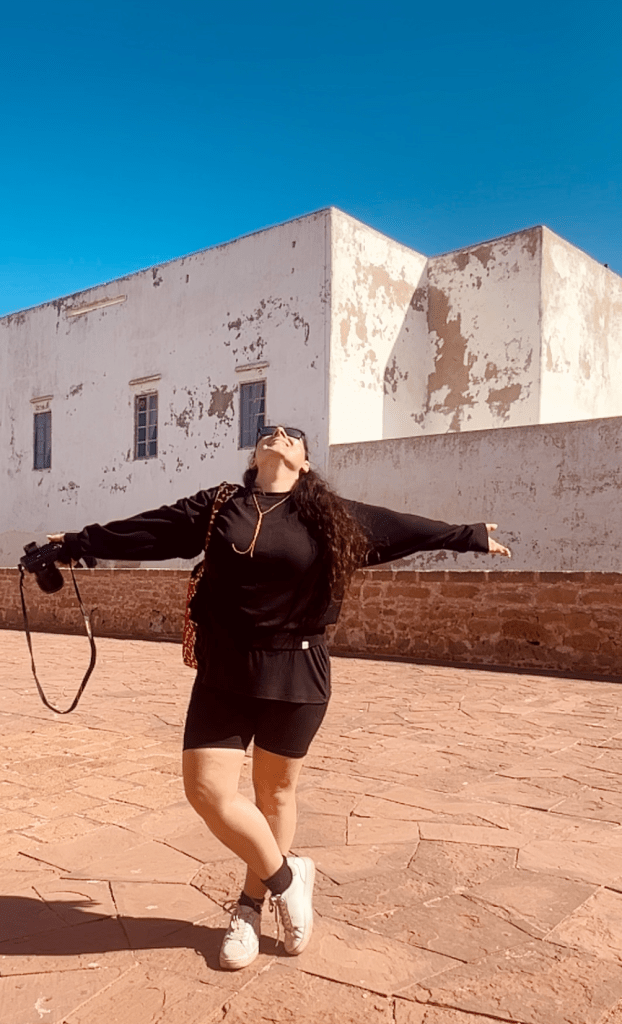
 CRISTINA ON THE ROAD